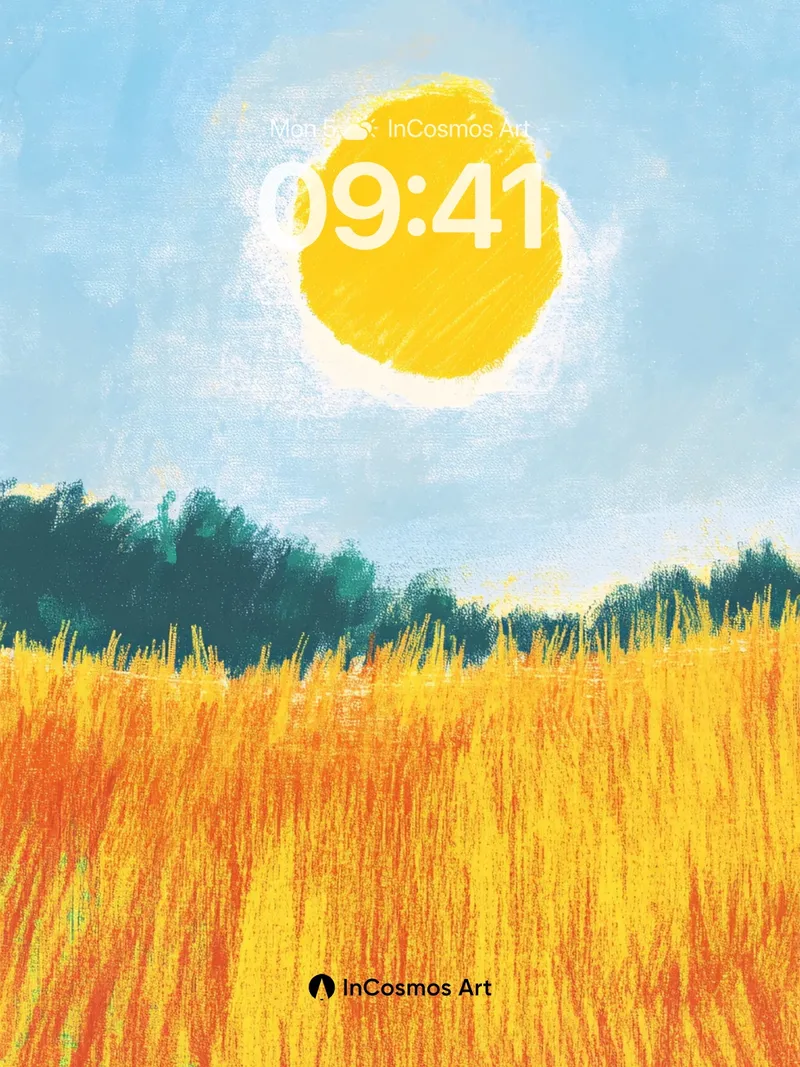
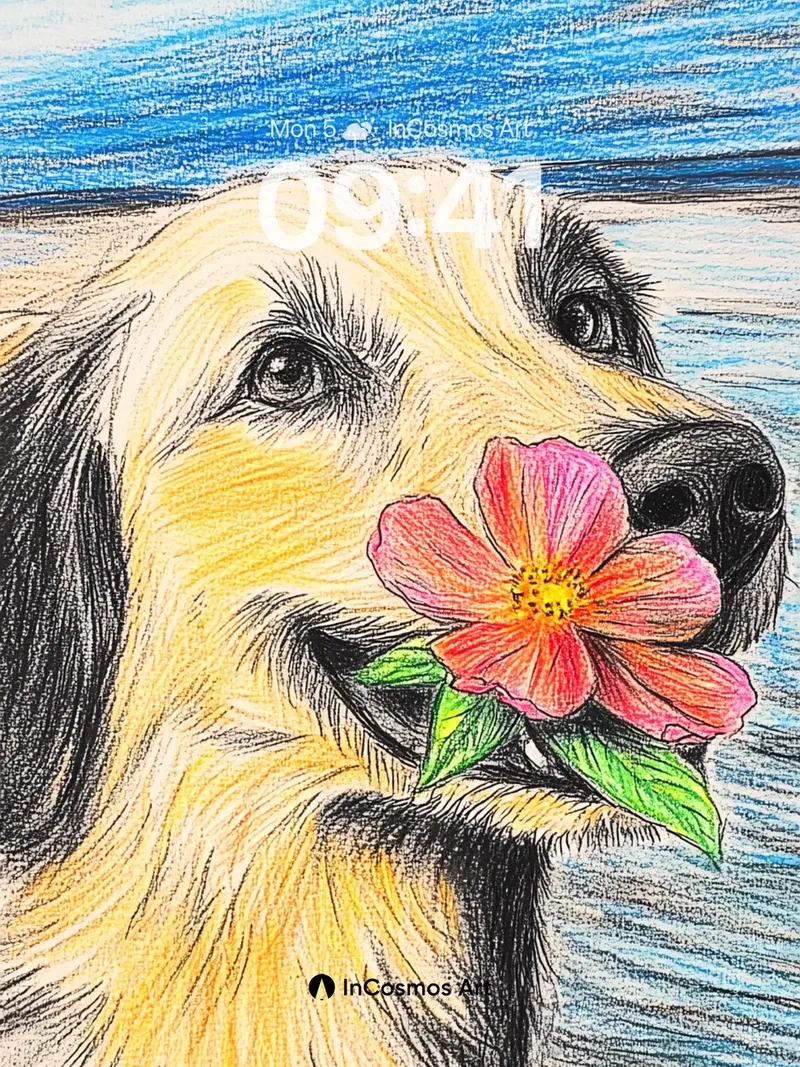
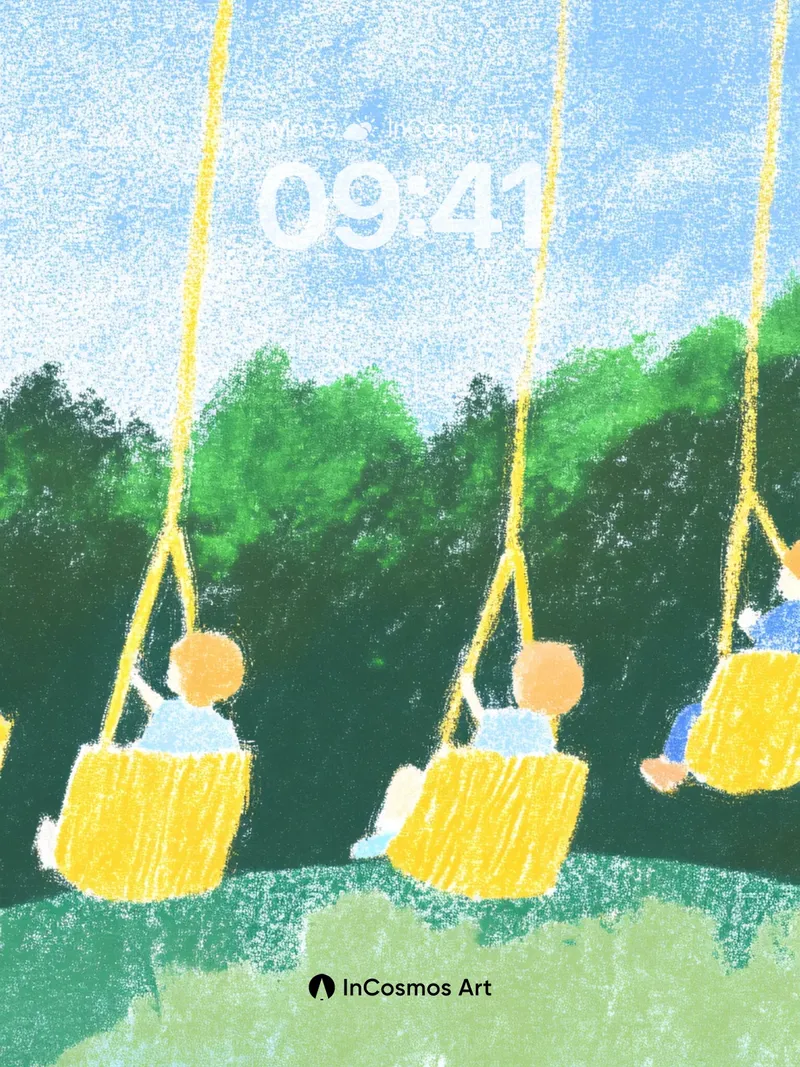
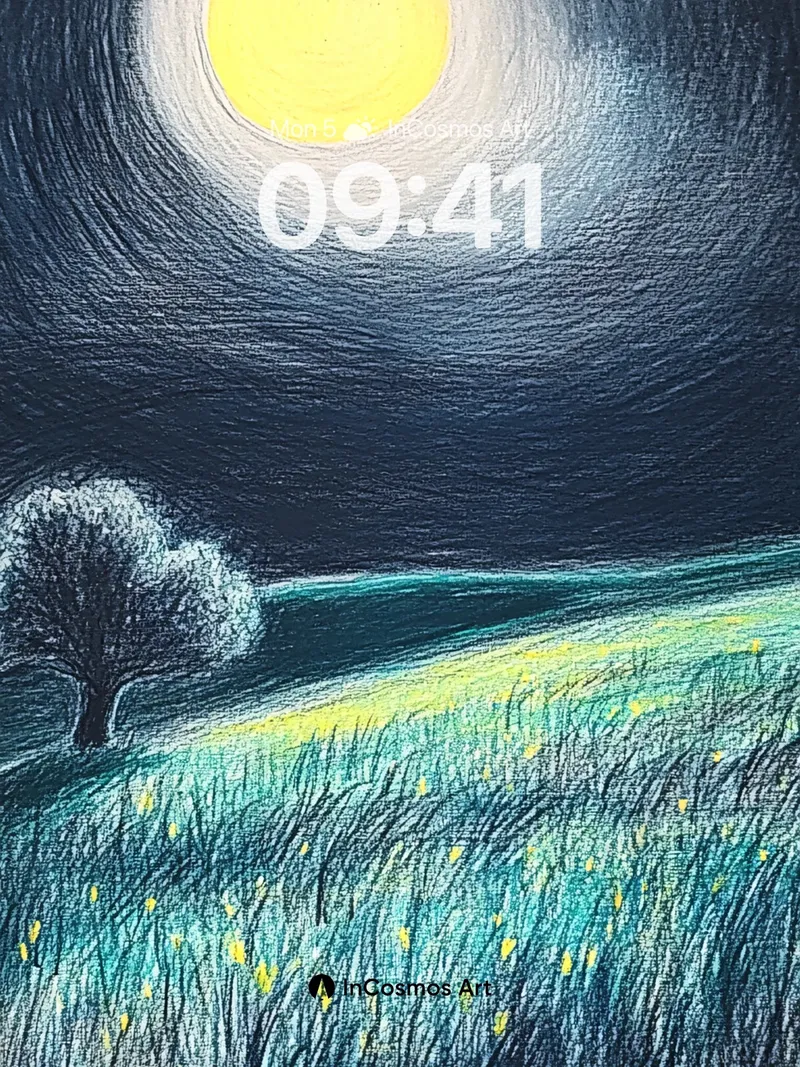
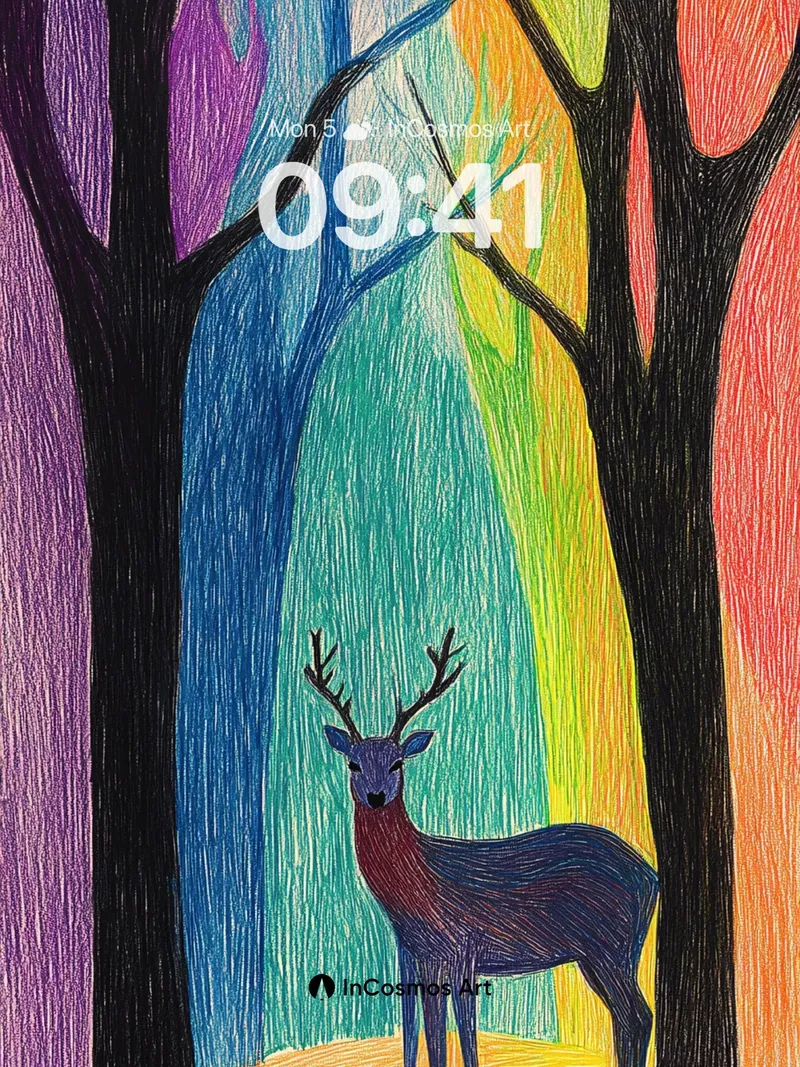
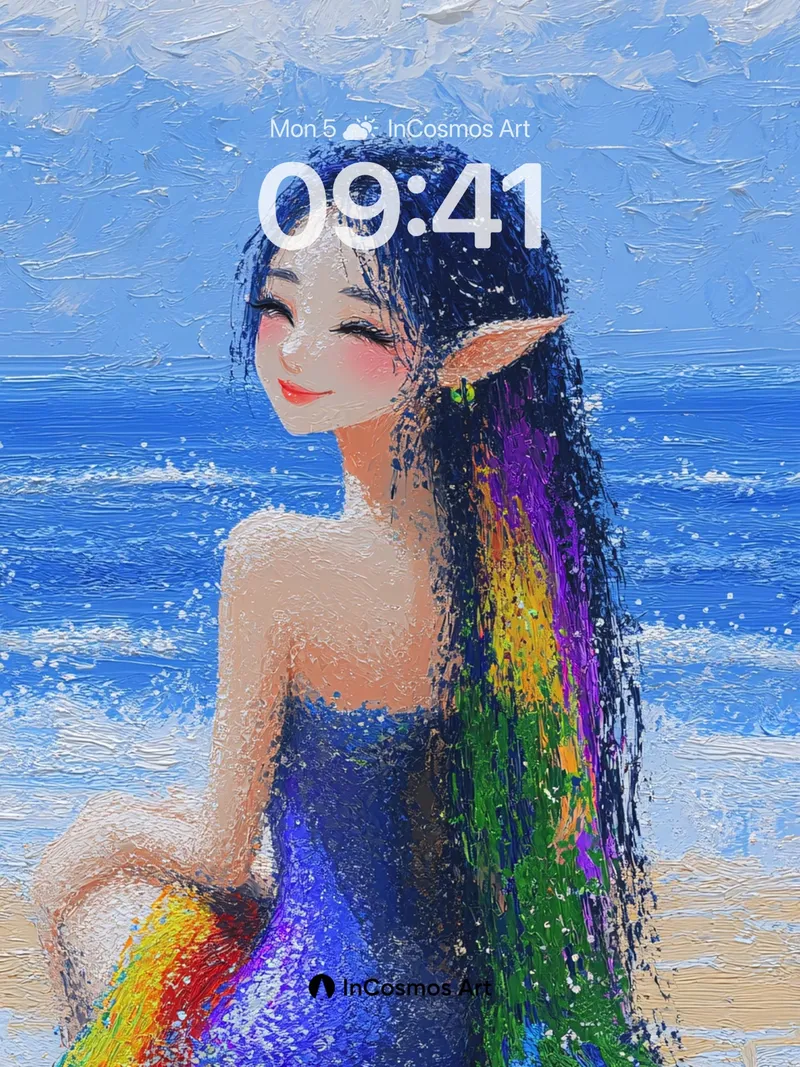
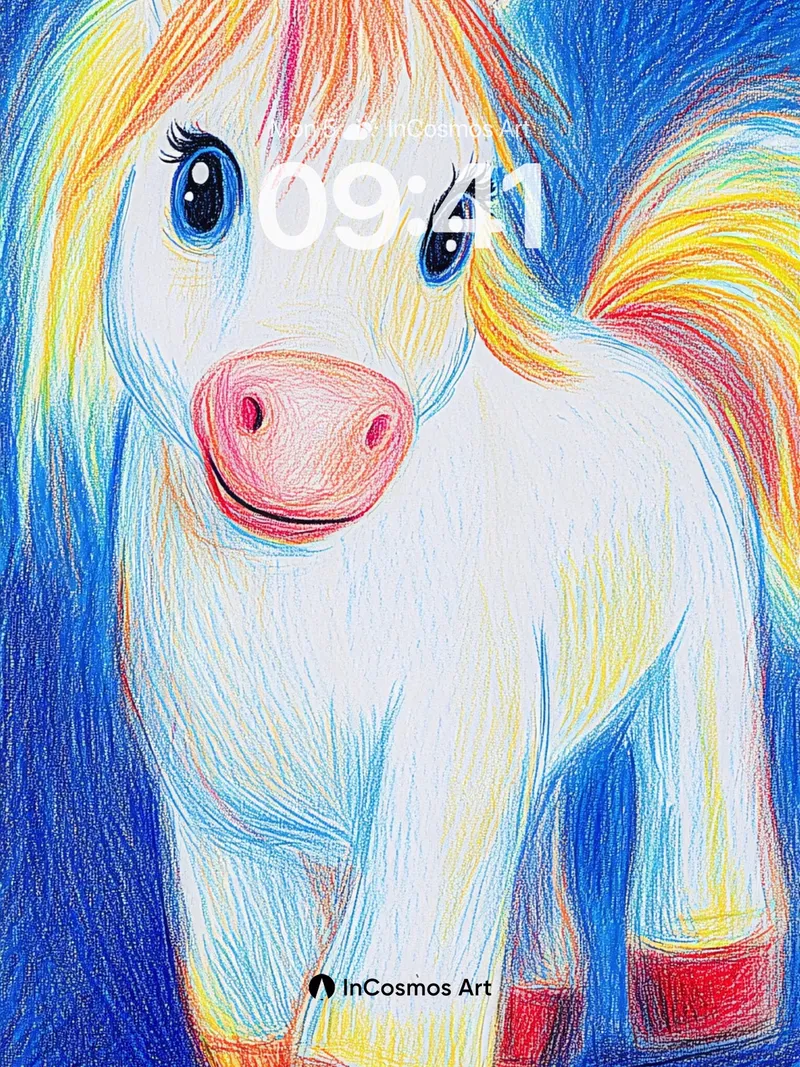
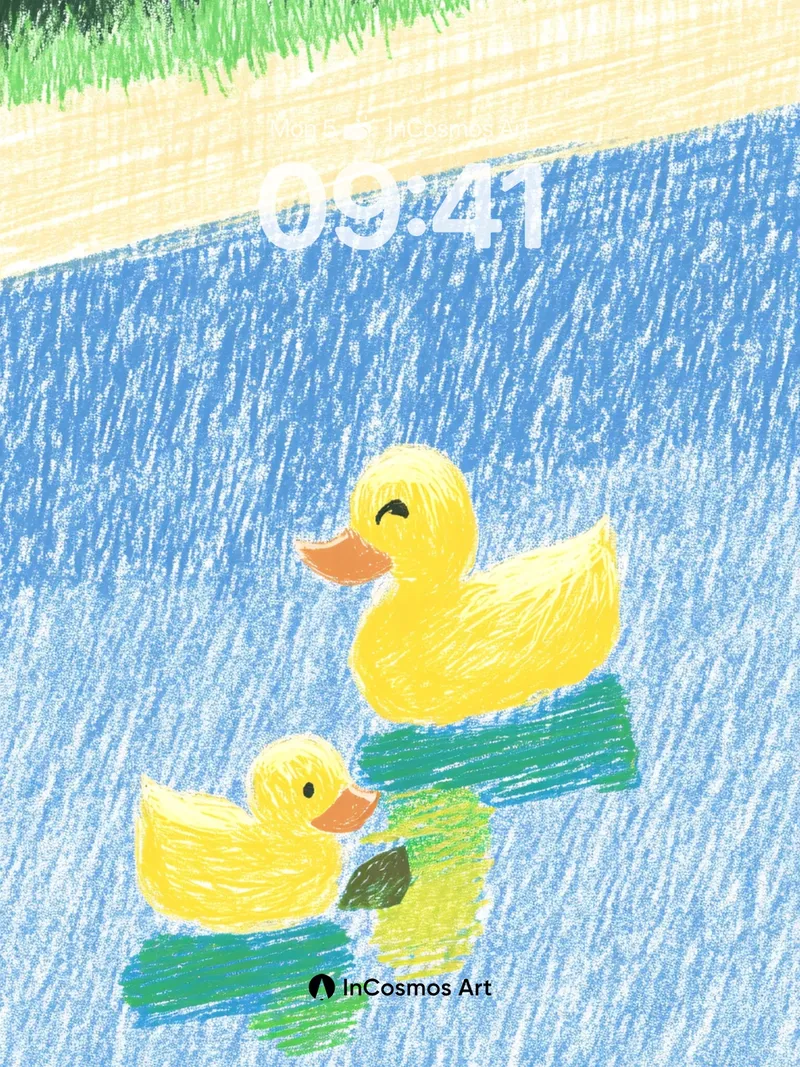
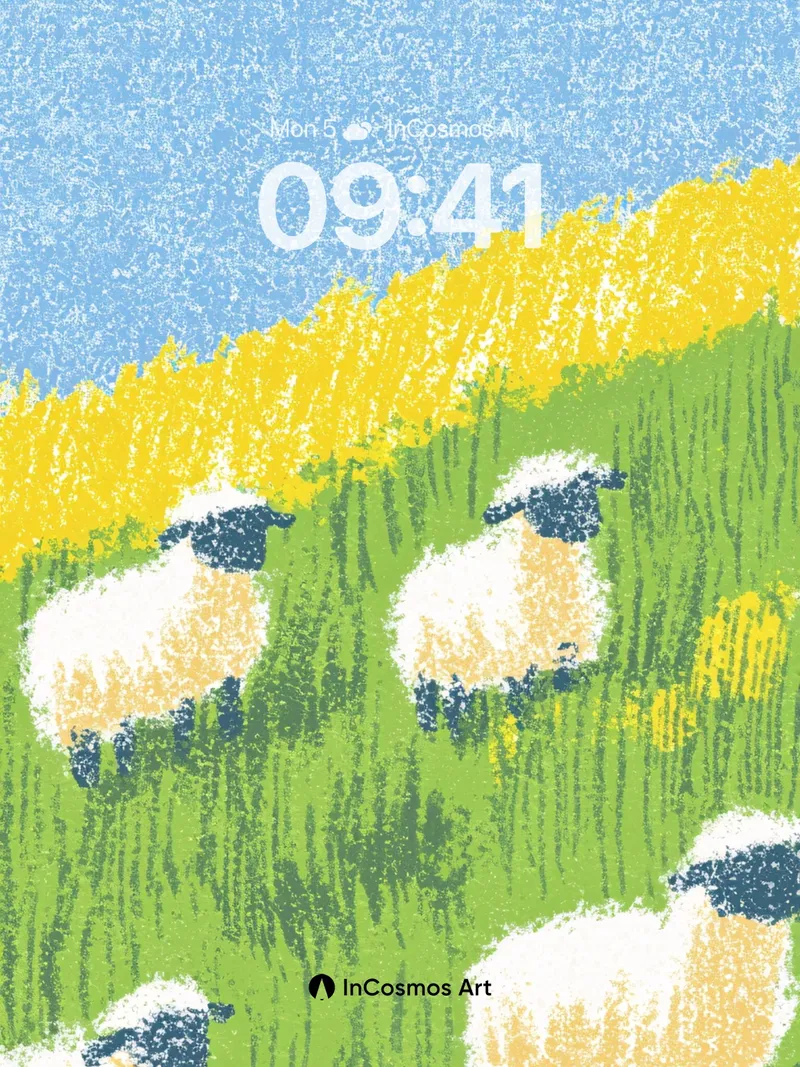
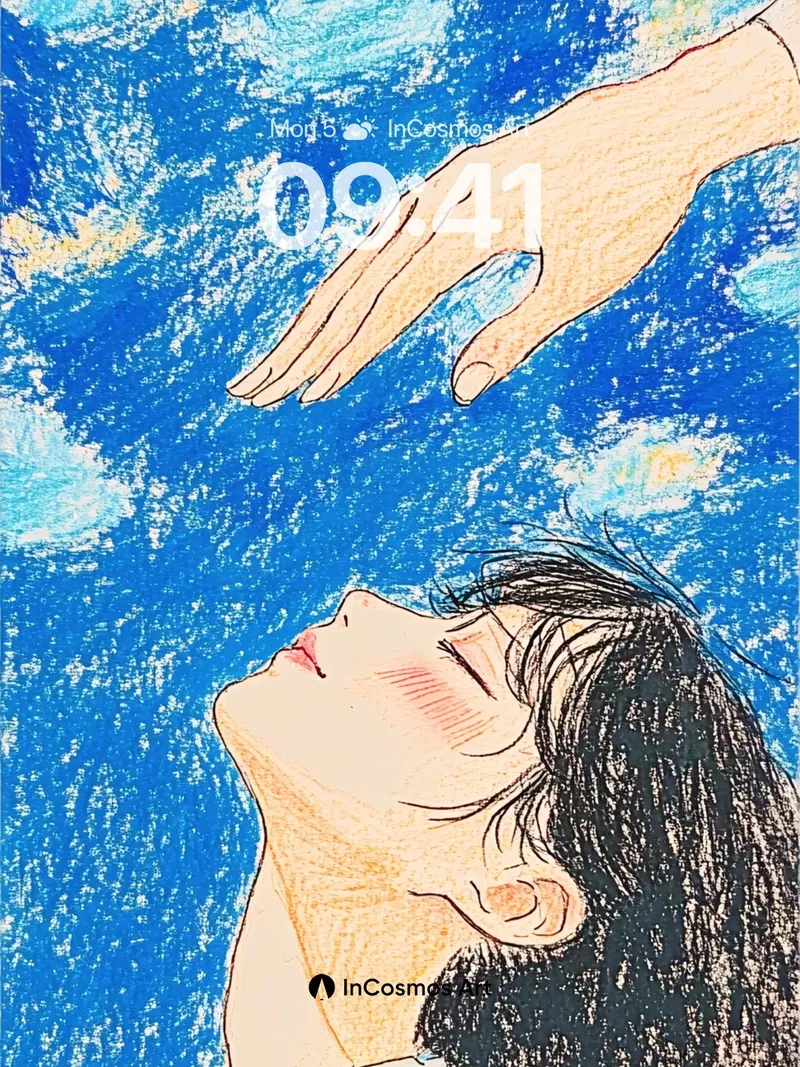
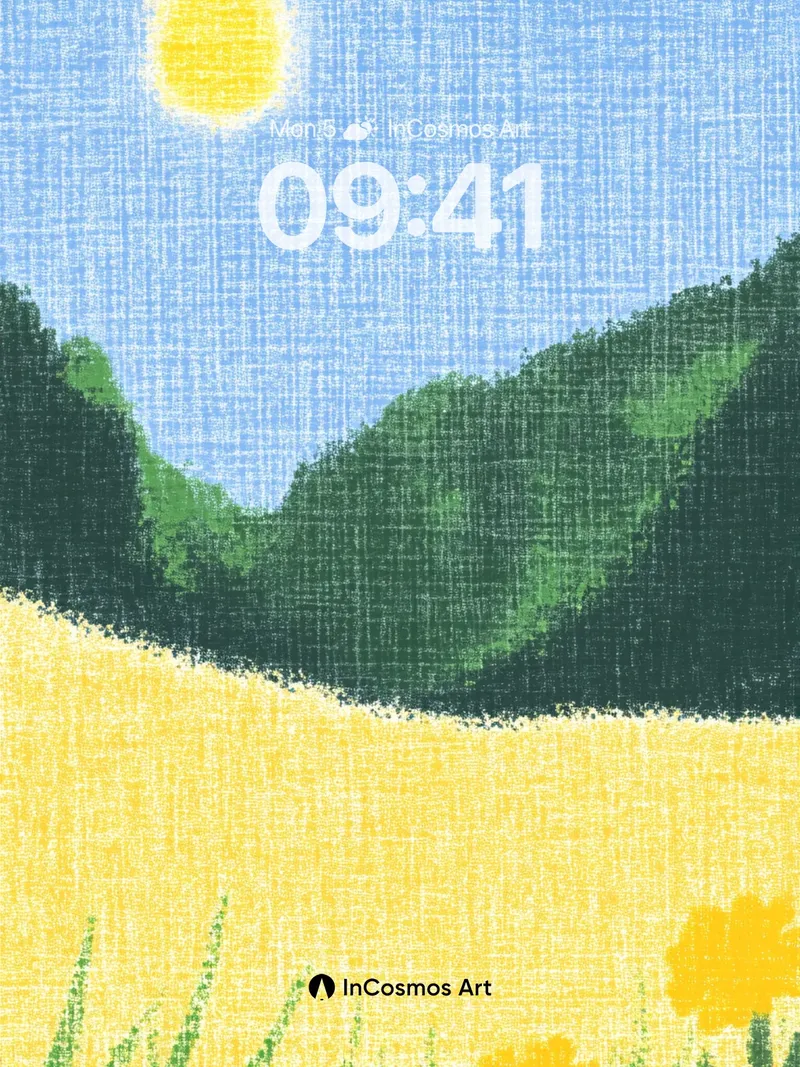
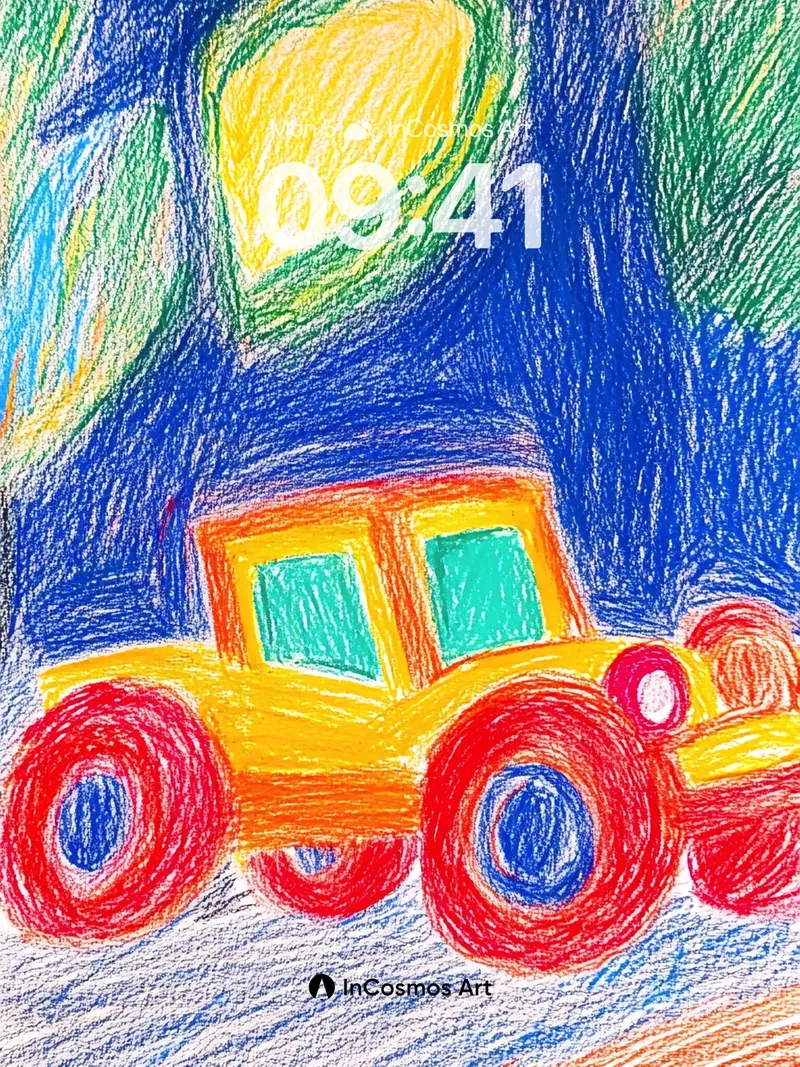
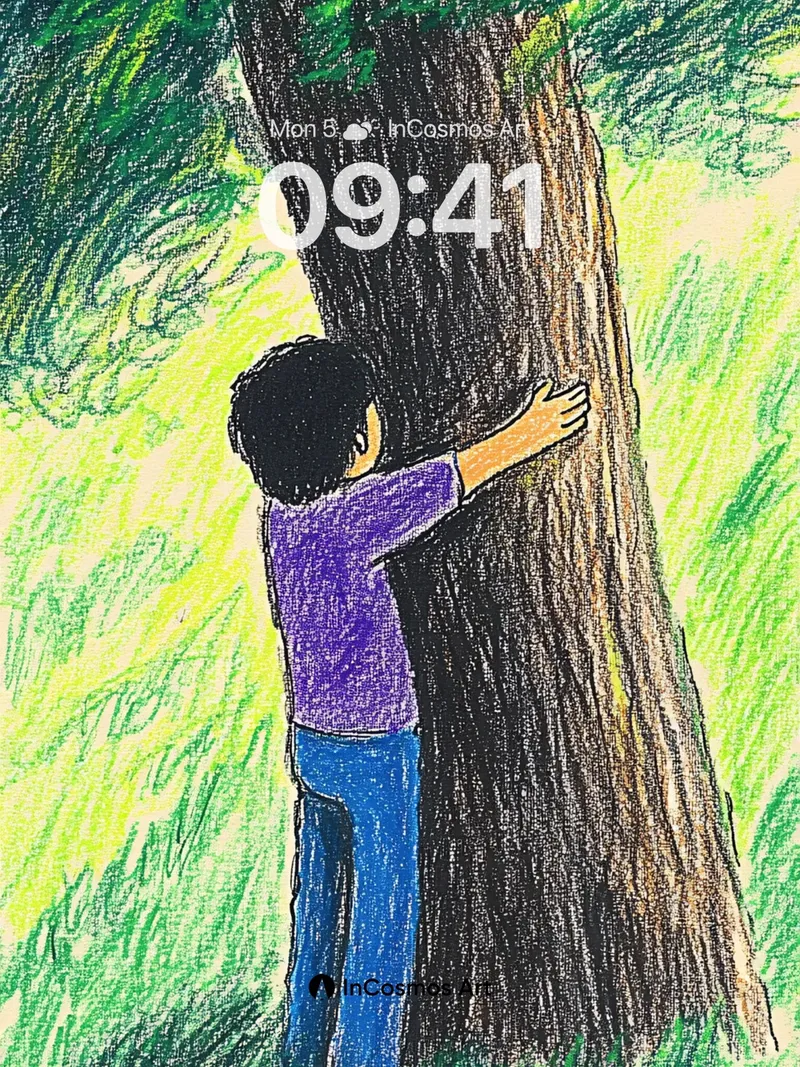
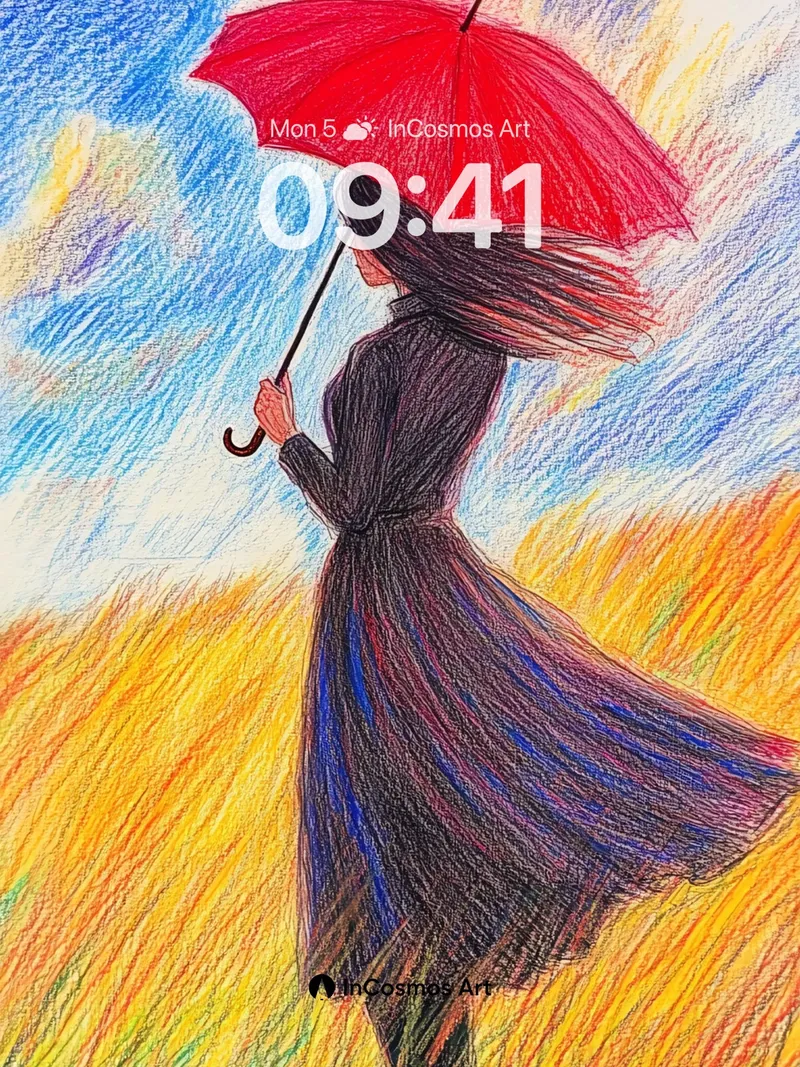
In the flow of light and color, human perception of the world is redefined. Each hue carries the weight of memory; each composition becomes an emotional projection. The sprite by the sea, with rainbow hair woven into dreams, sits on sand where body and wave merge—her presence a living embodiment of nature. She communicates not through words but through chromatic rhythm, conveying stillness and hope. A hand reaches down from sky toward a girl gazing upward—an ethereal connection, childhood's longing for the unknown, trust in what lies beyond. Sheep wander between golden and emerald fields, symbolizing silent order and life's cycles. A woman walks through wheat under a red umbrella, rain unable to halt her stride, instead adding poetic contour to her silhouette. Moonlight bathes a lone tree and meadow, all breathing in quietude, time suspended. A boy embraces a tree, his limbs touching bark—the most primal dialogue between human and nature. Together, these scenes form a transcendent resonance across age and culture—color is not decoration but language of soul. They speak of solitude, desire, belonging, growth. When children draw trucks beneath starry skies with crayons, they do not imitate adult worlds—they create their own cosmic laws. This act itself is ritual against forgetting. True art’s power lies not in perfect replication but in awakening dormant emotions. It allows viewers to recognize deep echoes within themselves amid unfamiliar imagery. Rhythms of color, cadences of nature, compose a hymn about existence.
Color as Emotional Medium
Color has never been mere visual sensation. In these compositions, blue signifies depth and calm, red embodies passion and resolve, yellow evokes warmth and hope. They cease to be physical traits and become concrete expressions of feeling. When one walks under a red umbrella in rain, it is not just shelter—it is a declaration of inner conviction. Similarly, when a child draws a brightly colored truck, the pursuit is not realism but inner-world order and freedom. Color thus becomes a bridge linking individual consciousness to collective memory.
Symbiosis Between Human and Nature
Trees, oceans, grasslands, night skies—these elements recur, forming a complete ecological tapestry. Humans are not conquerors of nature but integral parts. The child hugging a tree, the sprite by the sea, the girl looking up—all display attachment and reverence. This relationship transcends utilitarianism, entering the spiritual realm. Nature ceases to be mere backdrop and becomes narrative participant. Its silence speaks louder than words; its vastness holds every small joy and sorrow.
Intersection of Innocence and Poetry
Childhood drawings and adult artworks coexist, contrasting yet echoing. Children’s work bursts with raw impulse and imagination; adults’ focus on atmosphere and emotional depth. Yet both point to the same core: innate pursuit of beauty. A truck moving under stars, moon over wilderness—simple images holding profound meaning. They remind us that true poetry does not arise from complex technique but from authentic perception and expression of the world.