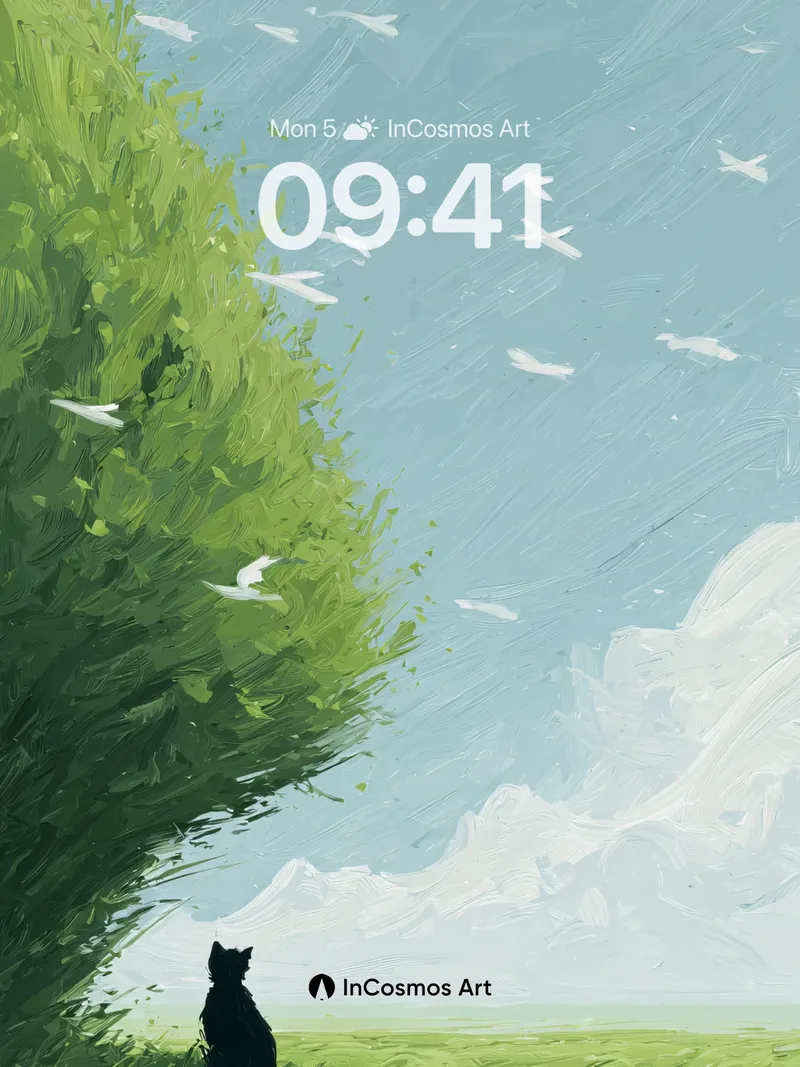
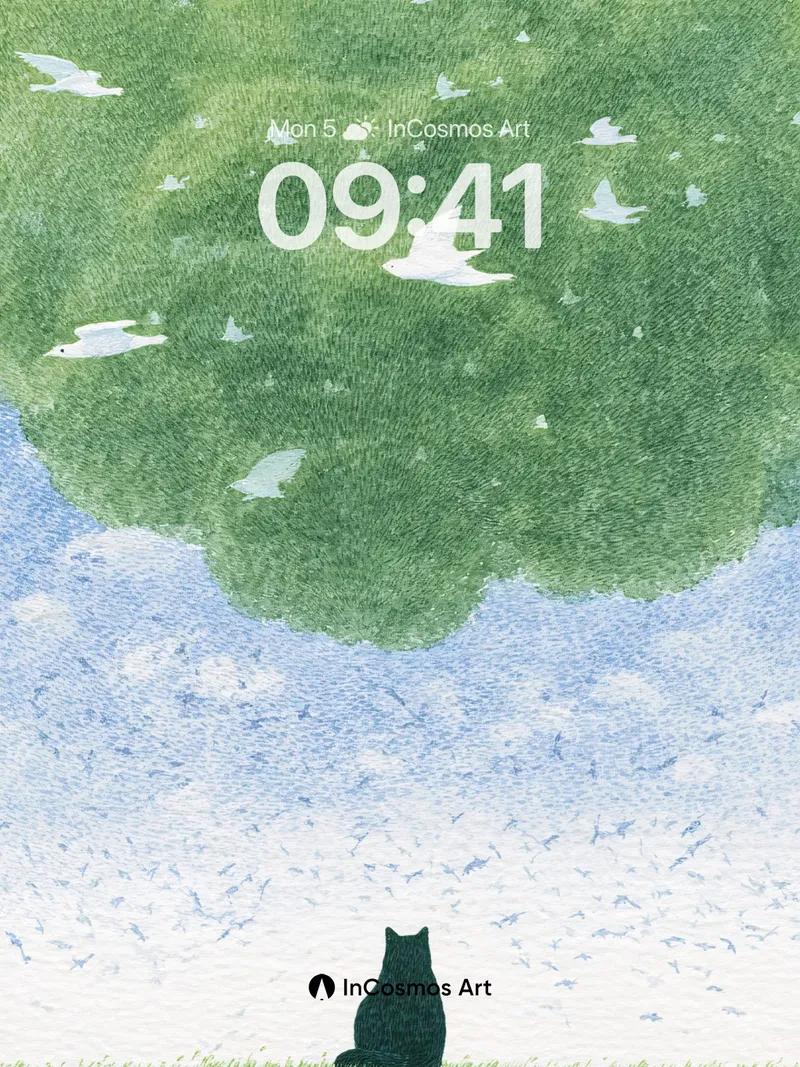
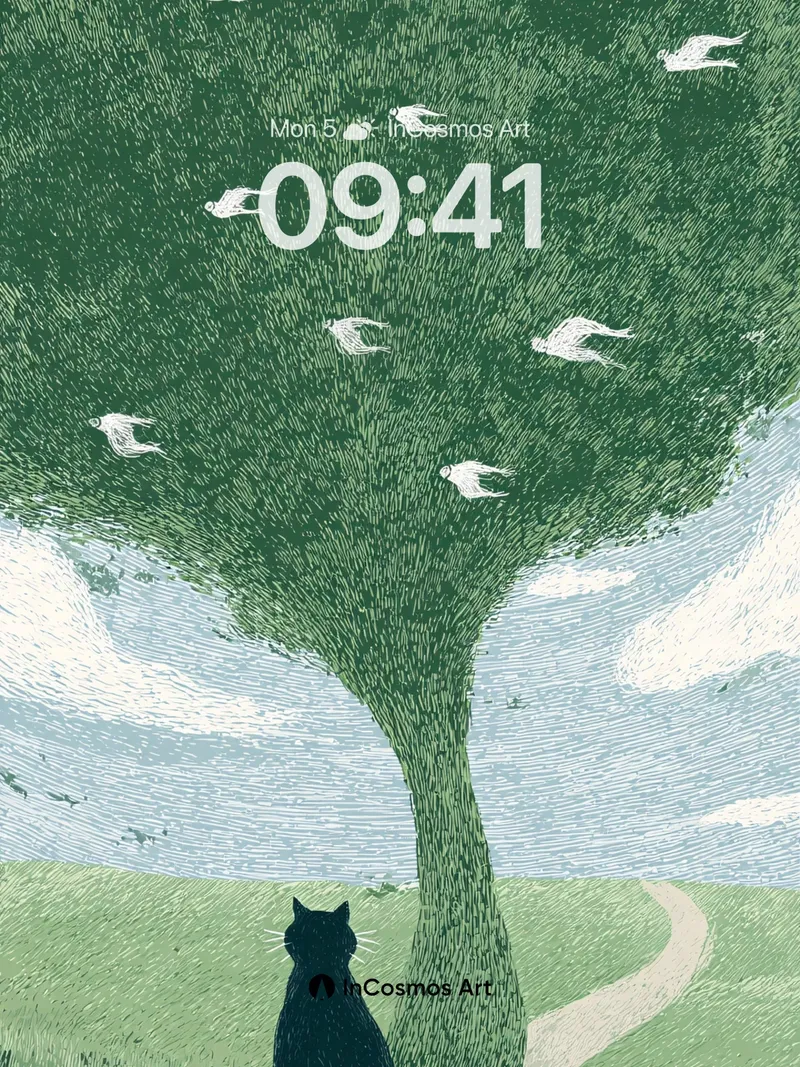
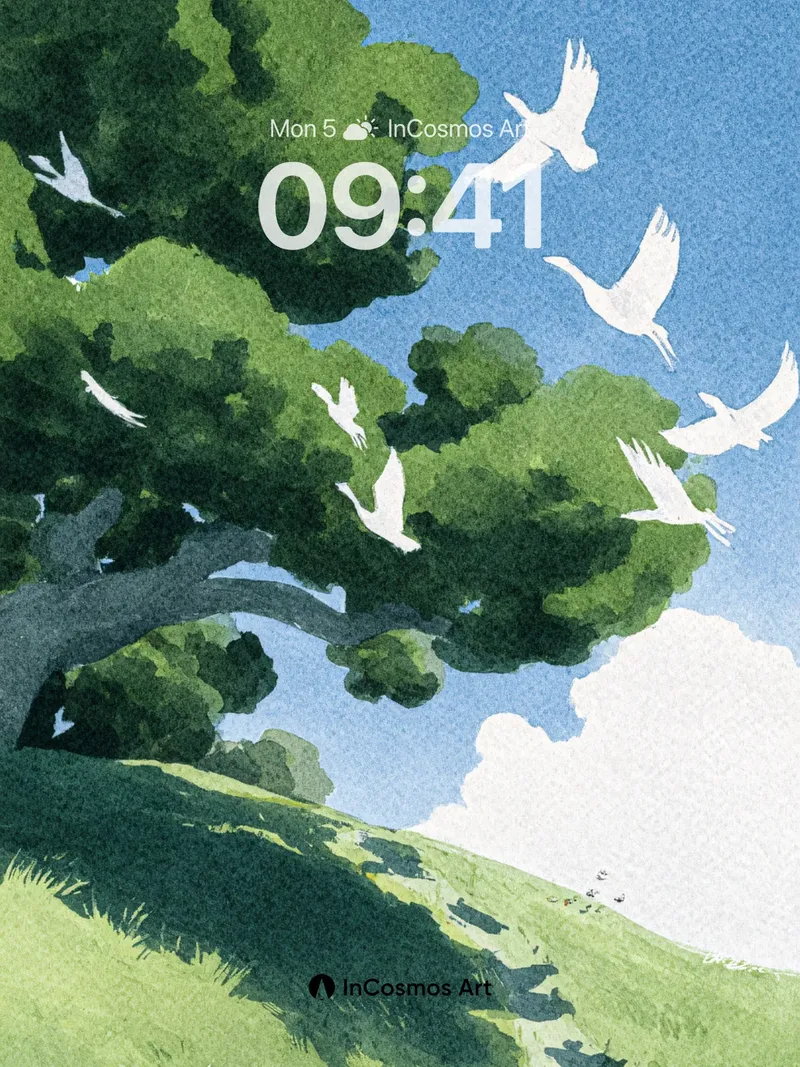
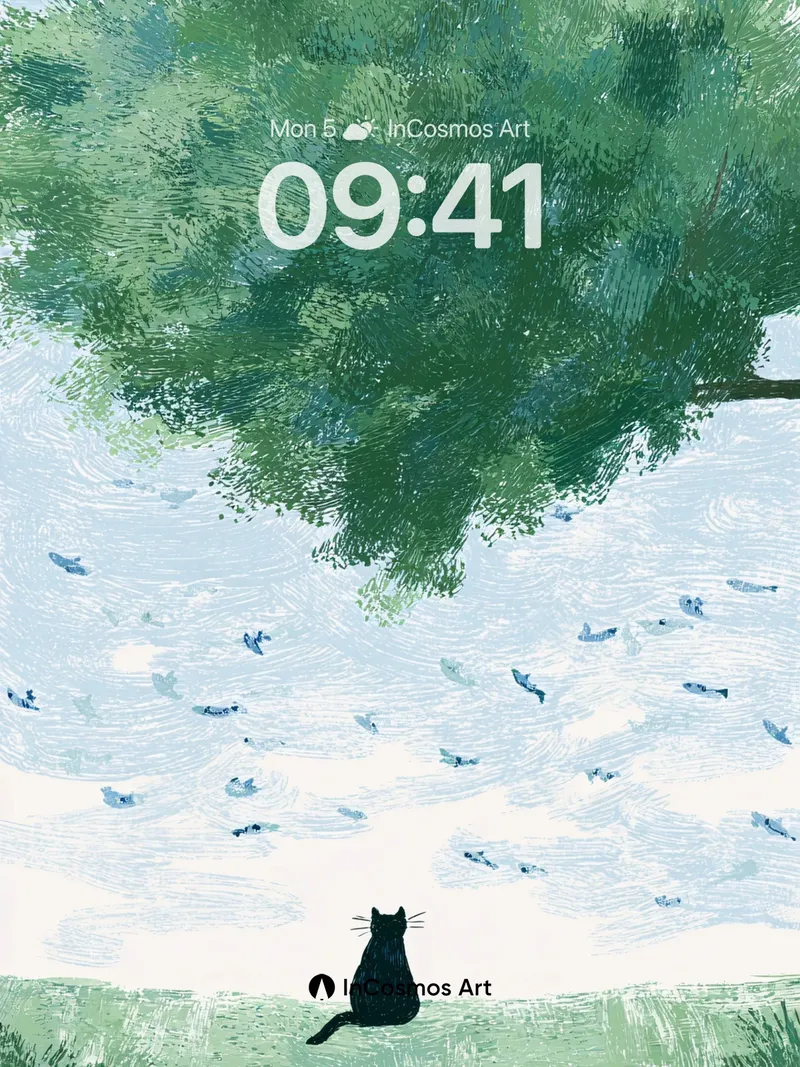
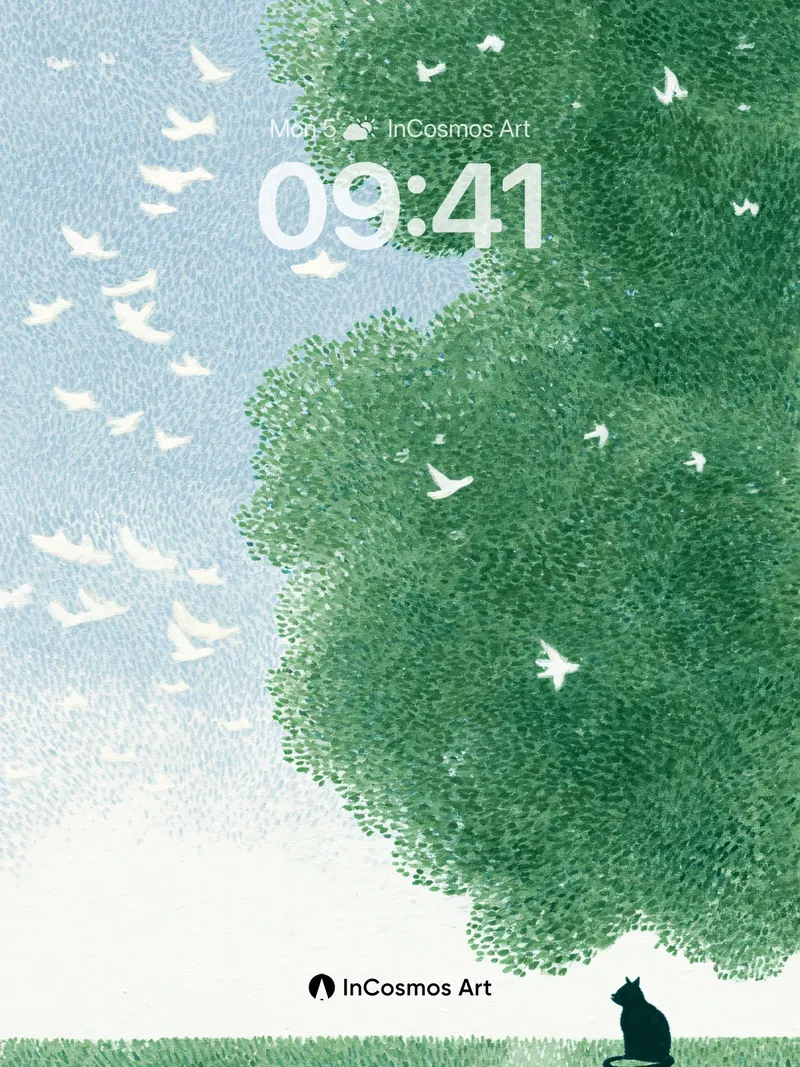
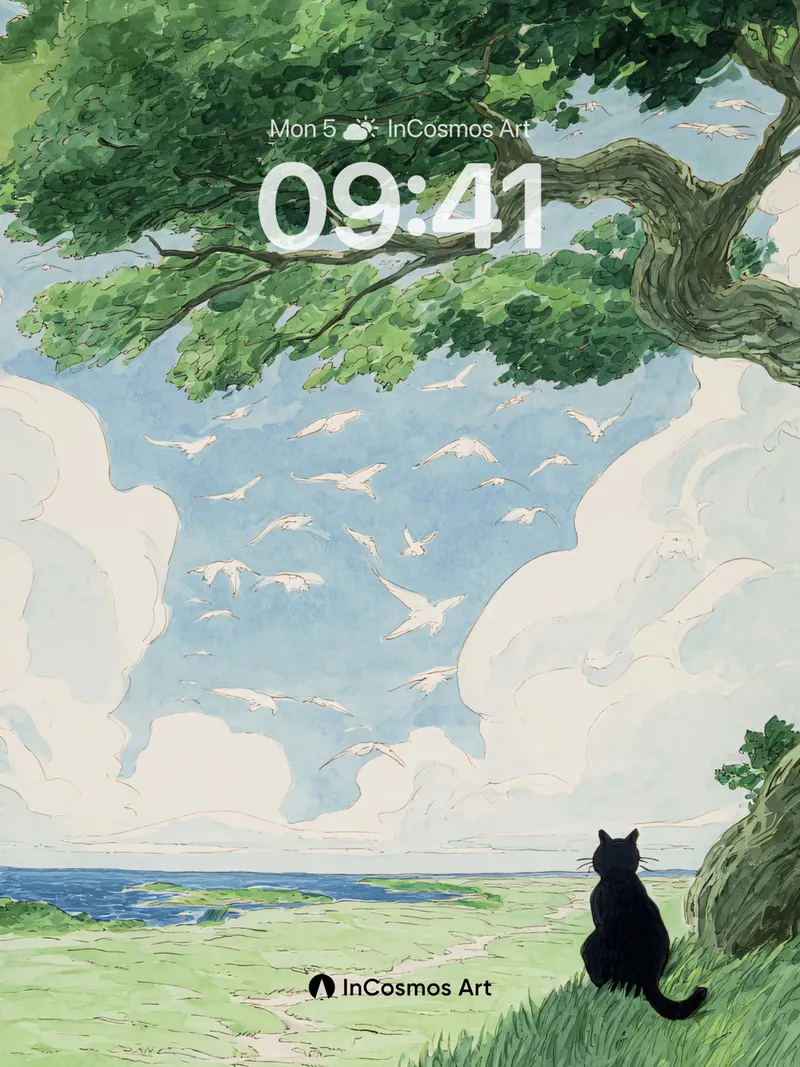
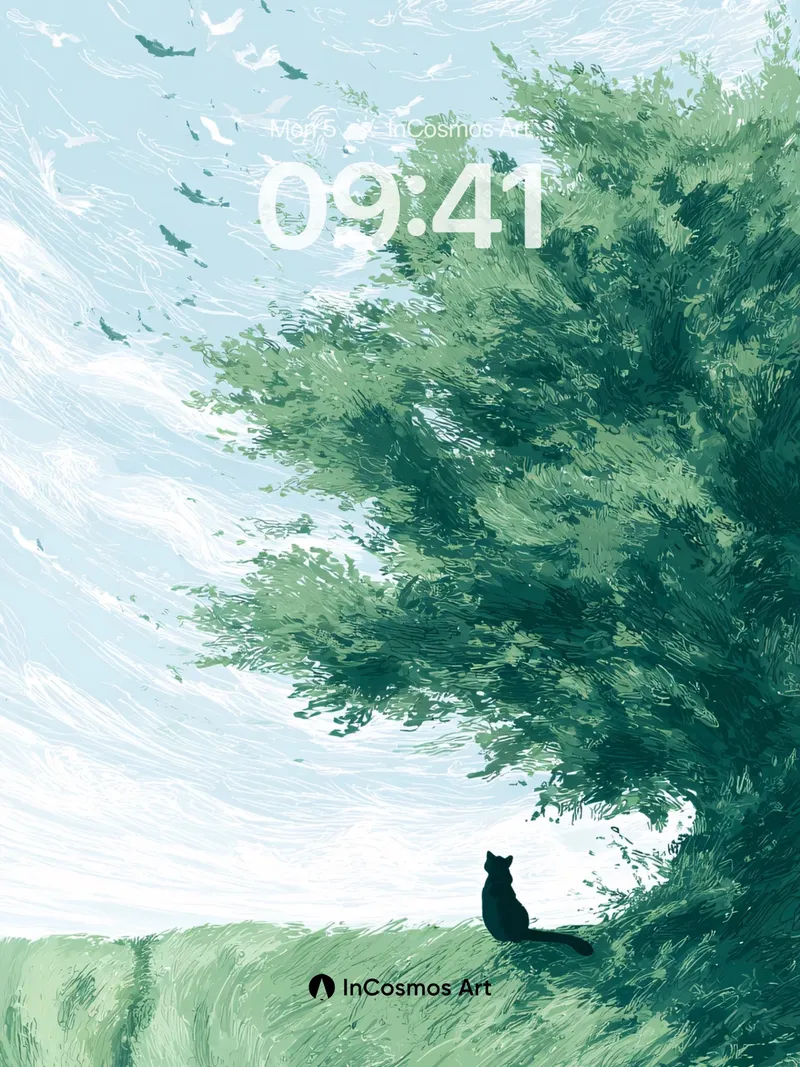
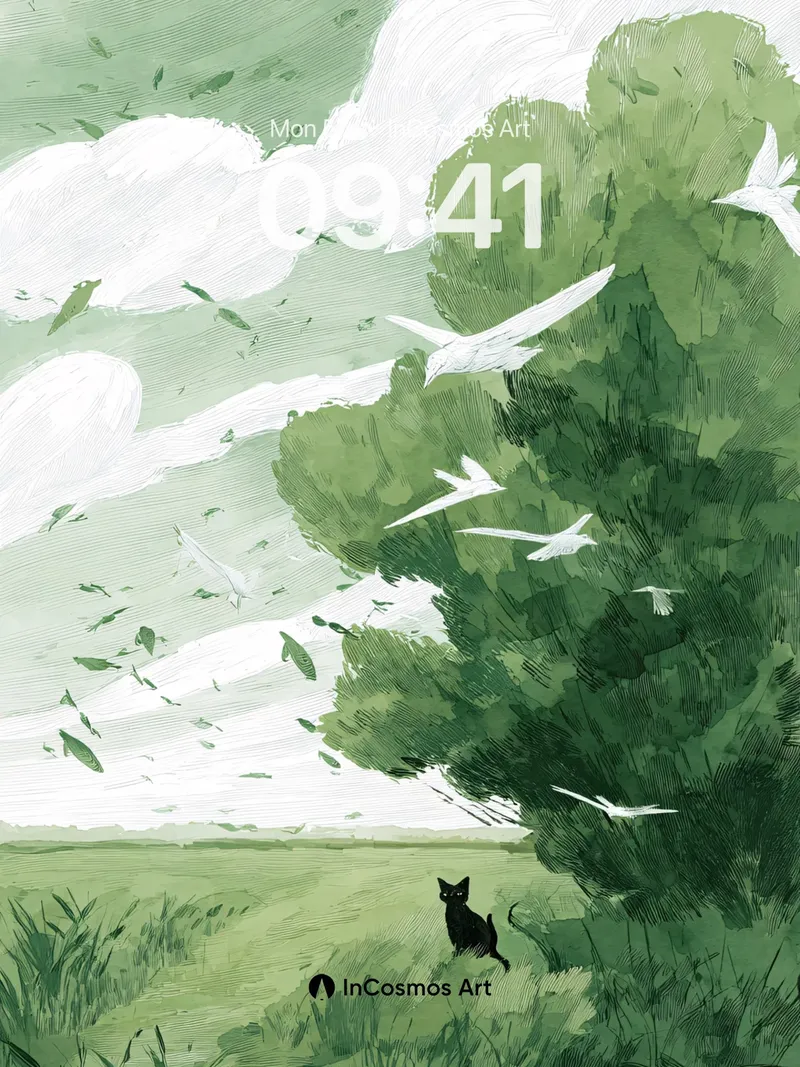
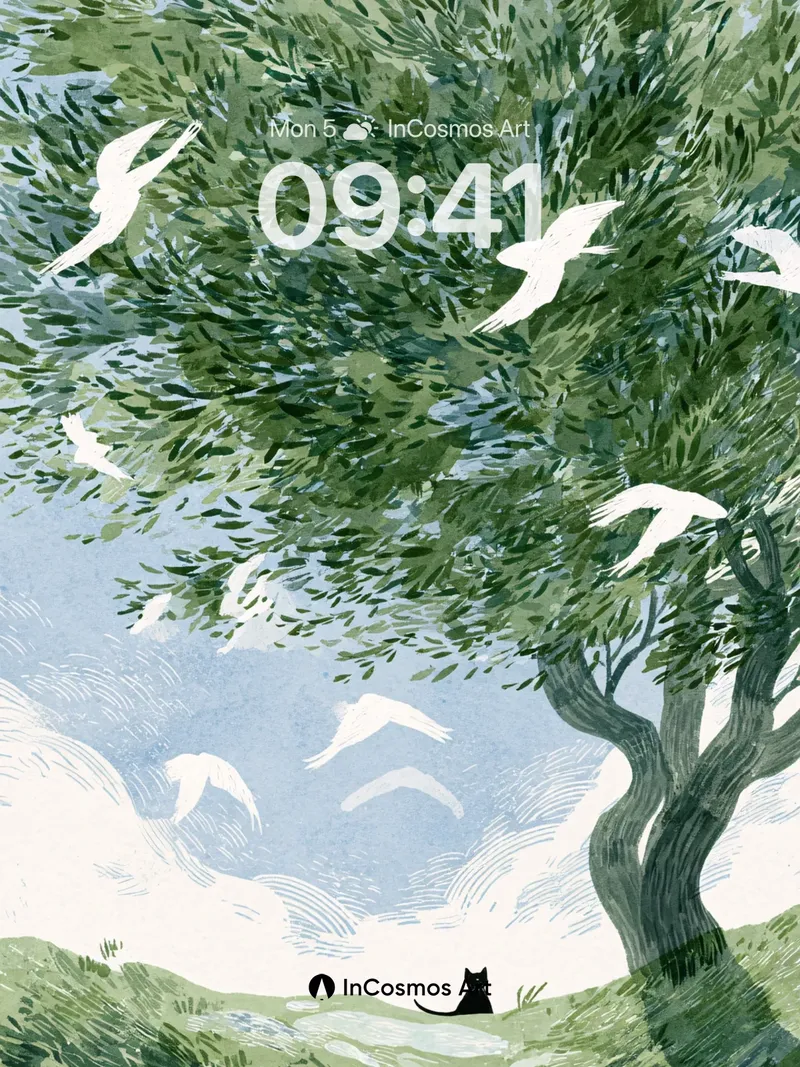
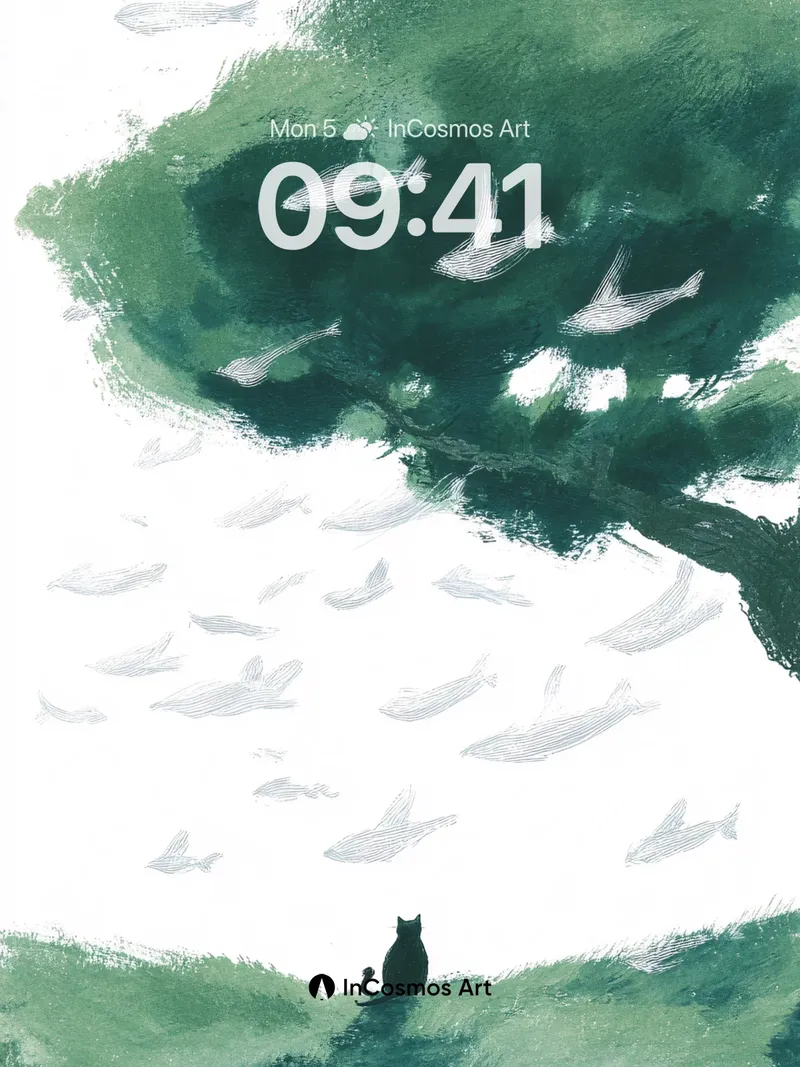
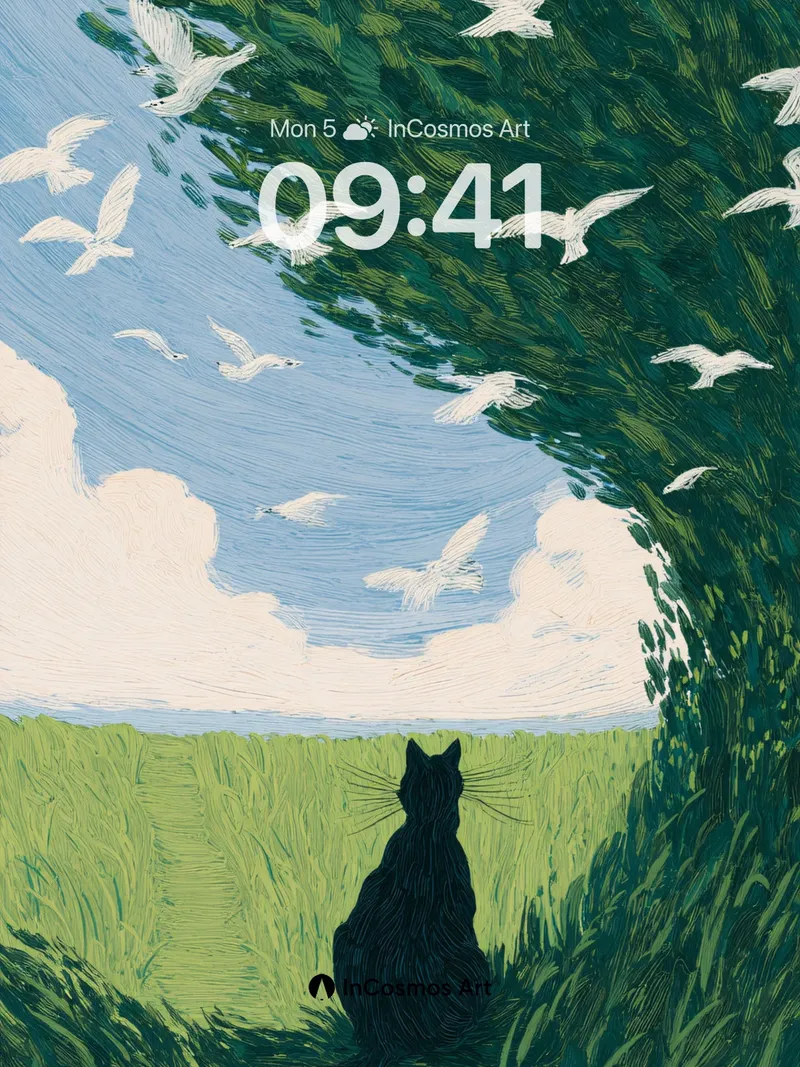
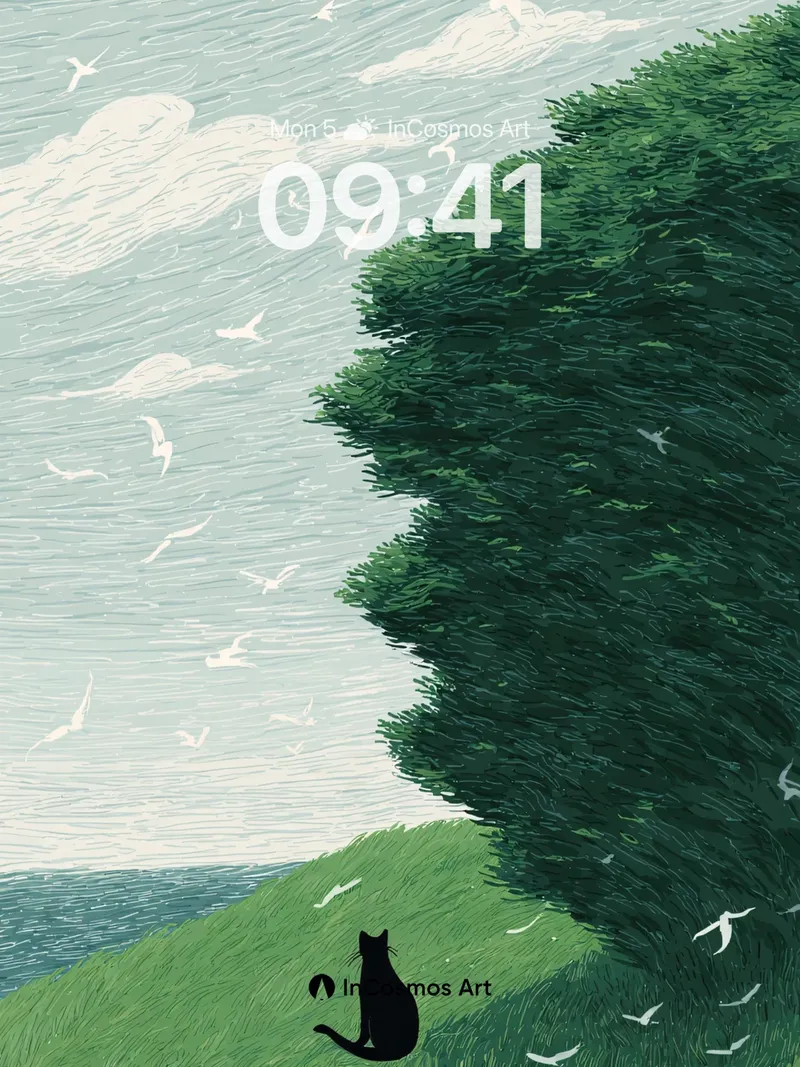
On an open green field, a black cat sits beneath the shade of a tree, gazing upward at flocks of white birds crossing the sky. Its posture is steady and focused, as if time has stretched, and the world reduces to only it, the drifting clouds, and the wings in motion. This is not mere observation but an expression of being—choosing stillness beyond noise, maintaining inner calm amid movement. The silence here is not emptiness, but a deep awareness of life’s rhythm. Nature becomes a mirror, reflecting the subtle relationship between individual and cosmos.
The Solitary Observer
The silhouette of the black cat stands out with clarity. It does not act, only watches. This non-participation embodies a modern longing—a symbol of inner desire. When information flows like birds in dense formation, people often fall into passive reception. The cat chooses another path: stillness responding to motion, solitude resisting collectivity. It is not retreat, but the active creation of mental space where consciousness can settle.
Birds and the Metaphor of Time
The birds’ paths form a dynamic order. They do not fly chaotically but follow unseen patterns. This evokes human society’s data streams, emotional shifts, and daily rhythms. Each bird appears briefly, yet together they weave a grand tapestry. The cat’s gaze offers a reverse interpretation of this collective motion—it perceives the whole, not individuals; rhythm, not events.
The Tree as Sanctuary
The dense foliage is more than physical shelter; it is a psychological boundary. It isolates the cat from external chaos, creating a safe vantage point. The canopy curves like a dome, offering protection without blocking sight. This structure suggests an ideal mental dwelling: independent yet inclusive of the outside world. It is nature’s refuge, also the beginning of self-awareness.
A Philosophical Moment in Nature
These scenes are not accidental landscapes but deliberately composed meditative spaces. The cat’s position, the birds’ direction, the light distribution—all guide the viewer into contemplation. Here, vision is not just sensory input but a medium for thought. Every breath, every glance, participates in a silent dialogue—about existence, freedom, and belonging.