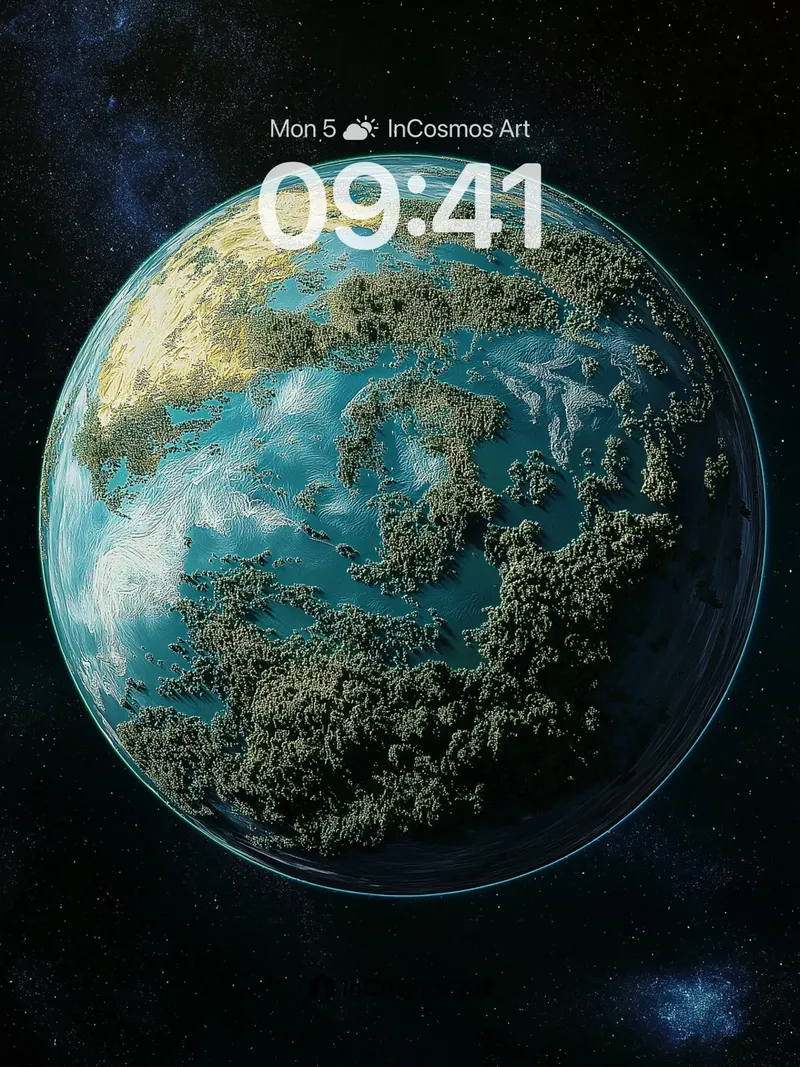
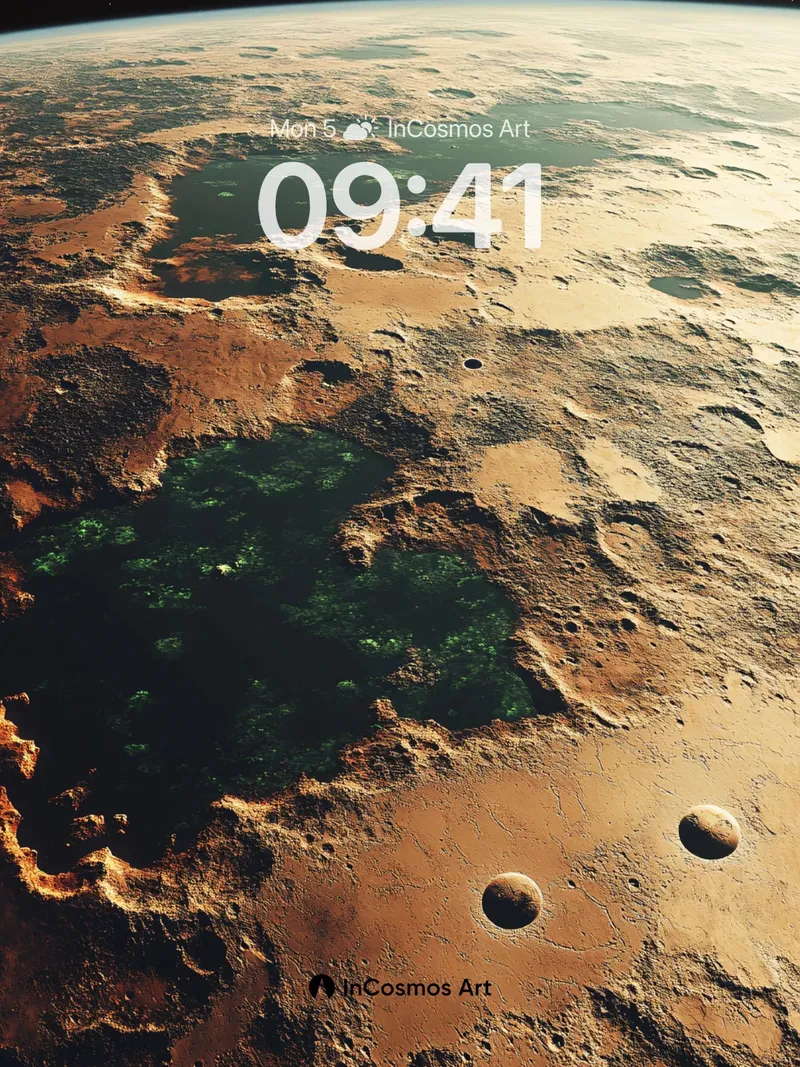
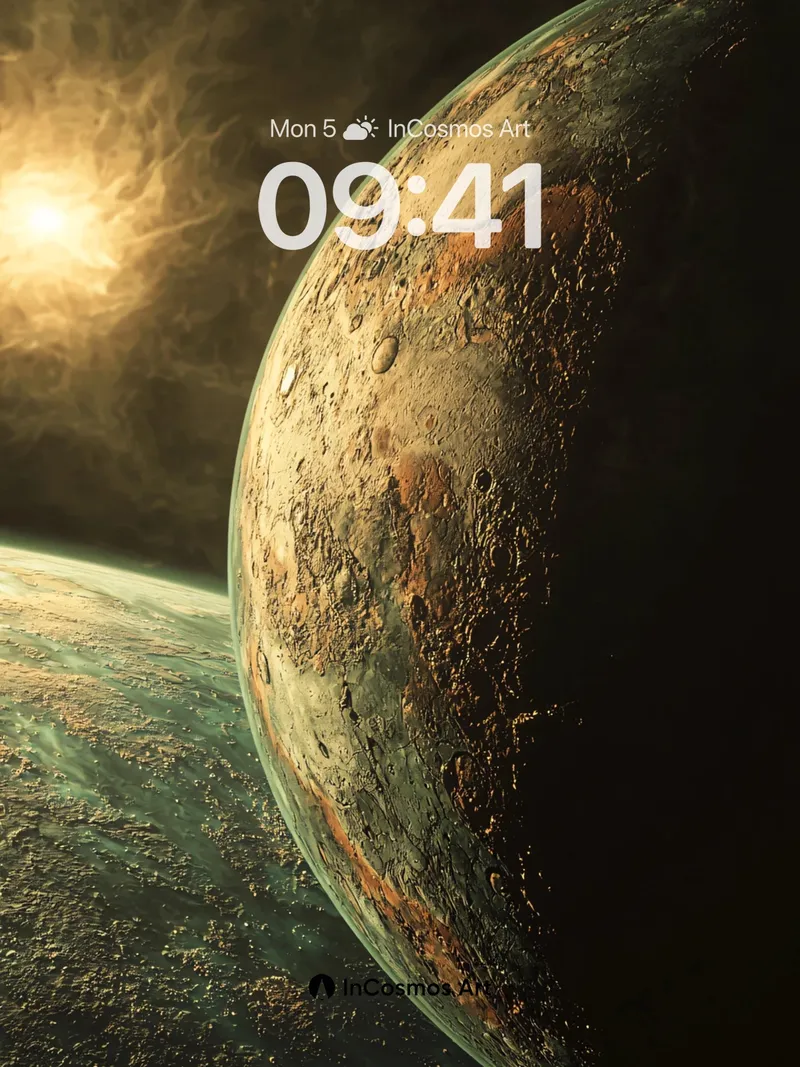
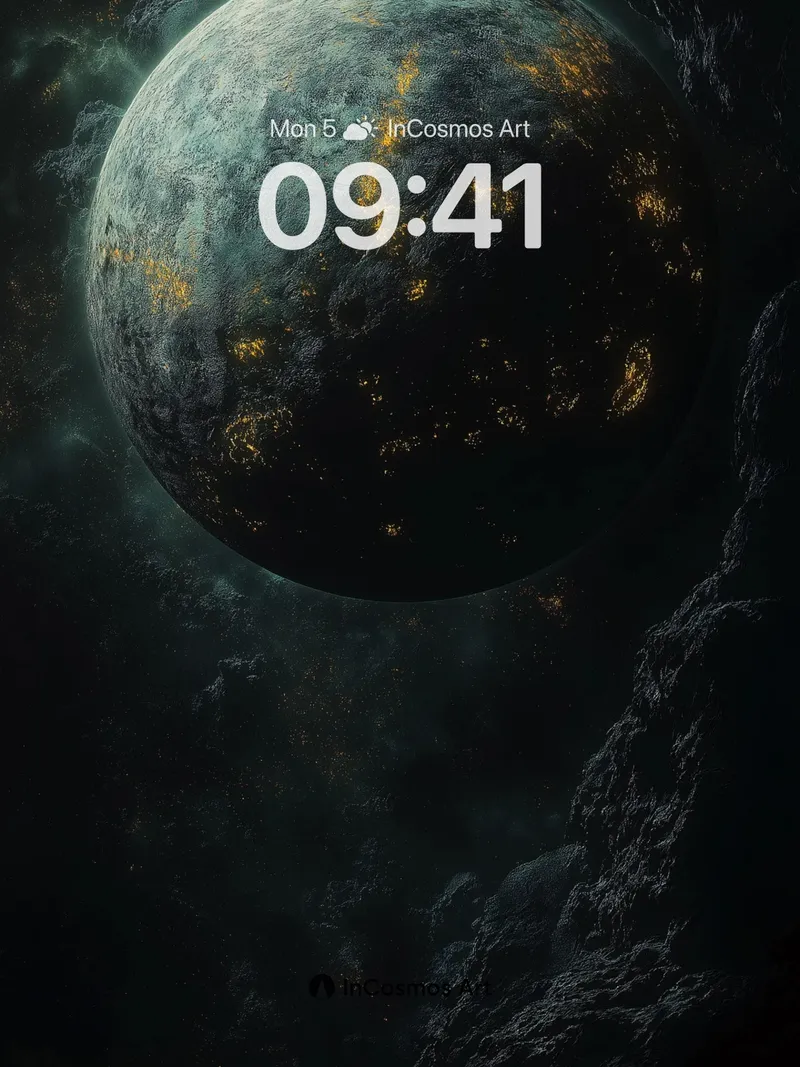
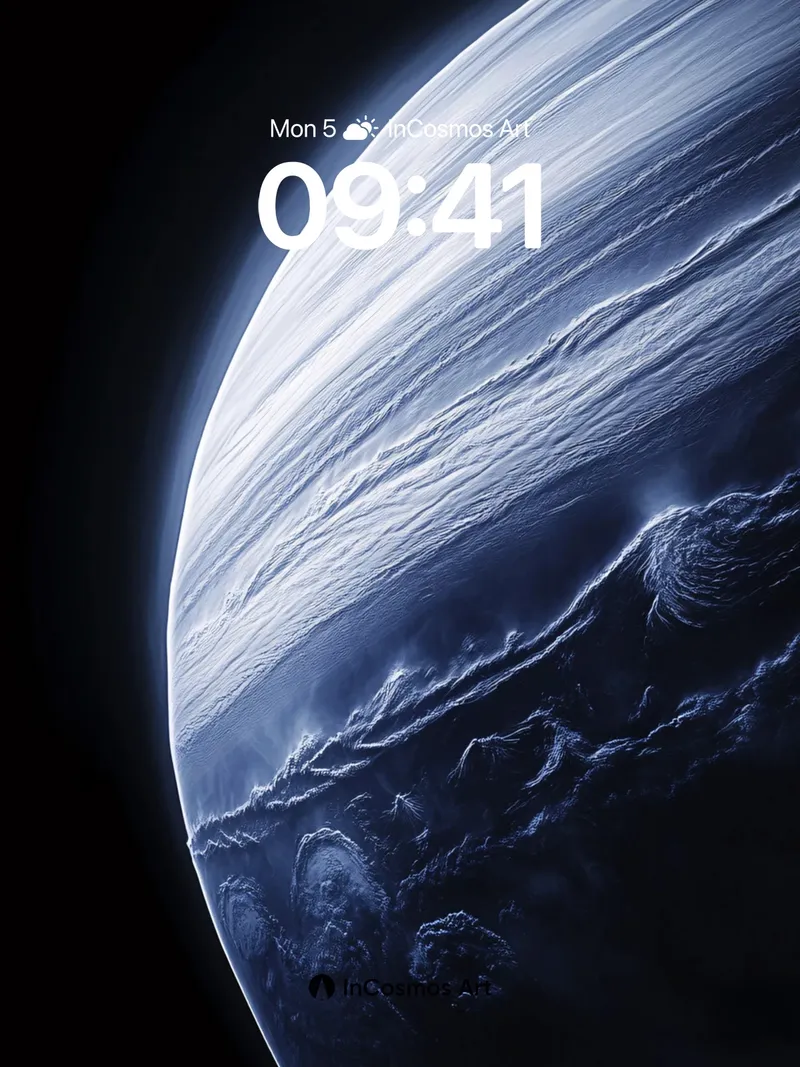
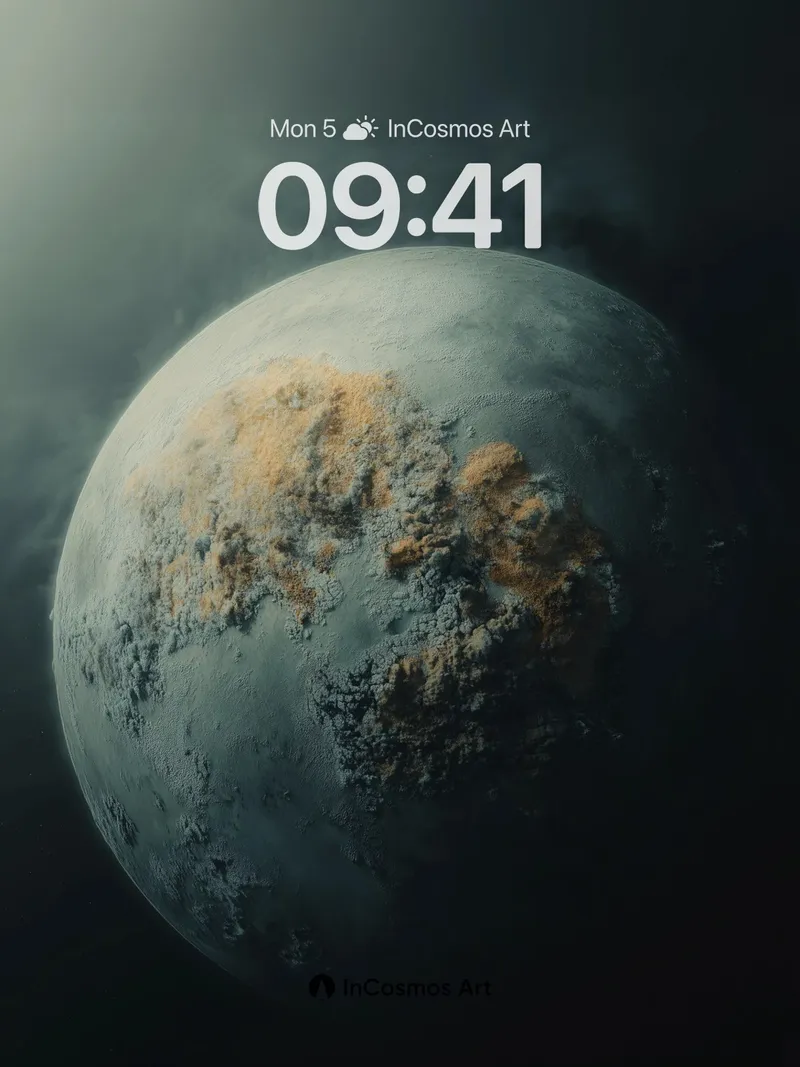
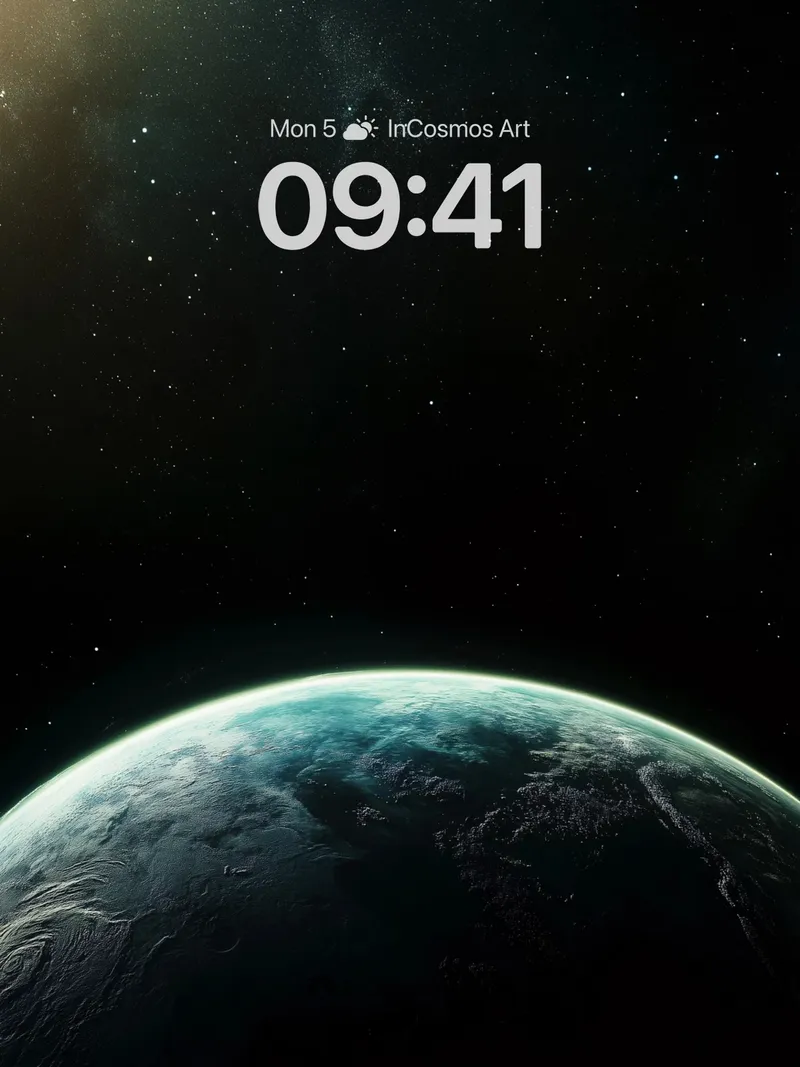
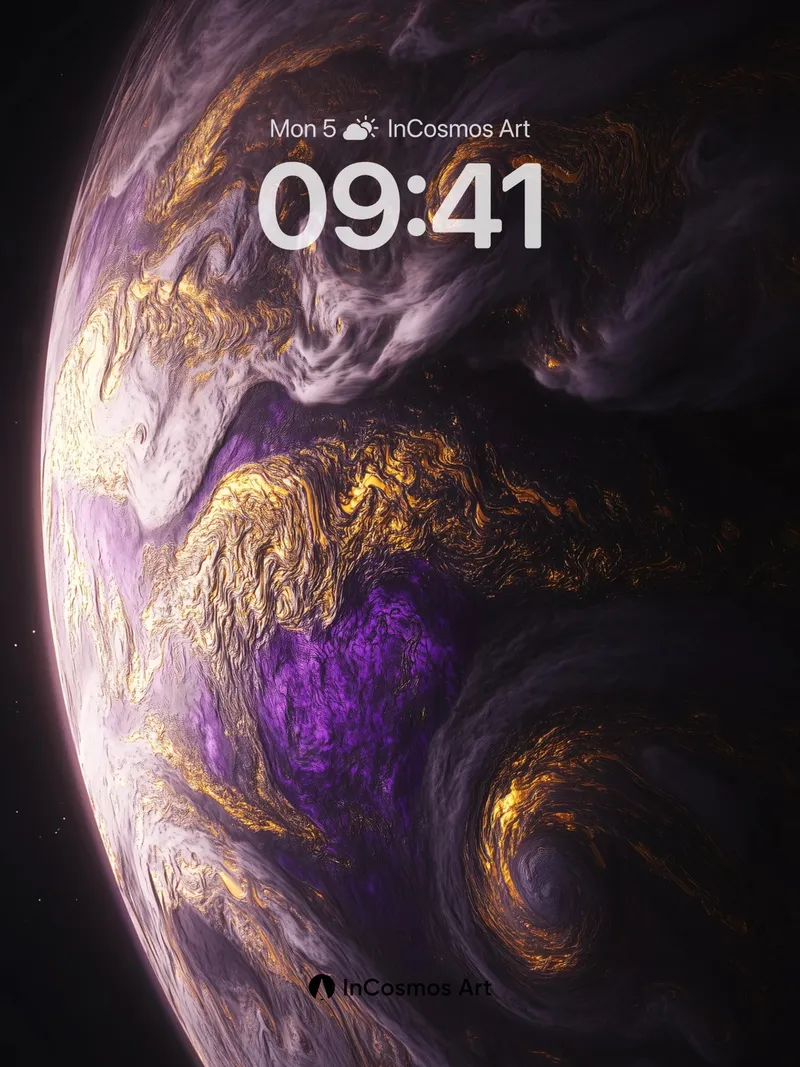
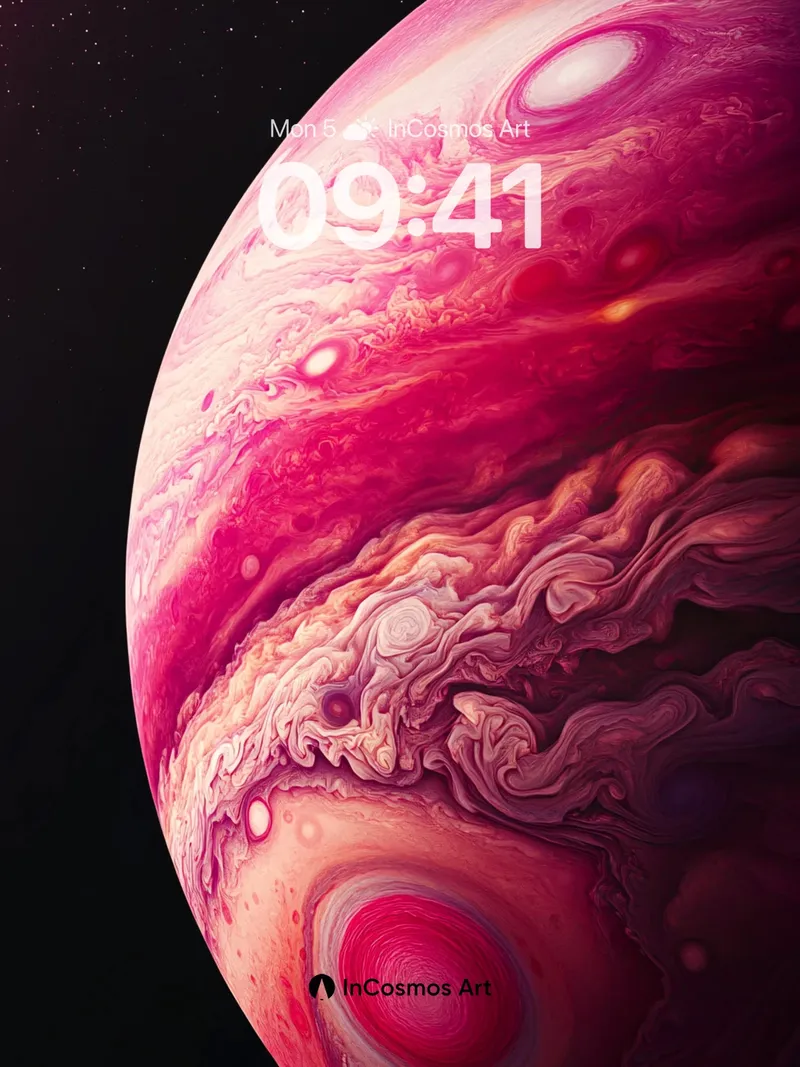
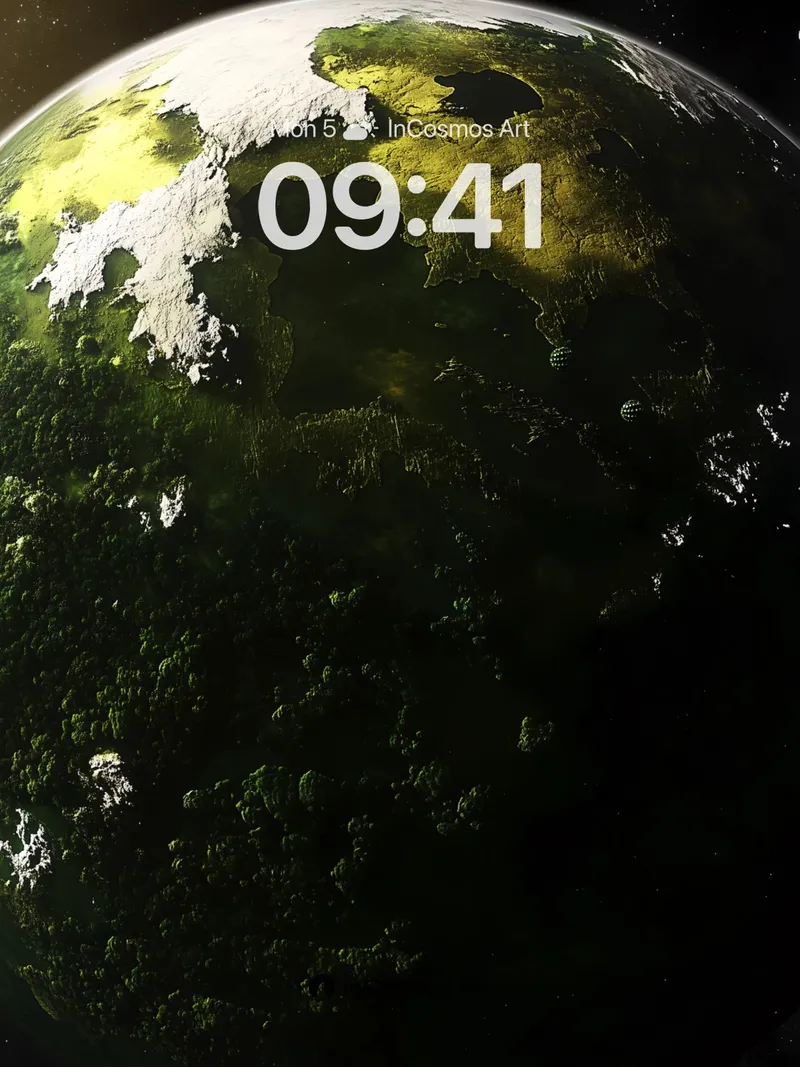
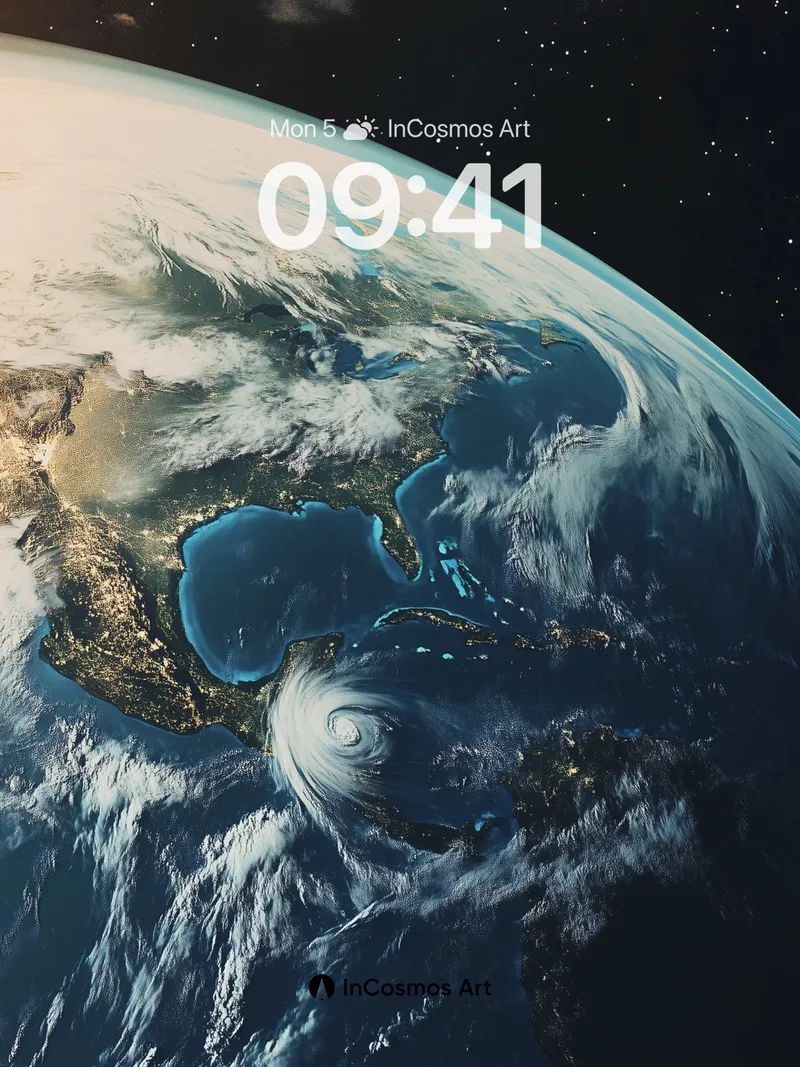
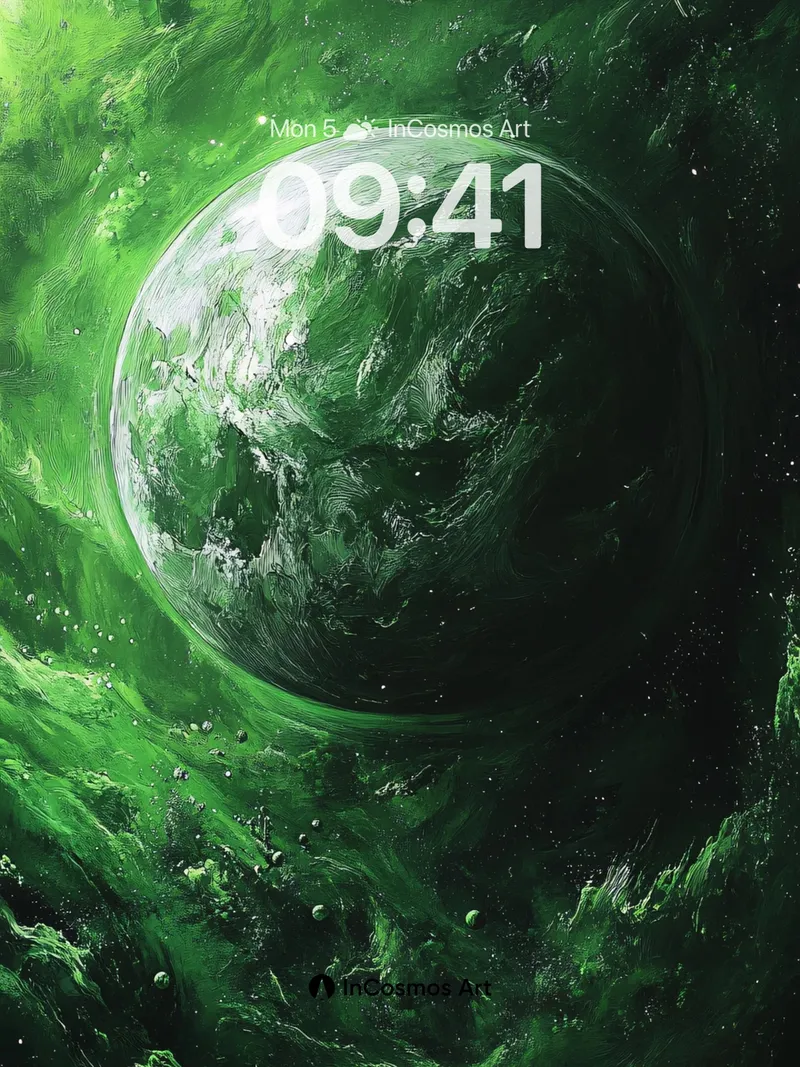
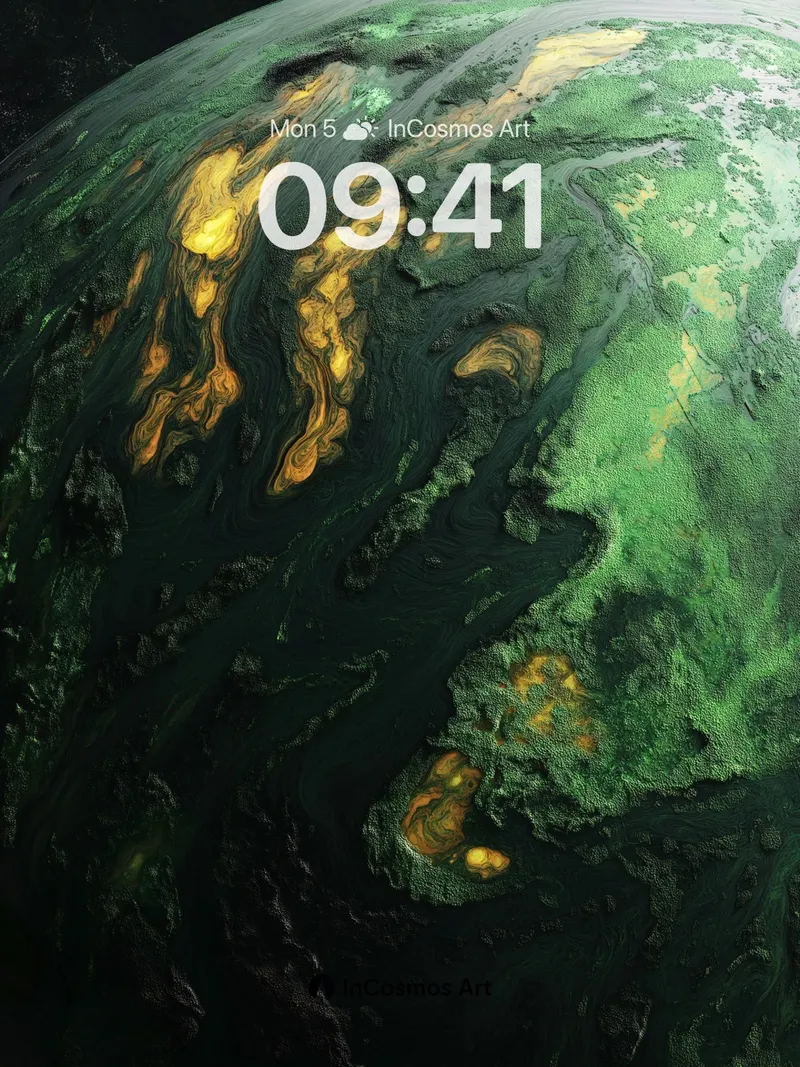
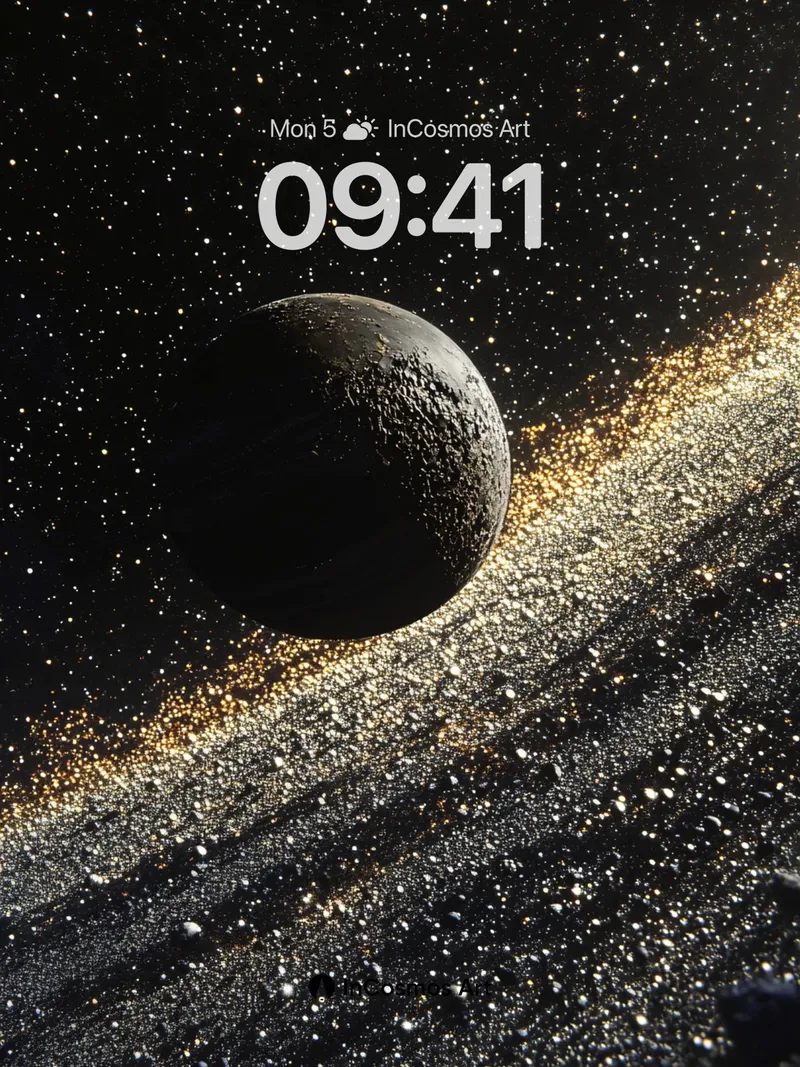
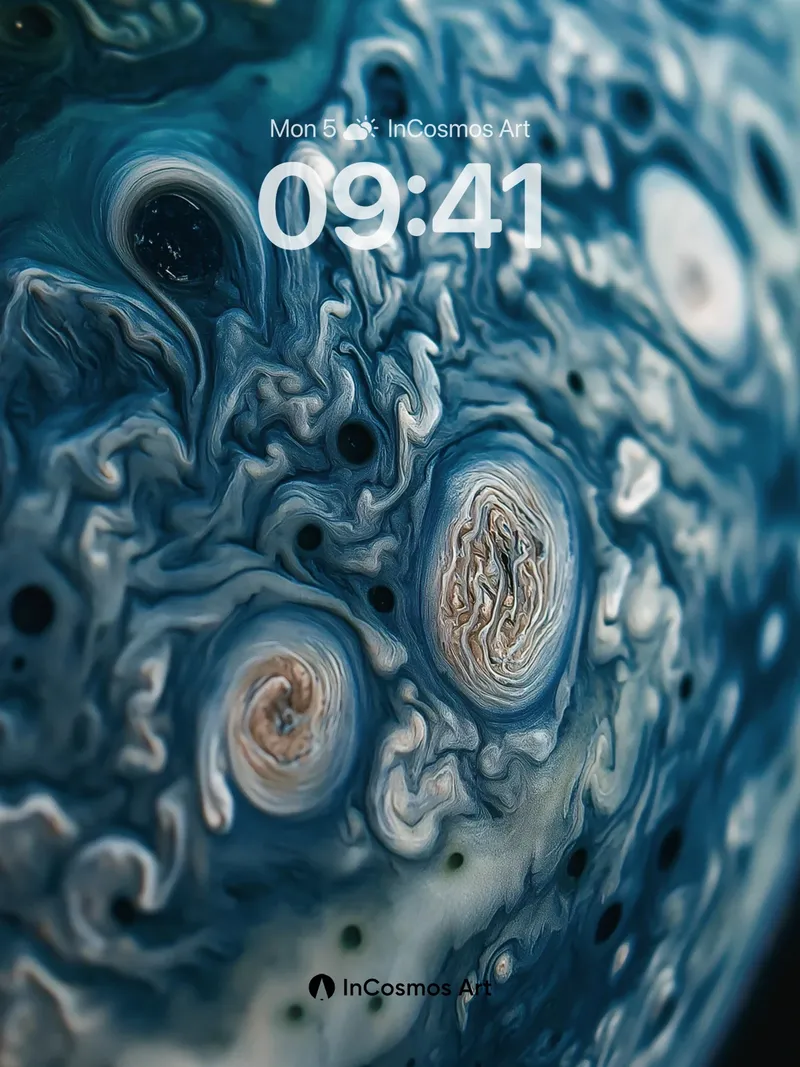
In the boundless darkness, planets resemble forgotten dreams, each expressing the breath of the cosmos through distinct forms. They are not static spheres but living entities shaped by time, energy, and matter. Some surfaces are covered in sea-like greenery with cloud veils drifting above, as if land itself is slowly breathing; others display deep blue swirls like molten metal boiling, hiding storm pulses beneath. Still others float within stardust rings, resembling celestial hourglasses, their silhouettes flickering in light halos. These celestial textures are not merely natural scars but symbols of existence—an epic narrative beyond human scale.
The Skin of the Cosmos
A planet's surface is its most direct language. Rolling green continents suggest the possibility of life, while frozen regions convey solitude and eternity. When sunlight strikes at an angle, shadows carve out topographic depth, making every fold appear to hold a hidden history. This visual layering is not accidental but the result of geological evolution and atmospheric cycles. It creates a nonverbal dialogue, allowing observers to sense distant worlds' inner rhythms.
Beauty in Chaos
Blue-and-white spirals reveal the complexity of fluid dynamics. These patterns are not decorative but true depictions of cyclones, ocean currents, or plasma movements. They present abstractly the boundary between order and disorder, reminding that nature knows no absolute stillness. Chaos is not flaw but manifestation of dynamic balance. Within these rotating vortices, one can feel the fundamental laws of the universe—energy flows continuously, forms constantly reconfigure.
Isolated Celestial Bodies
Some planets drift alone among stars, encircled by delicate stardust bands, like solitary sentinels. Their surfaces are scarred with craters, recording countless impacts. This desolation is not silence but a quiet strength. In such environments, time loses linearity; past and future converge. Their mere presence constitutes part of cosmic memory, silently witnessing galactic rise and fall.
The Philosophy of Color
Interwoven purple and gold clouds present surreal beauty, challenging conventional notions of 'nature.' This color combination does not mirror Earth’s ecosystems but results from unknown chemical processes. It provokes thought about life’s diversity: must all life rely on oxygen? Could intelligence emerge under entirely different physical conditions? These questions transcend science, entering philosophy and imagination.