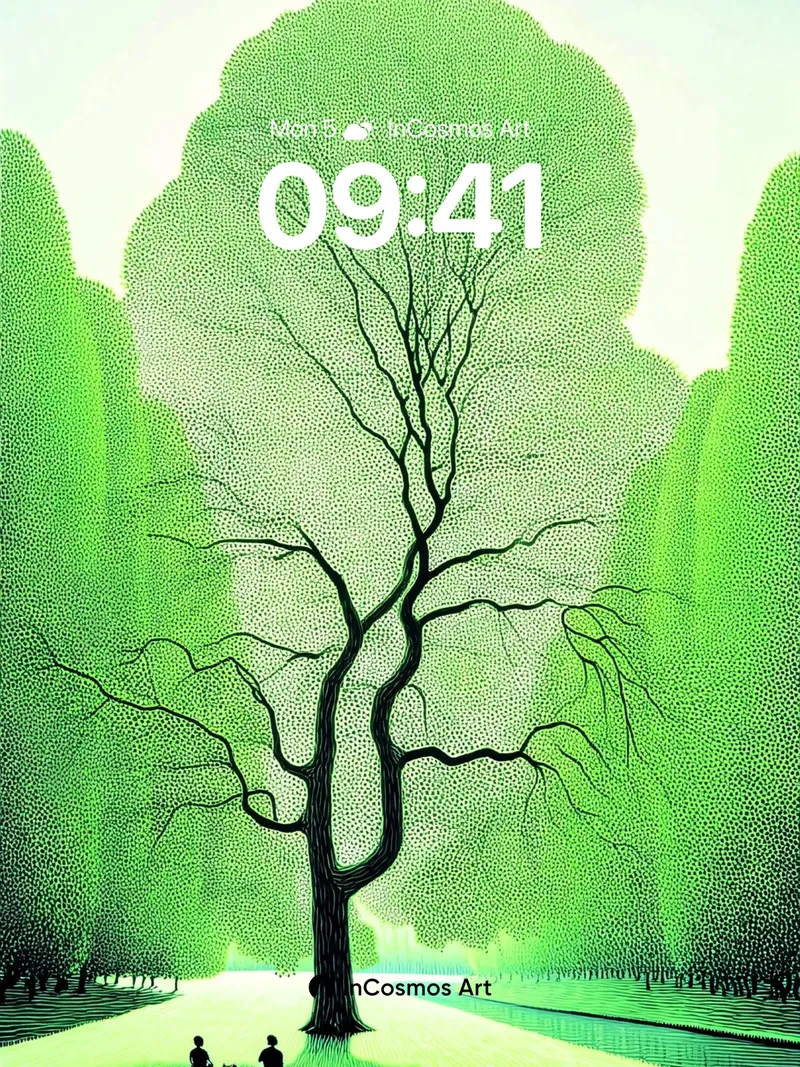
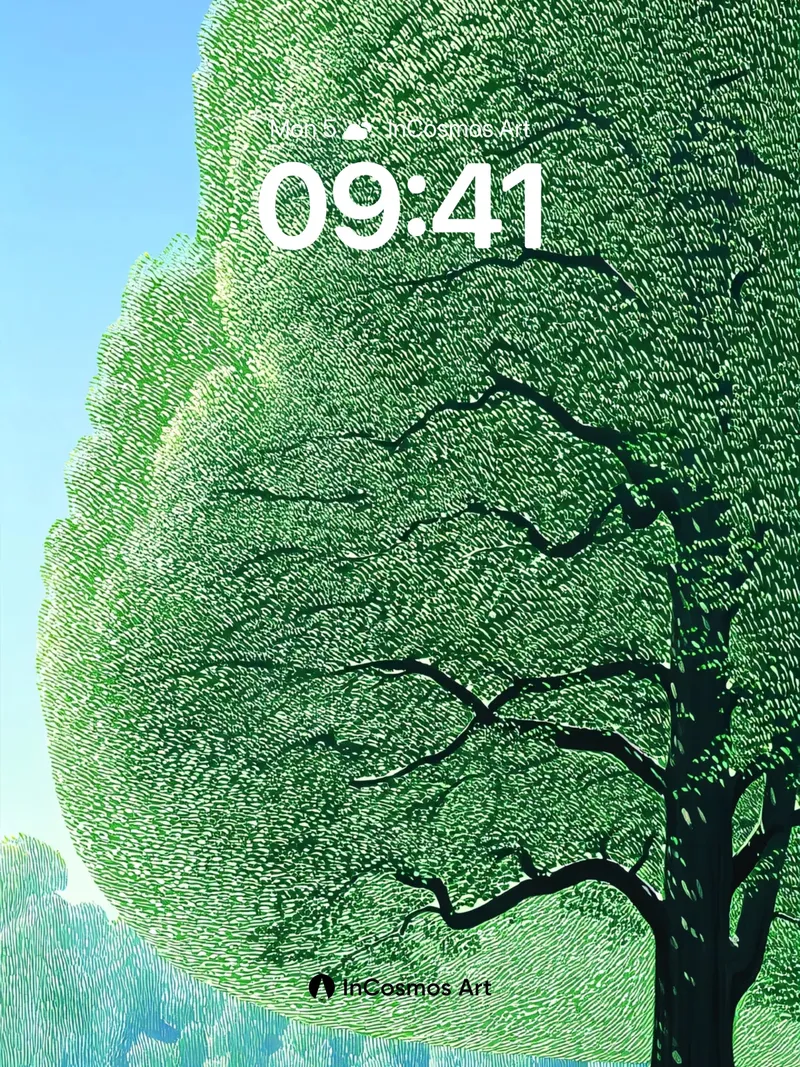
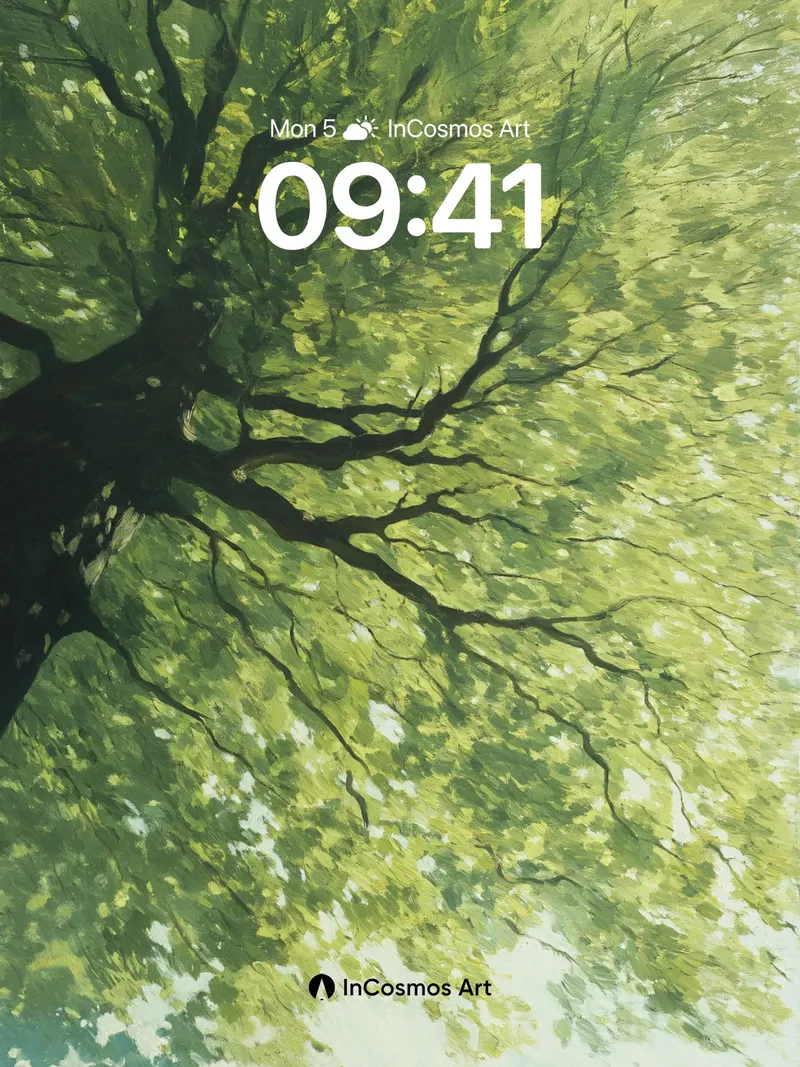
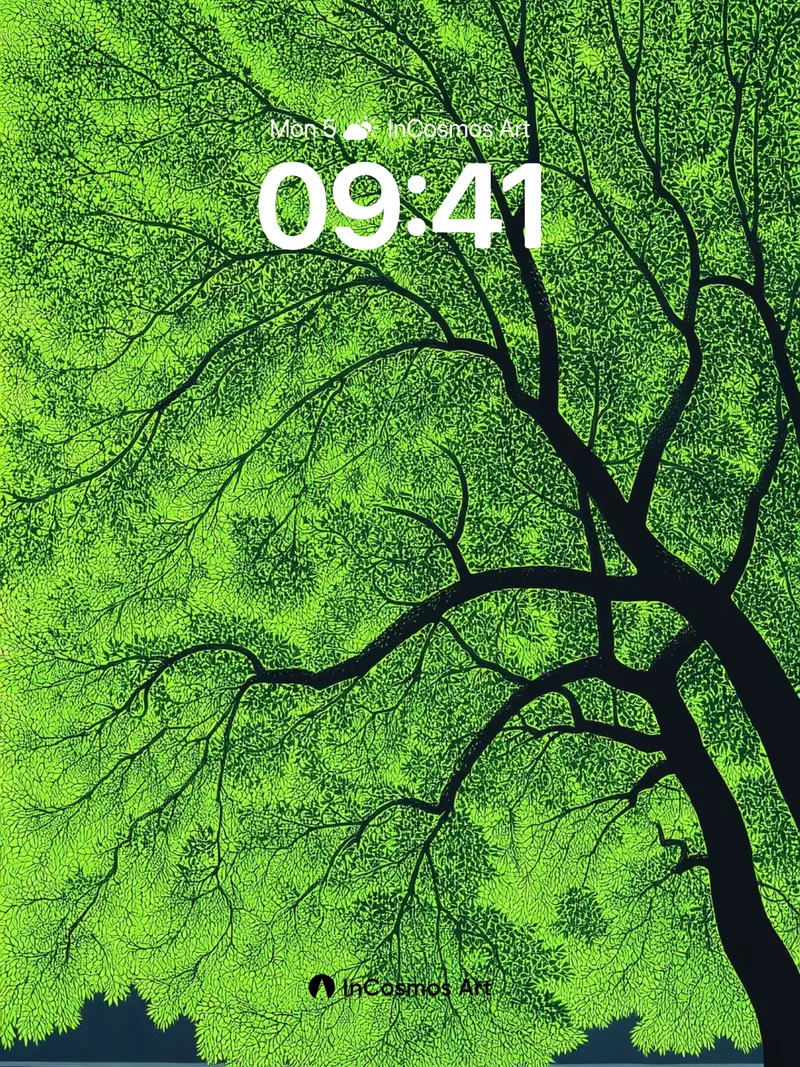
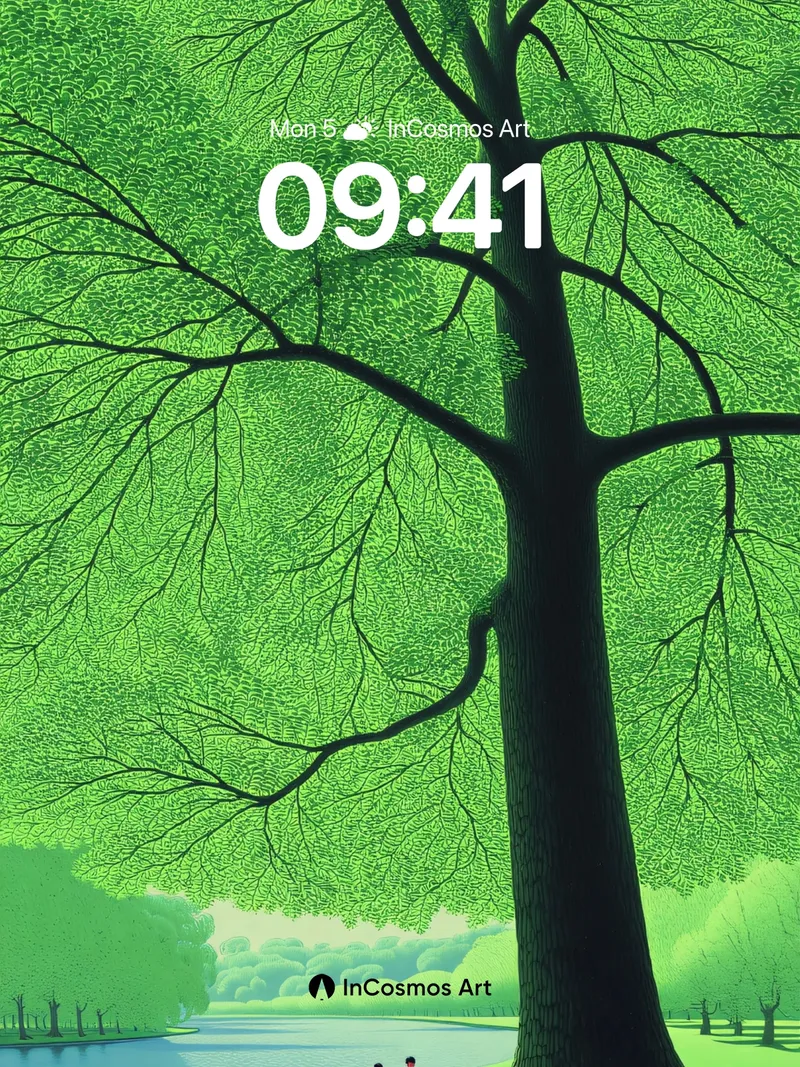
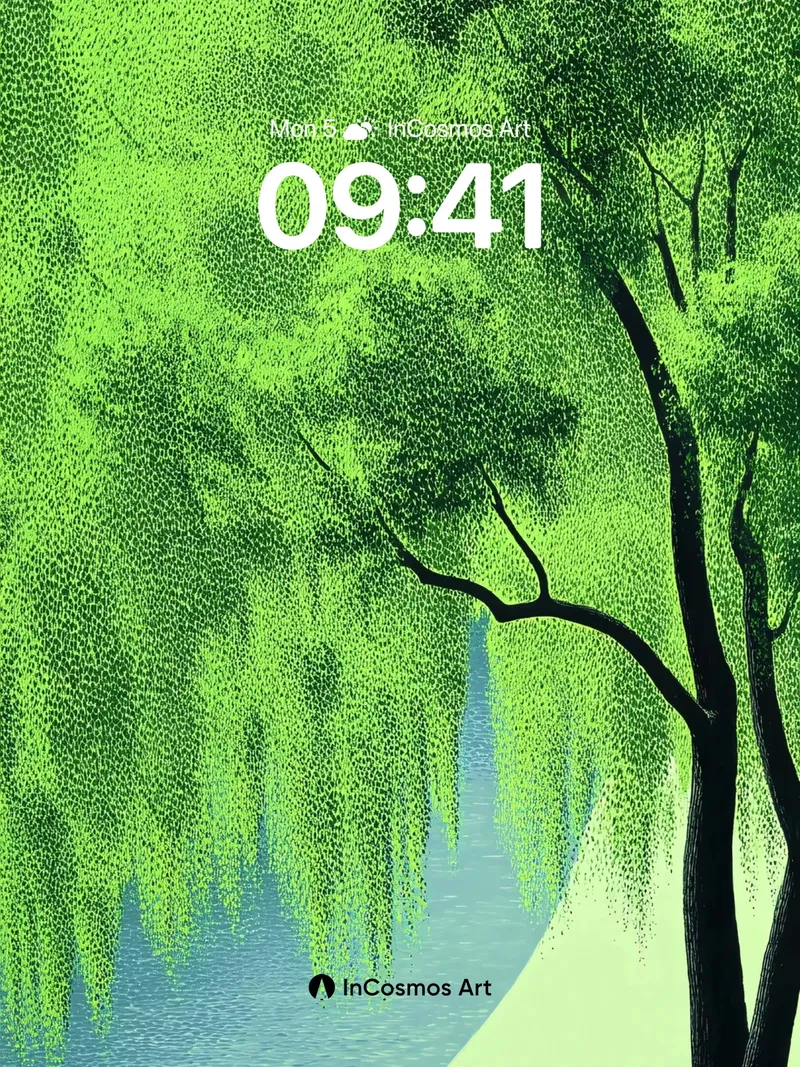
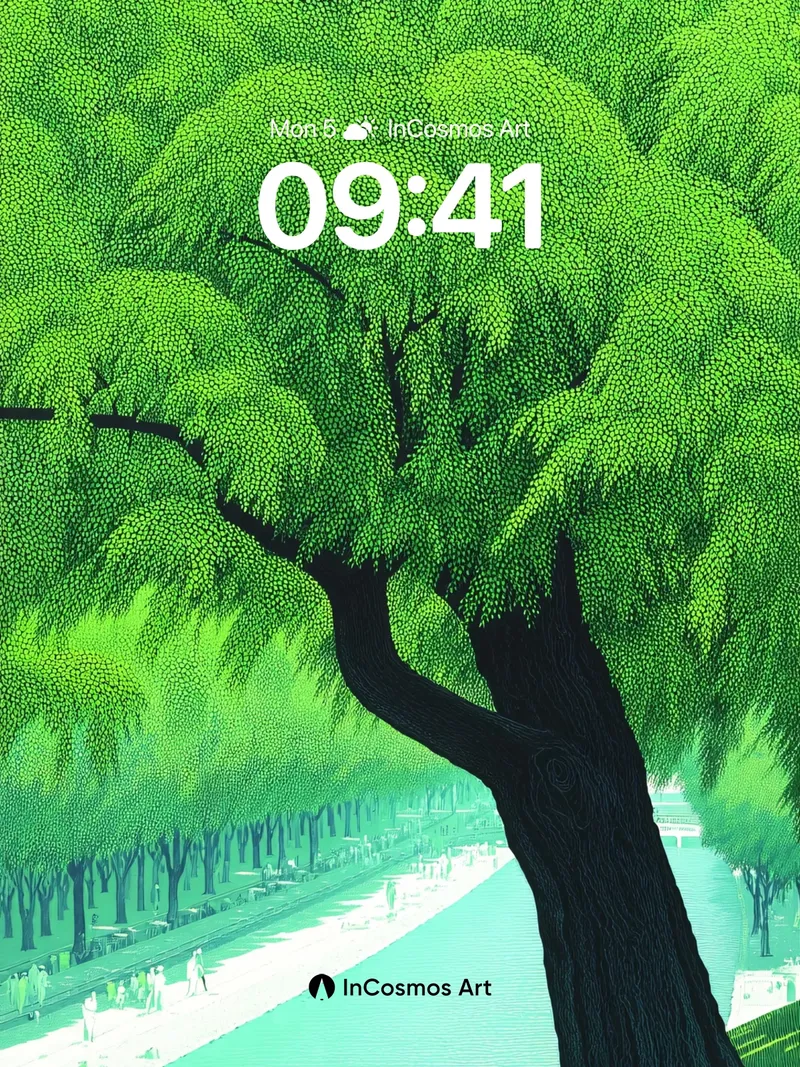
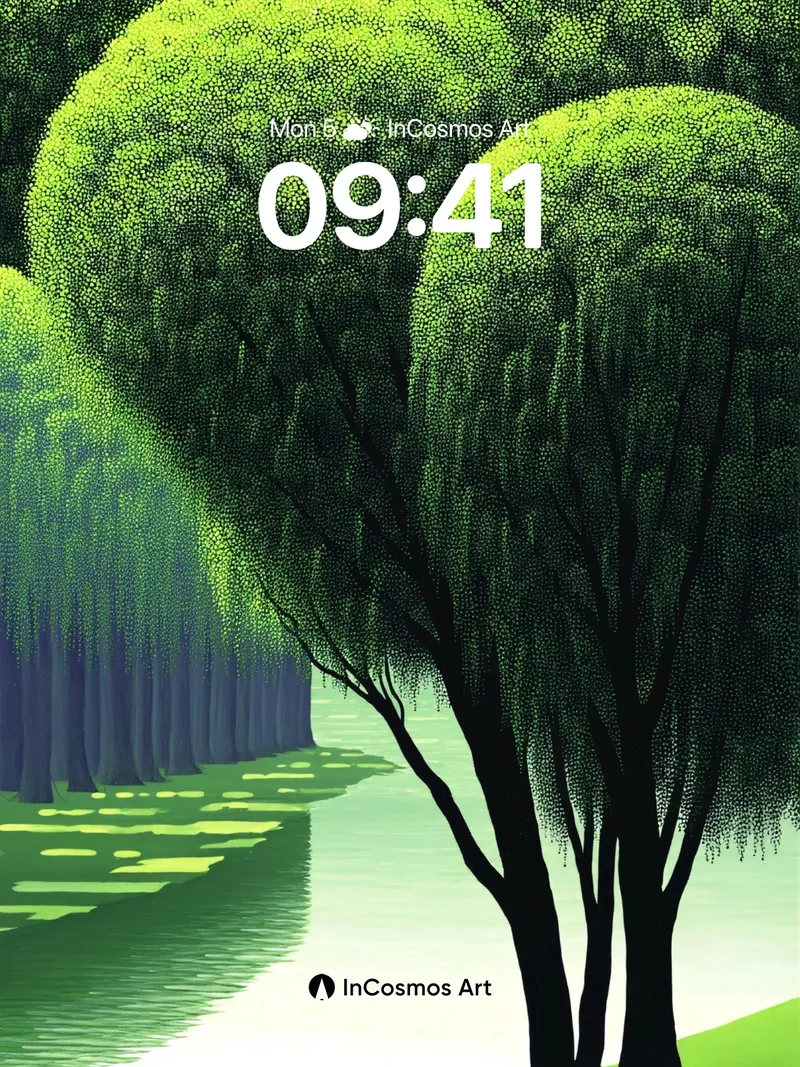
Sunlight filters through dense foliage, casting dappled patterns on the ground. Three silhouettes stand beneath a colossal tree, seemingly frozen in time. Facing a bright glow, their forms small yet resolute. This is not chance, but a ritual return—to the earliest way of perceiving the world. The canopy arches like a dome, shielding the sky and sheltering human presence. Green is more than hue; it is emotional substance, a convergence of growth, silence, and hope. Within this space, individuality expands, then quietly dissolves before nature. There is no boundary between person and environment—only mutual breath.
The Scale of Nature
The tree's branches stretch across the entire field of vision. Its height surpasses human imagination, roots buried deep in soil, linked to an unseen underground network. It speaks not, yet holds seasons and cycles of life. People walk beneath it, as if moving through fissures in time. The shadow’s movement is slow and regular, like clock hands marking daylight’s passage. Dust stirred by children running proves transient existence. Their motions are light, yet leave indelible traces in greenery. These marks are not destruction, but participation—a response of life to nature.
Trajectories of Childhood
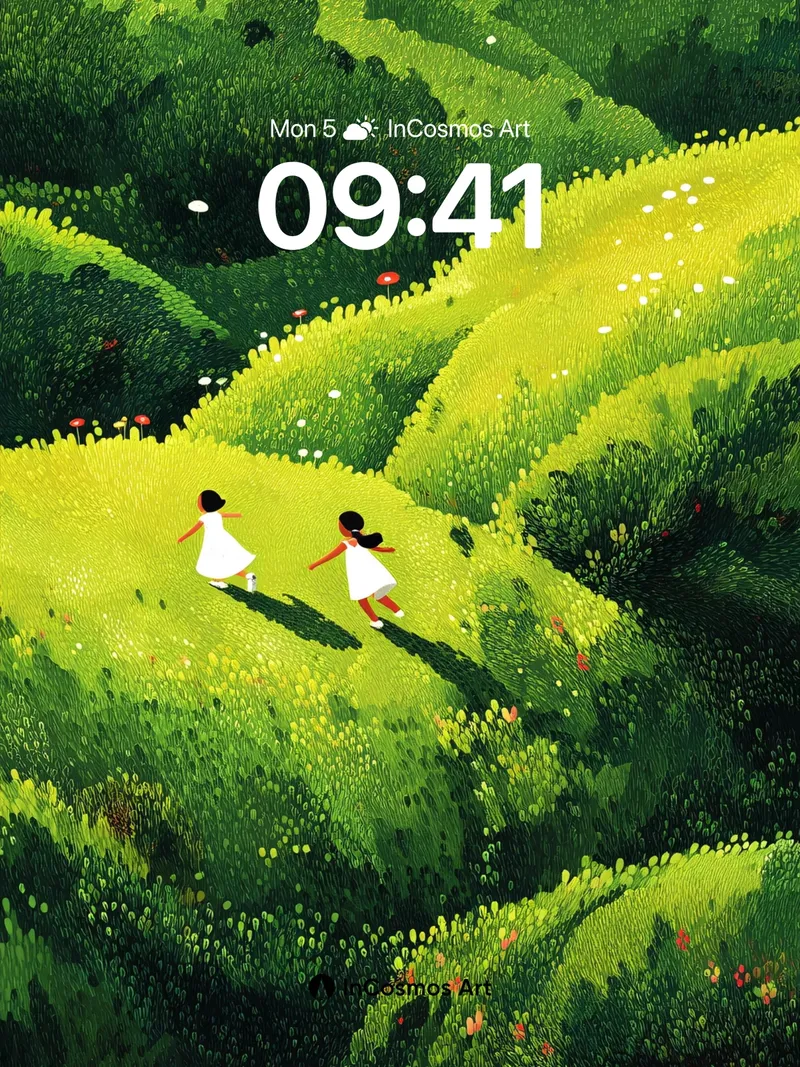
Two children run side by side, one in red, one in white, colors distinct yet harmonious. Their steps disturb grass, sending dandelion seeds drifting into air. These floating fluffballs symbolize freedom and uncertainty, carried away by wind, ungraspable. Their bodily language radiates energy—arms swinging, hair flying—as if defying gravity. They do not flee toward a destination, but inhabit the act itself. Each leap redefines the world. This aimless motion is childhood’s purest expression.
Topology of Memory
When gaze rises from ground to crown, a meditative state emerges. Branches intertwine, gaps in leaves reveal points of light like constellations. One walks within, both observer and observed. Shadow shapes shift continuously with sun’s path, reconstructing visual form. This dynamic structure becomes memory’s topology—nonlinear, illogical, yet sensorially real. It does not rely on written record, but persists through bodily sensation. Years later, the tree may be gone, yet its outline remains sharp in consciousness.
Symbiosis of Life
Tree and human coexist on this land. It offers shade, absorbs carbon dioxide, releases oxygen; humans give it attention, movement, companionship. This relationship is not one-sided extraction, but mutual nourishment. The tree reminds humans of their smallness, yet grants belonging. Before nature, humans are not center, but nodes in an ecosystem. This awareness brings calm and reverence. When humility is learned, true understanding of being alive emerges.