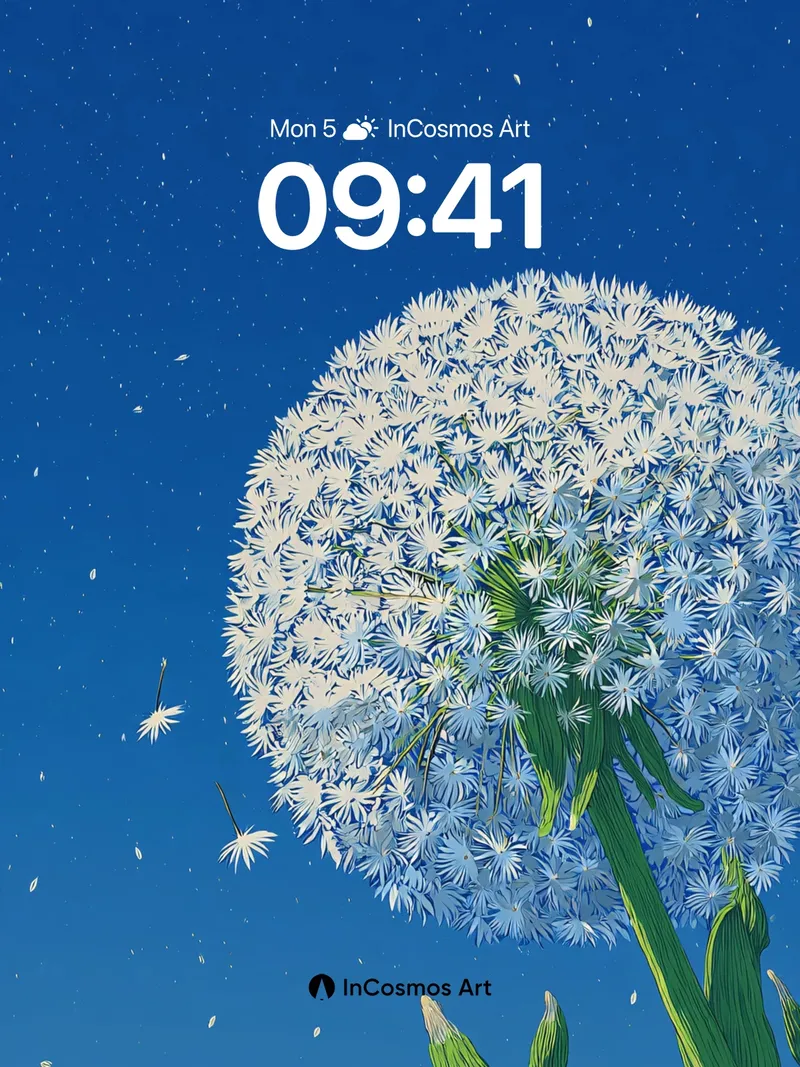
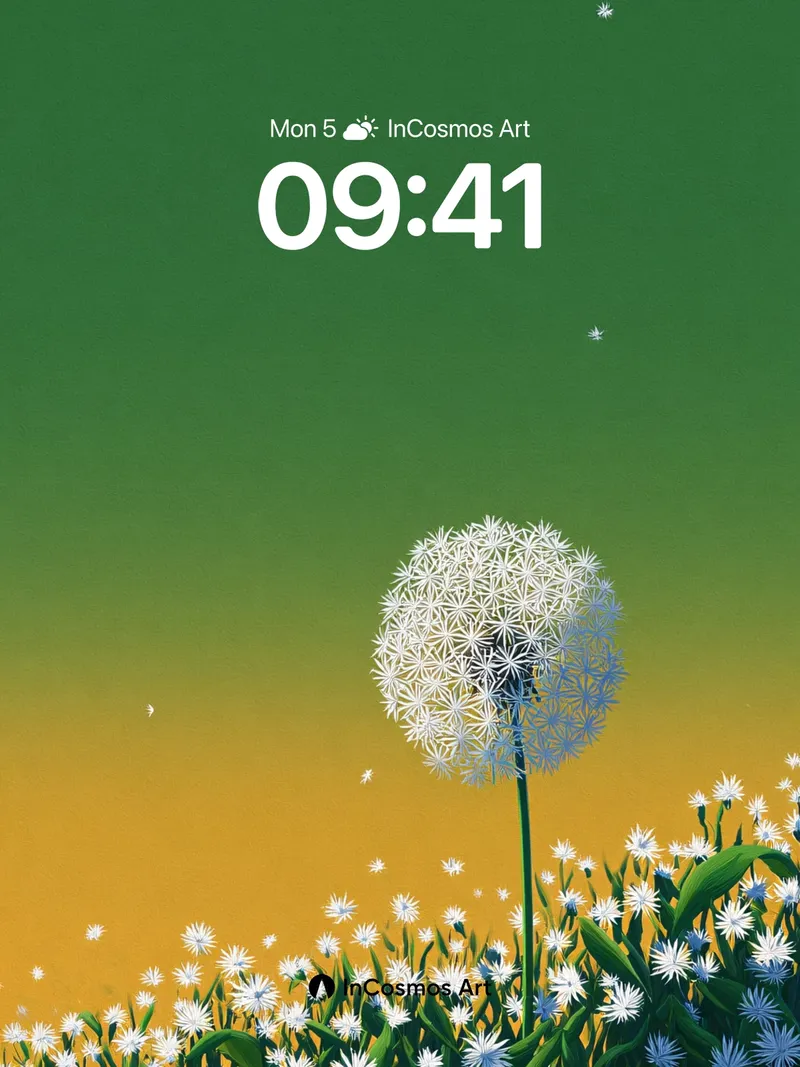
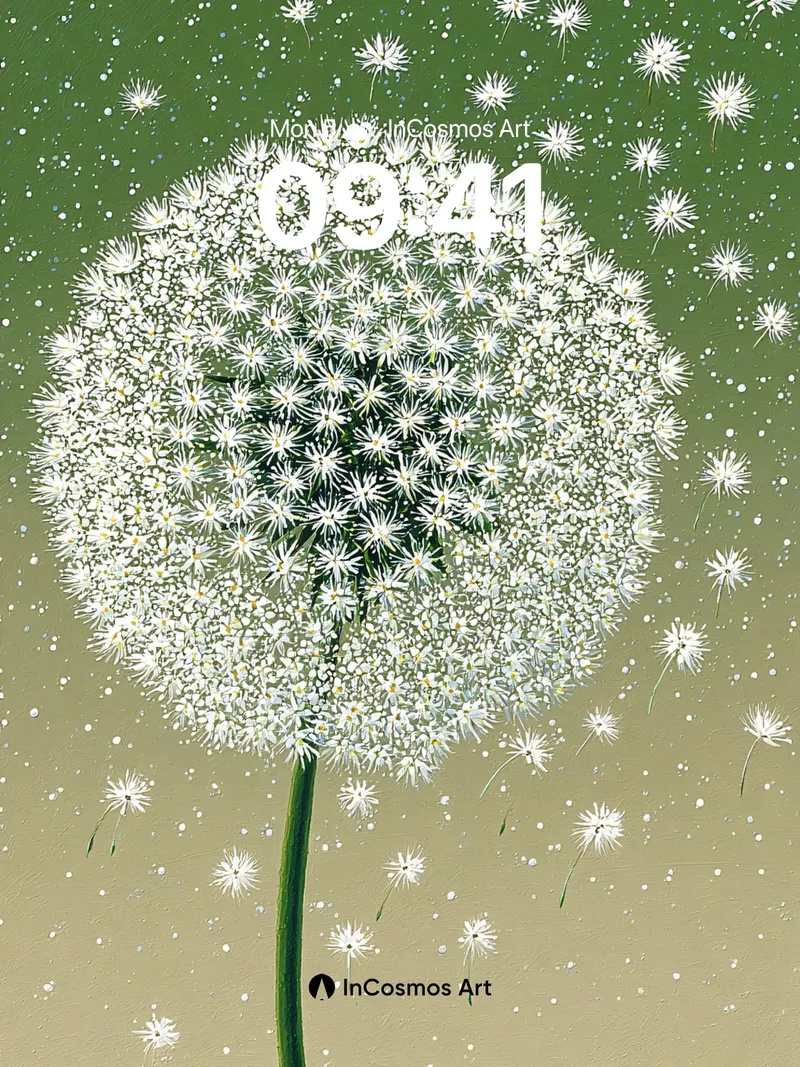
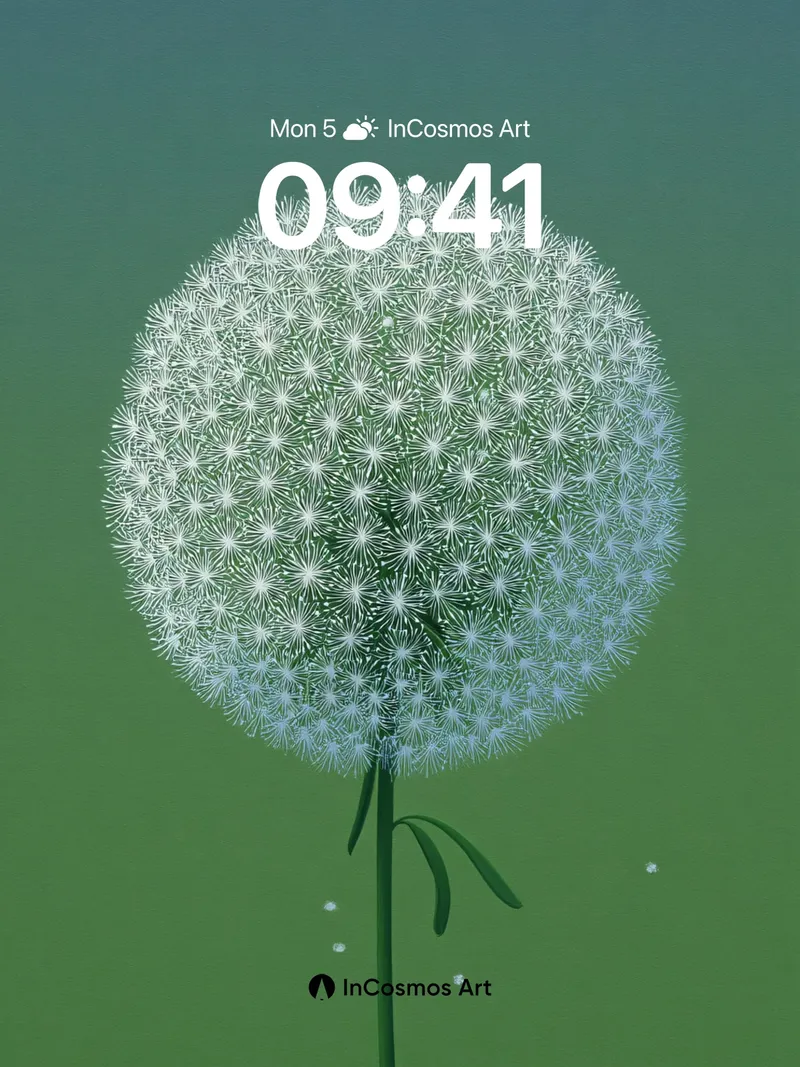
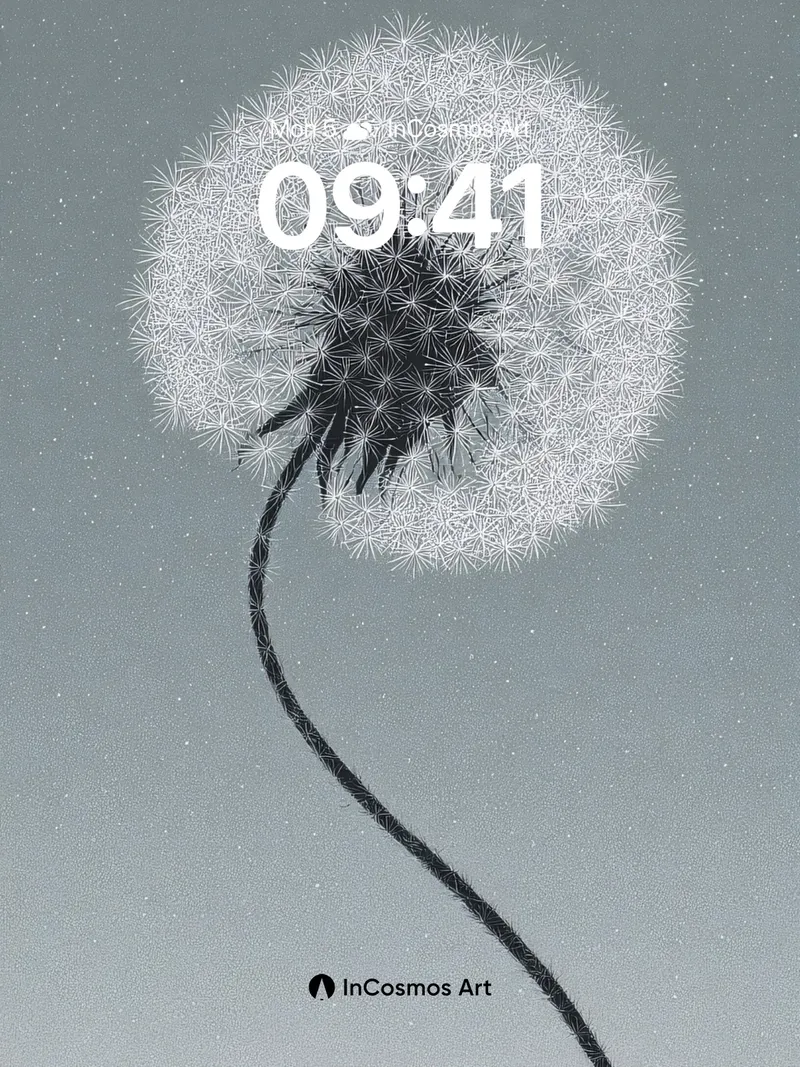
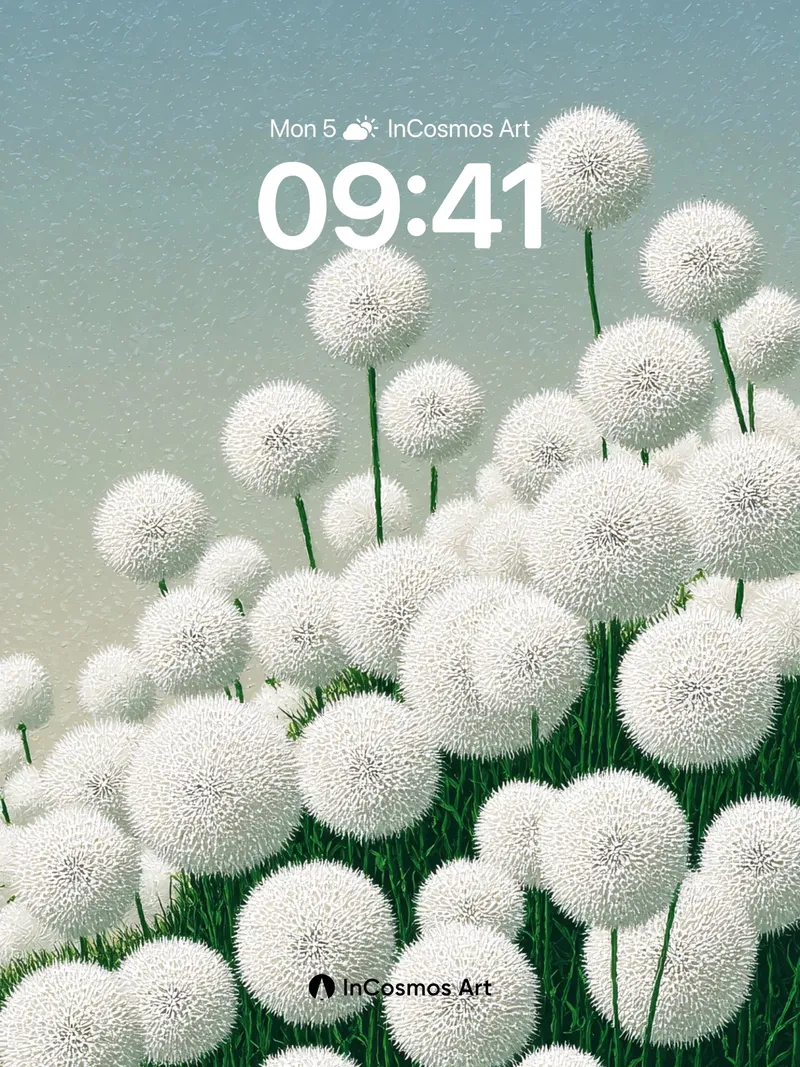
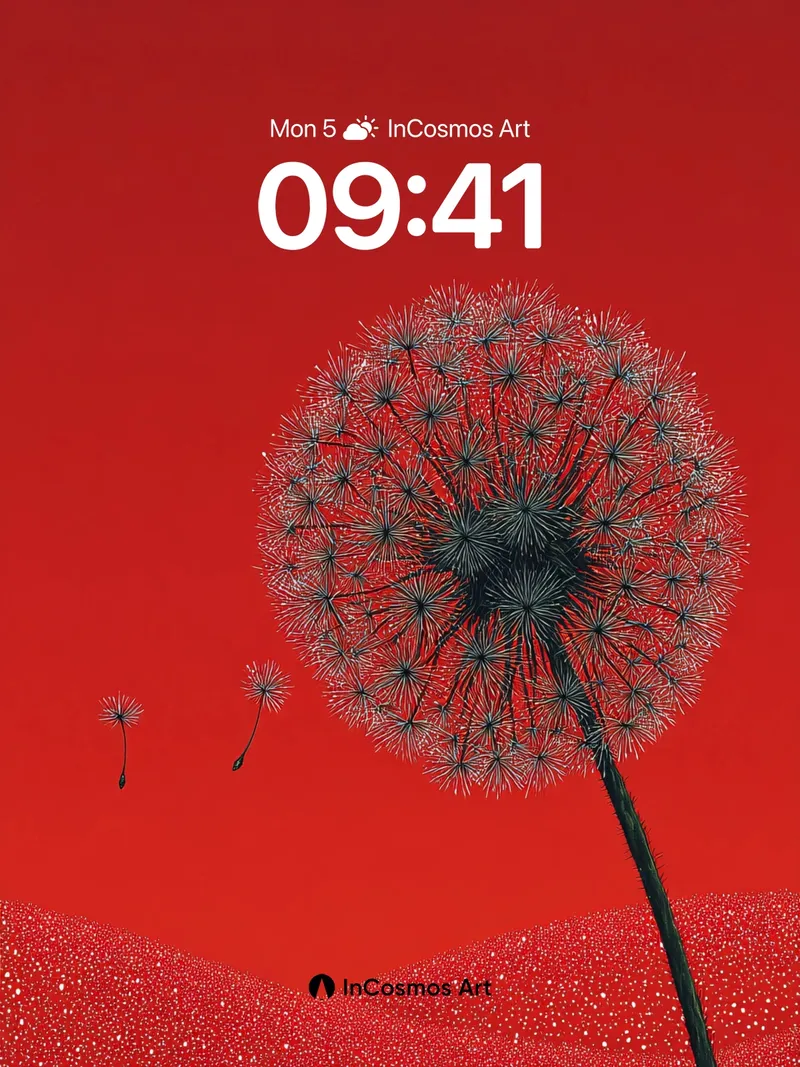
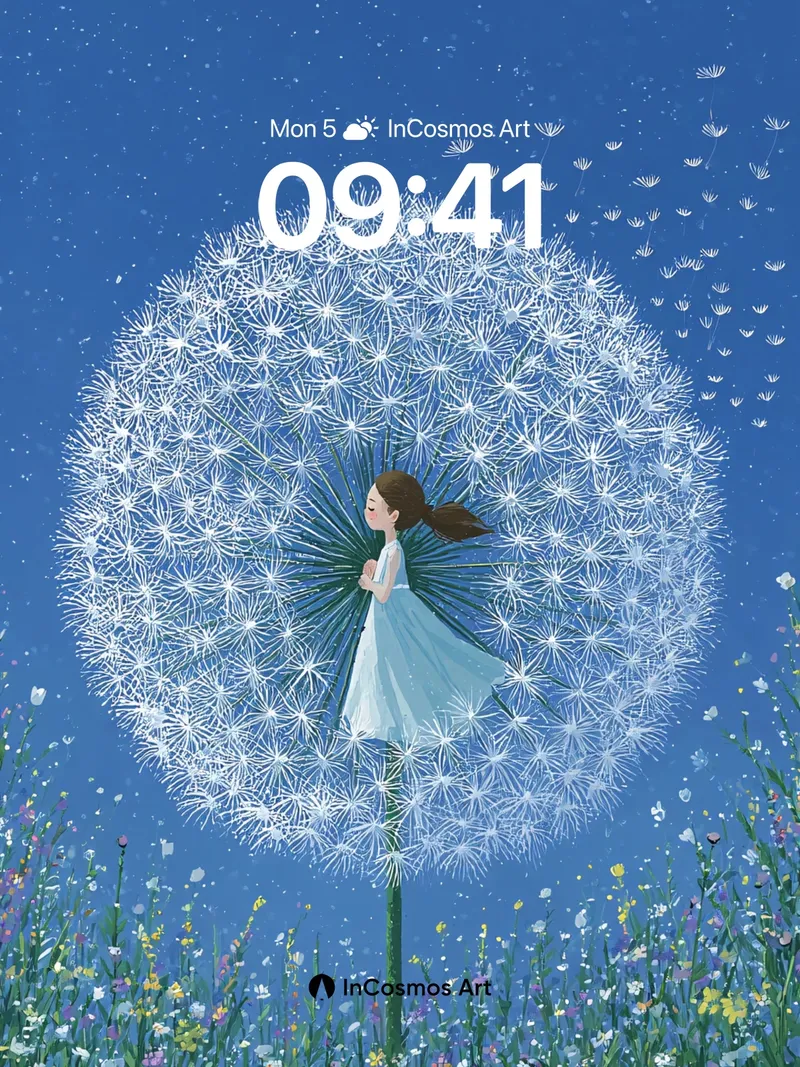
In the silent wind, dandelion seeds drift away, like the gentlest farewell of life. They do not compete or demand attention, yet through their softness, they cross space, completing a quiet migration. The existence of this plant is a philosophical response to time, belonging, and displacement. It does not rely on deep roots but entrusts itself to chance winds, sending its essence into the unknown. Each seed head is a miniature universe in explosion; each seed, an unnamed future.
Nature's Script
The form of the dandelion is one of nature’s most intricate designs. Its structure consists of thousands of tiny pappi, each resembling a microscopic spacecraft carrying genetic material. This design is not for visibility but for efficiency—minimal resistance, maximum dispersal. Human architecture often draws inspiration from such natural forms. Yet the dandelion does not pursue beauty; it follows the logic of survival.
Symbol of Drift
In cultural memory, the dandelion often represents separation and hope. Children blow it, imagining wishes flying far; adults gaze at it, seeing the unpredictability of fate. It has no fixed place, yet can take root anywhere. This uncertainty mirrors the emotional state of modern individuals. Urban life fosters constant movement, blurred identities, and fragile belonging. The dandelion’s freedom is both rebellion and acceptance.
Lightness of Being
While other plants assert presence with thick trunks, the dandelion defines itself through lightness. It does not resist gravity but embraces floating. This posture challenges traditional notions of stability and strength. In an era saturated with anxiety, lightness becomes a rare virtue. It reminds that being need not be heavy—life can be like a seed in the wind, adaptable, yet always moving forward.
Traces of Time
The dandelion’s life is brief but complete. From bloom to seed head, then to scattered seeds, it undergoes a full cycle. This process lacks dramatic climax, only gradual dissolution. It does not resist decay but transforms it into an opportunity for spread. Such composure is nature’s final lesson: endings are not conclusions, but new beginnings.