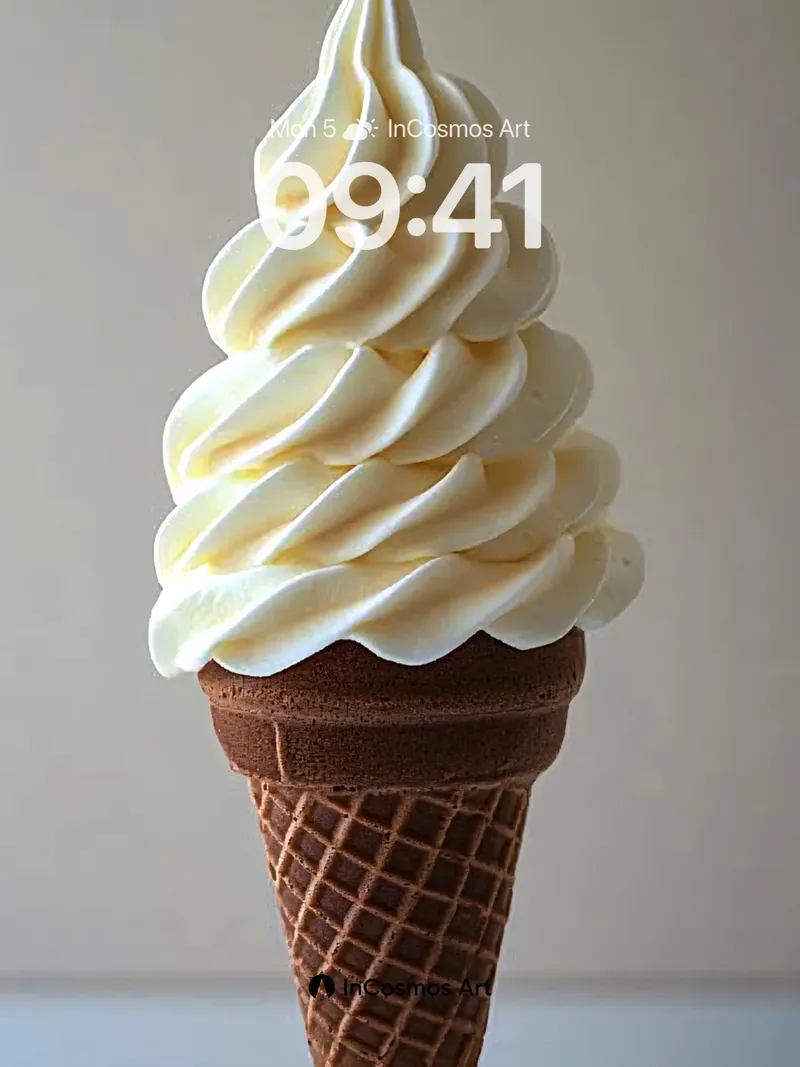
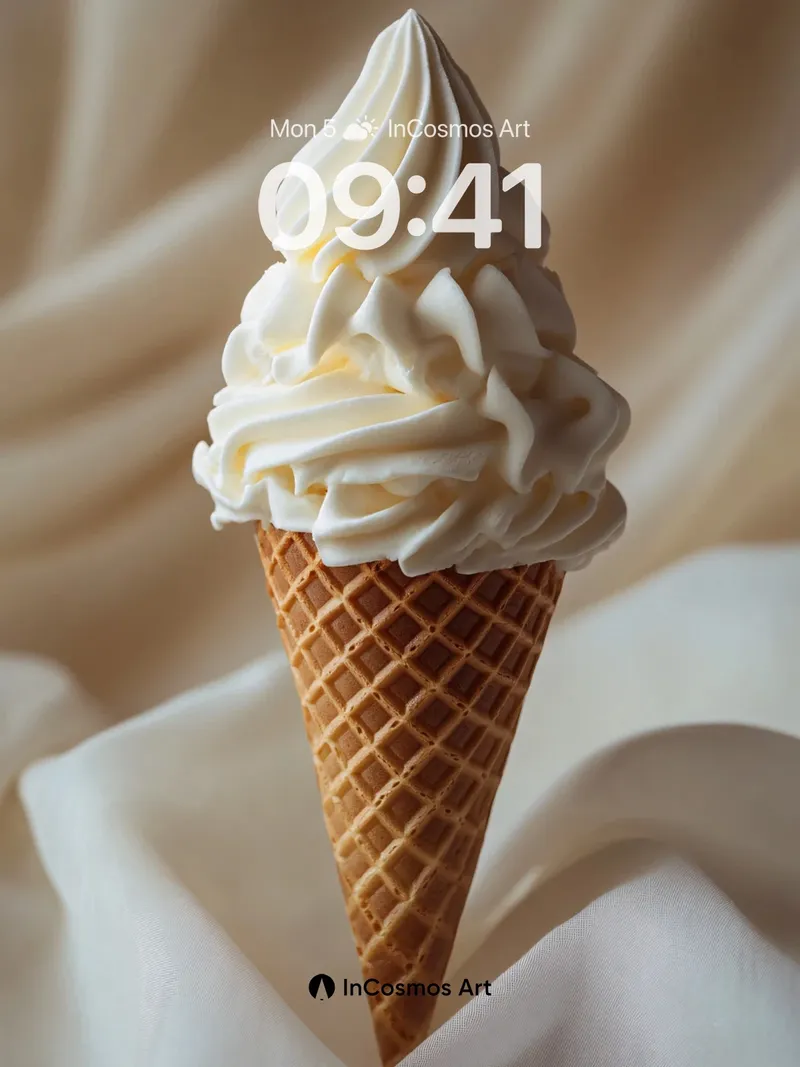
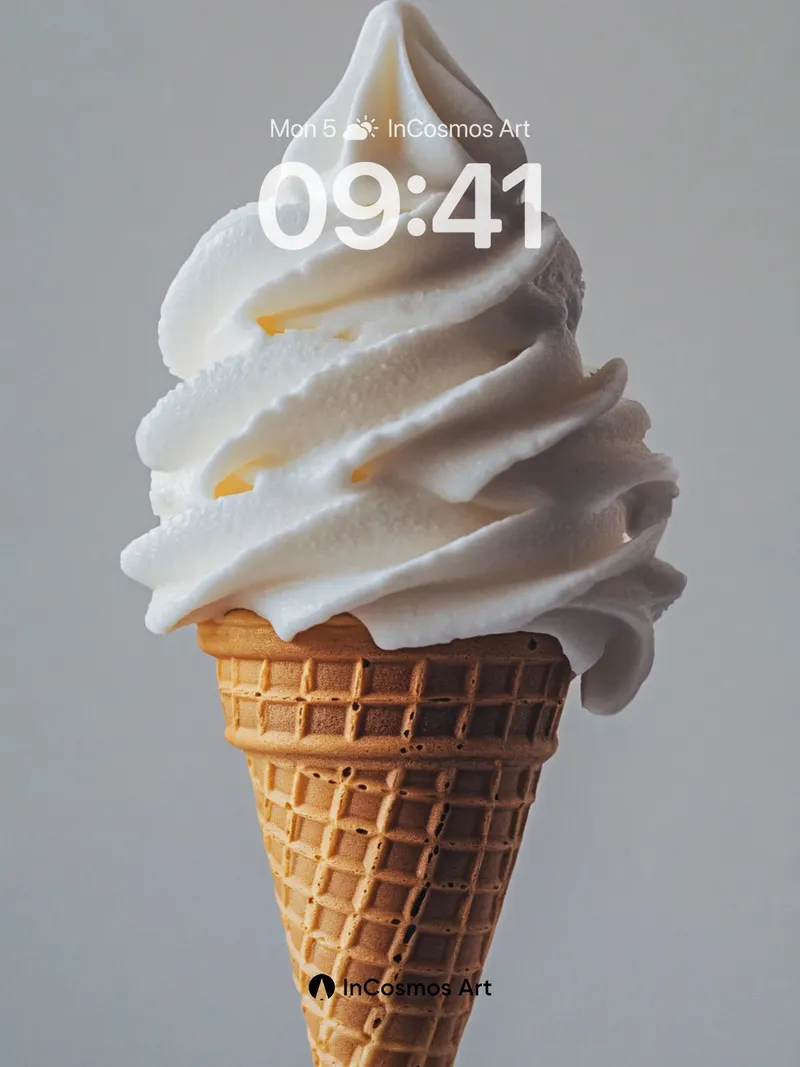
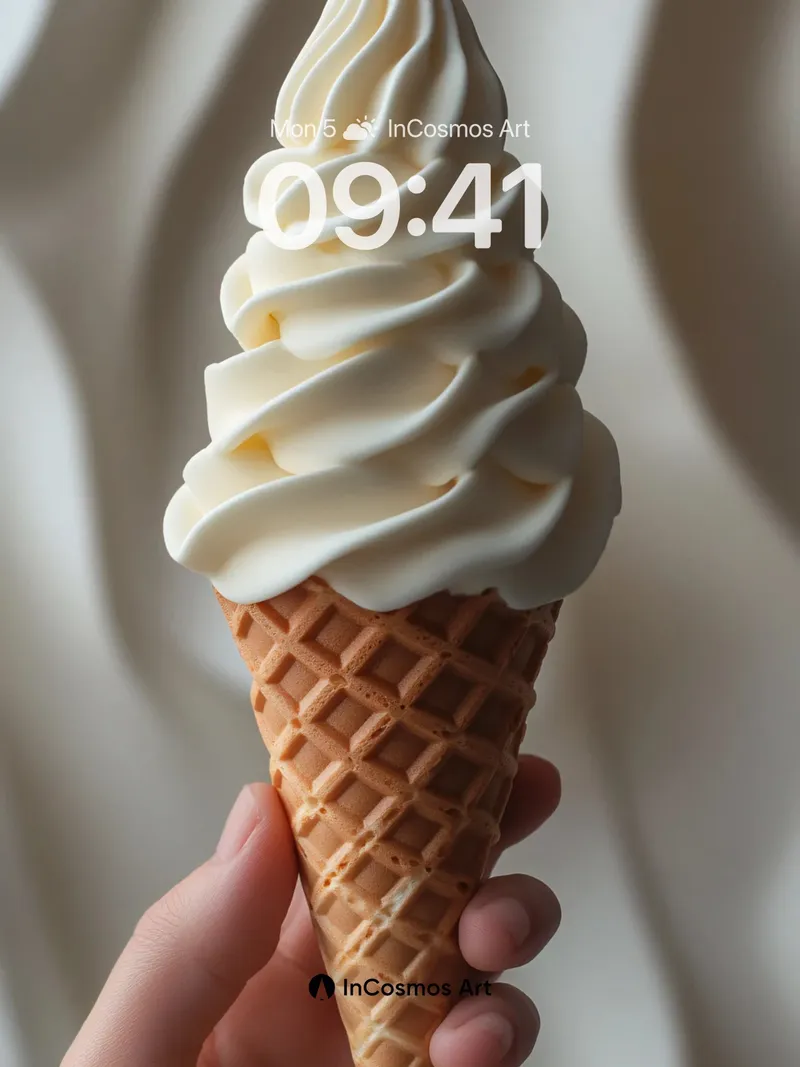
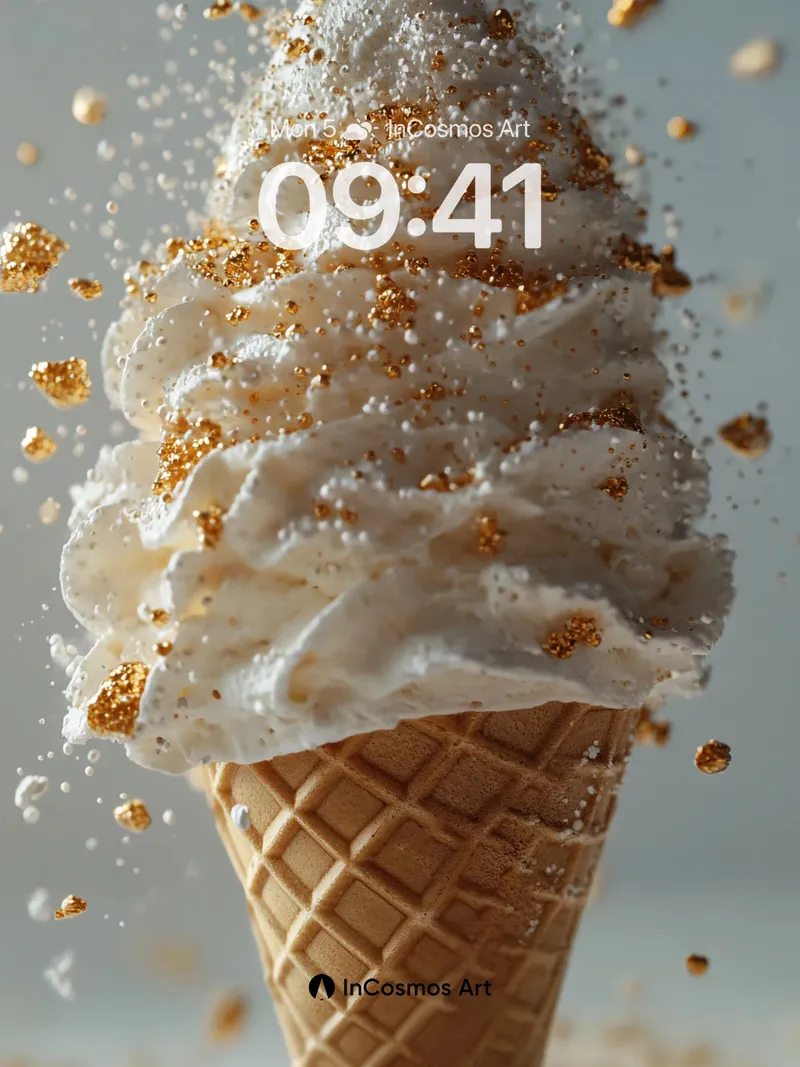
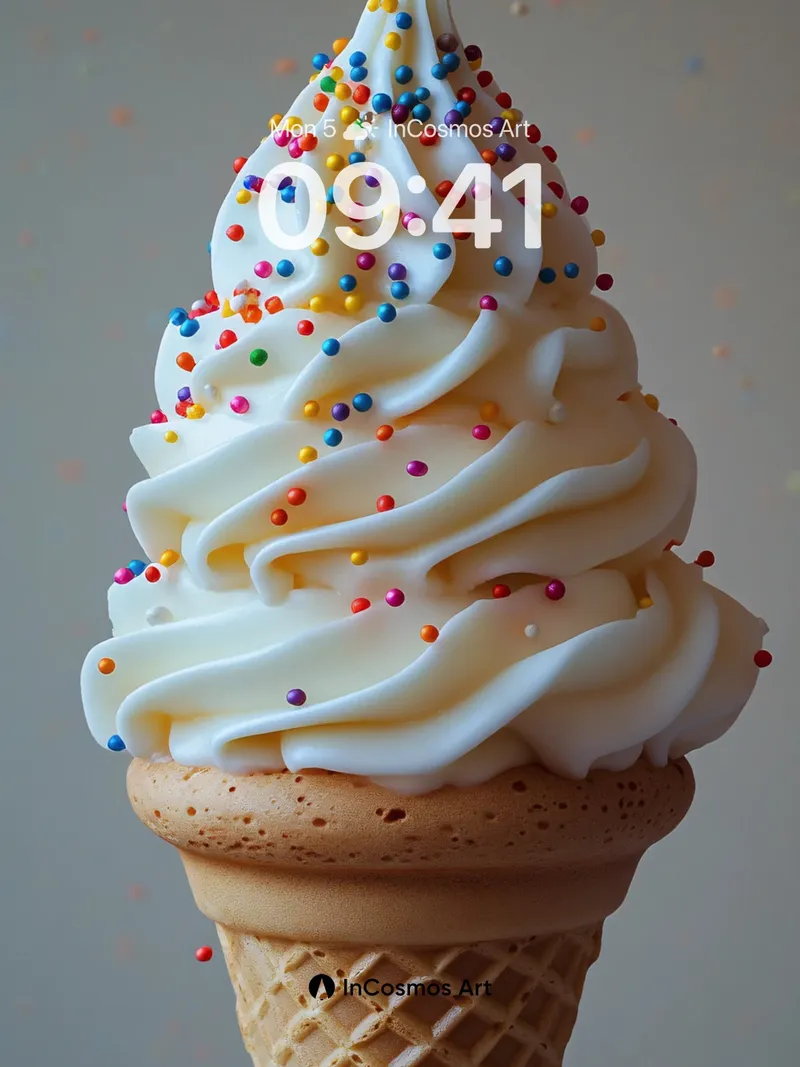
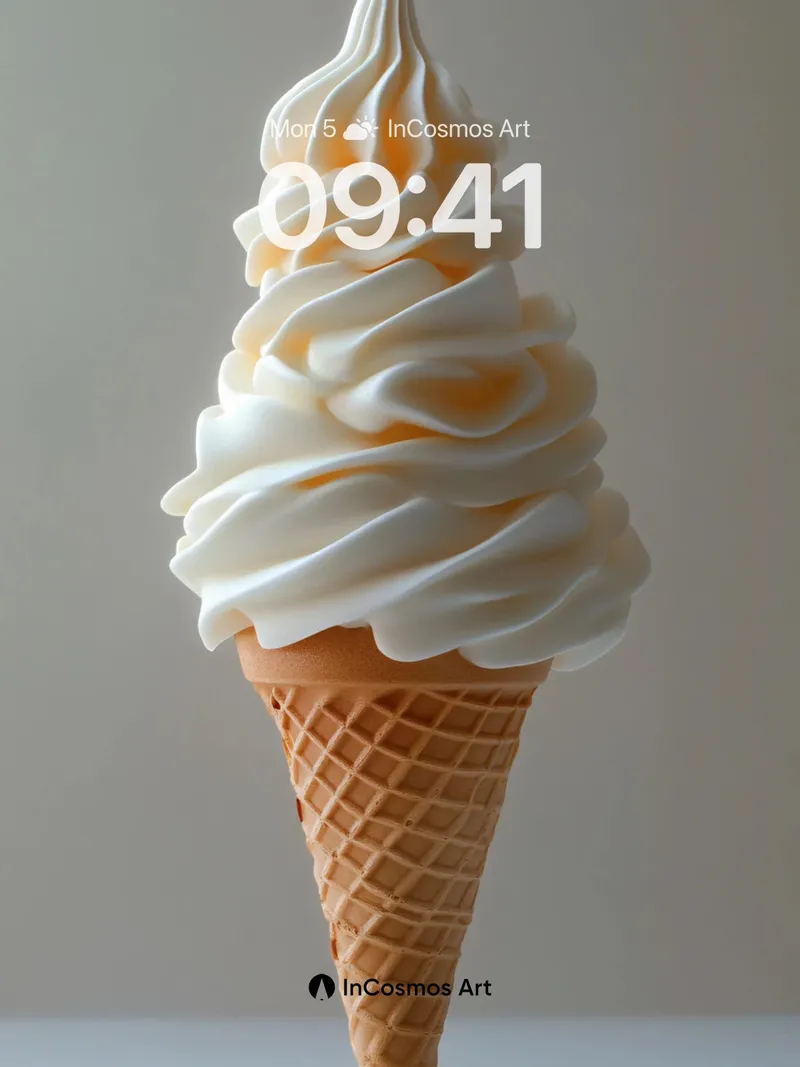
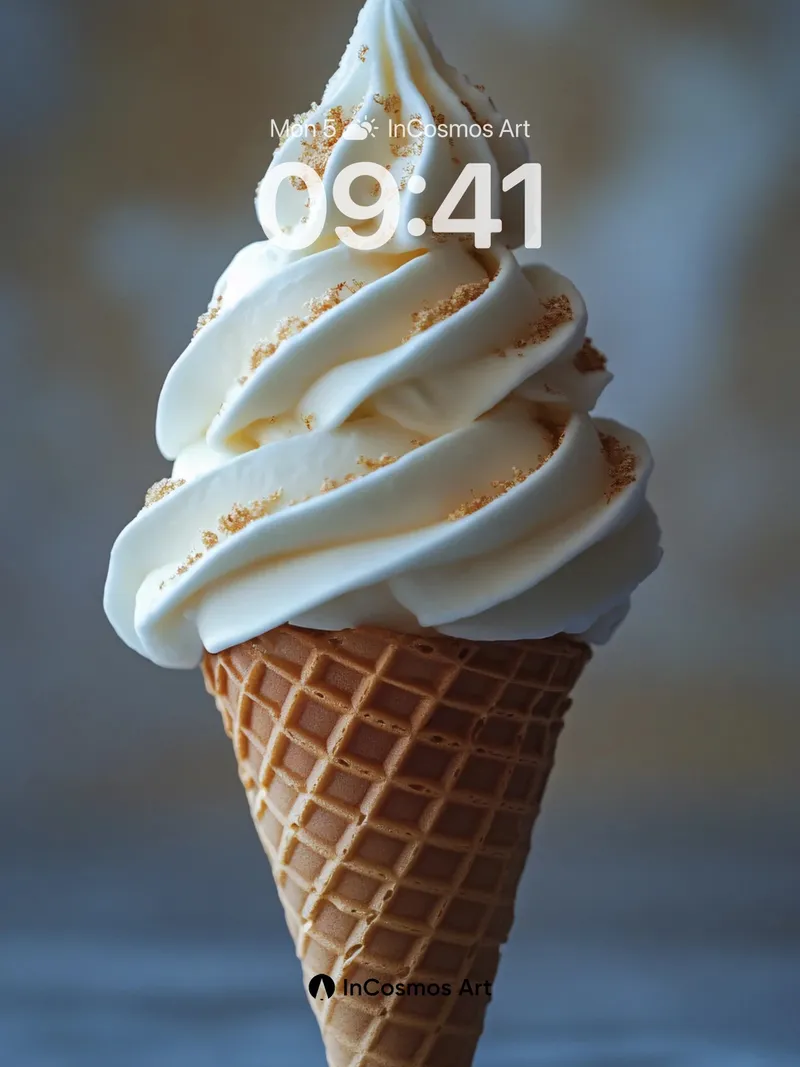
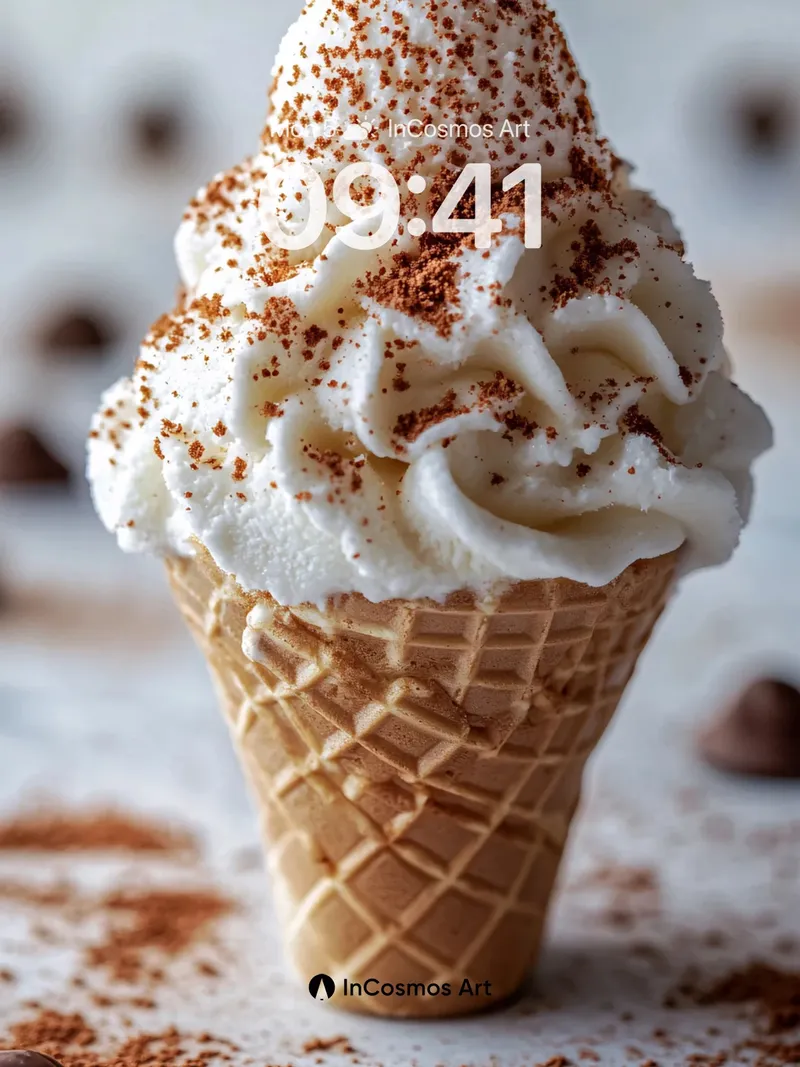
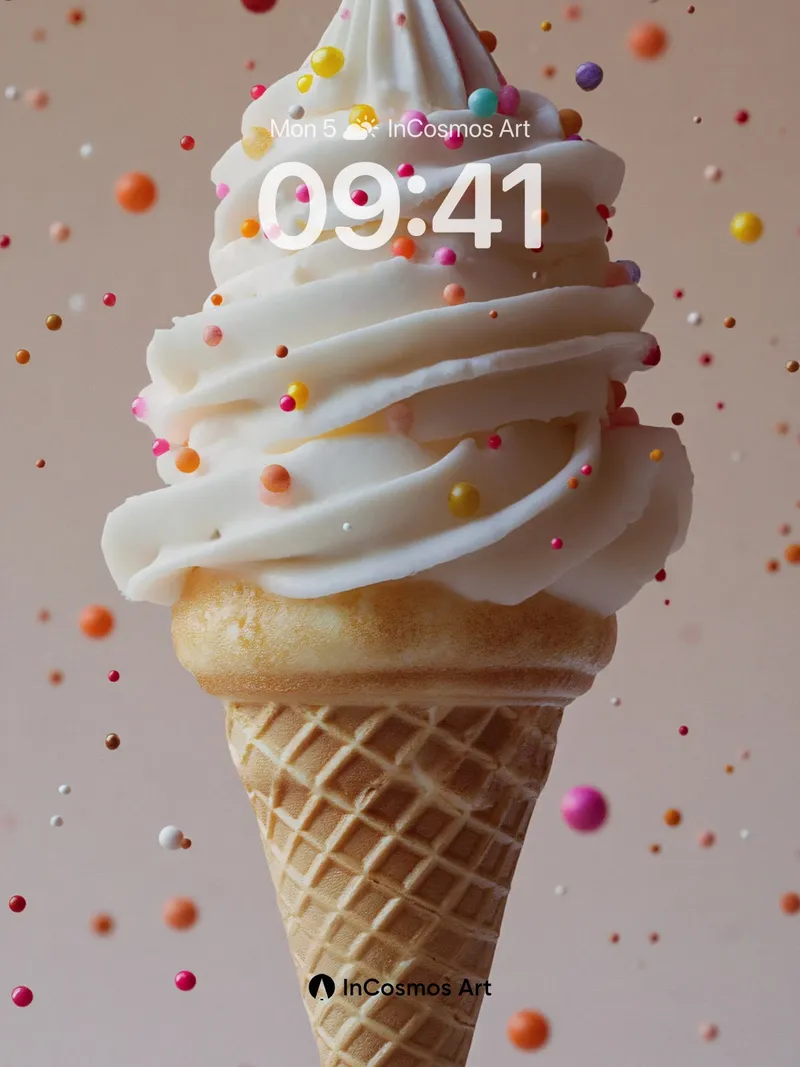
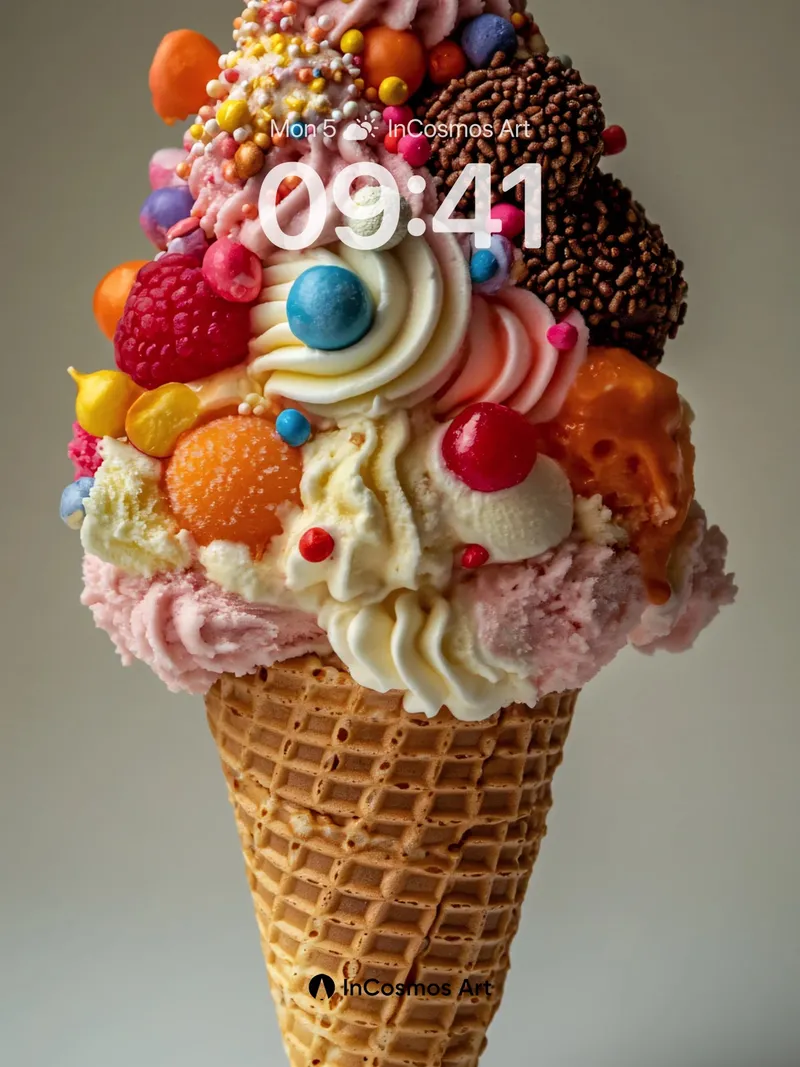
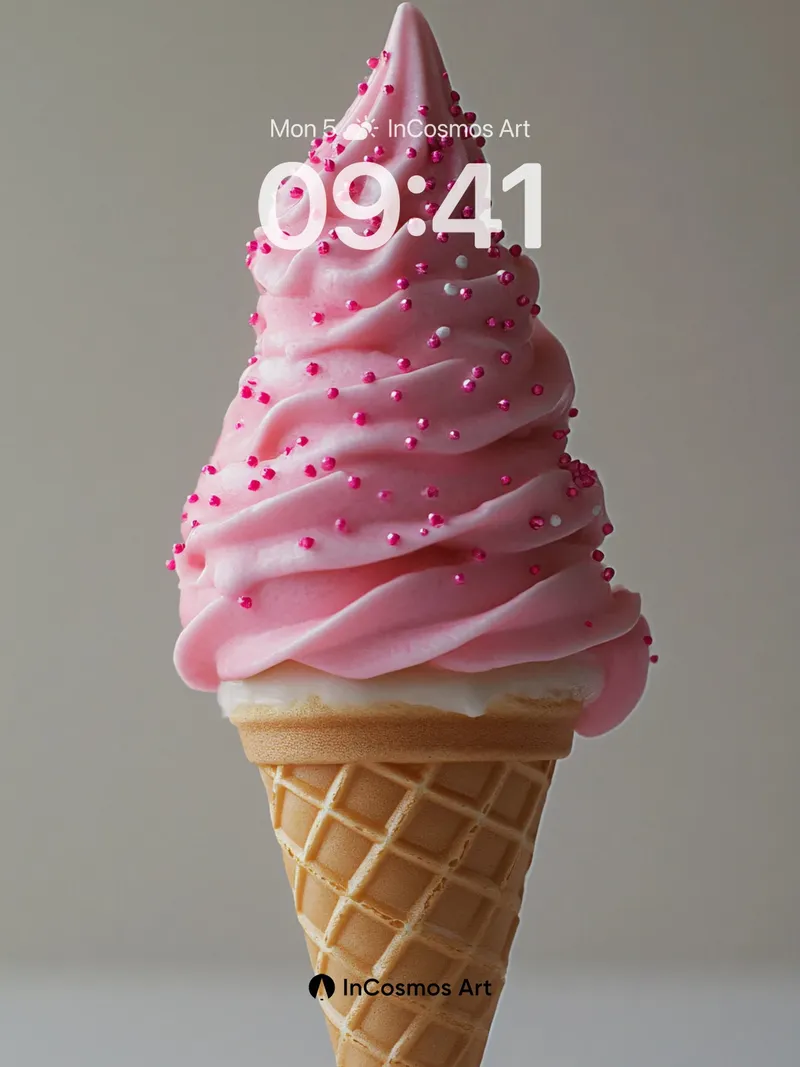
Soft spirals rise within a conical shell, resembling a miniature peak carrying memories of summer and moments of fulfillment. Each undulation of cream is a language, narrating subtle shifts in temperature and tactile anticipation. Dessert transcends taste—it becomes a suspension of time. When the world accelerates, it pulls attention back to the present with its cool texture. The form of ice cream is meticulously shaped, like an artificial natural object, its patterns and contours revealing gentle three-dimensionality under light. This is not merely food, but part of a sensory ritual, a small yet profound symbol within daily life.
Order of the Senses
The structure of ice cream reflects visual order. Layered swirls create rhythm, akin to musical beats. Sprinkles of sugar or cocoa powder introduce irregular details, breaking perfect symmetry and adding authenticity. This design balances artificiality and nature, maintaining harmony while preserving spontaneity. In modern culinary culture, this aesthetic increasingly surpasses function, becoming a focal point of visual appeal.
Ritual of the Ordinary
The act of holding ice cream itself is a ritual. Fingers lightly touch the cone, sensing the contrast between crispness and softness; lifting it toward the lips, the motion slow and deliberate. This process is not about sustenance, but experience. In fast-paced society, such moments serve as buffers against anxiety. They remind that existence deserves perception—even fleeting sweetness.
Vessel of Emotion
Color variations imbue ice cream with distinct emotional qualities. White evokes purity and calm, pink recalls childhood fantasy, deep brown offers warmth and comfort. These hues are more than decoration—they activate emotional maps stored in memory. Human preference for sweetness has evolutionary roots, but today, sweets have evolved into tools for emotional regulation. Each intake becomes a recalibration of inner state.
Continuation of Aesthetics
From street-side stalls to fine dining, ice cream’s form continually evolves. It no longer confines itself to traditional flavors and shapes, but becomes a medium for creative expression. Gold dust, mist effects, floating compositions—these techniques blur the line between food and art. In the digital age, its imagery frequently appears on social platforms, serving as a universal language for sharing joy. This cross-cultural dissemination transforms ice cream into a globally recognized emotional symbol.