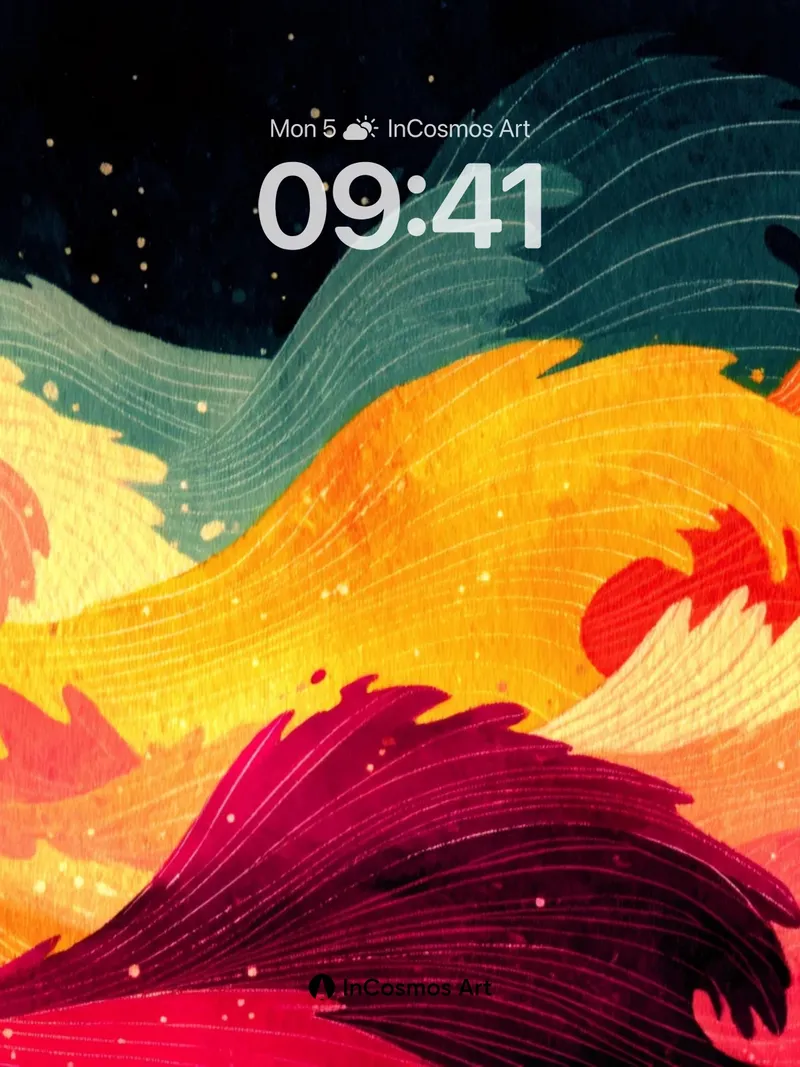
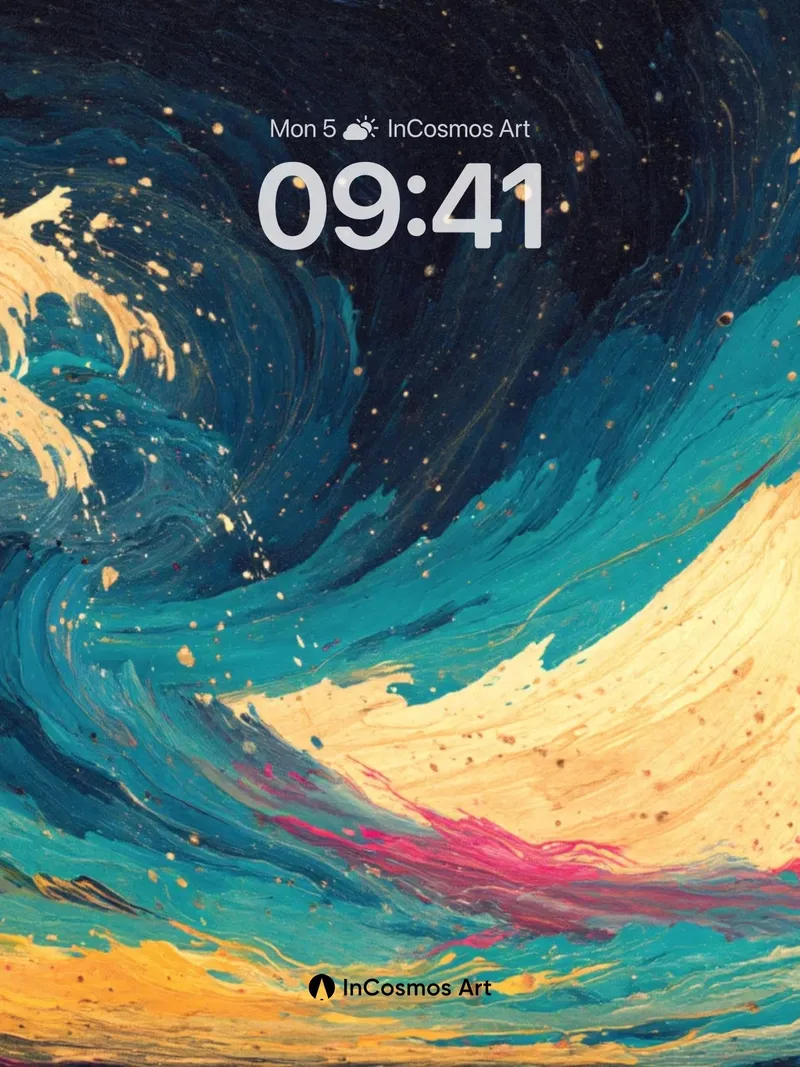
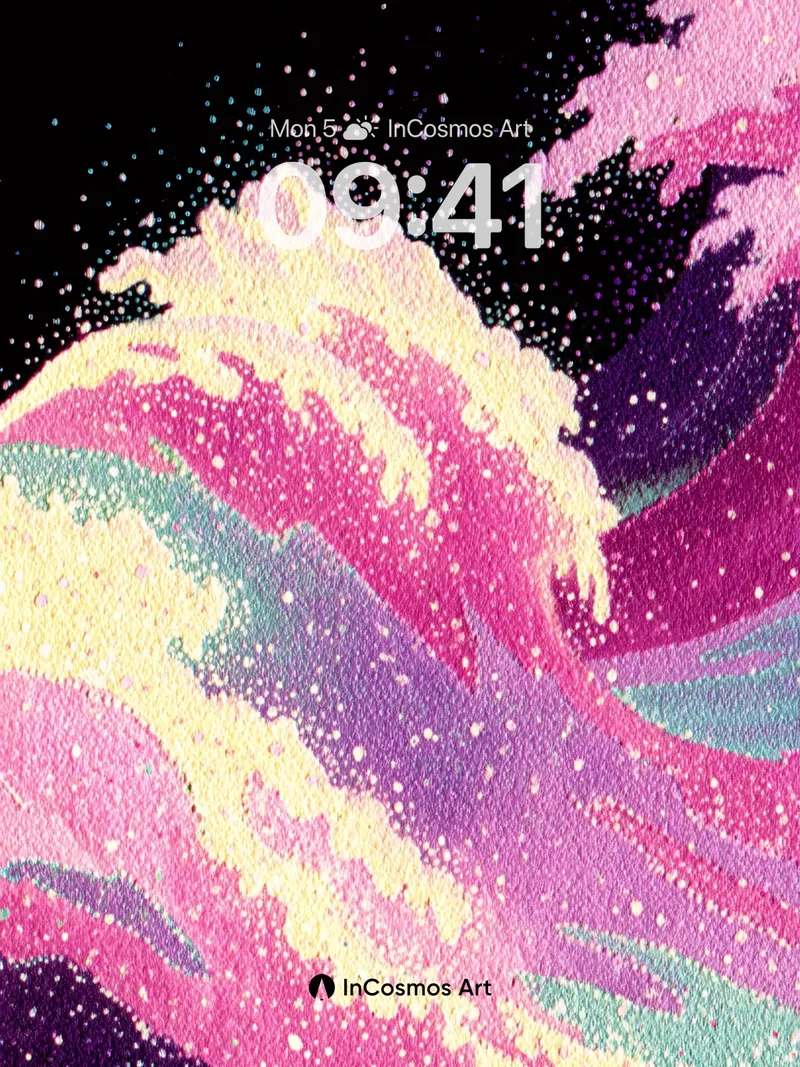
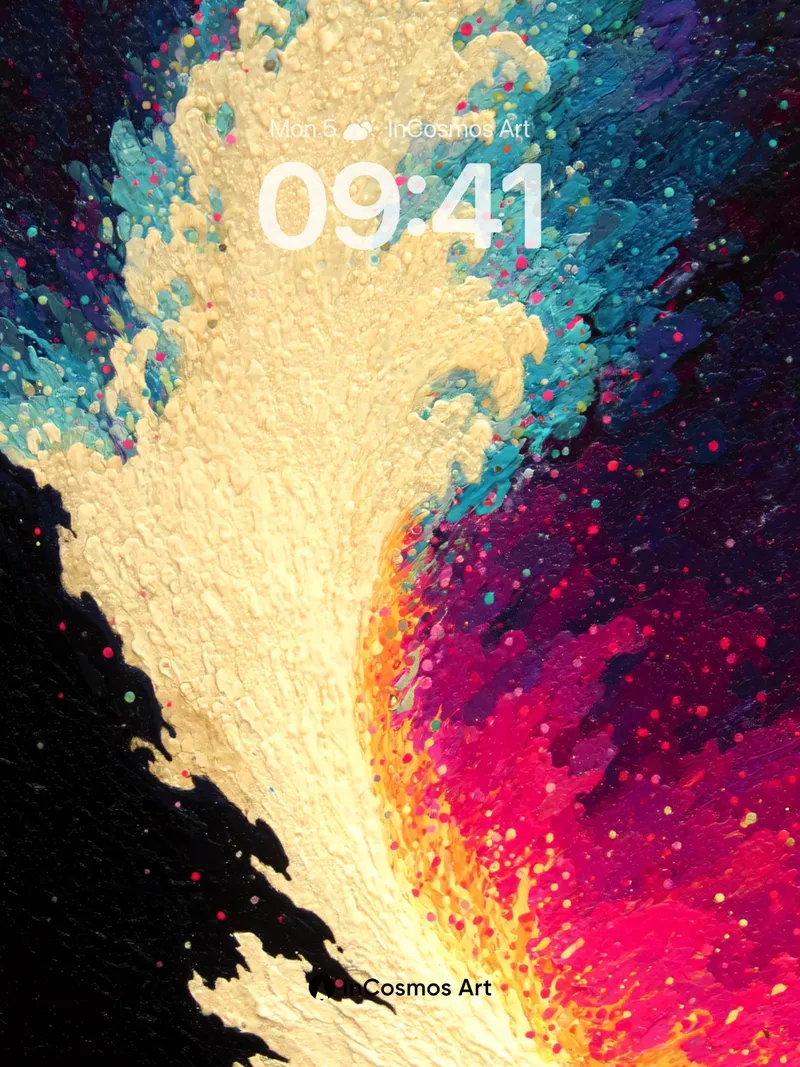
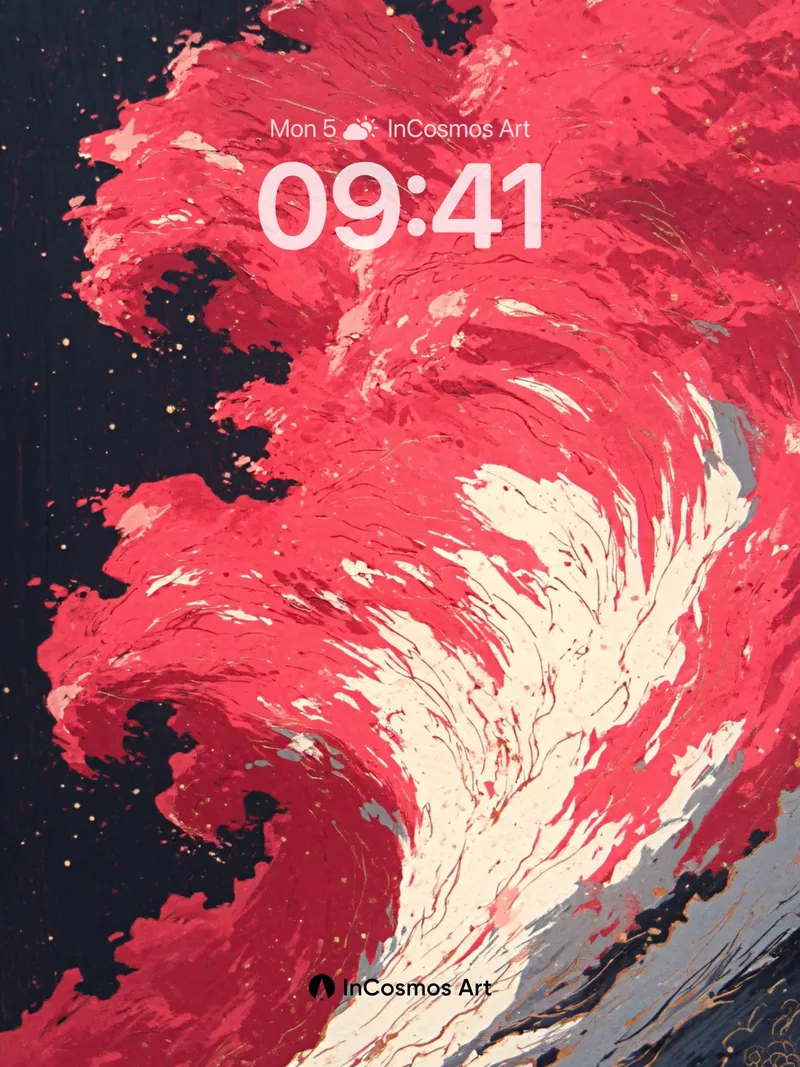
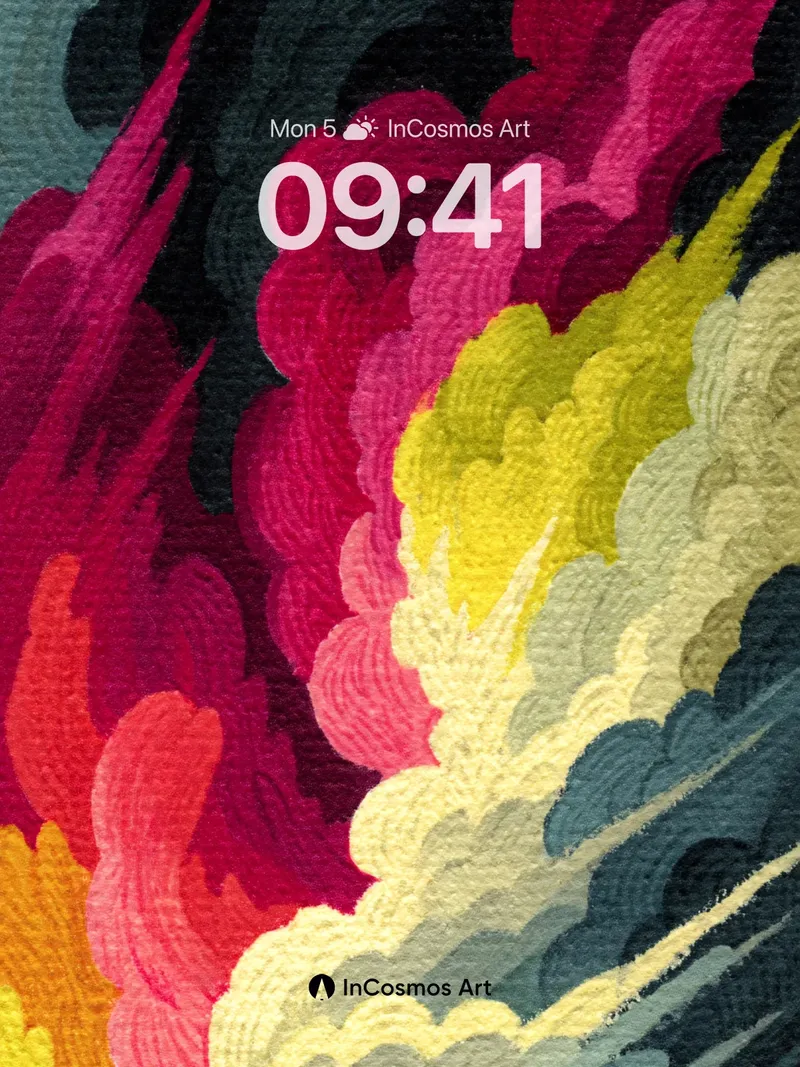
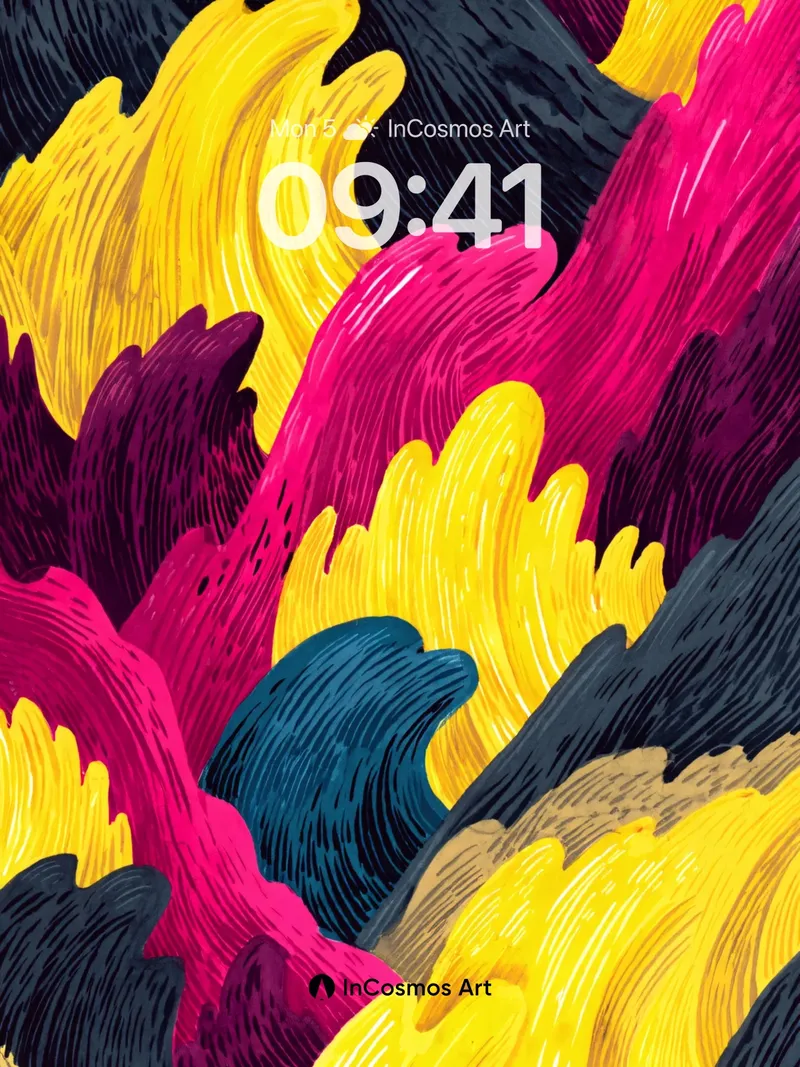
Waves in visual form are not merely water shapes but manifestations of emotional flow and natural power. When colors stack like fibrous strokes, each layer carries distinct emotional weight—from deep violet-black to fiery orange-red, to vibrant yellow and blue—collectively forming a tactile narrative language. This expression transcends mere artistic decoration, becoming a topological map of psychological space. Here, color is no longer light reflection but externalized inner rhythm. Its texture resembles handwoven tapestry, every rise and fall bearing temporal marks and memory creases. This medium bridges humanity's primal reverence for nature with urban dwellers' yearning for stillness. Amid rapid information currents, these compositions offer slow meditation pathways, guiding viewers into nonlinear time perception.
Emotional Topography
Color layers form an emotional landscape. Dark zones symbolize suppression and the unknown, while bright hues signify release and hope. The alternation between peaks and troughs mirrors human emotional cycles. This structure not only captures dynamic natural scenes but also reflects the complex terrain of individual inner worlds. Through color gradients and collisions, artists construct an empathetic field requiring no verbal explanation.
Abstract Translation of Nature
These works transform natural elements into highly stylized symbols. Ocean waves, mountains, volcanoes lose physical attributes, reconstructed through pure color and line. This abstraction is not simplification but intensification. It allows viewers to transcend specific contexts, confronting the intrinsic energy flow within nature. Each curve extension becomes a poetic response to cosmic order.
Handcrafted Texture in Digital Age
Though digitally rendered, the textures strongly suggest manual craftsmanship. This 'pseudo-handmade' quality holds special significance in contemporary design. It resists ubiquitous smooth interfaces, evoking memories of warmth, labor, and uniqueness. In algorithm-dominated visual environments, such textures emerge as cultural markers resisting homogenization.
Color as Spiritual Vehicle
Color here serves no decorative function—it becomes a direct carrier of mental states. From cool tones of calm to warm bursts of intensity, the entire palette forms an emotional spectrum. This mode of expression approaches Eastern philosophical concepts of 'qi'—invisible yet powerful energy fields. Viewers involuntarily enter this energy stream during contemplation, experiencing a ritual-like immersion.