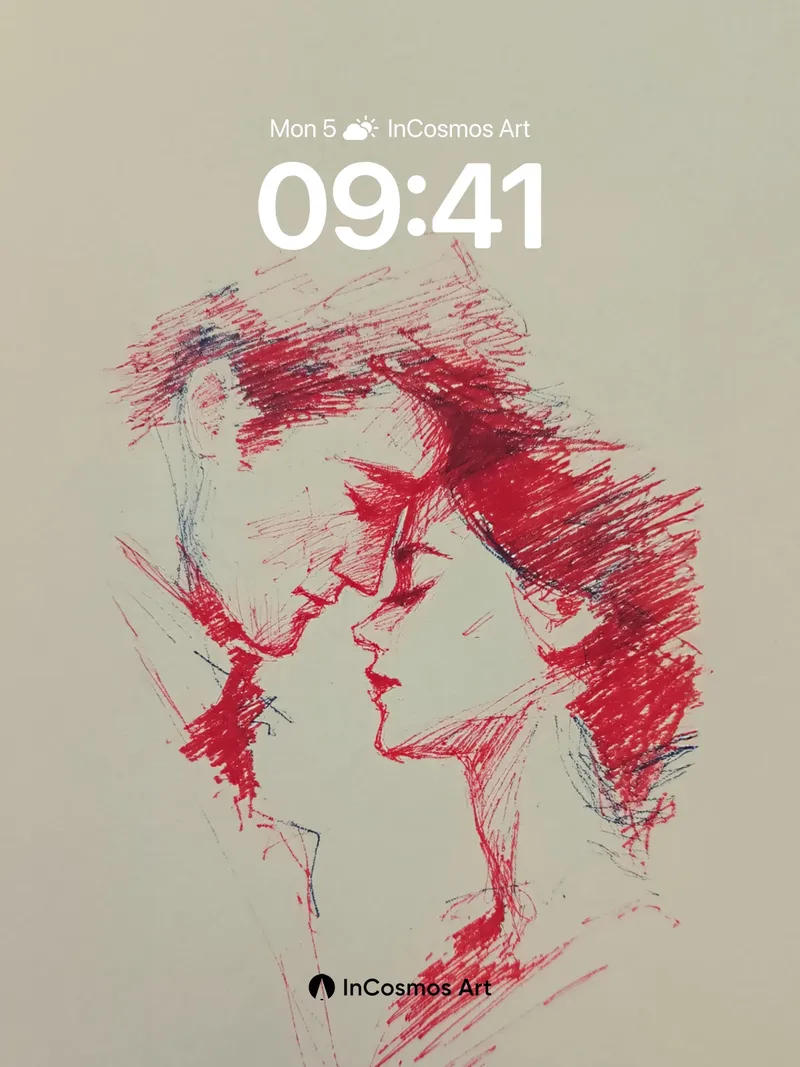
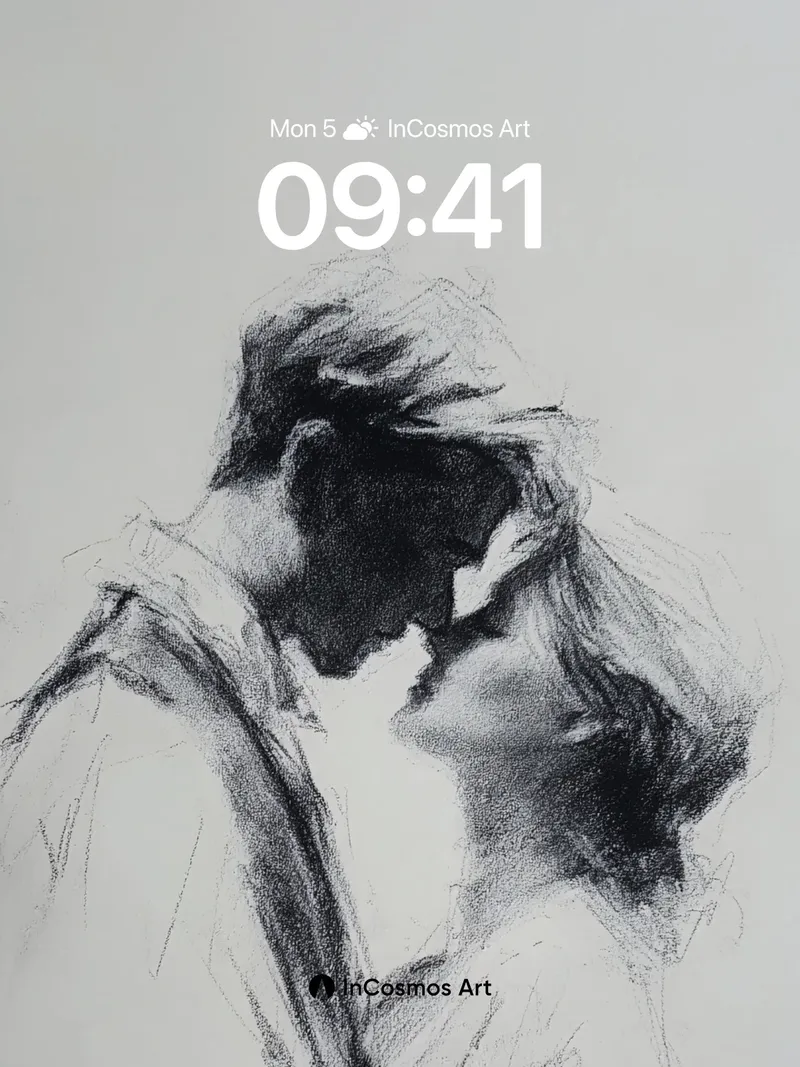
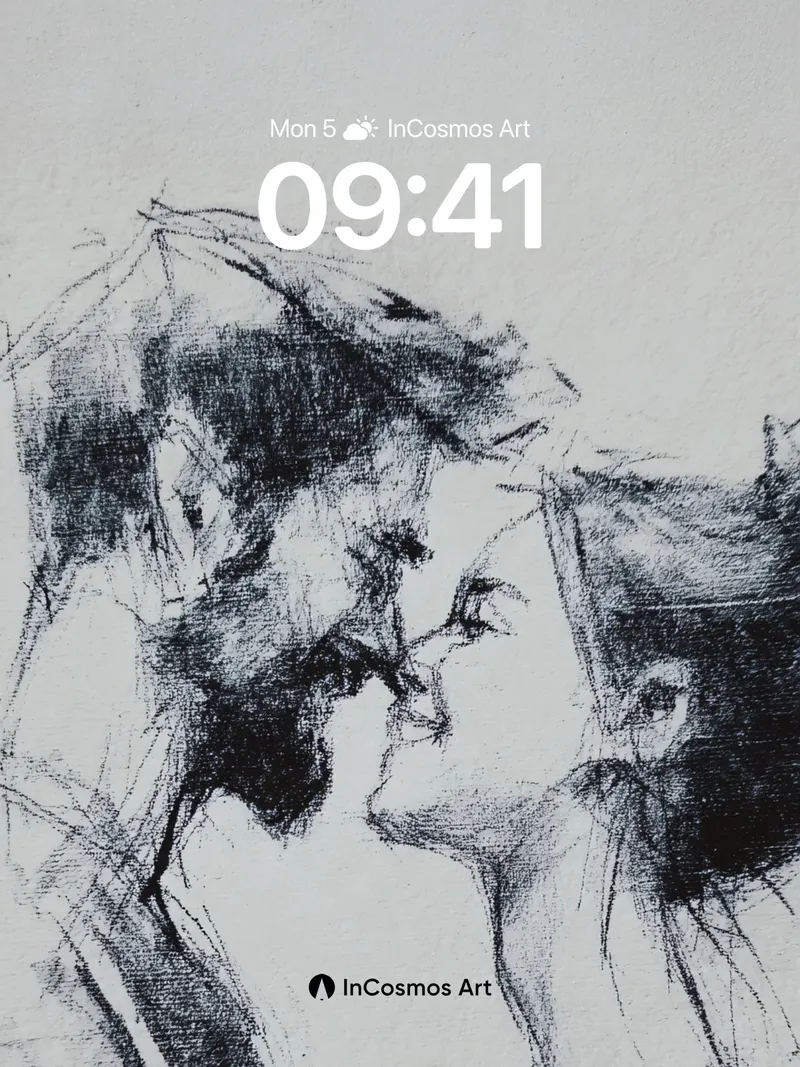
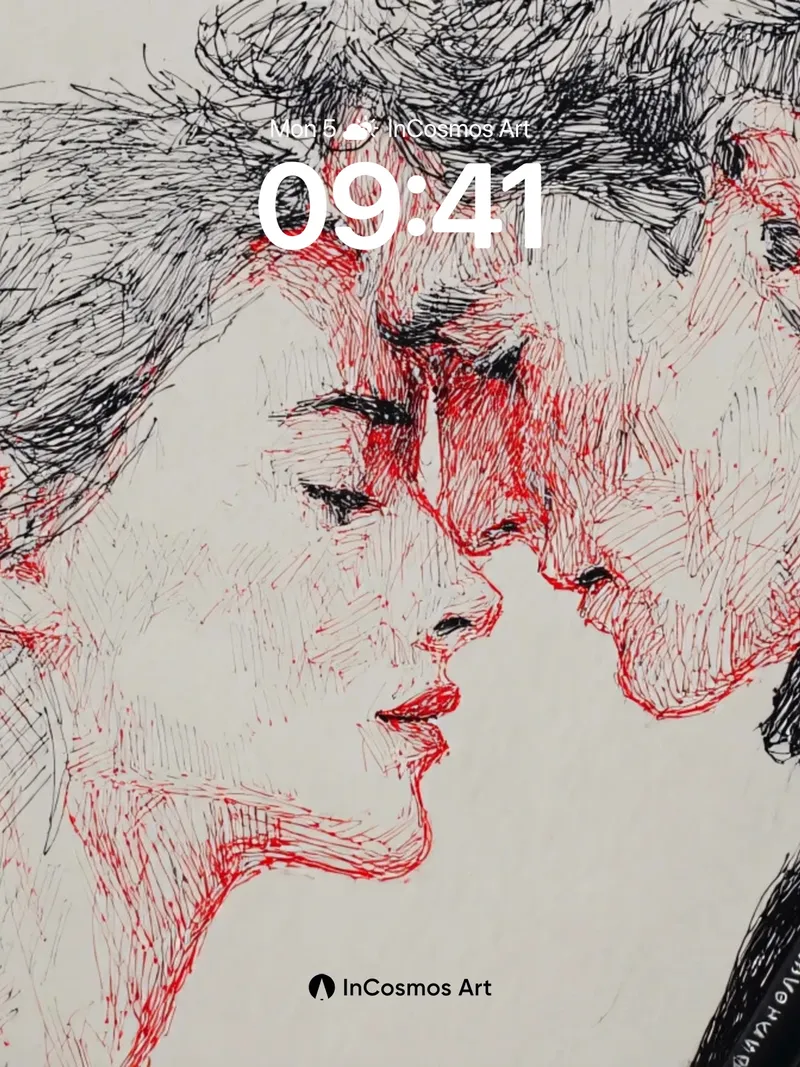
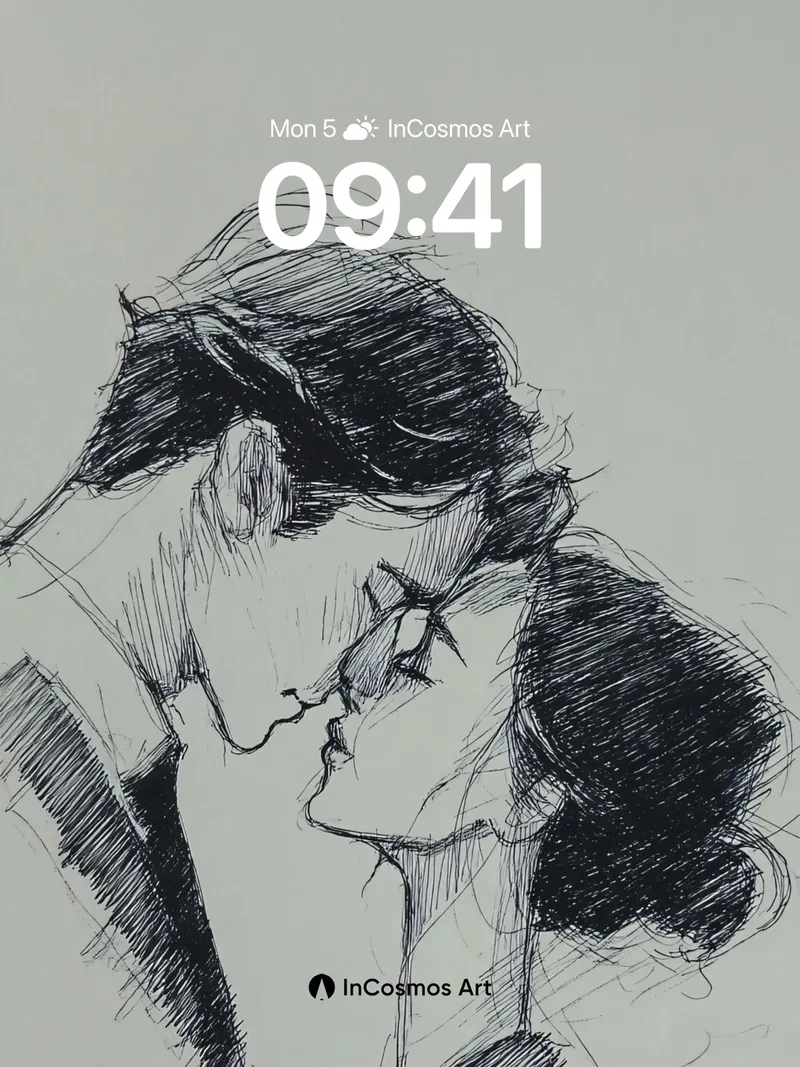
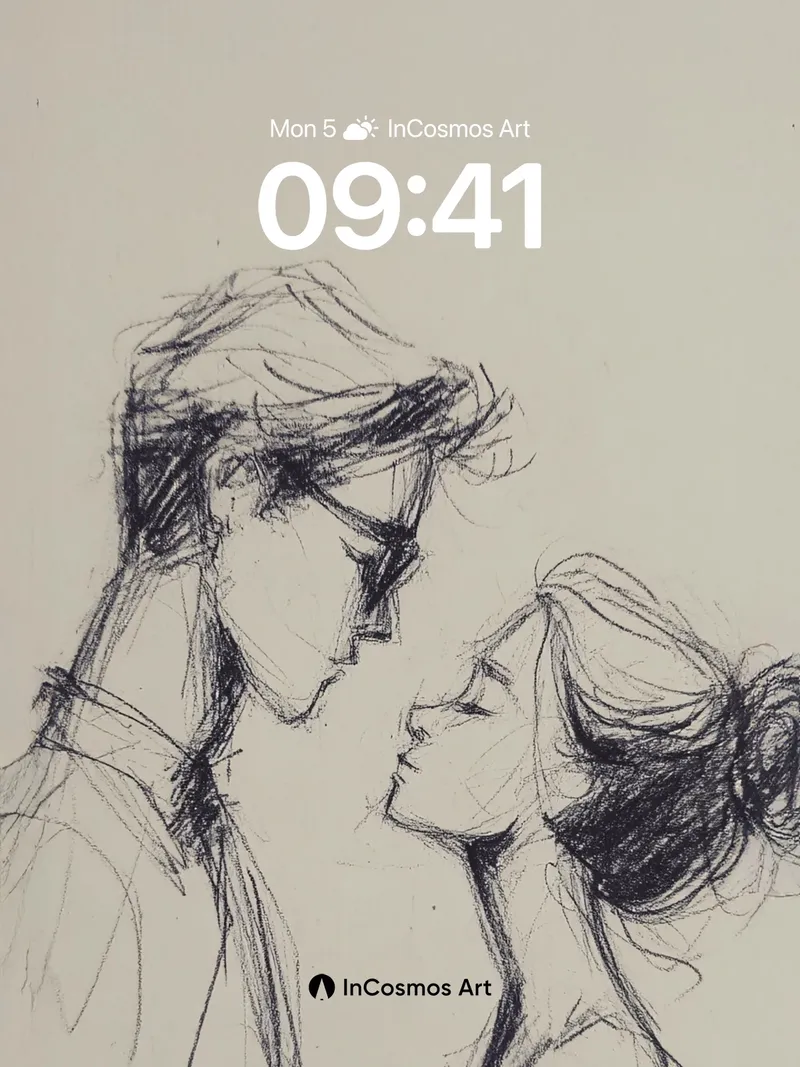
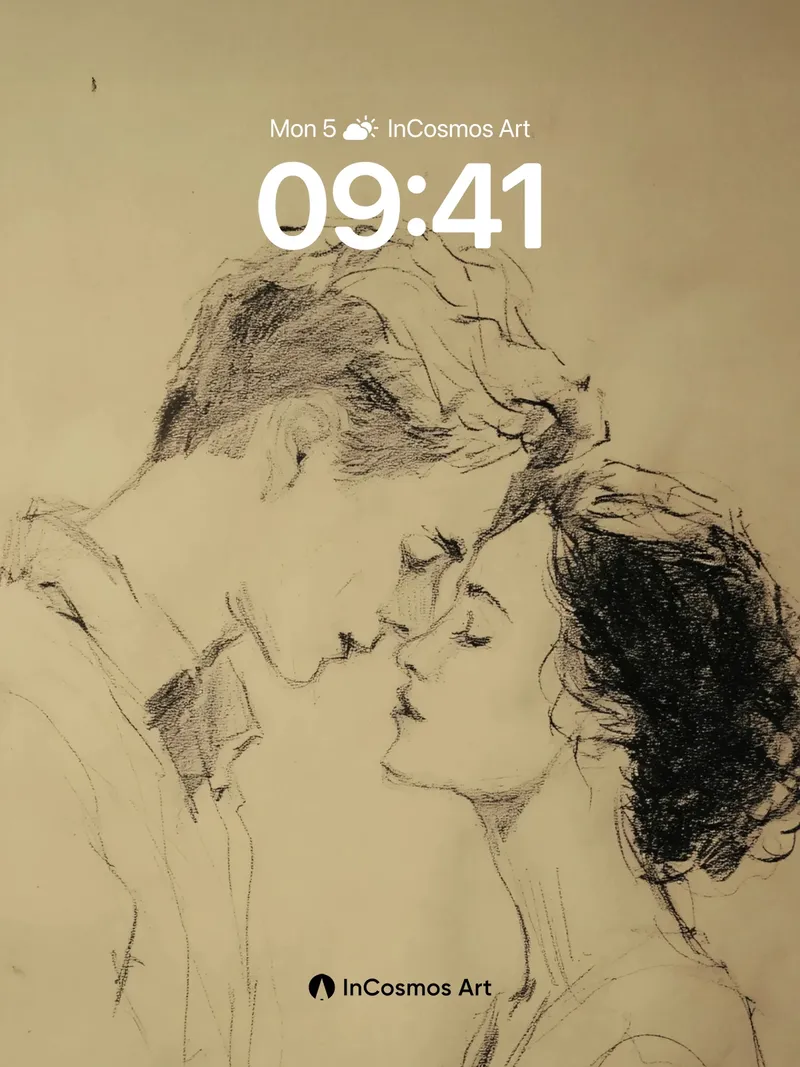
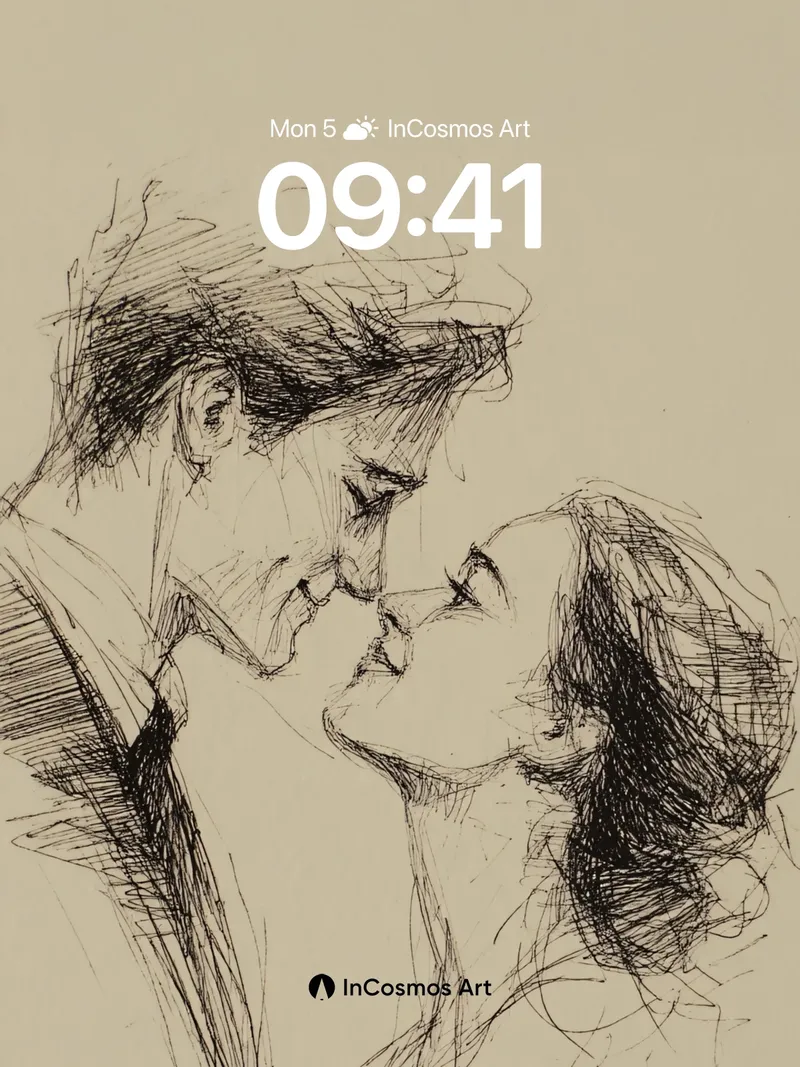
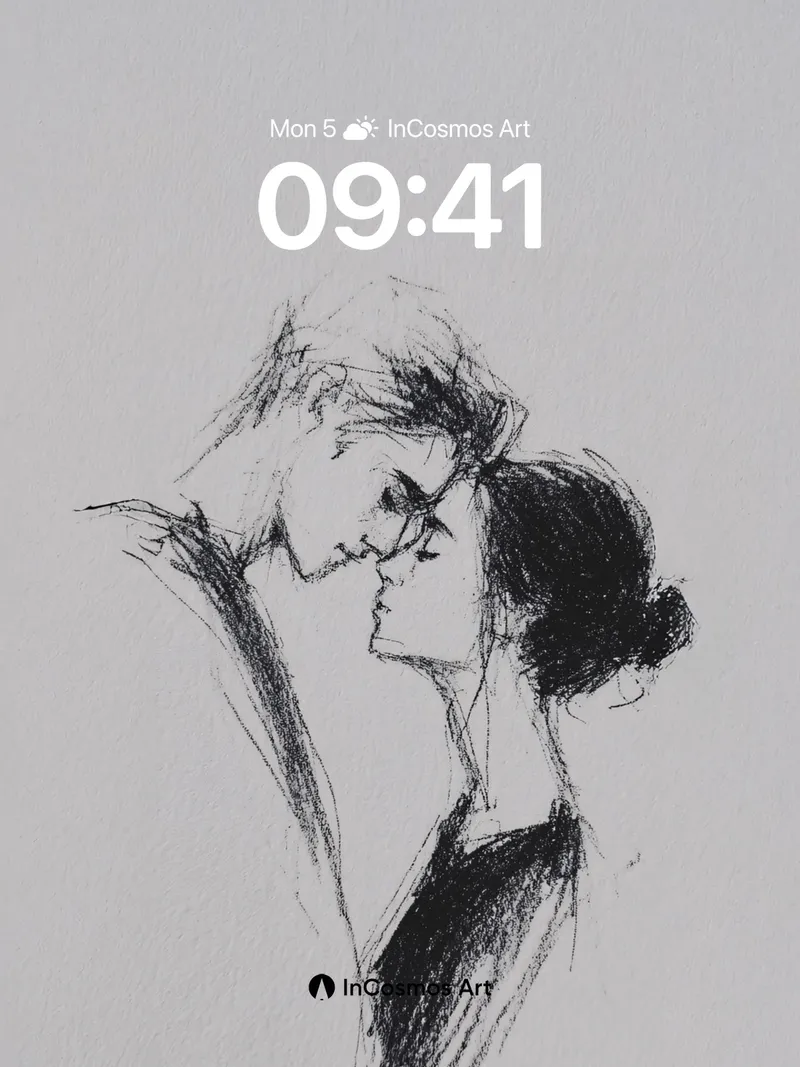
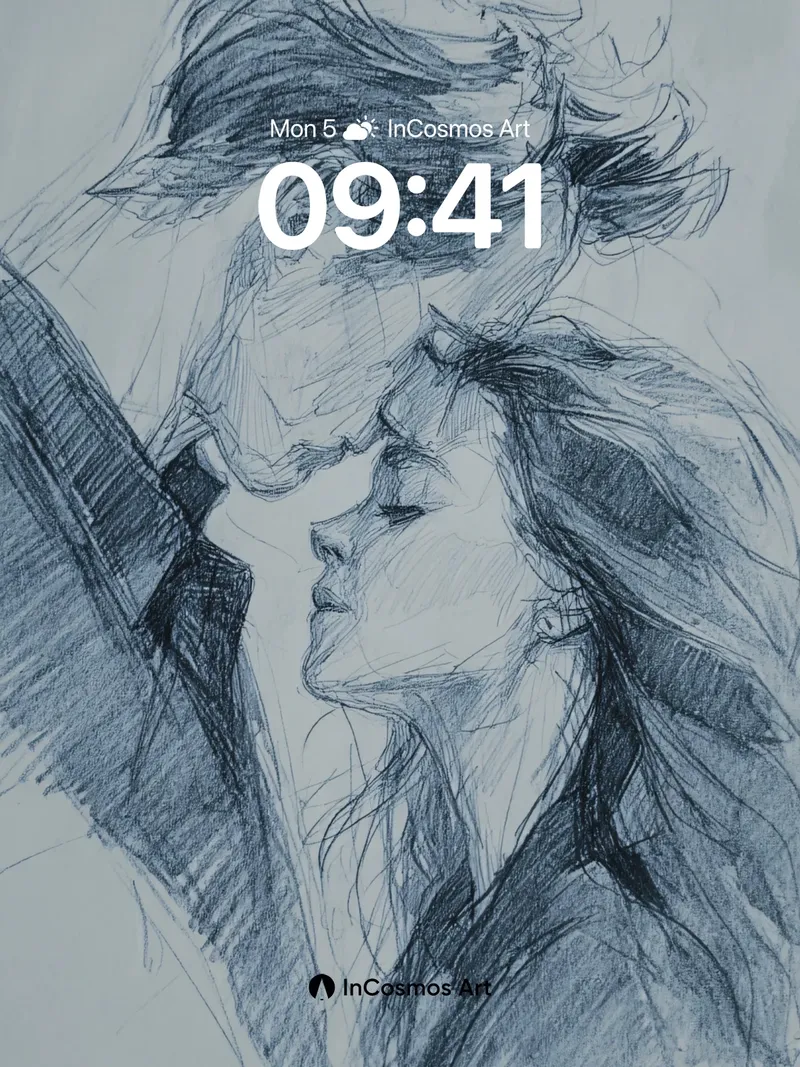
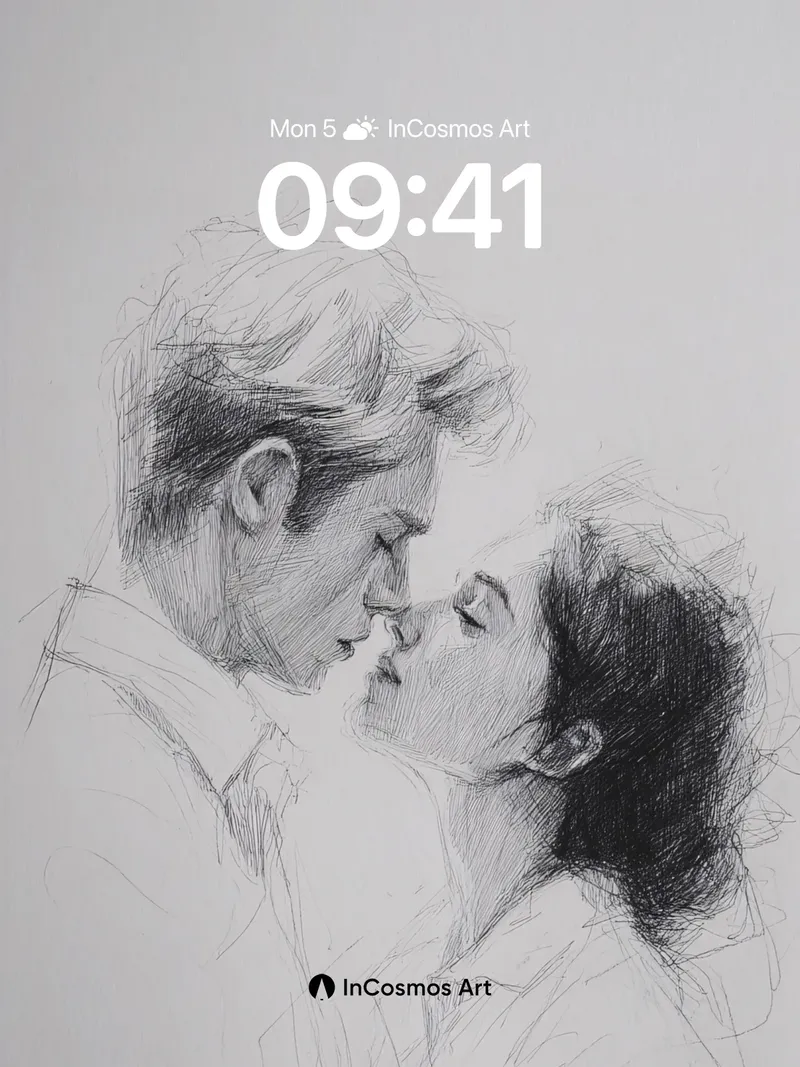
Between paper and line, the most delicate human emotions are preserved. Breath and distance, gaze and touch, form a silent dialogue. These sketches capture the tension between two figures with minimal strokes, their faces nearly touching yet never fully connecting. This unresolved state is not estrangement, but the quiet before closeness—a philosophy of intimacy. The tilt of bodies, the movement of hair, the curvature of shoulders, are not accidental; they are traces of emotional flow. Each stroke is a capture of time, a translation of feeling. The weight and rhythm of lines mirror heartbeat patterns, conveying unspoken longing and restraint.
The Geometry of Emotion
The arrangement of lines is deliberate, forming a field of tension. The figures' postures create a closed triangular structure, with heads and shoulders outlining a private space. The visual focus lies in the gap between noses and lips—the most emotionally dense zone. The emptier the space, the heavier it feels. This negative space is one of art’s most expressive languages. It does not offer answers, only questions: Will they kiss? Have they kissed? This tiny distance becomes an existence of both psychological and physical boundaries.
The Breath of Ink
Variations in ink tone suggest emotional temperature. Deep blue and charcoal evoke calmness and introspection, while red injects passion and unease. Color choice is not decorative but a direct projection of mood. In the red sketch, lines are chaotic and urgent, as if souls are burning; in black, they are steady as night, hiding unseen forces. These differences reveal multiple psychological states behind the same posture—love can be fierce or silent, but never still.
The Morphology of Love
These scenes lack background or setting, featuring only two beings reflecting each other. Collars, hair direction, facial shadows—all contribute to identity cues. Men often wear suits, women long or short hair, indicating social roles. Yet in this moment, gender, status, appearance collapse into pure silhouette. Love transcends surface here, entering a primal, almost instinctual connection. This is a record of shared human experience: approaching, waiting, sensing.
Silent Dialogue
No words are needed; posture alone communicates volumes. Closed eyelids, slightly upturned lips, gently forward-leaning heads—all are nonverbal signals. These subtle movements form a grammar of emotional exchange. In modern society, authentic interaction grows rare, replaced by digital emojis and text responses. These sketches remind us that true intimacy arises from bodily resonance, from pauses during eye contact, from moments just shy of touch.