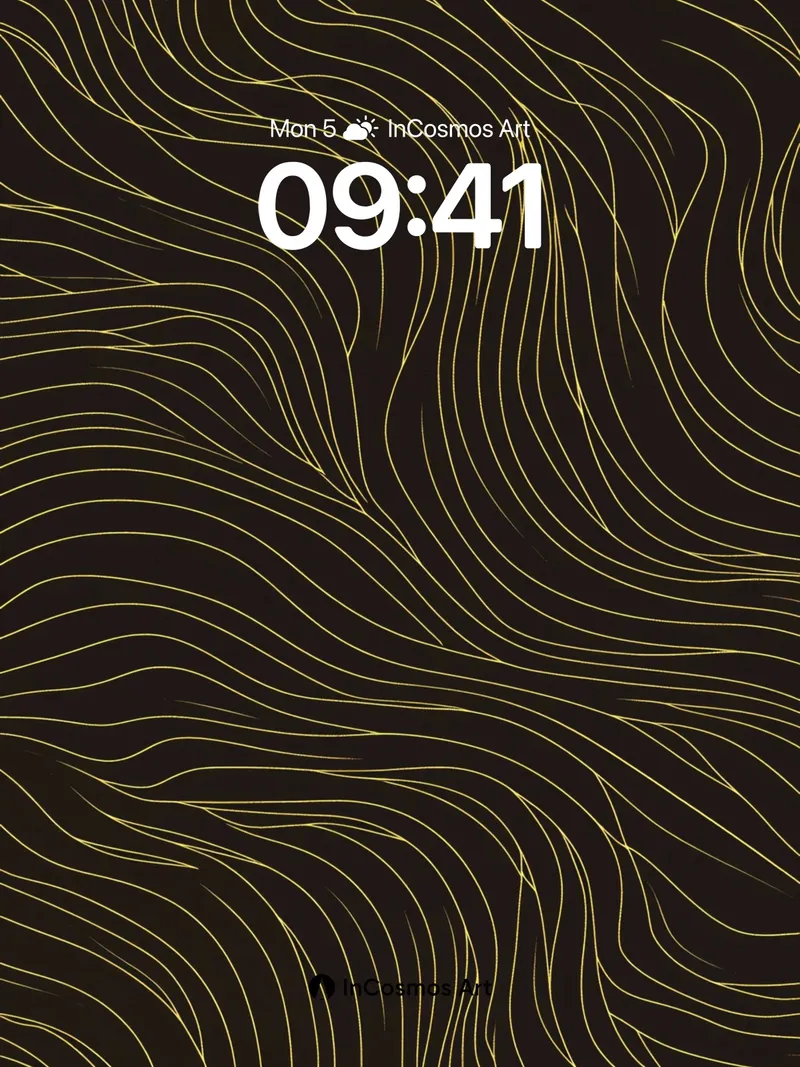
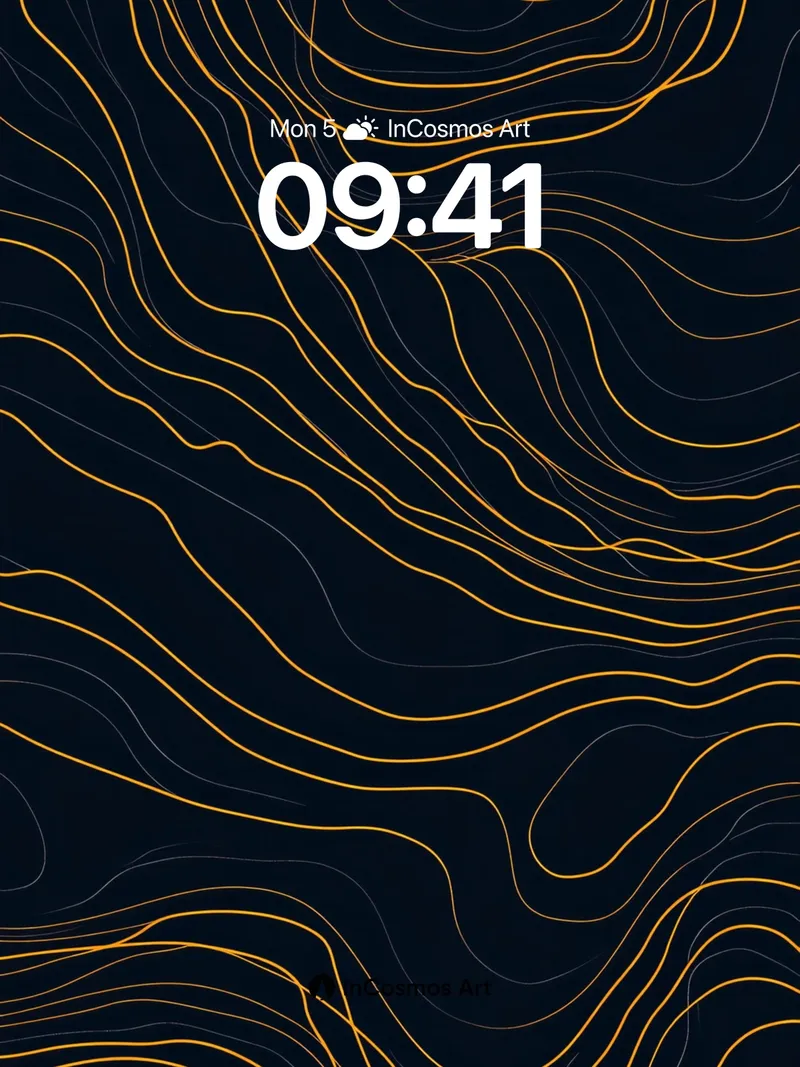
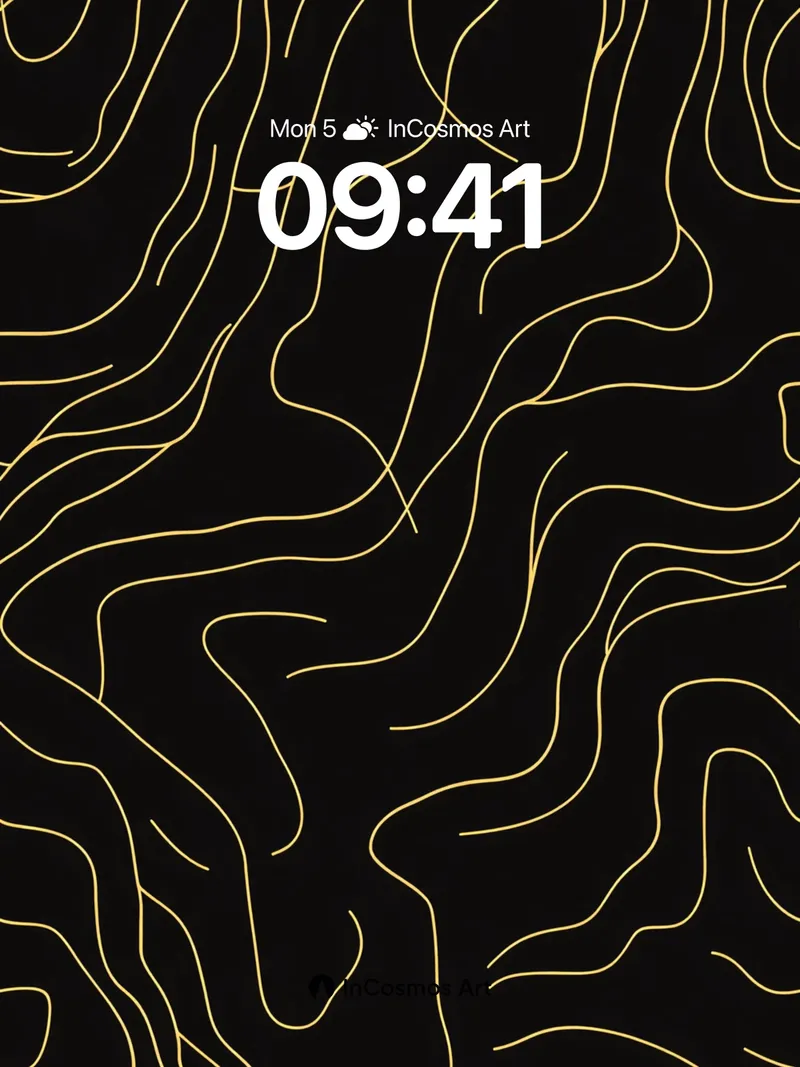
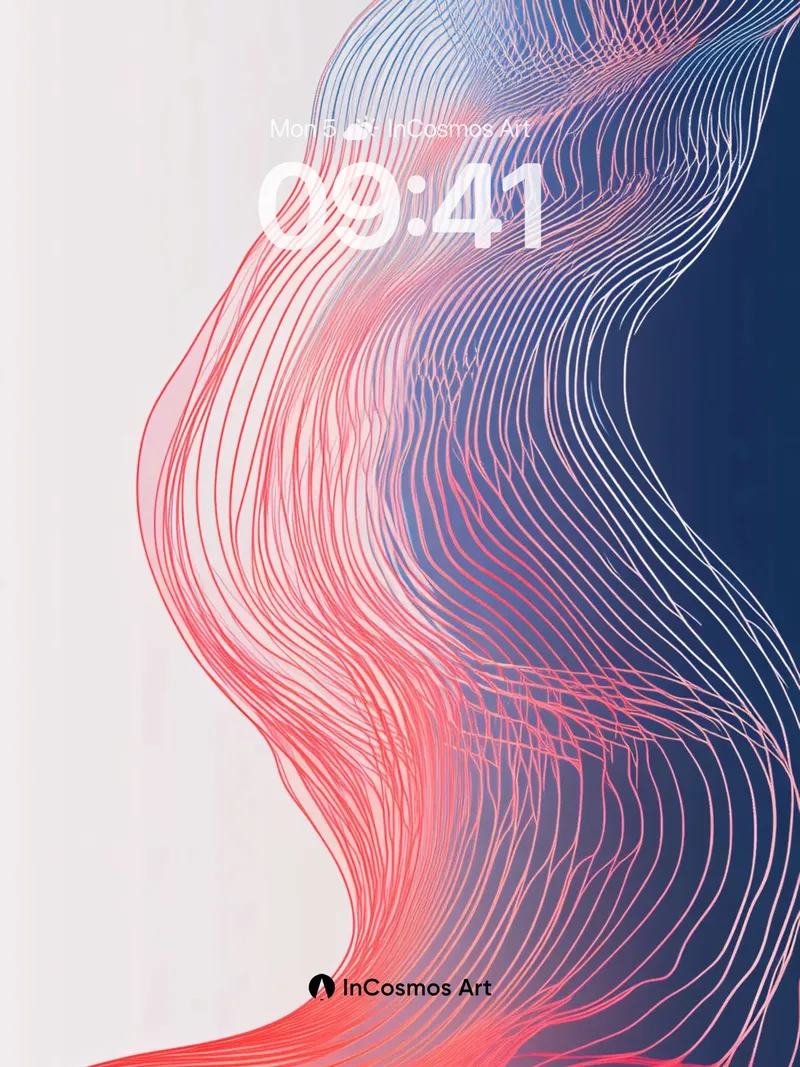
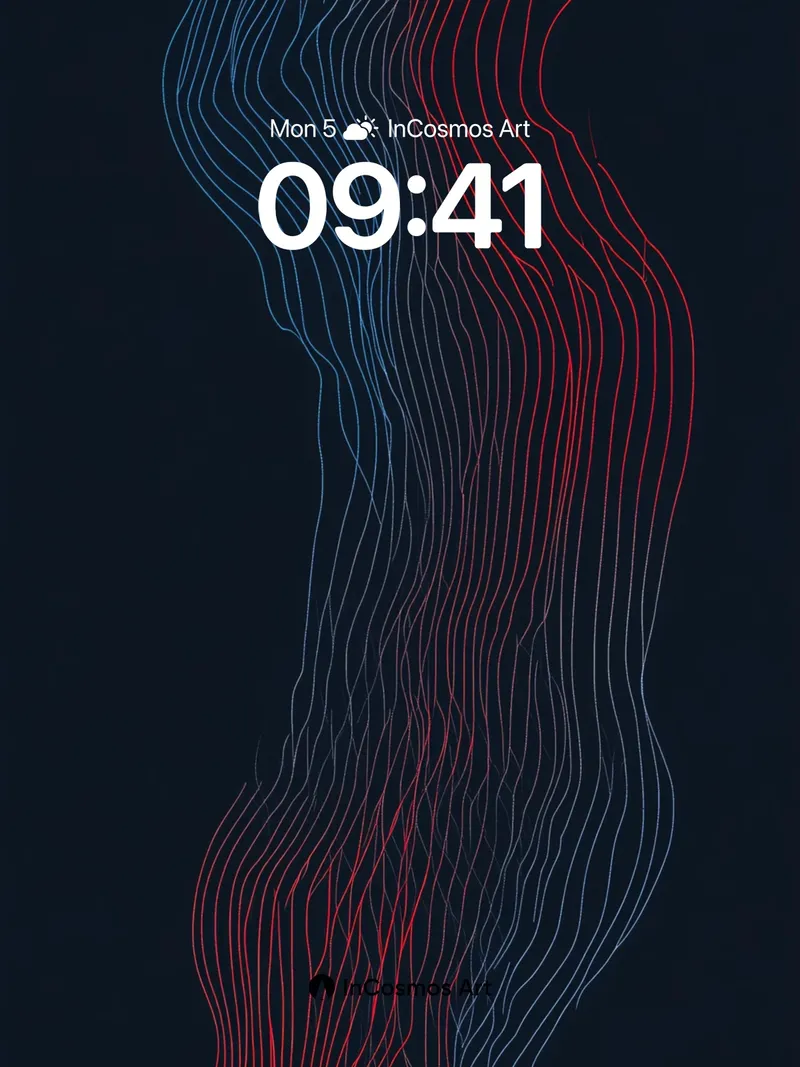
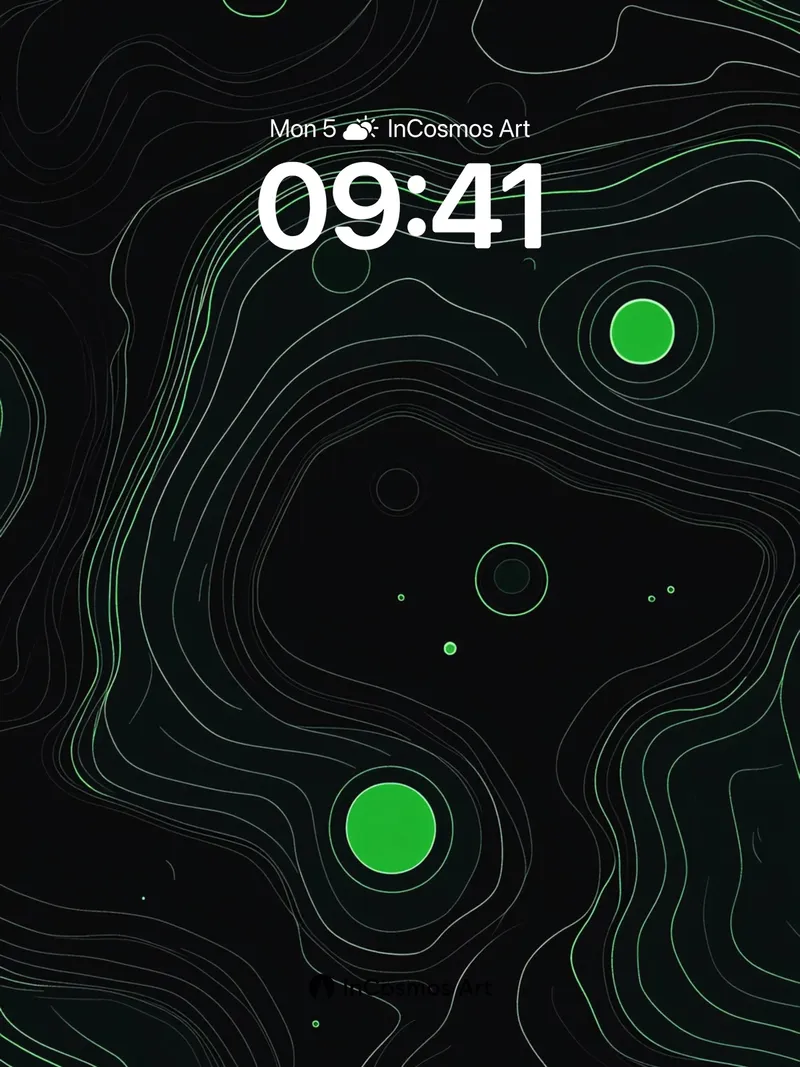
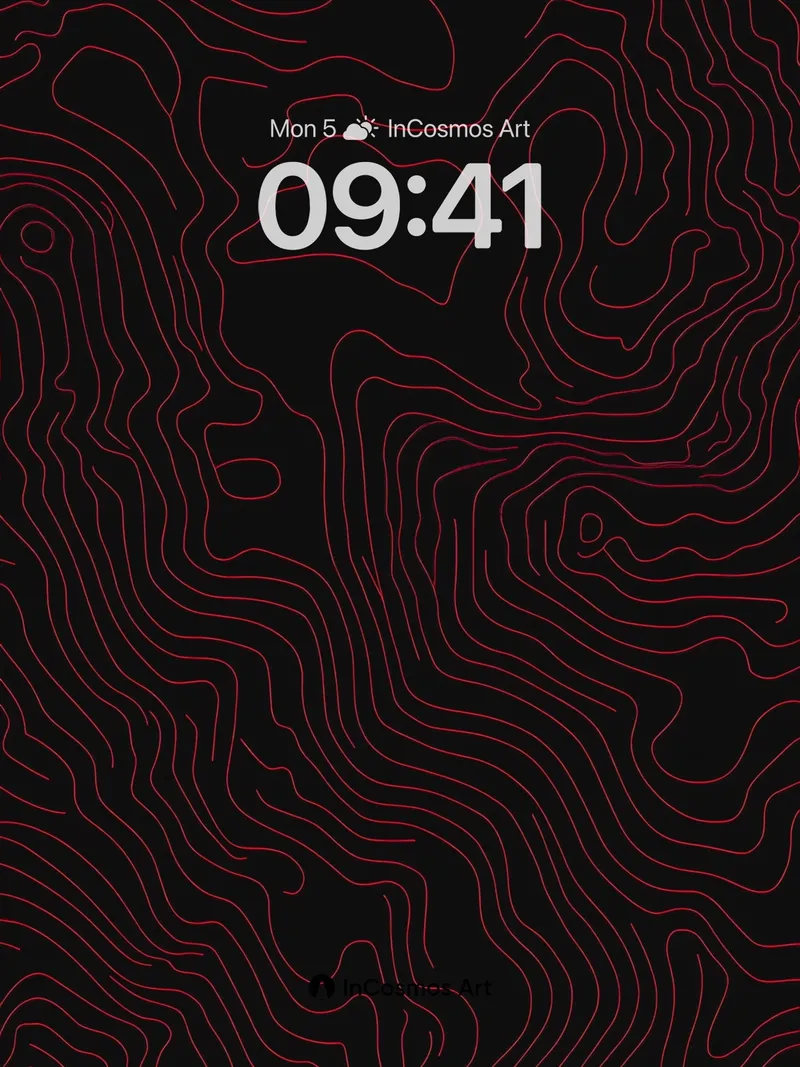
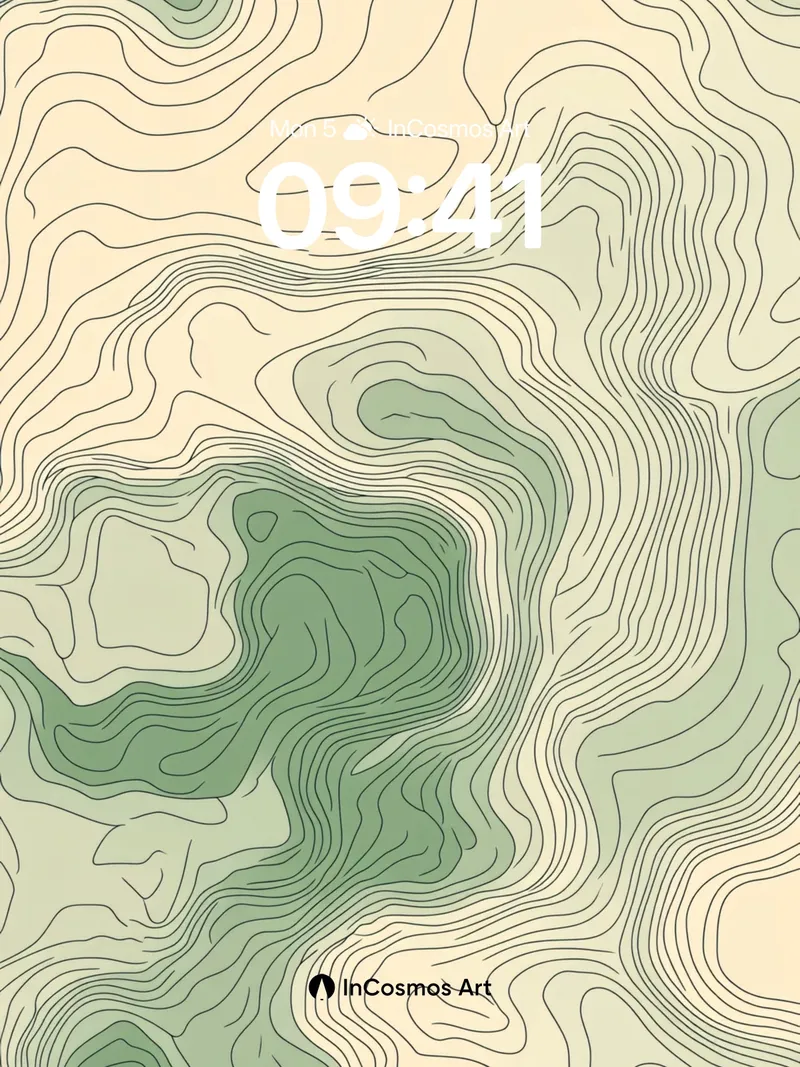
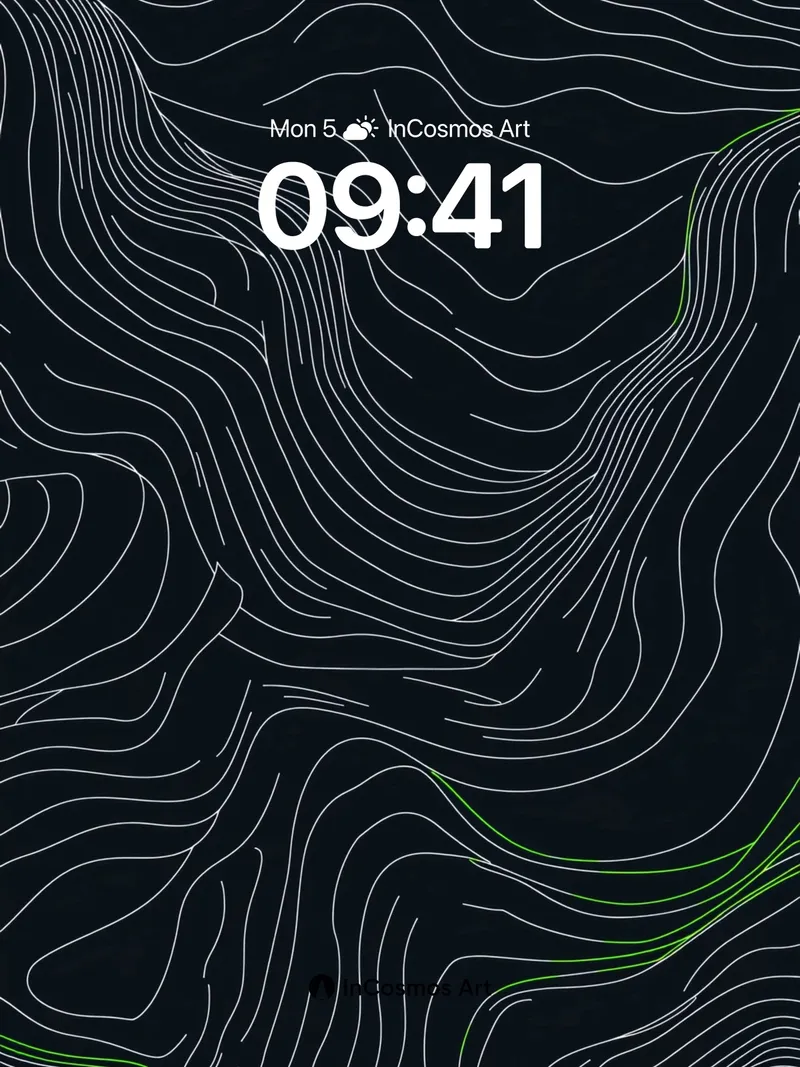
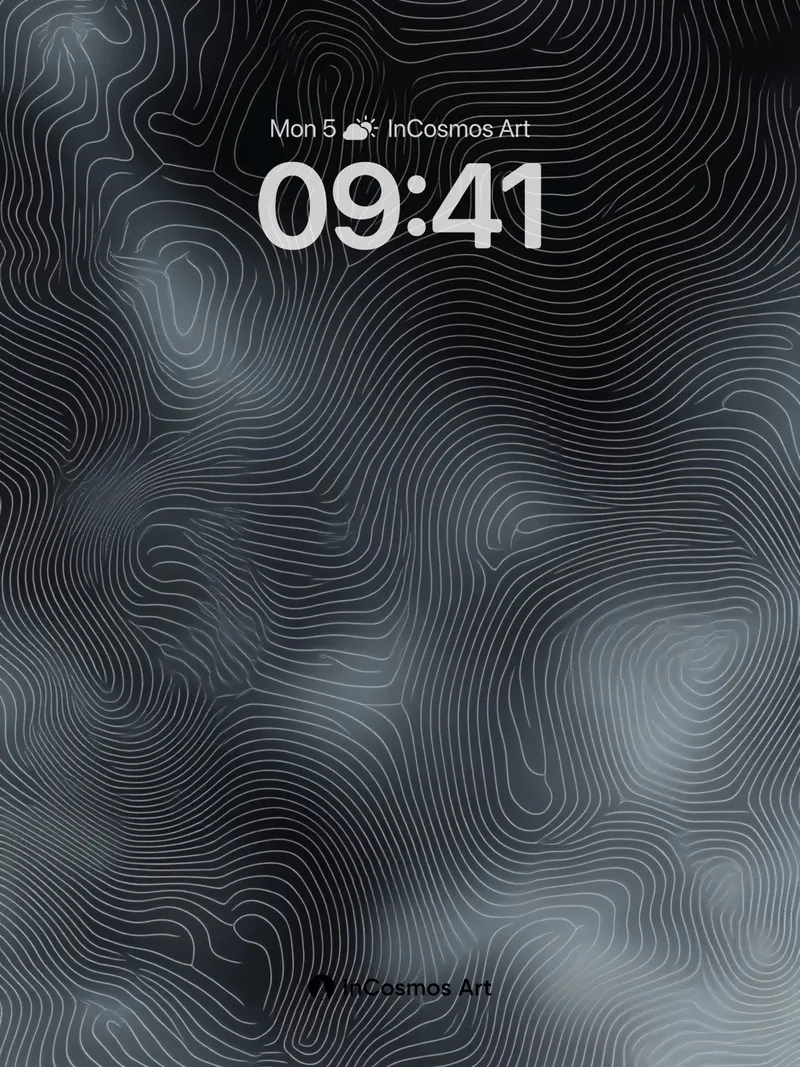
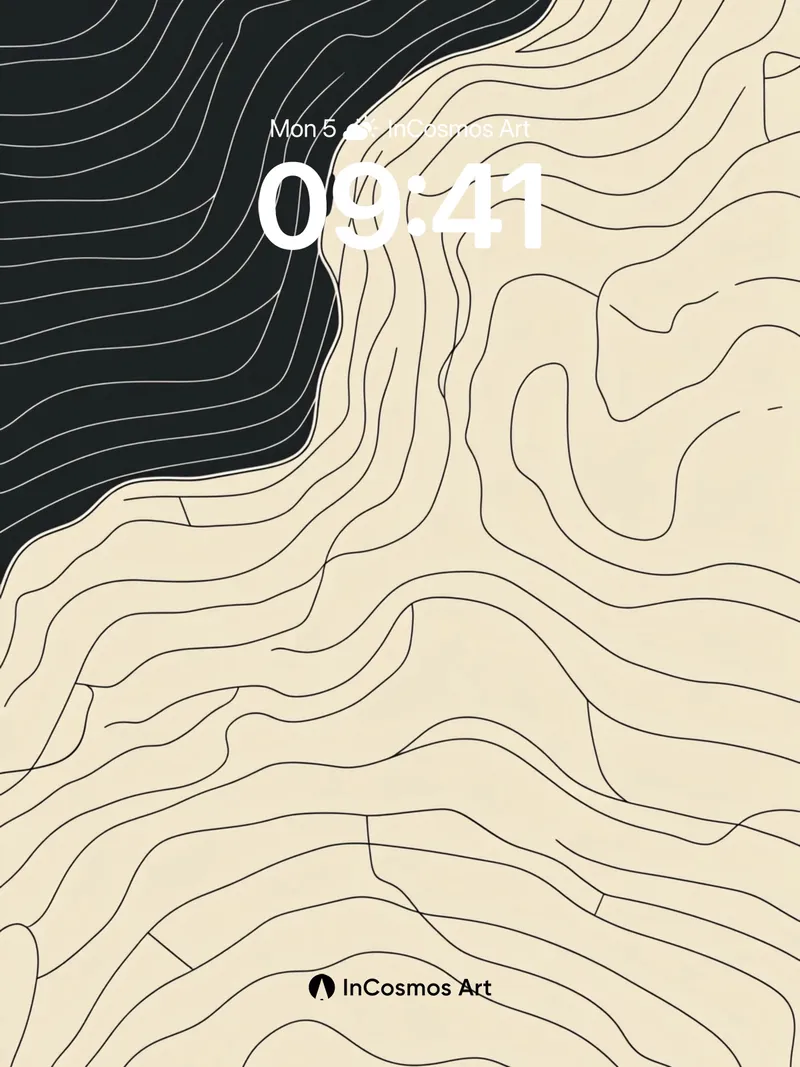
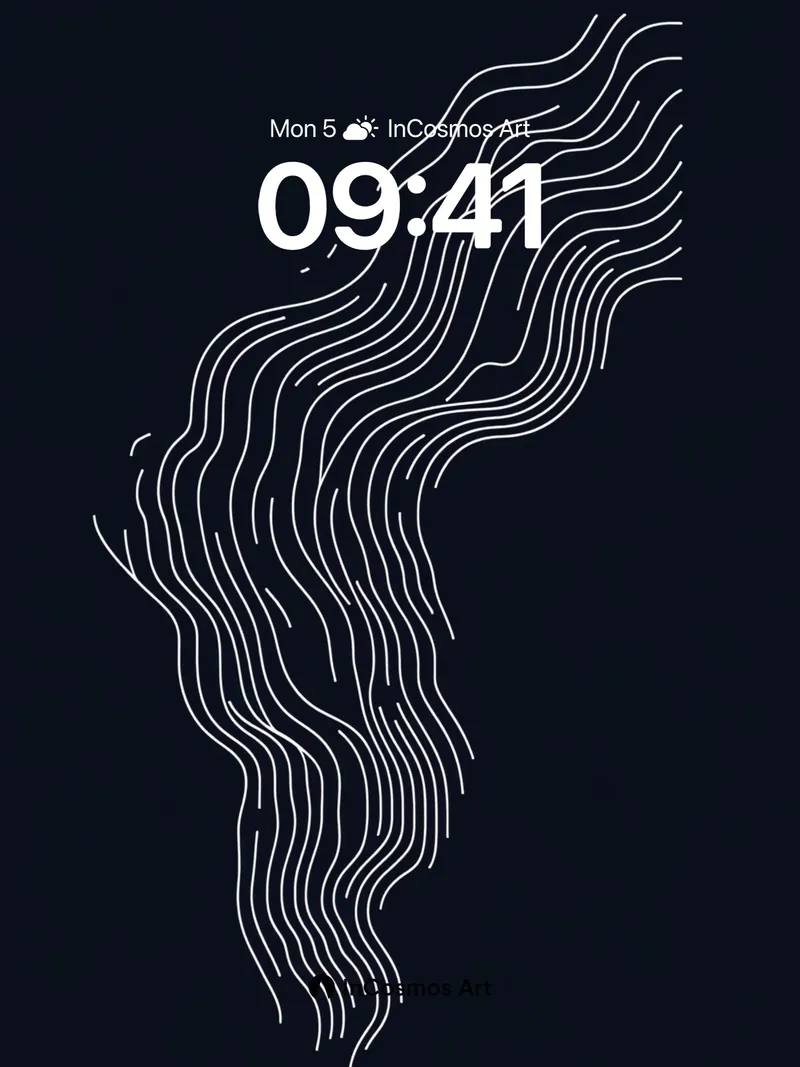
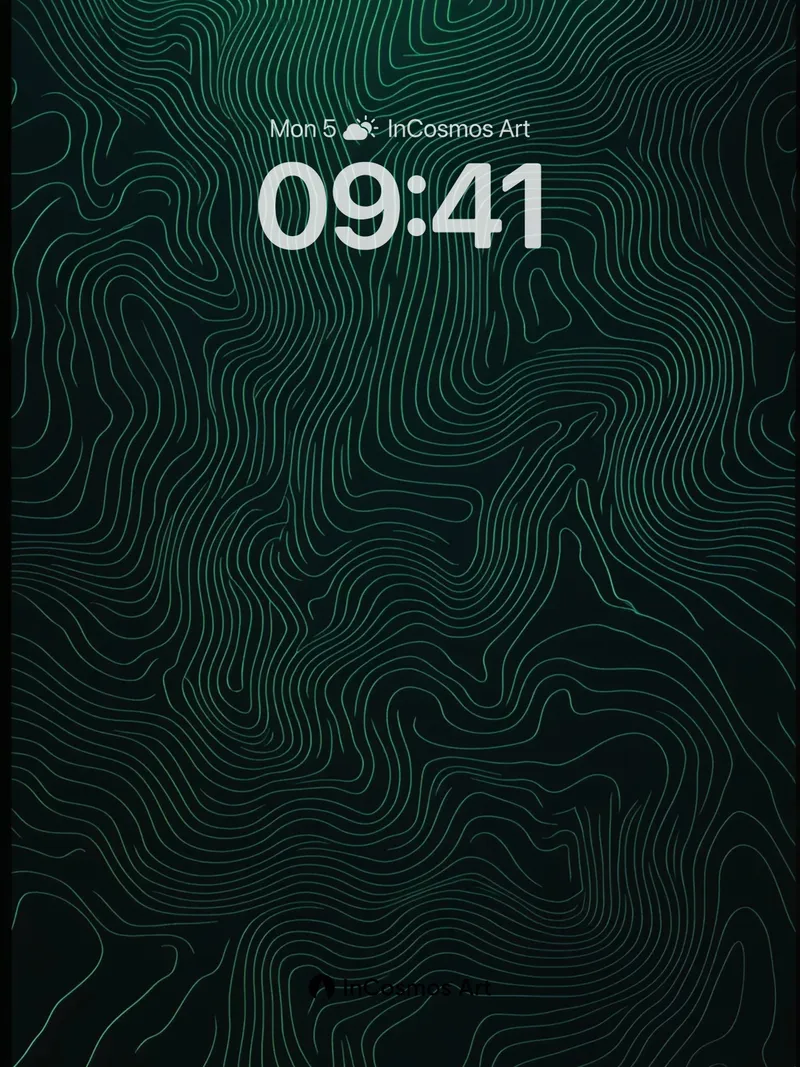
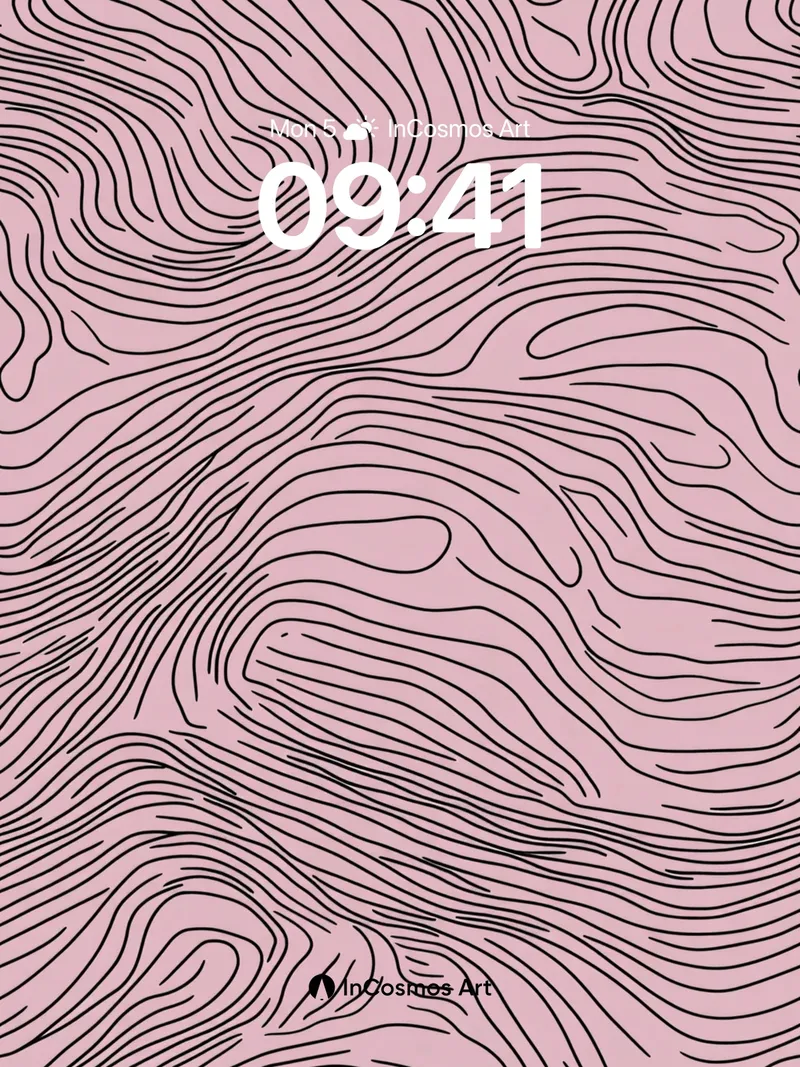
Lines flow through darkness like neural pathways, resembling unfinished dreams. They do not depict any specific terrain but evoke a deep-seated perception—the human instinctive response to the hidden connection between space and emotion. These curves are not maps; they are emotional contour lines, marking invisible fluctuations. Each bend implies a transition in inner state; every closed loop symbolizes moments of solitude or fulfillment. In the digital age, where data defines reality, these forms remind us that some truths cannot be quantified—they can only be felt. They are silent languages, conveying the weight of existence through shape.
The Geography of Emotion
When visual symbols lose their utilitarian function, they become psychological mirrors. These meandering traces are not designed for navigation but for resonance. Green points scattered across the field resemble sparks of consciousness, indicating focal points of attention. They do not form paths but create a new cognitive structure—a spatial order determined by emotional density. Here, dense lines signify accumulated anxiety; sparse zones open into tranquil expanses. This is a mental map without coordinates, yet closer to the true contours of the human psyche than any physical landscape.
Abstraction as Truth
Modern individuals often lose direction amid complex information, yet these highly simplified lines offer a clear anchor. They strip away natural details, preserving only essential rhythm. Like subway maps, which sacrifice precision for clarity, these forms reveal universal emotional patterns: ascent, descent, cycles, rupture. They transcend cultural boundaries, becoming a shared emotional grammar. In an era of technological advancement, this primitive visual language feels especially valuable—because it refuses explanation and invites experience.
Digital Meditation Imagery
In an age dominated by screens, these images serve as fields for digital meditation. High contrast enhances focus, while color gradients introduce temporal depth. Black lines on pink backgrounds mimic heartbeat rhythms; the boundary between deep blue and pink resembles the edge of day and night. They are not decoration but tools for mental training. Viewers enter a mindfulness-like state, following the curves with attention, slowing thoughts. This is anti-consumerist aesthetics—not seeking stimulation, but stillness.
The Call of the Nameless Realm
The most compelling aspect is their anonymity. They name no place, tell no story. It is precisely this emptiness that grants them infinite possibility. Each person projects their memories, fears, or hopes onto them. This is not merely visual art—it is participatory ritual. The viewer actively constructs meaning, transforming the image from static to dynamic. In an era saturated with social media, such works requiring introspection rather than sharing become rare spiritual resources.