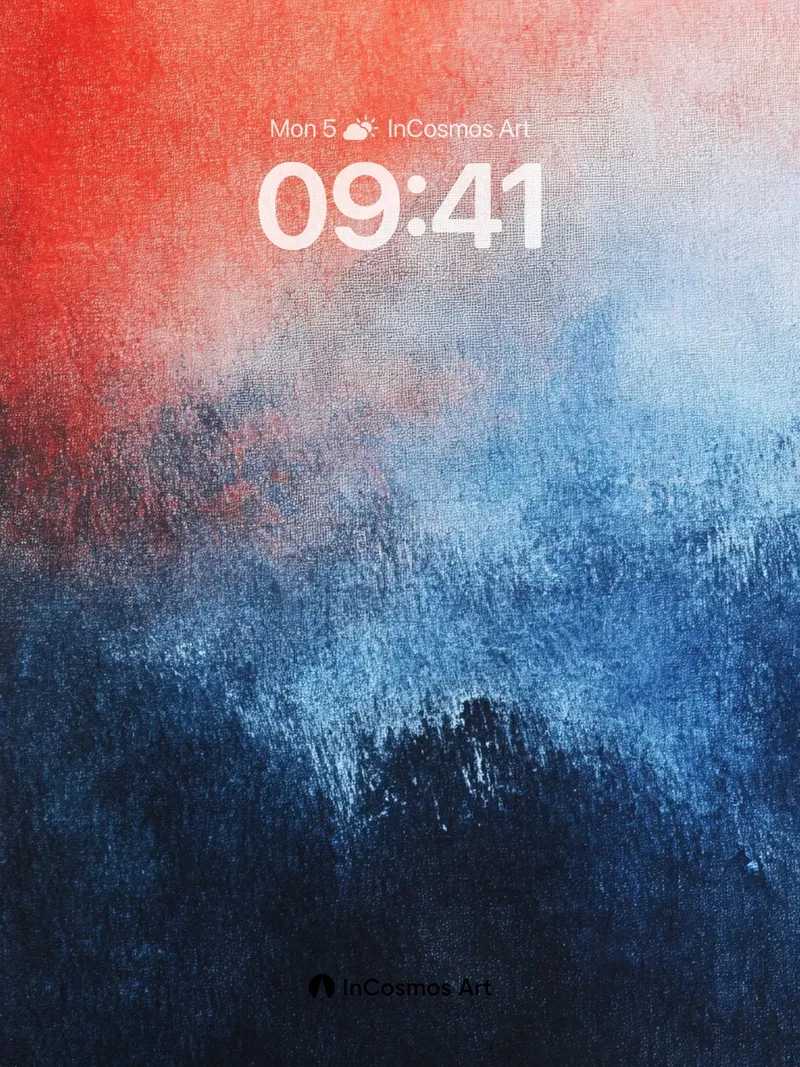
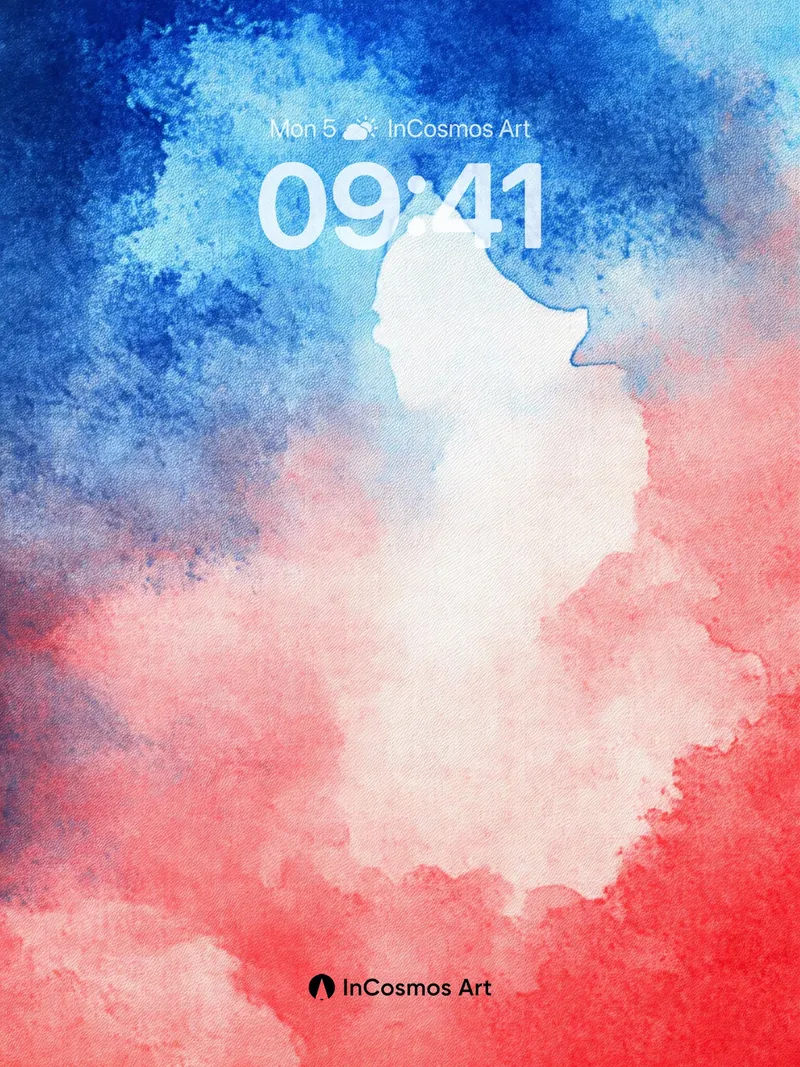
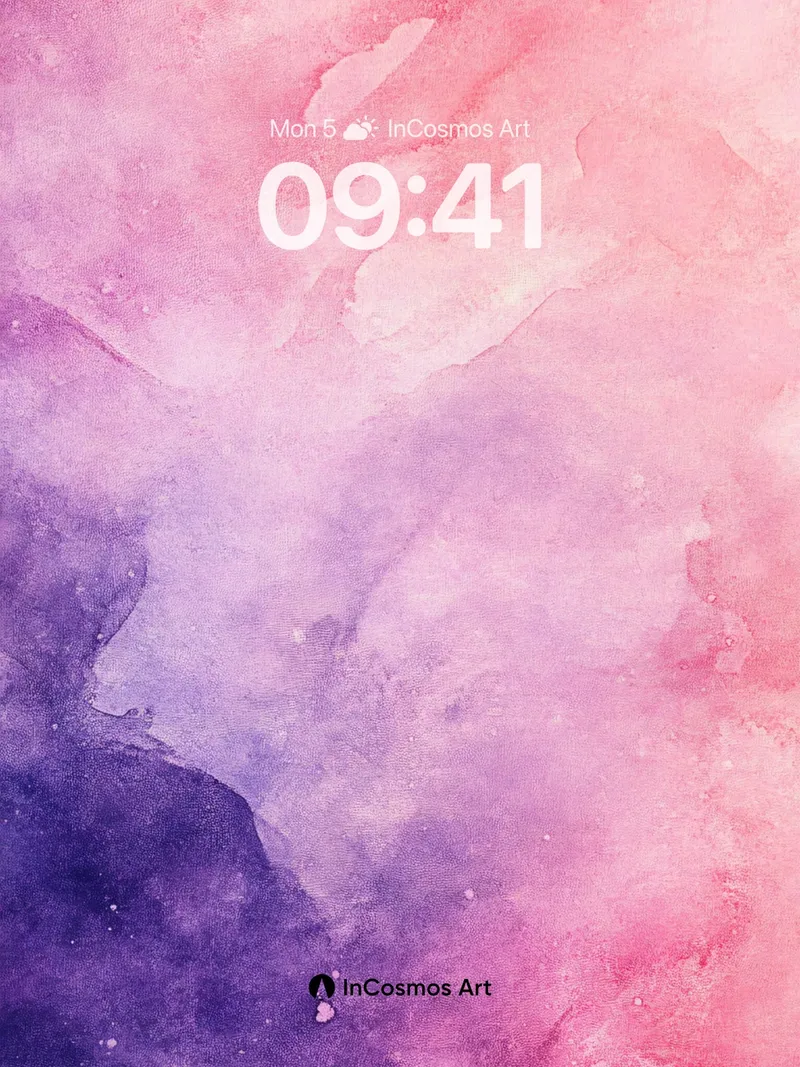
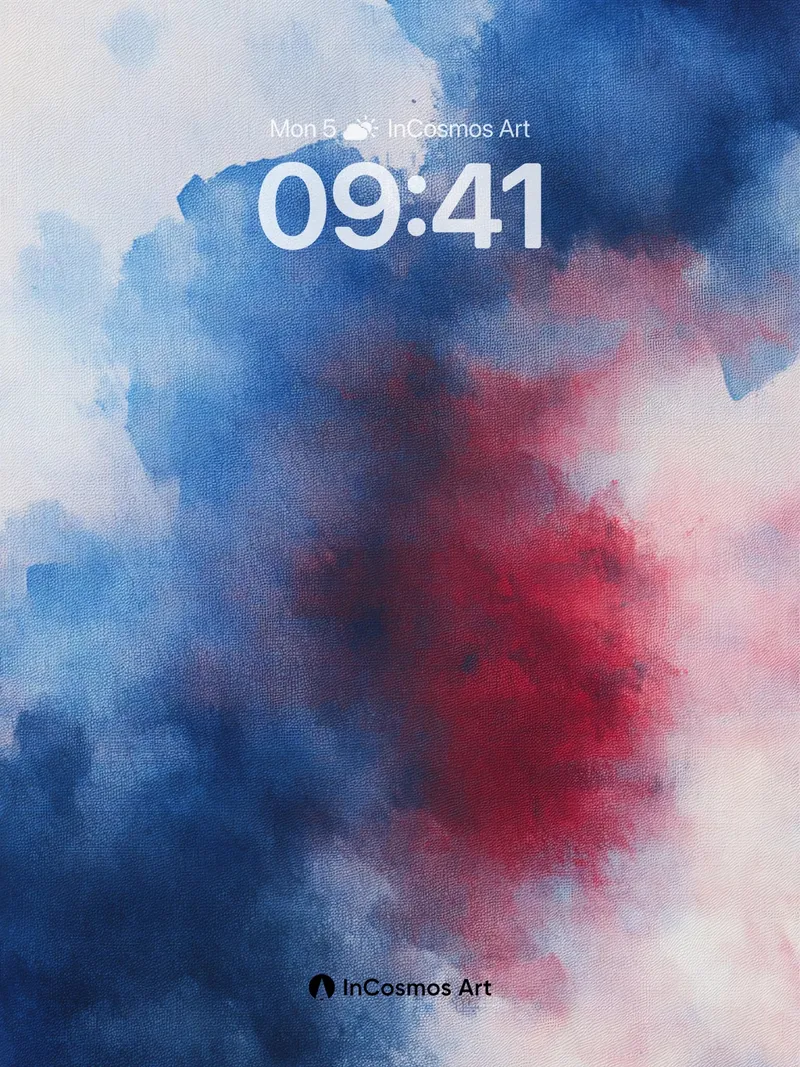
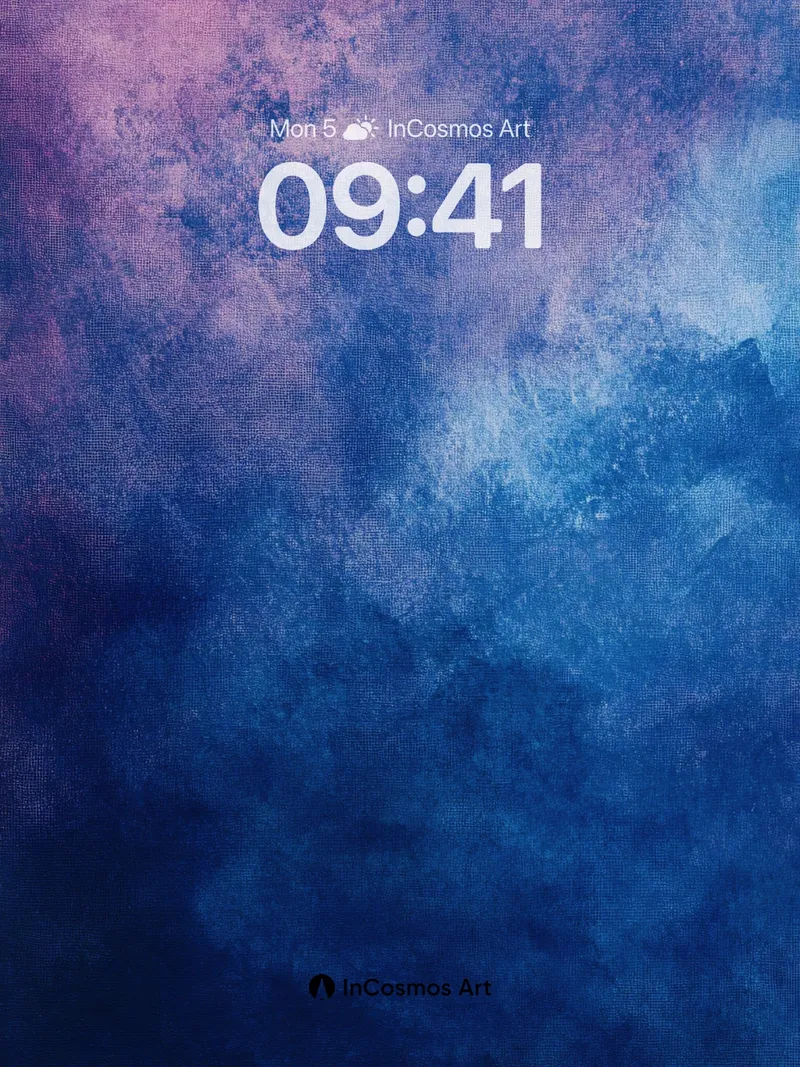
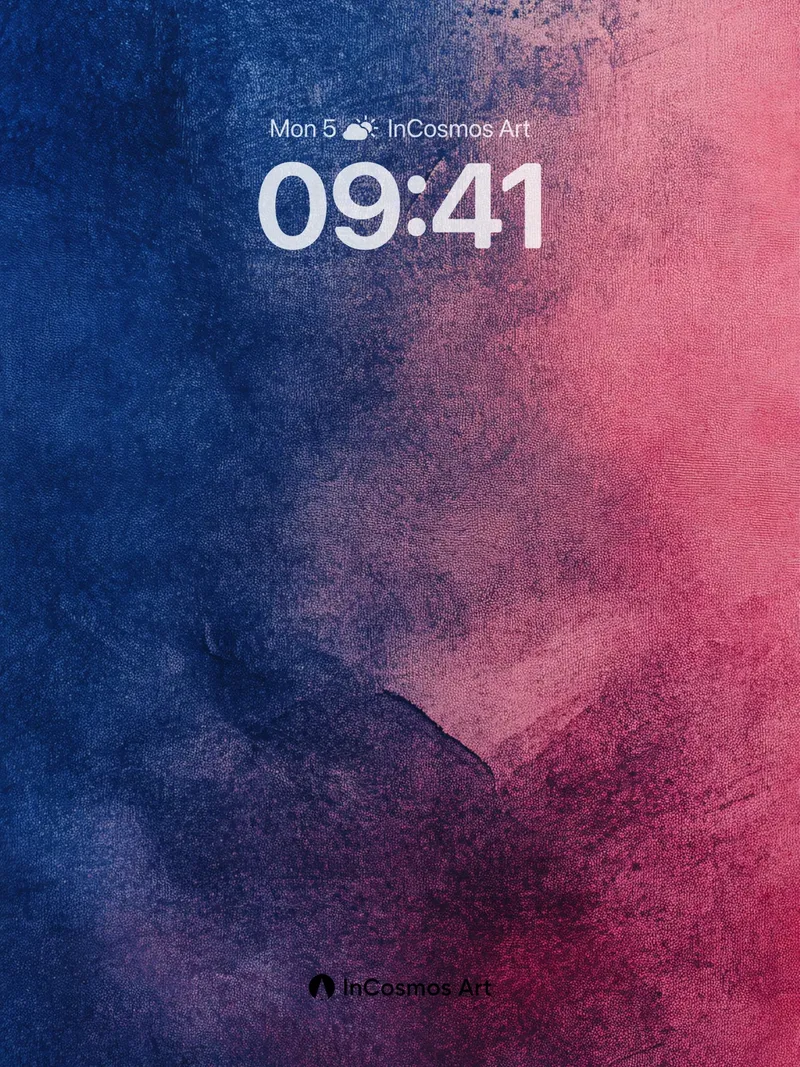
Color spreads slowly across the surface, mimicking thoughts drifting through unconsciousness. Where blue meets red, there is no confrontation, only fusion—a liminal space between memory and reality. The permeability of water gives pigment a rhythm akin to life; each drop becomes a trace of time. This flow is not premeditated, yet it embodies the most primal human emotional structures—unease, longing, stillness, and combustion. Visual layers do not stack but breathe: deep blue sinks into the base, vivid red rises to the surface, as if the soul traverses different dimensions. These compositions lack literal references, yet reveal the complexity of inner worlds through abstraction.
Topology of Emotion
The distribution of color forms a psychological map. Deep blue signifies the depth of the unconscious, red represents outward emotional tension, while the central white areas are unnamed territories. These spaces are not voids, but fields where meaning has not yet settled. Viewers often project personal experiences onto such arrangements, embedding private memories into chromatic gaps. Abstract art thus becomes a medium for empathy—it does not narrate, but invites participation in emotional reconstruction.
Philosophy of Water
Water as medium determines unpredictability. Pigment diffusion cannot be controlled; every immersion is a unique event. This very unpredictability defines its aesthetic value—it rejects perfection, embraces chance. In an age that values precision and replication, watercolor's 'mistakes' become evidence of authenticity. Its texture records motion: the weight of brushstrokes, pauses, and backflow—all serve as proof of time.
Chromatic Social Metaphor
Red and blue juxtaposed often evoke political, identity-based, or oppositional meanings in cultural contexts. Here, however, they do not clash, but merge to dissolve boundaries. This blending suggests a new collective imagination: differences need not oppose; they can coexist within the same field. As colors seep into one another, individual experiences find resonance in shared visual language. Art here functions as mediator, reconstructing connection through non-verbal means.