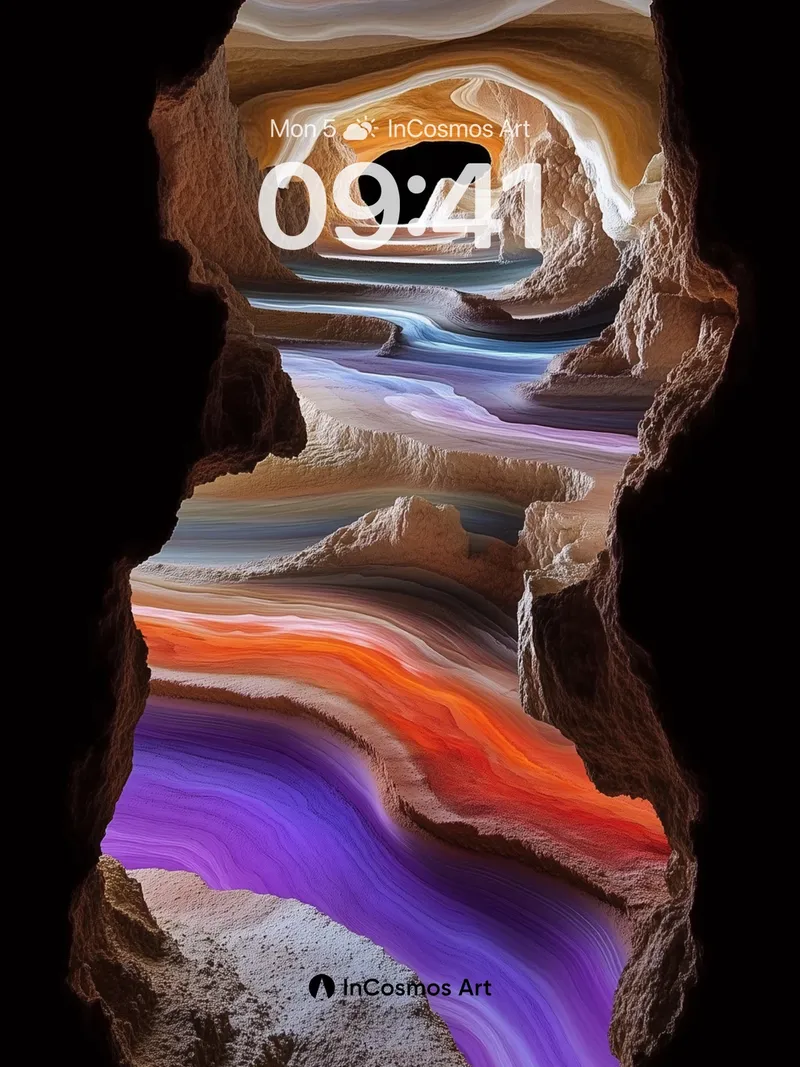
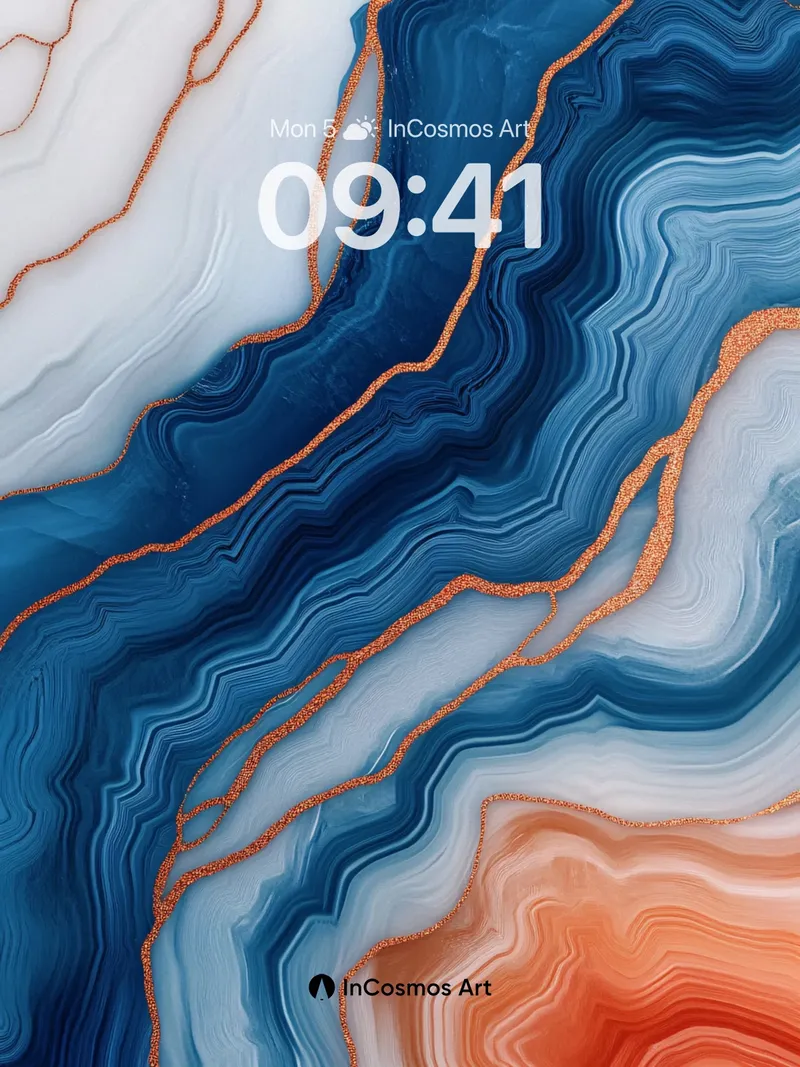
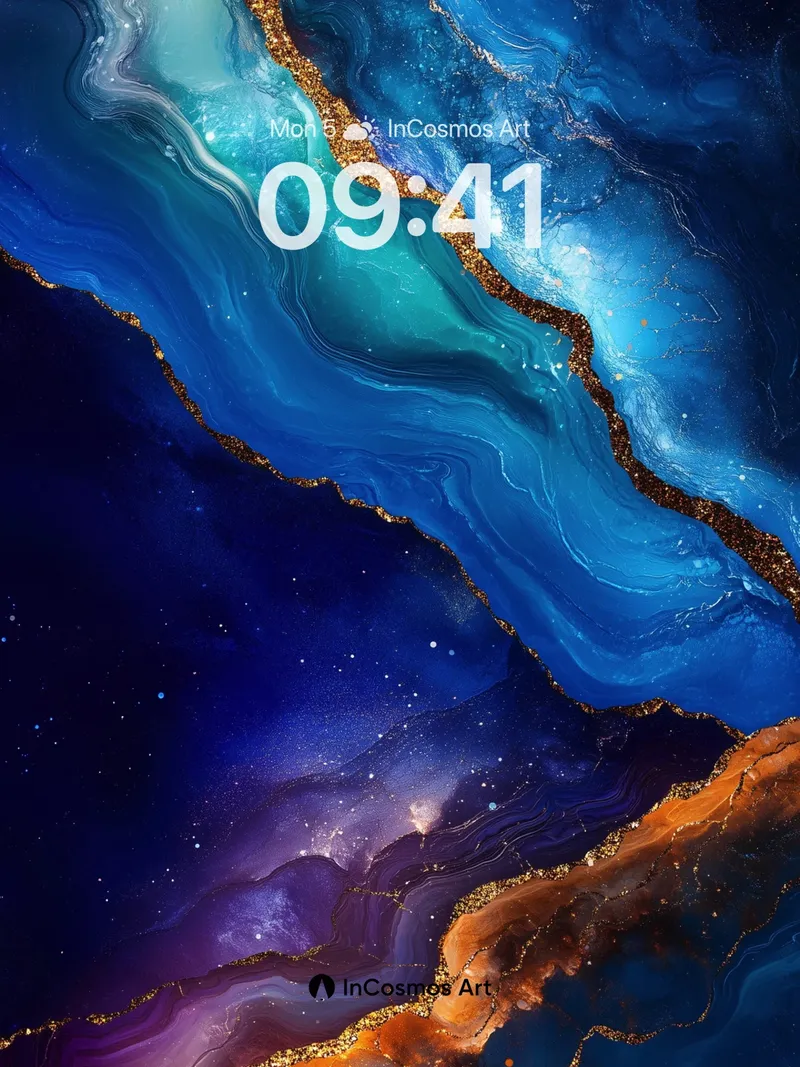
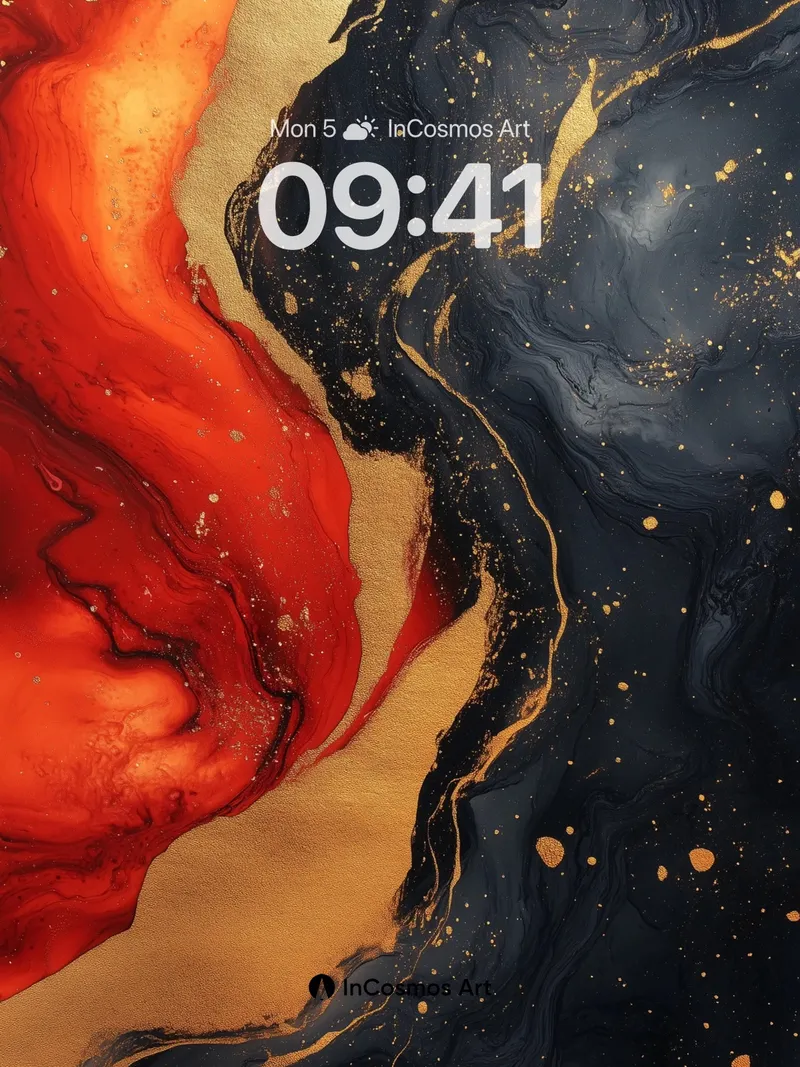
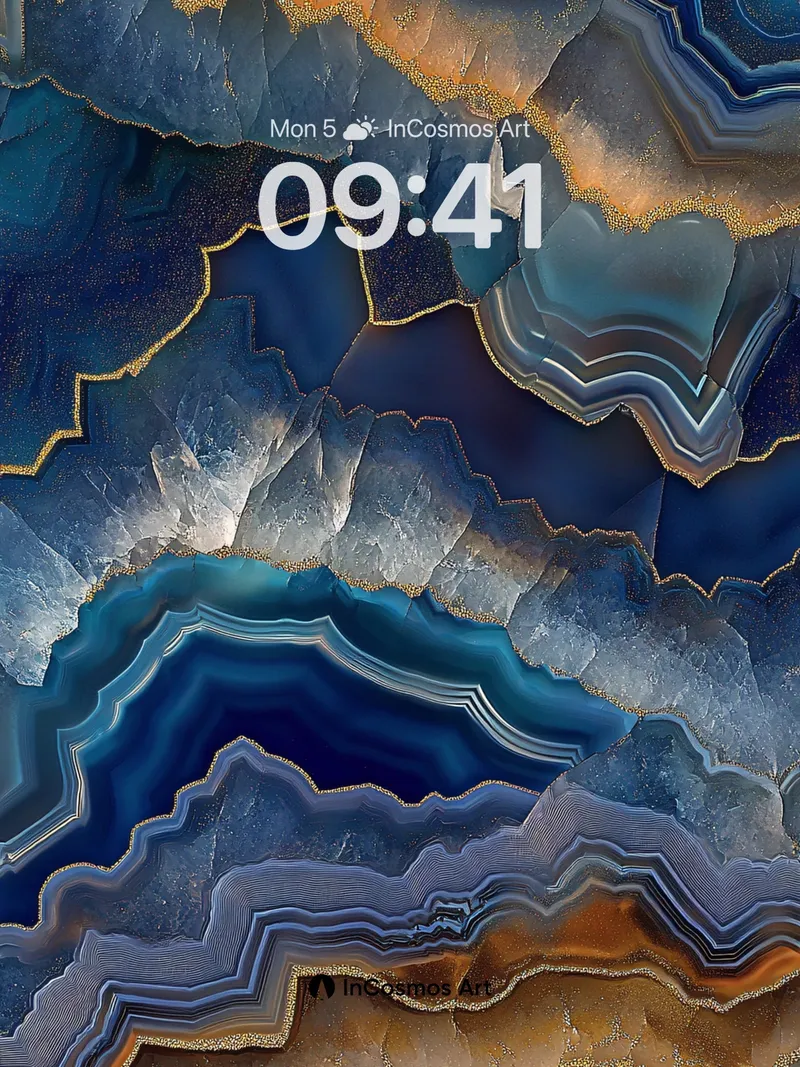
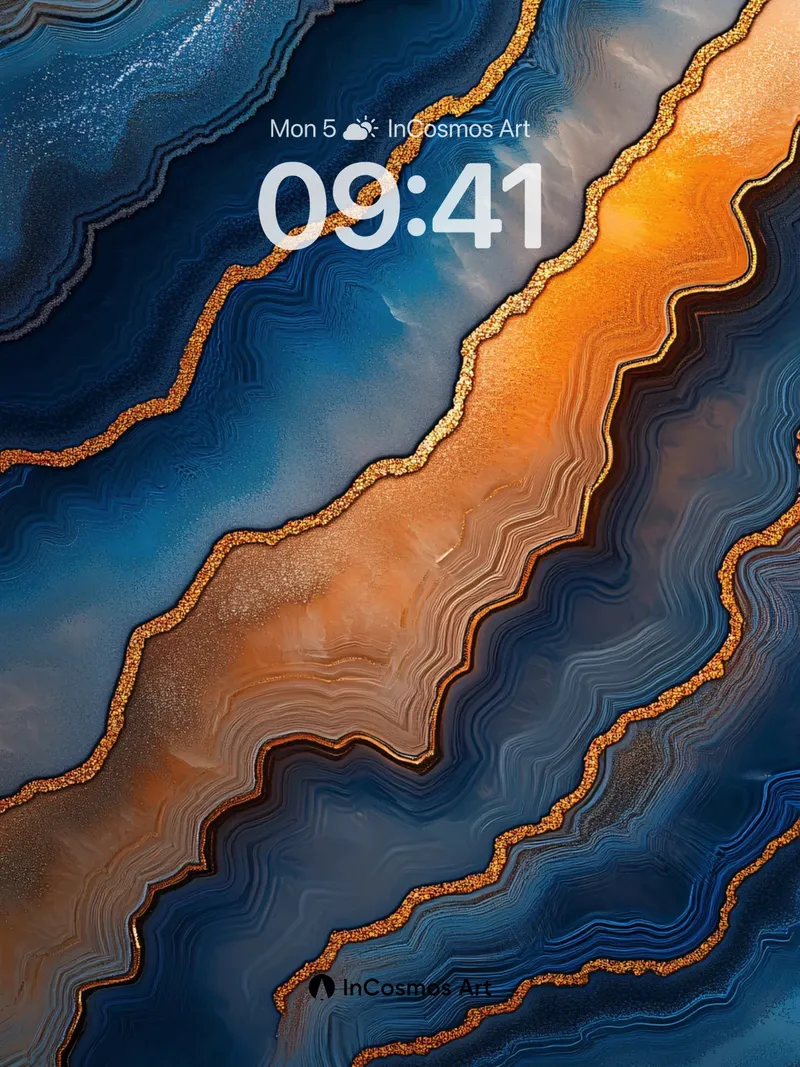
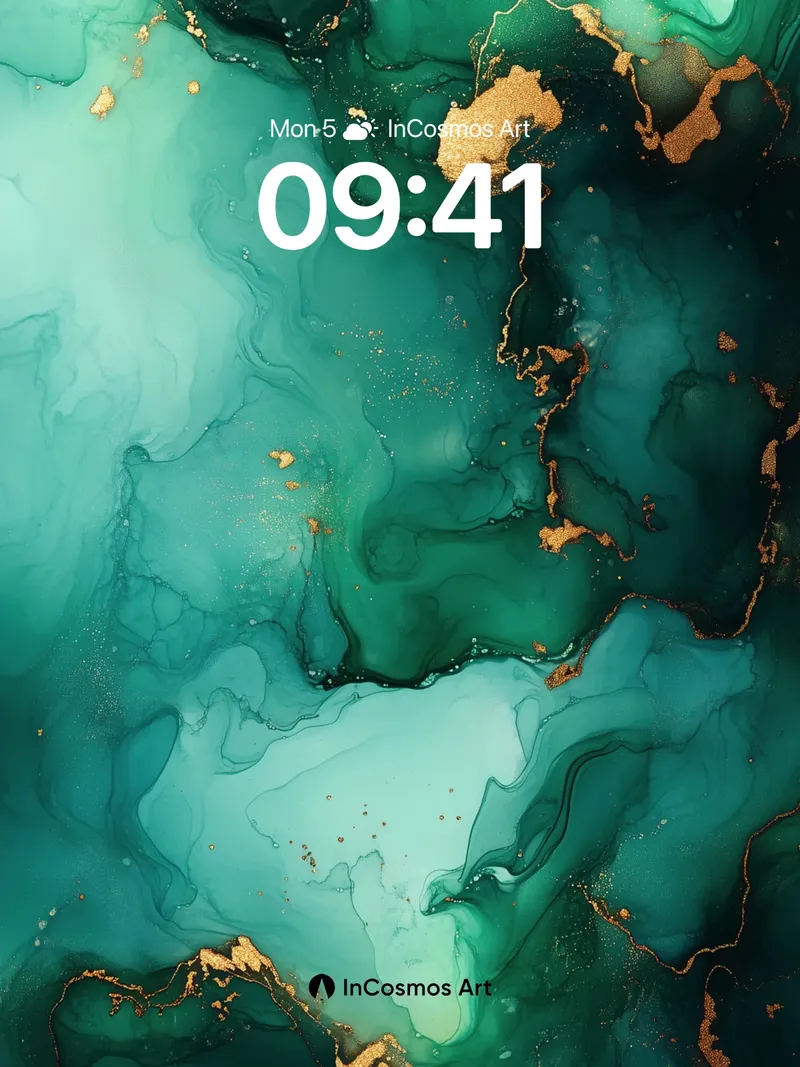
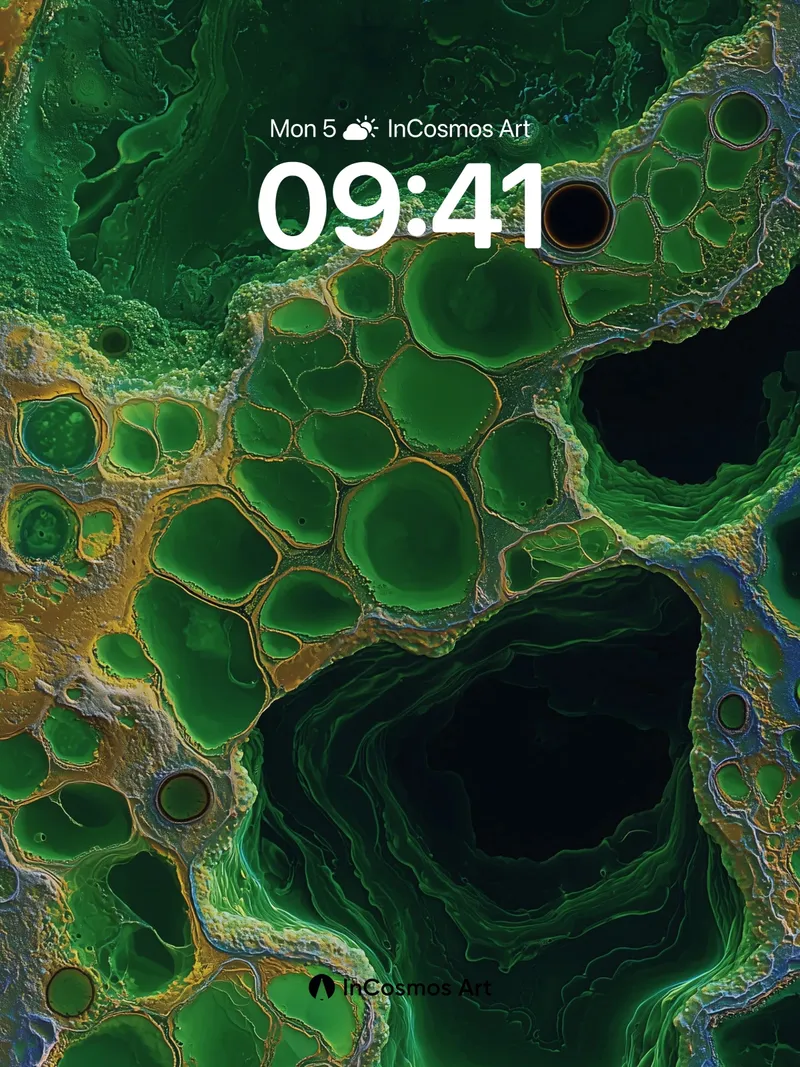
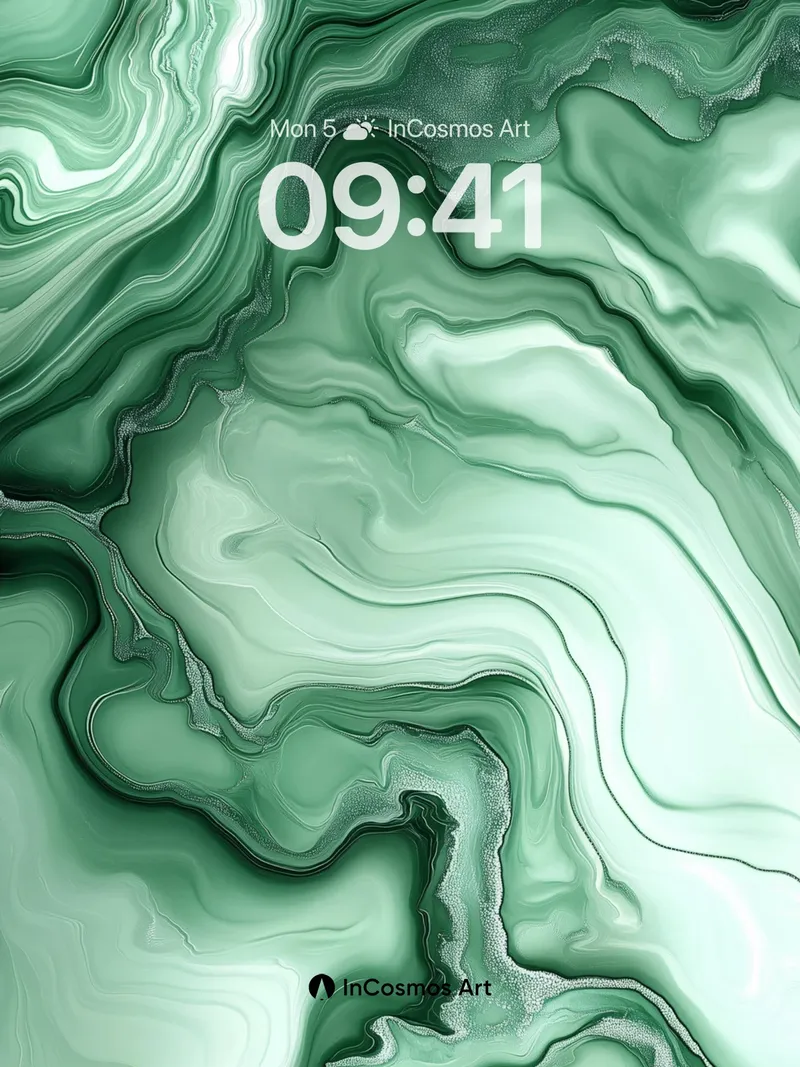
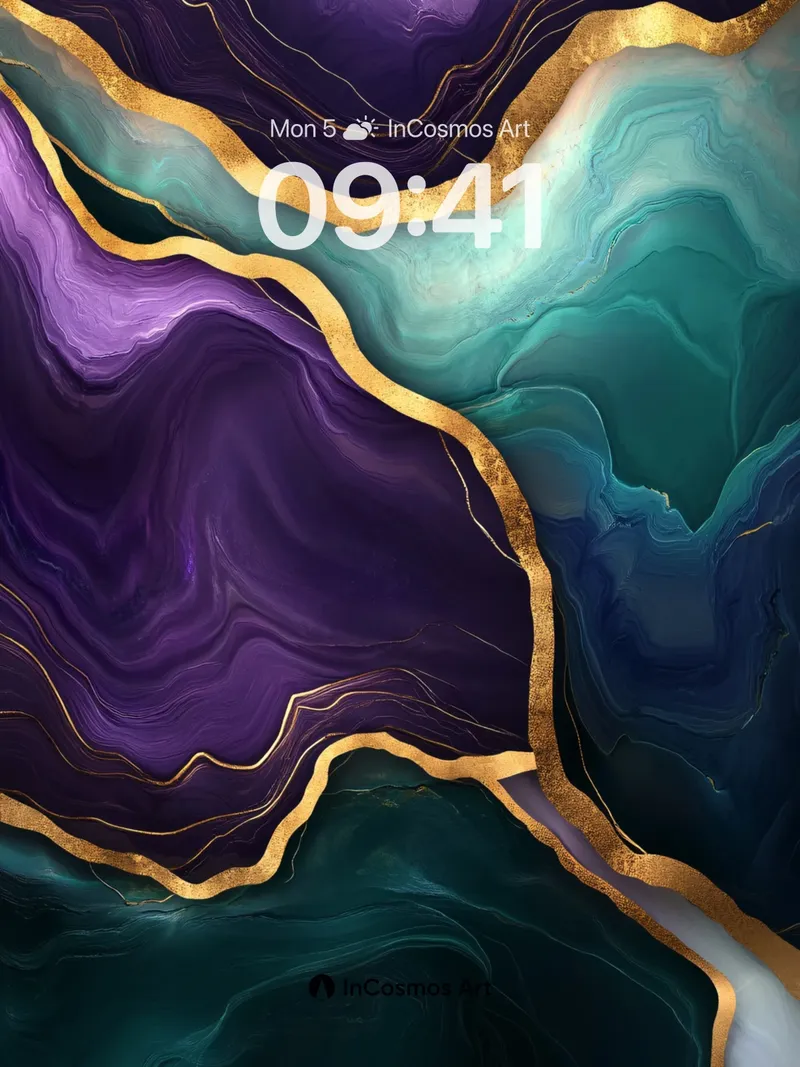
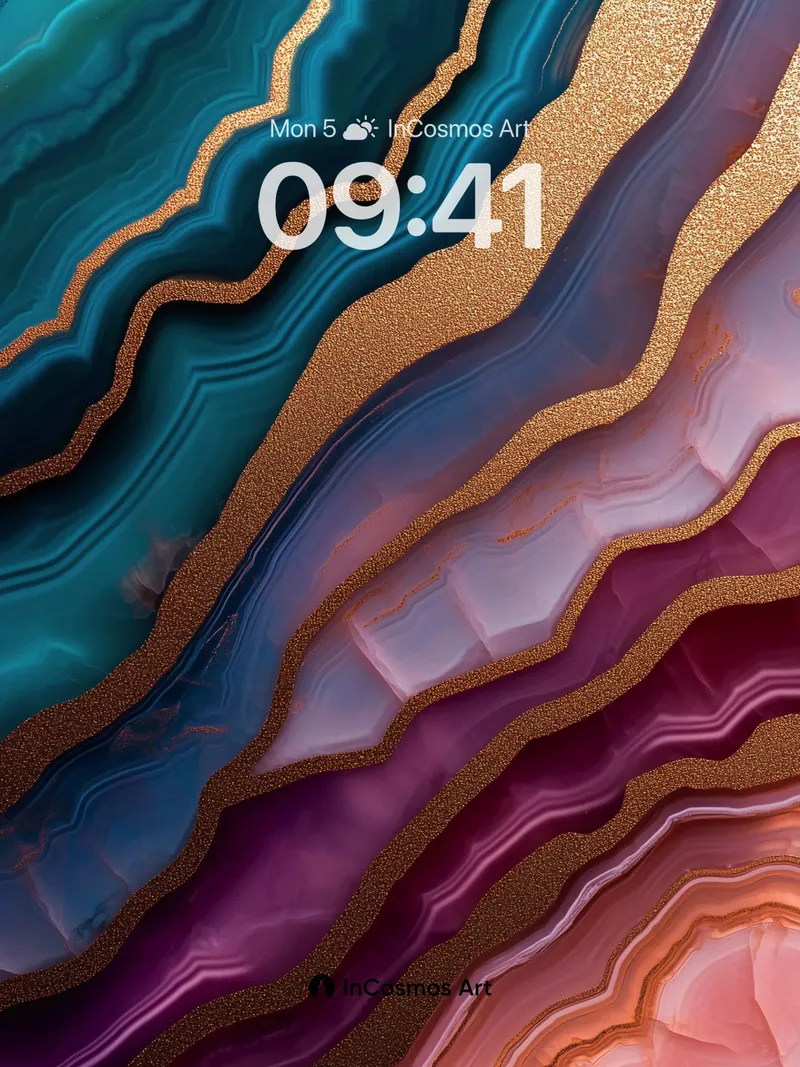
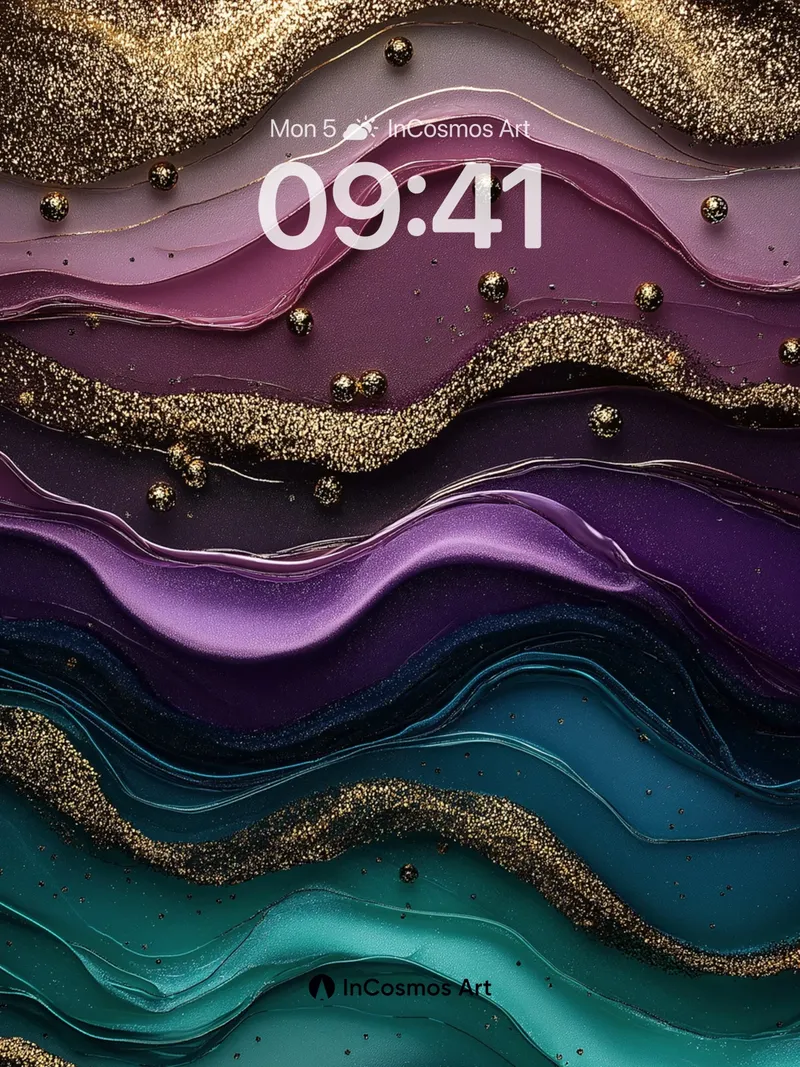
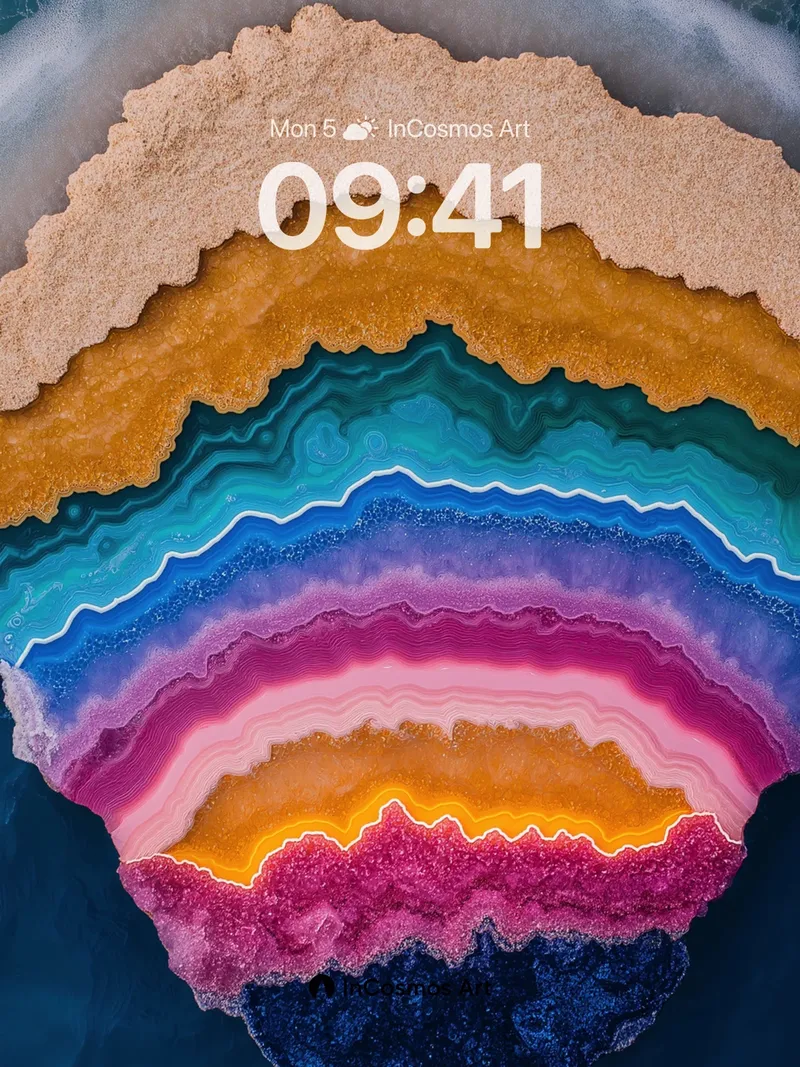
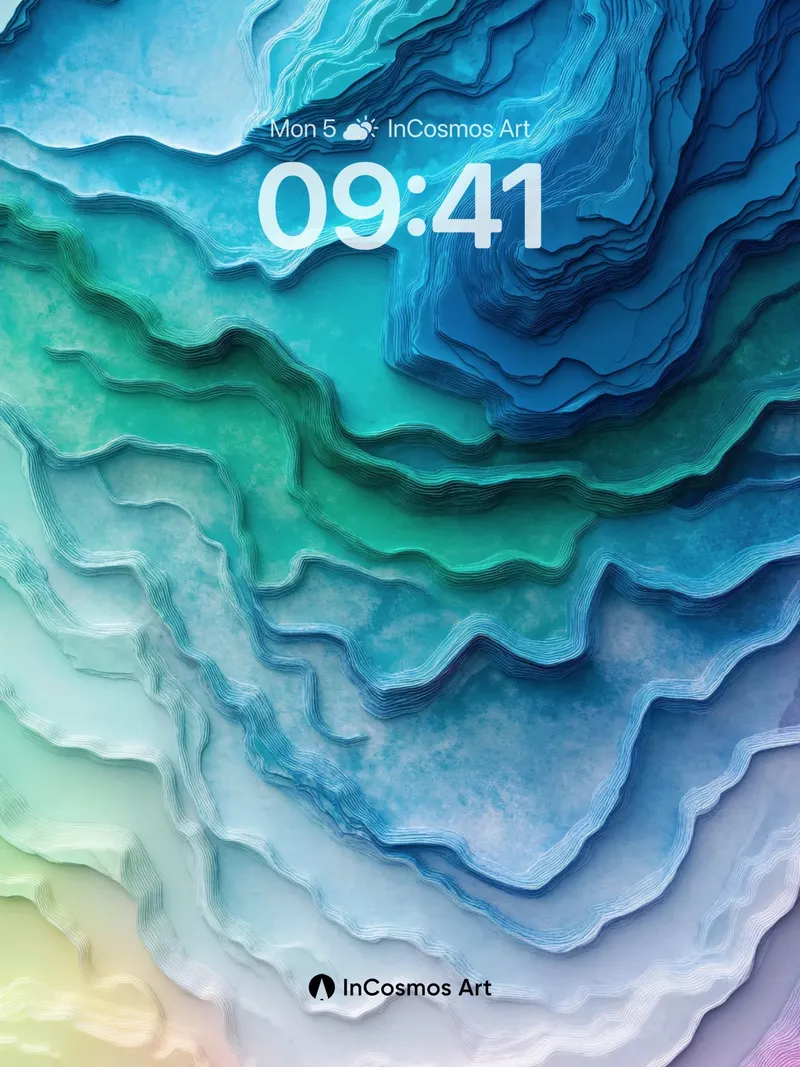
Layered veins settle through time, each fracture carrying geological memory. Colors are not randomly stacked but form a silent epic written by tectonic movements, mineral deposits, and light refraction. Between blue and green, golden lines trace like star trails, suggesting the boundary between nature and artifice is dissolving. These patterns belong not only to stone but also reflect humanity's enduring desire for order and chaos. When vision acquires temperature, abstraction ceases to be cold geometry and becomes an emotional vessel.
Color as Language
Here, color is not decoration but narrative carrier. Deep blue signifies depth and unknown, crimson purple represents passion and introspection, while gold introduces ritualistic weight, resembling a tribute from the earth's core. Transitions between hues are not smooth but charged with tension—rupture and fusion—mirroring psychological fluctuations. This nonlinear expression echoes the complex structure of modern consciousness: multiple identities, conflicting emotions, rapid shifts.
Dialogue Between Nature and Artifice
The inclusion of gold leaf disrupts pure naturalism. It resembles both metallic crystallization within ore and human-added symbol. This duality provokes inquiry: Are we reinterpreting ancient landscapes with modern materials? Or seeking inspiration in nature to build new aesthetics? At the blurred edge lies fertile ground for creativity. As technology mimics nature, nature begins to respond to technological rhythm.
Topography of Emotion
Each wavy line forms an emotional contour. From cool teal to warm peach, chromatic gradients create psychological elevation. The viewer traverses this terrain like an inner journey. Dense, tangled zones convey anxiety and pressure; open expanses evoke calm and release. This is not merely visual experience but subconscious resonance.
Abstraction as Truth
When representation retreats, abstraction emerges. These patterns originate from real geological cross-sections yet gain new meaning through shifted perspective. Human cognition naturally seeks patterns in disorder, making these seemingly random textures trigger deep cognitive connections. They remind us: beauty does not depend on form, nor truth on name.