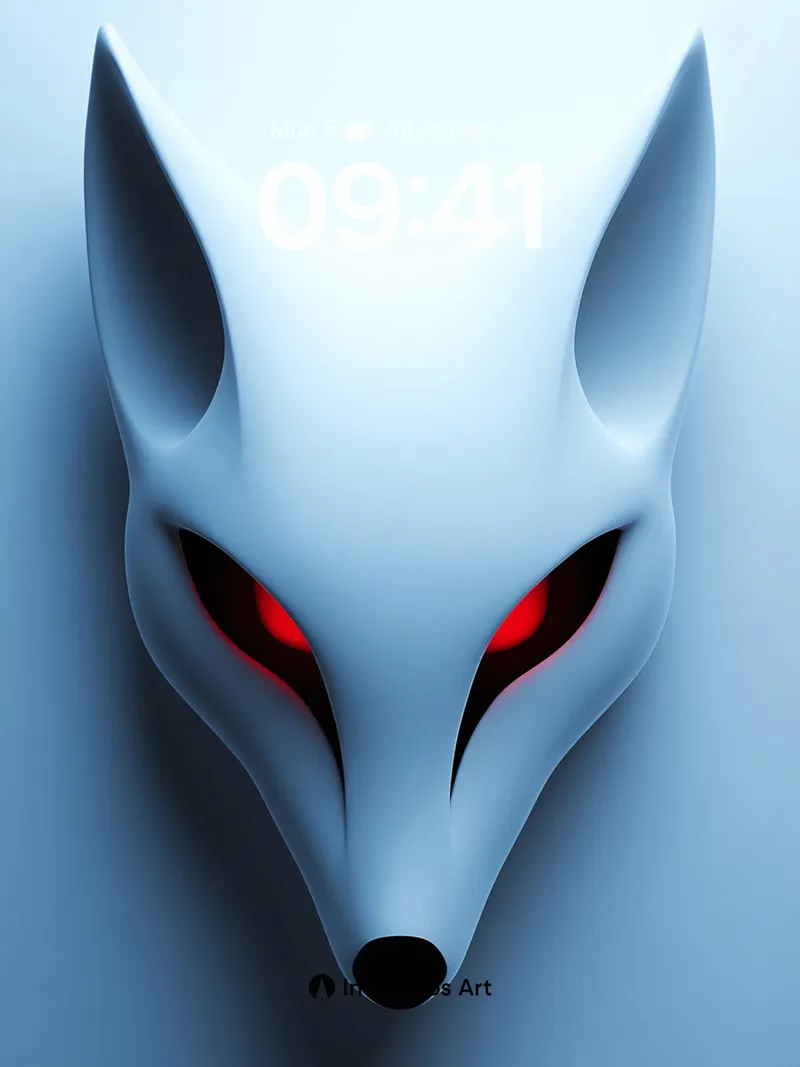
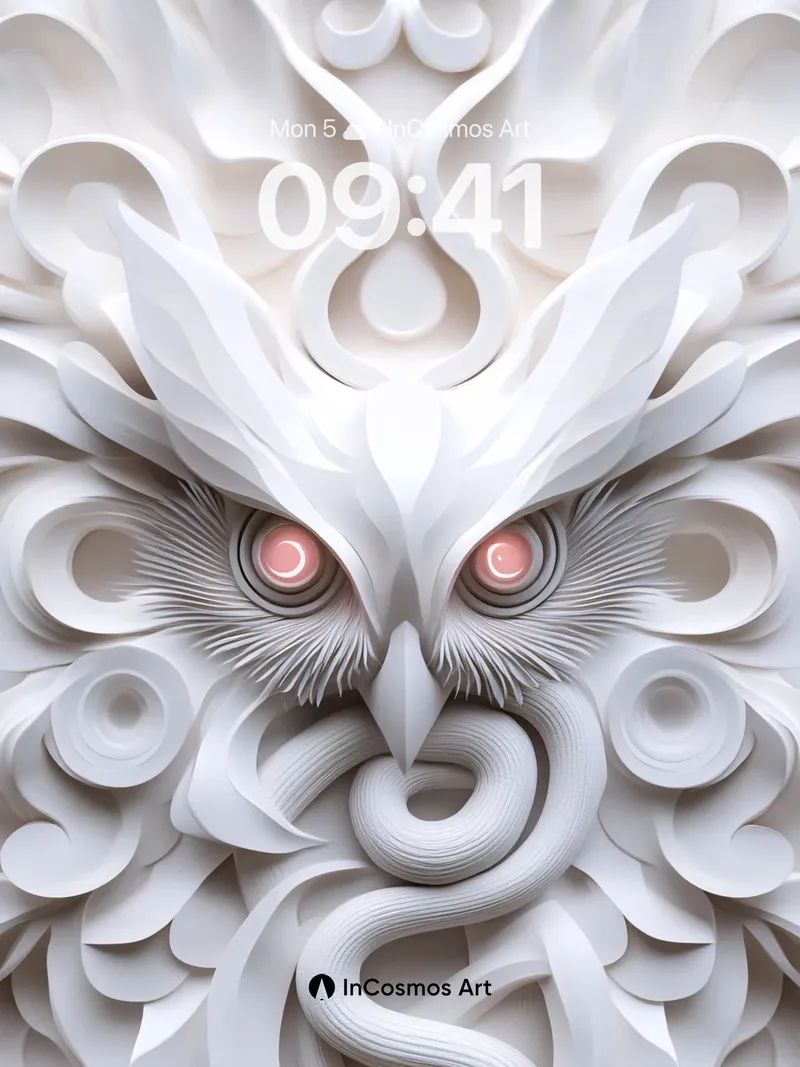
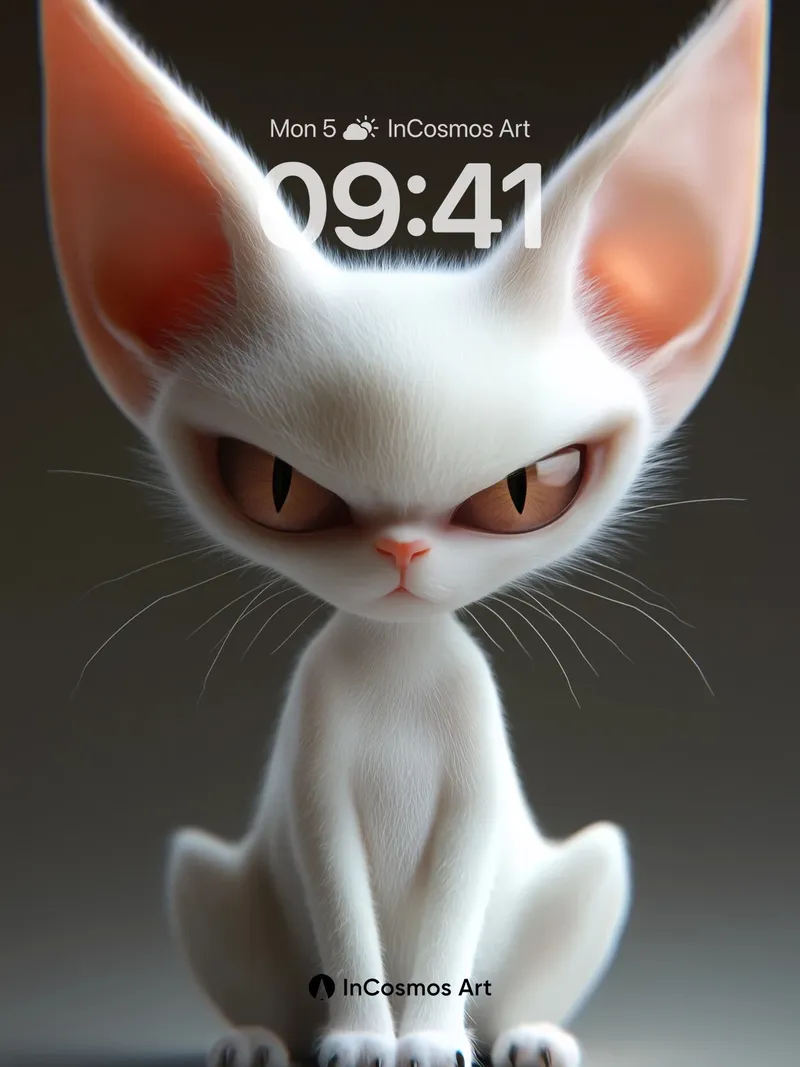
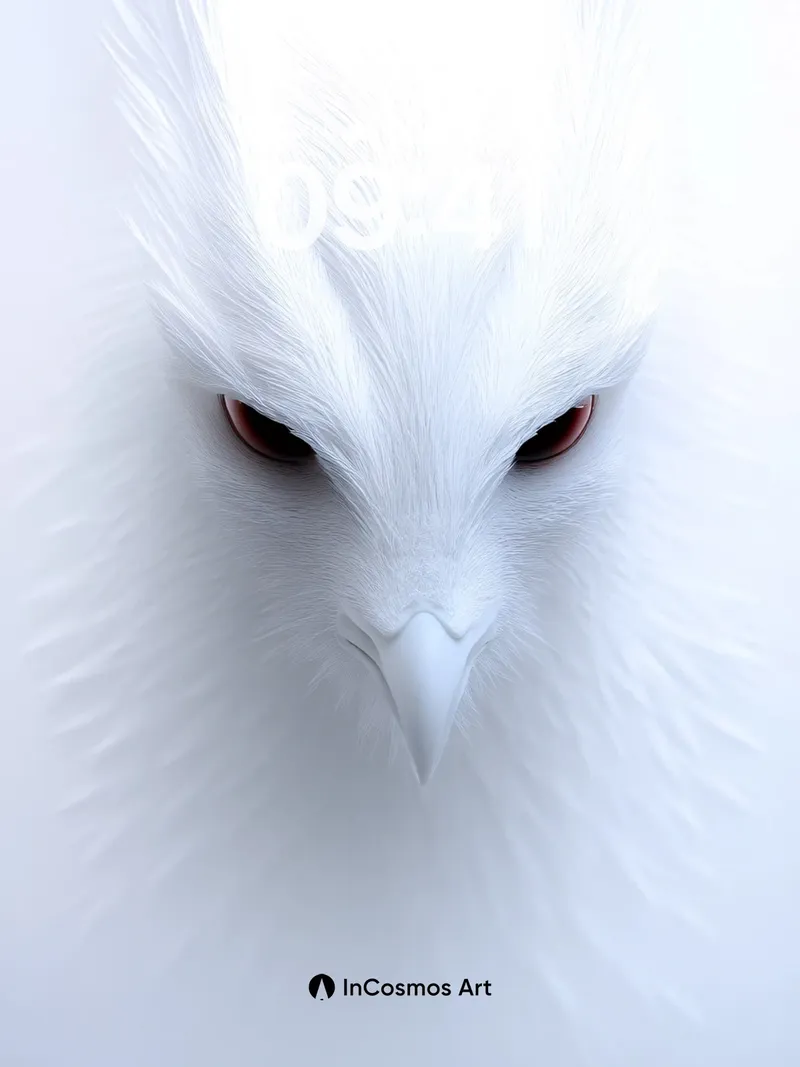
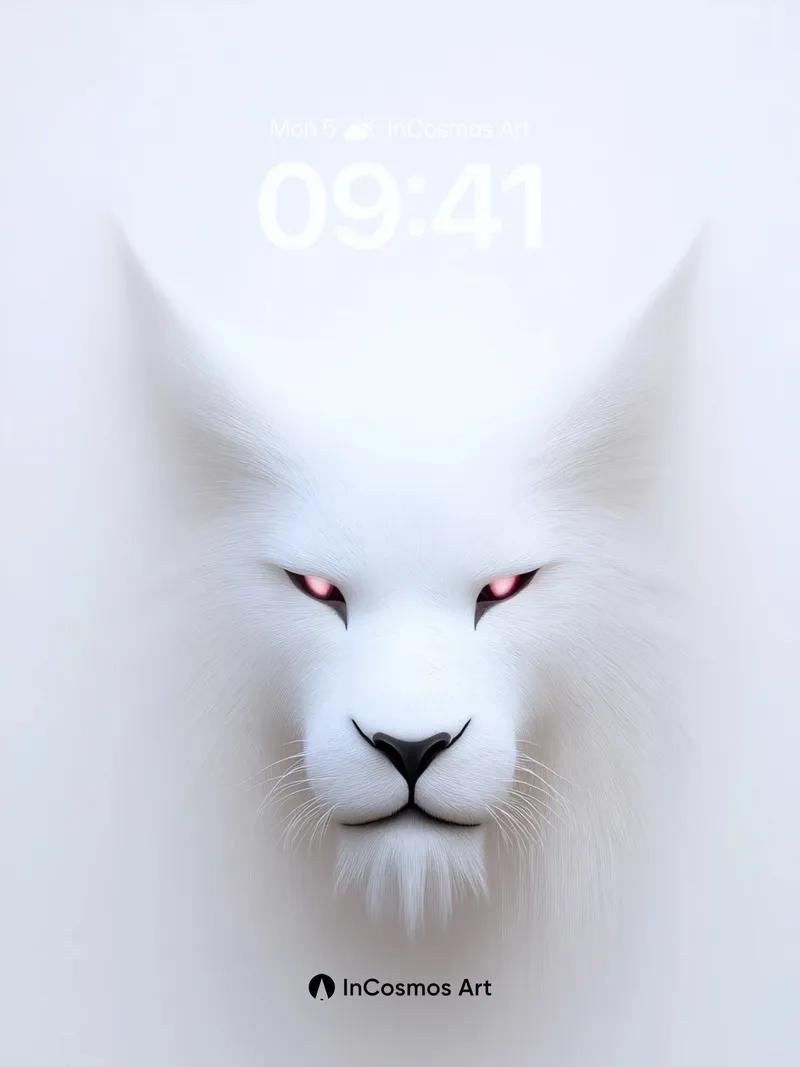
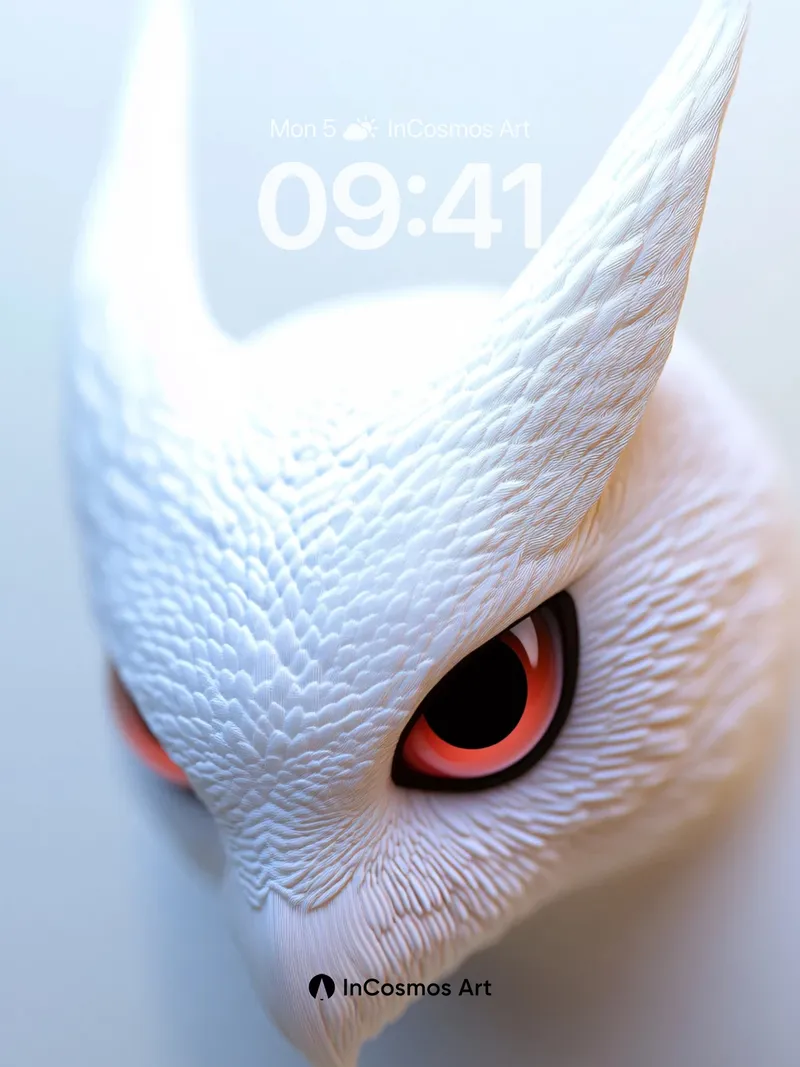
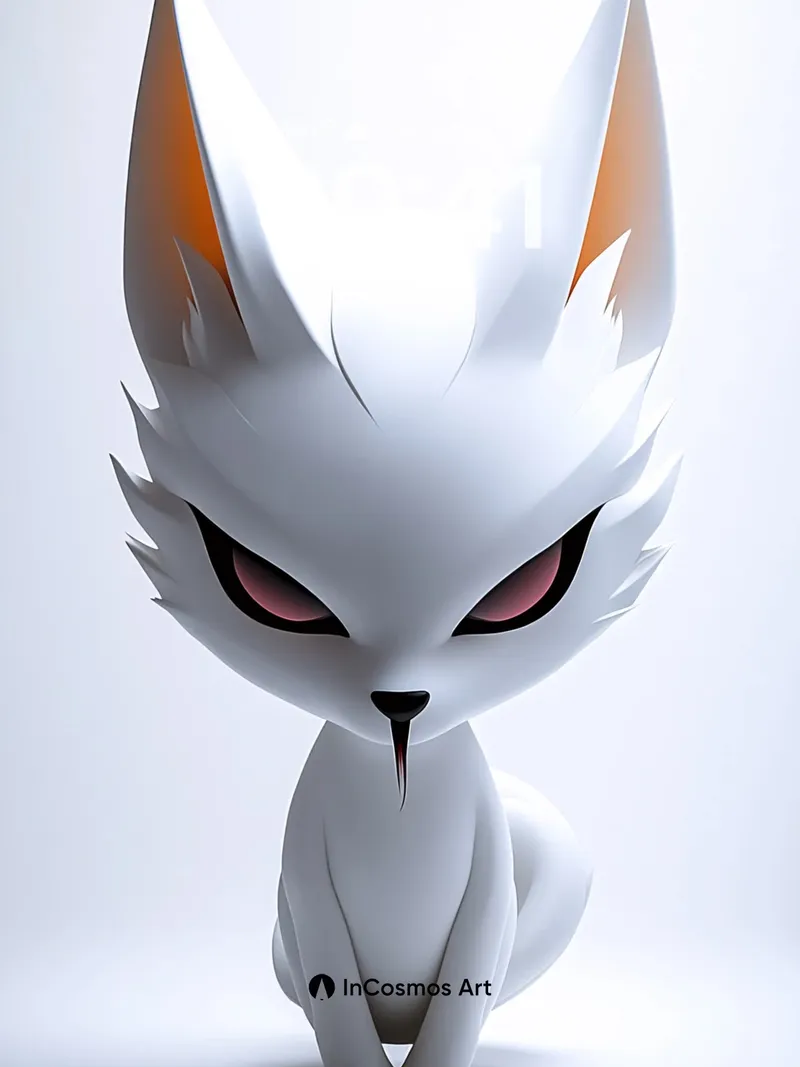
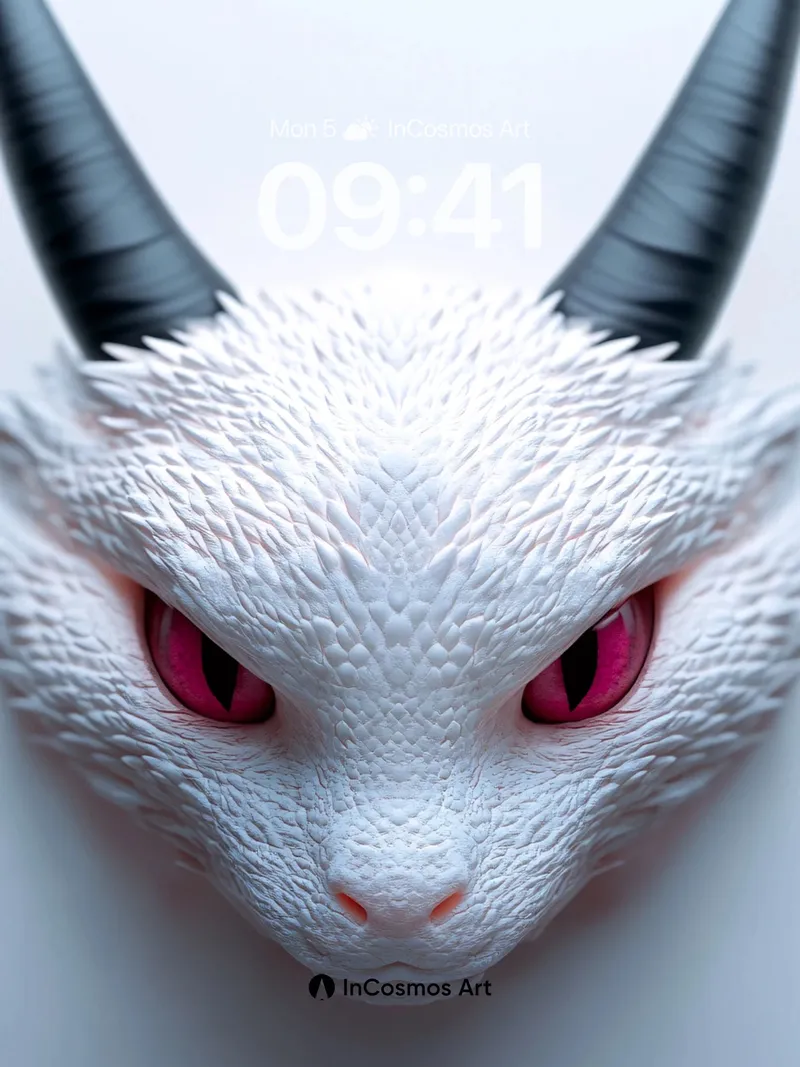
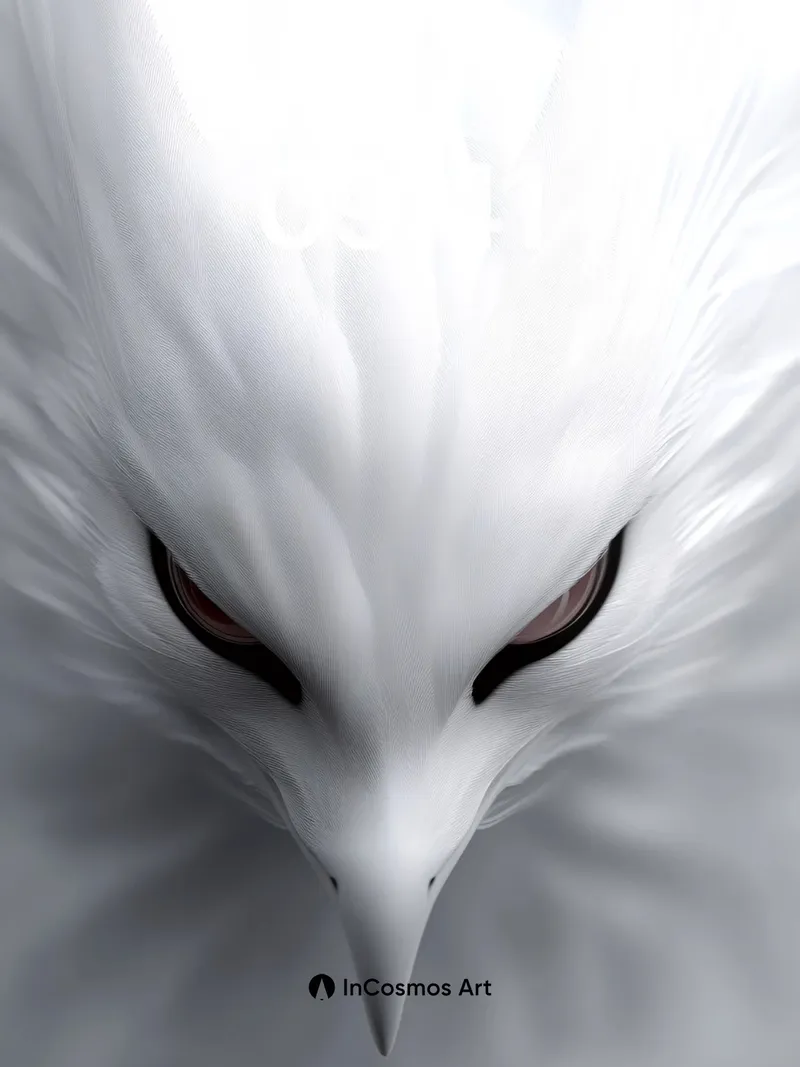
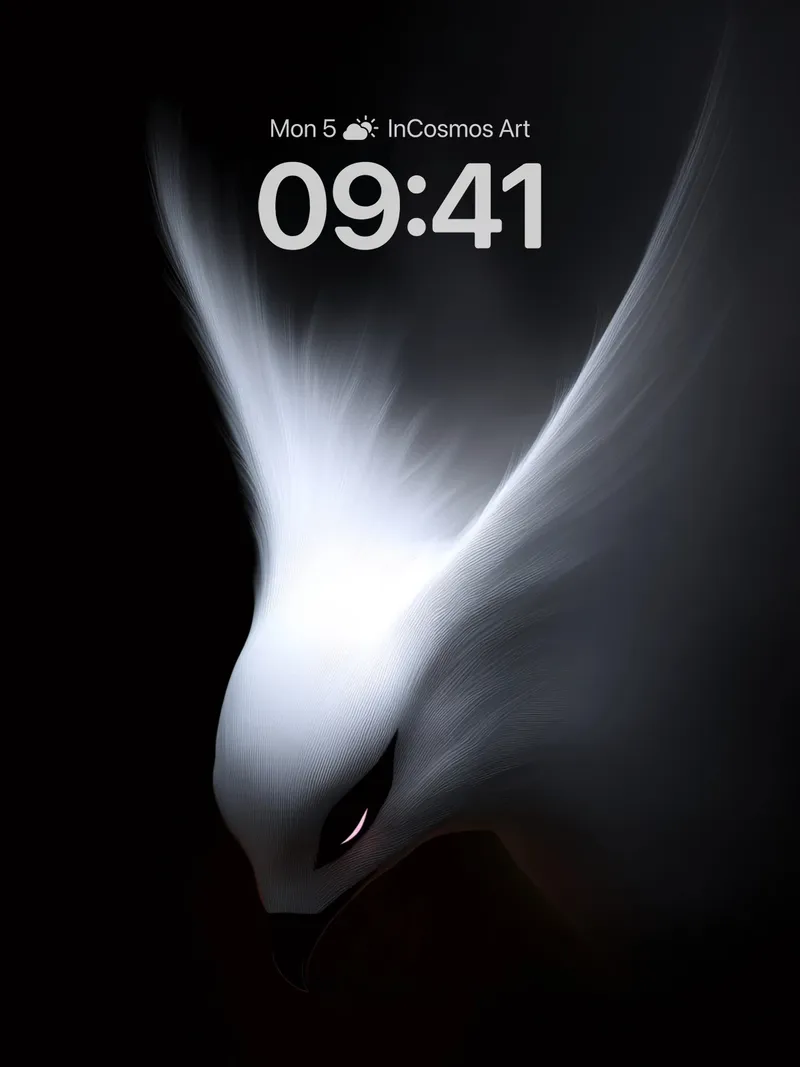
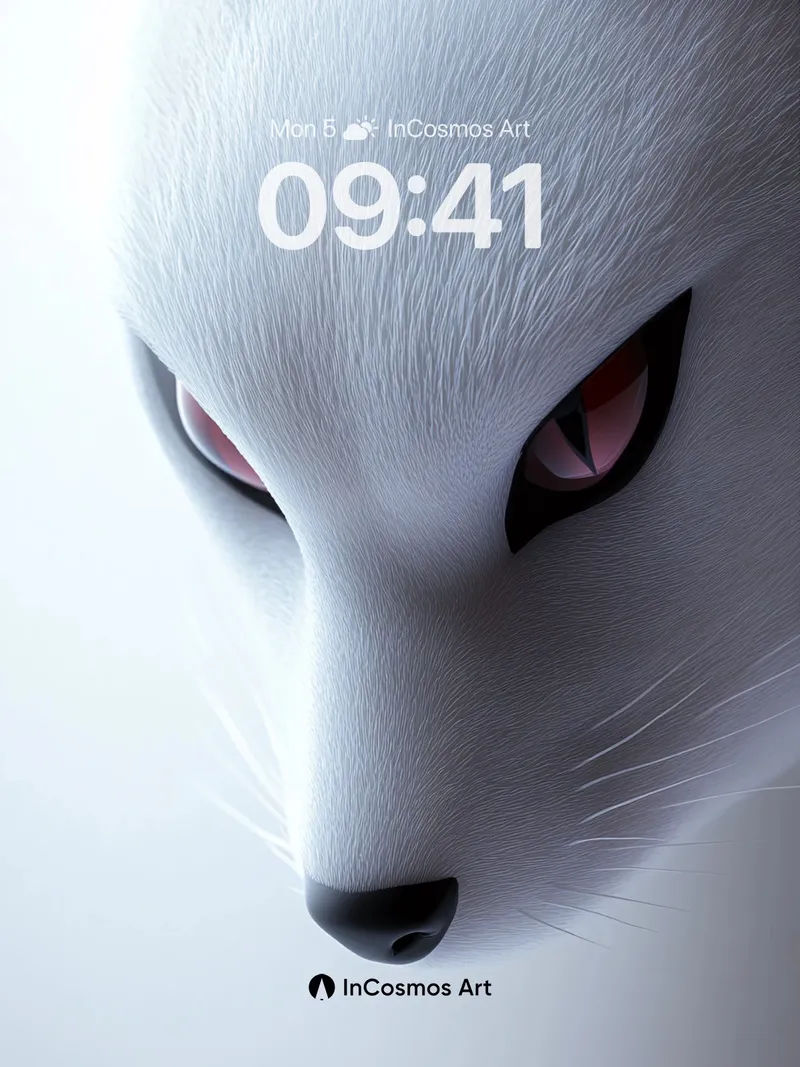
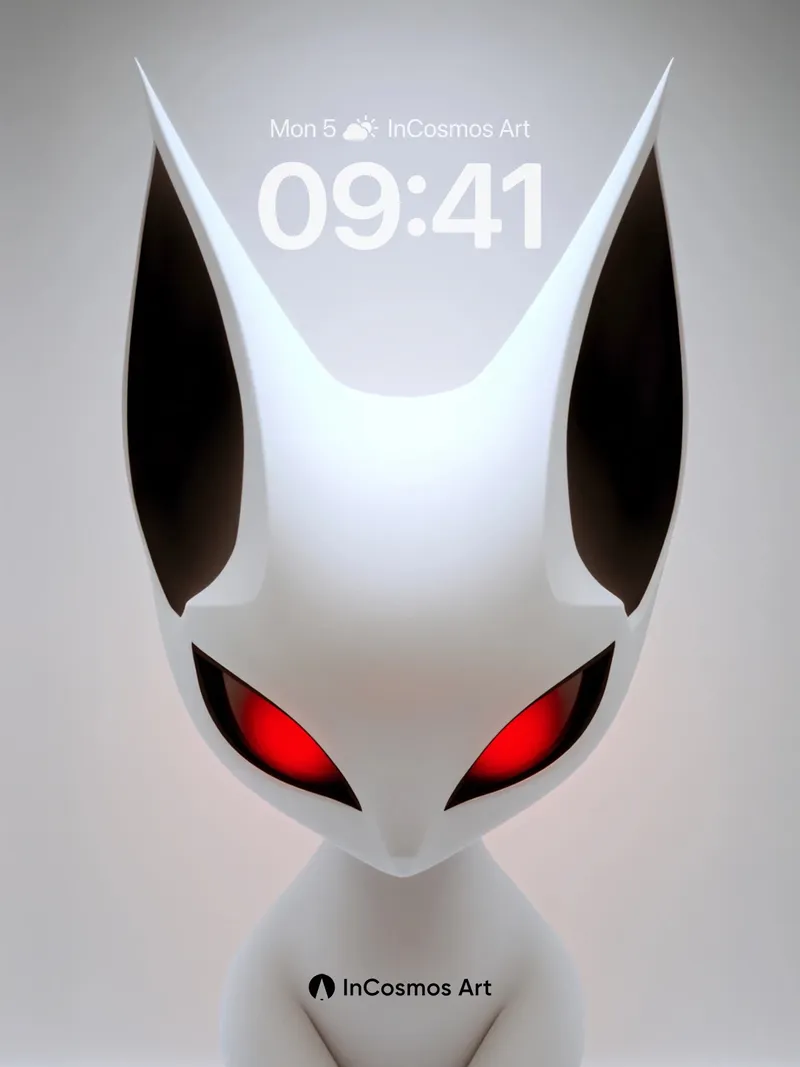
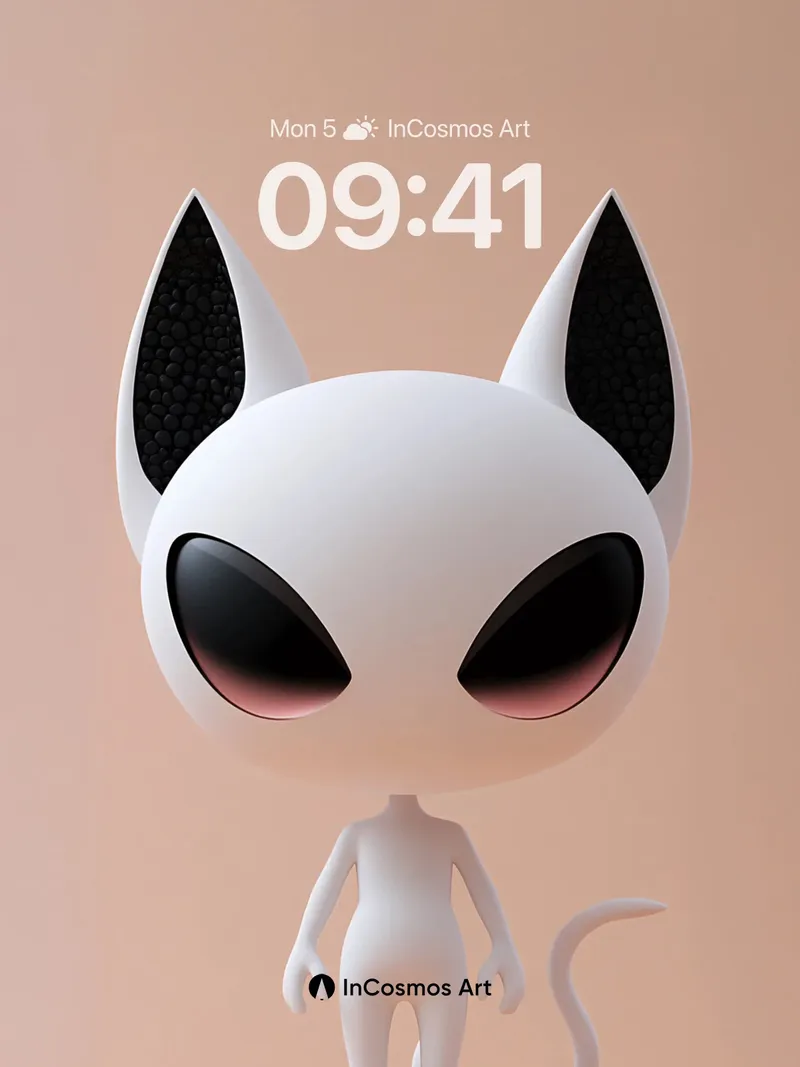
Within a minimalist visual context, white animal forms are imbued with symbolic meaning beyond nature. Their smooth contours, sharp red eyes, and serene postures create beings that exist between reality and fantasy. The contrast between pure white and intense red suggests mystery and vigilance, evoking awe for inner strength. These creatures are not mere decorative elements but cultural symbols, echoing mythological beasts from Eastern traditions while integrating modern design’s clarity and order. Their eyes serve as focal points—windows to consciousness and emotional projection—transmitting a calm yet profound gaze.
The Philosophy of Pure White
White here is more than a color; it is a mental state. It represents flawlessness, an unpolluted initial condition, like snowfields, glaciers, or moonlit stillness. This whiteness is not emptiness but a blank full of potential. When paired with red eyes, it disrupts surface serenity, revealing internal tension—a quiet exterior hiding unmeasurable will. This reflects contemporary aesthetics’ embrace of paradox: extreme simplicity enclosing complex psychological layers.
Cultural Metaphors of the Red Eye
Red, as a visual center, carries strong symbolism across cultures. In Chinese tradition, red eyes often link to divine or supernatural beings such as the nine-tailed fox or white tiger—figures both protective and cautionary. In modern contexts, red eyes suggest technological or non-human traits, resembling AI or extraterrestrial life. This duality allows these images to evoke closeness while maintaining distance, becoming metaphors for urban solitude and the yearning for connection.
Abstracted Animal Forms
From rabbit to fox, dragon to horse, these animals undergo high abstraction, stripped of fur details and amplified in geometric lines and light structure. They no longer belong to natural ecosystems but inhabit a surreal space. This approach resembles digital sculpture or futurist art, emphasizing form over function. Each curve is precisely calculated to serve overall visual balance and emotional delivery.
Visual Ritual and Emotional Resonance
The presence of these figures constitutes a visual ritual. Viewers facing them enter a meditative state, their gaze drawn into those red eyes. This gaze establishes a non-verbal exchange, triggering self-reflection. Amidst fast-paced city life, such imagery offers a pause—a moment where the mind can detach from noise and return inward.