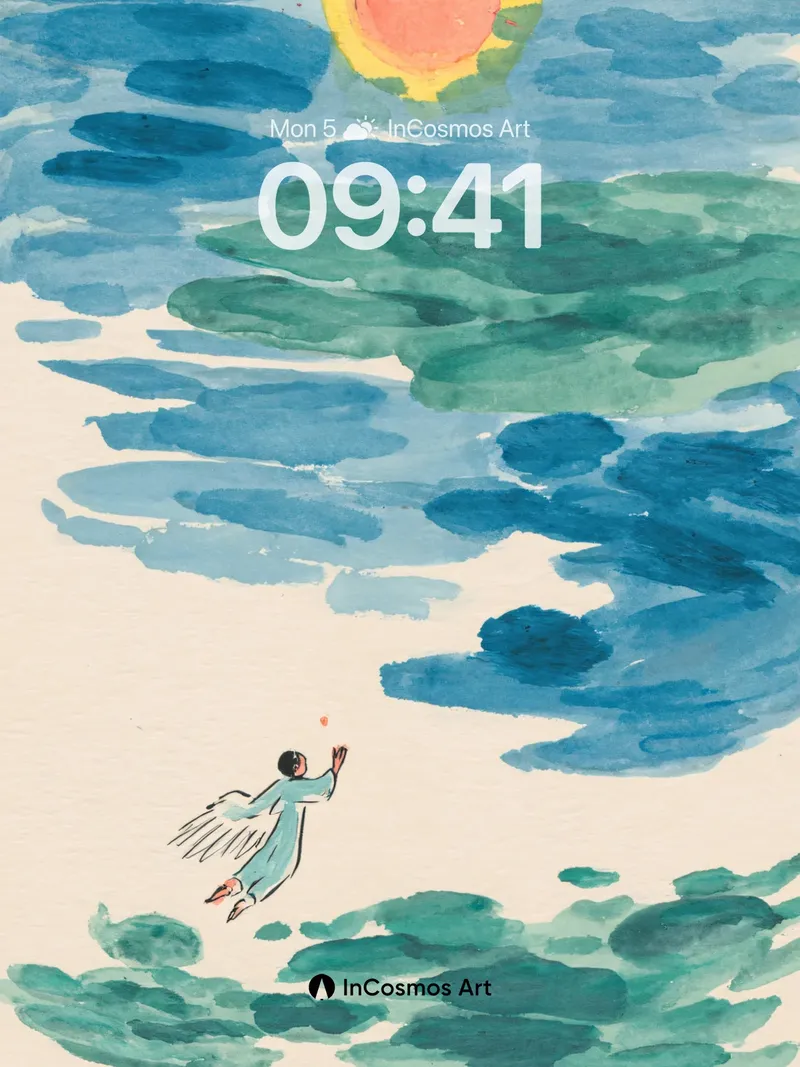
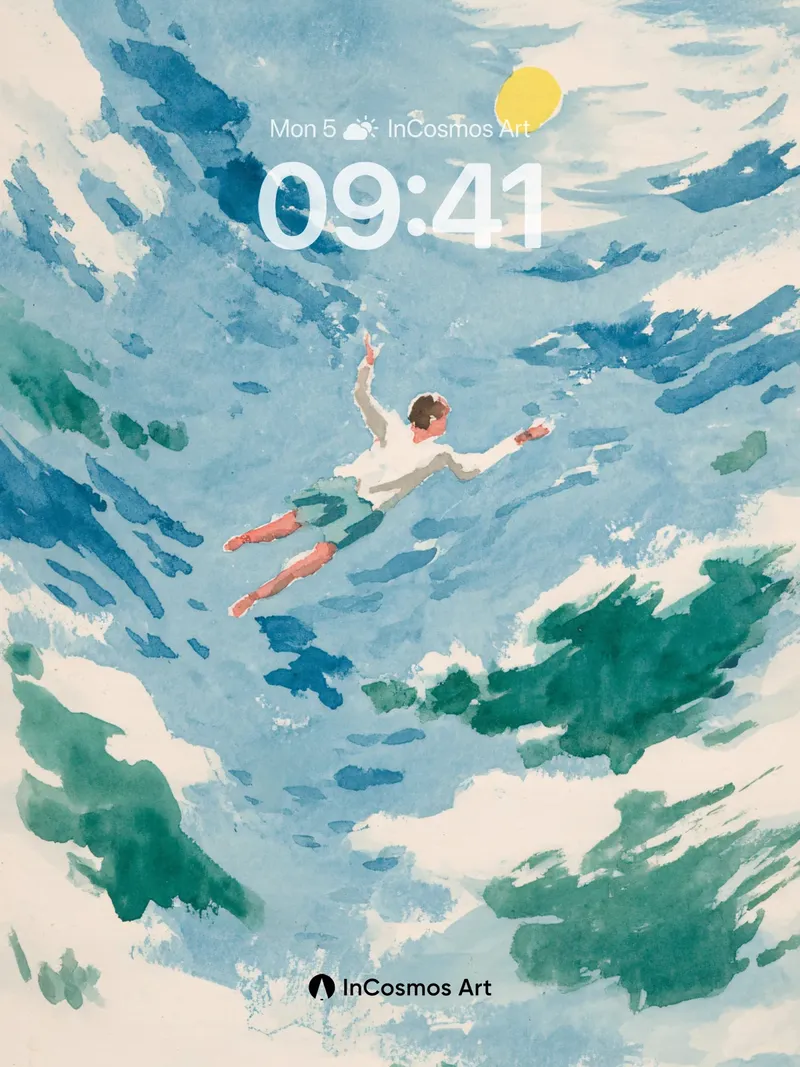
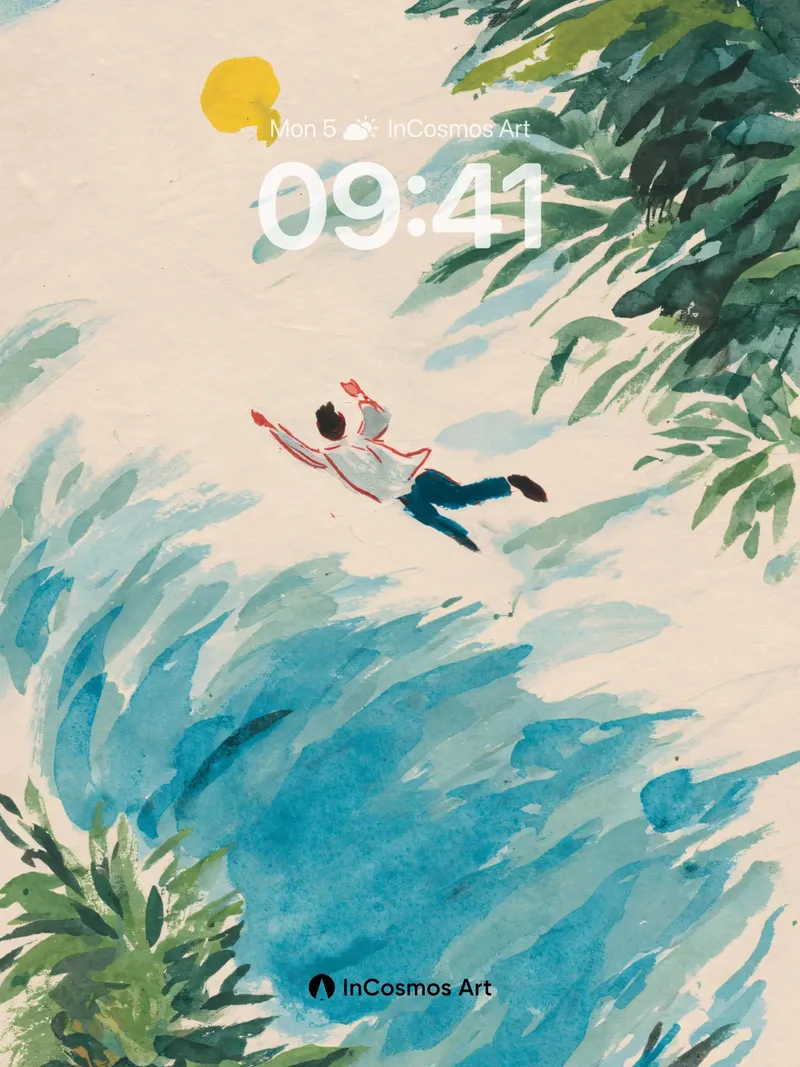
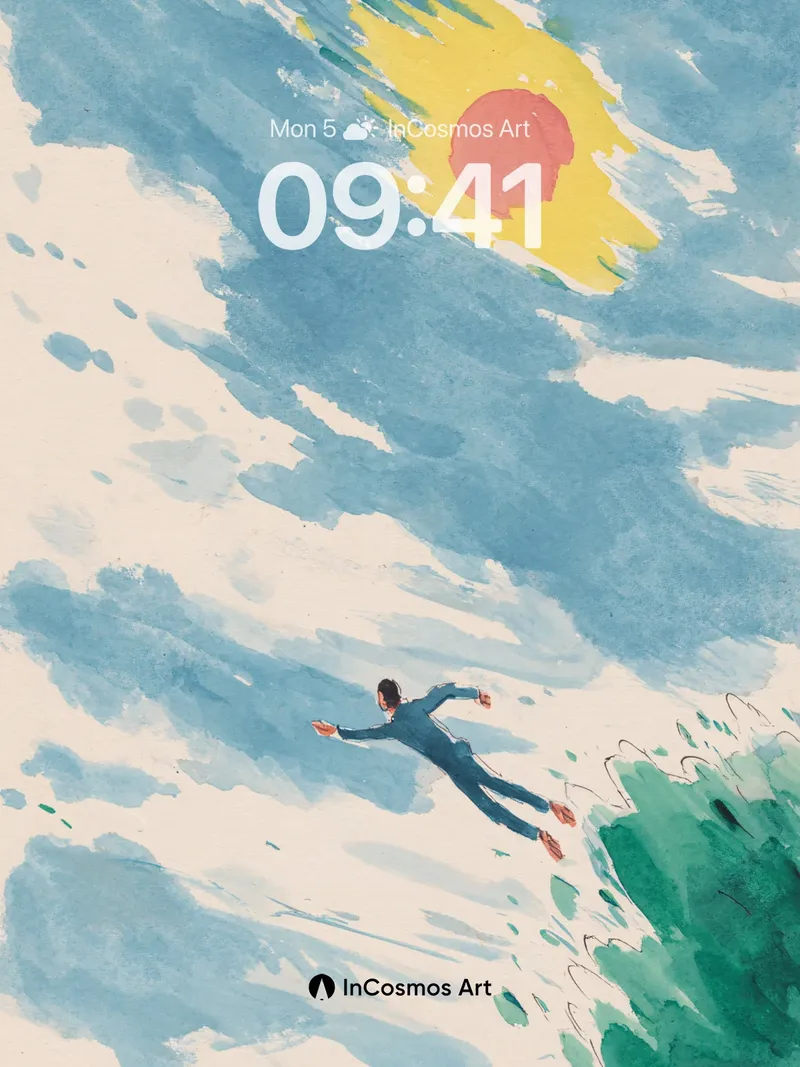
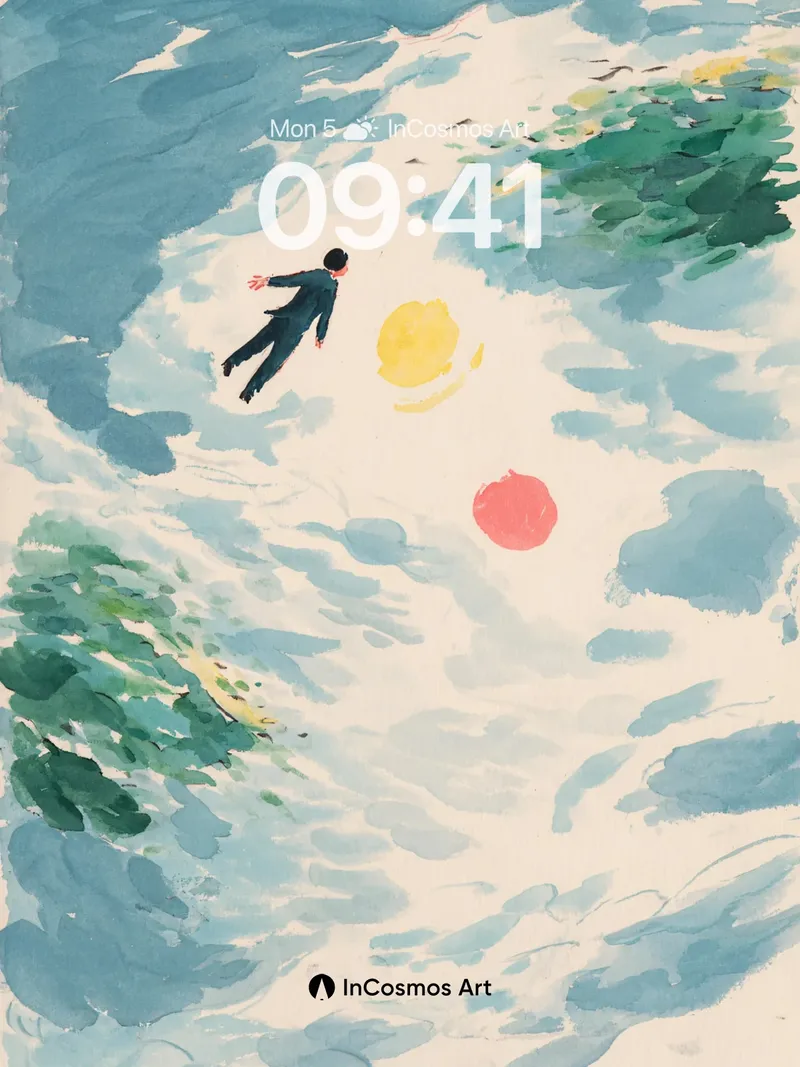
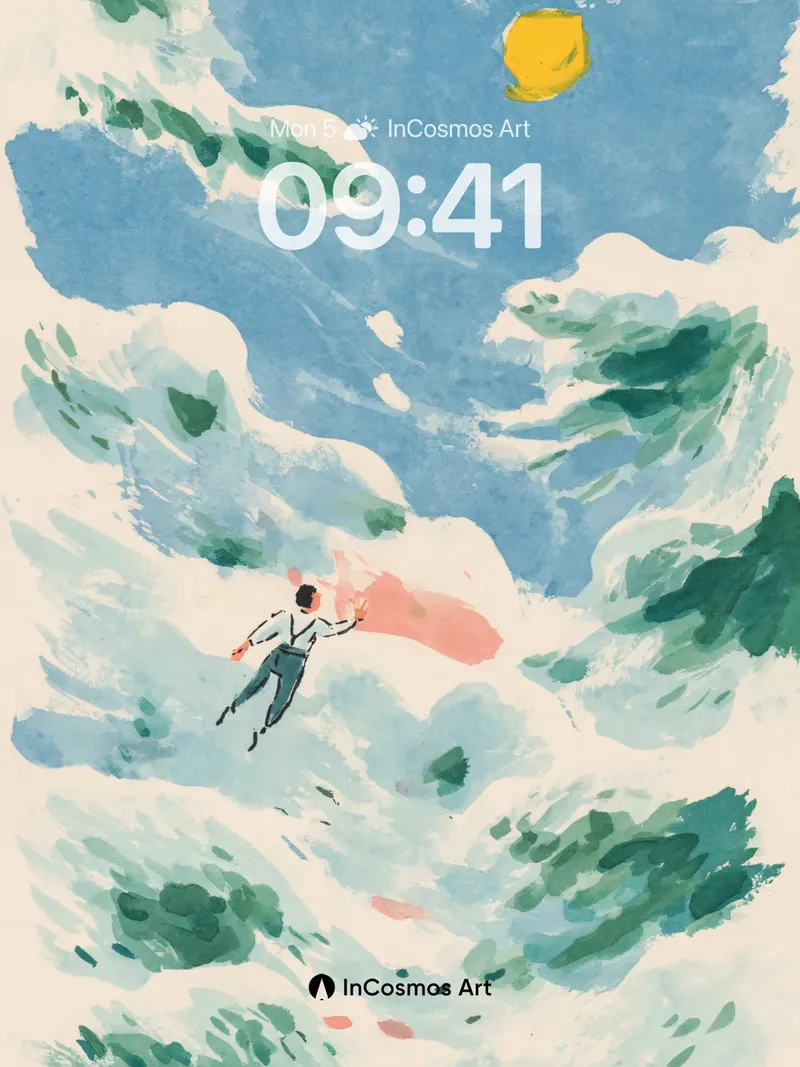
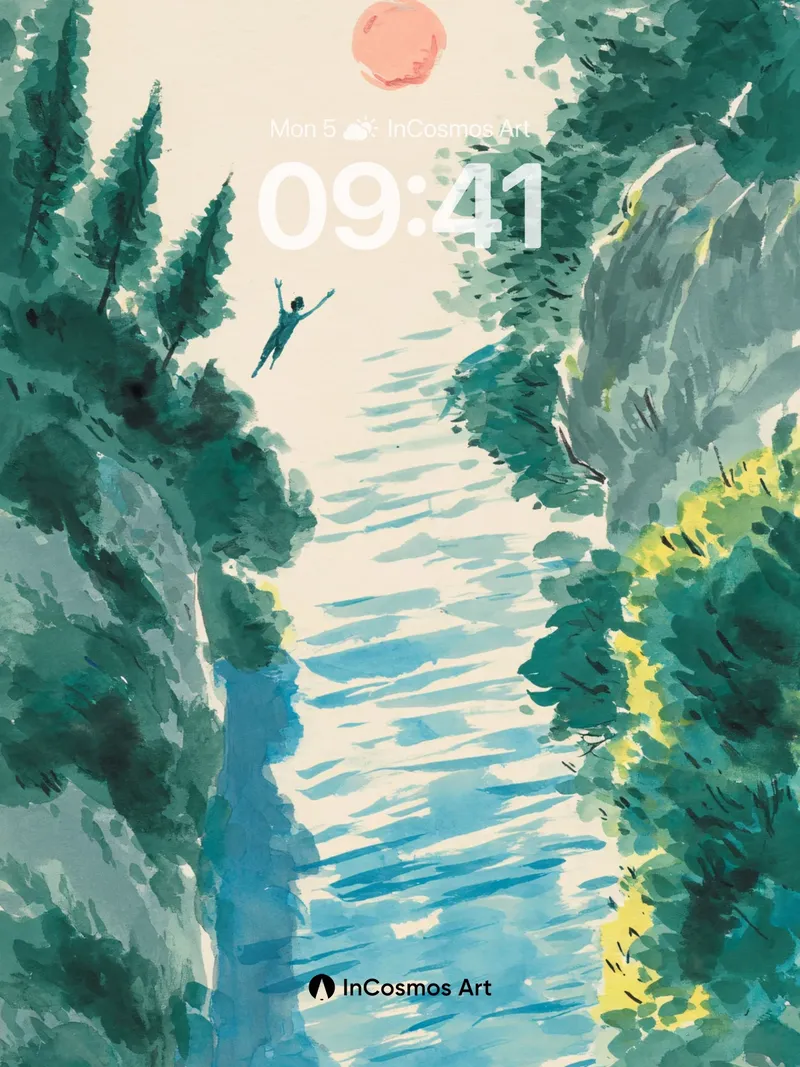
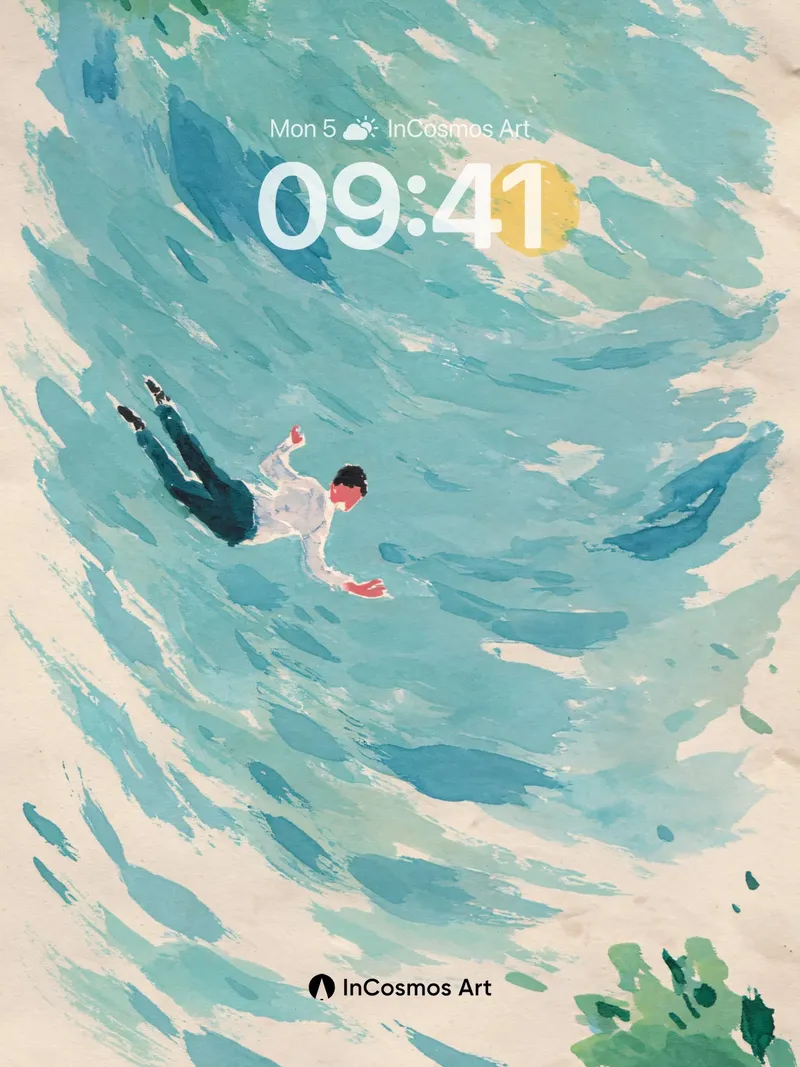
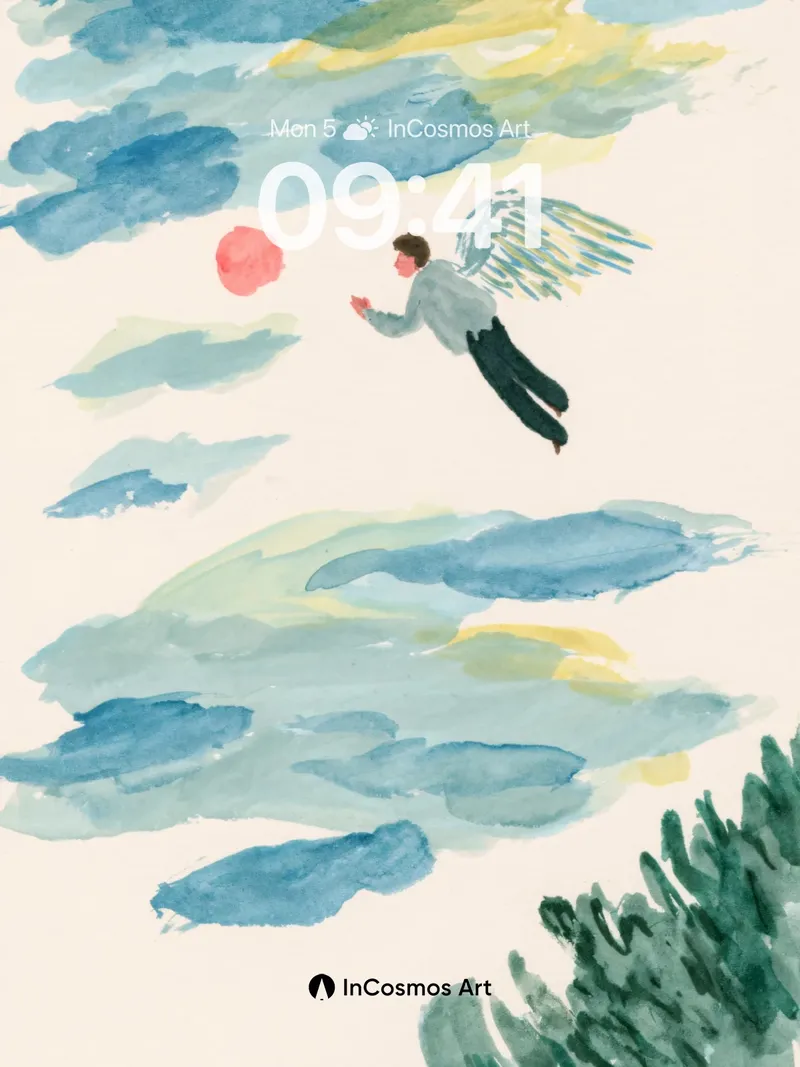
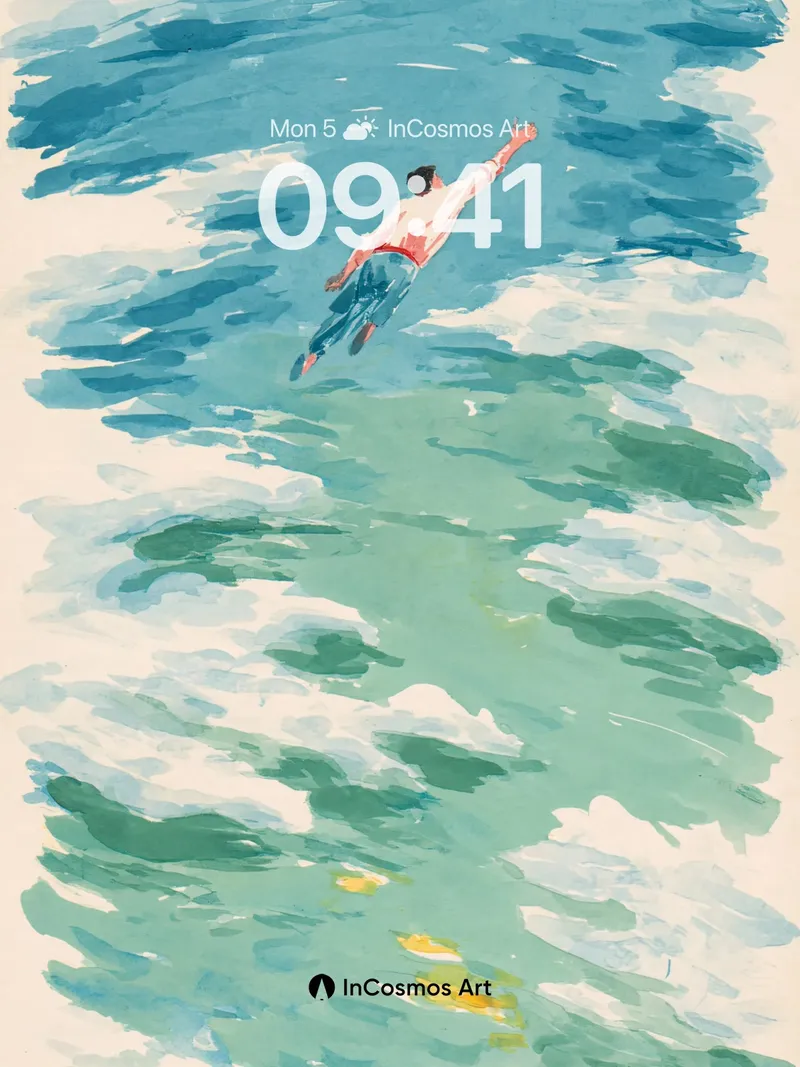
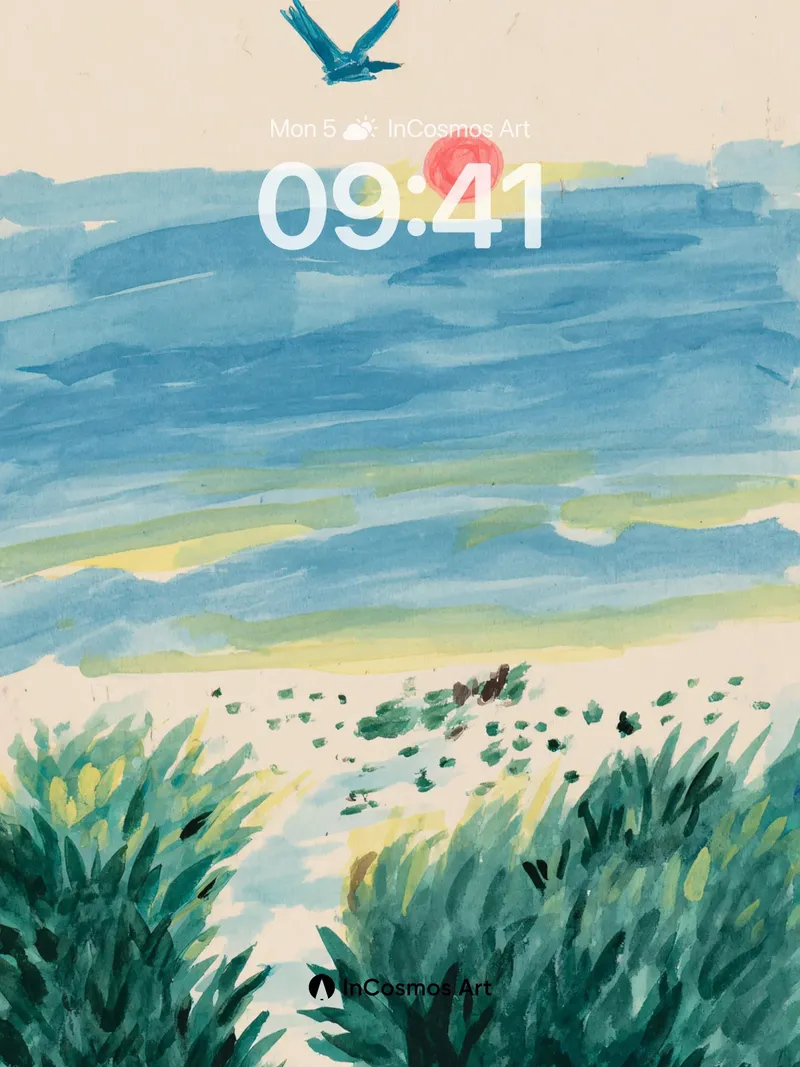
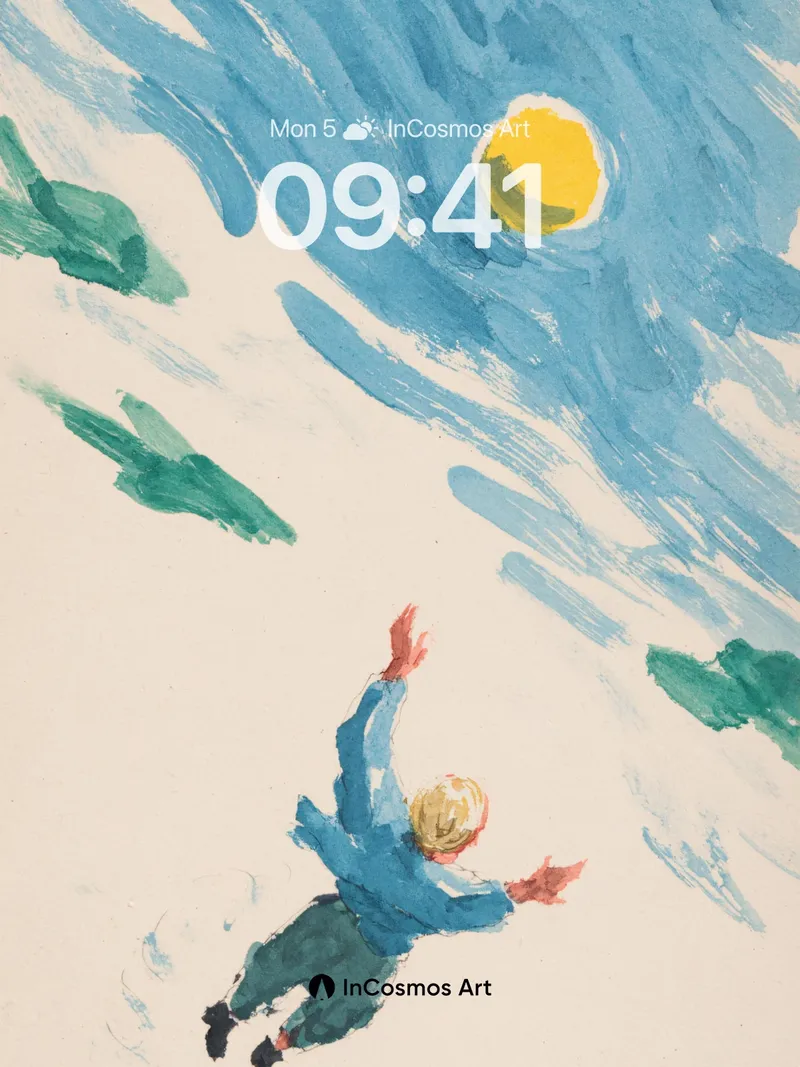
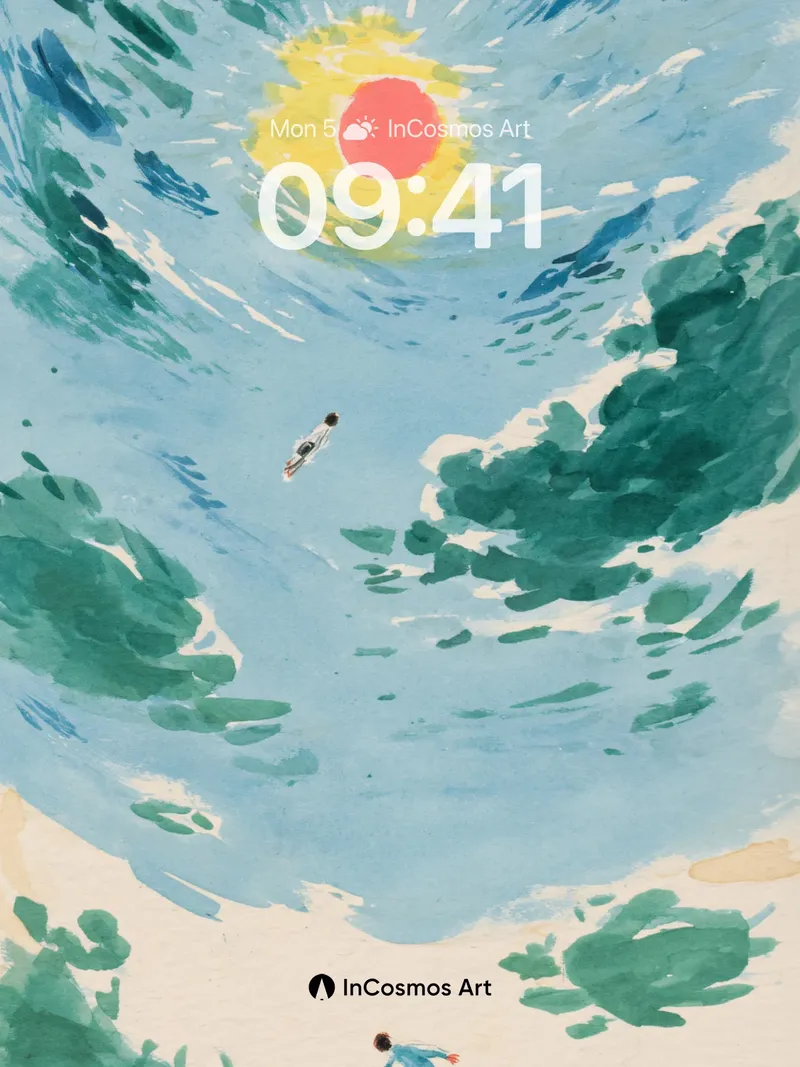
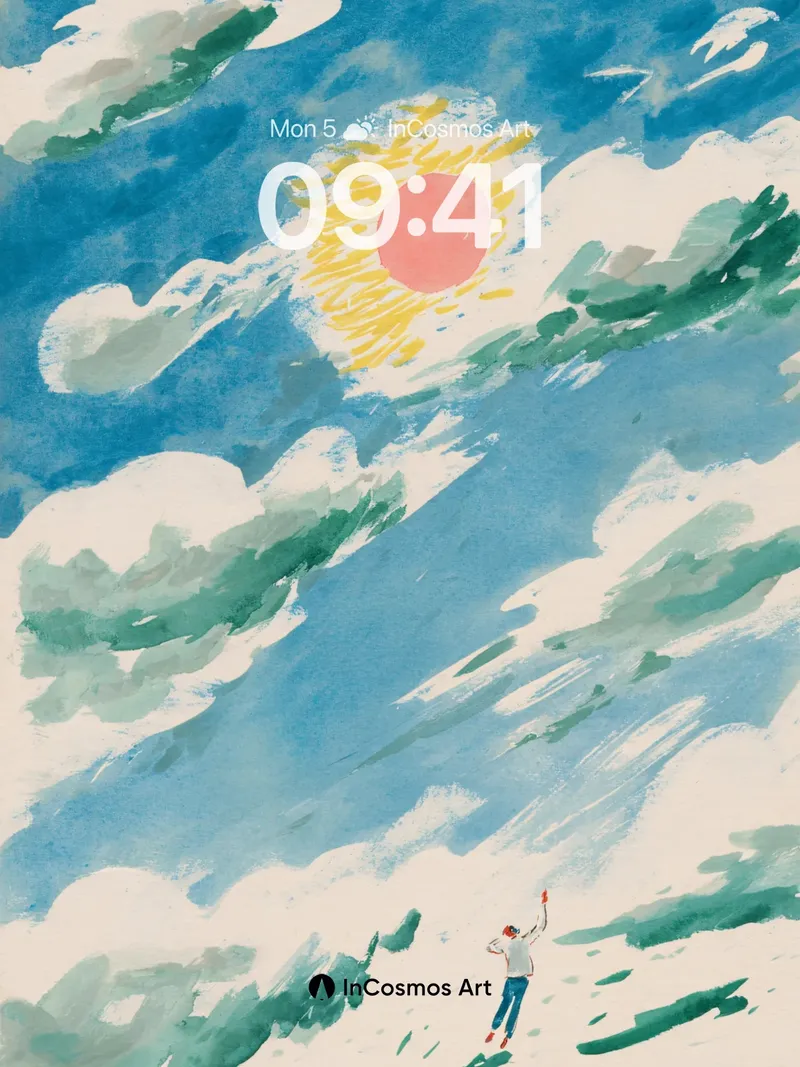
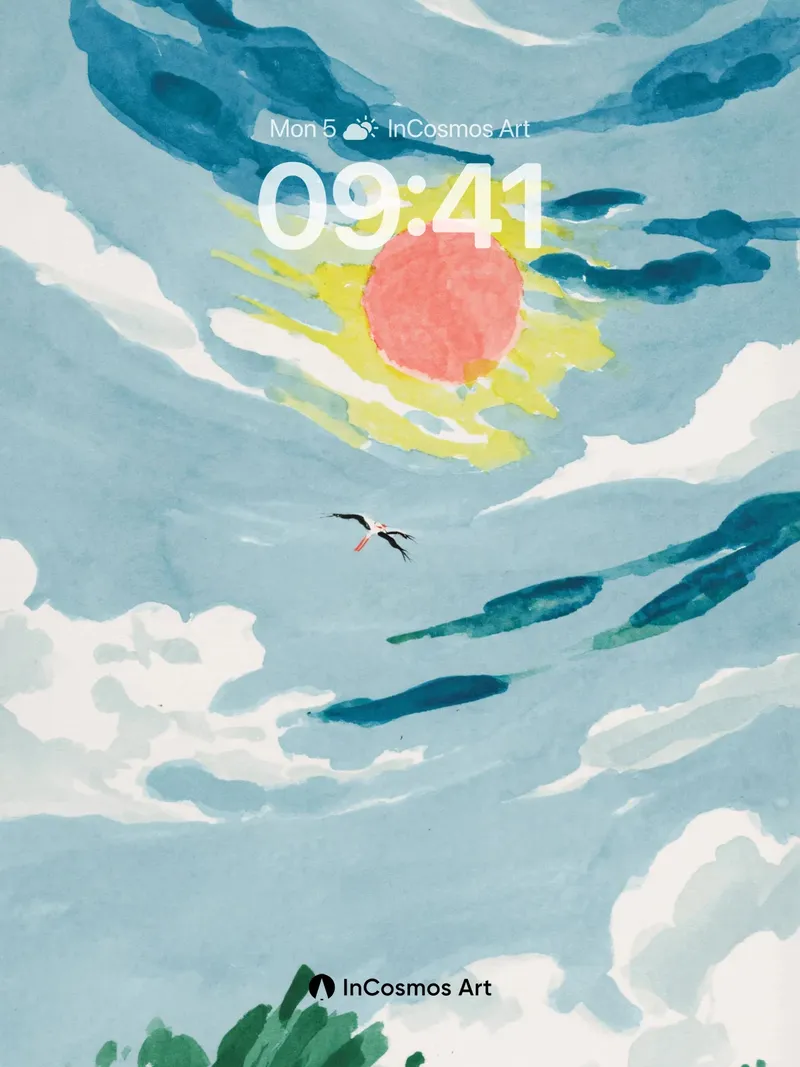
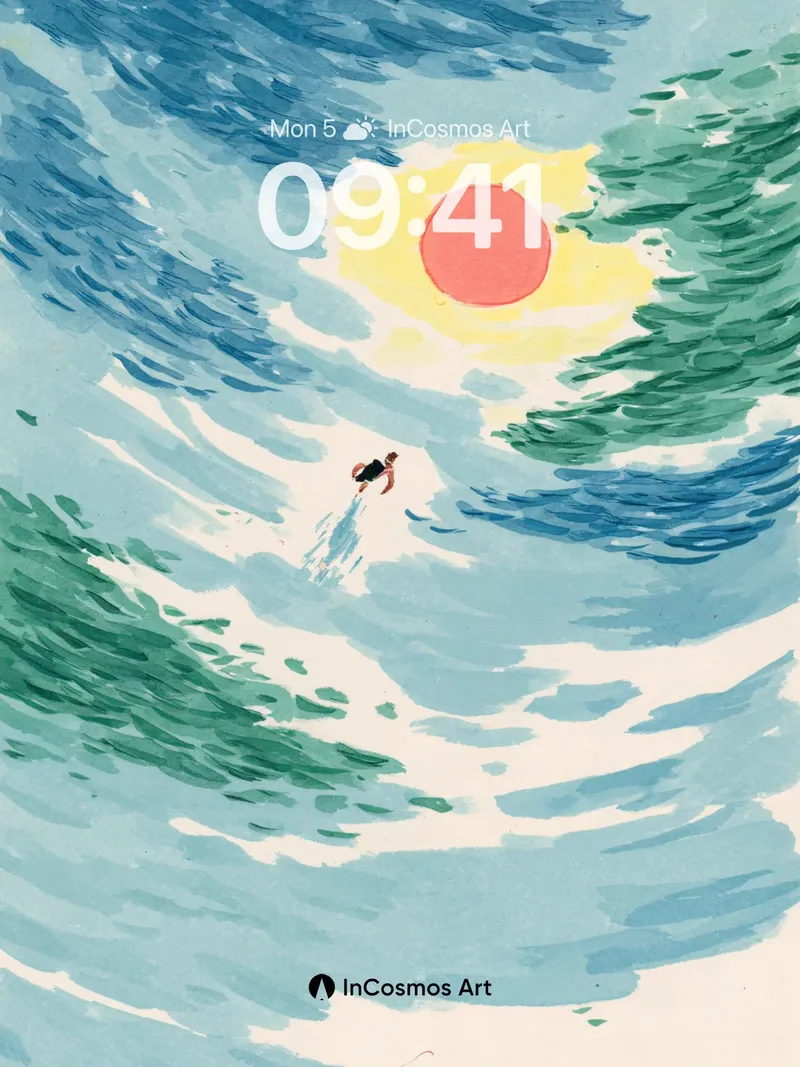
Between endless blue and green, a human form drifts across the boundary of water and sky. The body hovers above waves, seemingly lifted by an unseen force—neither falling nor rising. This is not defiance of gravity, but a passive, meditative suspension. Sunlight scatters across the surface in fragmented patterns, with red and yellow suns alternating, marking shifts in time and mood. Figures wear ordinary clothes, appearing fragile within nature's vast narrative, yet their outstretched limbs confer a strange dignity. This state transcends physical reality, entering a psychological realm—where humans are not central, but nodes in a cosmic order, briefly participating before withdrawal.
The Scale of Nature
Water’s movement forms the core structure. Waves do not stand still; they spiral and curl, creating a vortex-like visual rhythm. Green foliage appears at edges, hinting at land, but remains secondary. Water textures shift from pale blue to deep teal, breathing in undulating motion that mirrors inner human rhythms. When individuals enter this space, they cease to belong to any fixed location, instead becoming part of a larger cyclical system. This cycle reflects not only natural motion but also the metaphor of life itself.
The Floating Self
All figures adopt backward arches or extended arms, embodying surrender. Their clothing is plain, lacking heroic adornment, which enhances authenticity. They are not conquerors, but experiencers, integral to nature. This 'weightlessness' is not perilous, but peaceful. Physical relaxation contrasts with environmental turbulence, highlighting internal calm. Each descent follows a unique path, yet all point toward one destination—return to origin.
Light as Temporal Marker
The sun’s position changes subtly, suggesting time’s passage. From noon’s red orb to dusk’s soft yellow, then twilight’s pink hue, light evolves into an emotional spectrum. It does not strike directly but refracts through ripples, producing gentle gradients. This indirectness removes luminosity’s dominance, transforming it into tender companionship. Humans float beneath it, like memories drifting—each moment a reflection of the past.
Poetics Beyond Reality
These scenes resist logical explanation. They tell no story, offer no resolution. They simply exist, inviting viewers into nonlinear perception. Here, space can fold, time stretch, bodies defy gravity. This is postmodern romanticism—not reliant on plot, but on form and color to evoke deep emotional resonance.