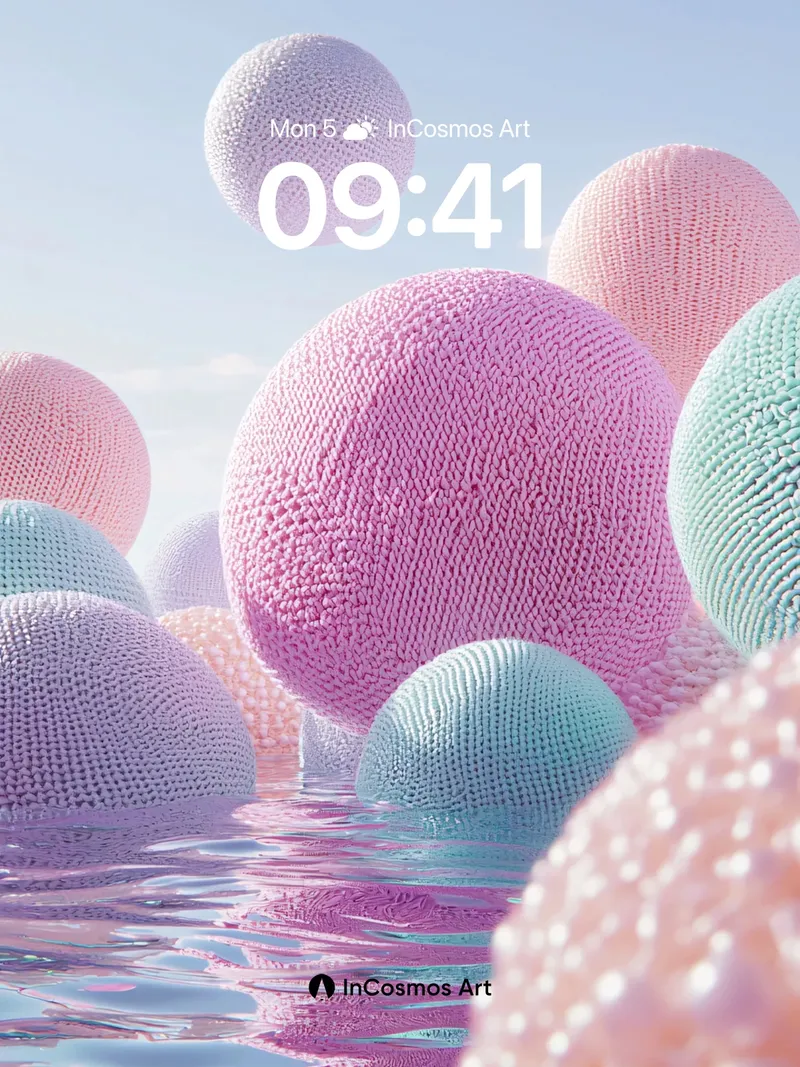
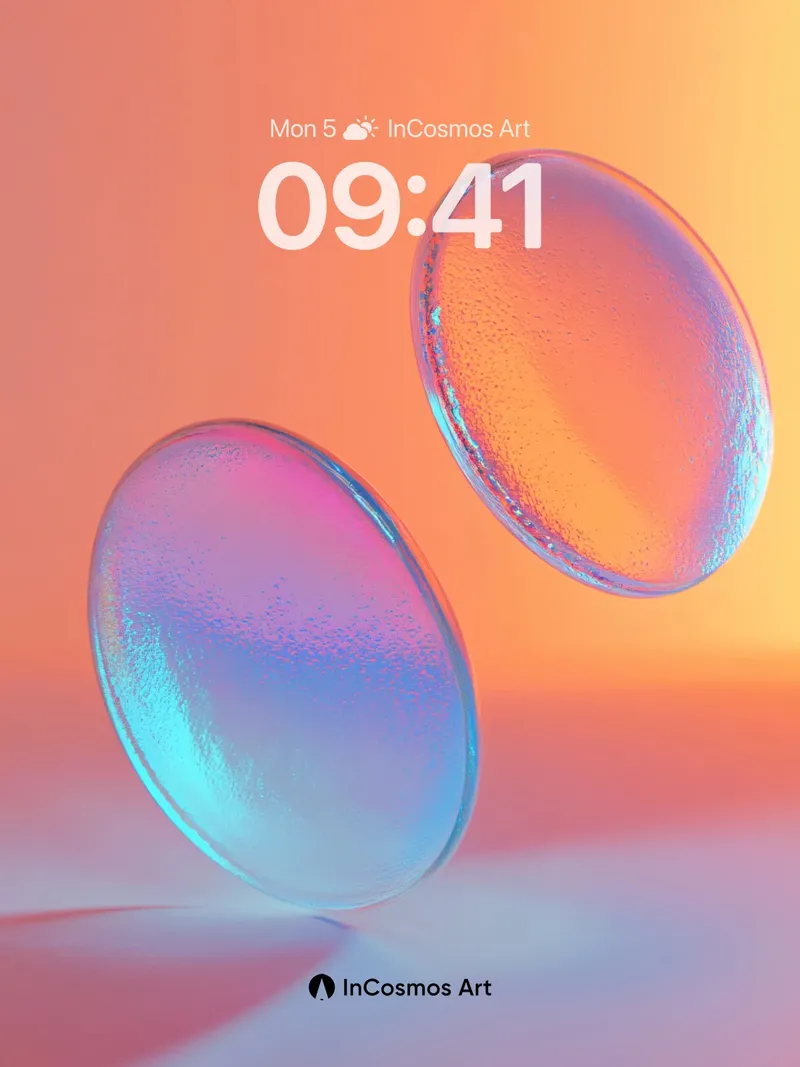
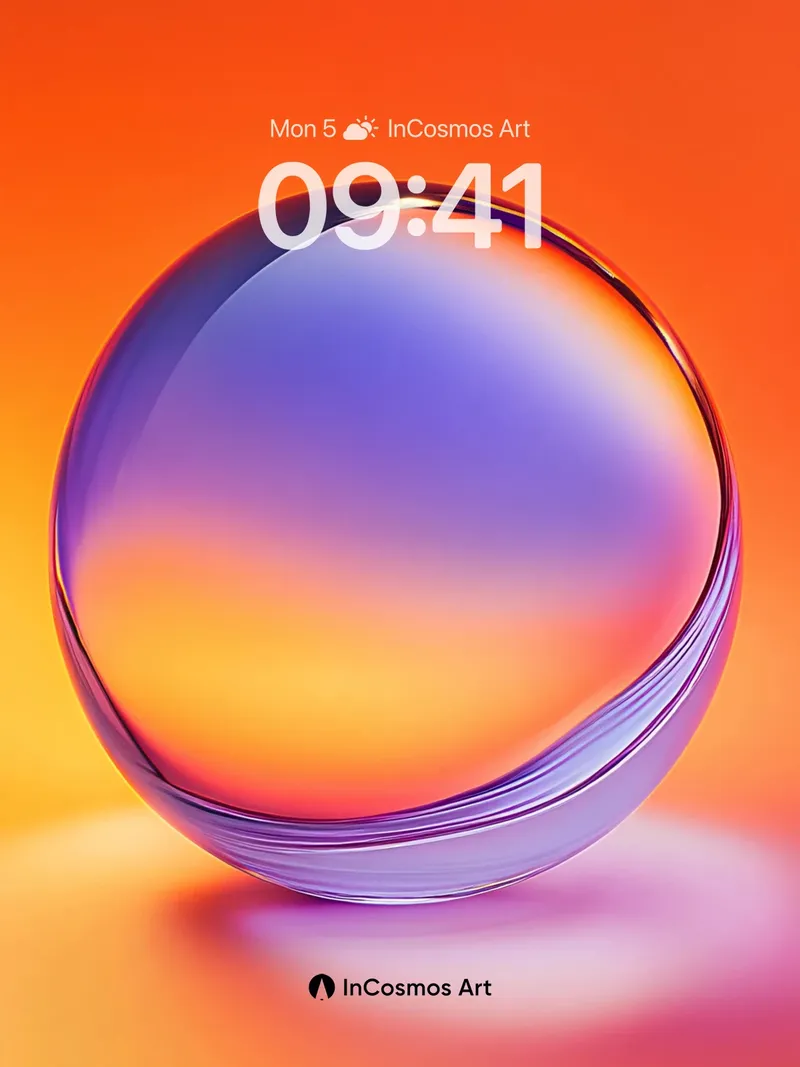
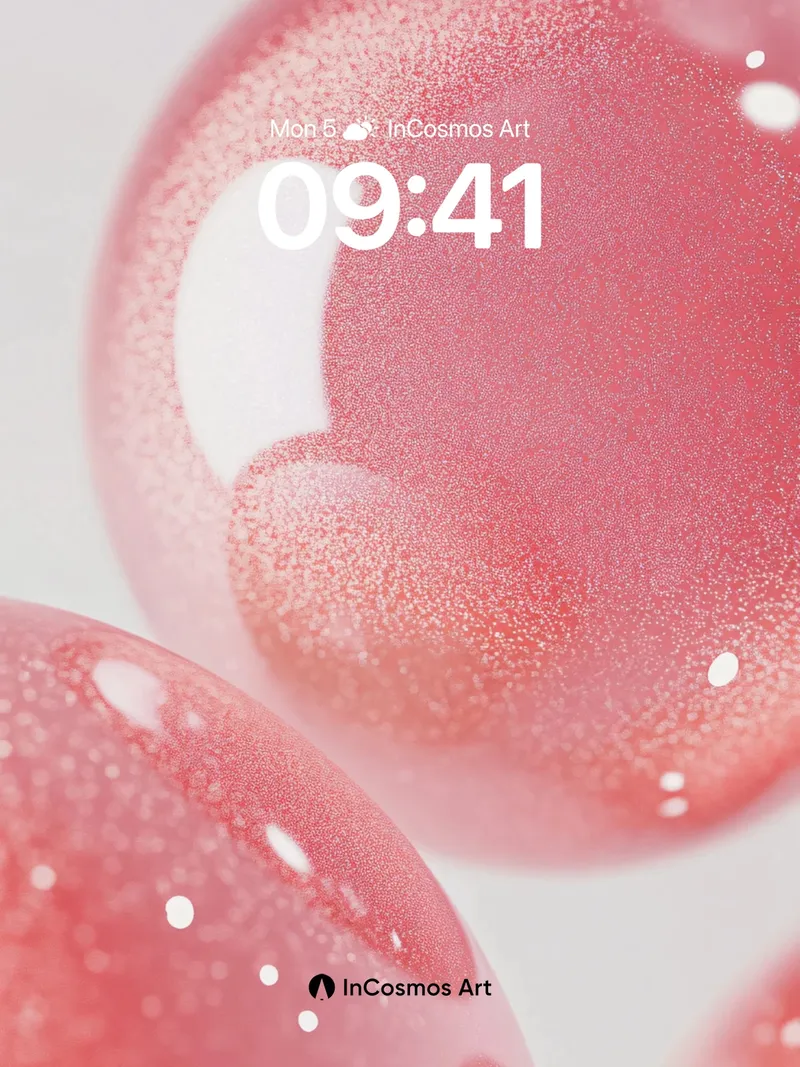
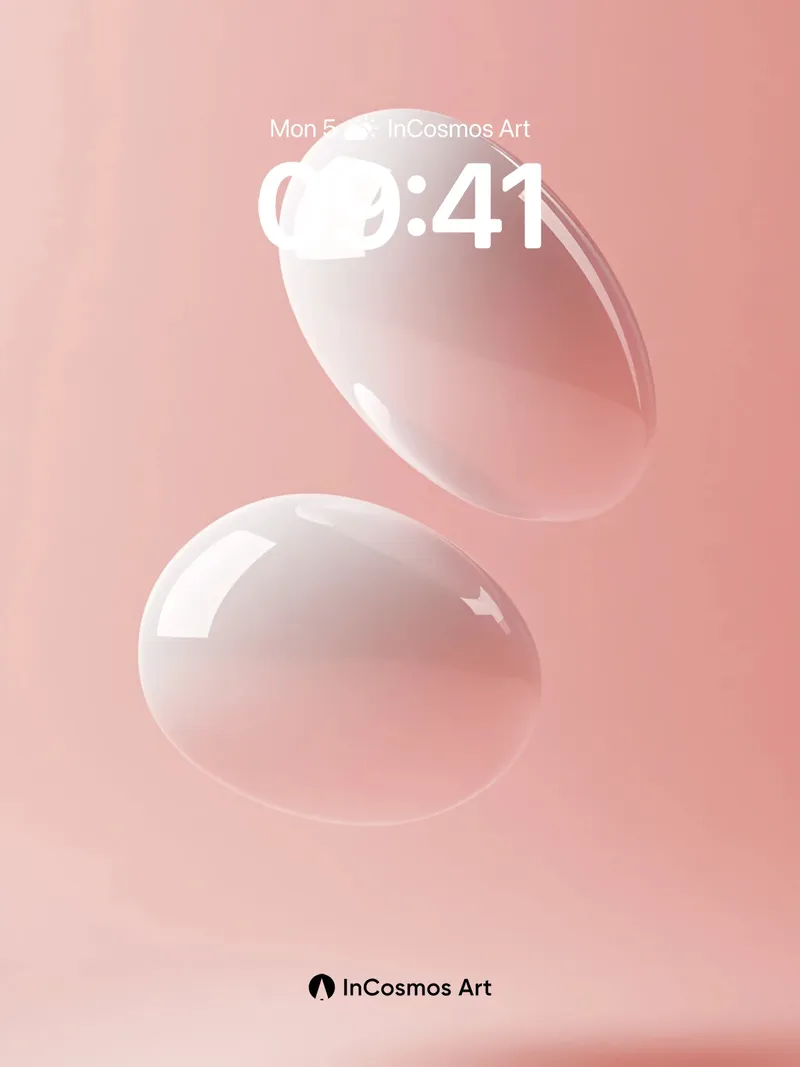
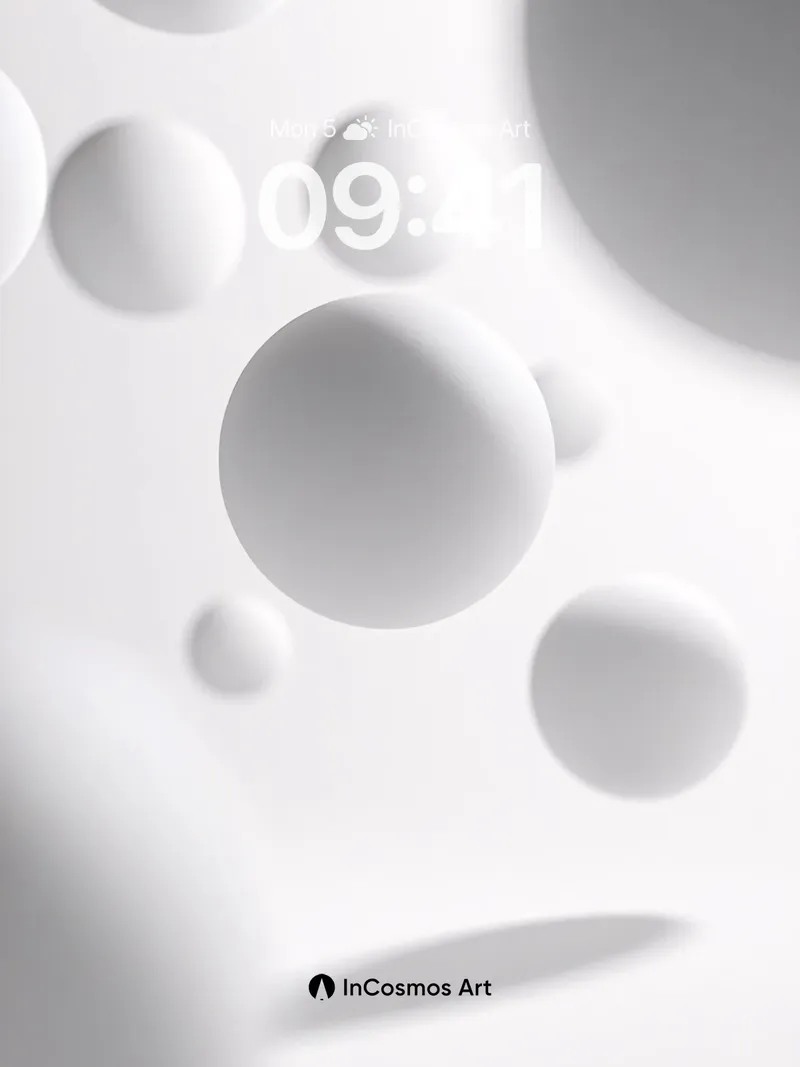
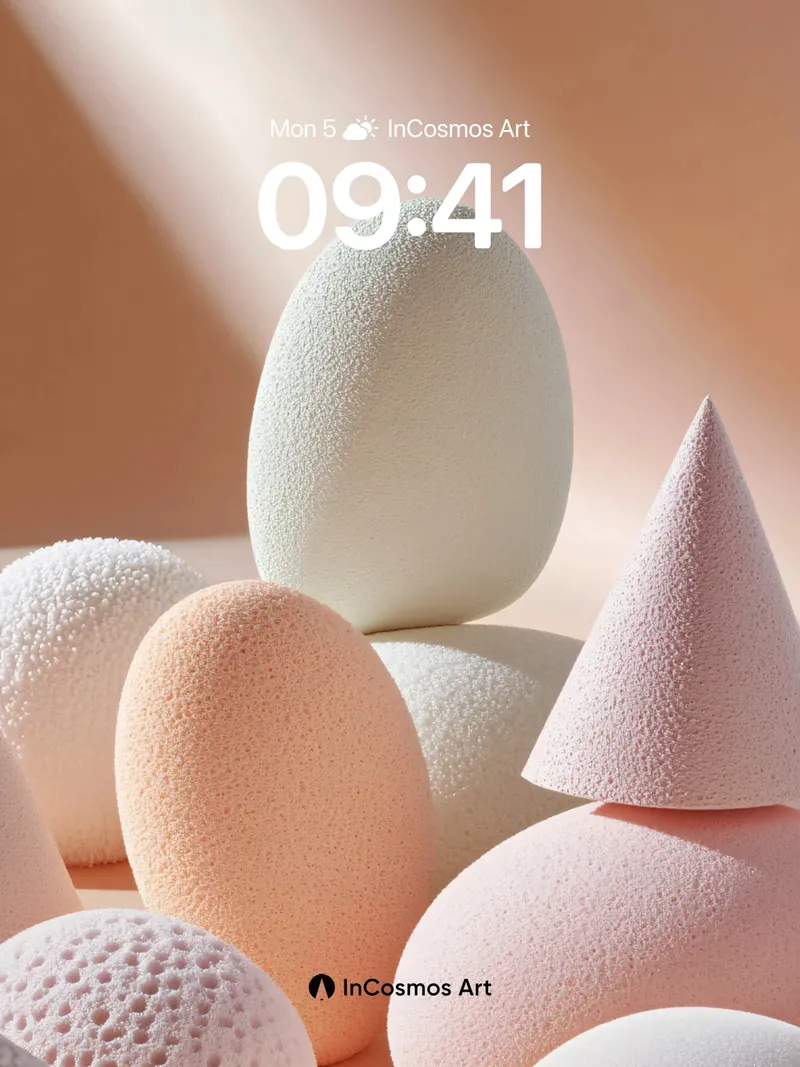
At the boundary of light and form, the sphere becomes a language. It does not rely on narrative but communicates weight through silhouette, materiality, and spatial relationships. When multiple spheres float against warm-toned backdrops, they establish a quiet order, as if time has been suspended between breaths. This suspension is not weightlessness but an extreme expression of balance. Smooth surfaces reflect surroundings, while granular interiors suggest complexity at microscopic scales. Transparent and semi-transparent spheres refract multiple hues in light, creating visual resonance. Some spheres feature dot-matrix textures, resembling digital life emerging from darkness, symbolizing the intersection of technology and nature. The morphological variation—from perfect circles to stretched ellipses—reveals dynamic tension. These are not static symbols but forms constantly adjusting to light and spatial flow. Their formal purity makes spheres foundational units in modern aesthetics, carrying emotional depth and philosophical nuance.
Metaphor of Form
The sphere is one of the most primal geometric forms, its perfect symmetry often seen as a symbol of harmony. Yet in contemporary contexts, the sphere transcends idealization, taking on more complex cultural roles. When imbued with varied materials—glass, matte, metallic, or grid-like—their meanings expand. These changes are not merely visual but explorations of material essence. Each surface treatment corresponds to a mode of perception: reflection creates distance, matte evokes intimacy, transparency invites participation. Thus, the sphere becomes a medium of perception, bridging observer and invisible realms.
Ritual of Light and Shadow
The behavior of light upon spheres constitutes a visual ritual. As light passes through transparent spheres, it bends, generating internal rainbow gradients; on semi-transparent ones, it produces soft diffusion. Shadows cast are no longer mere obstructions but acts of spatial dialogue. When spheres hover, their shadows become part of the ground, blurring boundaries between substance and illusion. This interaction reminds that visual experience always depends on conditions—light source, angle, material, environment—jointly shaping final perception. Here, the sphere functions as an experimental field, demonstrating how light constructs meaning.
Dance of Technology and Nature
Some spheres bear fine dot patterns, like data streams made tangible in three dimensions. This is not mere decoration but a response to perceptual logic in the digital age. Humans increasingly interpret the world through pixels and grids, and spheres embody this logic physically. Yet these forms retain natural textures—soft sheen, delicate particles. This juxtaposition creates tension: rational construction versus sensory experience. Thus, the sphere acts as mediator, connecting technological precision with organic warmth, reflecting society's dual awareness and longing.