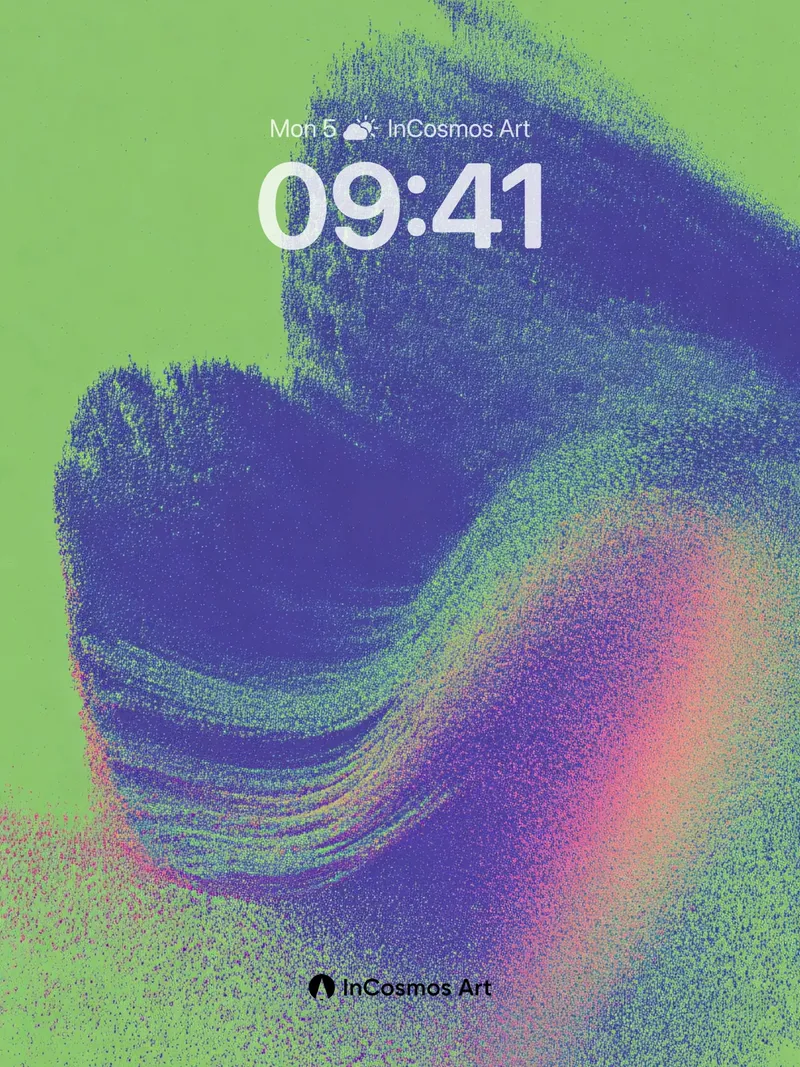
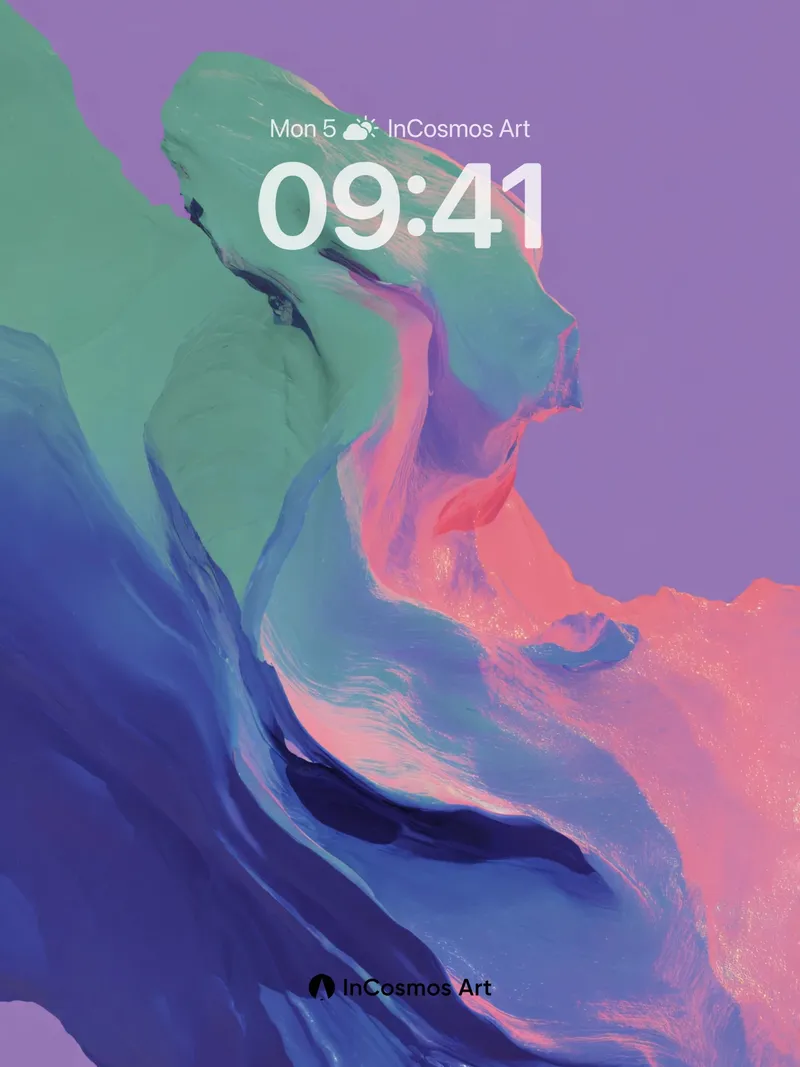
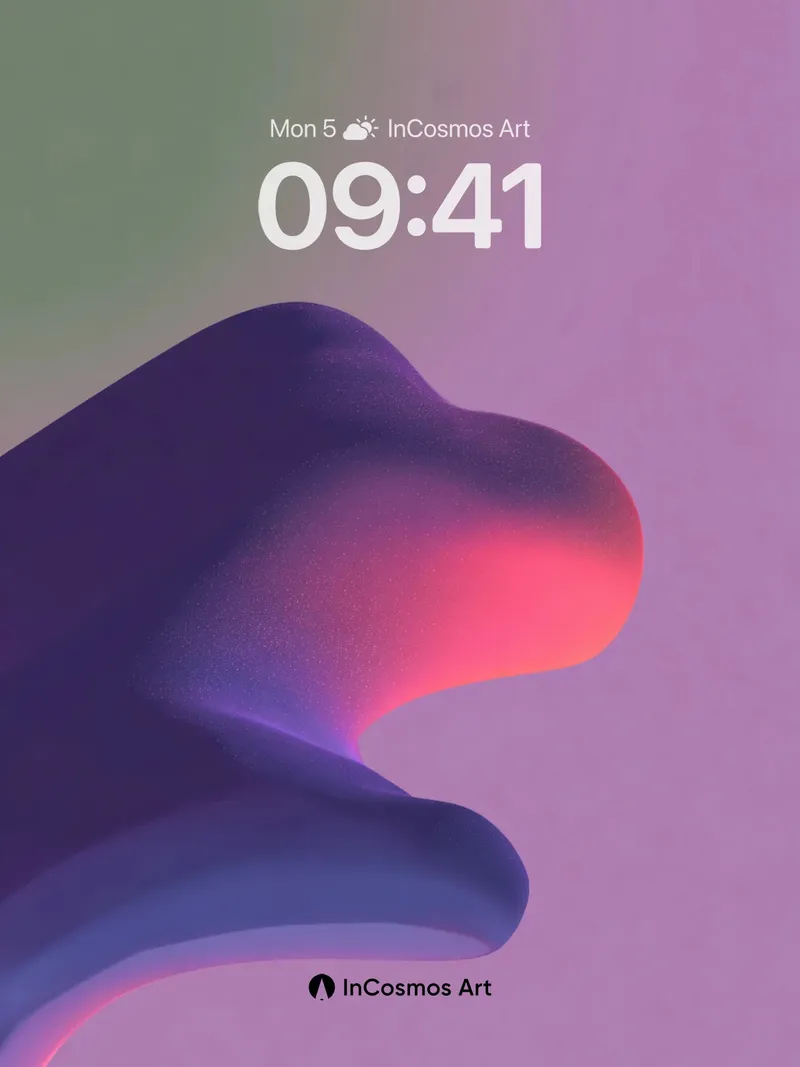
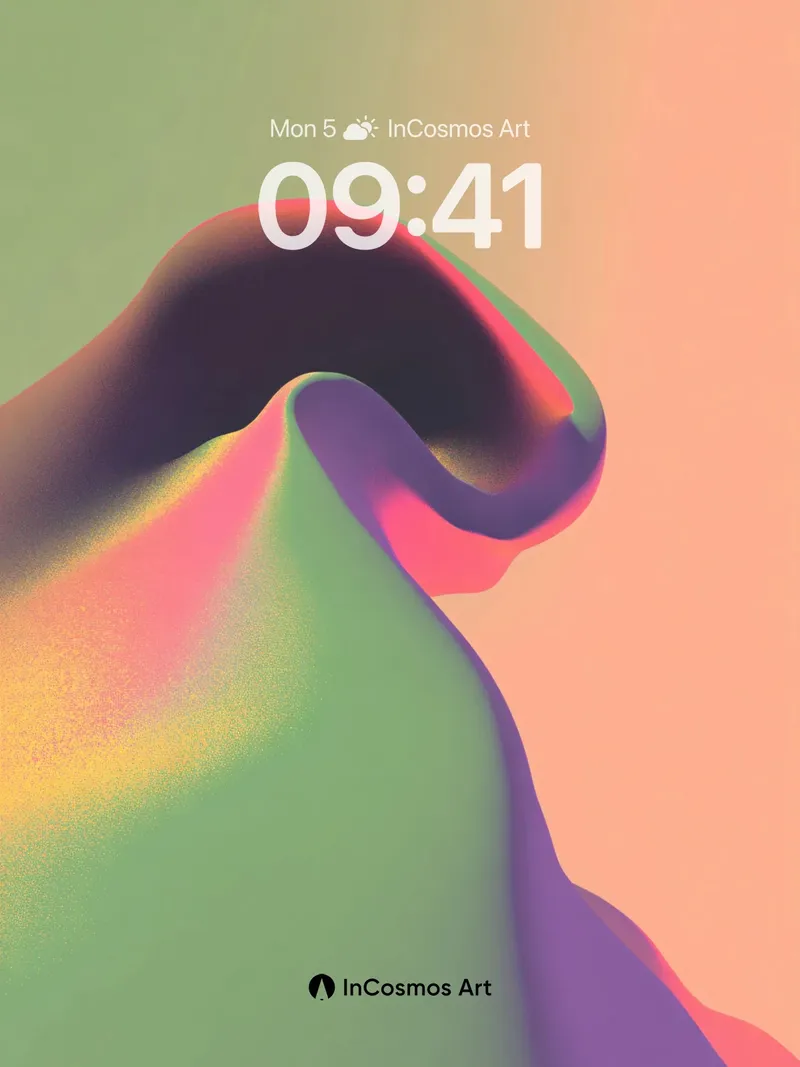
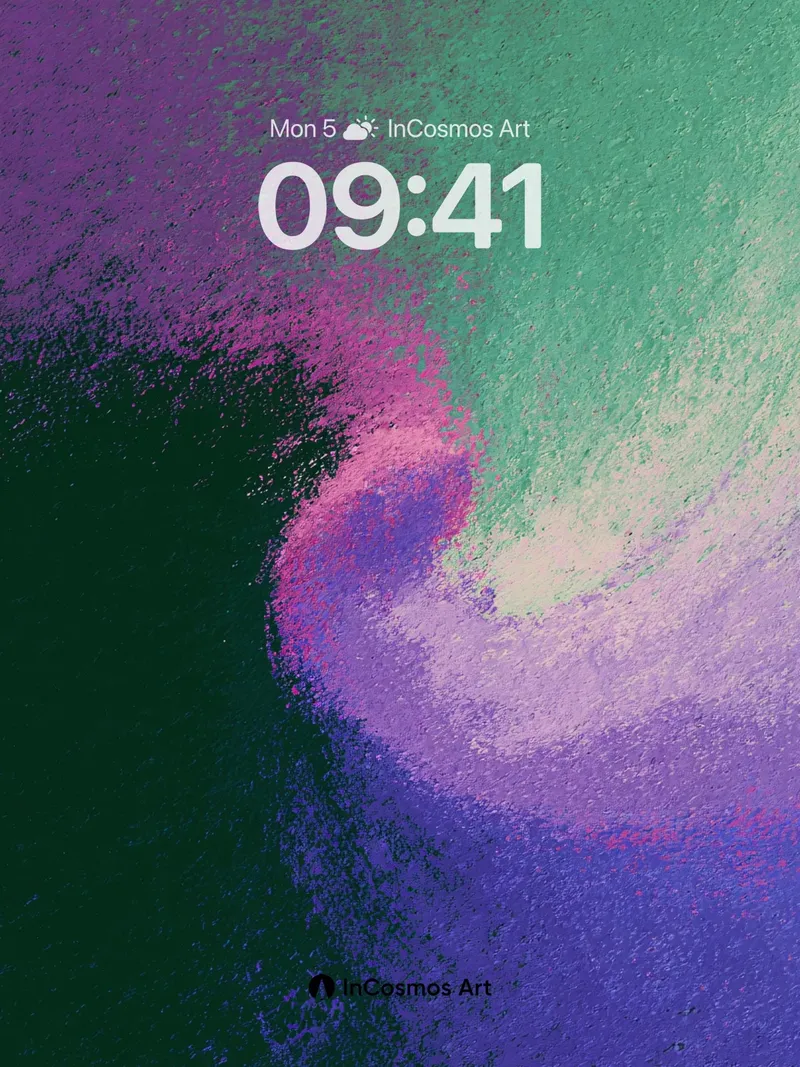
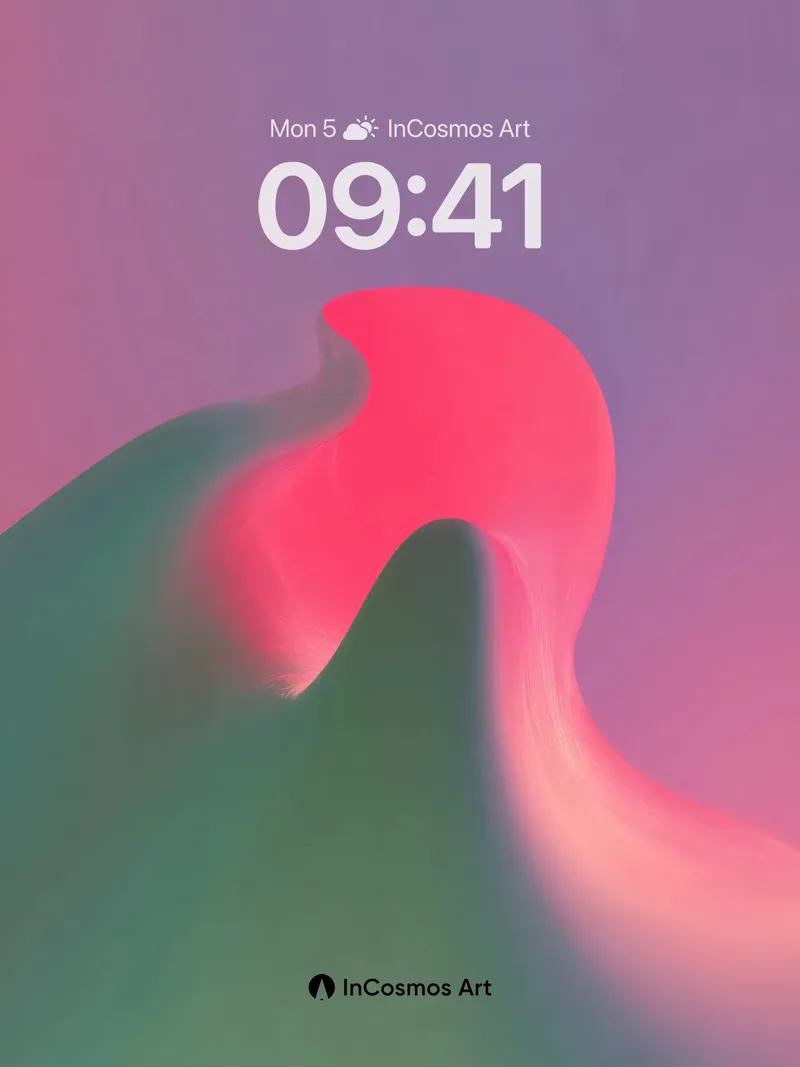
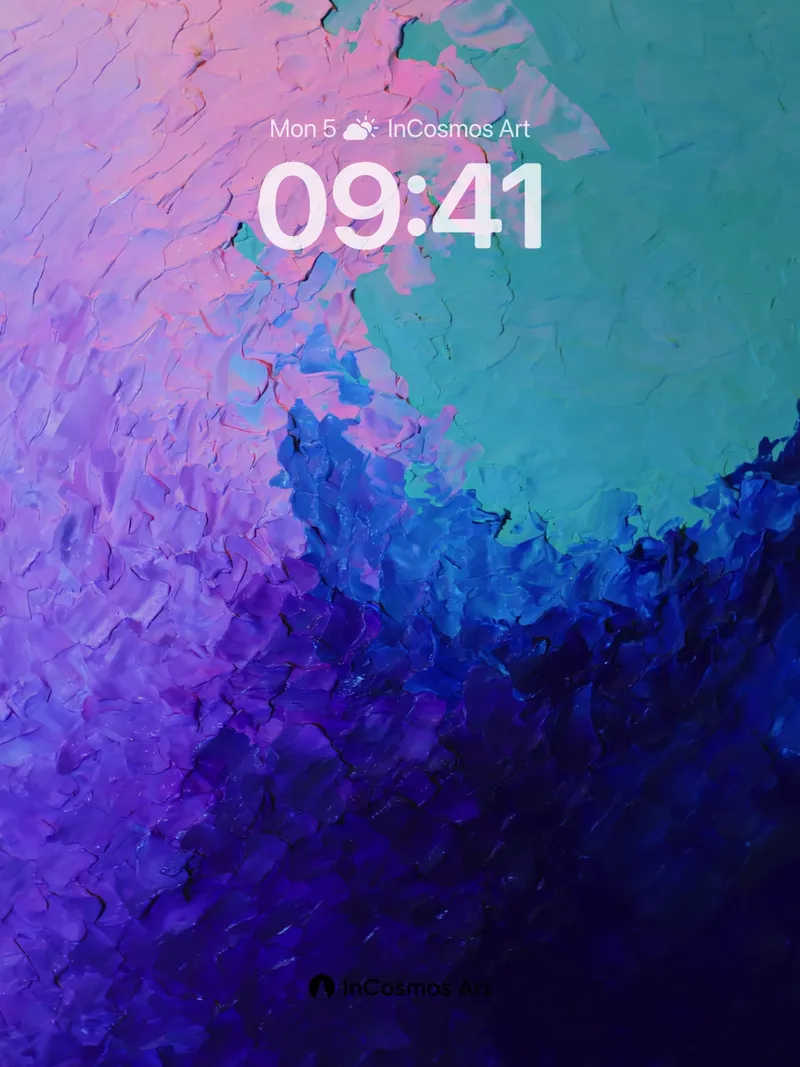
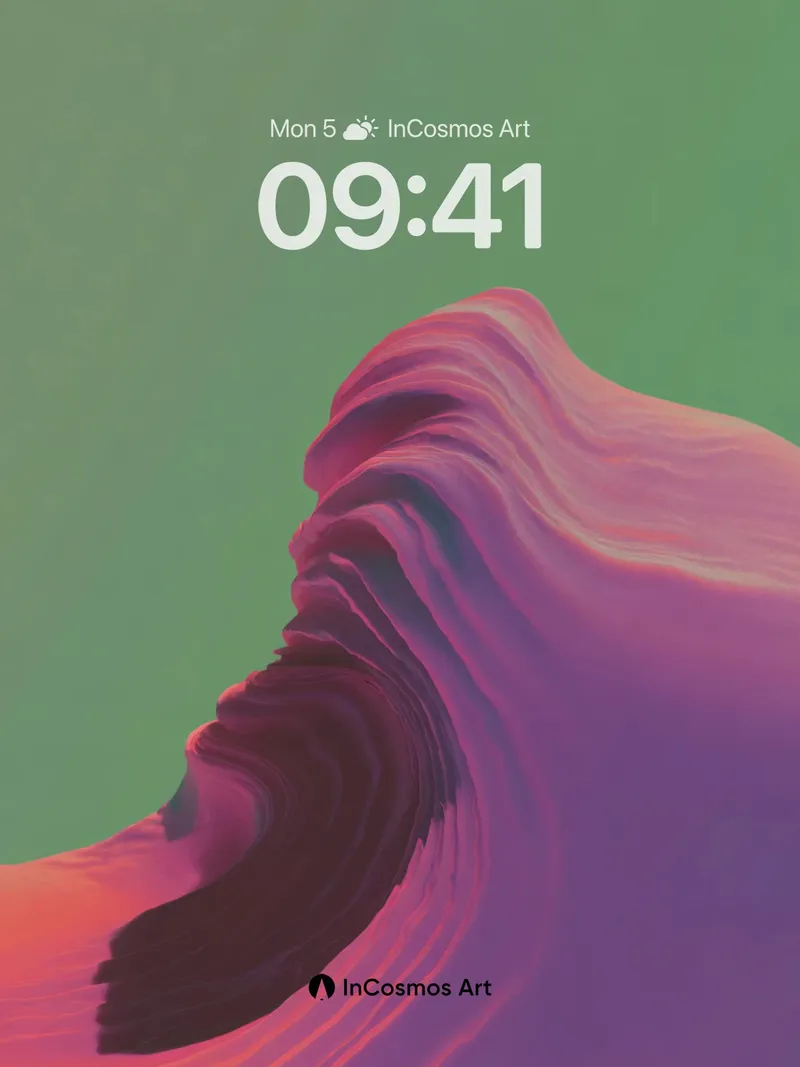
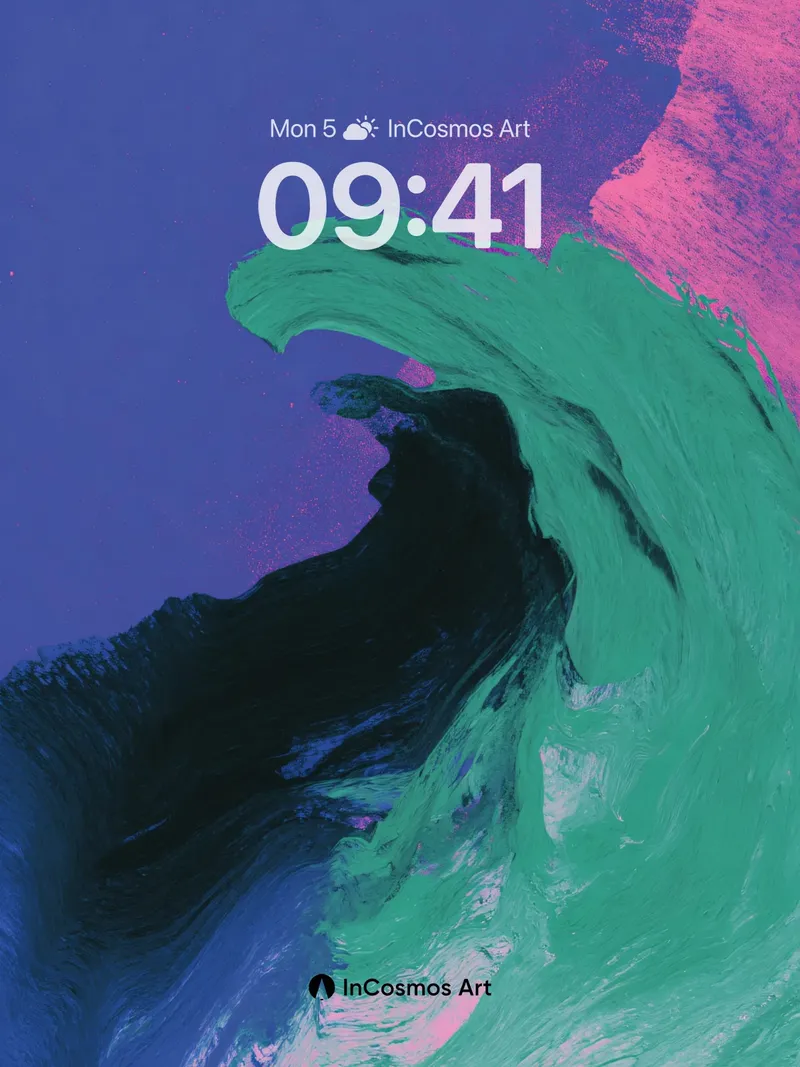
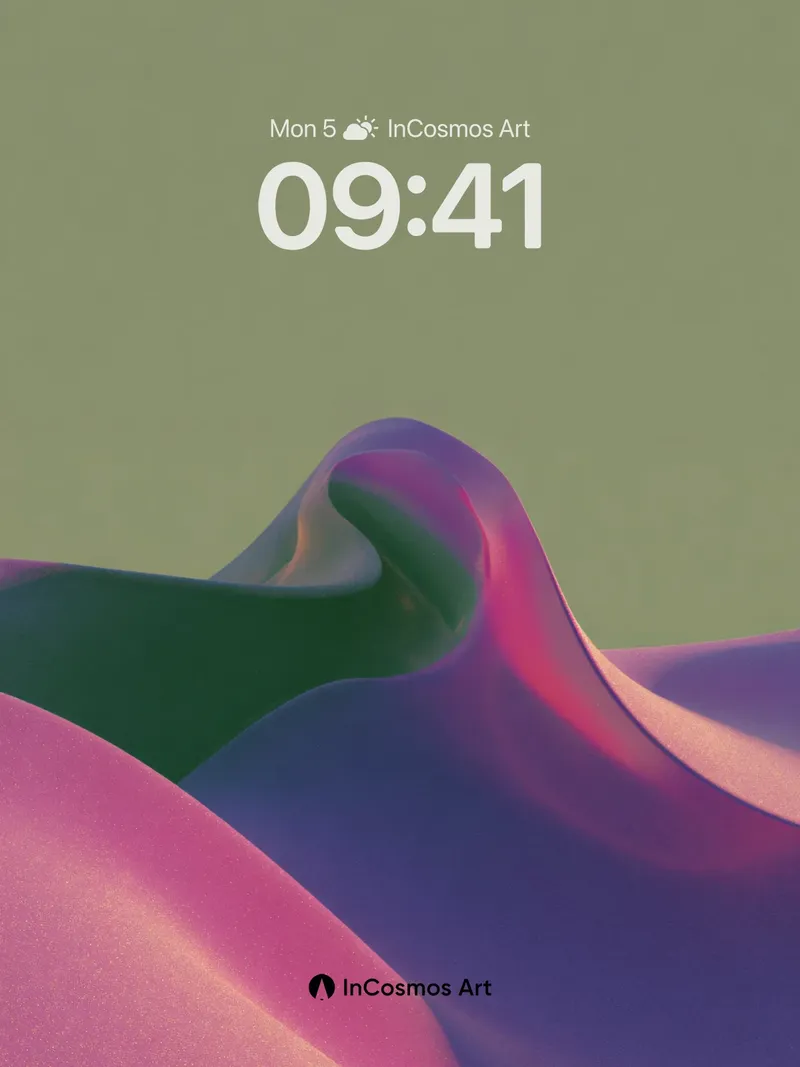
Color spreads through space, sliding along the edges of unnamed emotions. It does not form objects, yet evokes the outlines of memory—a state between reality and imagination. These forms lack fixed boundaries, continuously reconfiguring with the rhythm of light and shadow, as if natural laws were rewritten into a visual language. Each curve suggests dynamic equilibrium, both an extension of matter and a reflection of mind. When blue-purple meets teal-green, it is not for decoration, but to reveal layers of perception. This design language transcends formalism, entering a more essential mode of communication: expressing inner order through abstraction.
Topology of Emotion
Here, color is not mere visual stimulation, but a tactile psychological terrain. The transition from pink to deep blue mirrors heartbeat rhythms and tidal cycles. This gradient follows internal logic, echoing the evolution of emotion from calm to surge. Viewers often breathe slower, linger longer when encountering such structures—indicating influence beyond conscious cognition, reaching the subconscious. In an age of sensory overload, these works offer a counter-experience: simplifying elements to rebuild pathways of focus.
Silent Rituals of the Digital Age
Though born from algorithms and rendering, these forms exhibit meditative qualities. They reject narrative and symbolic meaning, focusing solely on existence. In a screen-dominated life, this kind of visual encounter becomes a new ritual: viewers cease passive image consumption and actively engage, weaving meaning through attention. Each gaze is a brief attempt to step outside everyday logic. This silent interaction represents rare depth within digital culture.
Color as Language
Traditional language relies on vocabulary and grammar; here, color performs similar functions. Blue denotes calm and depth, purple conveys mystery and transformation, green signifies growth and hope. Their combinations are not random collages, but carefully arranged emotional sequences. When pink emerges from darkness, it resembles awakening memory; when deep purple covers the field, it suggests introspective descent. This non-verbal mode of expression is becoming foundational for new aesthetic communication.
Abstraction as Truth
These seemingly illusory forms reflect a redefinition of truth in contemporary experience. As boundaries between virtual and real blur, abstraction ceases to be escape—it becomes a path closer to essence. They do not depict the world, but reconstruct perception. By removing specific objects, they clarify the viewer's internal structure. This is a decentralized aesthetics, returning subjectivity to the audience, rather than imposing predetermined meaning.