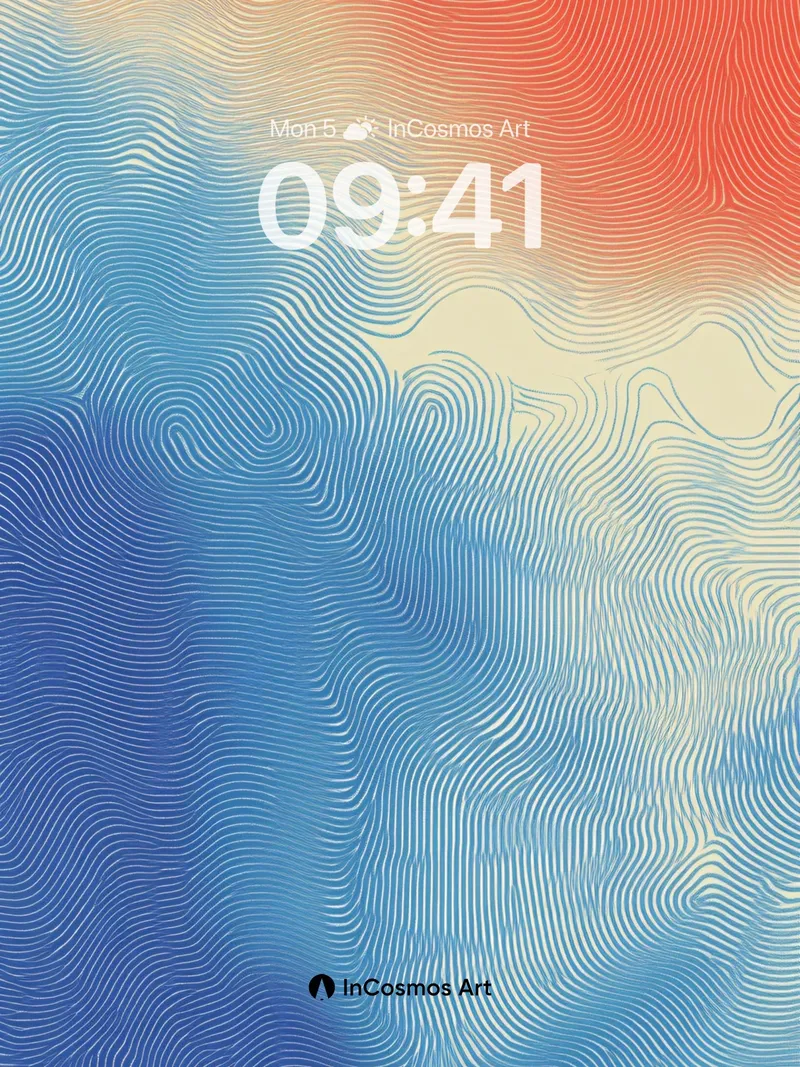
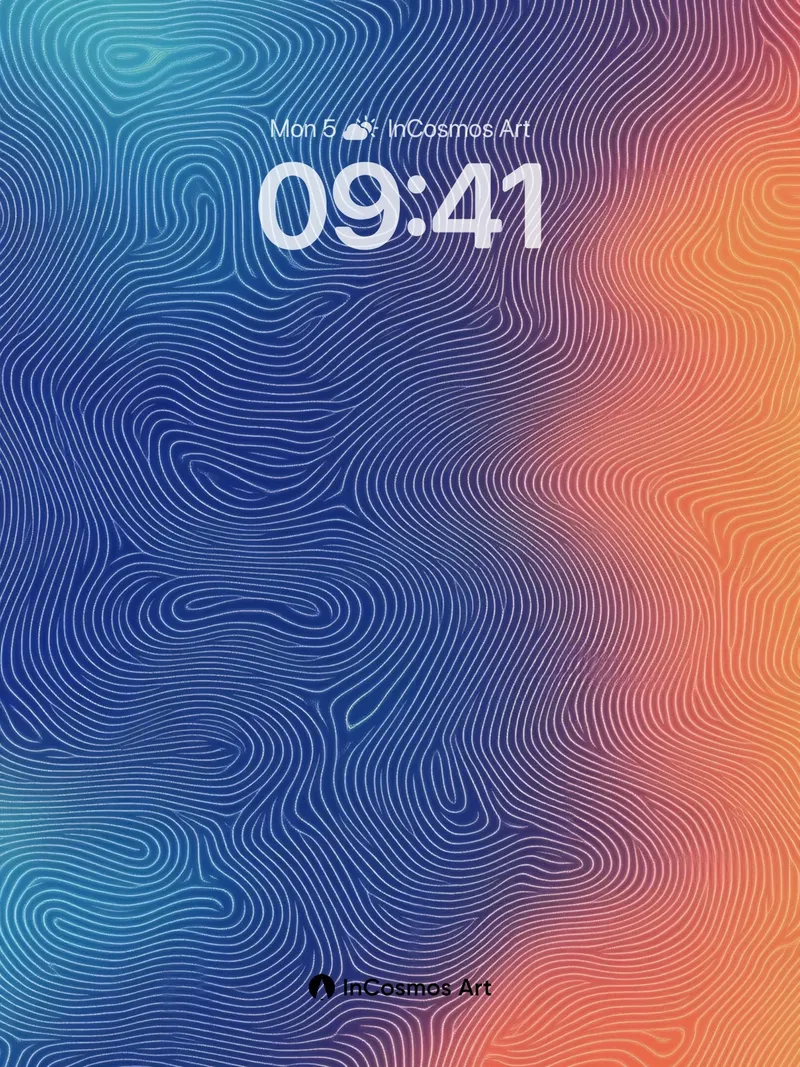
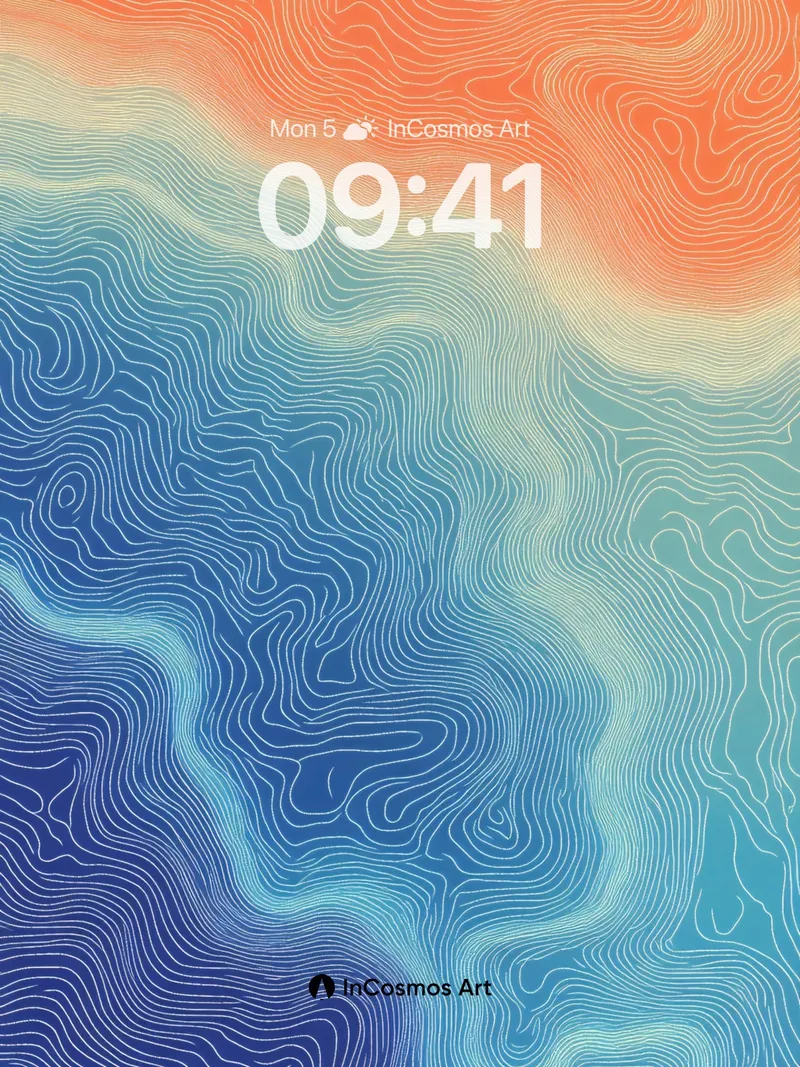
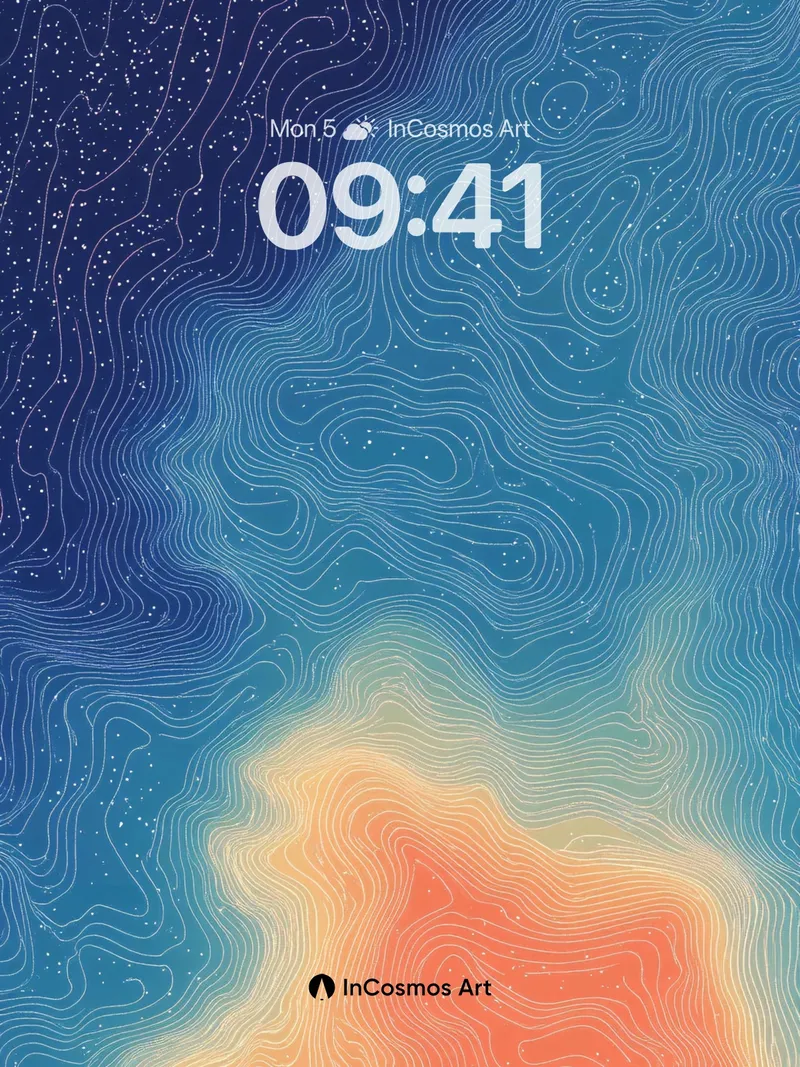
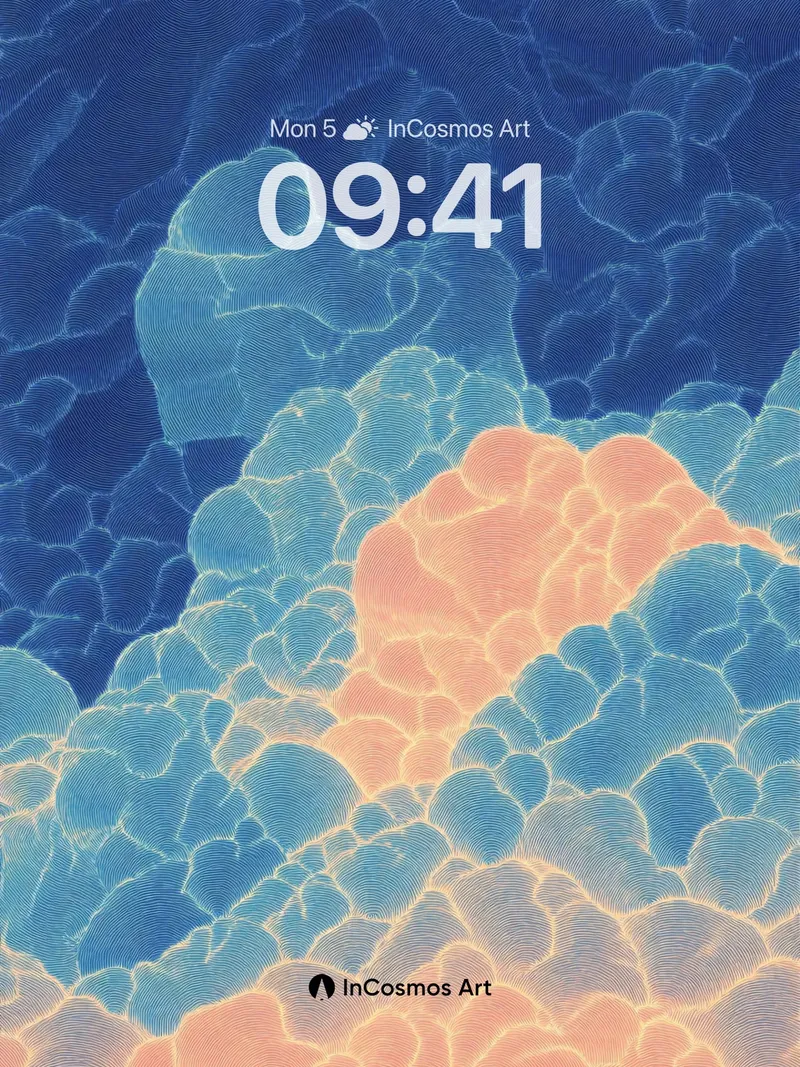
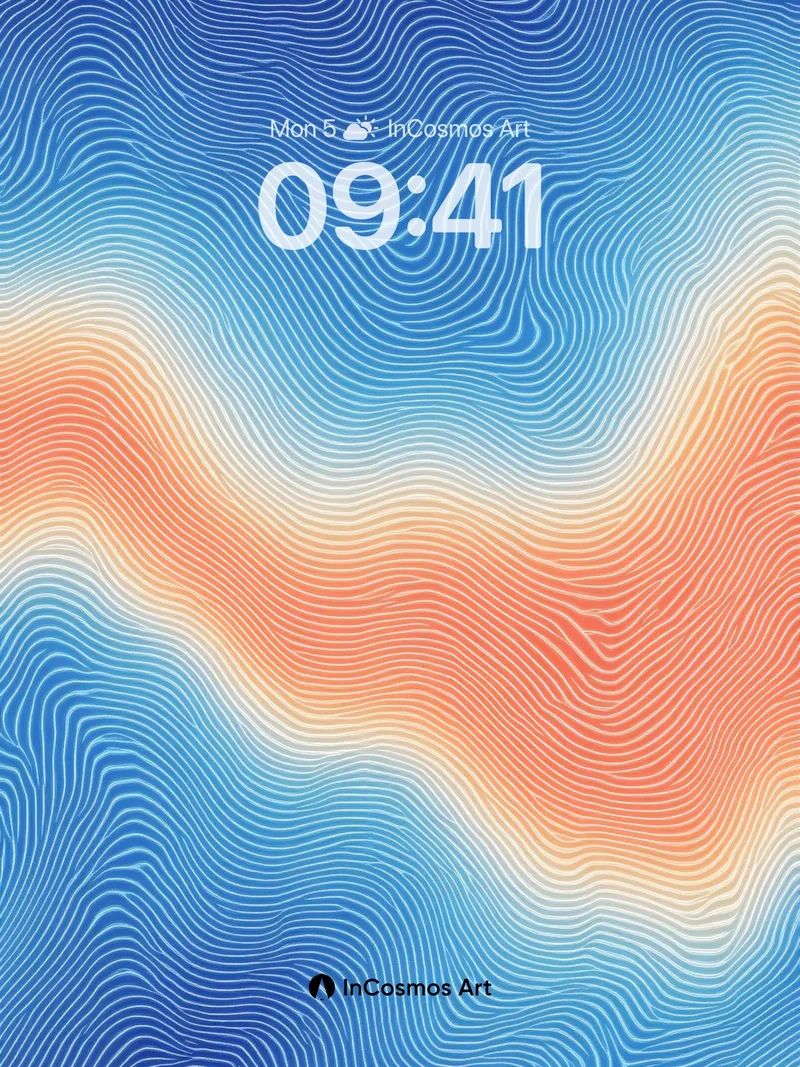
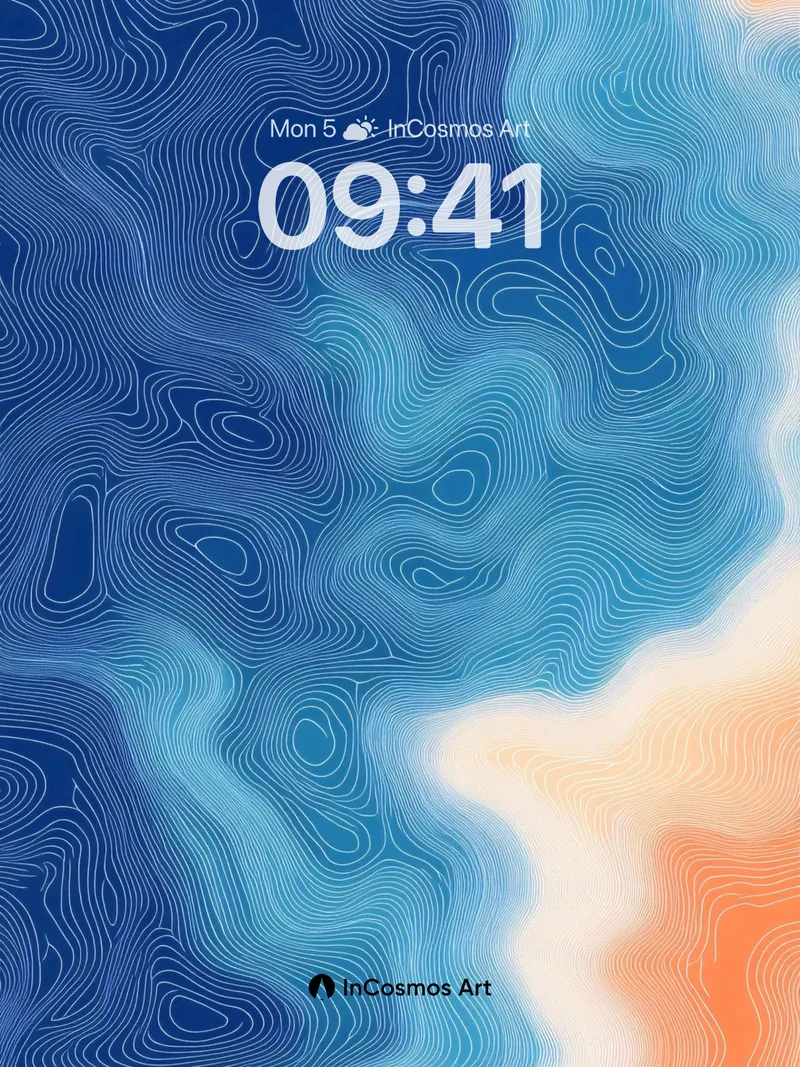
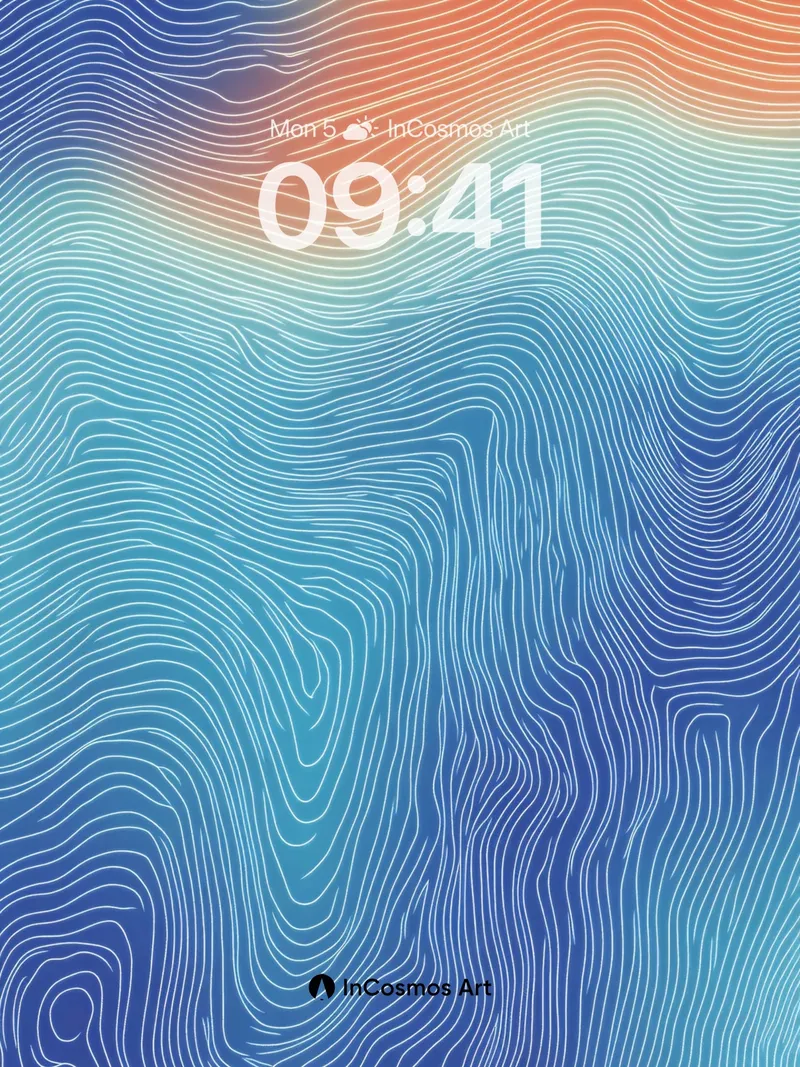
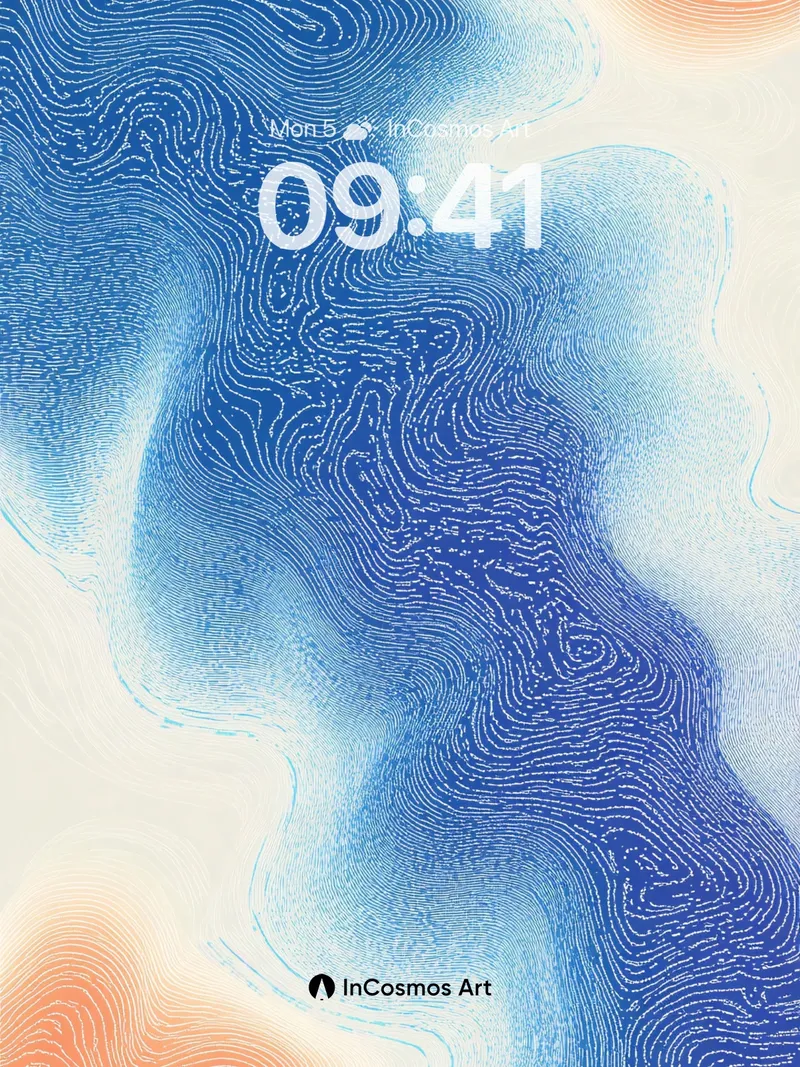
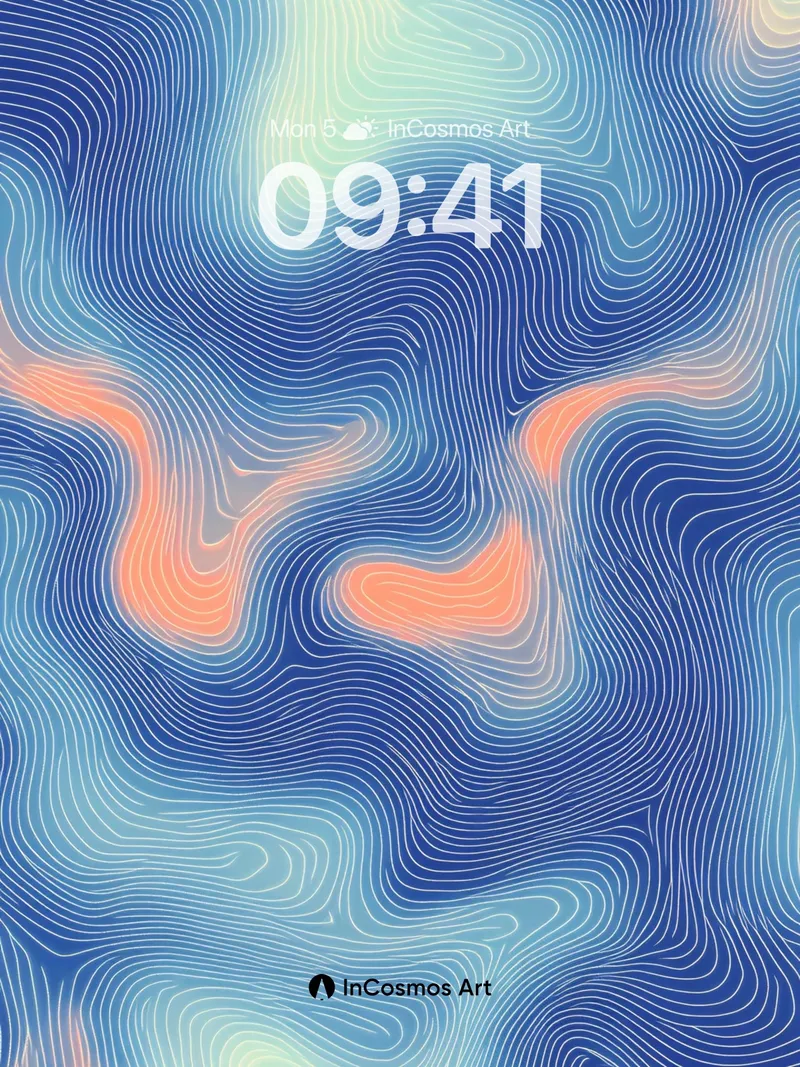
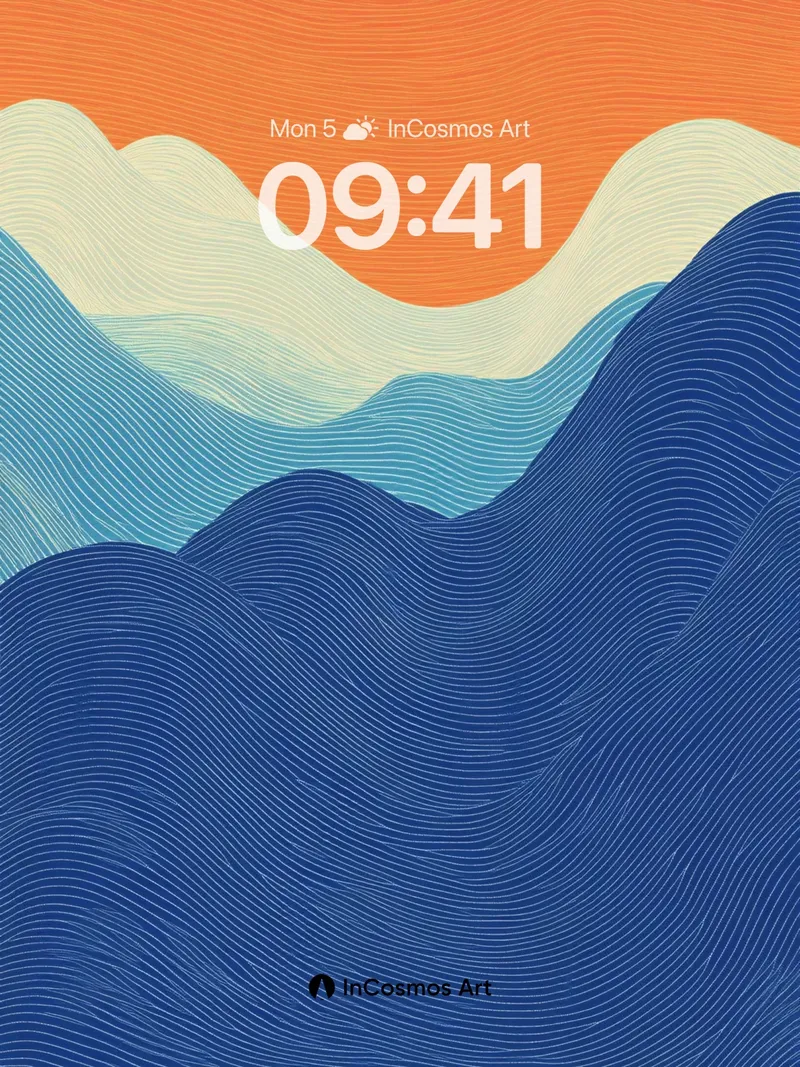
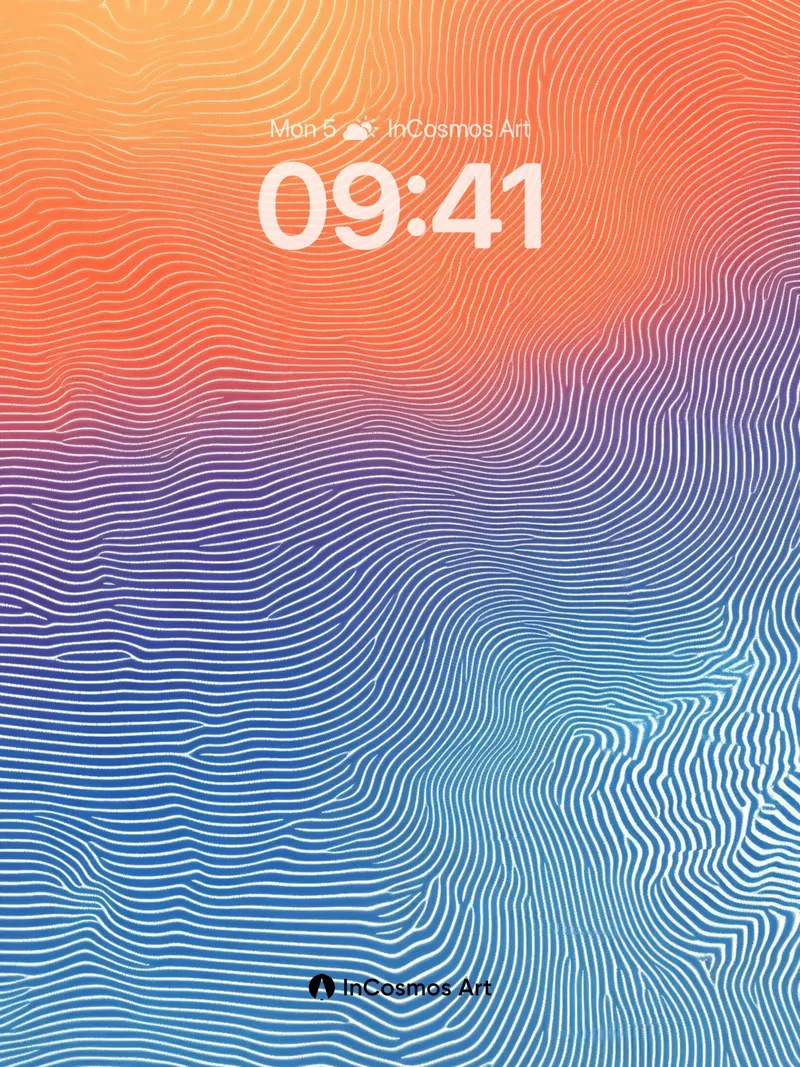
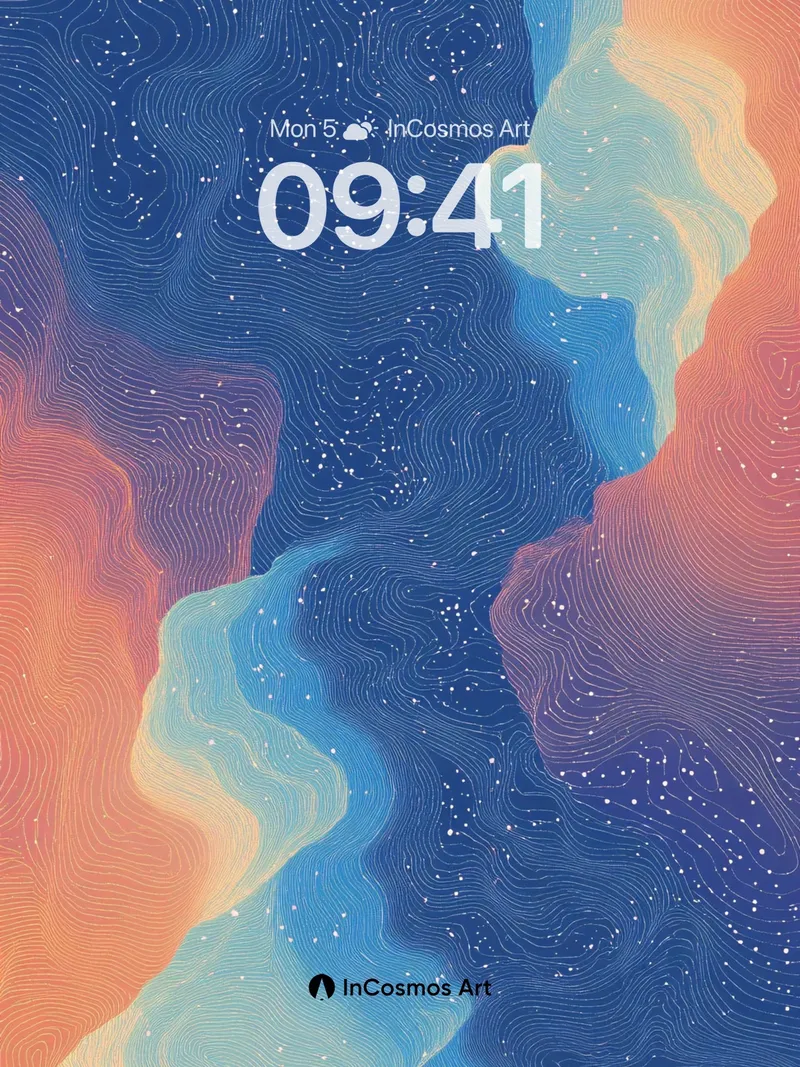
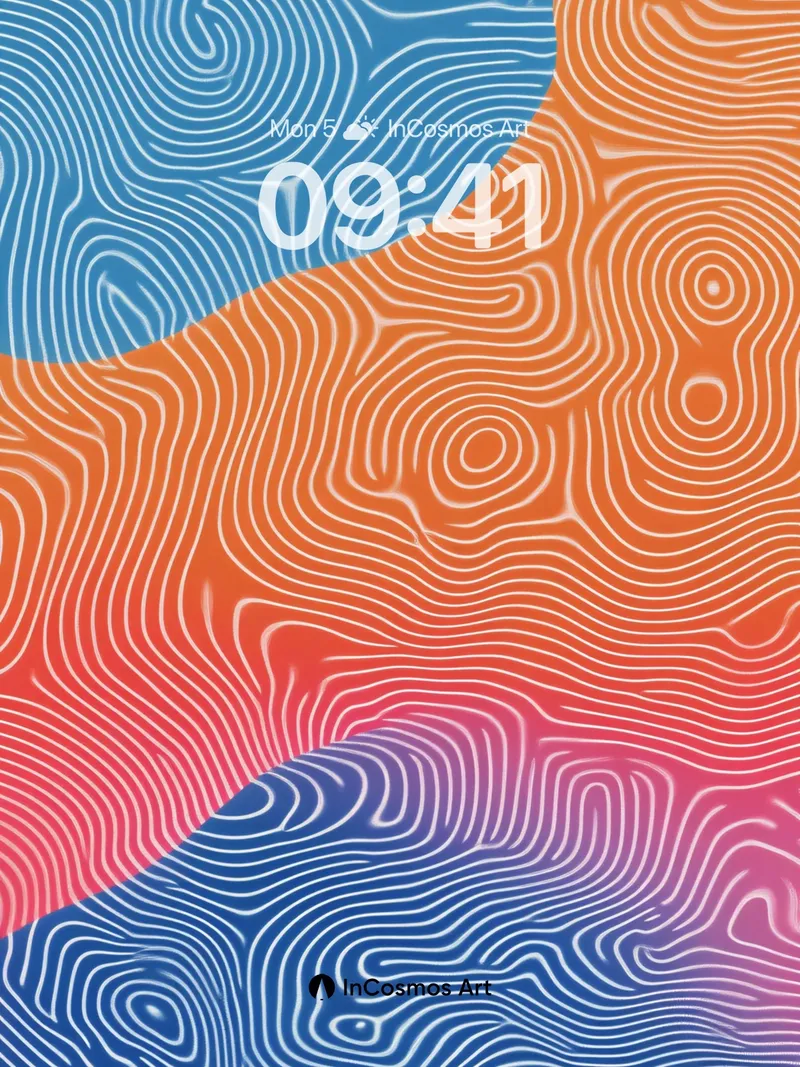
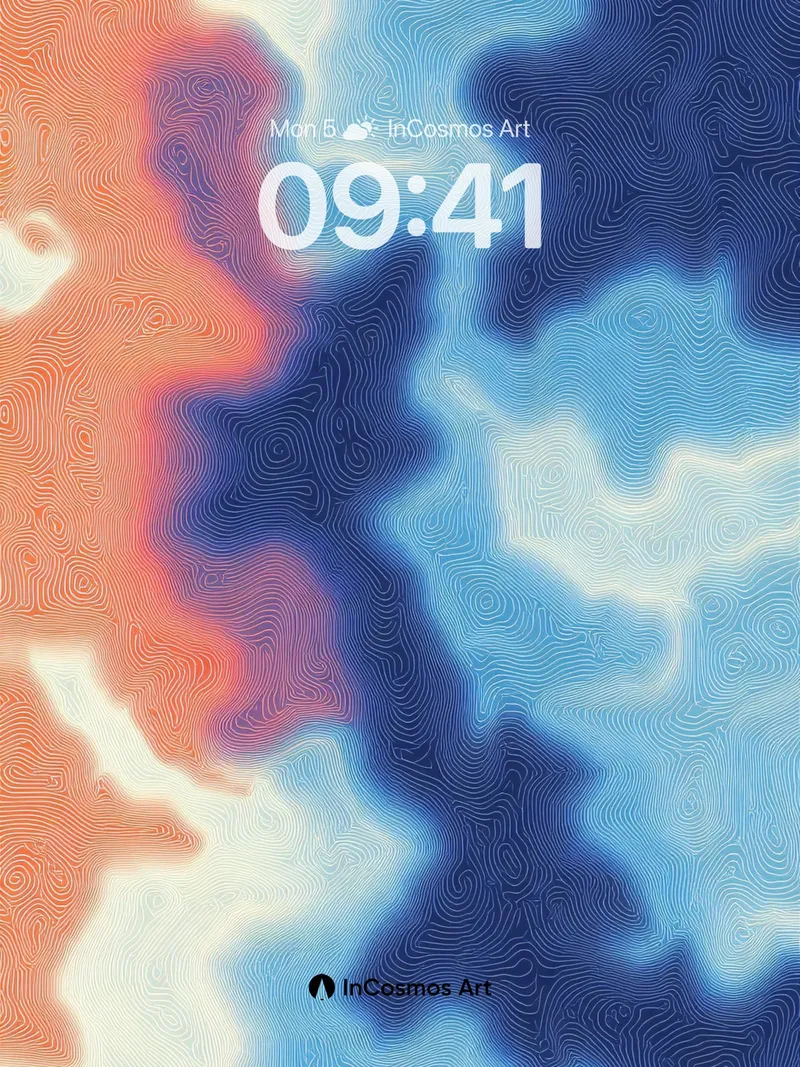
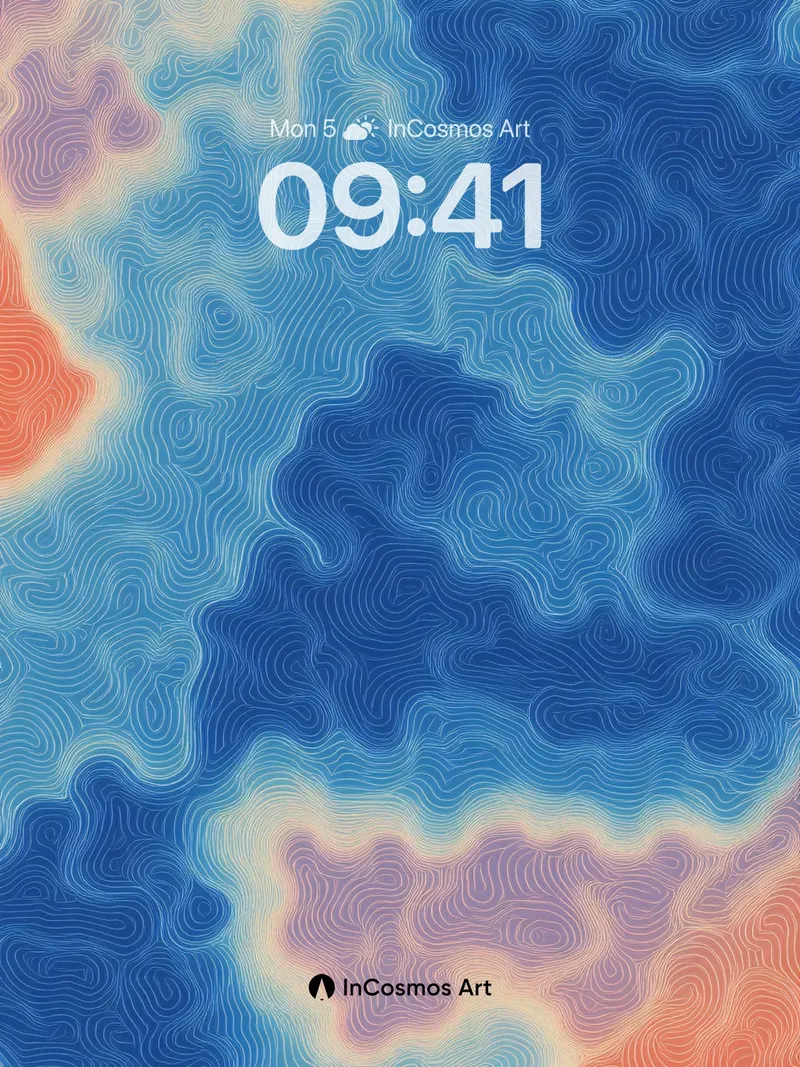
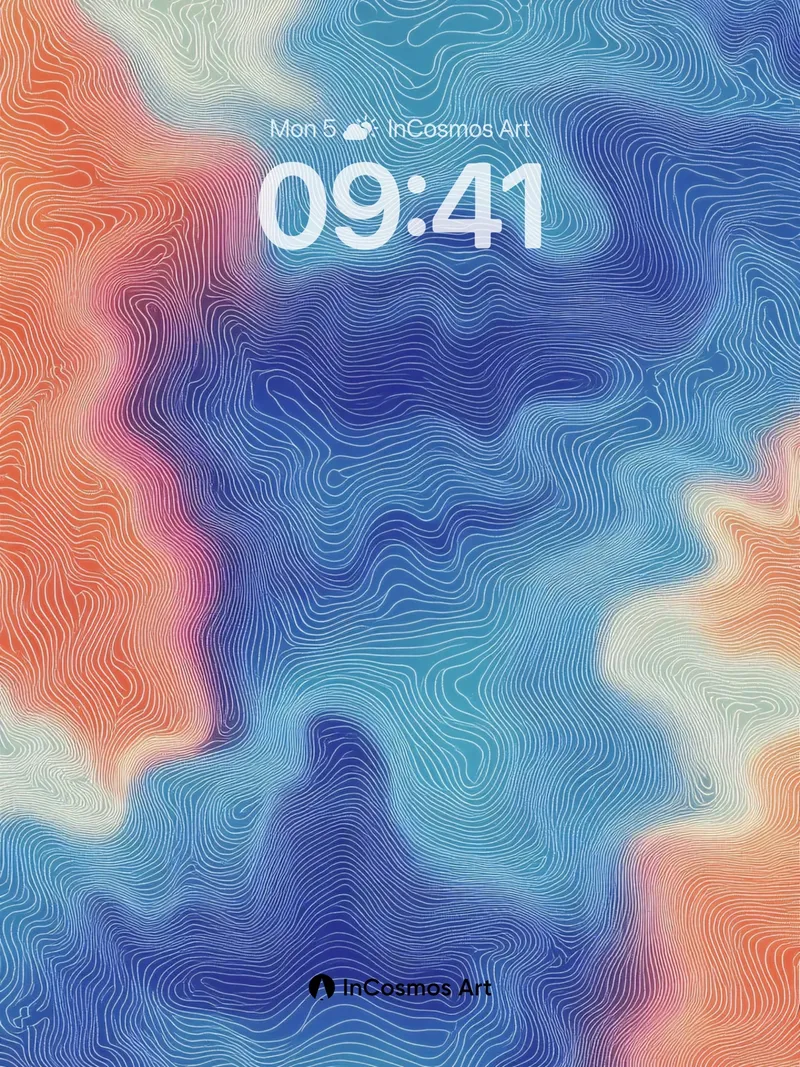
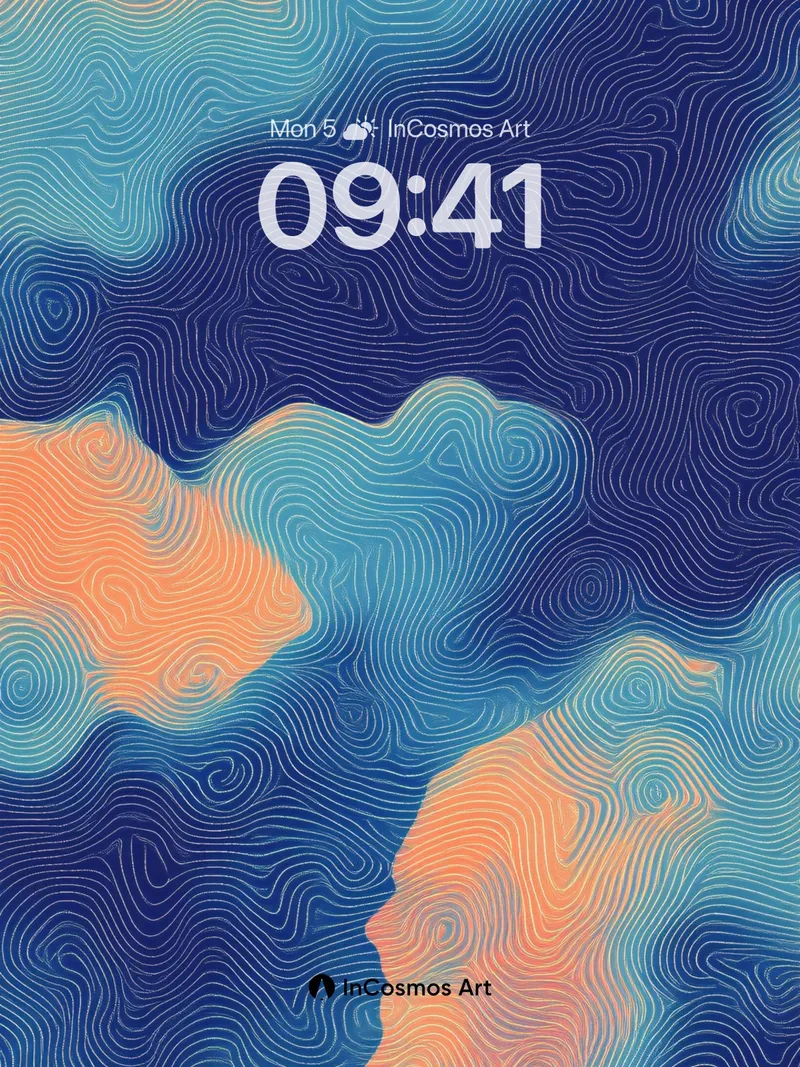
Color flows through space, like memories settle in time. Lines meander without fixed paths yet form an internal order. They are not maps nor landscapes, but emotional topographies—deep blue signifies quiet night, orange-red embodies intense emotion, transitions mark moments of hesitation and fusion. Each curve resembles a trace of breath, slow and continuous, reminding that existence itself is a state of flow. These forms lack boundaries yet divide regions by rhythm, as if nature silently writes its language. Human fascination with terrain stems from questions about self-position; when vision becomes abstract, space transforms into a projection field for the psyche.
Contours of Emotion
Color gradients mirror emotional layers, shifting from calm to intensity, suppression to release. The meeting of deep blue and orange-red is not conflict but dialogue. Density variations in lines suggest fluctuating strength—dense areas signify anxiety, sparse ones indicate peace. This representation transcends literalism, entering the realm of perception, allowing viewers to discern emotional contours even without clear objects.
Truth Within Abstraction
Despite lacking concrete imagery, these patterns evoke familiar experiences: ocean swells, cloud formations, heartbeat rhythms. Abstraction does not detach from reality but distills its essence. It strips away details, preserving structure and relationships, letting meaning emerge from emptiness. This minimal expression paradoxically deepens understanding, as comprehension no longer relies on recognition but resonance.
Poetics of Space
The direction of lines establishes dynamic balance—neither symmetrical nor chaotic. They mimic self-organizing phenomena in natural systems, such as river branching or wind-eroded landforms. This generative logic hints at fundamental laws governing cosmic operations: local changes shape global forms. Vision here becomes a philosophical medium, guiding reflection on order, chaos, and evolution.
Territories of Perception
When color and line interact, they expand perceptual dimensions. It ceases to be flat viewing and becomes immersive experience. The viewer's gaze follows curves, generating motion, as if inhabiting a constantly shifting environment. This interactivity blurs subject-object boundaries, making the act of observation itself a participatory process.