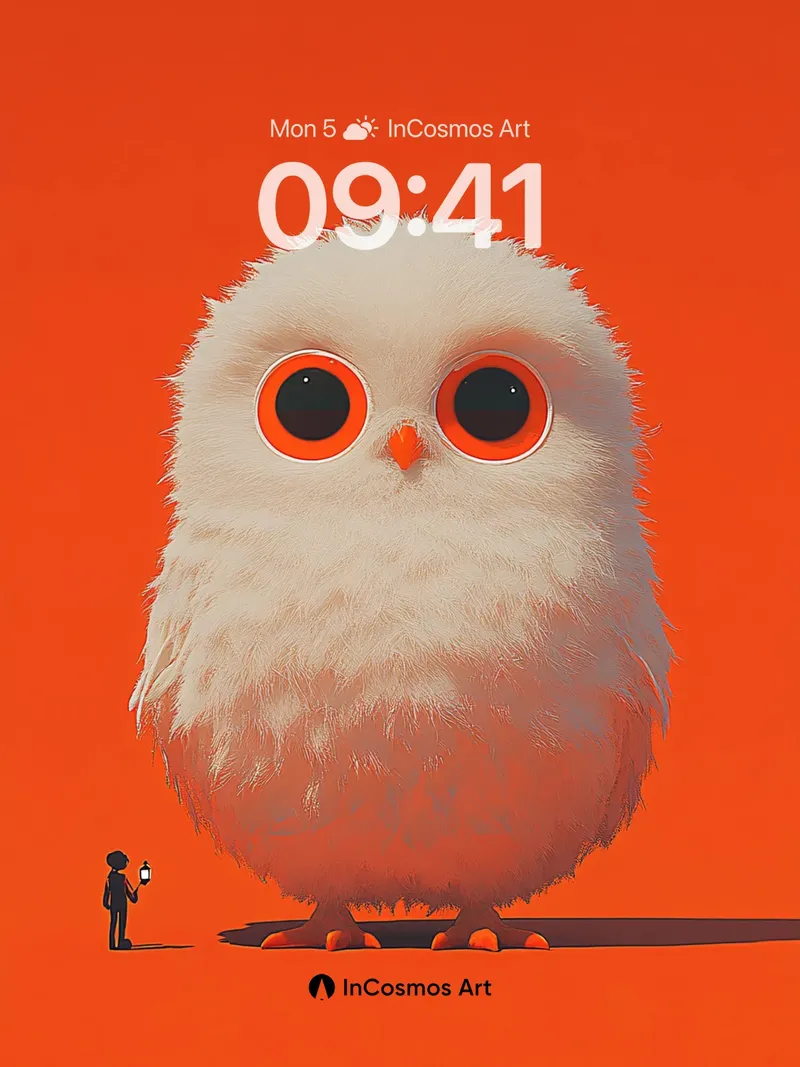
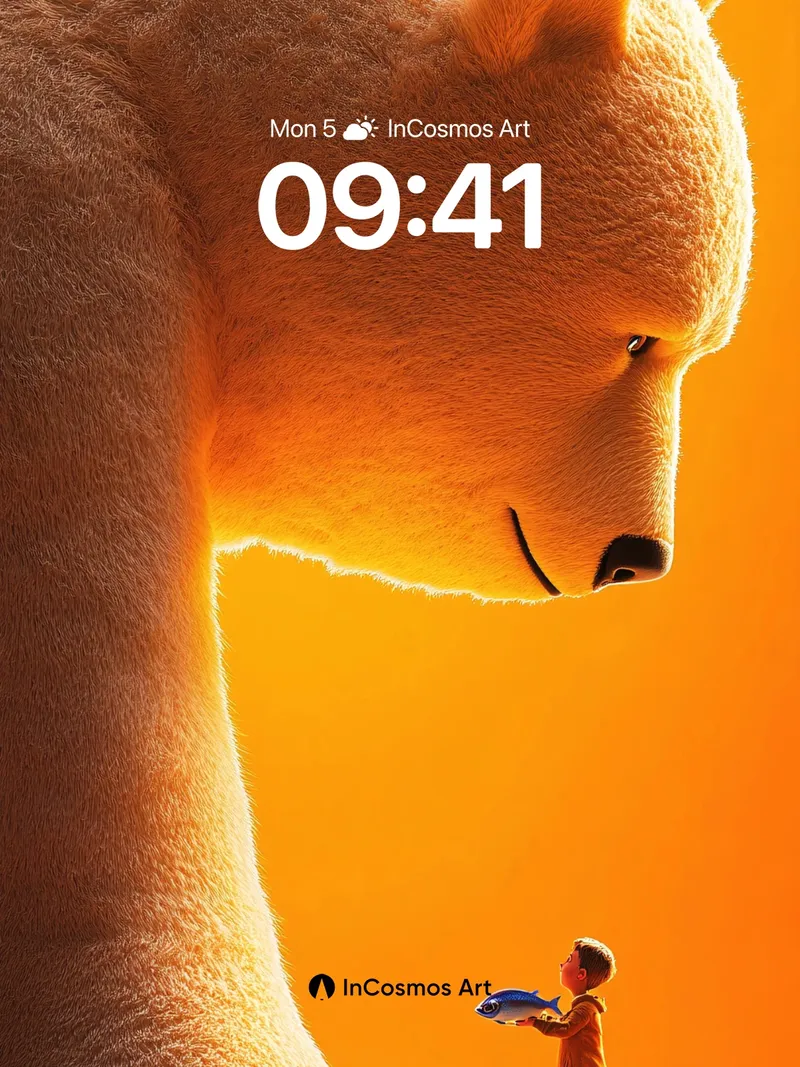
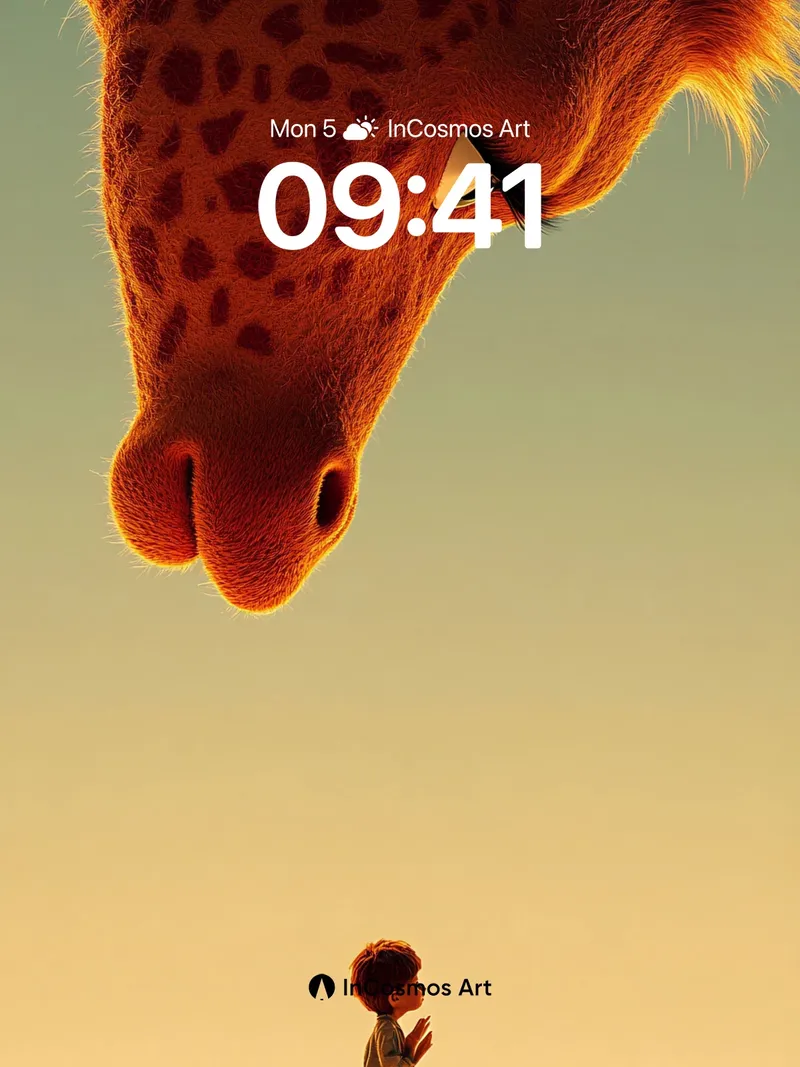
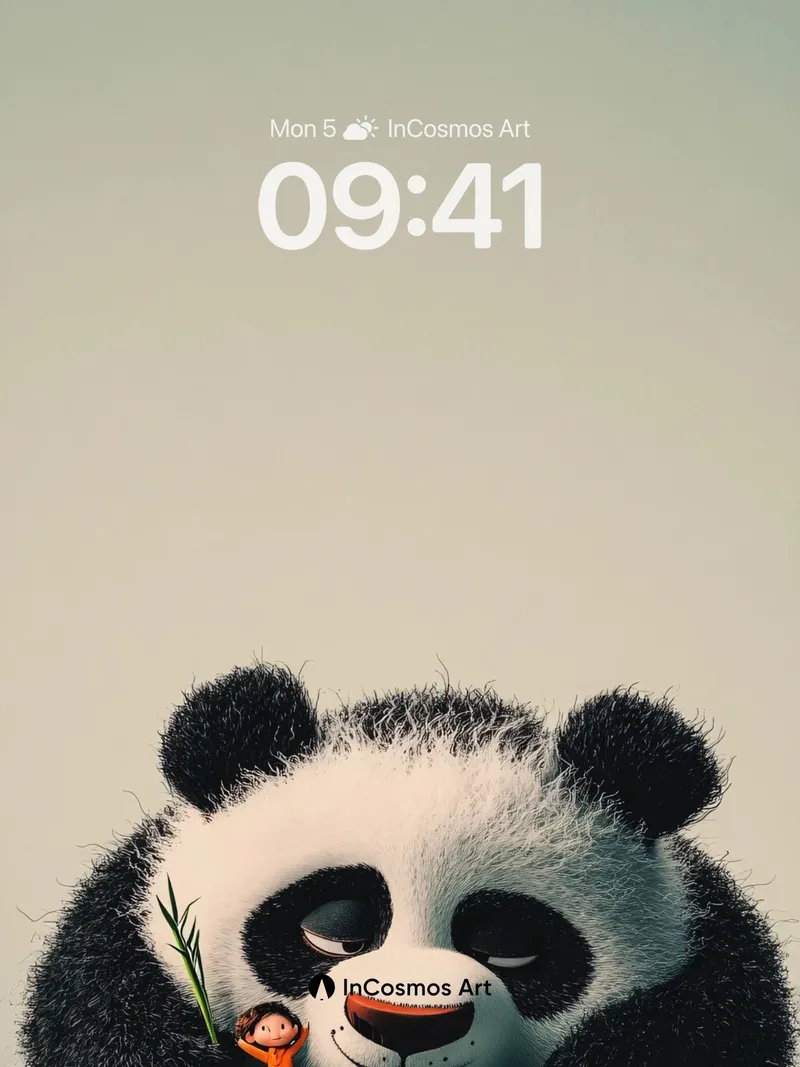
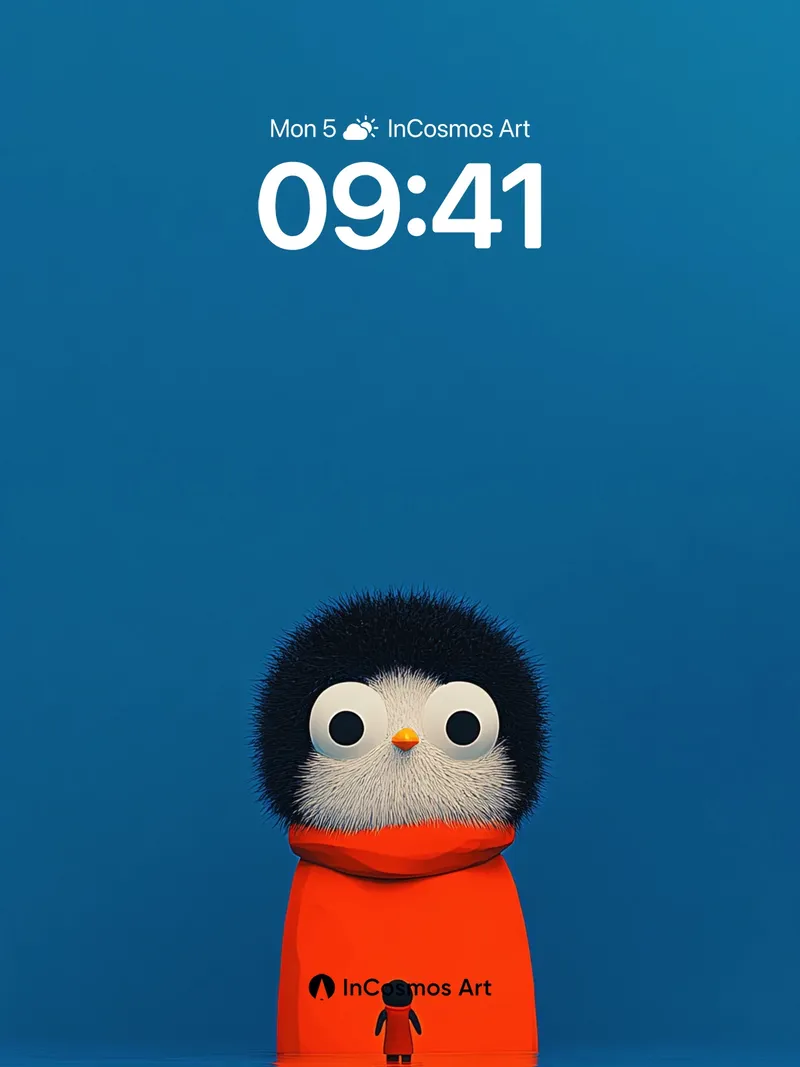
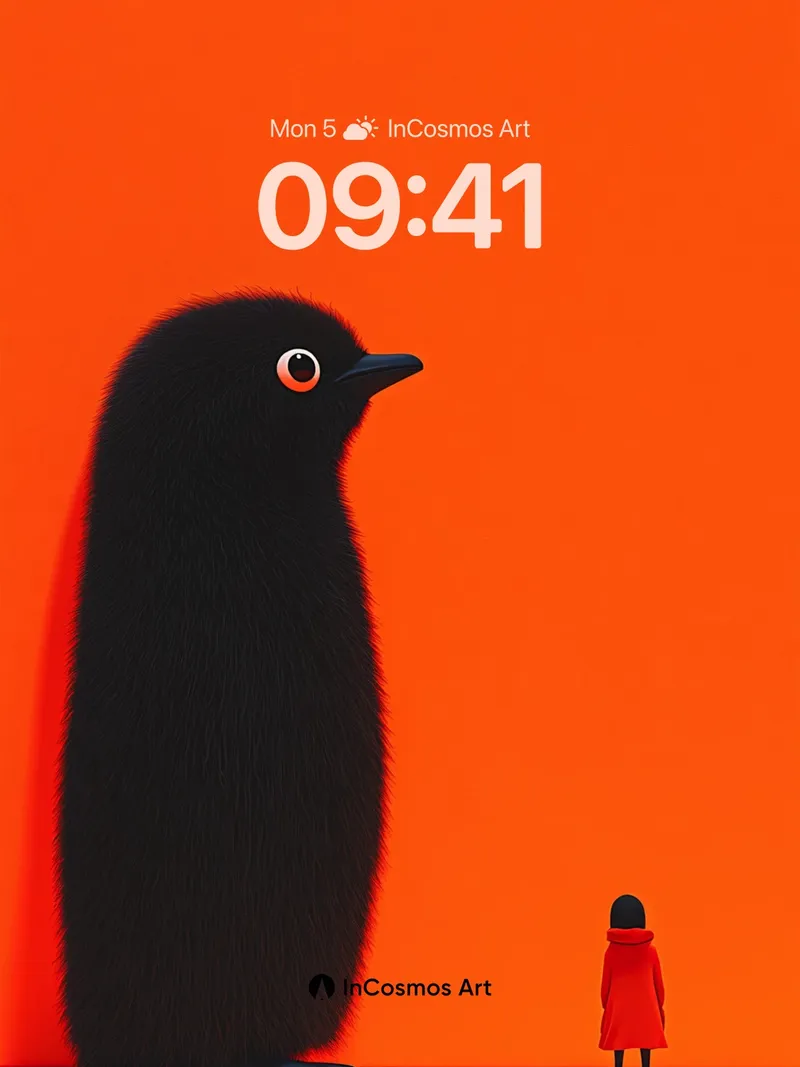
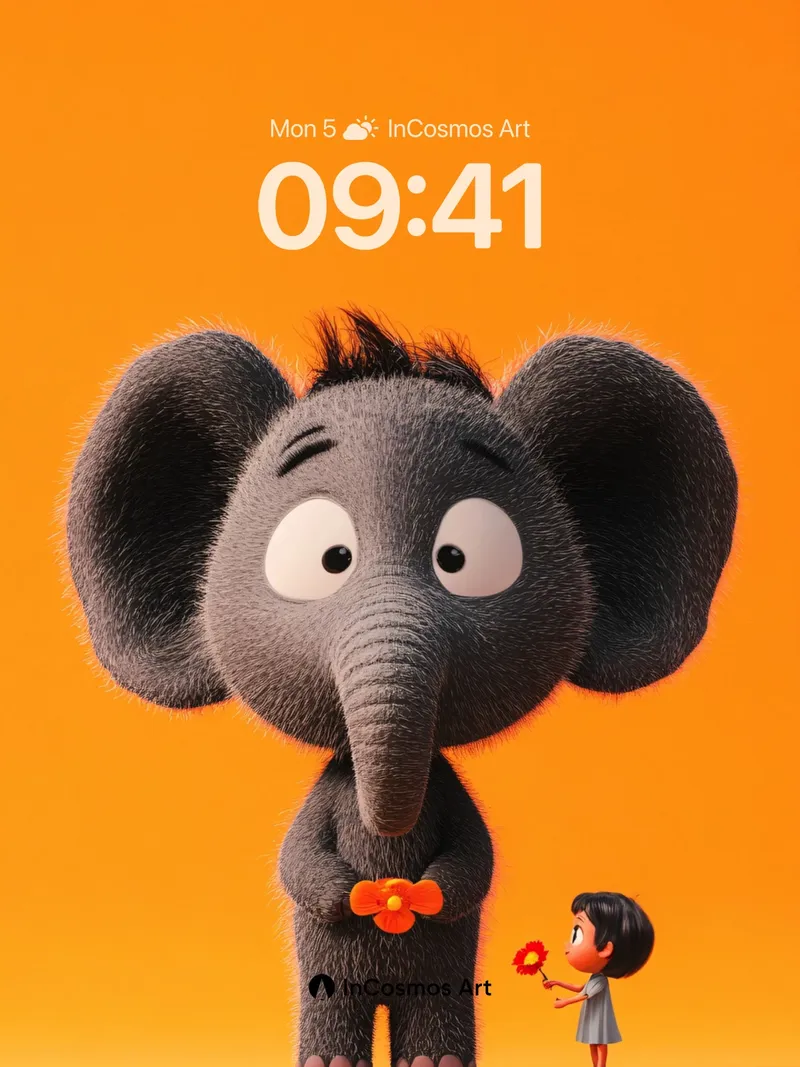
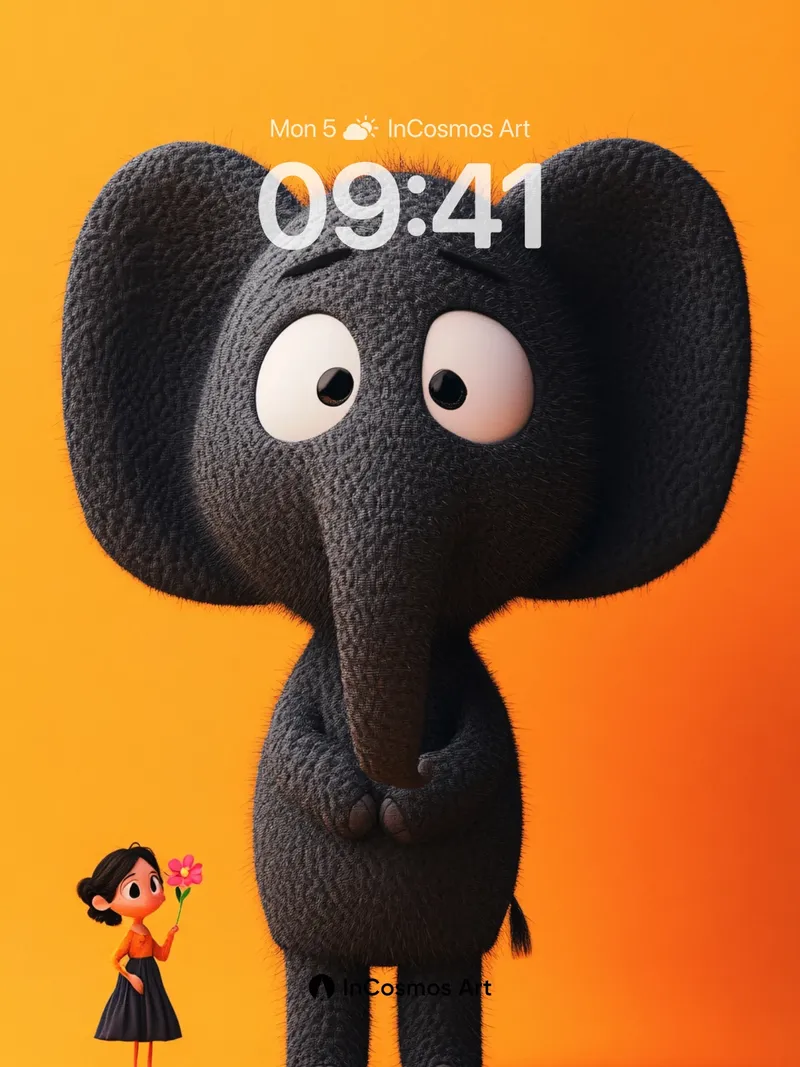
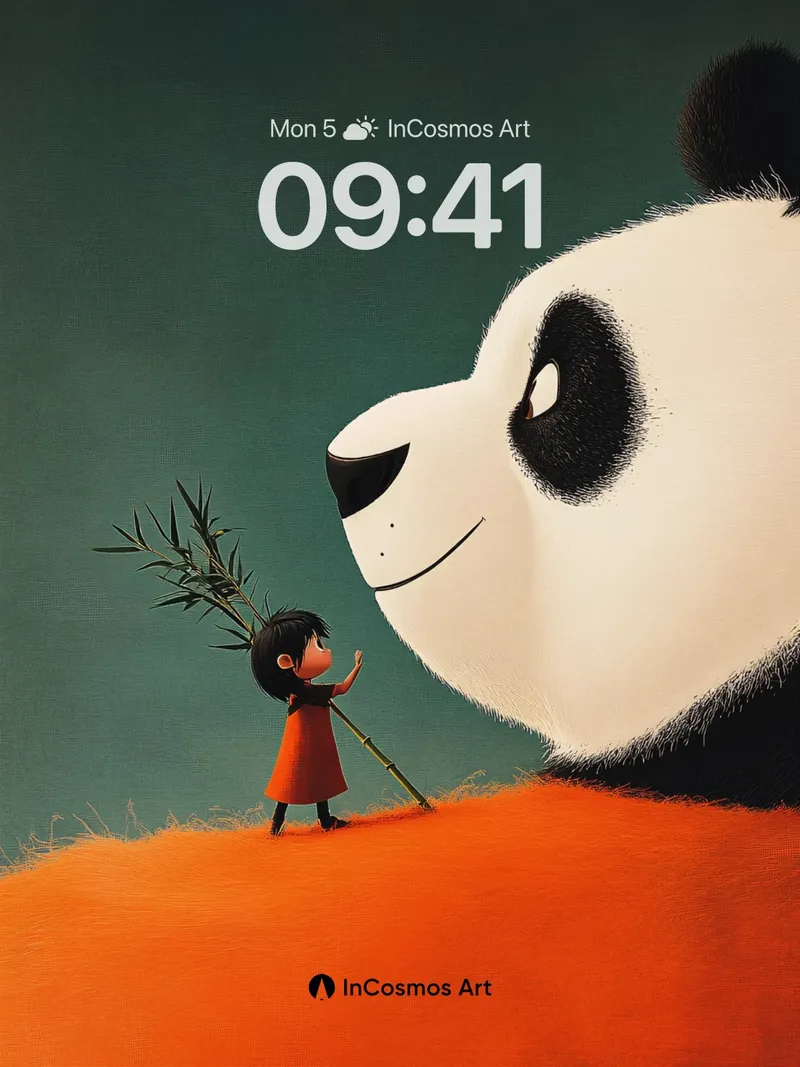
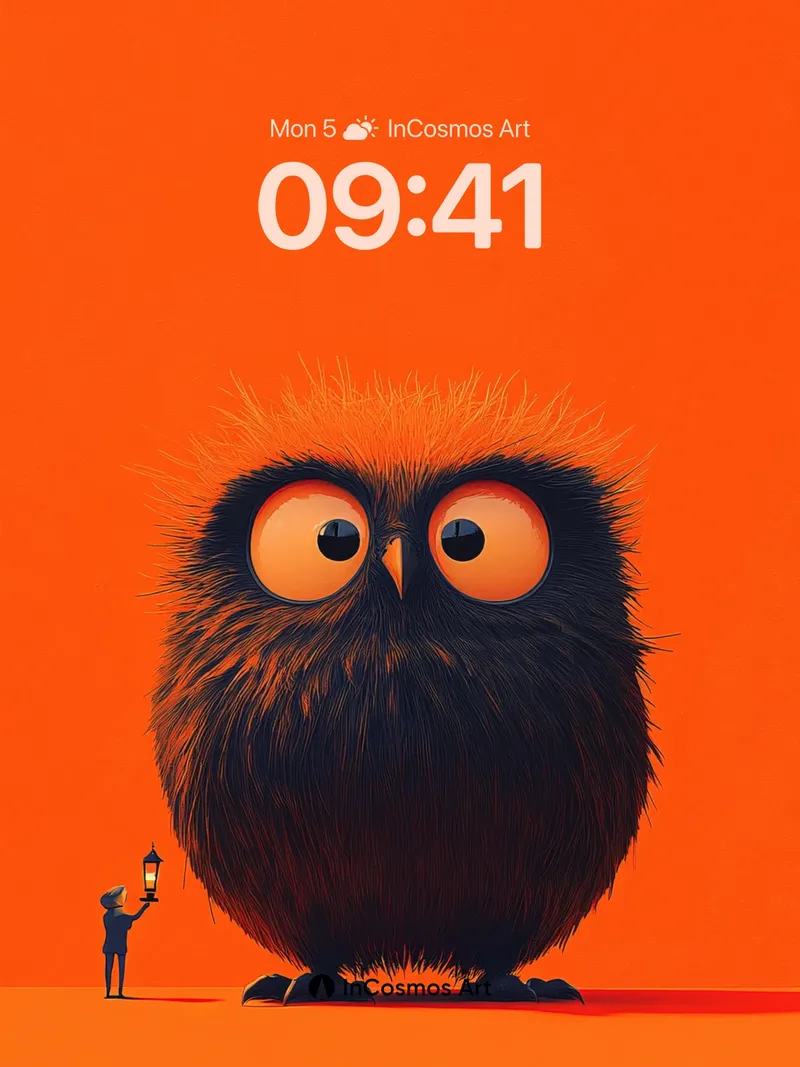
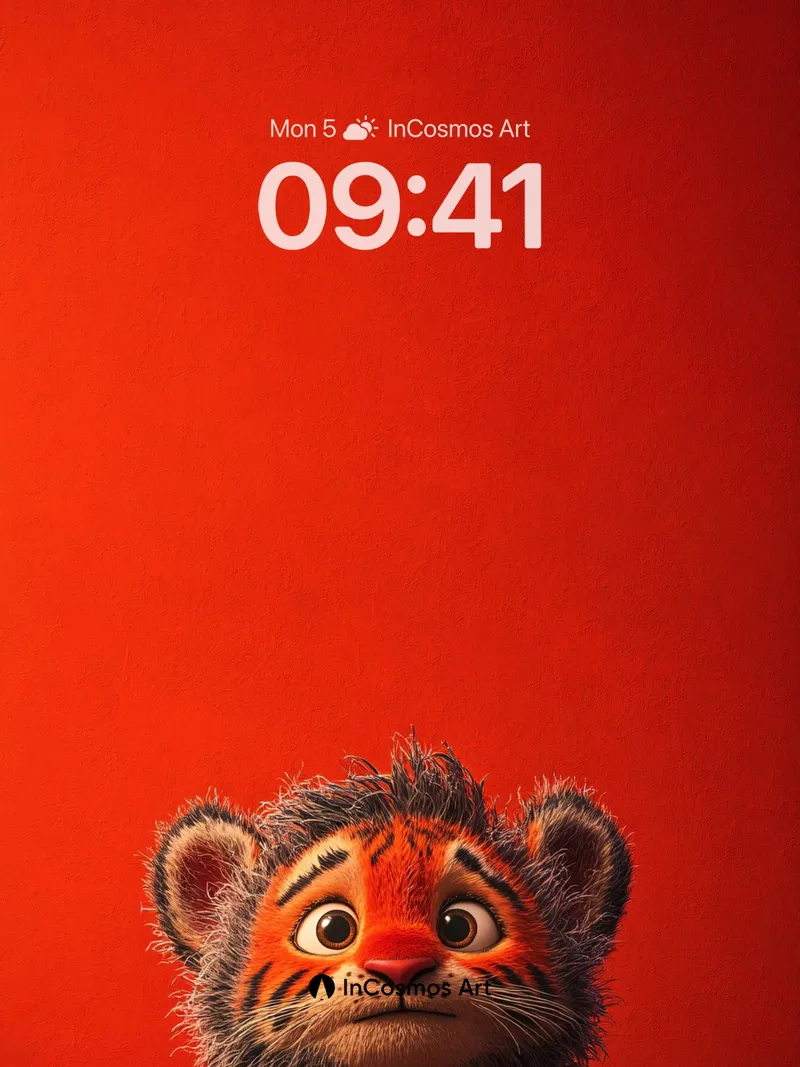
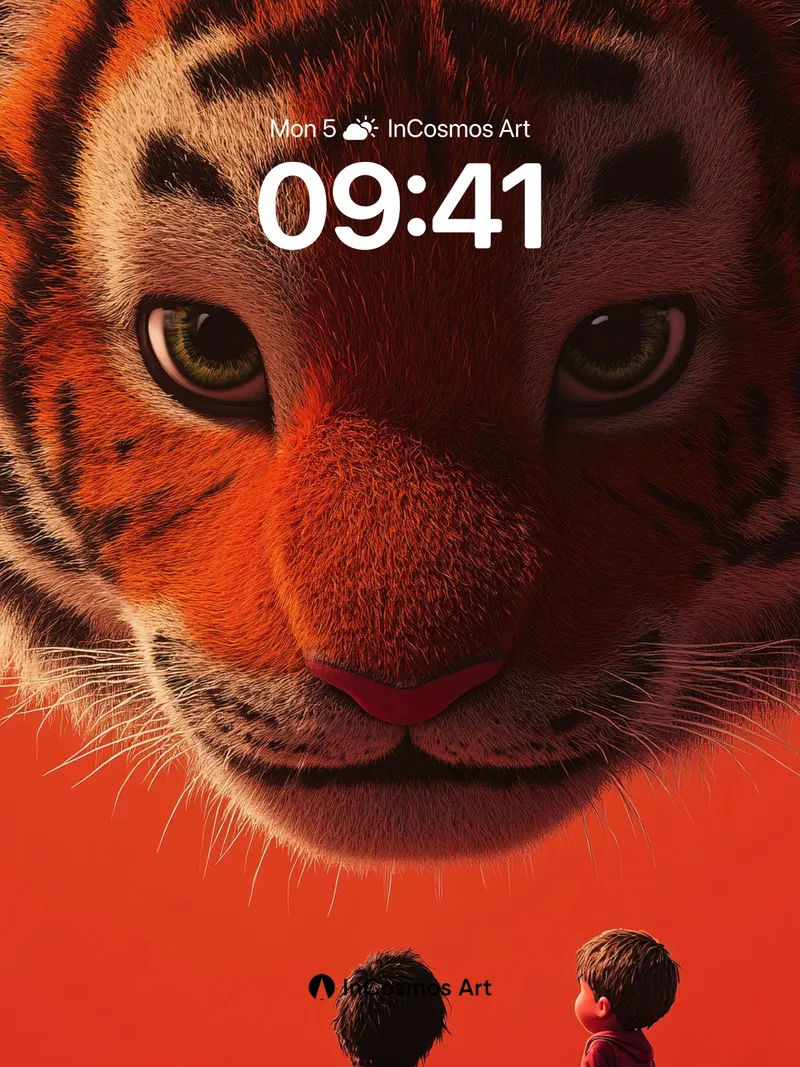
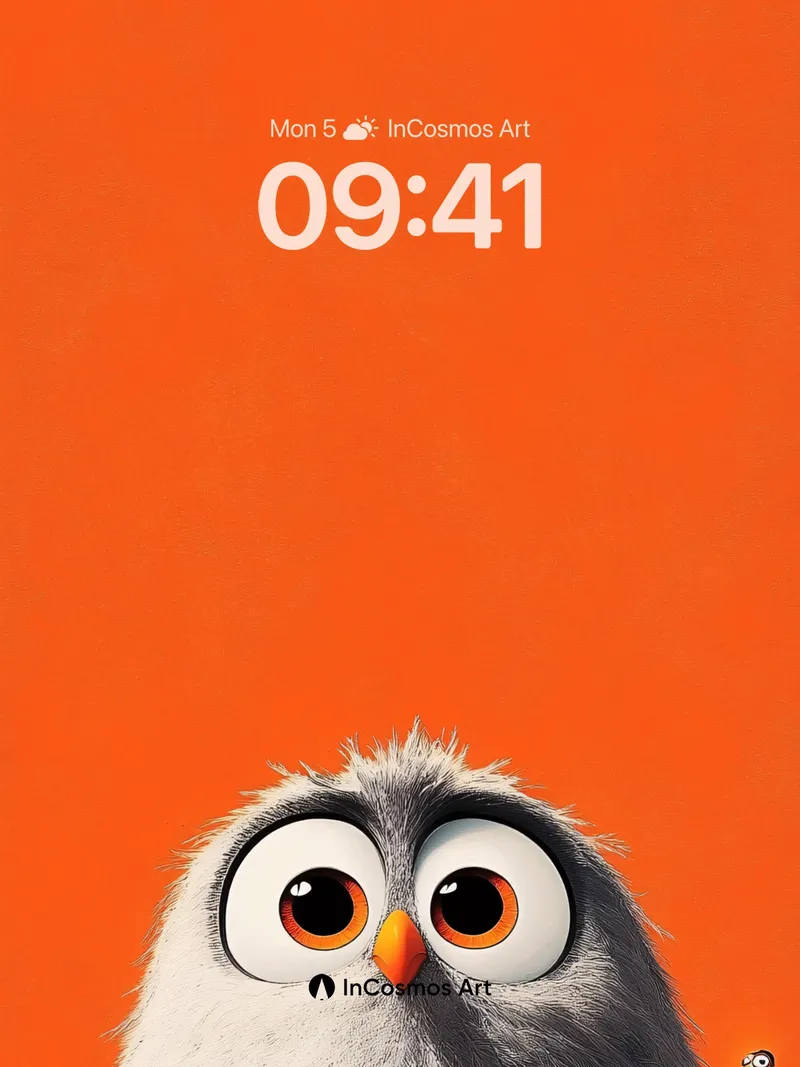
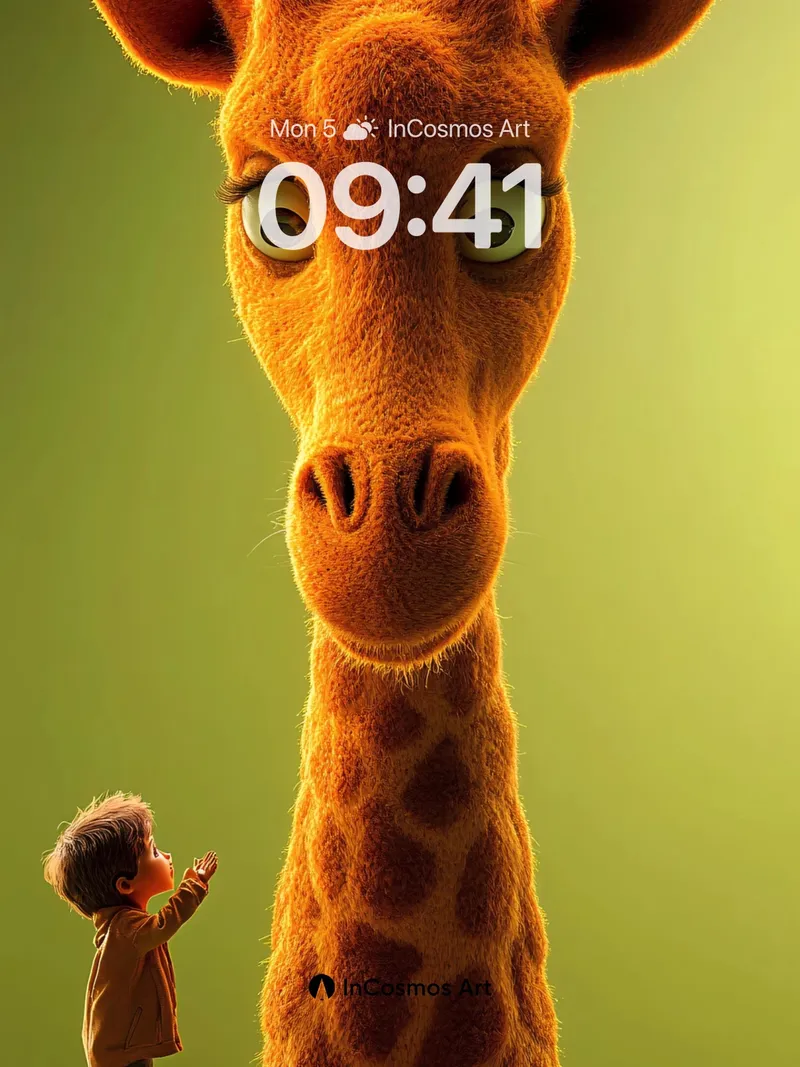
In an endless field of color, tiny human figures stand beside colossal animals, forming a strange equilibrium. These creatures are not natural beings but anthropomorphized entities imbued with human traits. Their eyes hold gentleness, curiosity, and silent contemplation. Though their size defies reason, they face the world with softness, suggesting that true power lies not in scale, but in empathy. Each scene becomes a dialogue of souls, a fable about solitude, companionship, and understanding. The child stands before the giant, holding a flower, a fish, or a lantern—symbols of innocence and hope. This asymmetrical interaction reveals the human psyche's longing for nature and connection. These animals cease to be mere ecological symbols; they become emotional vessels carrying collective desires for safety, protection, and belonging.
Reconstructing Emotional Scale
When proportions are inverted, psychological distance shifts. The child’s smallness against the beast’s vastness creates stark contrast, yet no sense of oppression—only tender attachment. This visual language implies a new emotional metric: relationships built not through dominance, but through gaze and listening. In modern society, individuals often feel isolated. These scenes offer an alternative emotional framework: even without control over surroundings, sincerity and care can provide spiritual shelter.
Animals as Cultural Containers
These animal forms are not arbitrary. Each carries specific cultural resonance. The panda embodies Eastern harmony and reserve, the tiger symbolizes strength and authority, the elephant represents wisdom and memory, while the owl connects to mystery and insight. Placed against minimalist backdrops, stripped of geography and time, their symbolic meanings emerge purely. This is more than design—it is cross-cultural semiotics, transforming ancient totems into modern emotional conduits.
Dialogue Between Innocence and Existence
The child’s posture remains consistently active. They offer flowers, carry lamps, present food—actions free of fear, full of trust. This innocence becomes the deepest link between them and the beasts. It challenges traditional narratives of 'weak vs strong,' proposing an equal exchange: even under absolute disparity, authenticity can open doors. This may be what modern hearts truly seek—a direct conversation unburdened by hierarchy or pretense.
Resonance of Color and Emotion
Monochromatic backgrounds are not decoration but emotional amplifiers. Blue evokes calm and depth, orange generates warmth and alertness, red conveys passion and tension. Each hue resonates with its corresponding creature and context, intensifying inner feeling. Here, color transcends visual function—it externalizes mental states, guiding viewers into distinct emotional realms.