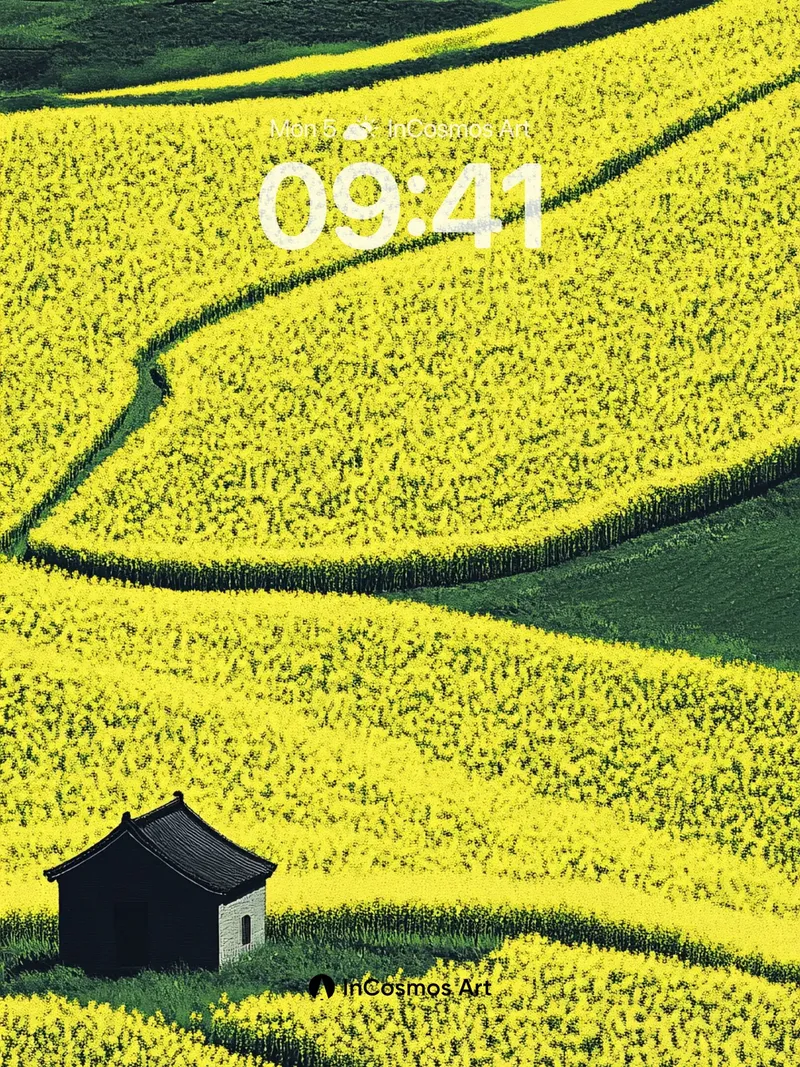
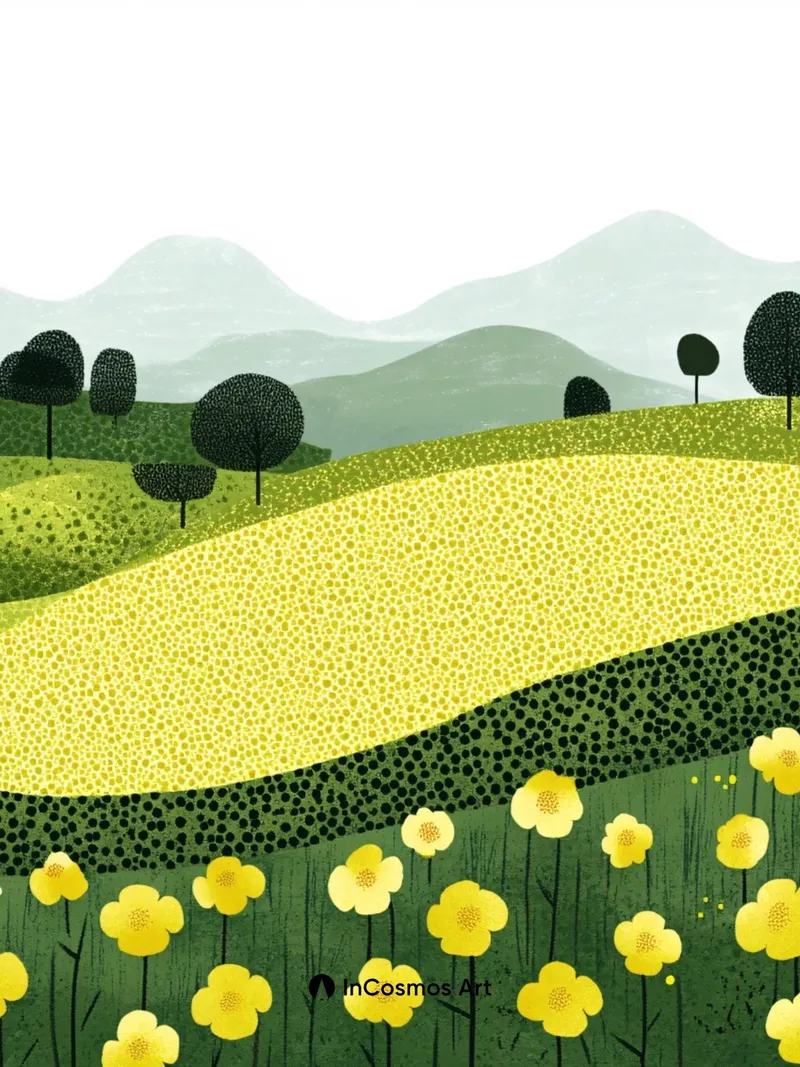
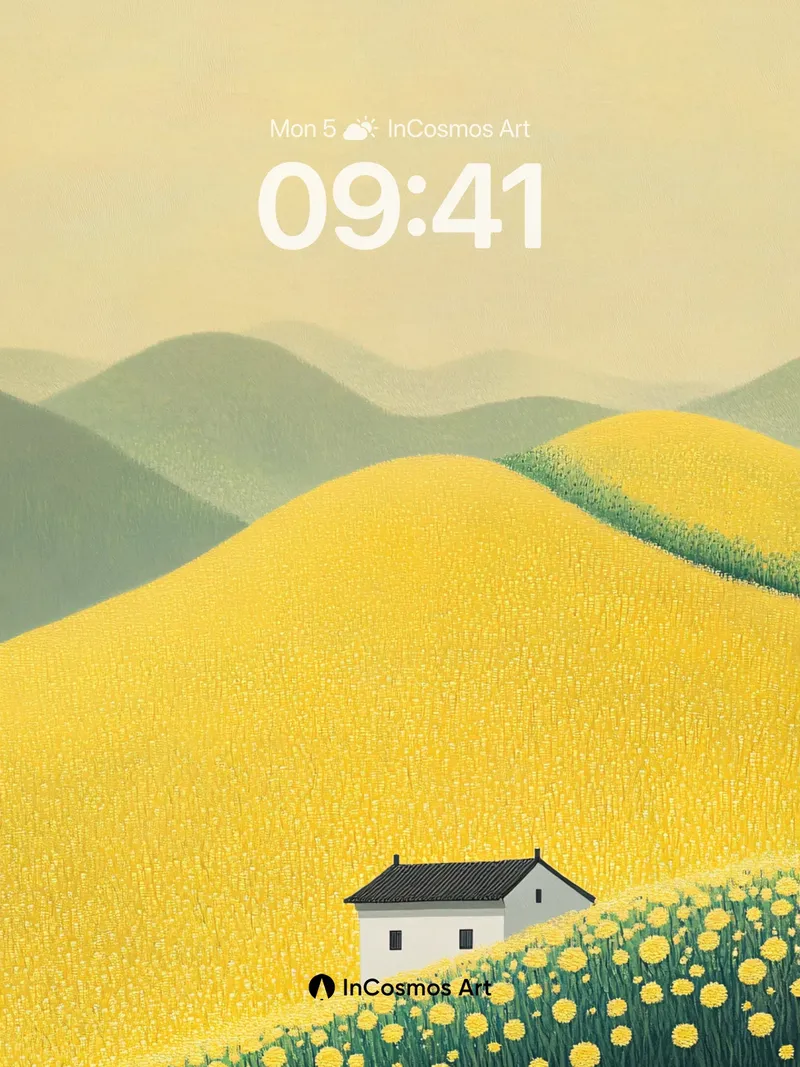
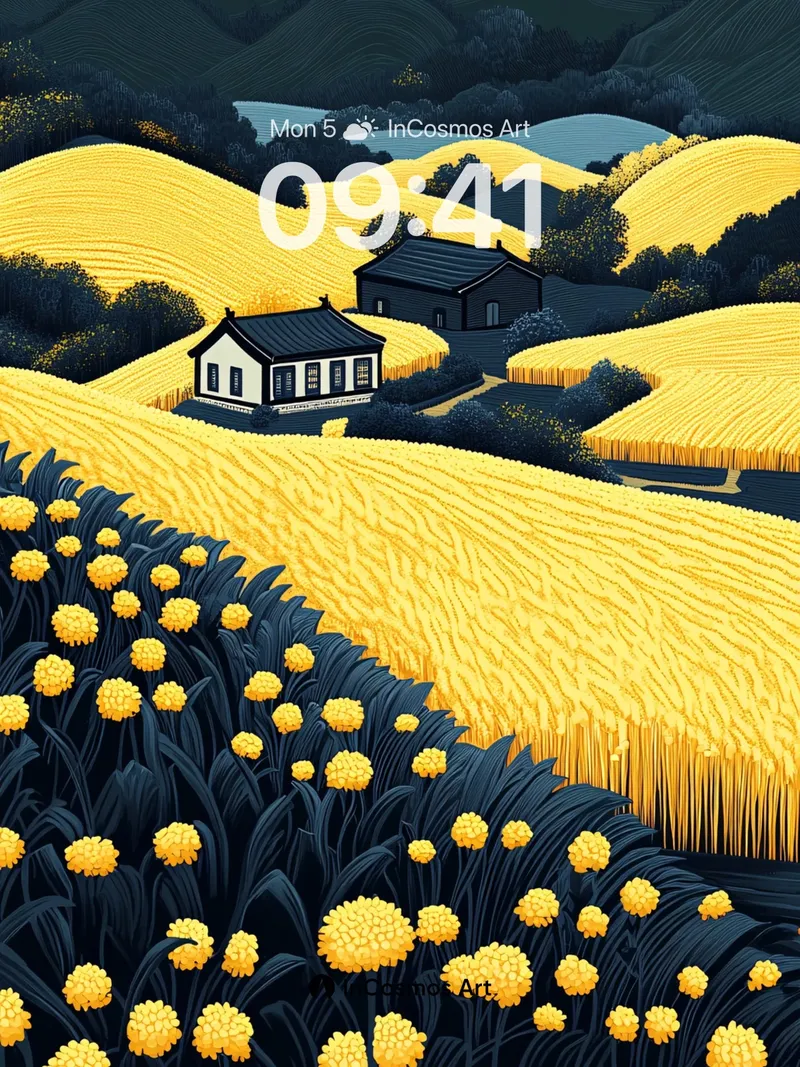
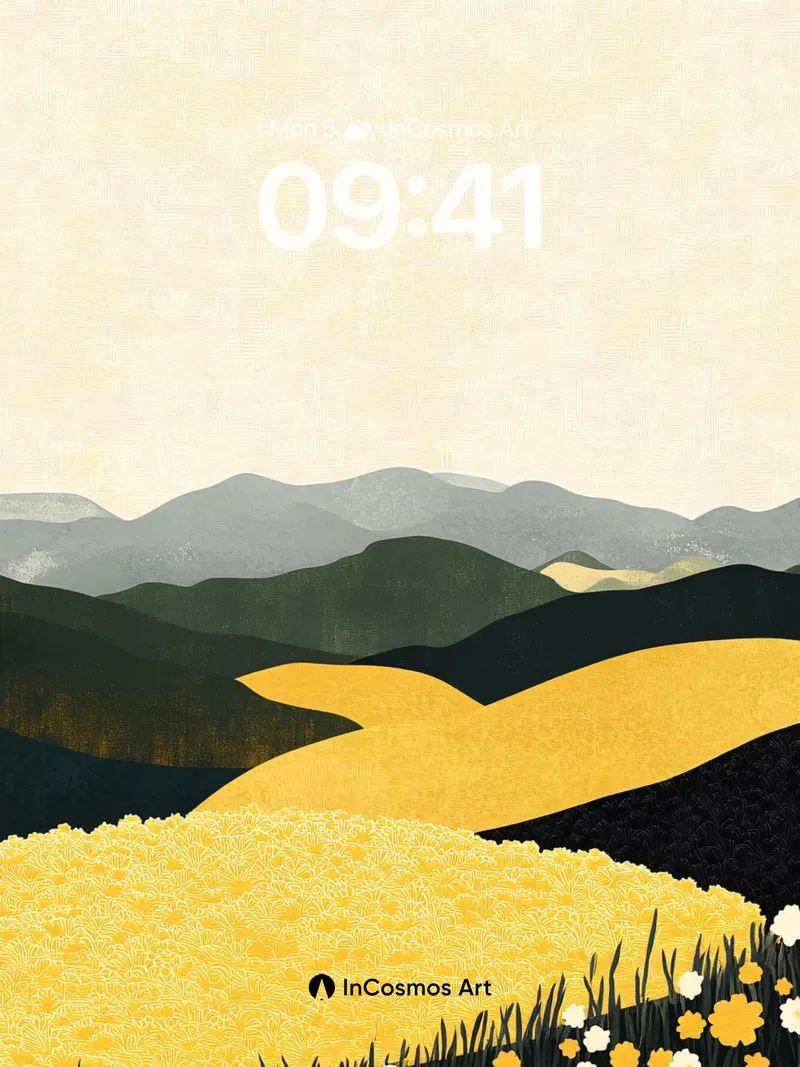
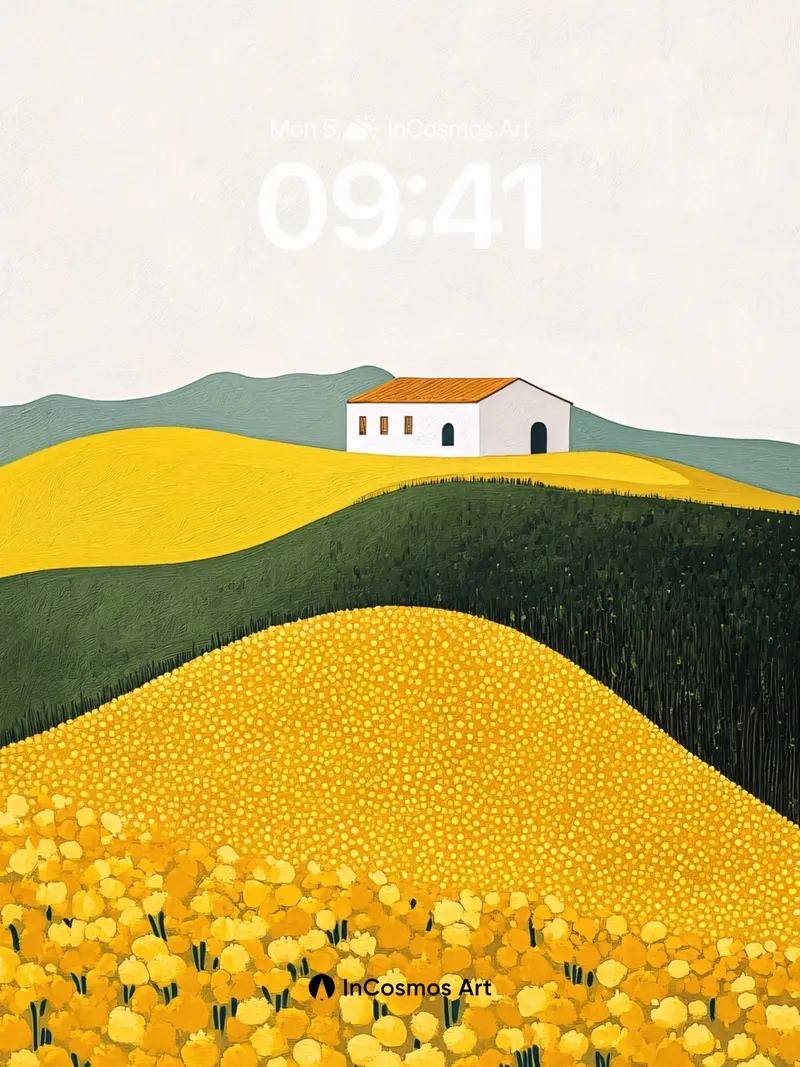
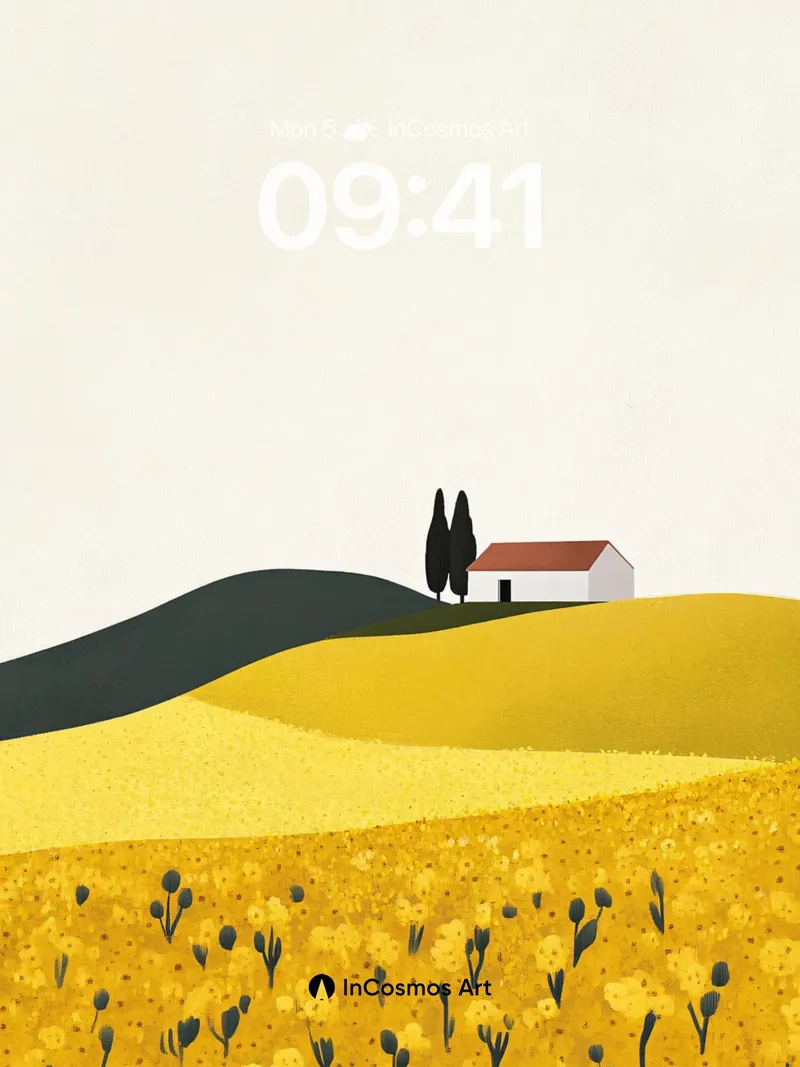
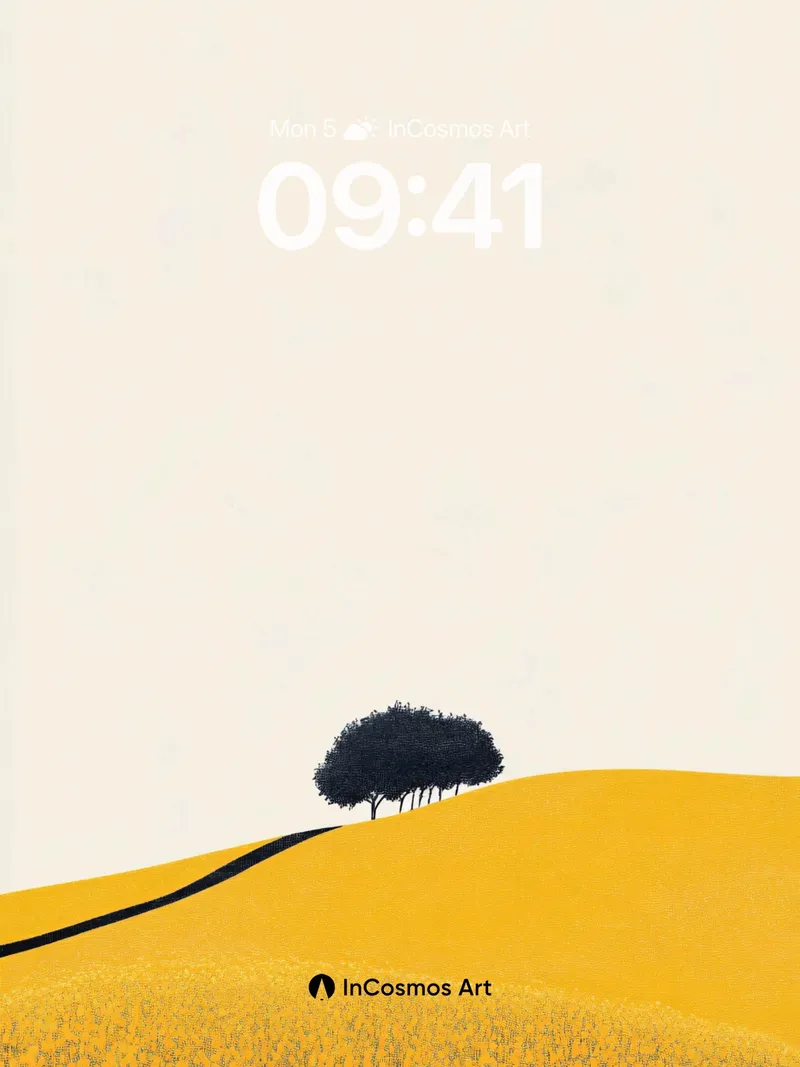
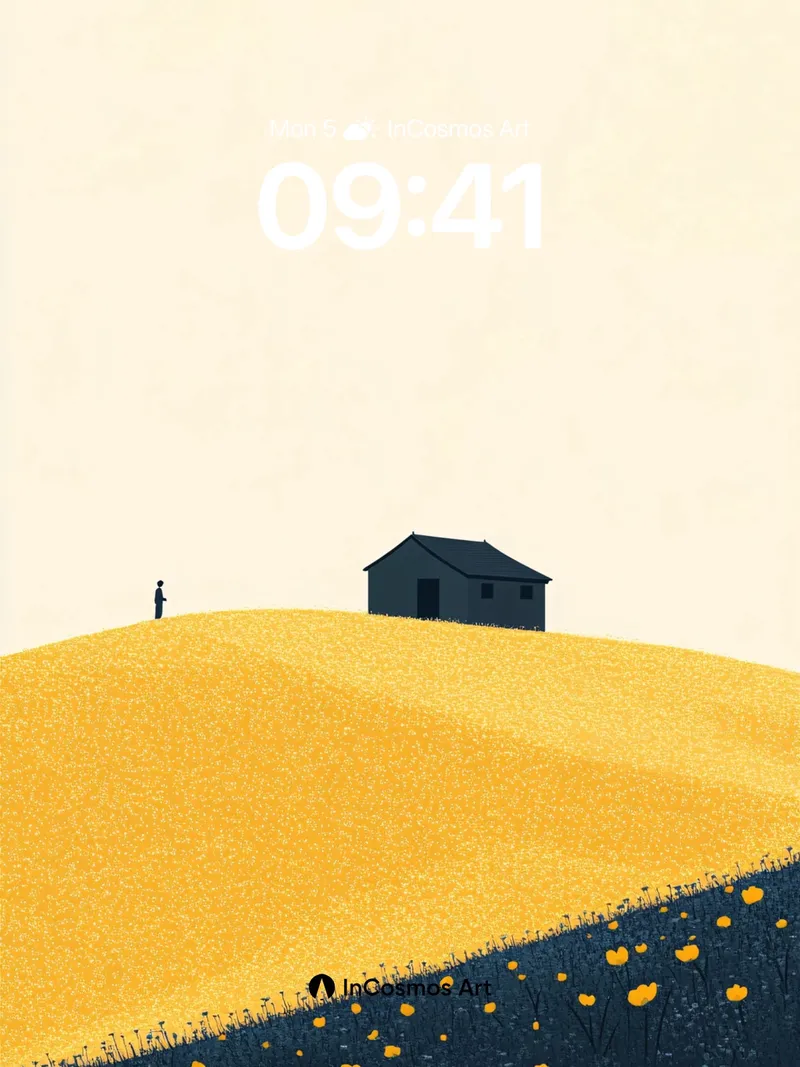
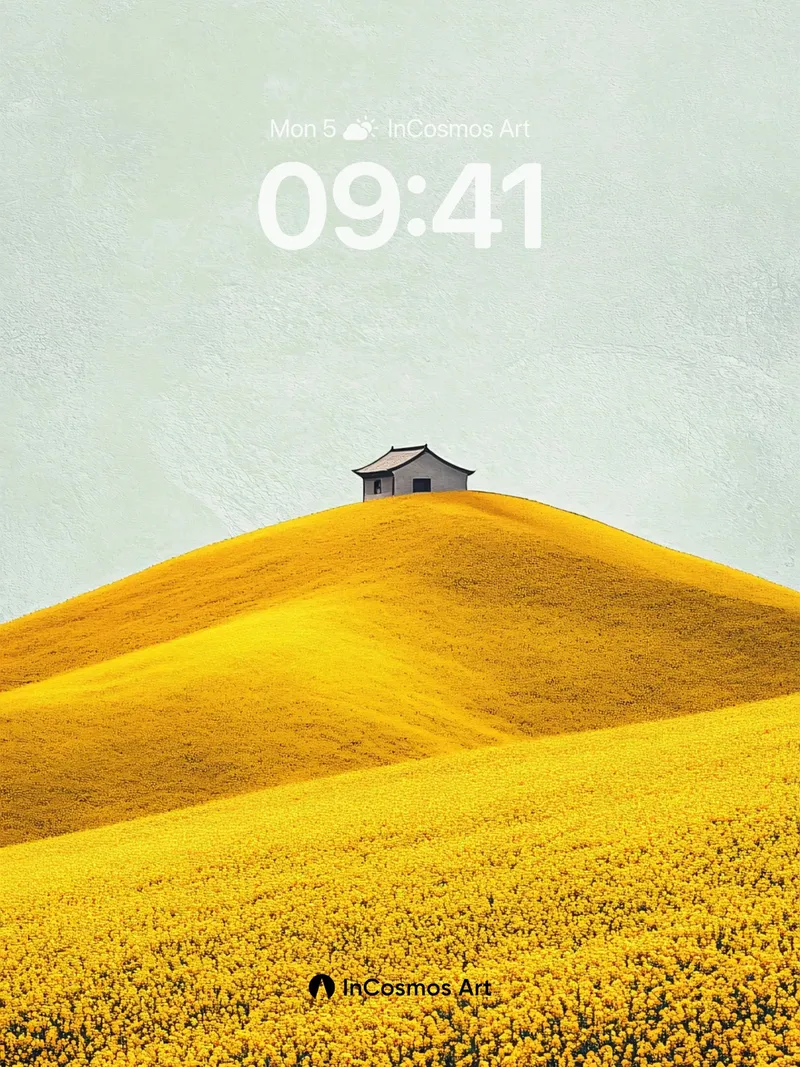
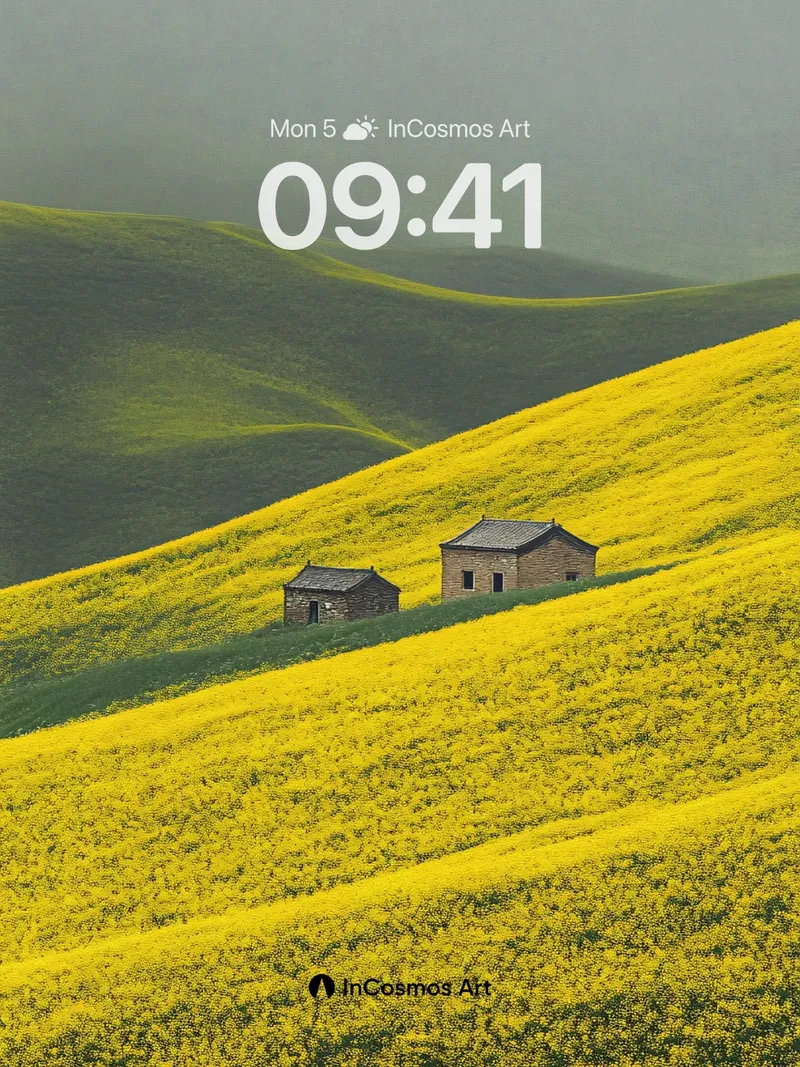
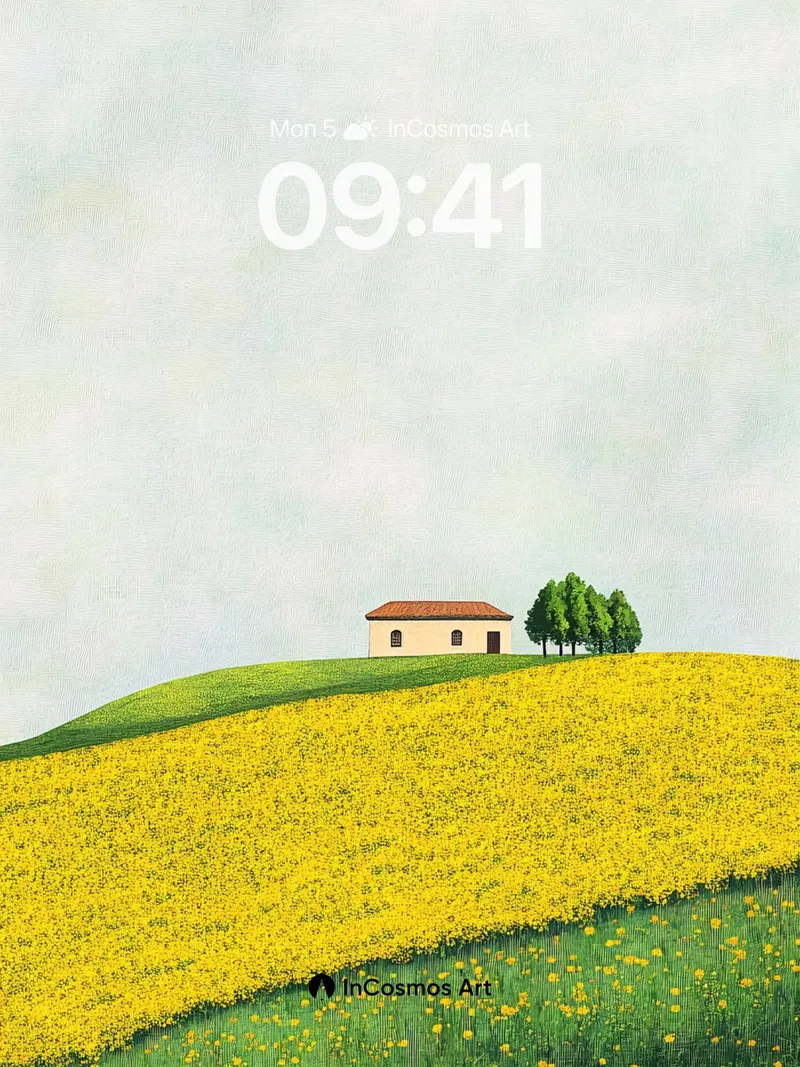
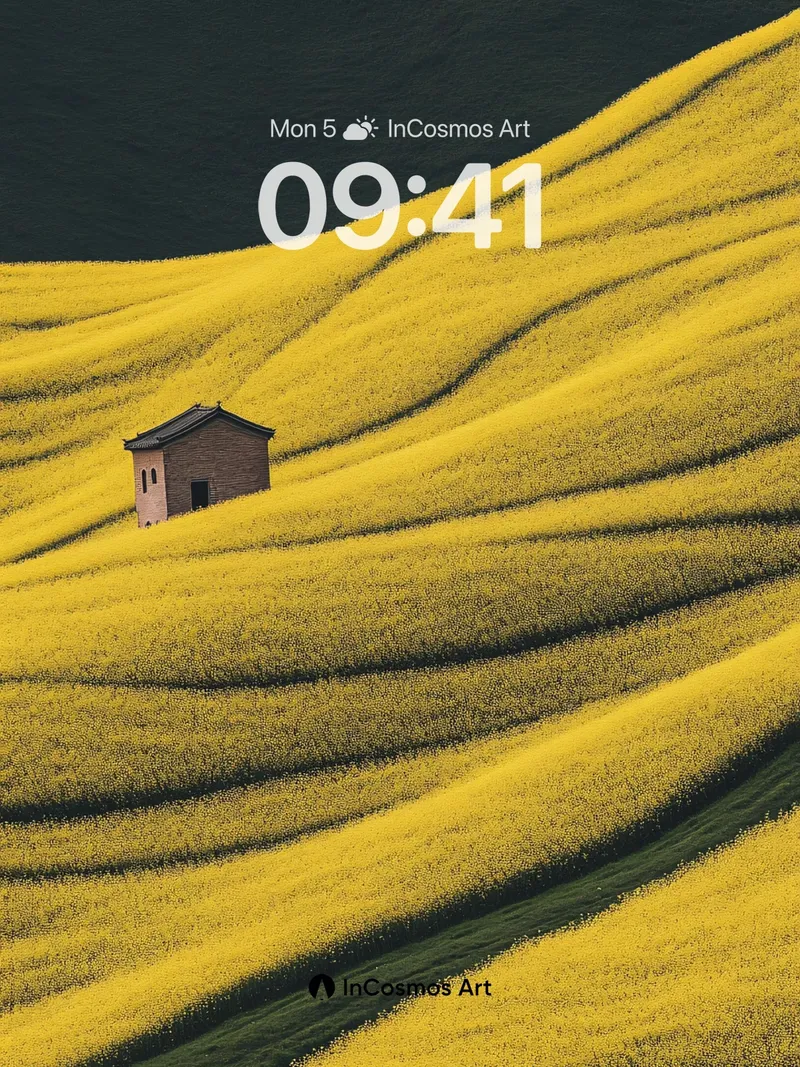
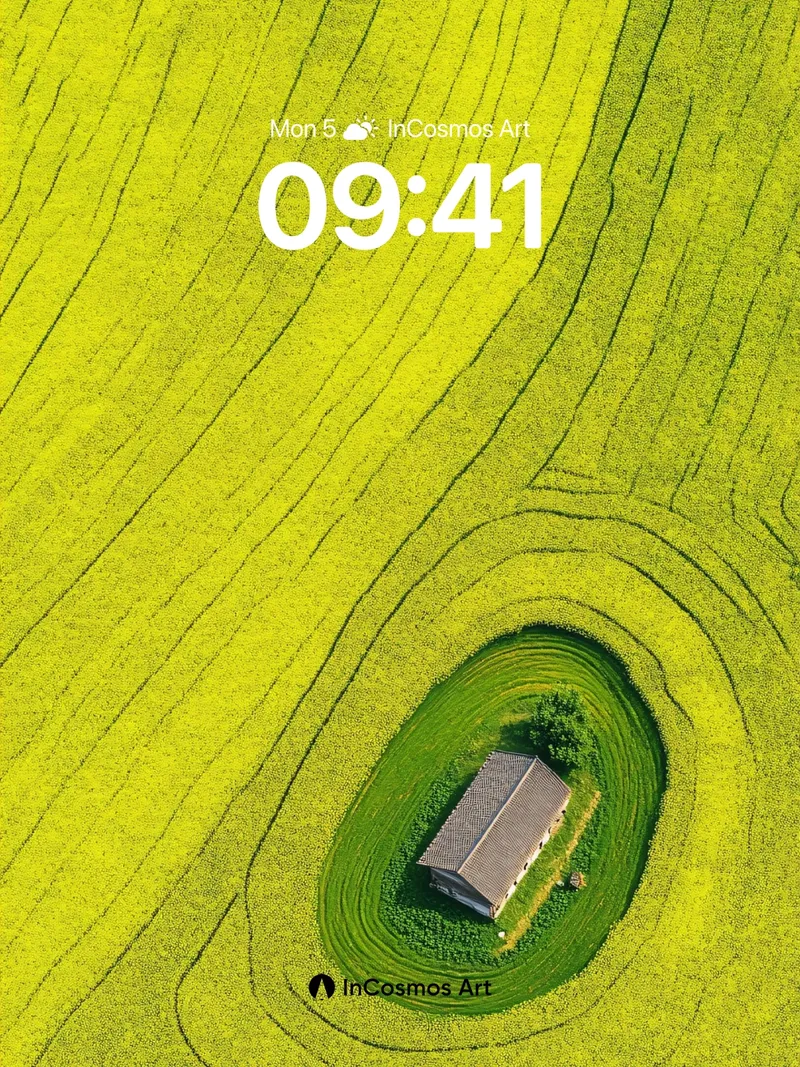
Across vast undulating terrain, golden crops stretch like waves, forming an almost ritualistic order. Houses emerge in minimal forms, not as imposed structures but as natural growths within the landscape. Their presence is not for noise, but to silently respond to the breath of the earth. These spaces are not isolated dwellings; they are vessels of cultural memory—fragments of agrarian civilization where humans coexist with nature. The lines of rooftops, the muted tones of walls, contrast with surrounding bright yellows and greens, creating visual tension that mirrors human humility before natural grandeur. Every winding path, every enclosed green patch, suggests gentle human intervention rather than domination.
Rhythm of the Fields
Crop patterns unfold in rhythmic curves, resembling the earth's veins. This geometric beauty arises from repetitive agricultural labor, yet at a macro scale it transforms into abstract art. Field boundaries define and dissolve simultaneously, merging private life with public scenery. This is not merely evidence of production, but a lived philosophy: order emerges through harmony, not imposition.
Solitary Dwelling
Though small, these houses embody complete household logic and survival systems. Removed from urban centers, they remain connected. In such environments, time slows, daily acts gain deeper meaning. Cooking smoke, farming, watching—the routines become rituals. The buildings themselves become emotional containers, their silence more powerful than words.
Scale of Nature
When the view expands to mountains and mist, the houses appear insignificant. Yet this very smallness highlights human respect for environment. No signs of overdevelopment exist—only subtle accents. The land is not tamed, but understood, accompanied. This relationship transcends utilitarianism, entering ecological ethics.
Continuation of Cultural Symbols
Traditional roof styles, material choices, spatial arrangements all reveal regional cultural DNA. These elements persist in modern contexts, indicating rural memory has not vanished—it merely evolves. They form part of collective unconscious, reminding people to draw wisdom from nature.
Emotional Silence
Few figures appear in the scenes, yet human presence permeates everything. Vast fields, empty trails, still homes—all cultivate a sense of 'traceable solitude.' This is not desolation, but fullness in quietude. It invites viewers into a slow world, redefining the essence of existence.