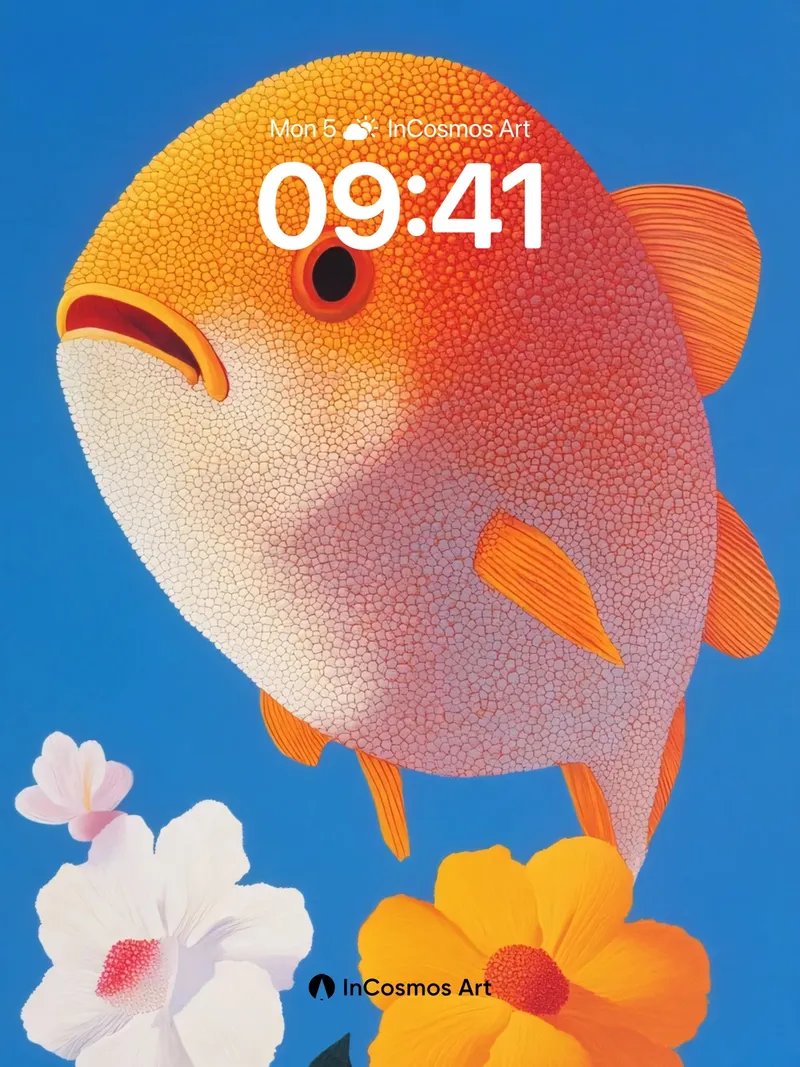
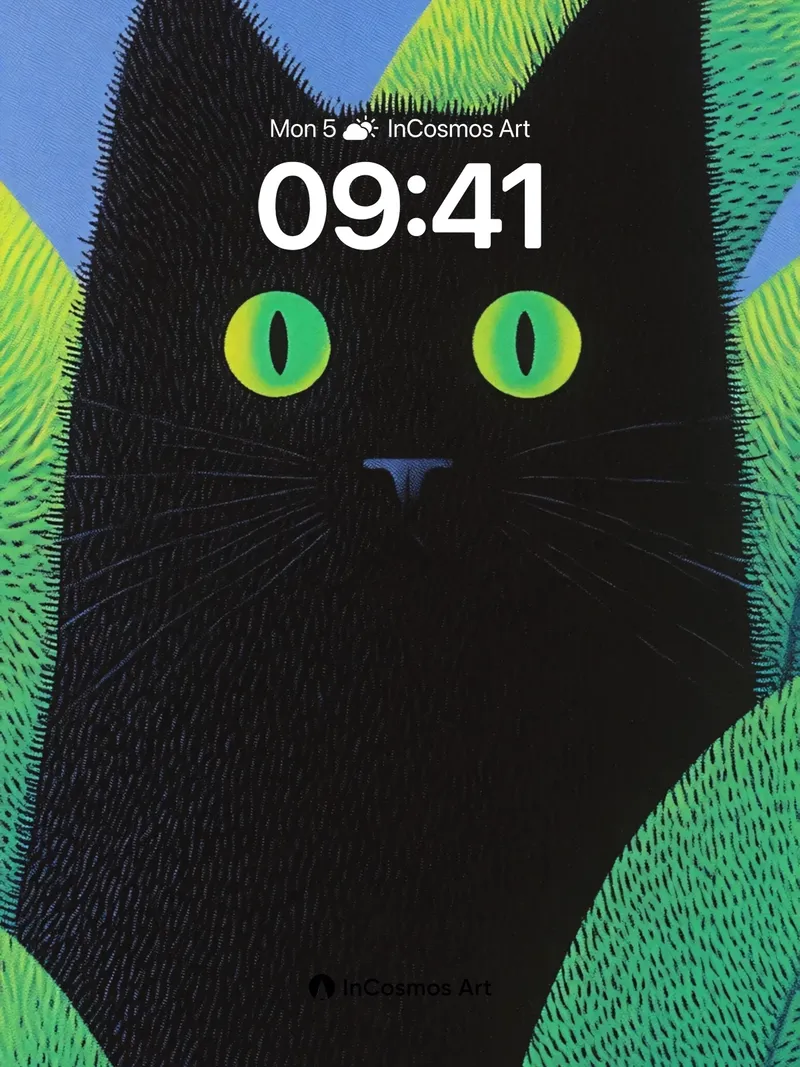
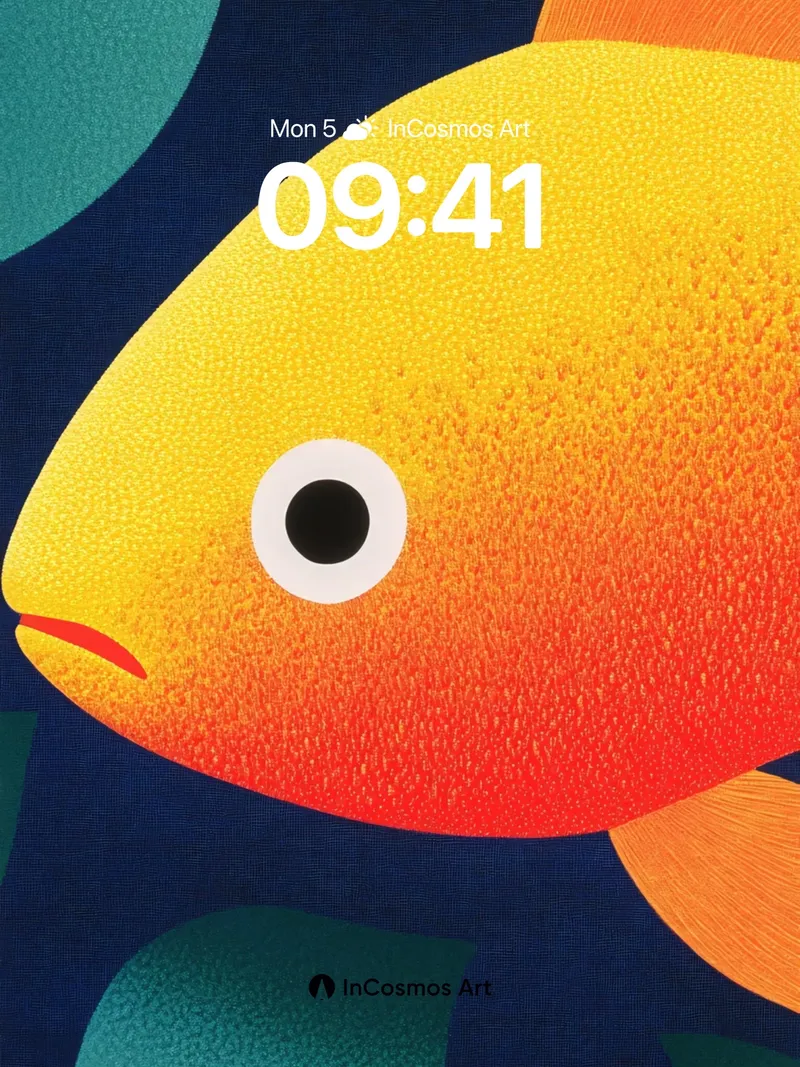
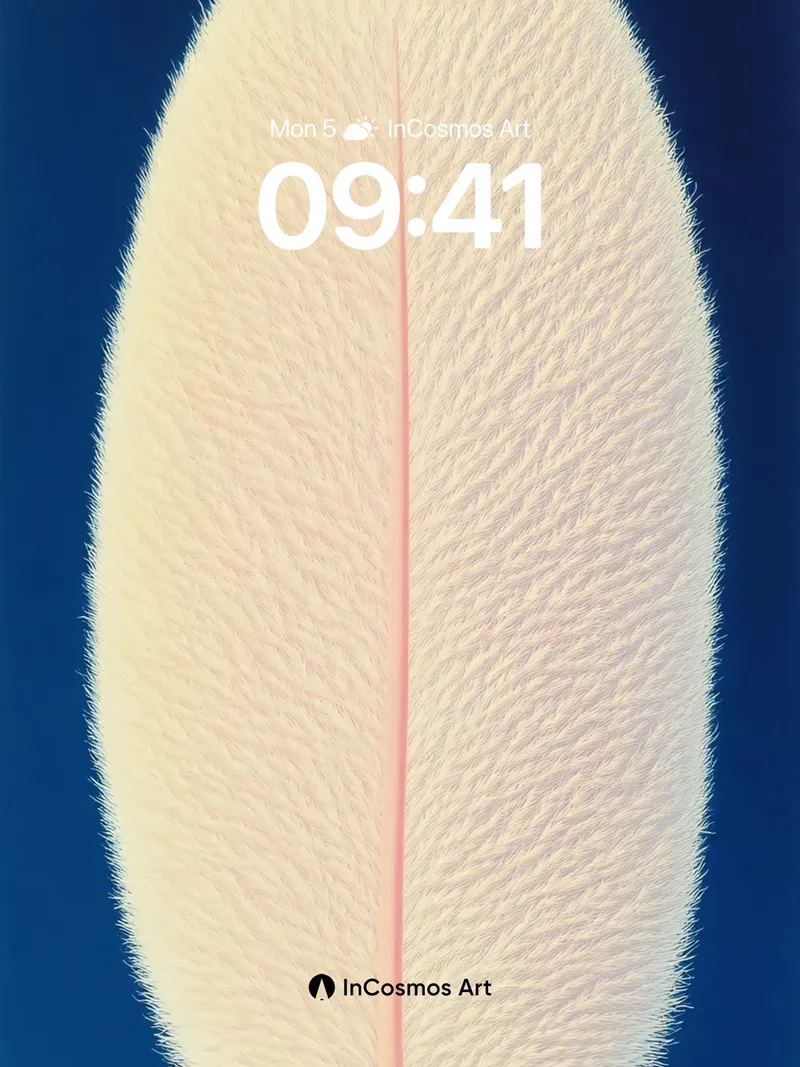
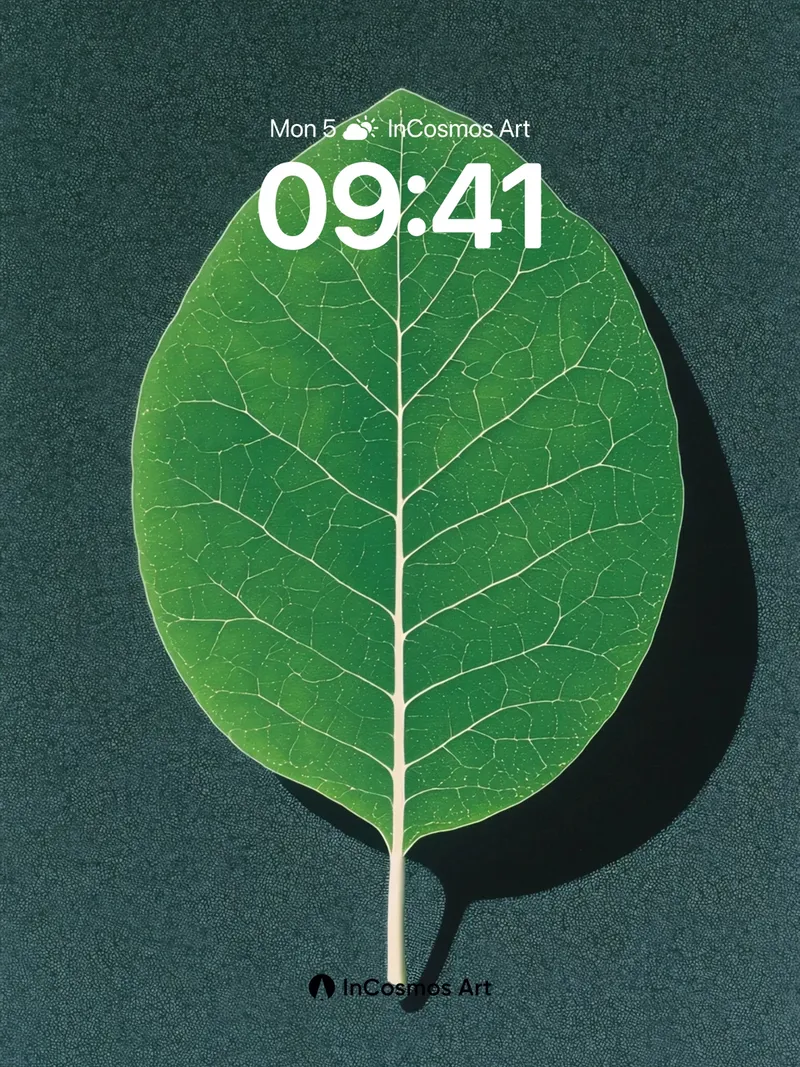
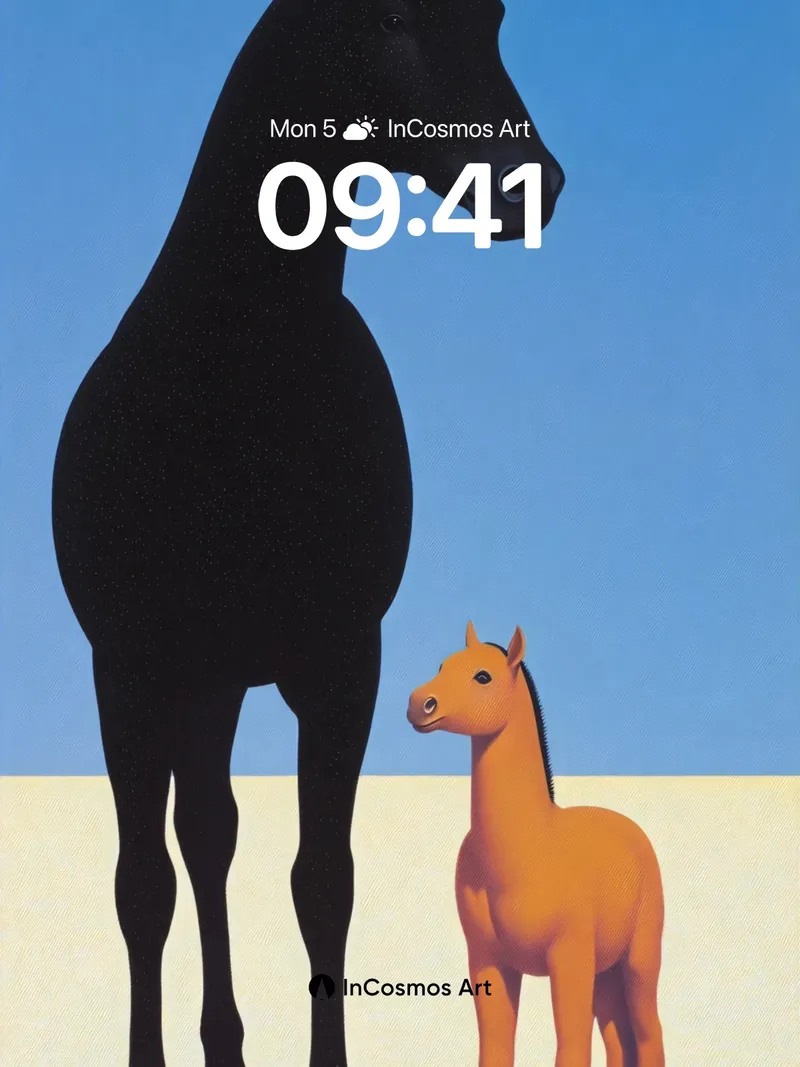
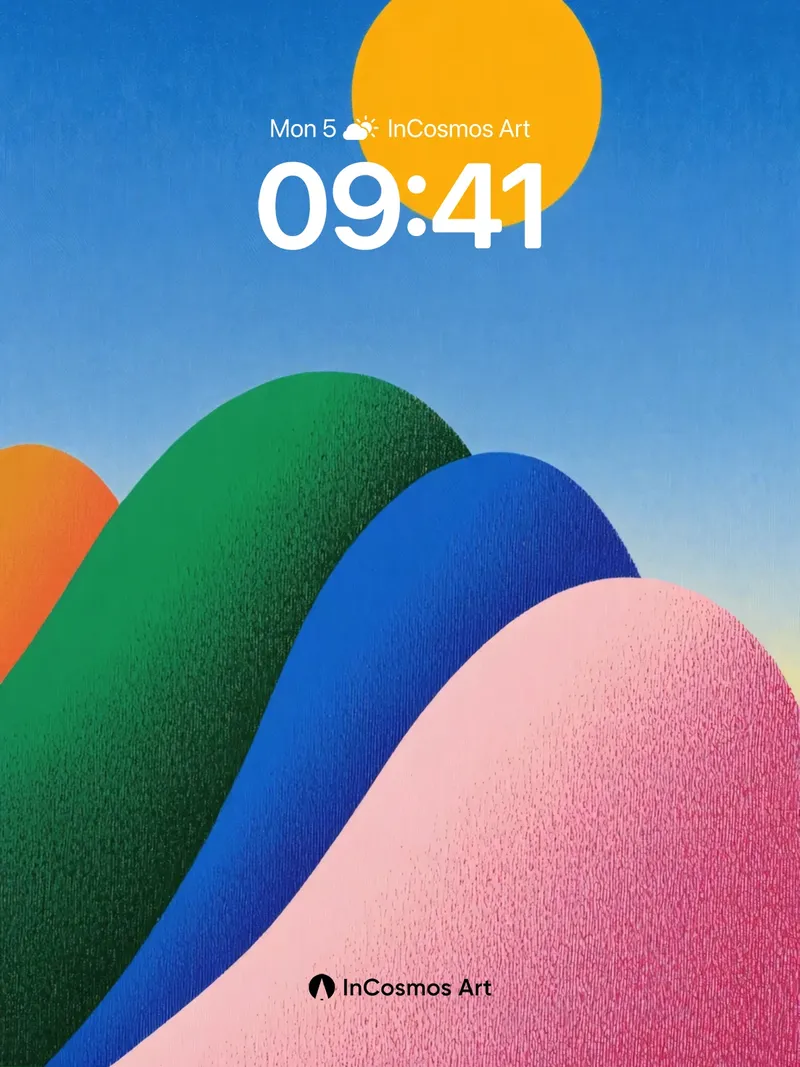
From a microscopic perspective, all things reveal a completely different order. When the gaze approaches infinitely, familiar objects strip away their contours and revert to the accumulation of countless fine particles. This visual experience is not intended to blur reality, but to reveal a more essential mode of existence: life and still life share the same construction logic in extreme detail. From the scales of a goldfish to the fur of a black cat, from the texture of petals to the flickering of candlelight, dotted brushstrokes are not just a painting technique, but more like a philosophy of observing the world—the world is composed of countless tiny moments and entities, closely arranged to support macroscopic perception.
Granular Narrative of Biological Textures
When the scales of a goldfish are magnified, color is no longer a smooth transition, but a precise interlocking of orange and yellow particles. This treatment dissolves the boundary between the organic and the inorganic. The fur of a black cat, against a deep blue background, is woven from countless short black lines; each line seems like an independent individual, yet together they constitute a soft texture. This granular narrative technique allows the viewer to feel a tactile synesthesia in the gaze. The fluffiness of feathers, the veins of leaves, all gain a certain material weight in this dense arrangement. Life is no longer an abstract concept, but a countable, concrete collection of matter.
Minimalist Dialogue of Still Life and Light
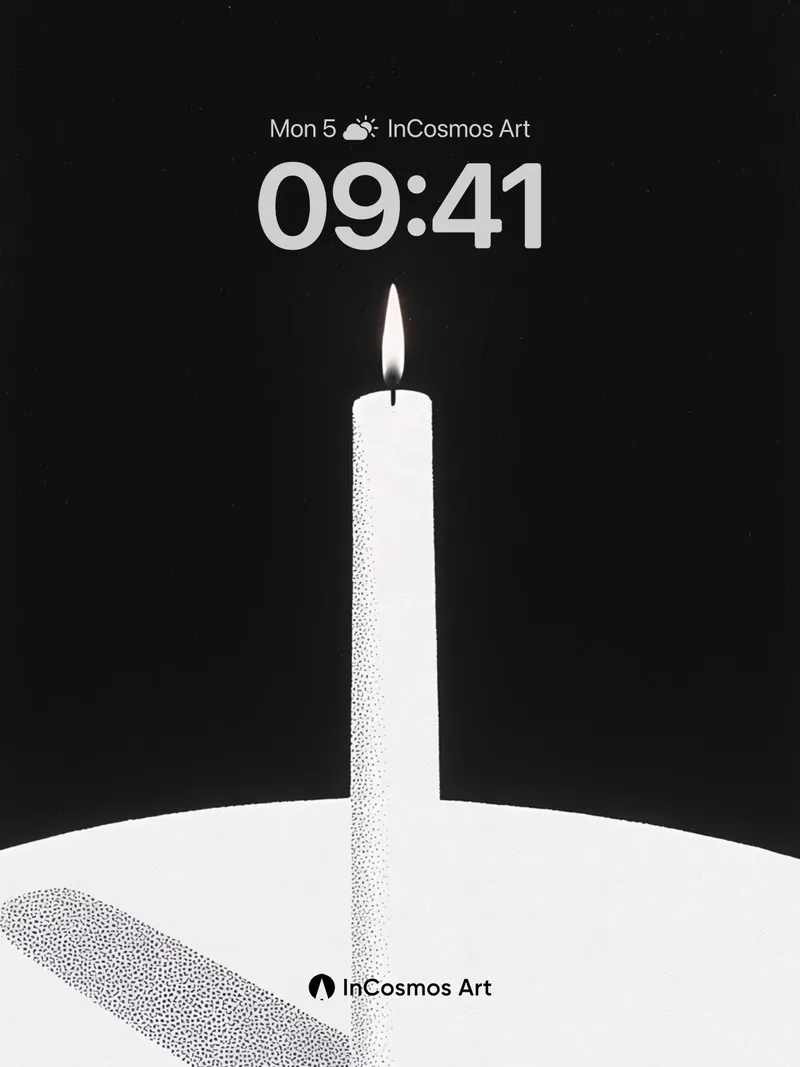
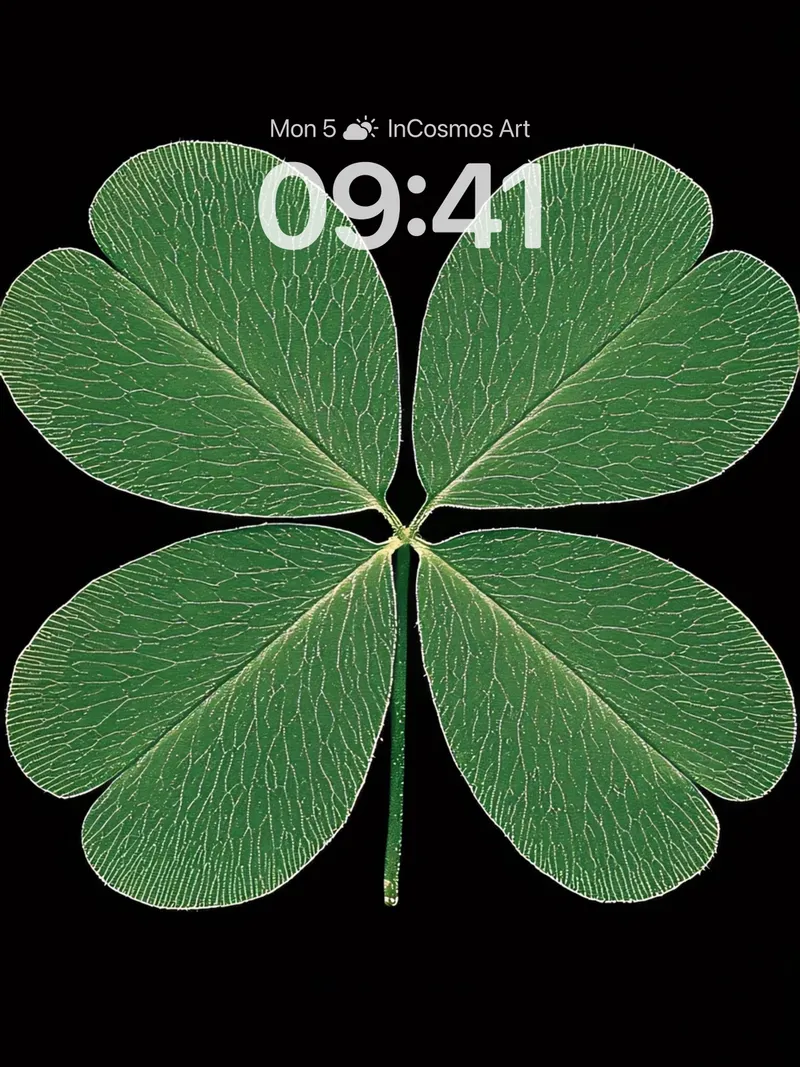
Against a pure black background, a white candle burns alone. The white particles of the candle body contrast sharply with the nothingness of the background; the tip of the flame is also composed of fine dots, as if it might dissipate into the darkness at any moment. This minimalist composition strips away all unnecessary decoration, leaving only the dialogue between light and shadow, existence and void. The warmth of the candlelight does not come from color rendering, but from the loneliness of existence itself. In contrast, the leaves of the four-leaf clover, against a black background, show clear green veins, each stripe like a fingerprint of the earth. Still life here is no longer a passive object; they tell stories of growth, time, and stillness through their own texture and form.
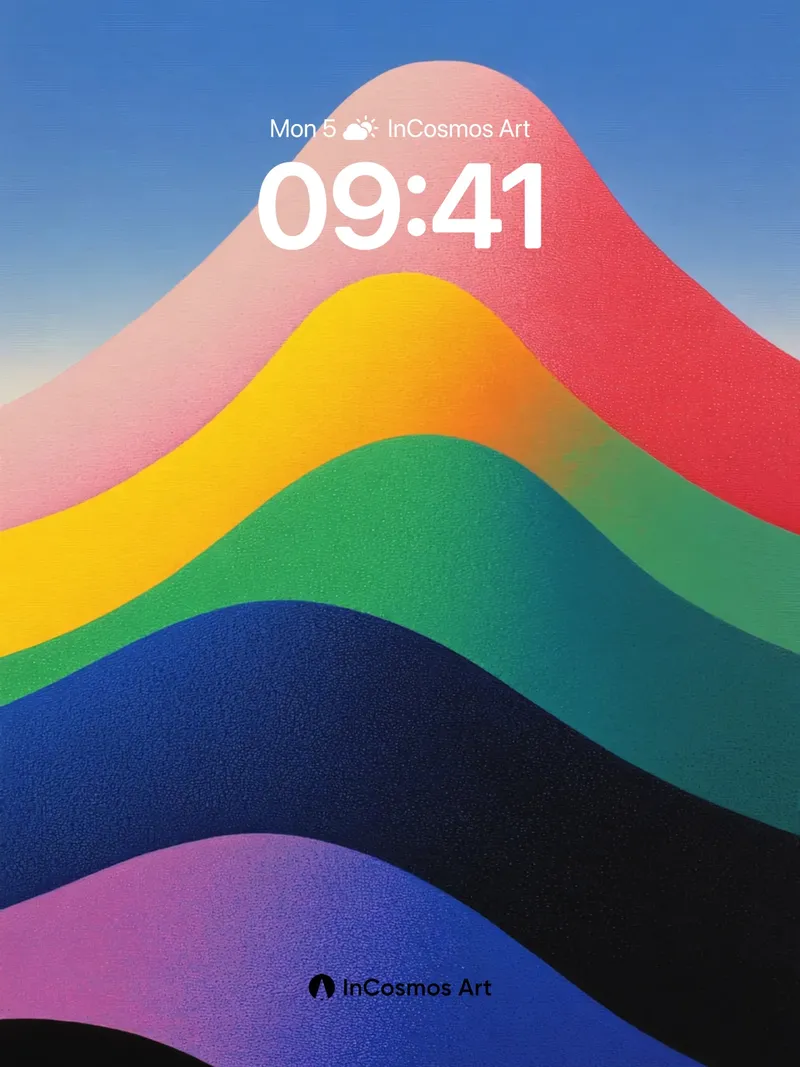
Psychological Topography of Flowing Color
When color detaches from specific objects, it forms a flowing psychological topography. Rainbow-like wavy lines rise and fall in the picture, with pink, yellow, green, and blue laid out in sequence. These colors have no clear boundaries; they penetrate each other at the junctions, forming soft transitions. This abstract expression mirrors the fluctuations of inner emotions. The flow of color is not just visual enjoyment, but also an emotional release. Each color represents a state of mind, and their interweaving constitutes a complex and subtle psychological landscape. In this abstract expression, the viewer is invited into a space with no specific direction, yet full of emotional resonance.