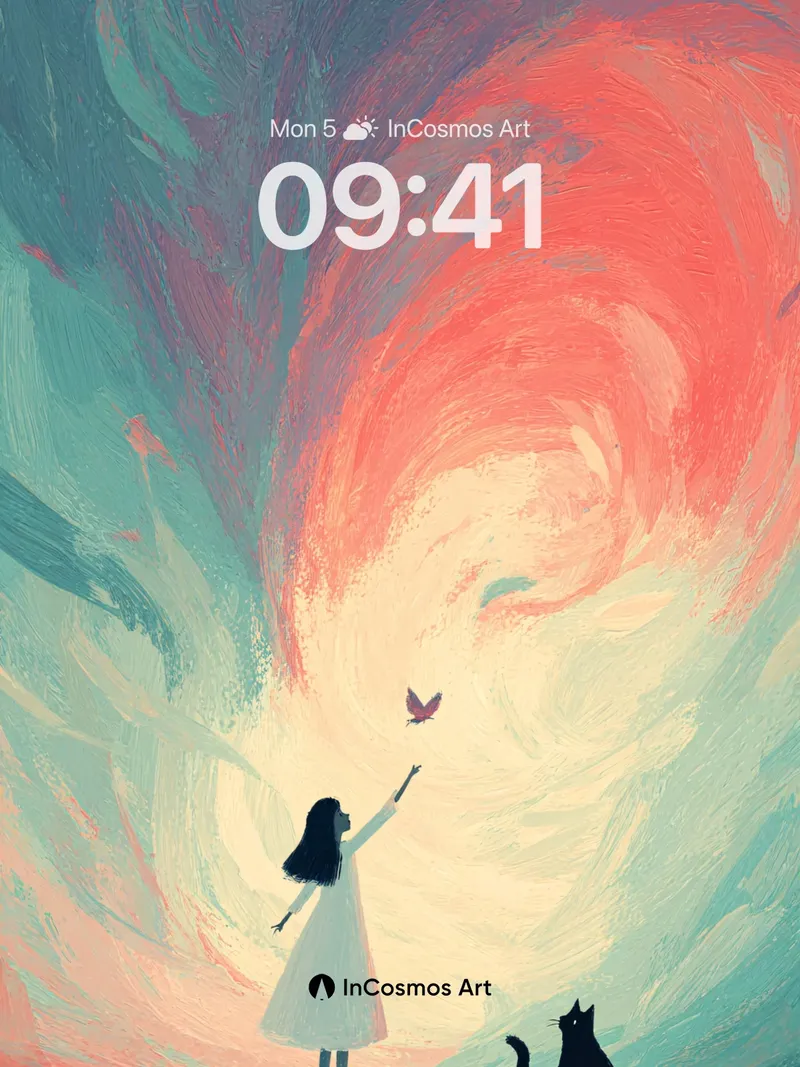
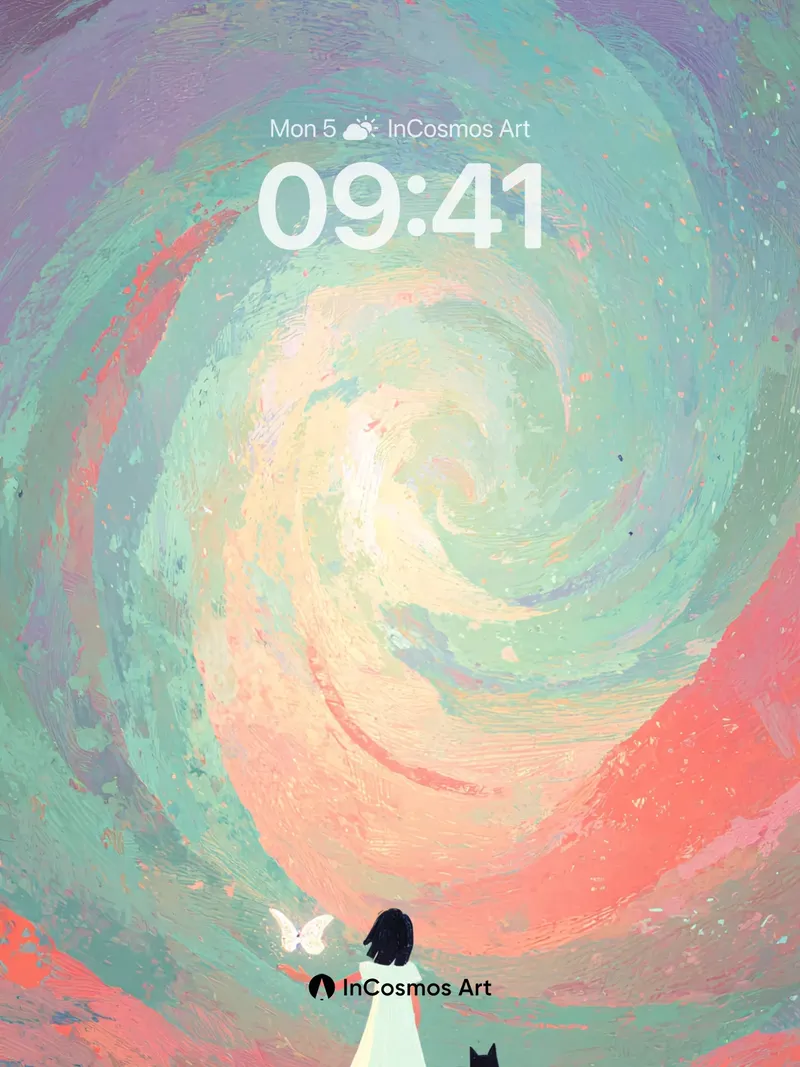
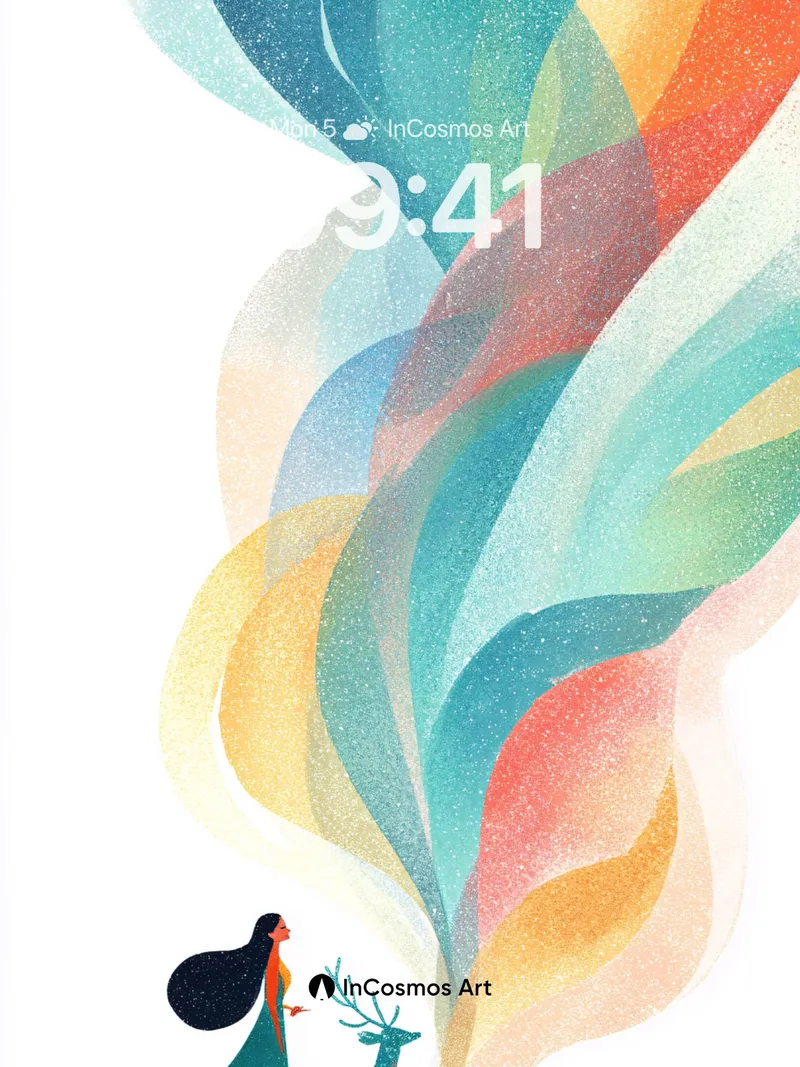
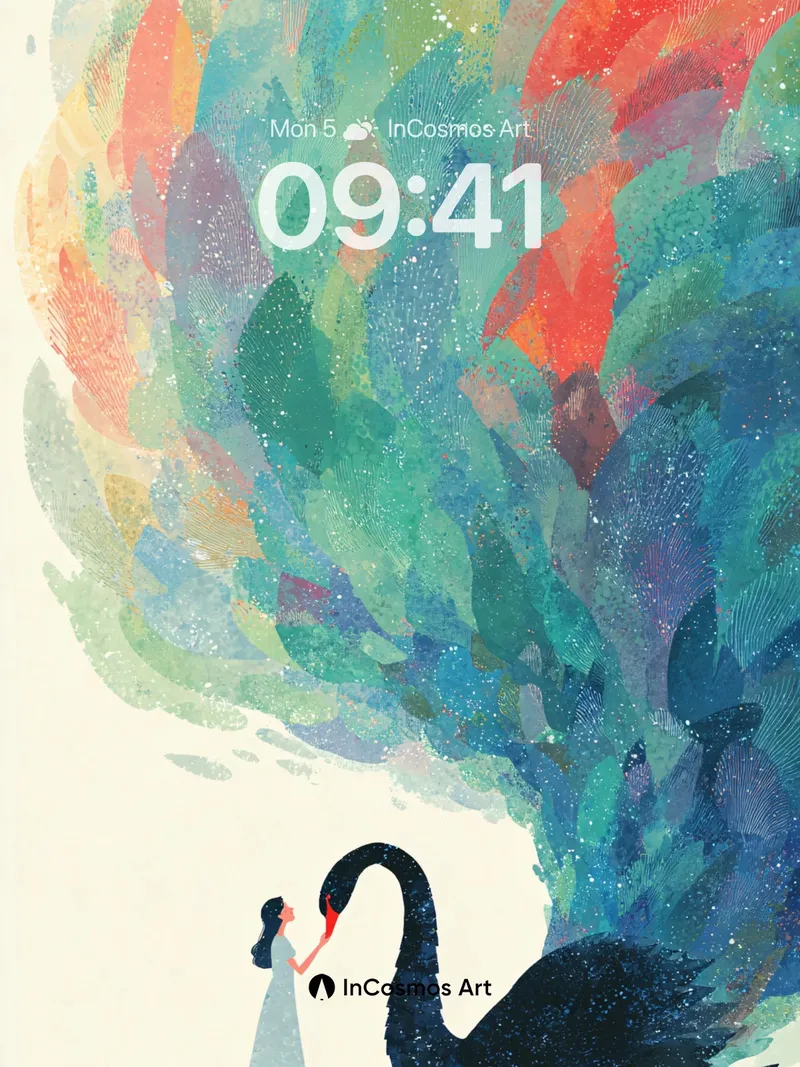
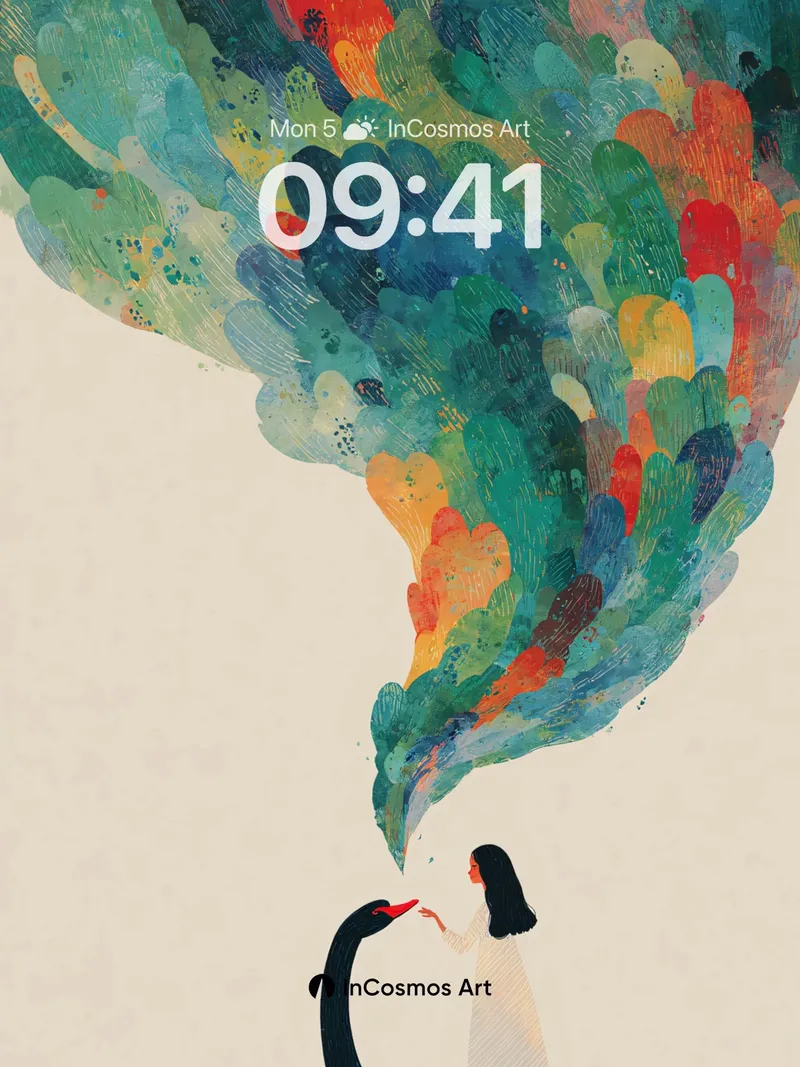
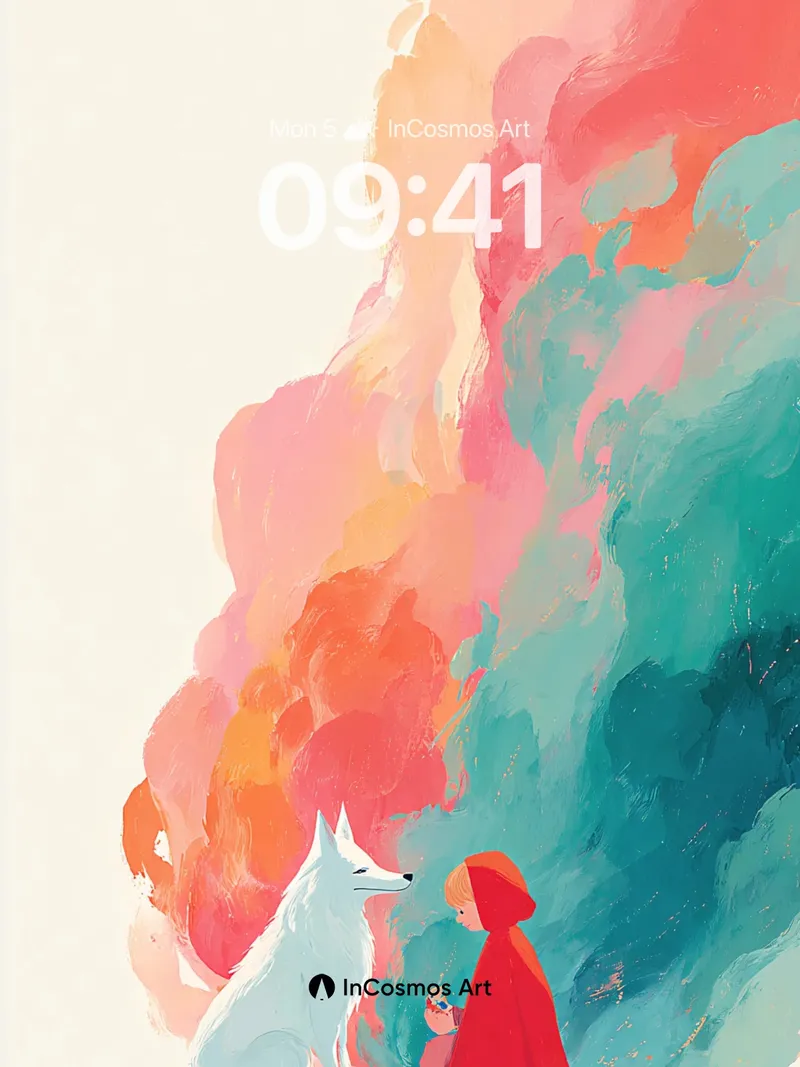
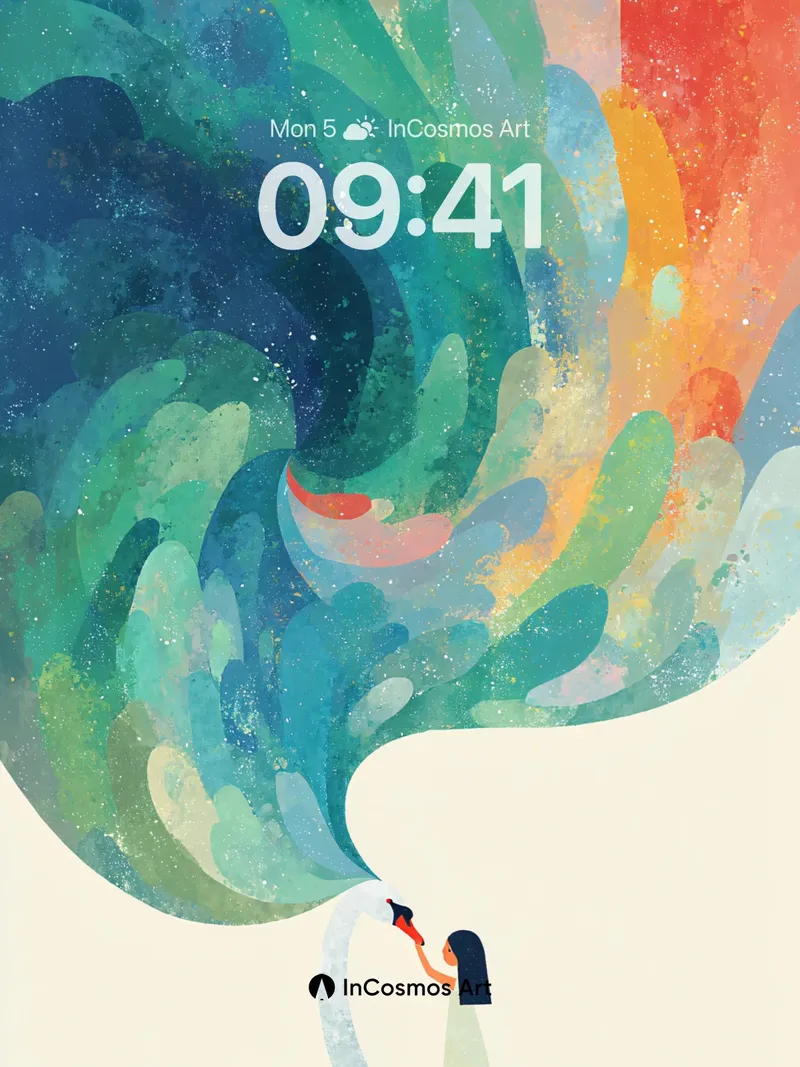
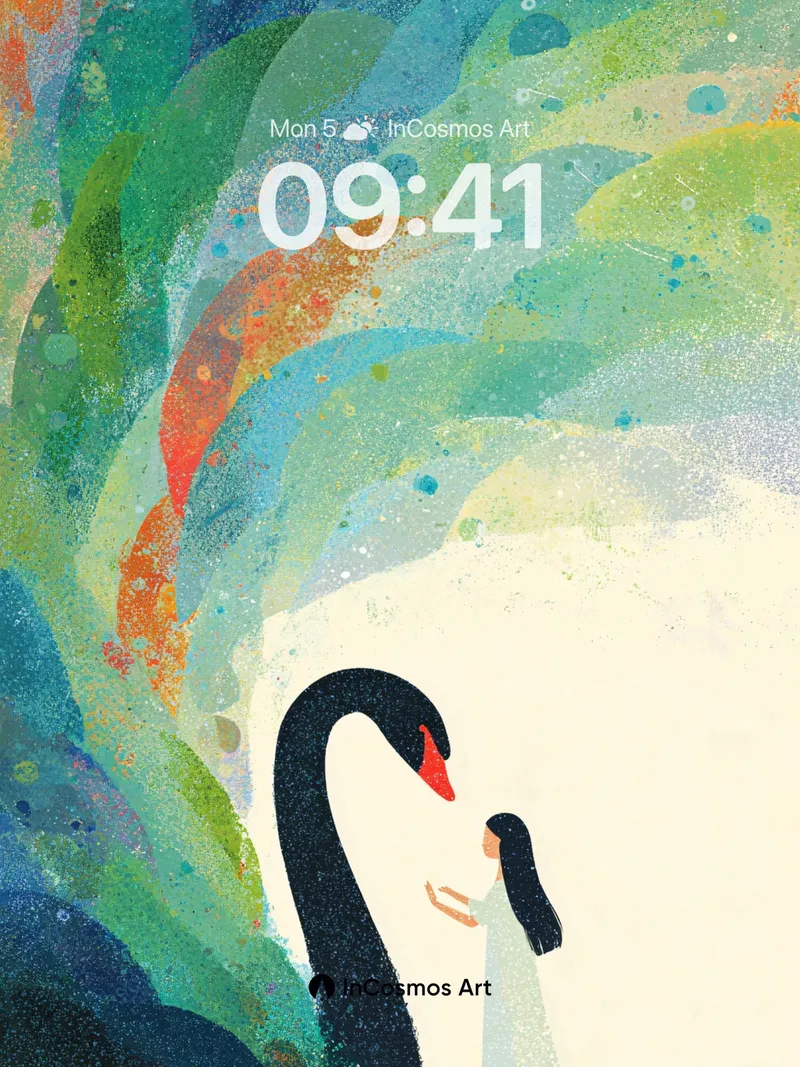
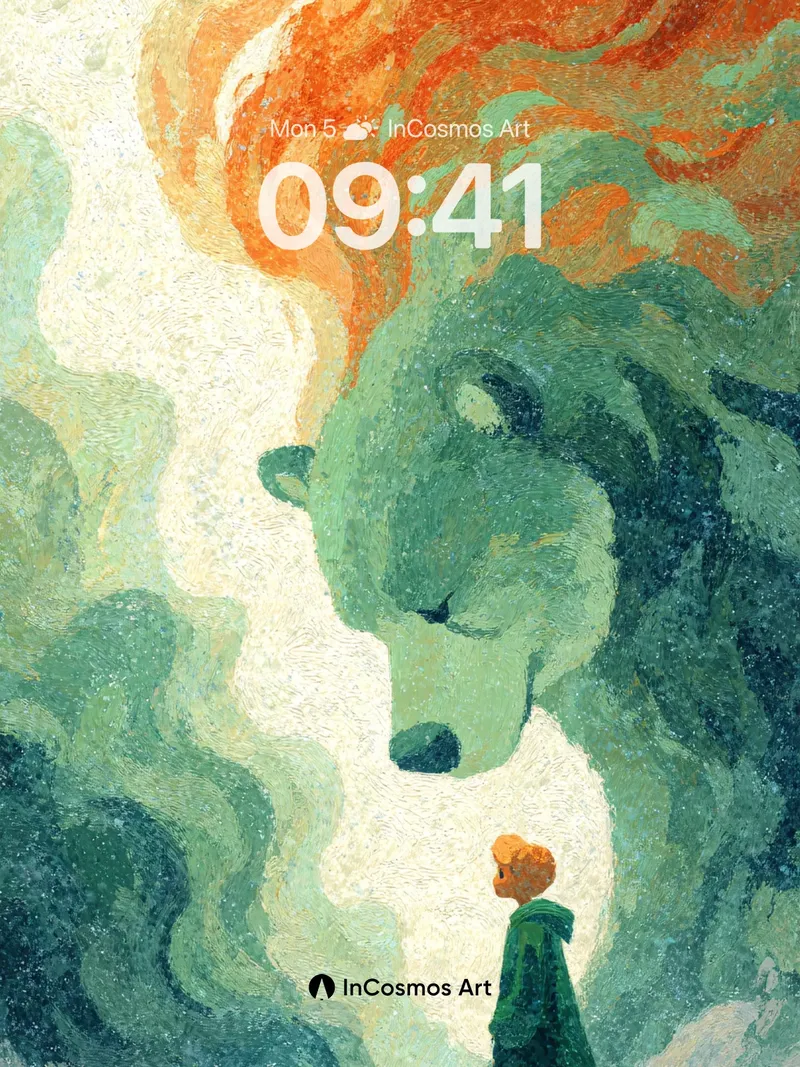
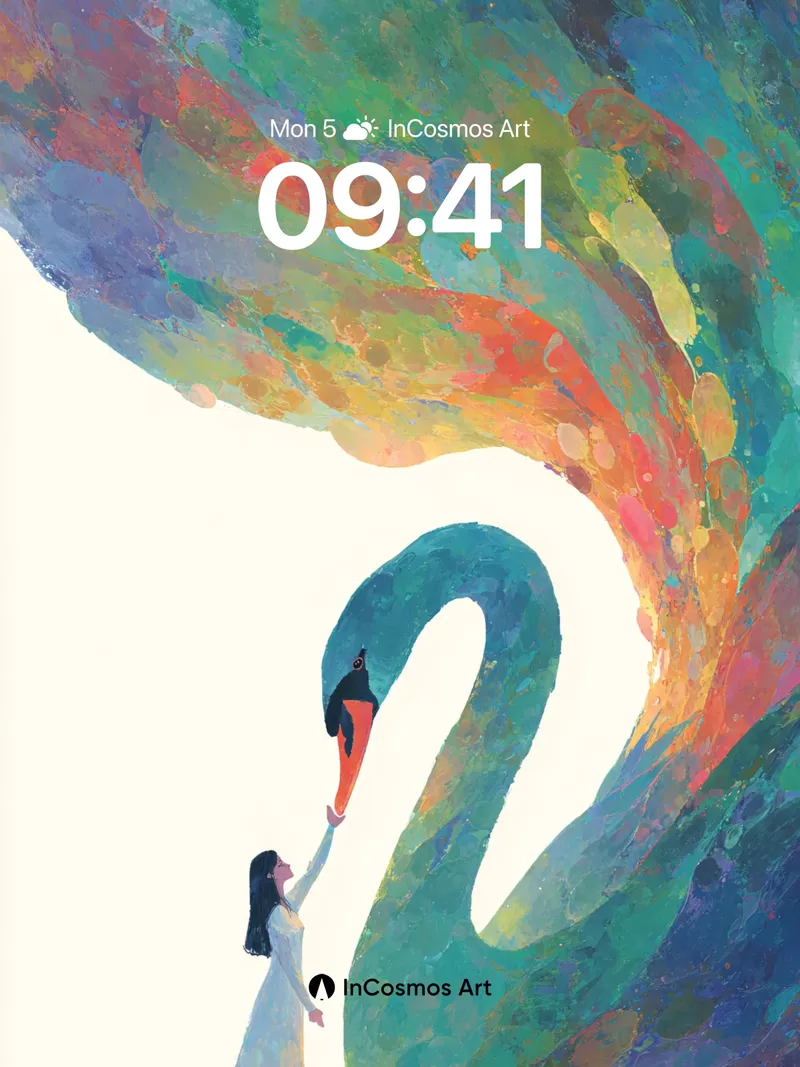
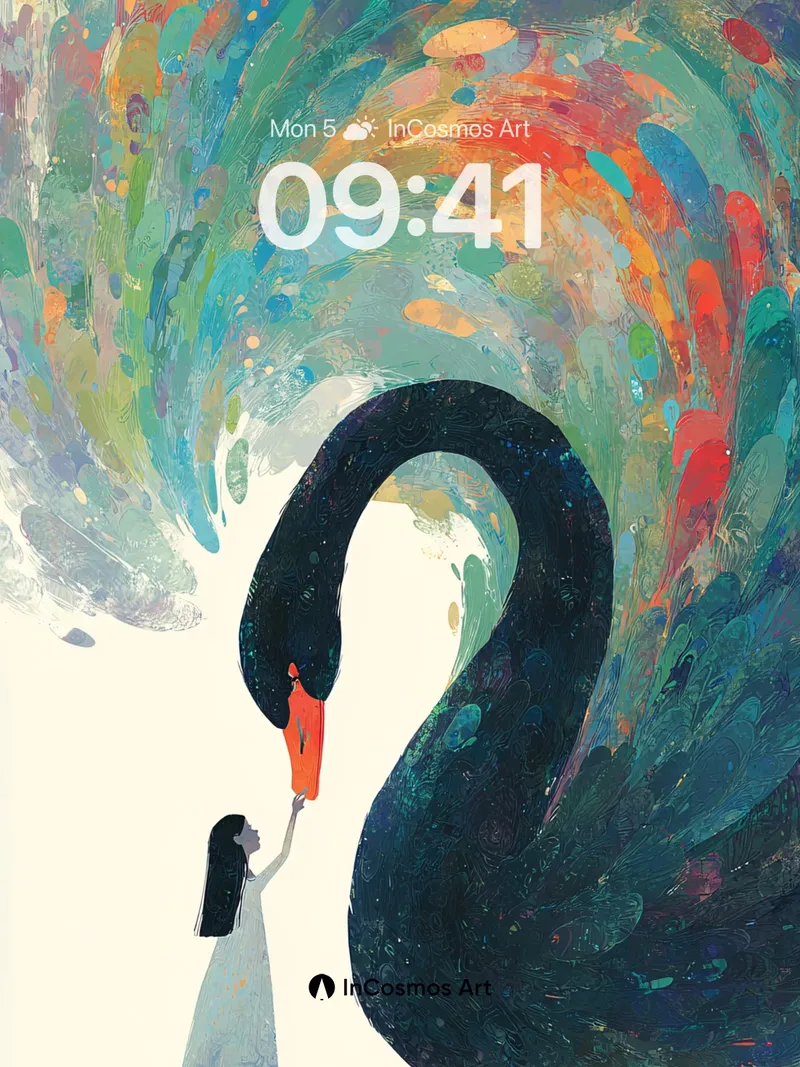
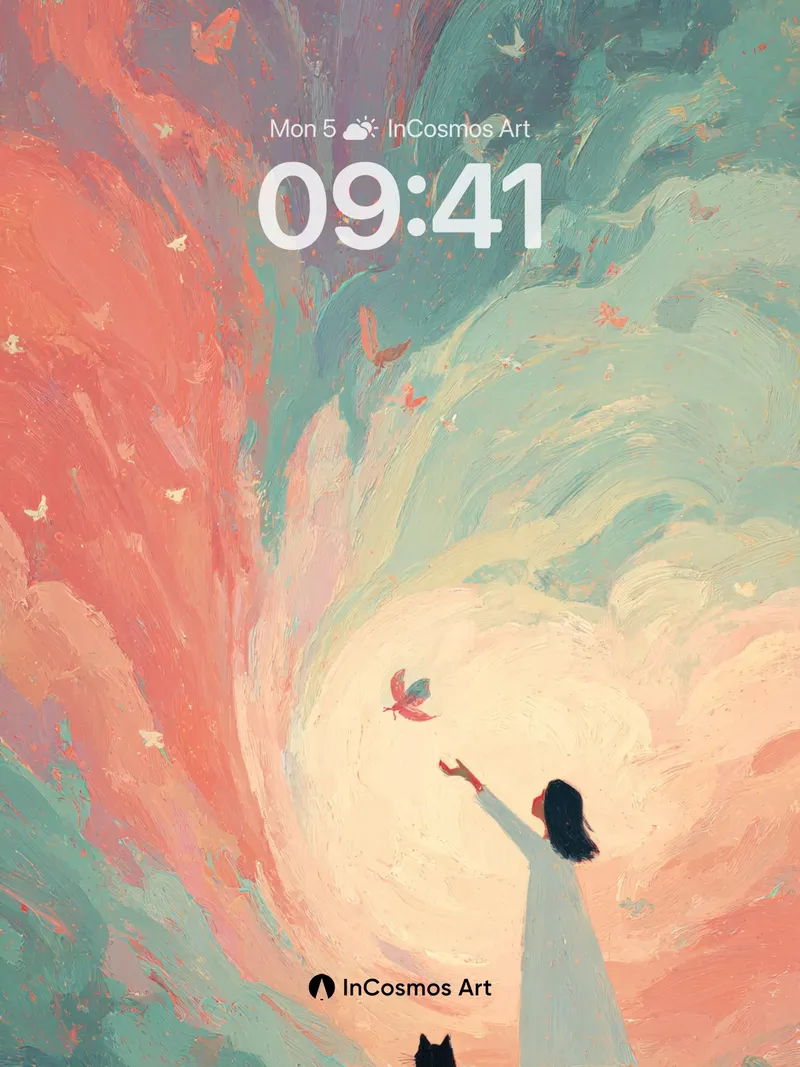
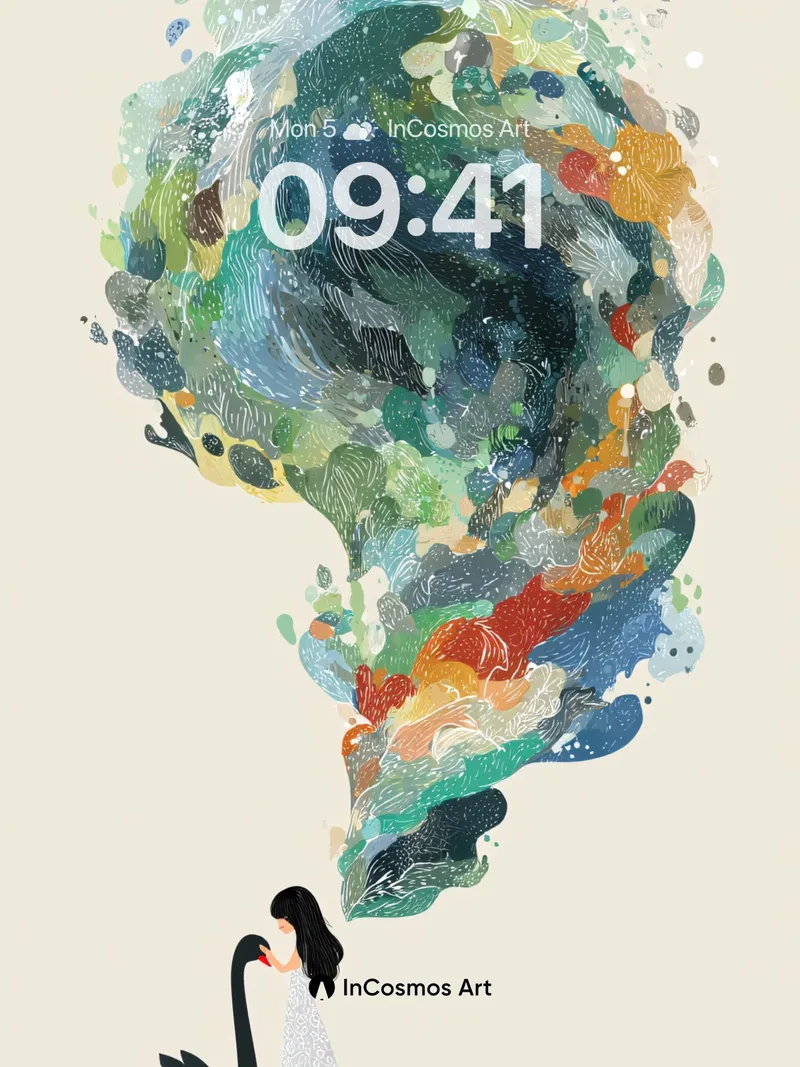
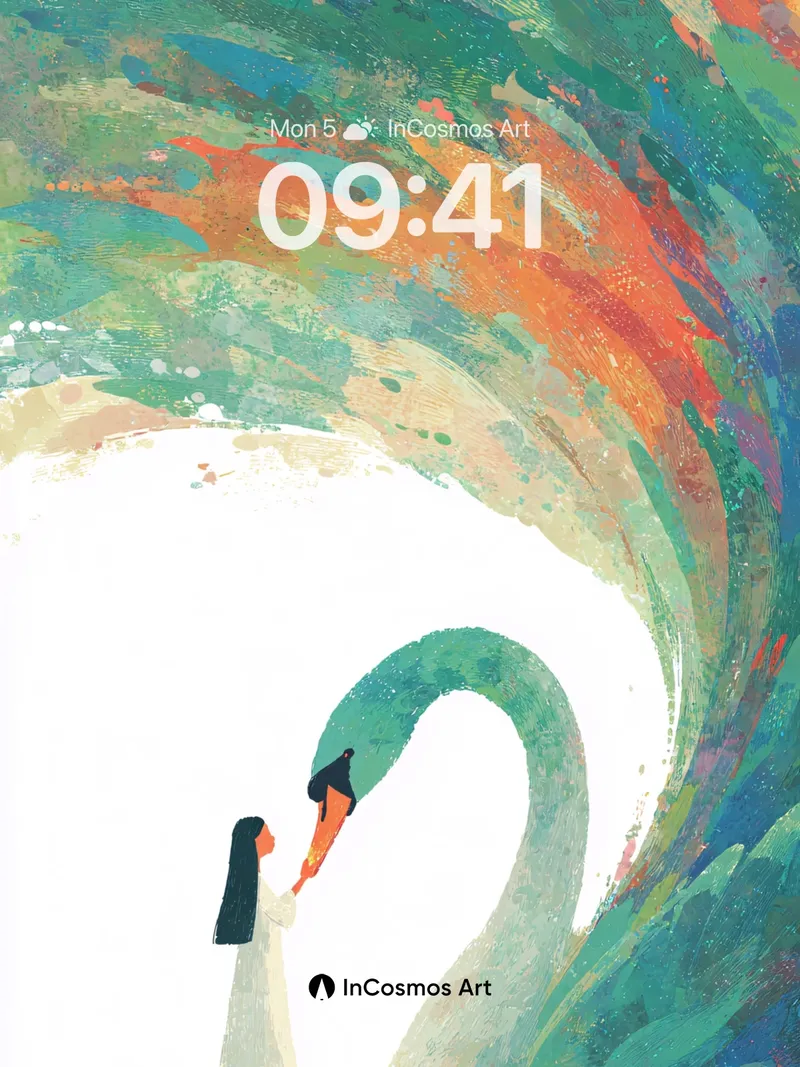
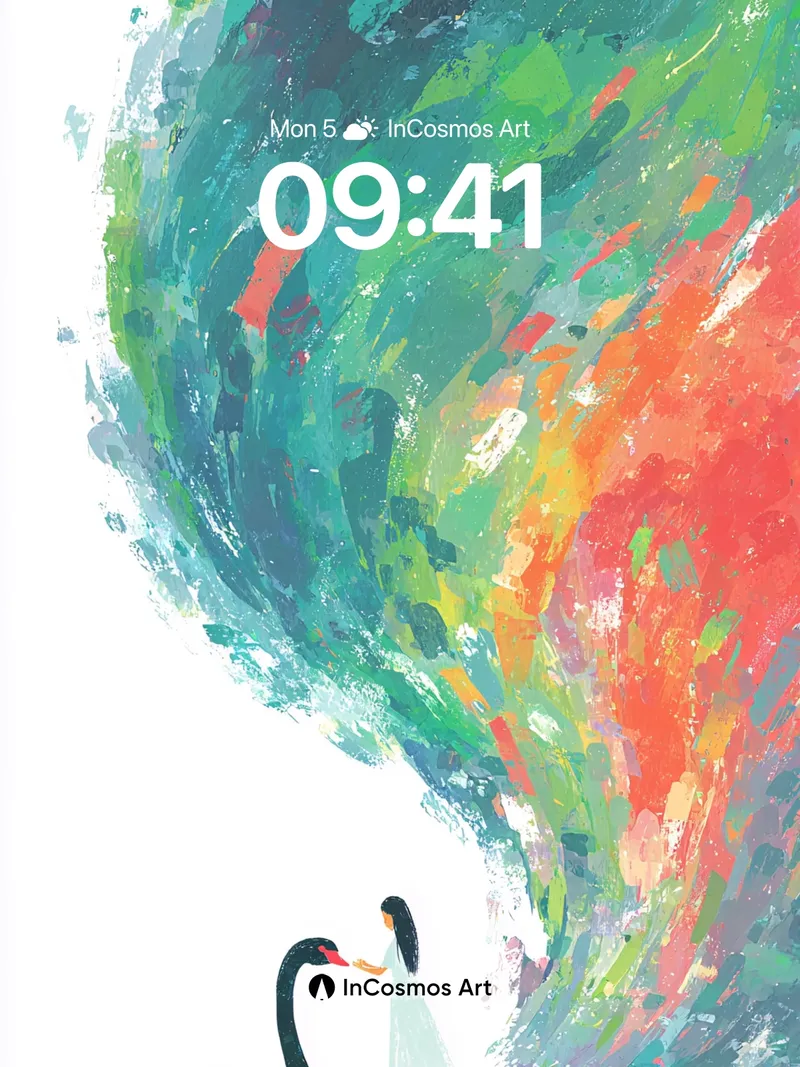
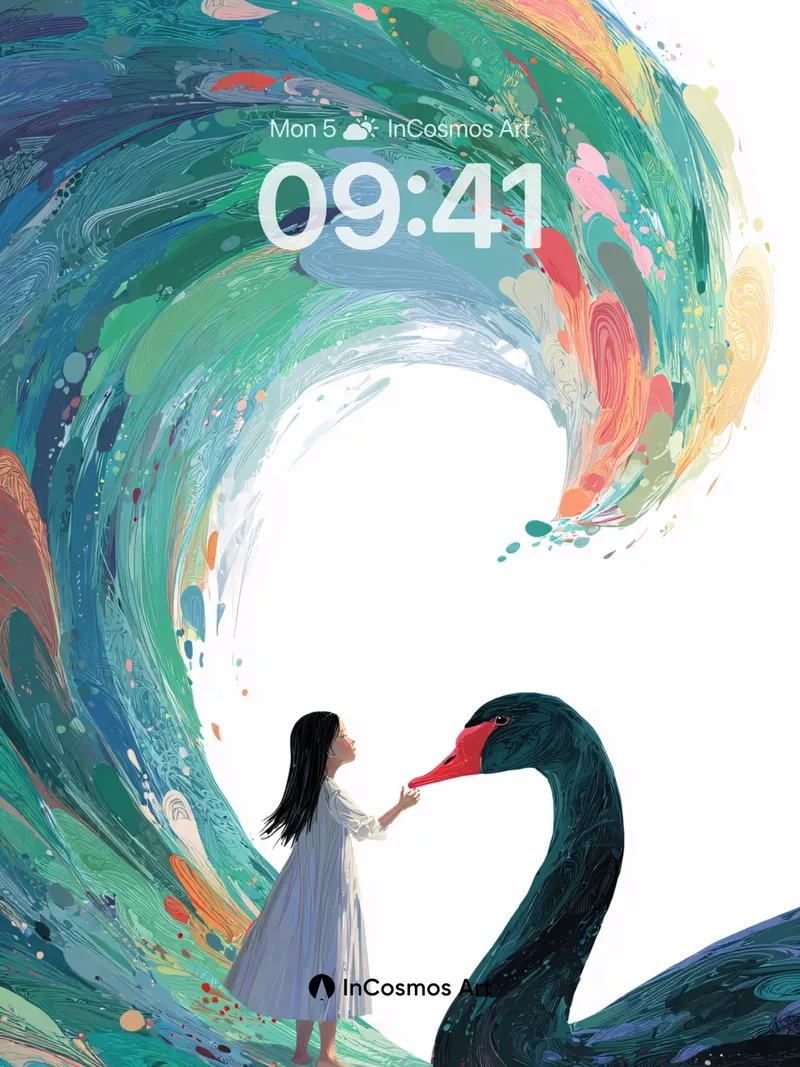
When humans and animals stand side by side at the edge of surging colors, a silent communication begins. This is not mere coexistence, but resonance on a soul level. In these flowing compositions, each color band extends emotion, every vortex holds unspoken longing. The black swan gently touches the girl’s finger, as if passing an ancient covenant; the giant bear rests beneath flame-like fur, gazing into the eyes of the human draped in green, forming a pact of silence. Cat and girl look upward at fluttering butterflies, fingers raised, as if summoning or bidding farewell. The white heron faces the child in yellow raincoat, wordless yet profound—a moment where two worlds converge. These scenes are not reflections of reality, but externalizations of inner landscapes—emotion, memory, fantasy woven into form. The swirling colors symbolize the flow of consciousness, from chaos to clarity, from solitude to connection. Humanity constantly seeks belonging, while animals, as embodiments of nature, become bridges to inner truth. They speak no words, yet their presence tells everything. This is a silent ritual, a spiritual pilgrimage, a collective meditation on loneliness, companionship, and understanding.
The Silent Symphony Between Nature and Human
Animals here are not ornaments, but narrative centers. Their presence carries ritualistic weight, as if summoned from myth or dream. The black swan, giant bear, white heron, and black cat each represent distinct emotional dimensions: mystery, strength, purity, protection. Their interactions with humans lack violence or domination, only gentle regard and closeness. This relationship dismantles traditional hierarchies, revealing equality, respect, and empathy. Humans are no longer masters, but participants—even observers. This reversal reflects contemporary rethinking of ecological ethics. People increasingly recognize that progress should not come at nature’s cost. True harmony means learning to listen to non-human lives.
Psychological Metaphor in Swirling Colors
The recurring spiral patterns of color express psychological states in visual form. Red signifies passion and impulse, green represents growth and healing, blue points to calm and introspection, orange-yellow suggests hope and awakening. These hues layer and blend, creating dynamic rhythm like mental waves. Bright light often emerges at the center of vortices, symbolizing inner clarity or epiphany. Figures face this light, hands reaching skyward, full of anticipation and reverence. This is not just exploration of the outer world, but inquiry into the self. Amid modern life’s fast pace and suppression, such imagery offers a spiritual outlet—art enabling return to inner peace and order.
Primitive Forms of Emotional Bonding
All scenes revolve around 'connection': human-animal, individual-nature, solitude-bonding. This bond is not rational analysis, but emotional resonance. The black cat sits quietly behind the girl, a faithful shadow; the heron lowers its gaze toward the child, eyes filled with understanding and care. These details reveal humanity’s deepest emotional need—to be seen, accepted, accompanied. In the digital age, virtual connections grow common, yet genuine emotional bonds grow rare. These images remind us that true intimacy still requires physical proximity, eye contact, and silent companionship—warmth technology cannot replicate.
Collective Dream of the Modern Mind
These images evoke a universal psychological experience: beyond noise, everyone craves a quiet space of their own. That space may not exist physically, yet it roots deeply within the mind. It is made of color, animals, and stillness—a safe harbor for anxiety and imagination. Artists use abstraction to render this inner landscape tangible, making it perceptible reality. Viewers project their emotions and memories unconsciously, creating strong resonance. This is art’s power—it does not offer answers, but opens dialogue.