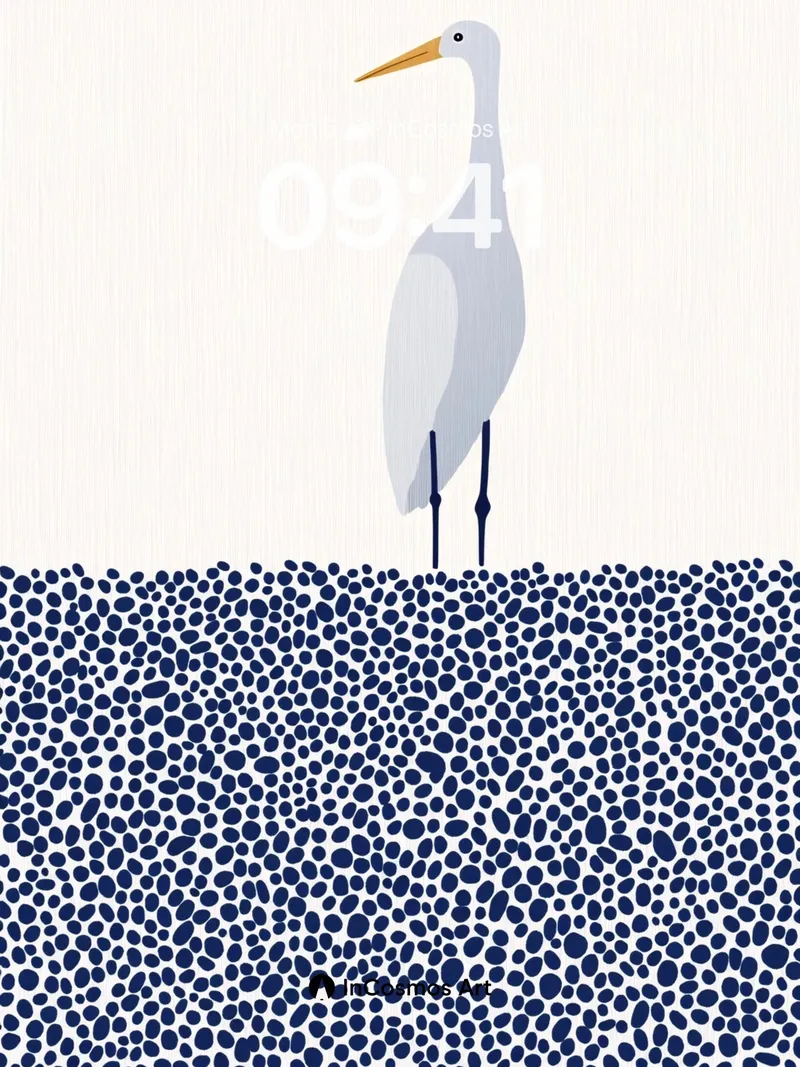
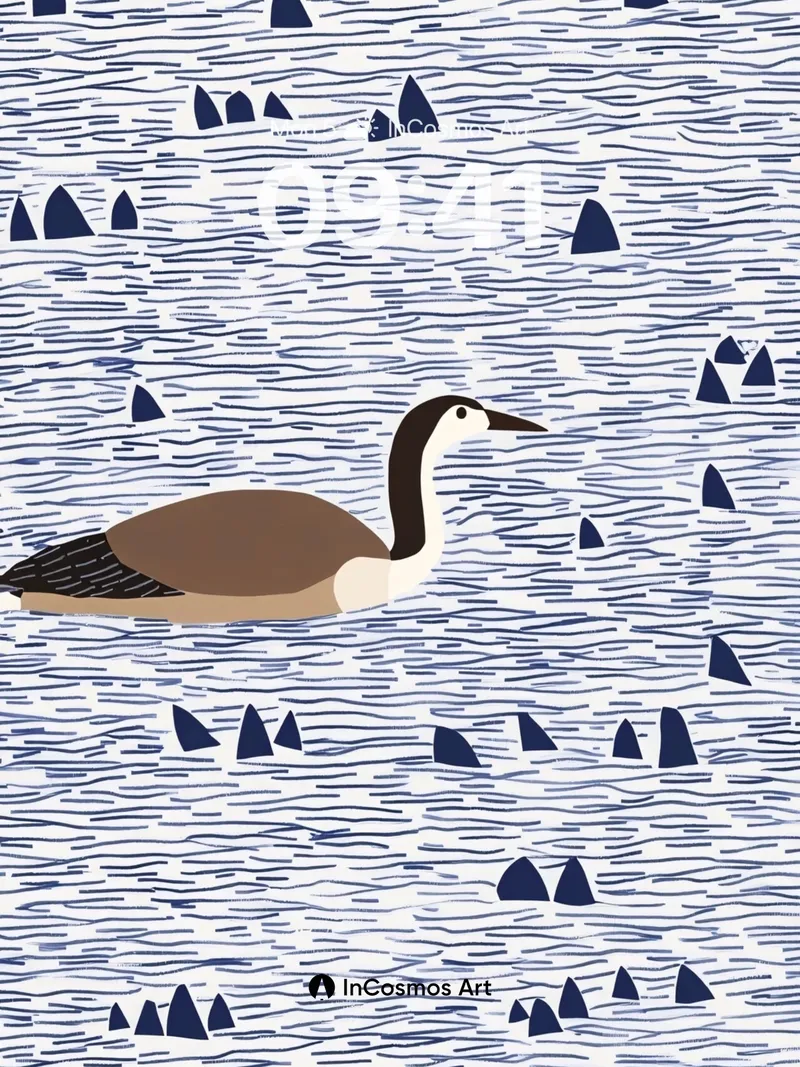
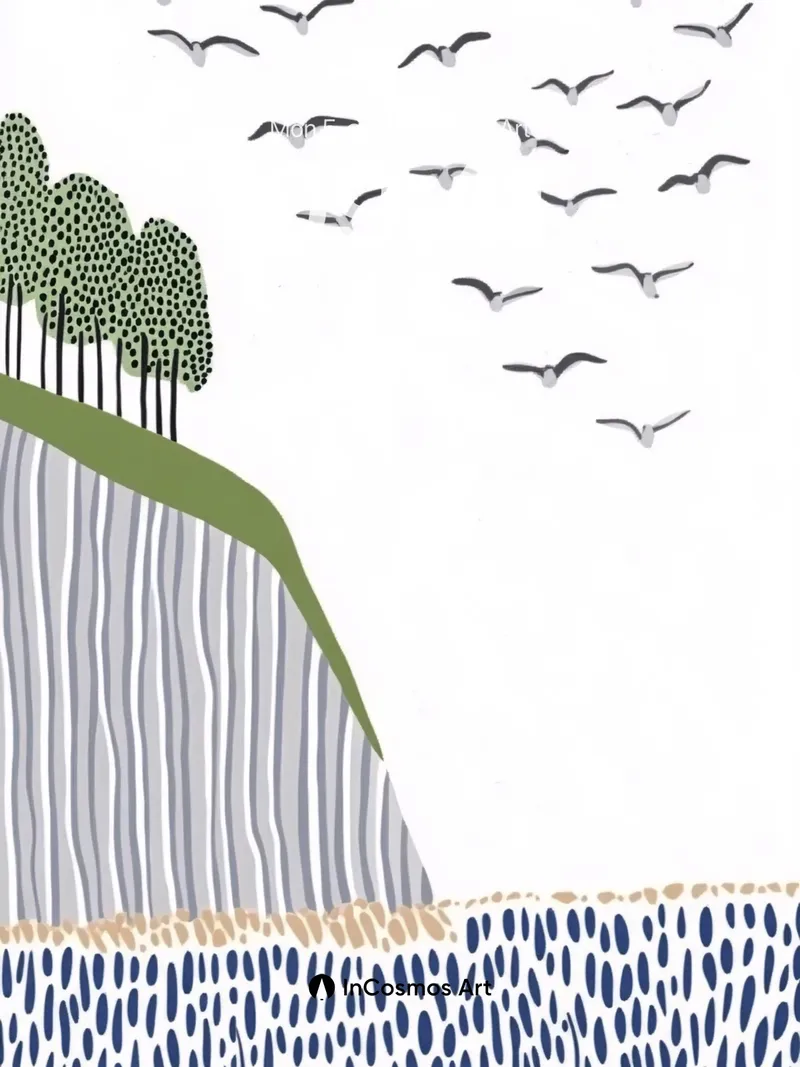
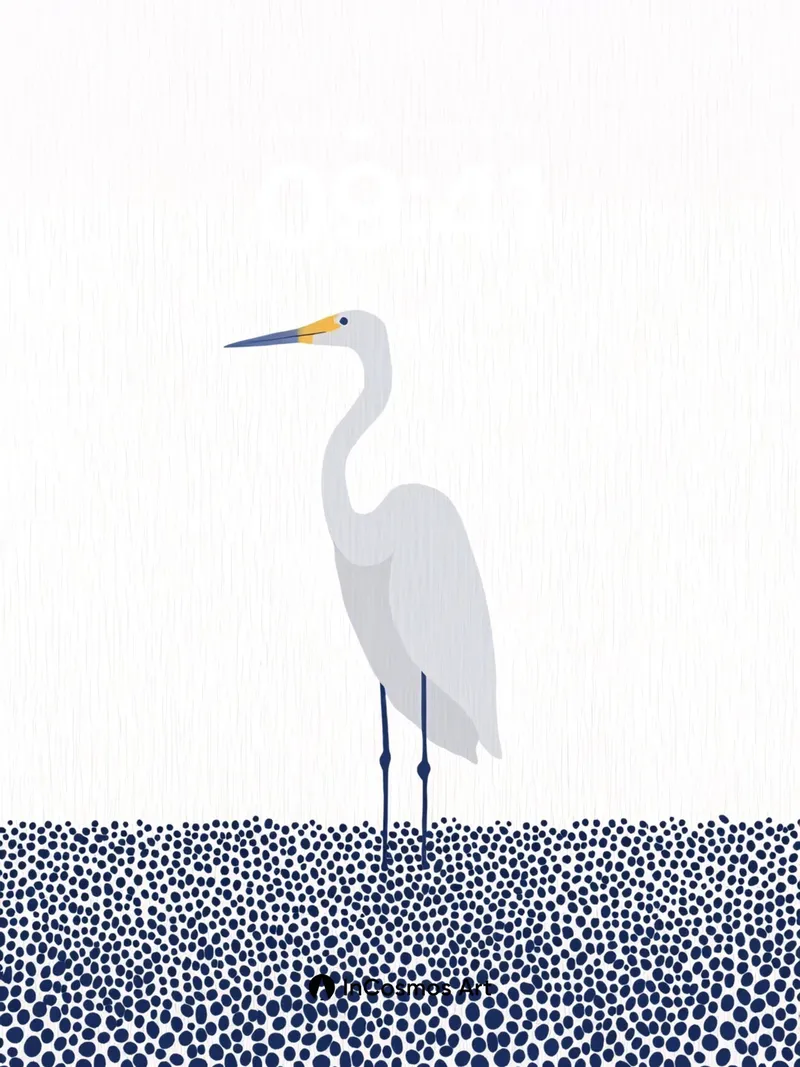
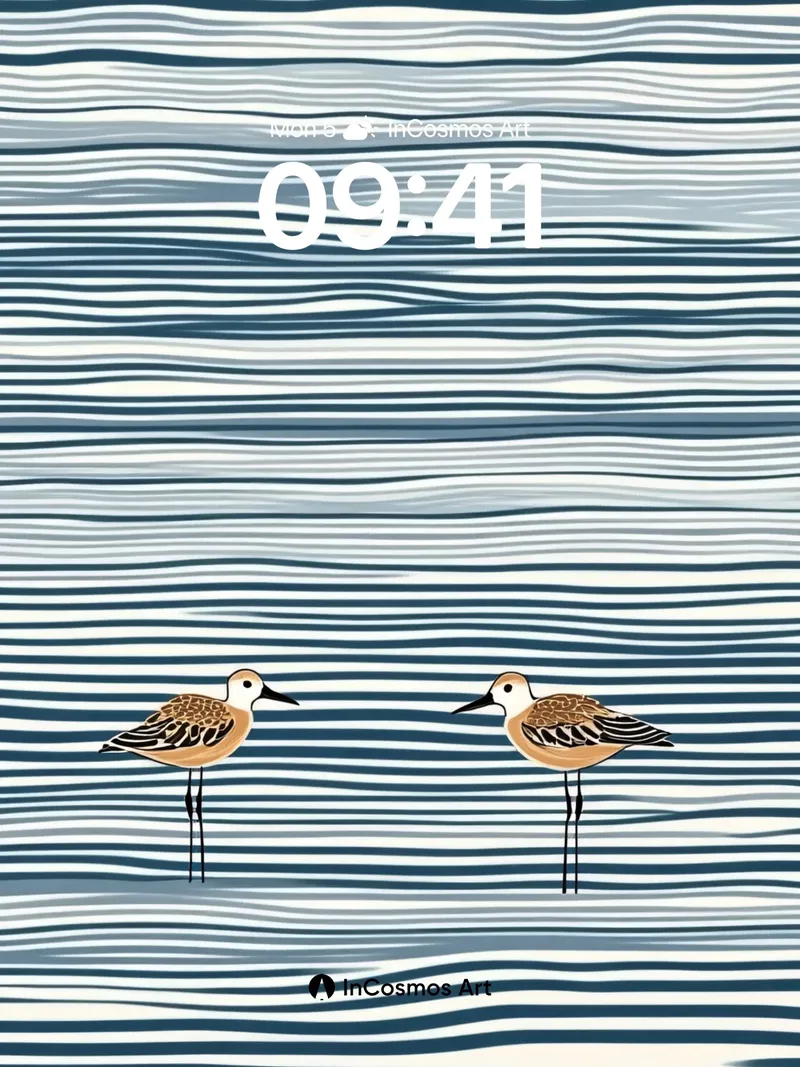
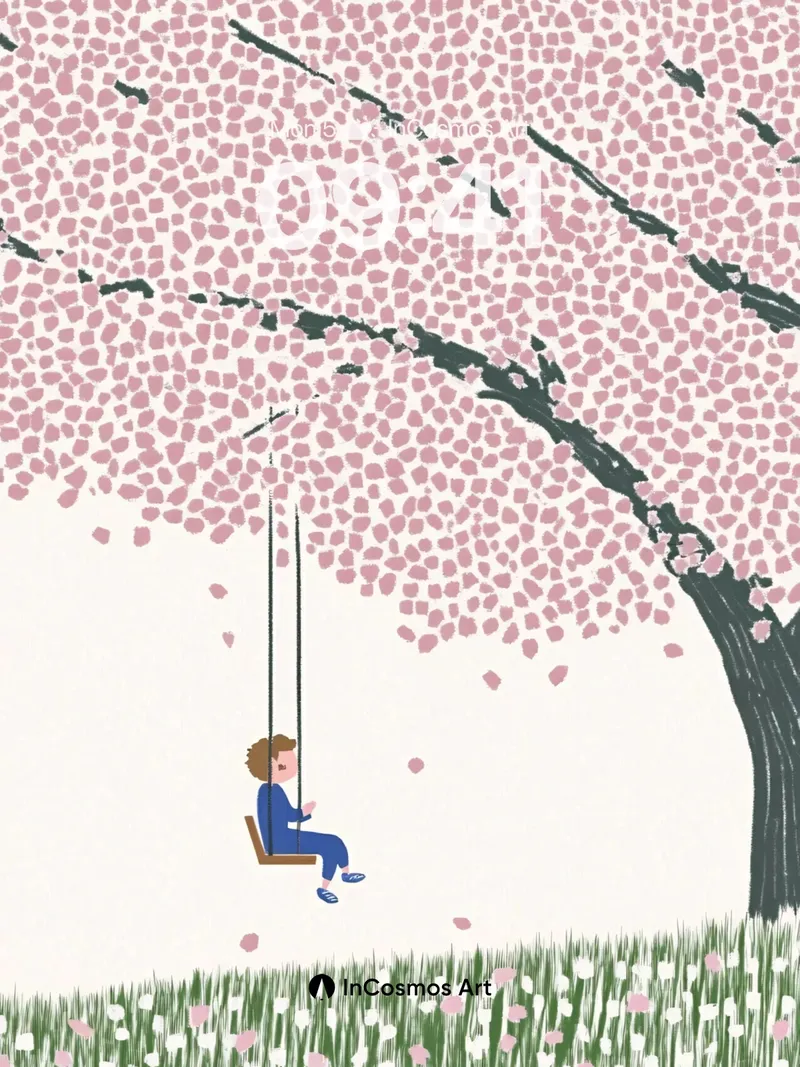
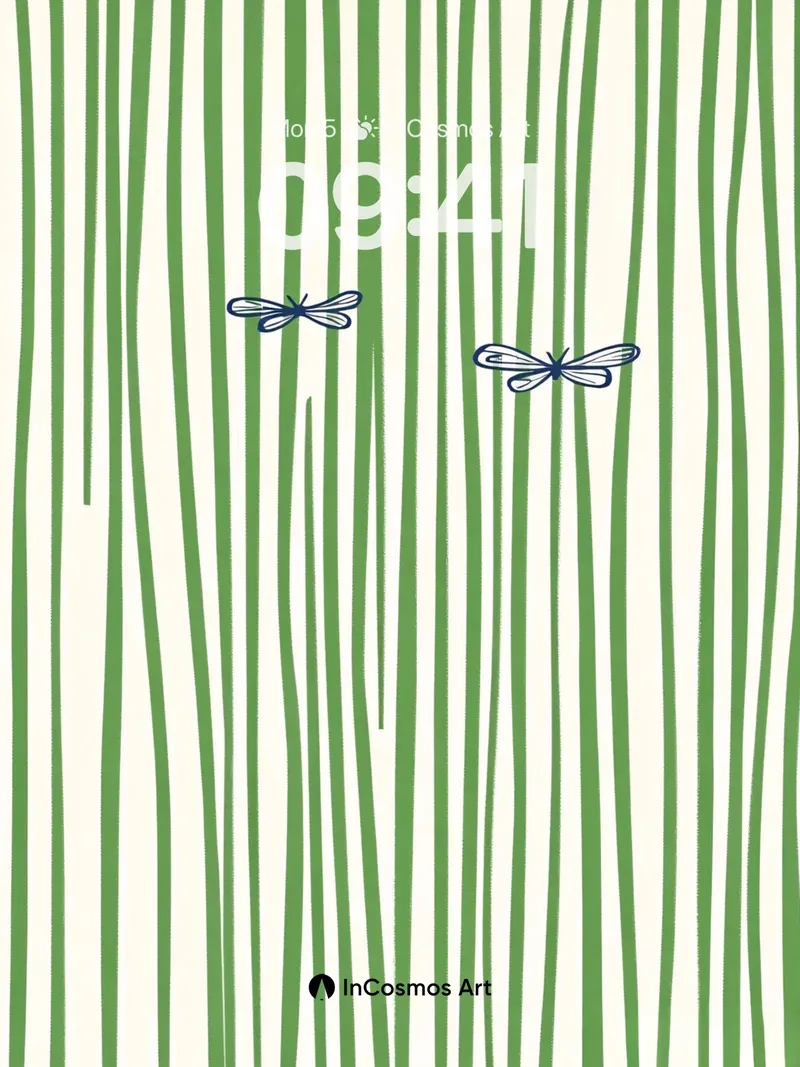
Spring winds blow, petals fall like rain, a child sits on a swing facing away from blossoms, as if listening to time's whisper. Dappled shadows and dragonflies fluttering among grass form a silent conversation. Water ripples layer upon layer, two wading birds stand still, their posture echoing the rhythm of waves. Farther away, birds soar above cliffs, symbolizing seasonal change and life’s migration. A heron stands alone on dotted shore, gazing into distance—silent yet carrying a near-meditative stillness. These scenes are not realistic records but poetic projections between emotion and nature. Each petal, blade of reed, wingbeat tells a story of solitude, waiting, and return.
Presence in Solitude
In nature, individual presence often becomes amplified. The child swings alone, needing neither companion nor words. His silence is not emptiness but a ritual of connection with surroundings. The heron stands motionless, long legs rooted in deep blue dots, like punctuation marks on land. This stillness is not stagnation but full awareness of surrounding change. Solitude here is not negative—it is a deep engagement with the world.
Flow of Seasons and Sediment of Memory
The brief bloom of cherry blossoms reminds us of life's limits, yet their gentle fall leaves lasting echoes. Dragonflies dart through grass, embodying fleeting beauty. Birds appear in pairs, suggesting stability and harmony in companionship. Flocks flying south represent irreversible time. Together, these elements weave a tapestry of temporal perception—experiencing the present while reconstructing the past in memory.
Language of Nature and Silence of Humans
No text, no sound—only form and color convey meaning. Water ripples trace breath; grass lines mark growth; bird flight declares direction. Humans appear small before nature, yet this diminishes the burden of language. The child looks at a device yet remains within nature’s embrace—a contradiction revealing modern humanity’s complex relationship with nature: longing for closeness while relying on digital intermediaries.
Power in Stillness
When noise recedes, subtle movements gain significance. A dragonfly flaps its wings, ripples spread across water; the heron turns, shadow shifts. These minor actions compose nature’s grammar. If humans learn to listen to this language, they may find moments of peace amid fast-paced lives. This is not escape but deeper presence.