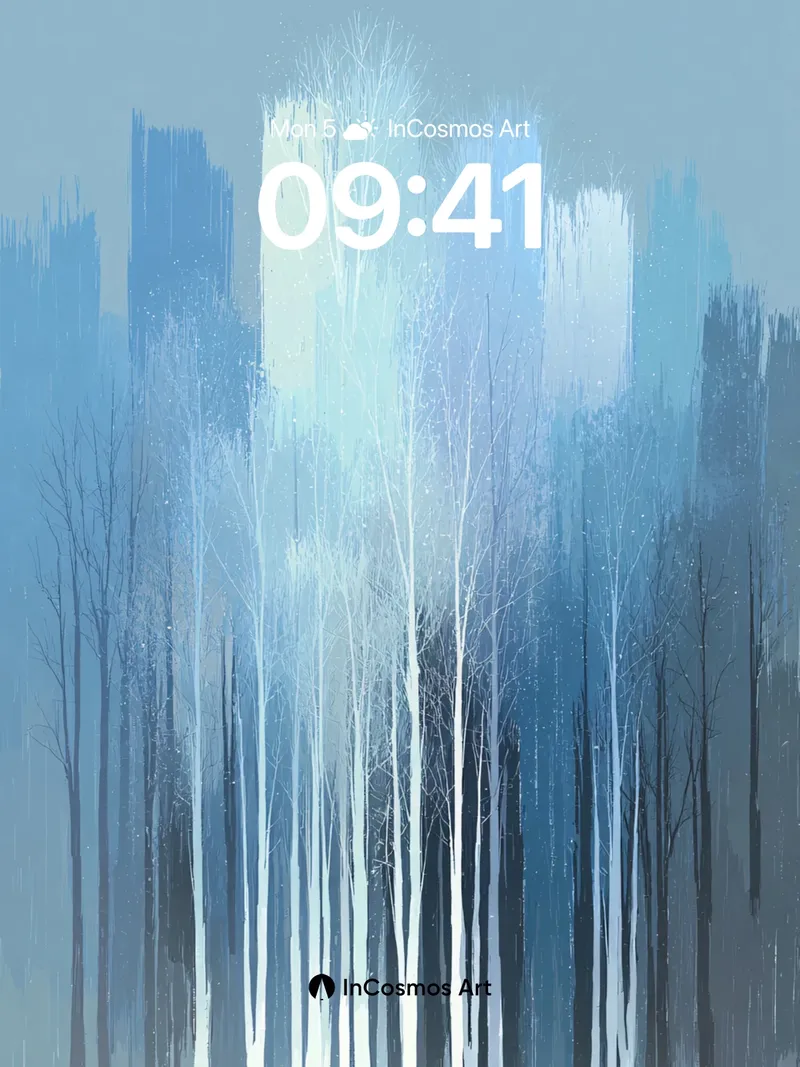
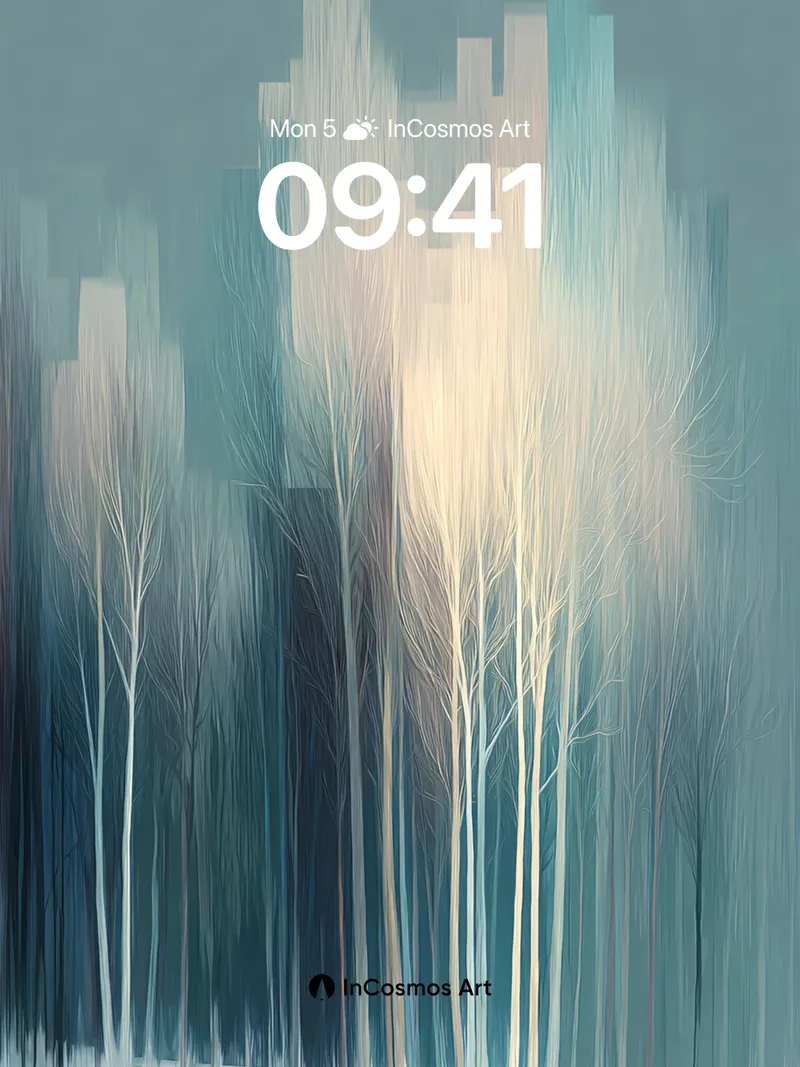
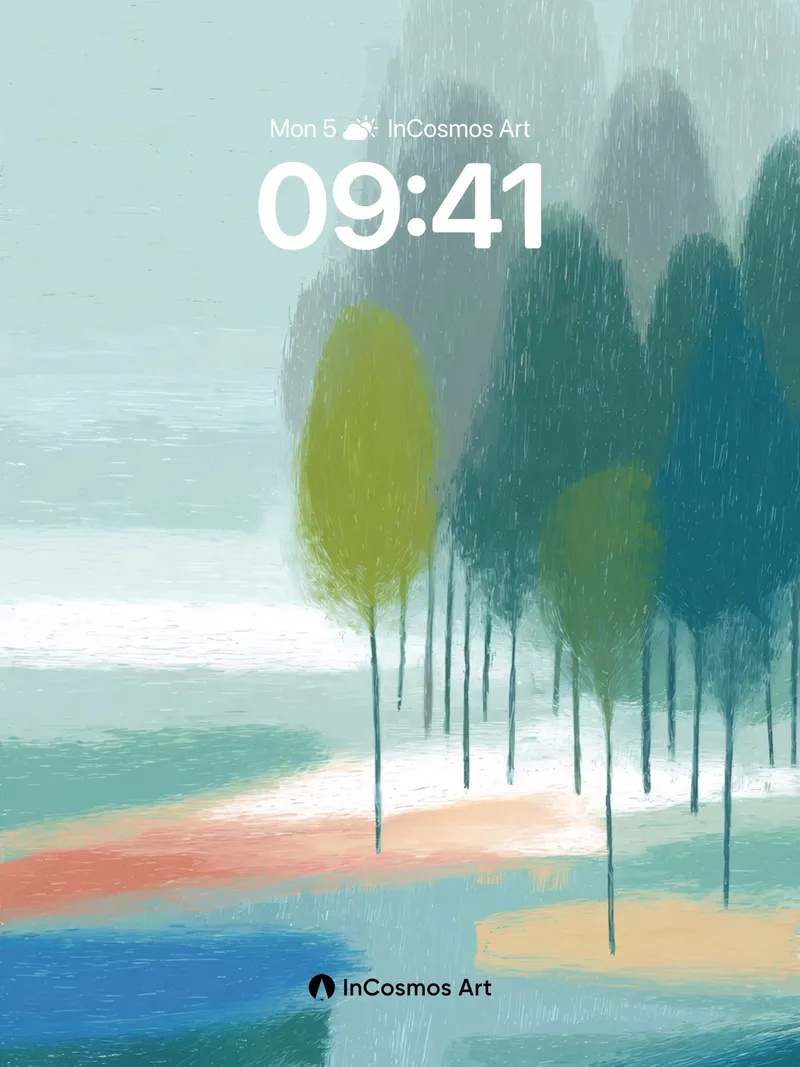
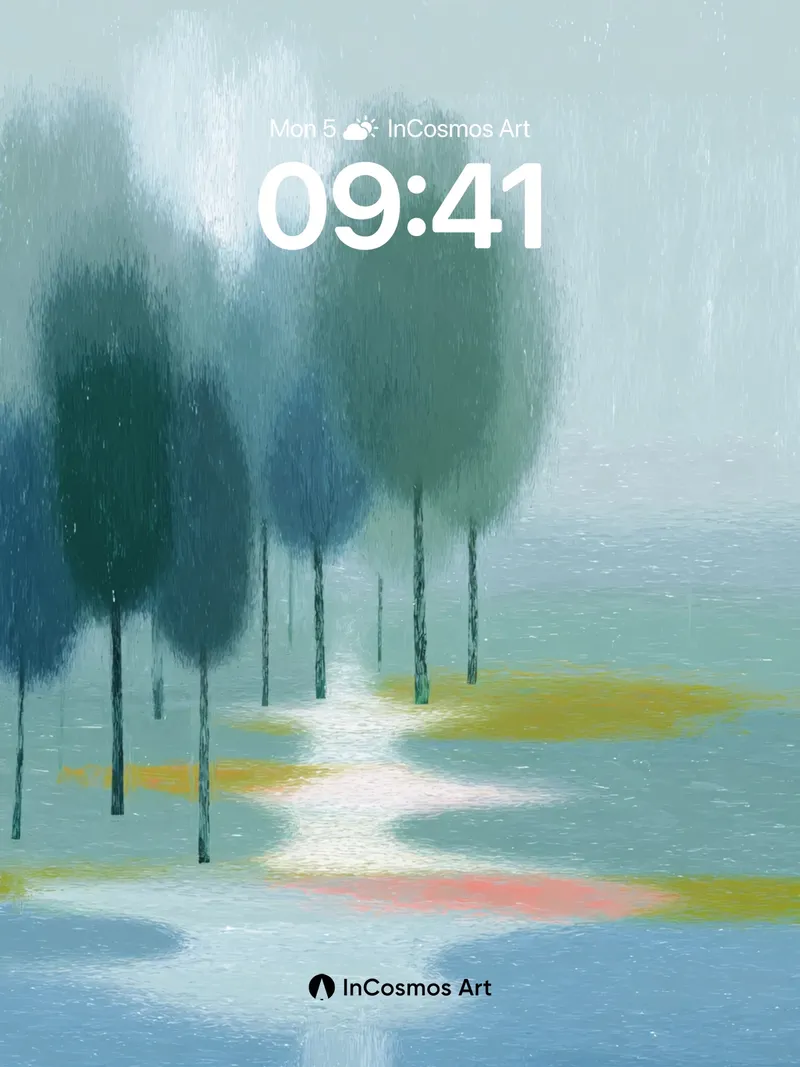
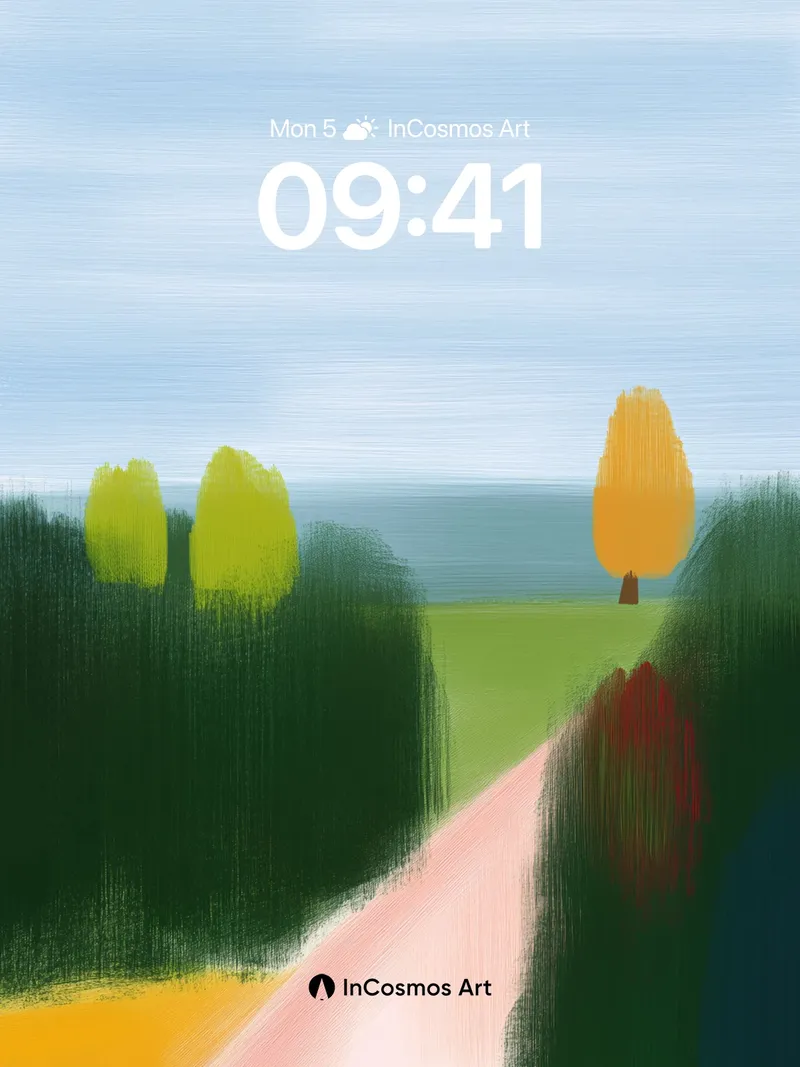
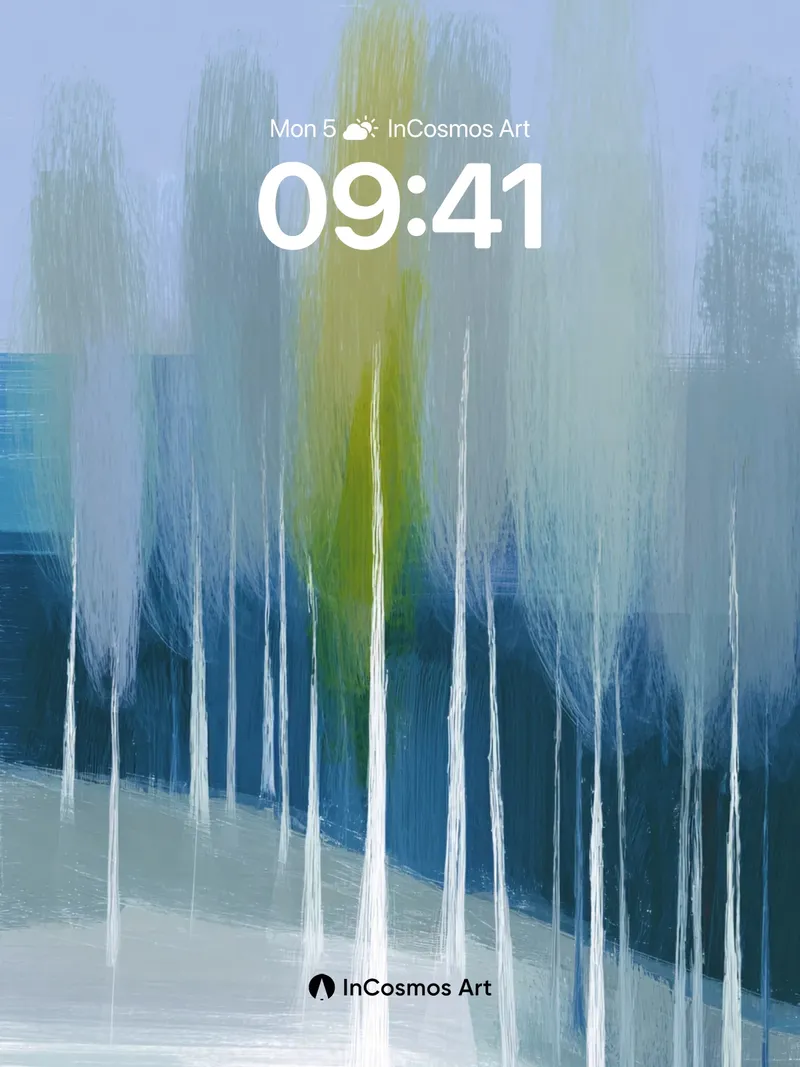
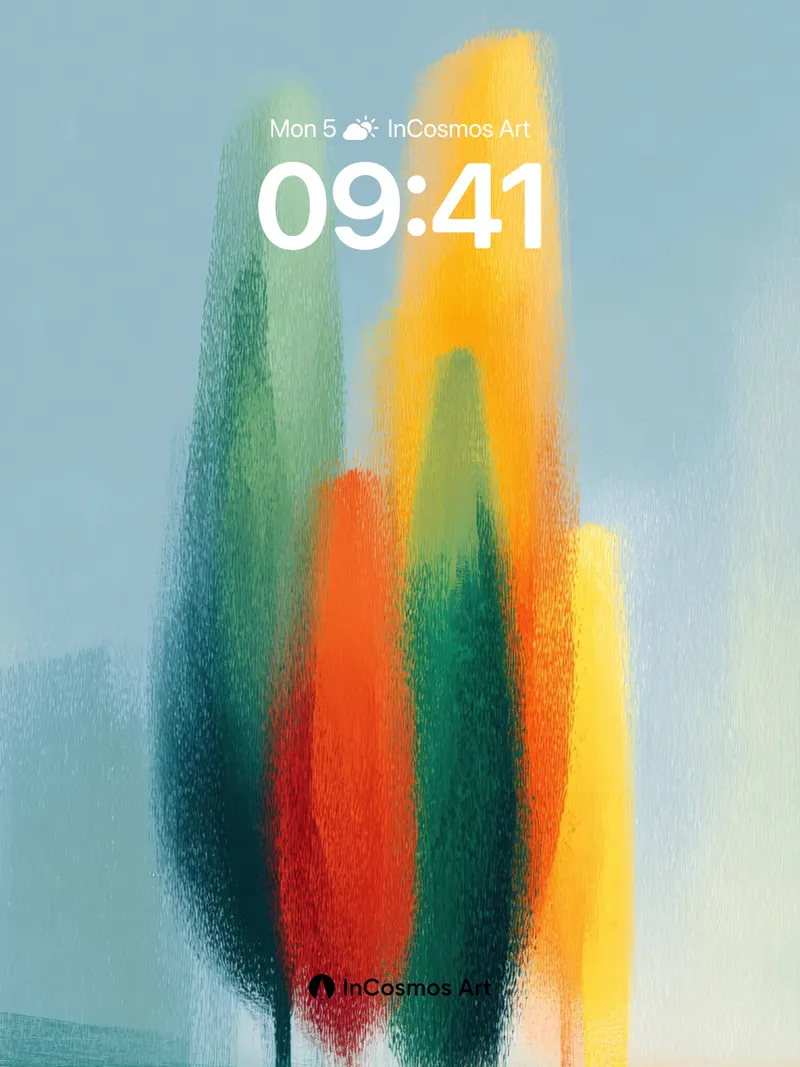
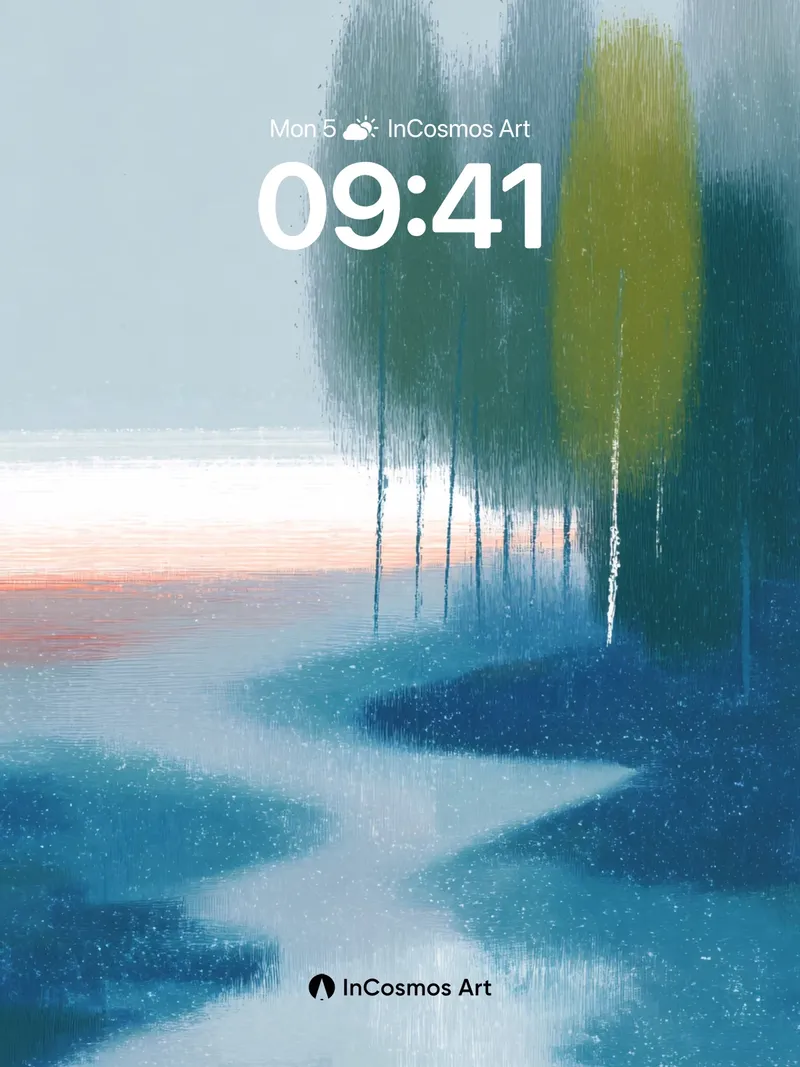
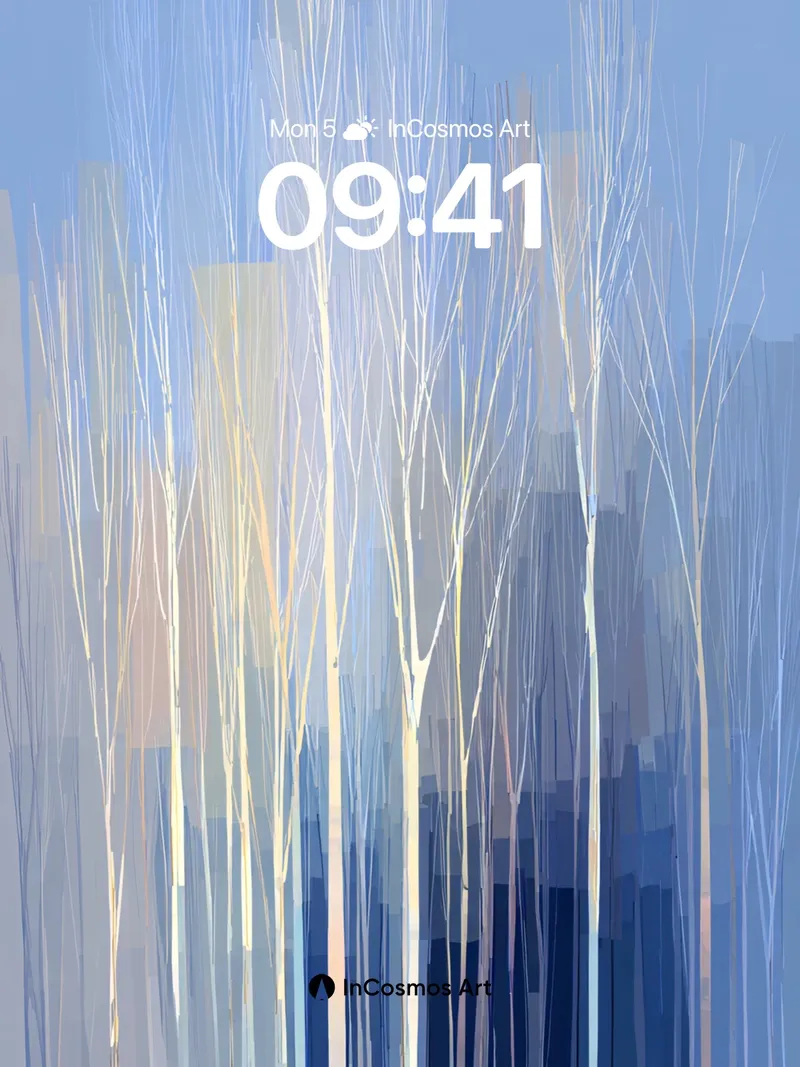
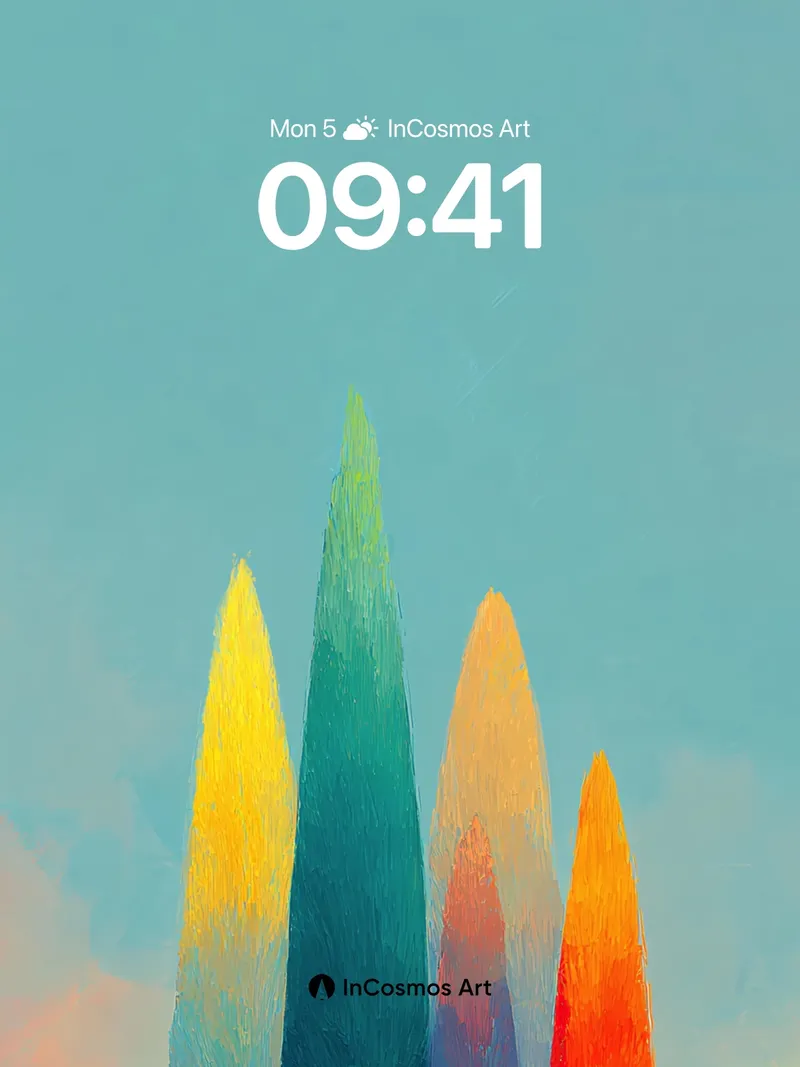
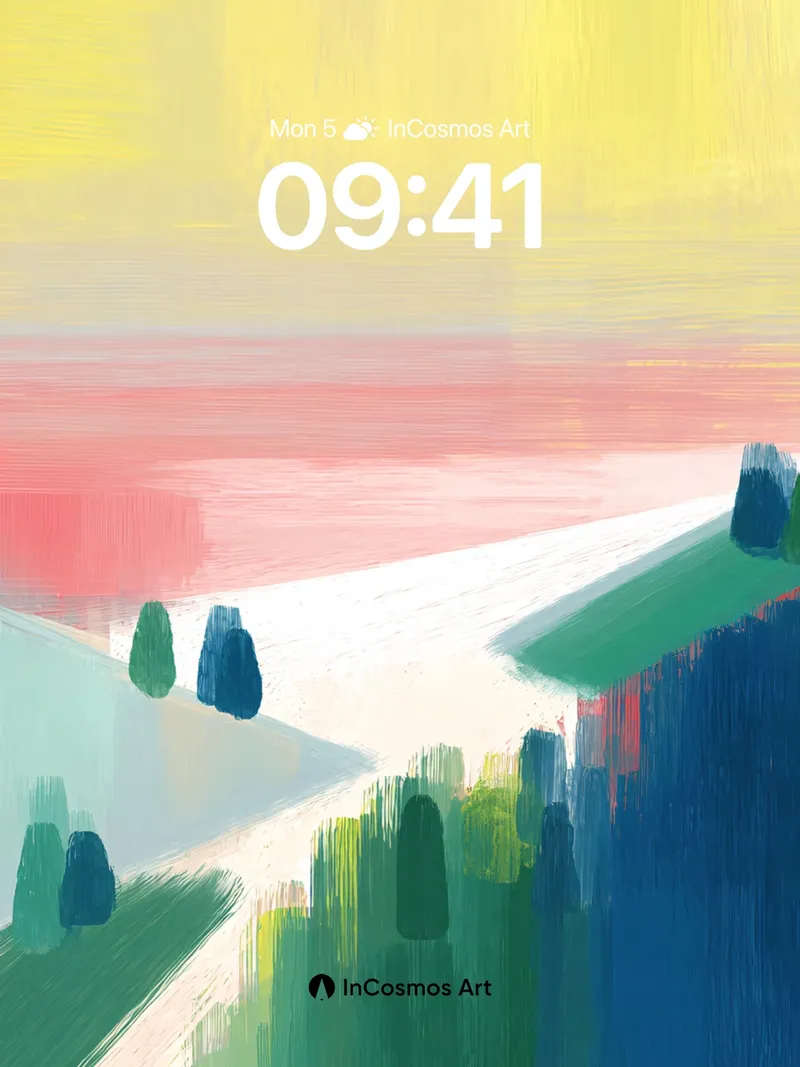
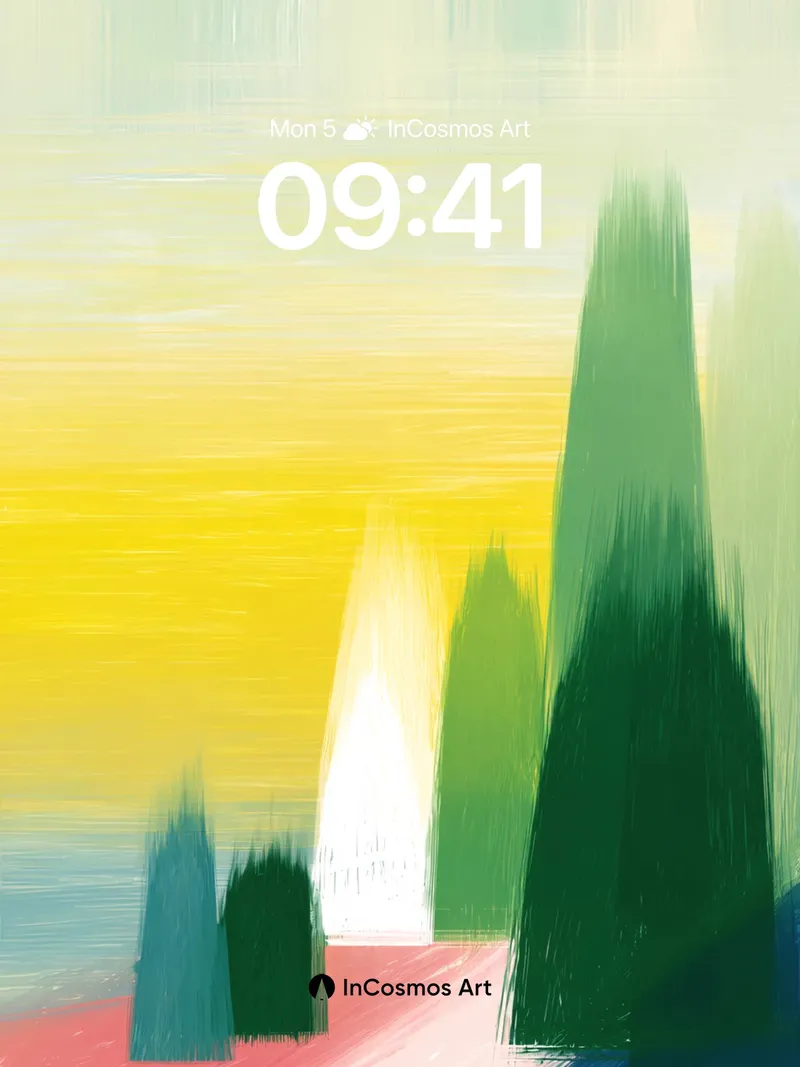
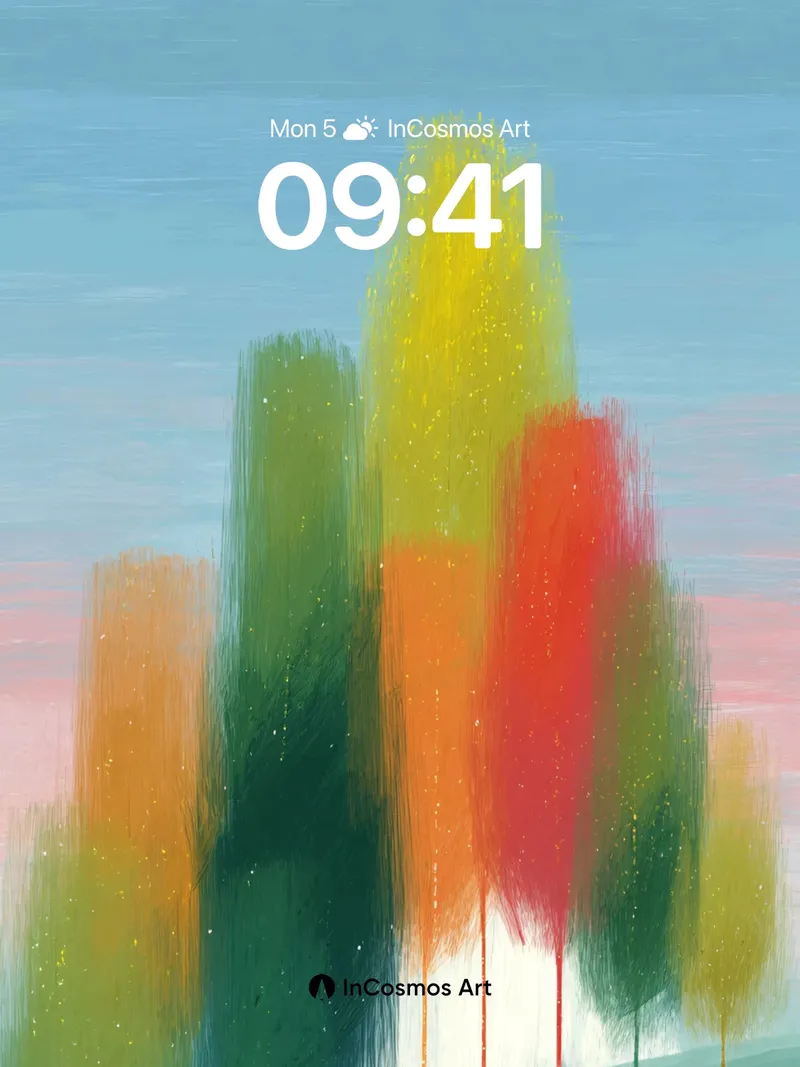
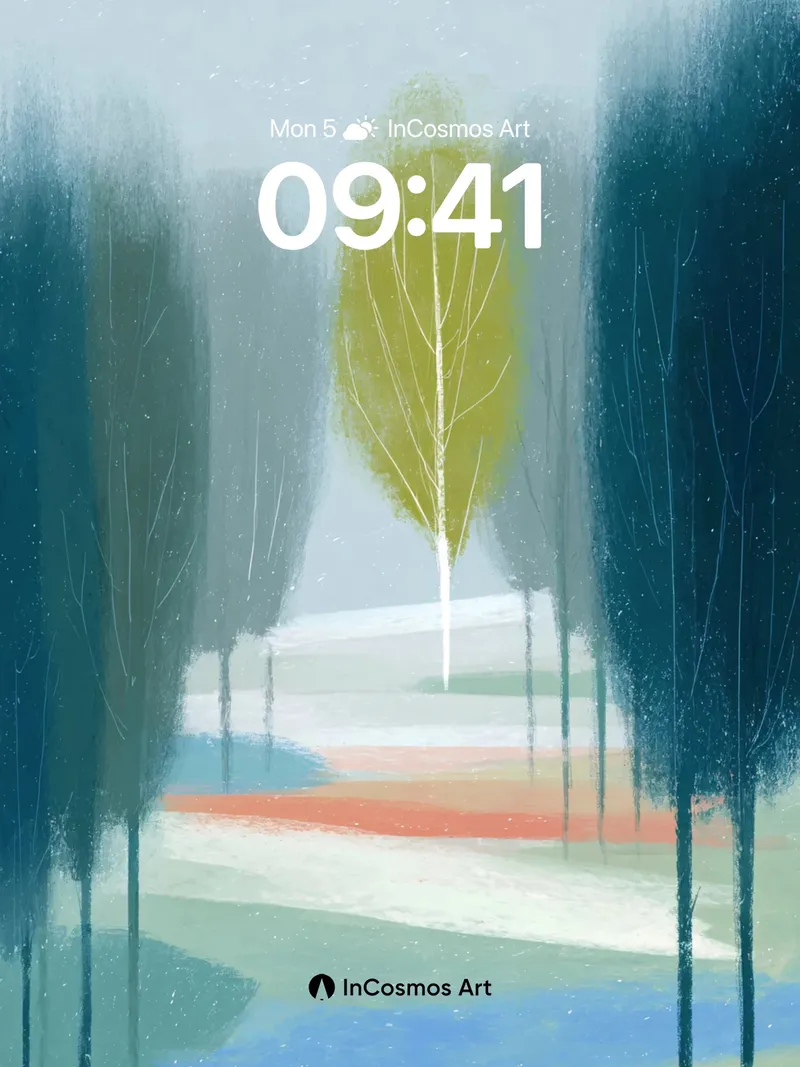
Light moves through the treetops like a silent language. It does not speak of seasonal change, yet marks time's passage through shifts in saturation. These forms are not real trees but embodiments of emotion—green as contemplation, orange as lingering warmth, red as unspoken desire. They stand by water or on slopes, their outlines softened as if brushed by wind. This softness is not imperfection but a yielding to reality, a redefinition of perception’s limits. When vision ceases to demand clarity, the mind gains greater space.
Color as Presence
Color here is not decoration but proof of being. Each stroke carries temperature; each hue responds to an internal rhythm. Blue signifies deep solitude, yellow morning light, pink transition and hope. They overlap and merge into a nonlinear narrative structure. No beginning, no end—only continuous breath. This mode of expression refuses definitive answers but offers emotional release.
The Abstraction of Nature
Trees are stripped of leafy details, retaining only vertical posture. This simplification is not reduction but elevation. It removes nature from concrete experience, making it a symbol of inner worlds. Water reflections blend with sky, boundaries dissolve, forming a weightless space. One cannot enter, yet sees one’s own reflection within. This is a philosophical experiment in viewing—what is seen is not landscape, but projection.
Emotional Topography
These compositions form an emotional map. Tall green suggests stability, low shadows indicate suppression, bright orange-red signals release. Arranged along paths, they guide the viewer through psychological zones. Grounds composed of alternating warm and cool planes resemble layers of the mind. Traveling through requires no steps—only movement of gaze completes the journey. This is modern meditation: finding order through color and form amidst chaos.
Folds of Time
White lines in some works resemble temporal markers or snow residue. Thin yet firm, they traverse the composition. Their repetition creates rhythm, evoking pendulums or heartbeats. Yet they are uneven—sometimes dense, sometimes sparse—hinting at life’s irregularity. Here, time is not linear but layered folds waiting to unfold.