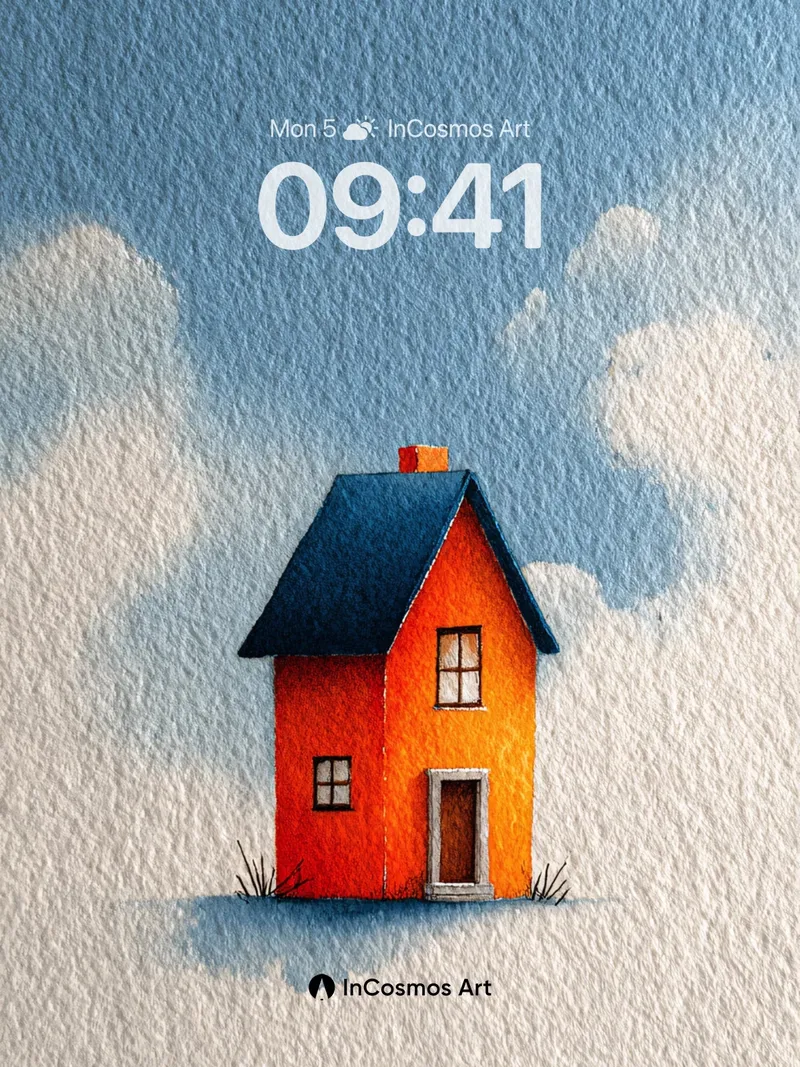
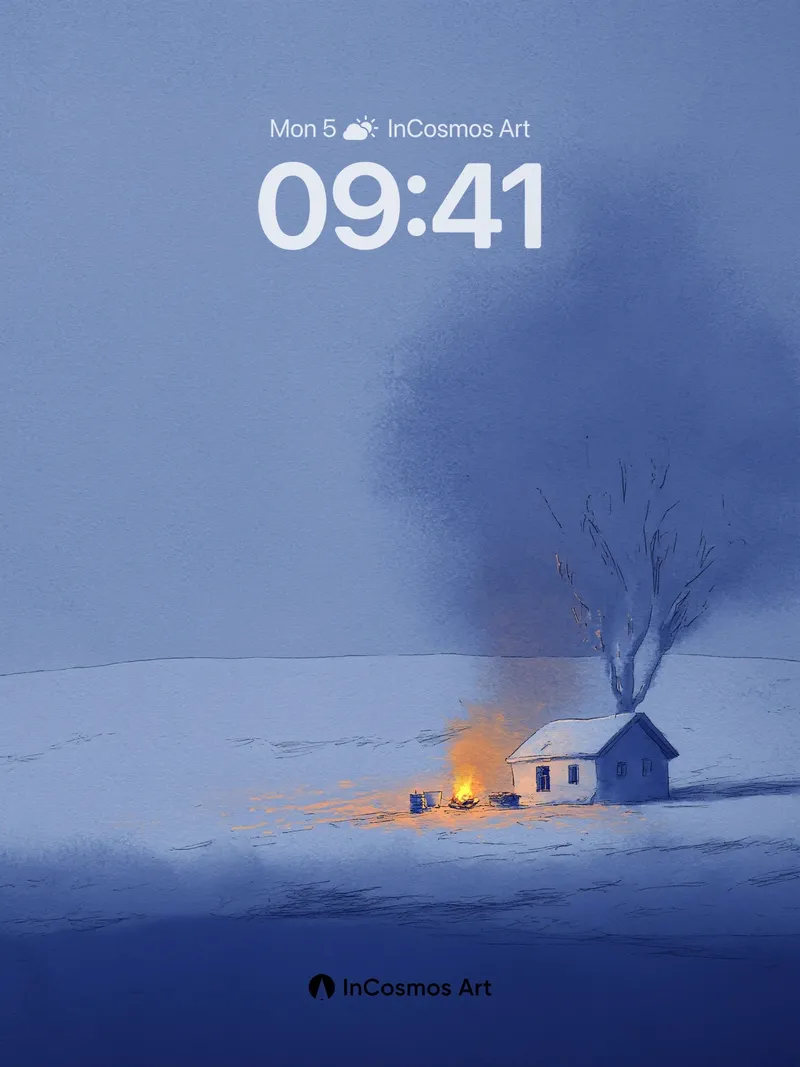
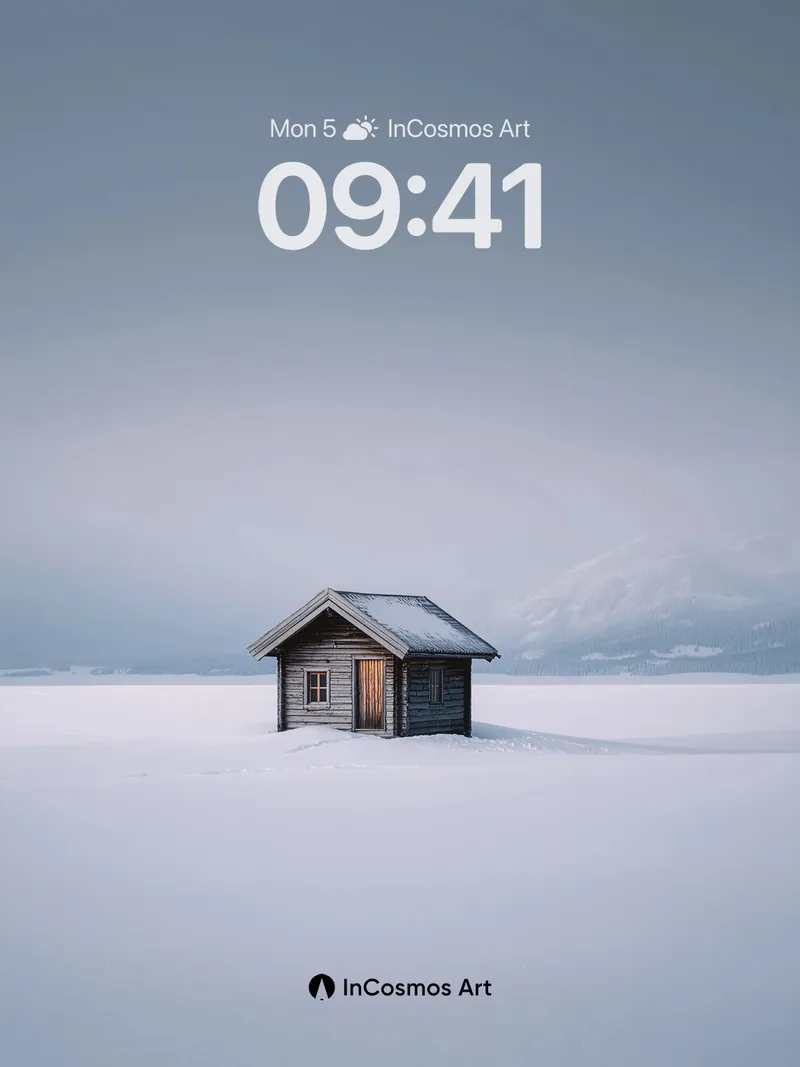
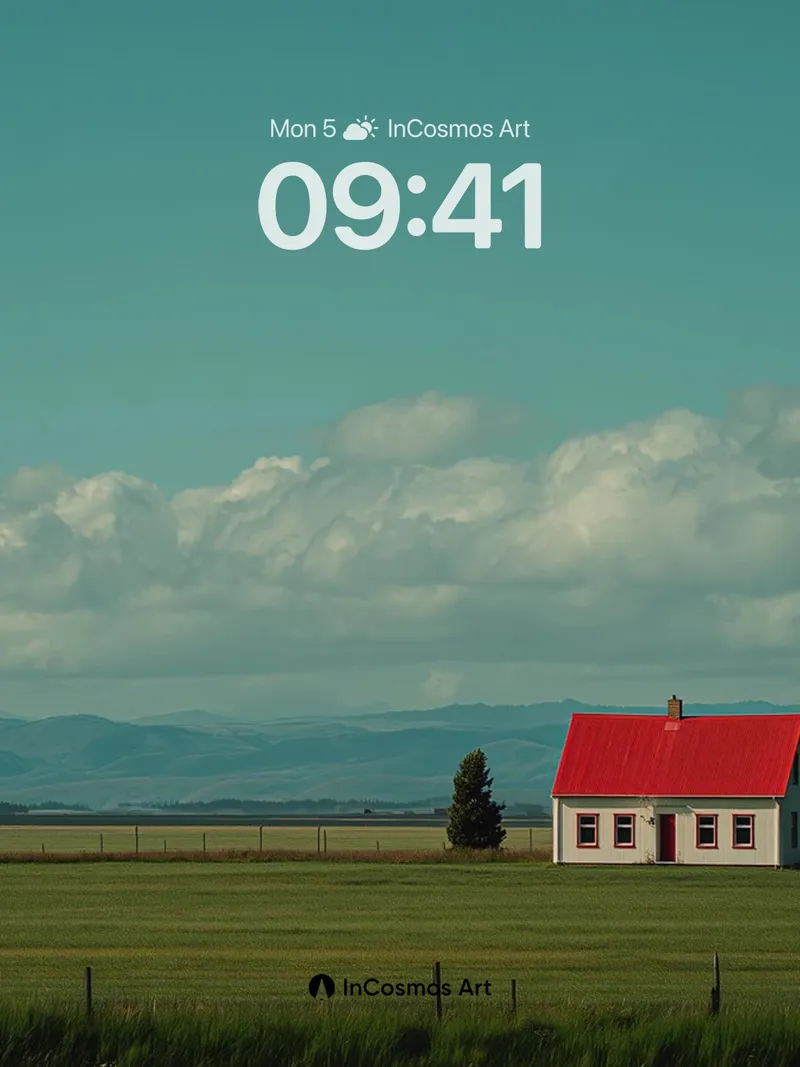
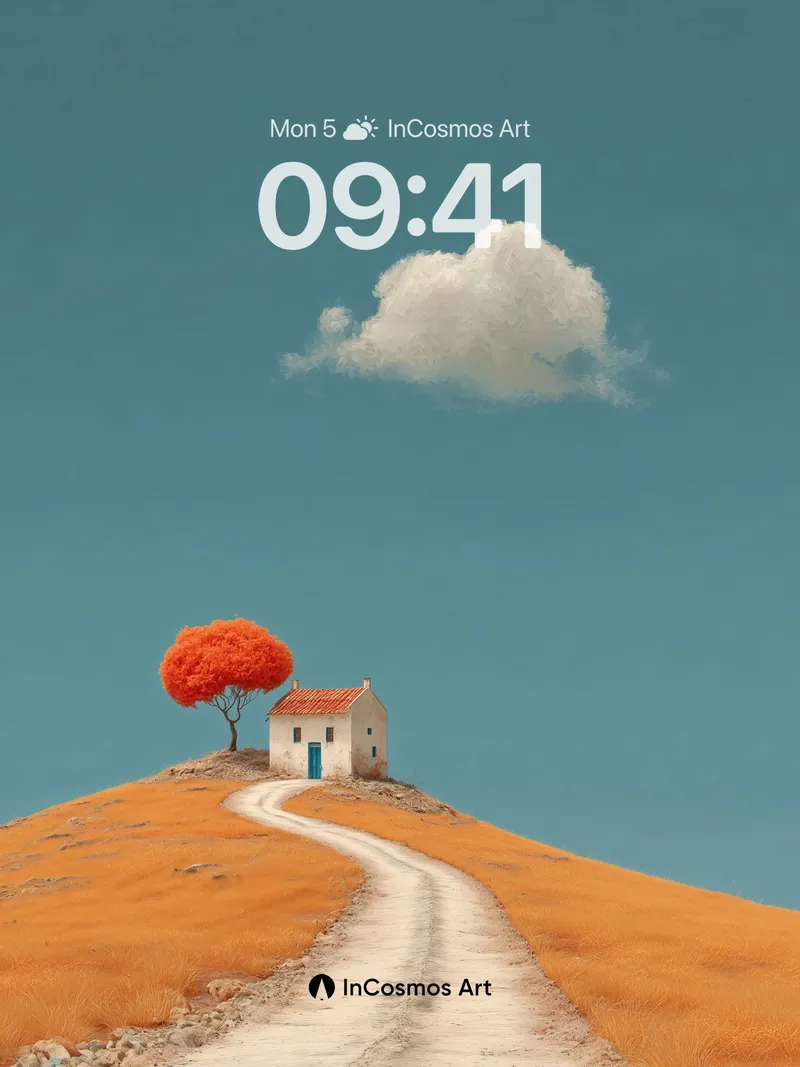
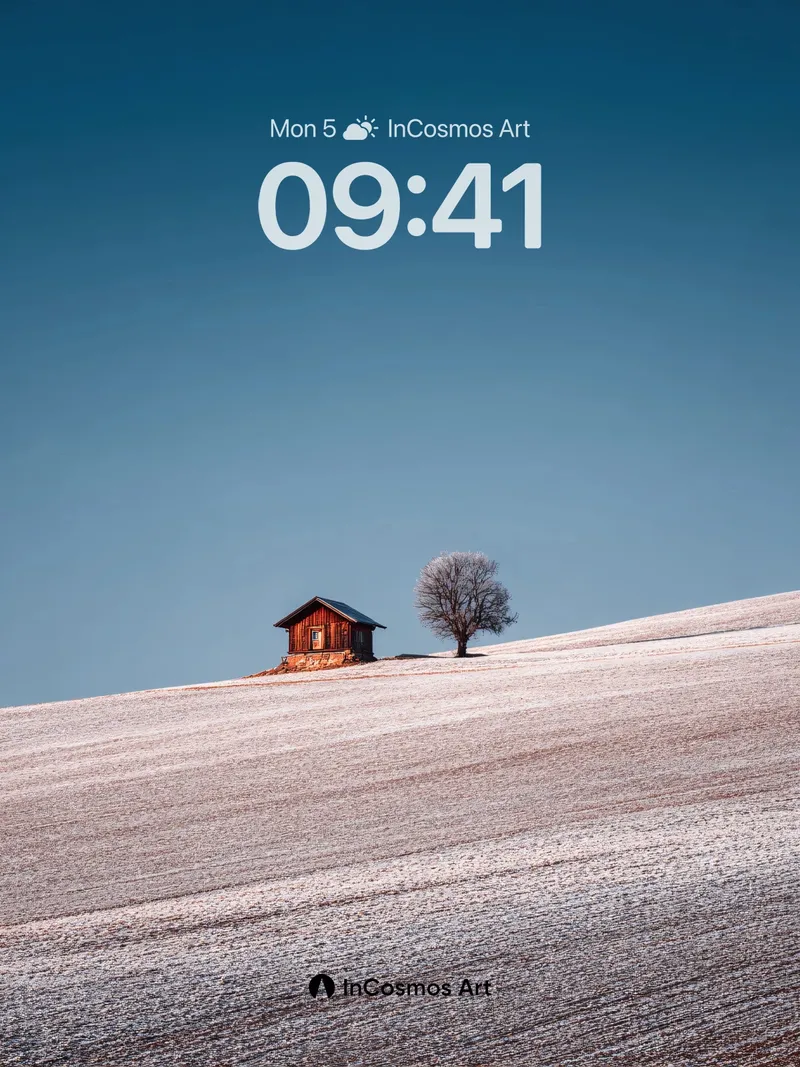
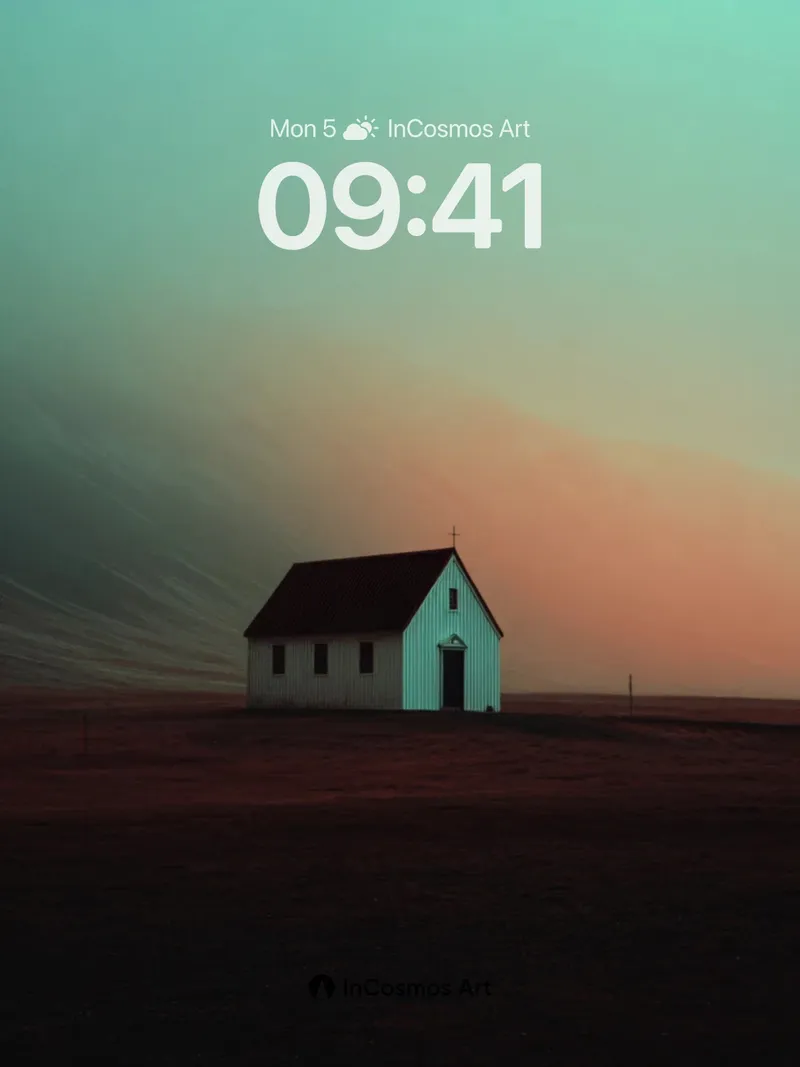
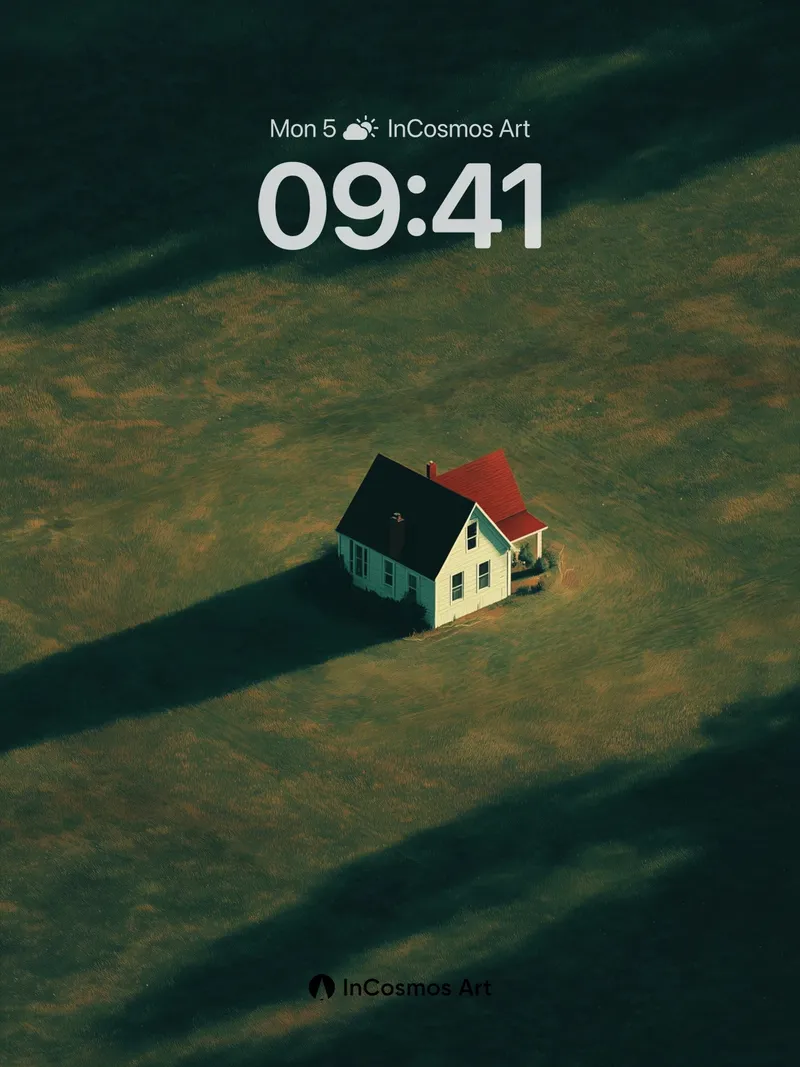
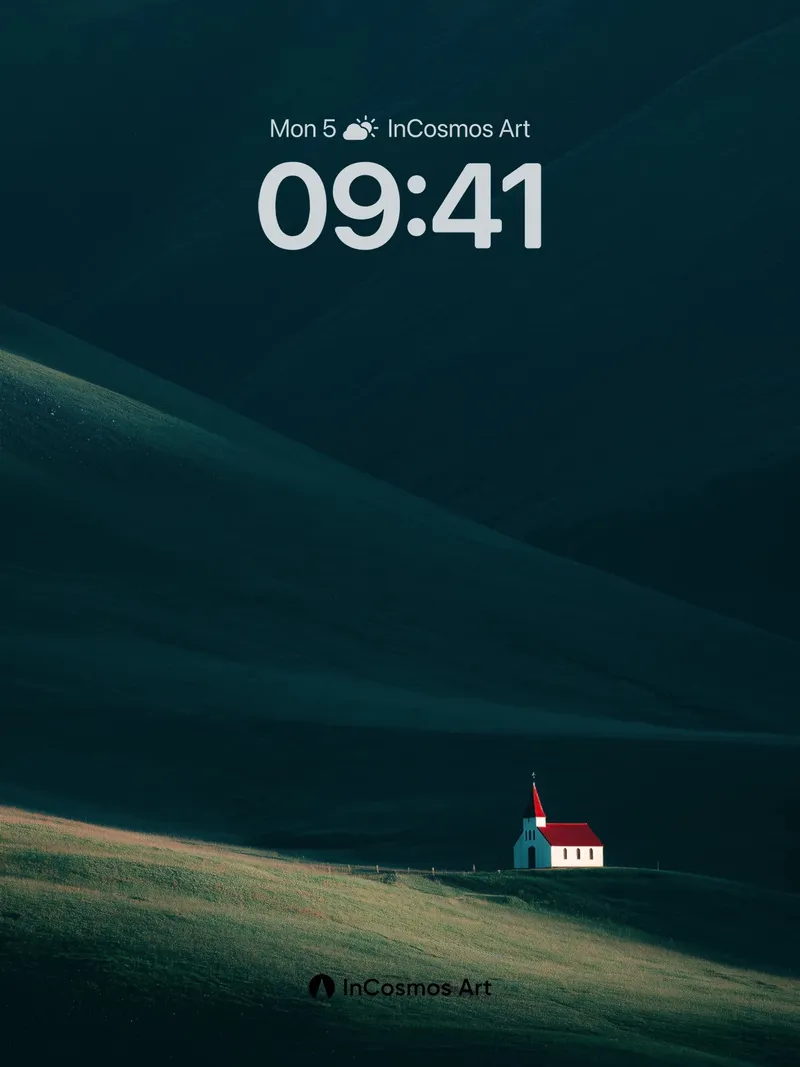
In vast expanses, a single house stands alone. It does not align with urban grids nor follow human crowds. Its presence is a statement—about belonging, boundaries, and the essence of existence. Architecture, an extension of human will, appears small yet resolute amid endless nature. Every curve of the roof, every opening of the door, responds to the rhythm of the environment. This silent confrontation is not opposition but an attempt at coexistence. Wind moves through emptiness, snow blankets the ground, light casts shifting shadows, while the house remains present—a mediator between observer and observed.
Order in Solitude
The form of the house is simple, its structure clear, symbolizing humanity's effort to impose order on chaos. Whether atop orange meadows or in the center of ice fields, it expresses stability through geometric language. This formal restraint serves as psychological shelter. When the outer world shifts dramatically, the inner space remains constant. Windows emit warmth, doors remain closed, indicating dual needs for privacy and security. The building is not merely shelter—it is a spiritual anchor.
The Scale of Nature
Mountains, oceans, and skies form a grand narrative backdrop. In this context, the house shrinks into a symbol. It reminds that individual existence is insignificant against the cosmos. Yet, precisely because of this smallness, it gains unique dignity. The red house before snow-capped peaks, the white house beneath twilight hues—they mark themselves through color and placement. Nature does not consume them; instead, it integrates them into a larger rhythm. This relationship transcends ownership, moving toward symbiosis.
Traces of Time
At dawn, the sky glows pink-purple; shadows stretch across snowfields; lights flicker on at dusk—time leaves indelible marks in these scenes. The house becomes a vessel for time, recording seasonal changes and day-night cycles. In some visions, the house floats above paper, detached from reality, entering fantasy. This is not escape but a reimagining of reality. Through artistic treatment, solitude ceases to be deficiency and becomes choice—an aesthetic condition.
Poetics of Space
From aerial views, the house rests on vast fields or frozen plains, creating stark visual contrasts. Lines, proportions, and negative space together form a minimalist aesthetic. This beauty relies not on ornamentation but on spatial relationships to convey emotion. Though small, the house occupies a central position, its symbolic weight exceeding physical presence. It is a focal point, drawing attention and provoking thought: What is home? What is belonging? Answers lie not within walls, but in the interaction between person and environment.