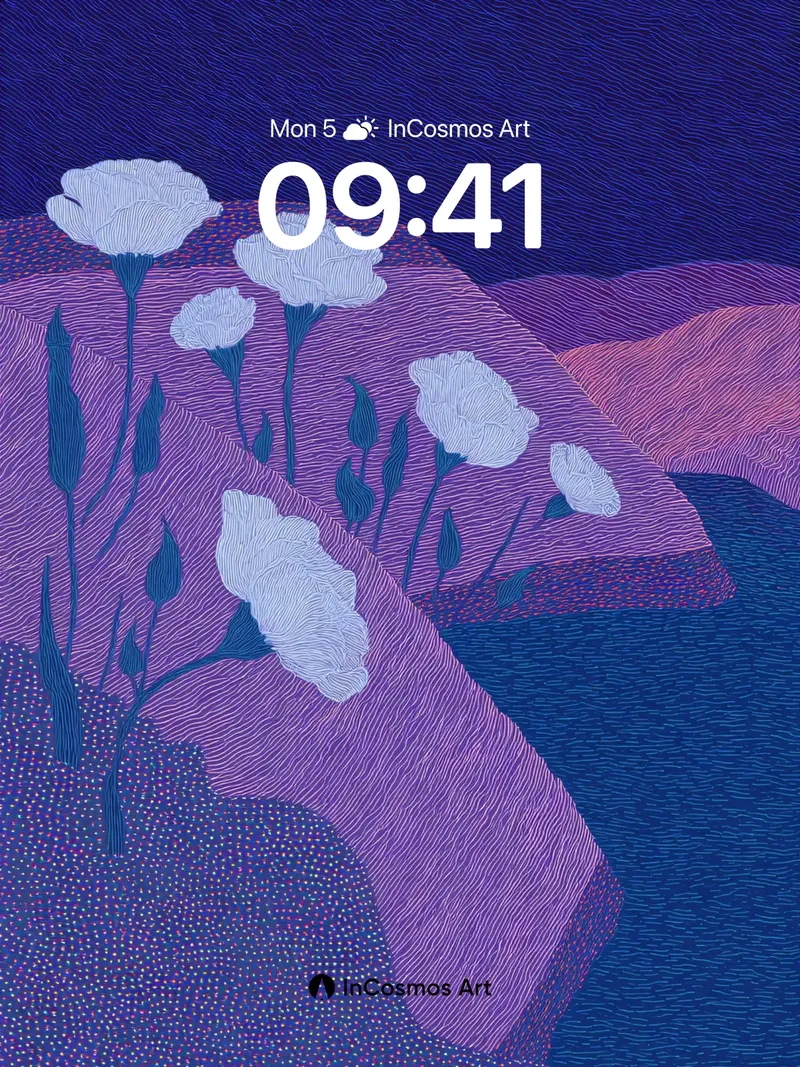
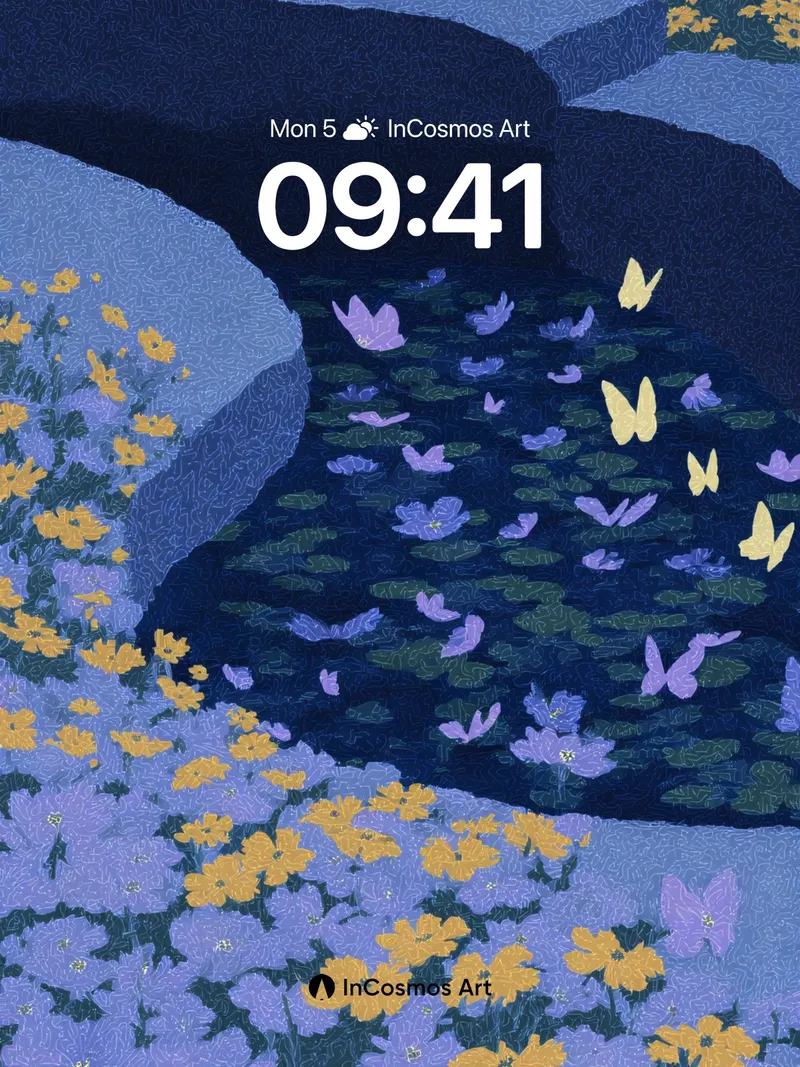
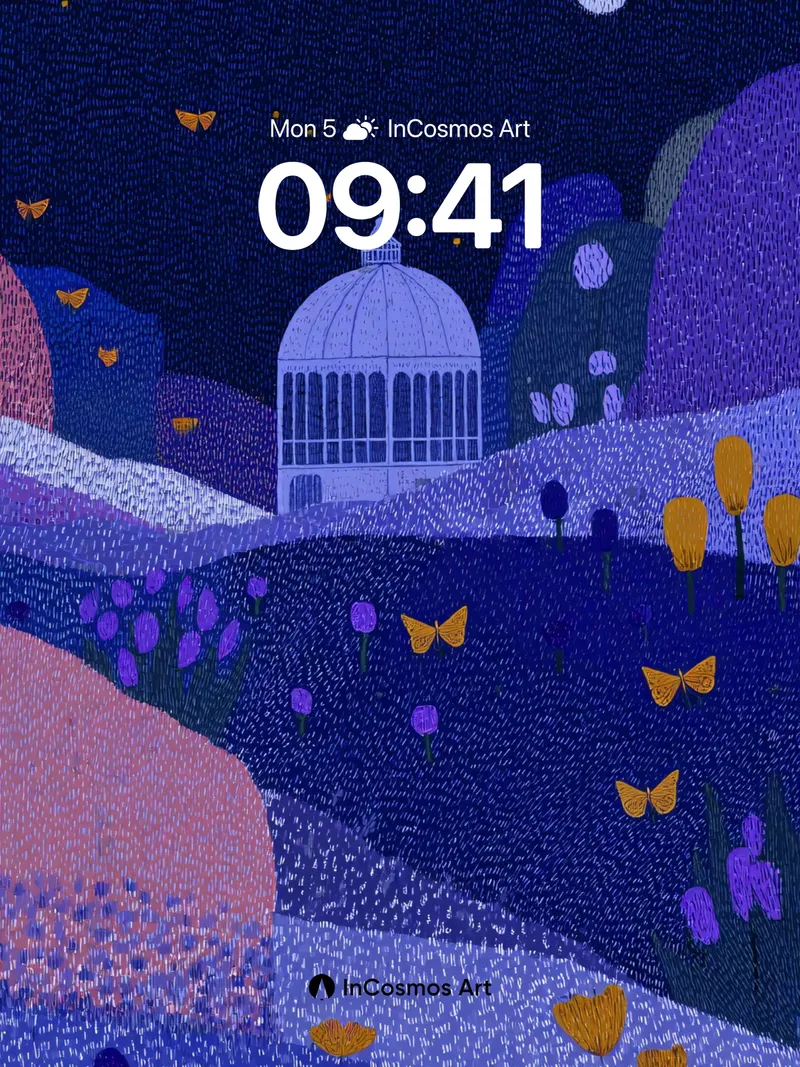
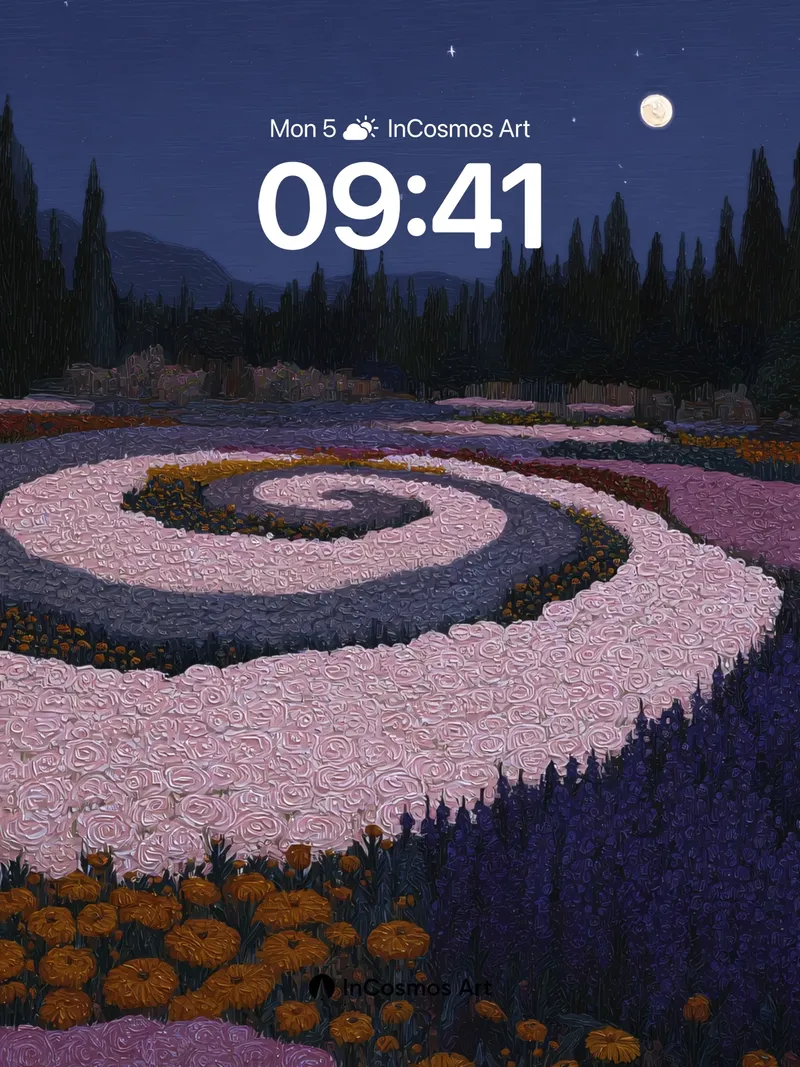
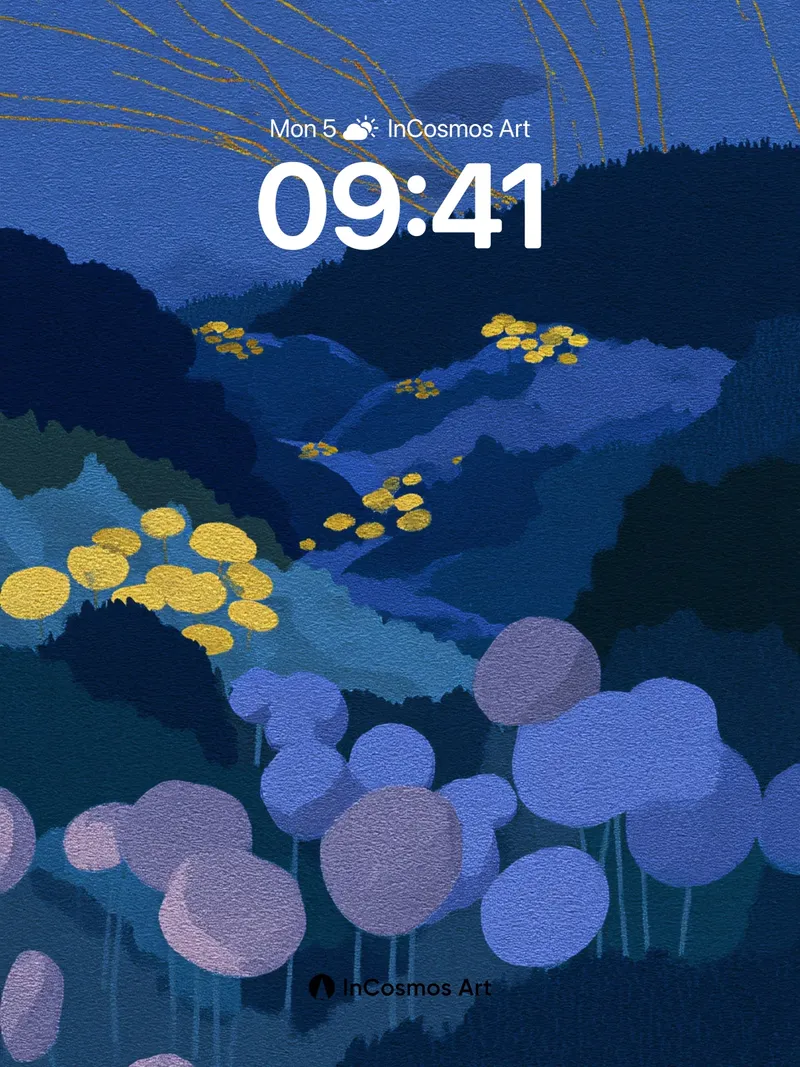
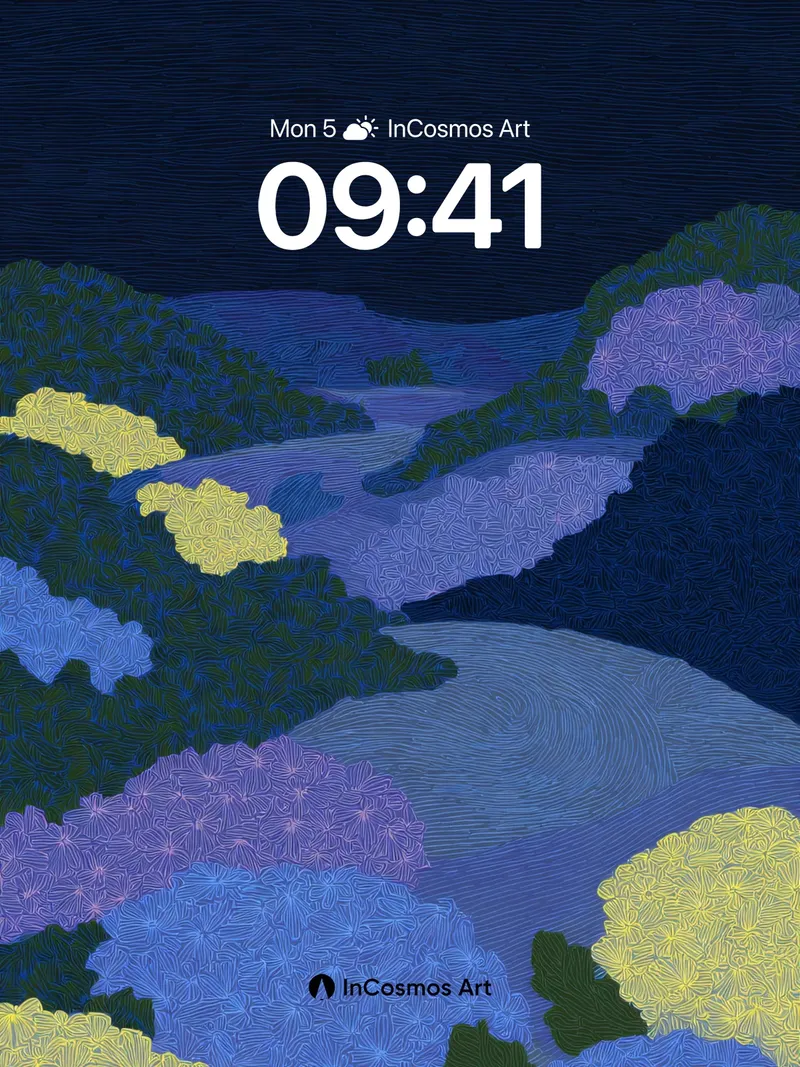
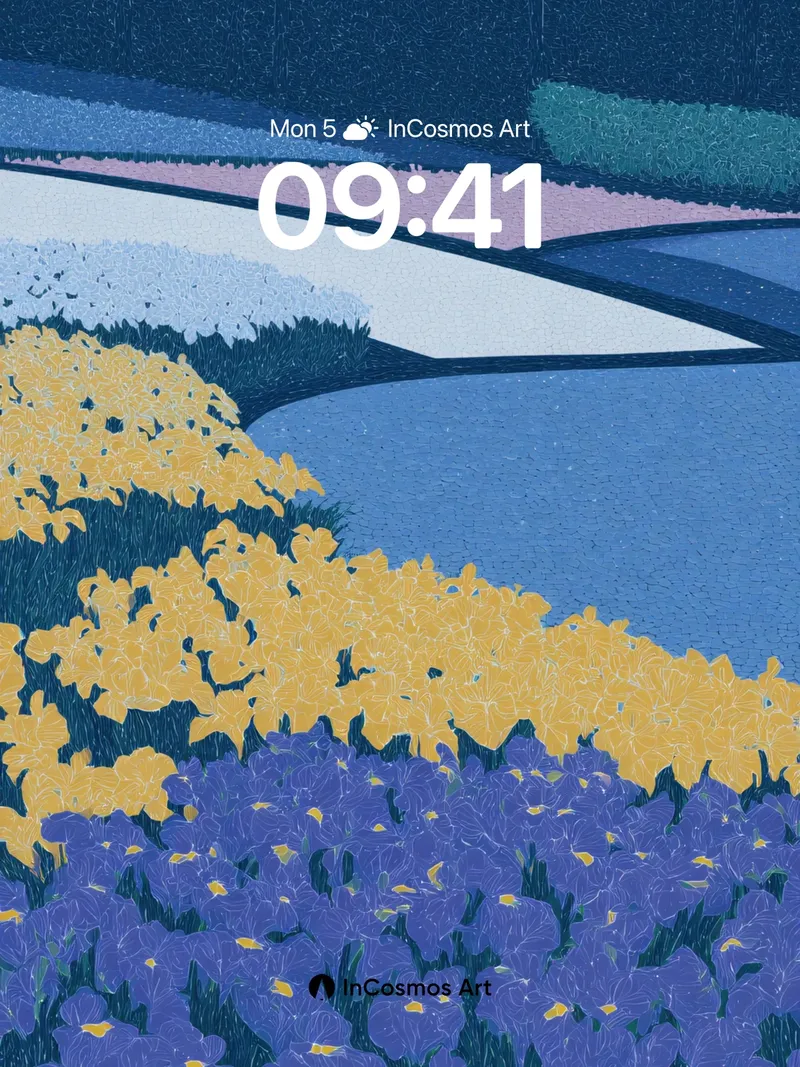
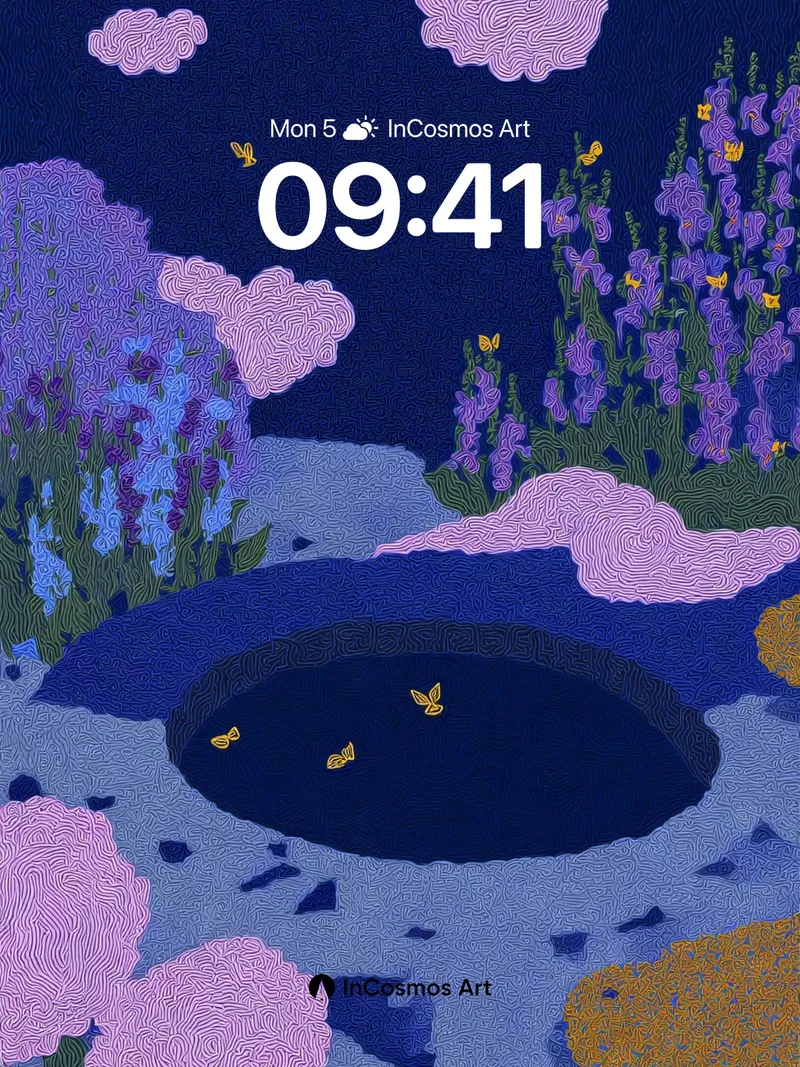
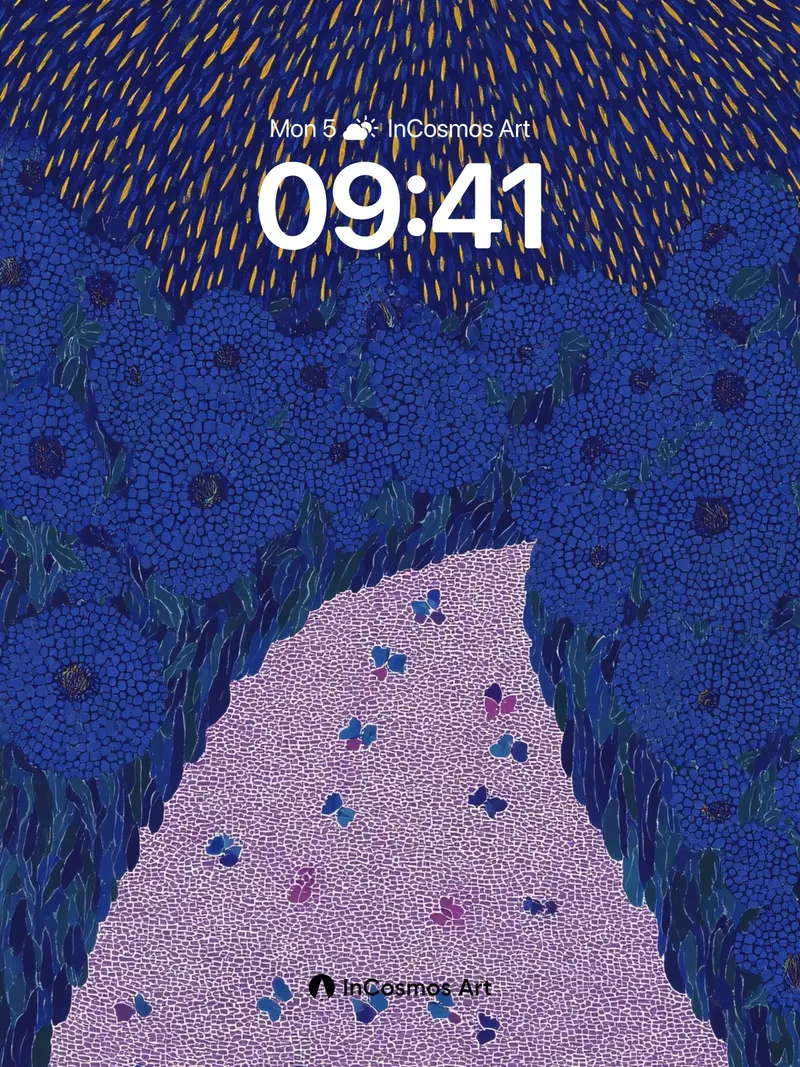
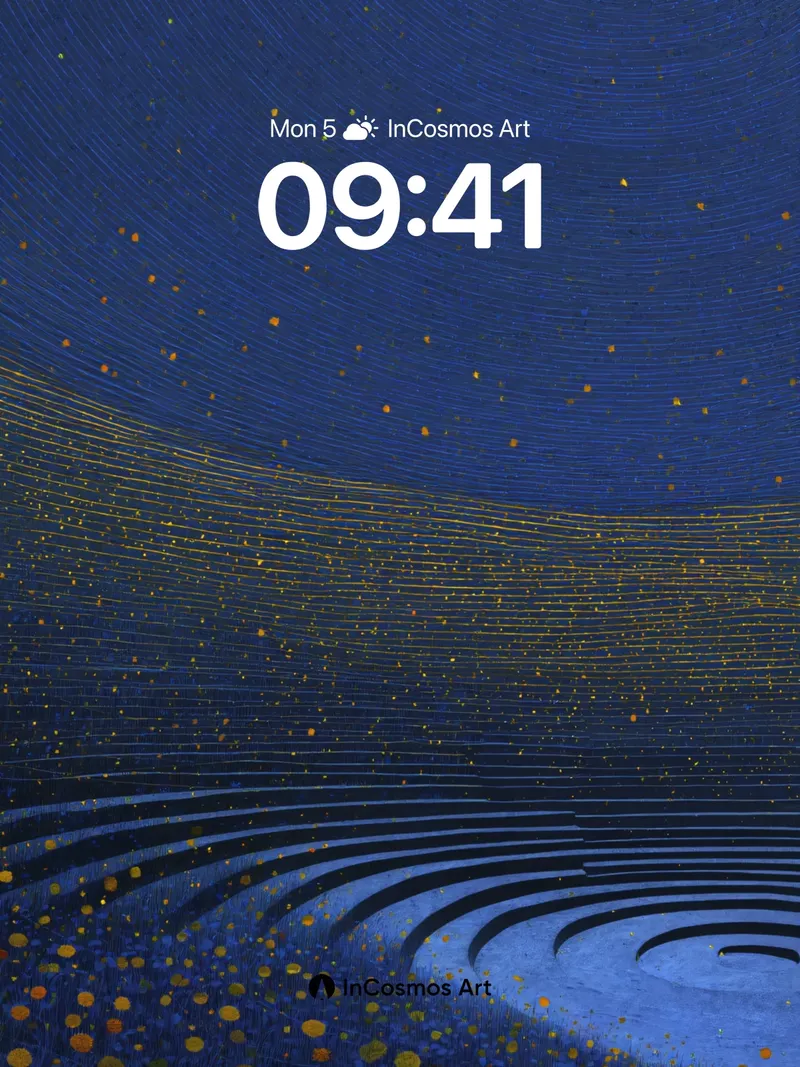
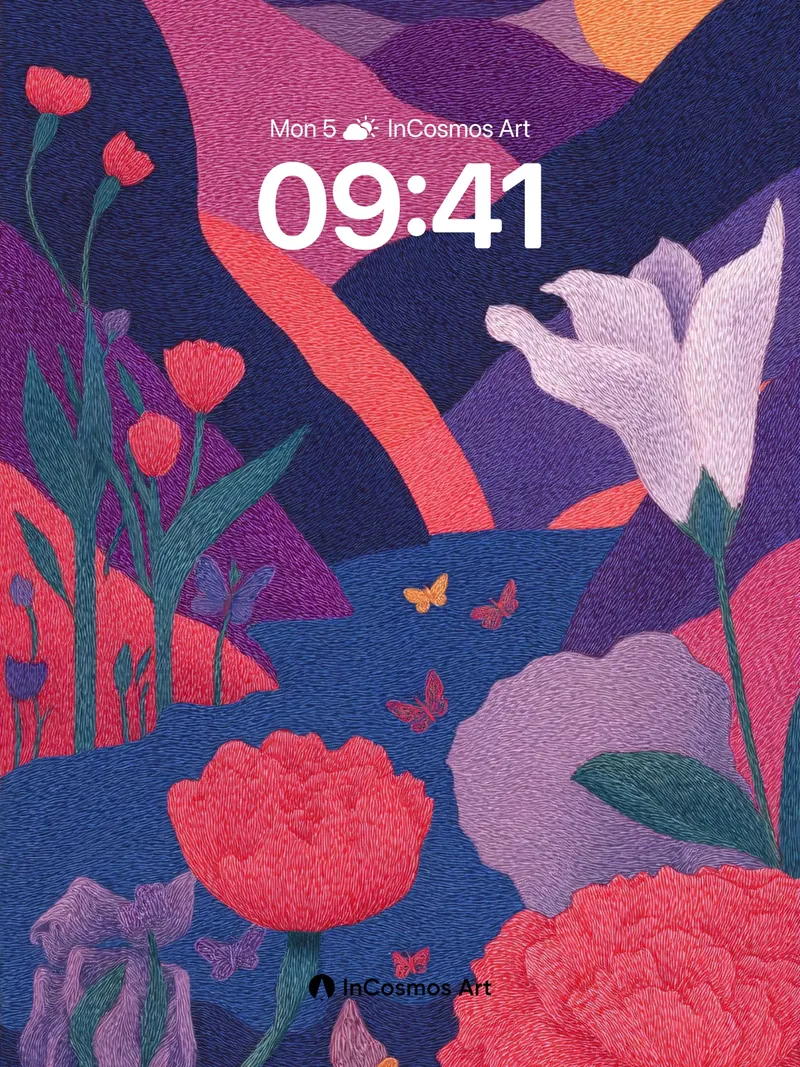
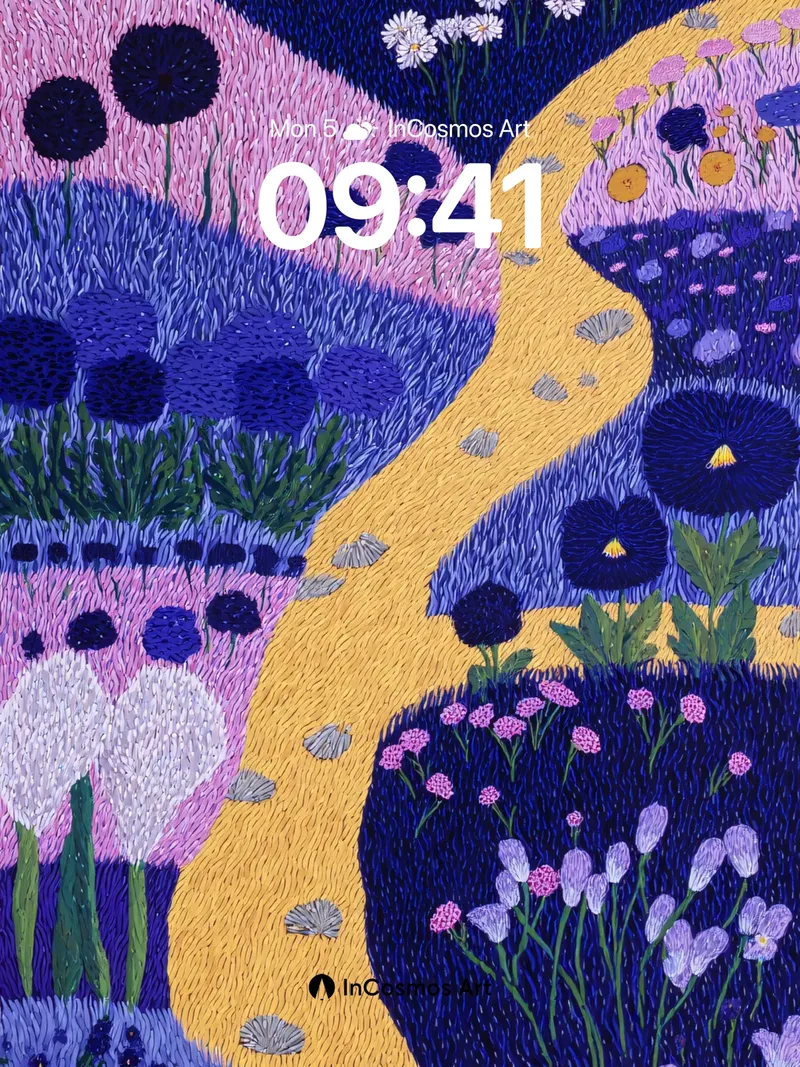
Under a deep blue sky, the earth is woven into a flowing dream. Flowers do not grow at random but are arranged in spirals, curves, and geometric forms, creating an order that is both natural and artificial. This order is not oppressive but harmonious, like the universe breathing in silence. Each path leads to the unknown yet is gently framed by color and shape. Layers of purple, pink, and gold blooms resemble the earth's pulse pulsing quietly through the night. Butterflies skim across petals, leaving fleeting traces—fragments of memory floating through time. These scenes transcend mere decoration; they speak of human reverence for nature and its reconstruction—we attempt to understand the world through patterns, only to discover its uncontrollable beauty.
Floral Trajectories: The Geometrization of Nature
Plant distribution no longer follows ecological logic but submits to visual rhythm. Spiral flowerbeds resemble rotating galaxies, symbolizing the eternal motion of the cosmos. Paths wind like rivers but their edges are precisely defined, suggesting human intervention. This duality reveals modern attitudes toward nature: longing to return to the wild while unable to escape structured thinking. Flower and grass combinations are no longer accidental but carefully designed narrative units, each turn telling a story of belonging and exploration.
Fabric of Night: Emotional Projection in Dark Tones
Dominant dark blue and black hues create a serene atmosphere, as if all noise has been removed. Yet within this stillness, colors become more vivid. Yellow flowers appear like stars fallen to earth, while pinks and violets resemble embers of dreams. Such coloration carries psychological weight—brightness against darkness signifies hope and awakening, a persistent inner call for light. This contrast is not conflict but balance, much like how warmth can be felt even in solitude.
Botanical Metaphor: The Dialectic of Order and Freedom
Apparent regularity contains infinite variation. The same flower appears differently across regions—dense like clouds in some areas, sparse like poetry in others. This variation reflects nature’s diversity and human cognition’s limits. We try to define everything with rules, only to find the rules themselves evolving. The path ends not in closure but in recurring spirals, symbolizing life and time’s endless cycles. This is not merely landscape design but philosophical expression: beauty lies in the tension between order and chaos.