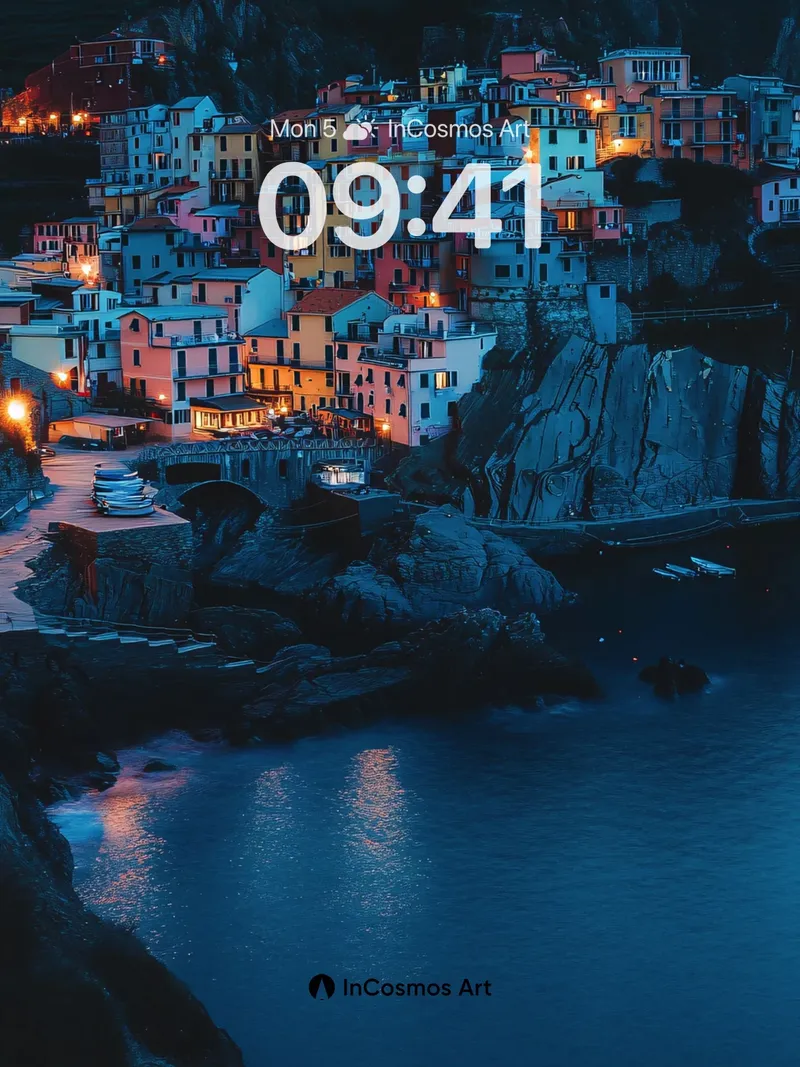
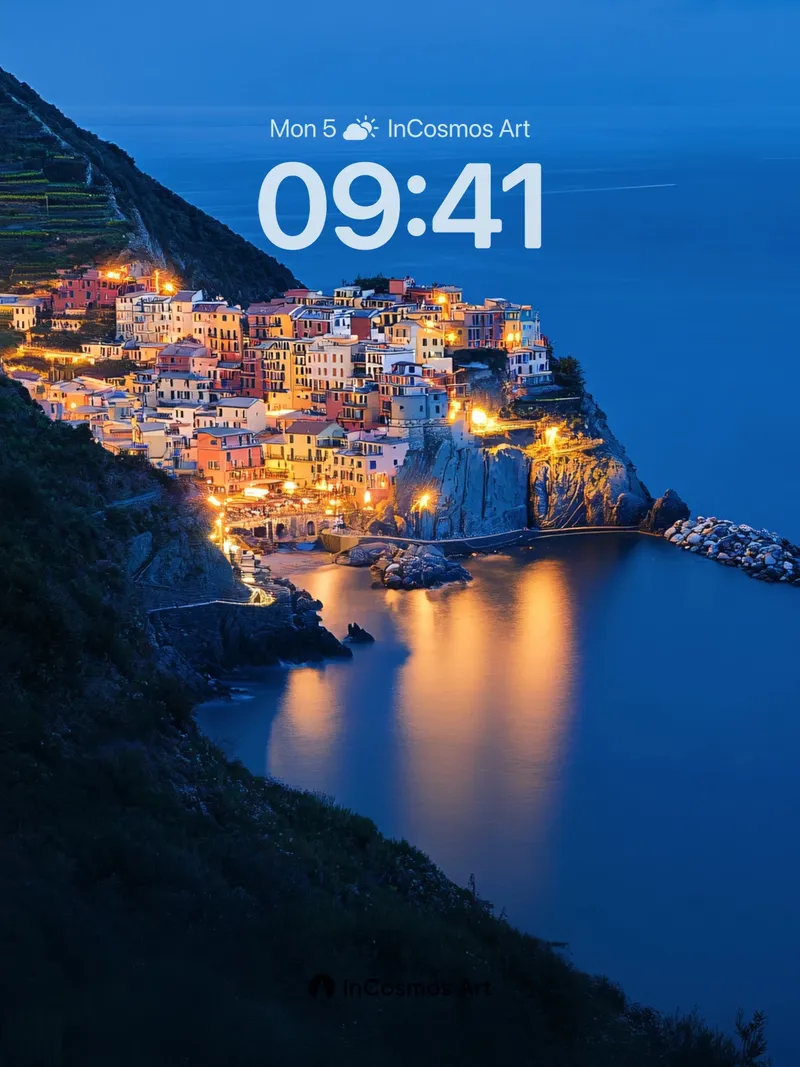
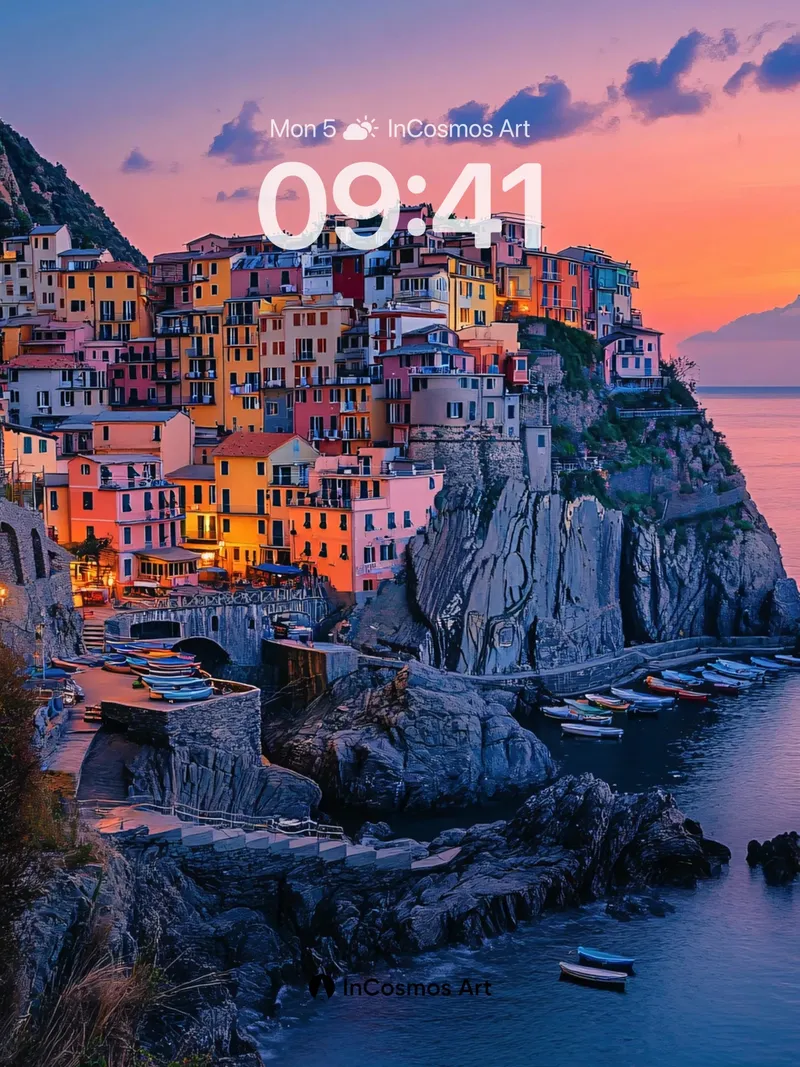
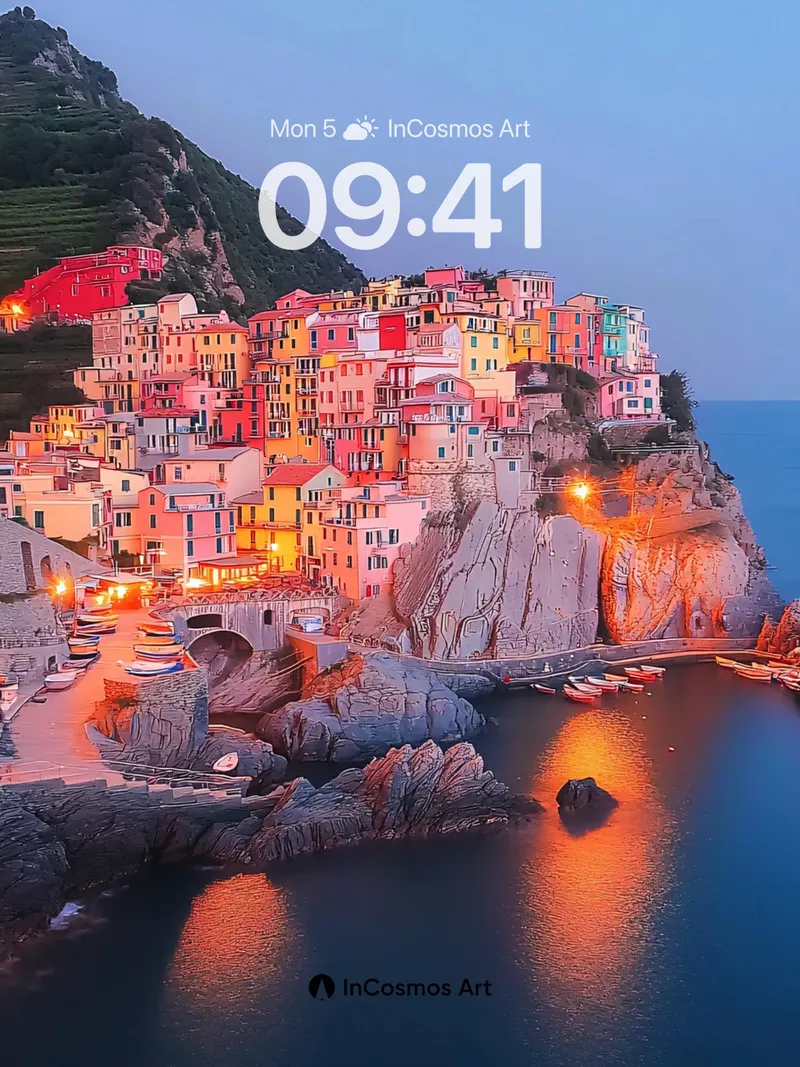
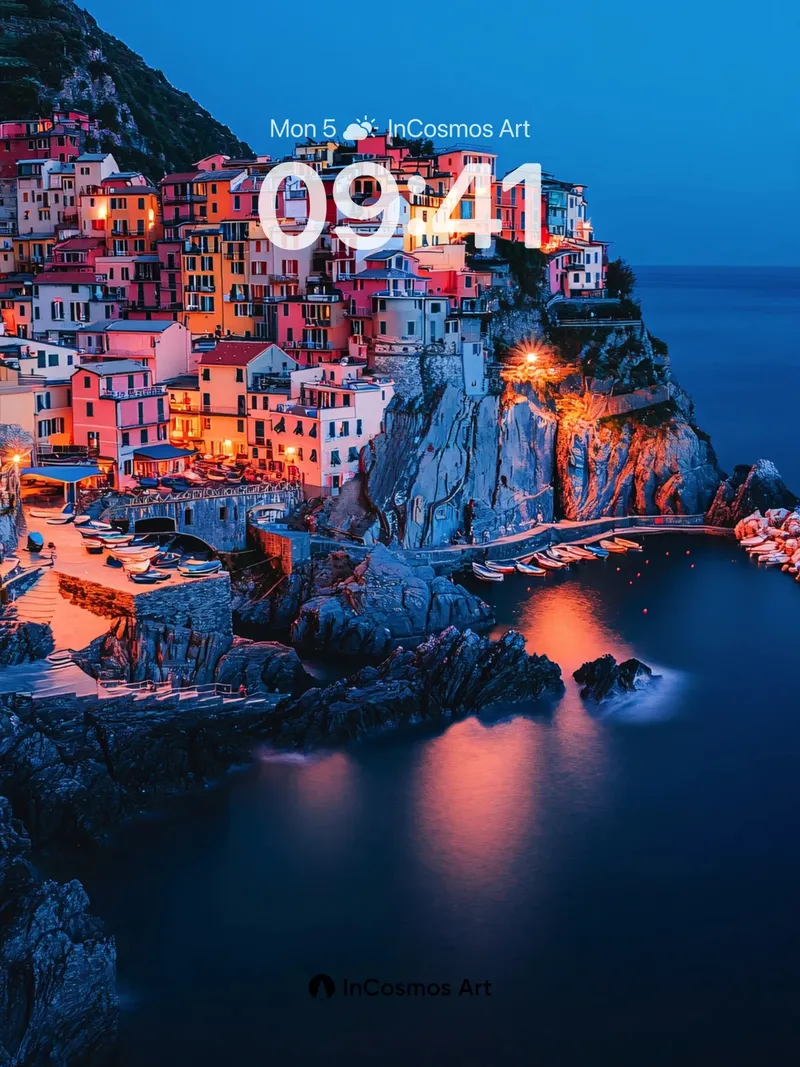
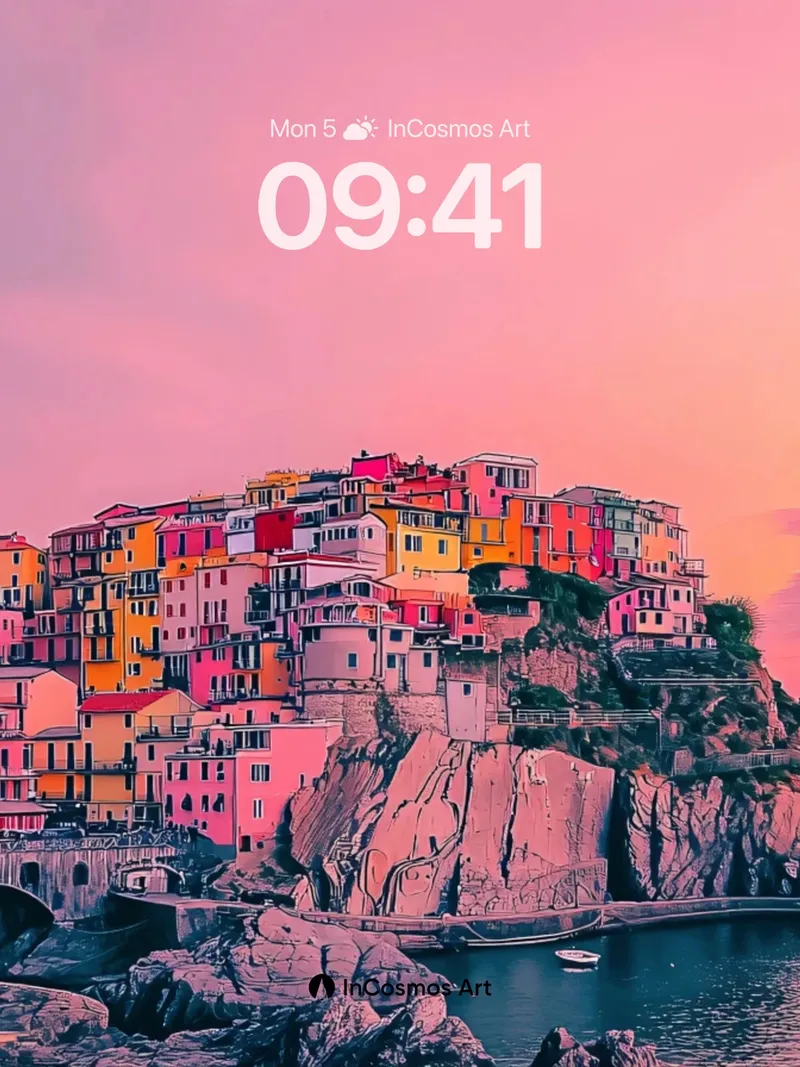
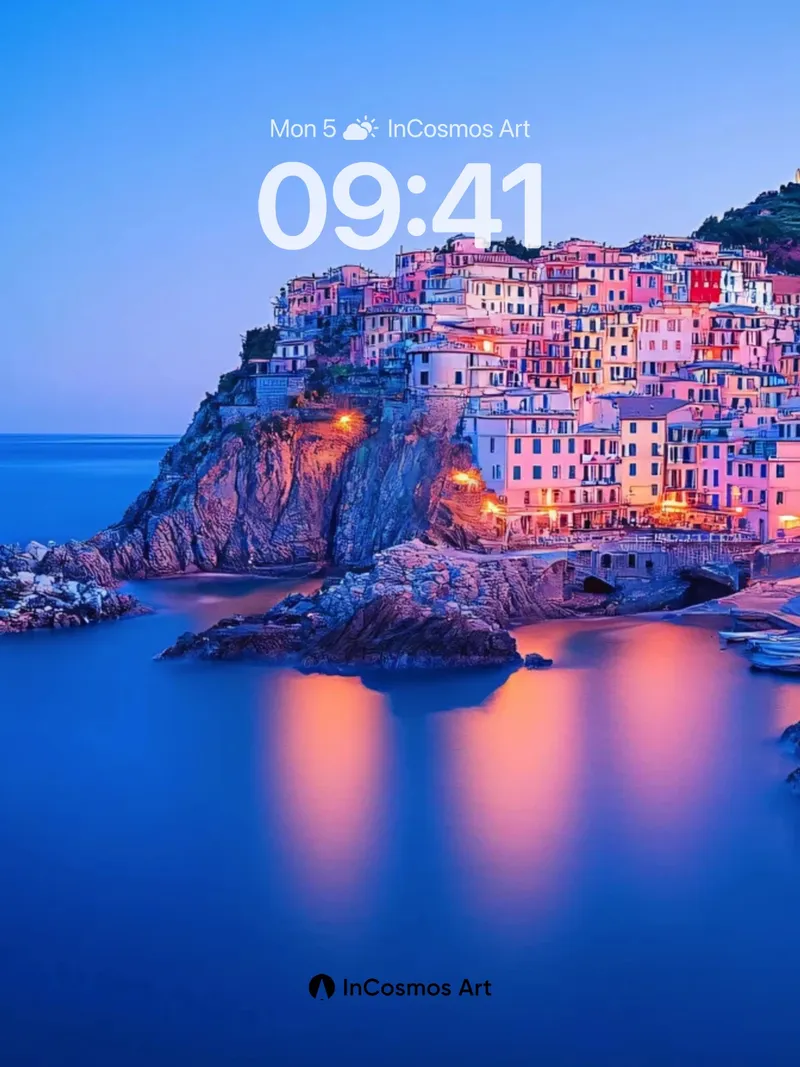
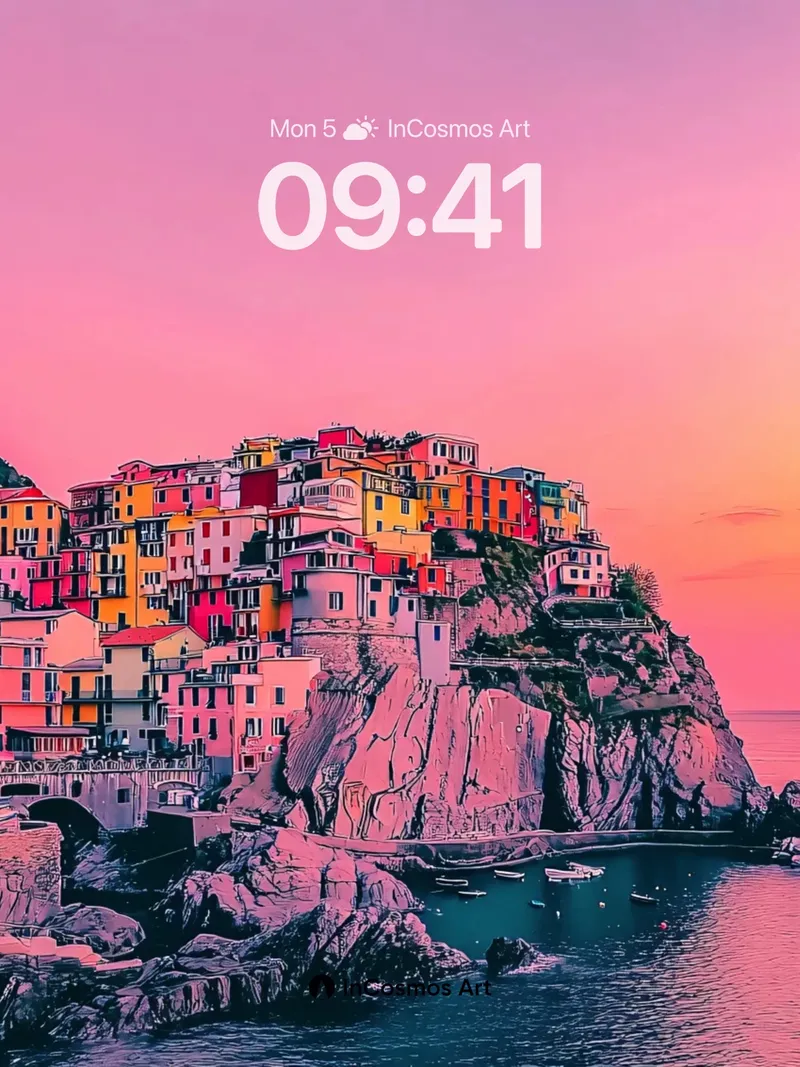
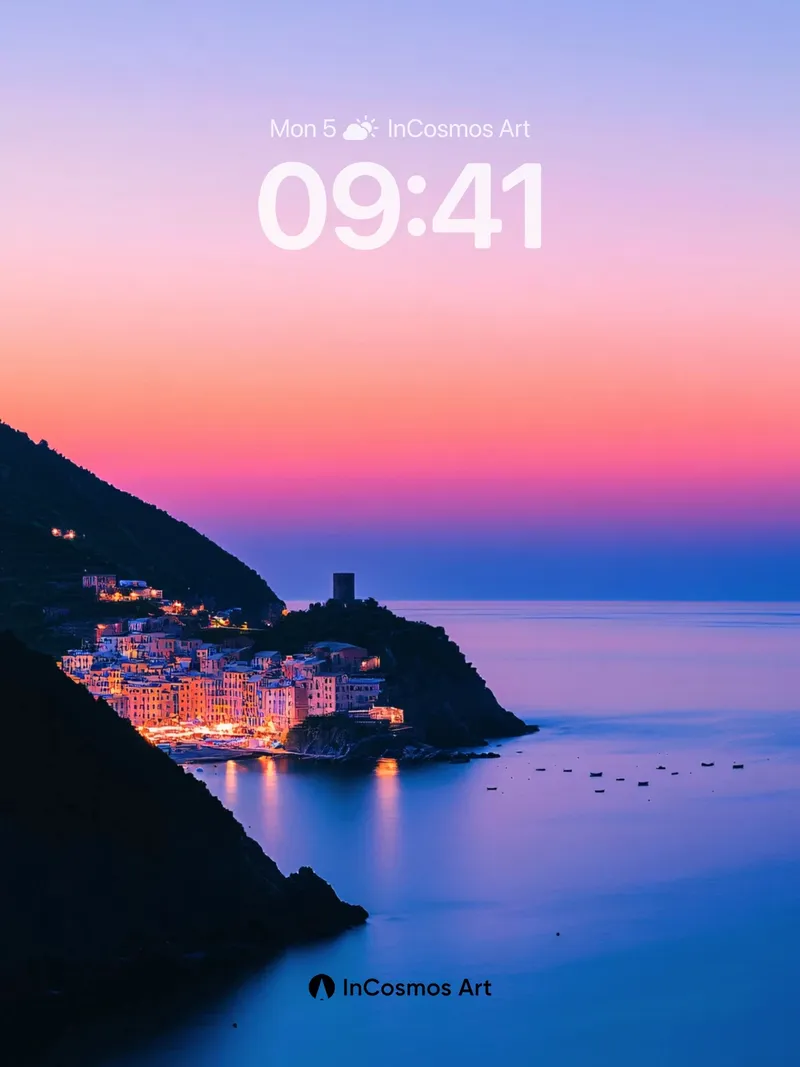
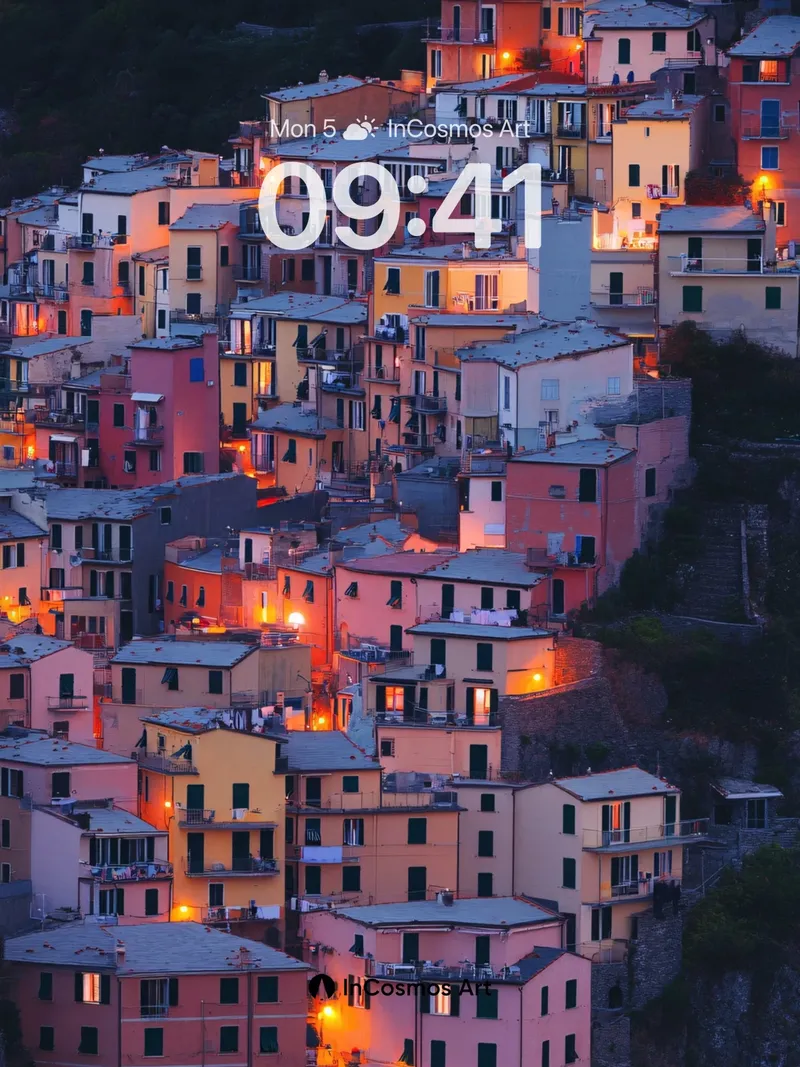
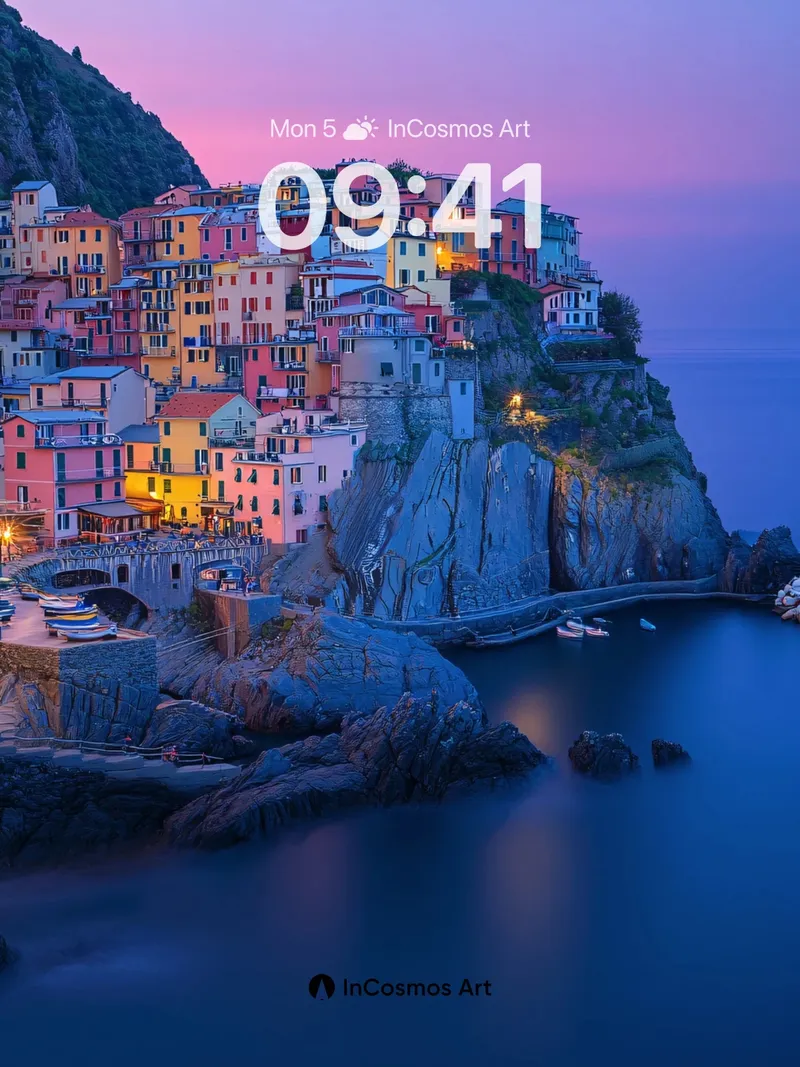
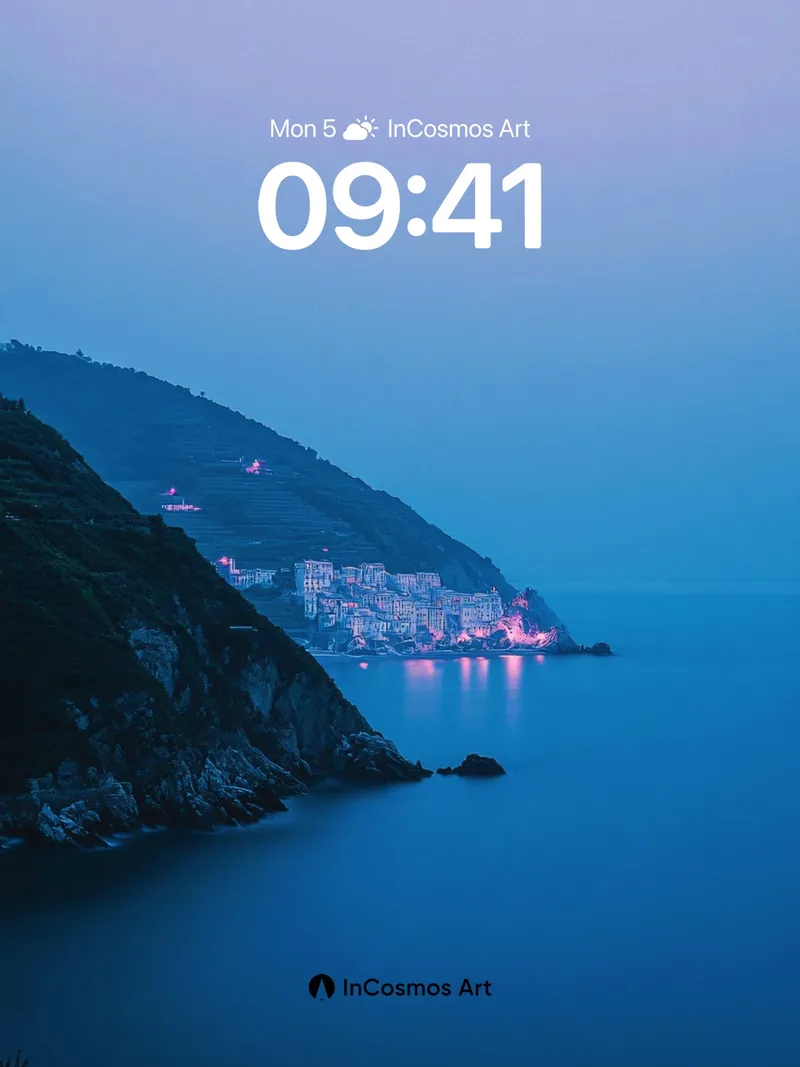
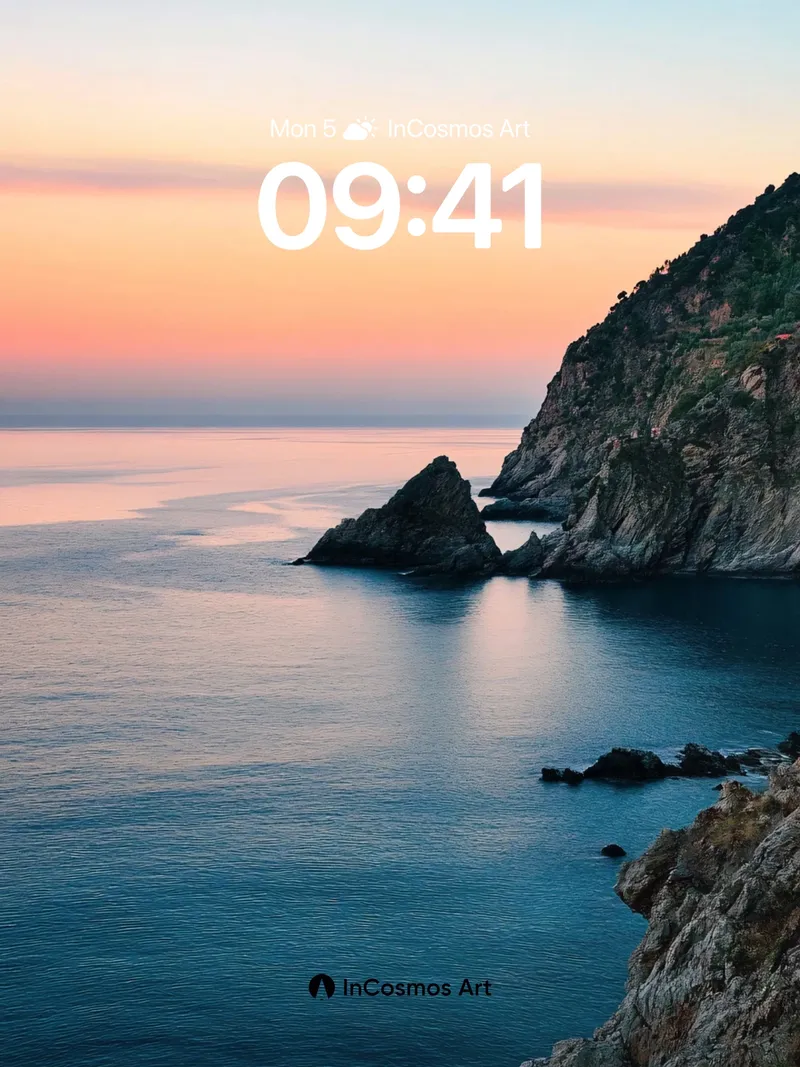
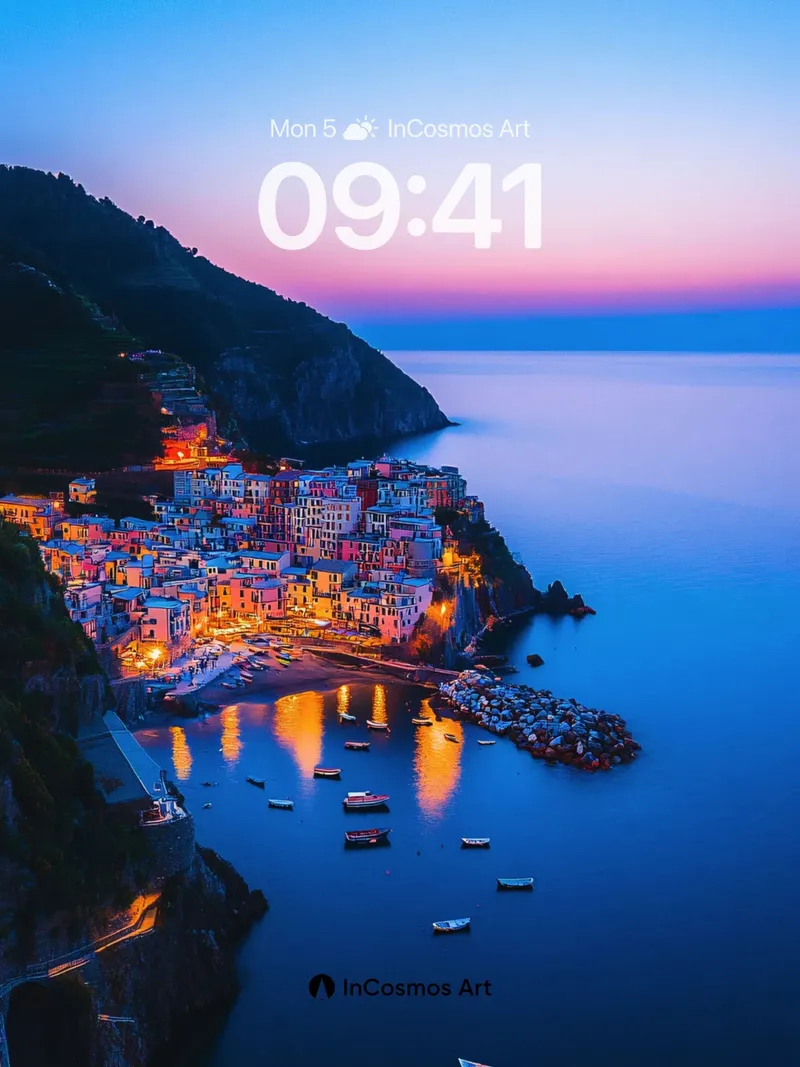
As dusk settles, the sea becomes a mirror, mountains remain silent. A town built into the cliff awakens in deep blue, lights flickering on one by one, like sparks falling onto rock. Colorful houses stack layer upon layer, winding up steep terrain; each window emits warmth, as if resisting night's chill. Light reflects on water, forming flowing shadows that weave reality and dream into a tender illusion. No noise exists here—only time slipping slowly. Architecture and nature reach an unspoken agreement; human dwellings do not conquer land and sea, but humbly merge within them. This coexistence embodies a philosophy deep in Mediterranean culture—human and environment are not opposites, but mutually affirming. As sky shifts from purple to orange, then back to indigo, the town’s lights remain constant. They serve not only illumination, but declaration of presence. Each beam speaks of belonging, memory, continuity. Residents’ daily lives freeze into collective poetic expression. Boats rest in harbor, like travelers at rest, awaiting dawn’s call. This is more than geography—it is spiritual anchor. In an age of relentless urban expansion, such places remind: true habitation means dialogue with nature, not domination.
Order of Light
Lights arrange themselves across cliffs in non-geometric harmony. No rigid plan, yet intrinsic balance emerges. Reds, yellows, whites intermingle, creating warm visual rhythm. This is not design imposed, but spatial narrative born of lived experience. Behind every light lies a story—a family’s evening, dinner’s lingering warmth. Distribution reveals community density and intimacy. Near harbor, lights cluster densely, indicating life centered on water. This layout reflects both practical choice and cultural habit. Fishing village traditions endure, sustained in glow.
Folds of Time
From sunset to midnight, light evolves. Horizon transitions from pink to indigo, clouds thin, stars appear faintly. Town lights become sole source, yet natural traces remain. Sea still reflects faint sky glow and artificial light. This dual lighting system implies coexistence between human activity and natural cycles. Time here is not linear, but folded—like fabric creases. Twilight, early night, late night—each phase holds distinct mood. Life adjusts accordingly—from labor to rest to reflection. This rhythm preserves traditional lifestyle, resists modern speed.
Poetics of Dwelling
Buildings cling tightly to mountain, stacked without gap. Roofs touch, alleys narrow, forming closed, intimate spatial structure. This form adapts terrain while strengthening neighborly interaction. Sound echoes through lanes, light dances under eaves—everything happens within limited scope. Dwelling ceases to be isolated act, becomes collective experience. Public spaces—harbor, square, path—become social core. People meet, converse, trade, forming stable network. Such organization reveals Mediterranean social pattern—tight-knit, mutual, reliant on shared resources.