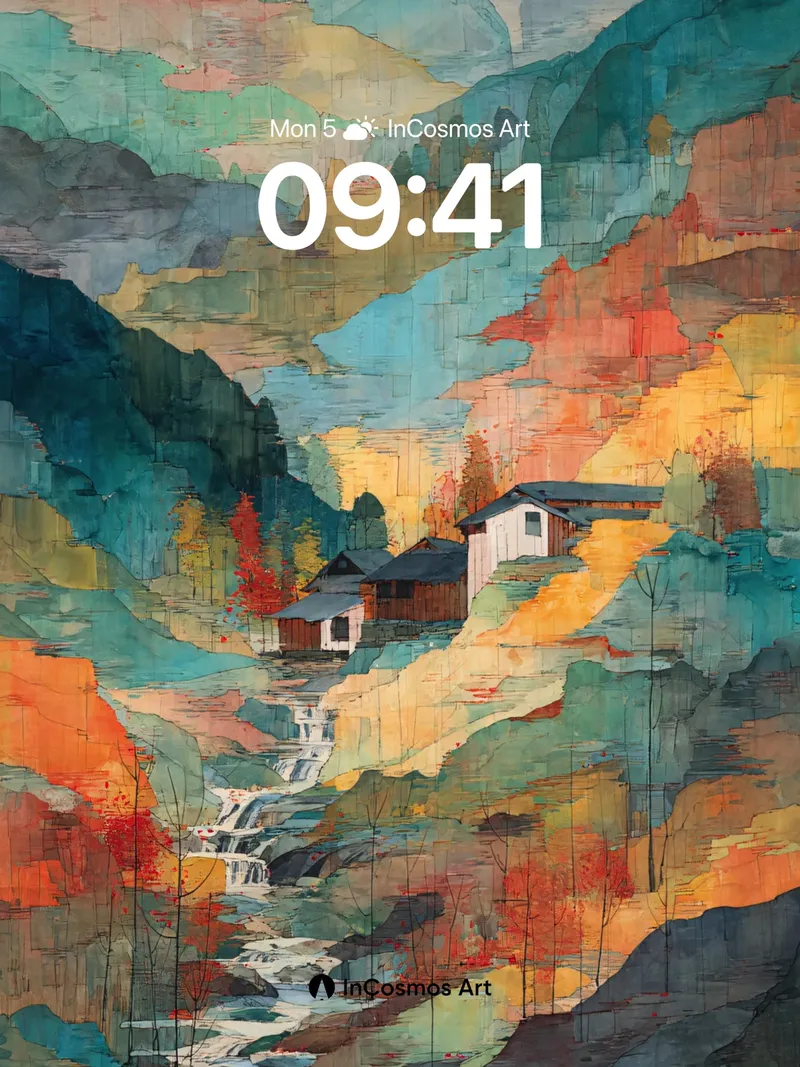
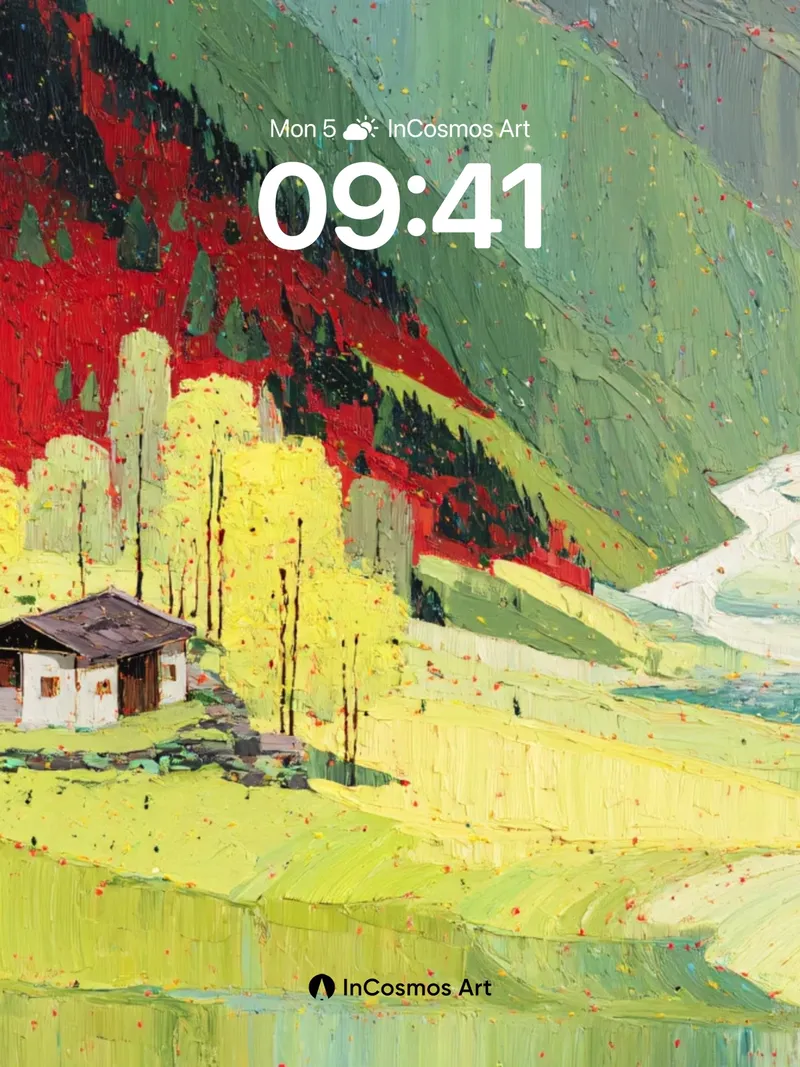
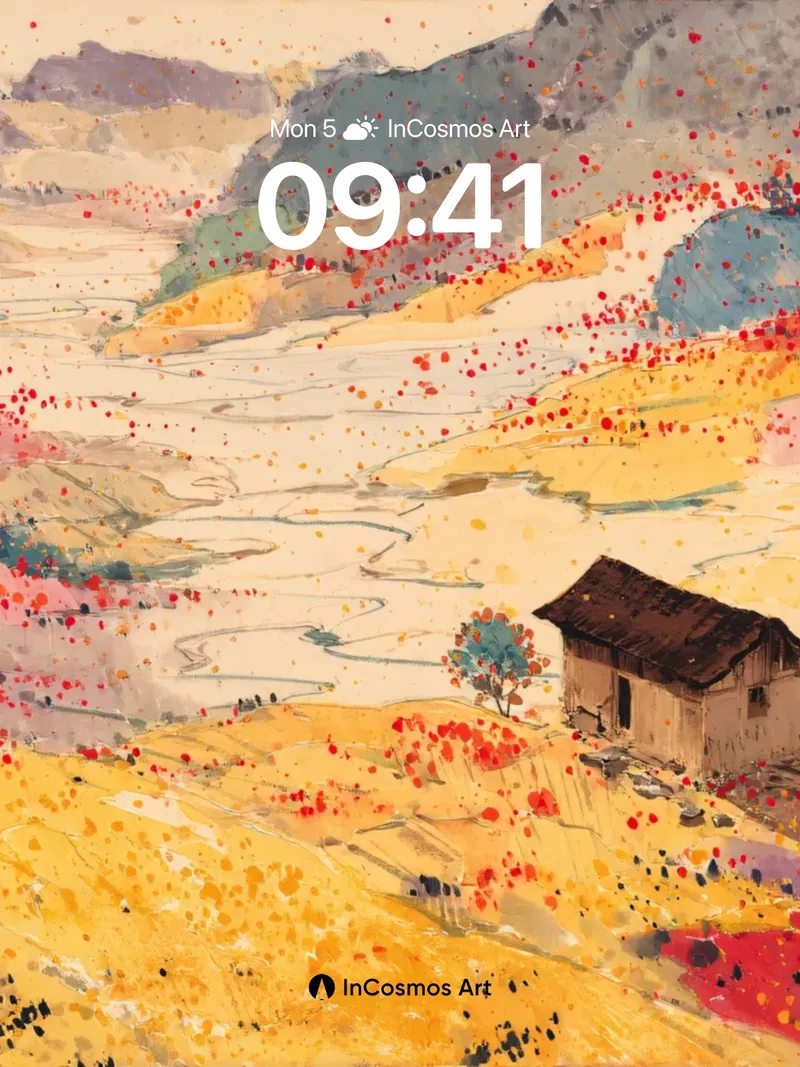
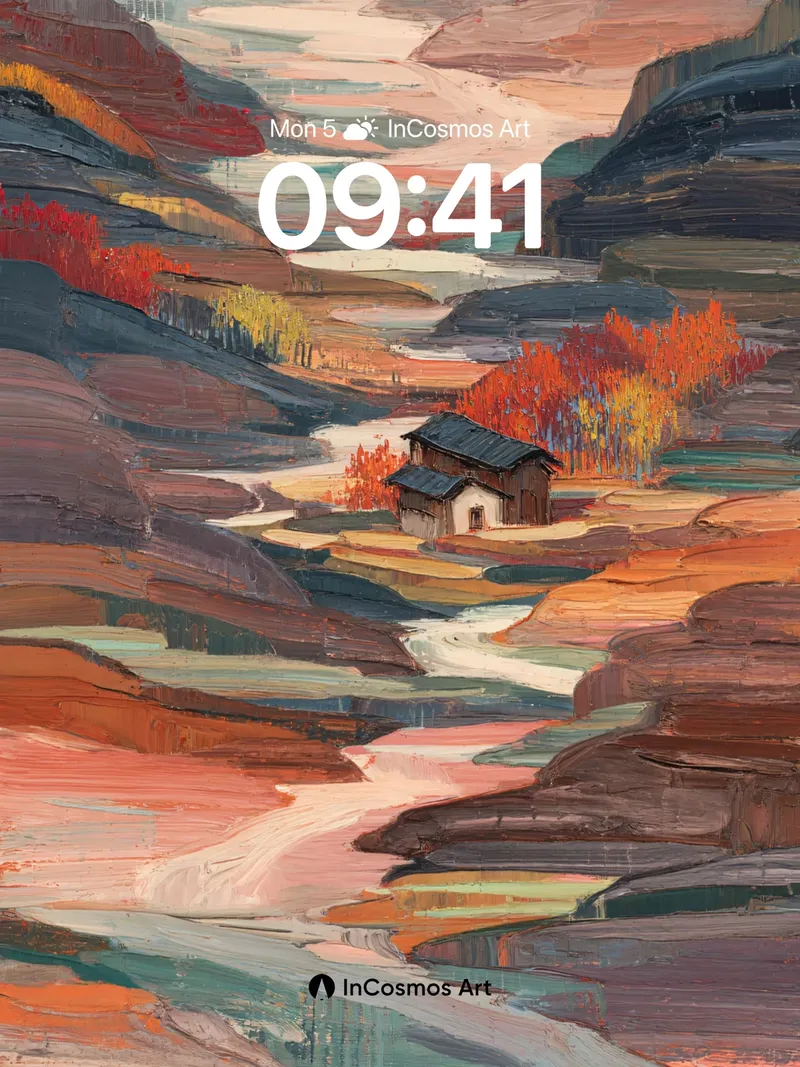
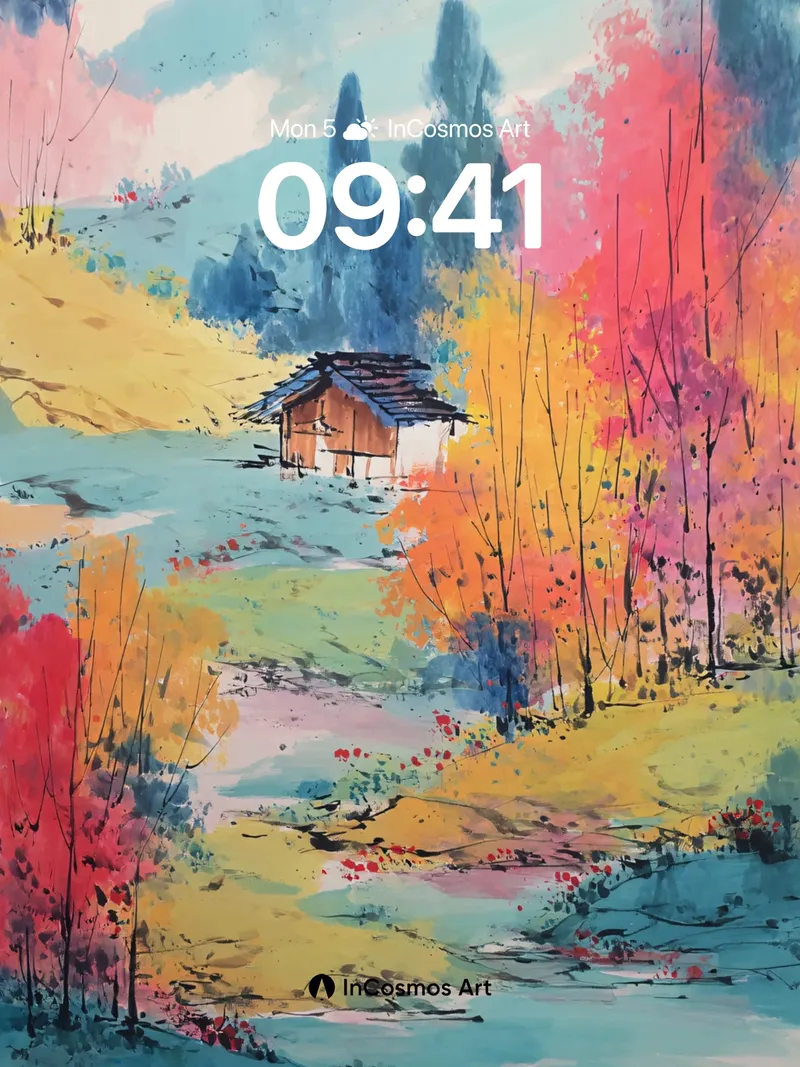
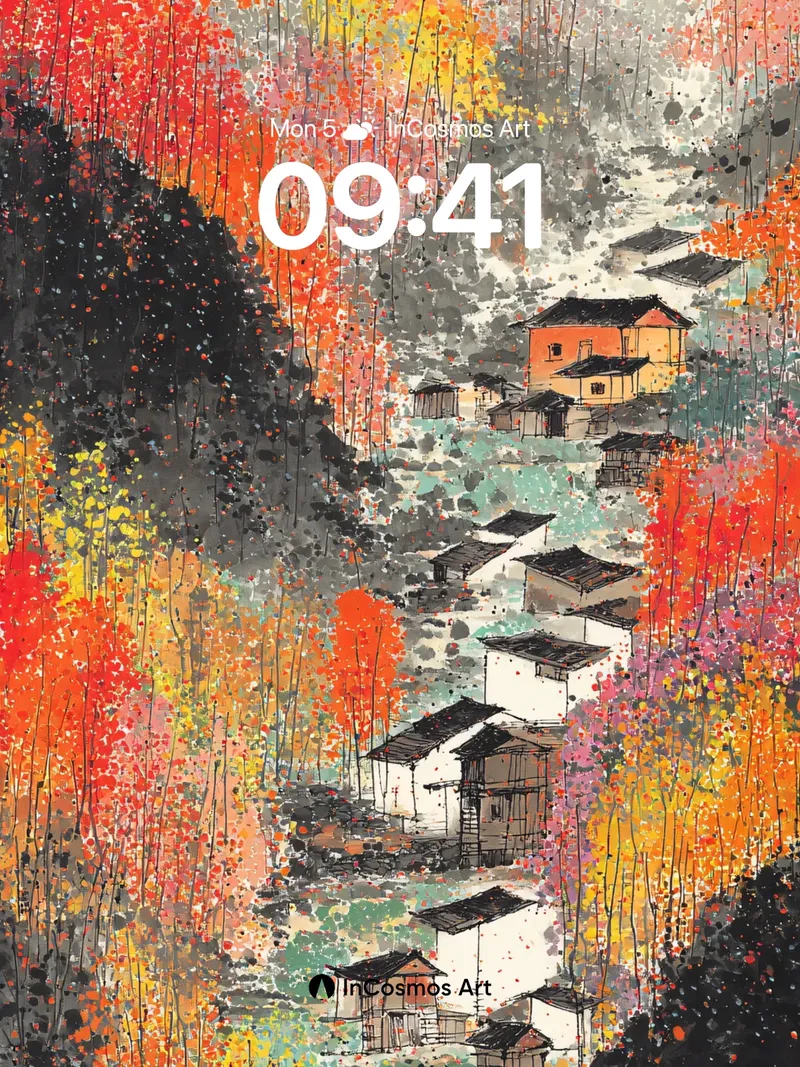
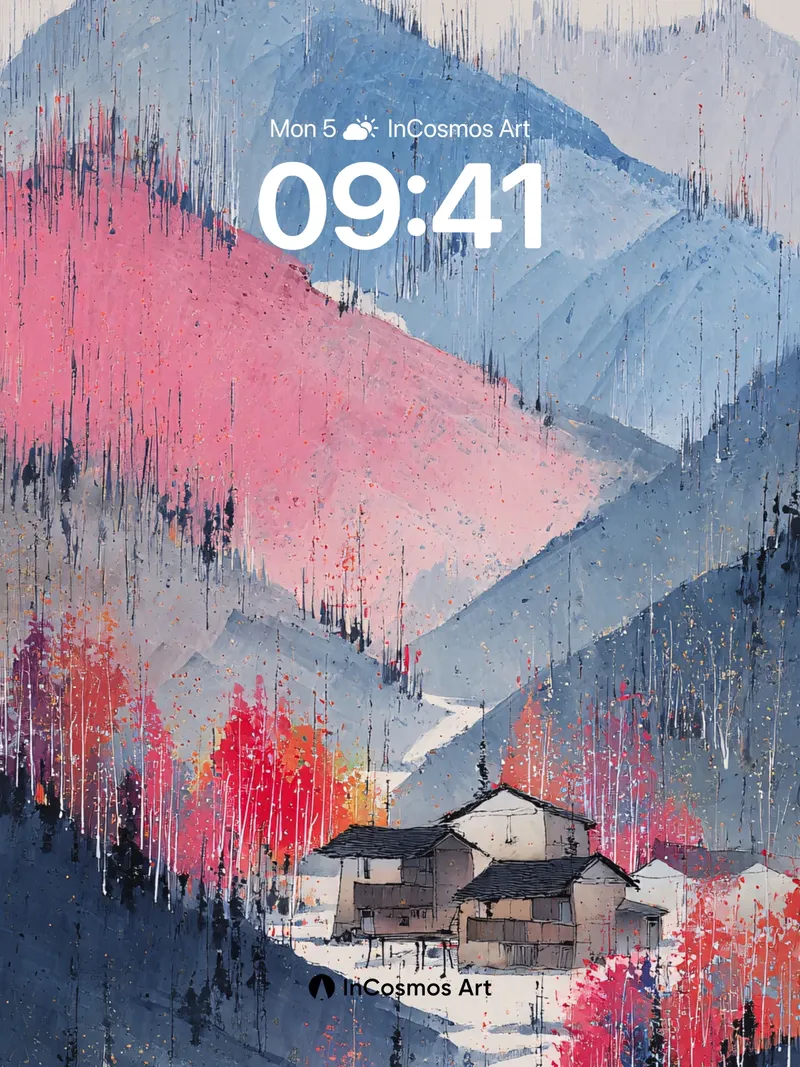
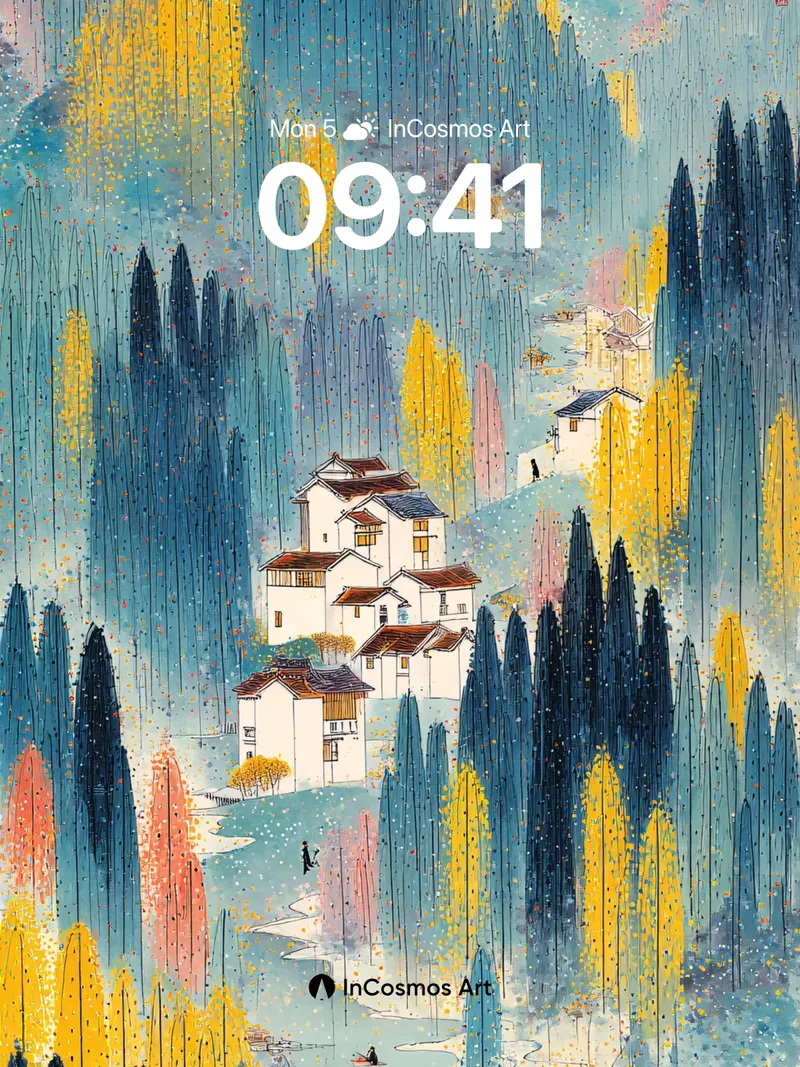
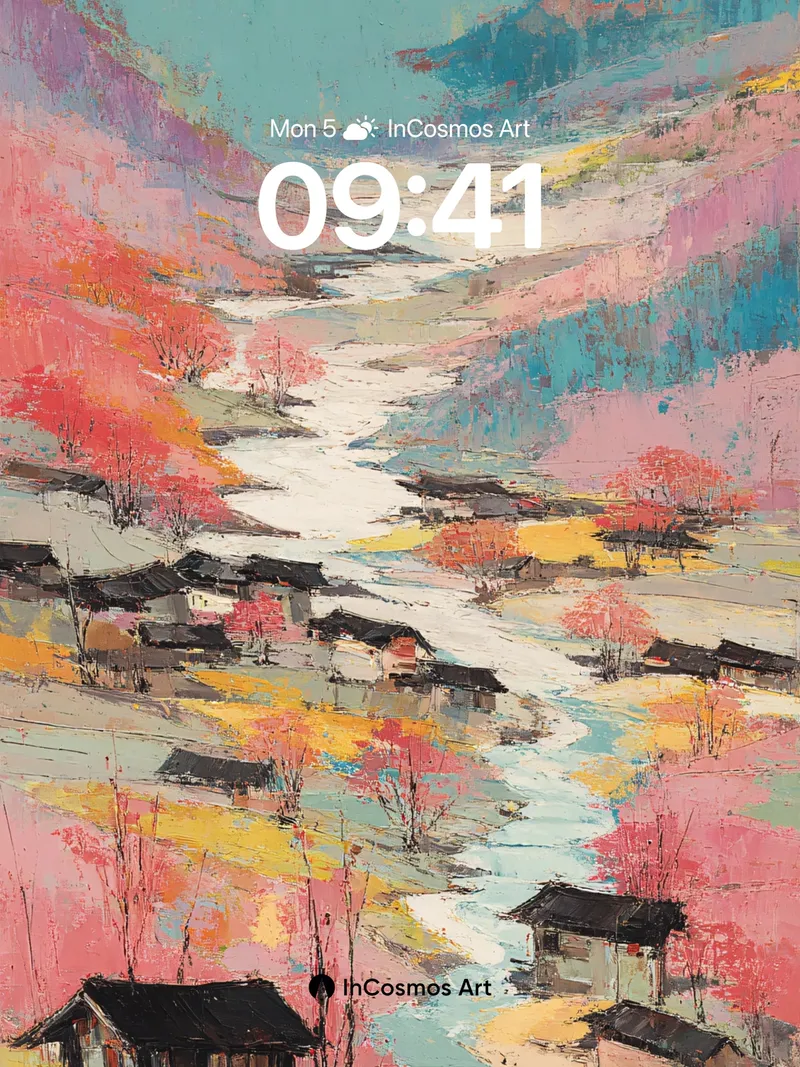
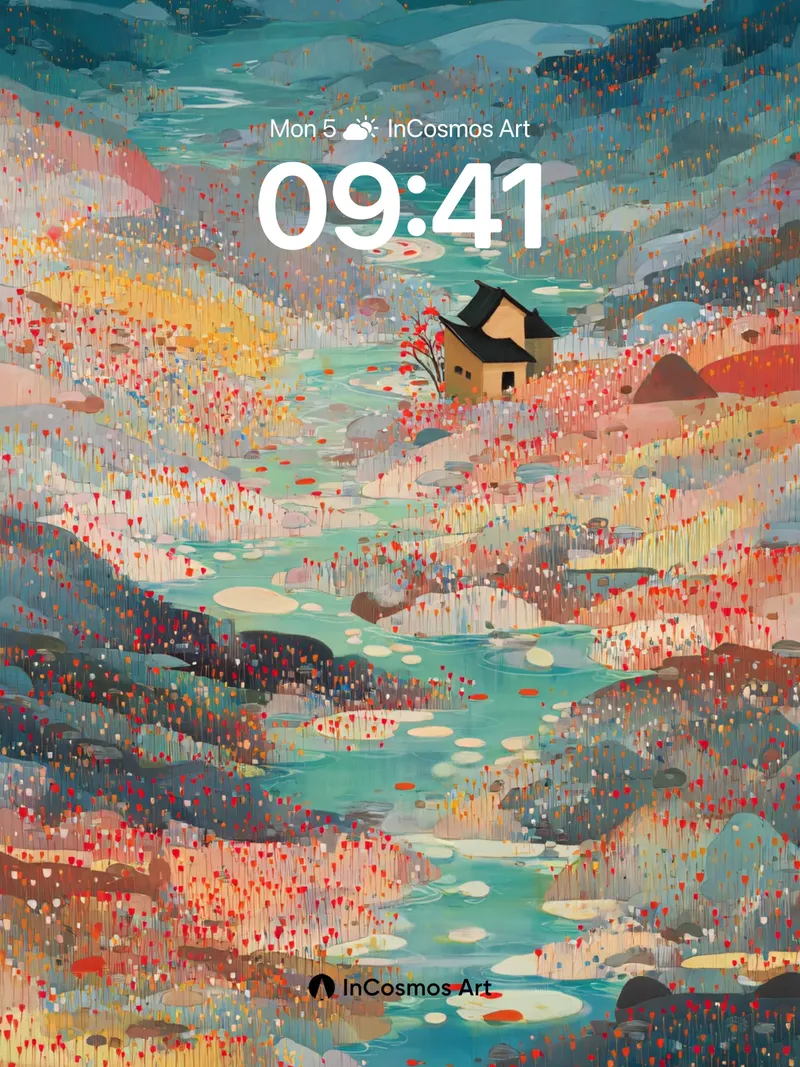
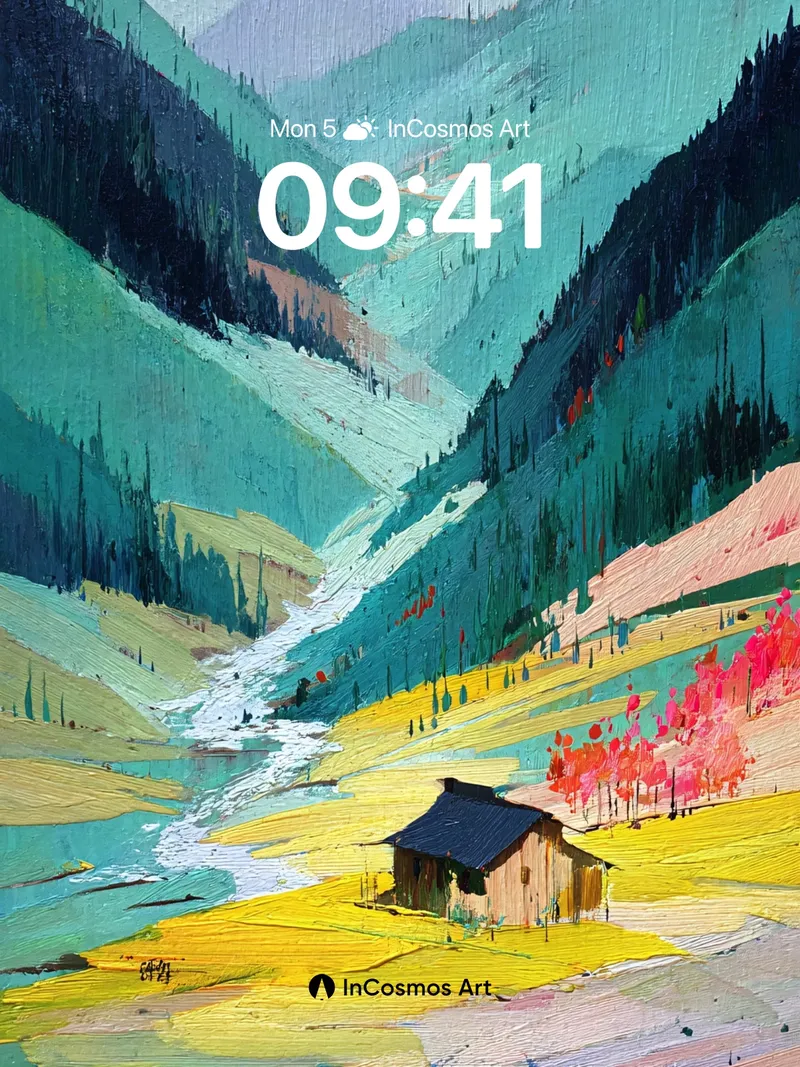
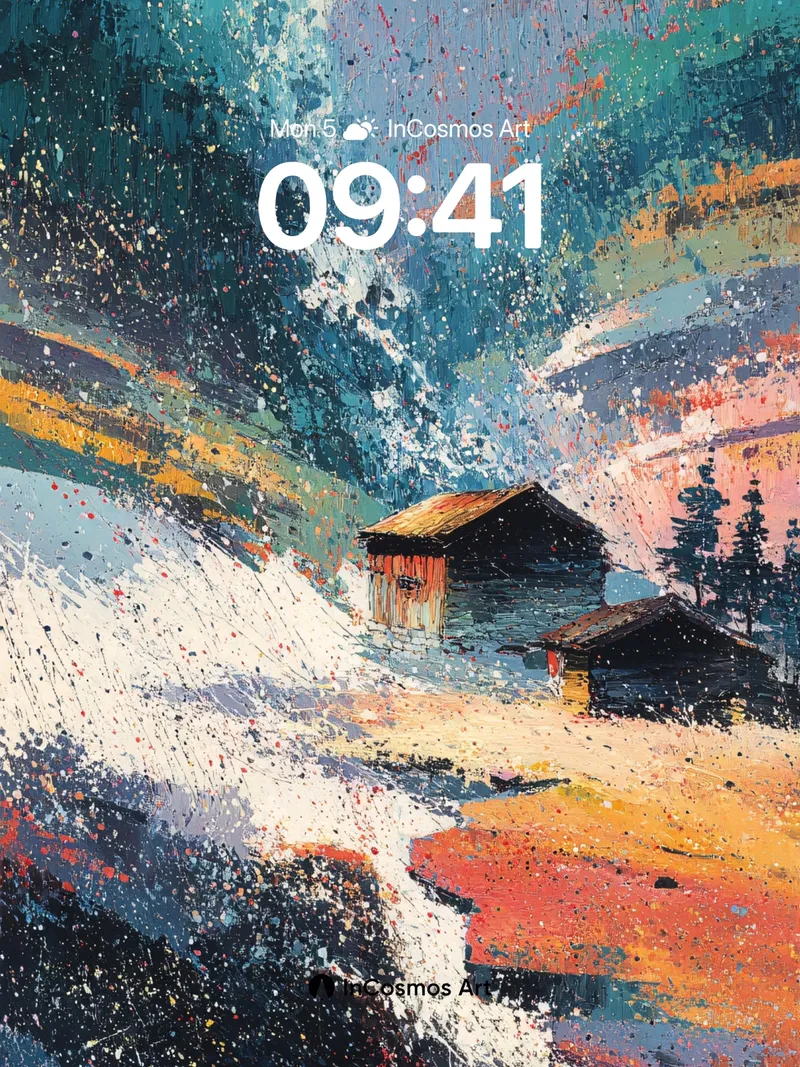
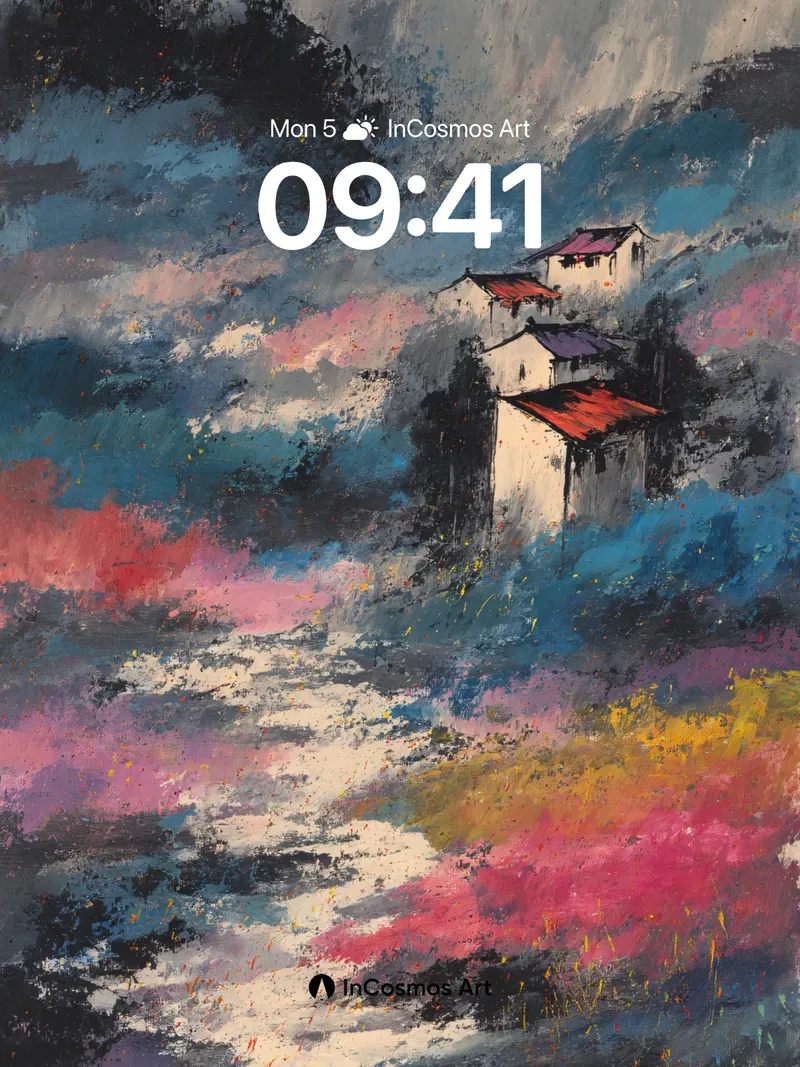
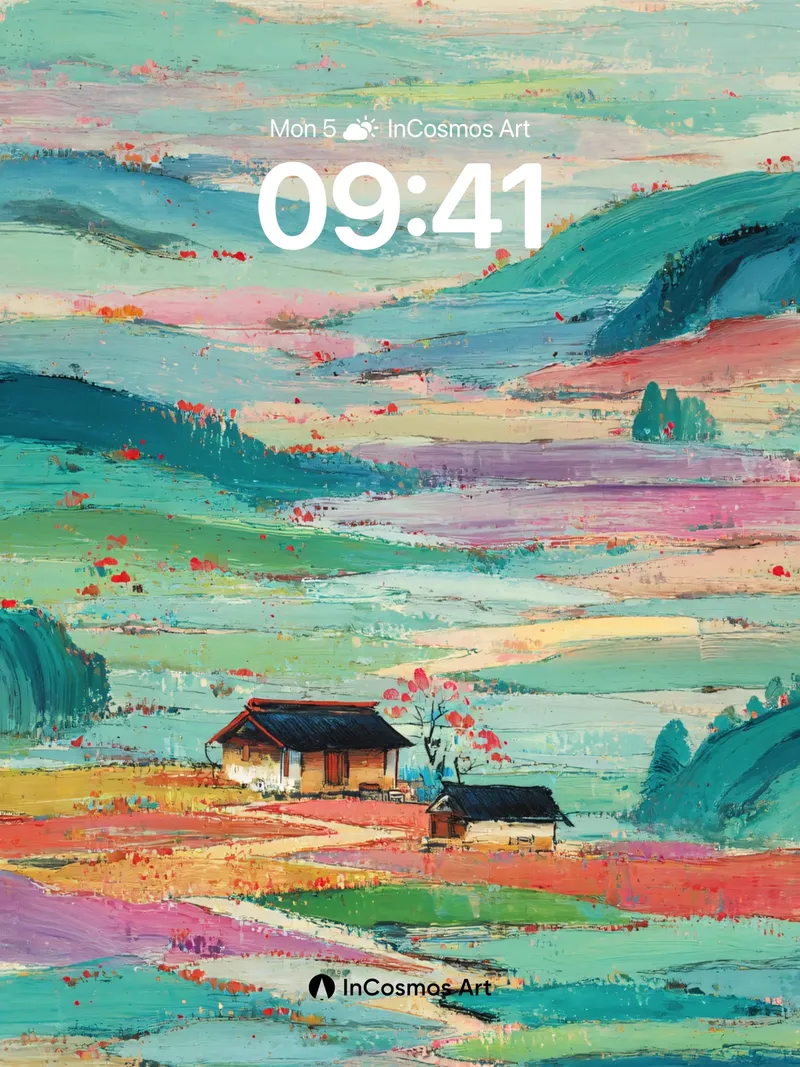
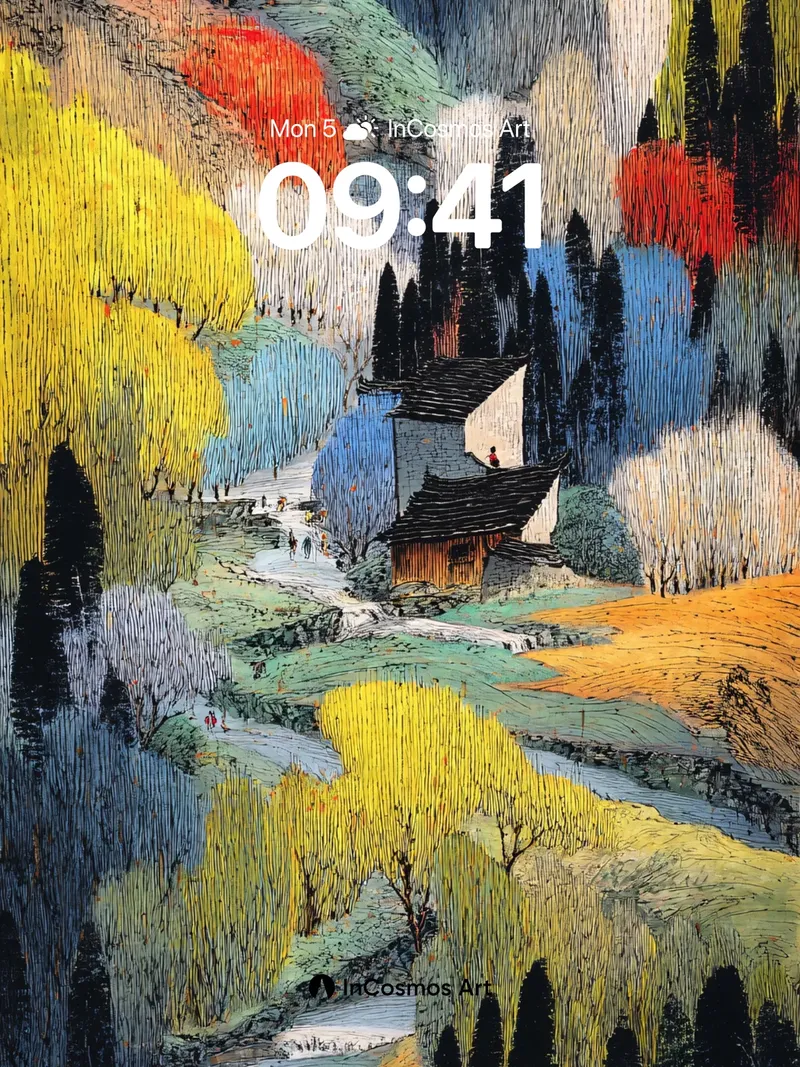
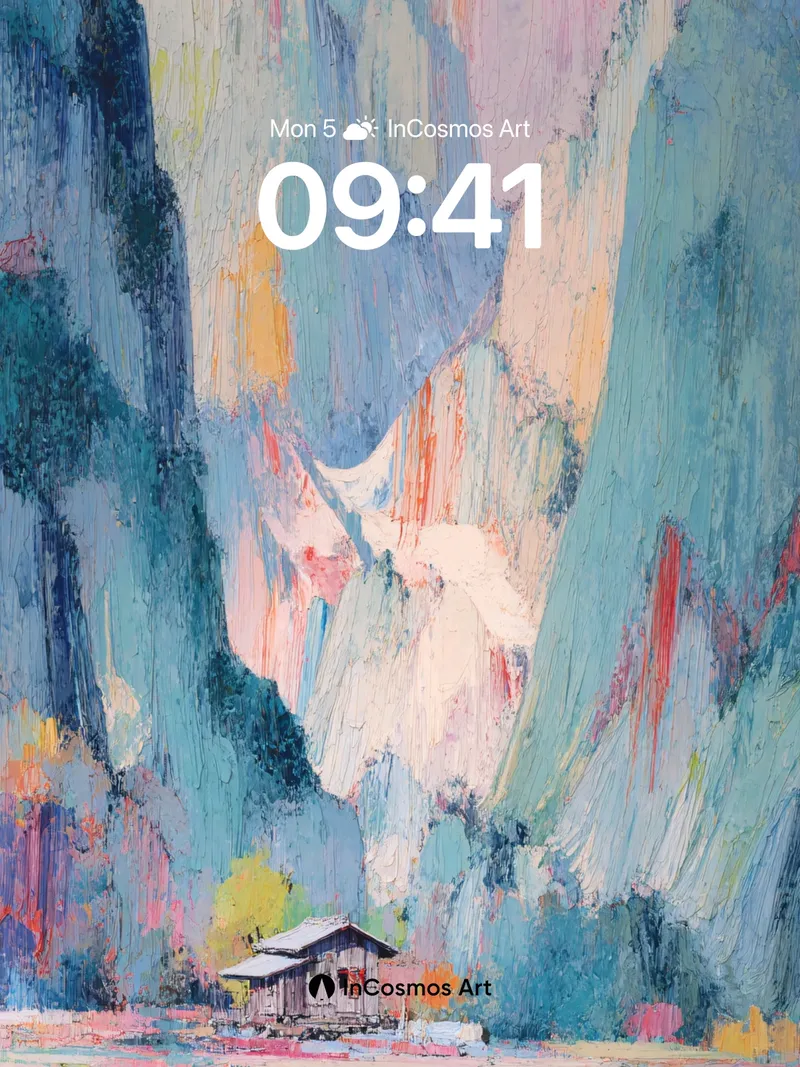
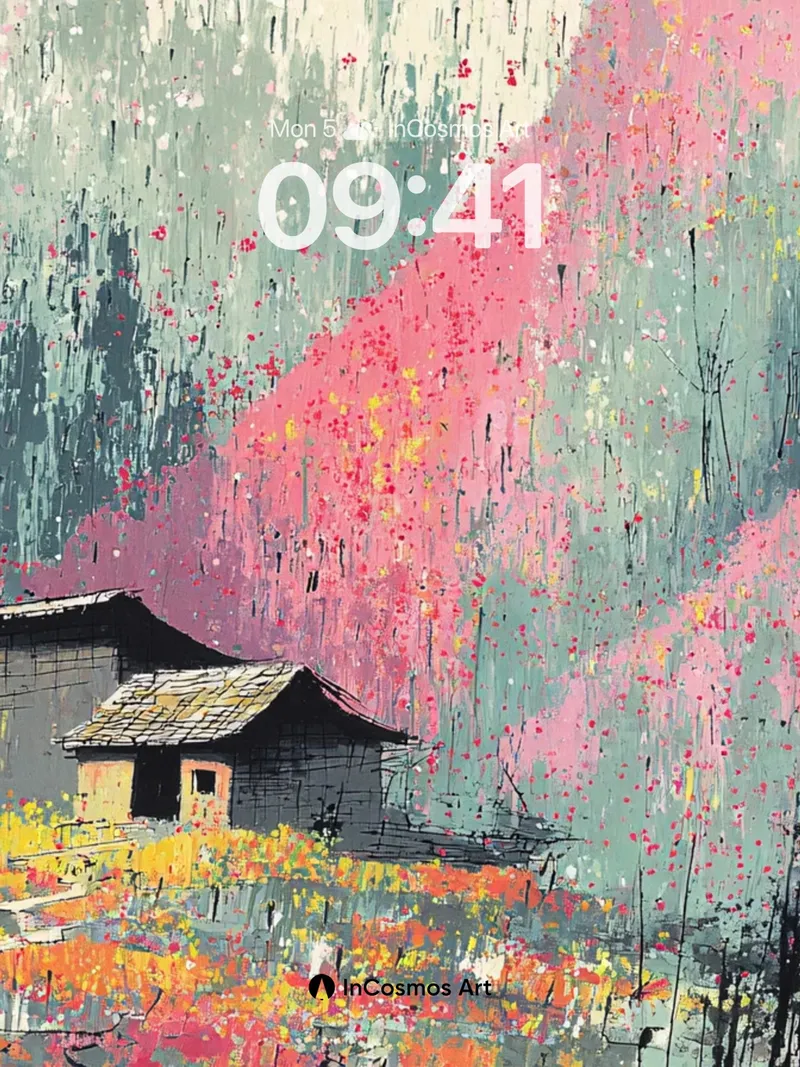
Between layered valleys, dwellings stand as silent guardians embedded within the earth's texture. Color here transcends mere visual perception; it becomes an emotional vessel, a trace of time, a wordless dialogue between humanity and nature. Each blend of turquoise streams, each expanse of crimson forests, speaks of a life removed from urban noise. This existence does not follow modern rhythms but is rooted in sensory awareness of land and its cycles. The structures are humble, their roofs low, bowing to sky and soil. They do not signify domination over nature but serve as quiet nodes within its order—small shelters found within a vast, natural harmony.
The Language of Color
Color functions as narrative syntax in this realm. Layers of teal, ochre, peach, indigo build a non-representational yet emotionally charged visual grammar. These hues do not replicate reality but reconstruct seasonal memories—the stirrings of spring, summer’s abundance, autumn’s blaze, winter’s stillness. Abstracted yet deeply felt, they convey temperature shifts and temporal transitions without words. The interplay of tones mimics sedimentation, recording slow transformations across mountainous terrain.
The Philosophy of Shelter
Houses appear slightly below center, neither dominant nor invisible. Their presence stems from harmony with surroundings, not size or ornament. Dark tiled roofs contrast with foliage, yet their forms align with topography, expressing humility. Paths lead outward into uncertainty, suggesting mobility—not isolation, but intentional pause. These buildings act as temporary stops and eternal symbols, holding human longing for stability and freedom simultaneously.
The Rhythm of Nature
Rivers weave through the composition, functioning as both geographic boundaries and lifelines. Their flow defines spatial structure and guides the viewer’s gaze. Turbulent at times, calm at others, they mirror life’s fluctuation. Vegetation along banks shifts with seasons—from tender green to golden yellow, then deep red—forming a timeline of change. This evolution is gradual, not abrupt, reflecting a lifestyle attuned to natural cycles.
Echoes of Emotion
The atmosphere remains serene and profound, devoid of dramatic intensity yet rich in emotional depth. This resonance arises from attention to detail—a solitary tree’s limbs, a winding trail, weathered wooden doors. Together, they form a space where the soul can rest. Here, humans are not masters but participants, observers, listeners. Breath synchronizes with wind, gaze resonates with mountain light.