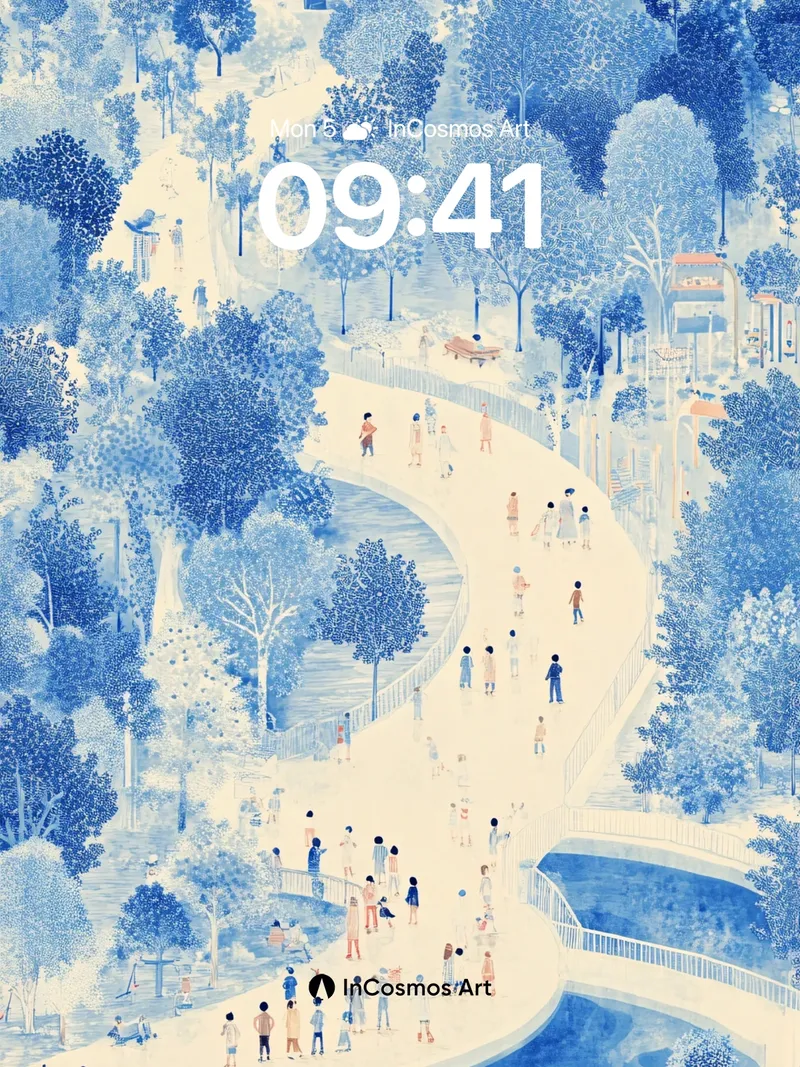
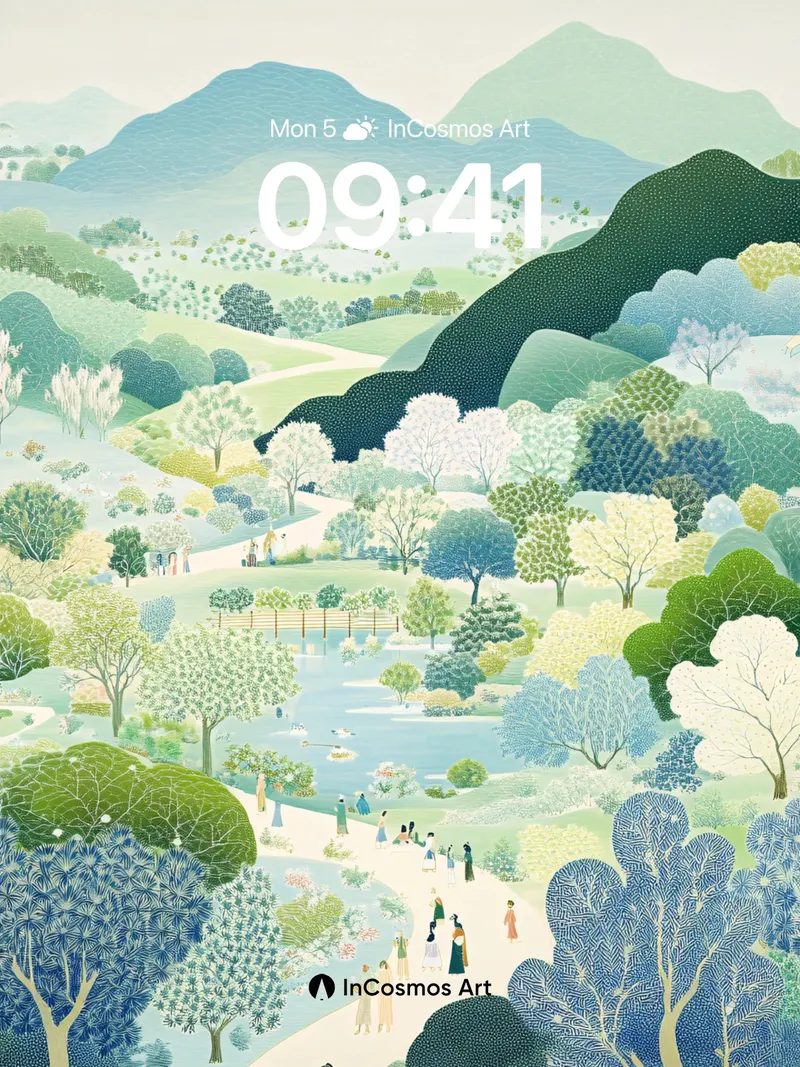
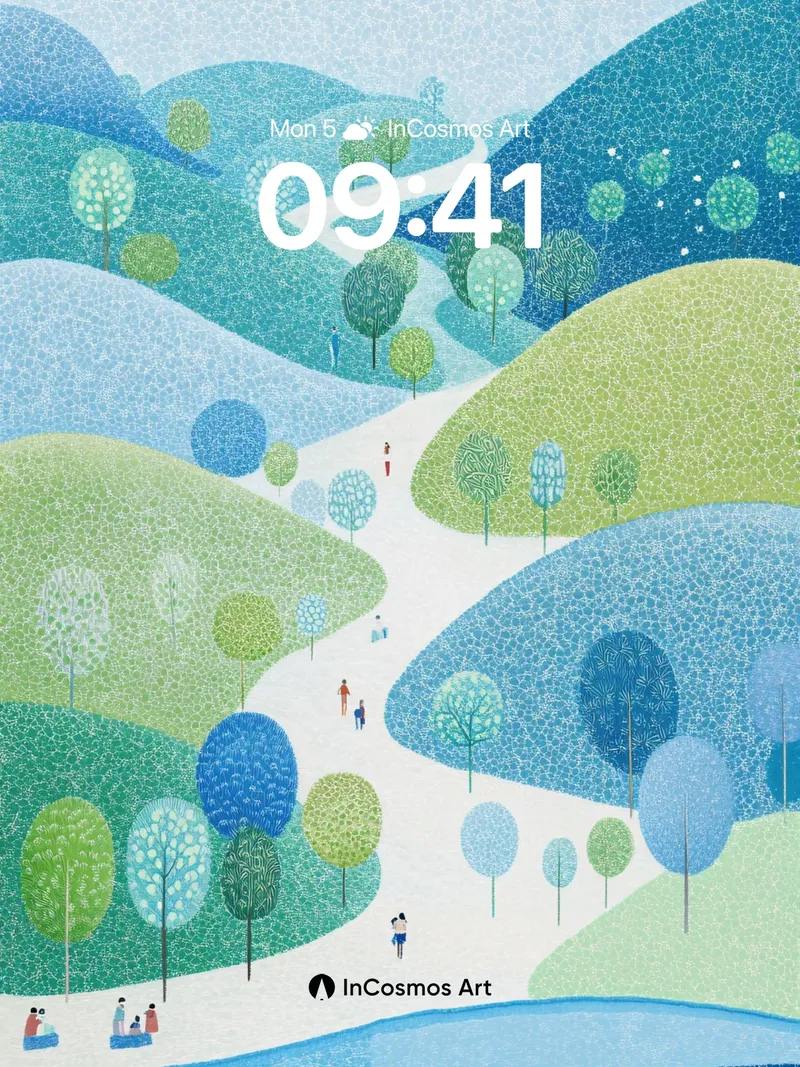
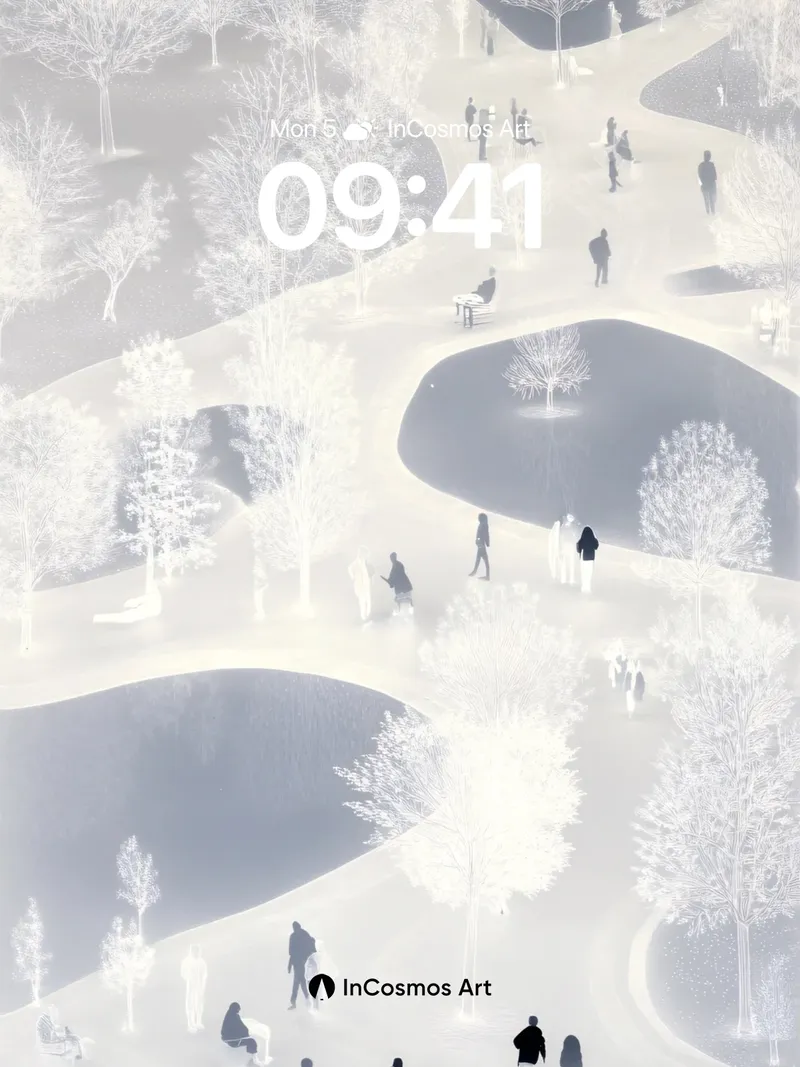
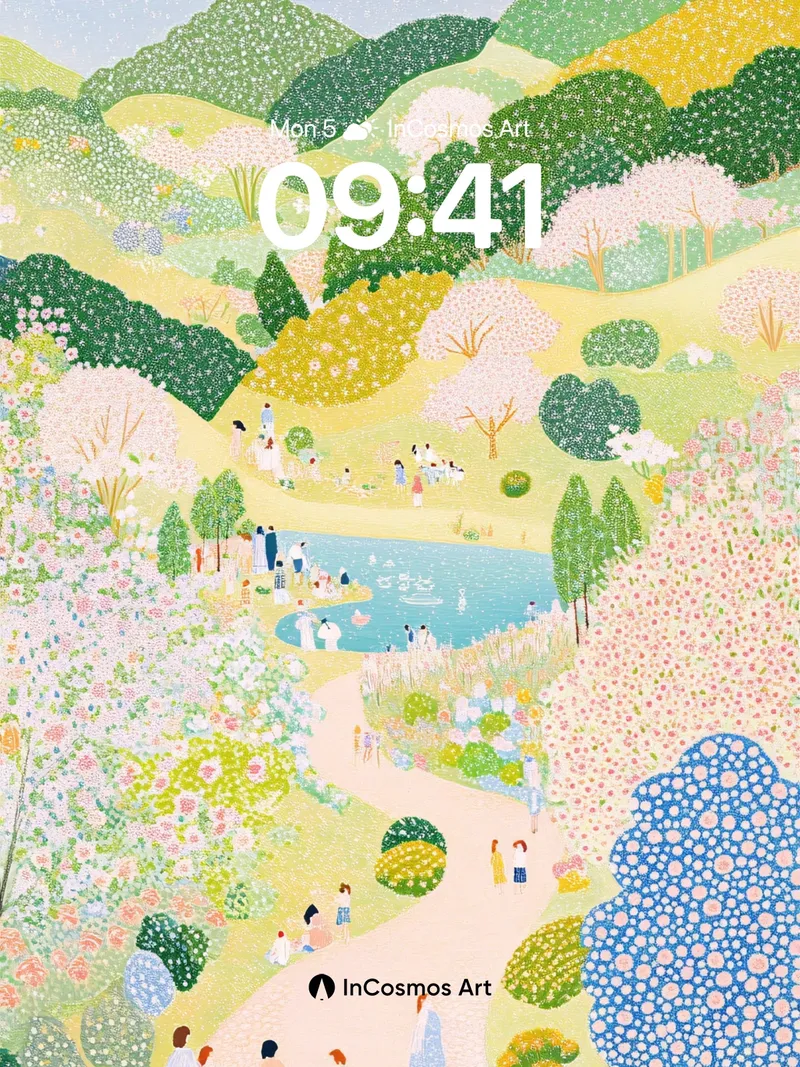
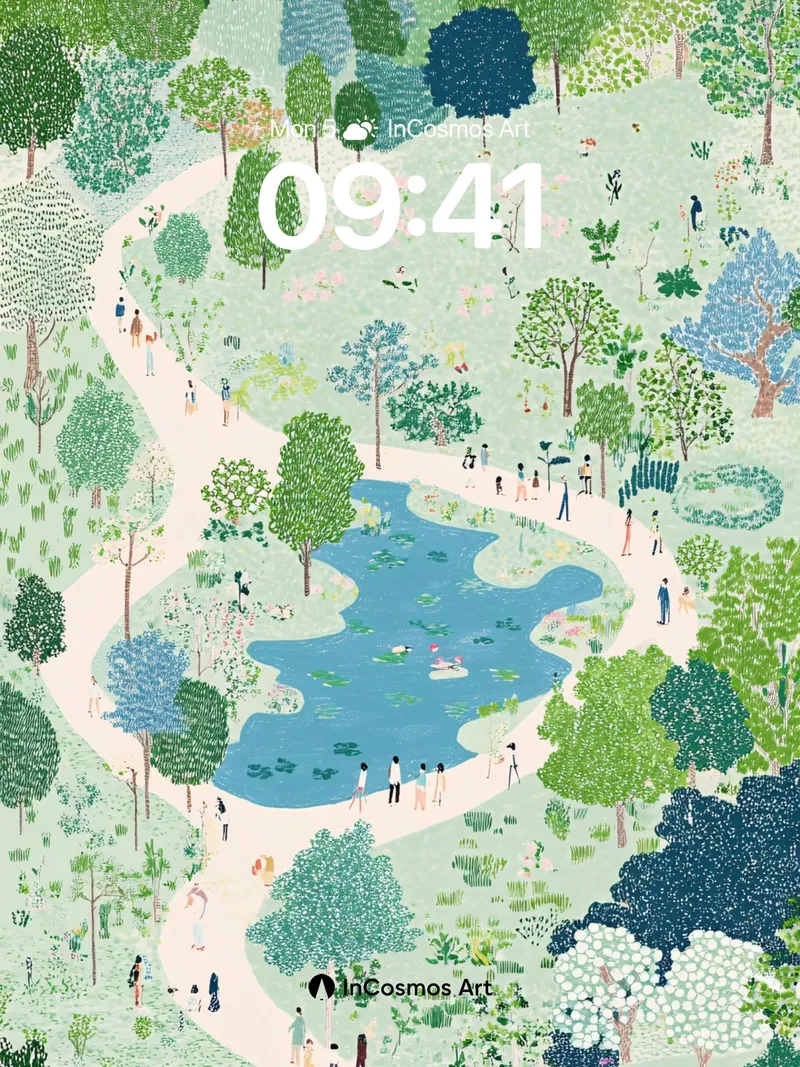
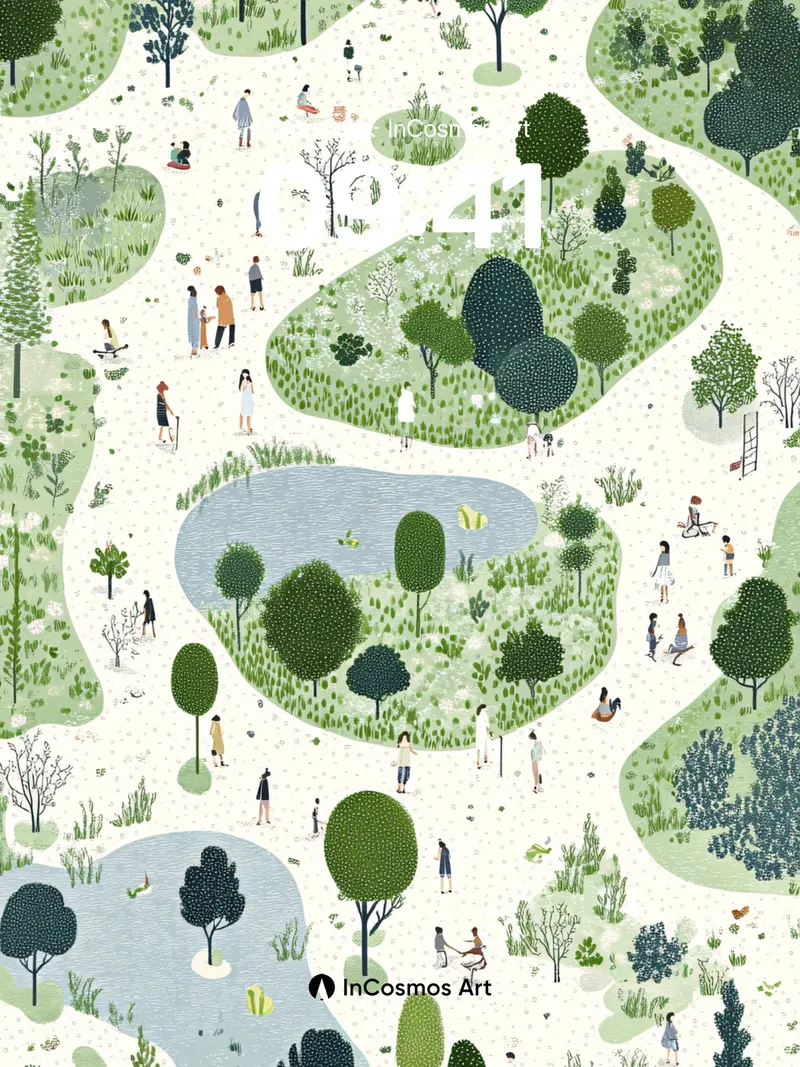
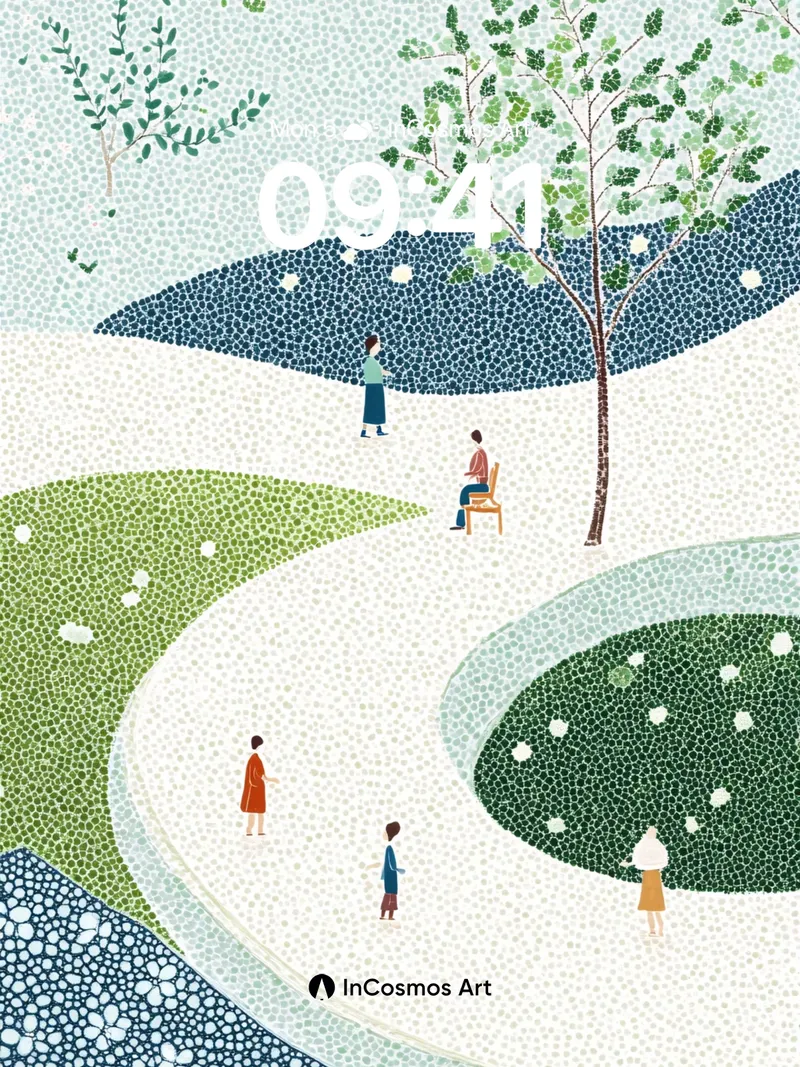
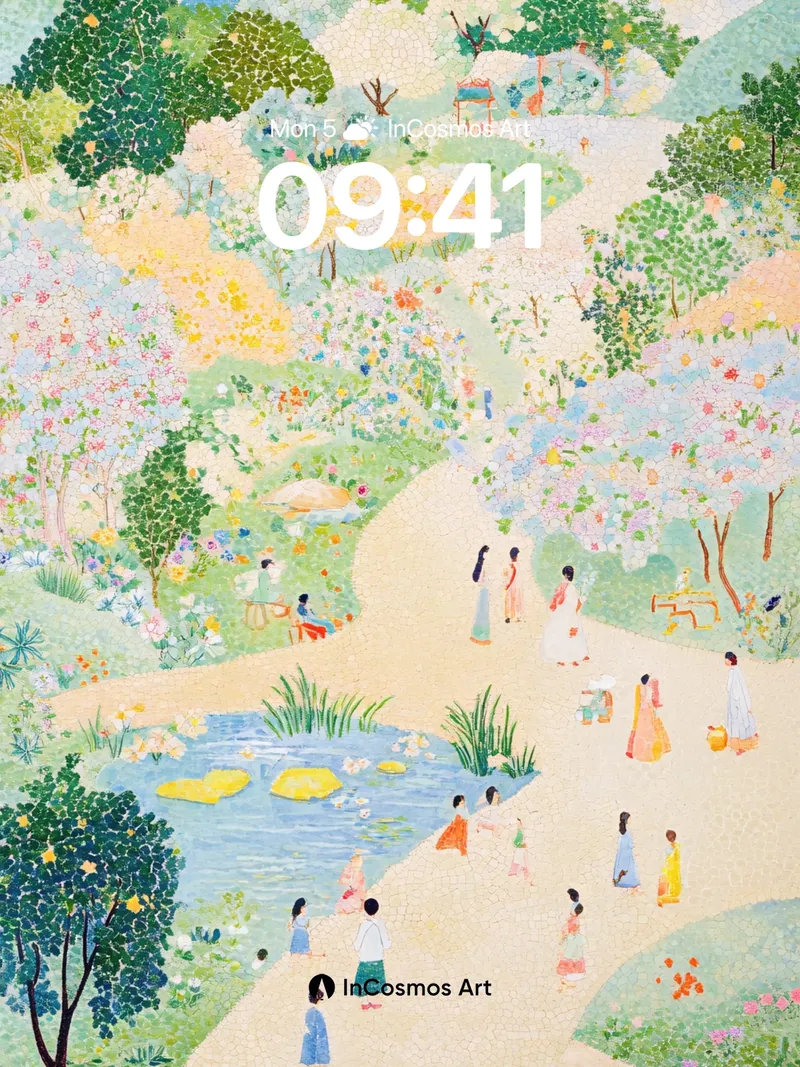
Rolling hills, winding paths, people moving through natural and man-made order across seasonal shifts. Each scene is a temporal slice, capturing fleeting yet tender human presence within vast landscapes. Spring bursts with blossoms, summer thrives in lush greenery, autumn whispers through golden canopies, winter blankets lakes in quiet snow. Individuals walk, pause, converse, play—movements light as wind, postures varied yet harmoniously aligned. These settings transcend specific locations; they belong to collective memory at urban-rural thresholds. They carry shared emotional rhythms—from liveliness to stillness, from gathering to contemplation, breathing naturally. The richness of nature and human activity form a dynamic equilibrium—not fully merged, nor entirely separate, but a delicate coexistence.
Seasons as Narrative Structure
Seasonal cycles serve as the core framework for spatial storytelling. Spring’s vibrant pinks and yellows symbolize renewal and hope; summer’s deep greens convey full vitality; autumn’s gradients speak of maturity and parting; winter’s stark whites invite silence and reflection. This rhythm mirrors not only natural law but also psychological cycles in humans. Behavioral patterns align with seasons: picnics in spring, fishing in summer, walks in autumn, conversations by fires in winter. These are not random choices but cultural imprints, outcomes of long-term human-environment interaction.
Emotional Dimensions of Public Space
Paths function not just physically but emotionally as conduits. Distances between individuals remain balanced—neither crowded nor isolated—creating an open yet intimate social atmosphere. Children run, elders stroll, couples walk side by side, friends gather—each relationship finds its place in space. Water bodies are particularly significant: visual anchors and emotional mirrors. Surfaces reflect sky and trees, but also inner calm or unrest. Pond-side seating becomes sites of dialogue, where lingering often marks the beginning of connection.
Aesthetic of Symbiosis Between Nature and Humanity
Plant forms are stylized into geometric shapes—round or oval crowns, leaves rendered in dots or waves—enhancing visual rhythm and decorative quality. This abstraction does not diminish reality but distills essence, emphasizing harmony between humans and nature. Color palettes are subtle yet layered, avoiding over-saturation to maintain a soothing, poetic tone. Figures, though small, are clearly defined, dressed in varied hues forming a flowing visual cadence. Their presence is not ornamental but essential—a living component of an ecosystem, collectively shaping a warm, responsive environment.