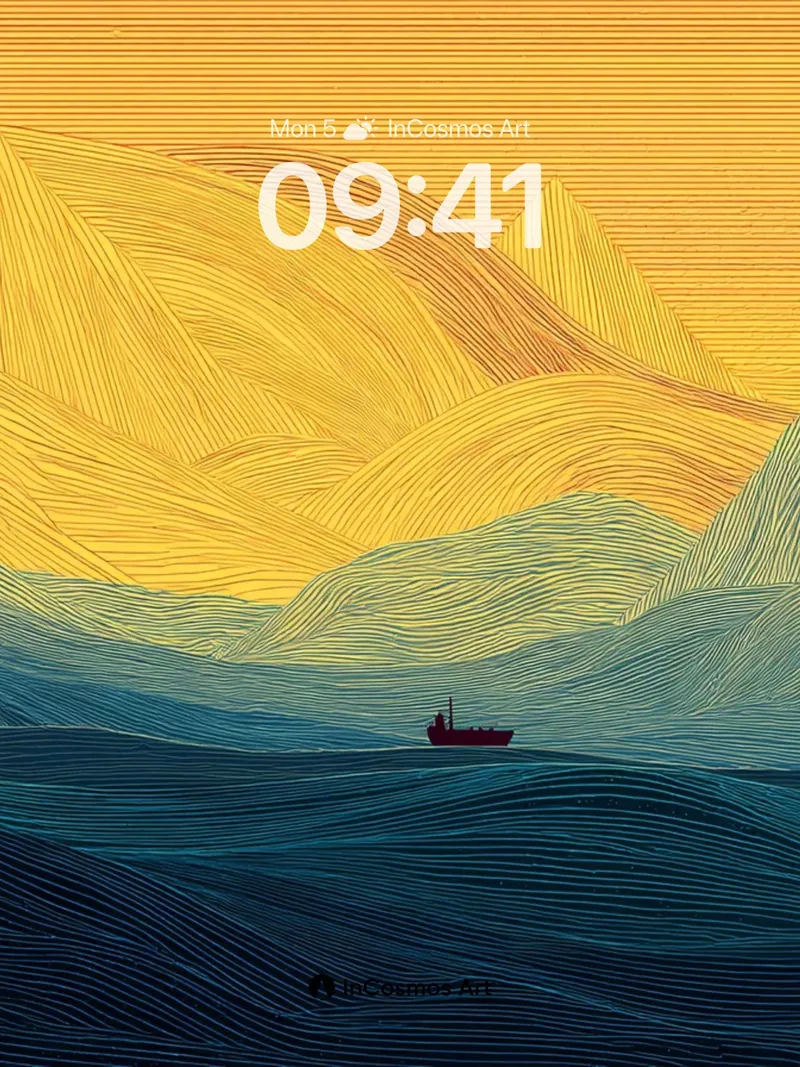
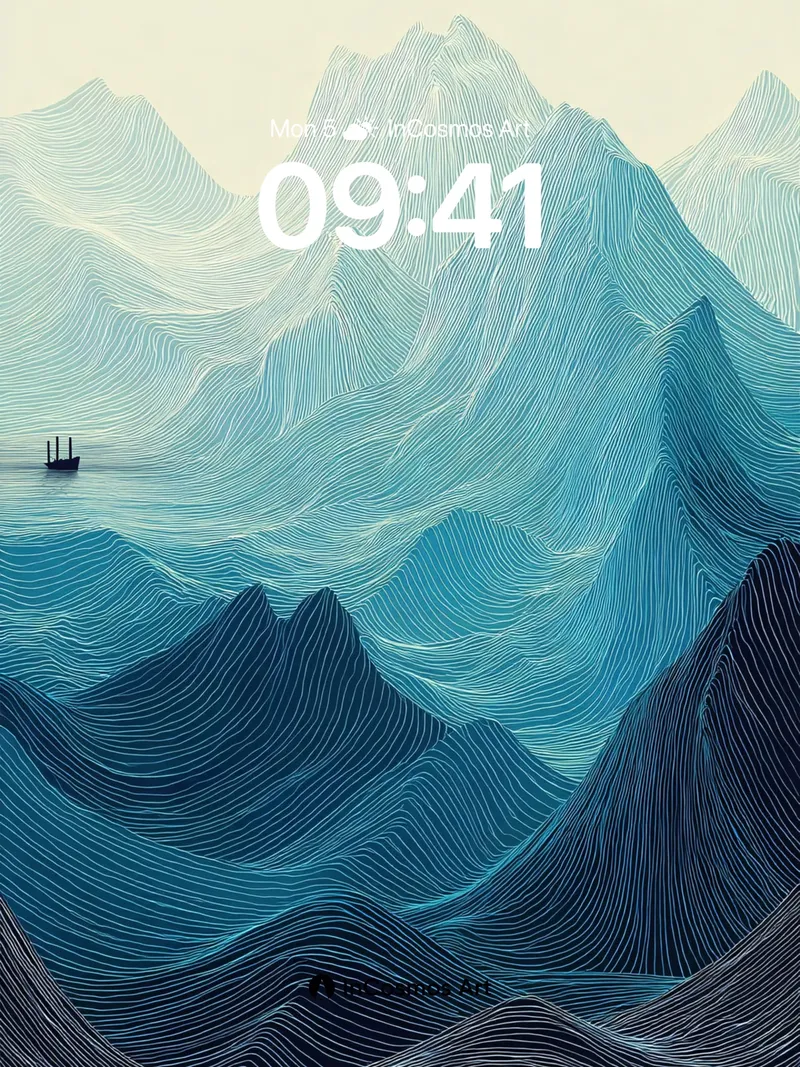
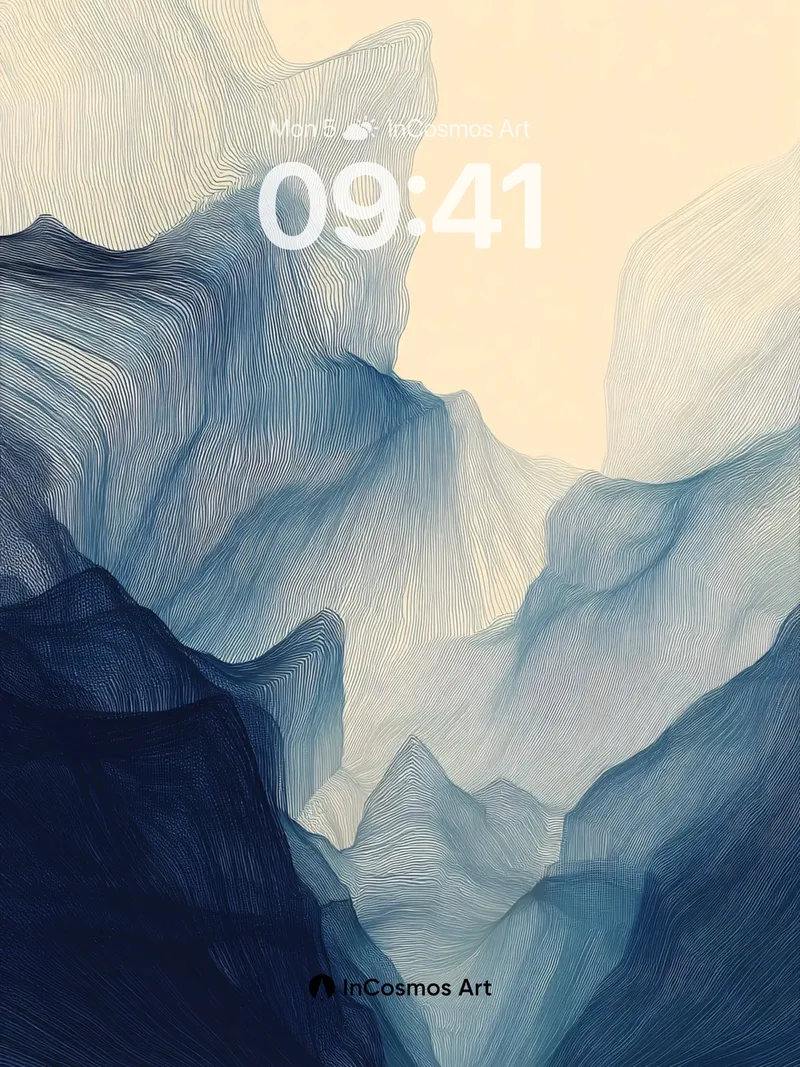
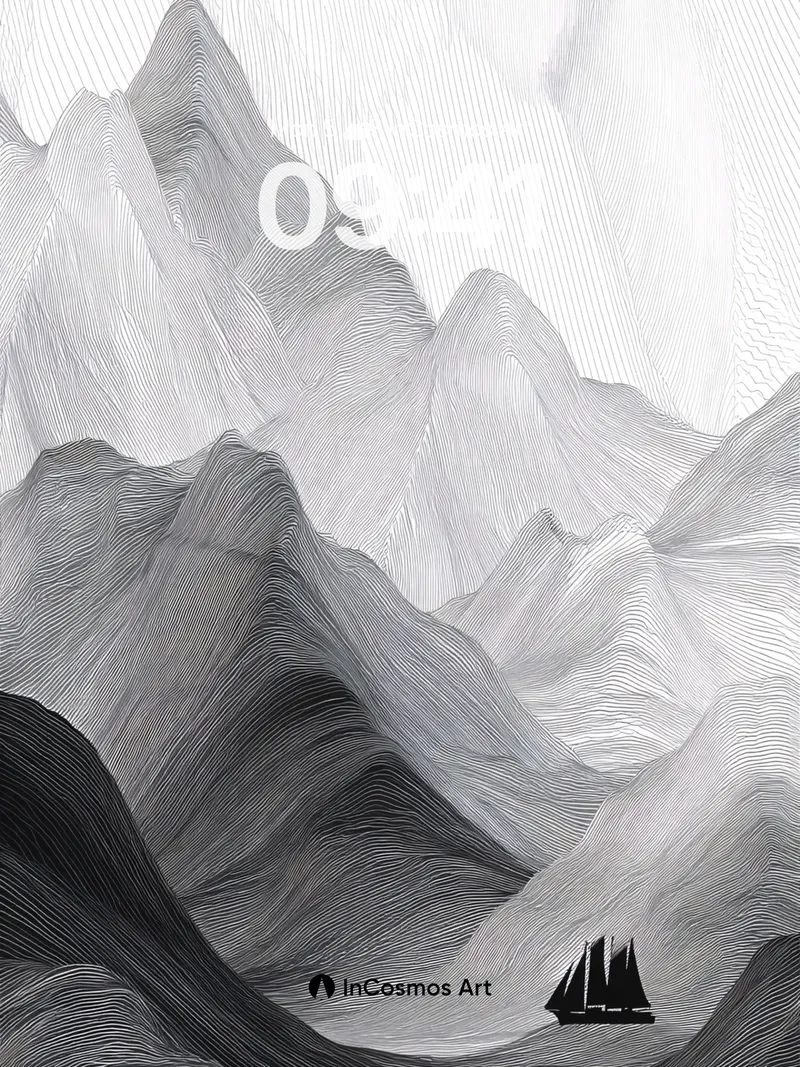
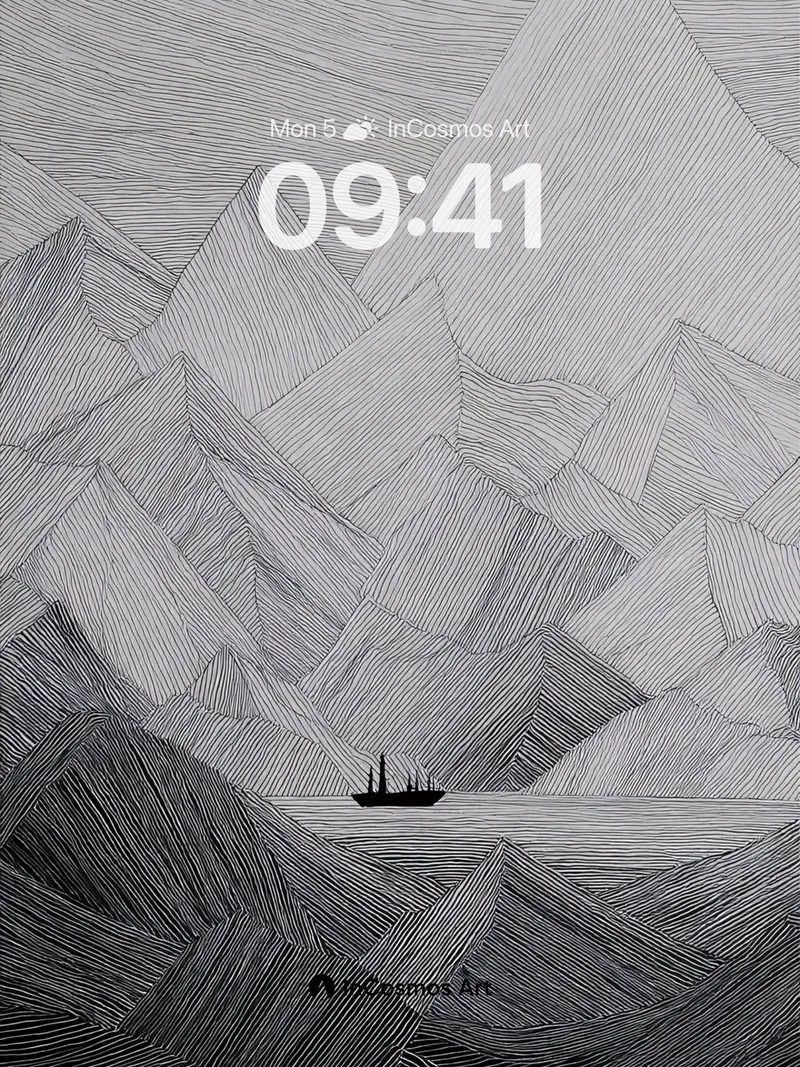
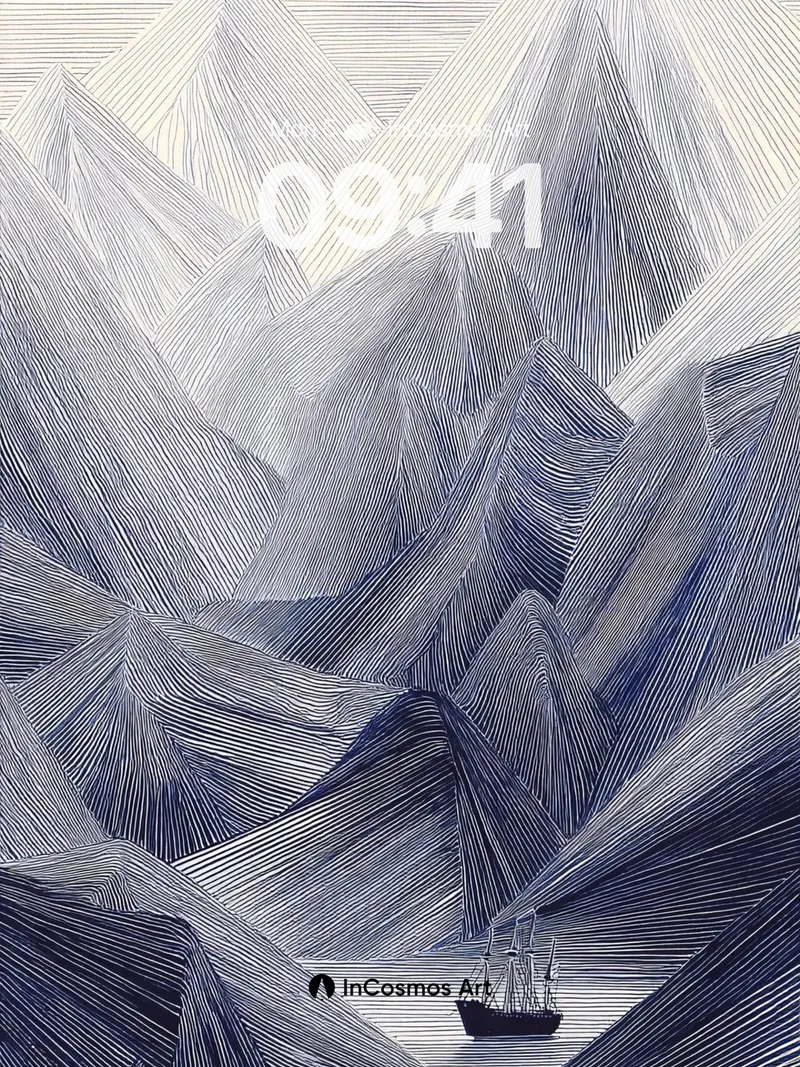
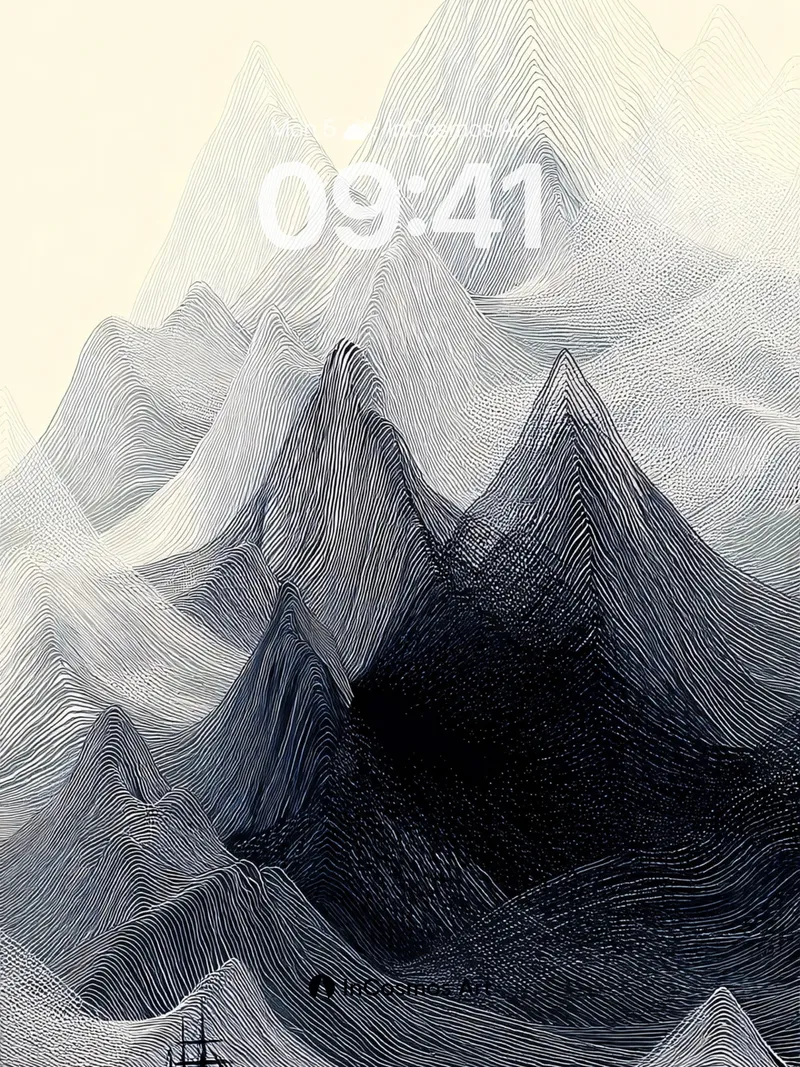
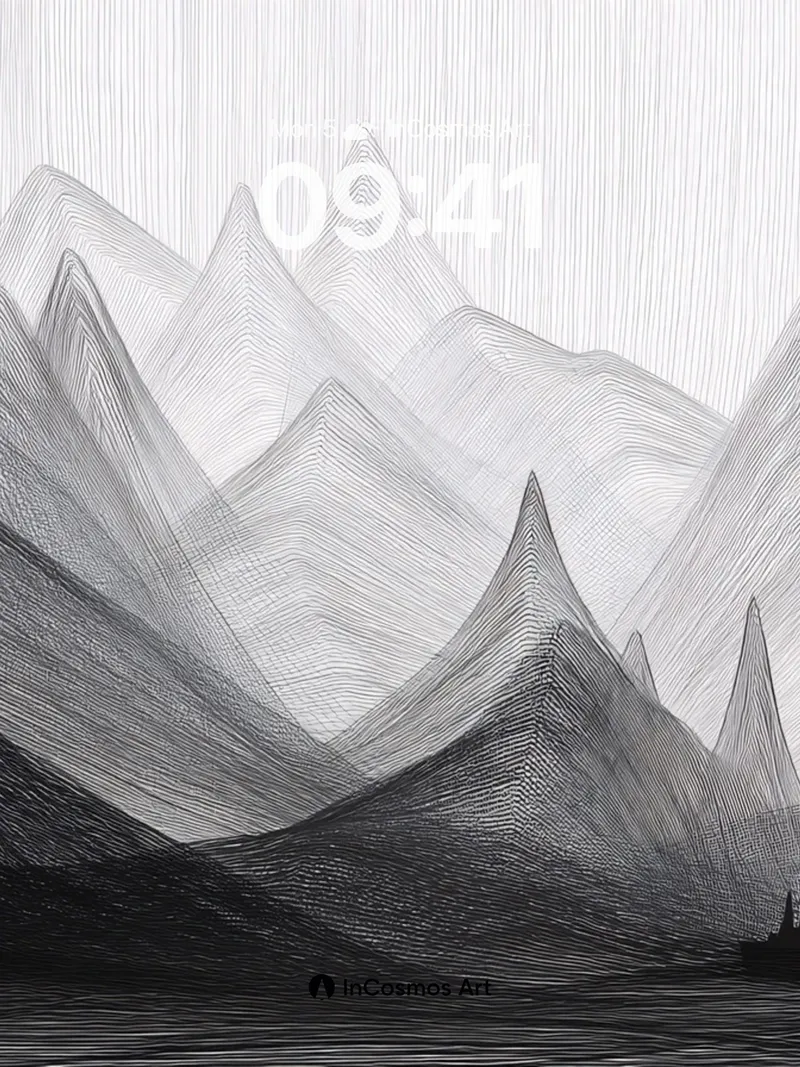
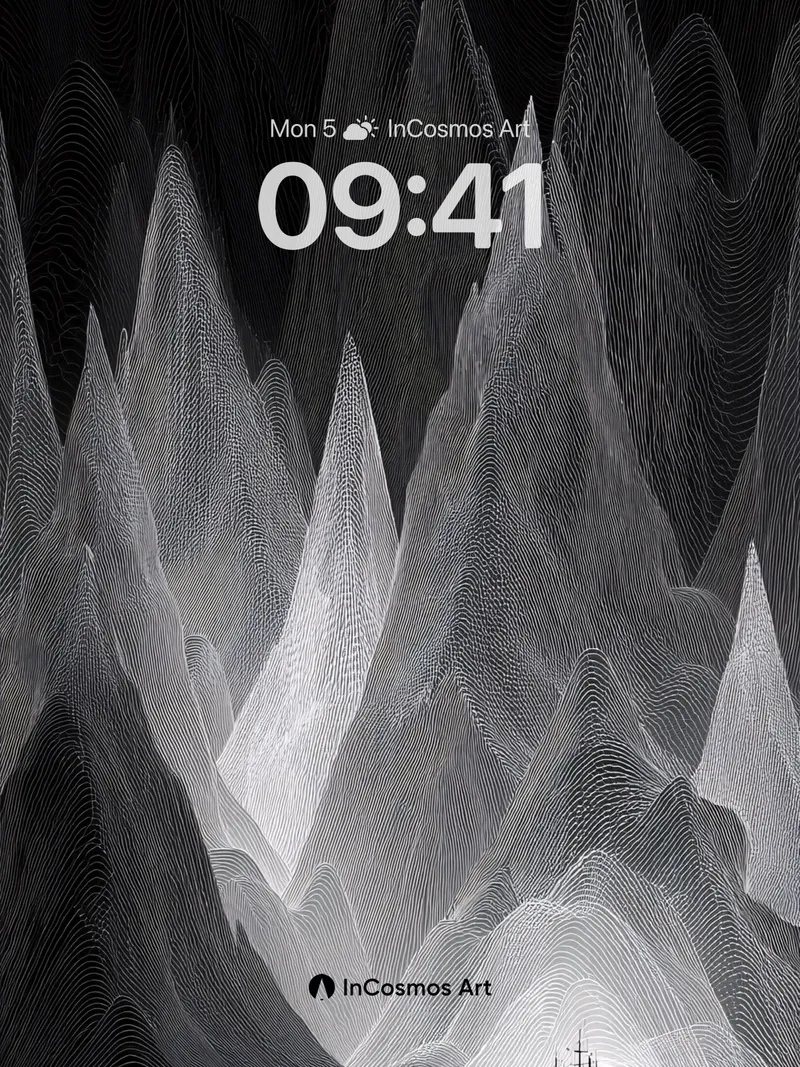
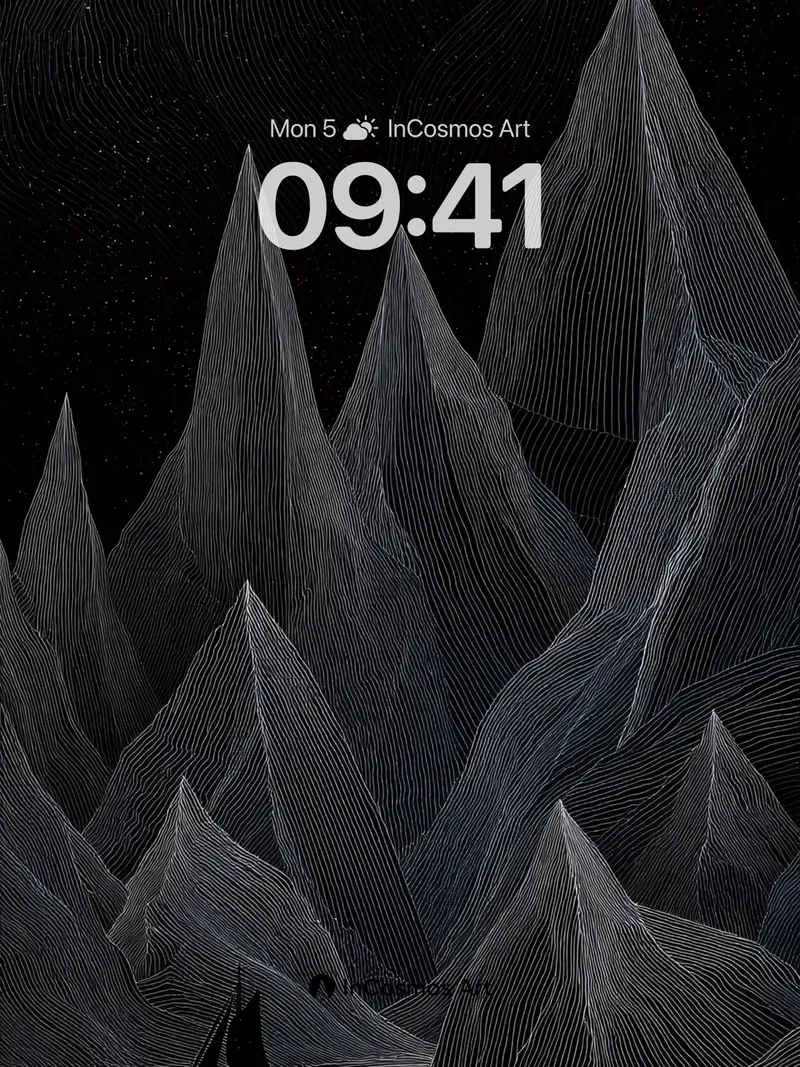
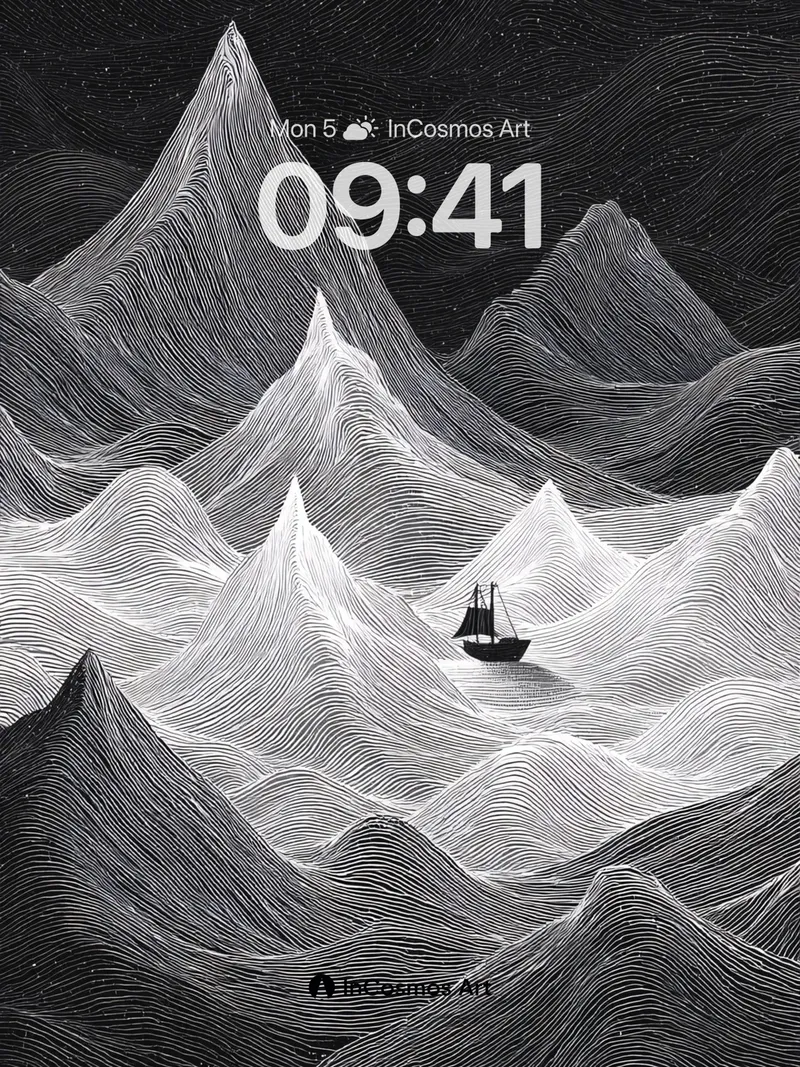
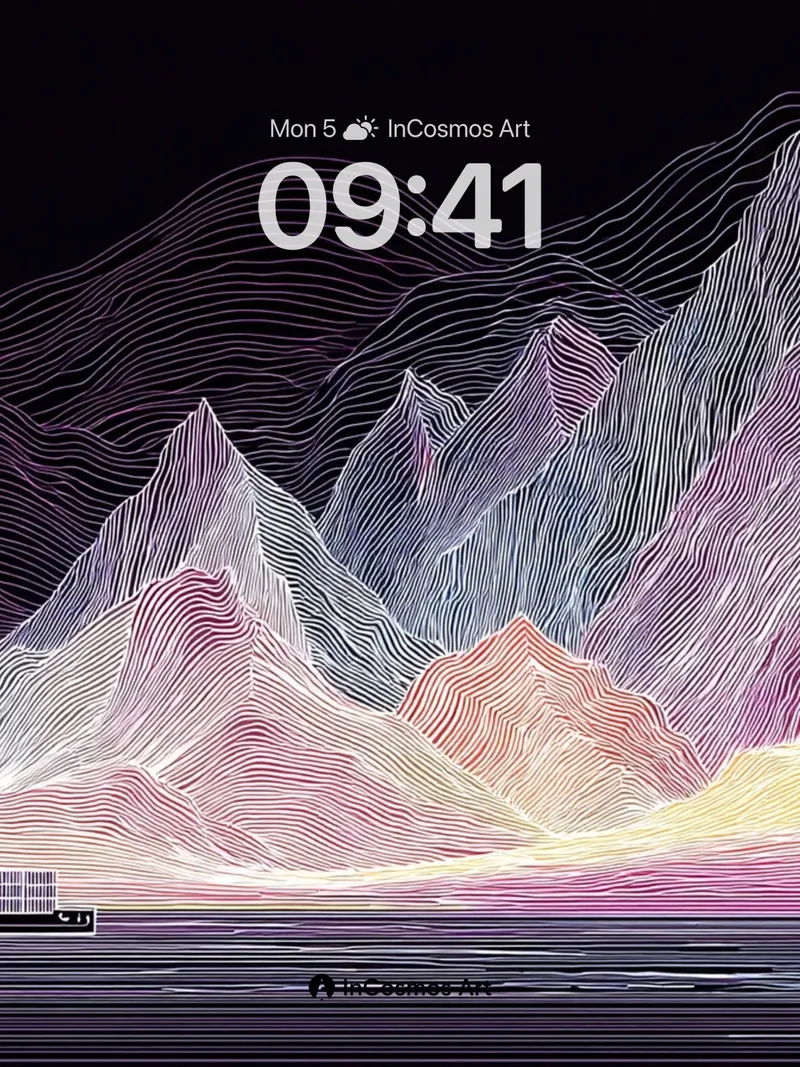
In the vastness of nature, a single boat floats between undulating waves and towering peaks. The rhythm of lines forms the breath of terrain, each stroke resembling a scar of time, lending dynamic life to static landscapes. These scenes are not reproductions of reality but explorations of perceptual boundaries—where order and chaos coexist, space extends, and solitude is observed. The boat remains centered yet never dominant, symbolizing humanity's position within the cosmos: small, enduring, silently advancing. The density and spacing of lines echo the inner rhythms of modern existence—yearning for connection while fearing crowding, seeking direction while embracing drift.
Lines as Language
Here, lines transcend decoration, becoming mediums for structure and emotion. They do not merely outline forms but construct presence. Dense clusters suggest pressure, sparse areas reveal openness and freedom. This technique draws from traditional landscape painting’s texture methods, yet reimagined through minimalism, allowing Eastern aesthetics to breathe anew in contemporary contexts. Viewers recognize mountains, seas, and skies within flowing patterns, only to realize these elements are projections of inner states.
The Philosophy of the Solitary Boat
The boat appears repeatedly, varying in form, yet always sailing alone. Its existence is not about conquest or arrival, but simply being. Sails glow in darkness, fade in daylight, like individual consciousness flickering within collective narratives. This vessel is the wanderer, the traveler, every ordinary person confronting the unknown. It does not rely on lighthouses, nor await salvation, but moves forward by its own internal rhythm, cutting through obscurity. Its journey has no end, only continually redefined beginnings.
Abstraction of Nature
Nature is stripped of color and detail, retaining only essential deformation and rhythm. Mountains cease to be rock accumulations—they become surges of energy; seas stop being water masses—they extend into wills. This abstraction is not an escape from truth, but a deeper approach—when senses are simplified, thought penetrates further. Within this visual order, all things can be understood as pulses, vibrations, ongoing processes of generation.
Geography of Emotion
Each composition maps an emotional terrain. Deep blue invites contemplation, gray-white evokes calm, gold suggests hope, black anchors fear. These tonal shifts are not random but represent emotional layers. Viewers experience inner fluctuations across different hues, as if traversing their psychological topography. The direction of lines determines emotional flow: upward signifies longing, downward denotes falling, horizontal implies balance, intersecting indicates conflict.