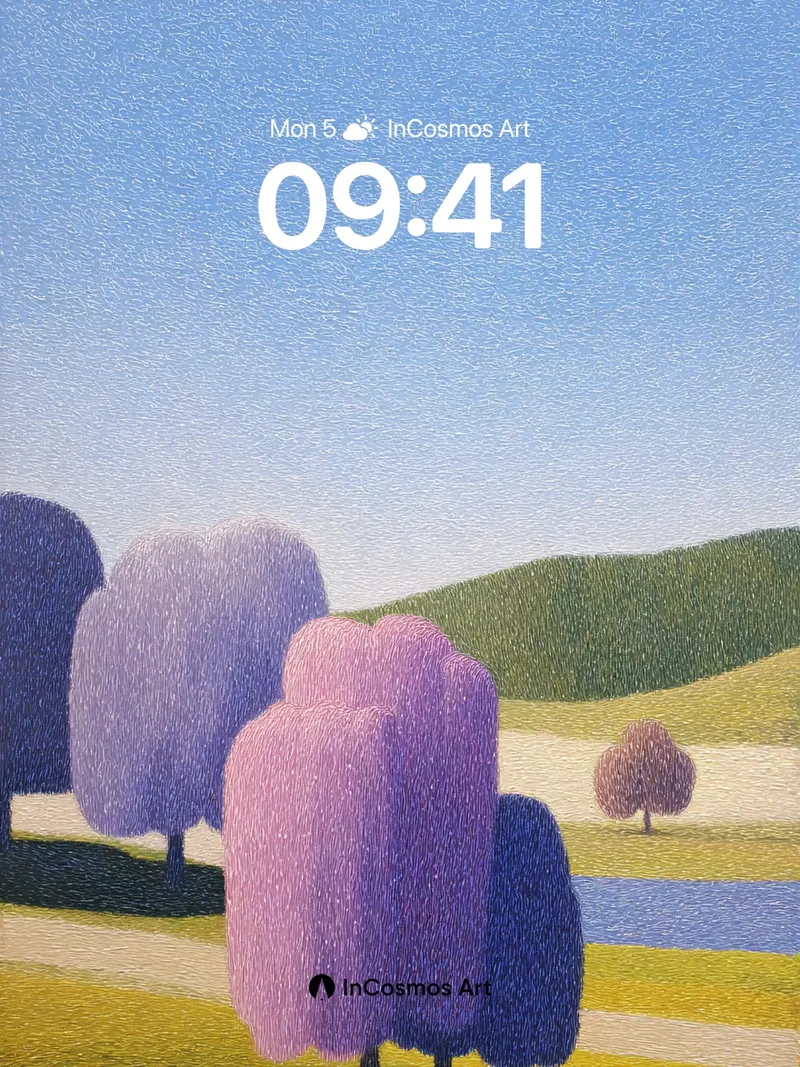
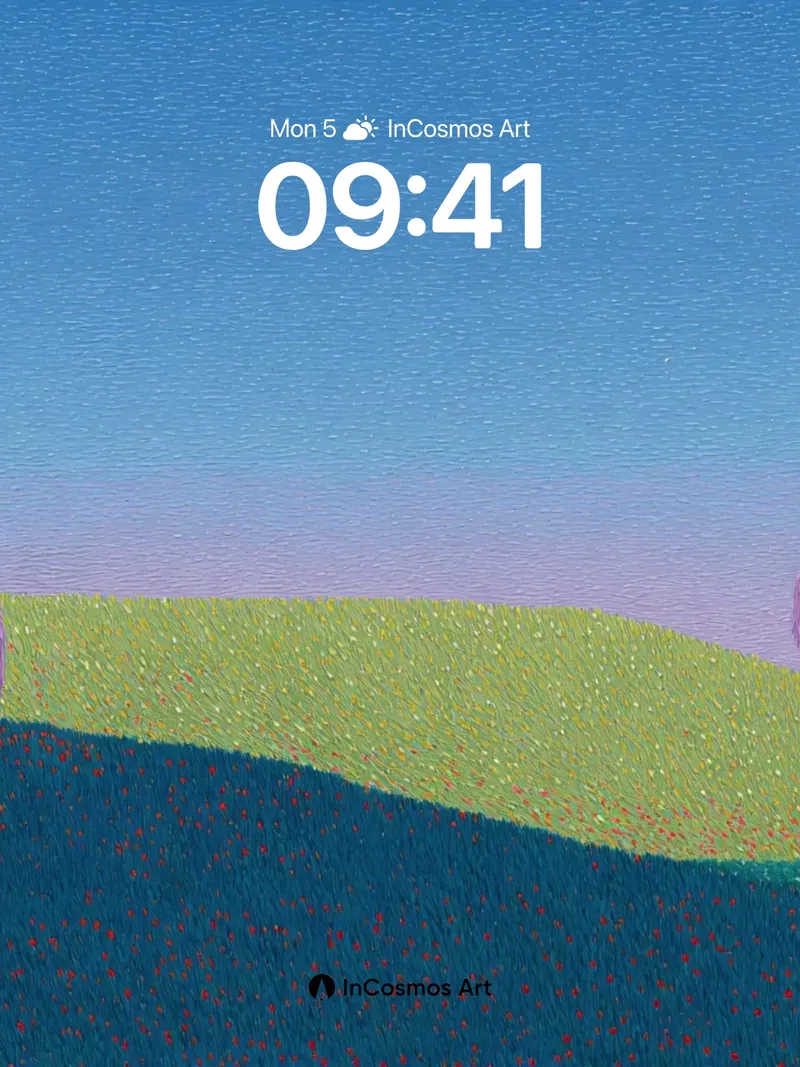
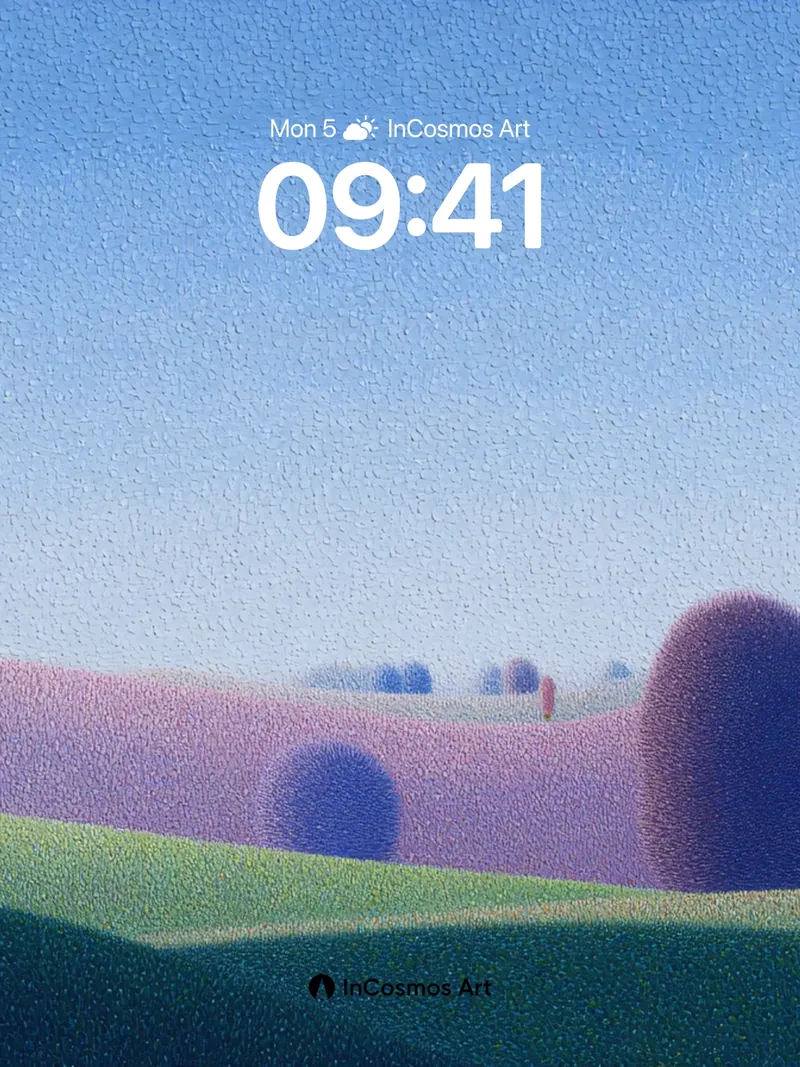
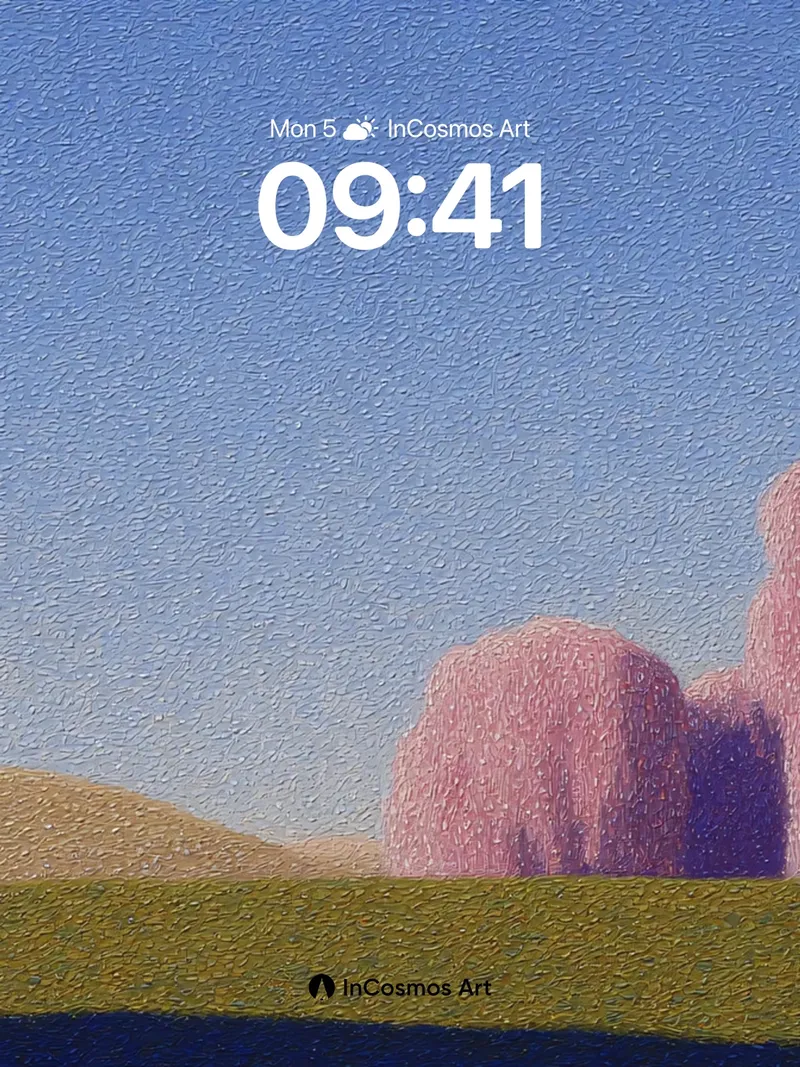
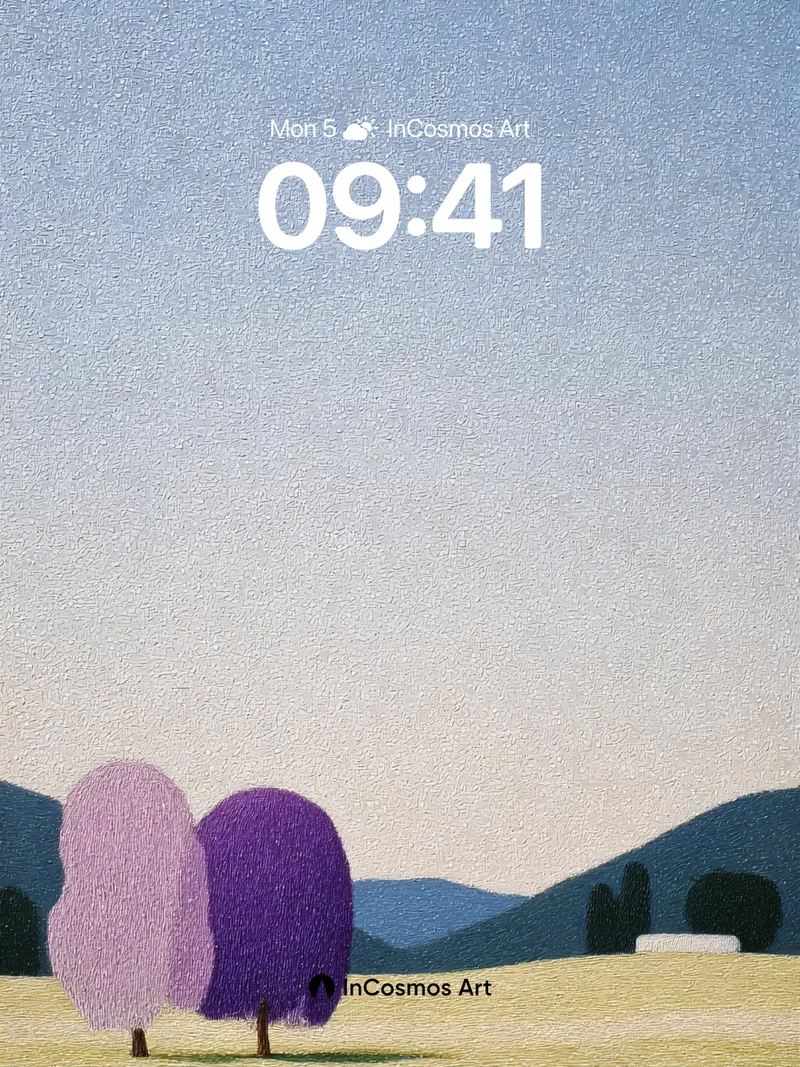
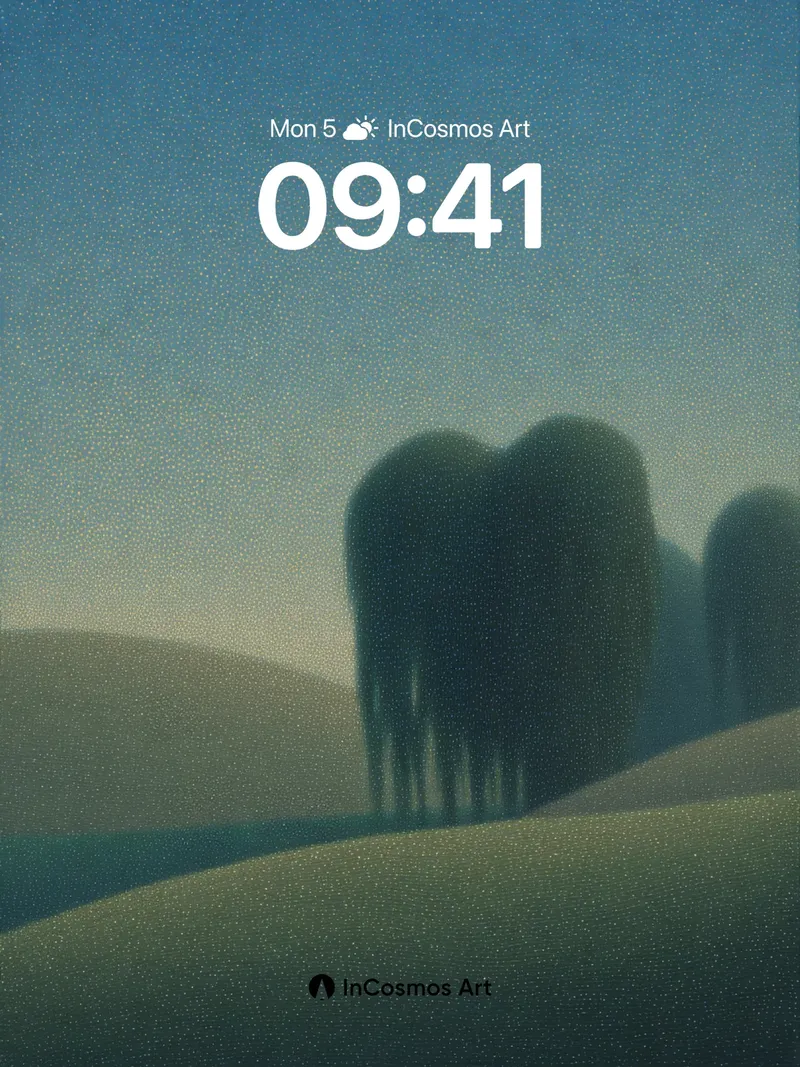
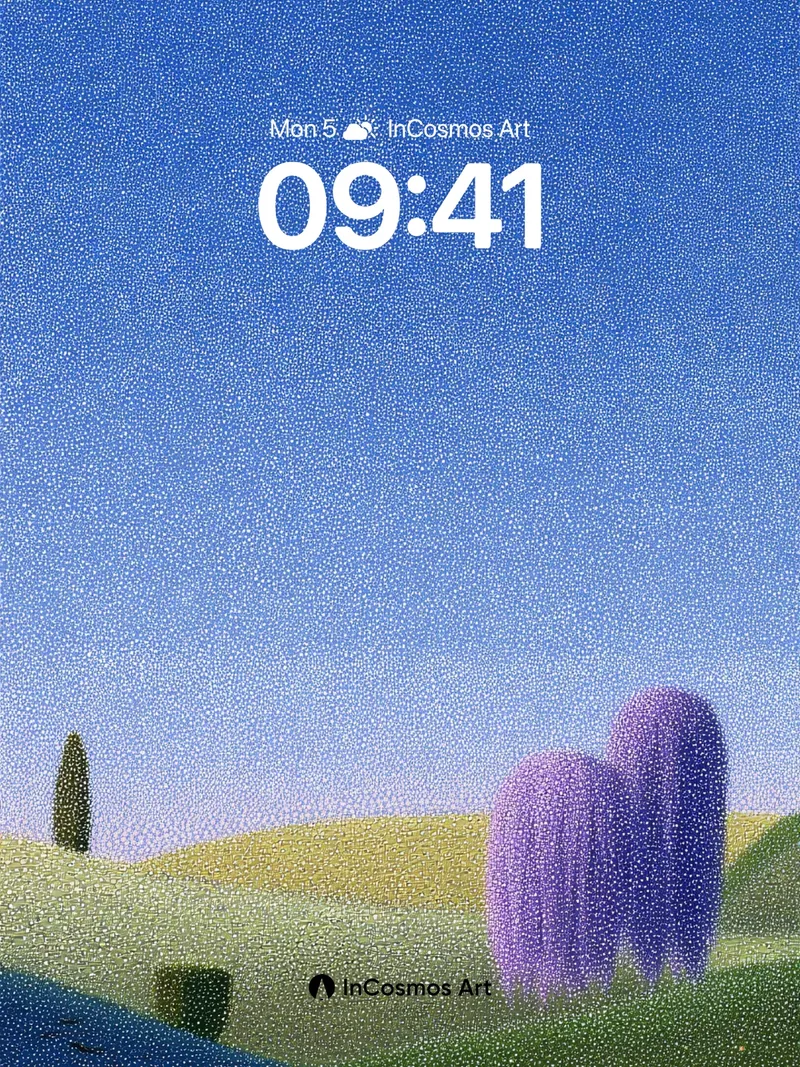
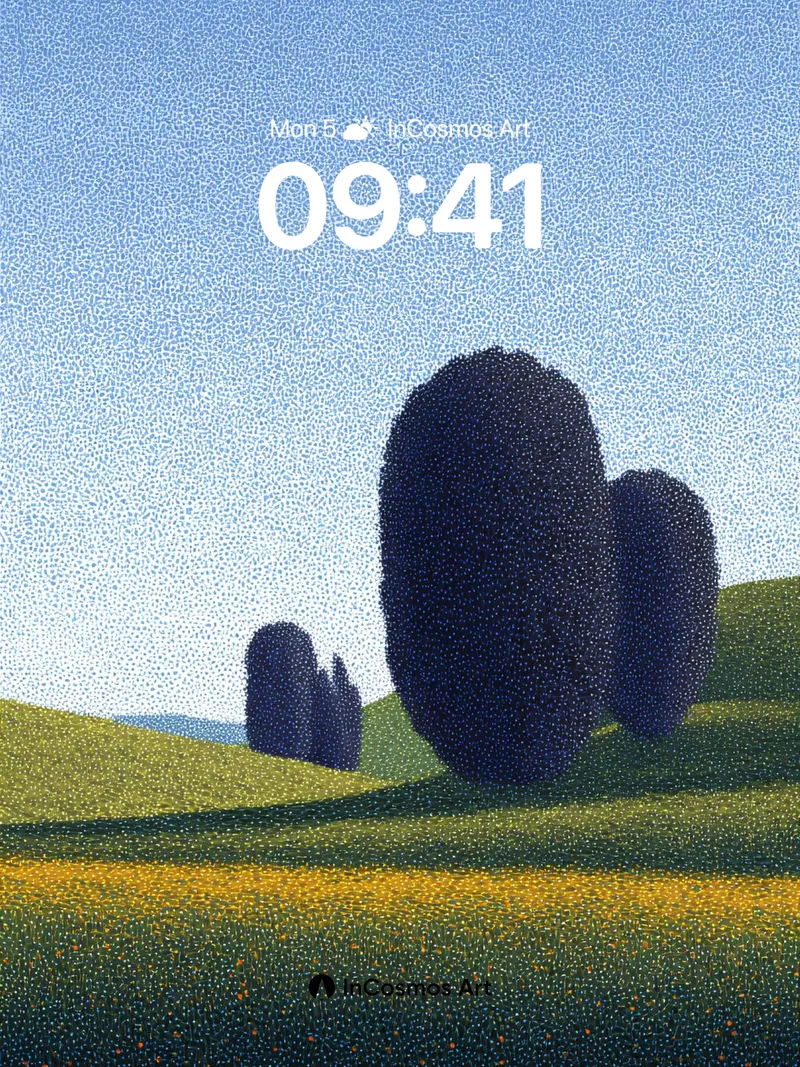
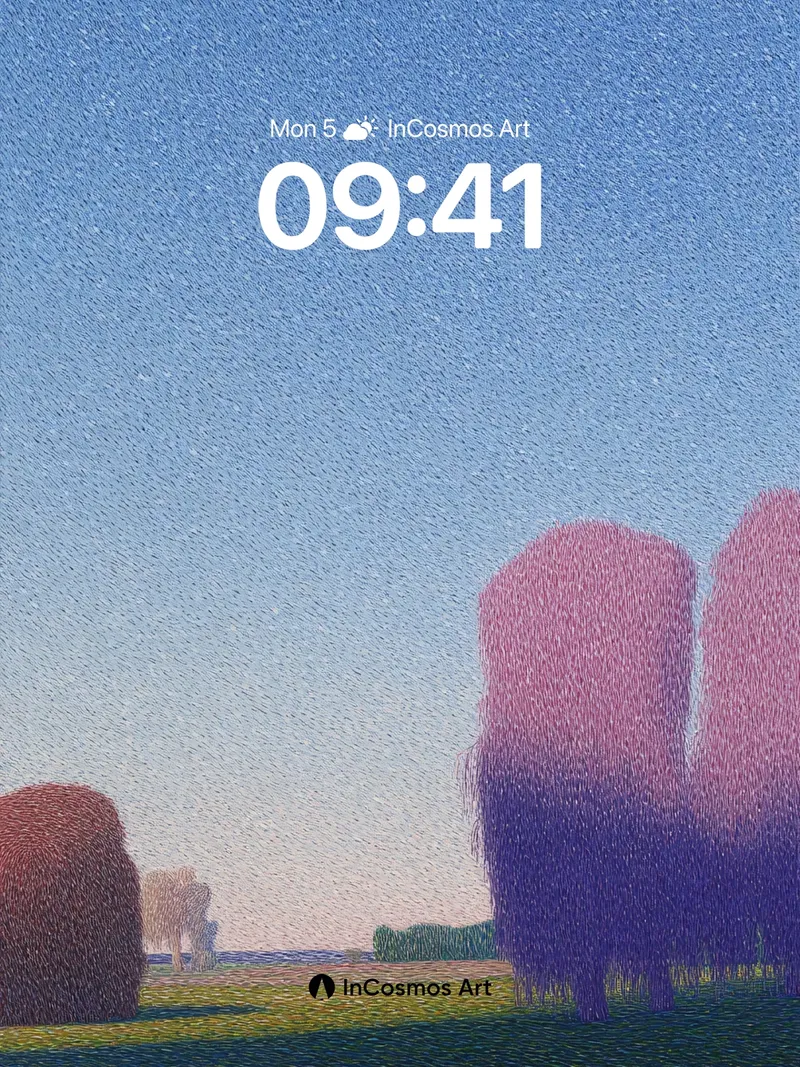
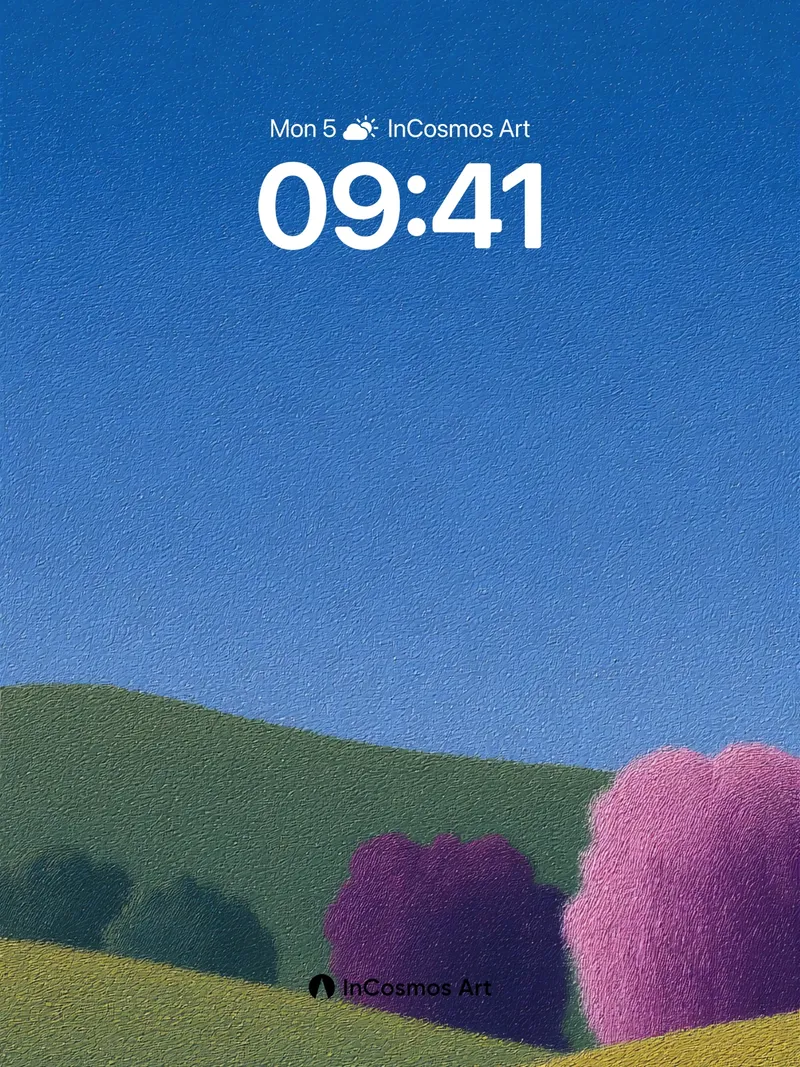
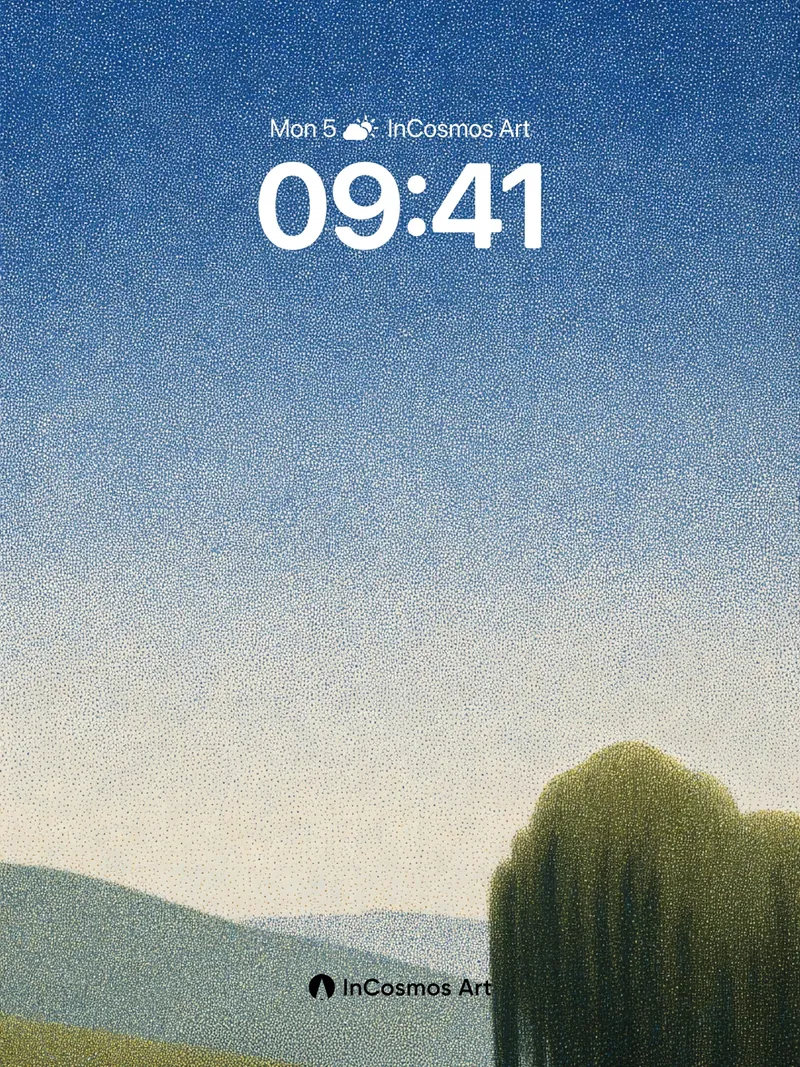
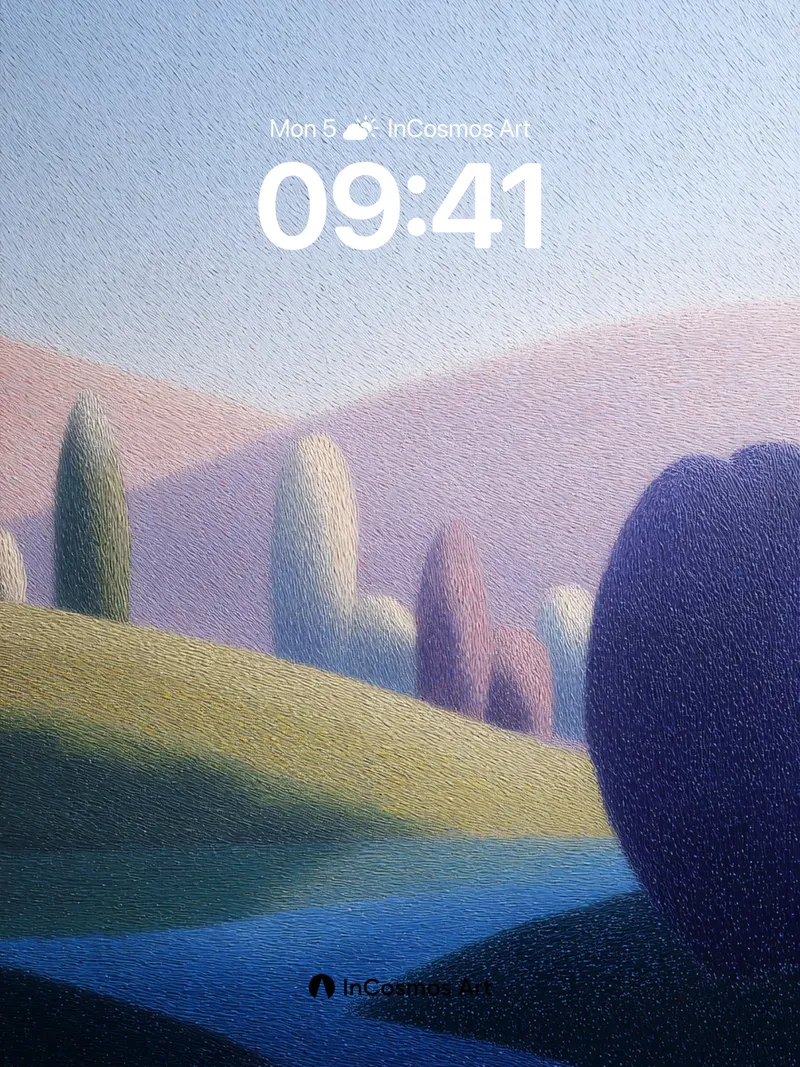
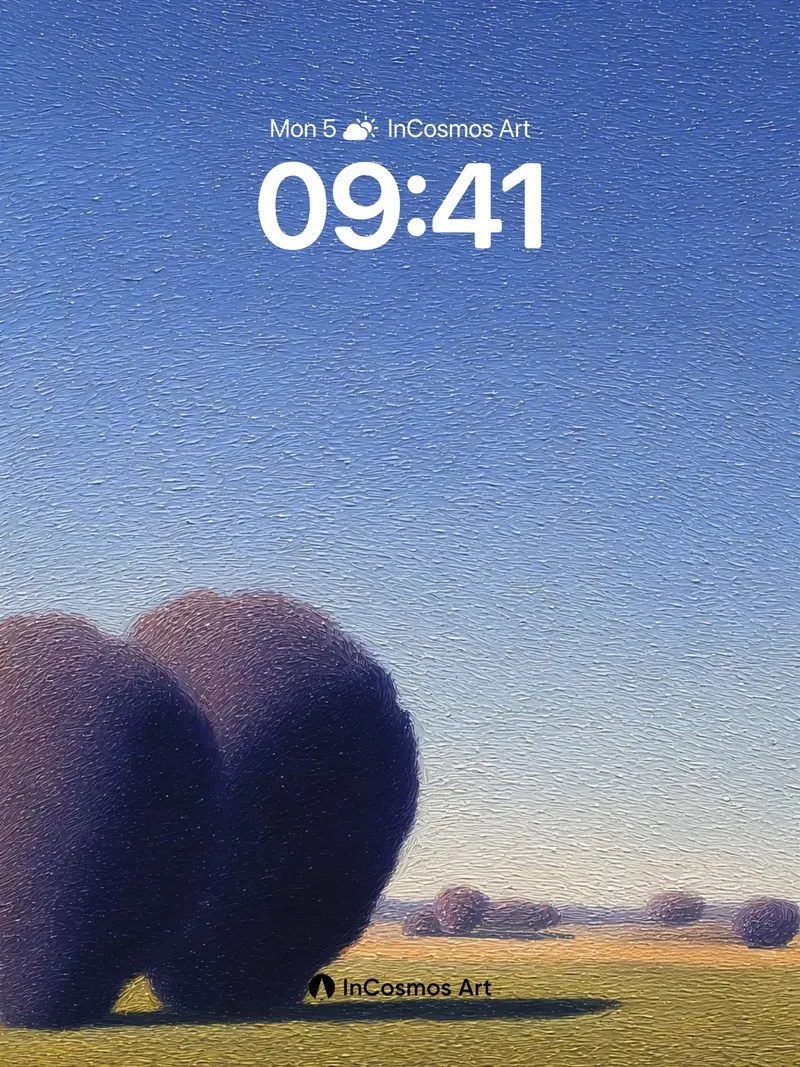
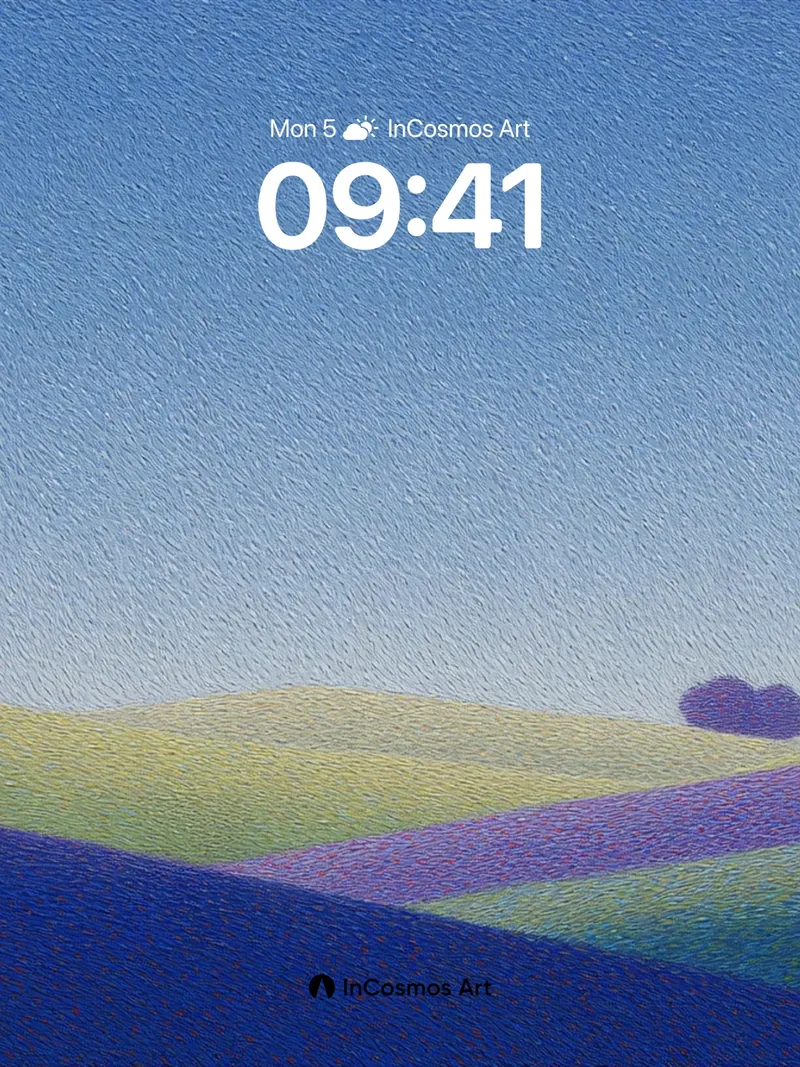
Light moves slowly across rolling hills, like time itself whispering. Each hue is deliberate, unfolding in subtle gradients from violet to indigo, pale pink to deep green, forming a silent rhythm. This is not a representation of landscape, but an imprint of emotion—earth breathing, trees contemplating, sky gazing. The forms are abstract yet real, pointing to no specific place, yet evoking universal belonging. Human figures appear small, far on the horizon, seemingly swallowed by nature's scale, yet finding quiet affirmation within it. This presence is not one of loud ownership, but of silent coexistence. When vision recedes, the mind advances. Color here is no longer decoration—it becomes language, carrying perceptions of solitude, distance, and eternity. It does not tell a story, but conveys a state—an suspension between wakefulness and dream.
The Geography of Color
Color is not an afterthought; it is an extension of terrain. Violet tree canopies resemble ink dropped into water, spreading into emotional washes. Green slopes act as vessels for light, holding the shift from dawn to dusk. Blue riverbeds wind like unfinished thoughts. These hues interpenetrate, forming a spatial symphony with no clear borders, yet inherent order. Together they build a non-real yet tangible world—a realm of sensation rather than logic. Here, topography is not physical fact, but psychological projection. Each color block is a fragment of memory, each shadow hides unspoken longing.
The Aesthetics of Solitude
Solitude is not absence, but wholeness. In this vastness, there are no roads, no buildings, only a continuous dialogue between plants and land. Trees stand in silent arrays, like sentinels or meditators. Their existence does not depend on others, yet gains meaning through juxtaposition. Human figures appear only as accents, their smallness underscoring the environment’s grandeur. This is not desolation, but dignified stillness. It refuses to be filled, refuses definition. Within this openness, the individual finds repositioning—not as center, but as part of a whole, a tiny yet irreplaceable note.
The Texture of Time
The shift in light suggests temporal flow, though no clock exists. The softness of morning and depth of evening leave traces in color intensity. These scenes capture not moments, but processes. The fine grain-like texture resembles accumulated time on canvas, giving each frame tactile weight. Time here is not linear, but cyclical, immersive. The viewer ceases to observe passively and instead enters, becoming part of the slow breath. This experience transcends vision, reaching a near-religious silence.
The Topology of Emotion
Emotions cannot be named—they must be shaped and tinted. The blend of purple and blue conveys melancholy softened by peace; pink and green evoke gentle hope. These feelings are not imposed, but generated by composition itself. The blur of distant forms and clarity of near ones create tension, guiding the gaze between illusion and reality. Layered space produces depth, and thus distance—both physical and psychological. This distance allows reflection, sorrow, love.