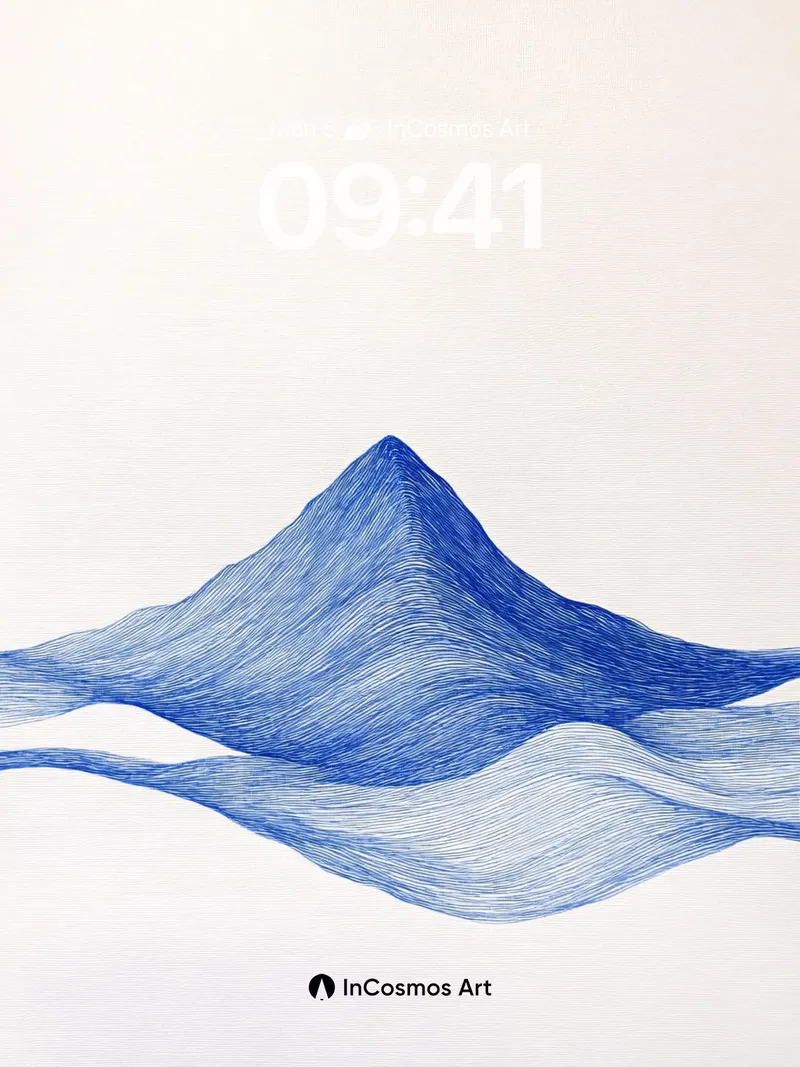
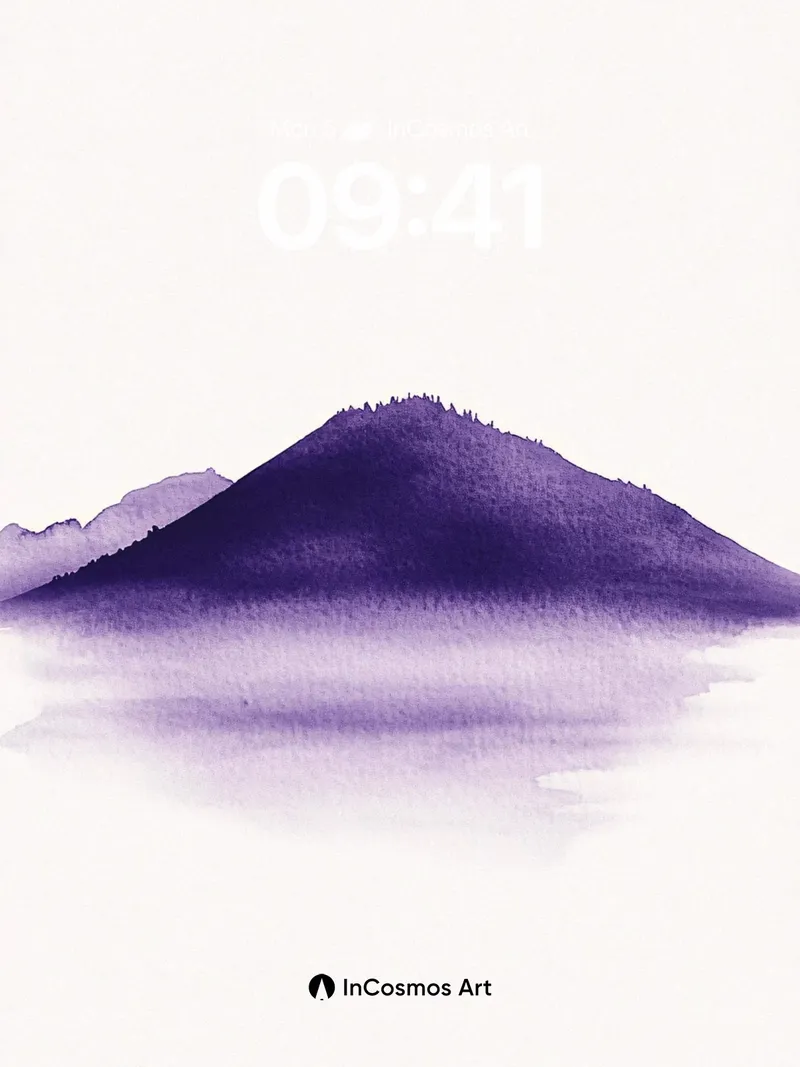
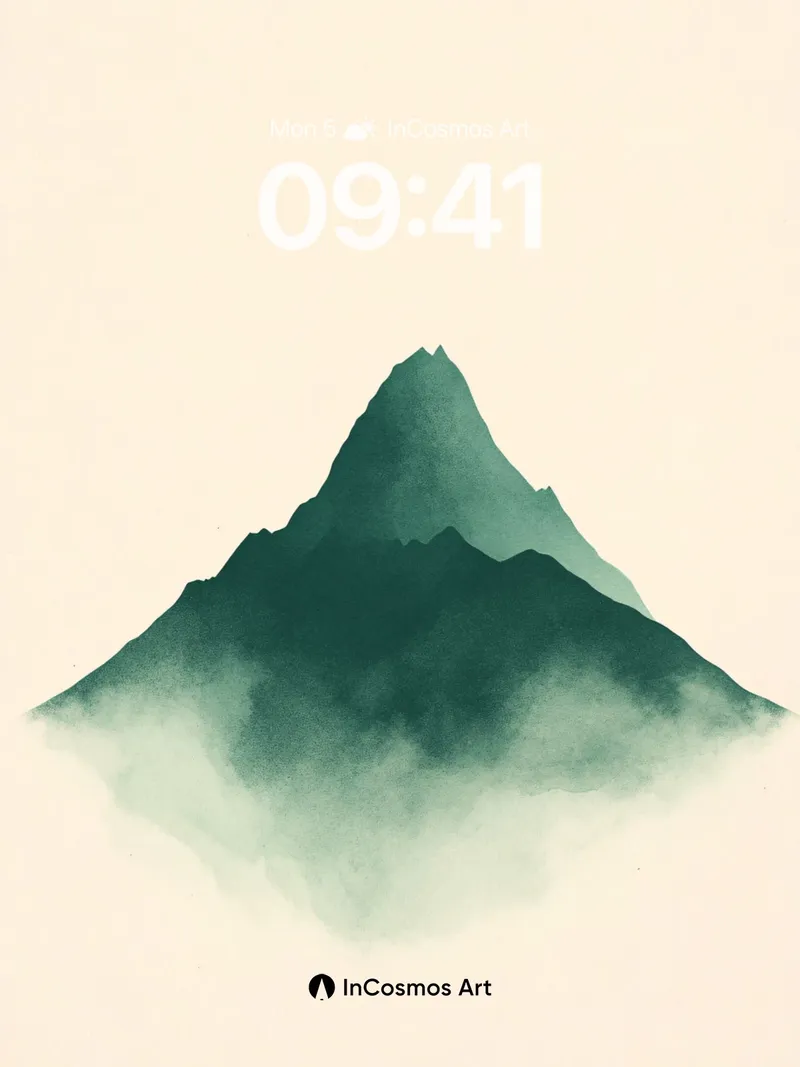
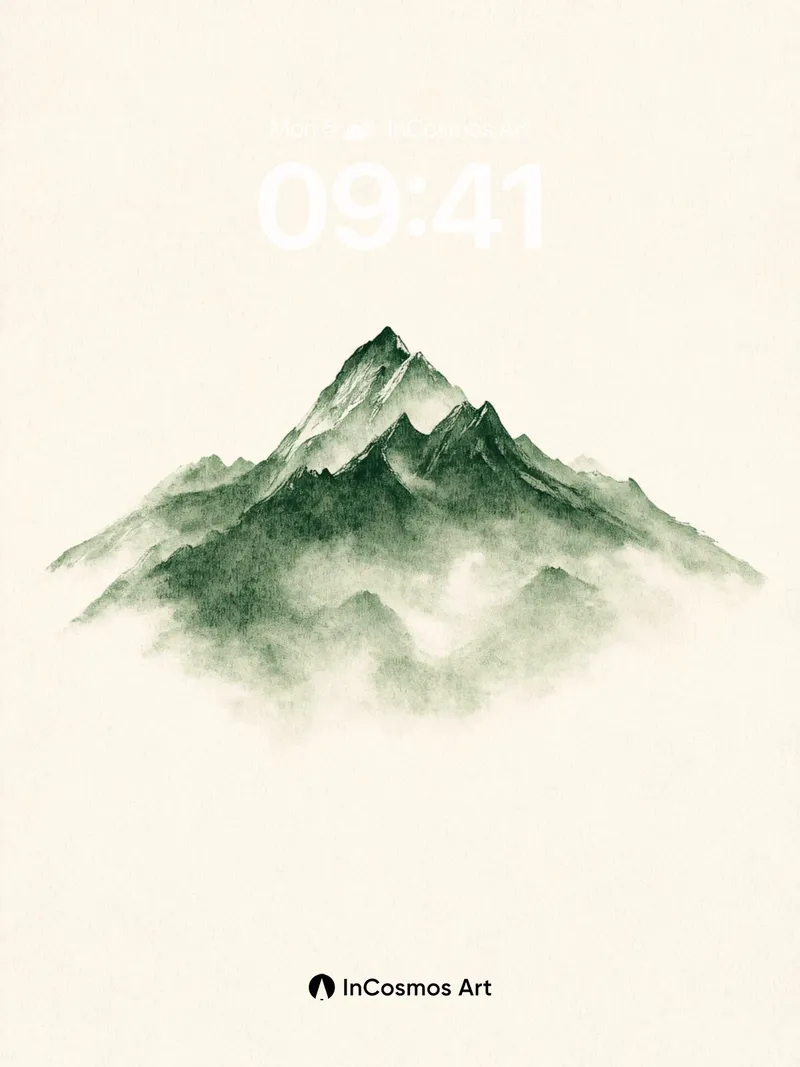
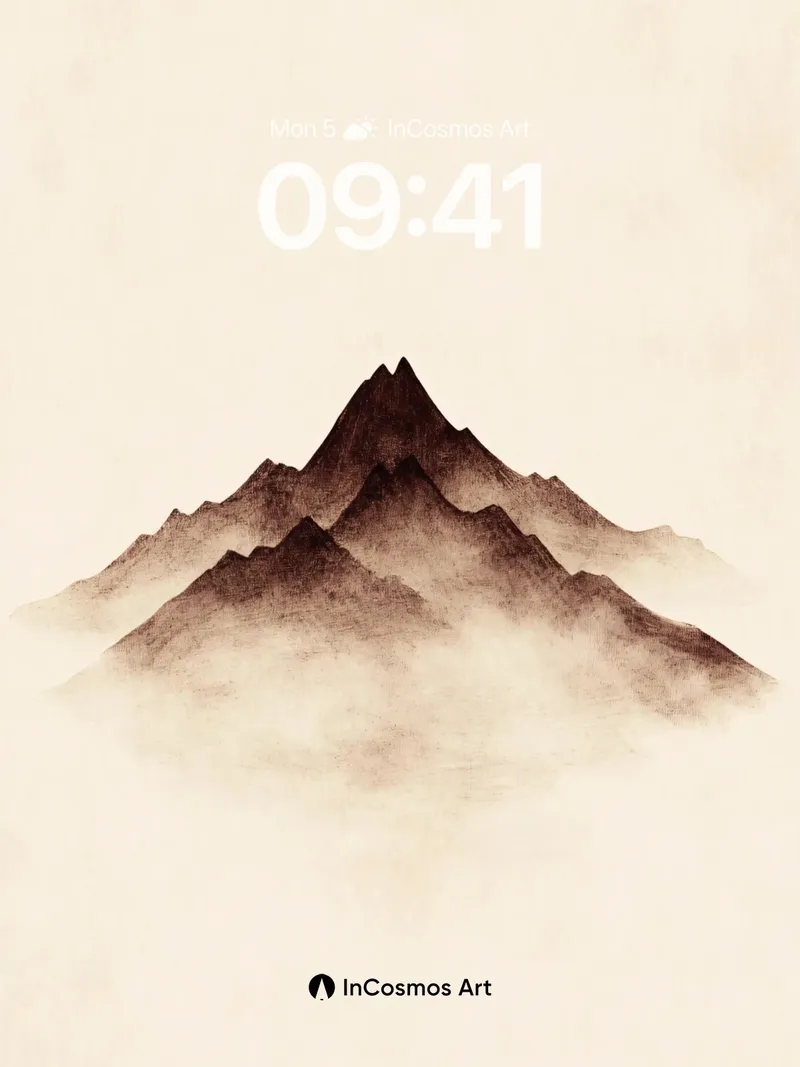
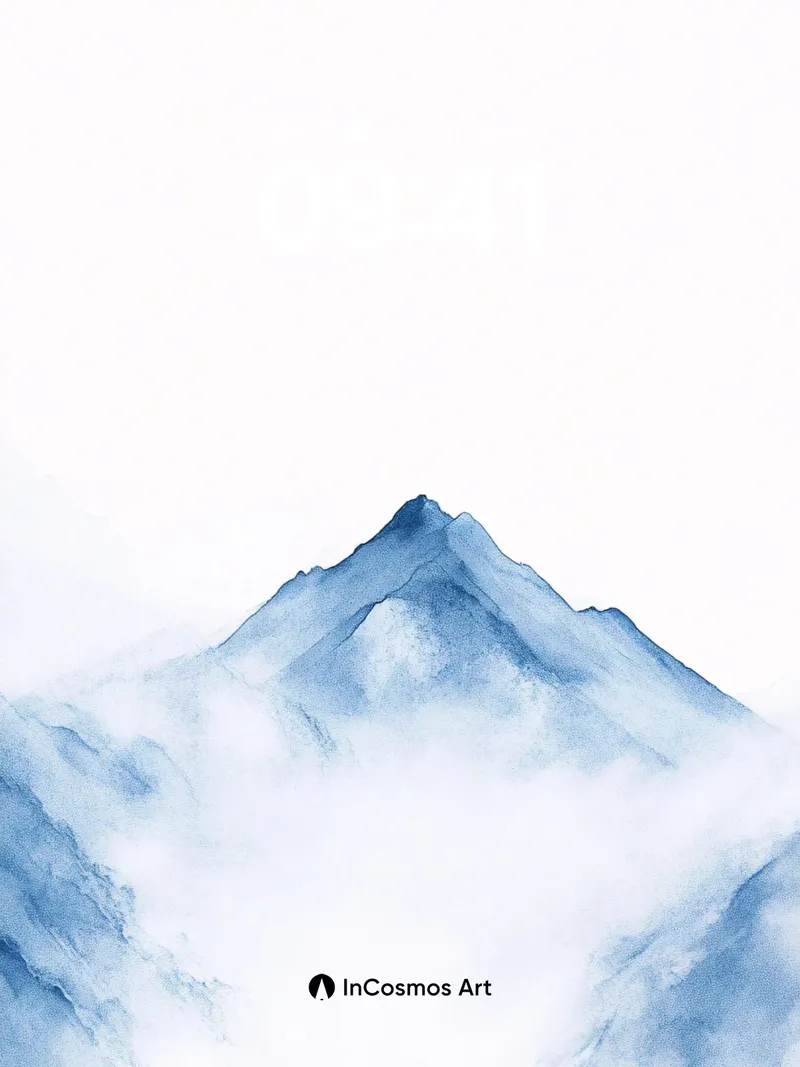
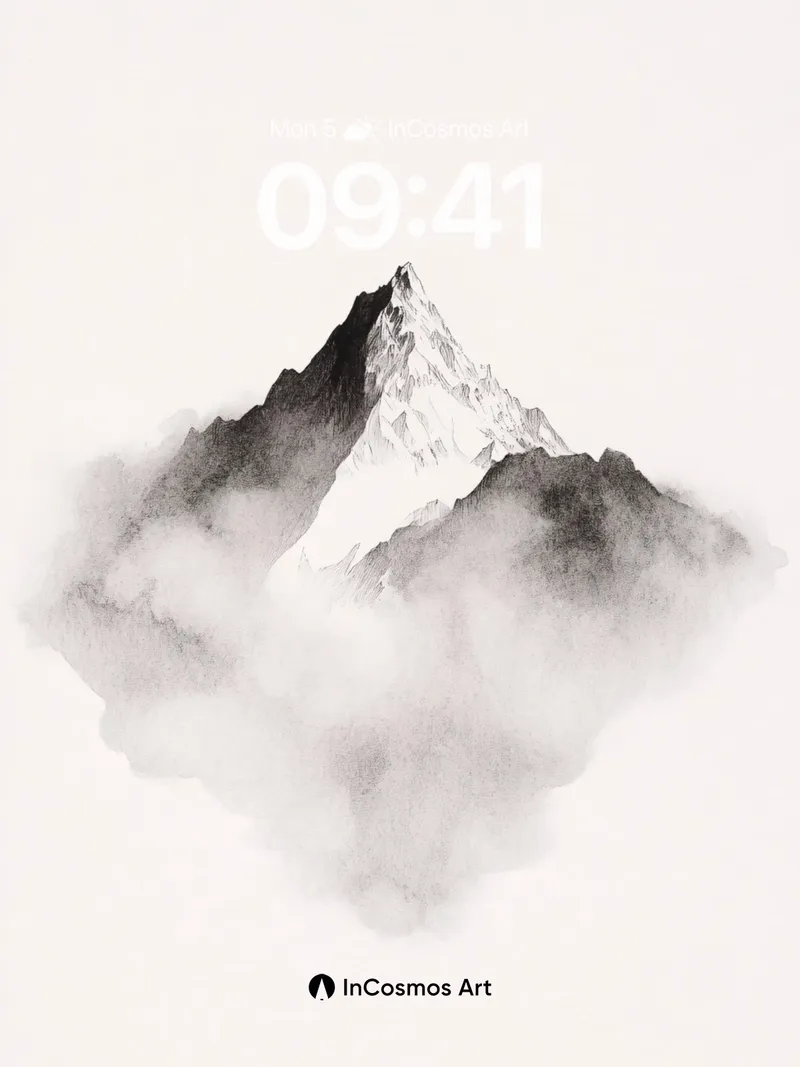
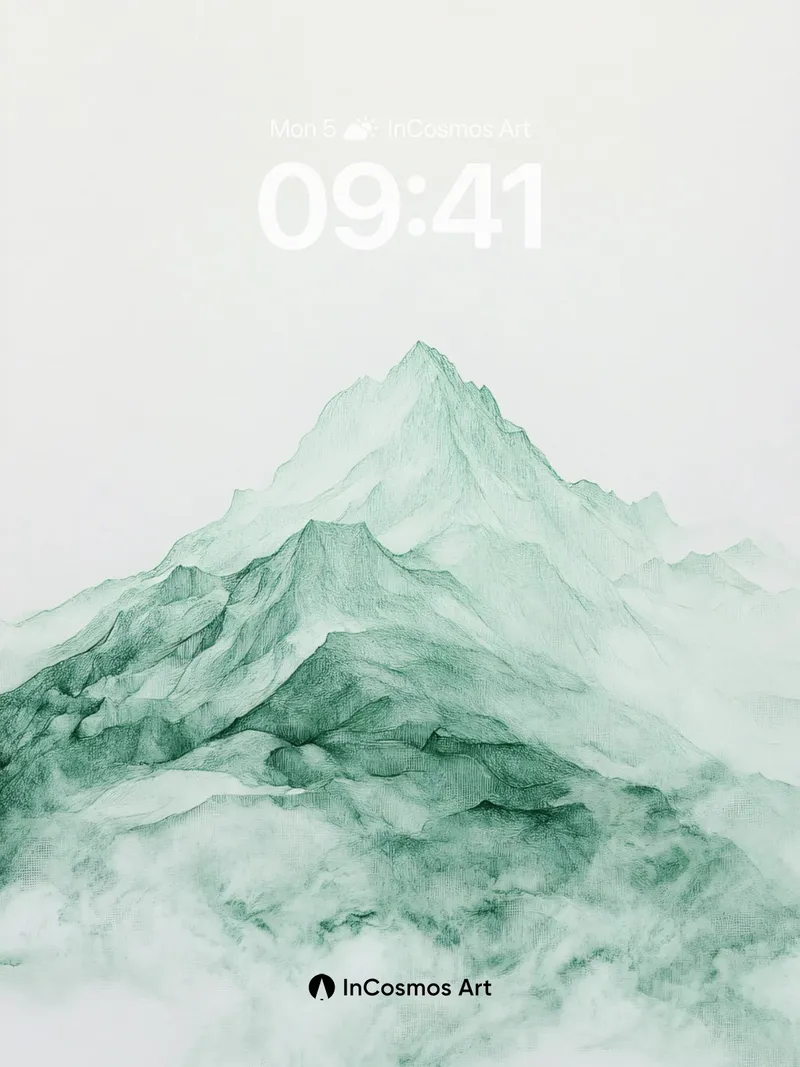
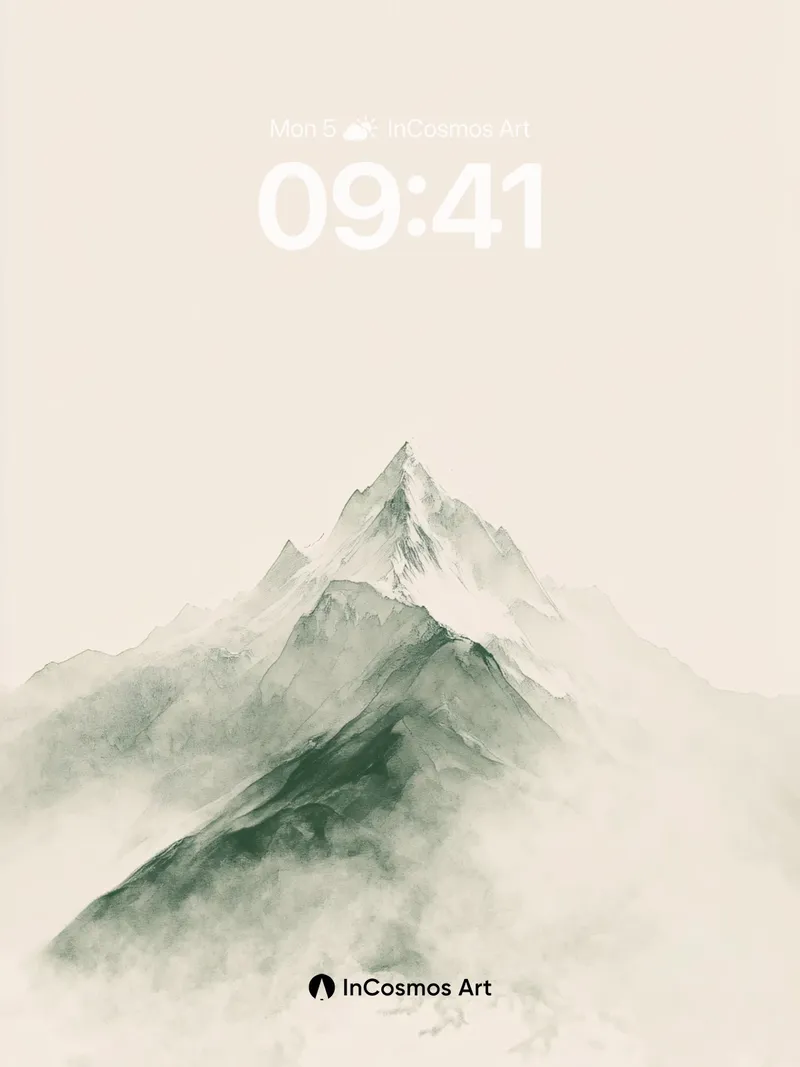
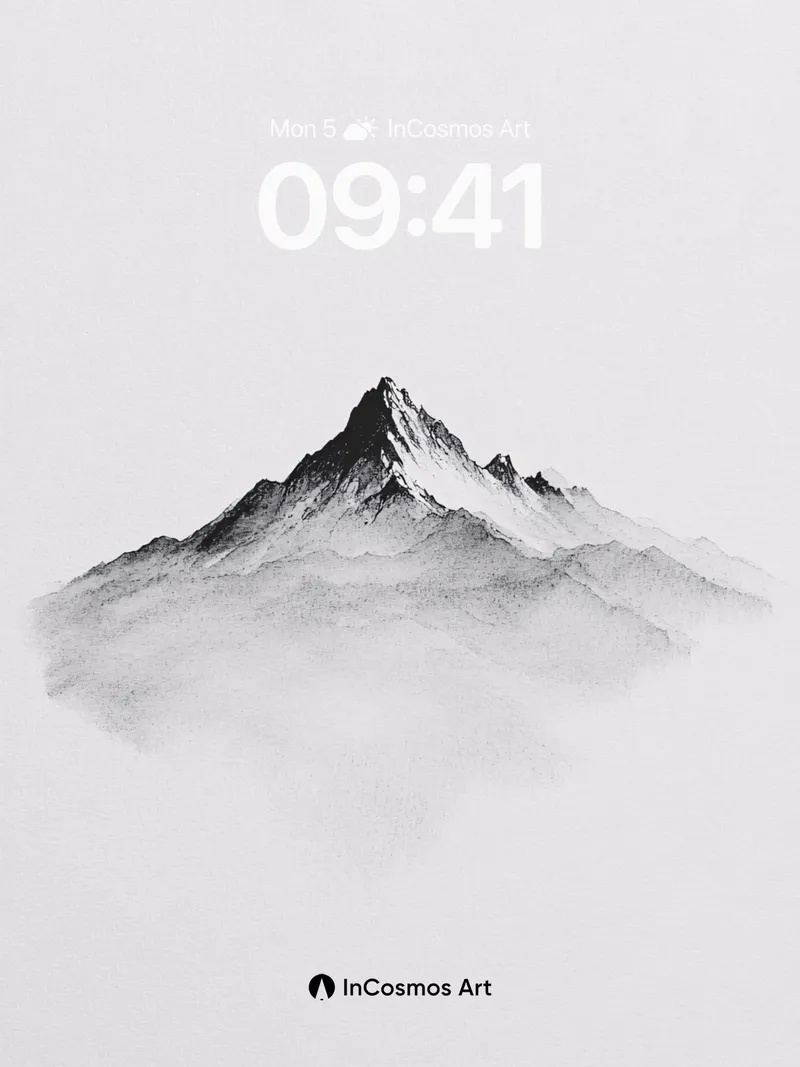
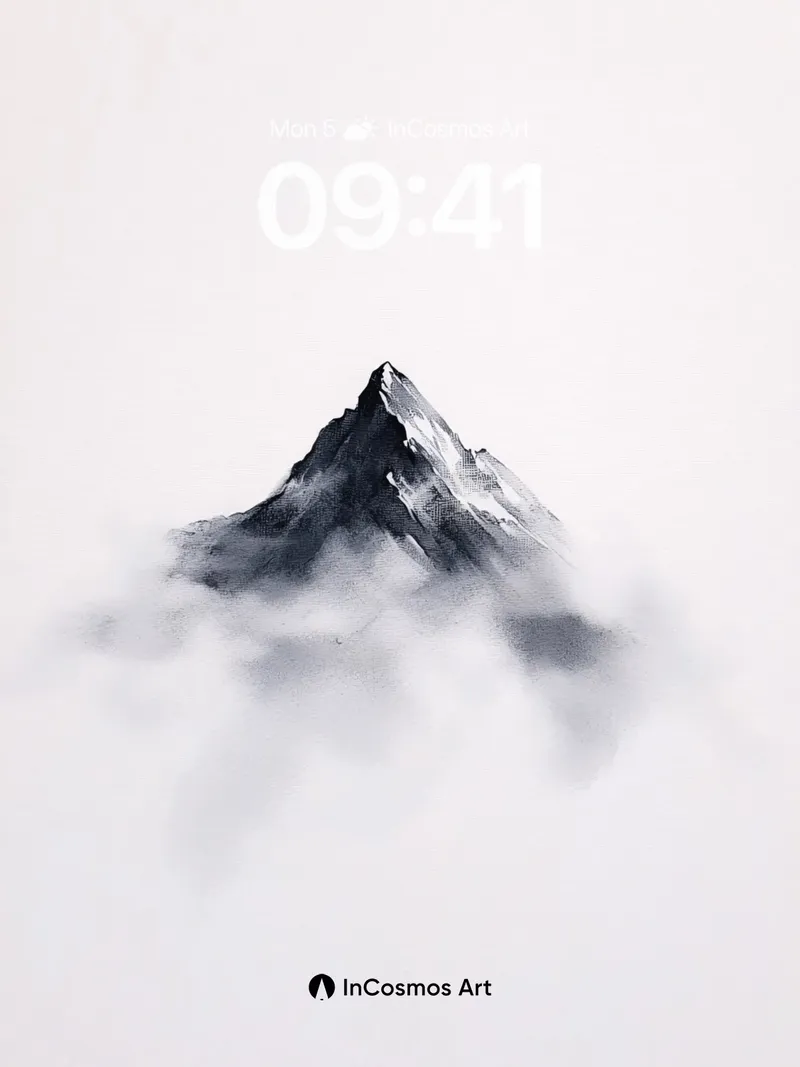
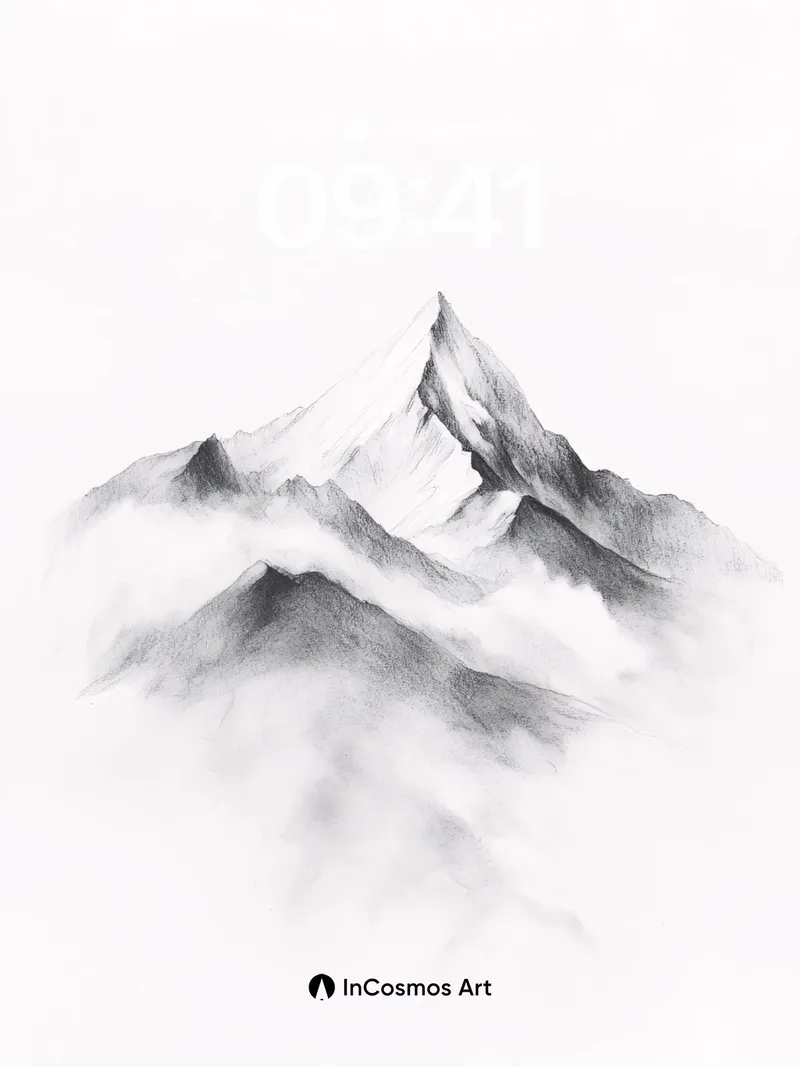
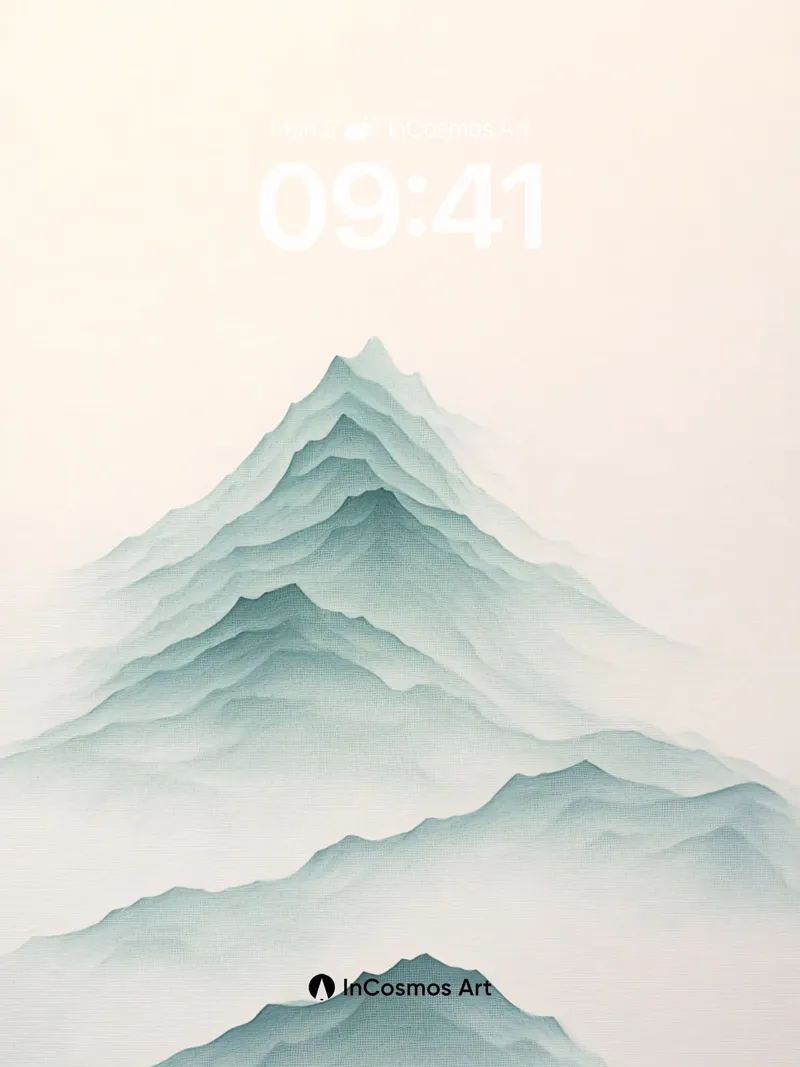
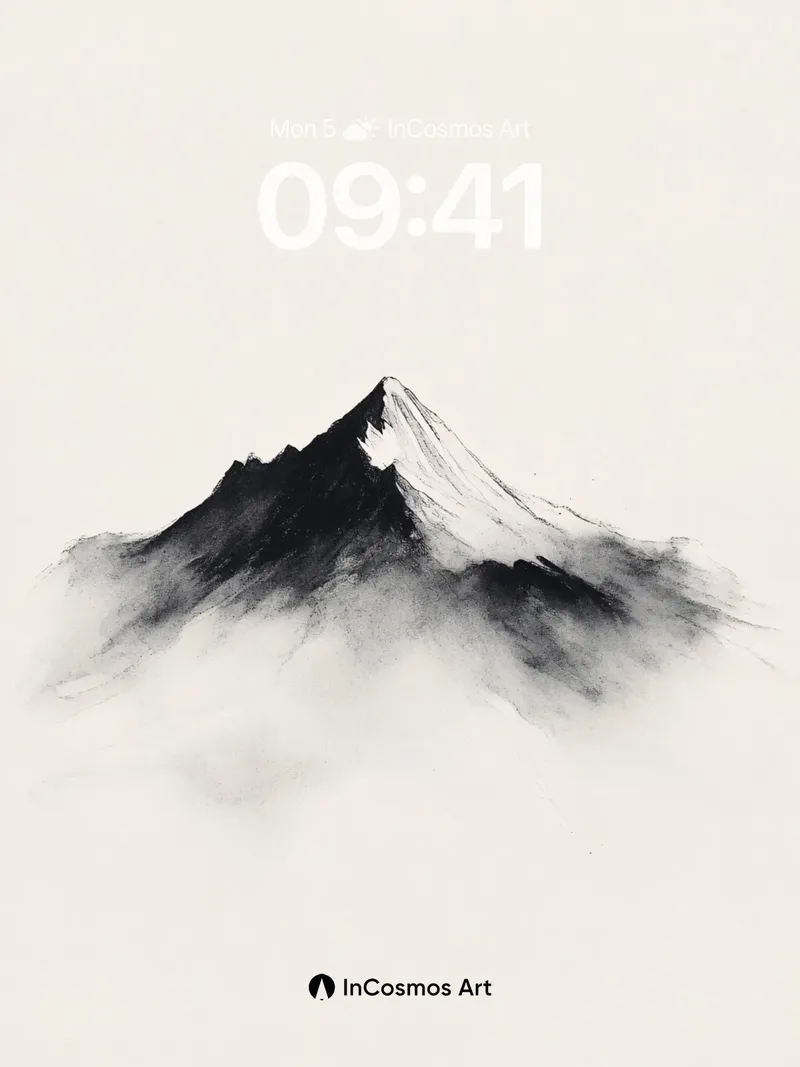
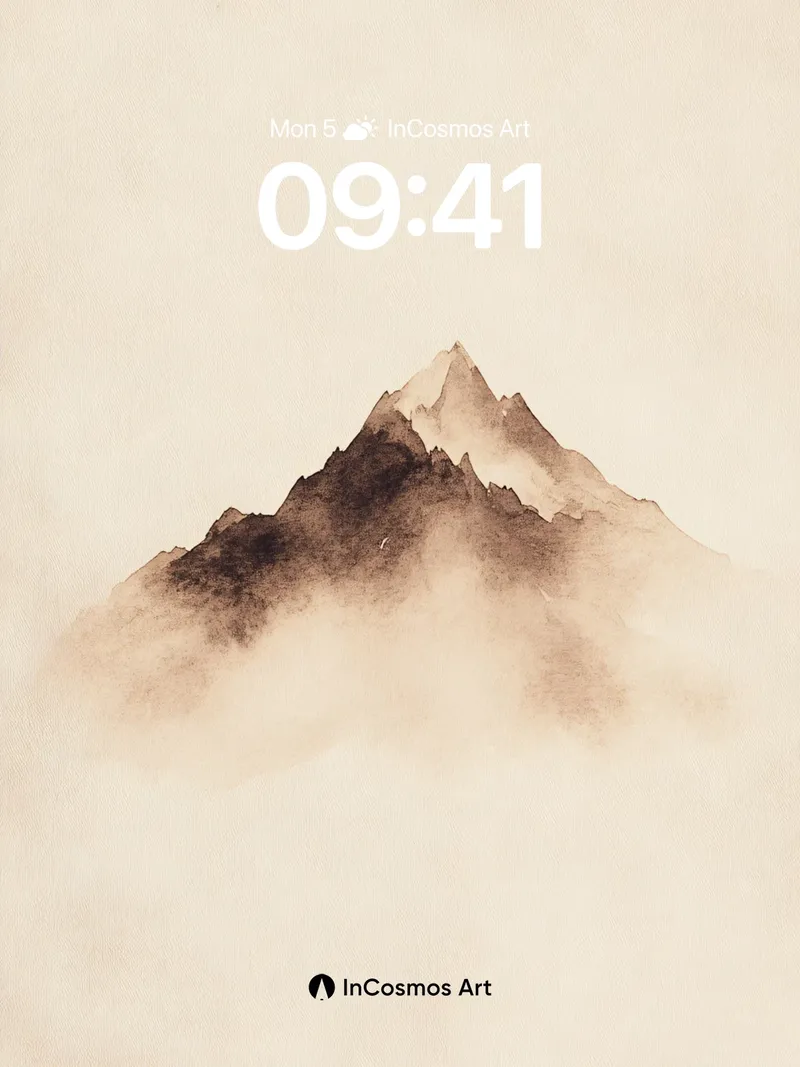
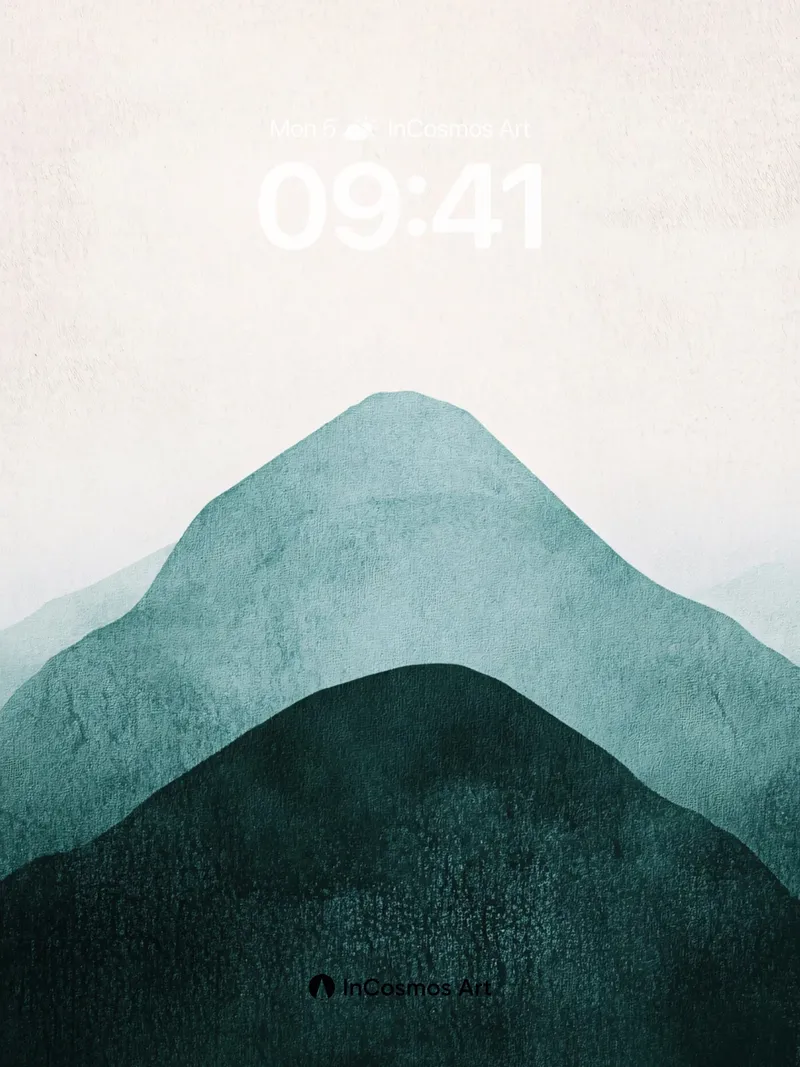
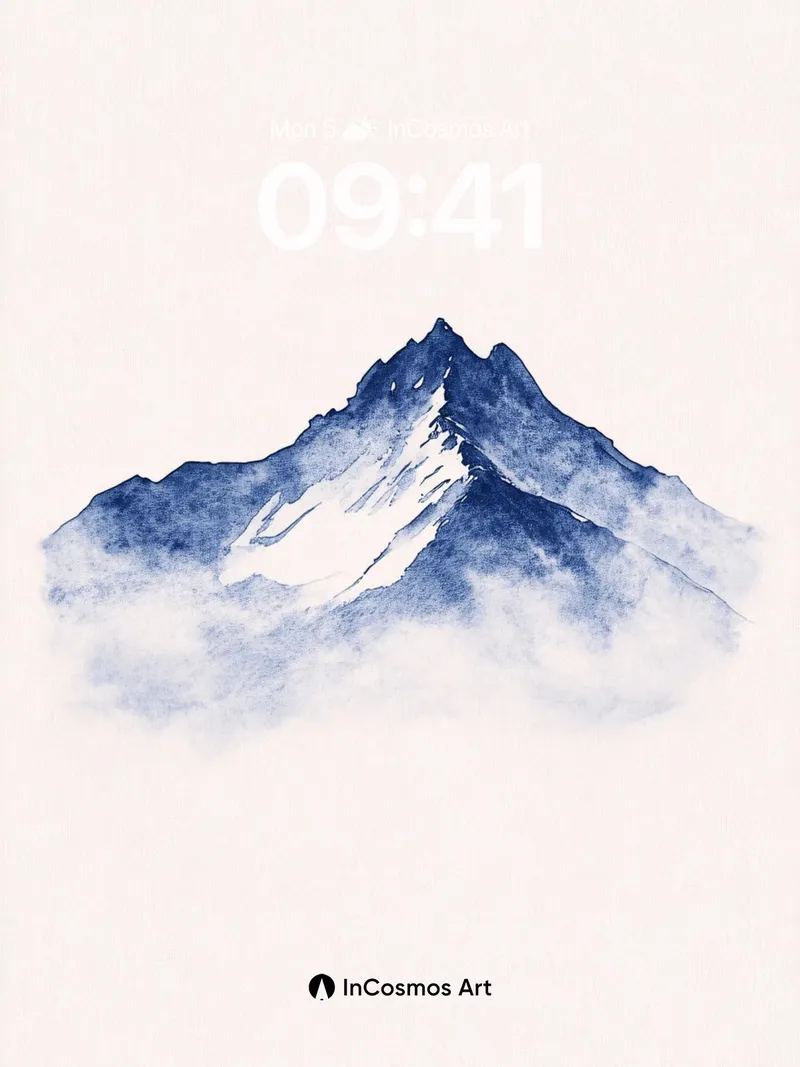
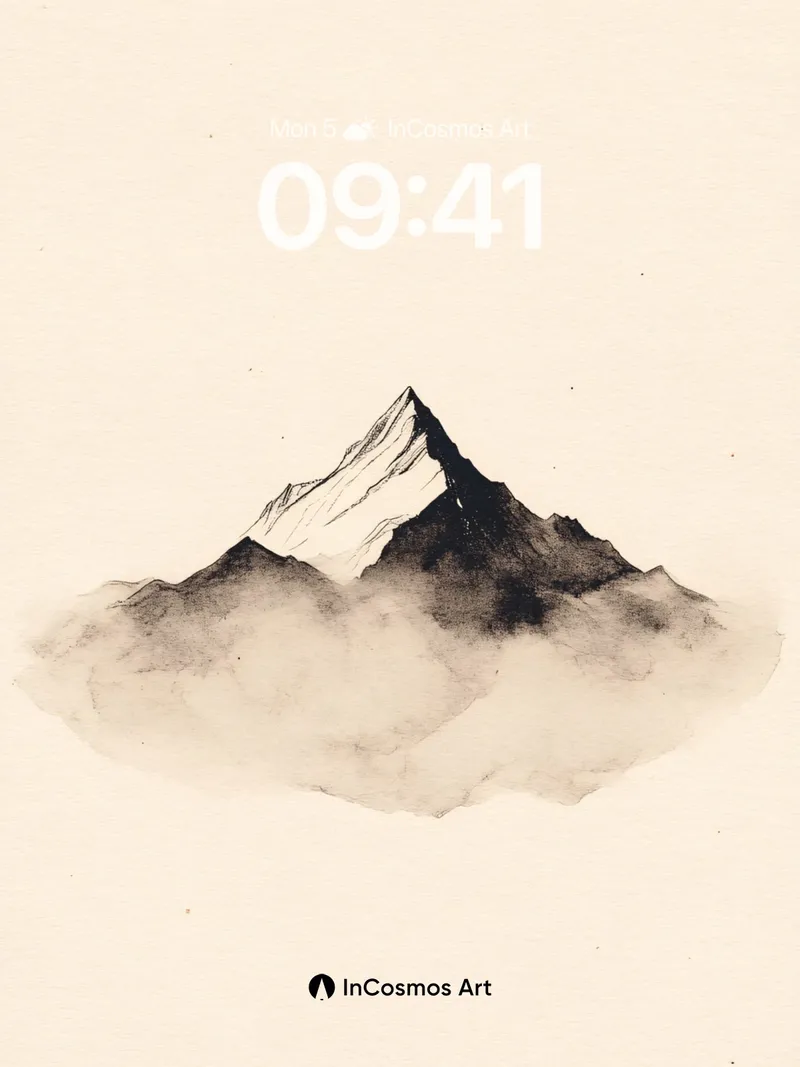
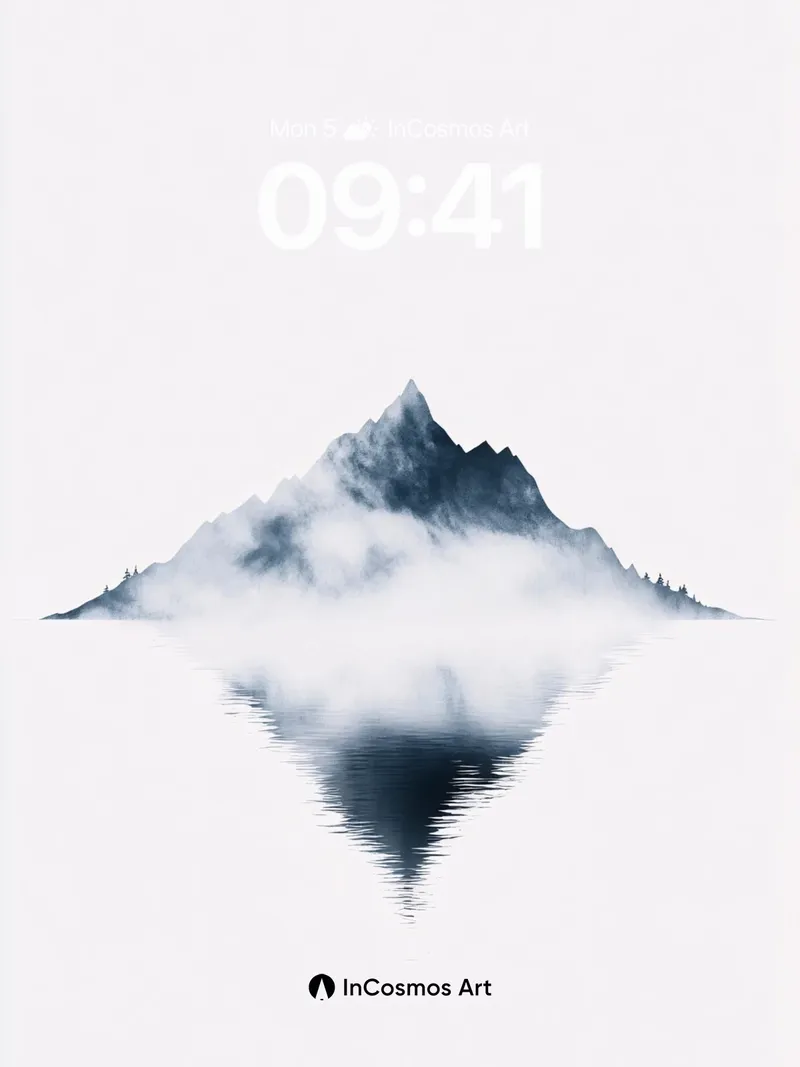
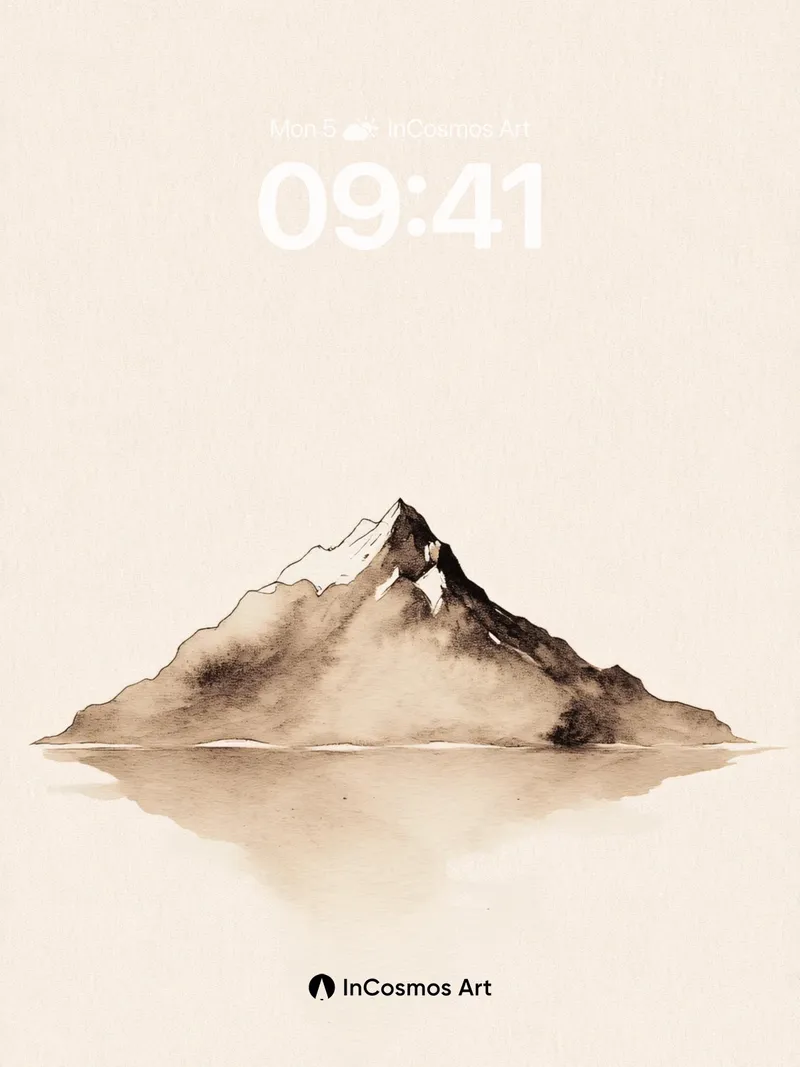
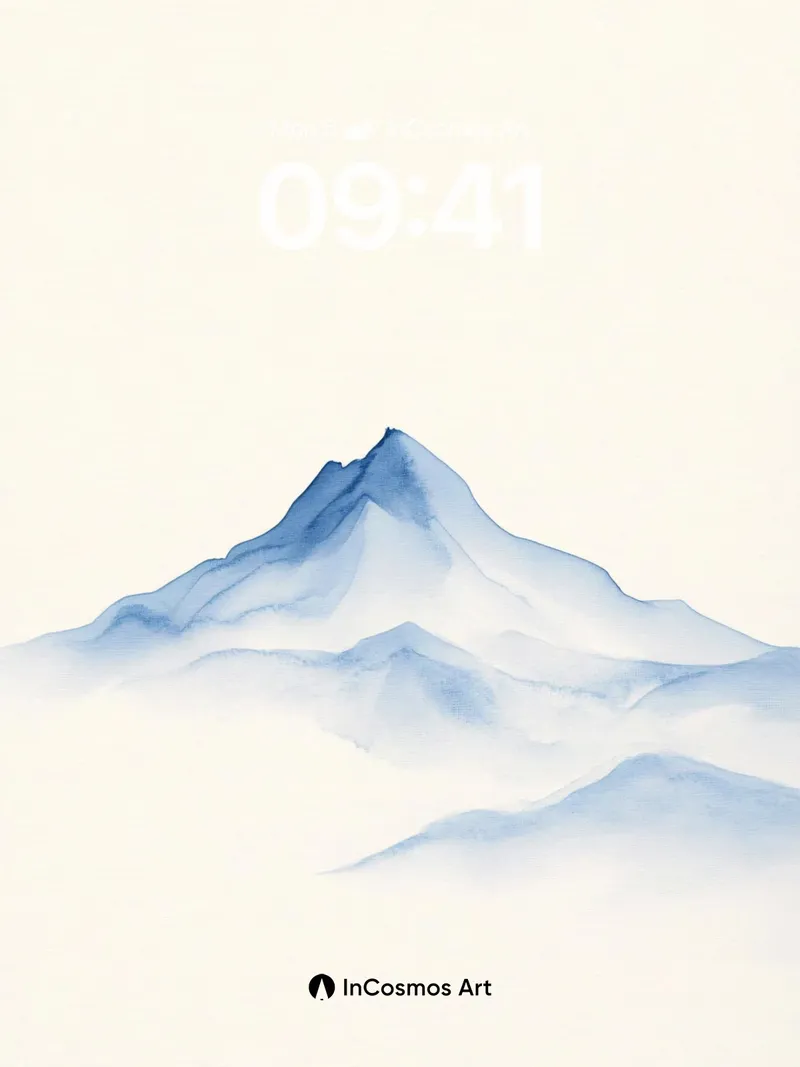
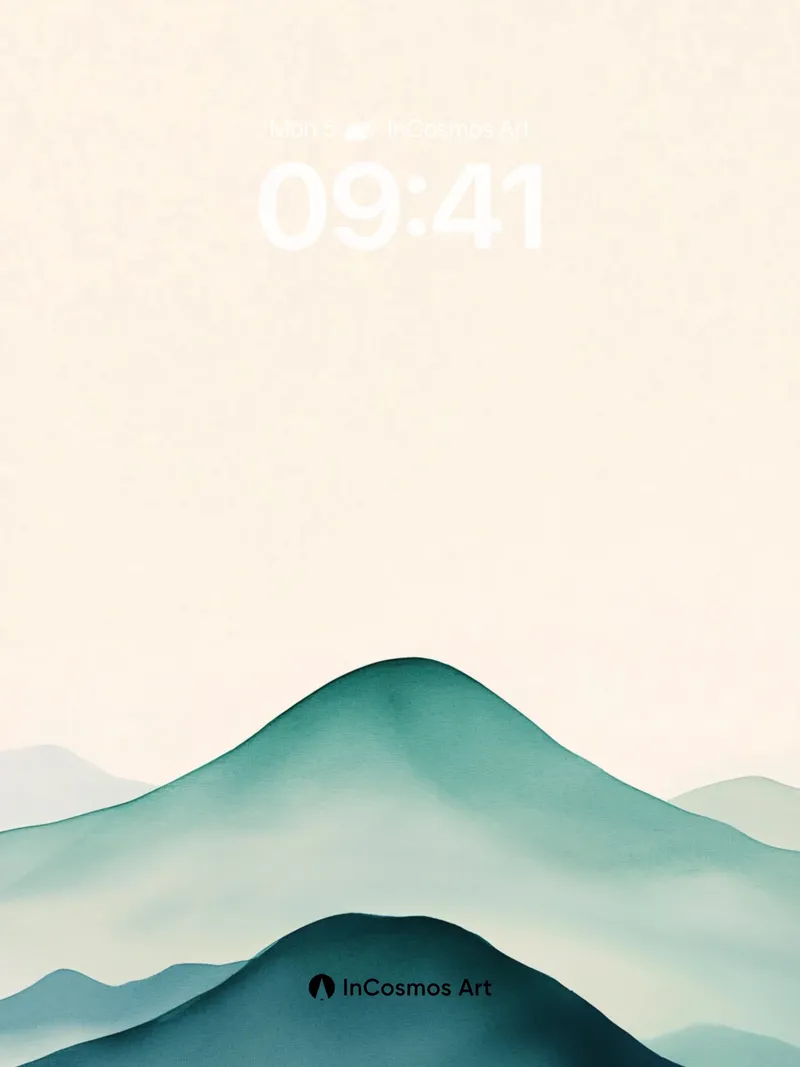
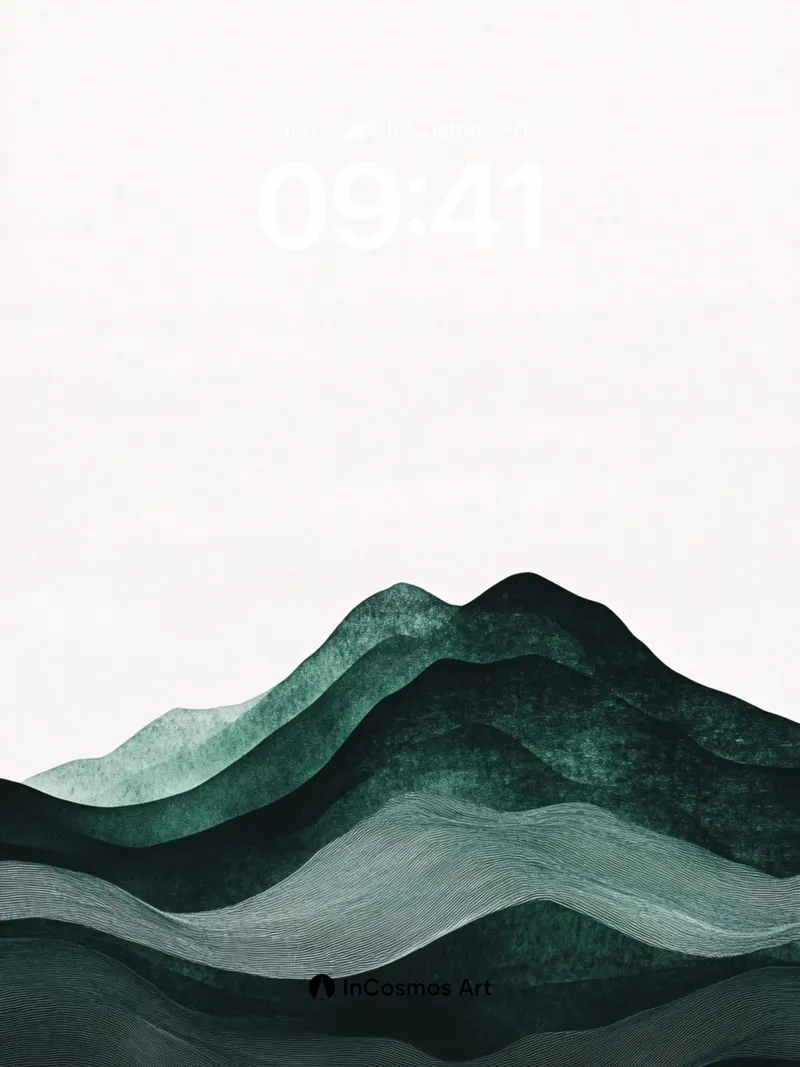
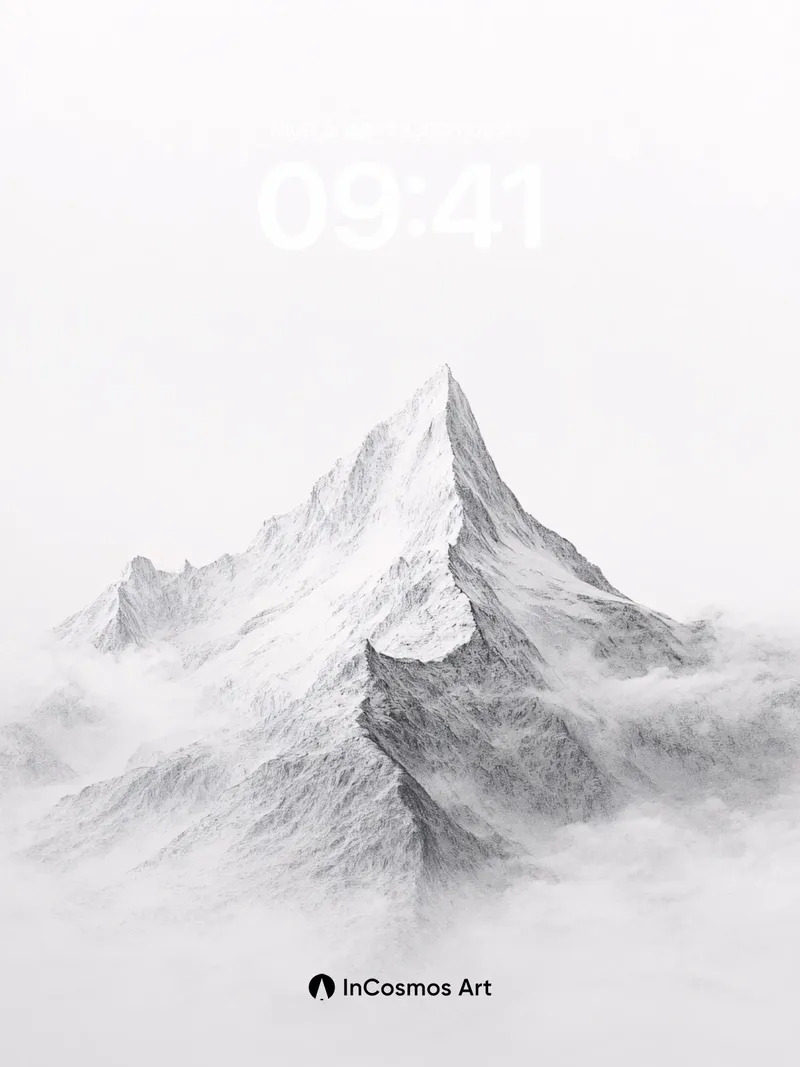
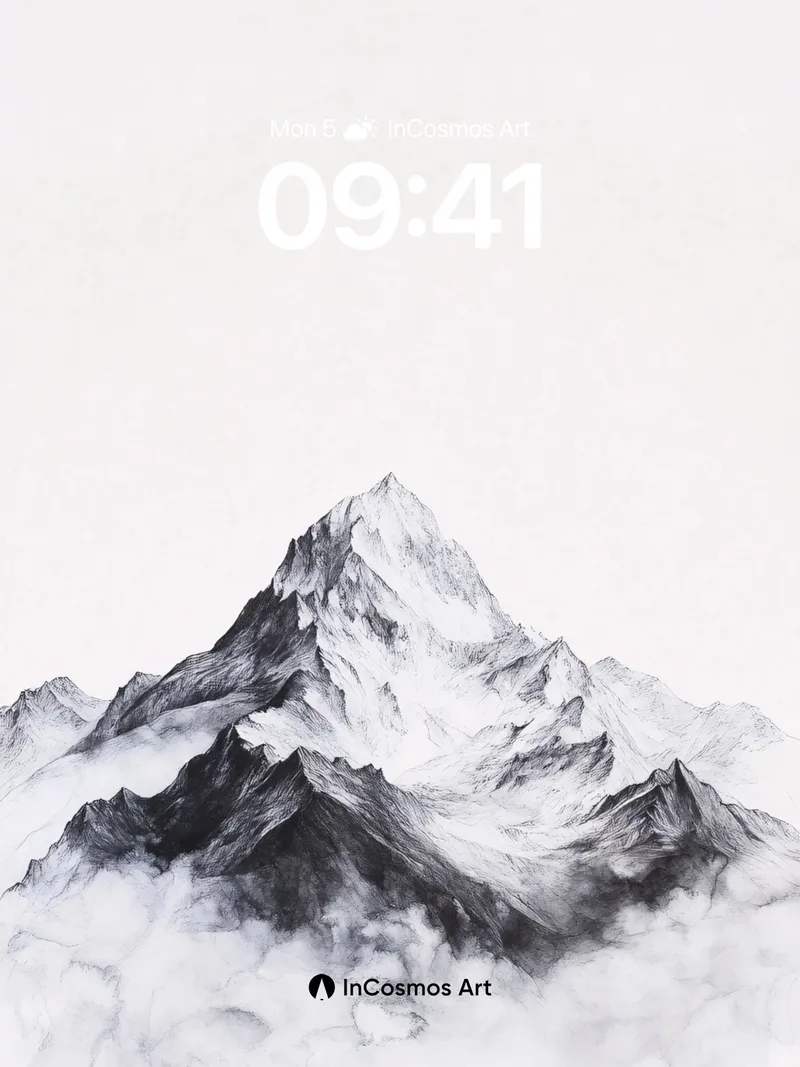
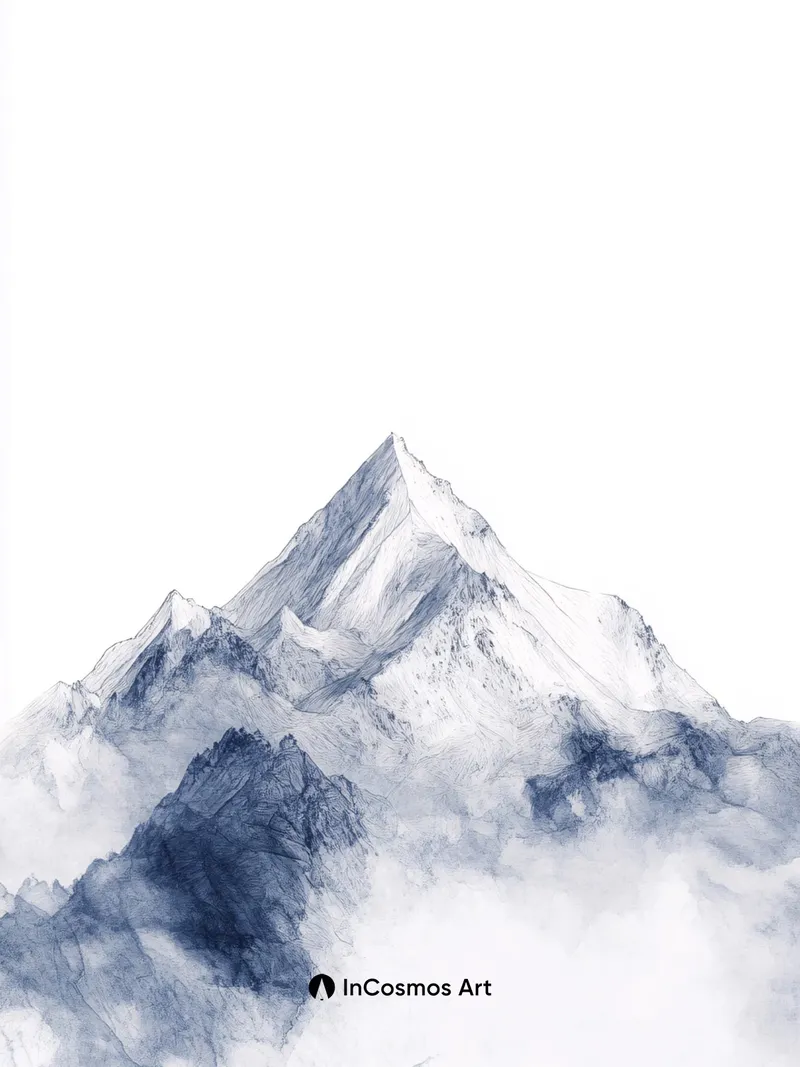
Mountains stand fixed in space, like markers of time. They speak not through words but through form. The white peaks are accumulations of light; the layered ink tones are deposits of memory. Each undulation holds order; each mist carries emptiness. This is not nature replicated, but nature reimagined by the mind. The density of lines, the variation of hues, all become embodiments of emotion. The mountain here becomes a spiritual symbol—silent, enduring, unshakable. It reflects humanity’s deep longing for stability, and mirrors the individual’s search for meaning in modern life. As urban rhythms accelerate, the mountain's form acts as a counter-anchor, calling people back to origin.
The Geometry of Mountains
Mountain forms are reduced to geometric structures—sharp or rounded, steep or gentle. This abstraction strips away complexity, allowing focus on essence. In modern design, mountains often serve as visual metaphors, representing stability, elevation, and transcendence. Their clear silhouettes bring order, while layering suggests depth. This formal language draws from traditional landscape painting yet integrates contemporary minimalism, creating a dialogue across time.
The Breath of Ink
The diffusion of ink gives mountains a dynamic sense of breathing. Variations in tone mimic natural pulses, shifting from dense to faint, solid to ethereal. This technique stems from Eastern aesthetics’ philosophy of ‘negative space,’ which celebrates incompleteness. Mountains appear and disappear in mist—not as flaws, but as extensions of mood. Viewers move between clarity and ambiguity, experiencing a calm born of uncertainty.
Stillness as Resistance
In an age of information overload, stillness is a rare commodity. Mountain imagery uses low saturation and high contrast to create a meditative atmosphere. It rejects noise, rejects narrative, offering only a state of being. This pure visual experience becomes an effective tool against fragmented attention. Thus, the mountain is not merely scenery, but a psychological refuge.
Form as Meaning
How a mountain is rendered determines its cultural weight. Line-drawn mountains express reason and control; watercolor versions convey flow and feeling. Different techniques reflect distinct mental needs: one seeks precision, the other embraces chance. Together, they build a multidimensional universe of mountains, inviting viewers into contemplation about self and nature.