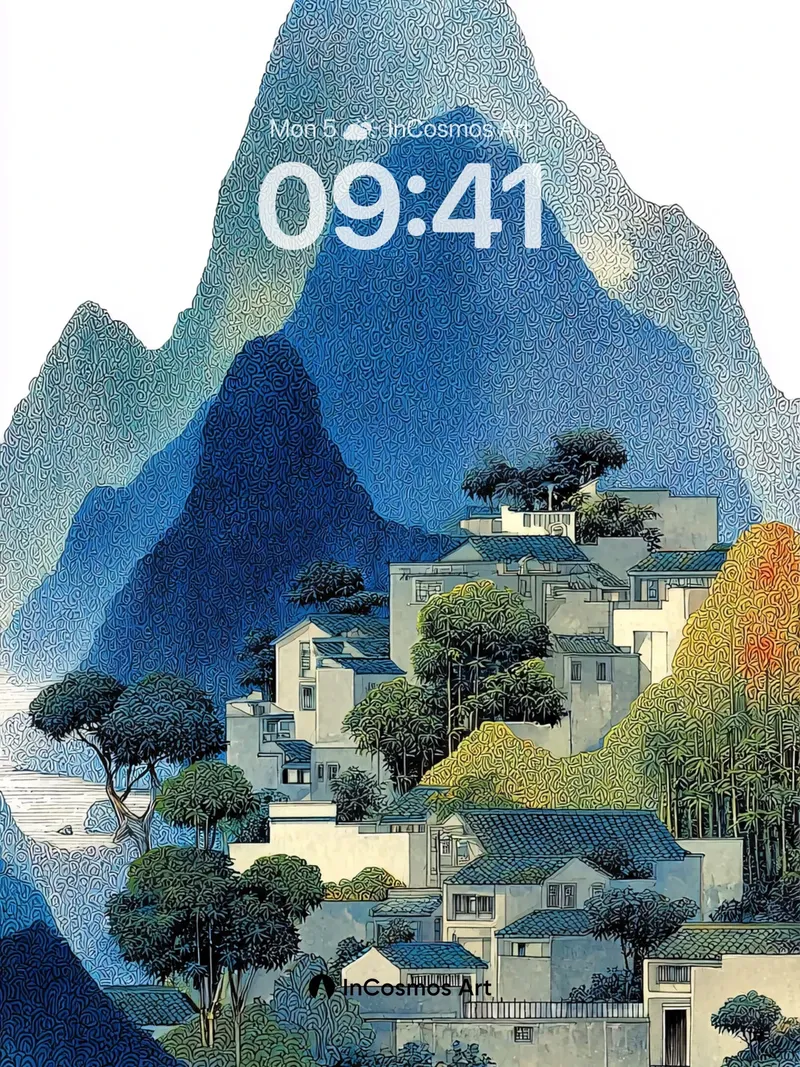
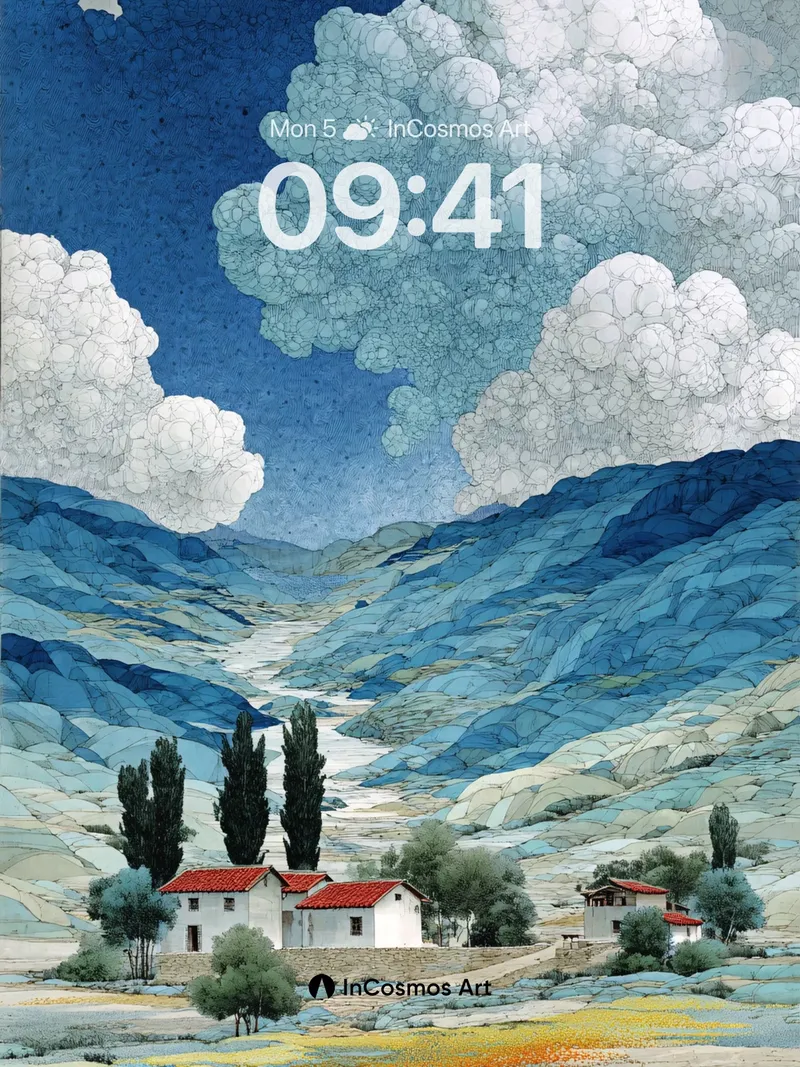
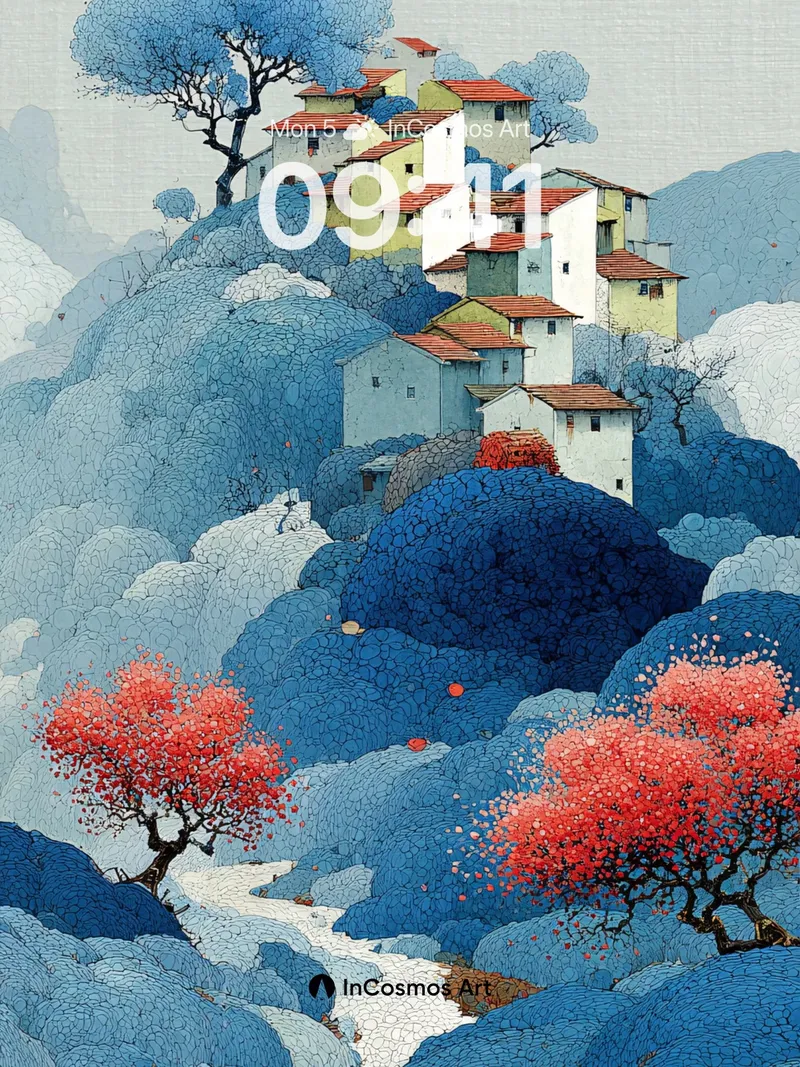
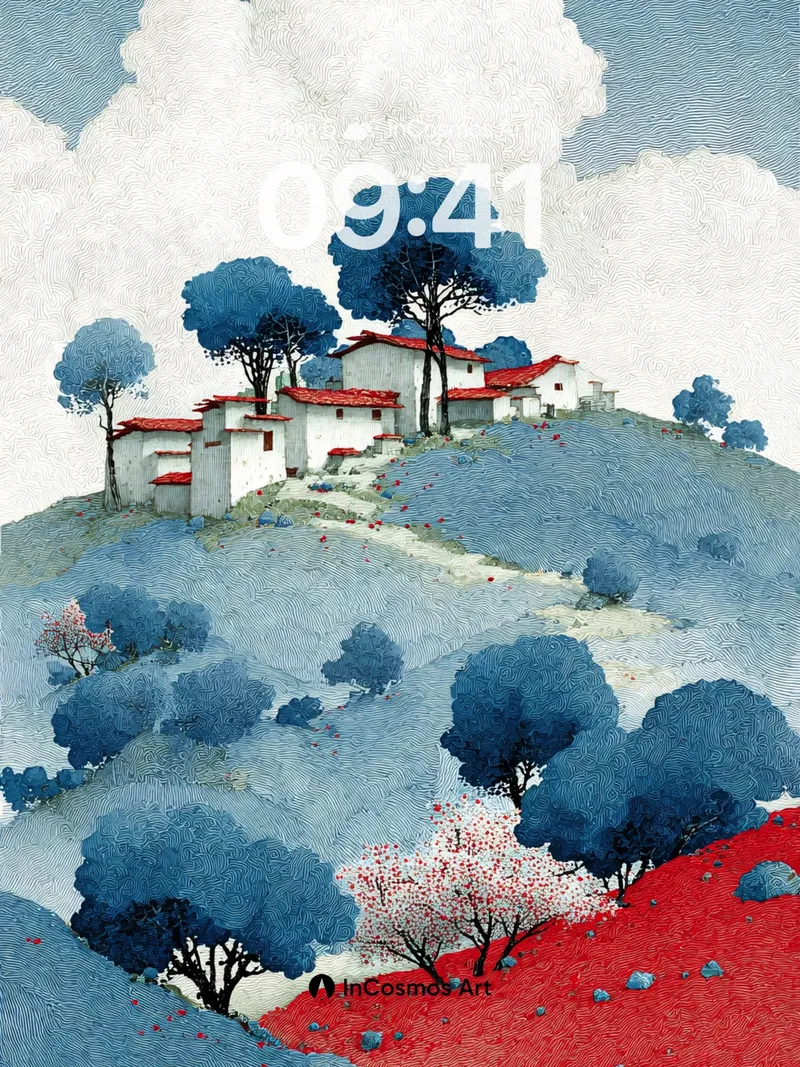
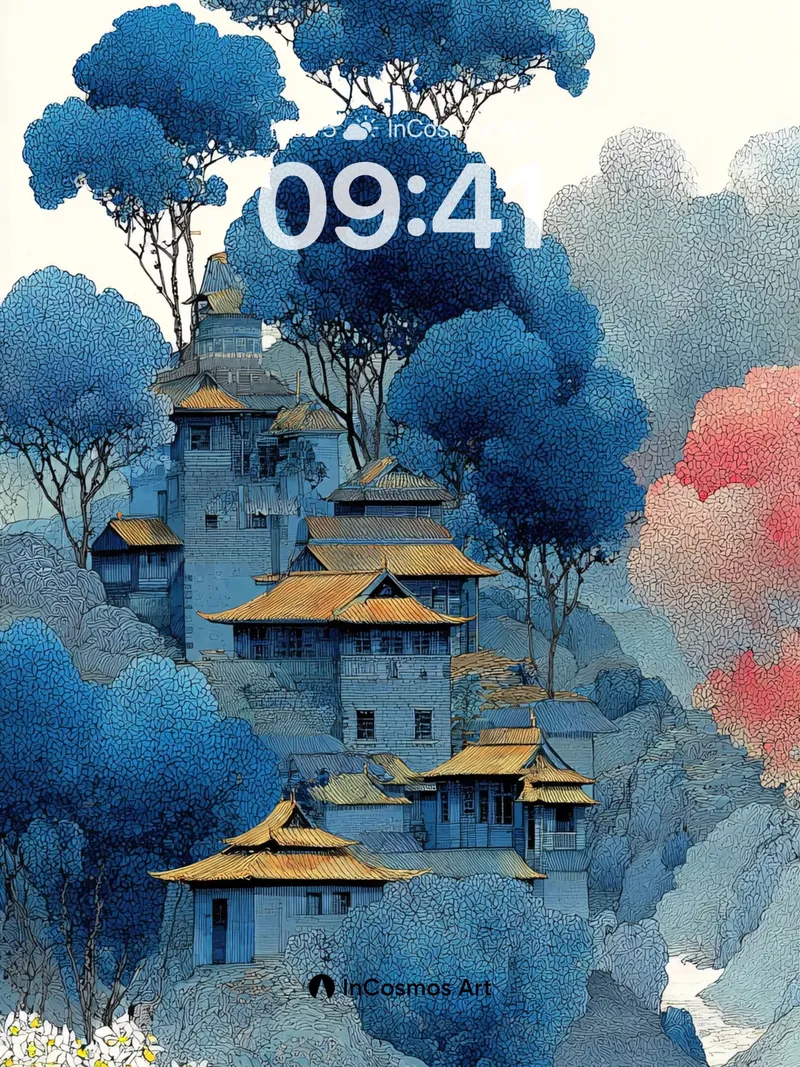
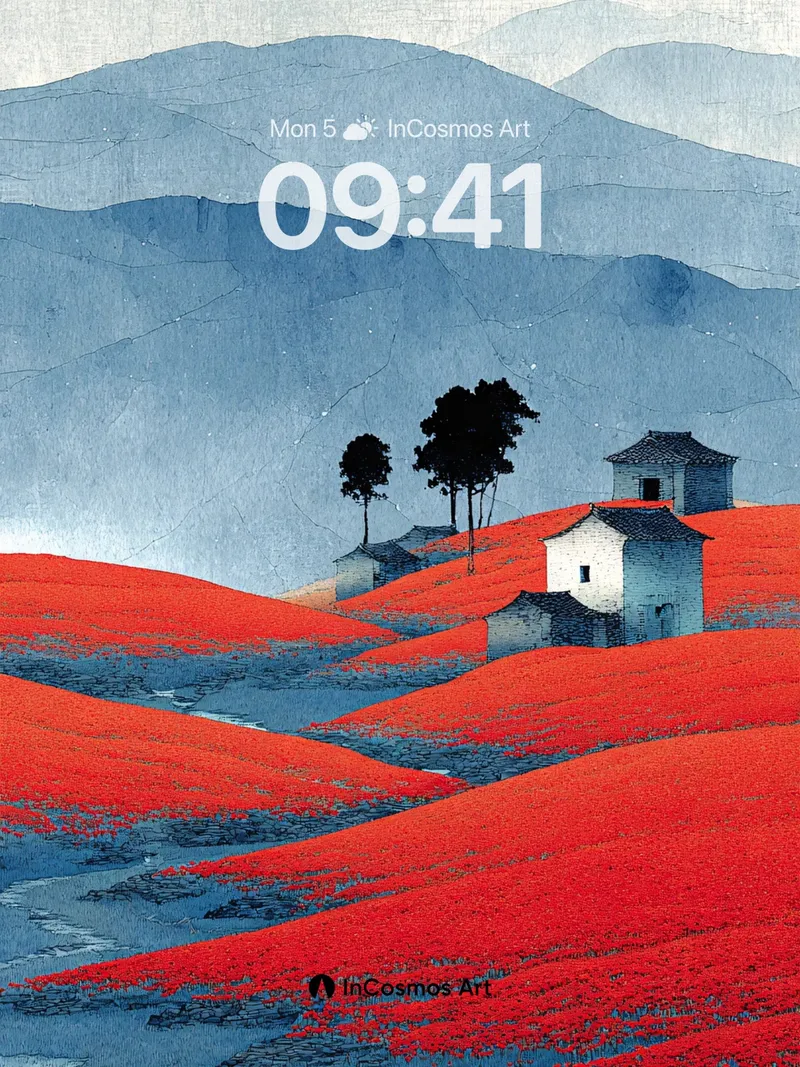
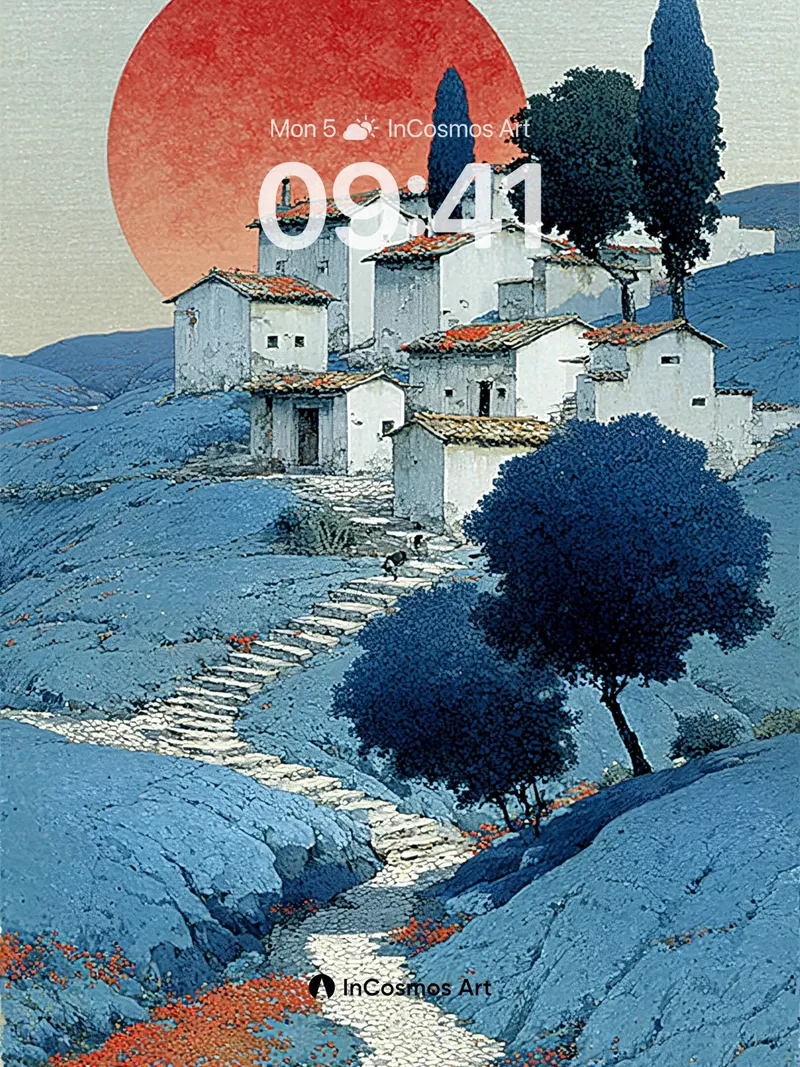
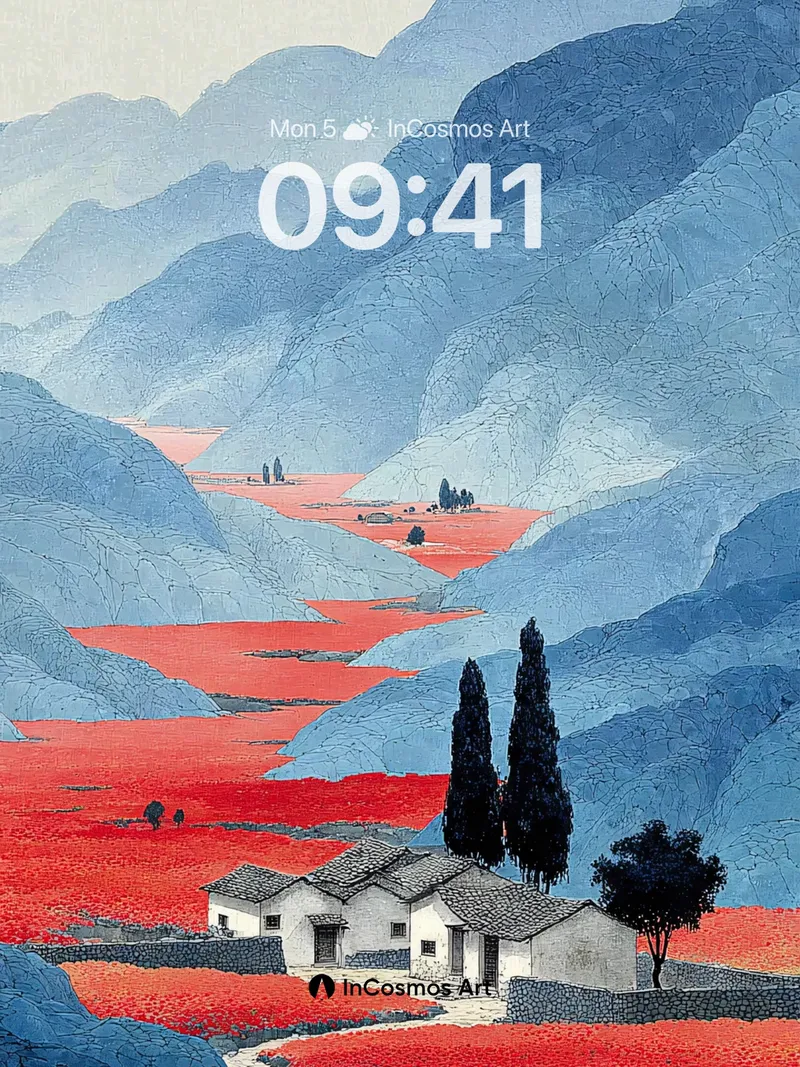
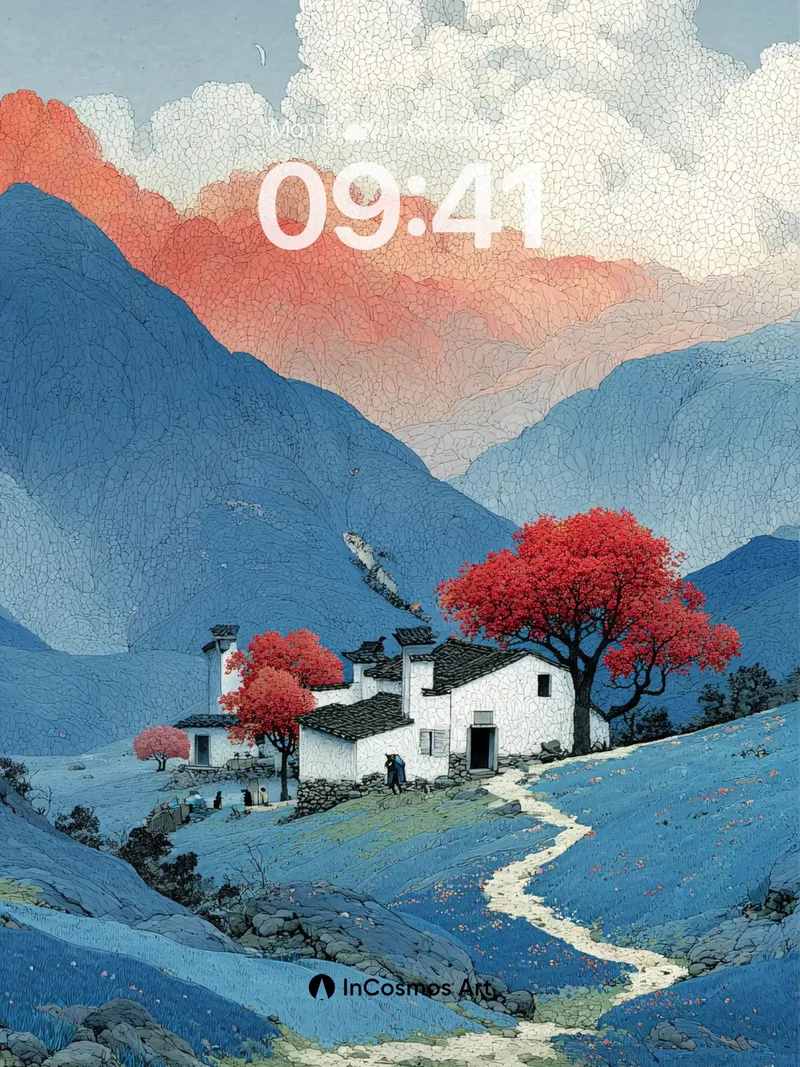
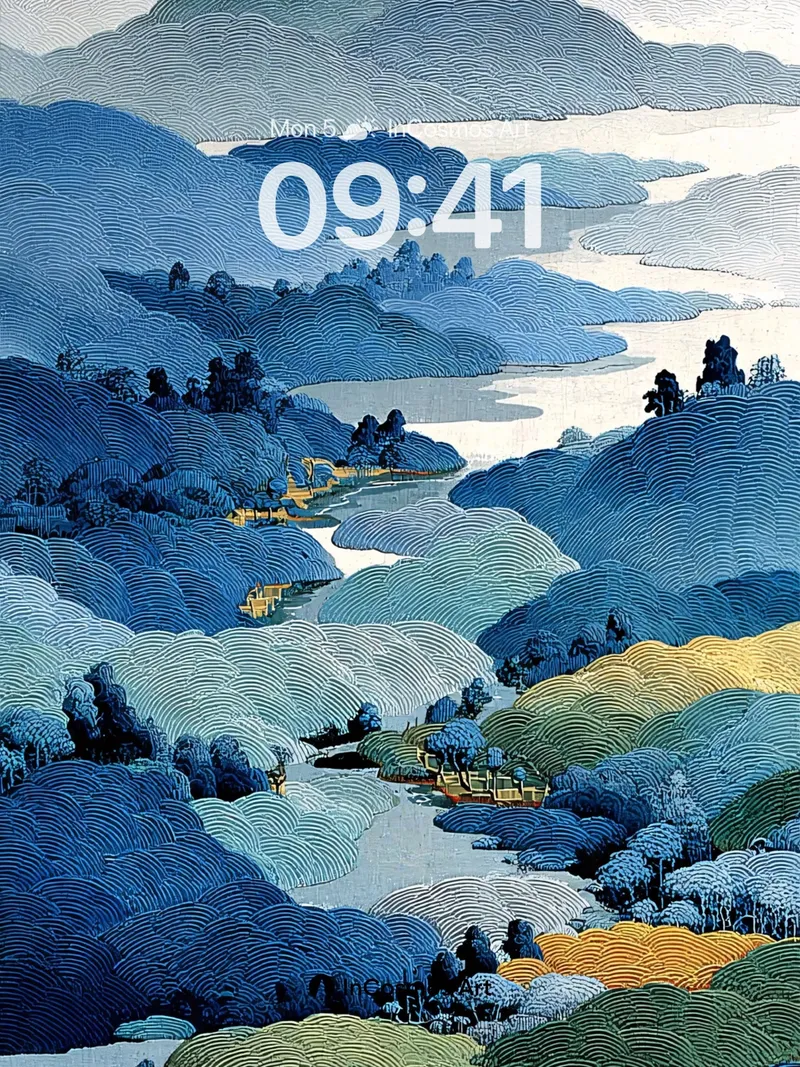
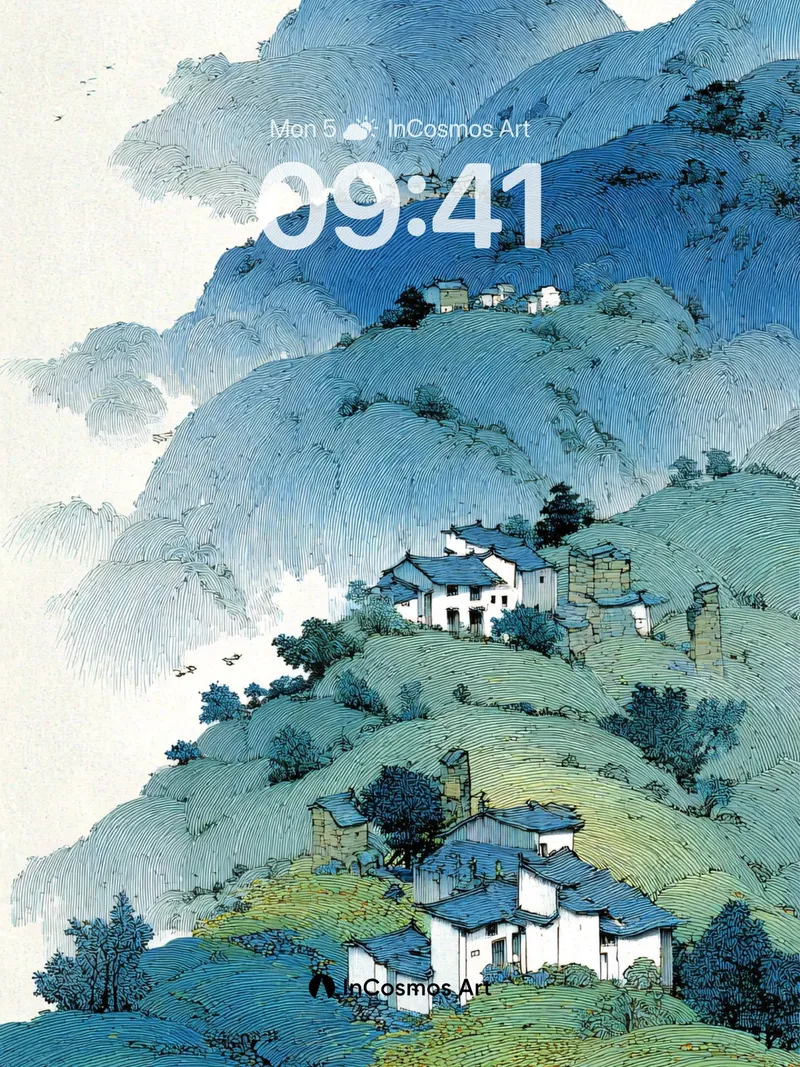
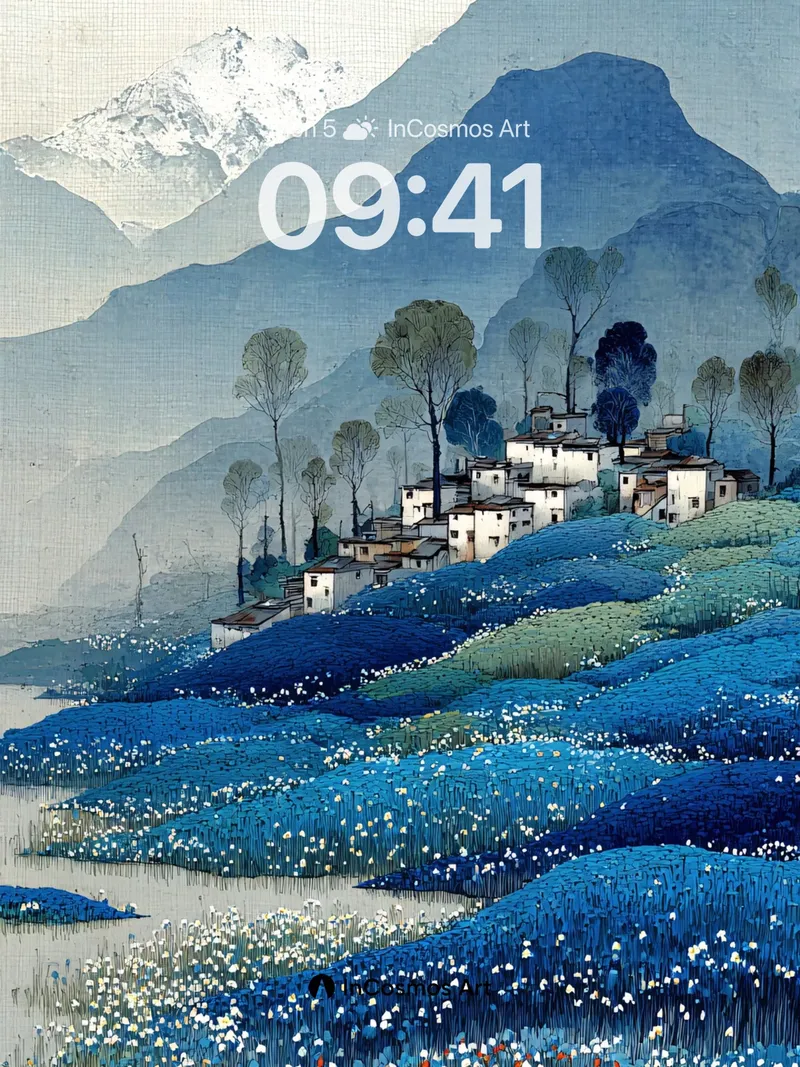
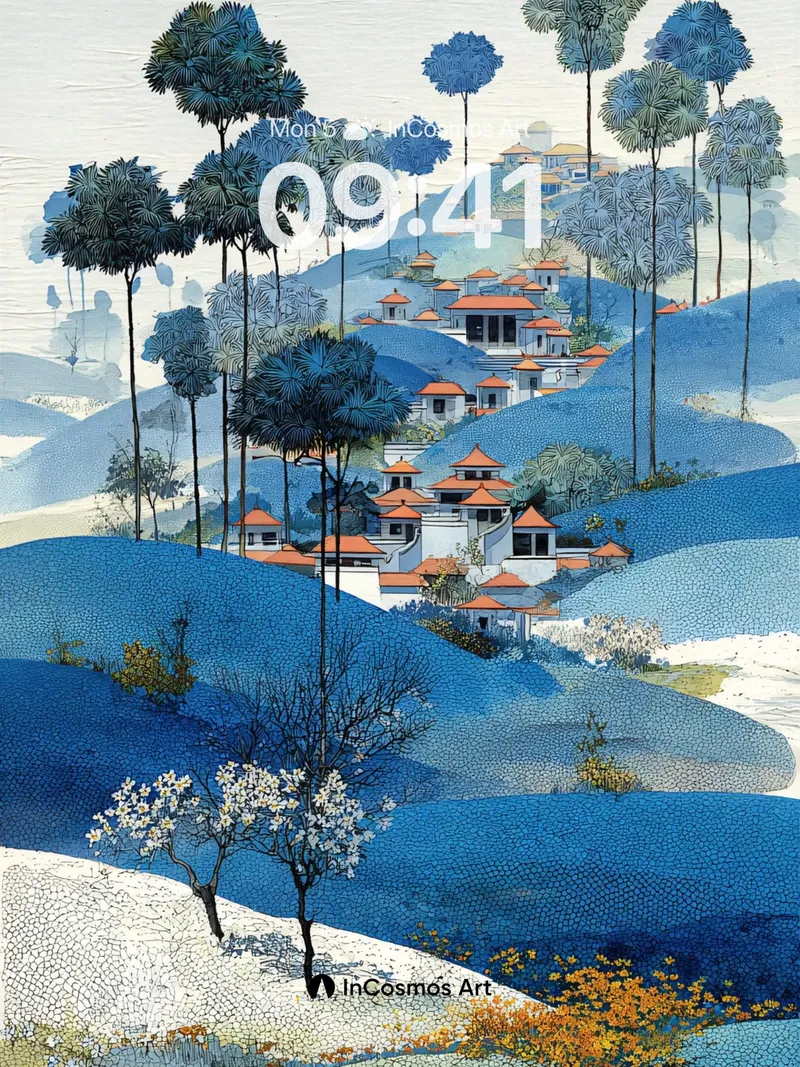
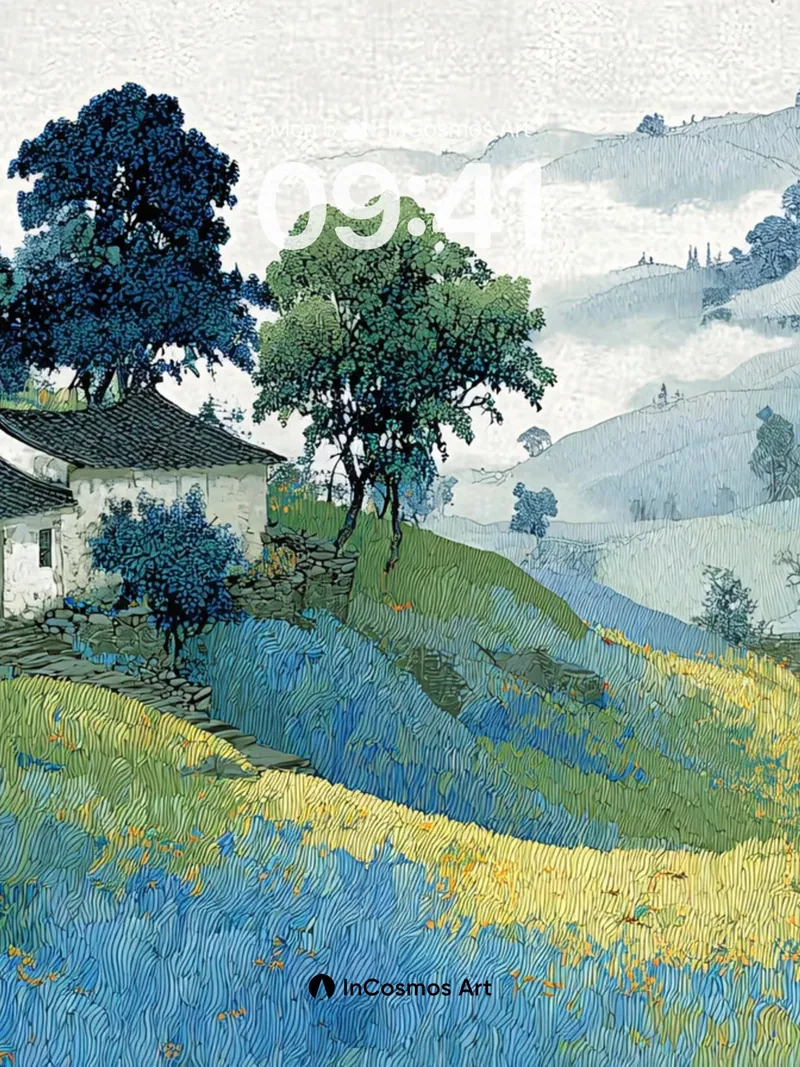
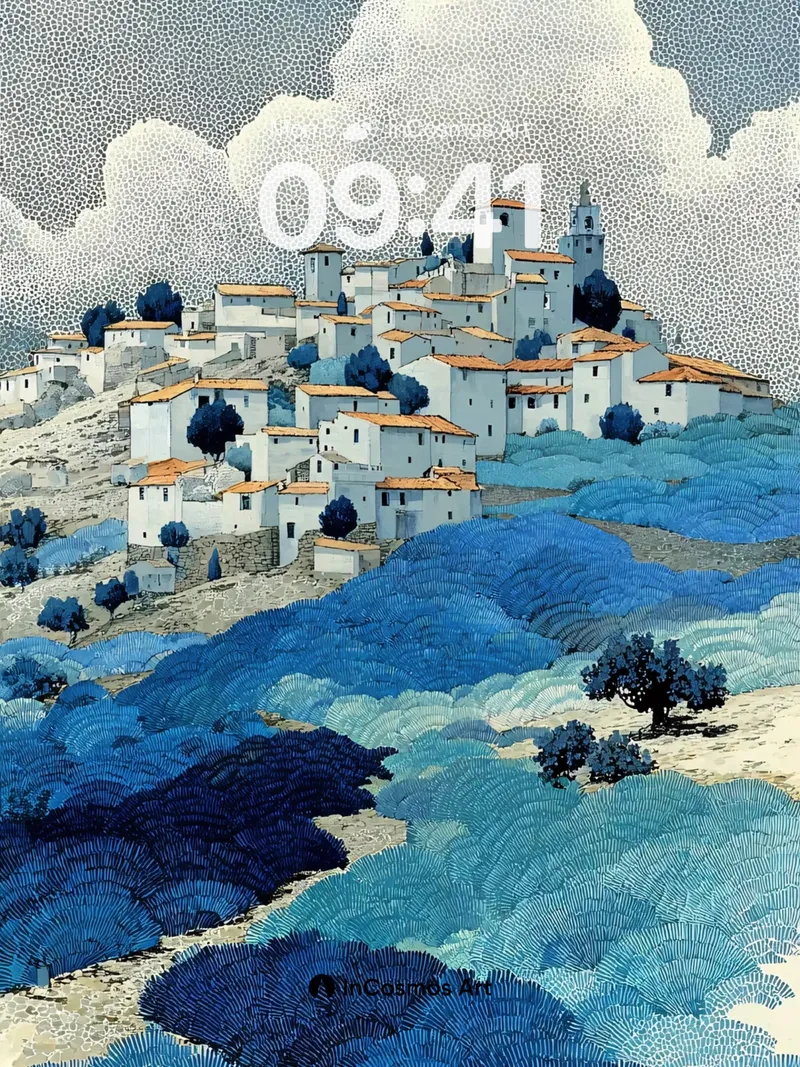
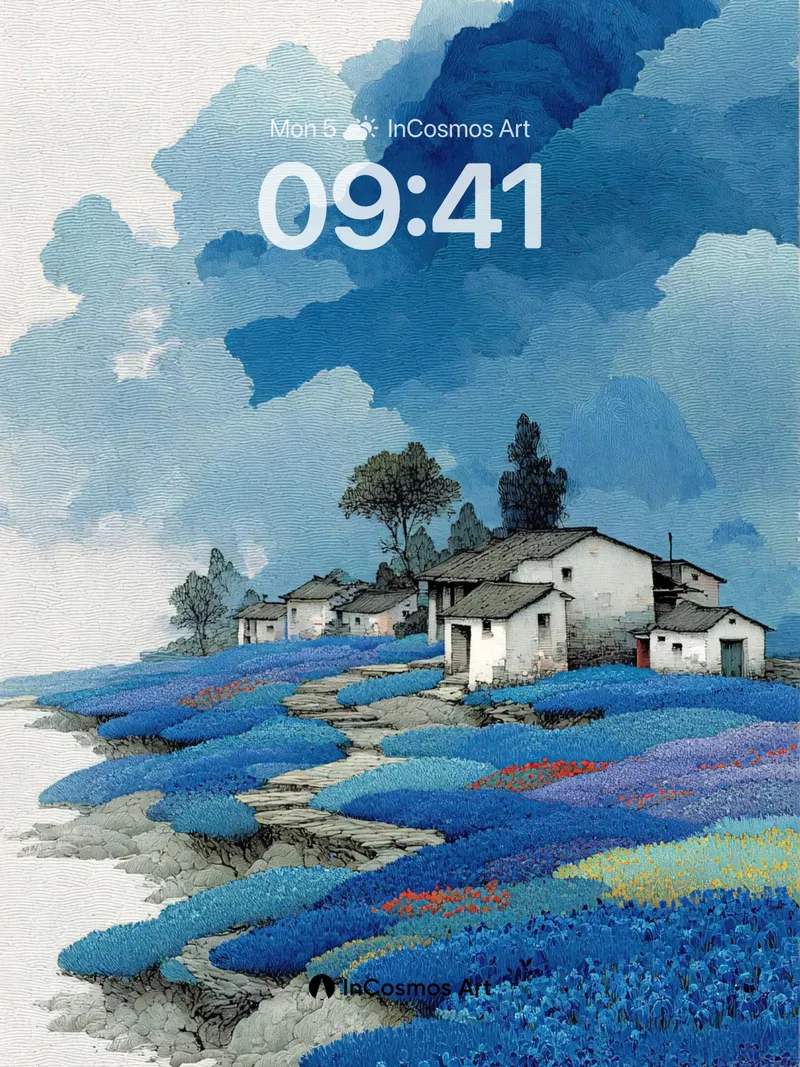
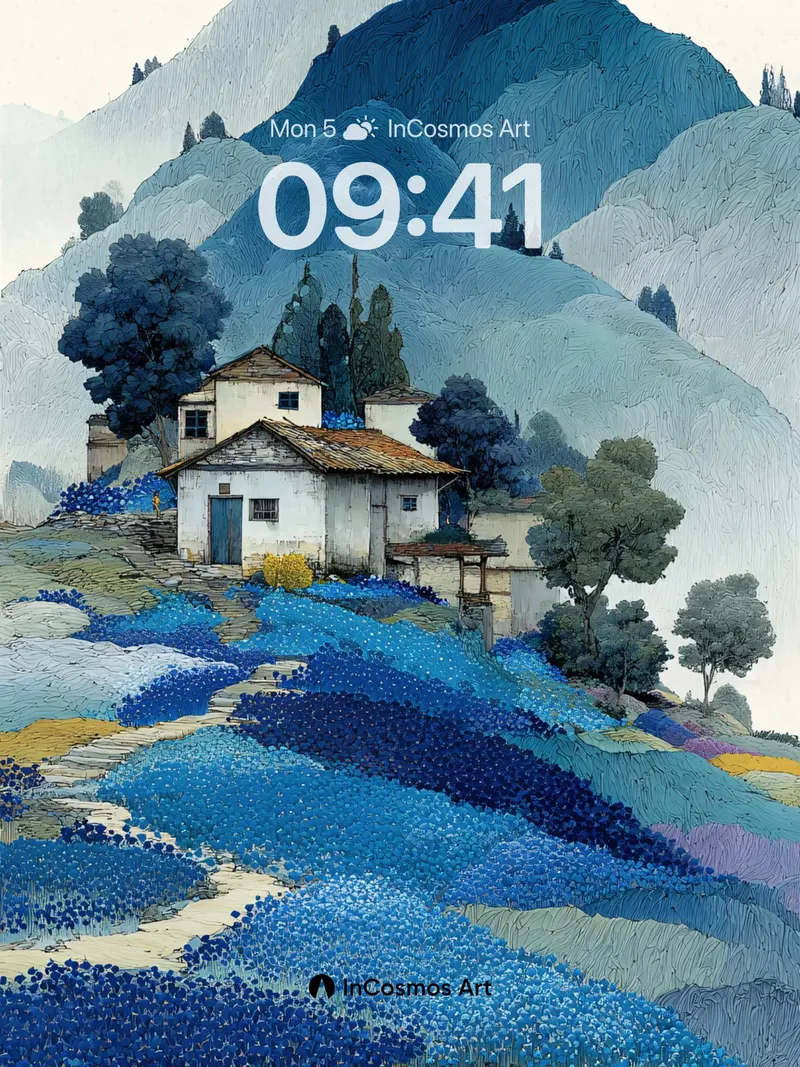
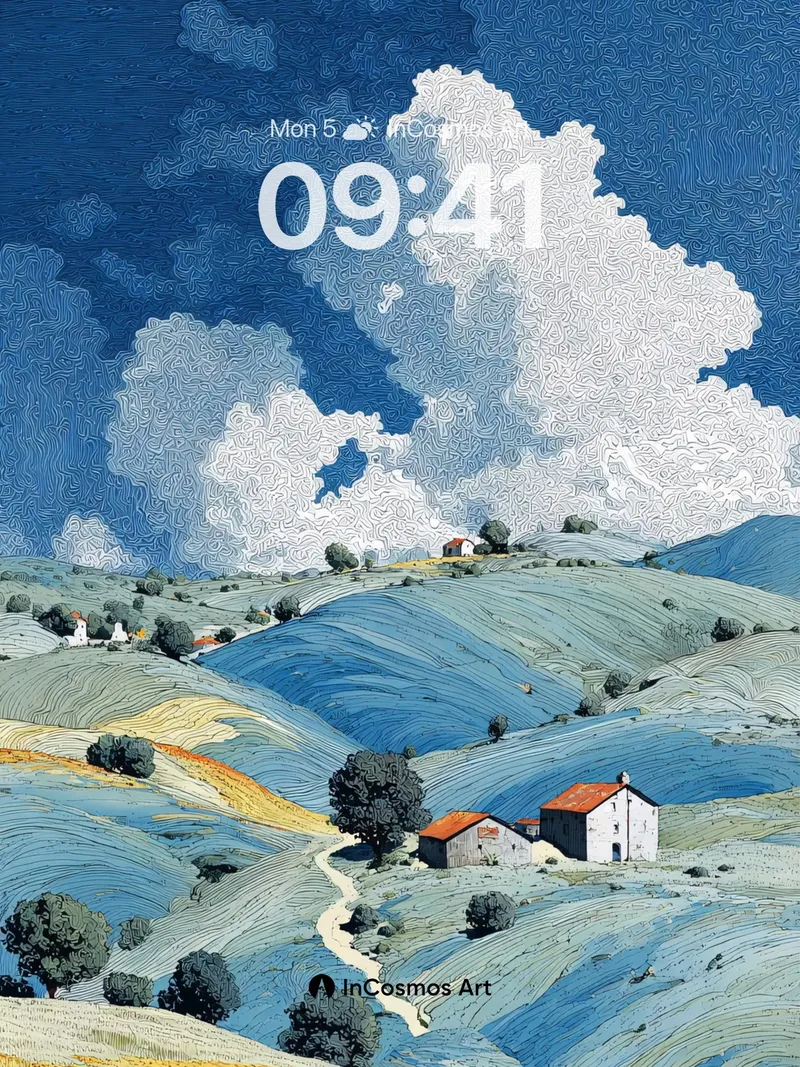
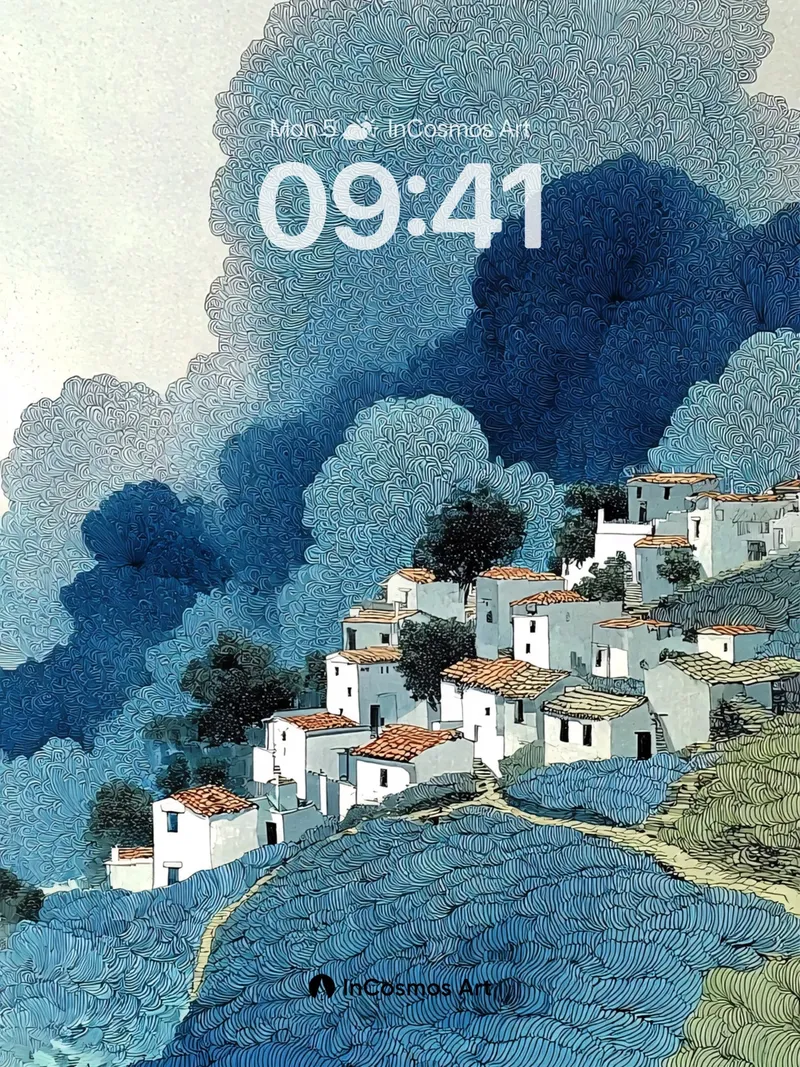
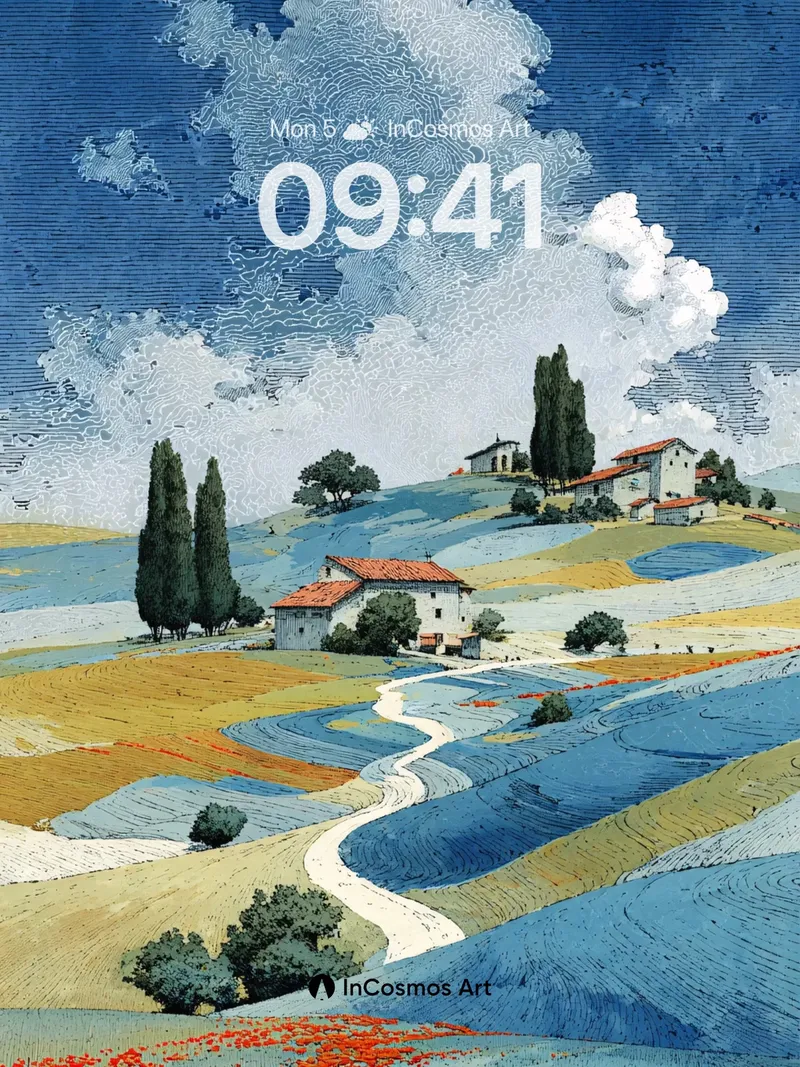
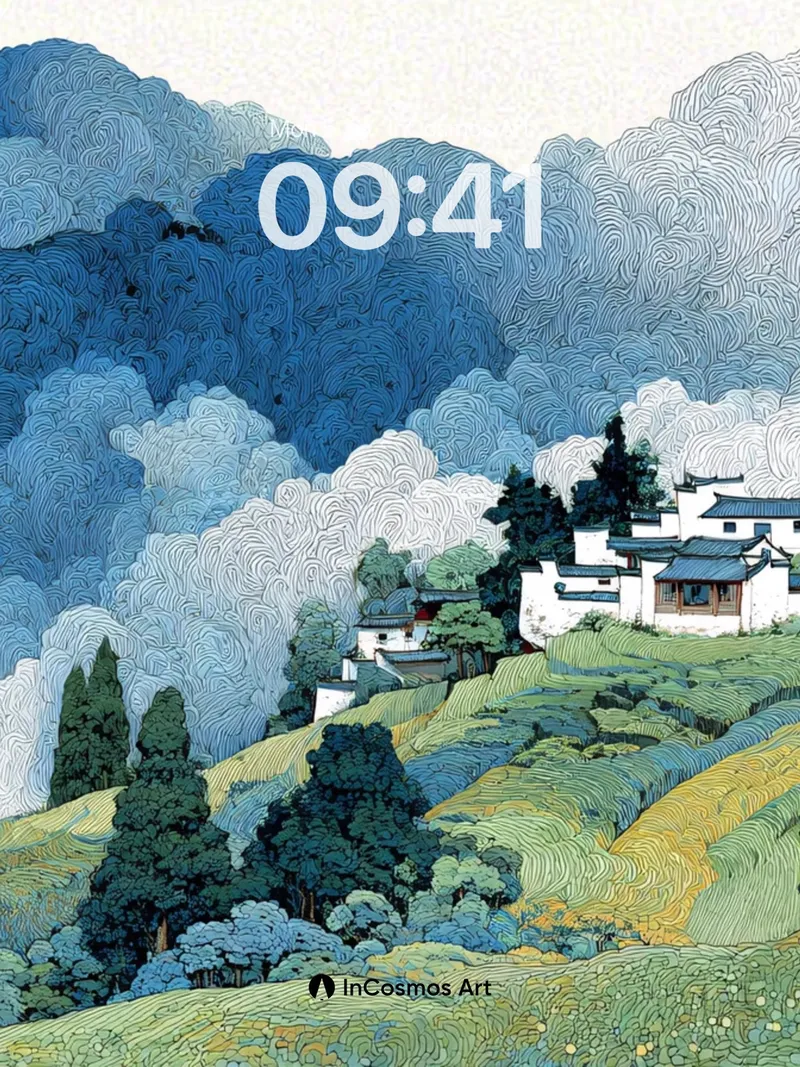
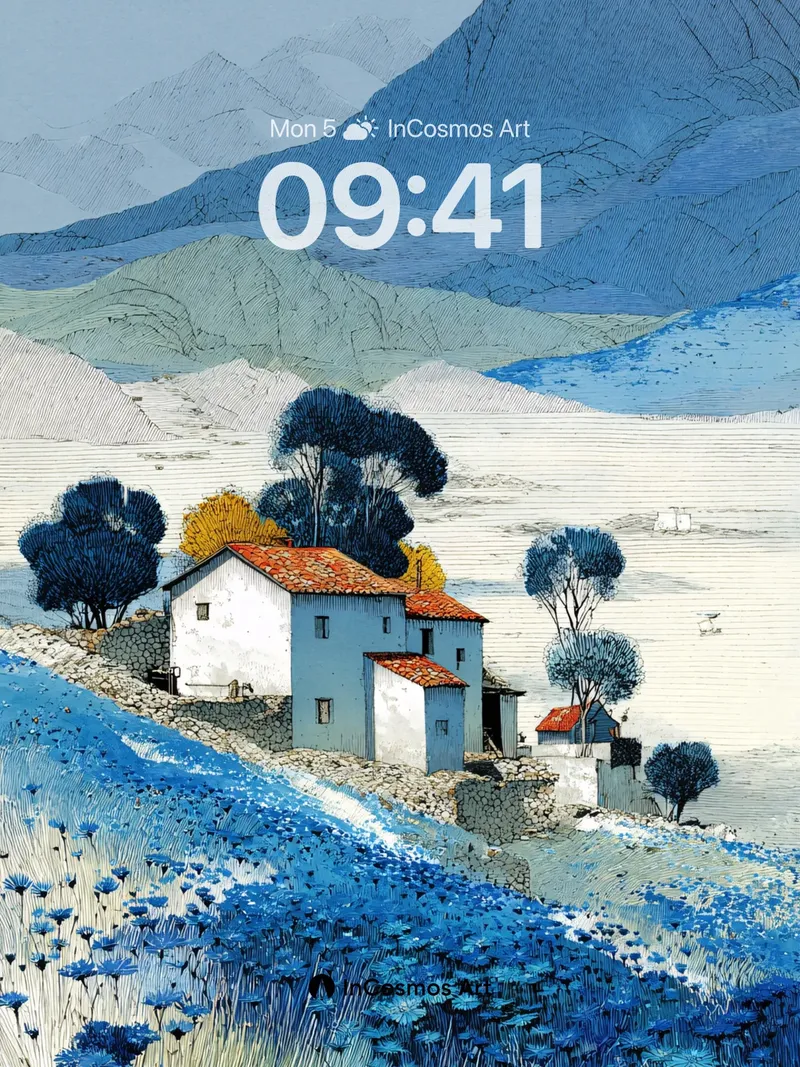
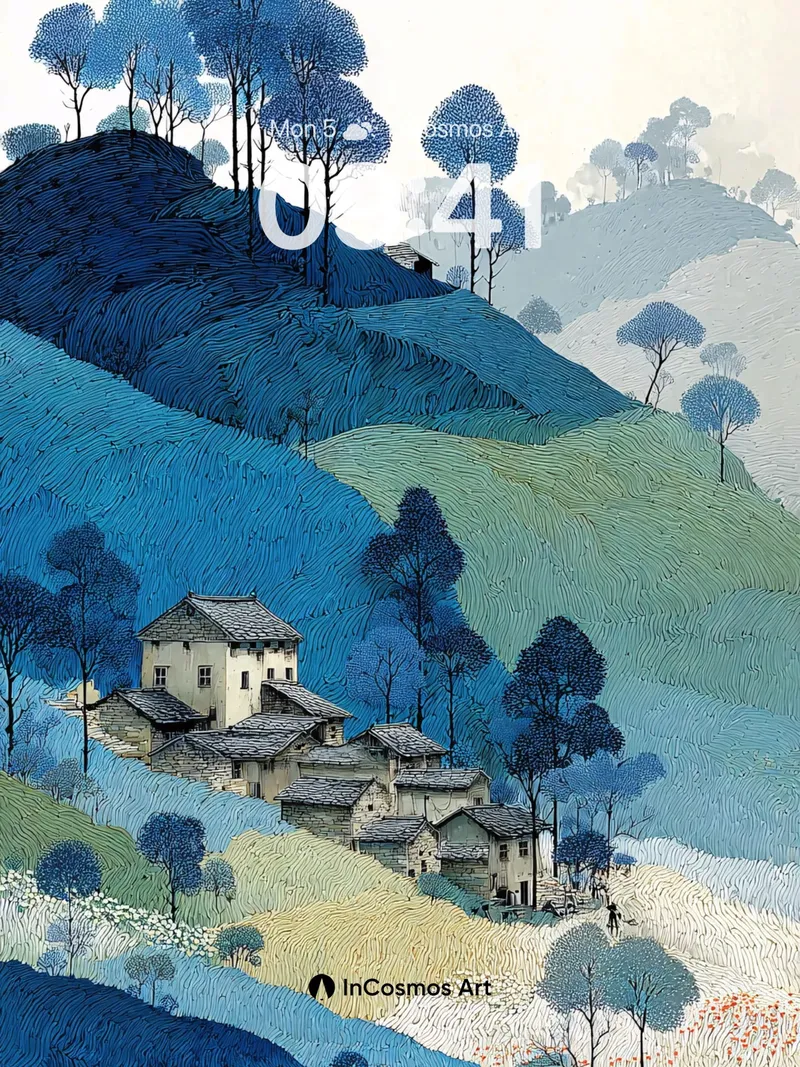
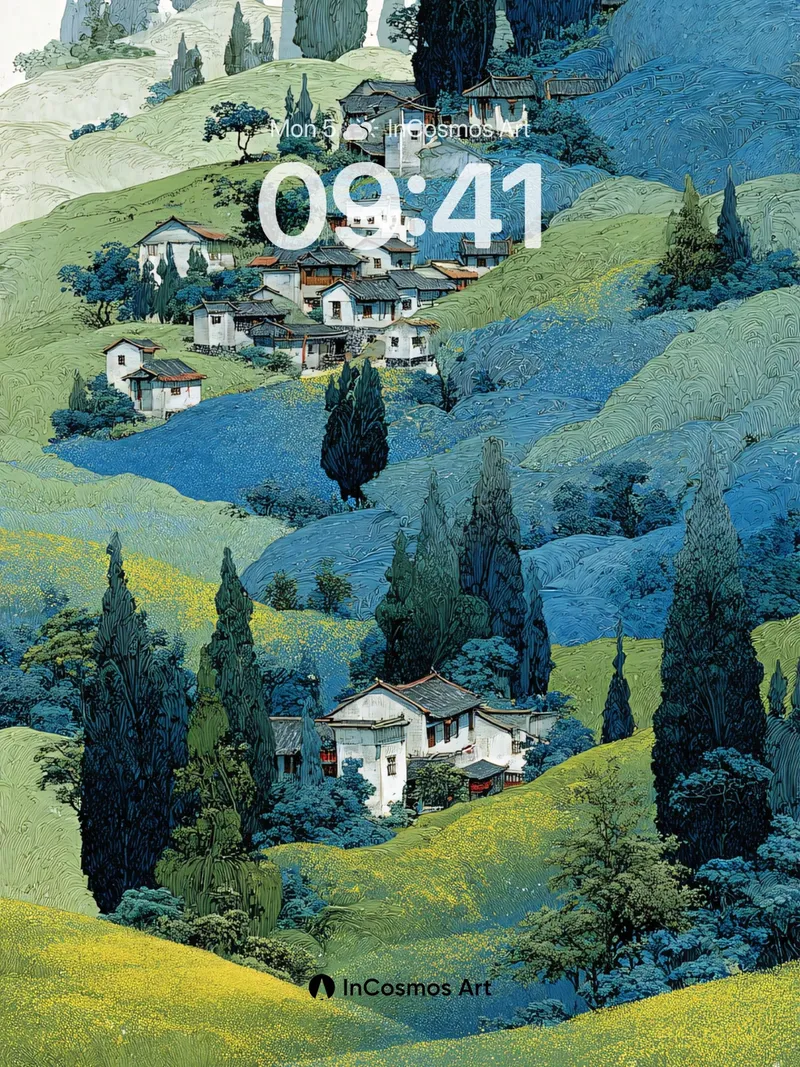
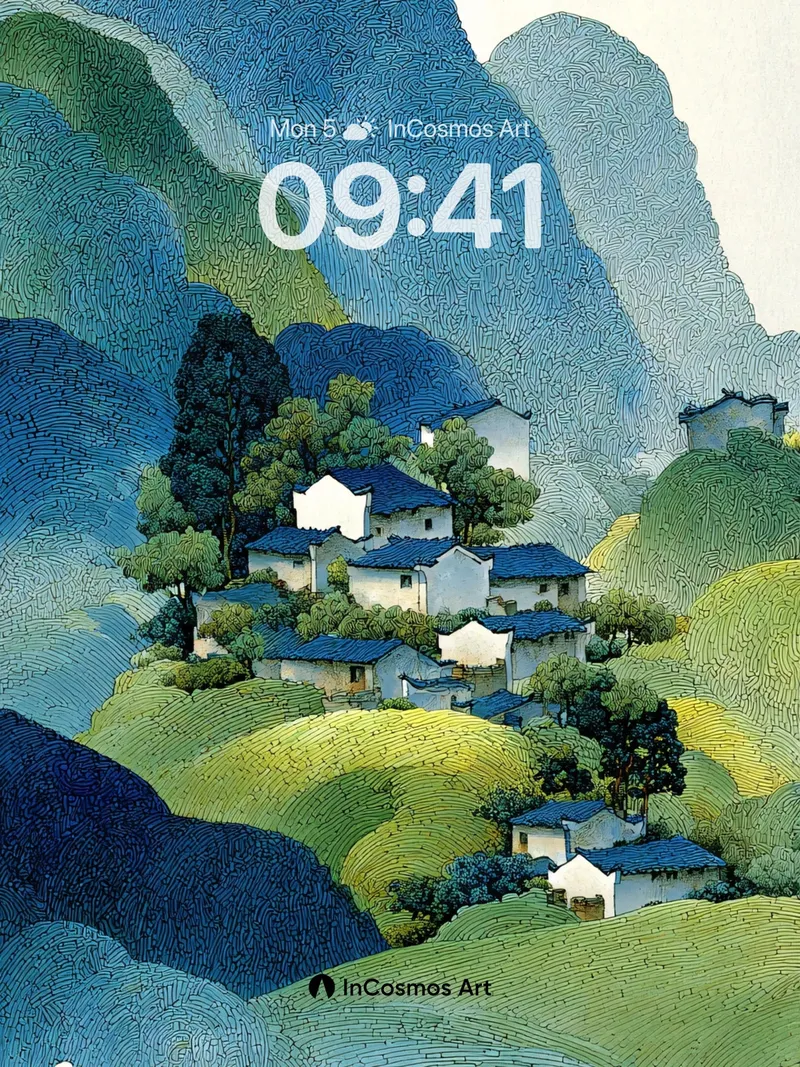
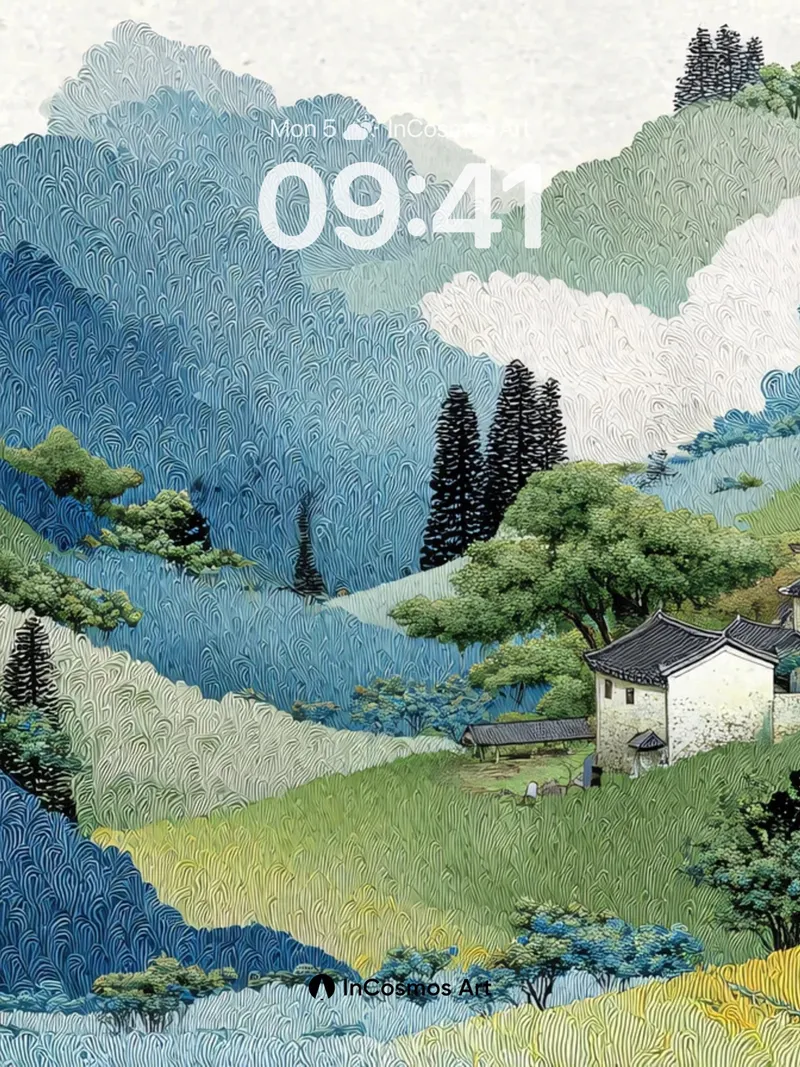
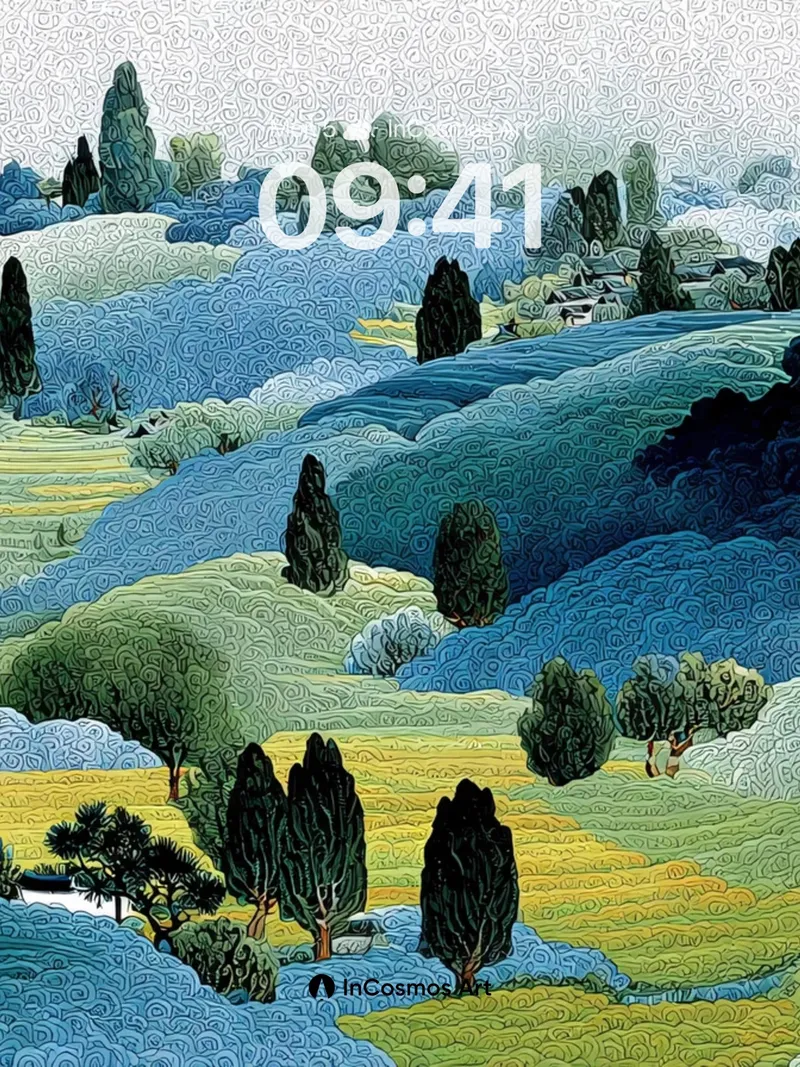
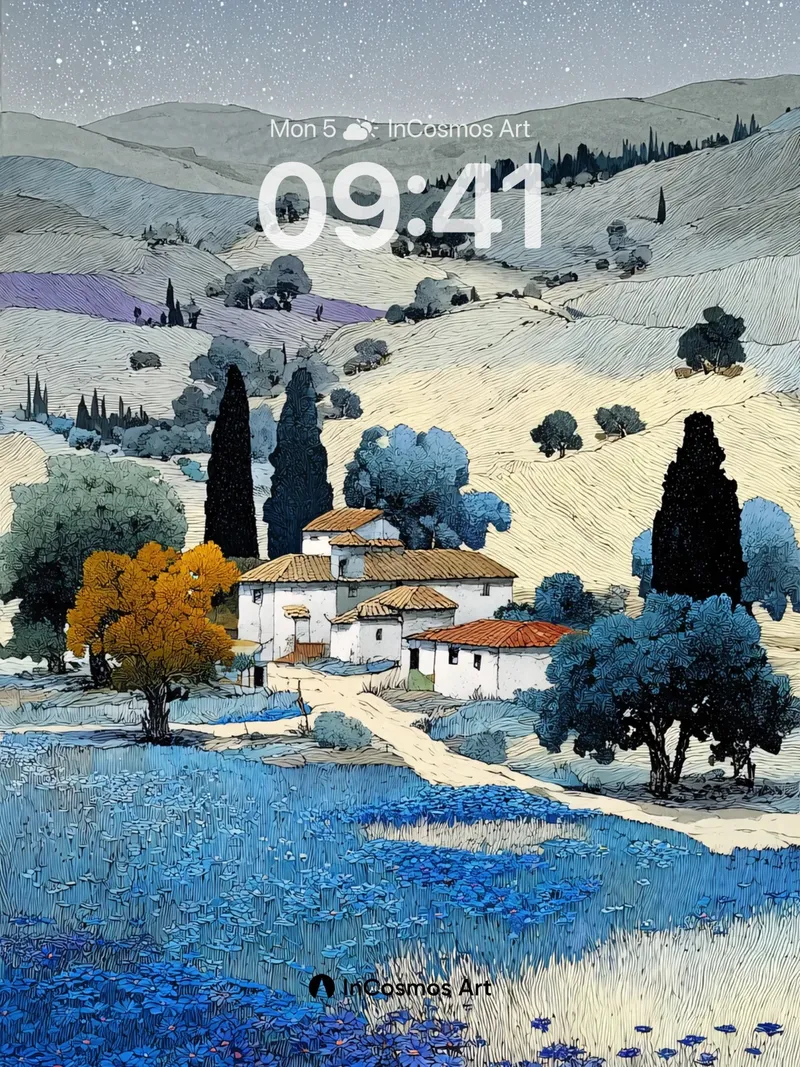
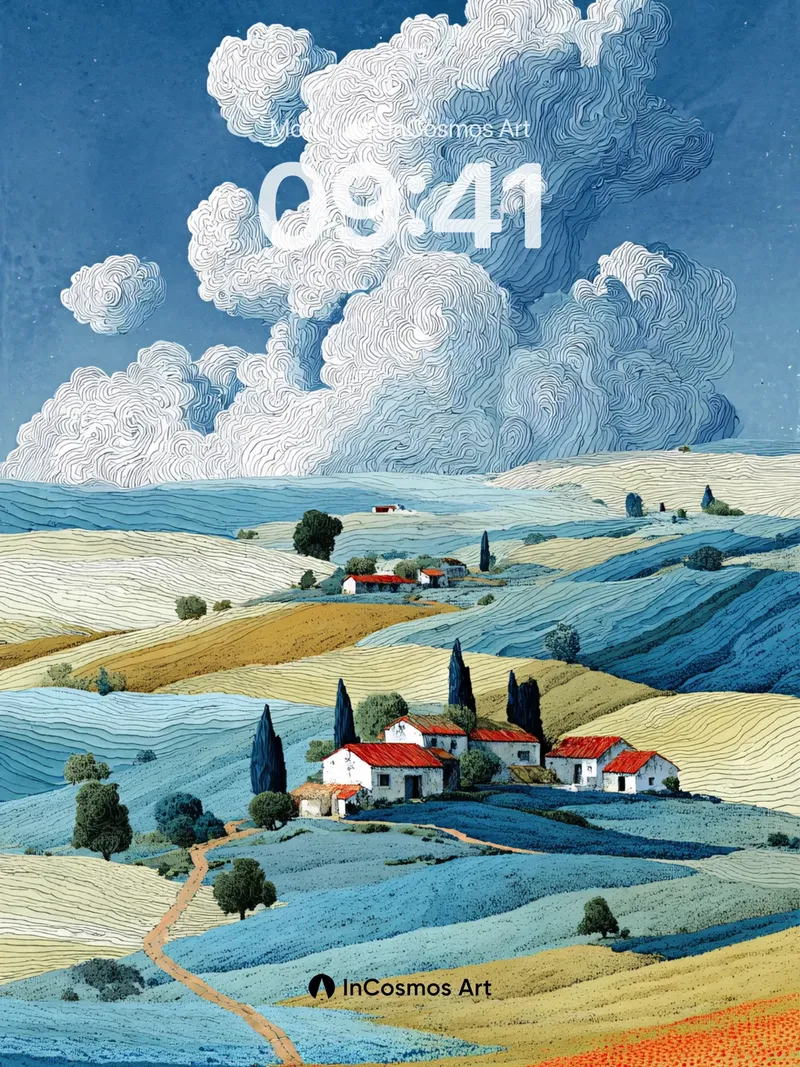
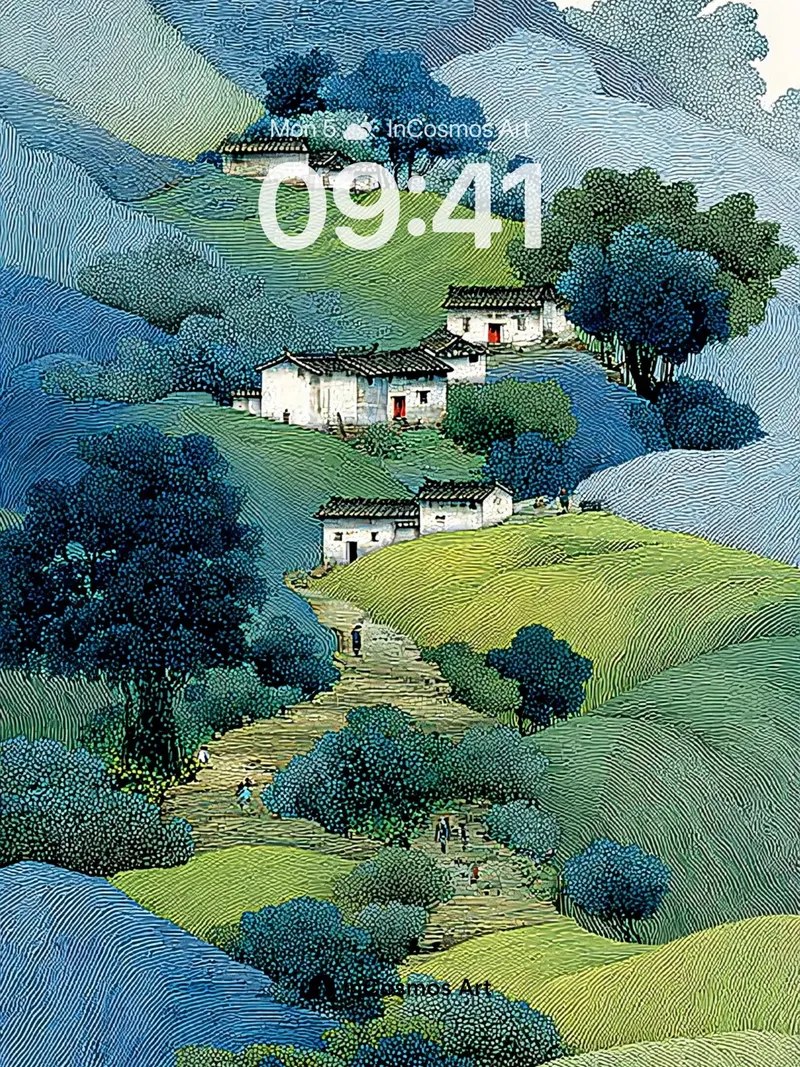
Azure mountains rise like ink strokes, white-walled houses nestled quietly within, as if time has paused. Wind flows across fields, stirring layered blossoms in hues of blue and red, forming the breath of seasons. These villages are not isolated; they represent a delicate balance between nature and human settlement. Each slope holds memories of agrarian civilization, each building narrates stories of familial continuity. Structures follow mountain contours, shifting with terrain, their terracotta roofs standing out against gray-blue backdrops—symbols of warmth and hope. Trees appear in varying shades of blue, both realistic and symbolic, expressing a philosophy of coexistence. Flowering trees bloom at foot of hills, crimson like fire, white like snow, suggesting rebirth after cold. Streams meander, stone paths lead into seclusion—these routes serve not only physical connection but also metaphors for inner return. No modern infrastructure is visible, yet deep order exists—courtyards, alleys, waterways—all reflect ancient reverence for feng shui and ethics. This is not mere nostalgia, but a reimagining of spiritual homeland through color and composition. As urban pace accelerates, such scenes evoke longing for stillness, belonging, and slow living. They remind us true beauty lies not in grand narratives, but in harmony of details and emotional depth. Culture is not museum display—it is lived experience. These blue-toned villages embody the Eastern ideal of 'unity between heaven and humanity'.
Form of Mountain Living: Architecture and Topography in Symbiosis
Houses align with slopes, staggered and balanced, roof lines soft, echoing curved mountains. Walls are mostly white, reflecting light, making structures feel light. Roof tiles carry warm tones, contrasting cool surroundings, emphasizing domestic warmth. Stone-paved roads wind gently, guiding eyes deeper into village heart. This layout adapts to nature while showing resource conservation and environmental respect.
Language of Color: Emotional Tension Between Blue and Red
Blue dominates, symbolizing tranquility, depth, eternity. Layers from pale to deep indigo create spatial depth, resembling mist-covered peaks. Red appears selectively—on roofs, trees, or ground—breaking monotony, injecting vitality. The contrast is not just visual; it represents dialogue between reason and emotion, nature and culture.
Order of Nature: Metaphors in Vegetation and Pathways
Trees are arranged purposefully, forms varied—from tall canopies to low shrubs. They function as scenery and ecological elements. Paths follow terrain, linking dwellings, forming flowing spatial networks. Such design encourages walking, slows rhythm, reconnects people with land's tangible texture.
Cultural Memory: Continuity of Traditional Life
No modern machinery is present; all buildings use traditional materials and craftsmanship. Doors and windows maintain proportional harmony, lattices finely carved, reflecting artisan pride. Courtyards remain enclosed, private, embodying family values. Wells, stone mills remain visible, indicating daily routines still follow ancient customs. These details collectively build sustainable lifestyle models worthy of contemporary reflection.