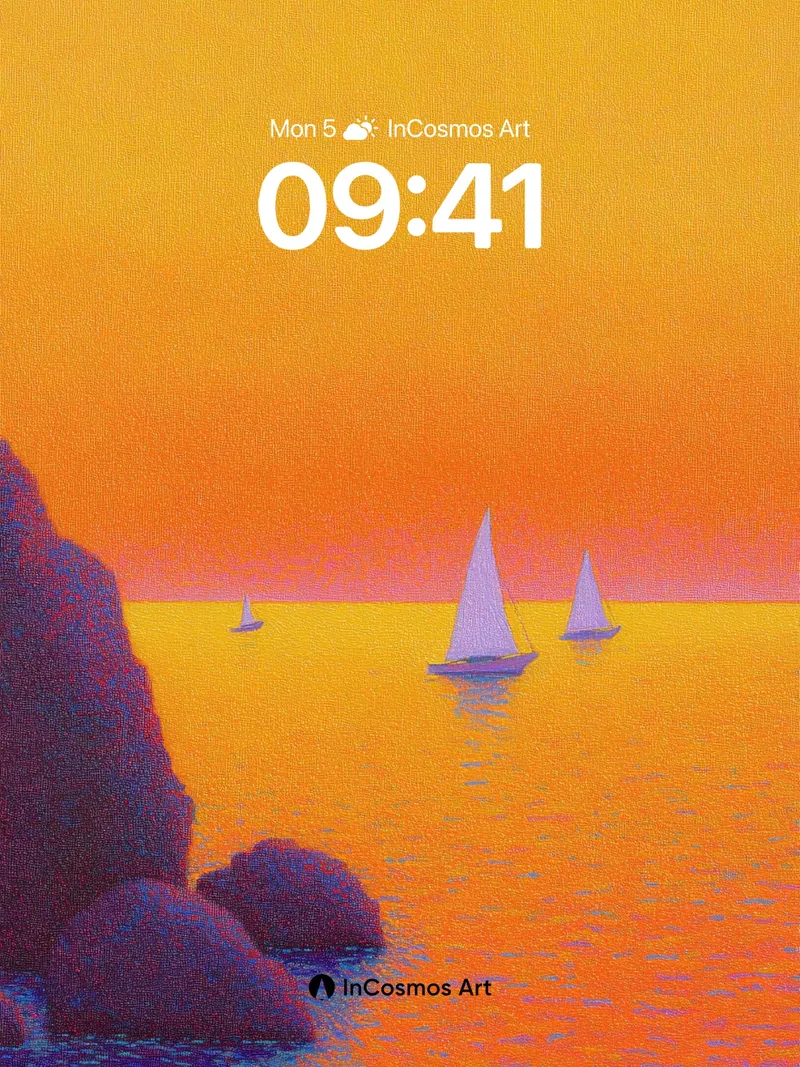
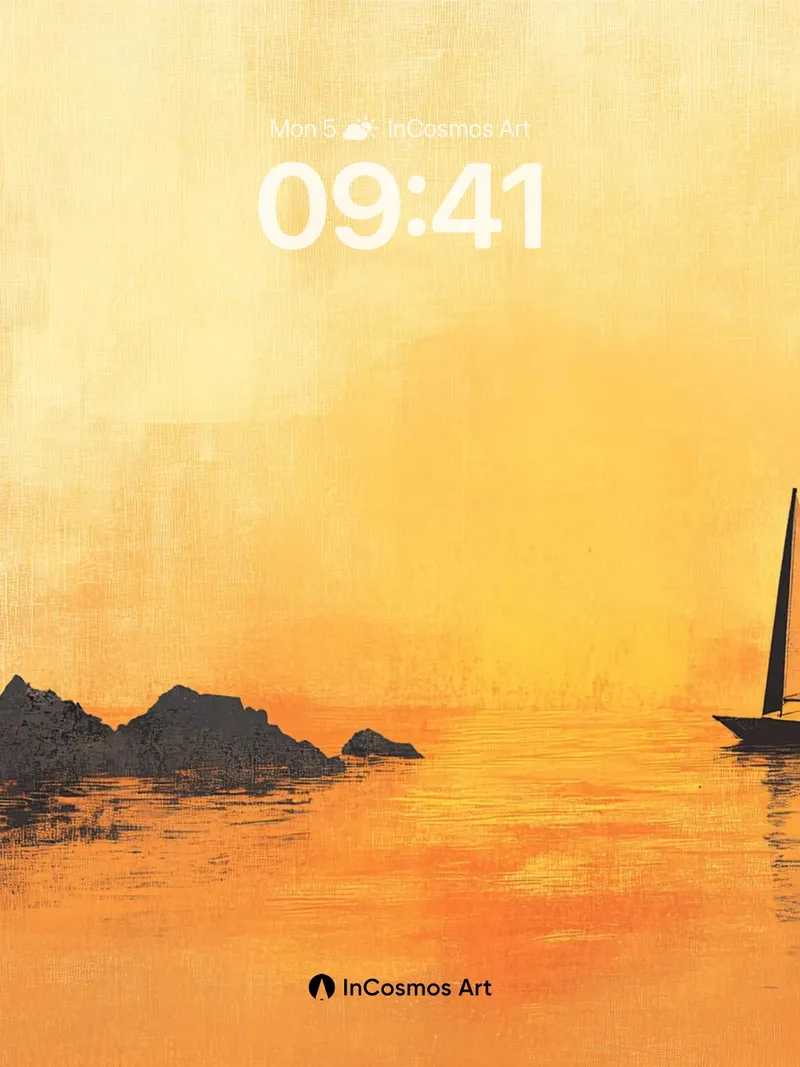
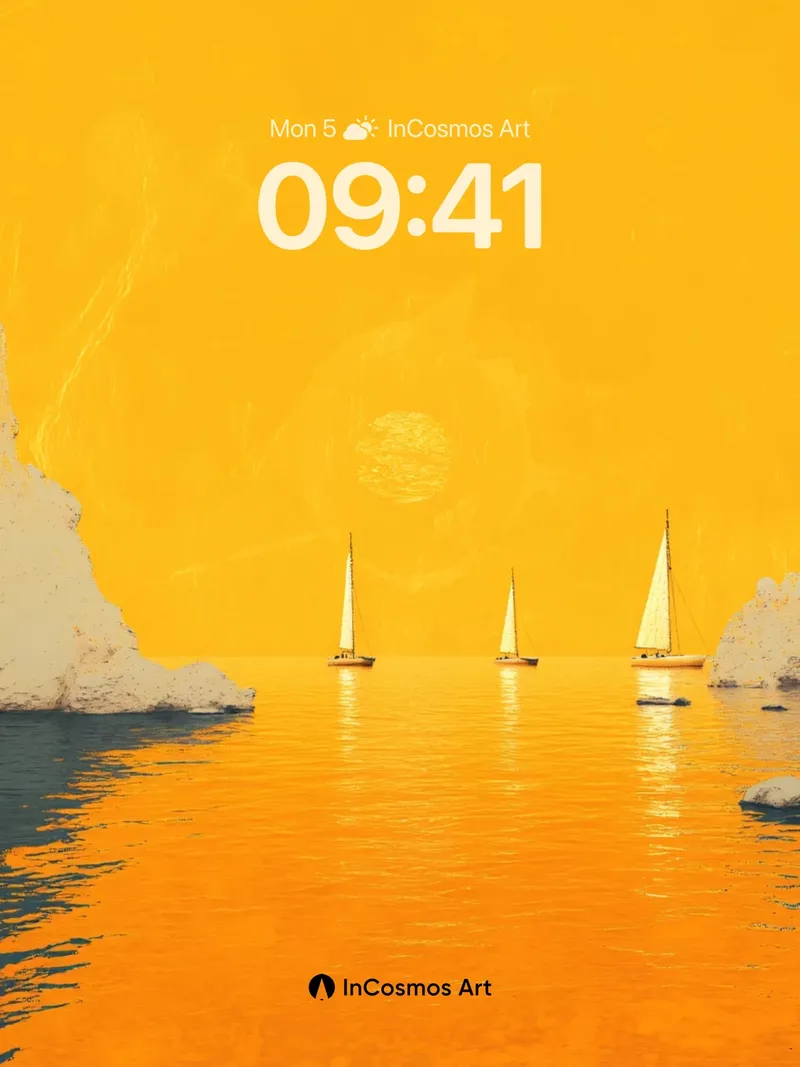
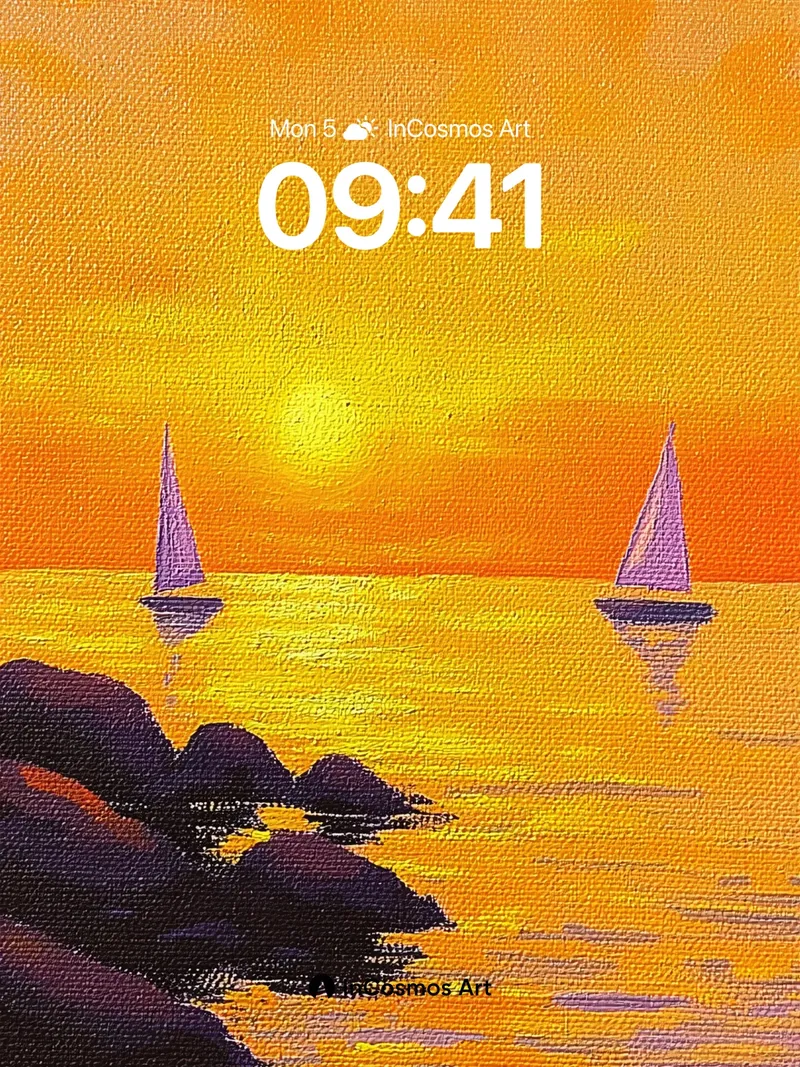
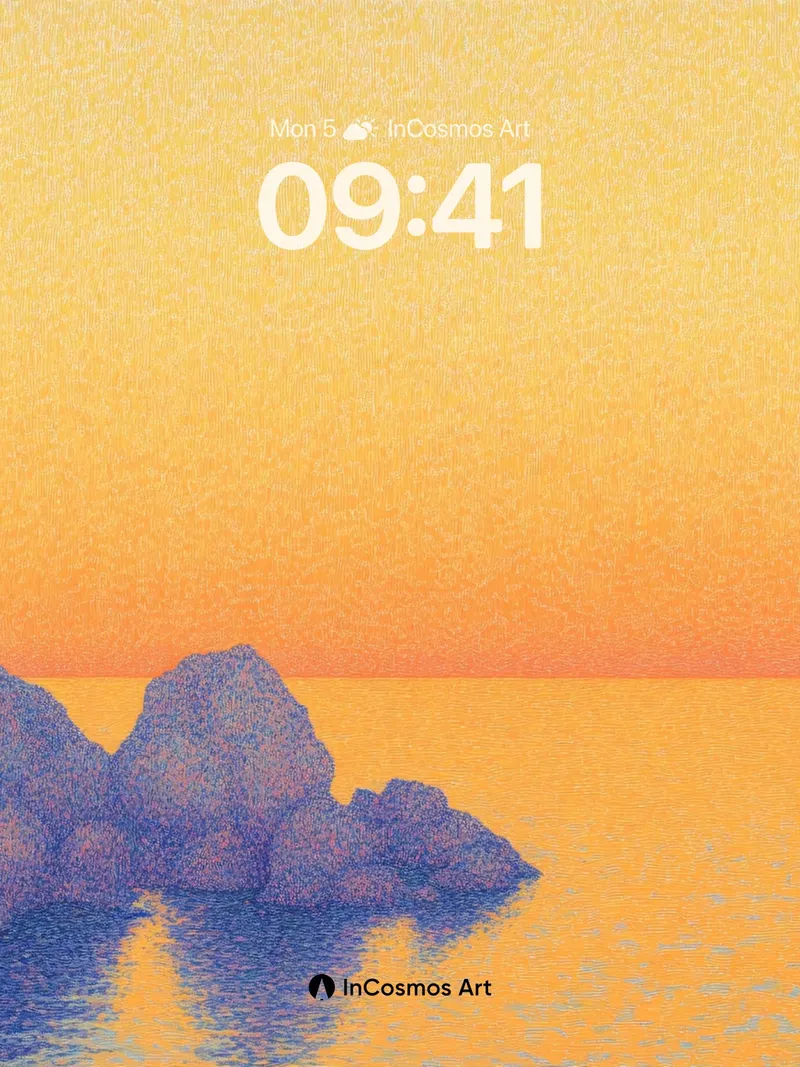
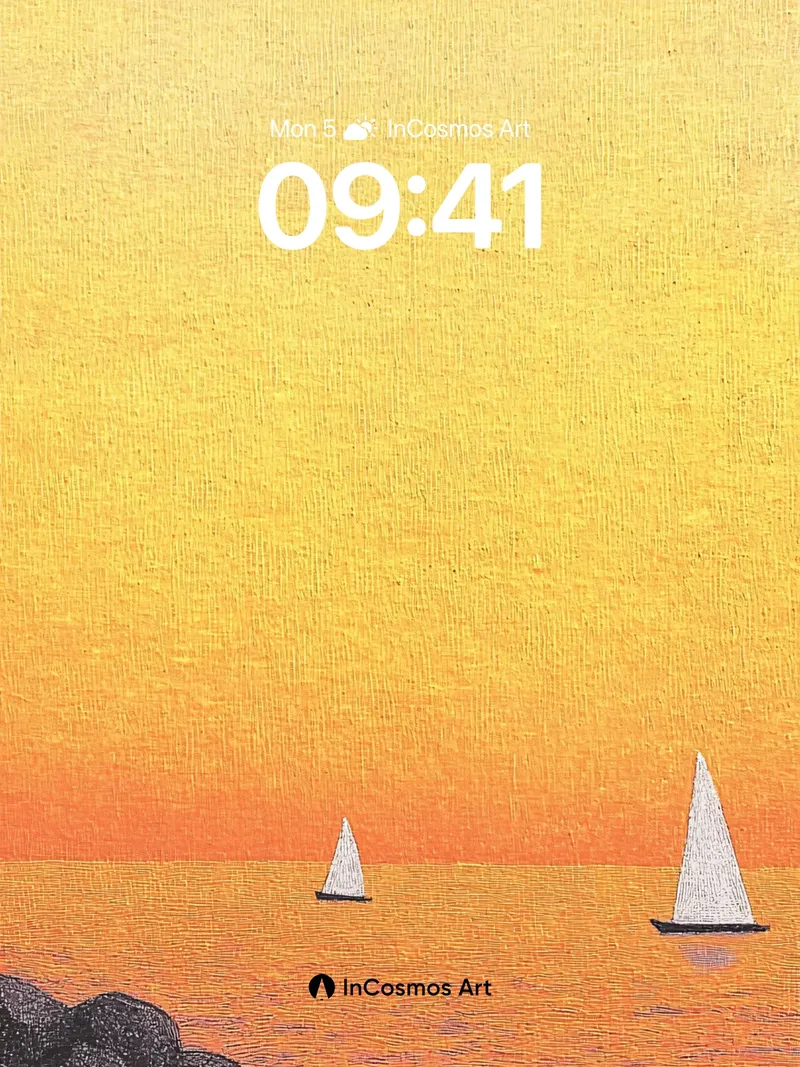
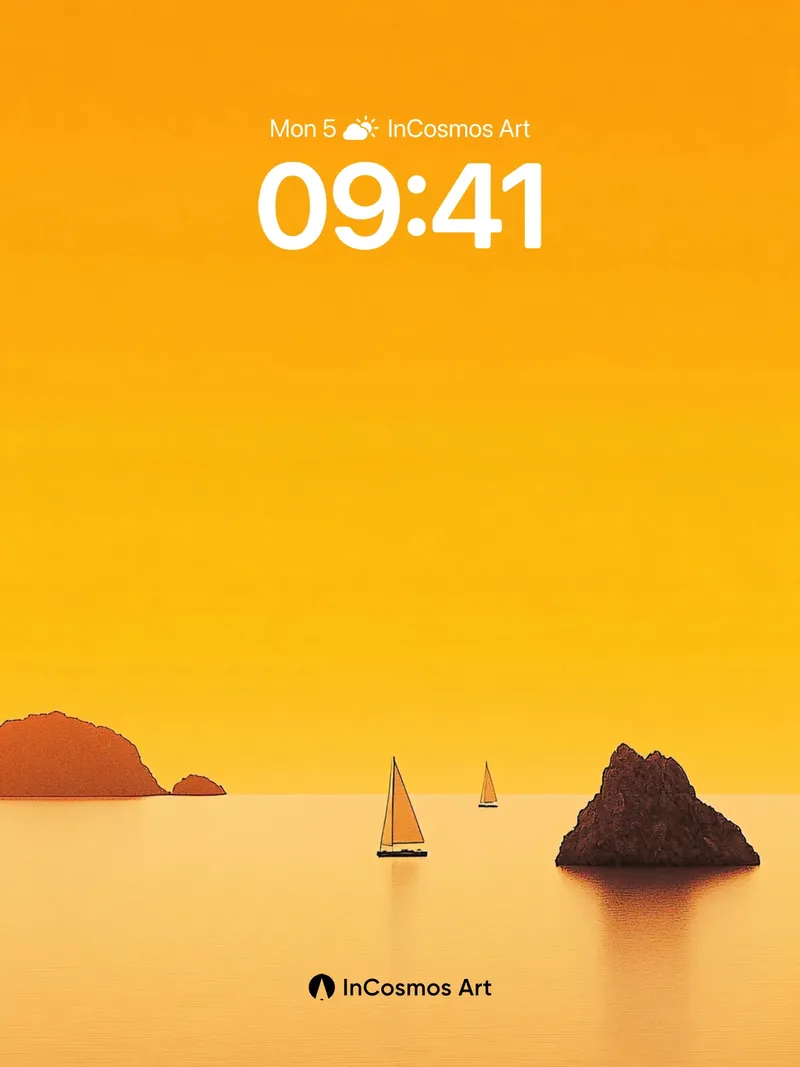
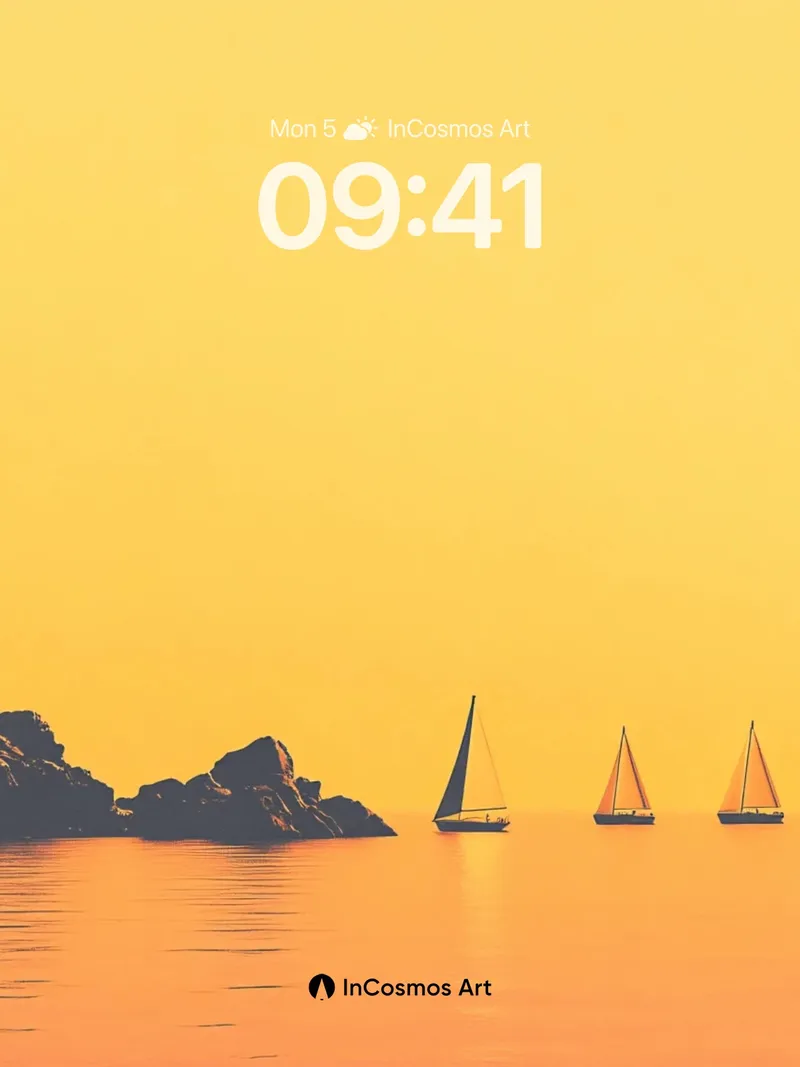
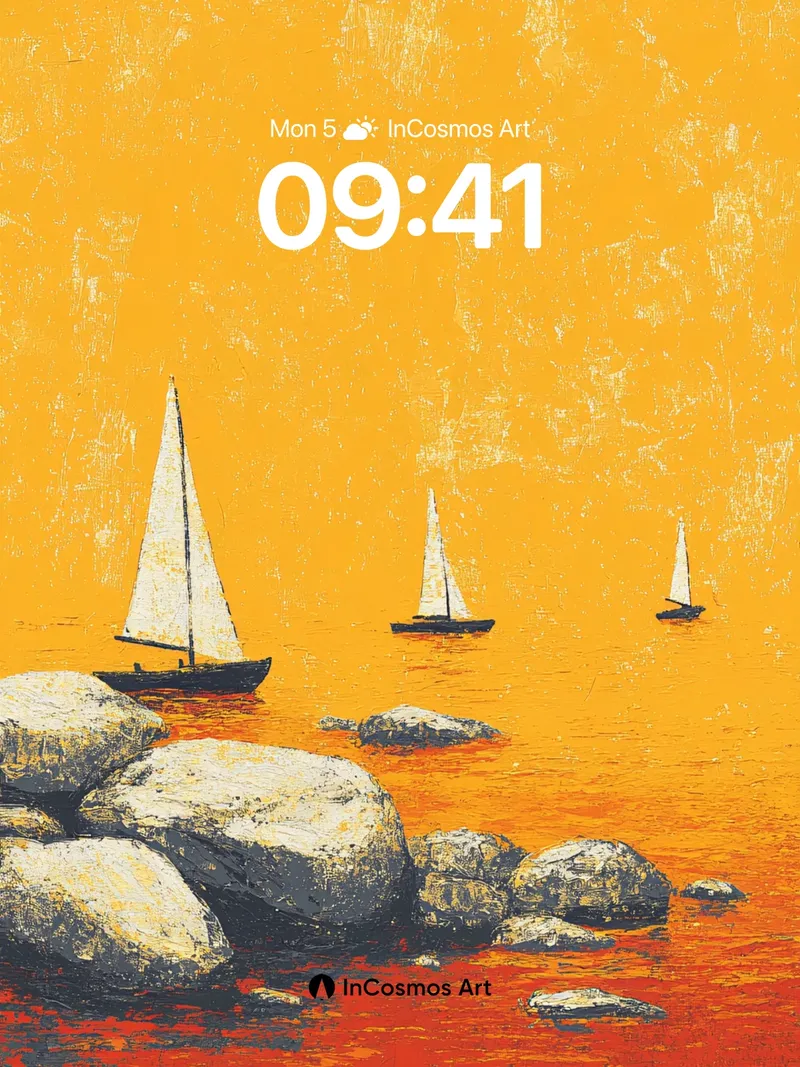
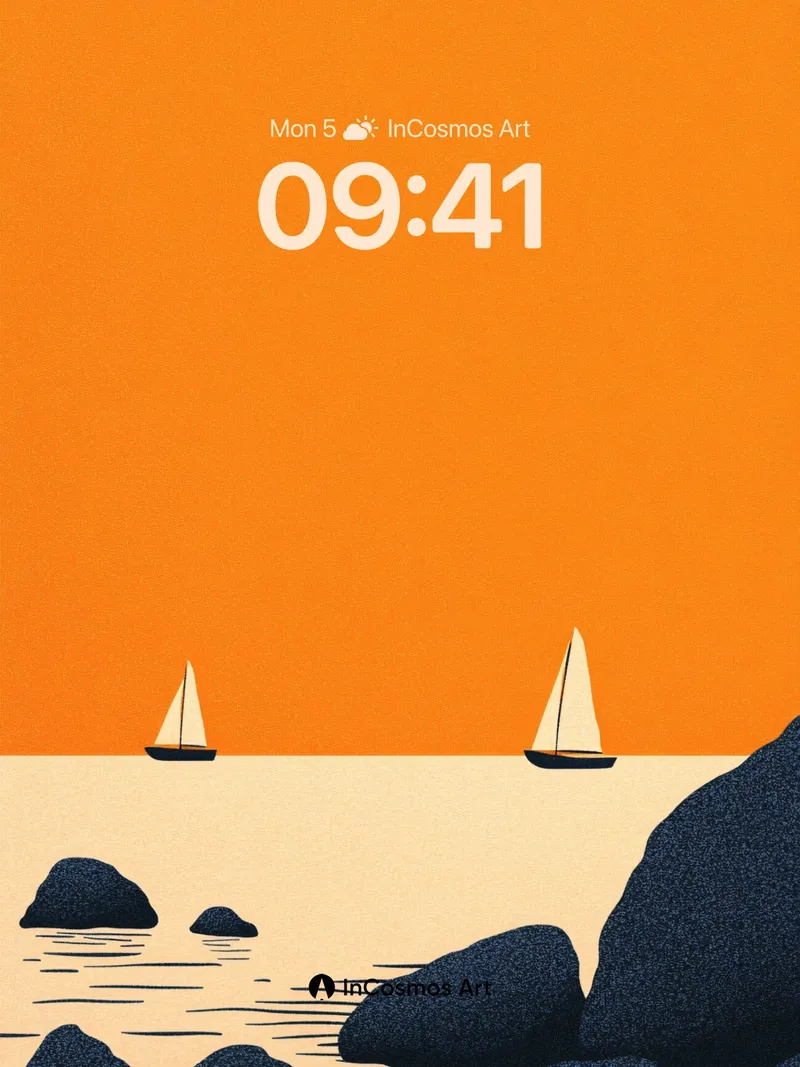
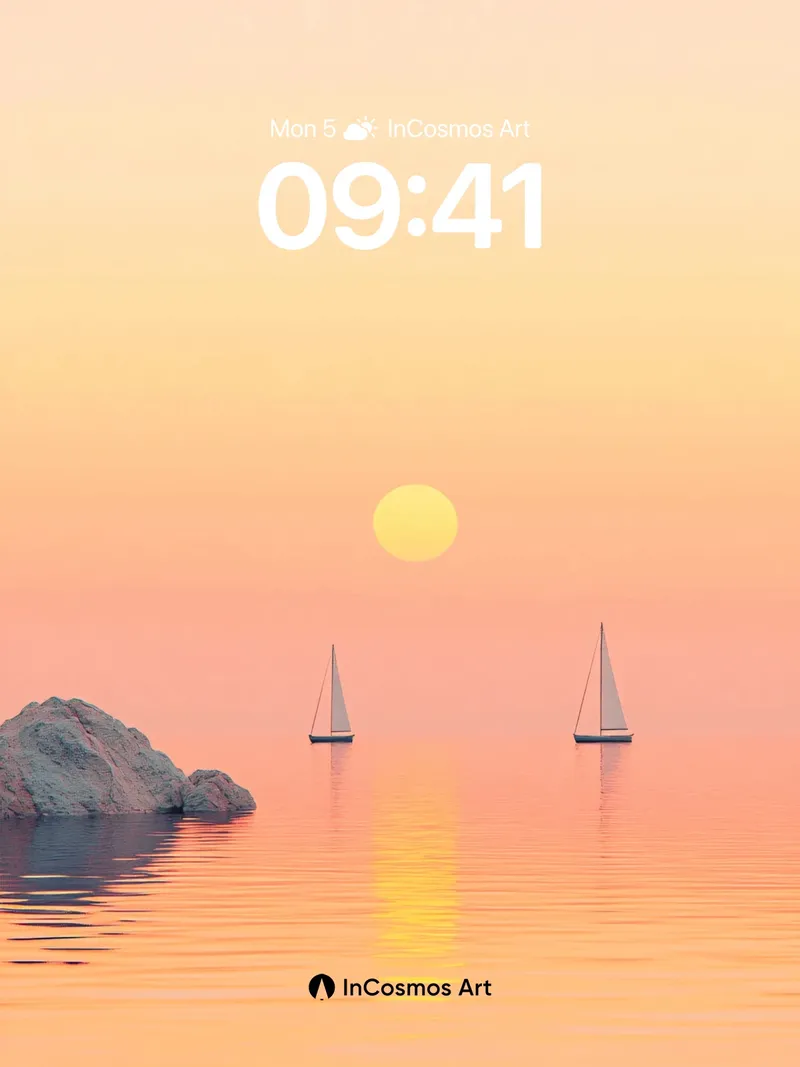
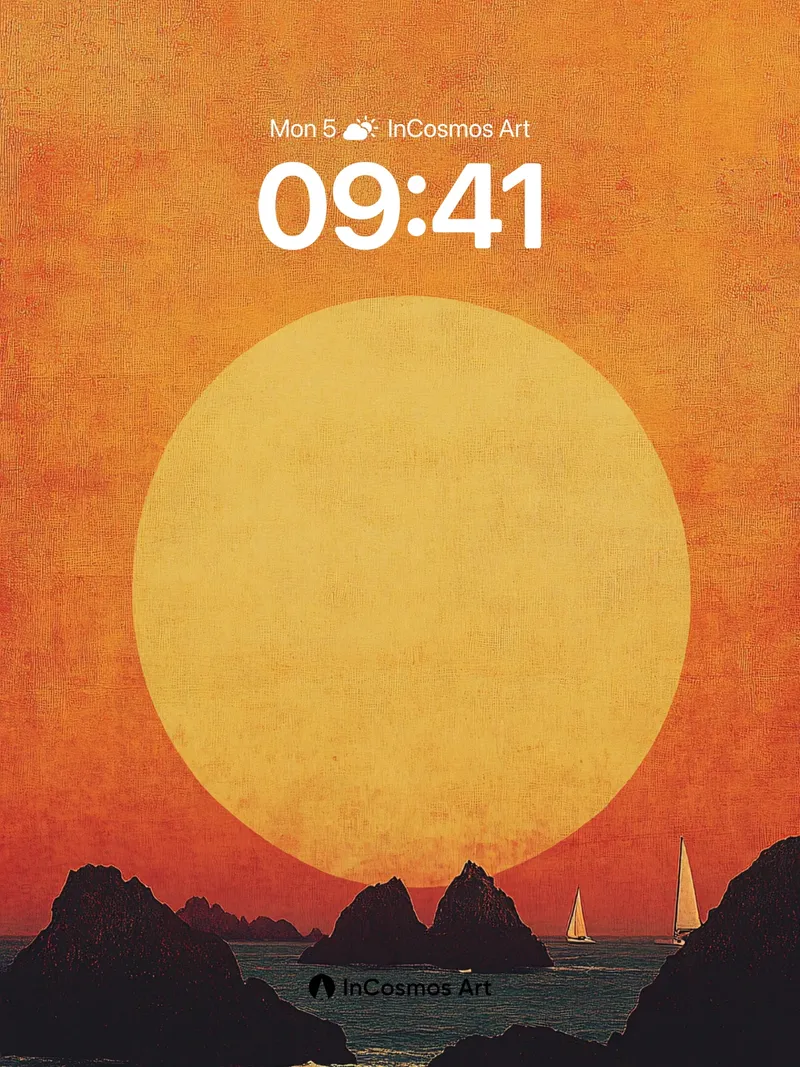
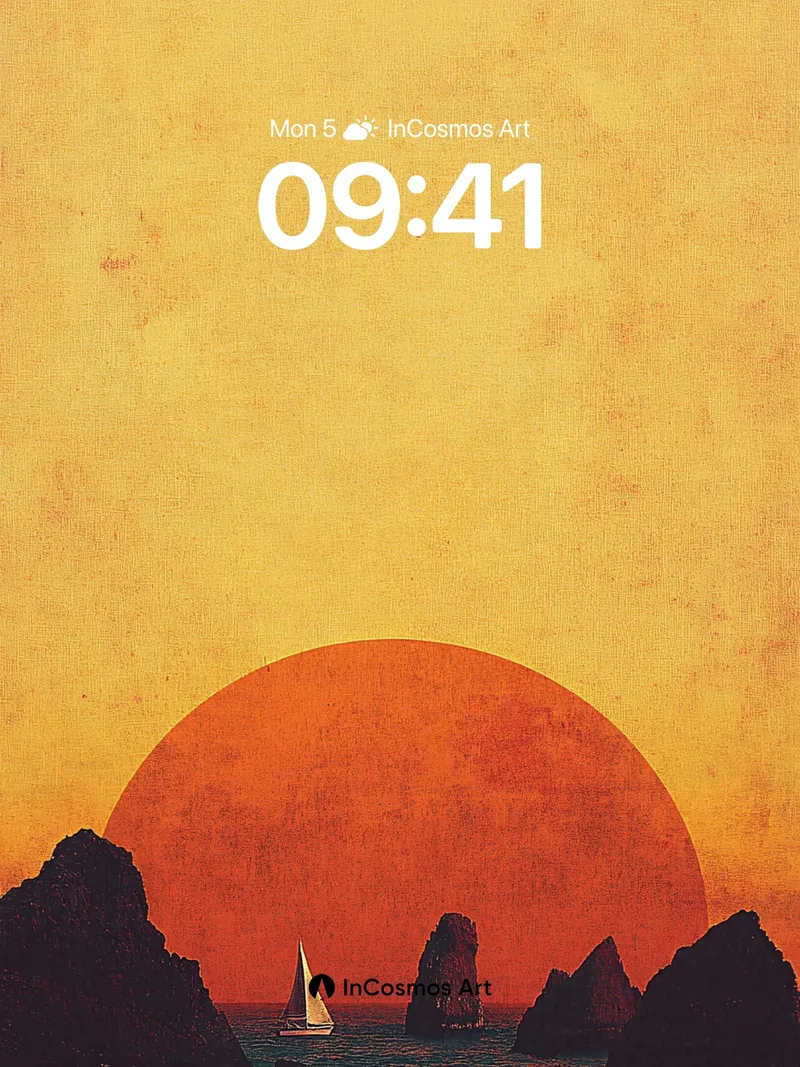
At dusk, the boundary between sea and sky dissolves into a flowing warmth. A massive sun hovers at the horizon, a silent disc casting light over water and solitary rocks. Sailboats trace delicate paths across the surface, becoming fleeting marks against the vastness of nature. These scenes do not seek photographic realism but convey inner order and stillness through minimal composition and color. Space contracts, time stretches, and all things solidify at the threshold of orange and deep blue. This visual language avoids narrative yet evokes solitude, journey, and eternity. Each ripple, each isolated rock, resembles an unfinished metaphor.
Minimalism in Nature
When natural scenes are stripped of complexity, retaining only core elements—sun, sea, stone, sail—their essence emerges. This is not replication but refined representation. Color gradients shift from bright to subdued, forming an internal rhythm. There is no noise, only dialogue between light and shadow. Such presentation echoes Eastern Zen principles of negative space, emphasizing presence within emptiness.
The Sailboat as Symbol
Sailboats never dominate these compositions yet remain central. They represent human fragility and resilience before nature. White sails stand out against fiery reds, resembling floating letters or travelers across time. Their movement is slow and resolute, carrying unspoken journeys and hope. In silence, motion itself becomes meaning.
The Weight of Time
The sun's position indicates passage. From high to low, bright to dim, each change alters mood subtly. Though static, the arrangement conveys temporal texture. Viewers enter a nonlinear experience, abandoning destination for immersion in process. This state—stillness amid motion—is the quiet peace modern life often lacks.