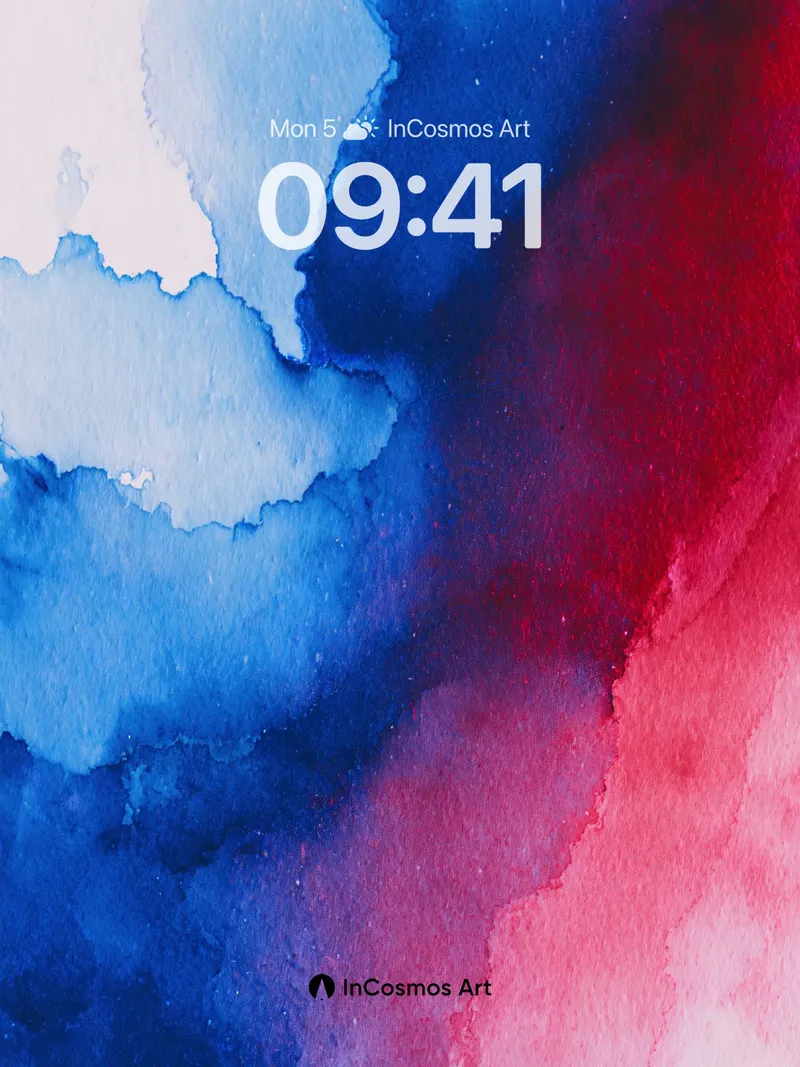
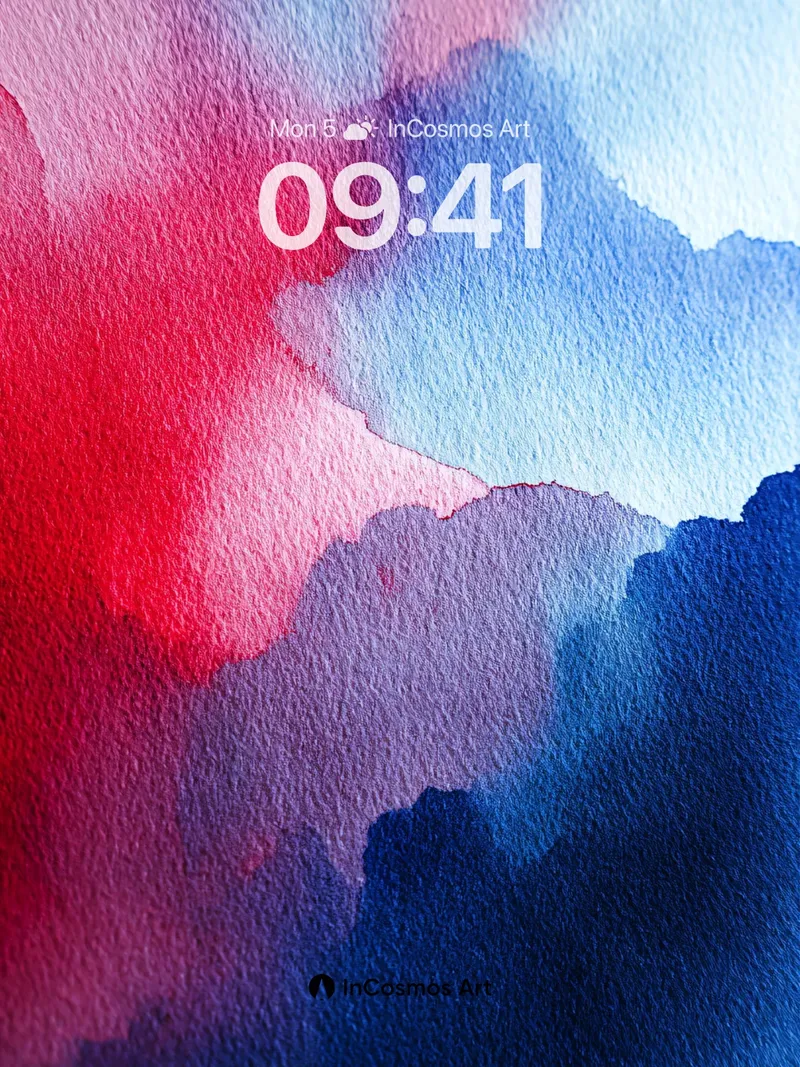
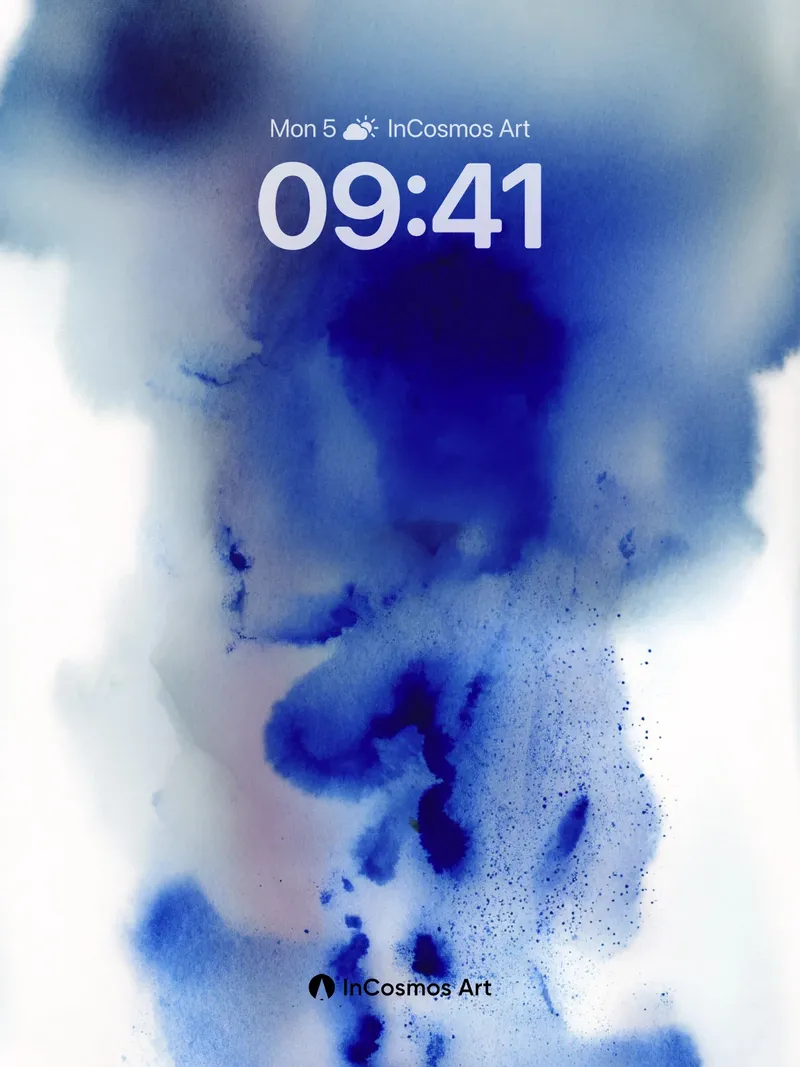
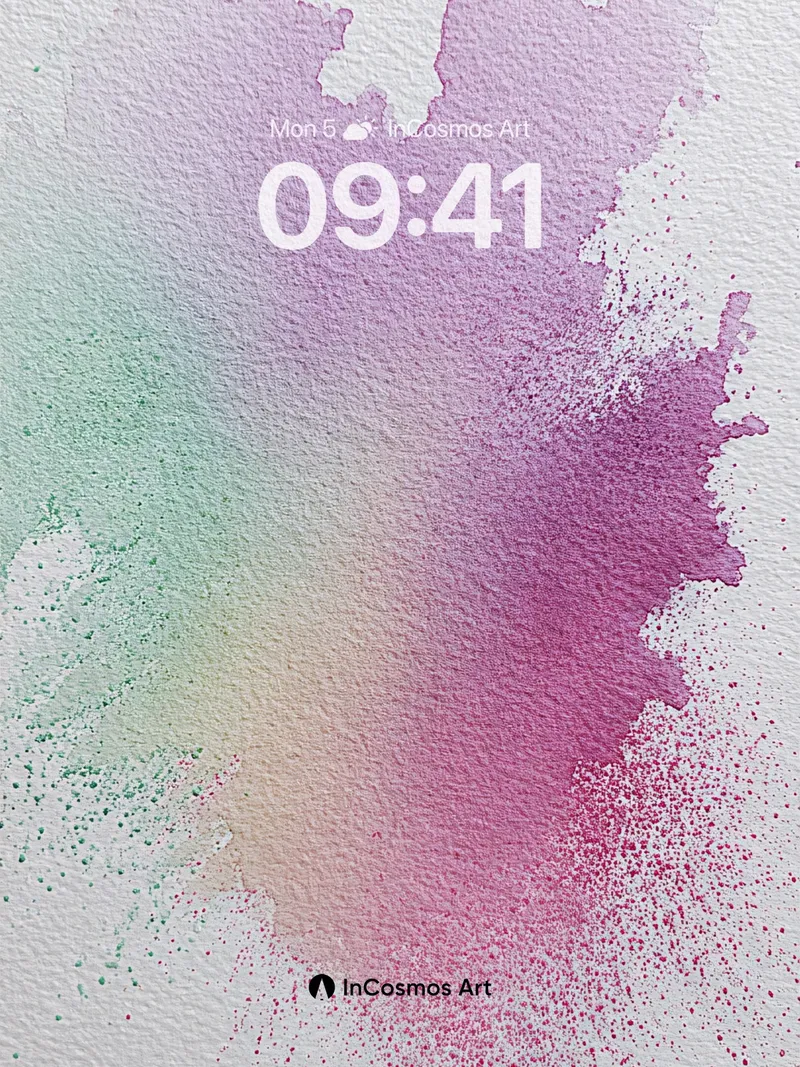
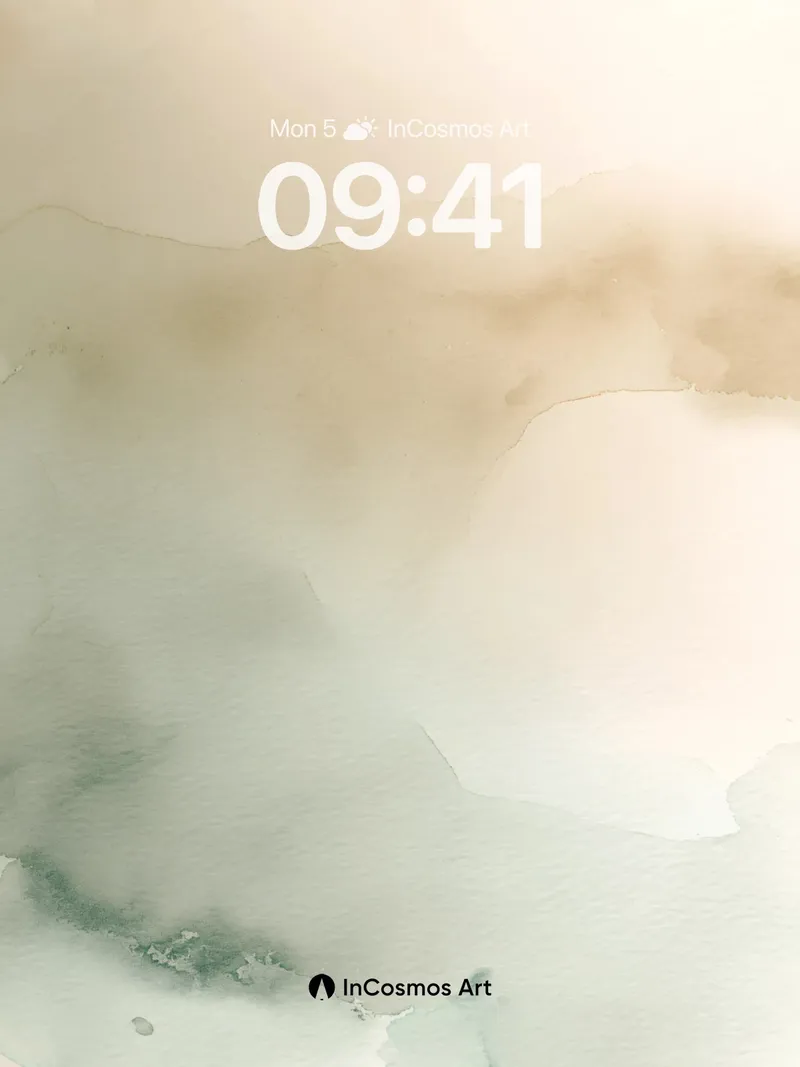
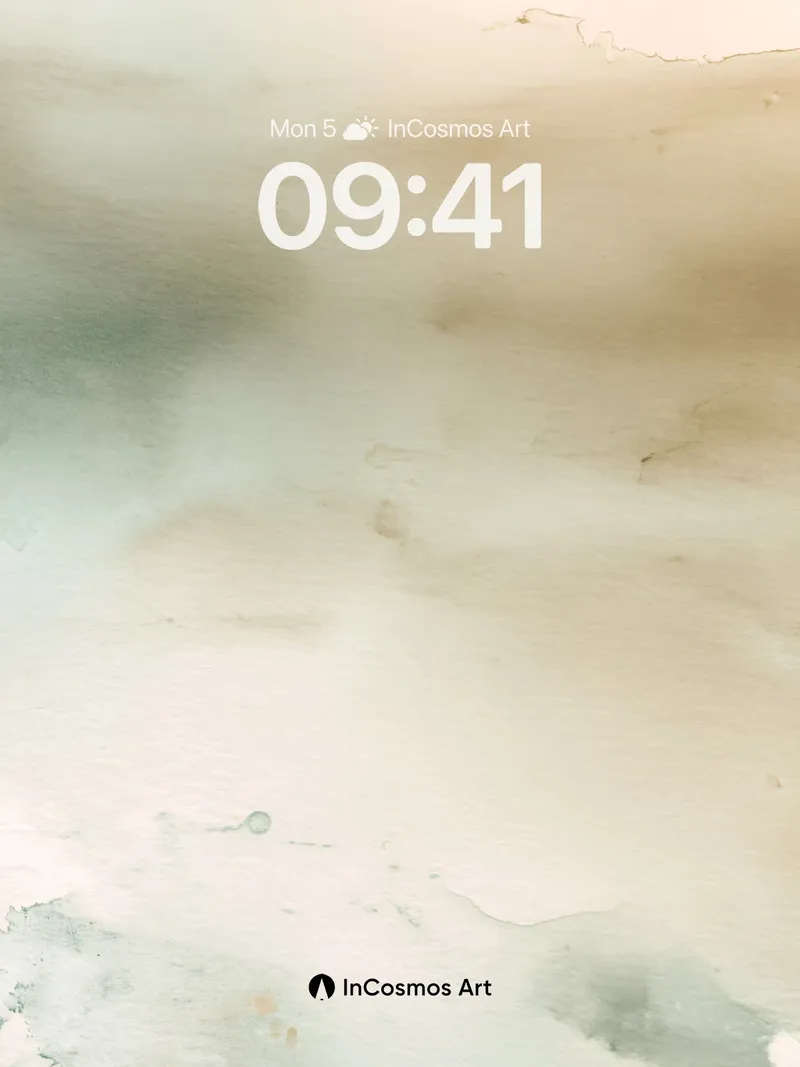
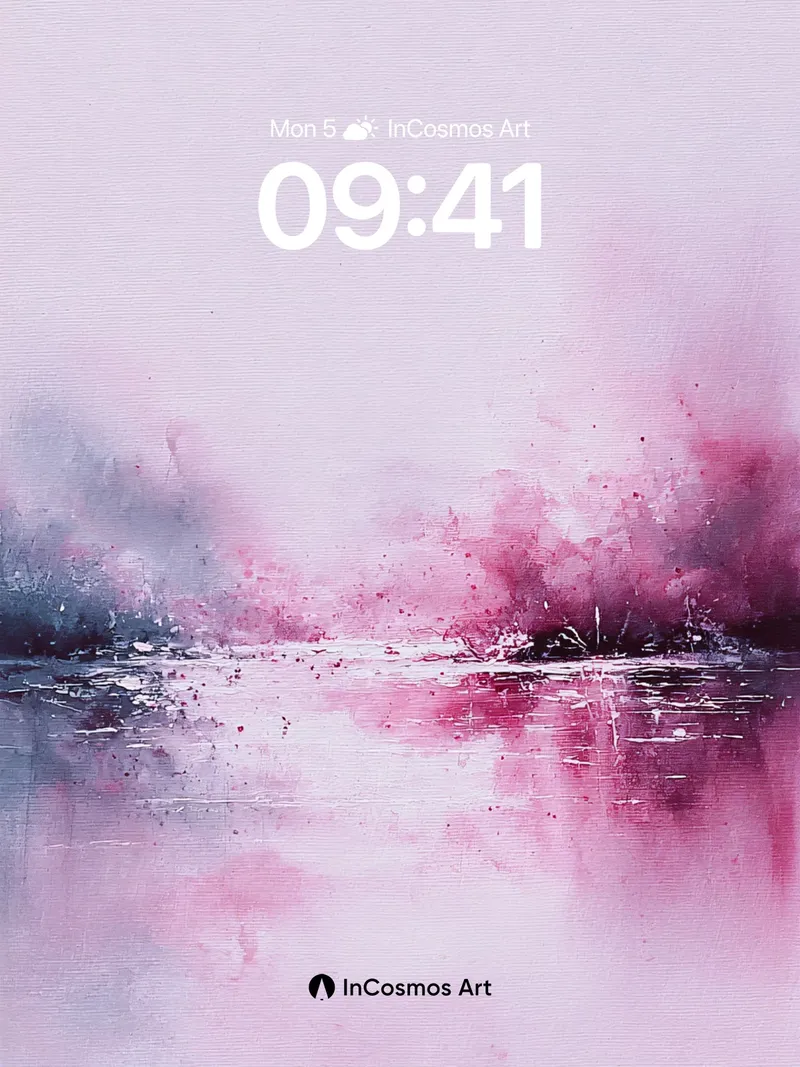
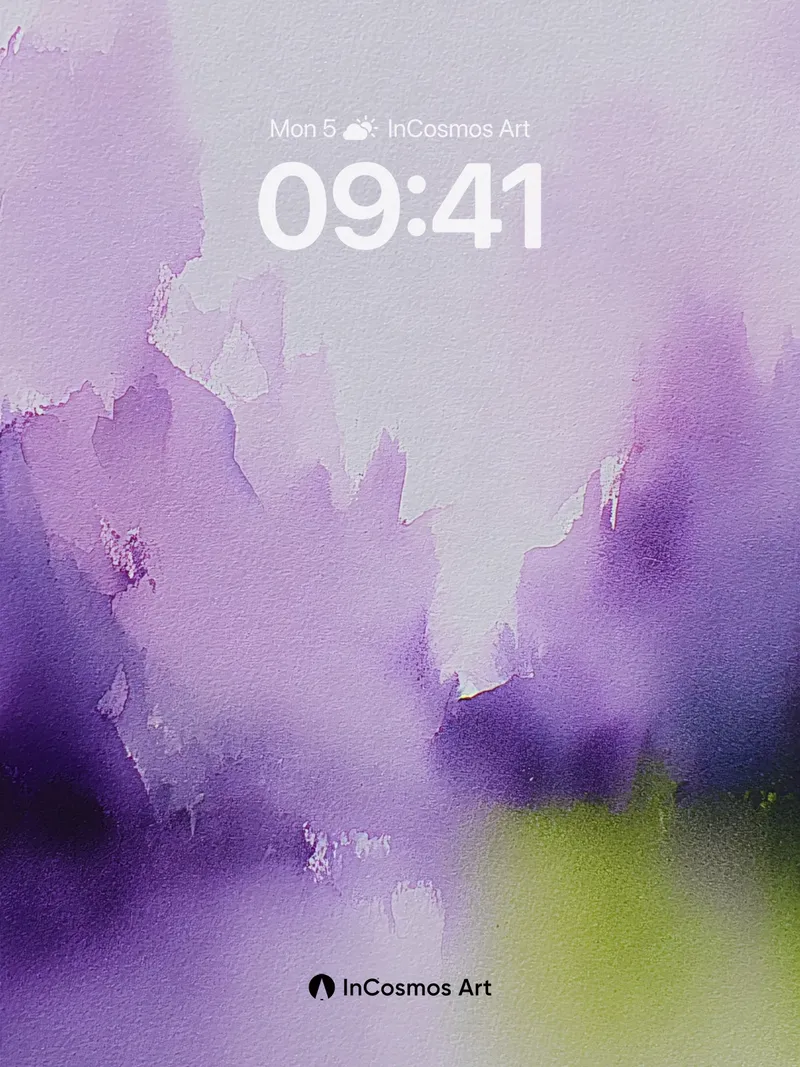
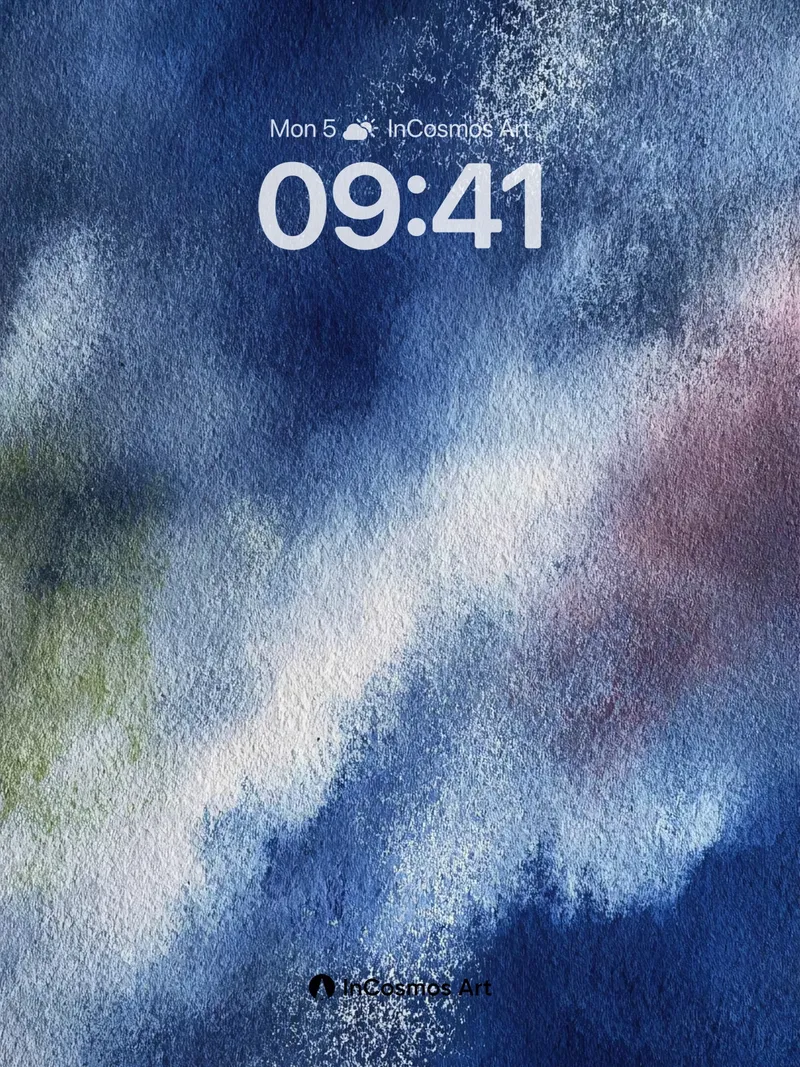
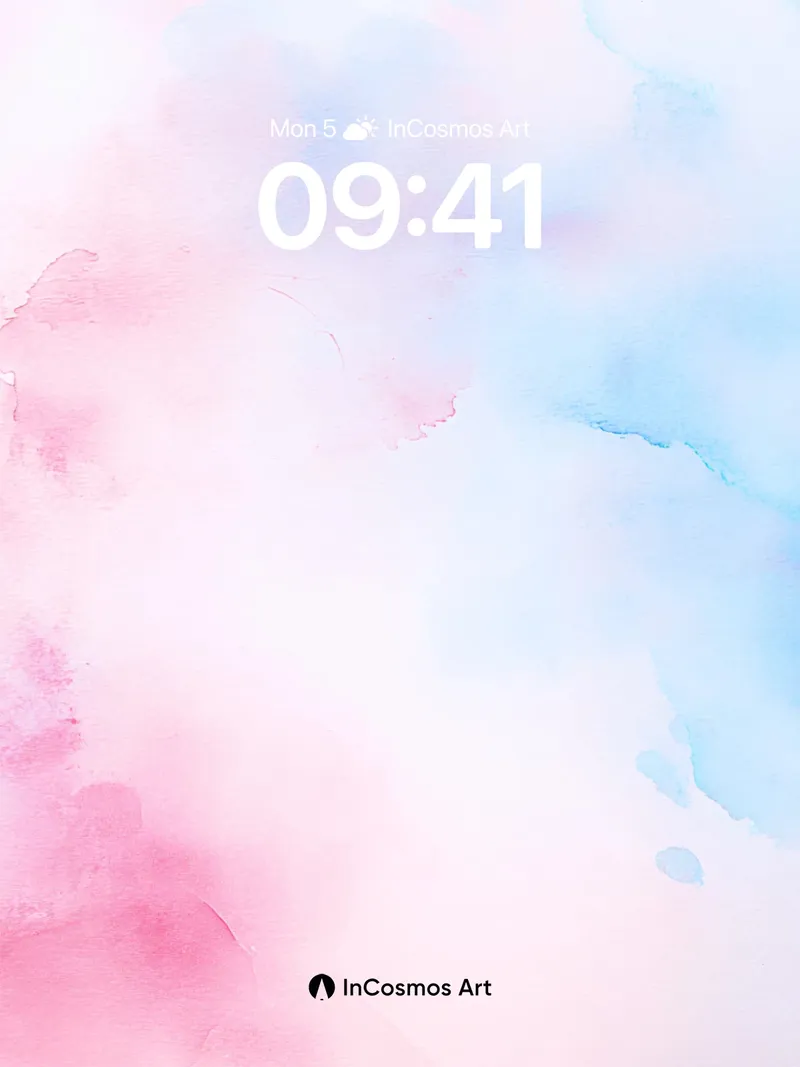
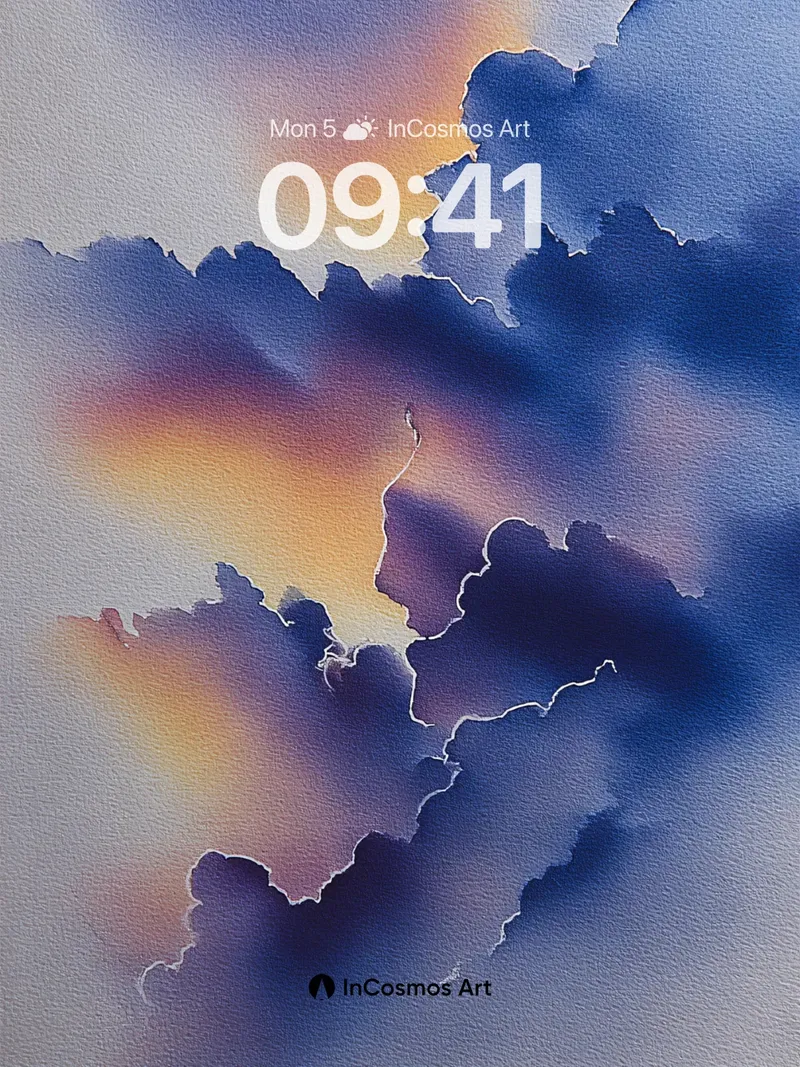
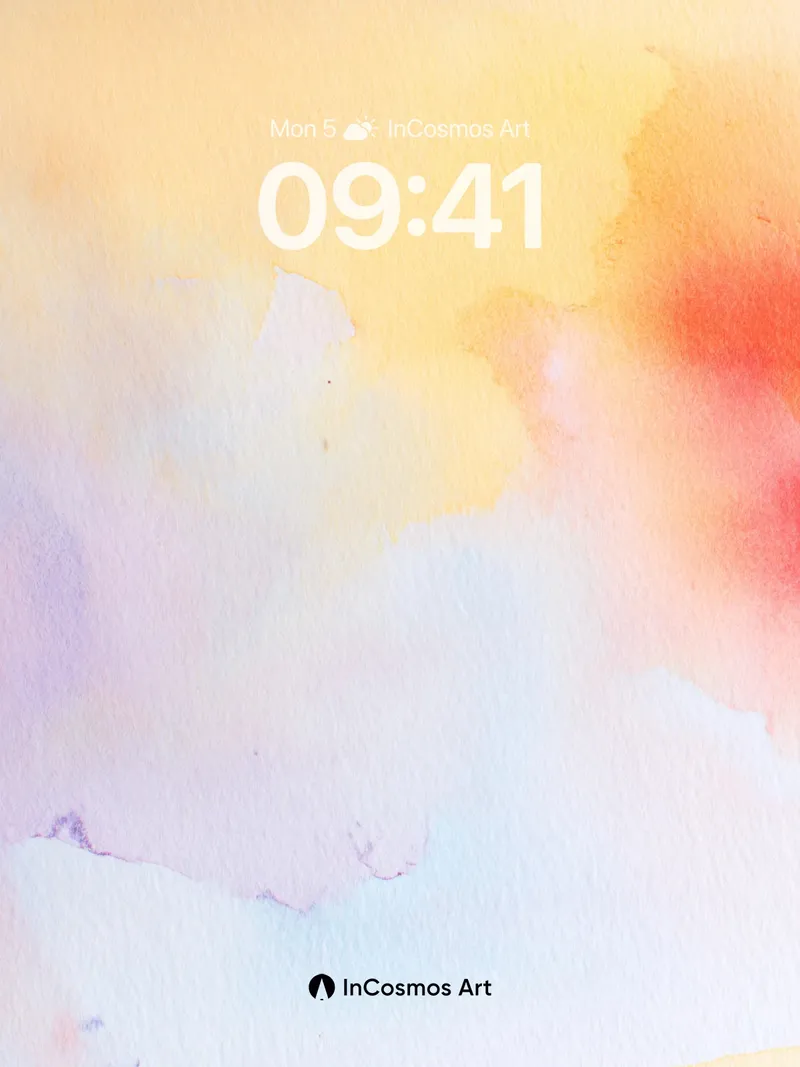
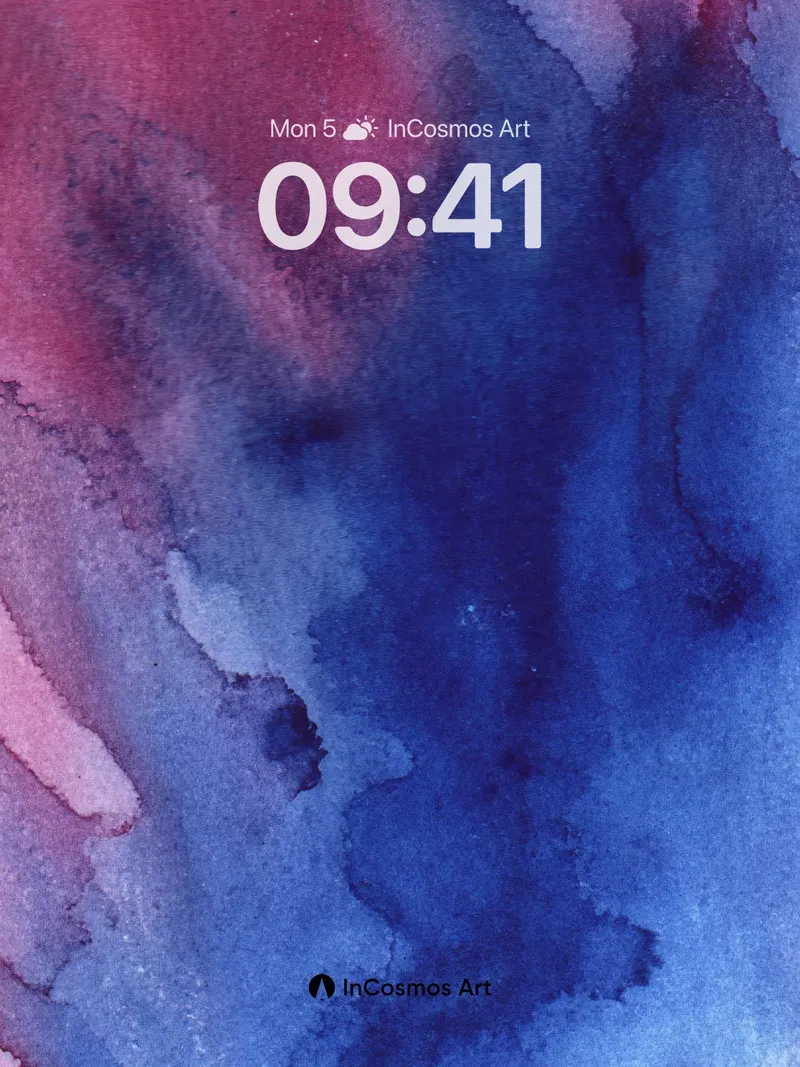
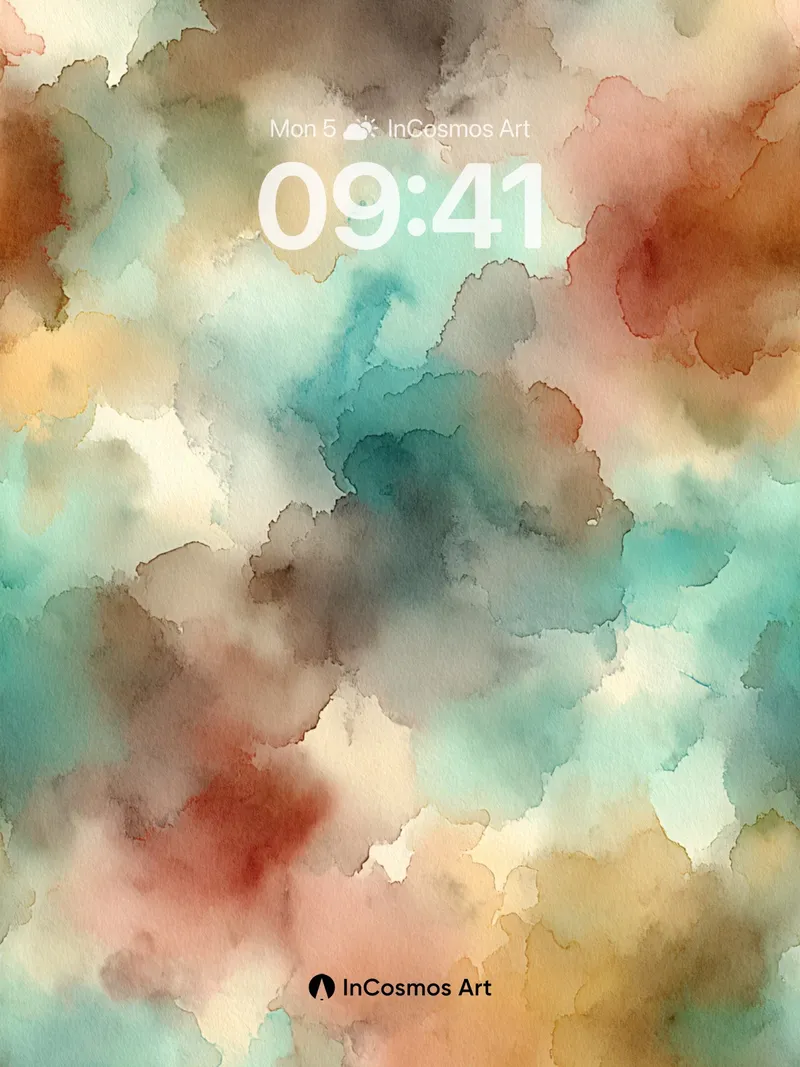
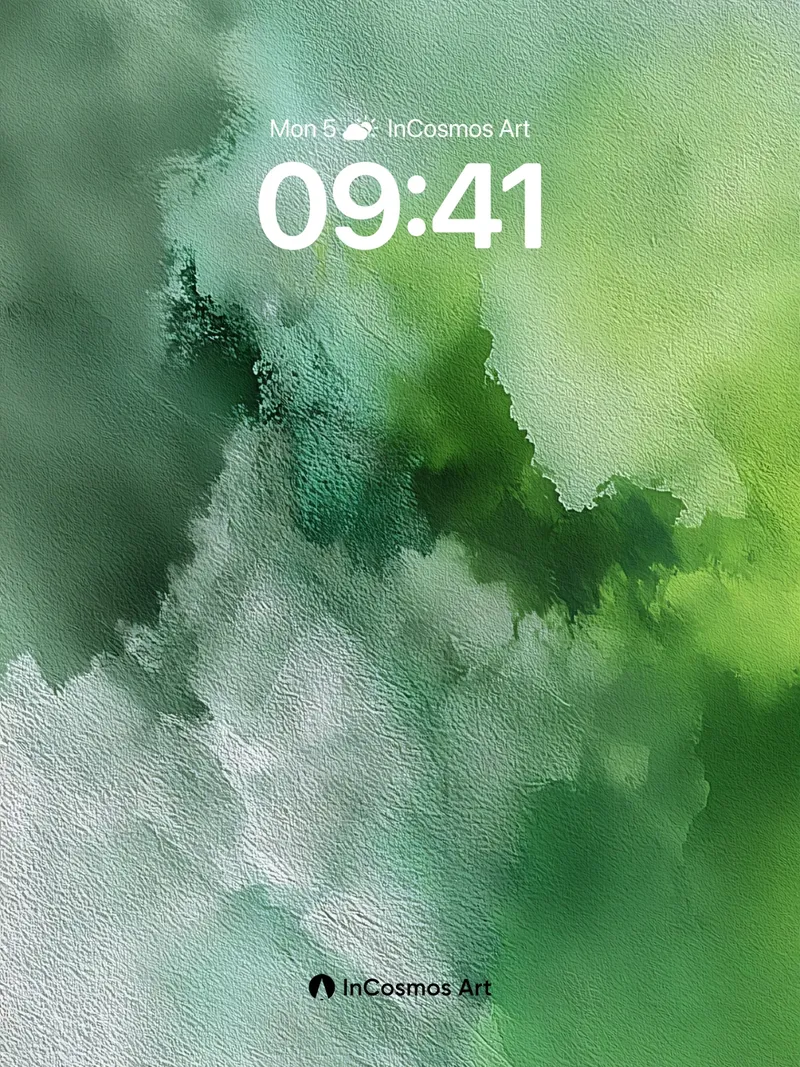
Color moves across the surface without a path, guided only by moisture and time. It seeps into adjacent areas, forming unrepeatable shapes that resemble fragments of memory lingering at the edge of consciousness. Each hue’s spread is a silent dialogue—where blue meets red, calm coexists briefly with passion; where purple touches green, dream blends with reality. These marks are not designed, but emerge from the delicate balance between chance and necessity. They suggest that emotional expression does not require clear language—sometimes, a single drop of pigment can carry the weight of an entire season.
Topology of Emotion
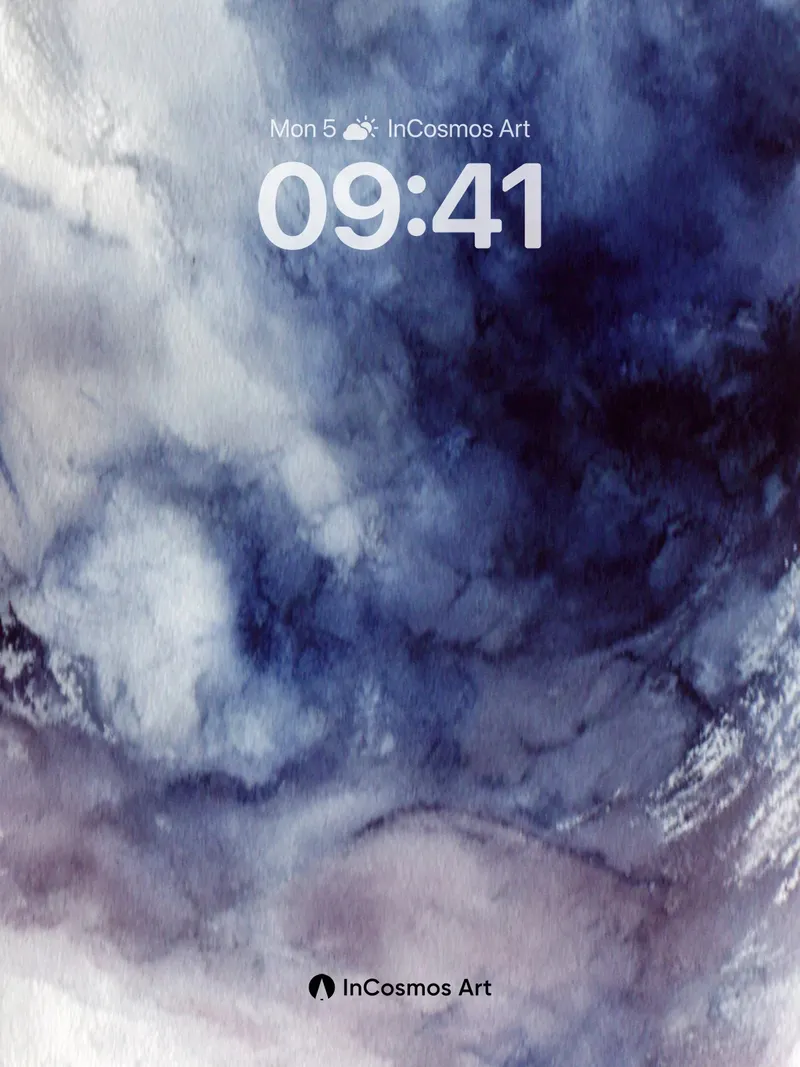
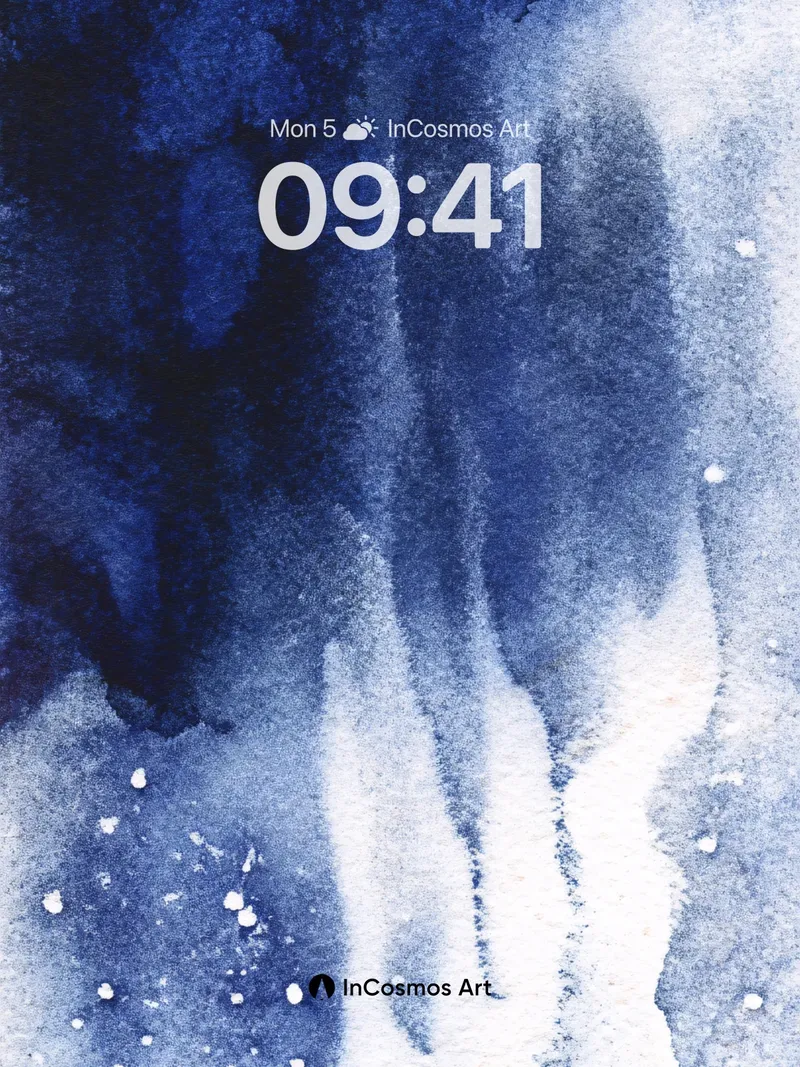
The diffusion of watercolor has no center, yet it exerts gravitational pull. Deep blue descends from above like the quiet before nightfall, while pink floats gently at the edges, resembling the faint light before dawn. This spatial arrangement hints at psychological layers: dense areas reflect unconscious sediment, lighter ones represent conscious probing. When two colors meet, they do not merge, but erode each other, creating a third state at their boundary—one that belongs neither fully to one nor the other, much like self-awareness in contradiction.
Irreversibility of Memory
In some compositions, pigments have dried, leaving textured residues. This is not failure, but testimony to time. The nature of watercolor ensures its process cannot be undone—each stroke becomes part of the past. This physical irreversibility mirrors human experience: once memory forms, the original sensation cannot be replicated. People can only infer the density of former emotions from remaining traces, just as one might reconstruct a torrential downpour from dried paint.
Color as Metaphorical System
Purple often associates with mystery and introspection, while green signifies growth and hope. Their interplay on the canvas creates dynamic tension. This is not mere visual pairing, but construction of symbolic language. It conveys not landscape, but inner world—a depiction of how individuals seek balance between suppression and renewal. The unpredictability of watercolor echoes the erratic nature of psychological fluctuation.
Abstraction and Concreteness
Despite lacking form, these color combinations evoke specific emotional associations. Warm tones of yellow and orange bring comfort, deep blue evokes solitude. This ability to shift between abstraction and concreteness lies at the core of art’s therapeutic function. It allows individuals to recognize their own emotions within unnamed phenomena, achieving a form of self-affirmation.