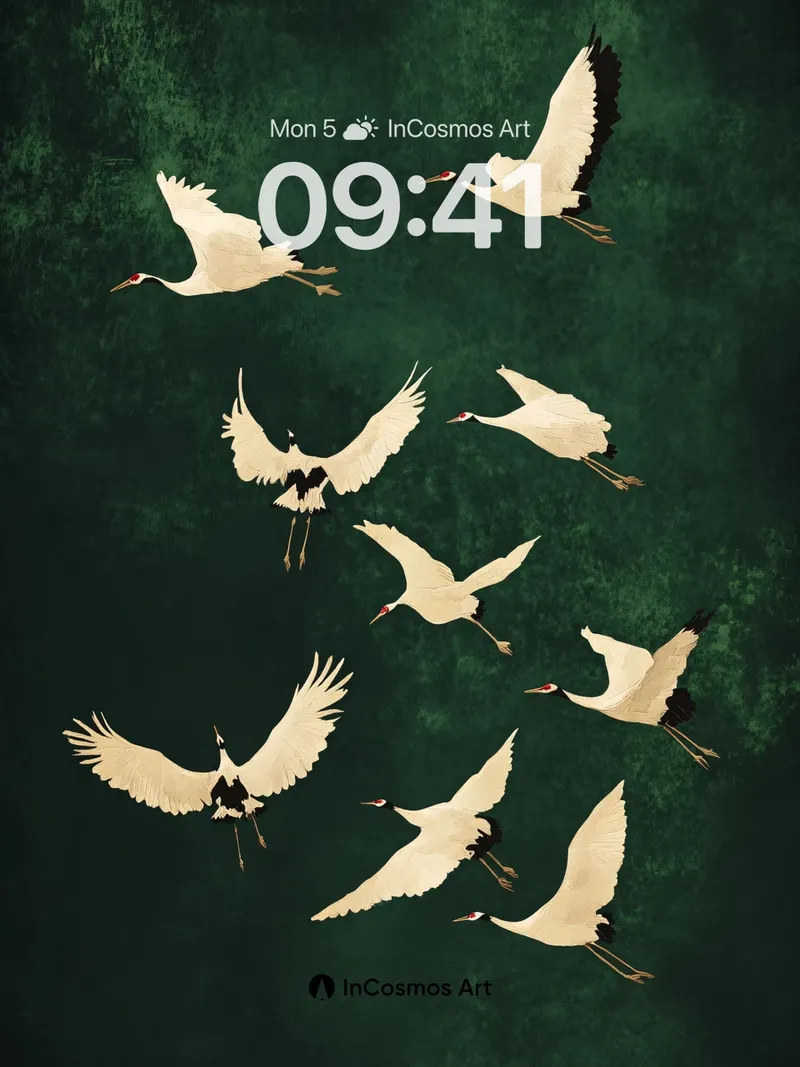
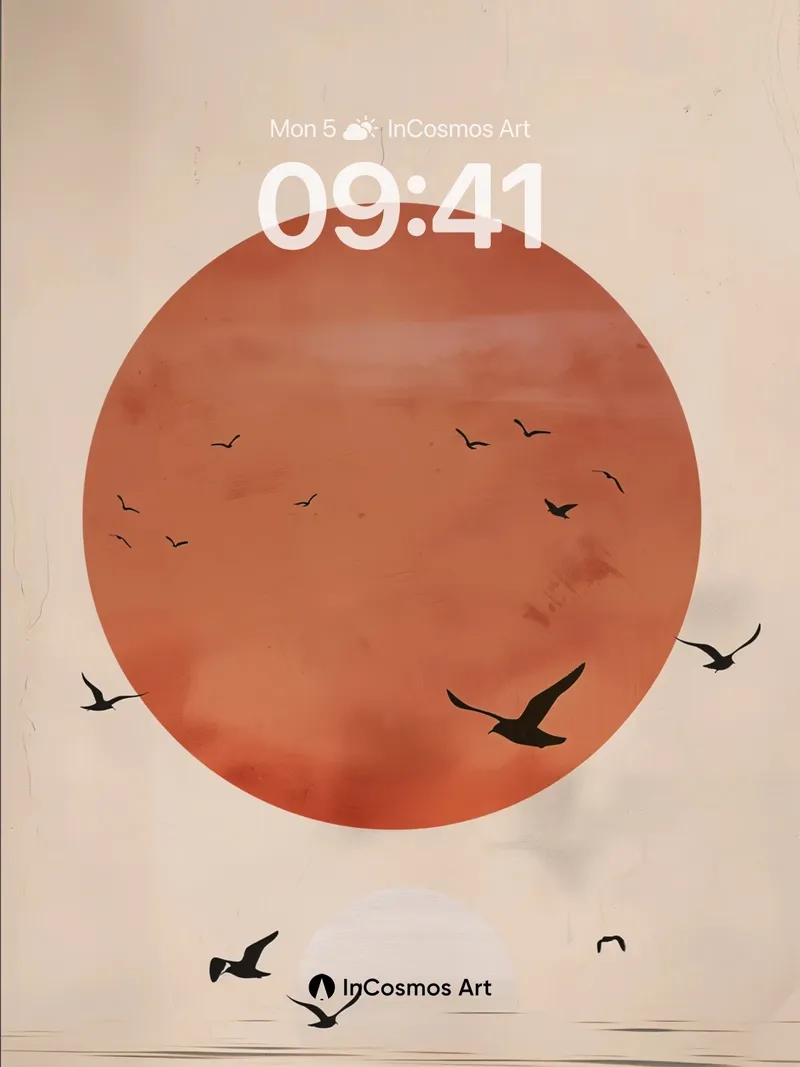
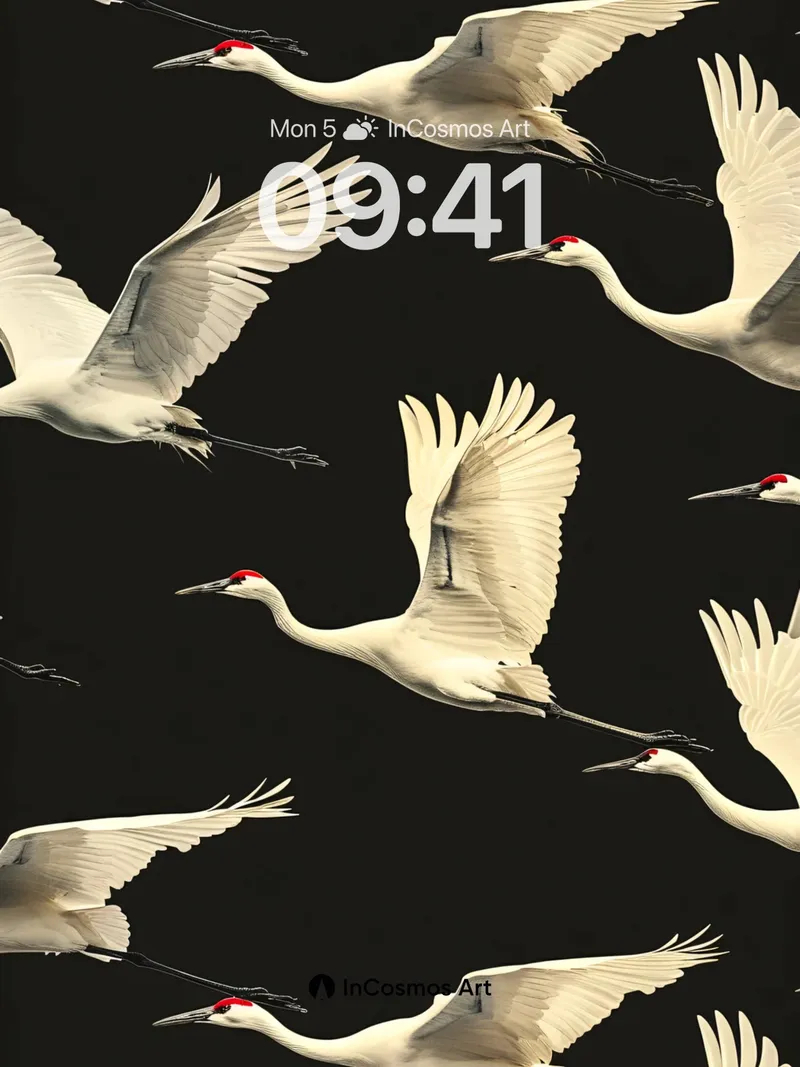
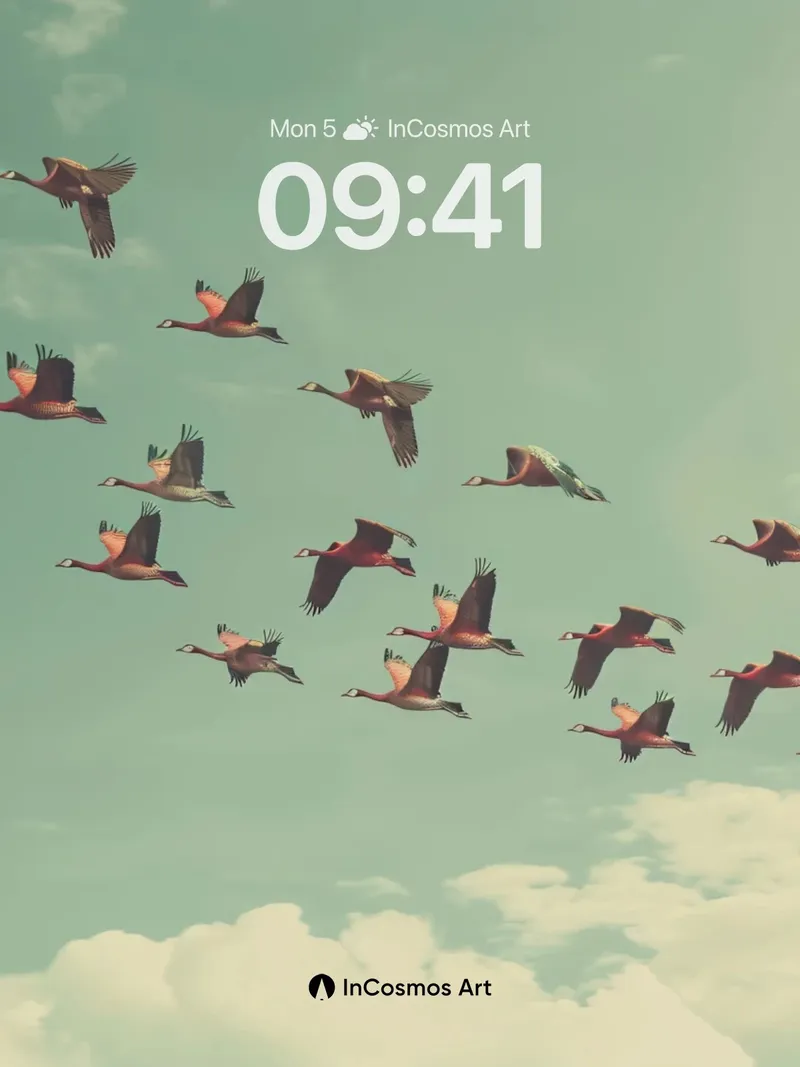
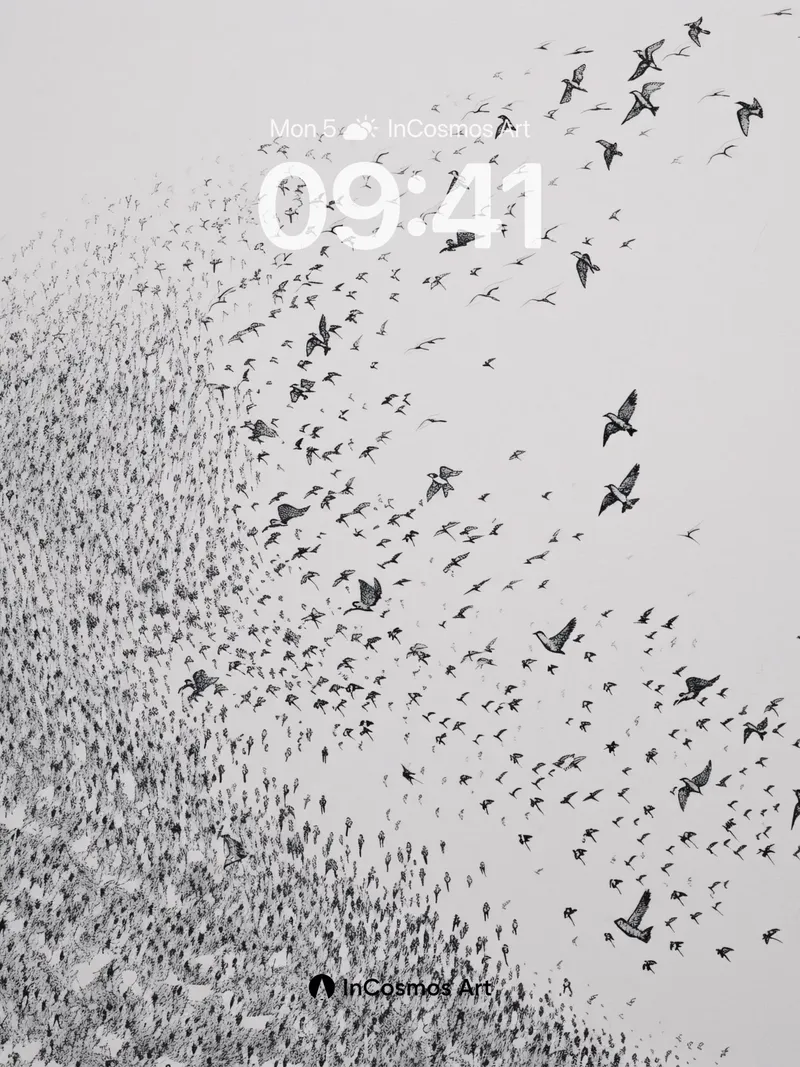
The sky serves as a theater for birds and a canvas for human emotion. When gaze turns upward, trajectories cutting through air often approach the essence of freedom more closely than ground-level noise. From geometrically stacked flocks to minimalist red-crowned cranes, and then to ink-splashed crows, every wingbeat redefines the meaning of flight. These forms are not merely biological records but variations of cultural symbols in different contexts. Some are noisy, some solitary, some full of order, others wildly splashed. Viewers see not just birds, but their own imagination and longing for the sky.
Carnival of Geometry and Order
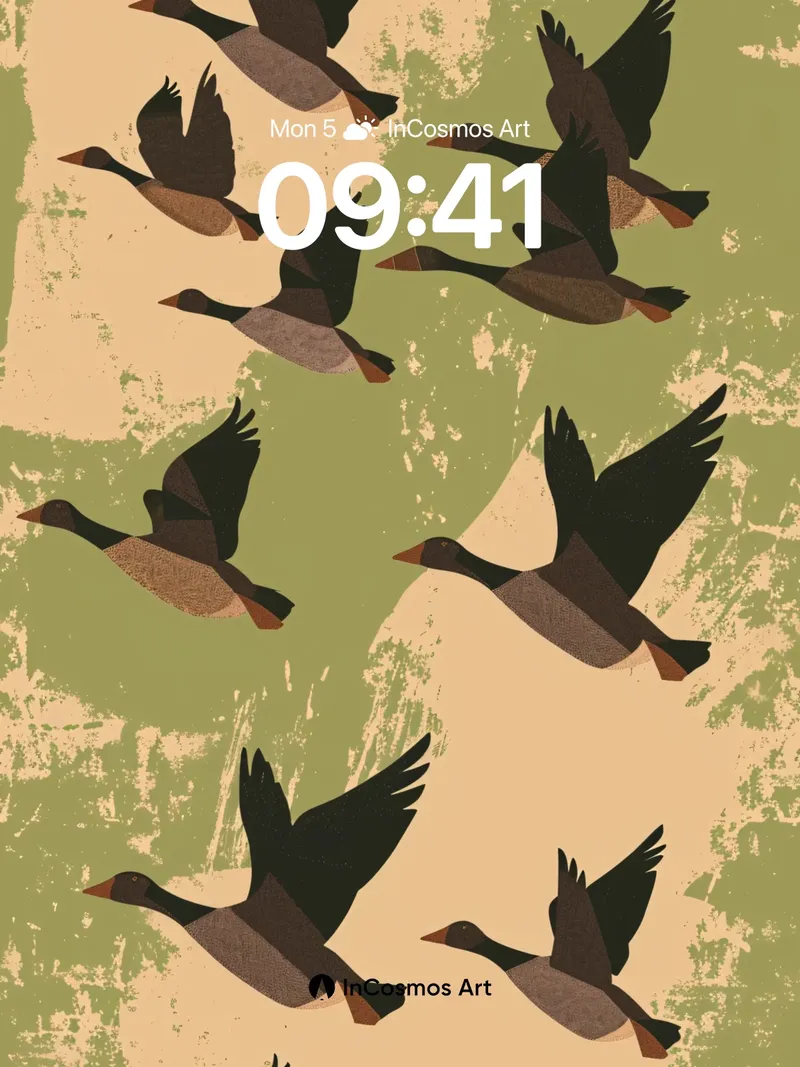
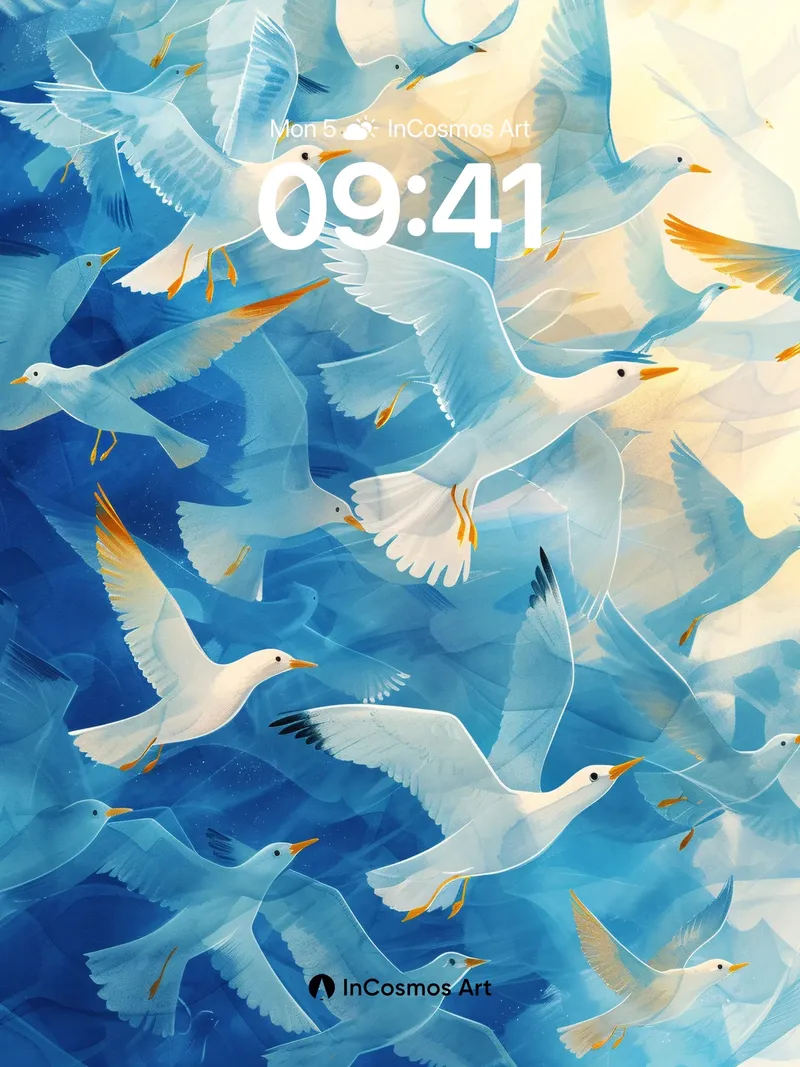
In one visual language, birds are treated as translucent geometric slices. Wings cease to be collections of feathers, becoming surfaces of light refraction. Groups of white birds overlap against a blue-and-yellow interwoven background, resembling a precisely calculated flight performance. This treatment strips away biological flesh, granting flight a mathematical order. Each bird becomes a component of a larger pattern, the individual dissolving into collective rhythm. This density and repetition create a hypnotic visual rhythm, echoing the state of individuals in modern urban groups—independent yet inseparable.
Ritual on Minimalist Red
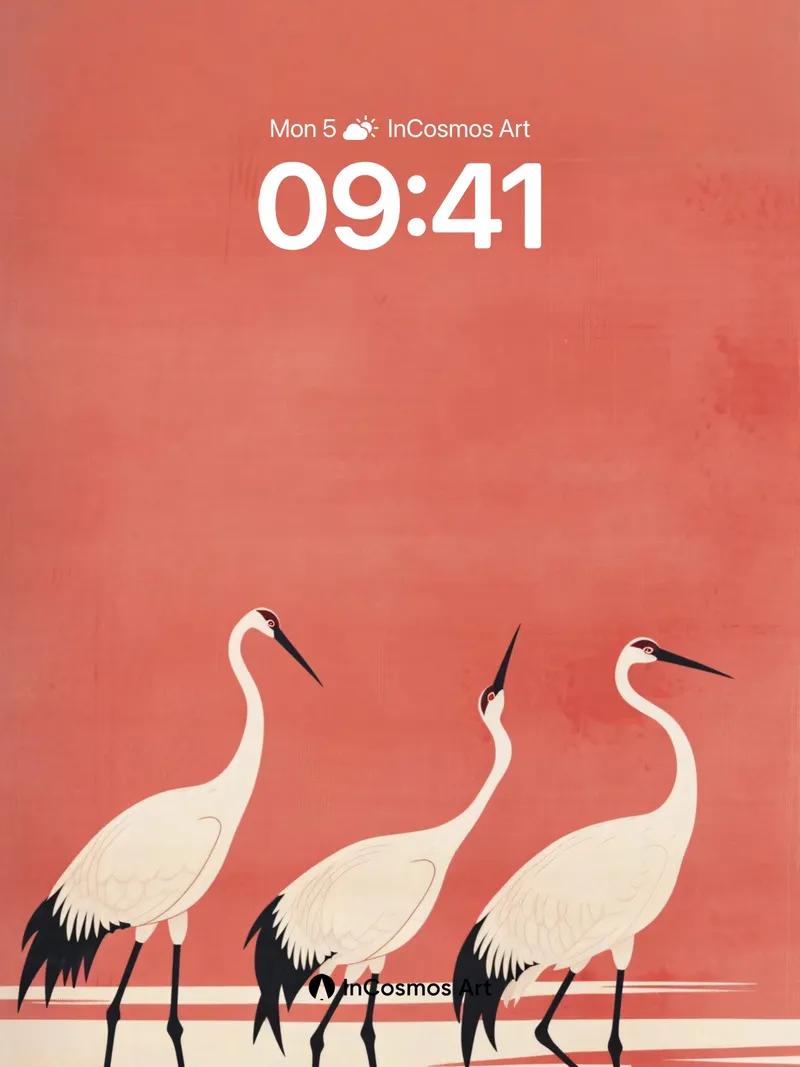
Another expression moves toward extreme restraint. Three red-crowned cranes stand before a cinnabar background, black flight feathers and slender legs forming the only variables. No superfluous scenery, no complex lighting, only subtle shifts in posture. This composition carries strong ritualistic sense and Eastern aesthetic characteristics. The red background resembles either sunset or traditional lacquerware base, extracting birds from natural environment and placing them in a symbolic space. The crane's raised head and lowered brow seem to enact a silent dialogue, containing tension within stillness.
Narrative of Sunset and Silhouette
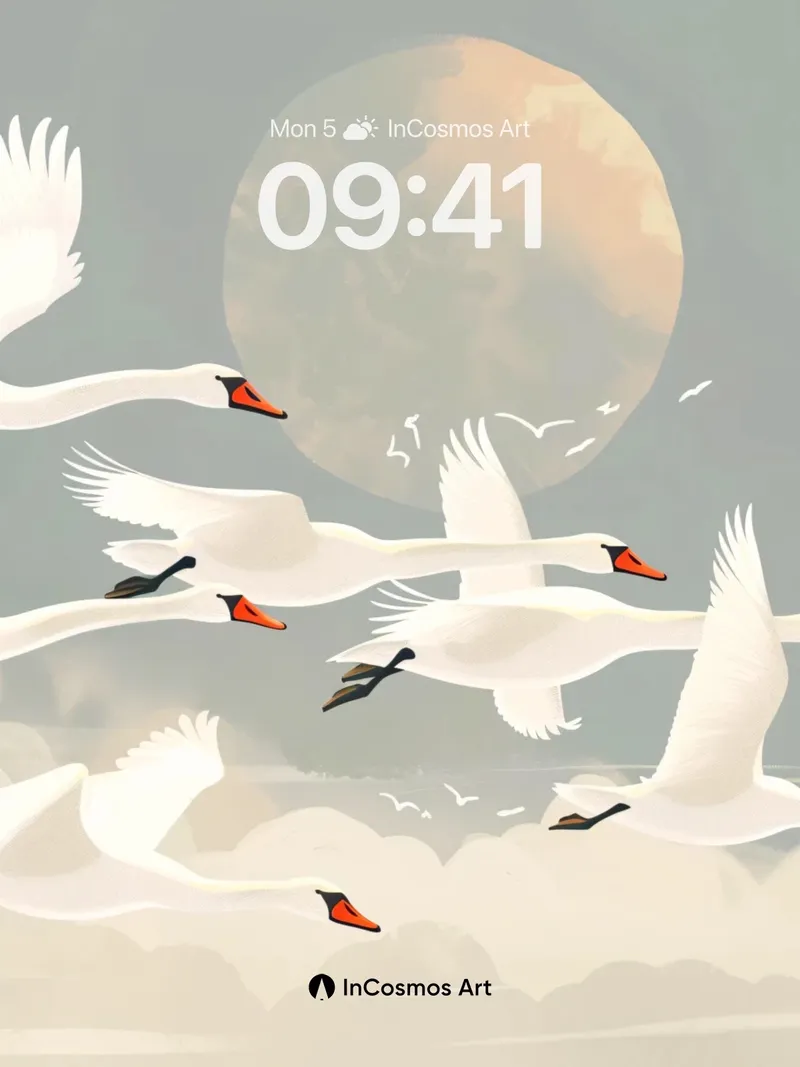
When a massive orange-red wheel occupies the center, flying birds become silhouettes. This composition utilizes strong light-dark contrast, simplifying flight into black lines. The flock appears small before the massive celestial body, yet full of vitality due to movement. Ripples on water surface echo birds in the sky, constructing a vast sense of space-time. This is a classic narrative composition; sunset represents end or beginning, while flying birds are messengers crossing time. The emotion conveyed is desolate yet grand, emphasizing the overwhelming presence of natural power.
Monologue of Lone Bird and Deep Blue
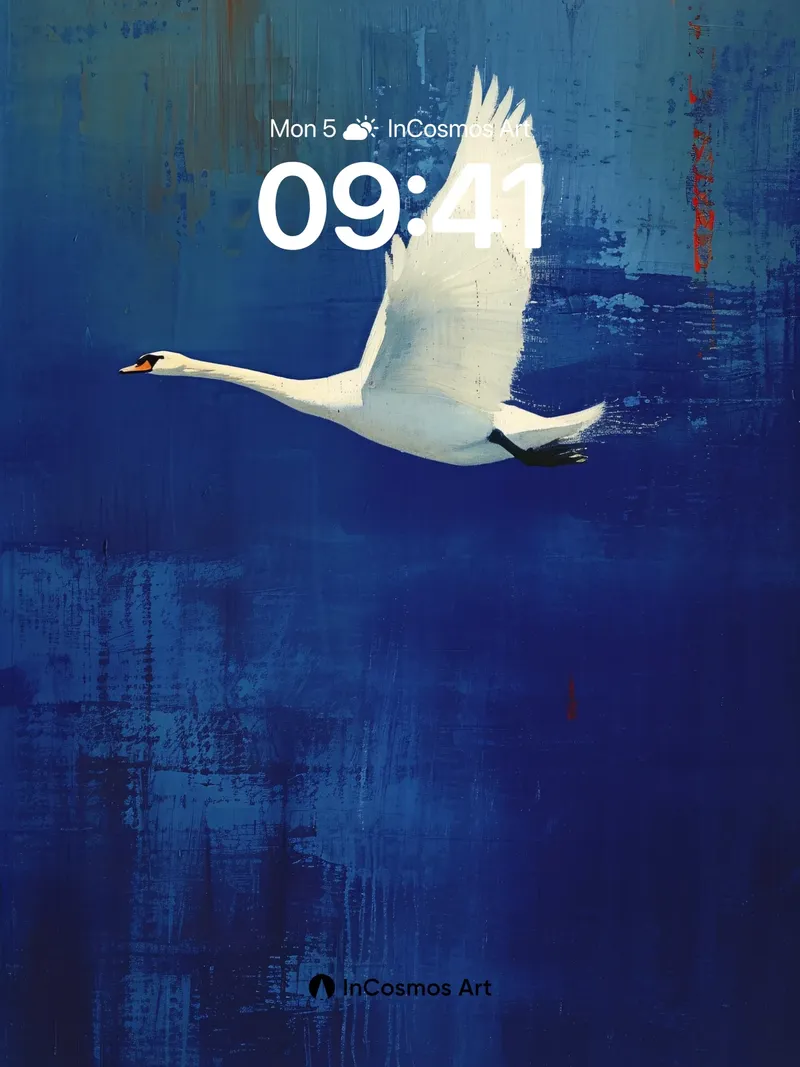
Against a deep blue background, a single white goose glides alone. Blue brushstrokes are rough and heavy, like wet oil paint or deep sea currents. The goose's posture is relaxed, wings fully spread, presenting absolute balance. This composition strips away group interference, focusing on individual existence. The oppressive feeling brought by the deep blue background contrasts with the goose's purity and freedom. This is a praise of solitude, indicating that before the vast unknown, individual flight itself is a silent declaration.
Wildness of Ink Splash
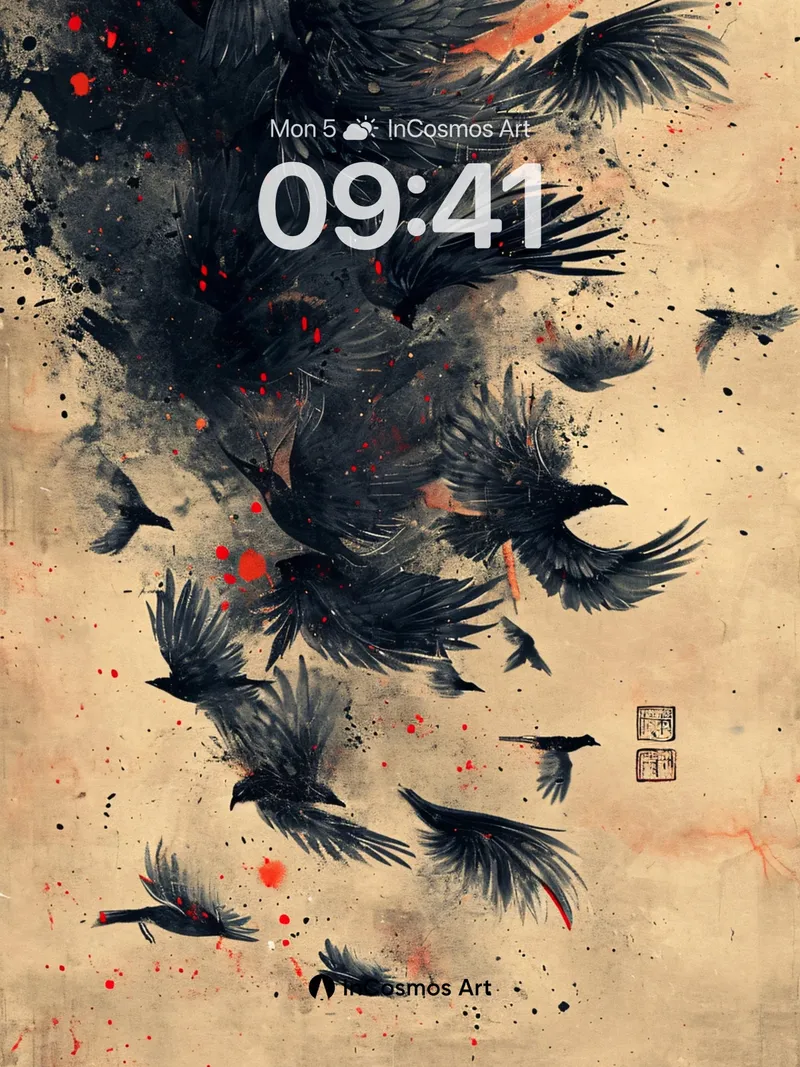
Black crows explode across yellowed paper. This is not peaceful flight, but dives and circles filled with speed. Ink splashes simulate feather texture and wind resistance. Red dots resemble blood or seals, adding a touch of danger and mystery. This technique approaches expressionism, emphasizing emotional release over precise form. Here, the flock is no longer a harmonious collective but an embodiment of chaos and power, revealing the wild and unrestrained side of nature.
Meaning of Ink and White Space
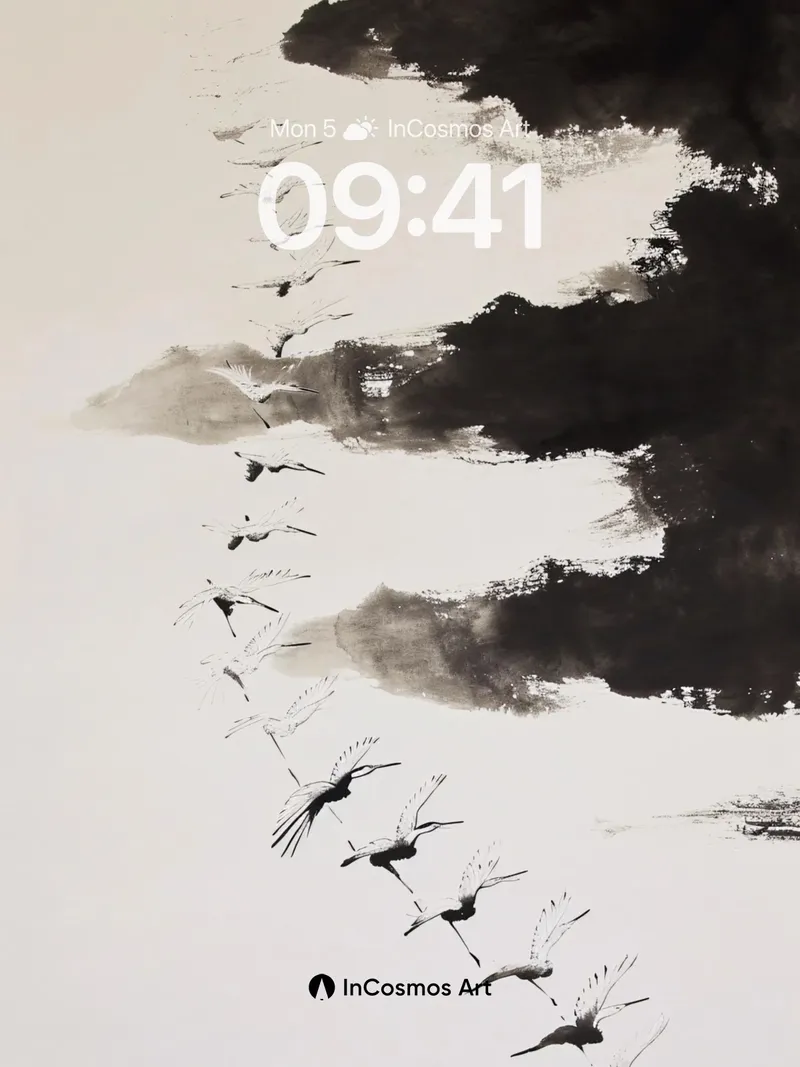
Finally, the image returns to traditional ink wash. Large areas of white space constitute sky and water, black ink blocks suggesting mountains or clouds. A group of flying birds arranges in a diagonal line, crossing this space of interplay between void and solid. Variations in ink density give the image a sense of breathing; bird forms are concise yet expressive. This approach pursues not realism but artistic conception. White space grants viewers room for imagination, with flight trajectories becoming clues connecting void and solid. This is an Eastern philosophical expression, seeking the true meaning of flight between existence and non-existence.