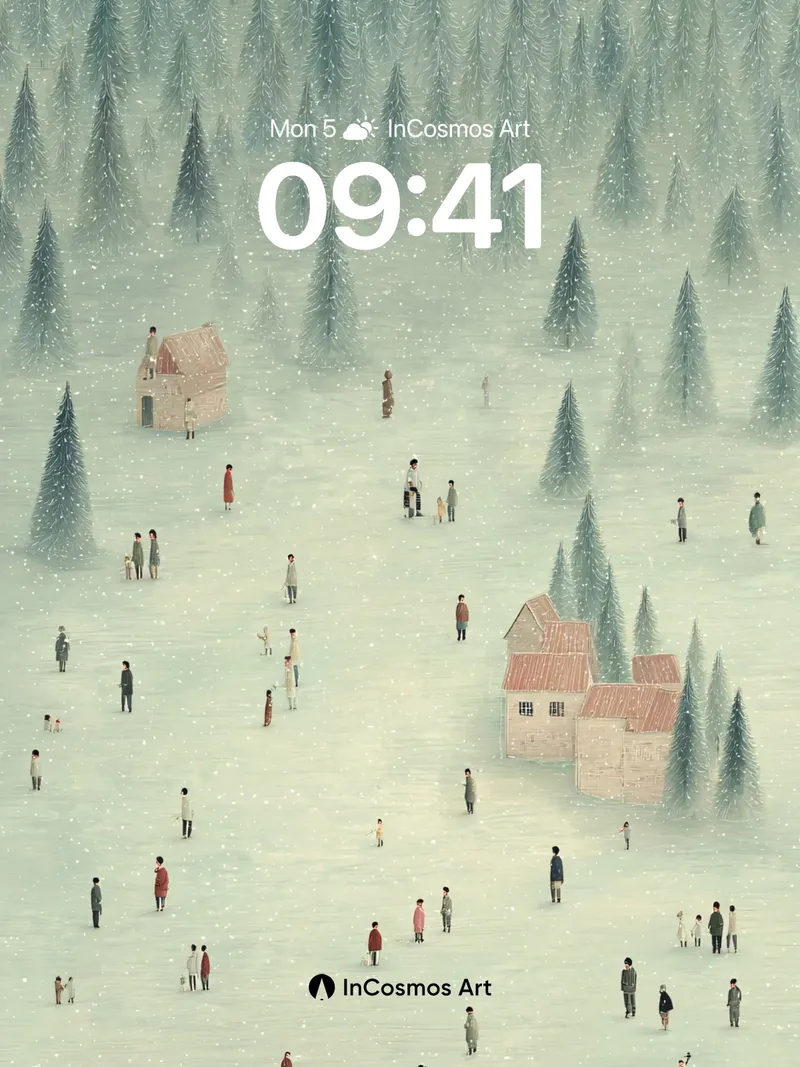
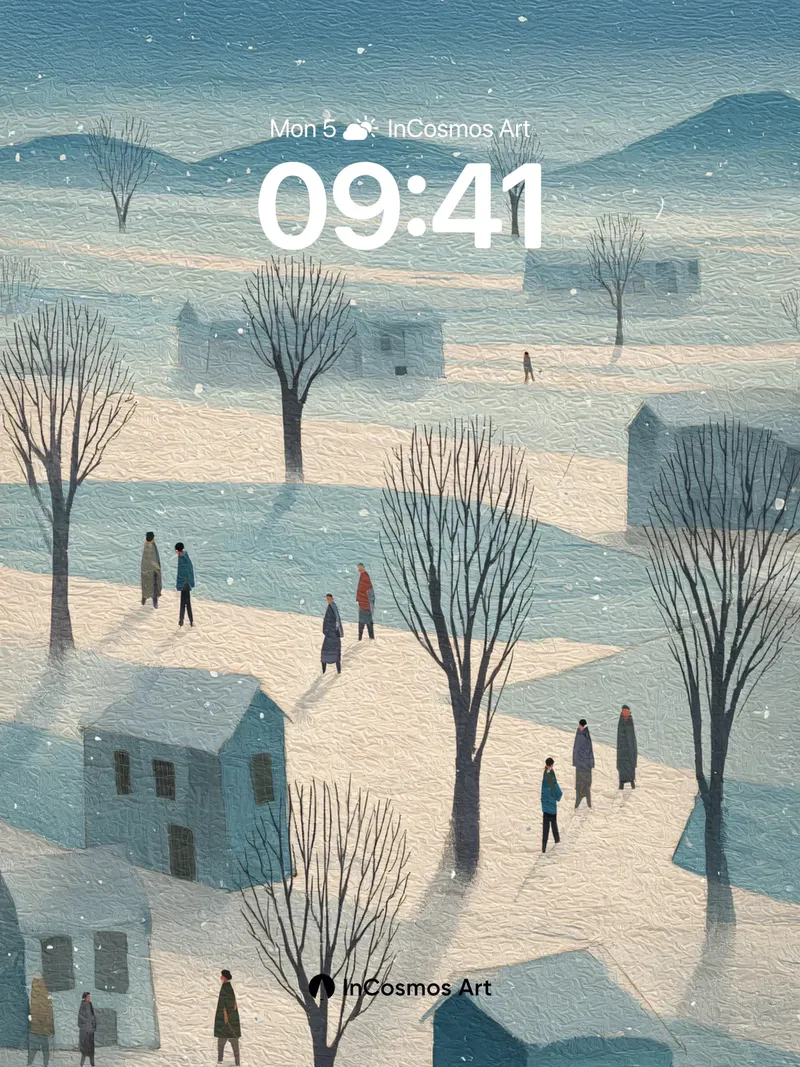
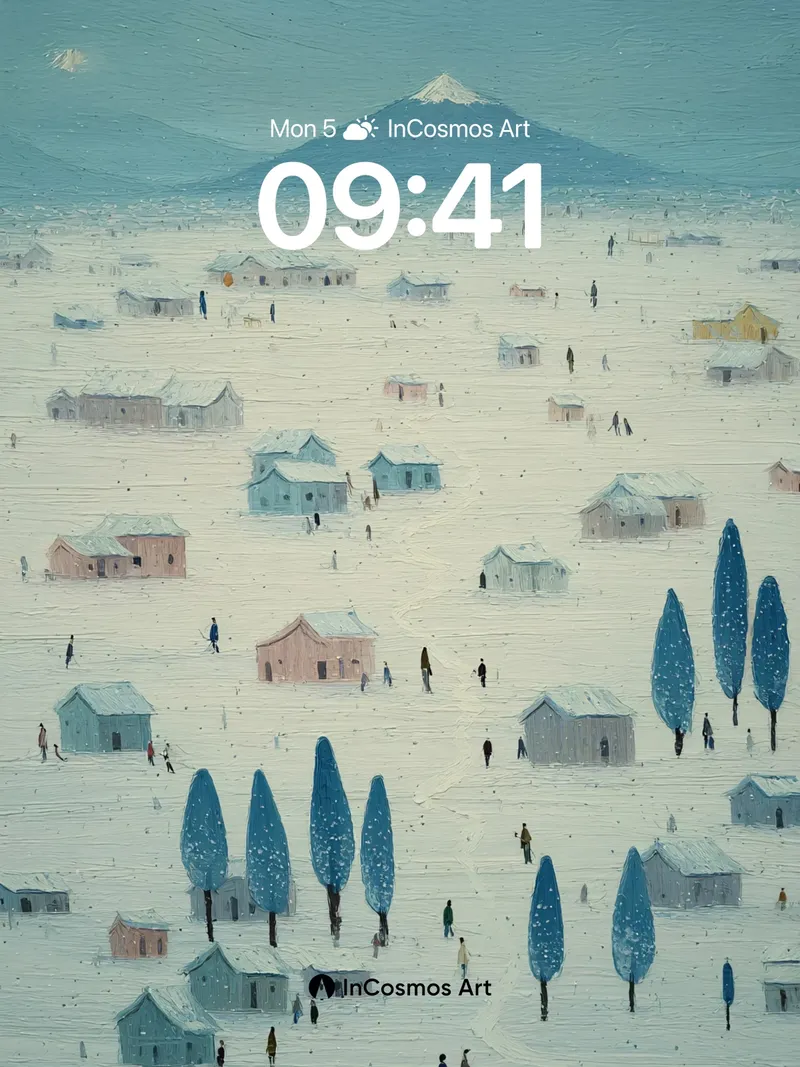
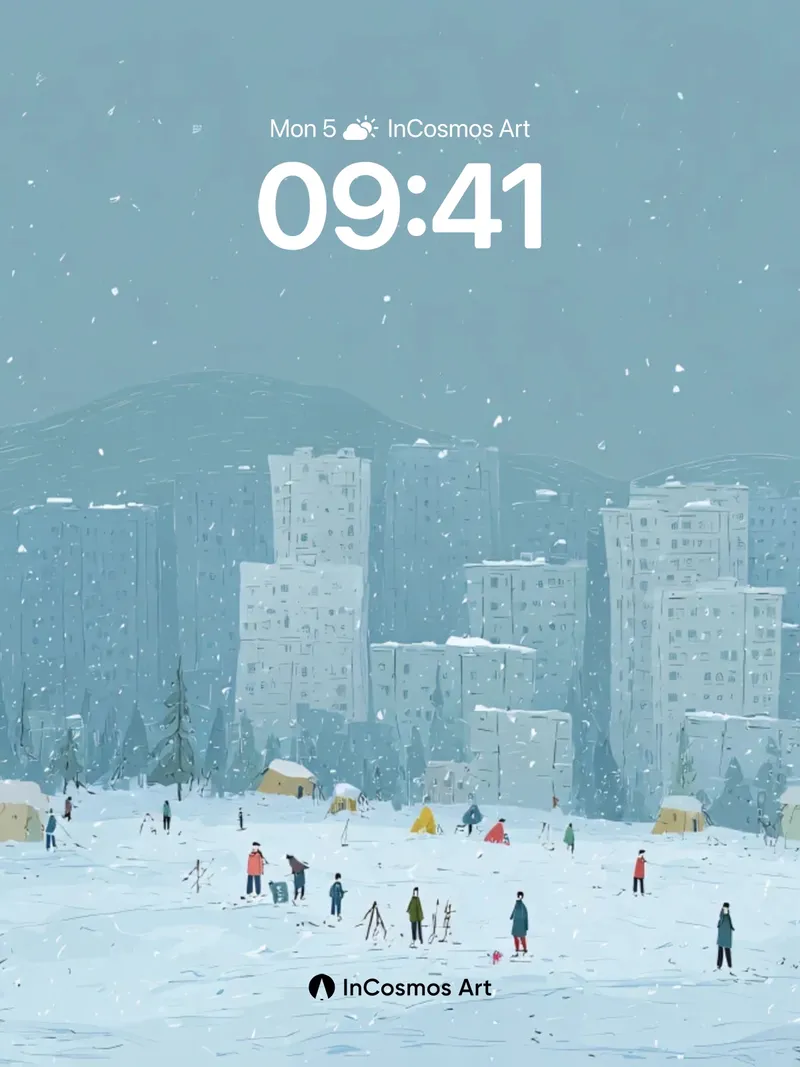
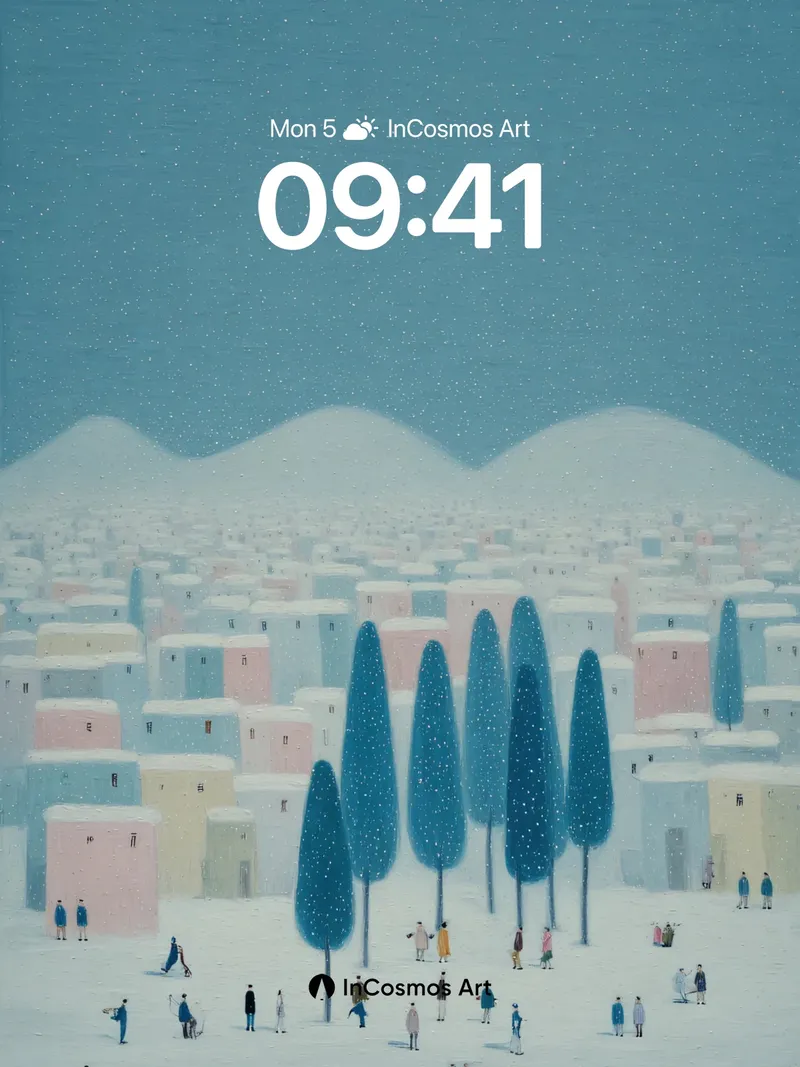
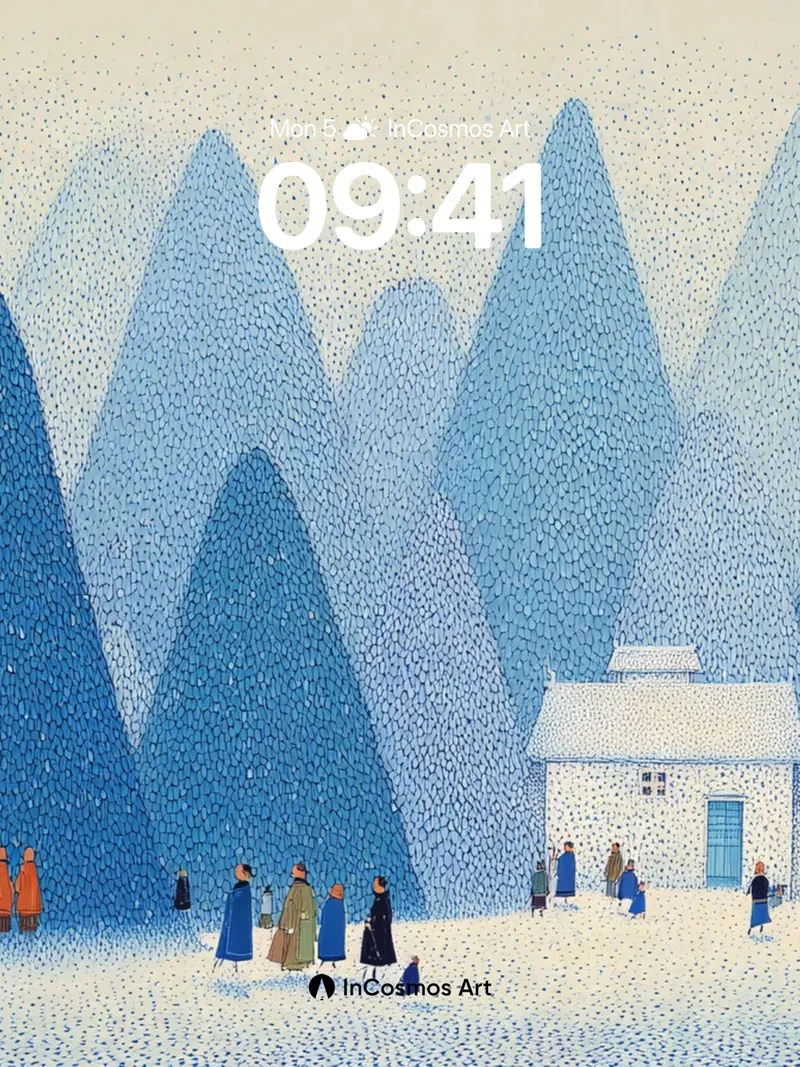
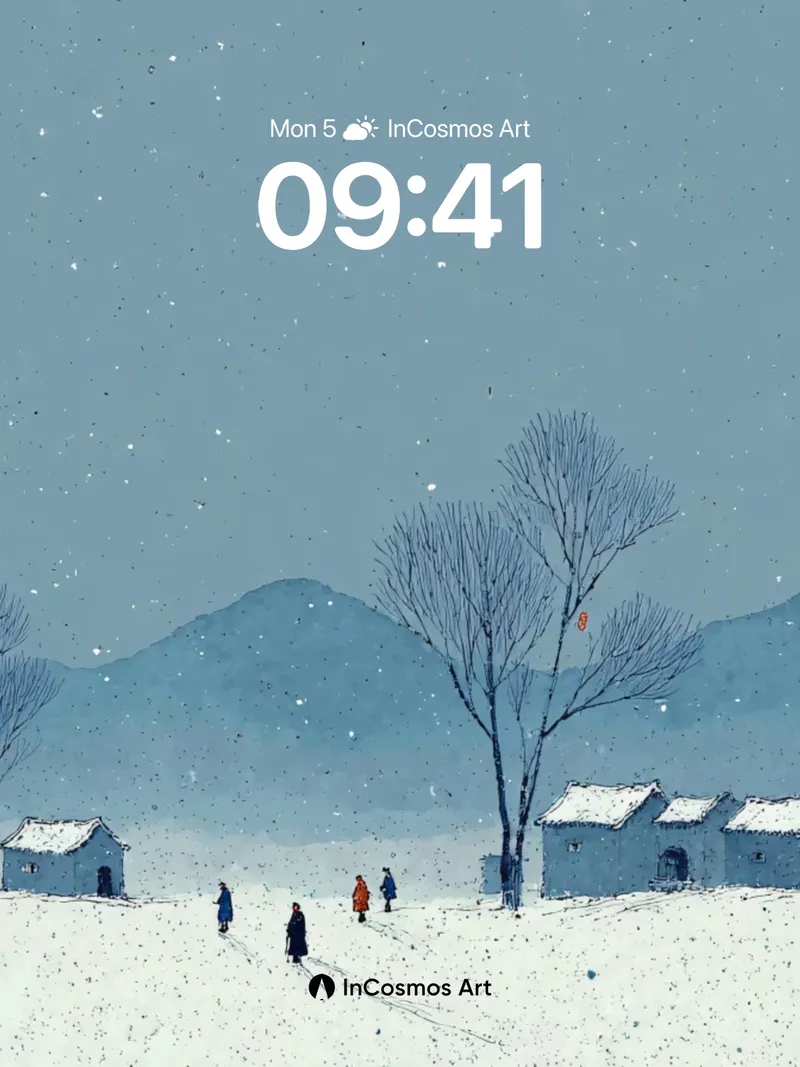
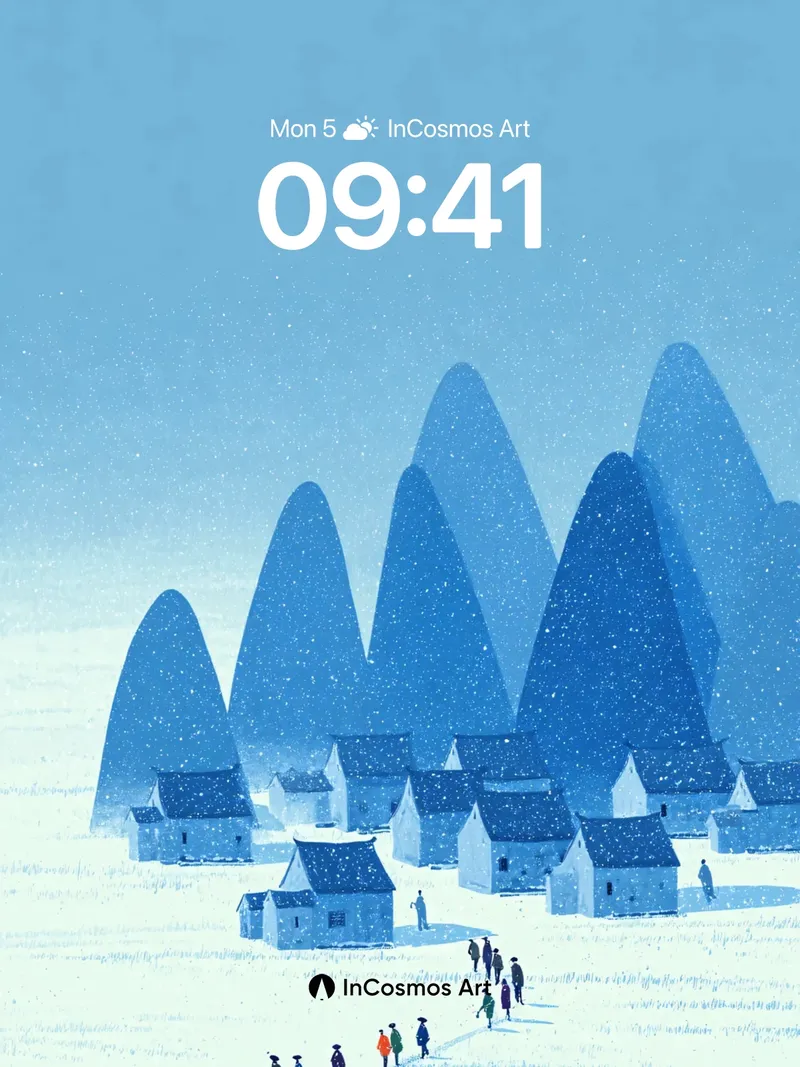
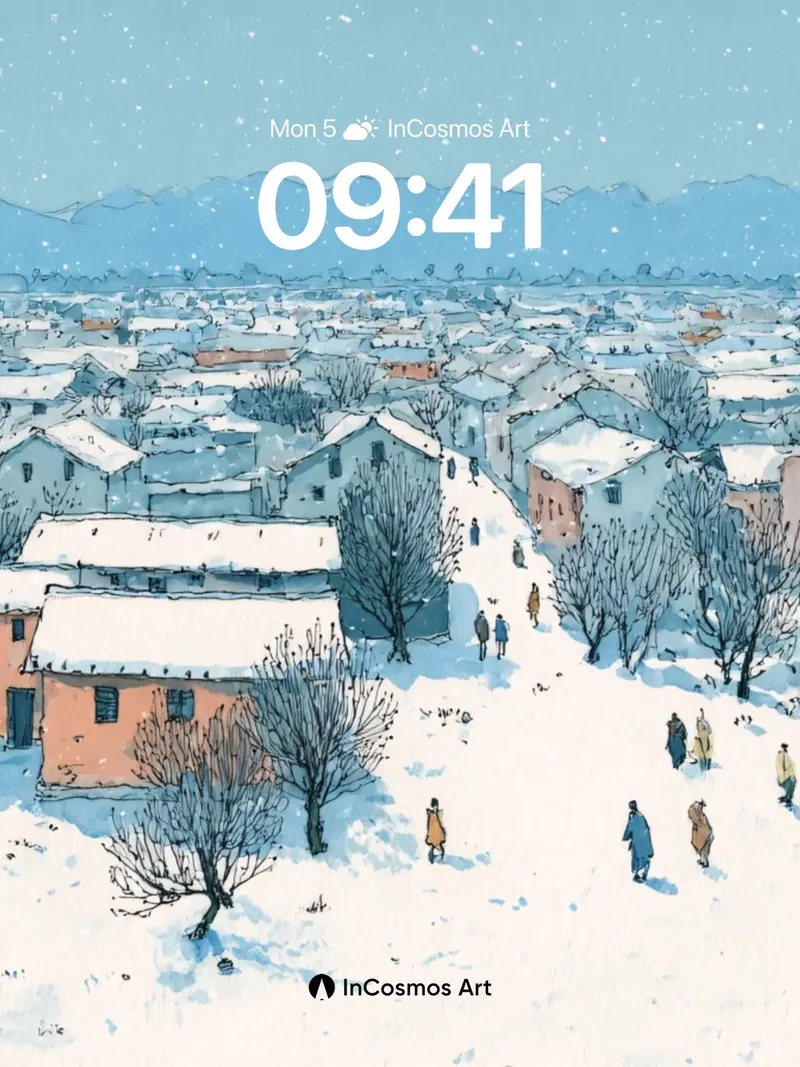
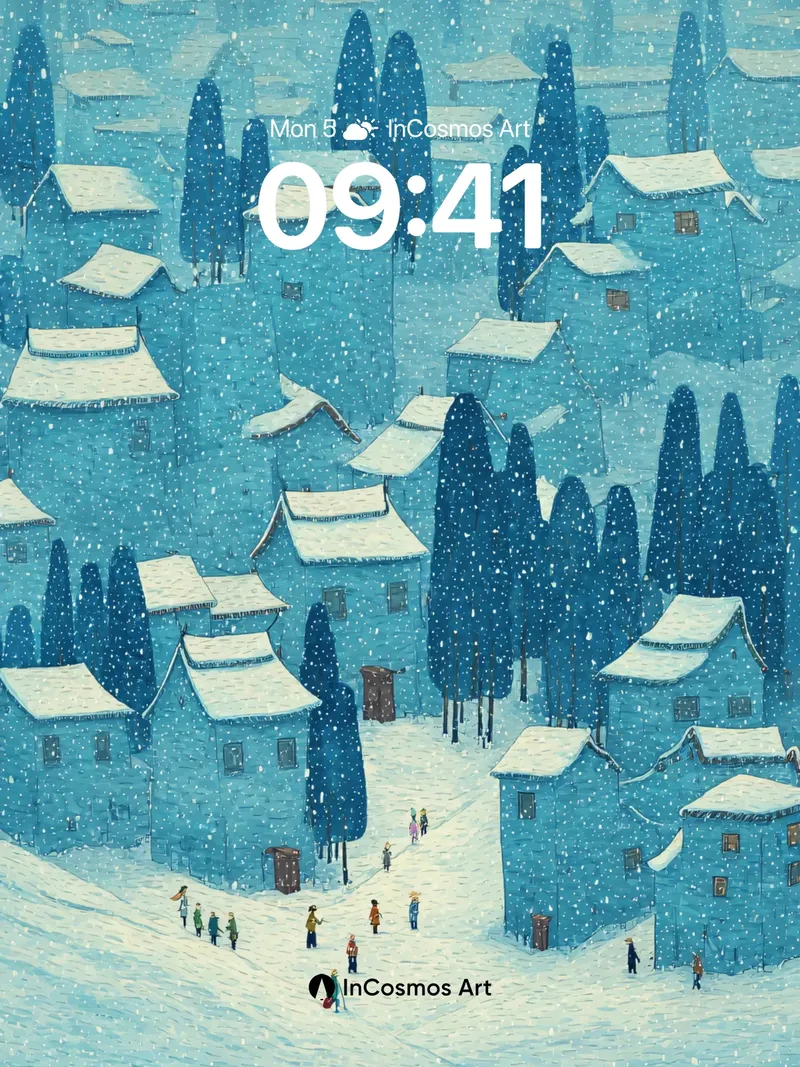
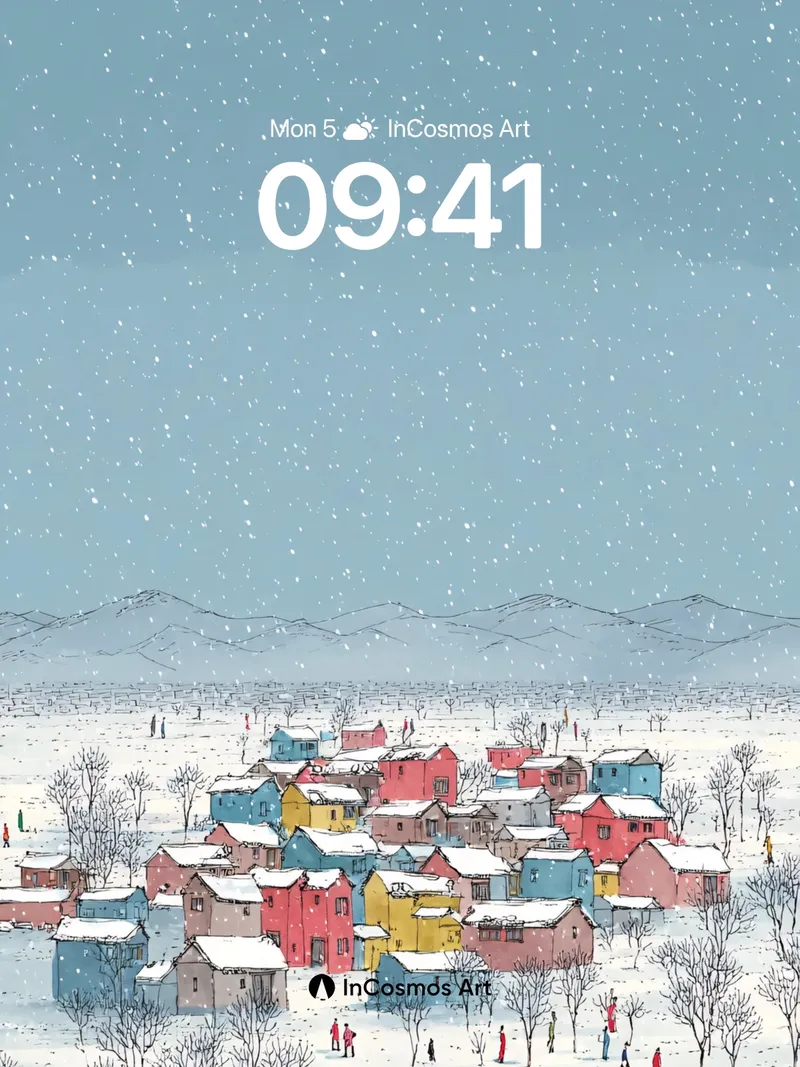
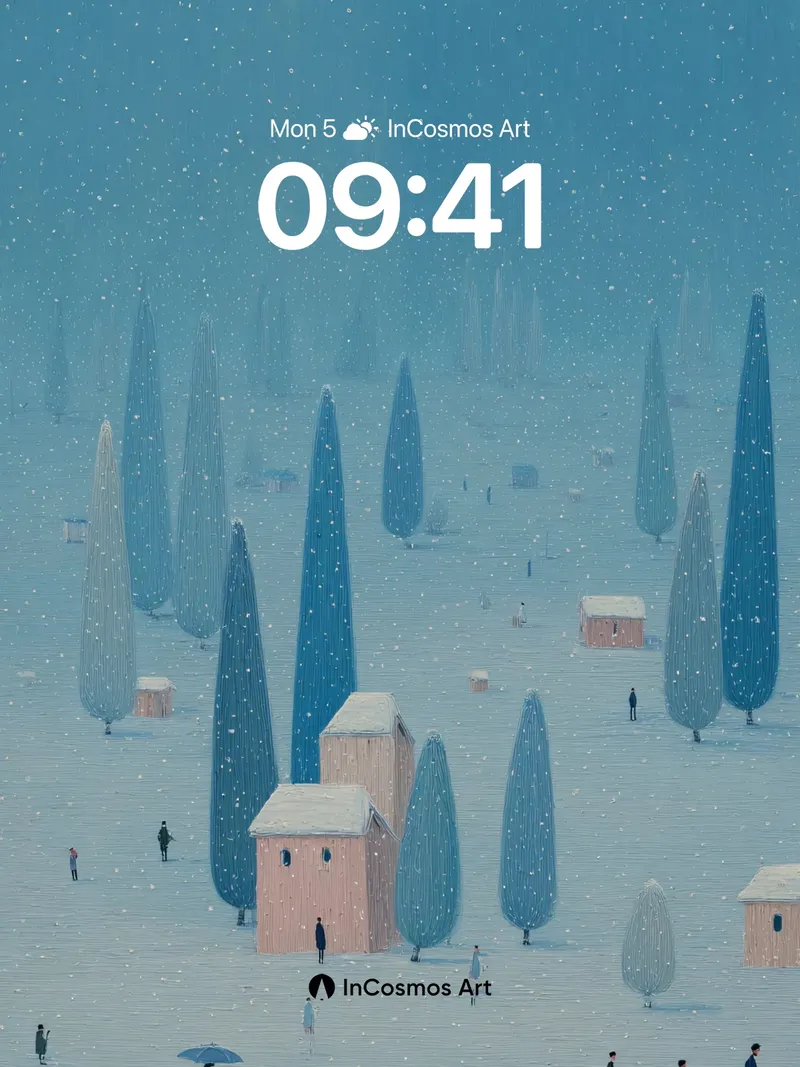
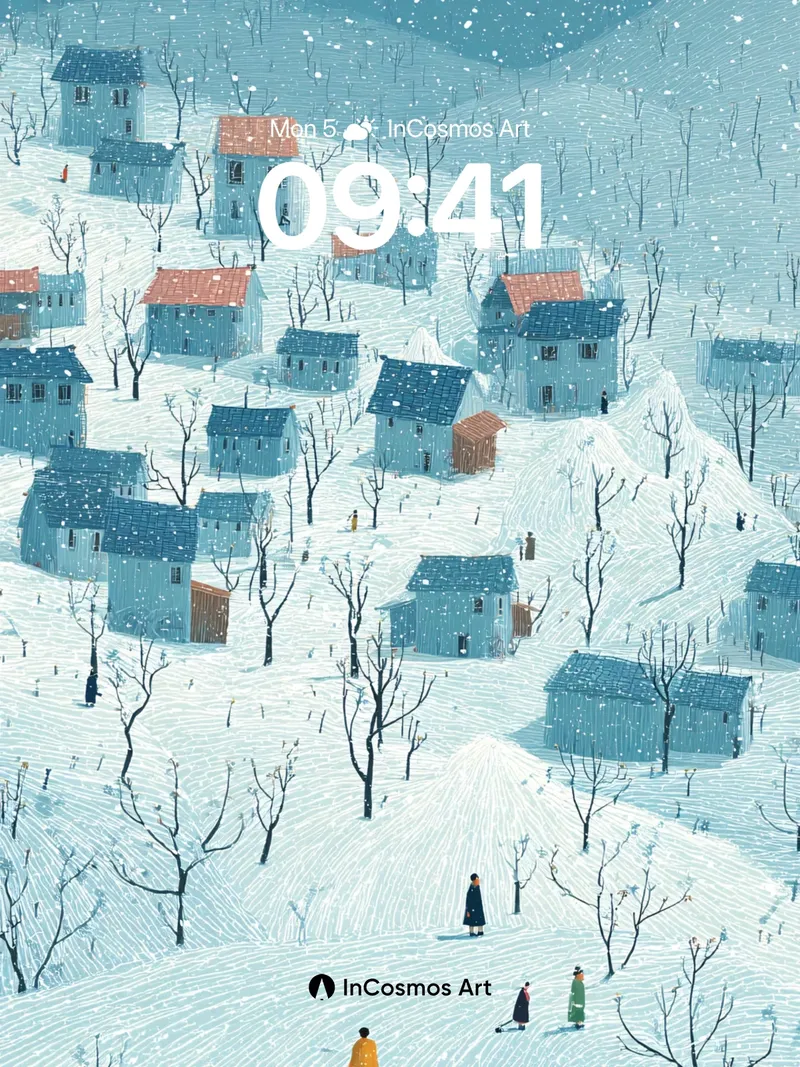
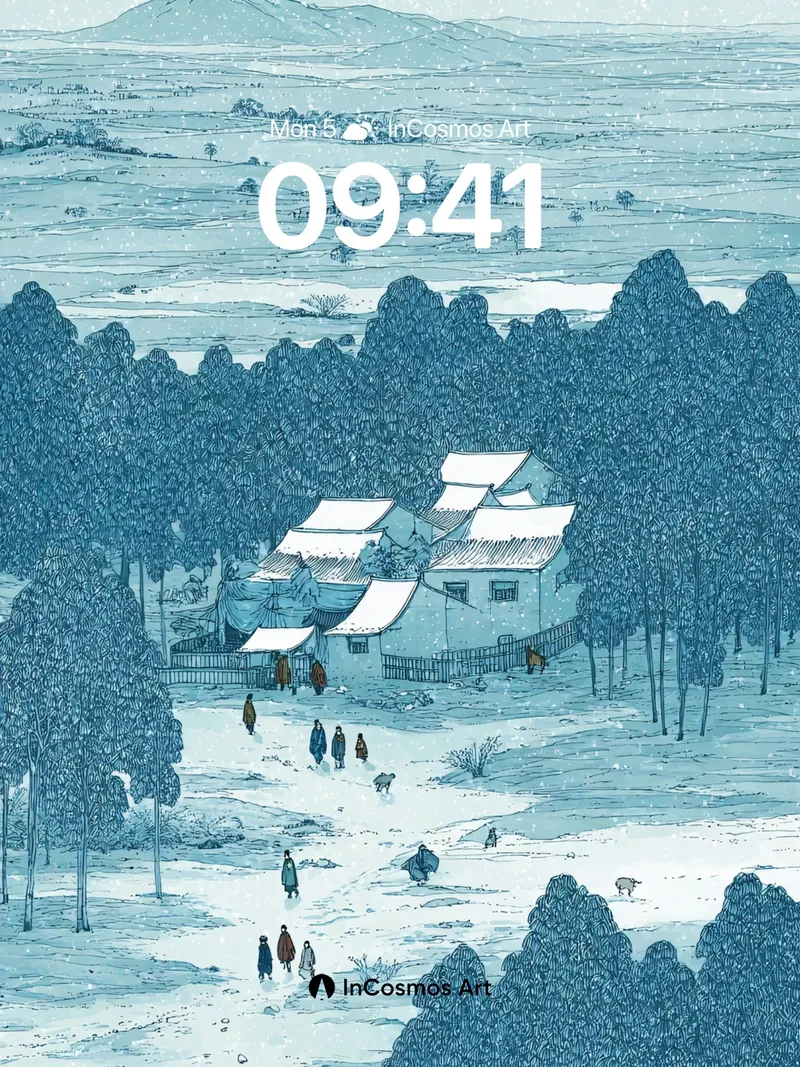
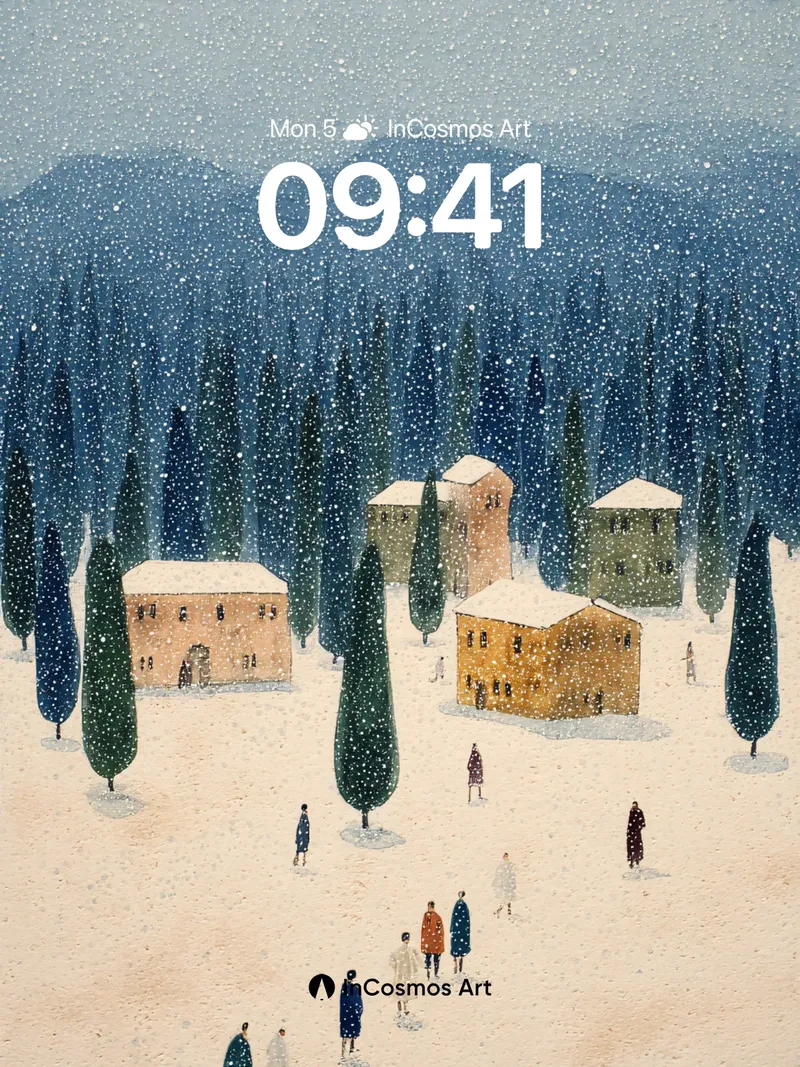
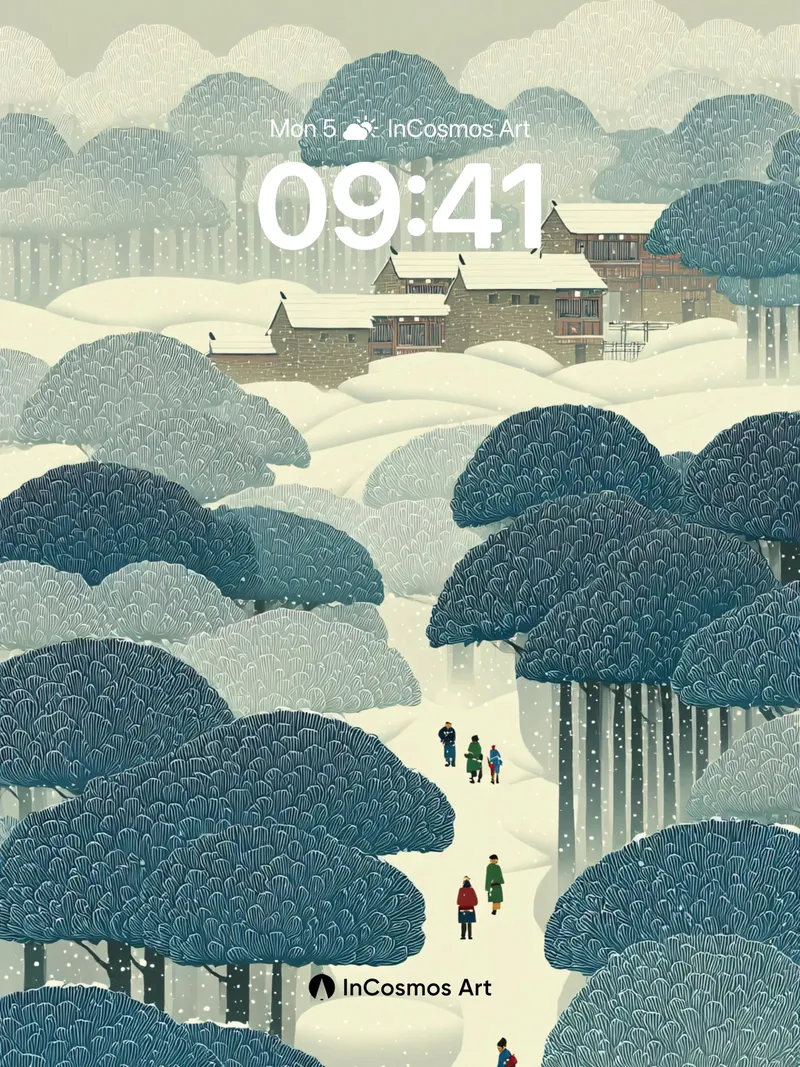
Snow blankets the earth, villages scattered like stars, people walking through a sea of white, approaching one another yet moving apart. This is not wilderness silence, but the gentlest winter image embedded in collective human memory. Each small house functions as a miniature shelter, snow gently pressing on roofs, lights still glowing behind windows. Trees stand tall, branches bare or frosted, forming silent boundaries between nature and habitation. Figures clad in heavy garments move slowly, their silhouettes small yet resolute, as if measuring cold and distance with every step. Snow falls continuously, unhurried, like time itself whispering. This scene evokes a deep emotion—not pure solitude nor loud belonging, but a delicate balance between them, a poetic expression of coexistence between humanity and nature.
Order and Chance in Snow
Structures are arranged with varying density, paths invisible yet followed. People move along unseen trajectories, forming dynamic constellations. Some linger at doorways, others walk in pairs, while lone travelers head toward distant horizons. This spatial arrangement hints at subtle social structures: neighborly bonds are faintly visible, yet individual autonomy remains respected. The snow flattens topographic differences and blurs social divides, returning all to a primordial state of existence.
Symbolic Language of Winter
Dominant hues—blue, gray-white, soft pink—are subdued yet emotionally layered. Houses vary in color but unify under a cool palette, symbolizing diversity harmonized within a shared environment. Trees are simplified, sharply outlined, standing like symbols carrying seasonal memory. Distant mountains fade into mist, adding depth and mystery, as if nature observes human activity from afar.
Duality of Solitude and Connection
Though dispersed, the presence of people creates an implicit connection. Each is an independent entity, yet collectively participates in this winter ritual. Without words, actions convey meaning: walking, pausing, gathering, separating. This wordless exchange approaches the essence of human relationships more closely than speech ever could. Snow acts both as barrier and bridge, enveloping all life in the same white layer, erasing differences while creating new meanings.
Silent Emotional Expression
The entire scene lacks dramatic conflict yet holds profound inner tension. Stillness is not emptiness, but emotional sedimentation. Viewers sense a near-meditative calm and awareness of time's passage. This beauty does not rely on visual shock but on the accumulation of details and atmosphere. It reminds that amid fast-paced life, there remains a possibility to slow down—using snow as backdrop, walking as verse, silence as song.