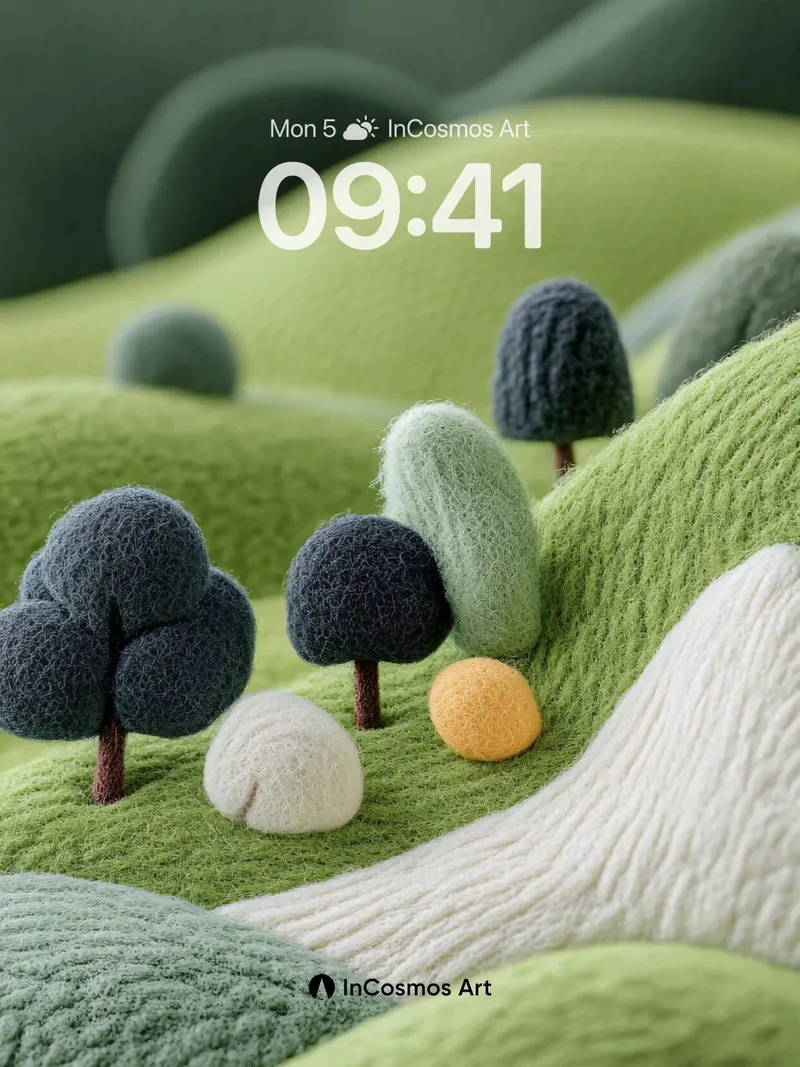
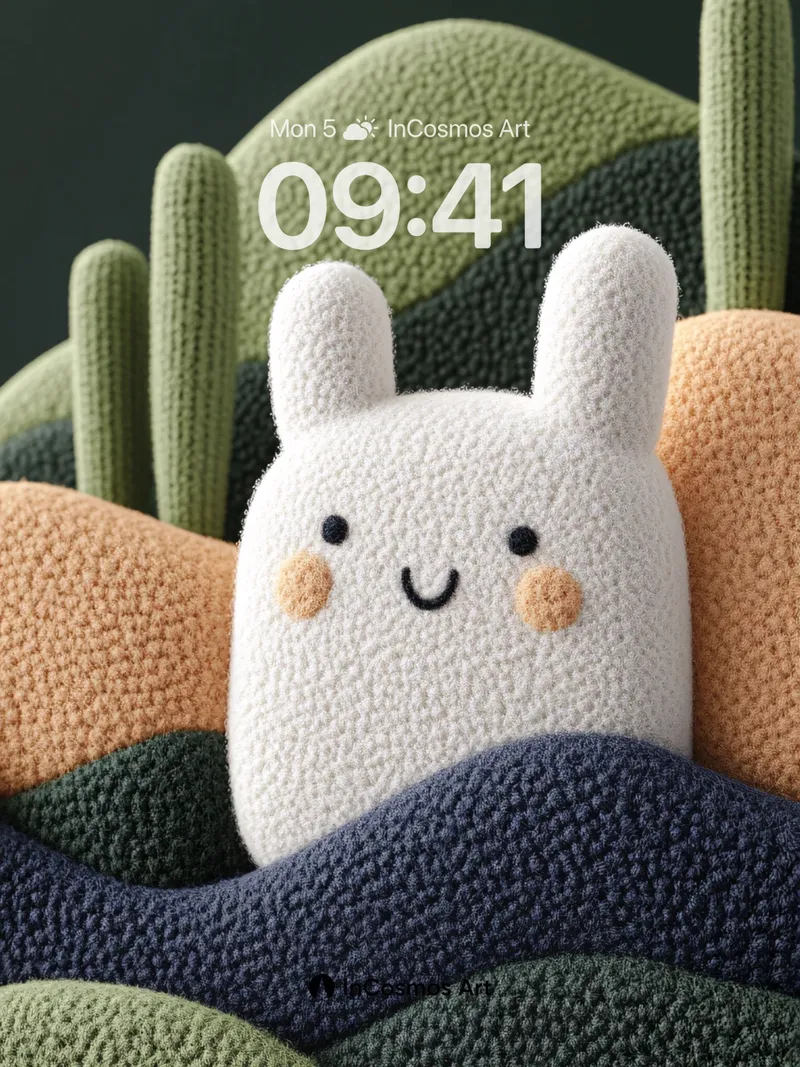
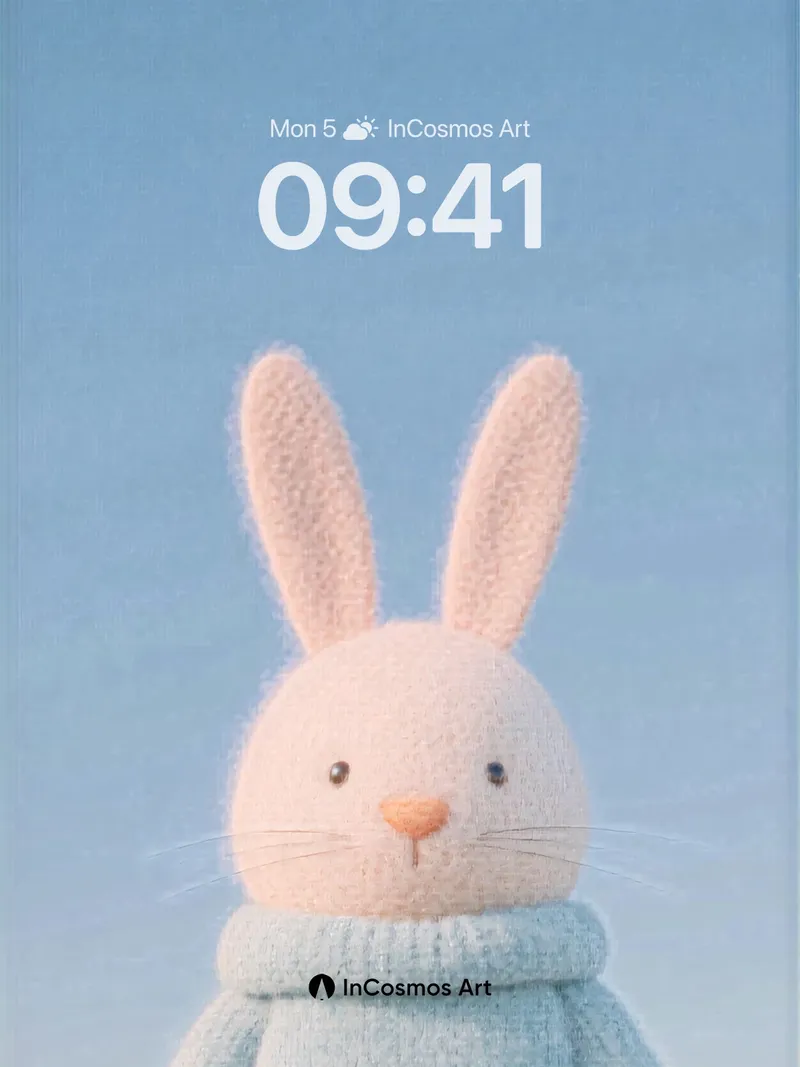
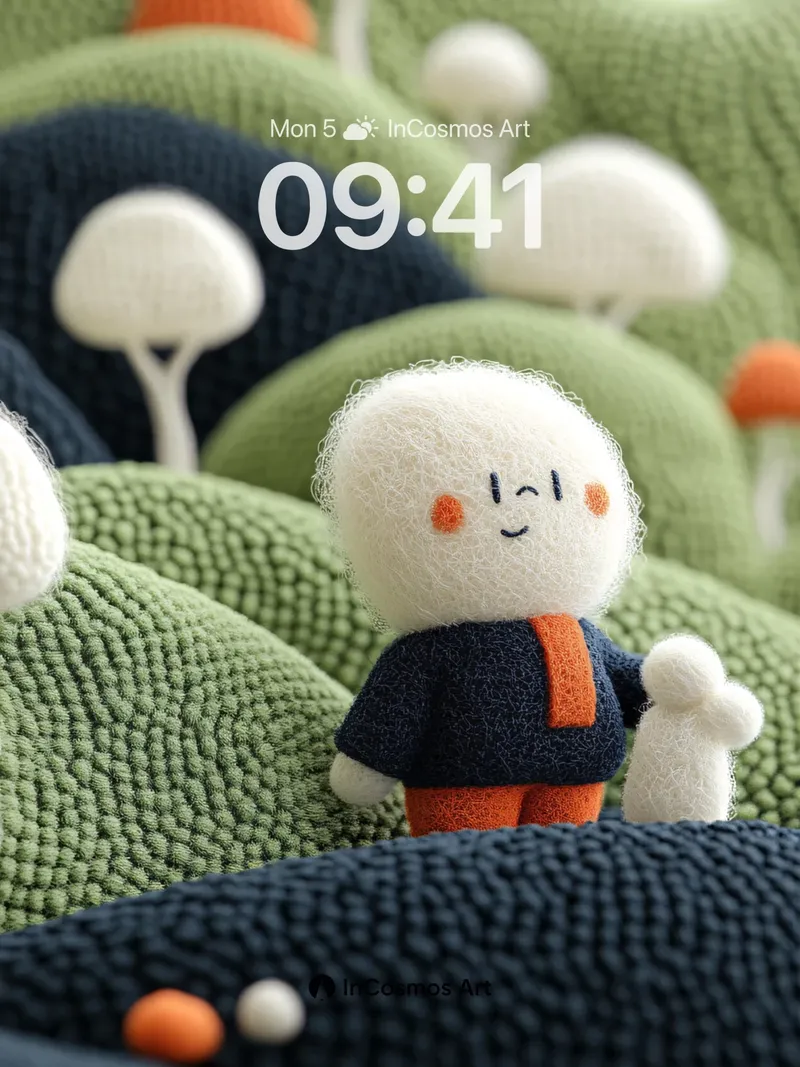
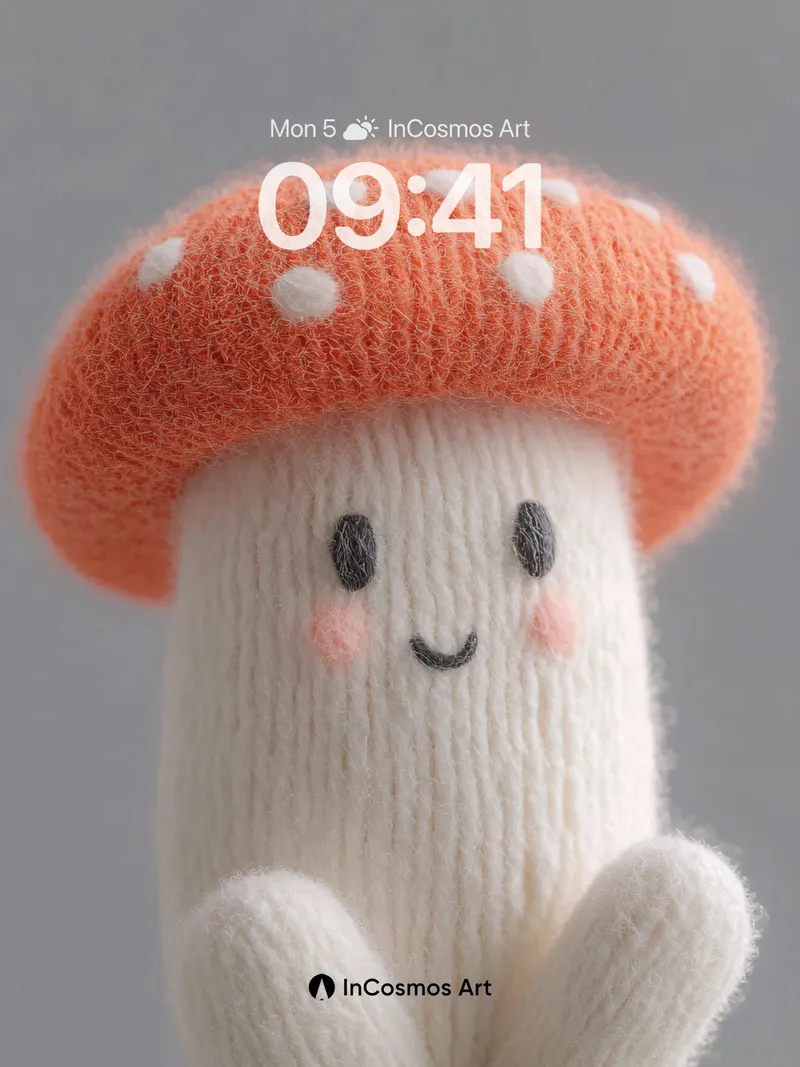
In a physical world dominated by hard edges and cold lines, a texture known as 'felt' is quietly reshaping the imagination of micro-landscapes. This material, woven from countless fine fibers, inherently carries a gentleness that rejects sharpness. It does not reflect light but absorbs it; it does not display cold industrial precision but presents the temperature and randomness of handiwork. When this material is used to construct hills, trees, houses, and even living beings, the sense of gravity in the real world seems to dissolve. There is no hard concrete here, only rolling green waves; no noisy traffic, only silent pom-pom trees standing still. This visual language is not merely an imitation of nature but rather a return to a sense of security, compressing the grandeur of the natural landscape into a scale that can be embraced.
The Warm Resistance of Texture
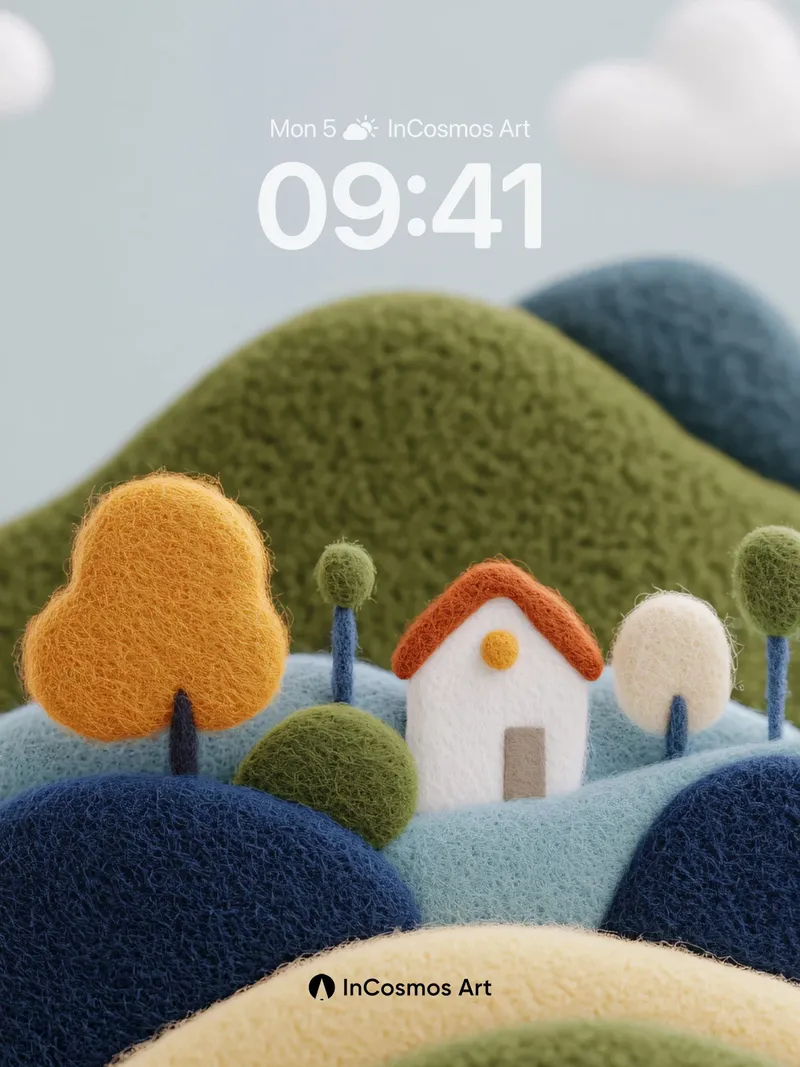
The core charm of felt as a medium lies in its resistance to 'hardness.' In modern urban life, people are accustomed to the touch of glass, steel, and concrete. While these materials are strong, they often come with a sense of alienation. Felt is the opposite; it blurs the boundaries between objects, wrapping everything in a fuzzy texture. This sense of envelopment constructs a psychological defense mechanism, as if isolating the outside noise and roughness. Whether it is dark green mountains or a pale blue sky, the uniformity of the material achieves a high degree of visual harmony among different elements. This harmony does not come from precise geometric alignment but from a shared sense of touch. Every bump and every depression appears round and approachable, eliminating potential threats and inducing an impulse to touch.
The Silent Order of Micro-Ecology
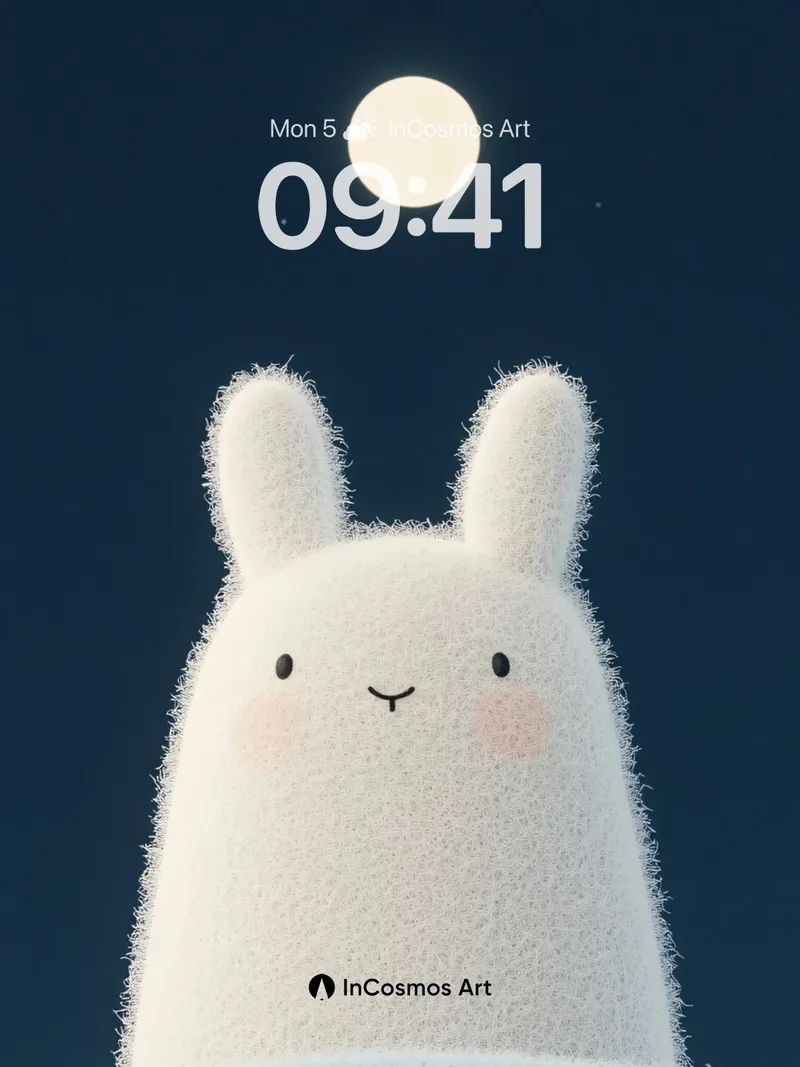
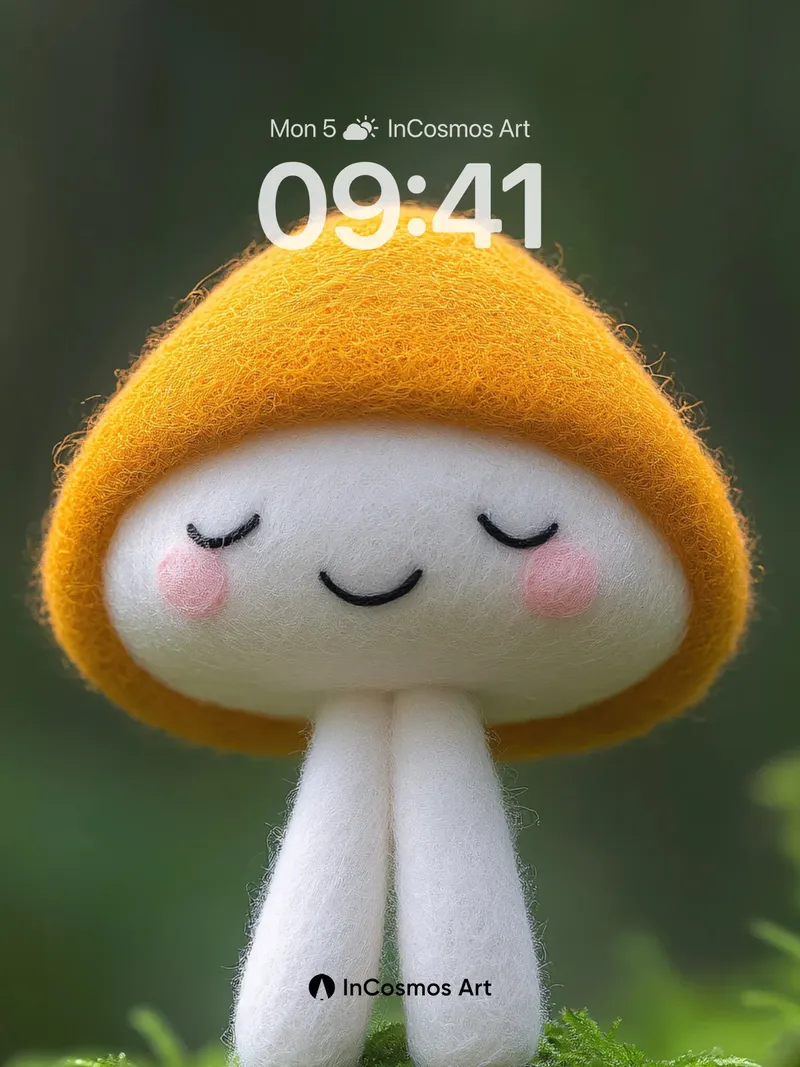
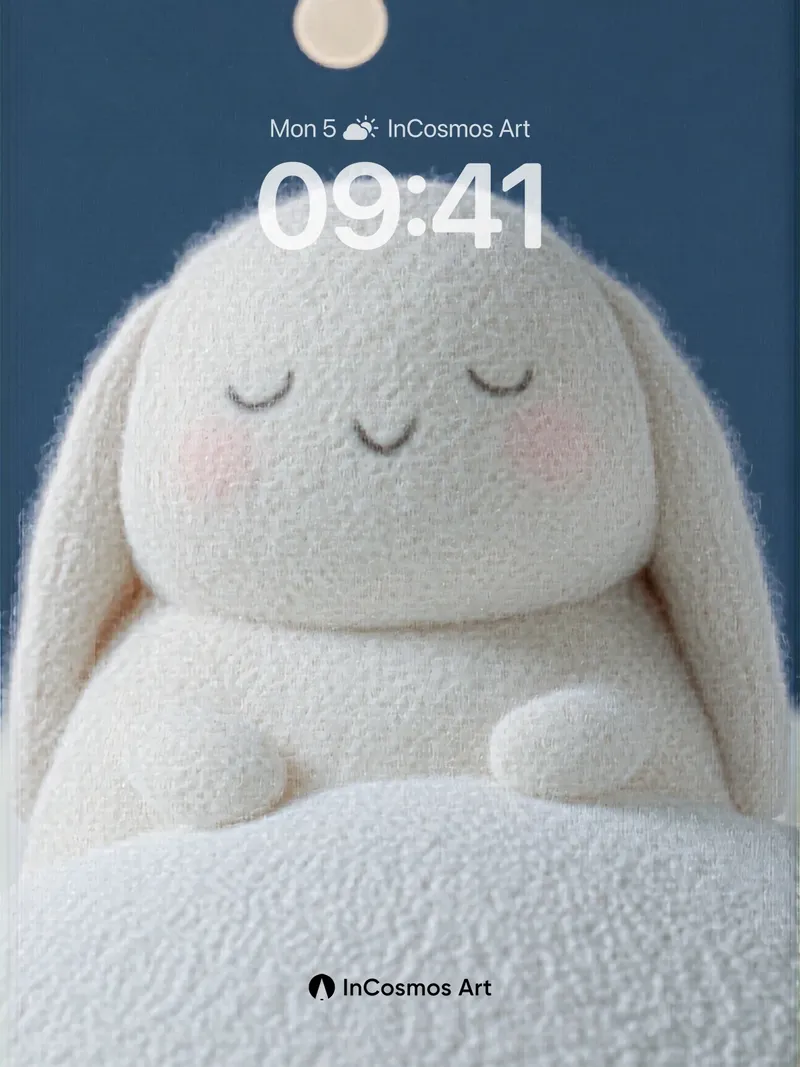
In this fiber-constructed ecosystem, order is silent and introverted. Trees are no longer towering giants but transform into round blocks of color, like ornaments scattered on a green carpet. Houses shrink to a toy-like scale, with red roofs and white walls appearing and disappearing in the undulating terrain, hinting at an ideal of secluded living. This shift in scale is significant: it turns humans from conquerors of nature into inhabitants, or even children cared for by nature. Here, mushrooms can grow taller than trees, and rabbits can be as huge as hills. This disproportion is not a logical error but an embodiment of dream logic. It breaks the shackles of real physical laws, allowing imagination to grow freely in the gaps of the fibers. This silent order conveys a message: in this world, growth is slow, time is viscous, and everything breathes at its own pace.
The Duet of Solitude and Companionship
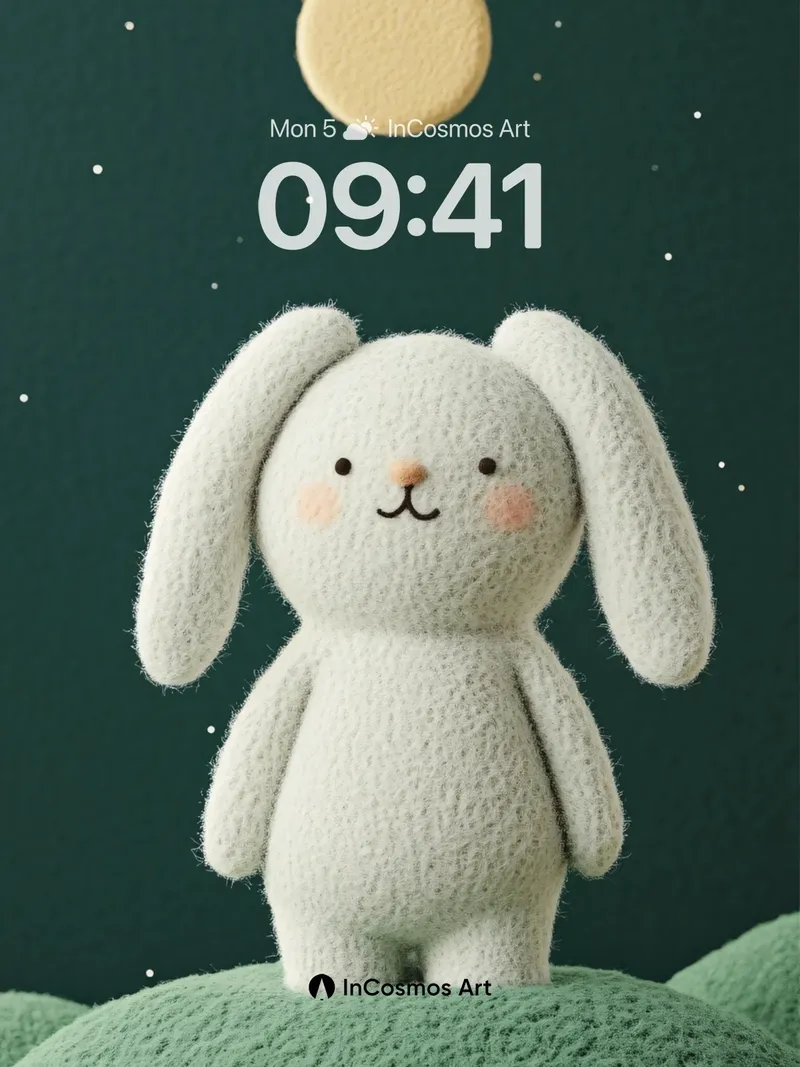
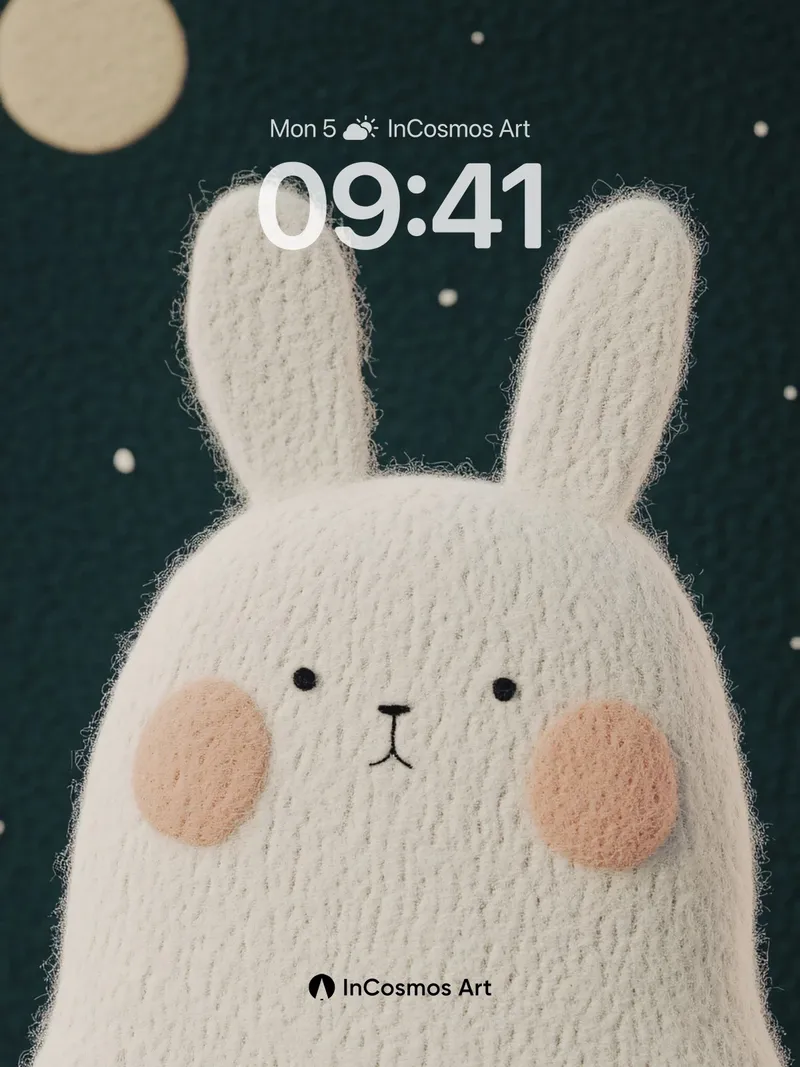
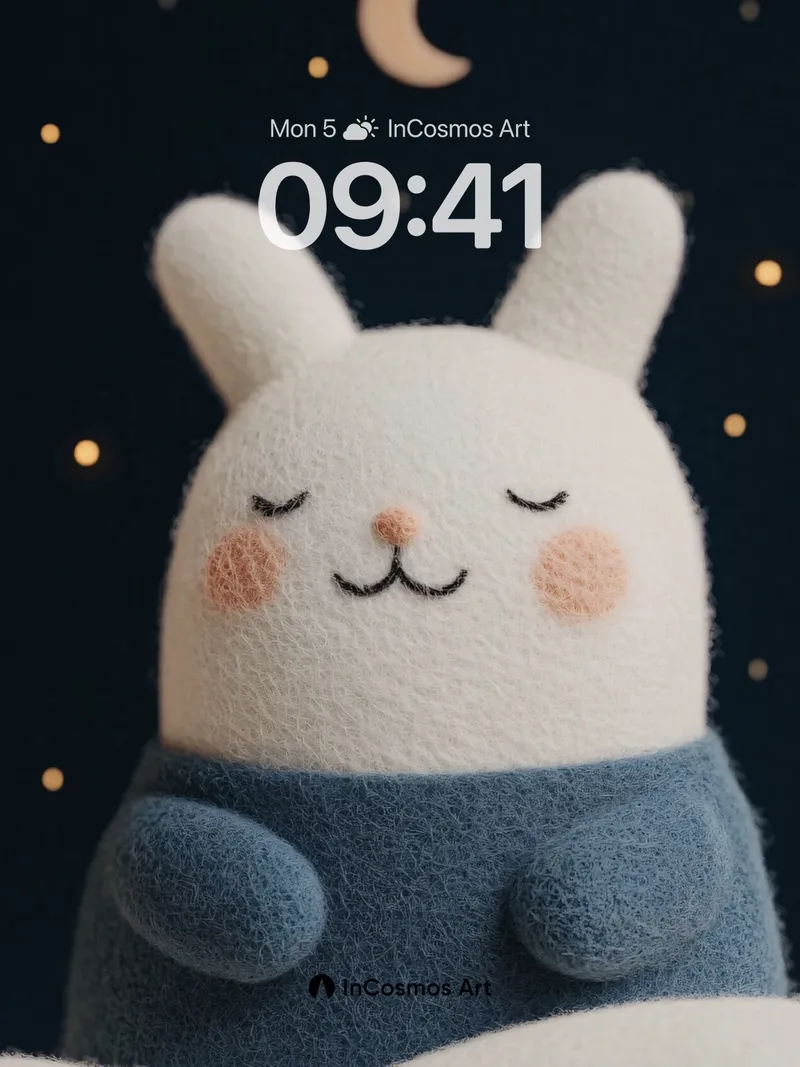
In these scenes, the existence of characters often carries a subtle sense of solitude, yet is surrounded by warmth. A white rabbit stands under a deep blue night sky, or a small figure in a sweater walks alone on a green hillside. This solitude is not desolate but a tranquility of enjoying being alone. The nature of the felt material endows these characters with a 'bluntness.' They have no sharp eyes, no complex expressions, only emotions outlined by simple lines. This minimalist expression design leaves huge room for interpretation. Viewers can project their own emotions onto these fluffy creatures, feeling a silent companionship. They are like playmates from childhood memories; although they cannot speak, they are always there, providing a constant and unbetraying comfort. This sense of companionship is particularly precious in an atomized modern society, reminding people that even in solitude, the world remains soft.
The Emotional Geography of Color
Color plays the role of constructing an emotional geography in this fiber world. Green is not just the color of plants; it represents the earth, growth, and peace. From dark green to light green, and then to yellow-green, the gradient of tones simulates the undulation of terrain and the change of light and shadow, but without the glaring strong light of the real world, only the soft transition brought by diffuse reflection. Blue is used for the sky and night, deep and quiet, creating a dreamy atmosphere. Warm tones like orange, yellow, and pink are usually used as accents, like islands scattered in the green ocean, bringing visual focus and emotional warmth. This color matching is not random but carefully modulated, aiming to evoke a specific psychological state—relaxation, healing, and nostalgia. Every color seems to be extracted from old times, carrying a faded beauty that reminds one of the texture of old sweaters or old carpets, thereby triggering deep emotional memories.
A Metaphor for Returning to Authenticity
Ultimately, this felt aesthetic points to a metaphor for returning to an authentic life. It strips away the complex decorations of modern life, reducing the world to its most basic forms: mountains, trees, houses, people. In this reduction, the essence of life is rediscovered. No grand narratives are needed, no intense conflicts; one only needs to find a place to rest body and mind in the soft undulations. The reason why this aesthetic style is popular today is perhaps because people inwardly long for a simple, pure, and tactile way of life. It is a rebellion against over-digitization and over-smoothing, a call for real touch and handcrafted warmth. In this fairy tale woven from fibers, people find a haven where they can temporarily escape the gravity of reality, a habitat where the soul can become soft again.