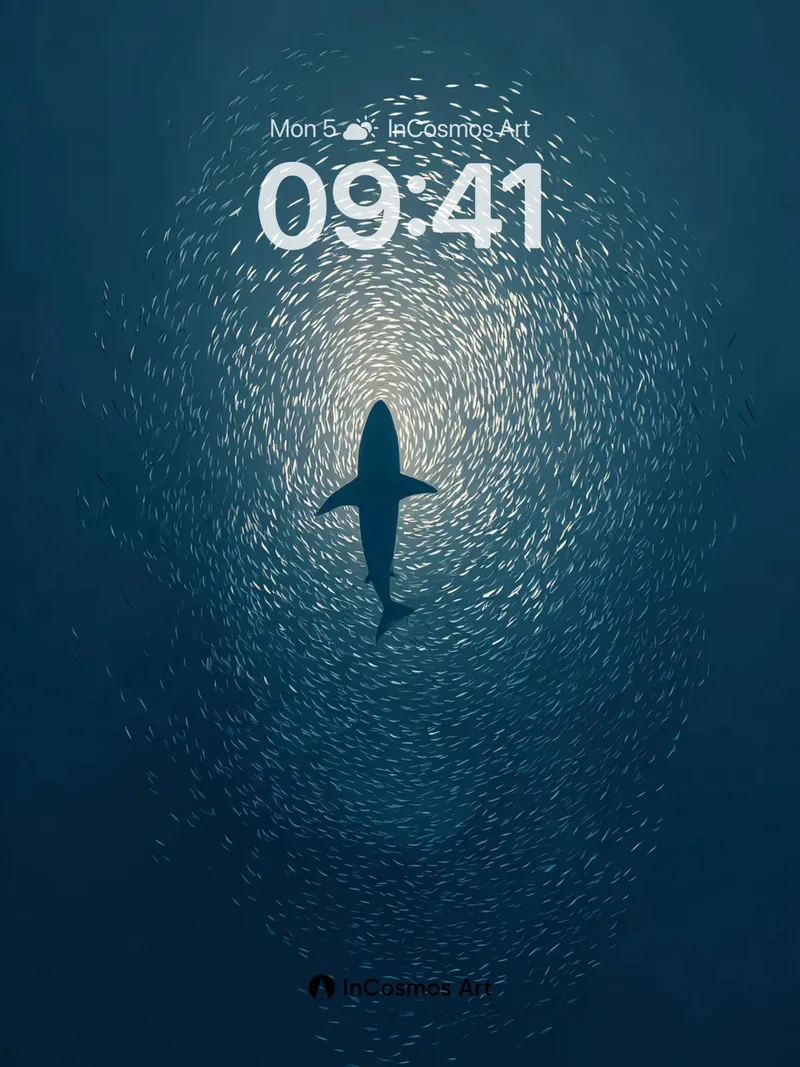
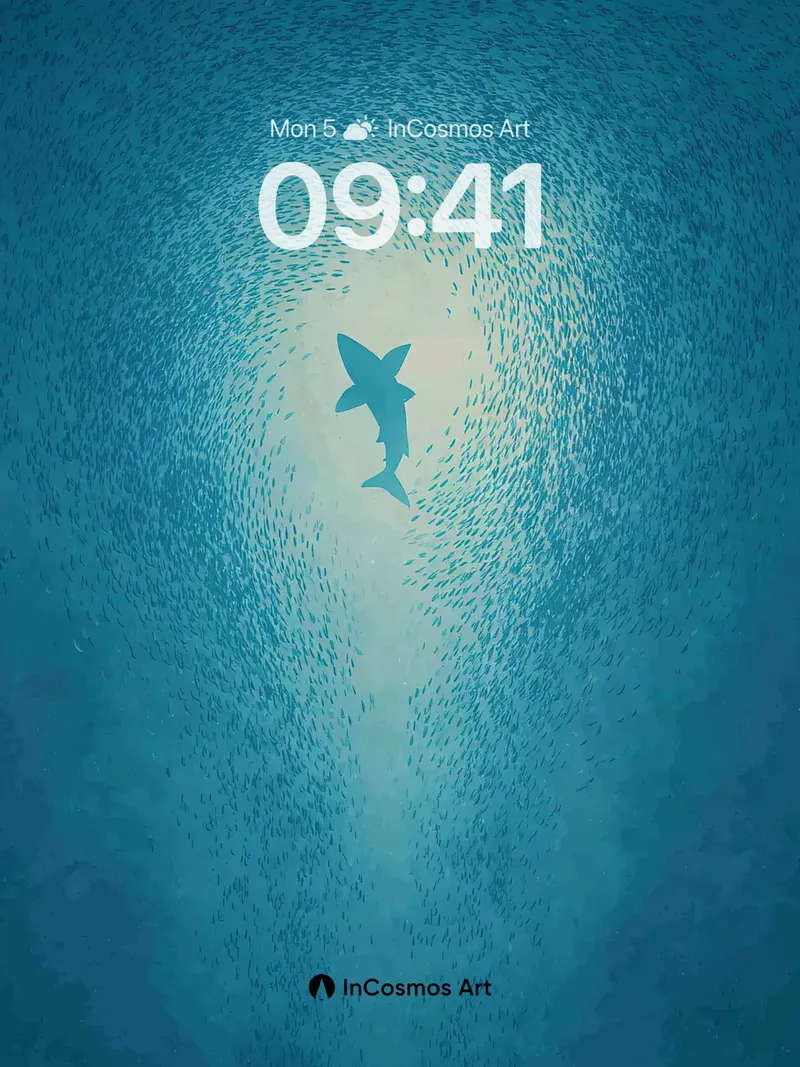
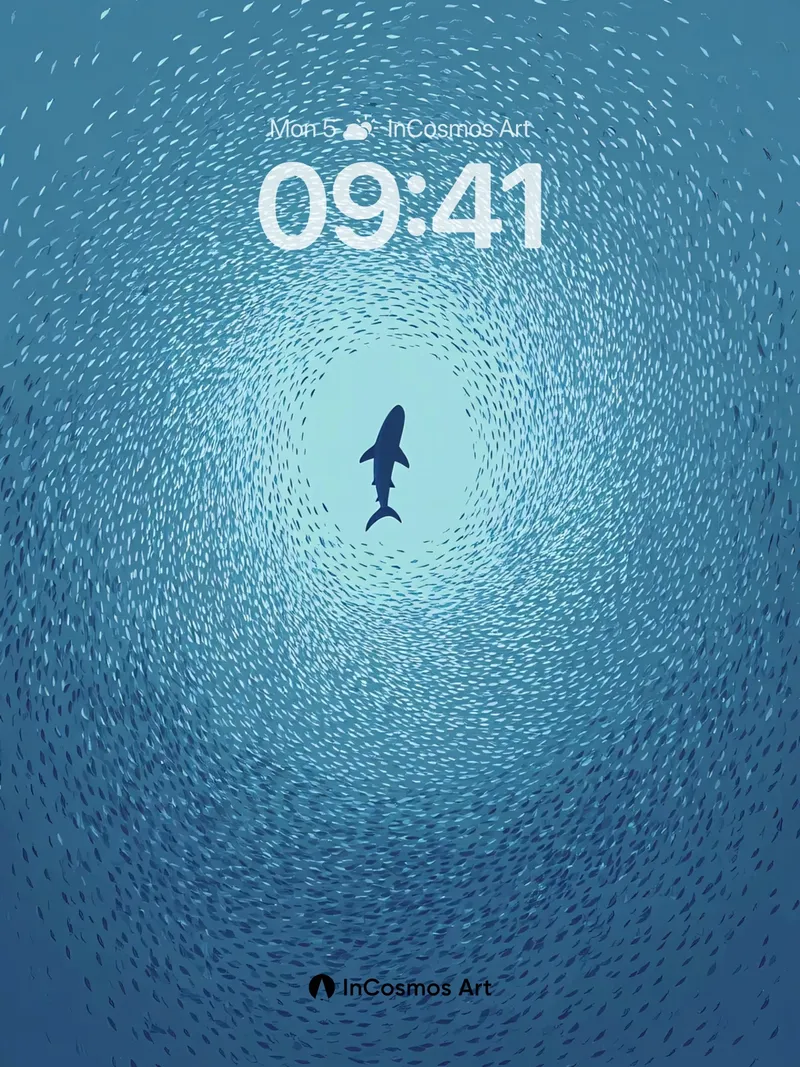
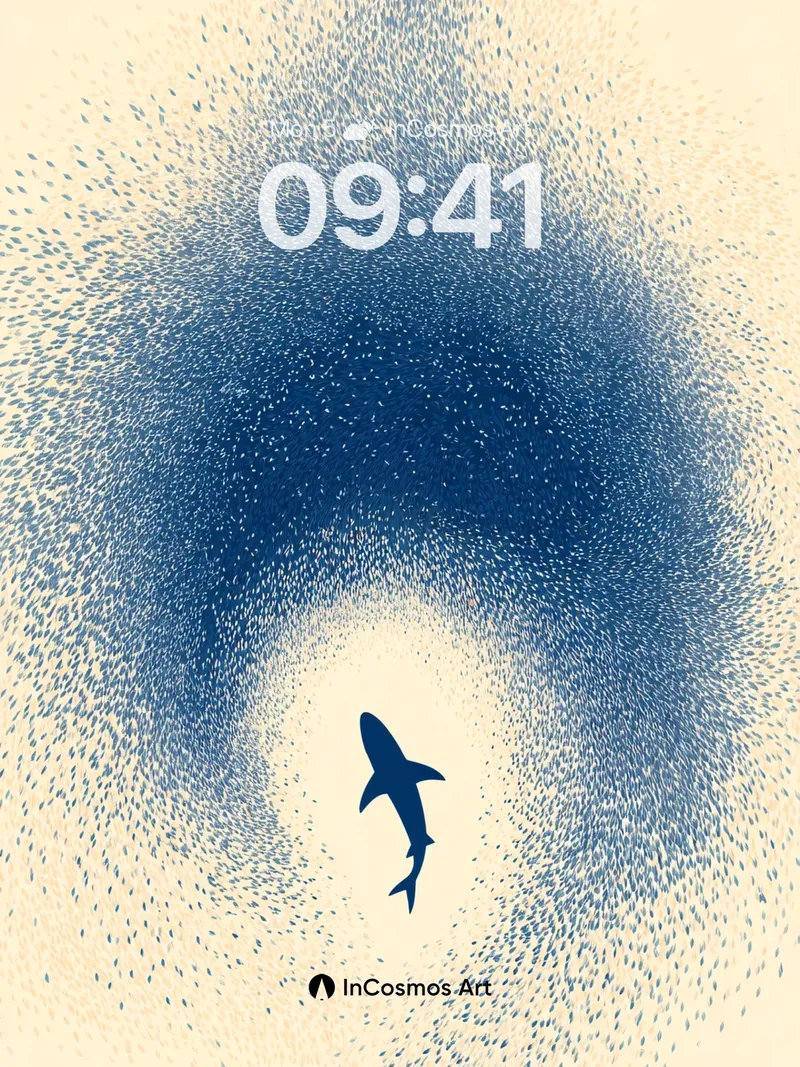
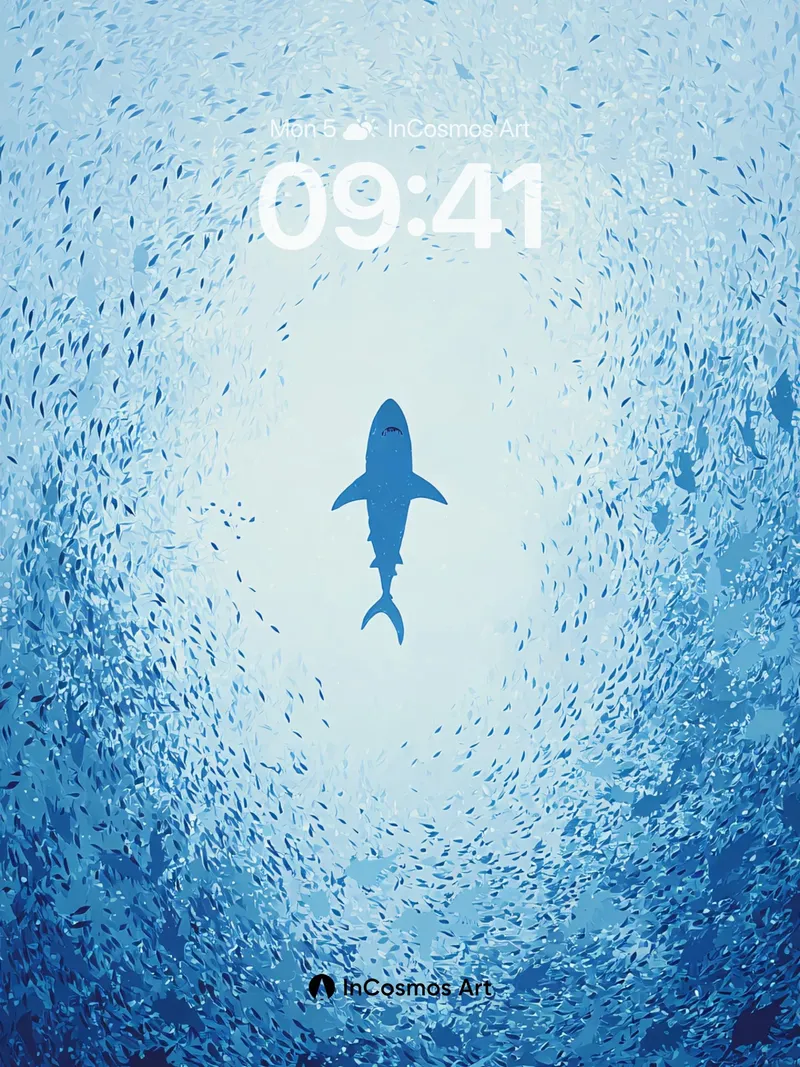
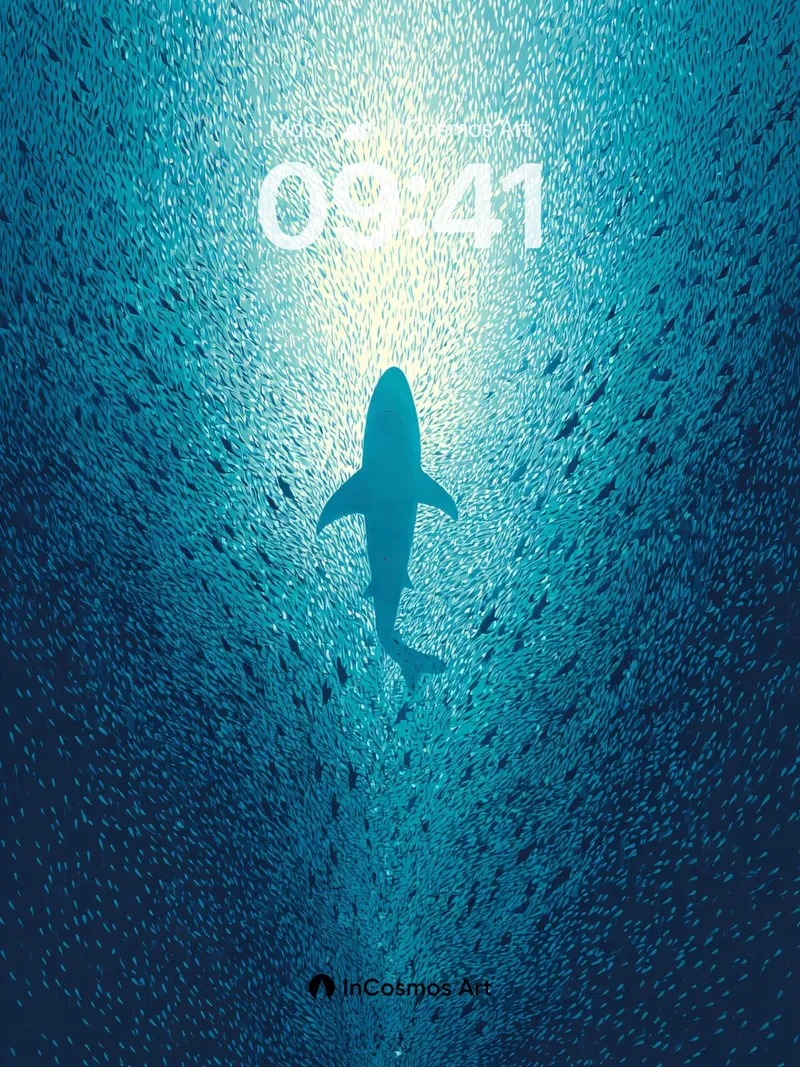
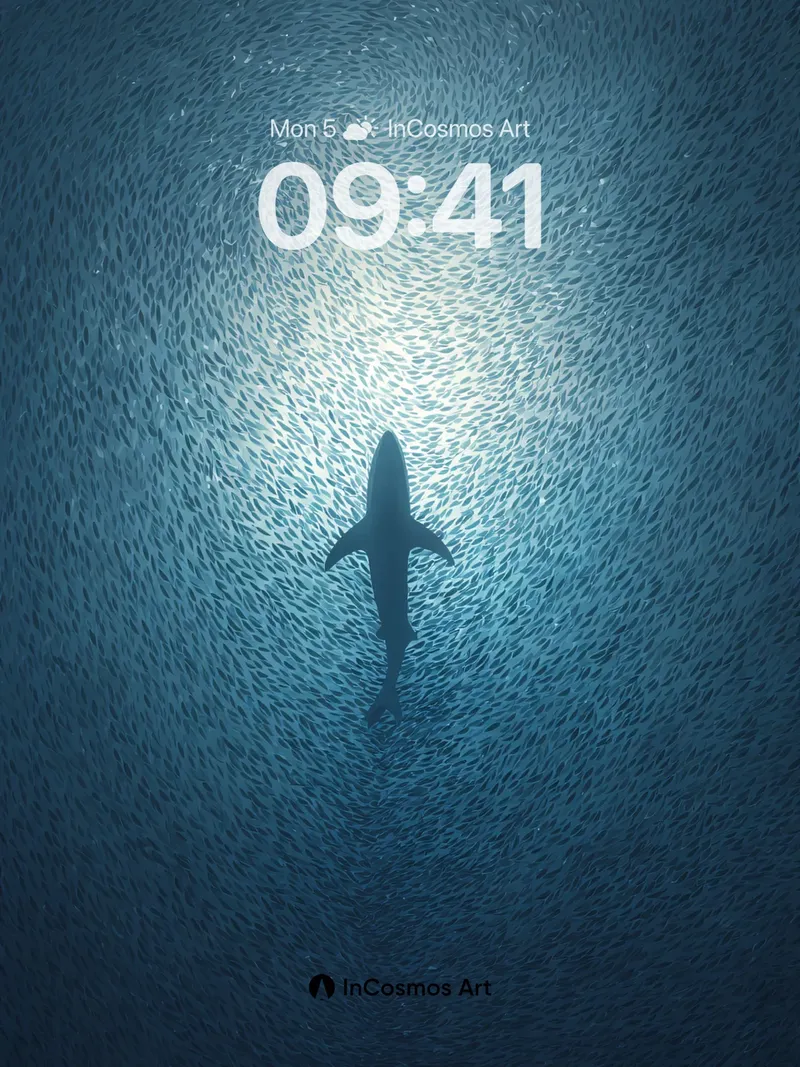
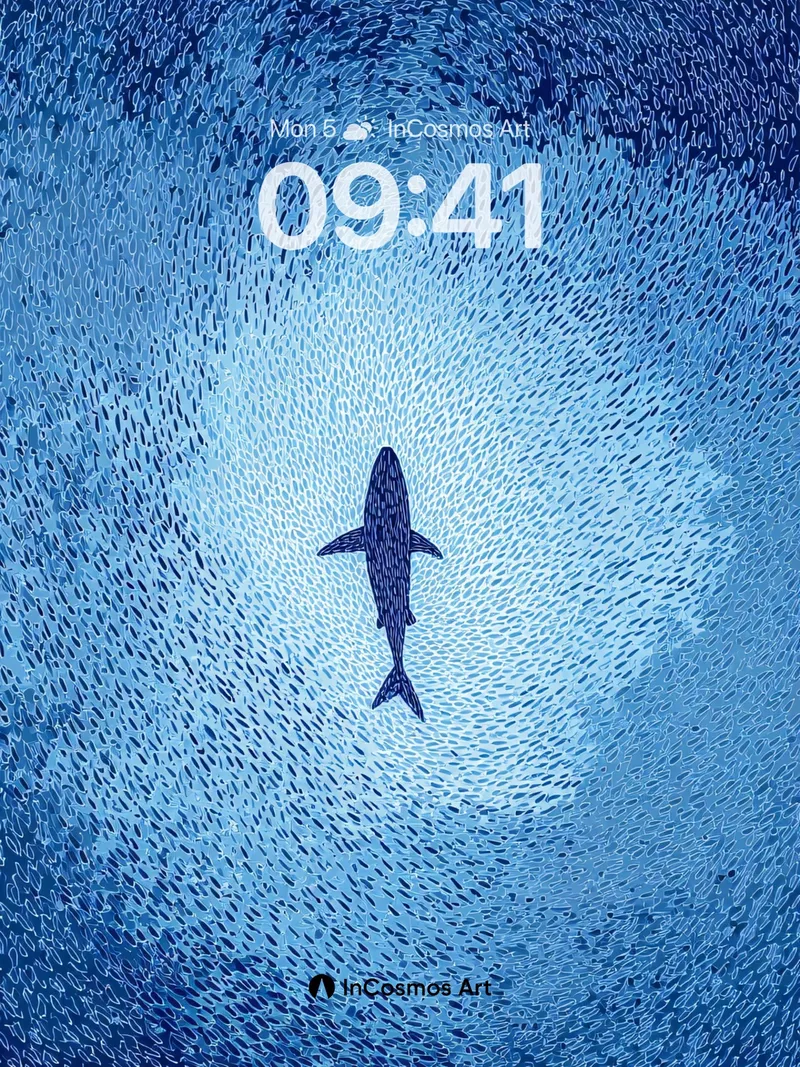
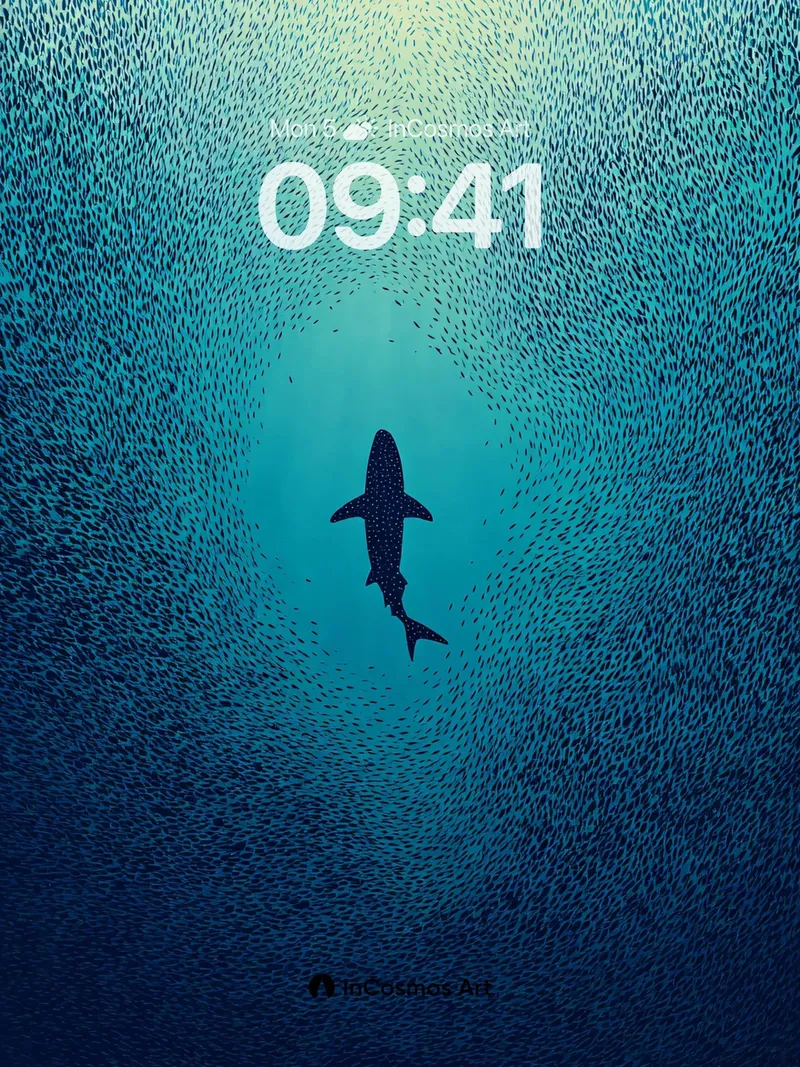
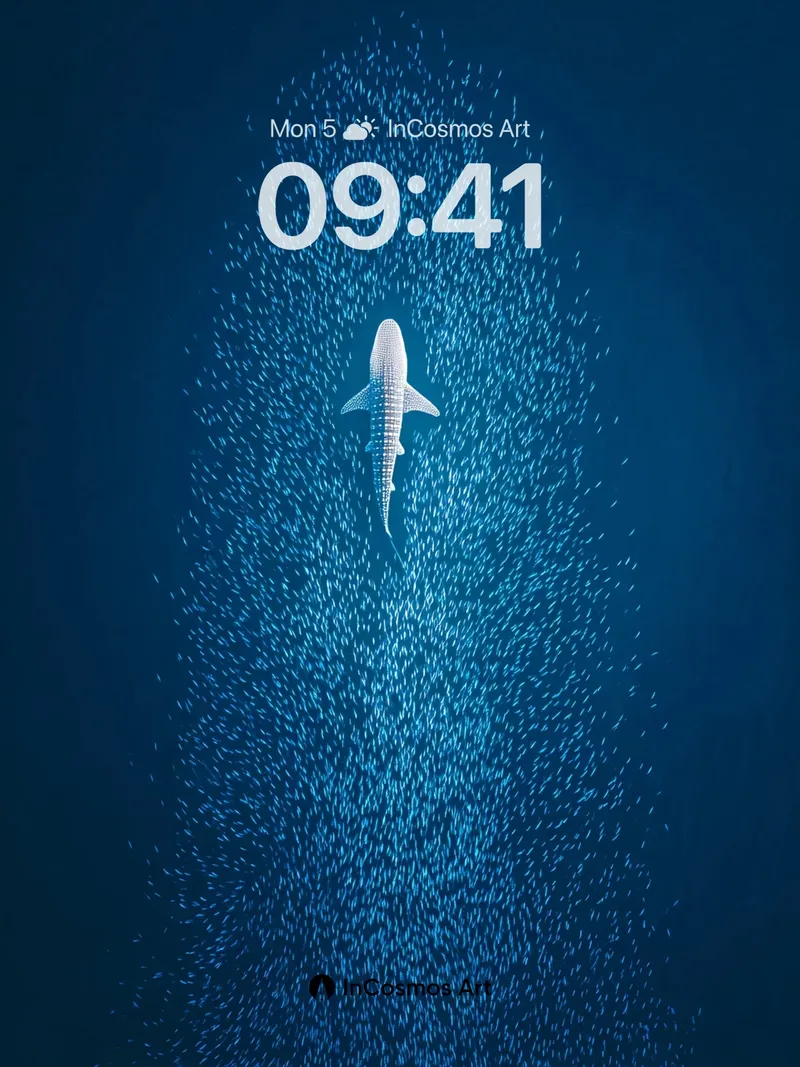
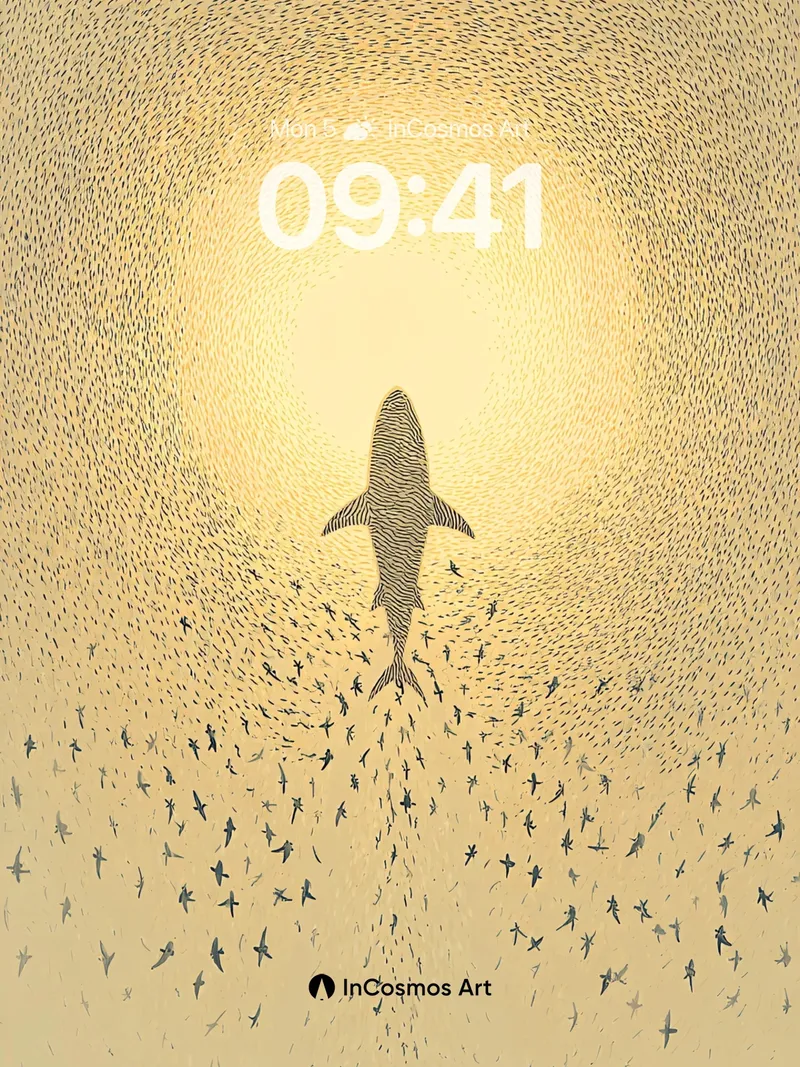
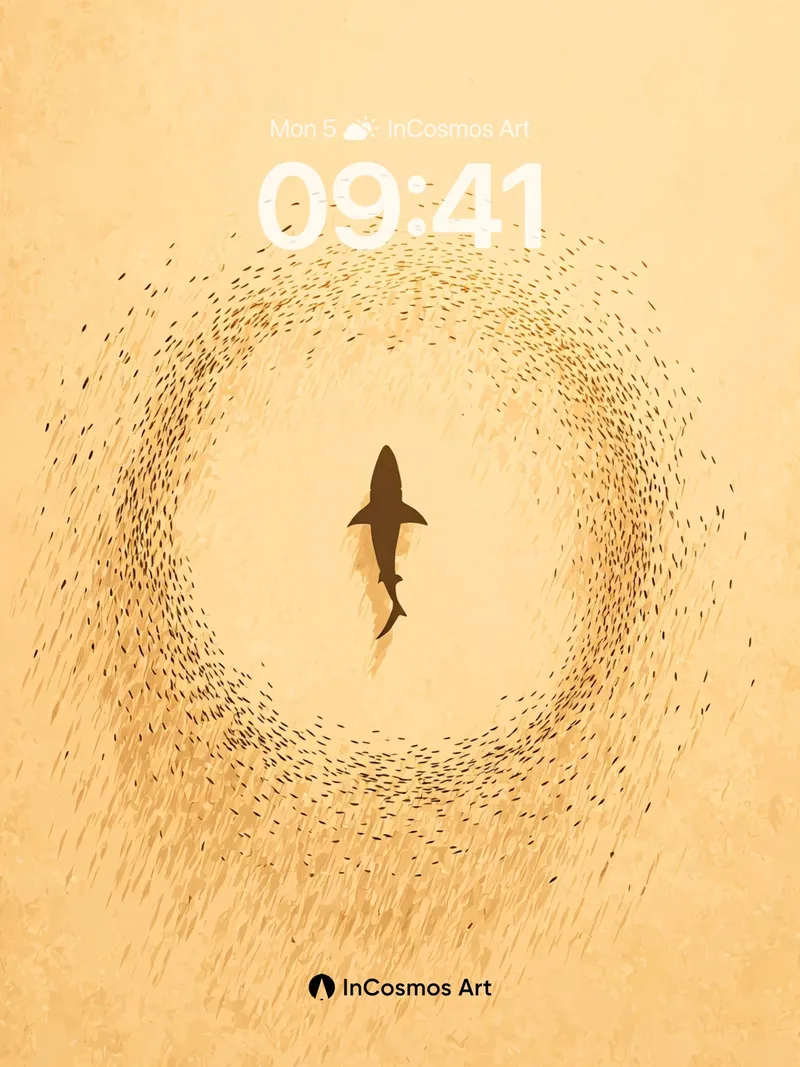
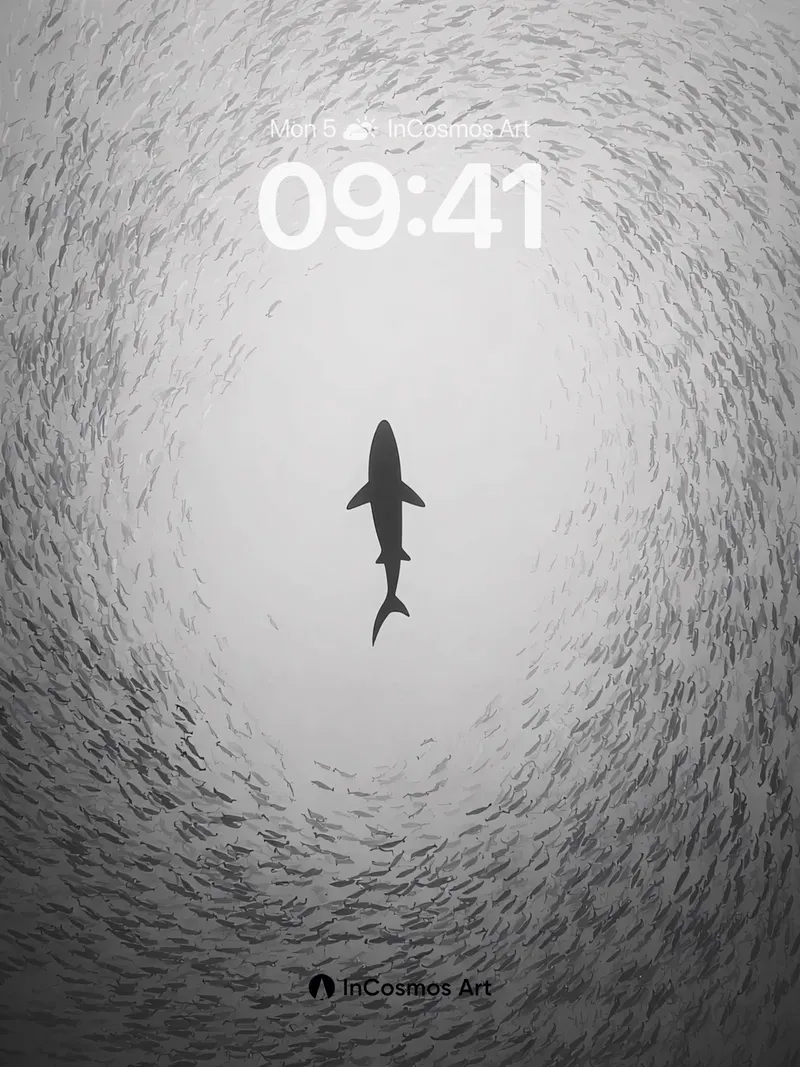
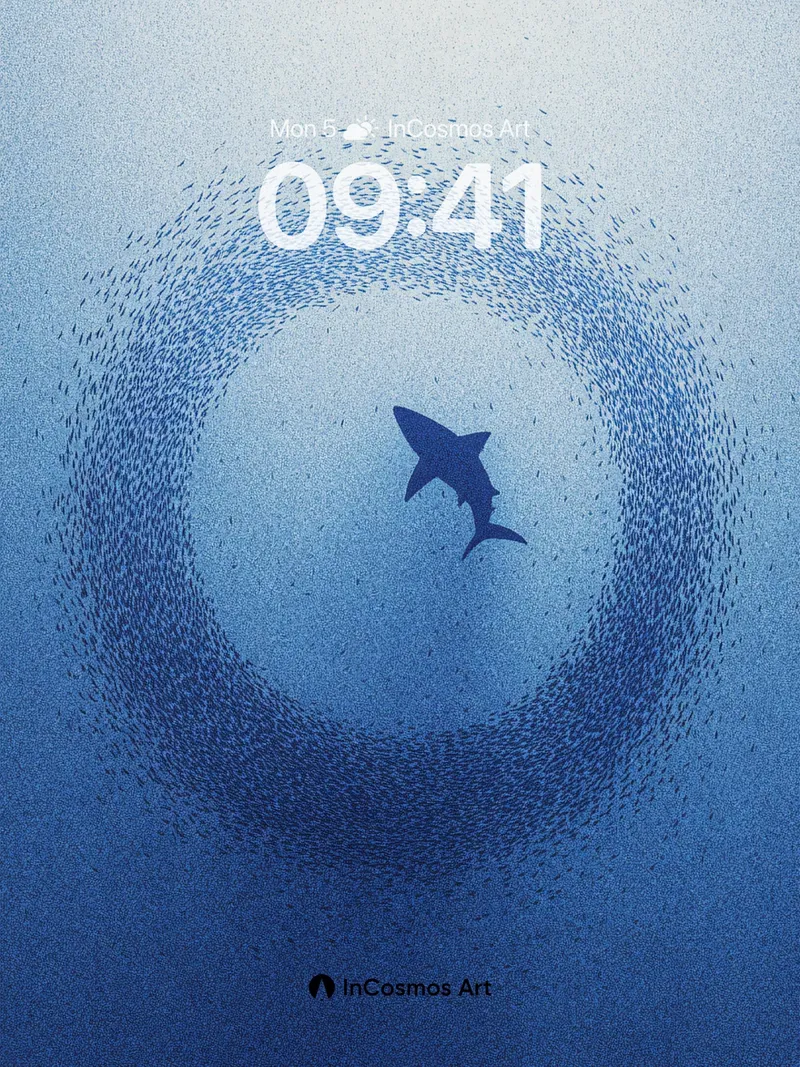
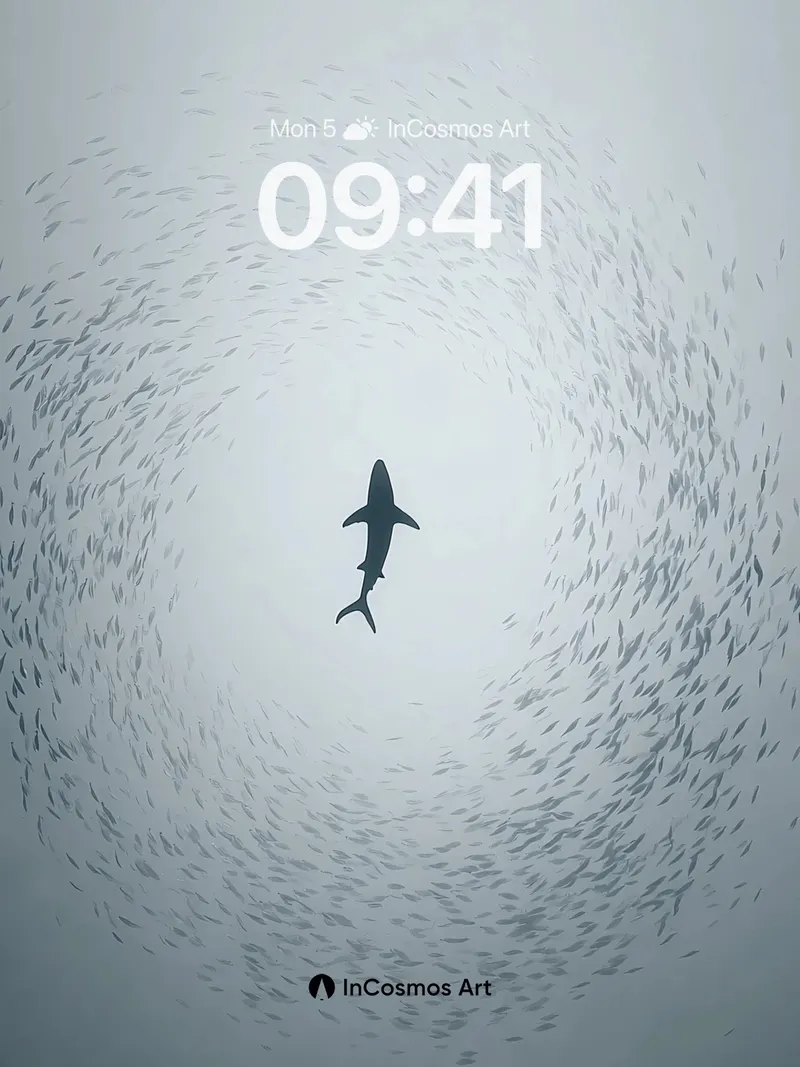
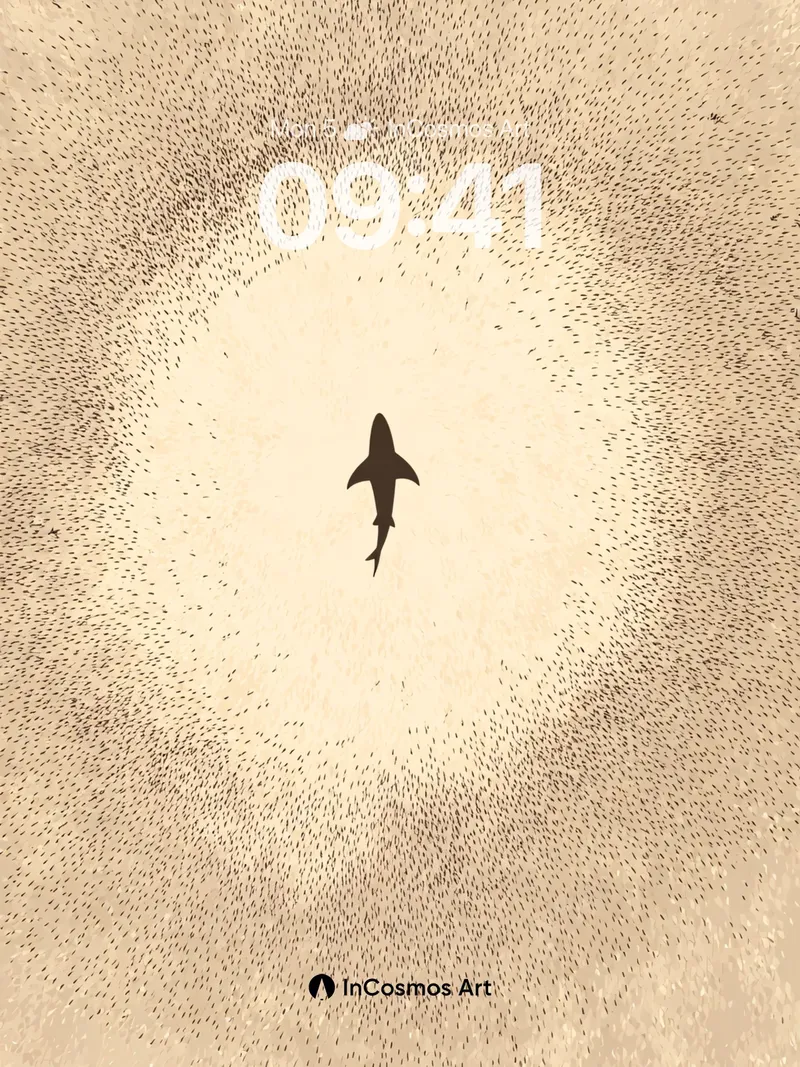
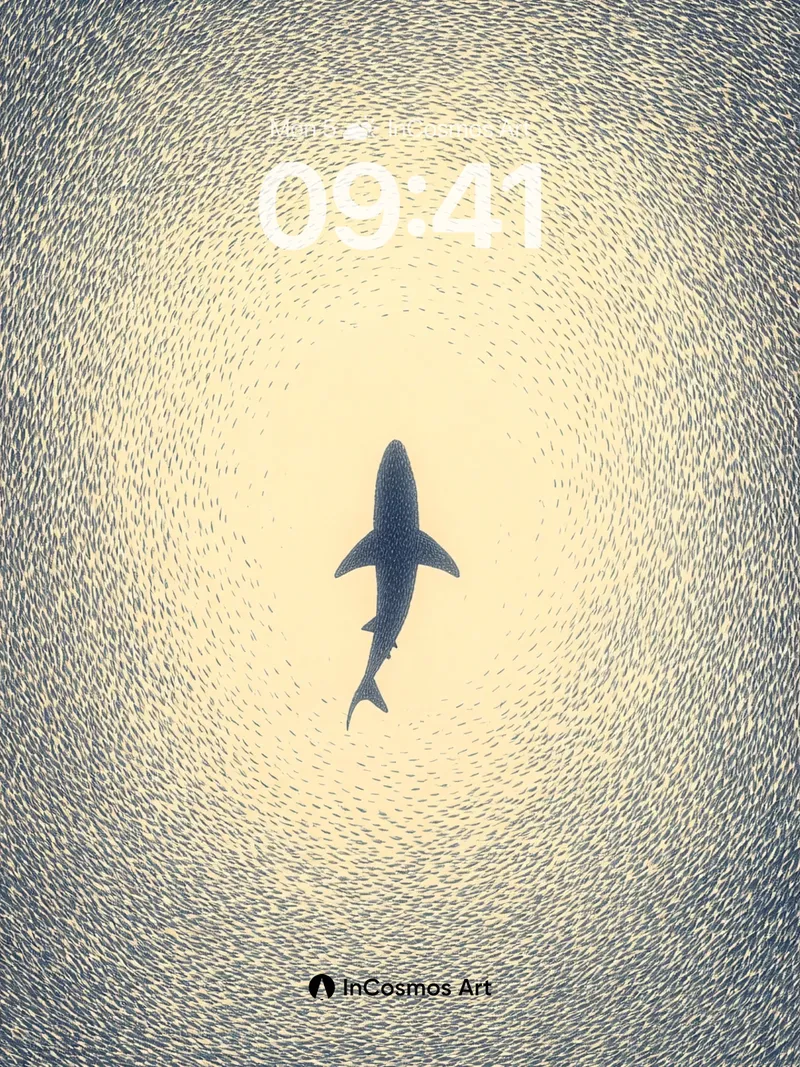
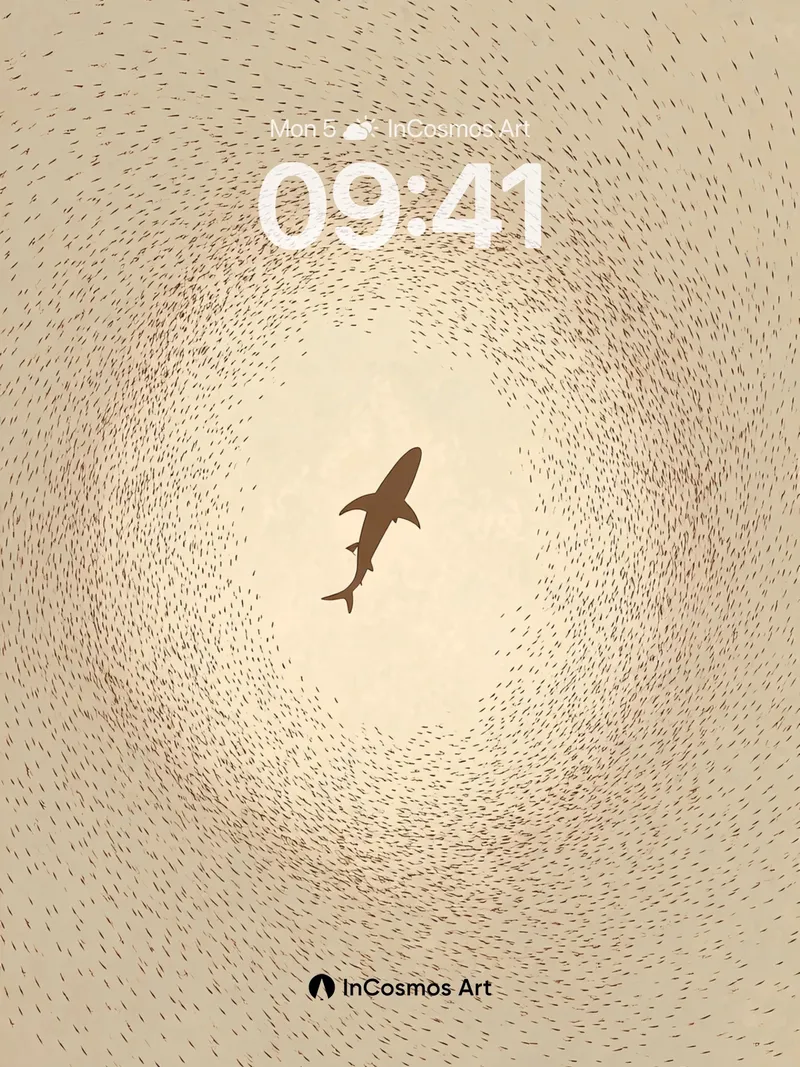
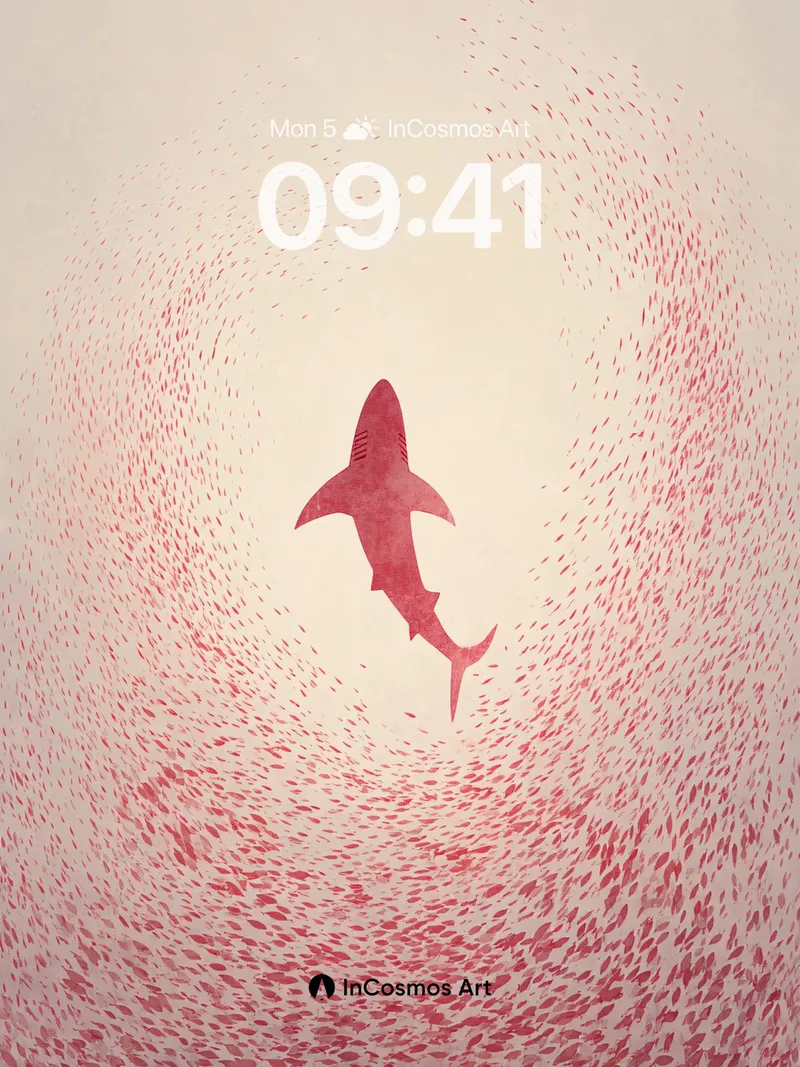
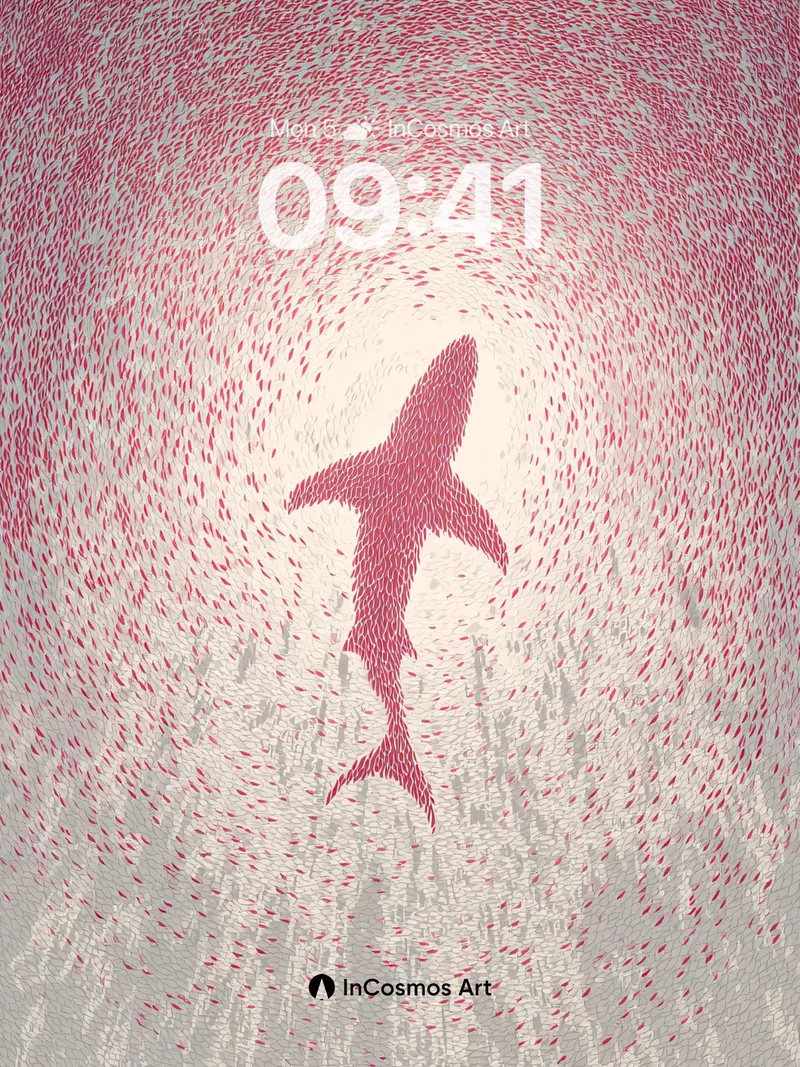
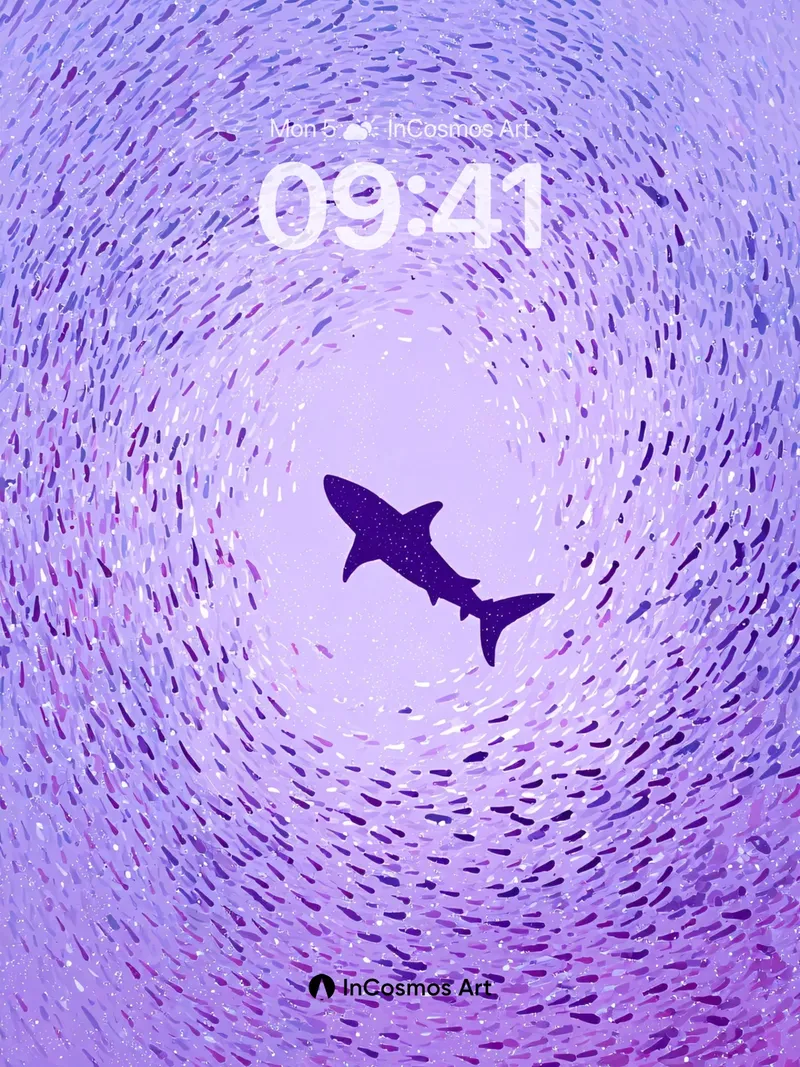
In the deep blue ocean, the silhouette of a shark always carries an aura of mysterious majesty. When a shark swims at the center of a vortex formed by a school of fish, this dynamic symbiotic relationship reveals the delicate balance of marine ecosystems. The movement of the fish is not chaotic but follows a collective intelligence, operating like precision machinery. The shark’s presence is both a threat and part of the order; every movement subtly influences the rhythm of the entire group. This scene evokes reflections on the relationship between individuals and collectives in human society—we crave the safety of belonging while striving to maintain our individual edge.
The Metaphor of Dynamic Balance
The vortex formed by the school of fish is not a static pattern but a living, flowing entity. Each small fish constantly adjusts its direction to avoid collisions while maintaining the overall circular structure. This dynamic balance requires immense coordination; any individual’s mistake could lead to localized chaos. The shark’s role is particularly unique: it is both a potential predator and a catalyst for the group’s alertness. Without the threat of the shark, the school might become松散; the shark’s presence forces the fish to maintain tight formations, creating a fragile harmony.
The Dialectic of Solitude and Collectivity
The shark’s posture at the center of the vortex often appears solitary, but this solitude is not absolute isolation. Its presence defines the boundaries of the school, while the school’s movement provides the context for the shark’s existence. This relationship mirrors individuals in urban settings: surrounded by crowds yet often feeling detached. The shark’s silhouette stands out sharply against the deep blue backdrop, reminding us that solitude is not a flaw but a prerequisite for self-awareness. Only when individuals maintain an appropriate distance from the collective can they truly see their place within it.
The Silent Narrative of Marine Ecosystems
This underwater scene is silent yet rich with narrative. The flow of the fish resembles a silent symphony, with the shark’s movement acting as the bassline. This narrative requires no language; it communicates through motion and position. In marine ecosystems, this silent communication is far more efficient than human speech. The shark’s presence reminds us that many relationships in nature do not require explicit contracts or rules but are formed through long-term evolution into a tacit understanding. This understanding is both fragile and resilient, capable of being shattered in an instant yet enduring over vast stretches of time.