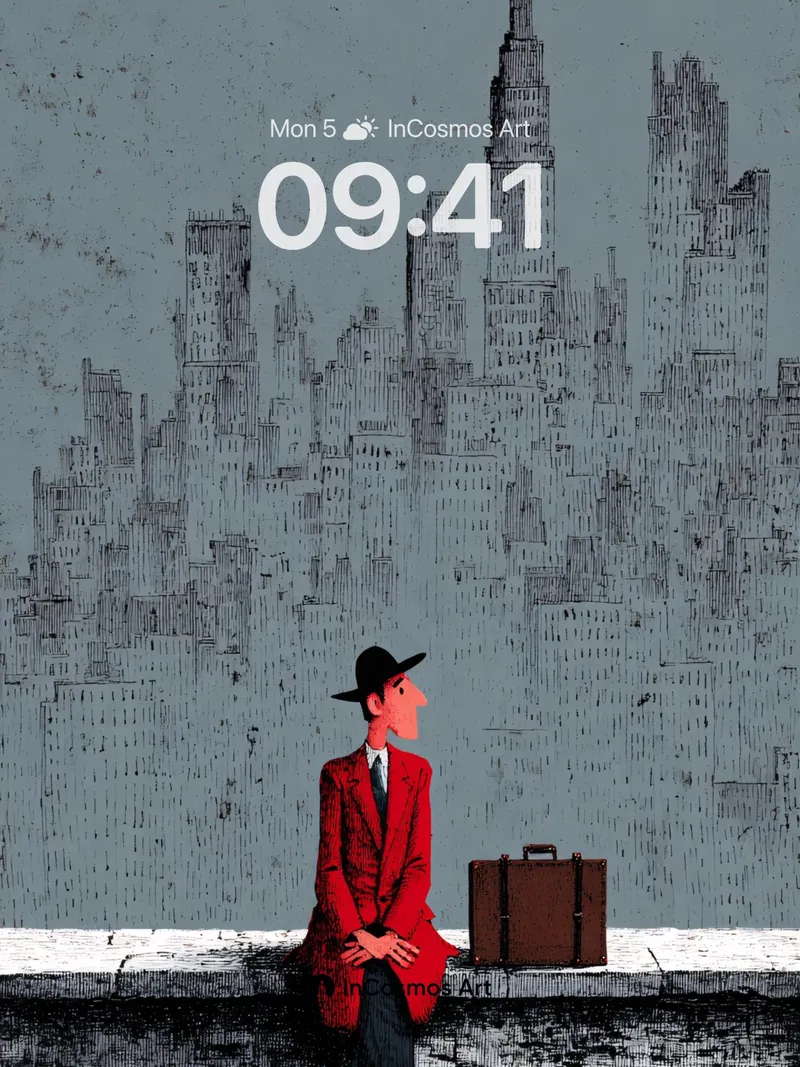
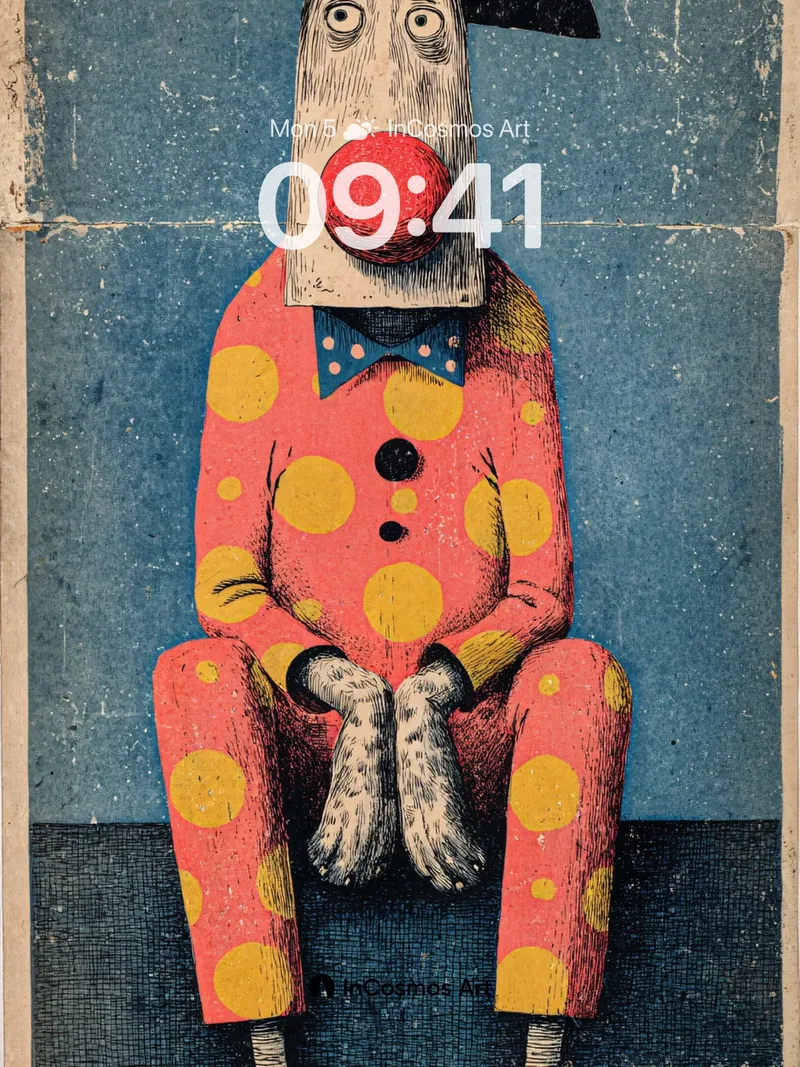
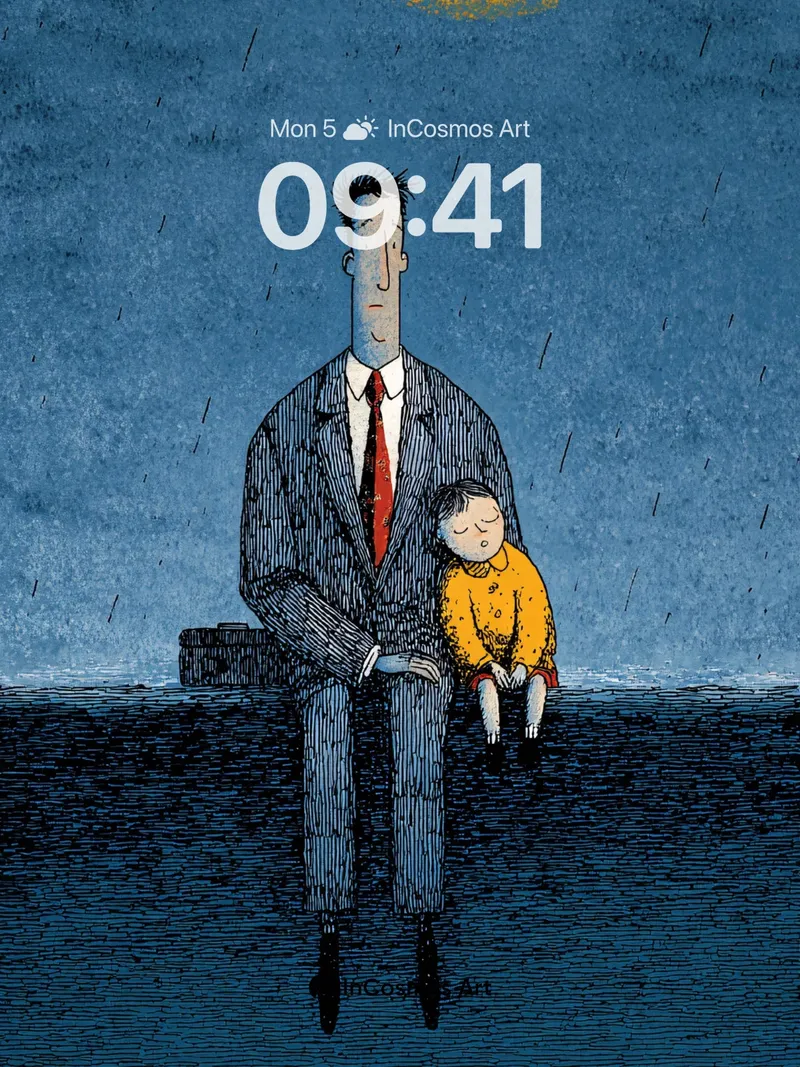
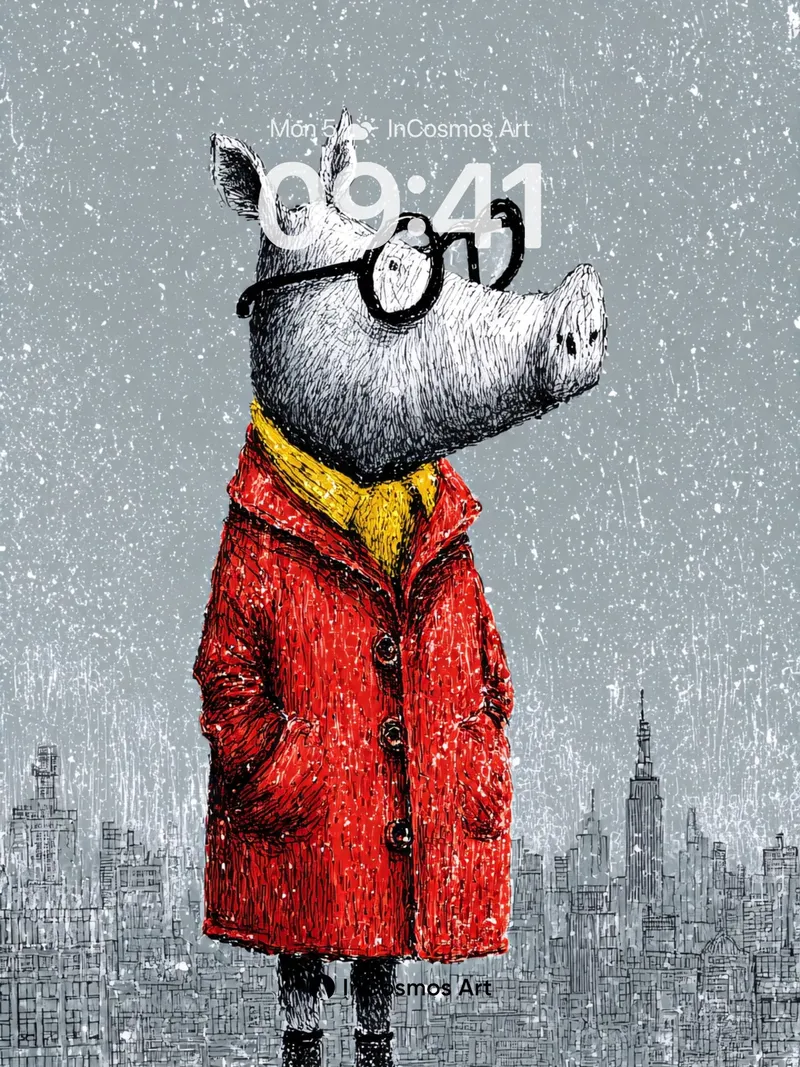
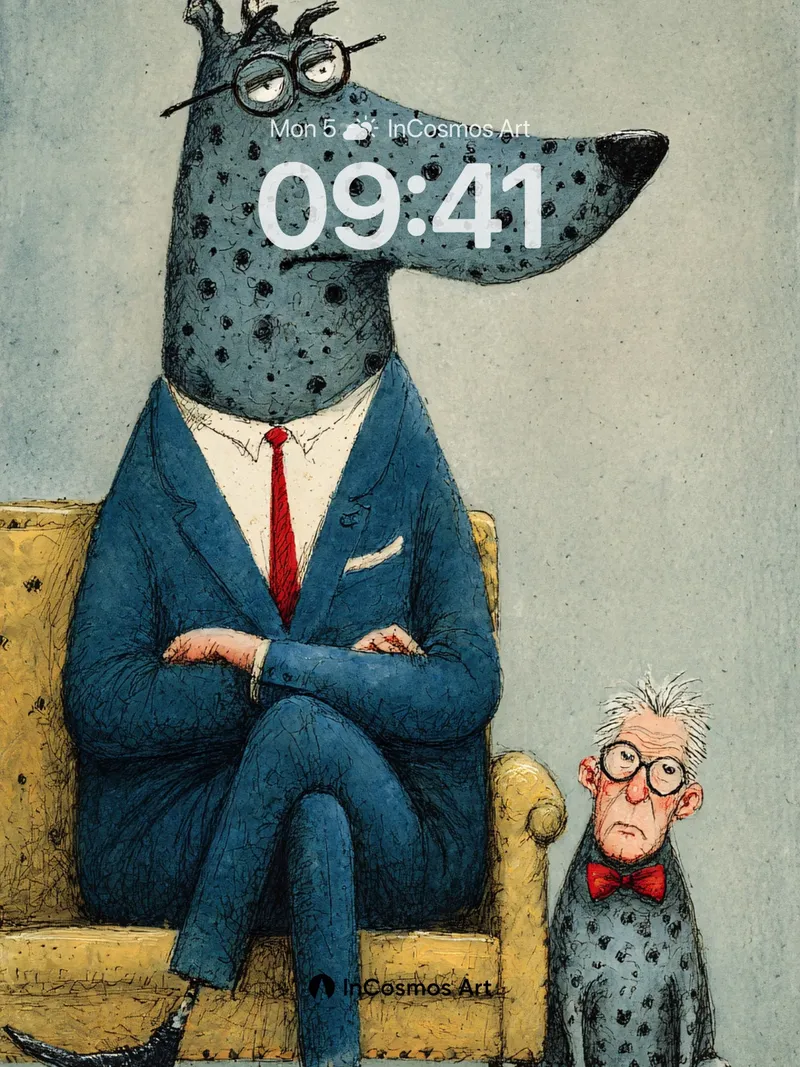
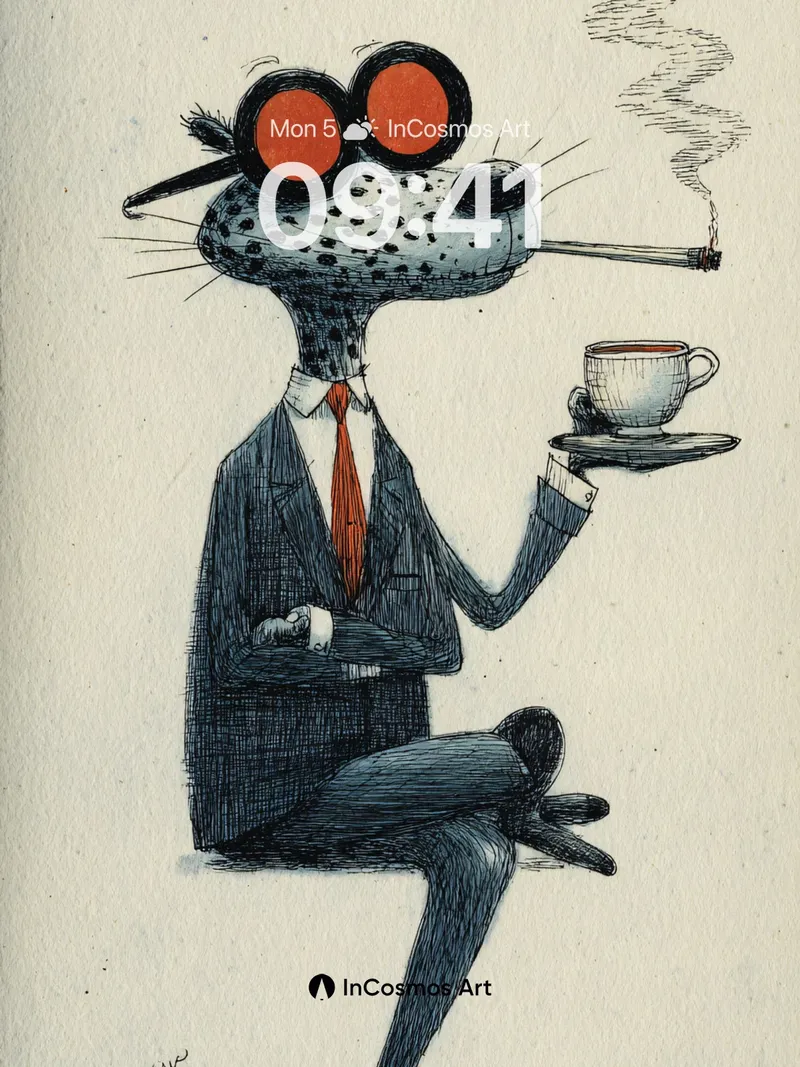
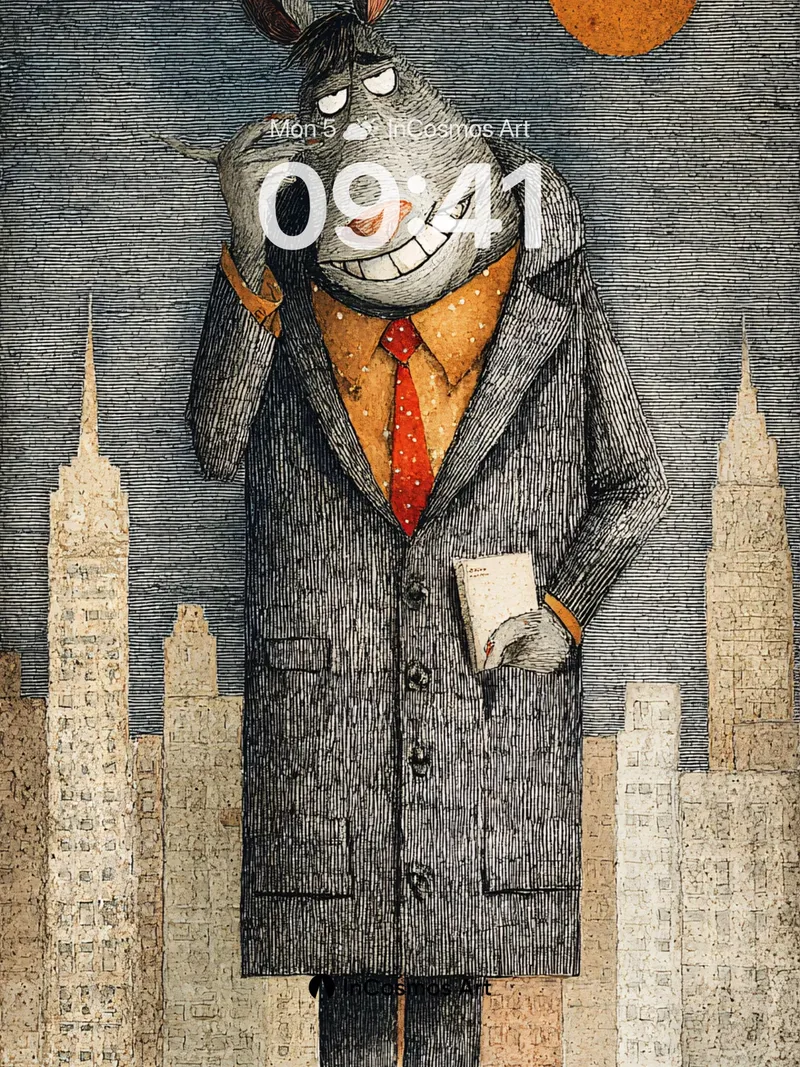
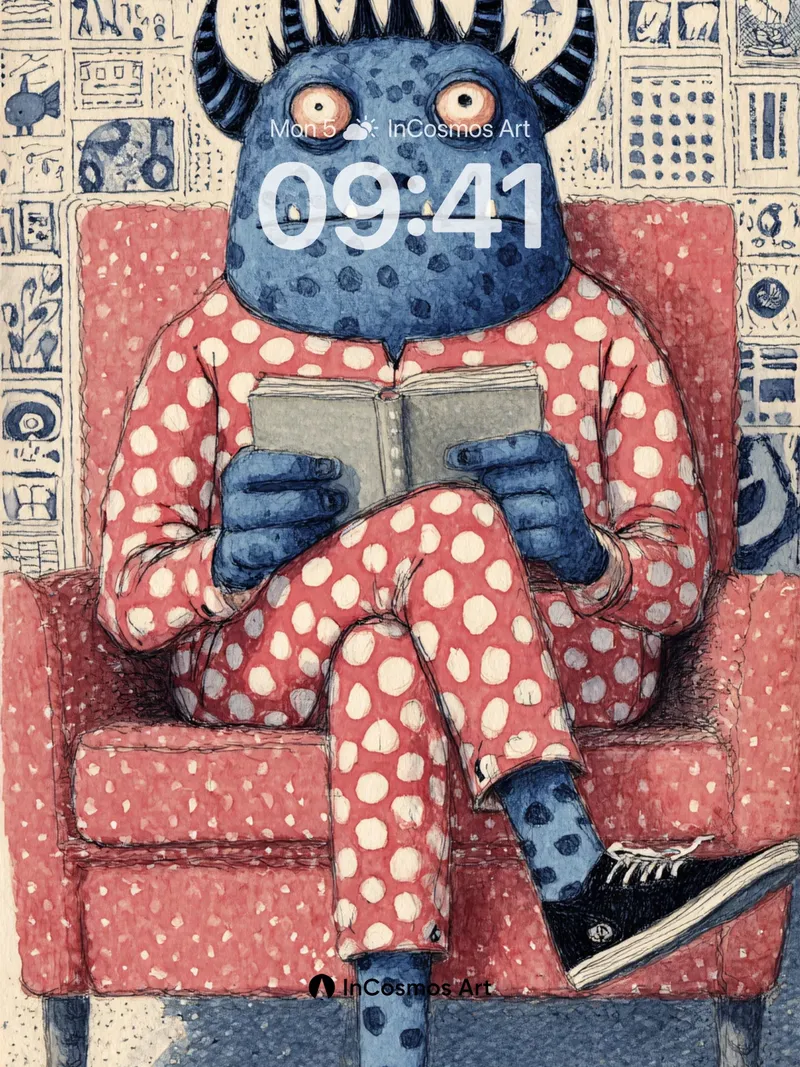
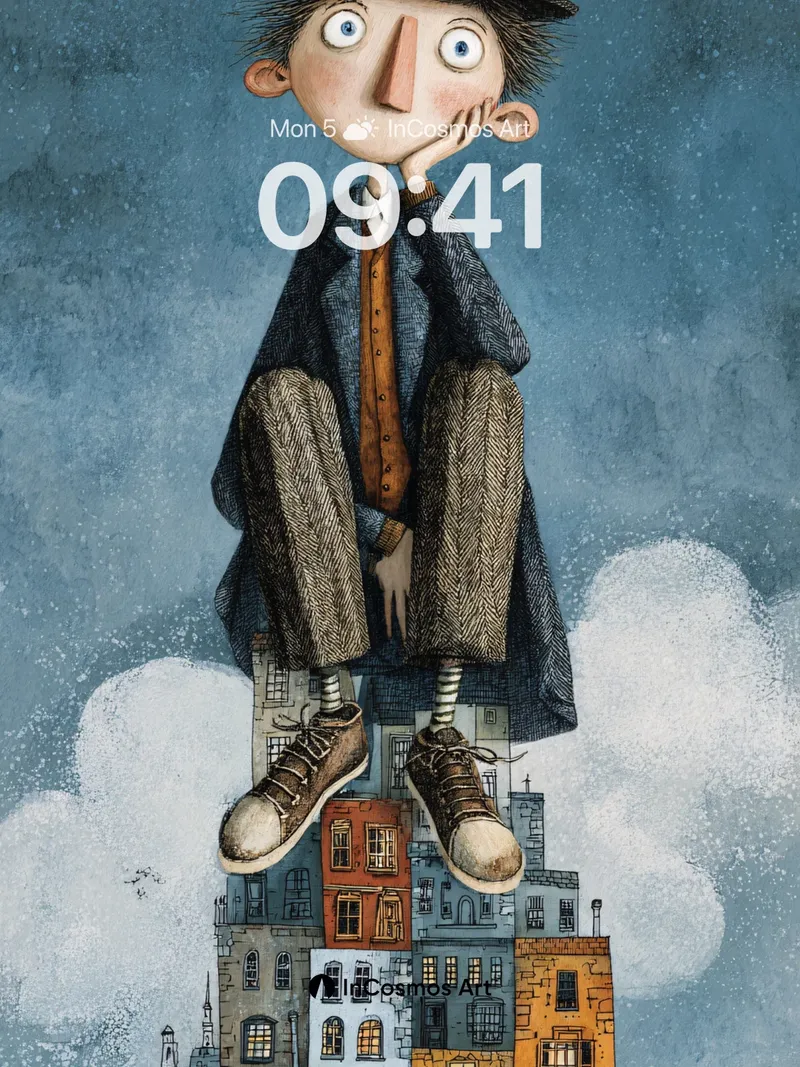
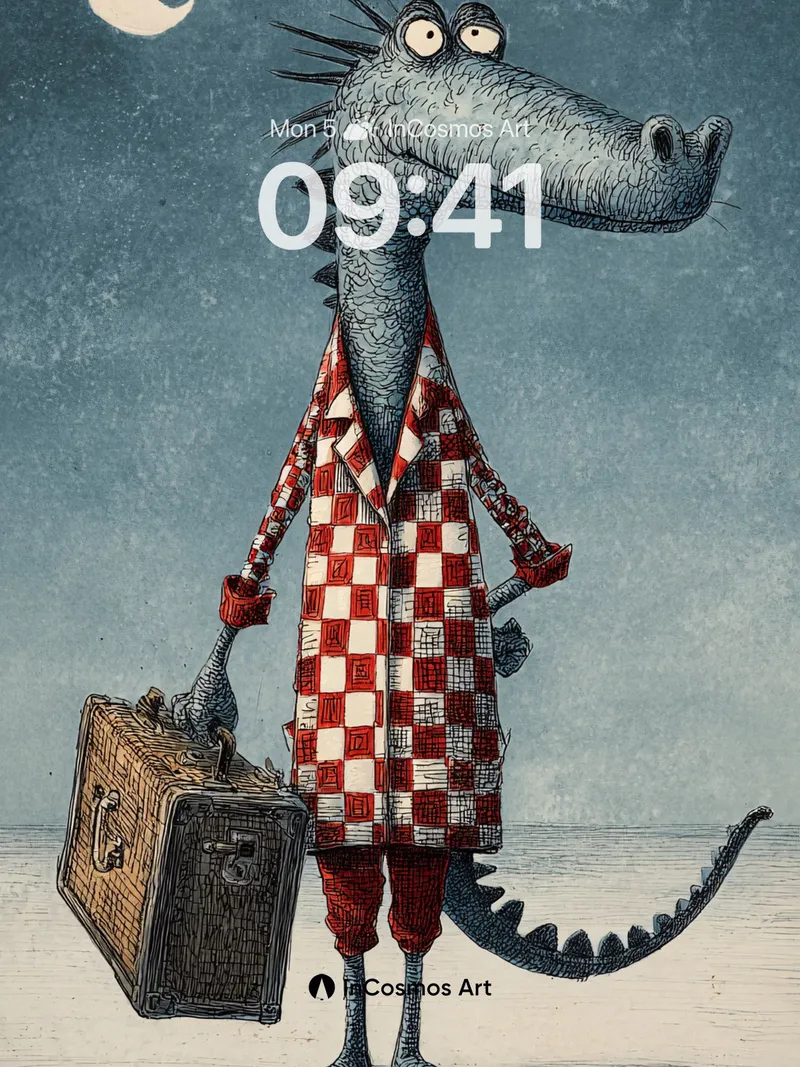
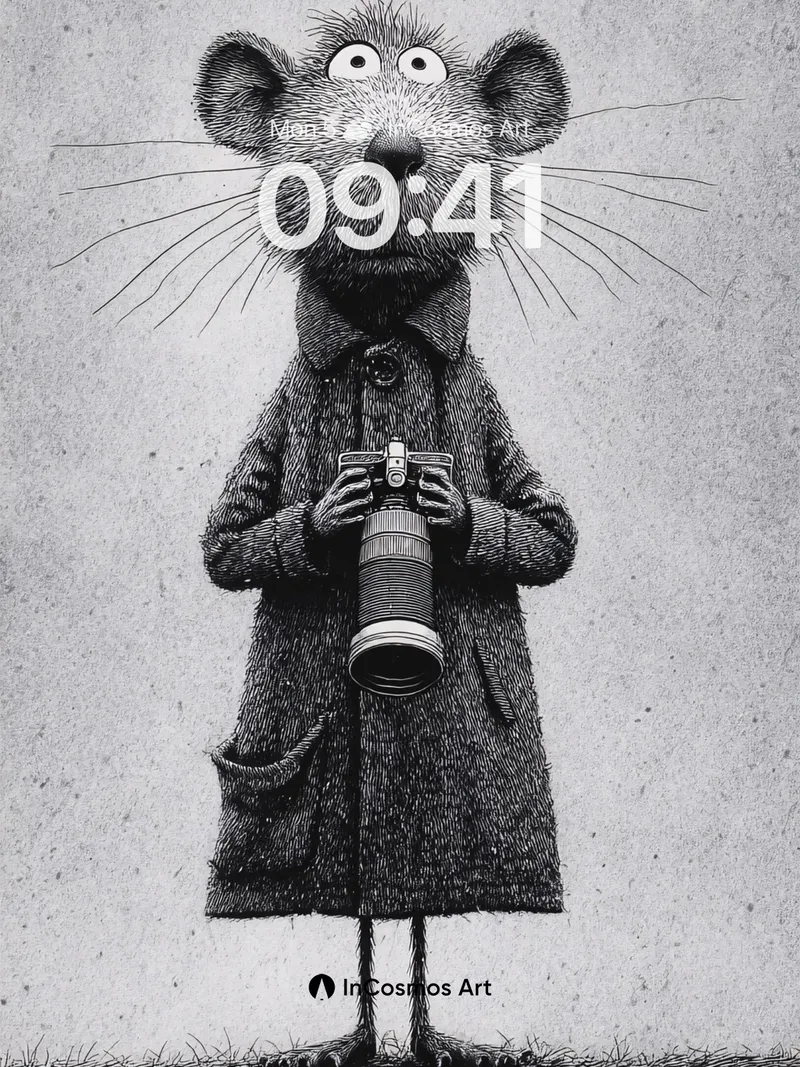
In the quiet margins of the city, a group of anthropomorphized animals stand upright, dressed in suits, hats, and carrying briefcases. They are not creatures of nature but projections of social roles—office workers, travelers, philosophers, wanderers. Each garment bears the weight of identity, each pair of glasses conceals unspoken exhaustion. Their forms are exaggerated yet precisely reflect contemporary human conditions: yearning for belonging while trapped in solitude; striving for dignity while unable to hide inner absurdity.
Animals in Clothes
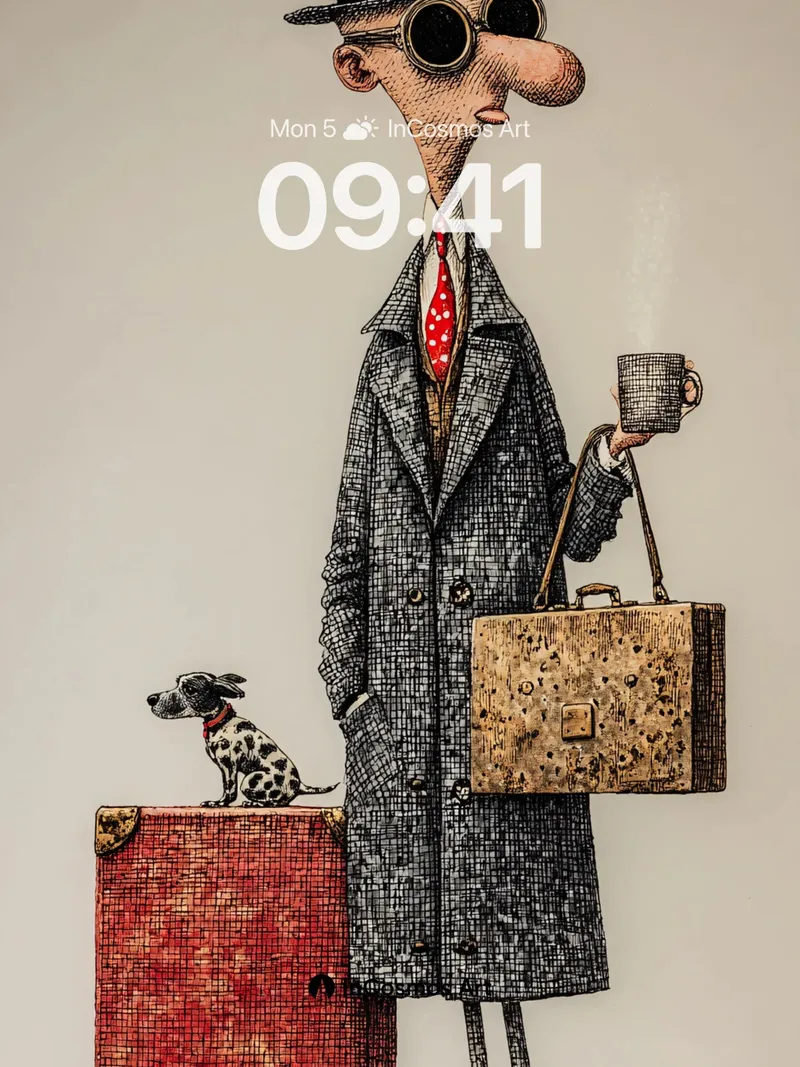
When animals don human attire, they become symbols. A man with a long nose wears a gray checkered coat, holding a steaming cup, beside a dalmatian dog and an old suitcase—ready for a journey without meaning. A dog-like figure in an orange coat, red-and-white sneakers, and a wooden case stares blankly into the distance. These garments are not adornments but social masks. They conceal authenticity and reveal anxiety. The more formal the clothing, the greater the alienation.
Postures of Loneliness
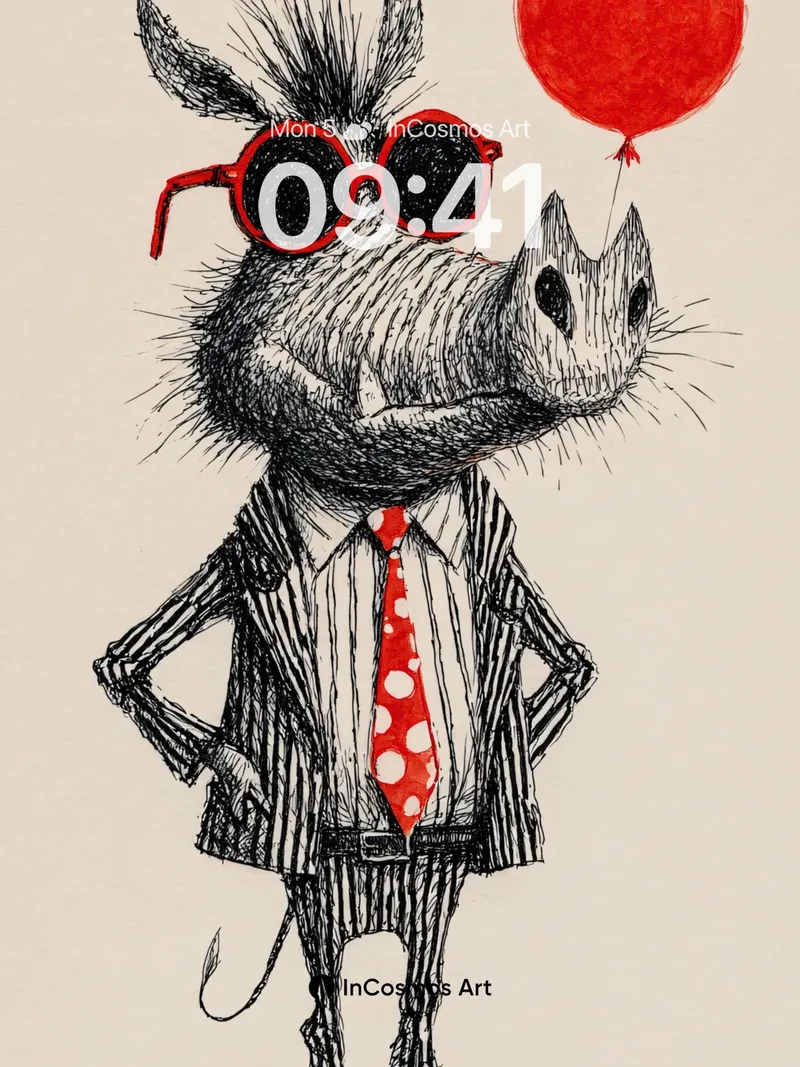
A gray-furred donkey sits on a wooden bench, hands cradling its face, beneath heavy clouds. Its eyes are dull, posture rigid—mirroring silent urban passersby. A rhinoceros in striped suit, red sunglasses, and a floating balloon stands stiffly, as if mocking the world’s absurdity. Loneliness is not absence of others but feeling unseen even in crowds. These postures are metaphors for modern mental states.
Absurdity as Poetry
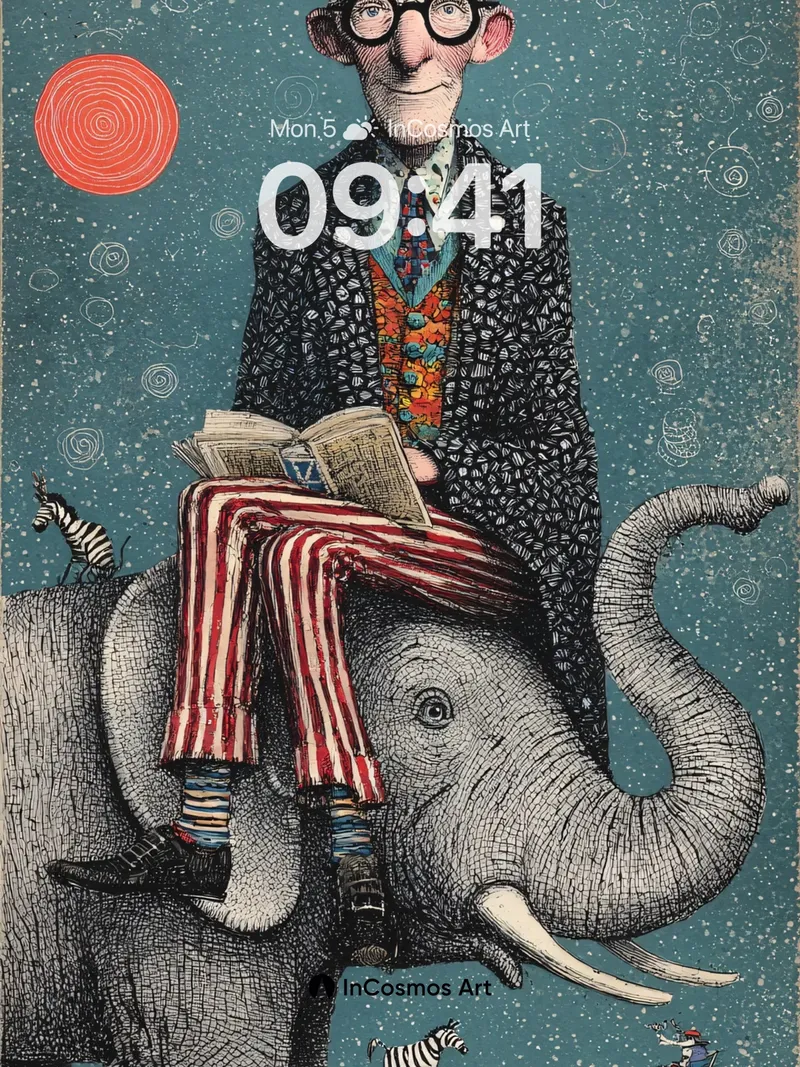
A gentleman rides an elephant, clad in a patterned jacket, striped pants, reading a book. Behind him, a swirling sun and stars float above fallen zebras and a distant musician. This scene defies logic yet touches existential truth. Absurdity is not failure—it is rebellion against routine. When animals wear the clothes of human civilization, they cease to be mere beasts and become vessels of reflection. Their existence itself challenges order.