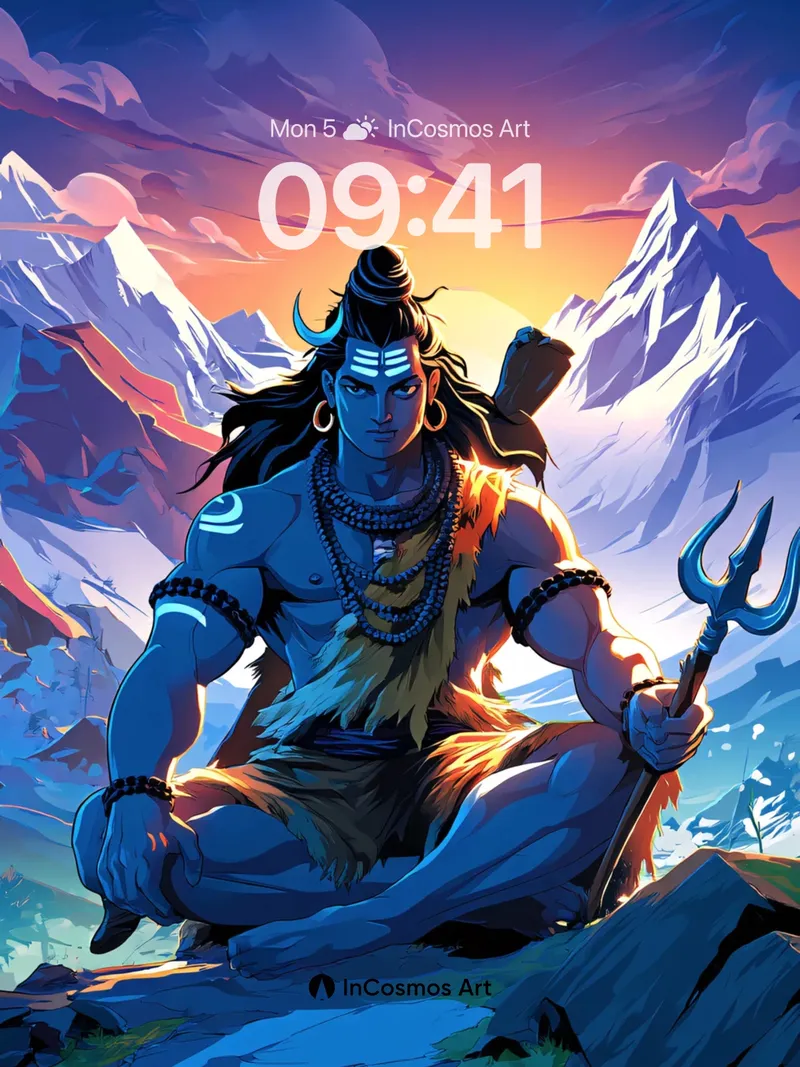
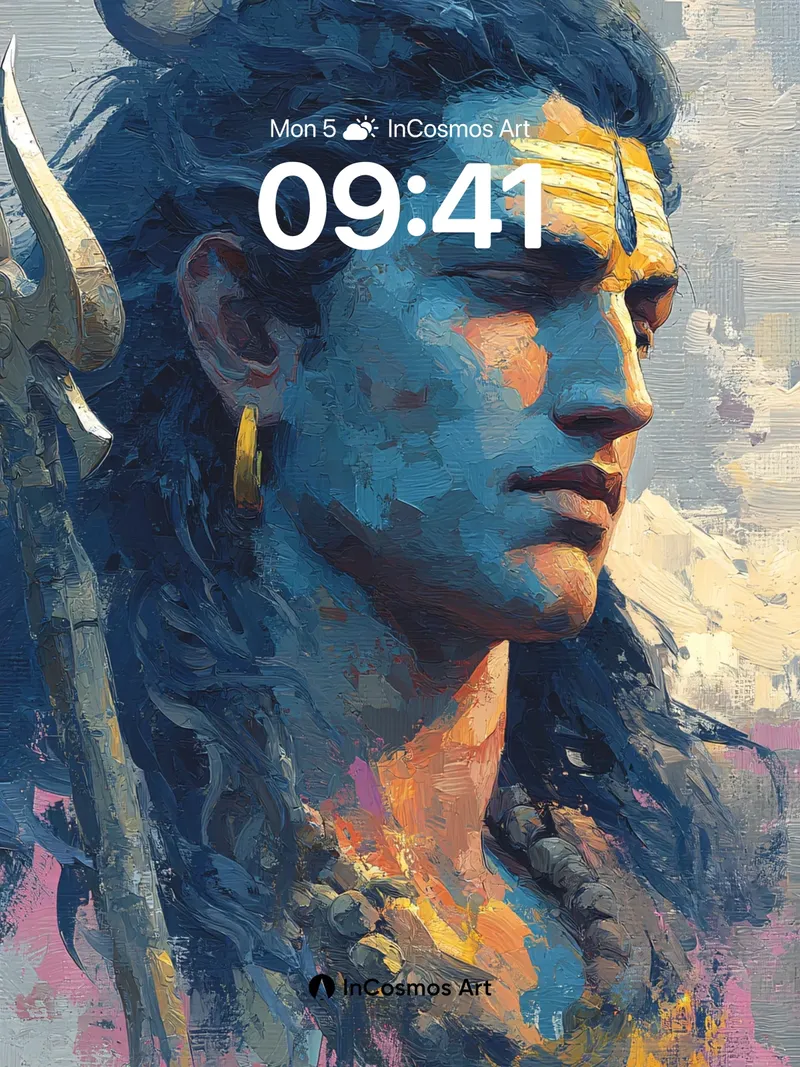
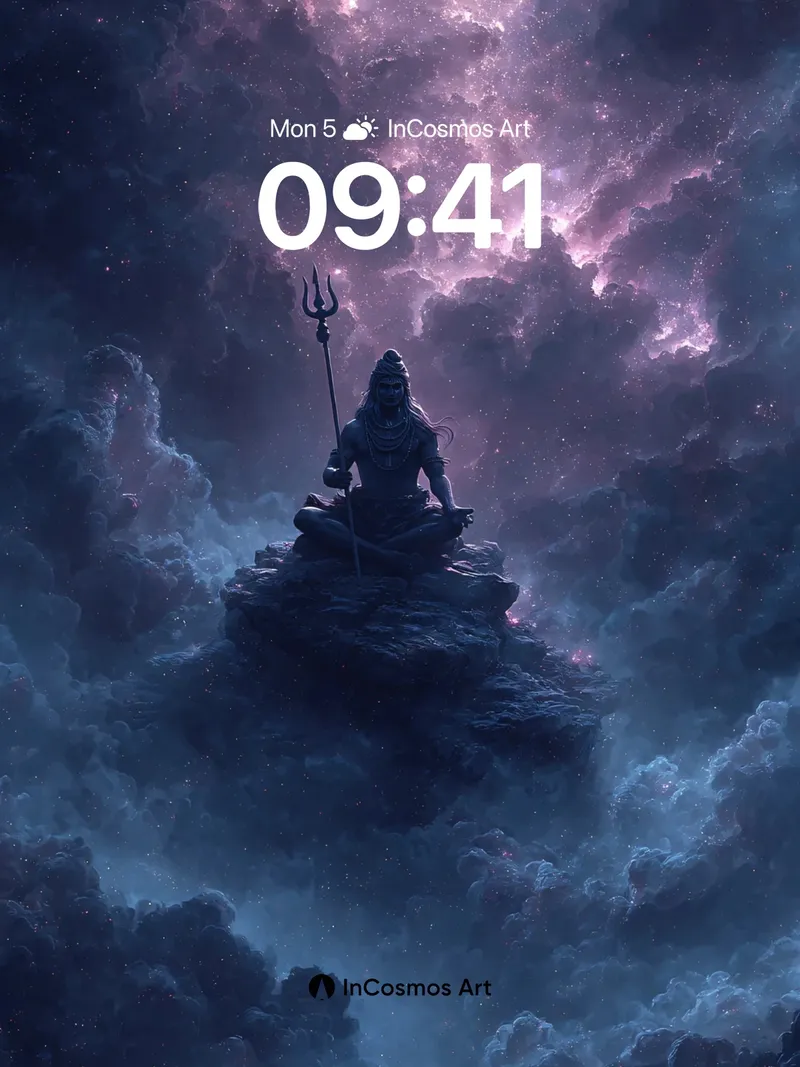
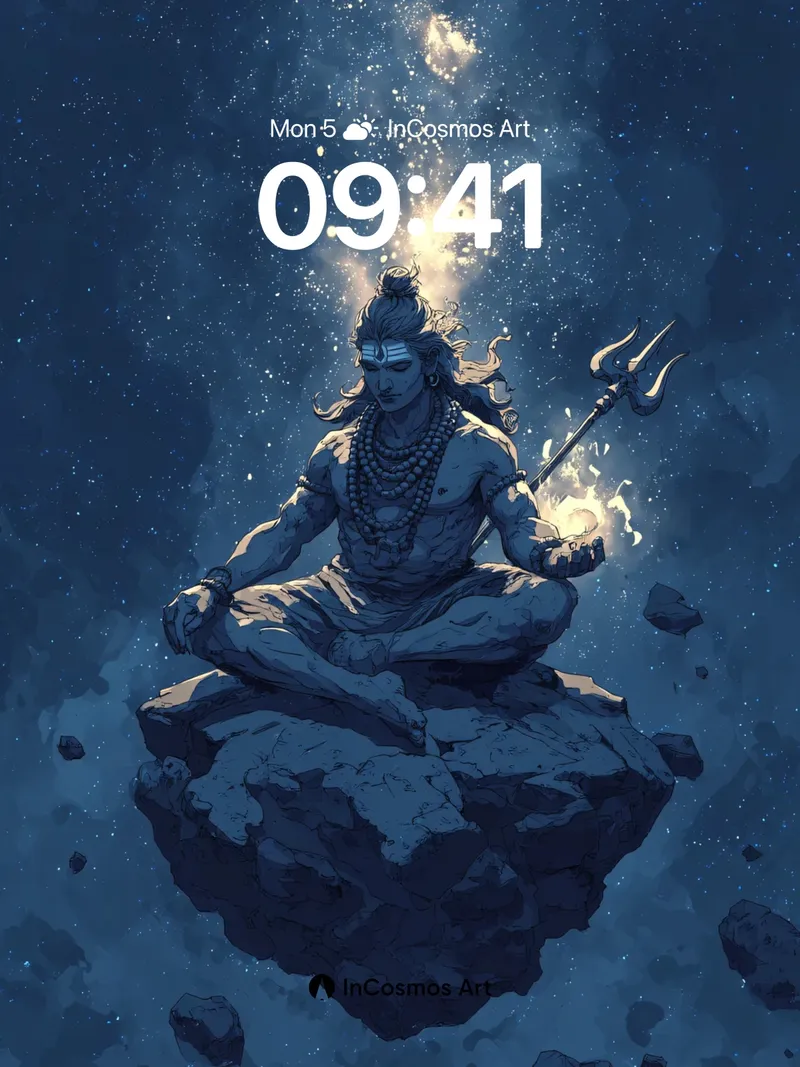
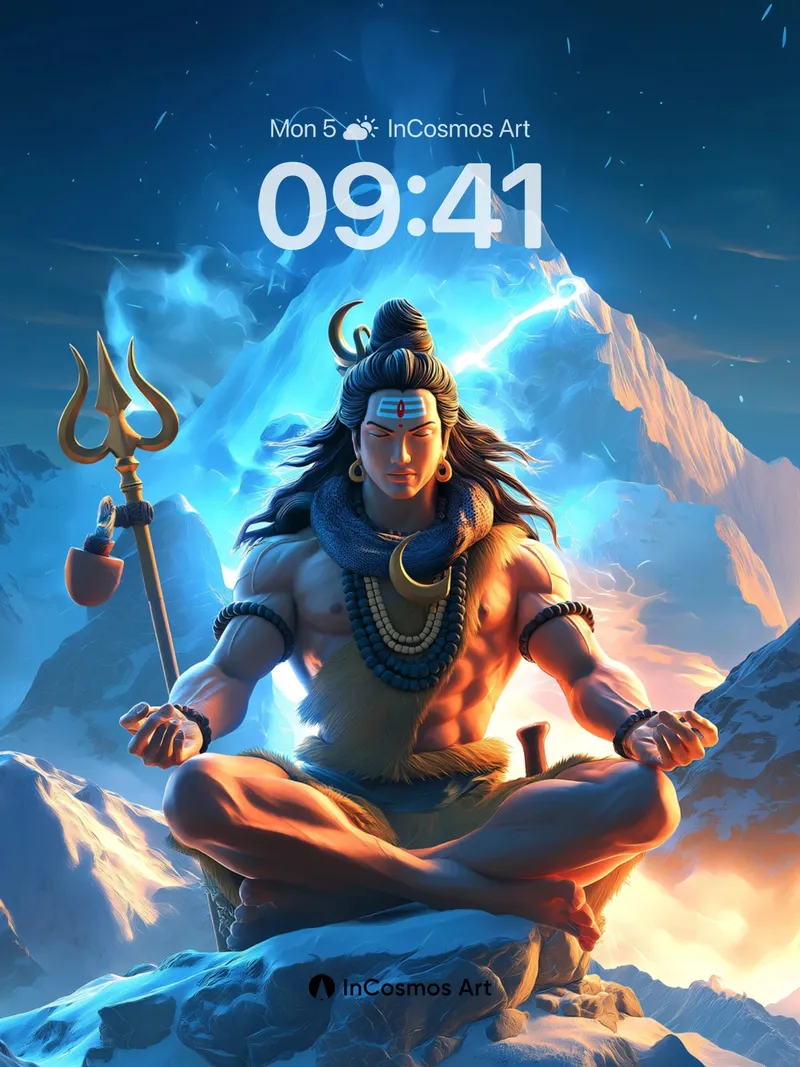
At the intersection of mountains and sky, a blue silhouette emerges quietly. This is not a random occurrence of nature but a condensation of consciousness, a projection of divinity into the material world. Blue is more than skin tone; it is a symbol of cosmic origin. It pierces through temporal dust, transforming human inquiries about existence, destruction, and rebirth into an ineffable silence. This silence is not emptiness but fullness—like the cold air atop snow-capped peaks, like the silent currents beneath deep seas. Each breath becomes ritual, every inch of skin carries ancient memory. Shiva’s presence does not depend on speech or motion but resides in posture: seated beneath a tree, trident resting beside, eyes closed yet mind open. He does not wait to be worshipped; his mere being reveals truth to the world.
The Contour of the Divine and Resonance with Nature
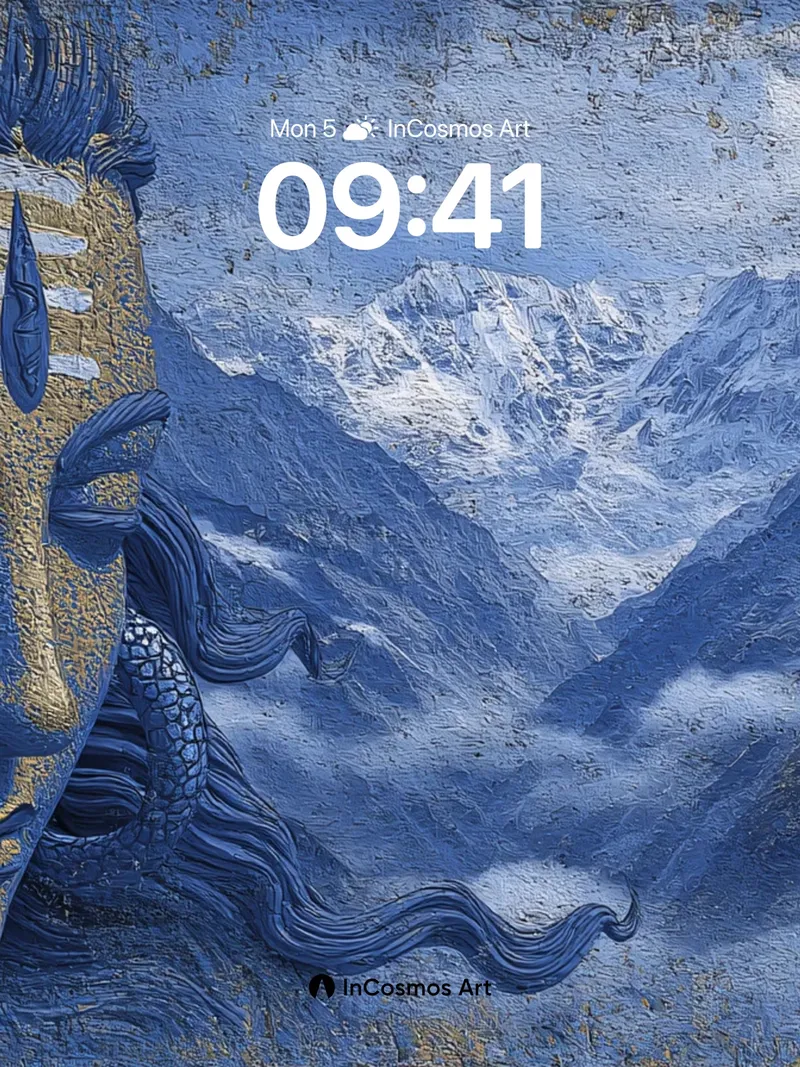
Mountain ridges echo facial features as if heaven and earth were never separate. Rock textures mirror skin creases, mist swirling like flowing hair. This fusion is not artistic imitation but ontological convergence. When humans gaze upon high peaks, they see not just geological formations but transcendent power. Shiva’s image here ceases to be religious iconography and becomes an embodiment of ecological awareness—he is both creator and guardian, manifestation of natural law. His blue hue harmonizes with the mountain’s cool tones, forming visual balance and spiritual unity.
The Weight of Symbols: Trident and Flame
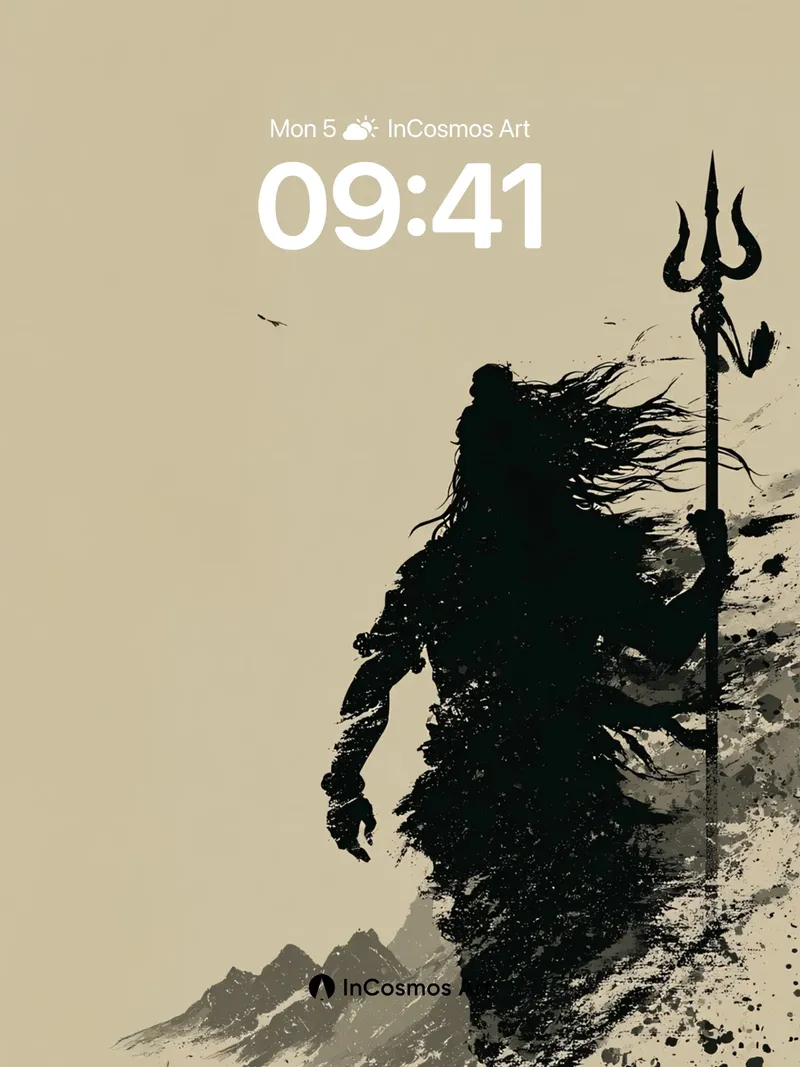
The trident, central motif, signifies both destruction and creation. Its tip pierces void, representing overthrow of old order; its form remains stable and balanced, indicating new structure. Fire burning atop the head is not anger but purification. Light reflects on the third eye, not sensory extension but awakened awareness. This symbolic system exists not in isolation but within a cultural continuum—it stems from ancient myths yet continues to shape modern psychology. People still seek narratives of 'destruction for rebirth' during crises, reflecting collective unconscious patterns.
Meditation as Action
True action lies not in noise but in stillness. Shiva’s meditation is not escape from reality but confrontation with essence. When body rests, mind flows; when outside chaos reigns, inner clarity persists. This state transcends duality, reaching non-dual realization. Modern individuals yearn for moments of peace amid fast-paced lives, often reducing meditation to relaxation technique. Yet Shiva embodies radical transformation—inner introspection leading to outer change. His presence reminds that real strength comes from internal stability, not external conquest.
Language of Color: Dialogue Between Blue and Gold
Blue dominates the atmosphere, representing infinity, depth, and eternity. Gold appears as accent—on forehead, ornaments, weapon—symbolizing wisdom, energy, and sanctity. Their contrast is not conflict but complementarity. Blue is background, space; gold is focus, meaning. This chromatic pairing holds aesthetic value and profound philosophical implication: only within vast emptiness can finite light exist. Just as individual life is brief, it gains eternal significance against the cosmos.