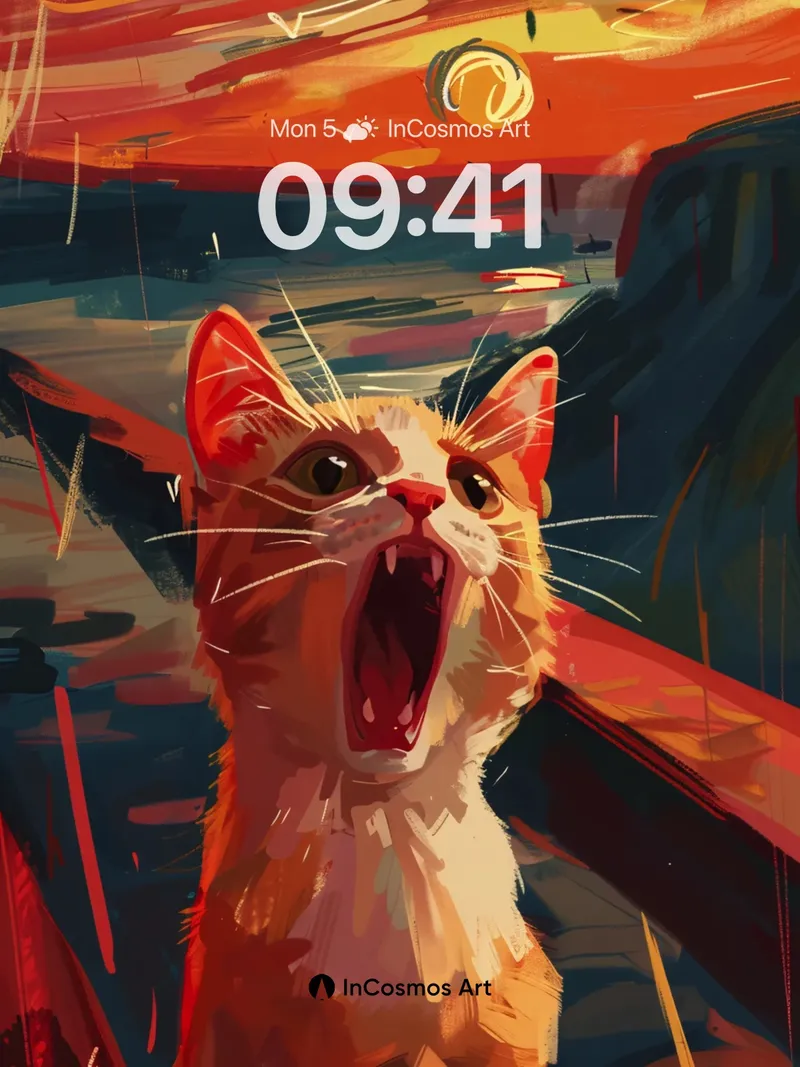
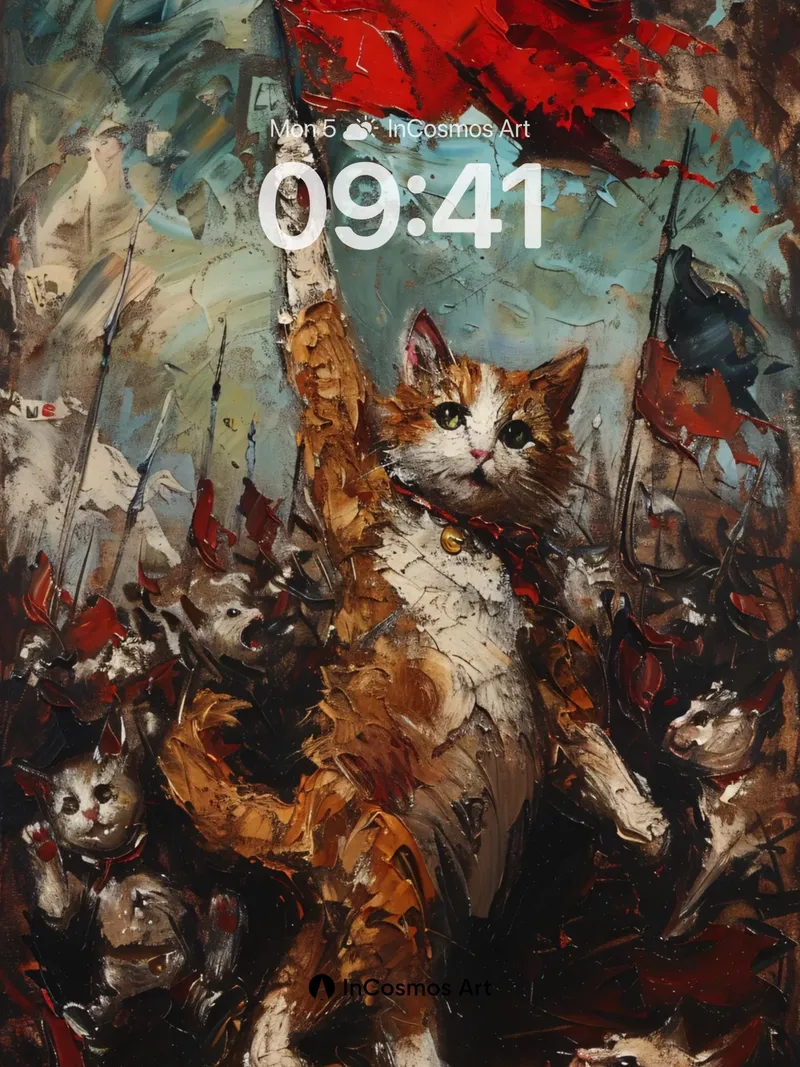
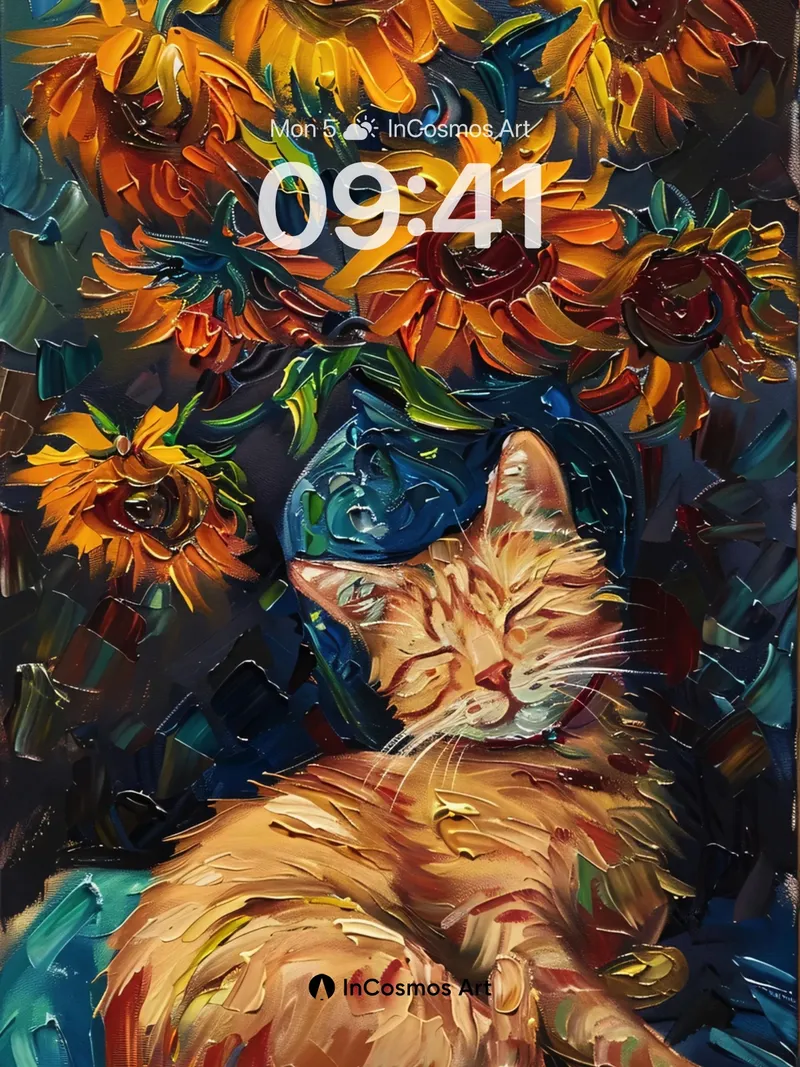
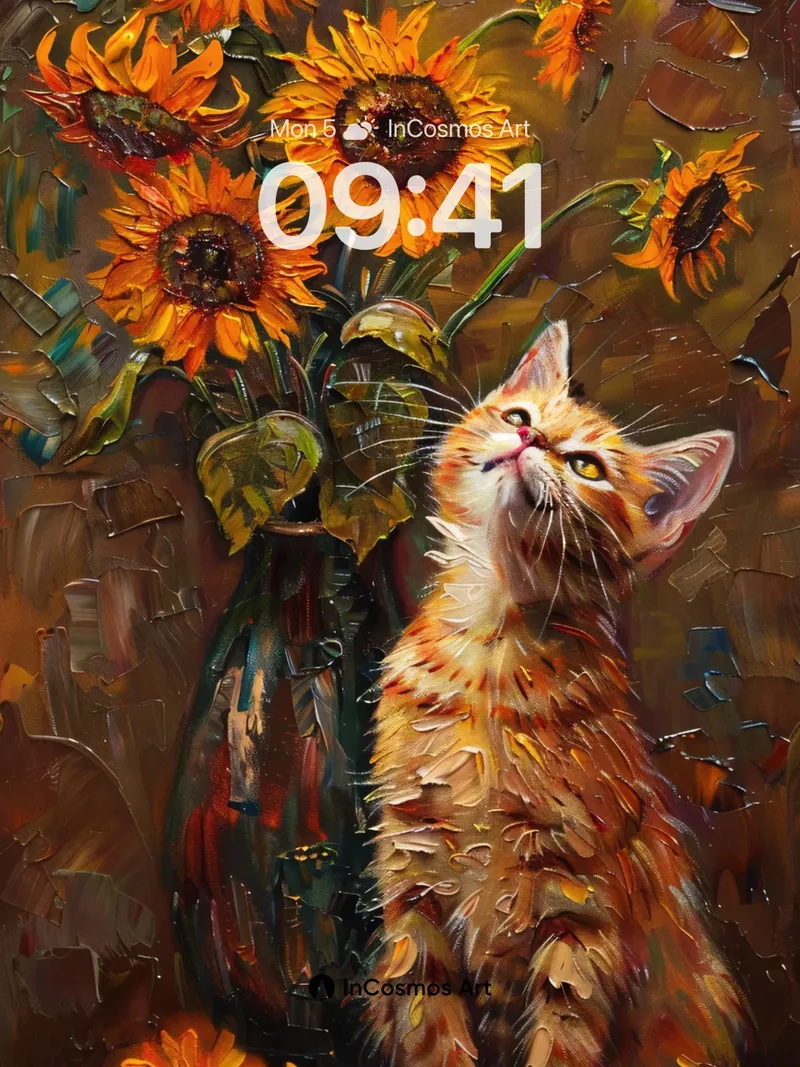
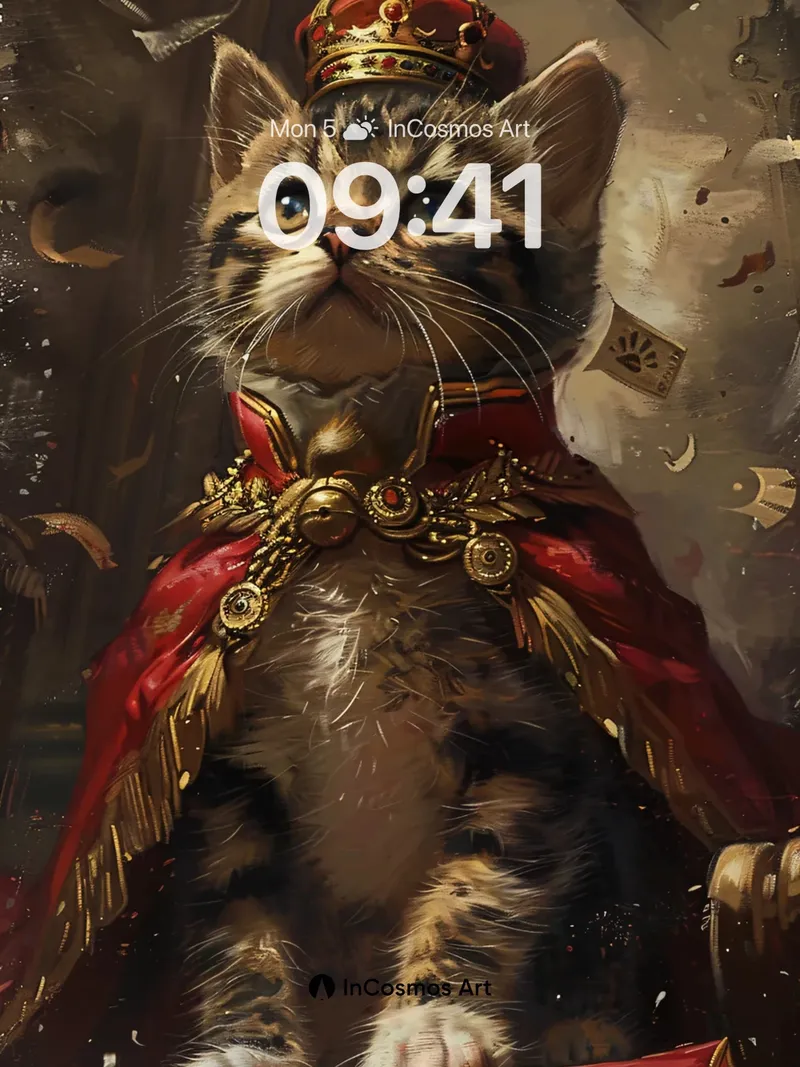
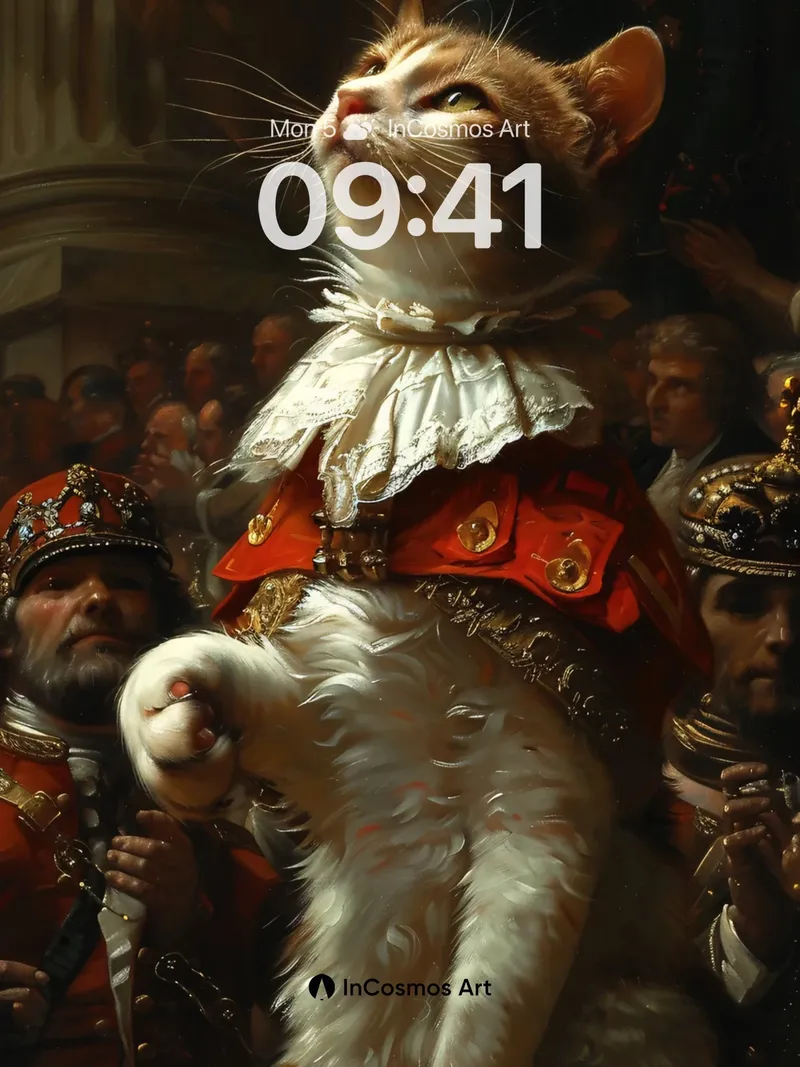
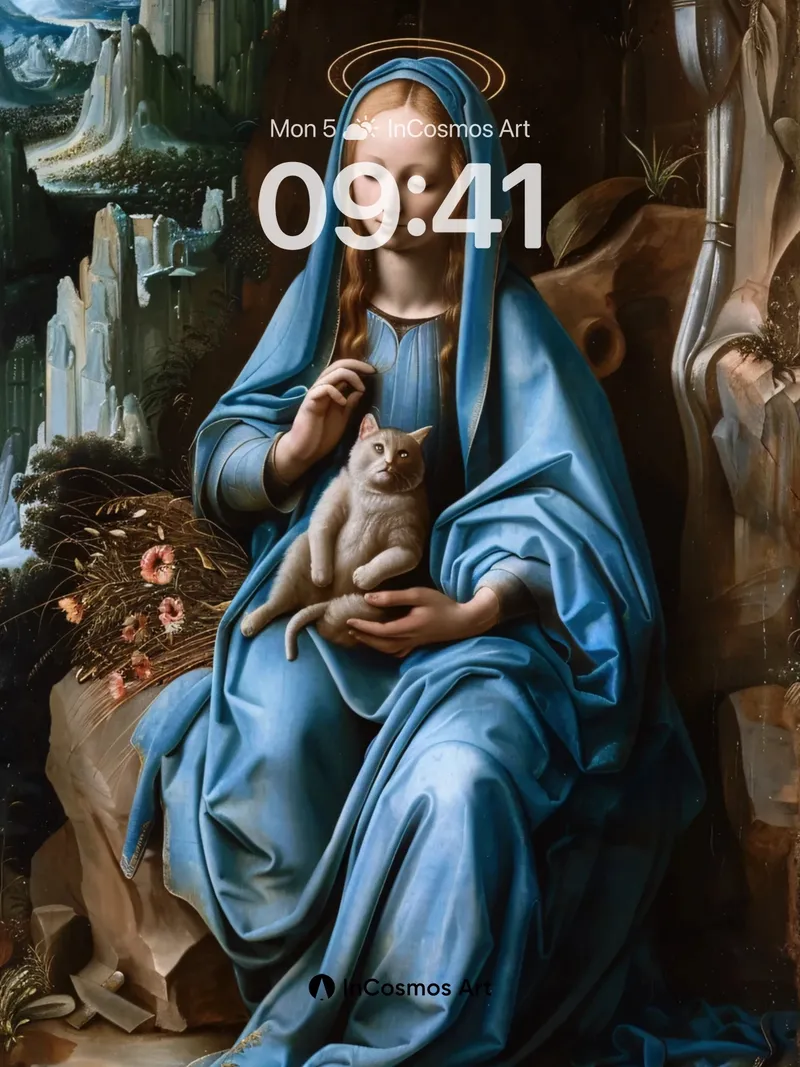
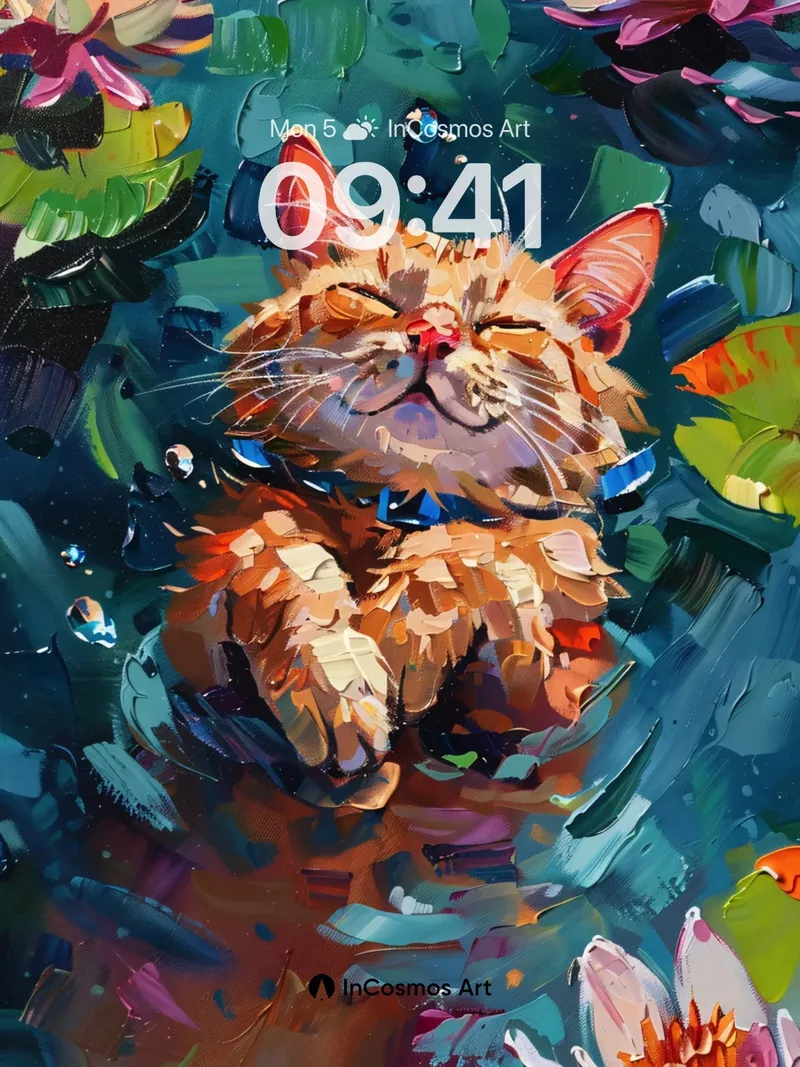
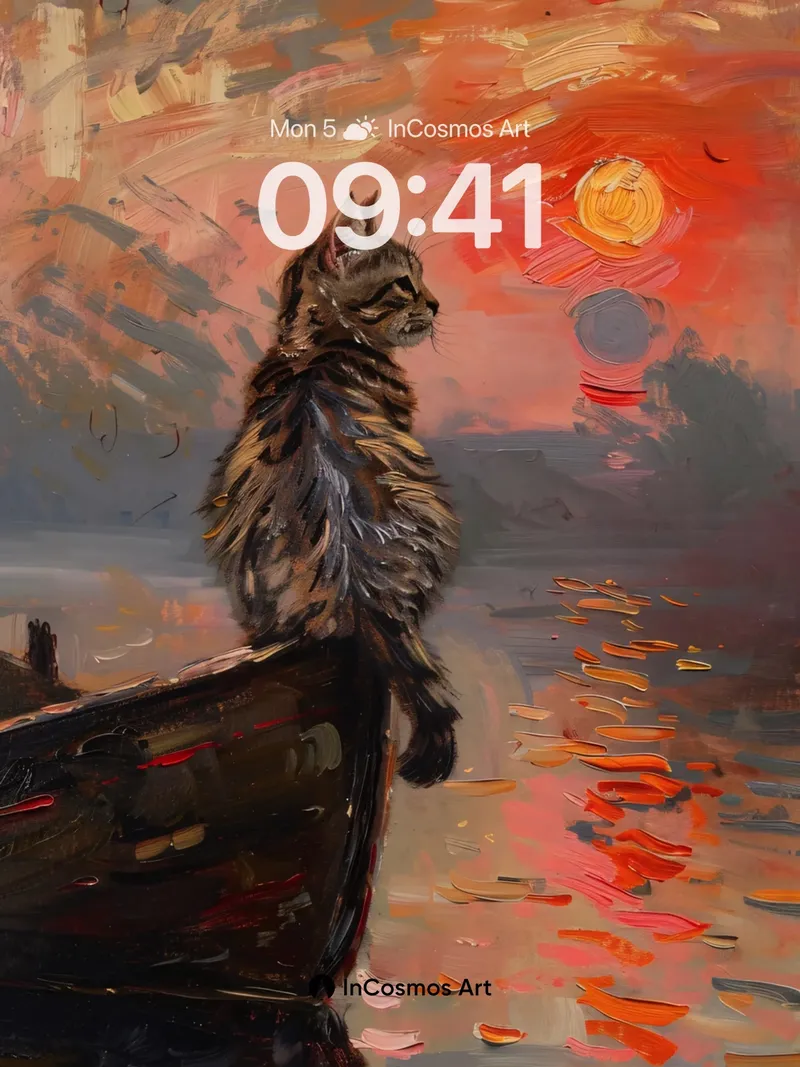
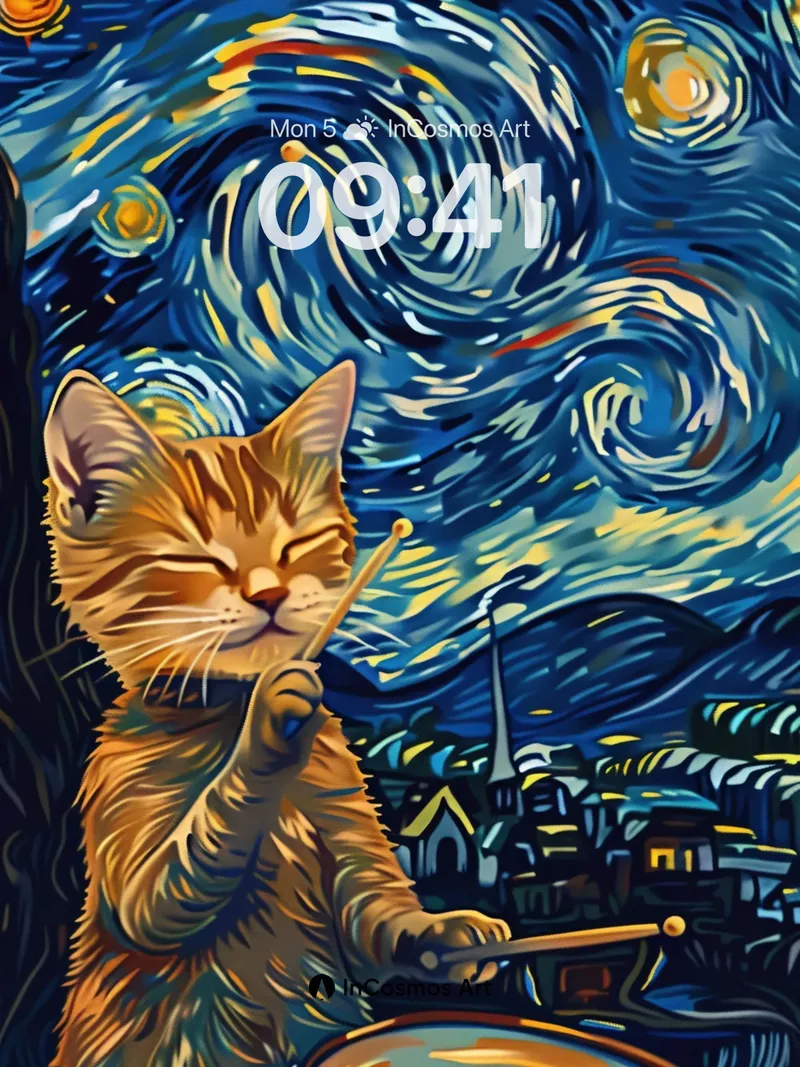
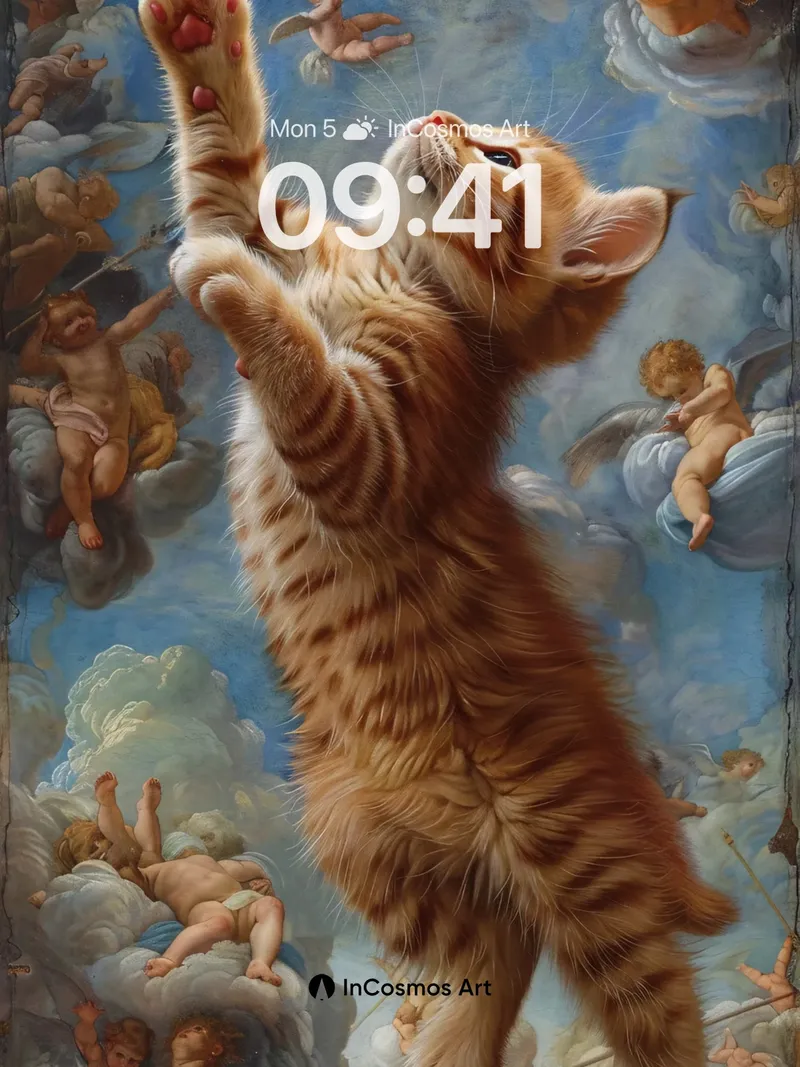
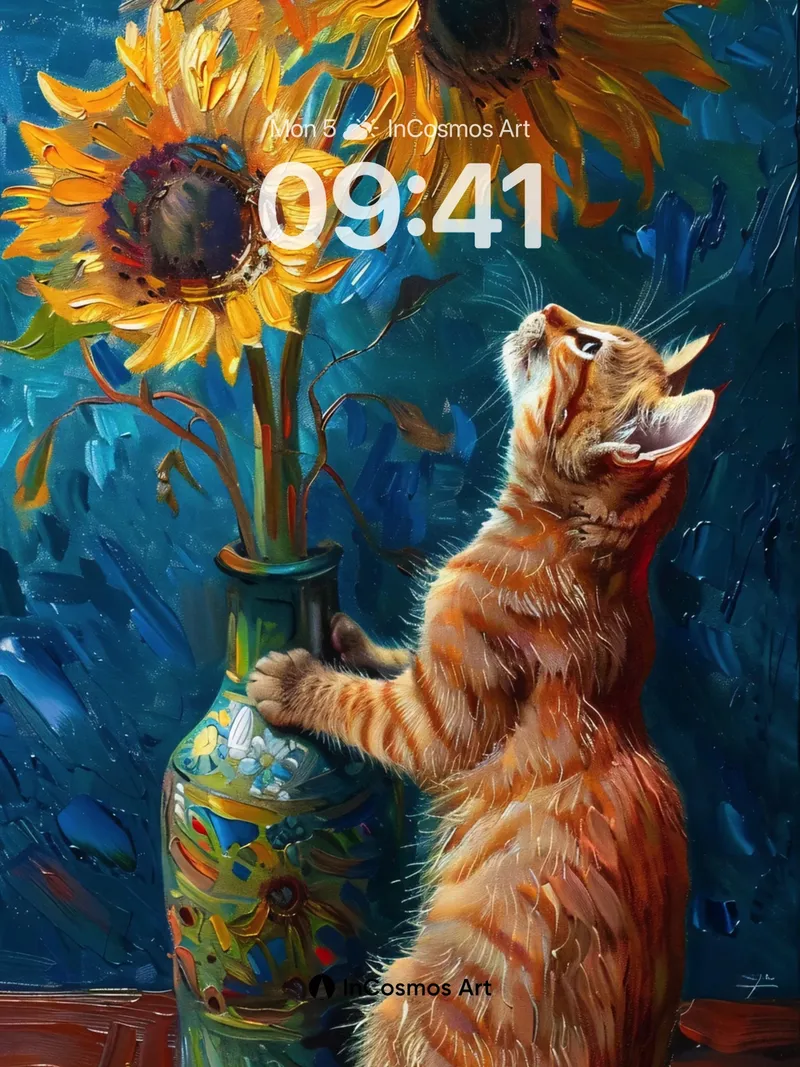
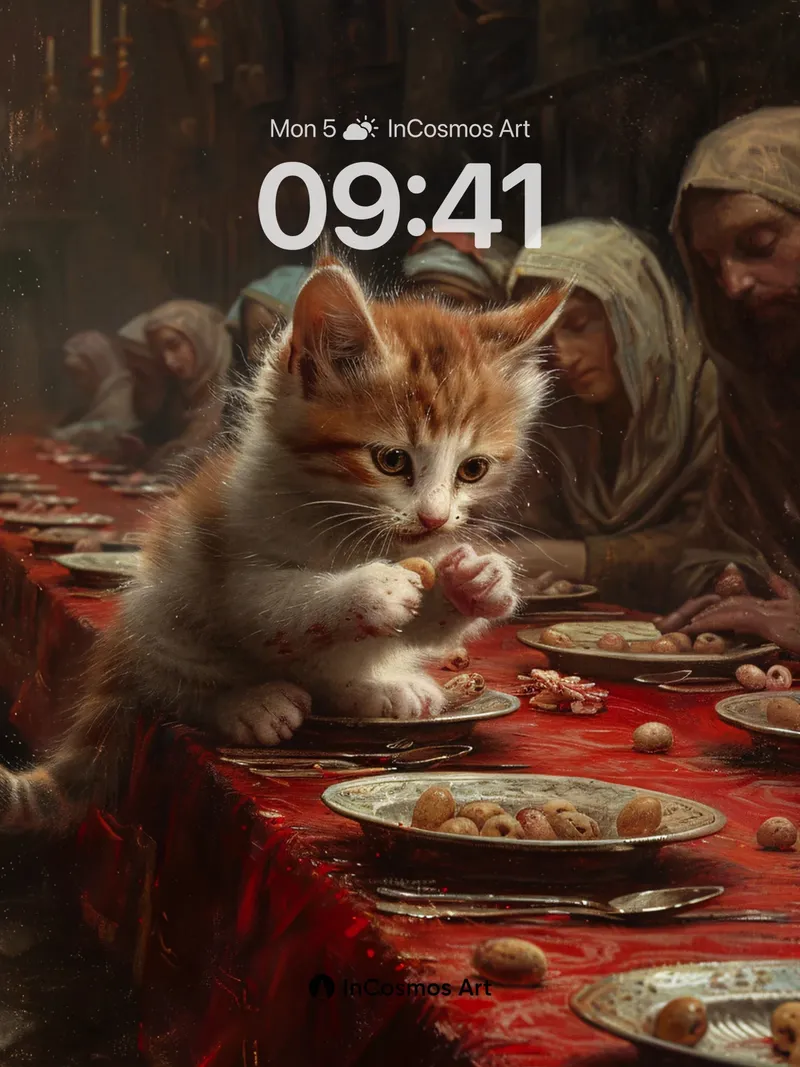
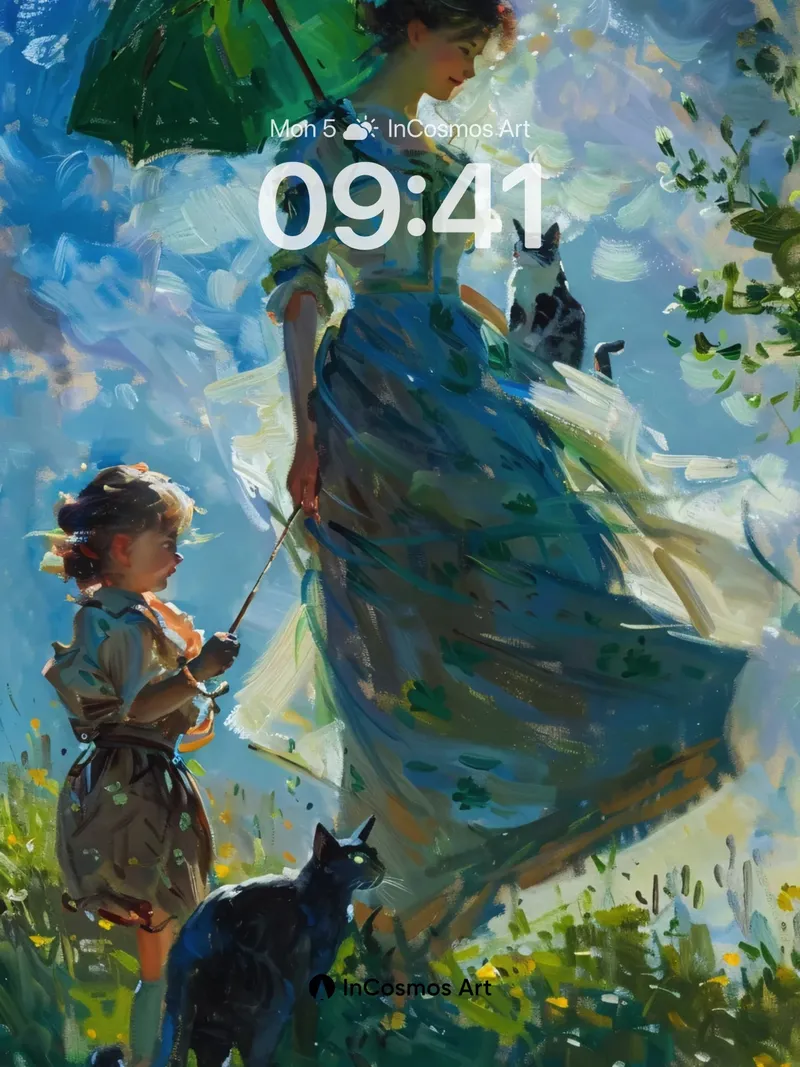
When cats闯入 the sanctum of human art, a sense of absurd yet charming dislocation arises. They are no longer docile pets but transform into protagonists on canvas, scrutinizing classics revered by humans with feline arrogance and laziness. This cross-species artistic reconstruction is both a tribute to classics and a humorous deconstruction.
The Scream of the Meow
In Munch's famous painting, the original terrified human figure is replaced by an orange cat with its mouth wide open. The cat's pupils constrict in the sunset glow, emitting not a silent scream but a roar full of life. Perhaps the can is empty, or the pooper-scooper is late. Transforming existential anxiety into specific trivialities makes the originally heavy scene instantly grounded. The cat's anxiety is concrete and solvable, dissolving the metaphysical despair of the original work.
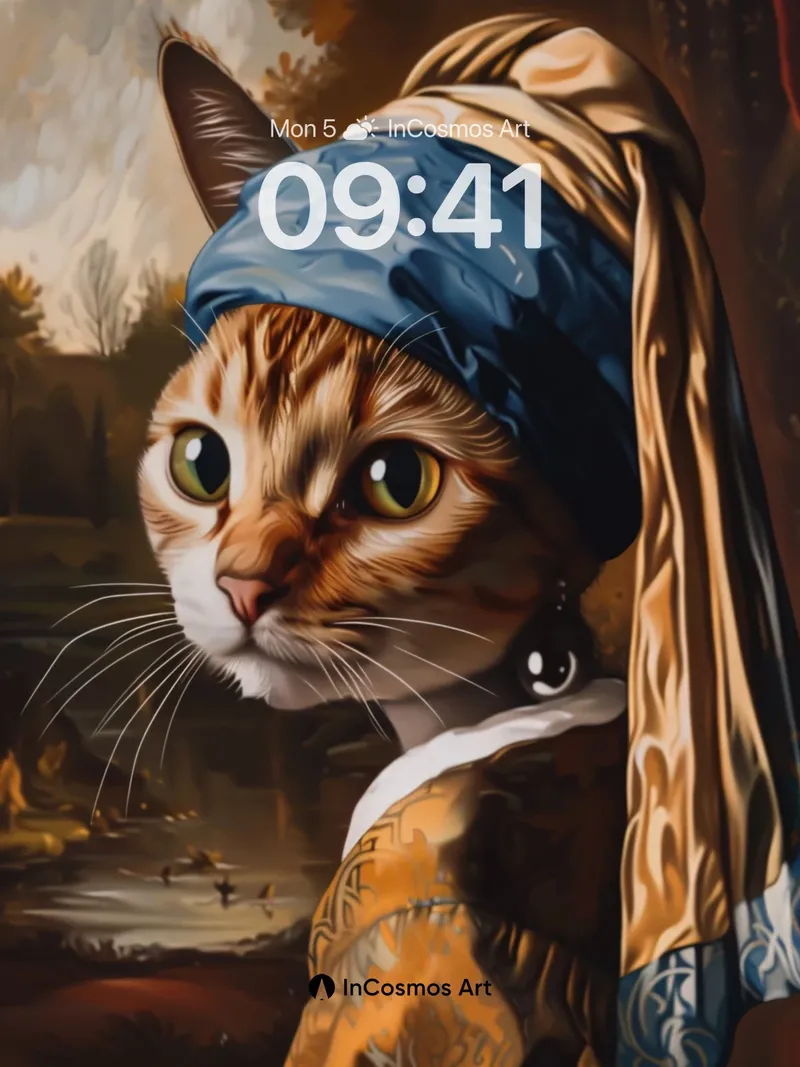
Girl with a Pearl Earring Cat
The light and shadow in Vermeer's masterpiece are perfectly replicated on a calico cat's face. The iconic blue headscarf wraps around cat ears, with a pearl earring swaying beside them. The cat's gaze is no longer the girl's shyness but a hunter's unique focus and calmness. In that moment of looking back, it seems to see through the audience outside the screen, assessing whether they pose a threat or are worth a rub. This shift in gaze transforms the emotional tension of the original work into a more primitive survival instinct, making people feel a tension from the wild while appreciating beauty.
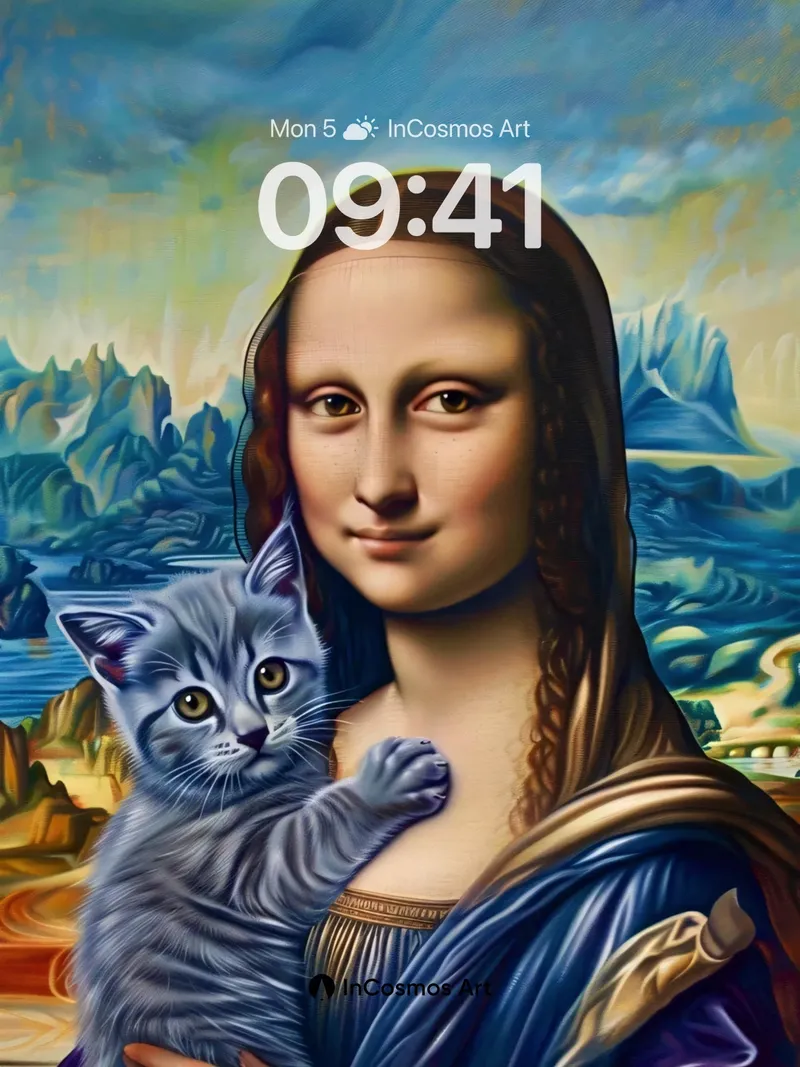
Mona Lisa's Cat
The mysterious smile in Da Vinci's painting now belongs to a blue cat held in arms. Mona Lisa's gesture remains elegant, but the cat in her arms appears indifferent. One paw rests on the owner's arm, eyes wandering between the mountains and rivers in the background. This combination breaks the harmonious unity between figure and background in the original work. The cat's addition adds a layer of narrative: this is no longer a portrait about female mystery but a story about companionship and alienation. The contrast between the cat's indifference and human affection forms a modern metaphor.
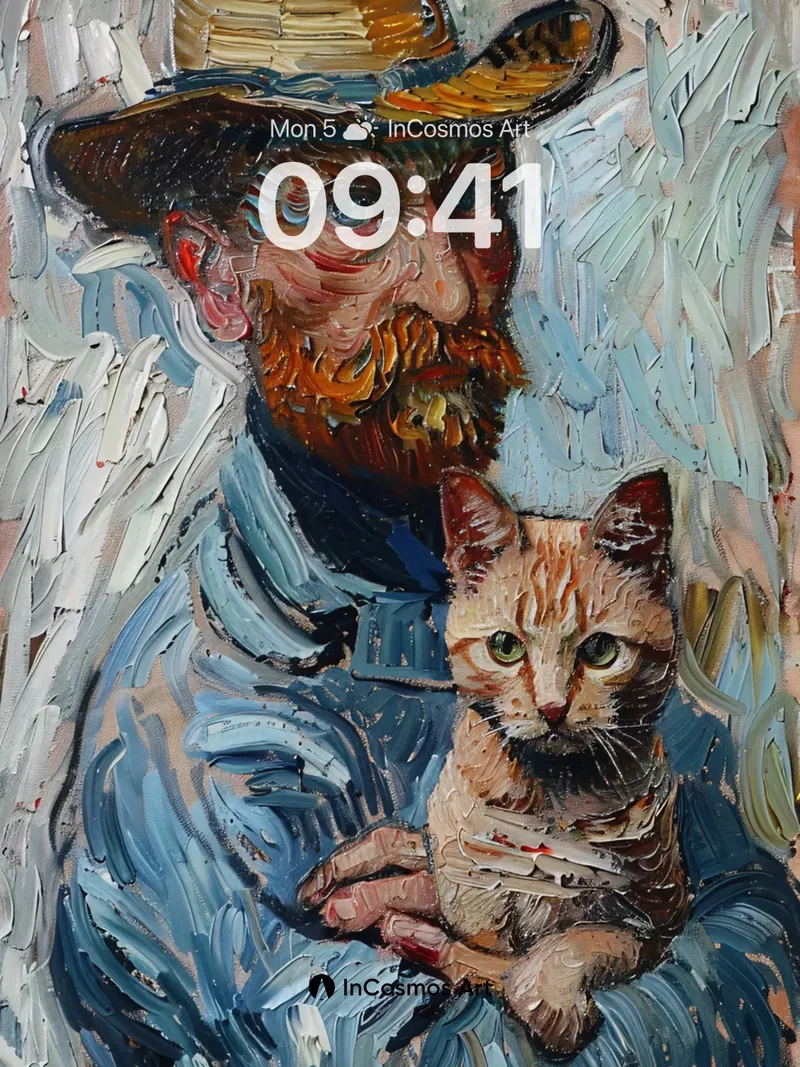
Van Gogh and His Cat
In Van Gogh's self-portrait filled with swirling brushstrokes, a kitten is added to the painter's arms. Van Gogh's eyes remain狂热 and melancholic, but the cat in his arms appears exceptionally calm. This contrast between movement and stillness adds warmth to the painting. The cat's existence seems like an anchor in the painter's chaotic spiritual world, soothing the painter's soul with silent companionship. Although this interpretation is subjective, it makes people feel the human temperature behind art. Cats are not just pets but comfort in the artist's lonely life.
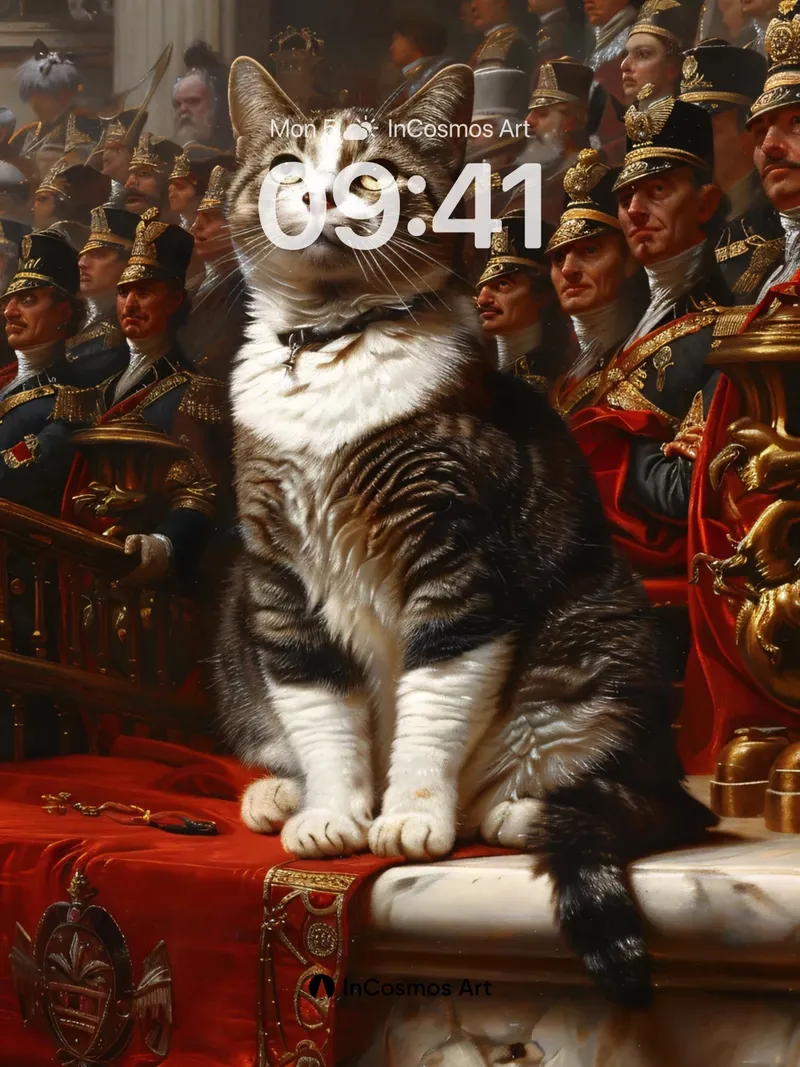
Napoleon's Coronation Cat
In David's grand historical painting, a tabby cat sits on the coronation steps, becoming the focus of the scene. The surrounding dignitaries remain solemn, but the cat's presence makes the entire scene ridiculous. Wearing a collar and posing elegantly, it seems to be the true ruler. This dislocation of power makes one wonder: in the torrent of history, who is the true protagonist? The cat's transcendent attitude seems like a silent mockery of human power games. It cares not about crowns and scepters, only whether the red carpet underfoot is soft.