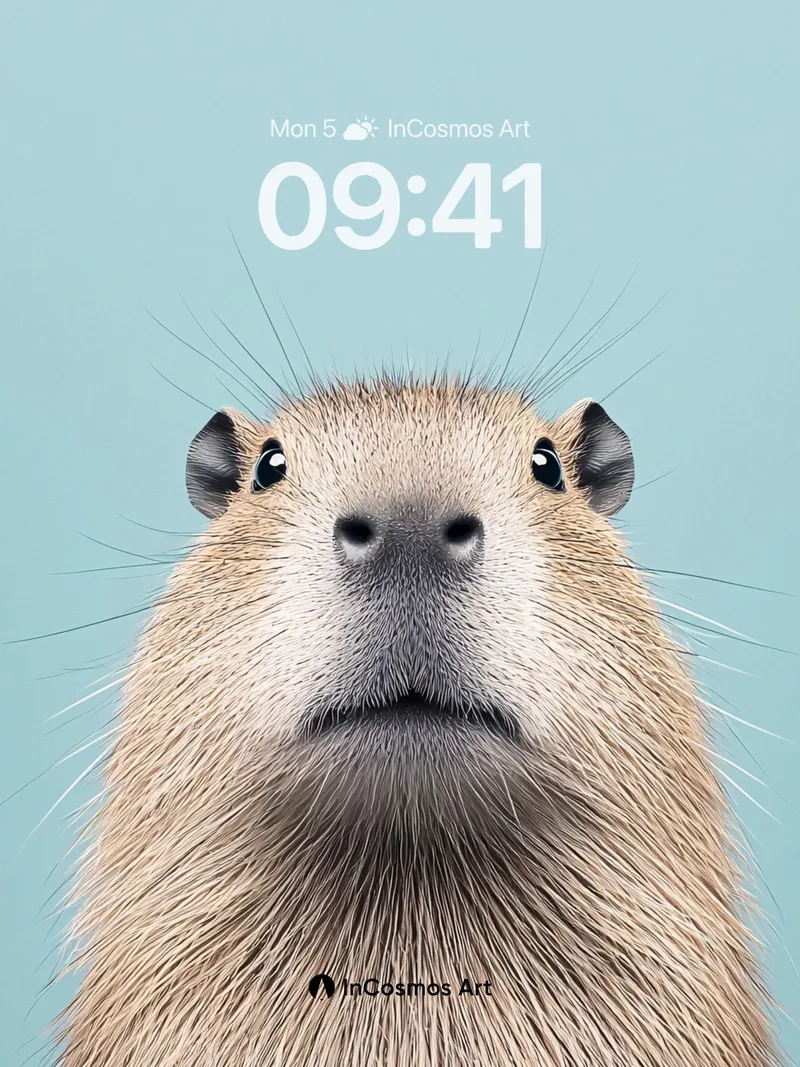
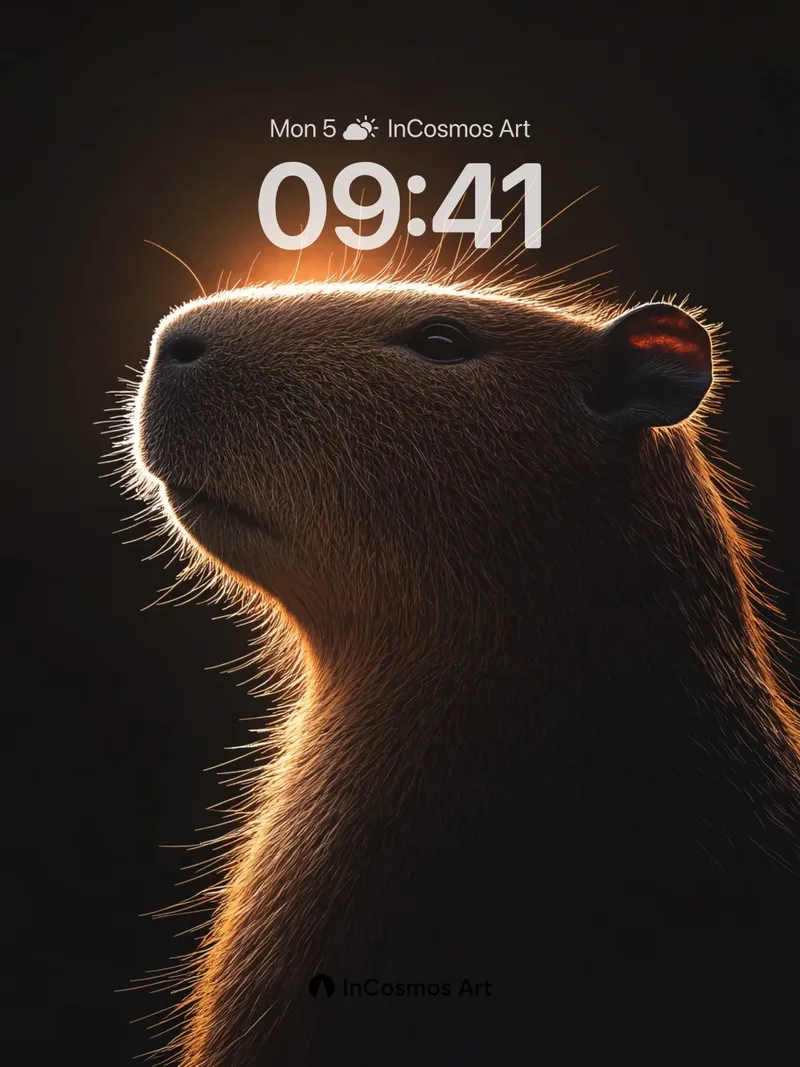
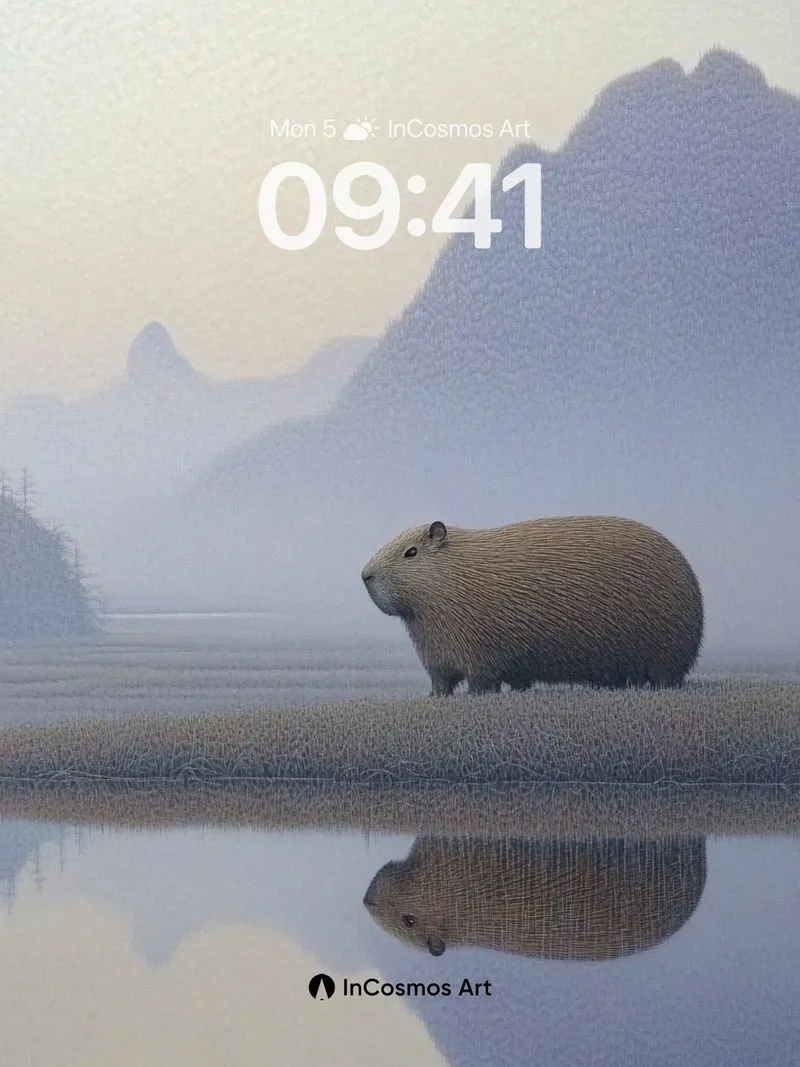
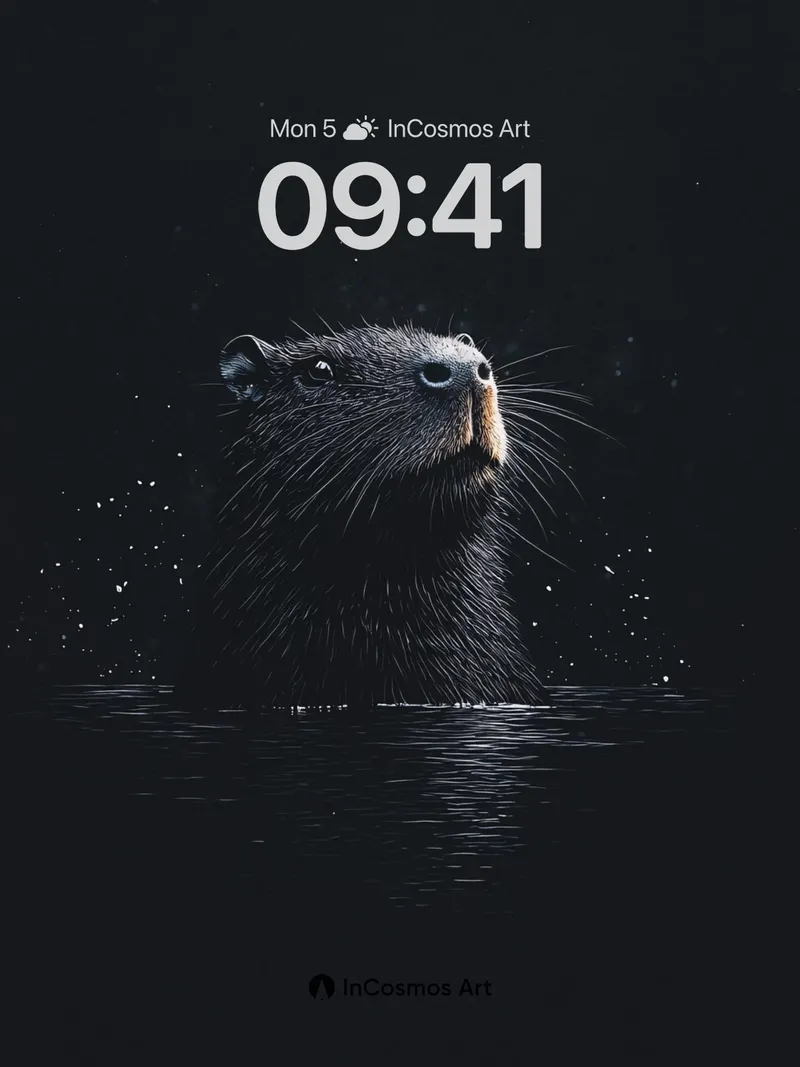
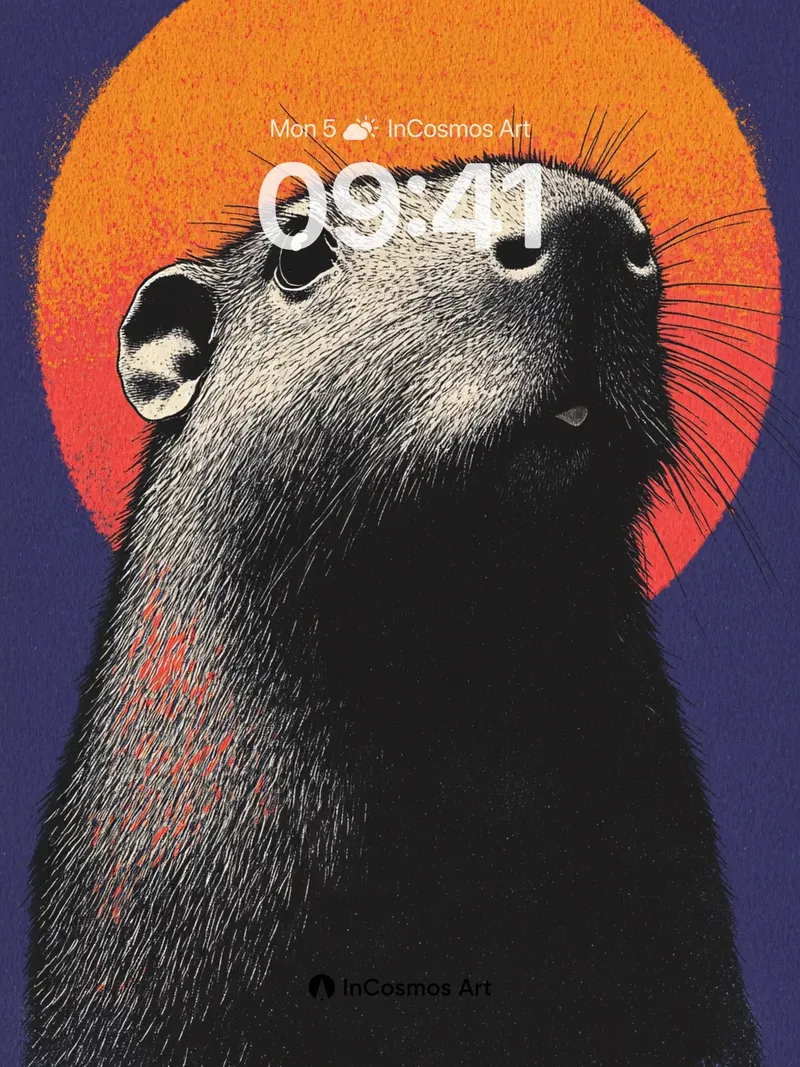
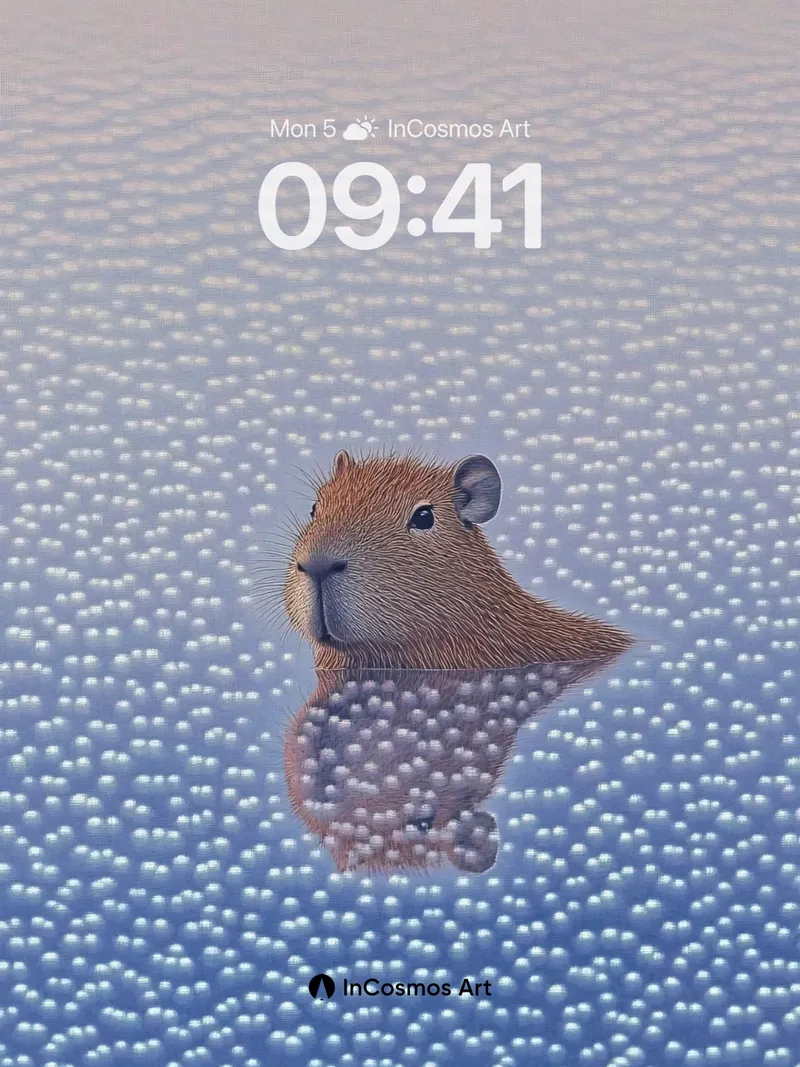
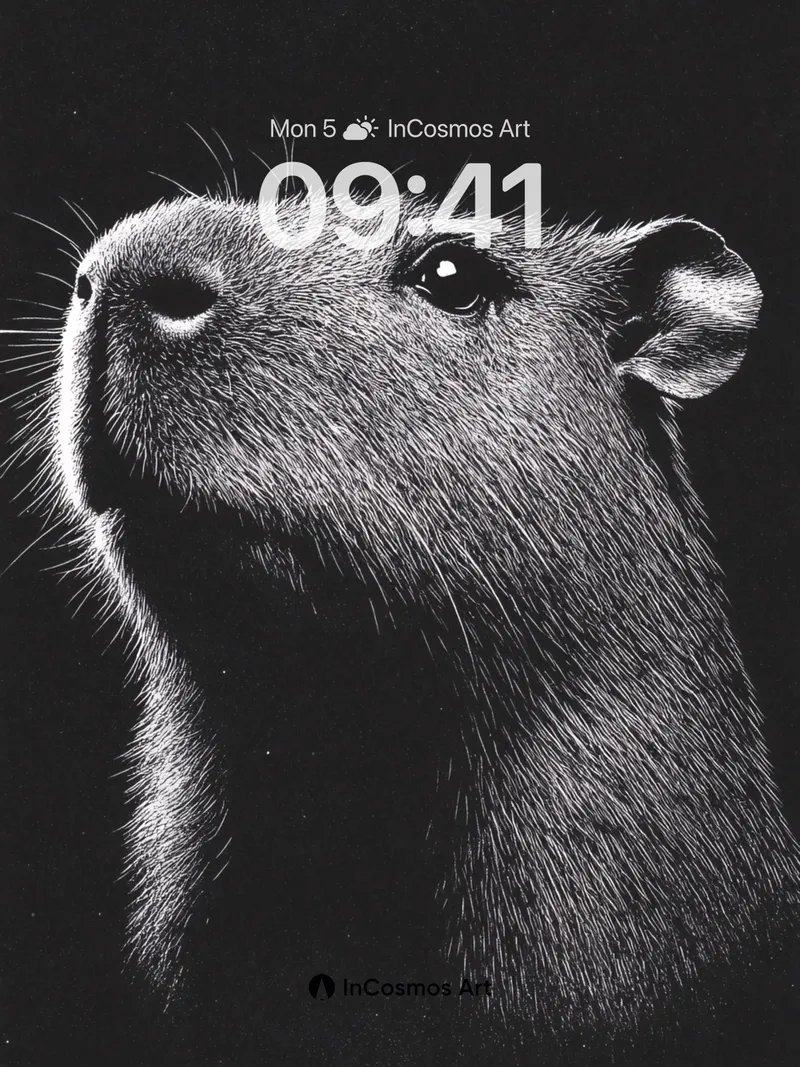
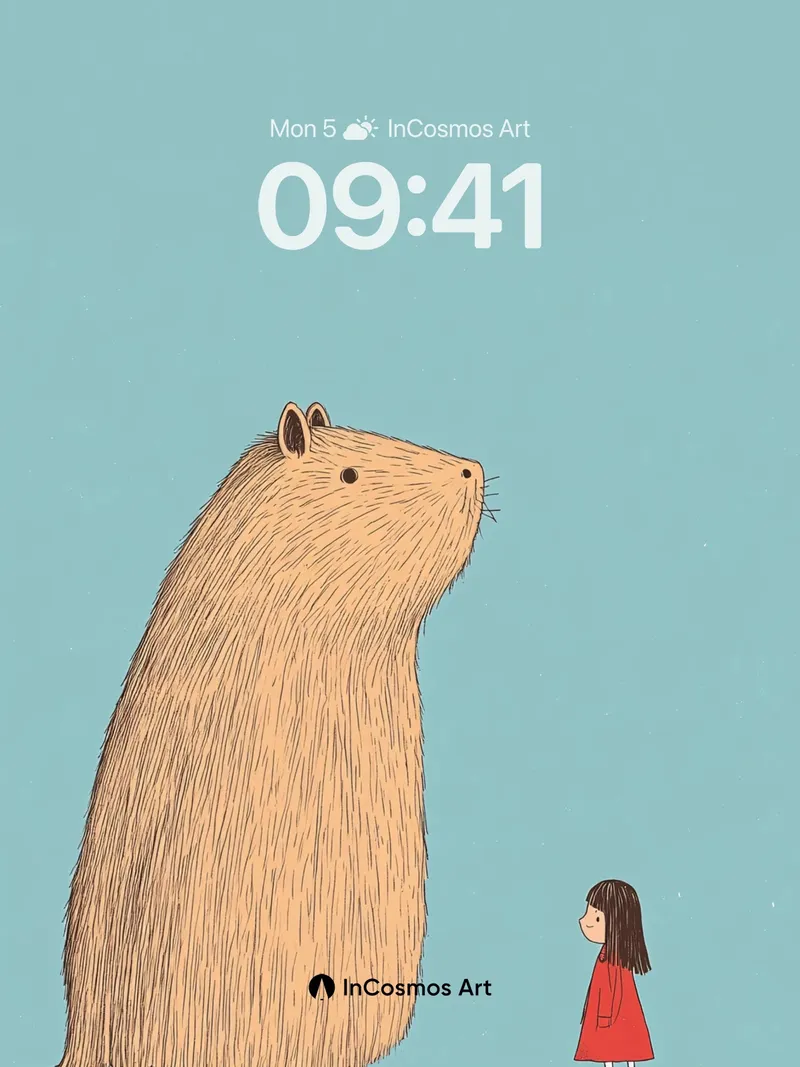
In silent gaze, a presence spreads. The capybara, with its still posture, becomes a bridge between wilderness and imagination. It does not shout, yet occupies space; it does not run, yet defines time. Its body extends from the earth, fur like grass in wind, eyes reflecting distant mountains. In an era of digital overexpression, this silence becomes a counterforce—not resistance, but containment. It allows humans to project loneliness, curiosity, and tenderness.
The Scale of Nature
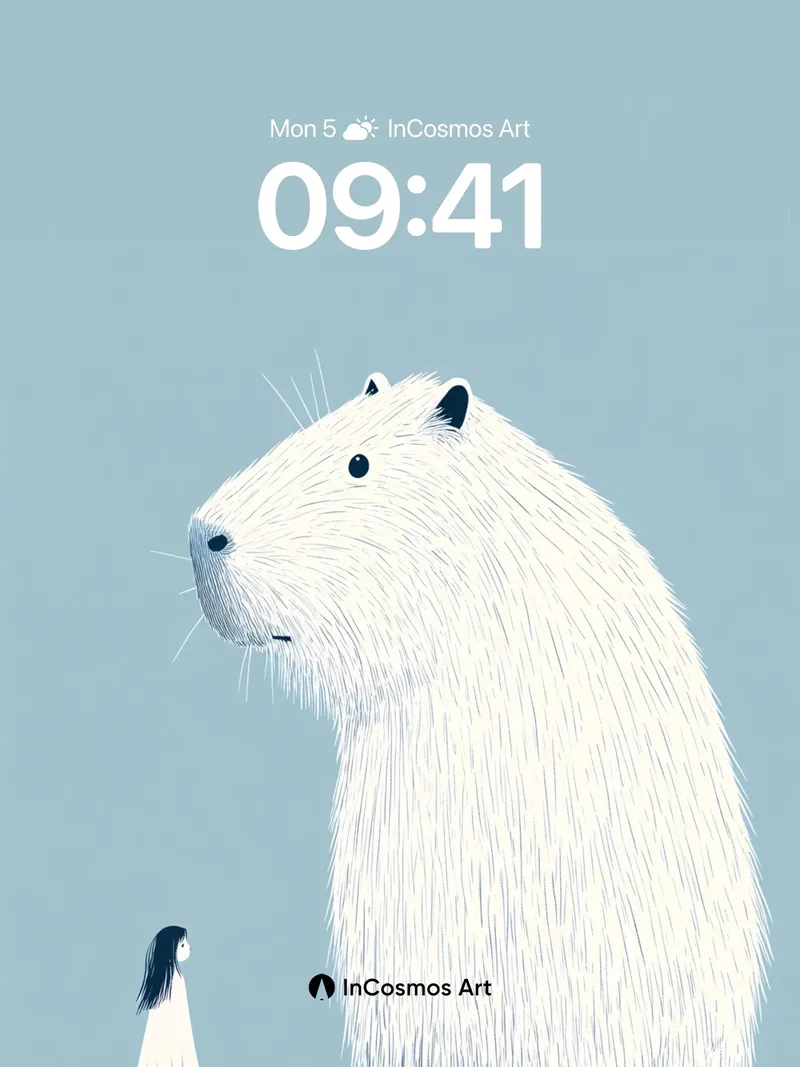
The capybara's size is magnified, creating surreal balance. It is not a fierce beast, yet its disproportionate scale evokes dignity. This is not merely animal depiction, but a recalibration of human scale. When a girl stands beside it, smallness and greatness meet without fear, only silent dialogue. This relationship reveals another possibility in nature—coexistence, not domination. Humans no longer appear as conquerors, but as observers, learning humility through awe.
Echoes of Innocence
Children always appear alongside the capybara. The red-dressed girl, the white-clad girl—their purity mirrors the animal’s primal nature. Together, they inhabit a wordless world, communicating through glance. This interaction transcends species, evoking a childhood memory of pure connection. It is a form untouched by social rules, direct emotional transmission. Beyond adult logic, here exists only one truth: seeing is understanding.
Symbol of Silence
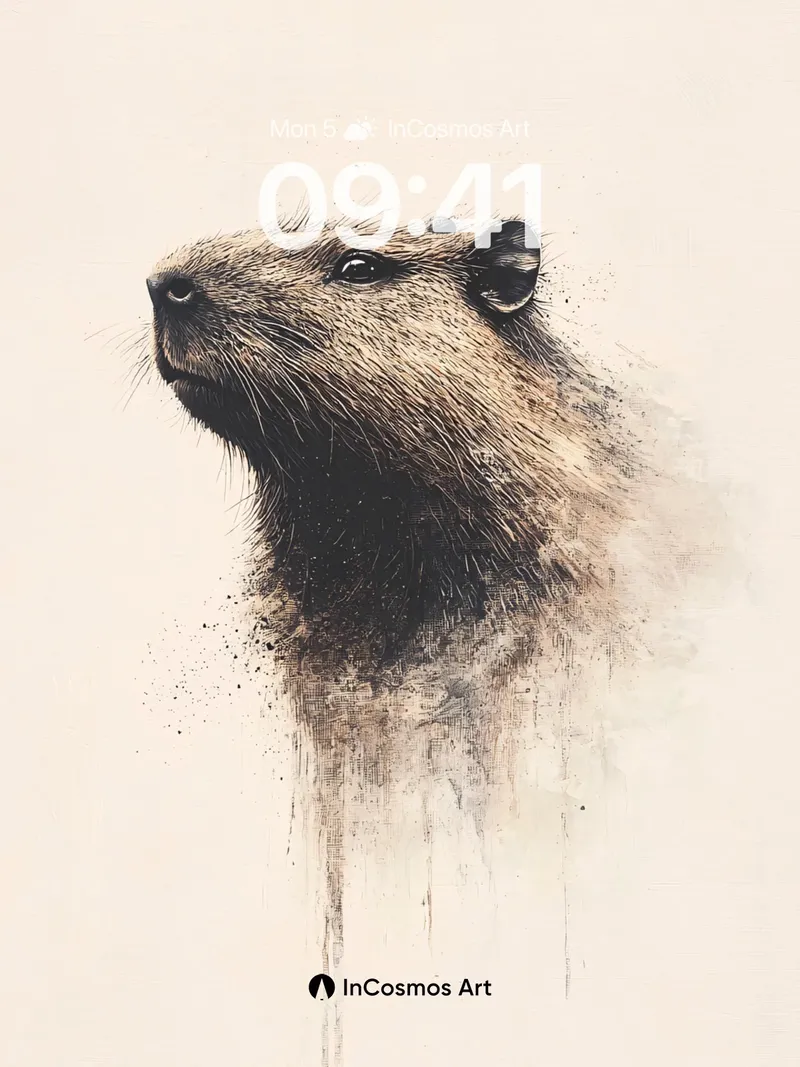
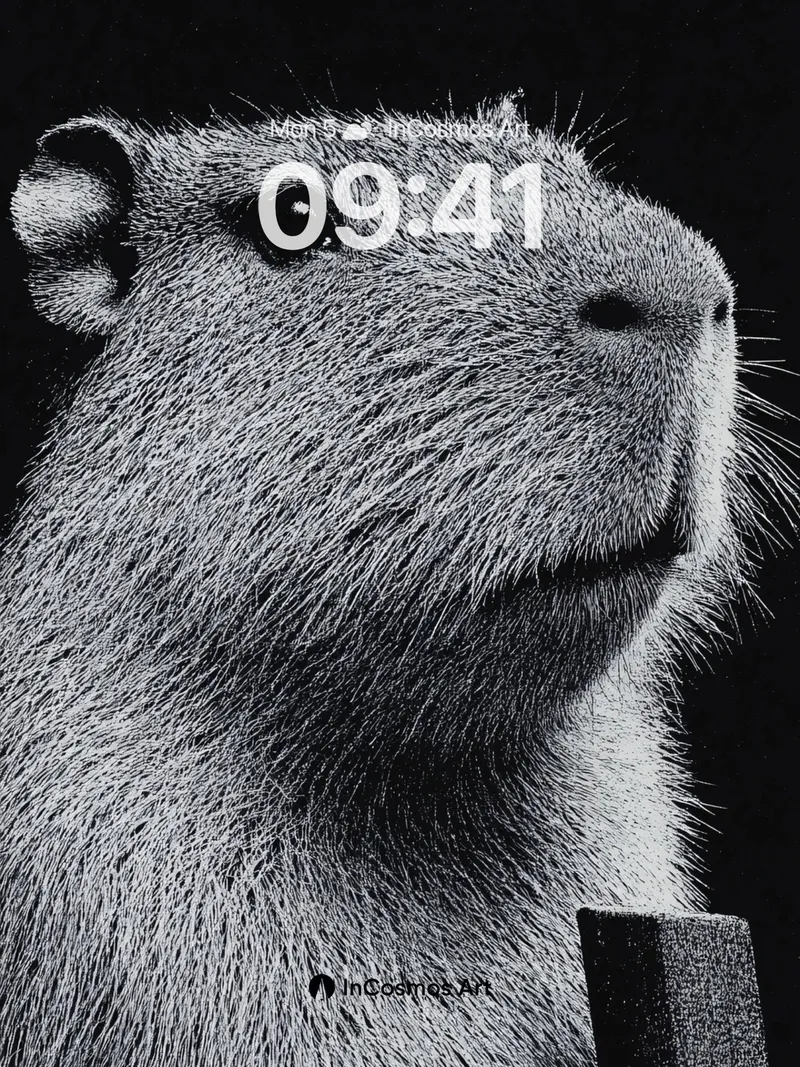
Close-ups of the capybara’s face emphasize depth. It looks upward, as if pondering; it holds wood, like a philosopher with a book. These details grant it symbolic weight without falling into anthropomorphism. It remains an animal, yet carries meaning. In contemporary culture, it becomes a totem of calm—needing no words, seeking no approval, simply being. This being itself is a form of resistance.
The Weight of Being
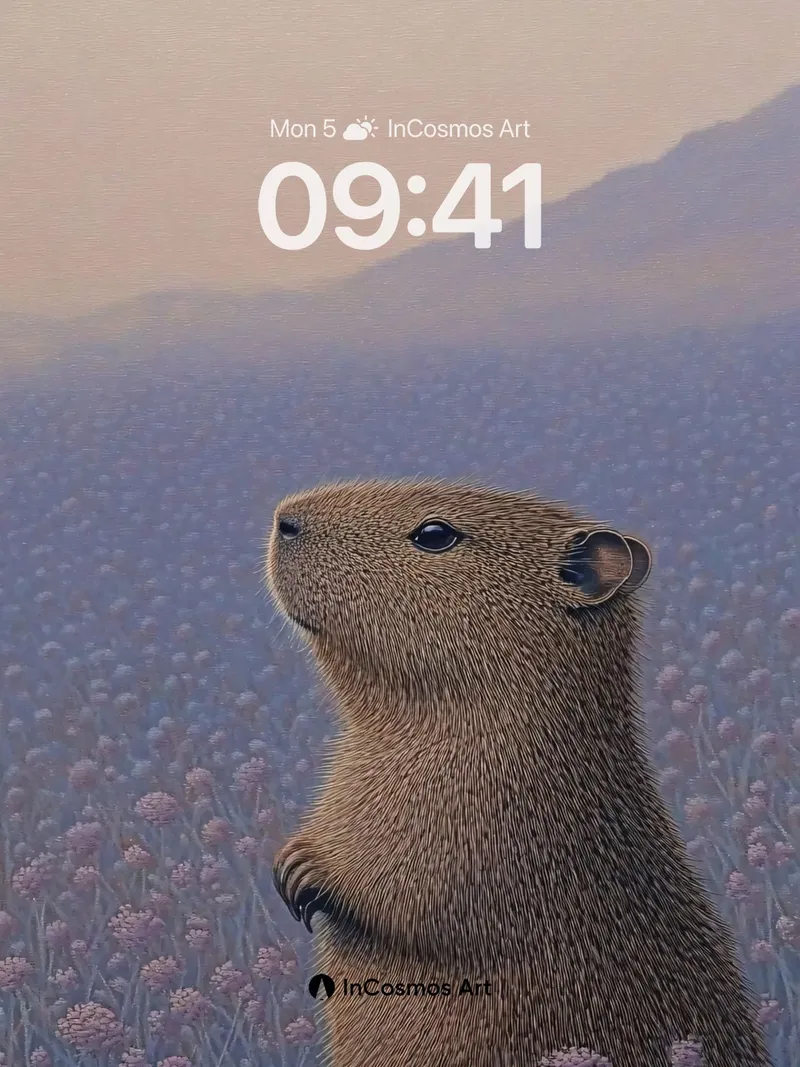
The capybara standing in a field of flowers bears the weight of nature. It neither flees nor performs. Its stance is ecological metaphor: gentle, resilient, enduring. It reminds that true strength lies not in display, but in persistence. In fast-paced society, it moves like a living monument, honoring the value of slowness, focus, and quiet.