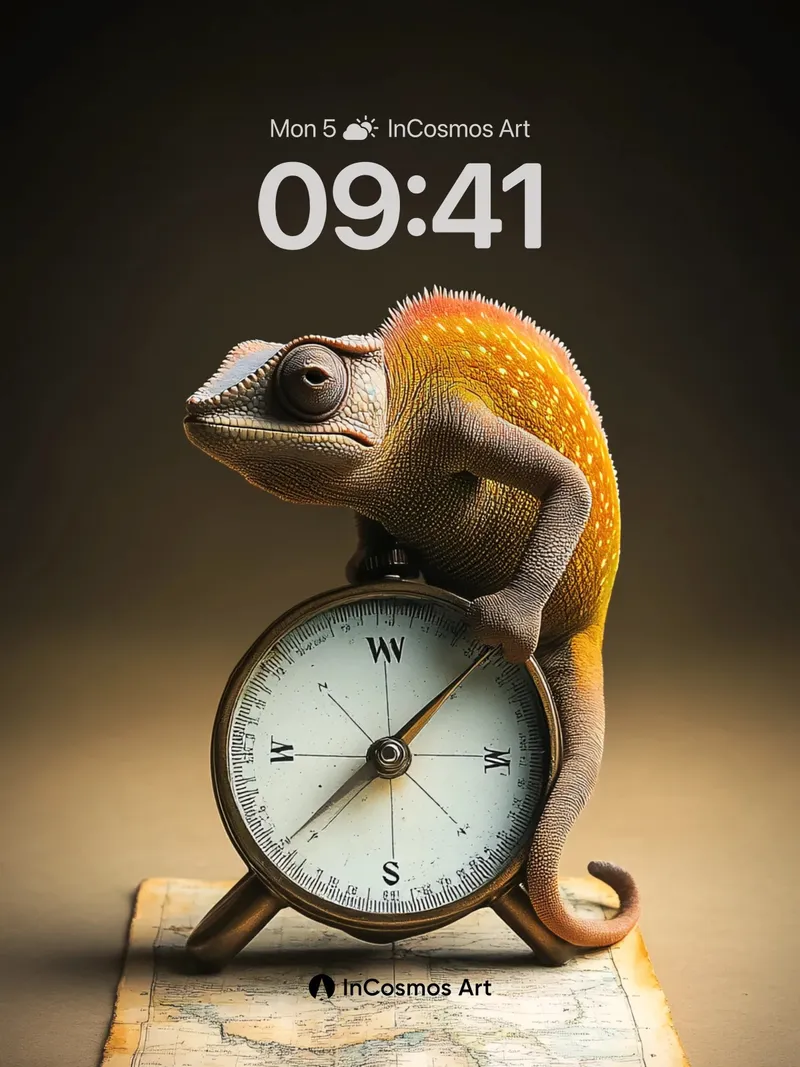
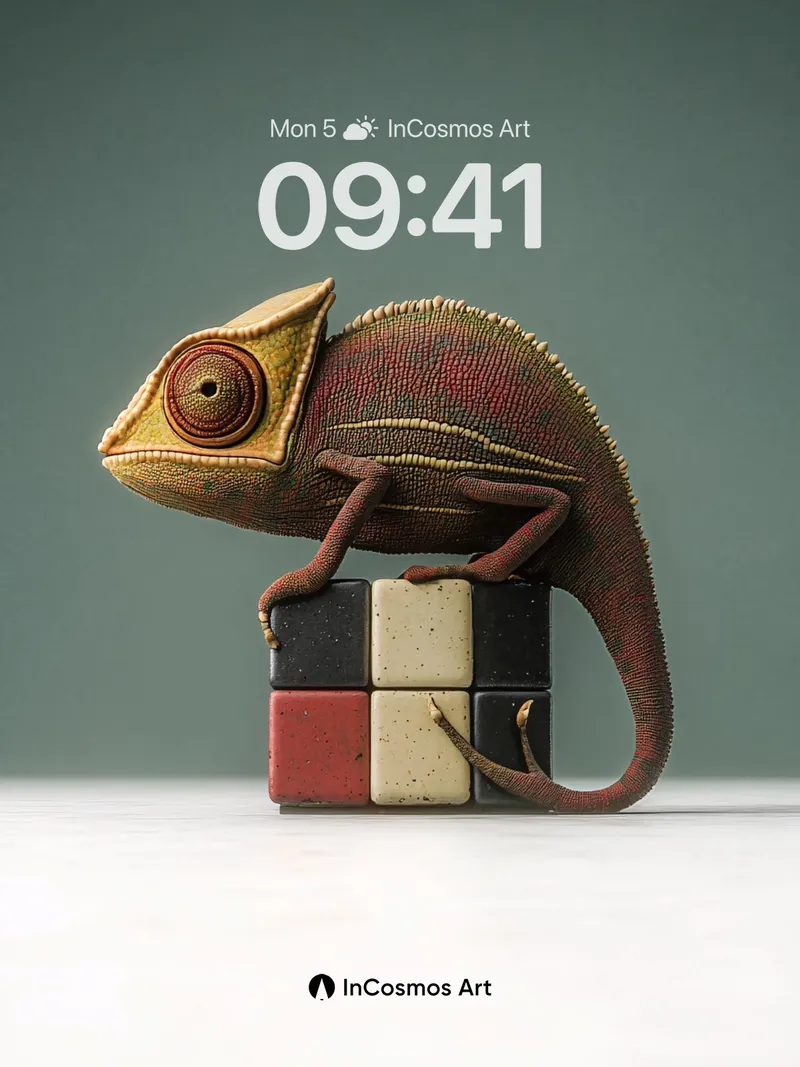
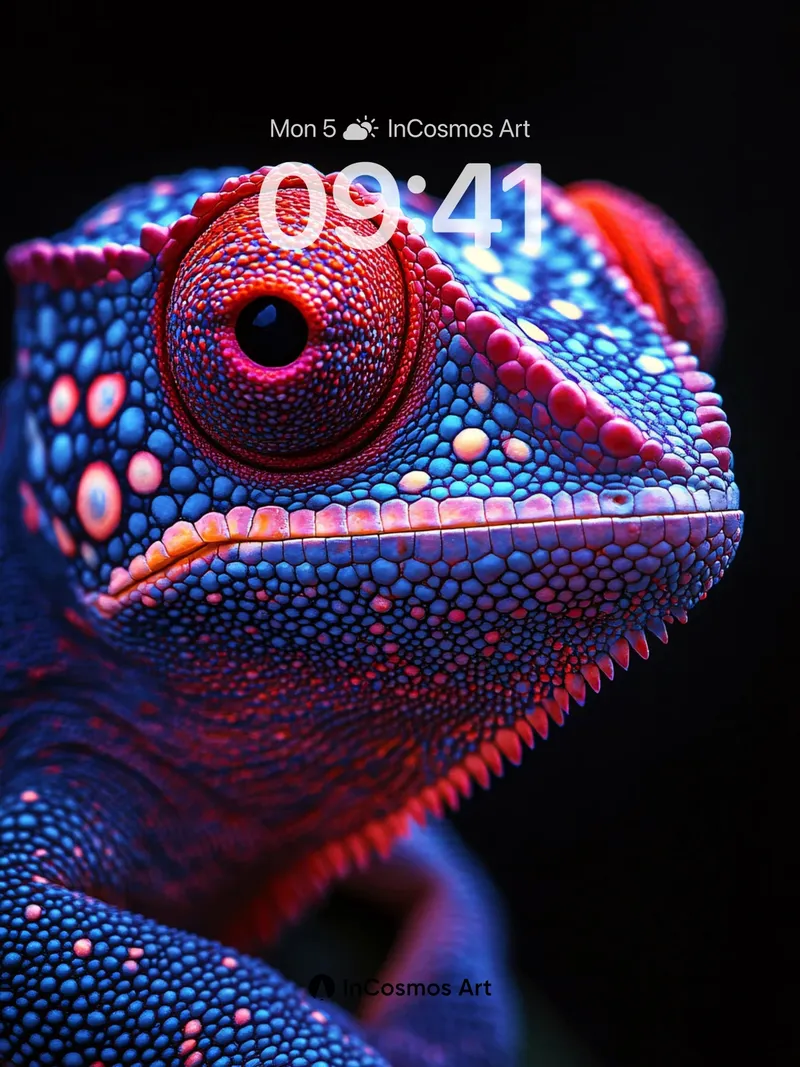
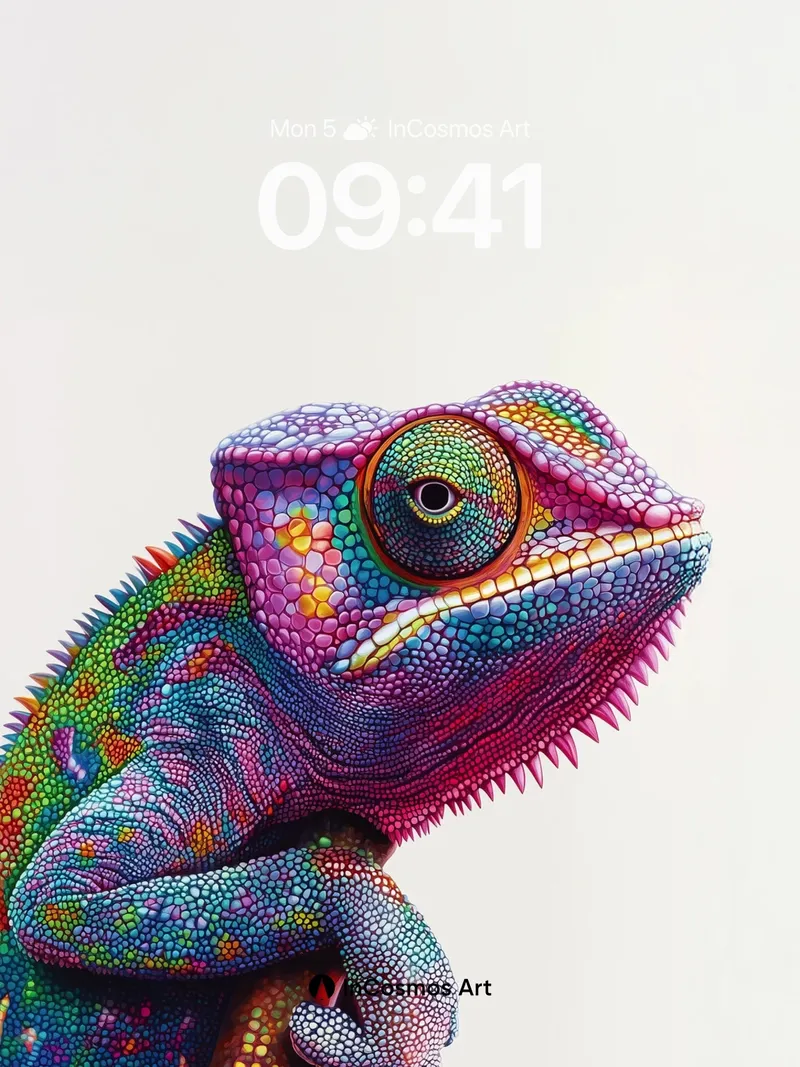
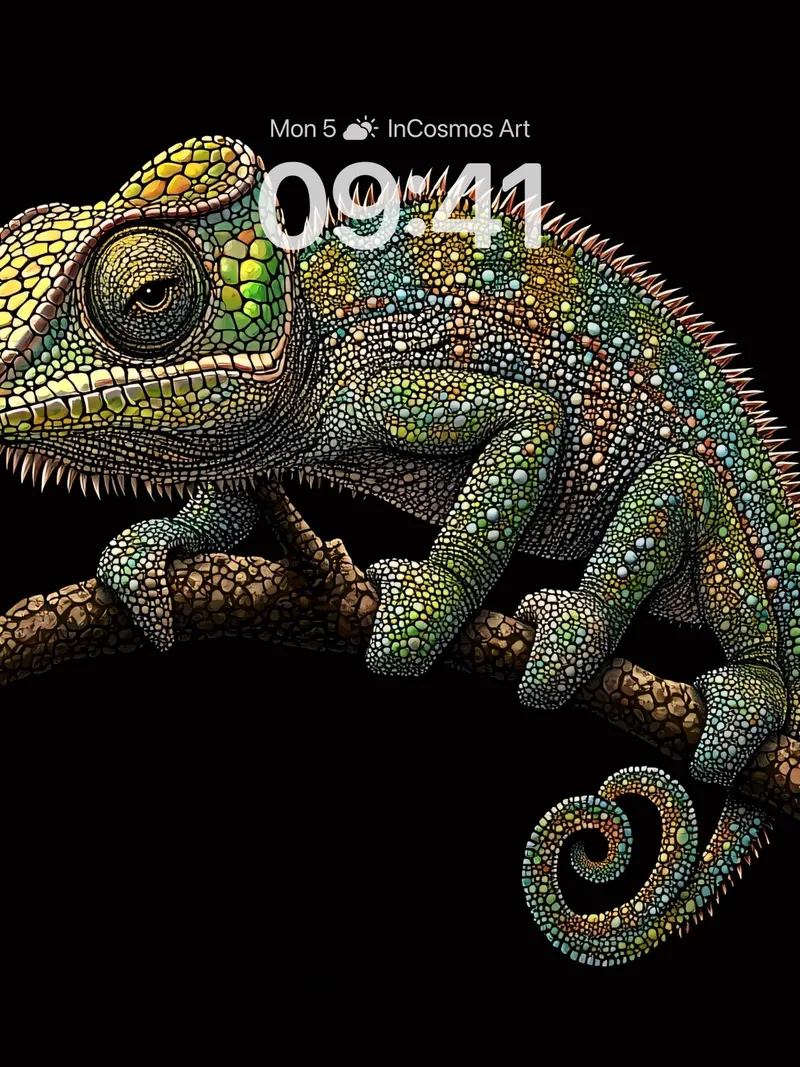
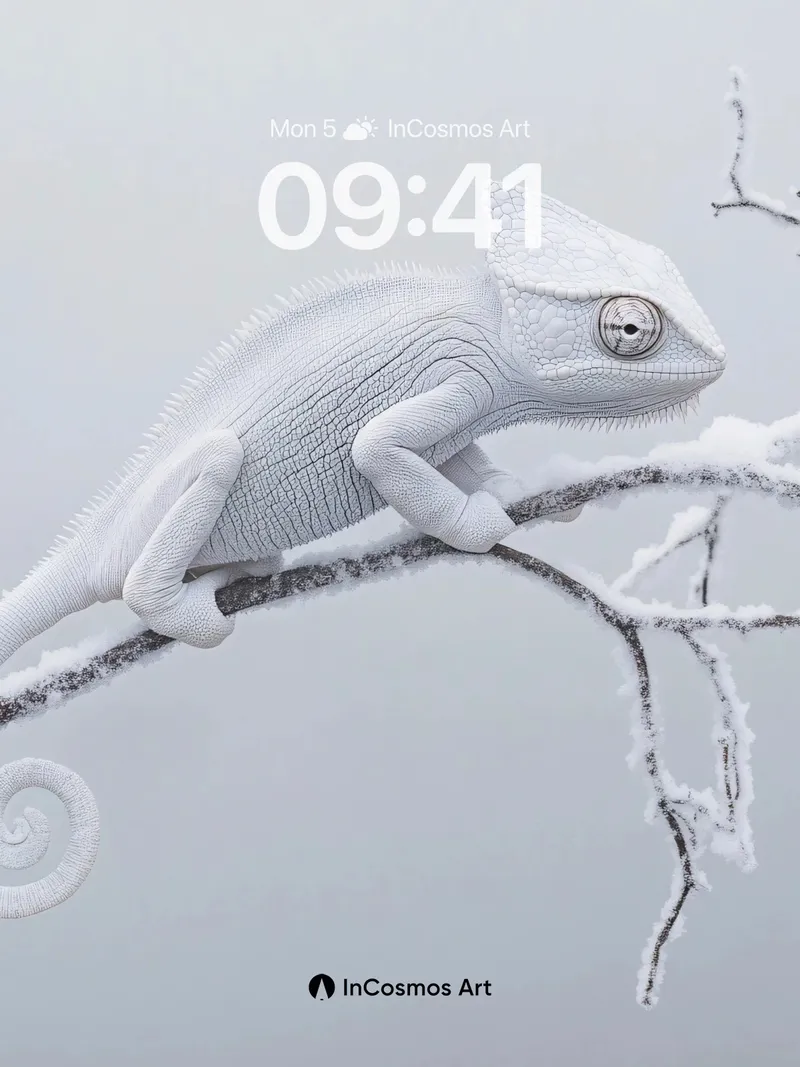
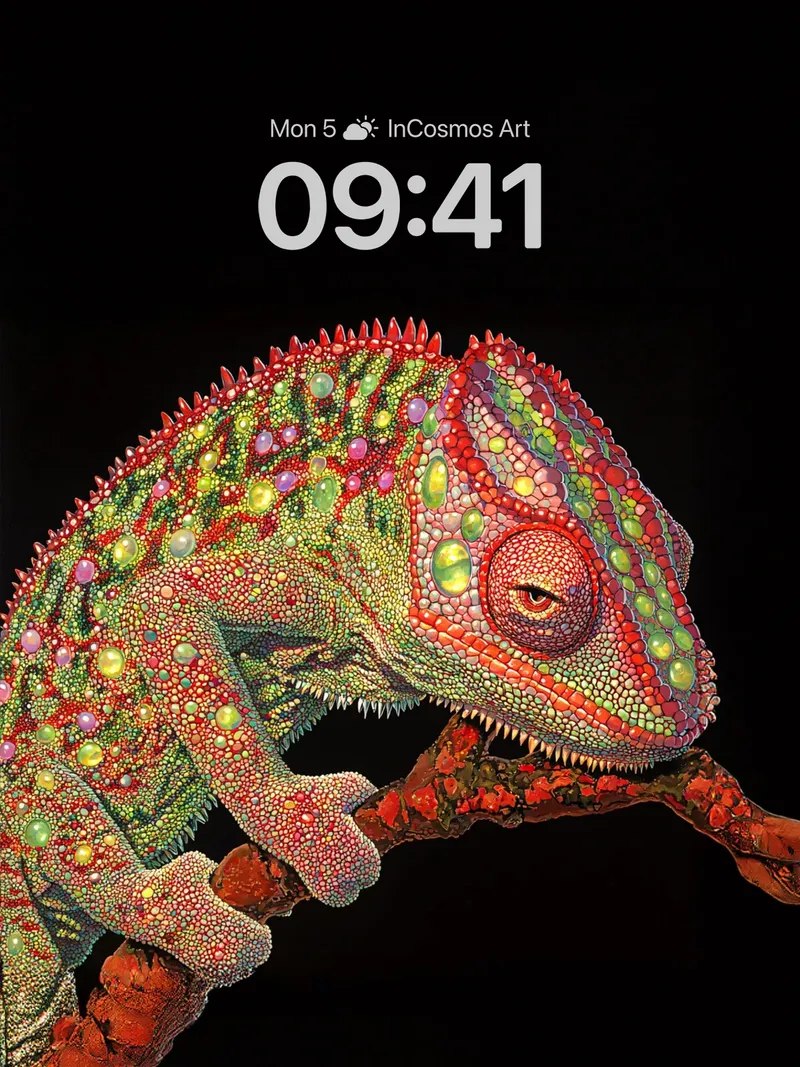
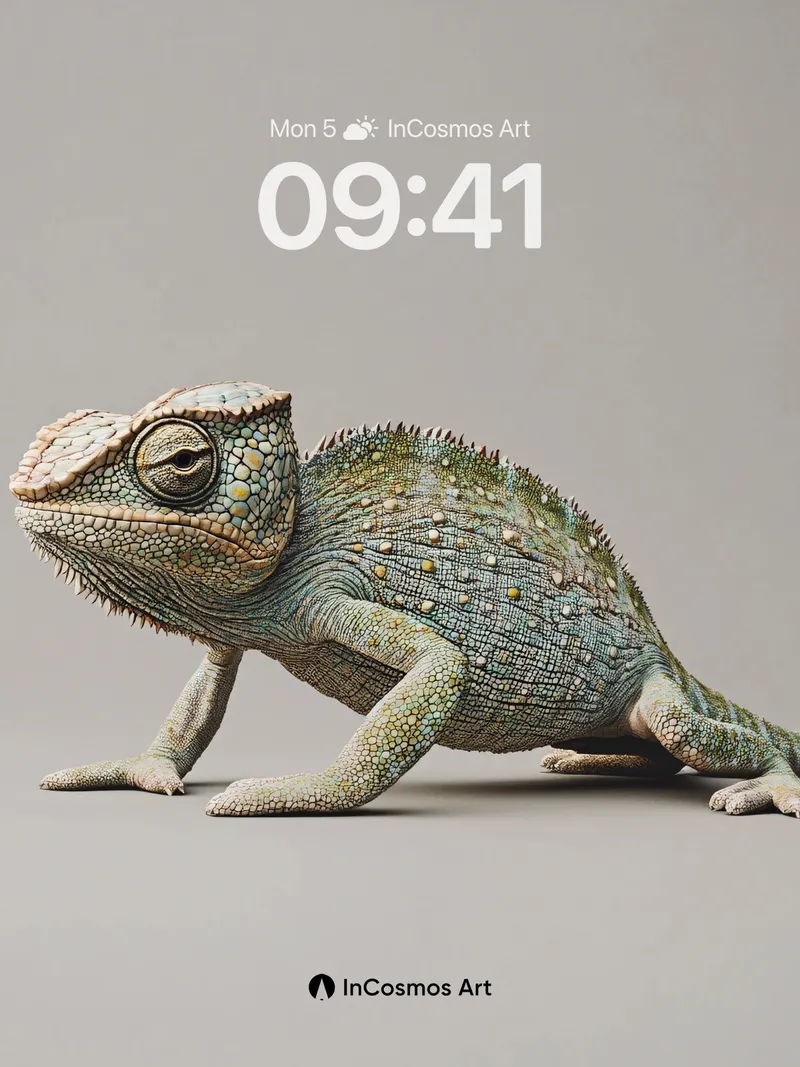
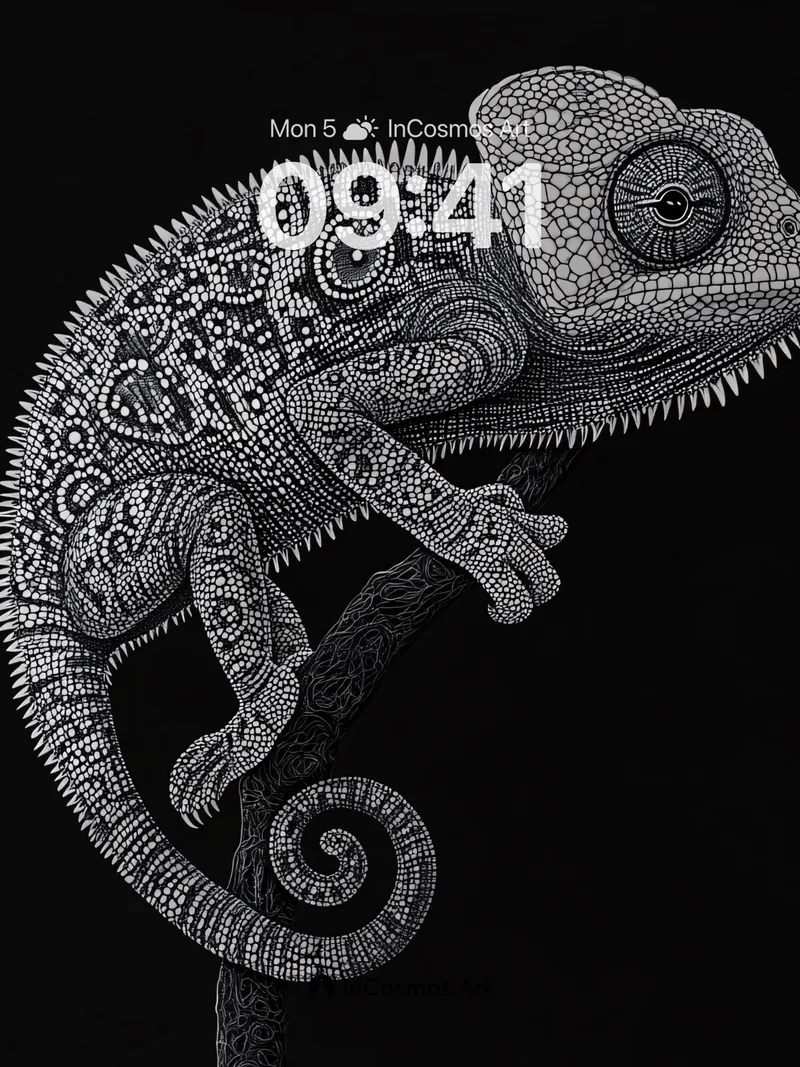
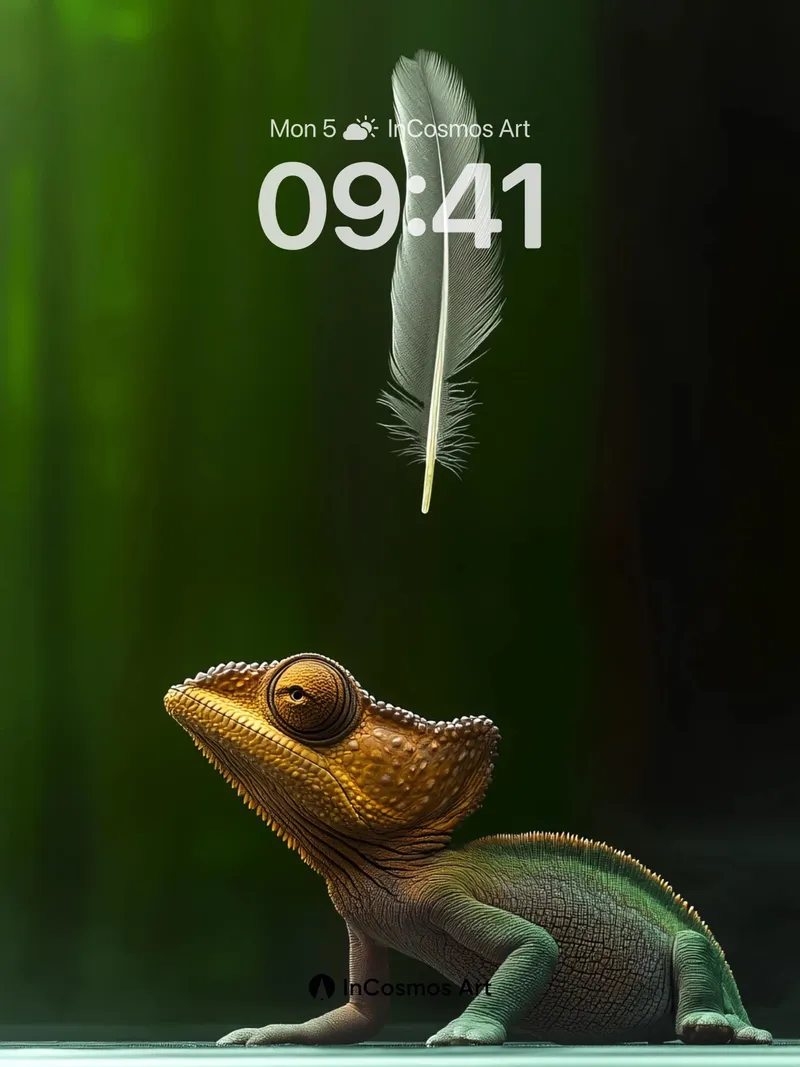
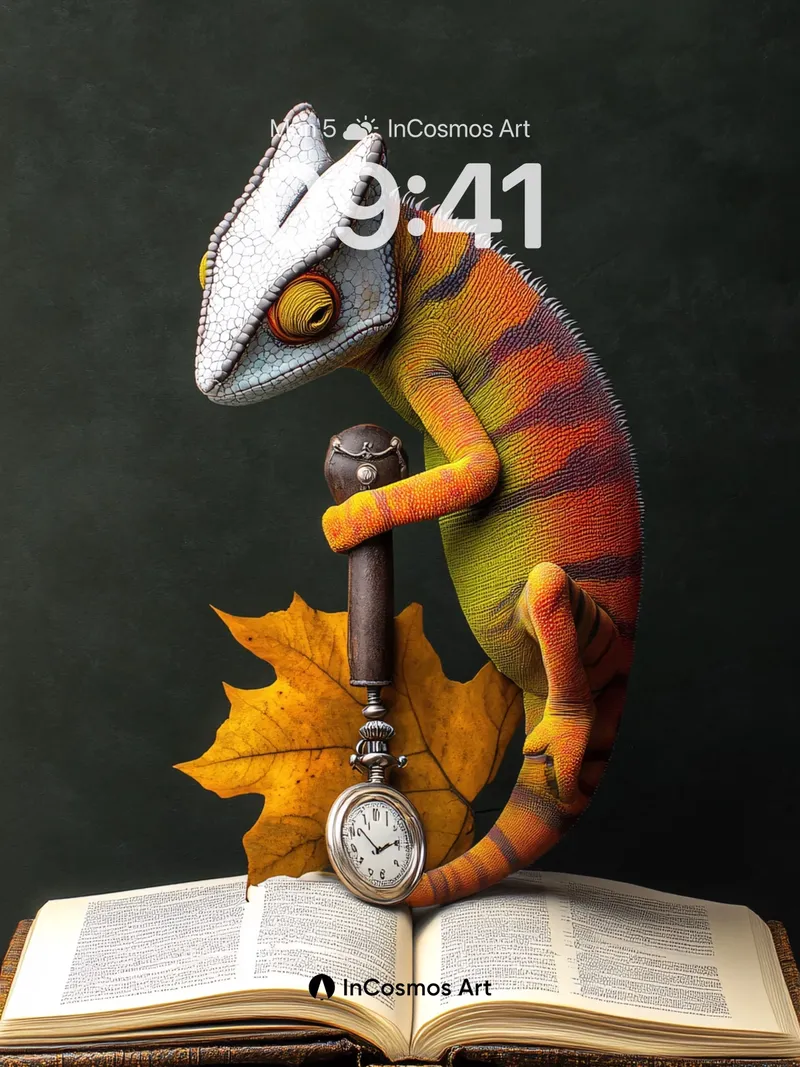
In silent observation, the chameleon emerges as a symbol of time, thought, and being. It moves slowly across chess pieces, open books, pocket watches, and cubes, each step an inquiry into order and a response to stillness. Its skin shifts with environment, yet retains internal structure—a natural disguise and a boundary of self-awareness. These moments are not accidental but carefully constructed metaphors, juxtaposing animal instinct with human cultural symbols, forming cross-species contemplation. The chameleon enters the world through quiet presence—neither conqueror nor observer, but a meditative intermediary. Its gaze follows falling feathers, calculating wind paths; its tail curls around glass rims, measuring distance between transparency and void. When perched on an open book, holding a pocket watch, its posture transcends biological limits, entering a ritualistic state of existence. This existence is not performance but revelation. The chameleon's stillness is dynamic, its camouflage truthful, its silence linguistic. It reminds us that true wisdom does not need noise—sometimes it resides in a single focused glance. This glance is not passive waiting but active awareness.
Nature’s Camouflage and Authentic Expression
The chameleon’s color change is often misread as deception, yet it represents the ultimate survival strategy. It does not hide but adapts, enhancing perception and action. This skin transformation mirrors human identity shifts across contexts—adjusting behavior while preserving core essence. Each hue update confirms engagement with the present world. It embraces change without clinging to original form. Its body becomes a fluid mirror reflecting surrounding rhythms and emotions. This adaptation is not submission but conscious harmony.
The Weight of Symbols and Lightness of Freedom
When the chameleon climbs a chess king, it transcends mere reptile status, becoming an embodiment of strategy. Chess pieces signify rules, power, and competition, yet it gazes down from soft flesh upon rigid structures. Its tail wraps around a branch like a hand holding a pen, ready to write new laws. Falling feathers represent both natural lightness and rising thought. It looks upward, receiving unseen messages. In this moment, it is neither prey nor predator, but a decoder of meaning. Its presence challenges symbolic systems: who defines value? Who controls time?
Dweller of Time
The combination of pocket watch and book grants the chameleon intellectual character. Seated atop pages, holding a clock, it measures knowledge against time. The watch hands remain still, while it moves—this paradox suggests true time lies not in mechanics but in conscious flow. Its position exists between past and future, reading history while foreseeing change. Skin texture echoes inked lines, creating visual textual symbiosis. This is not decoration but layered meaning. When animal and object co-construct a complete context, they jointly narrate a story of existence and cognition.