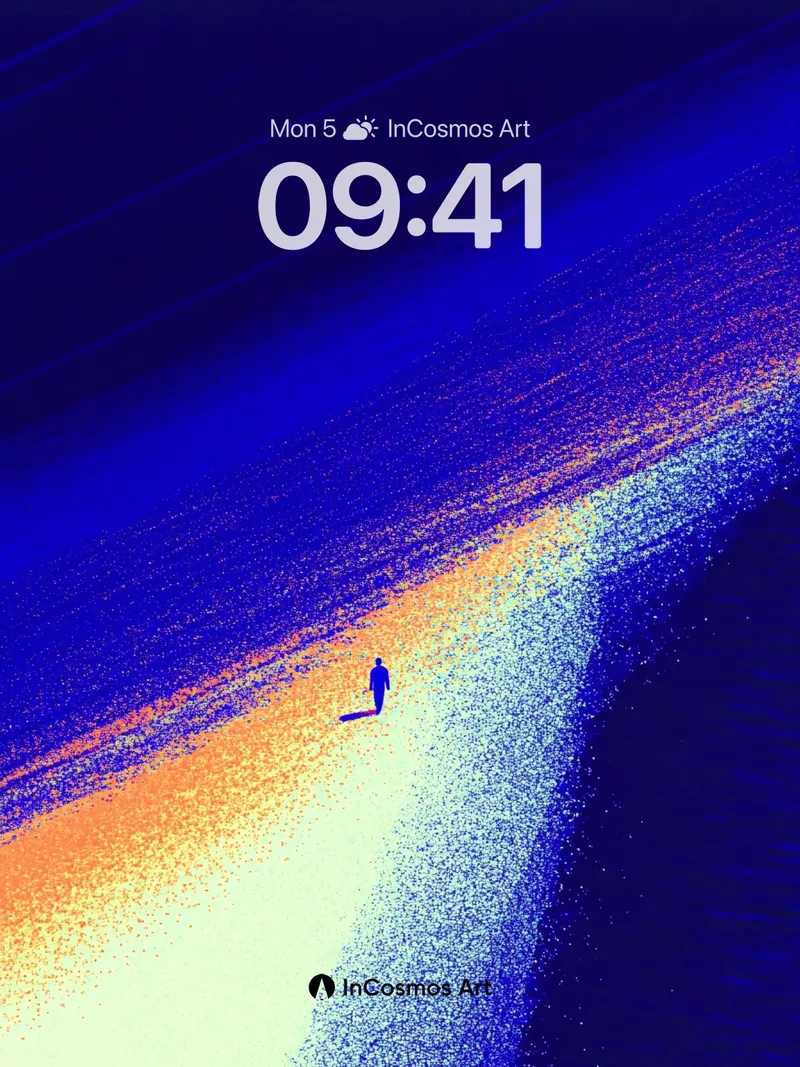
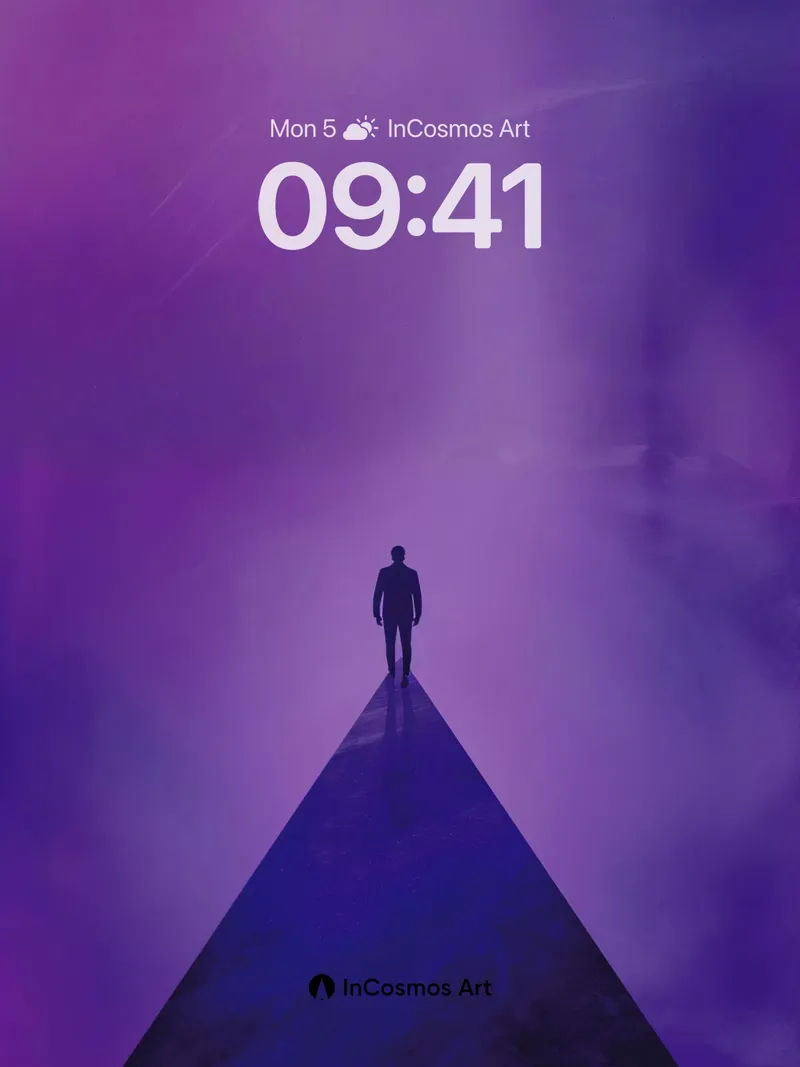
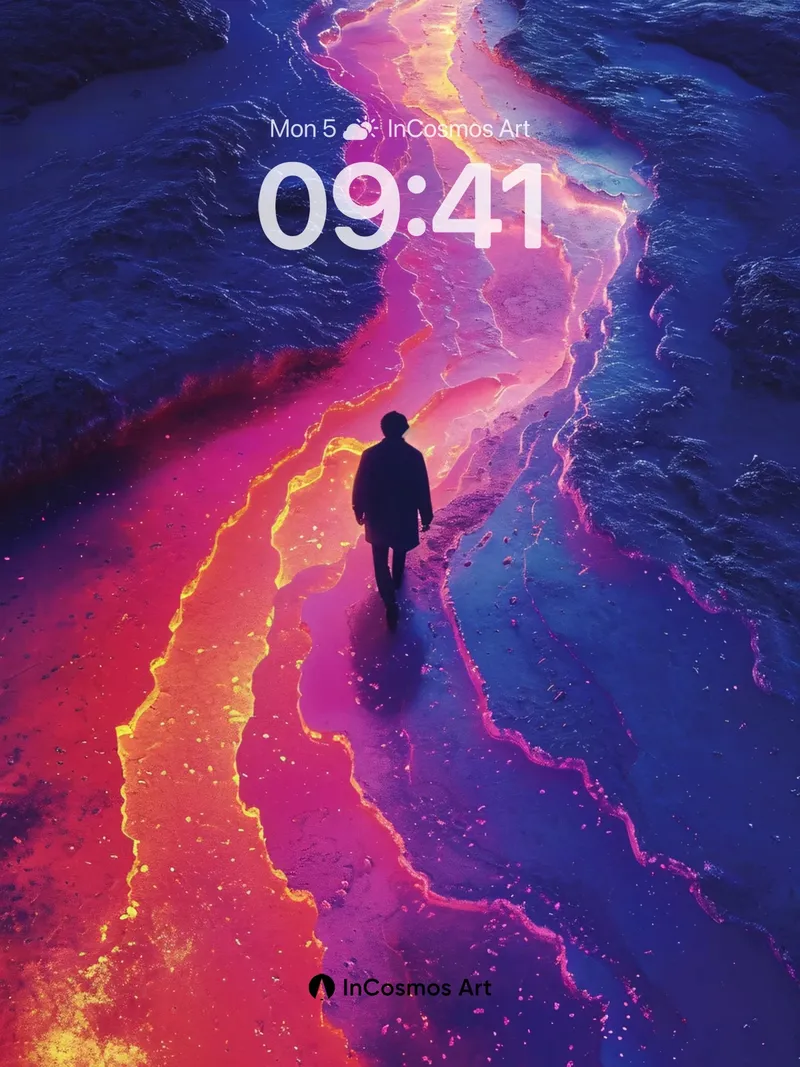
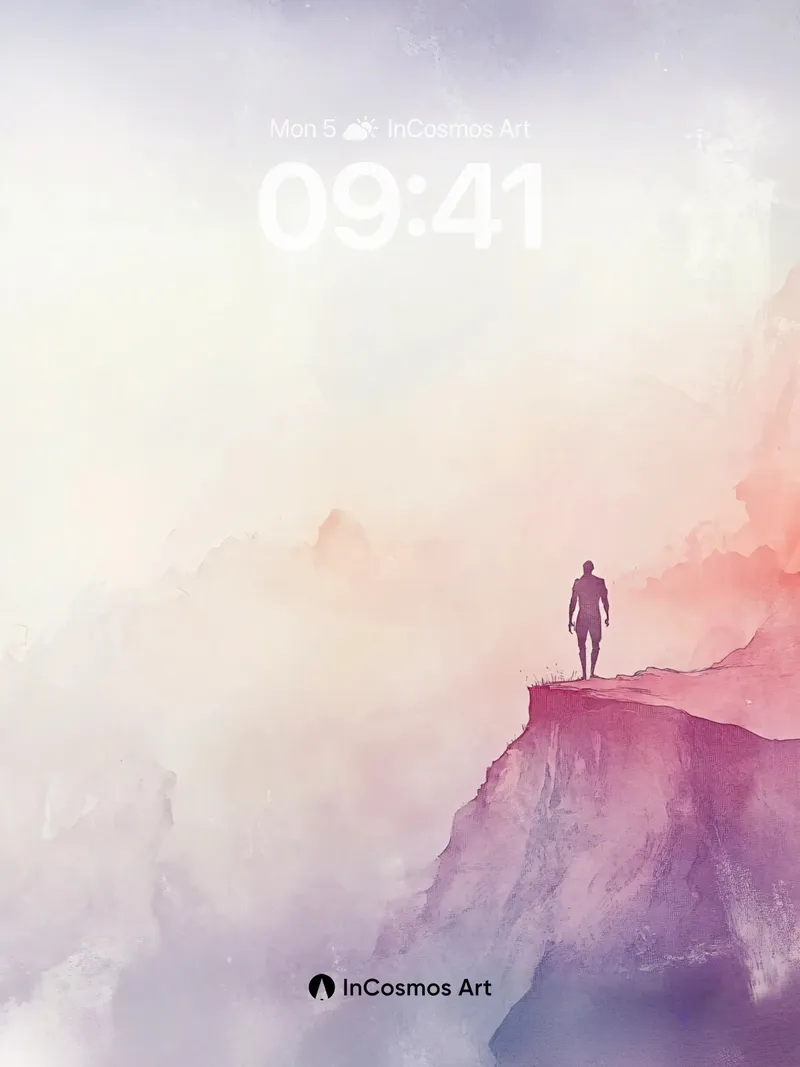
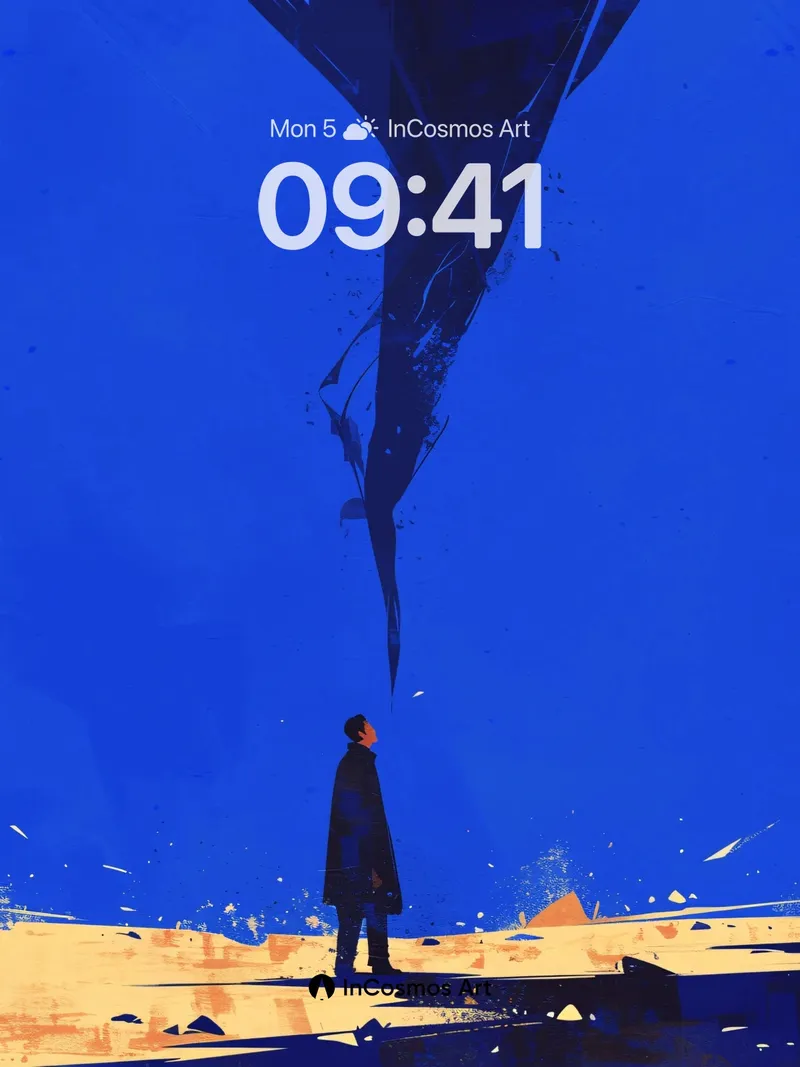
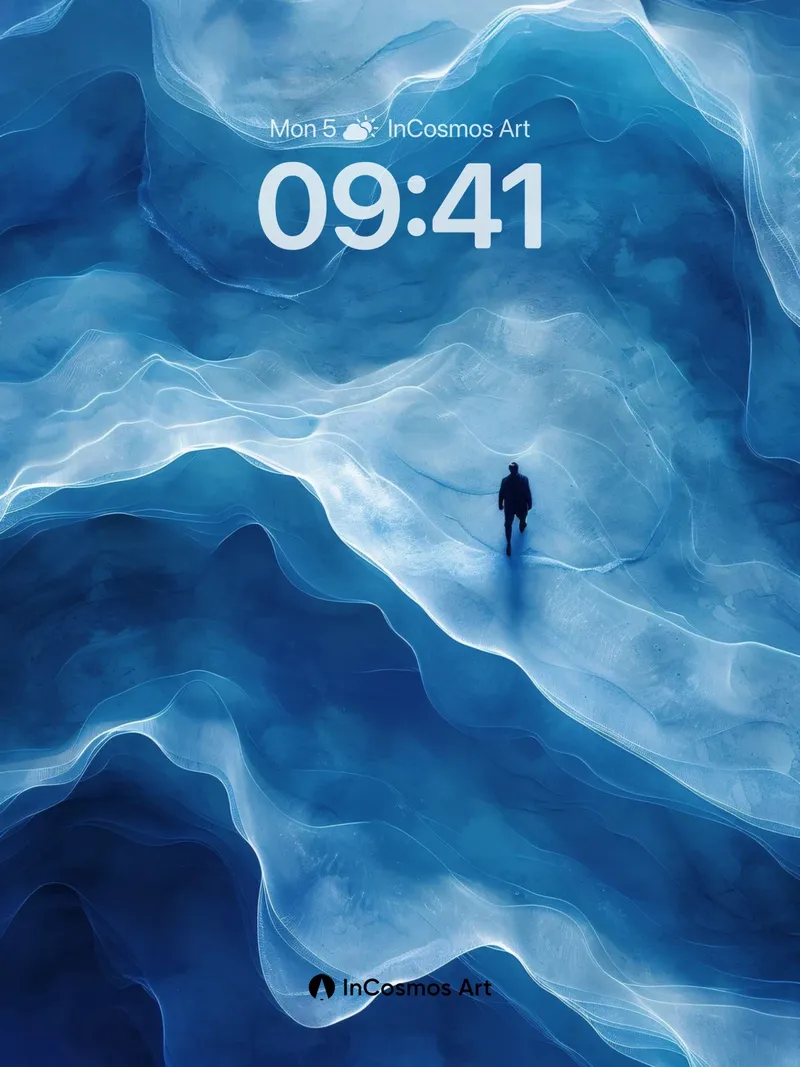
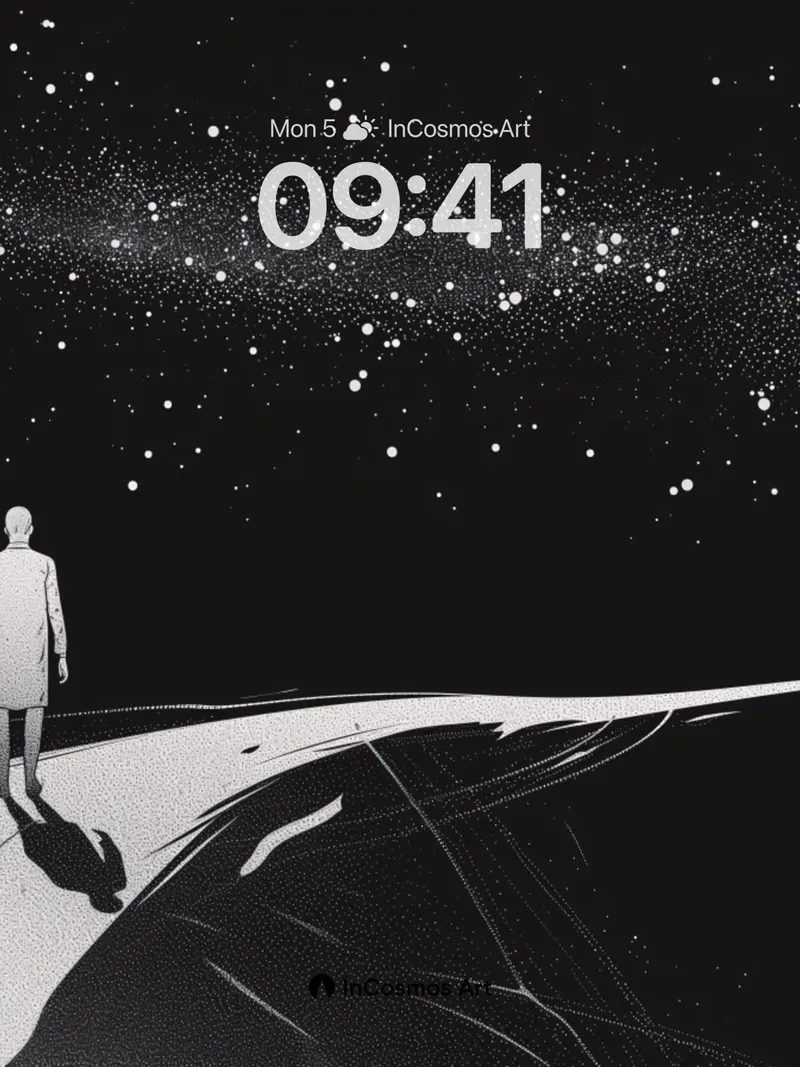
Walking through rivers of color is rarely about reaching a destination; it is about confirming the distance between the self and the world. This kind of movement often occurs when internal boundaries blur, when daily noise fades, leaving only pure perception. Color ceases to be decoration and becomes a direct carrier of emotion; walking ceases to be displacement and becomes a confirmation of existence.
The Shape of Solitude
Solitude does not always accompany desolation. Wrapped in color, solitude takes on a full, saturated state. Whether standing atop a high peak or moving between flowing ripples, the interaction between the individual and the environment appears both distant and intimate. This sense of detachment does not stem from abandonment but from an active choice—a choice to examine the small self against a vast backdrop.
Metaphors of Color
Red, blue, and purple spread out beneath the walker's feet. These are not replicas of natural landscapes but projections of inner scenery. Intense red symbolizes uncooled desire, deep blue suggests quiet contemplation, and pervasive purple connects the boundaries between reality and fantasy. Moving through these colors is essentially traversing different emotional stages.
Dissolving Boundaries
When the path beneath becomes indefinite and surroundings turn into flowing blocks of color, the boundary between reality and dream begins to dissolve. This dissolution brings a sense of weightlessness but also grants a certain freedom. No longer limited by physical rules or fixed paths, walking becomes a spiritual漫游 (roaming). In this roaming, direction matters less than the perception brought by the act of walking itself.
The Silent Dialogue
The walker often remains silent. This silence is not due to a lack of words but a lack of need for them. Color and form have already constituted a complete language system; the walker needs only to converse with this space through footsteps. This dialogue is private yet universal. Every observer can read their own story from it—about searching, about getting lost, about establishing order within chaos.
Confirmation of Existence
Ultimately, all walking points to a core proposition: the confirmation of existence. Before a vast background of color, the individual figure appears small, yet thereby becomes clearer. This clarity does not come from external focus but from internal conviction. Through constant movement, the walker confirms a position in this world, even if that position is fluid and uncertain.