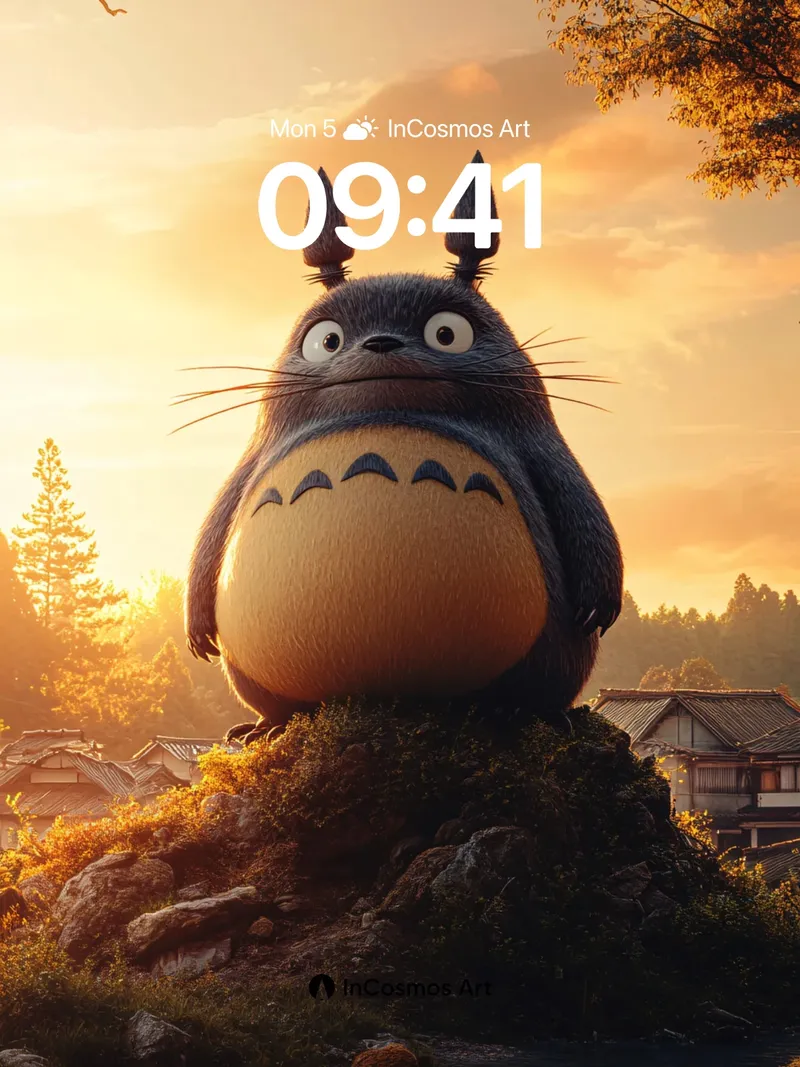
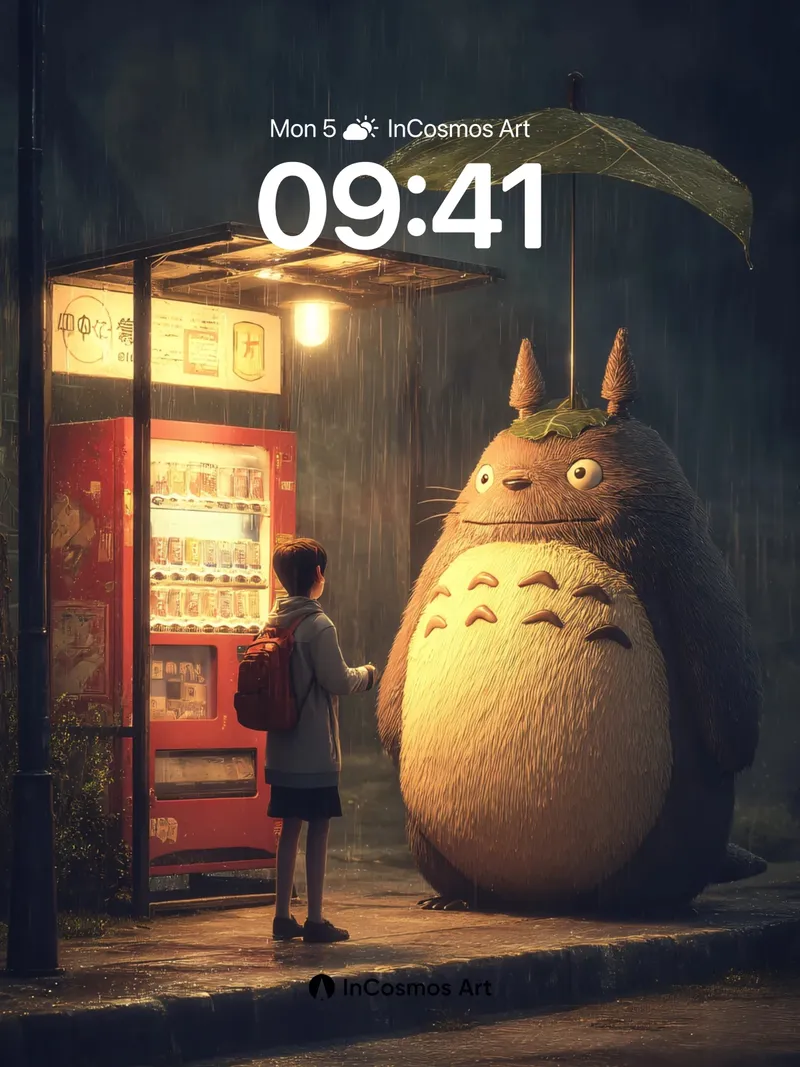
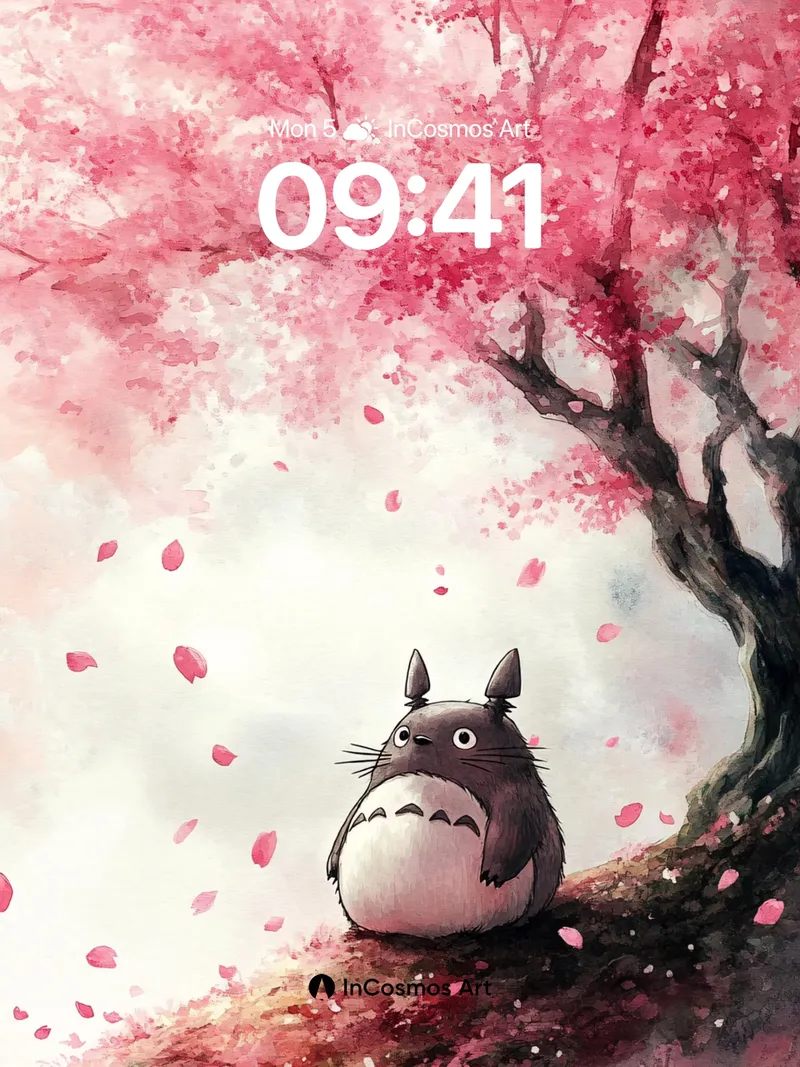
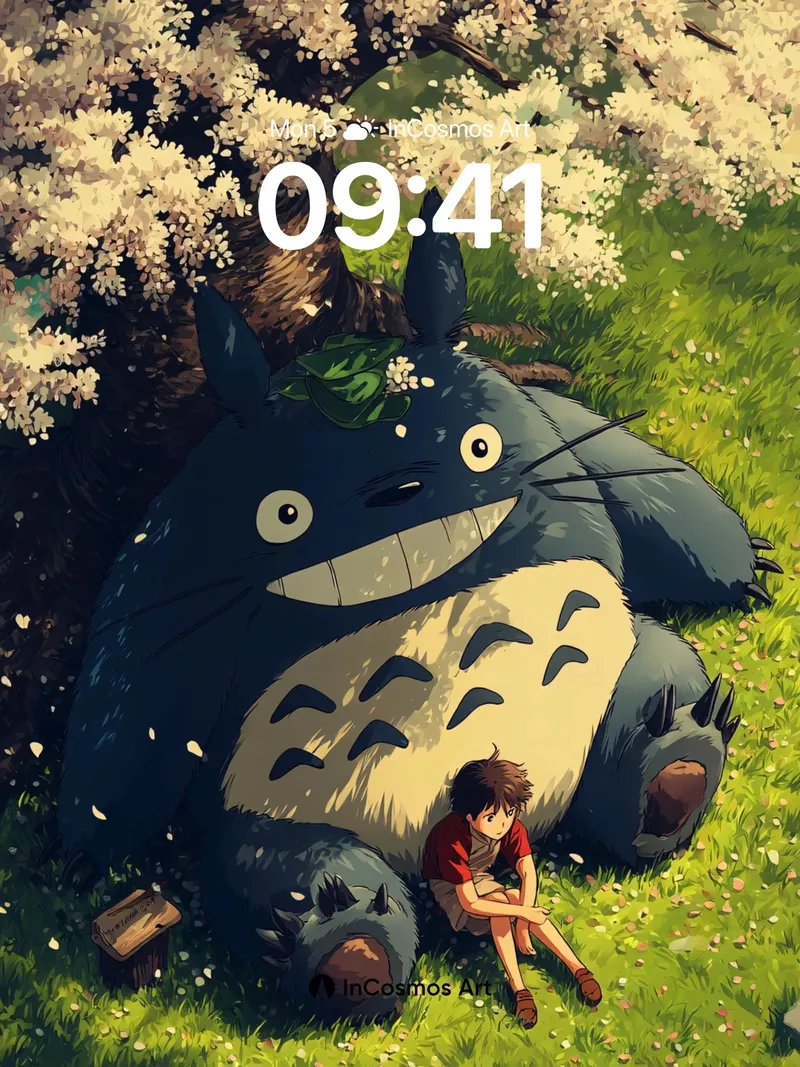
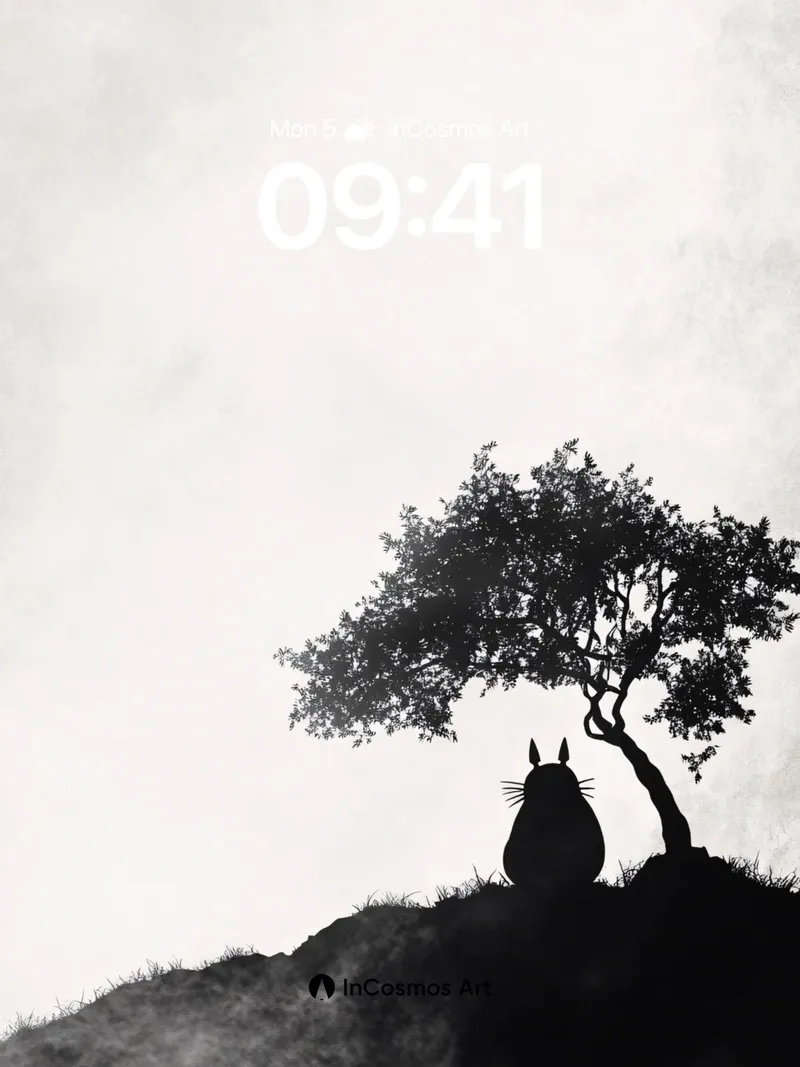
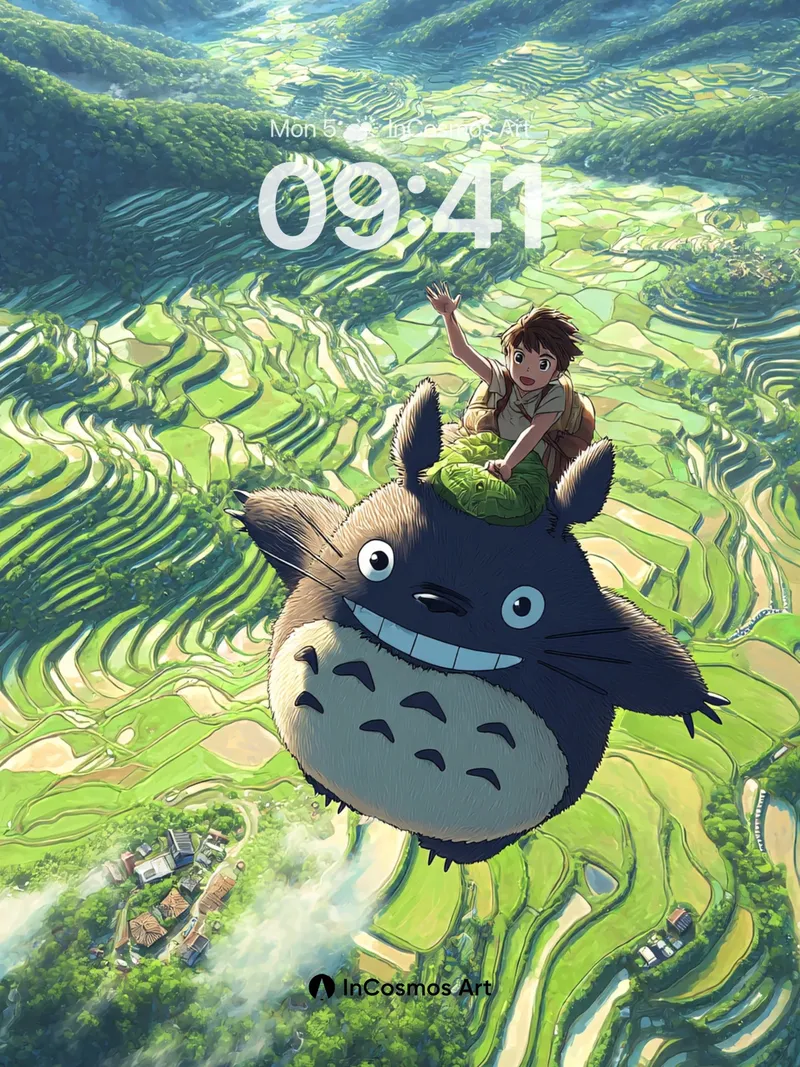
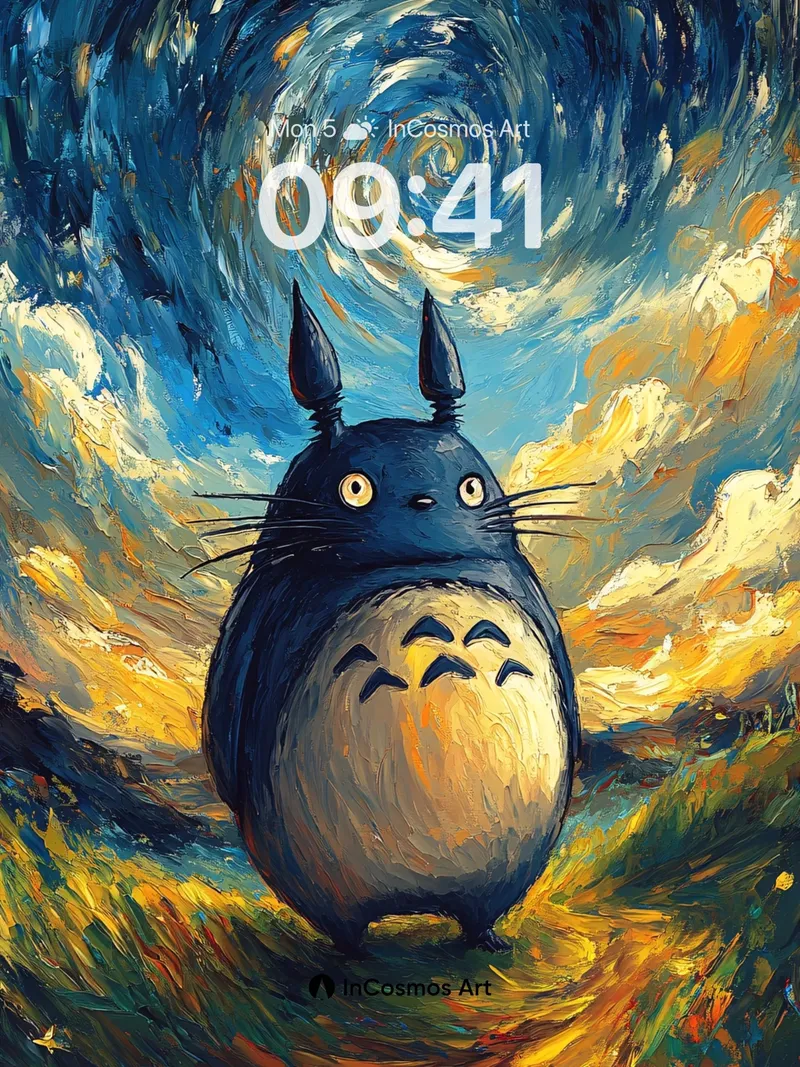
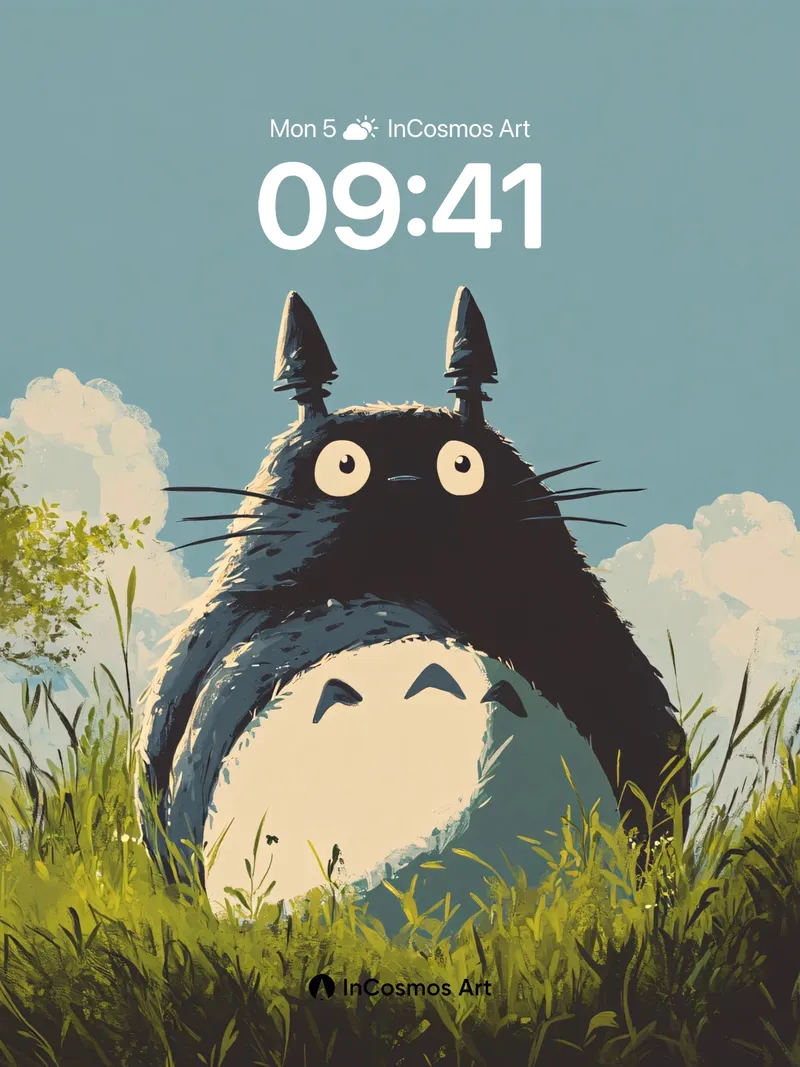
Under a starlit sky, fireflies drift like scattered gold across the valley as Totoro sits quietly in the grass, gazing toward a distant village glowing with warm lights. This is not mere fantasy but a moment where nature and soul converge. Its presence transcends biological classification, becoming a symbol—of innocence, of earth, of time untouched by urban sprawl. The figure embodies the quiet mystery of rural Japan, silent yet deeply expressive. Each appearance aligns with seasonal change: summer’s glow, companionship in rain, solitary journeys on lily pads, contemplation beneath a lone tree. These are not just animated scenes but tangible manifestations of cultural archetypes. They speak to a symbiotic relationship between humans and nature, urging society to preserve childlike wonder and reverence amid rapid modernization.
Whispers of Nature
Totoro always resides in wild landscapes, its form blending forest depth with animal spirit. Its fur resembles soil and fallen leaves, eyes like clear stars. When perched atop hay or standing beside a small boat, the surrounding world comes alive. Plants grow lush, water flows gently, air carries scents of green grass and damp earth. This is not illusion but an ecological philosophy—everything has spirit, everything depends. Modernity often sees nature as resource, but Totoro’s realm teaches that nature should be a conversational partner, not a conquest.
Echoes of Childhood
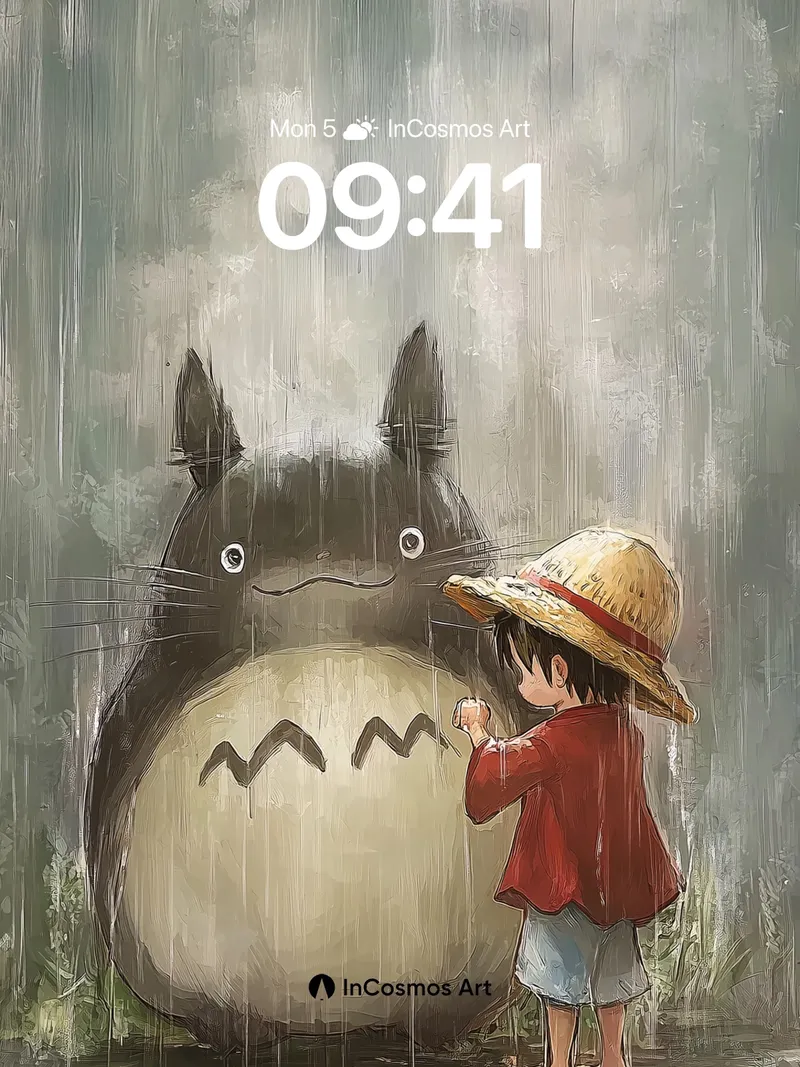
Encounters between child and Totoro happen during ordinary moments: sudden rain, aimless walks, drifting boats. No words pass between them, only glances and gestures. Such pure emotional exchange is rare in adult life. The child, wearing a straw hat, barefoot in mud, looks up at the giant figure—this innocent trust mirrors humanity’s original state. Totoro does not instruct; it simply stays. In an age of information overload, this silent companionship feels increasingly precious.
The Power of Healing
Totoro never fixes problems—it merely exists. When the child cries, it moves close; when storms come, it offers shelter. This non-interventionist care is the deepest form of healing. Modern culture values efficiency and outcomes, yet Totoro teaches that presence alone can be resolution. Its image crosses generations and cultures because it celebrates slowness. In fast-paced lives, it urges people to pause, listen to wind, rain, heartbeat. This is not just aesthetic experience but a pathway to psychological restoration.
The Weight of Symbolism
From Van Gogh-style skies to silhouetted trees, Totoro’s imagery is endlessly reinterpreted. It no longer belongs solely to one film but has become a global cultural icon. Artists render it in varied styles, yet retain its core: gentleness, mystery, closeness to land. It represents anti-consumerist aesthetics—no spectacle, no noise, only authenticity touching the heart. In the digital era, such an image holds profound relevance: reminding people to return to origins, seek inner calm.