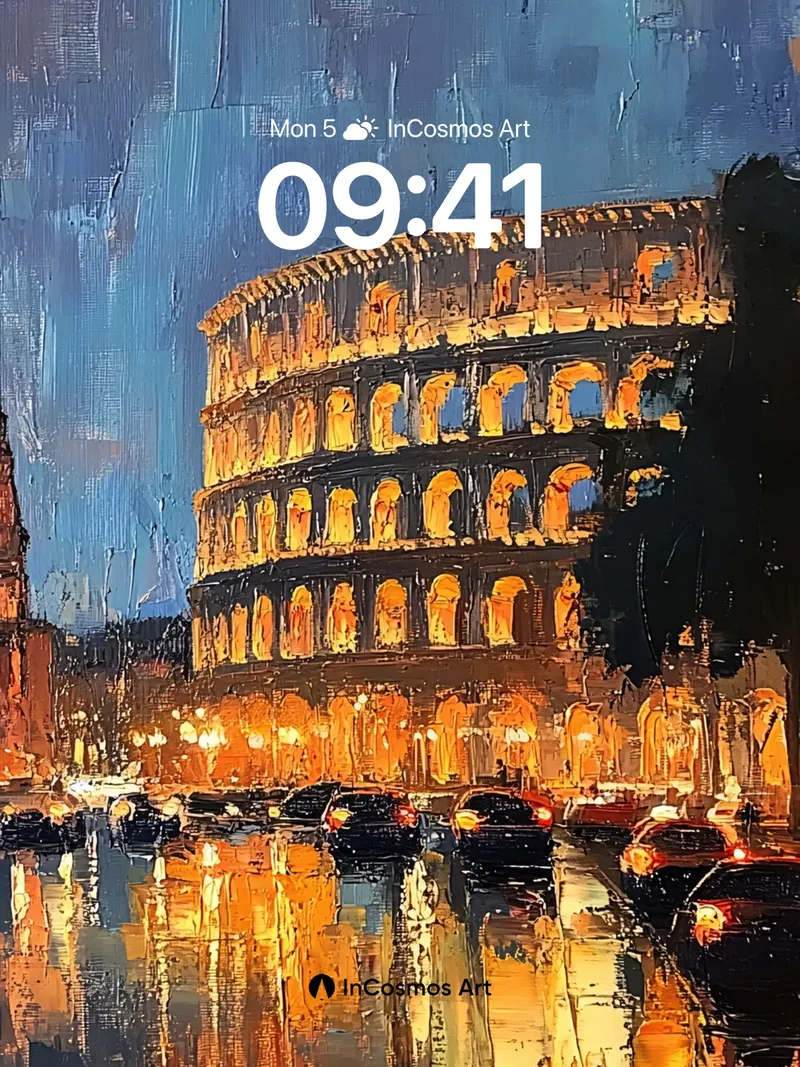
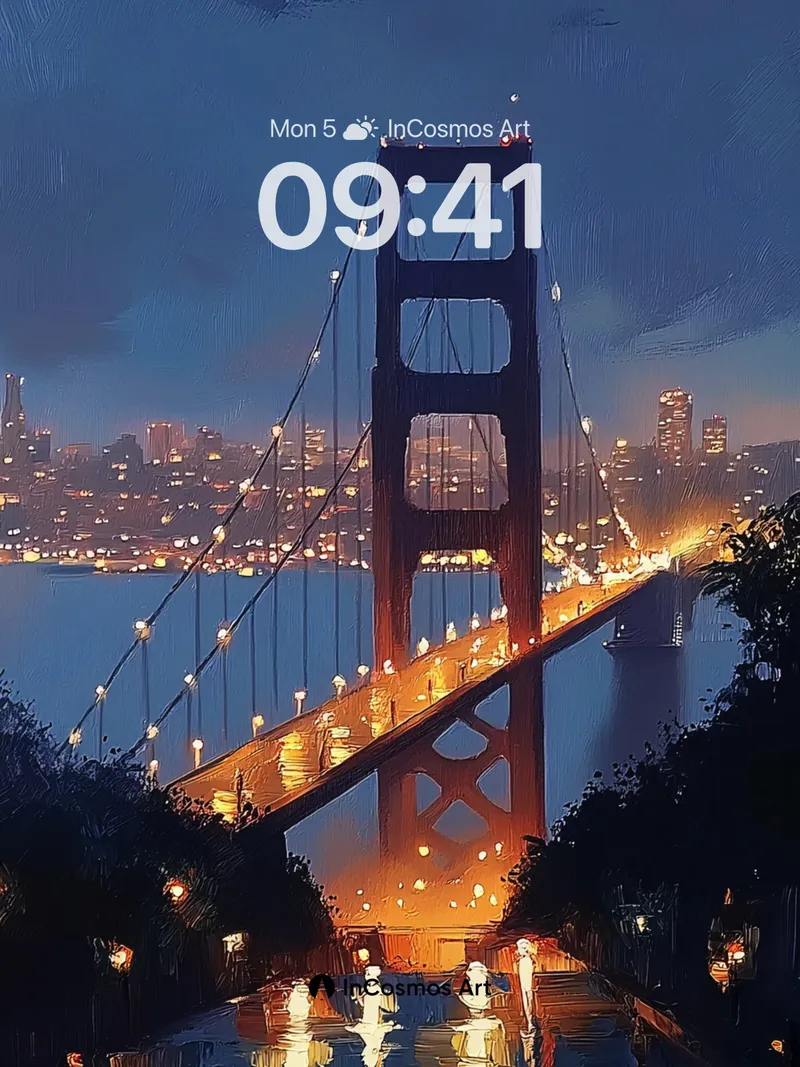
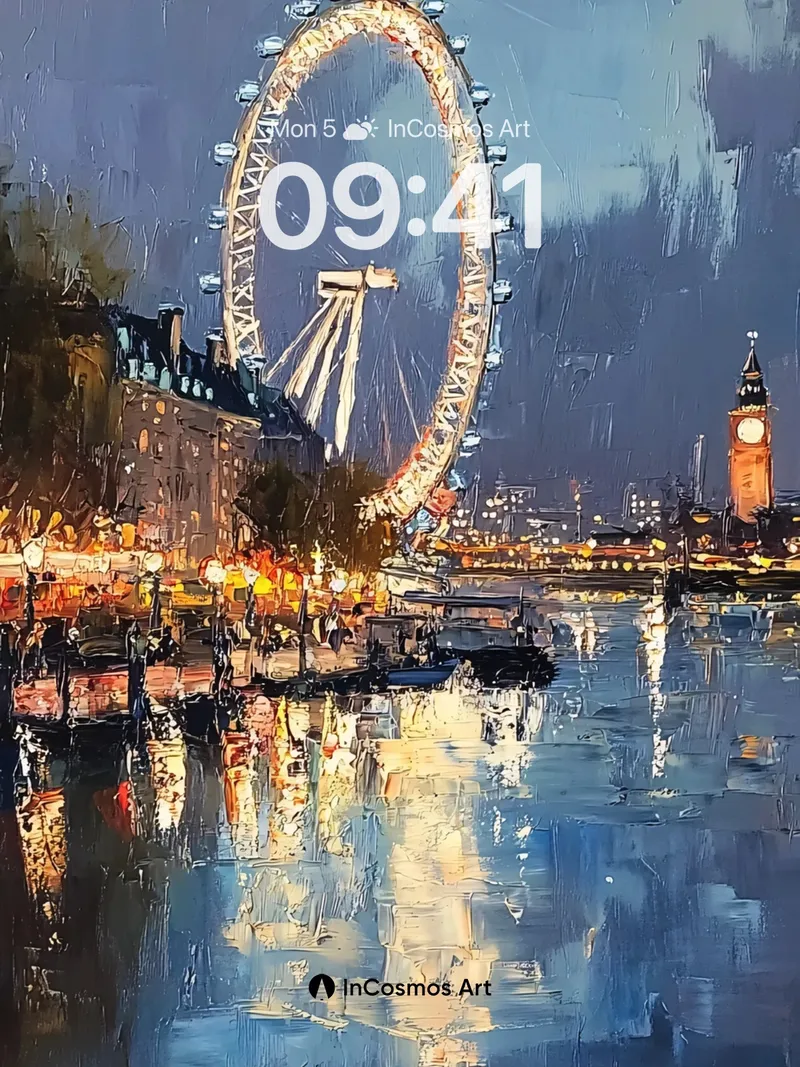
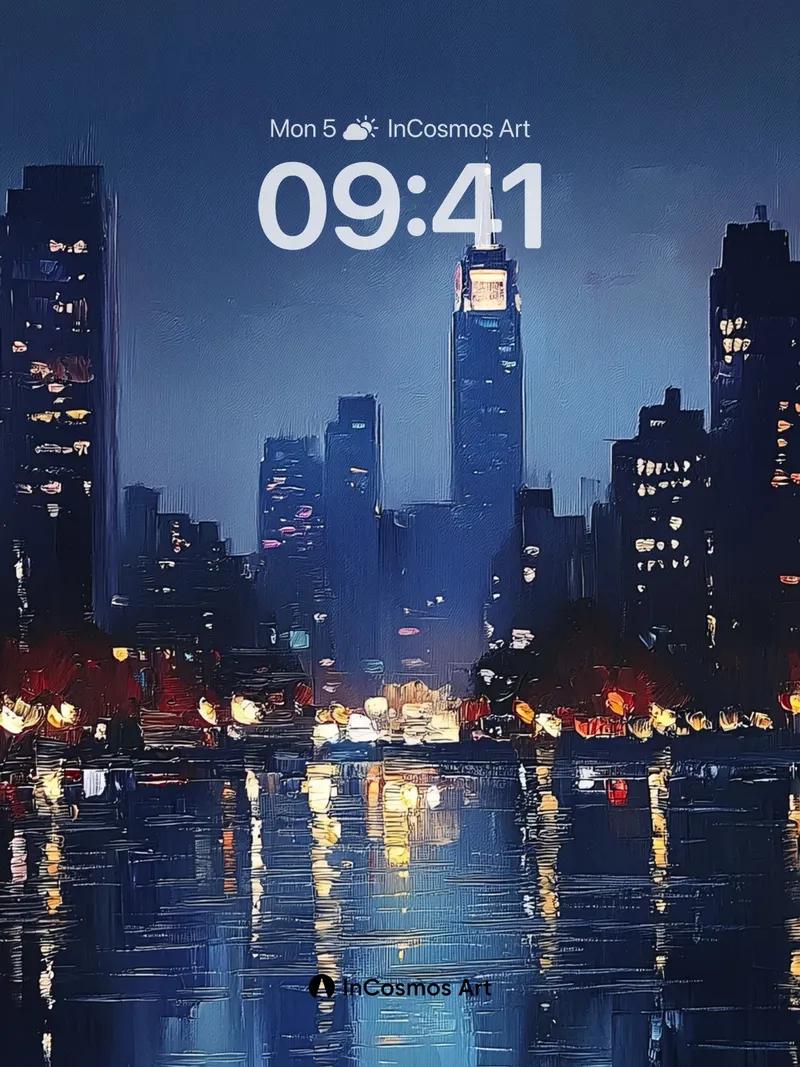
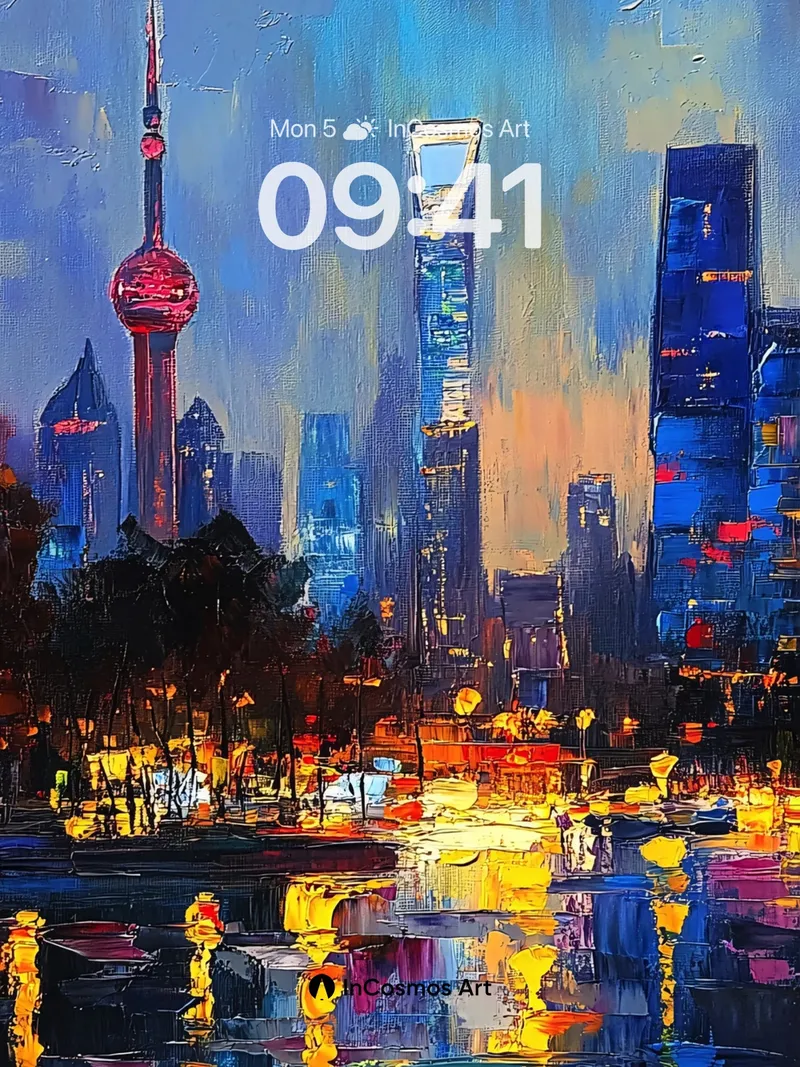
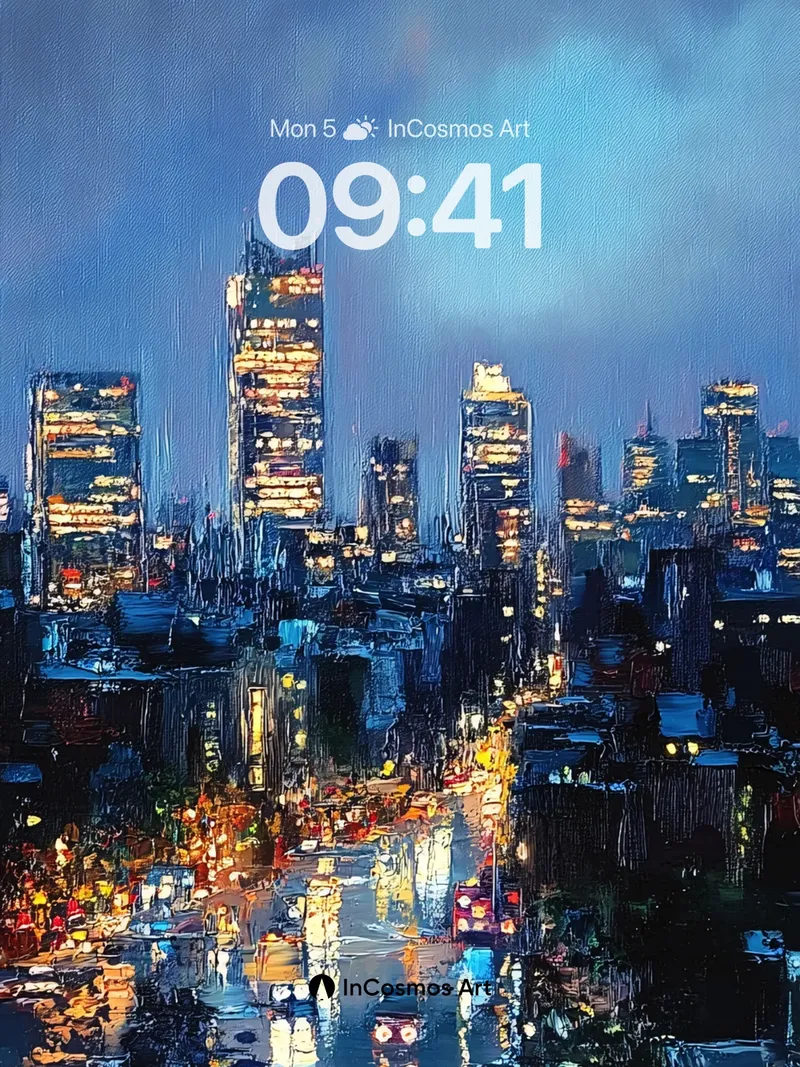
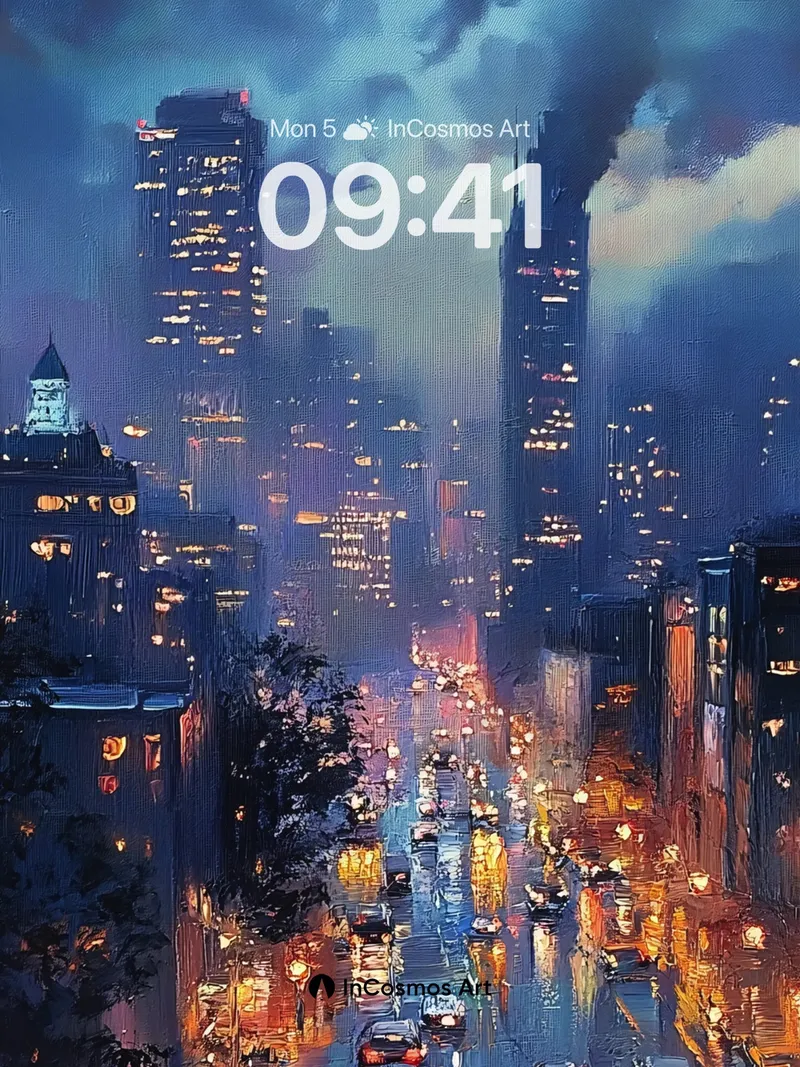
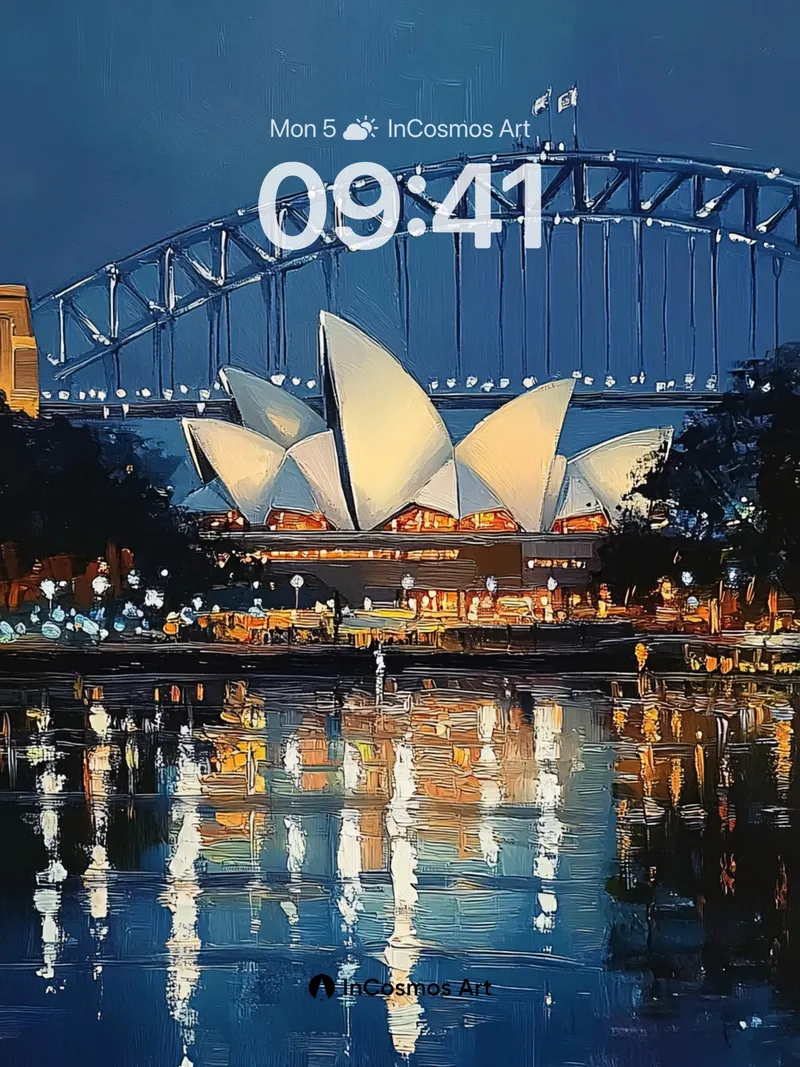
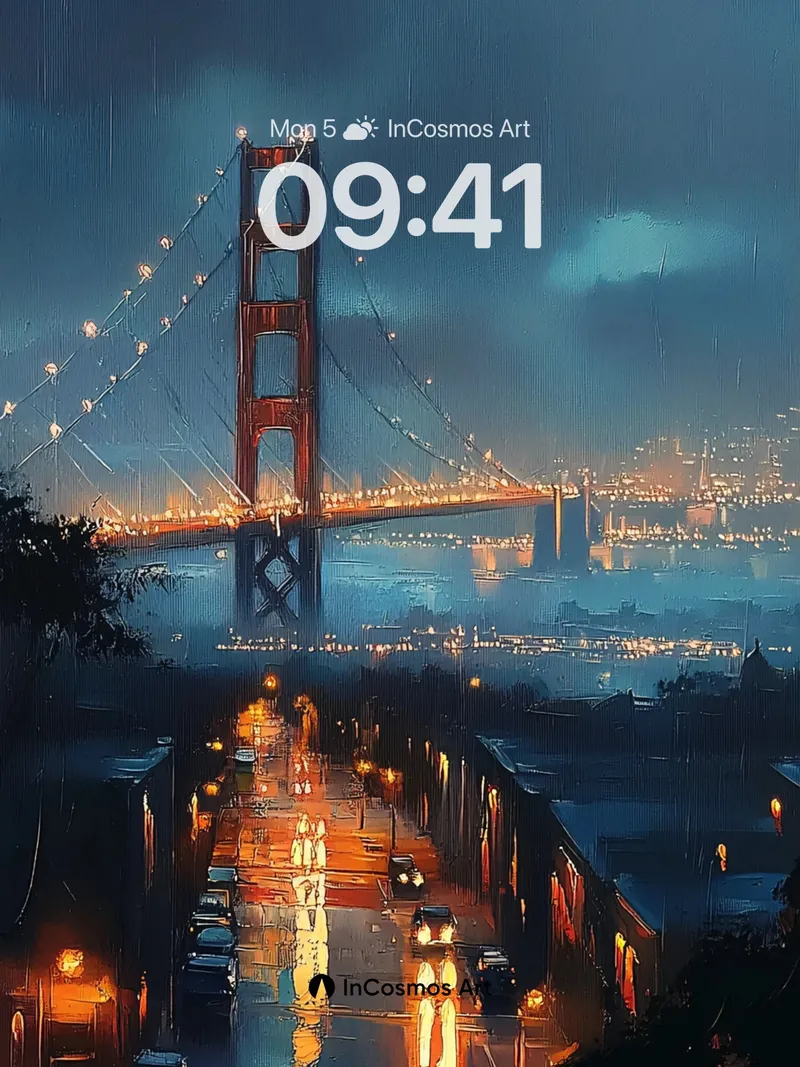
The city at night, soaked in rain, takes on a dreamlike texture. Light flows across wet streets like time stretched into traces, reflecting the most delicate aspects of human civilization. Each lamp is an unfinished conversation; each reflection a gentle challenge to reality. The skyline, once a cold assembly of structures, becomes an emotional vessel holding countless individual loneliness and longings. Bridges span water, connecting shores, yet also symbolizing the unbridgeable gaps between people. Water is the city's mirror and the soul's outlet—it speaks not a word, yet absorbs all noise into its depths.
Rivers of Light
City lights are not decoration but proof of existence. Headlights cut through rain, forming flowing trails resembling the hurried steps of modern life. These light streaks stretch across puddles, blurring the boundary between reality and illusion. Neon, street lamps, faint glows from windows—all weave an invisible net over every moving figure. They do not illuminate paths, but inner states—those walking alone at night may find their identity reflected in this luminous landscape.
The Emotional Weight of Architecture
Skyscrapers are no longer mere monuments to capital; they carry emotional weight. Glass facades reflect the gray-blue sky and oppressive clouds, as if the entire city is breathing. Lights atop certain towers resemble signals sent to the cosmos or silent cries for help. Sydney Opera House’s white sail-like forms appear tender against the steel bridge, highlighting the tension between art and industry. This tension defines the modern metropolis: how can reason and poetry coexist?
The Philosophy of Water
Water is the city’s most silent observer. It receives everything without judgment. Raindrops hit the lake, creating ripples that spread outward until vanishing—a process mirroring memory: brief, repetitive, ultimately calm. When light falls into water, it ceases to be mere illumination and becomes a projection of being. Shanghai’s reflections burst with color, embodying desire; New York’s surface remains cooler, reflecting order and distance. Water reminds us: no matter how vibrant, parts remain unseen and unpossessed.
Urban Solitude and Connection
Despite constant traffic and dense crowds, individuals remain isolated islands. People inside cars look down at phones; pedestrians hurry past, eyes averted. Yet within this alienation lies the city’s deepest emotional resonance. The red tower of the Golden Gate Bridge glows warmly in the rain, as if saying: even in a cold world, someone still chooses to light a lamp. This contradiction defines modernity—we draw near, yet have never been so far apart.