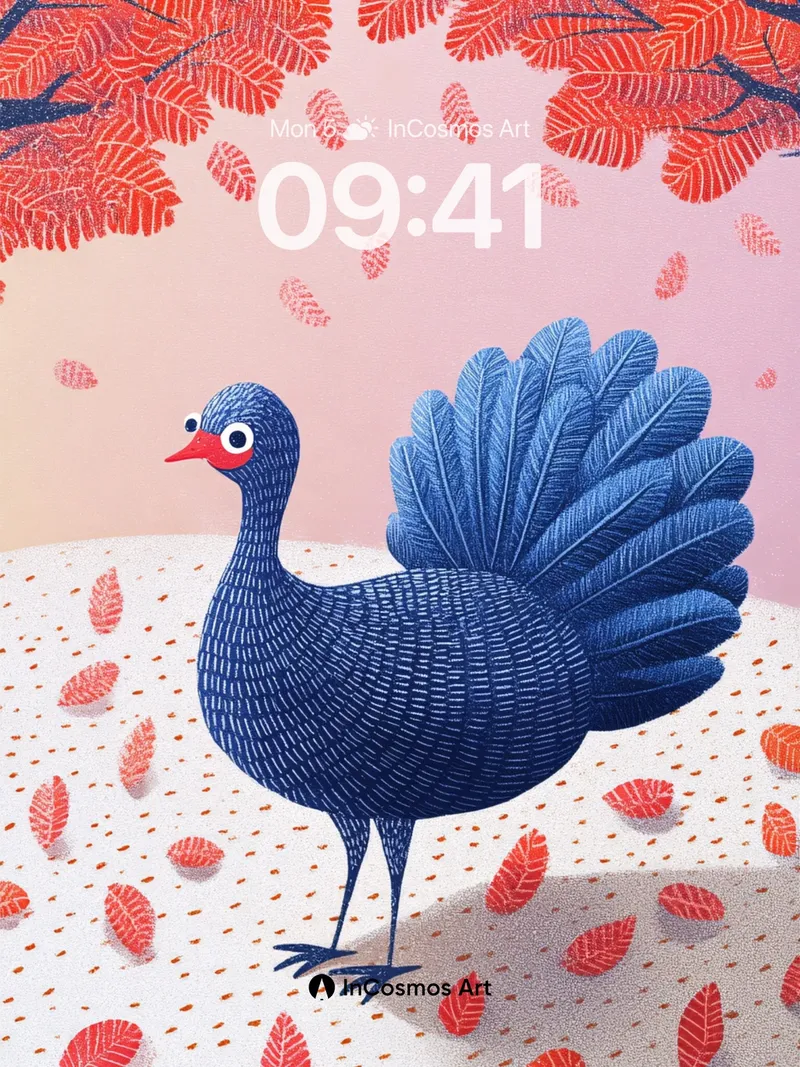
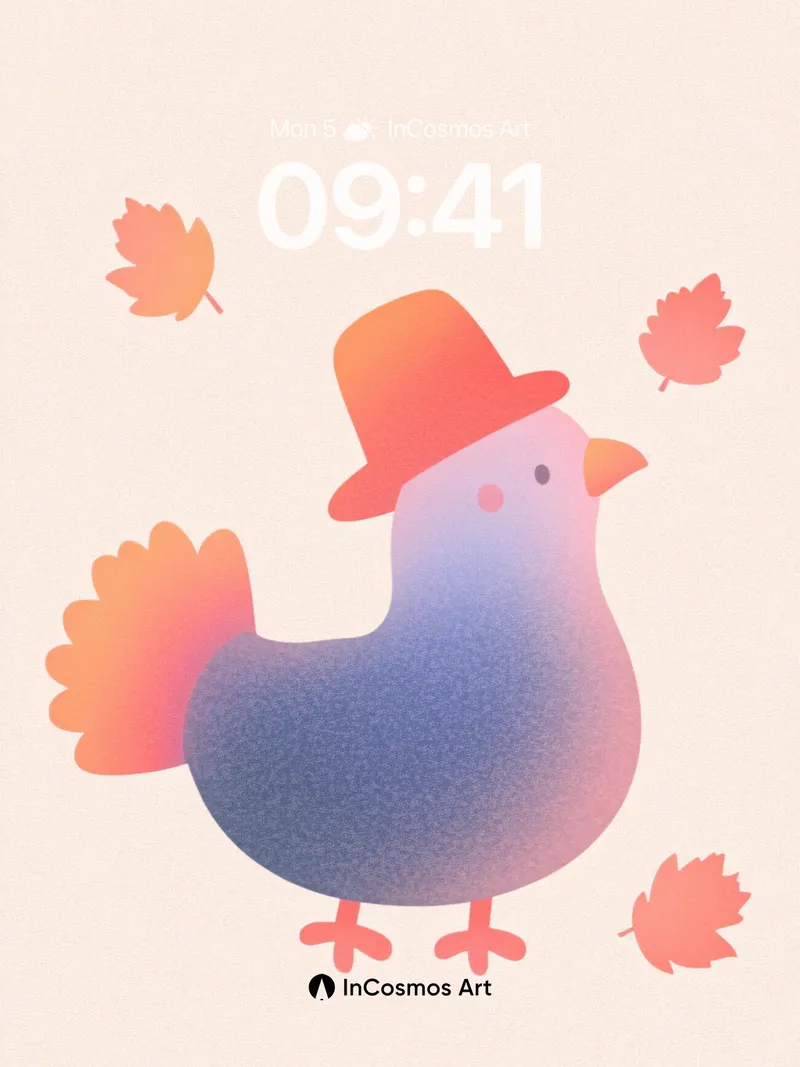
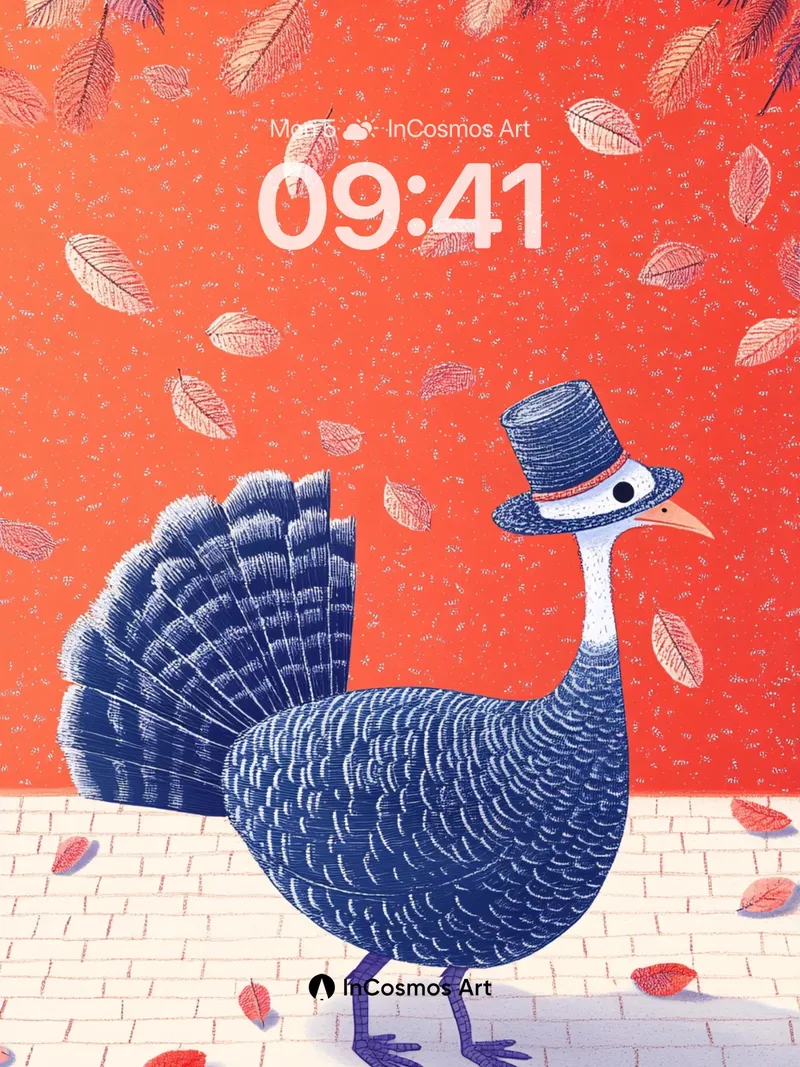
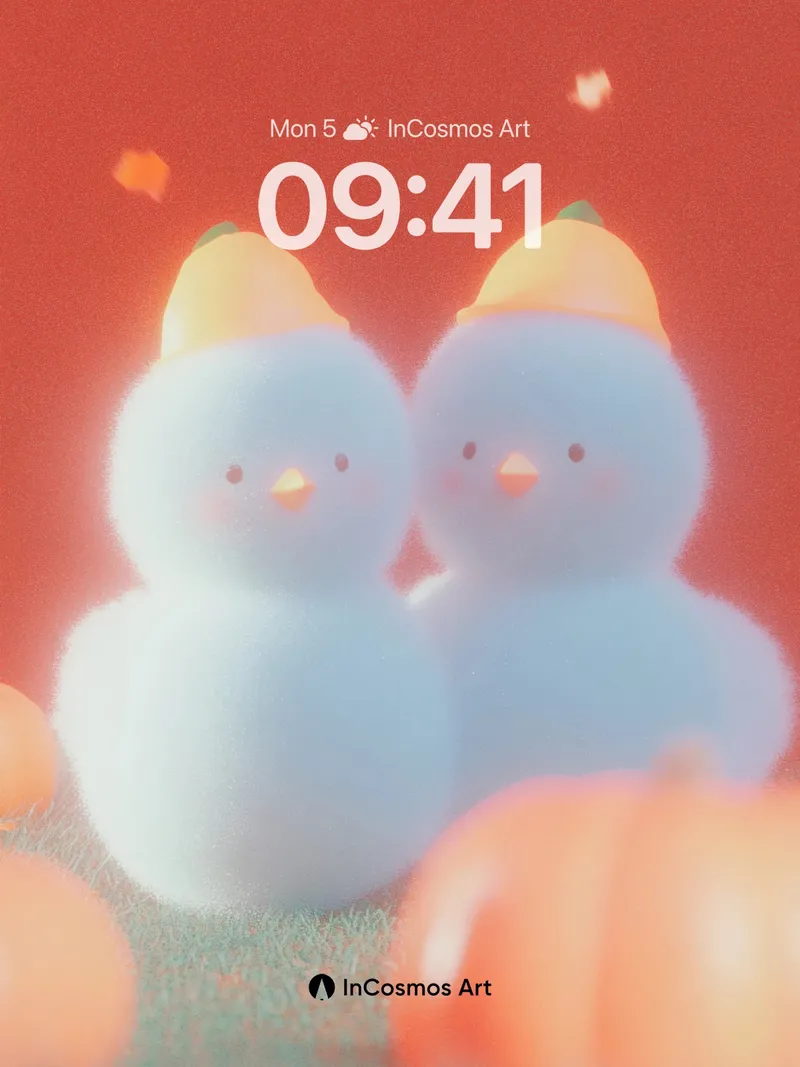
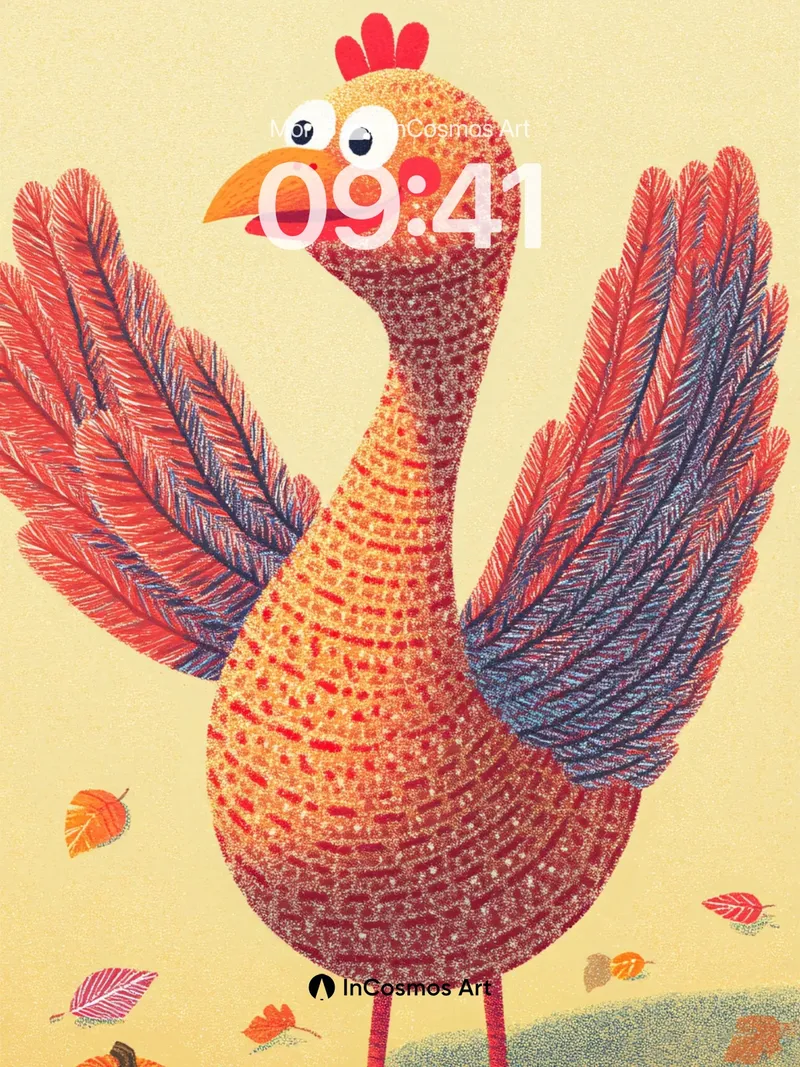
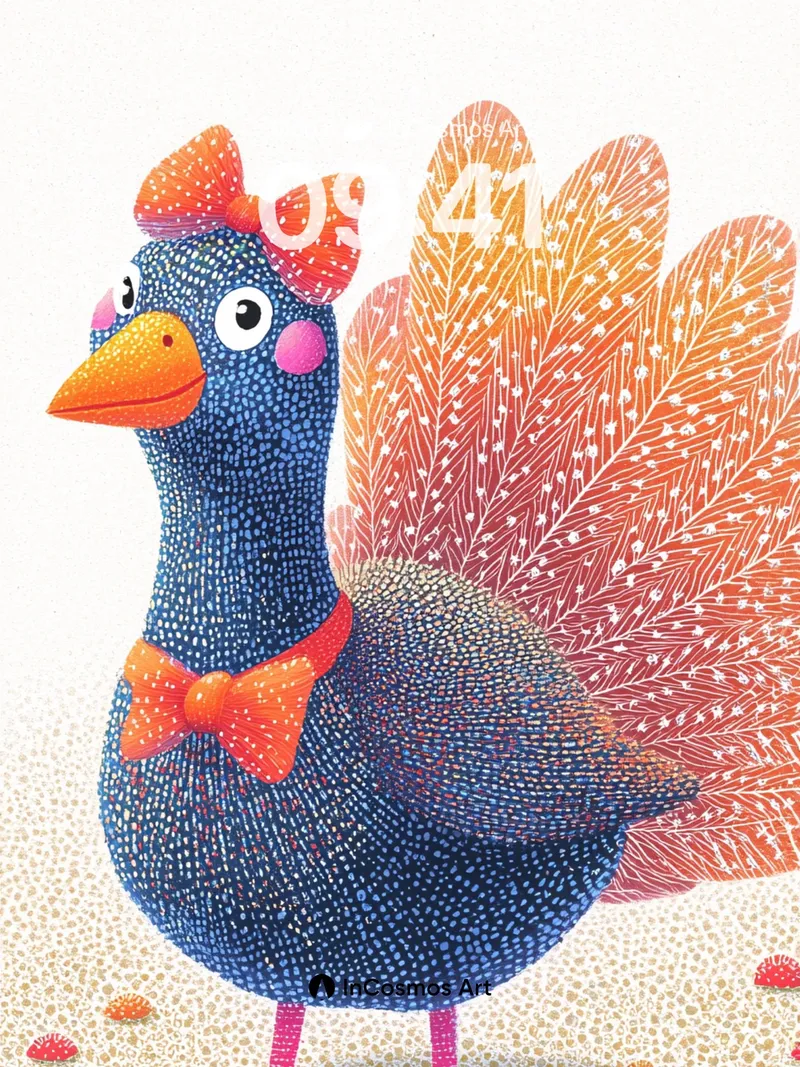
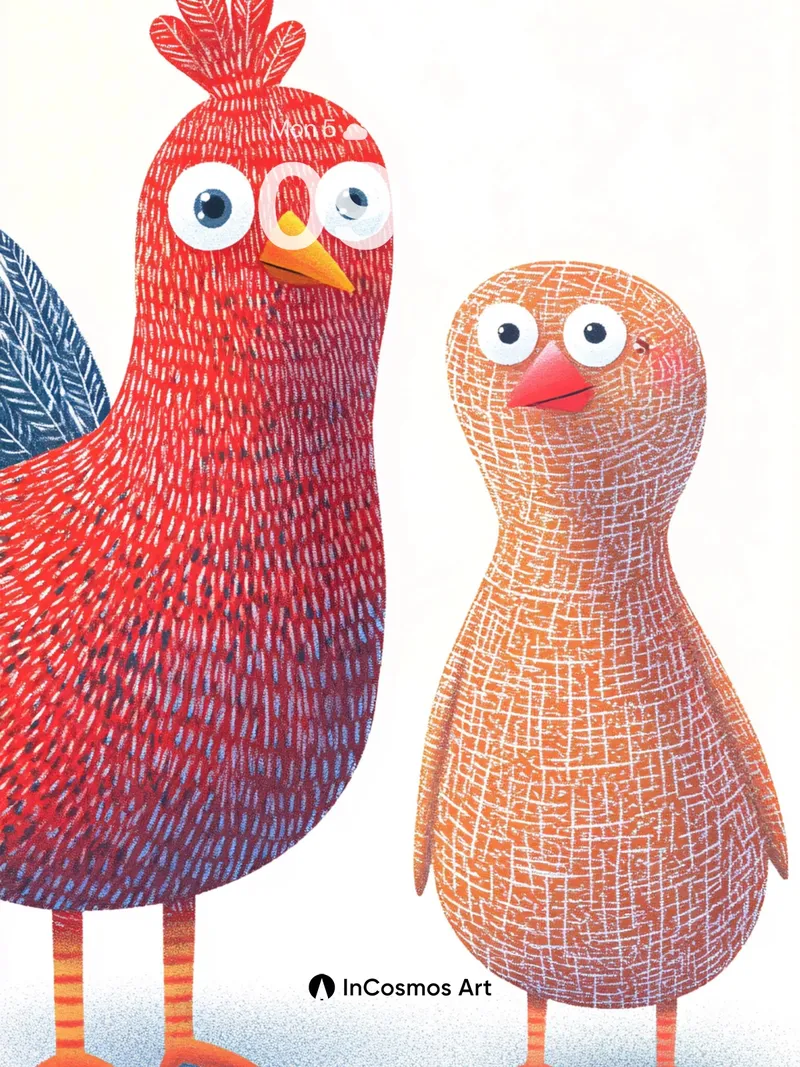
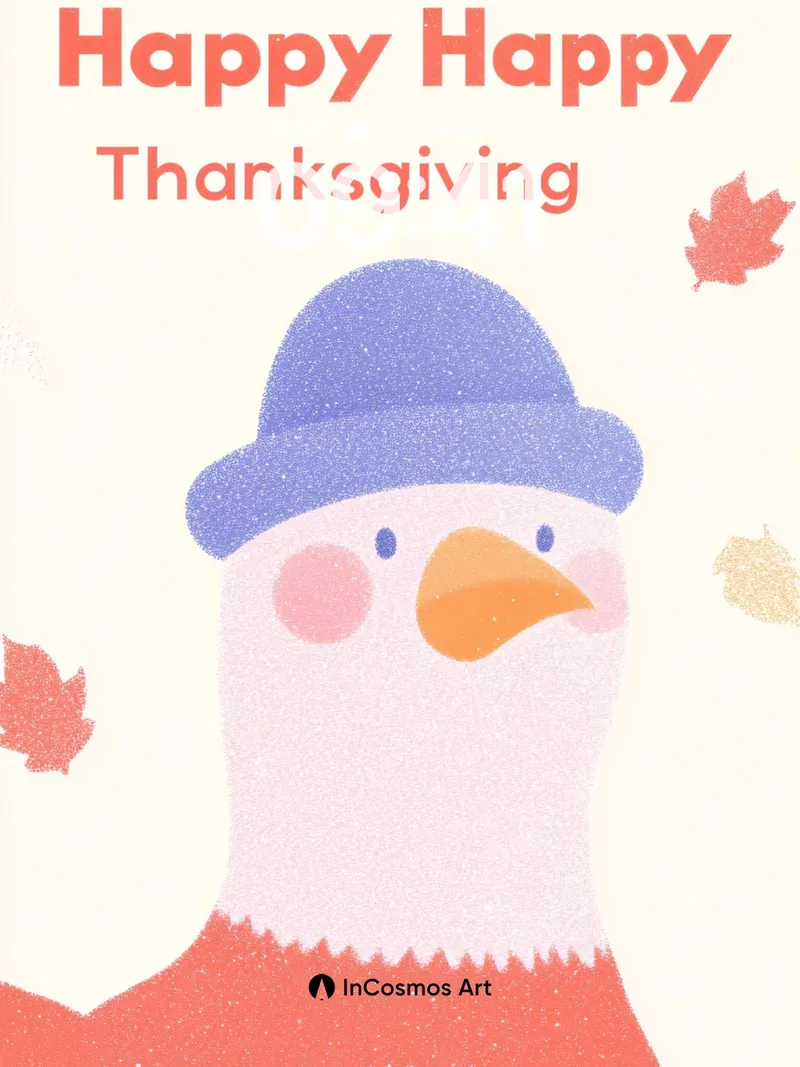
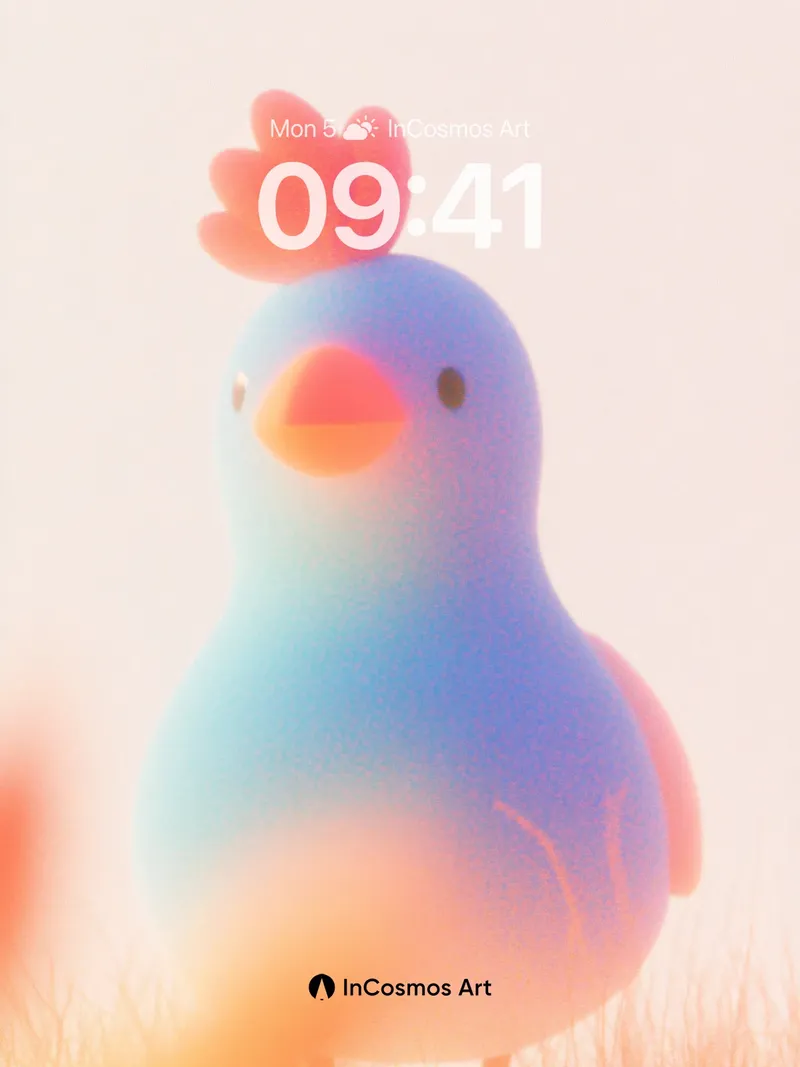
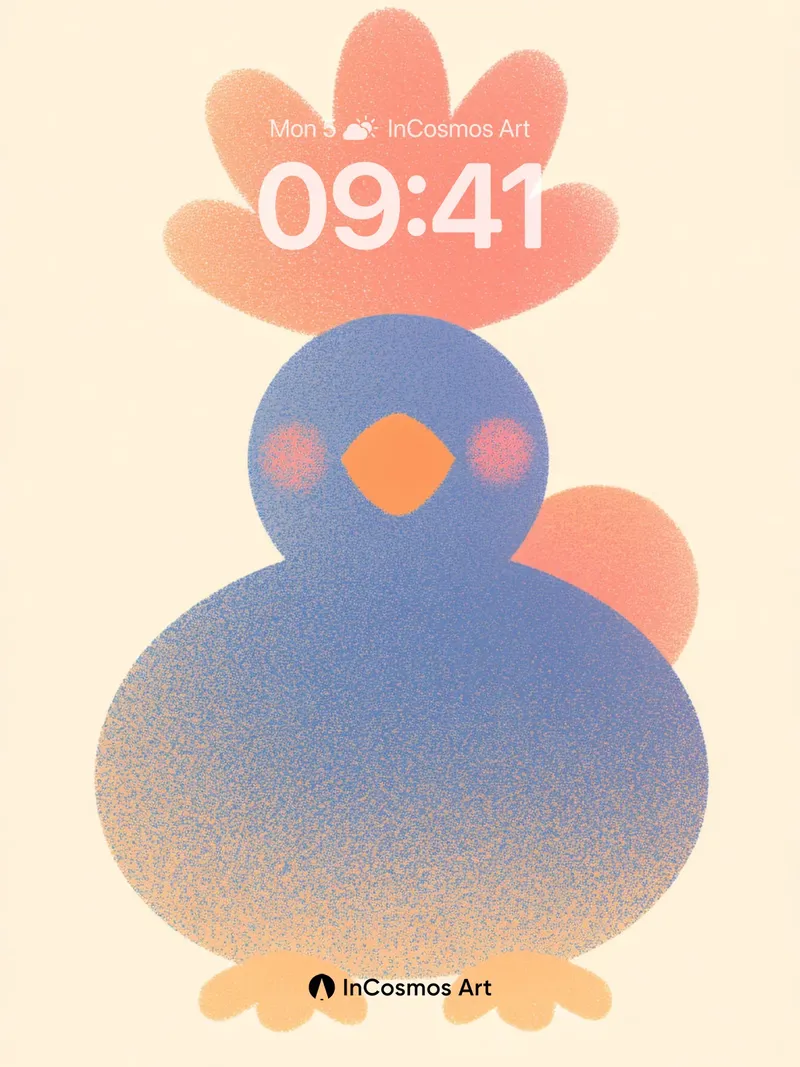
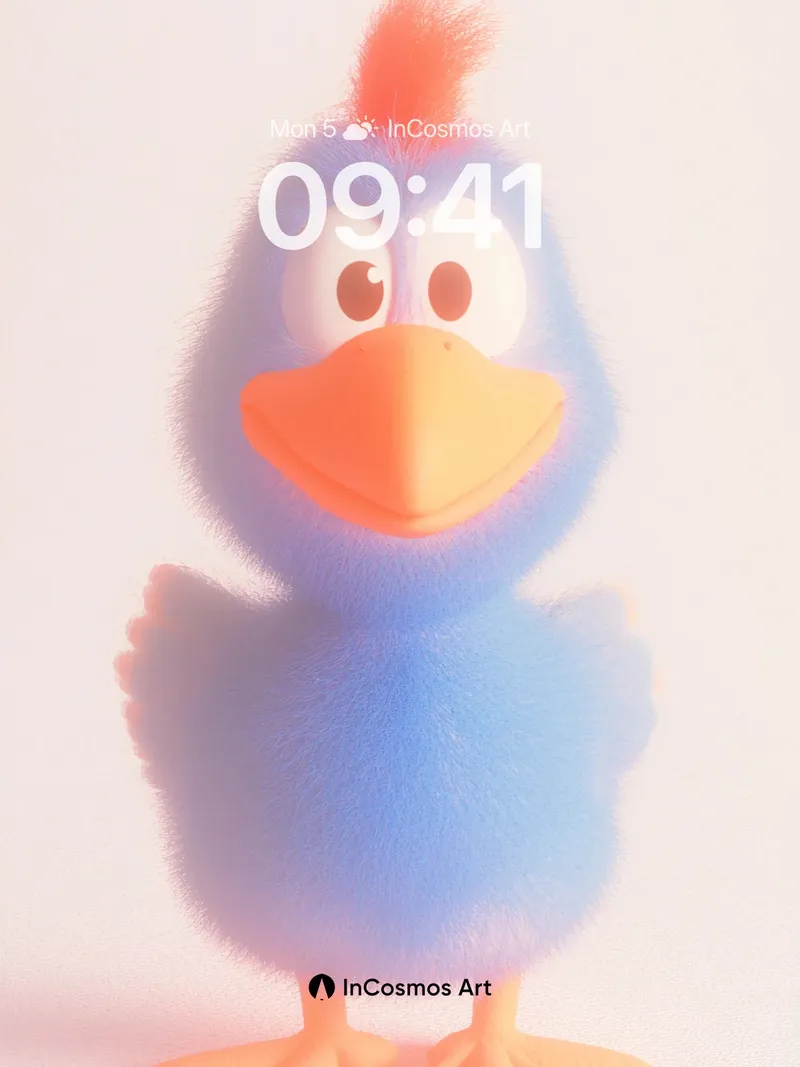
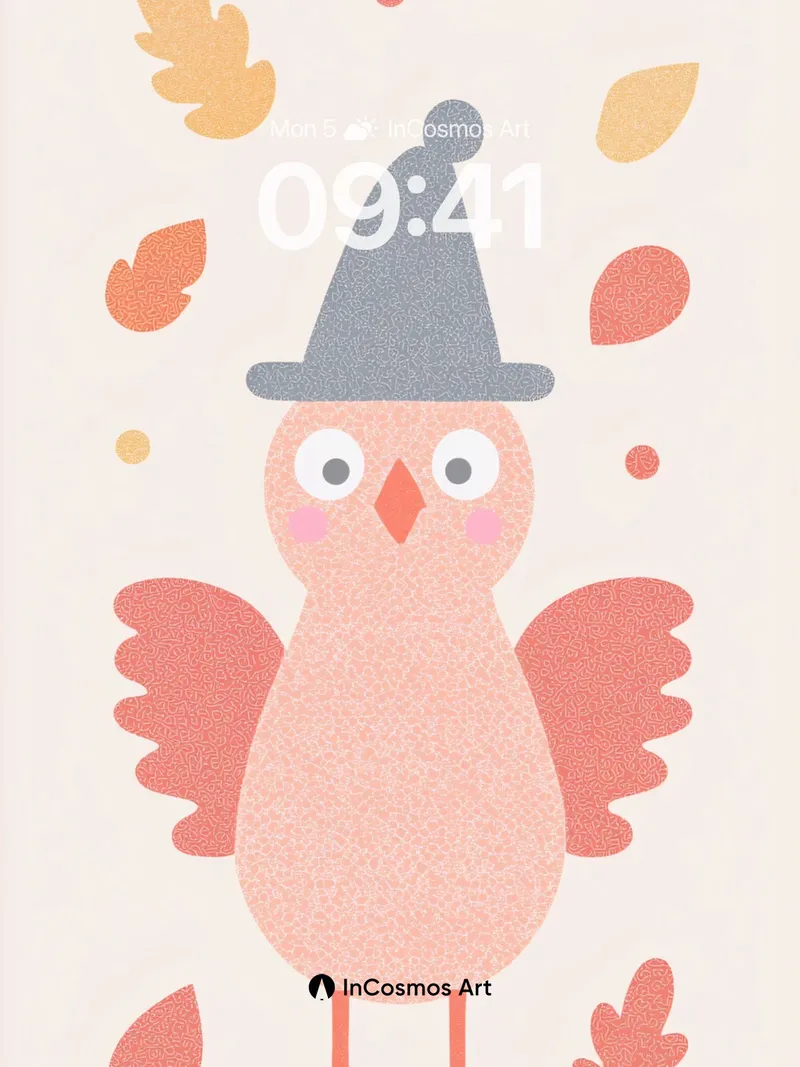
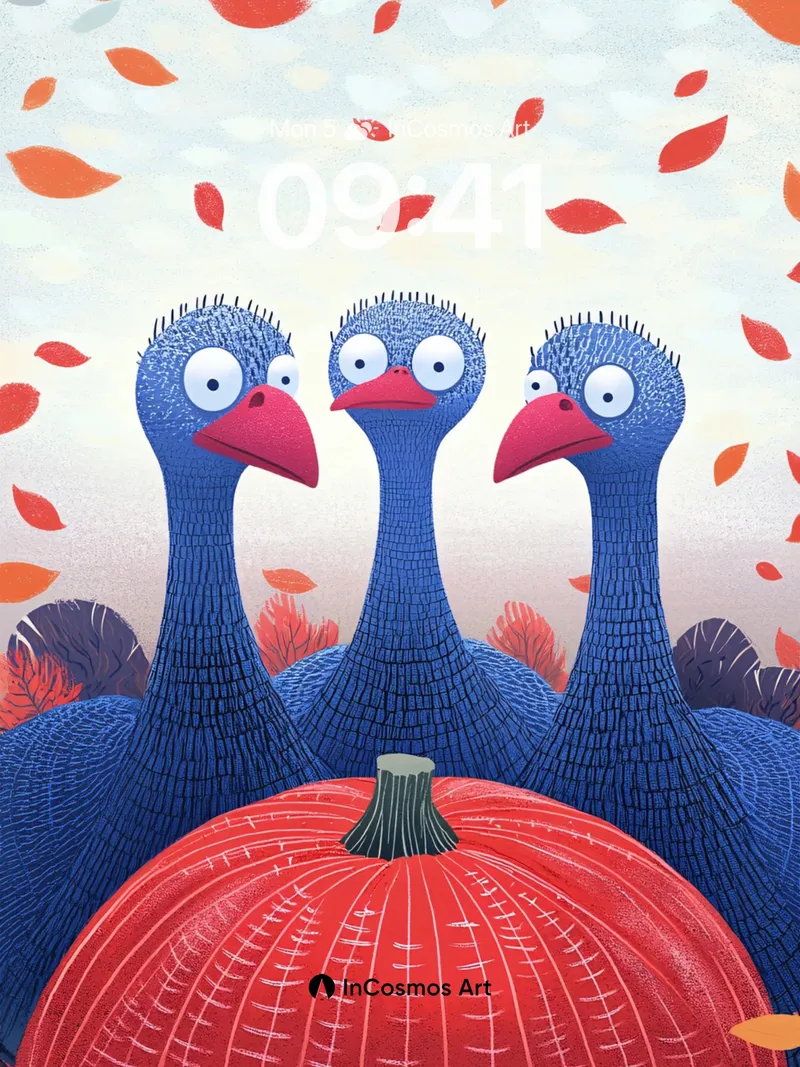
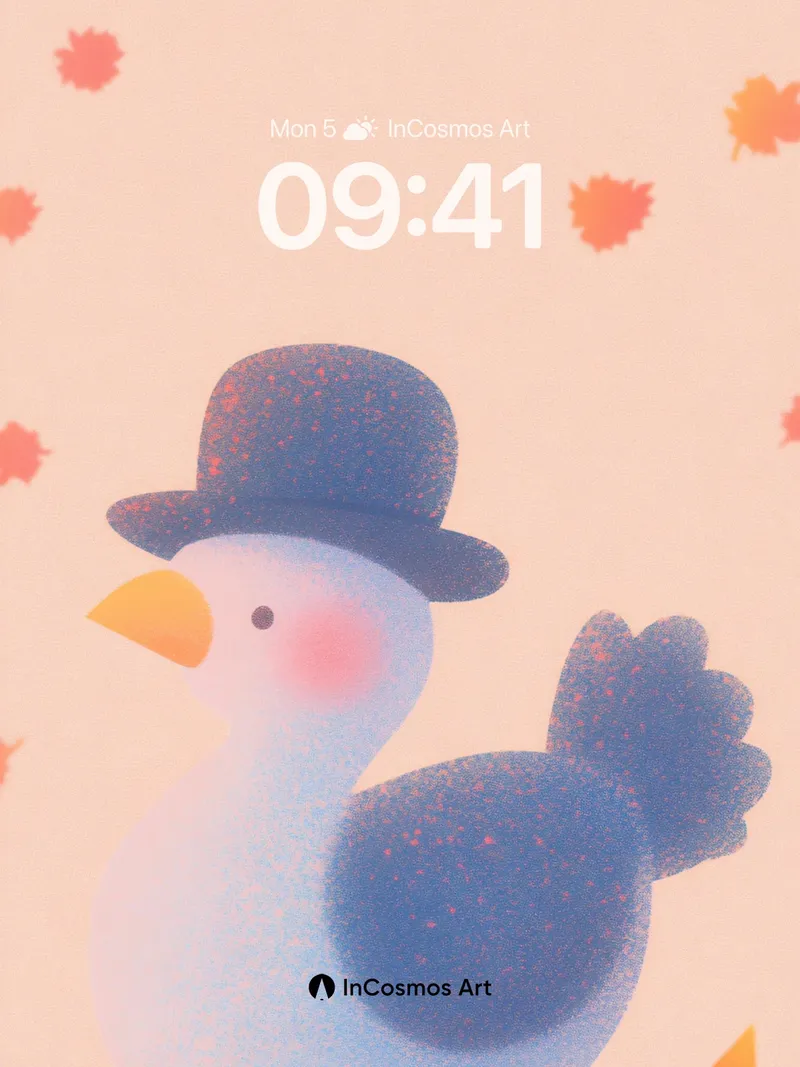
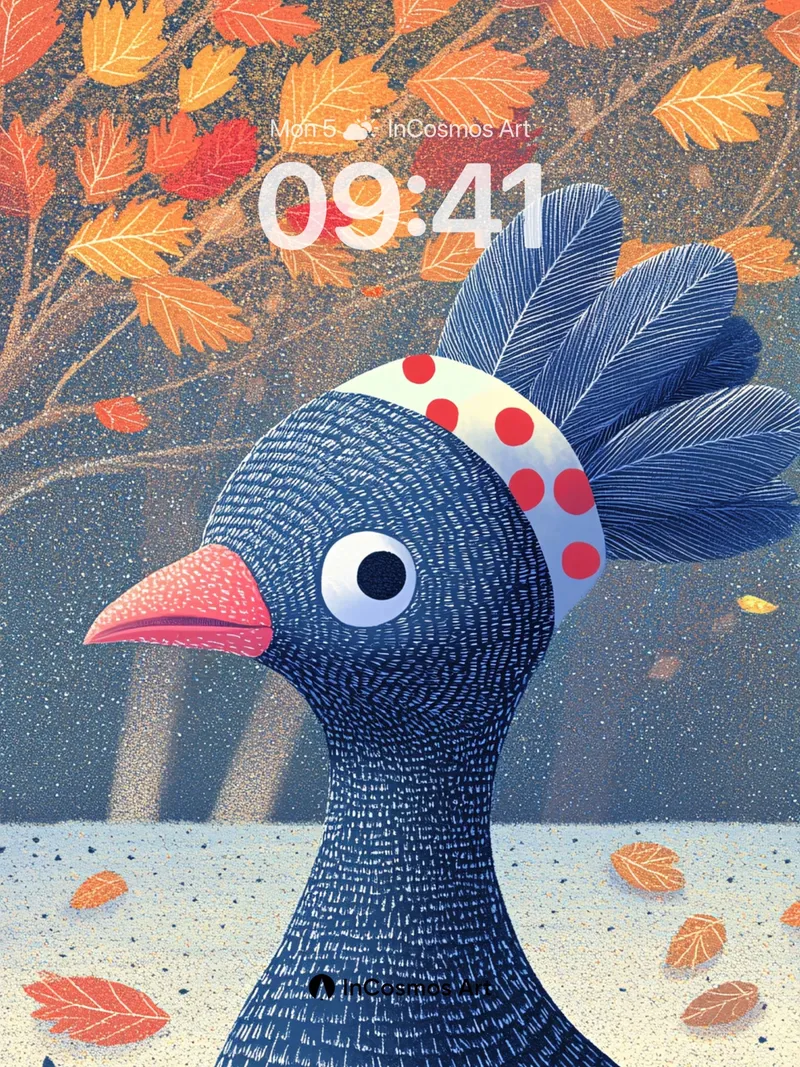
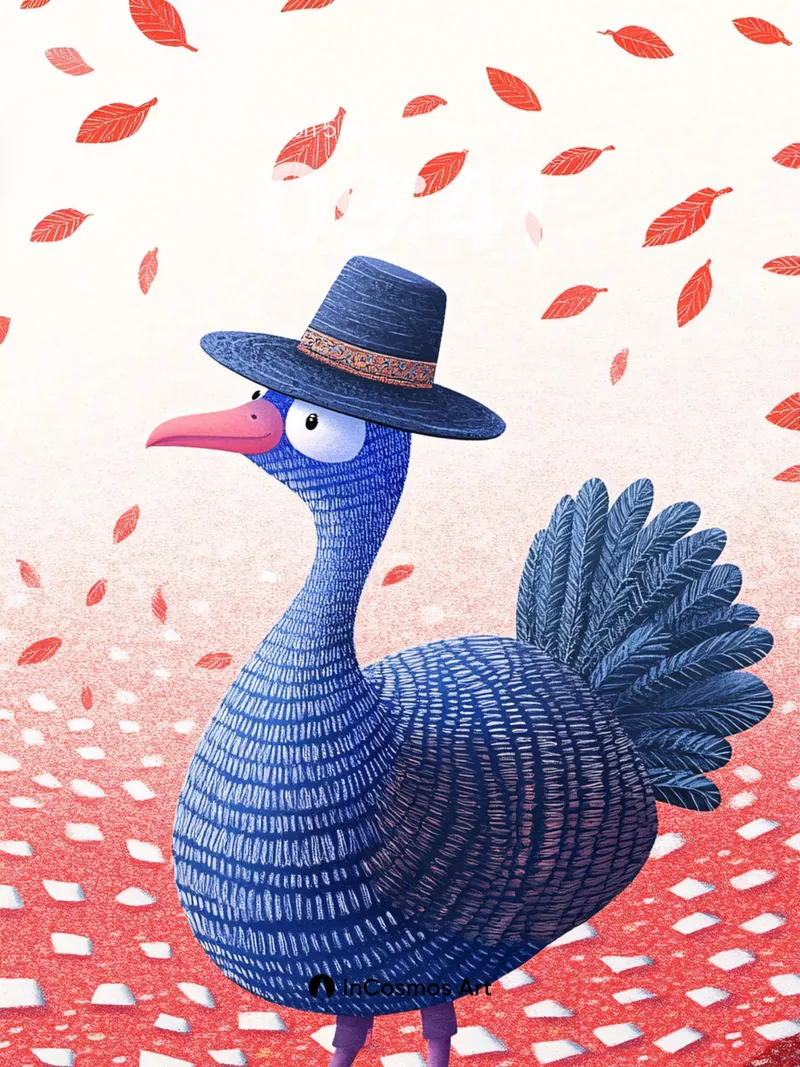
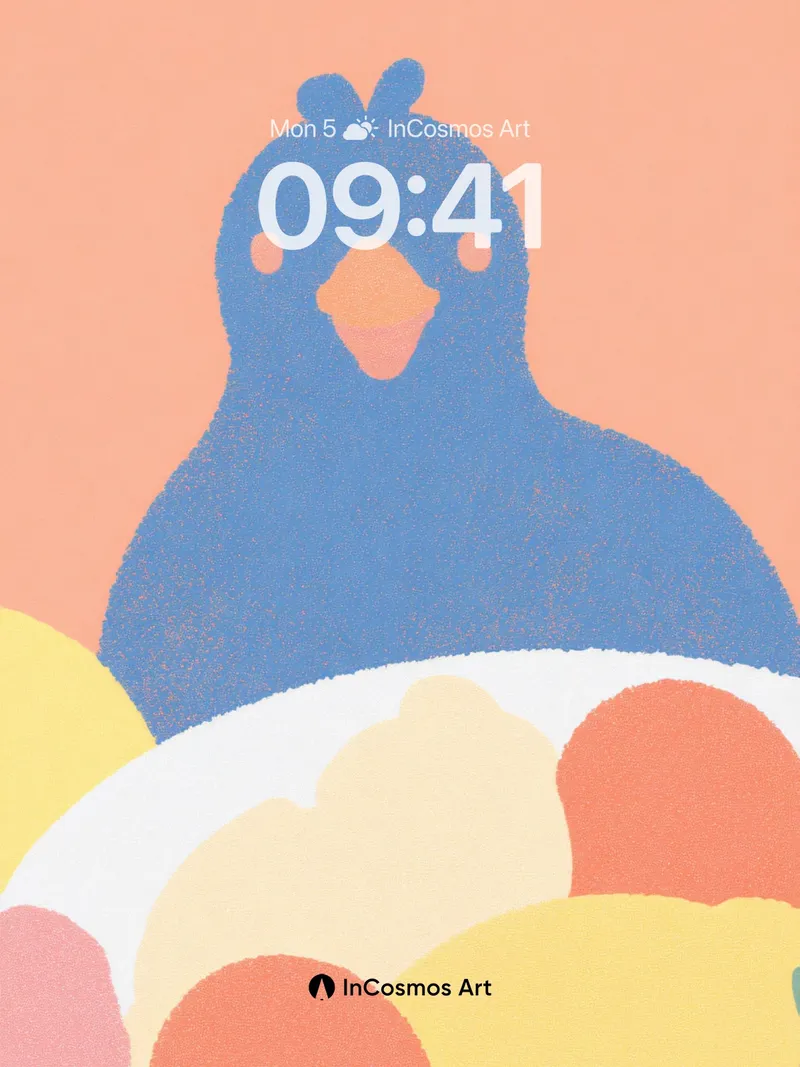
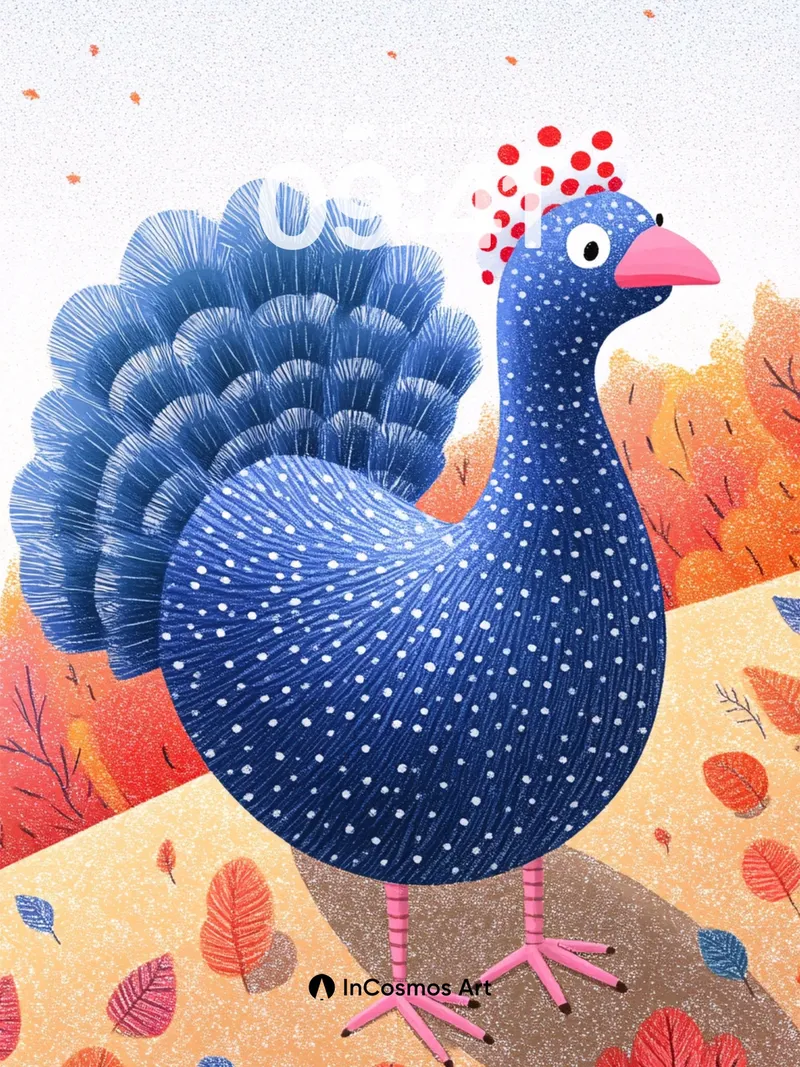
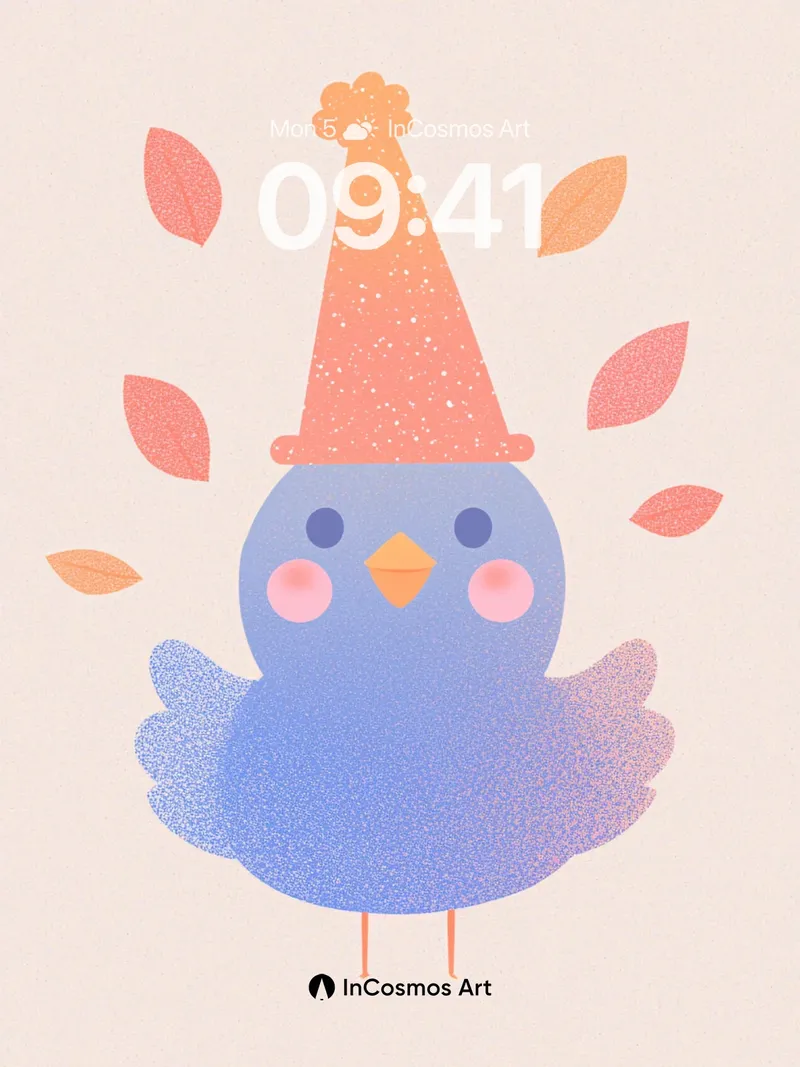
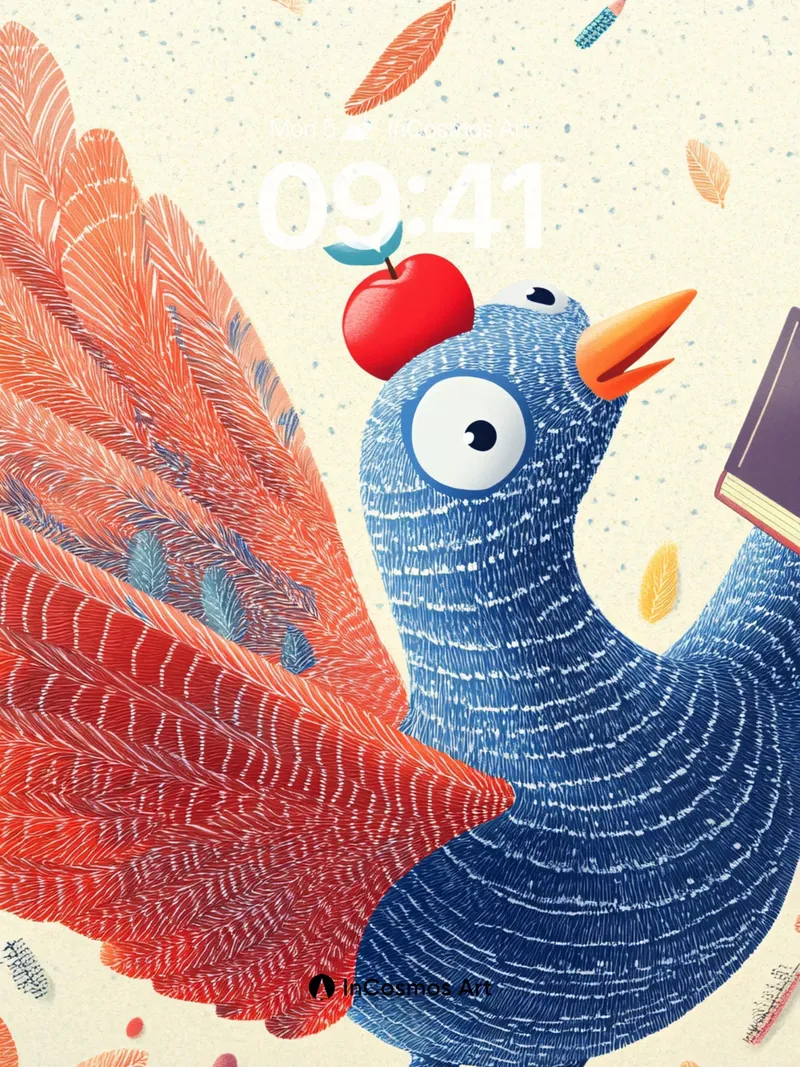
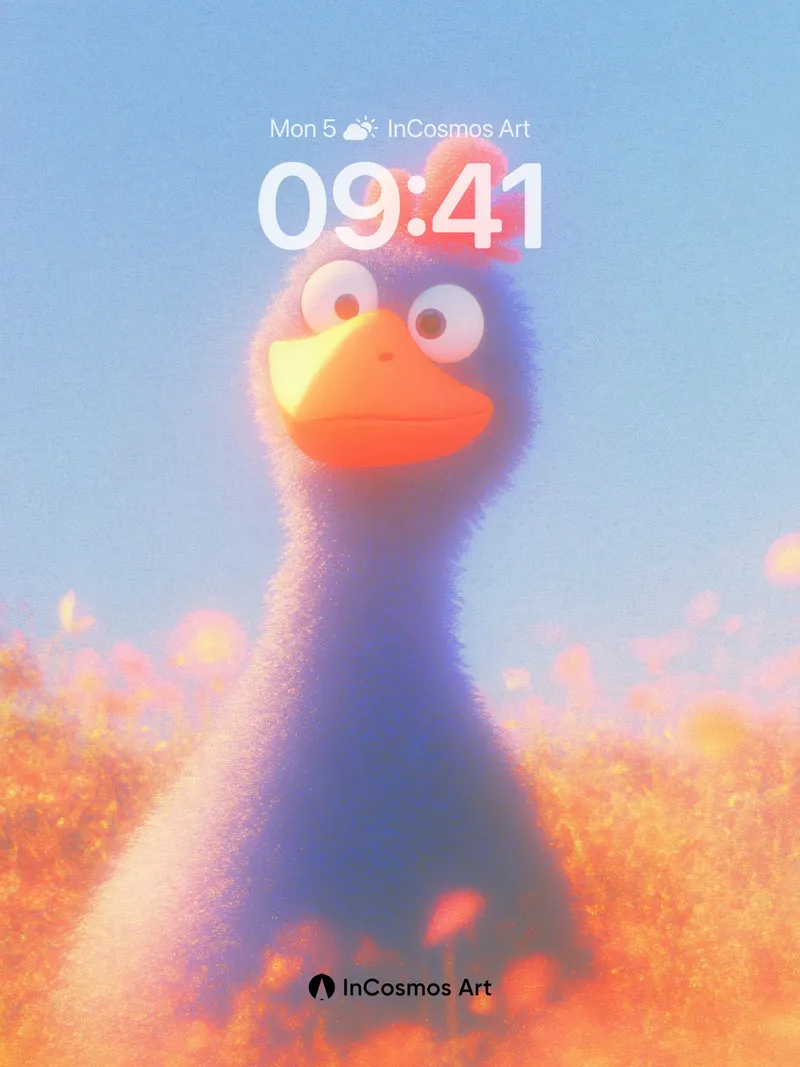
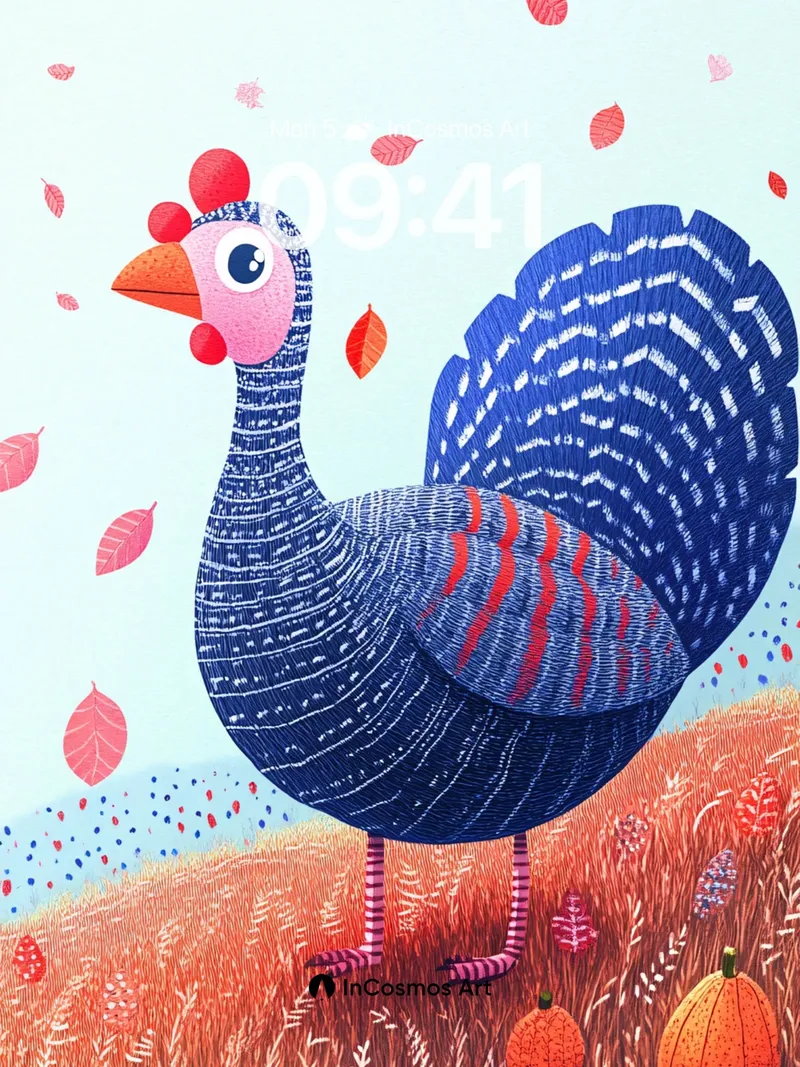
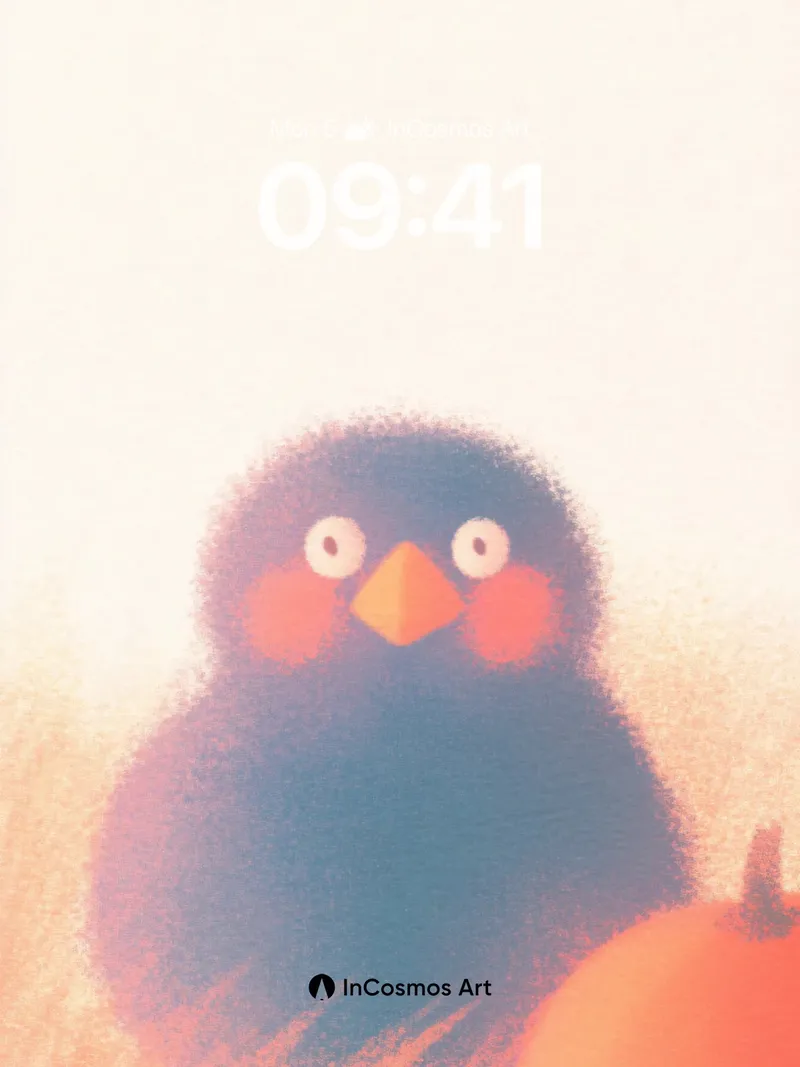
At the threshold of seasonal change, color and form become vessels for emotion. The blue-feathered turkey dons a hat, red leaves drift like letters, each line hinting at a longing for belonging. These figures are not naturalistic but cultural symbols reimagined—exaggerated silhouettes, repetitive patterns, and vivid palettes transform everyday rituals into tactile emotional language. Feather textures resemble artisan marks, serving as both decoration and containers of memory. When a turkey balances an apple on its head and holds a book, it transcends mere food, becoming a figure endowed with knowledge and dignity. Another, adorned with a bow and bright eyes, displays individuality and playful self-expression. These characters create a humorous tension in vision, echoing festive joy while metaphorically reflecting modern identity multiplicity.
Decoration as Narrative
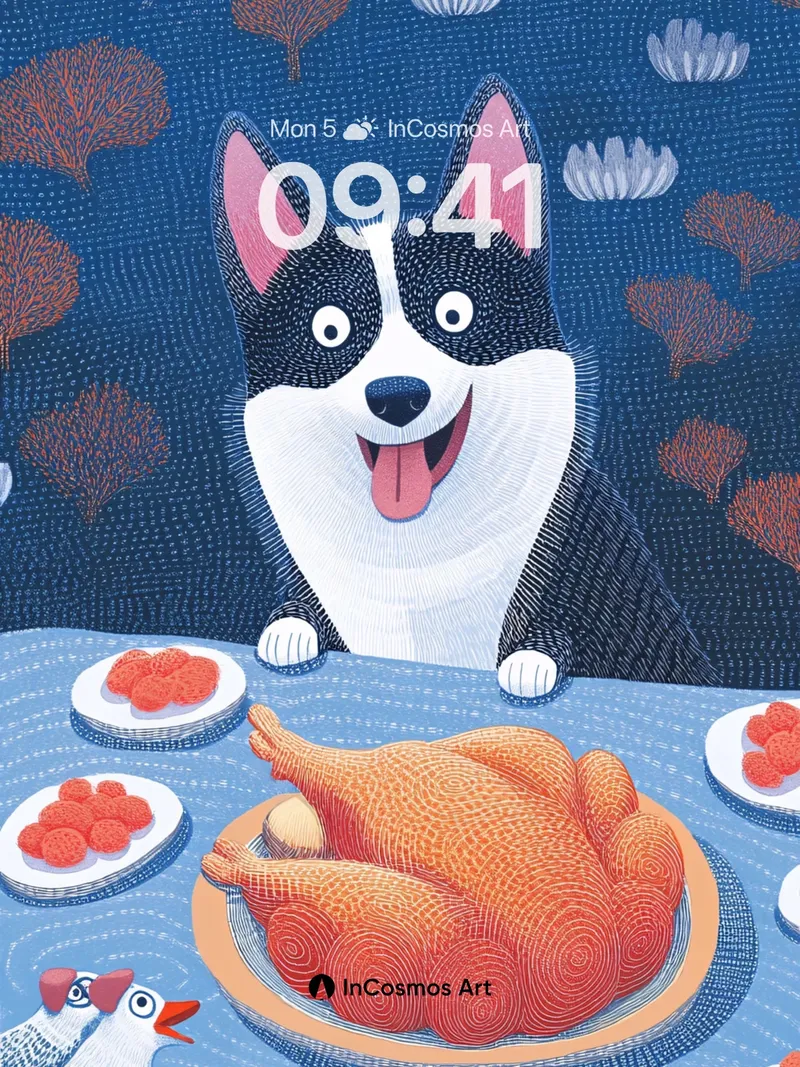
Patterns here are not ornamentation but narrative syntax. The dotted textures, wavy feather lines, and scattered leaves collectively form a visual logic rooted in folk art yet recoded through contemporary design. Every detail tells: this is a story of preparation, anticipation, and sharing. Placing the turkey at the center of a table transforms eating into a ritual gathering. The dog, symbolizing family, smiles broadly, eyes fixed, participating in a celebration that crosses species boundaries.
The Weight of Symbols
The turkey has long surpassed biological meaning. In Thanksgiving context, it carries collective memories of reunion, abundance, and sacrifice. Yet these illustrations avoid traditional sacrificial imagery, instead humanizing the bird to grant it agency. Turkeys wearing hats, holding books—these actions defy their fate as food, turning them into observers and thinkers. This reversal brings humor and prompts reflection on consumerism and ethical relations. When animals wear human clothing, does it also challenge our relationship with nature?
Rhythm of Emotion
The overall mood is warm and lively. Orange-red contrasts with deep blue create visual balance, while repeated elements—leaves, dots—generate rhythm. This rhythm is aesthetic and emotional, mirroring seasonal cycles and holiday emotional fluctuations—anticipation, joy, contemplation. Each turkey’s posture differs, yet they share space, suggesting coexistence. In this scene, celebration is not singular but inclusive, a network of connection.
Metaphor of Family
In the final image, a dog and three turkeys sit around a table laden with food. Absurd yet tender, the dog's smile conveys unconditional acceptance; the turkeys, surprised or curious, reveal distinct personalities. This non-traditional family challenges biological kinship. Their silent interaction, through gesture and expression, completes communication. Perhaps this reflects modern families: not bound by blood, but by emotional resonance.