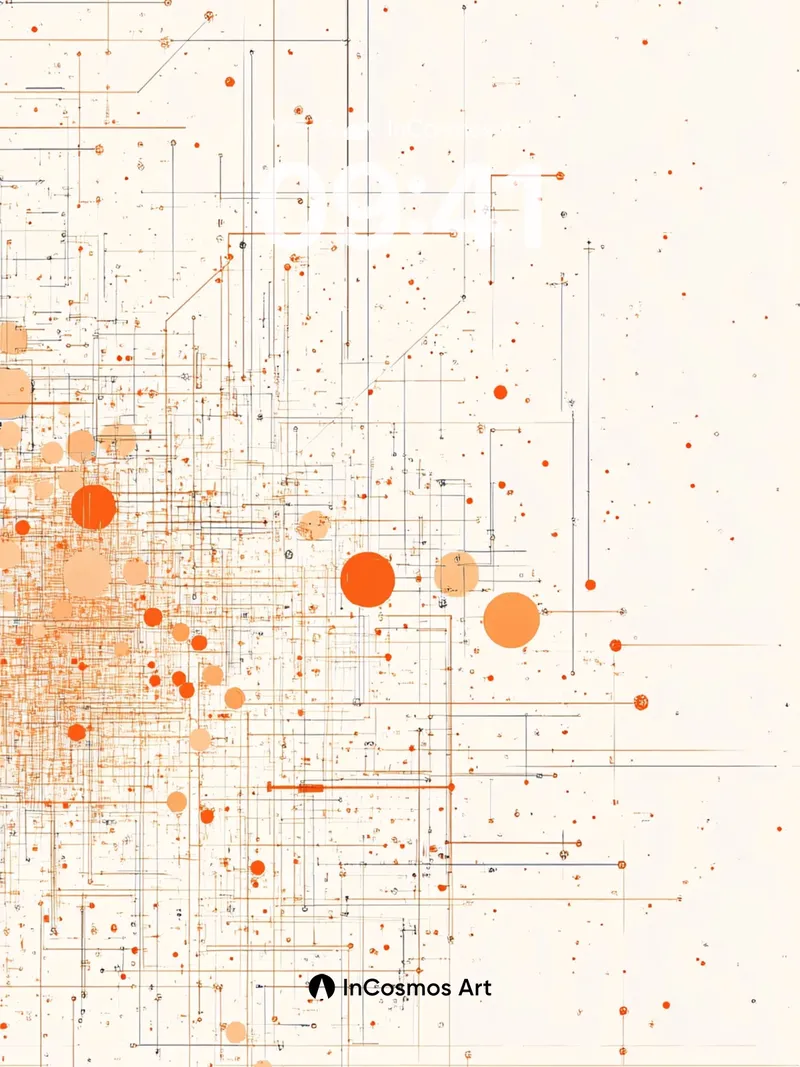
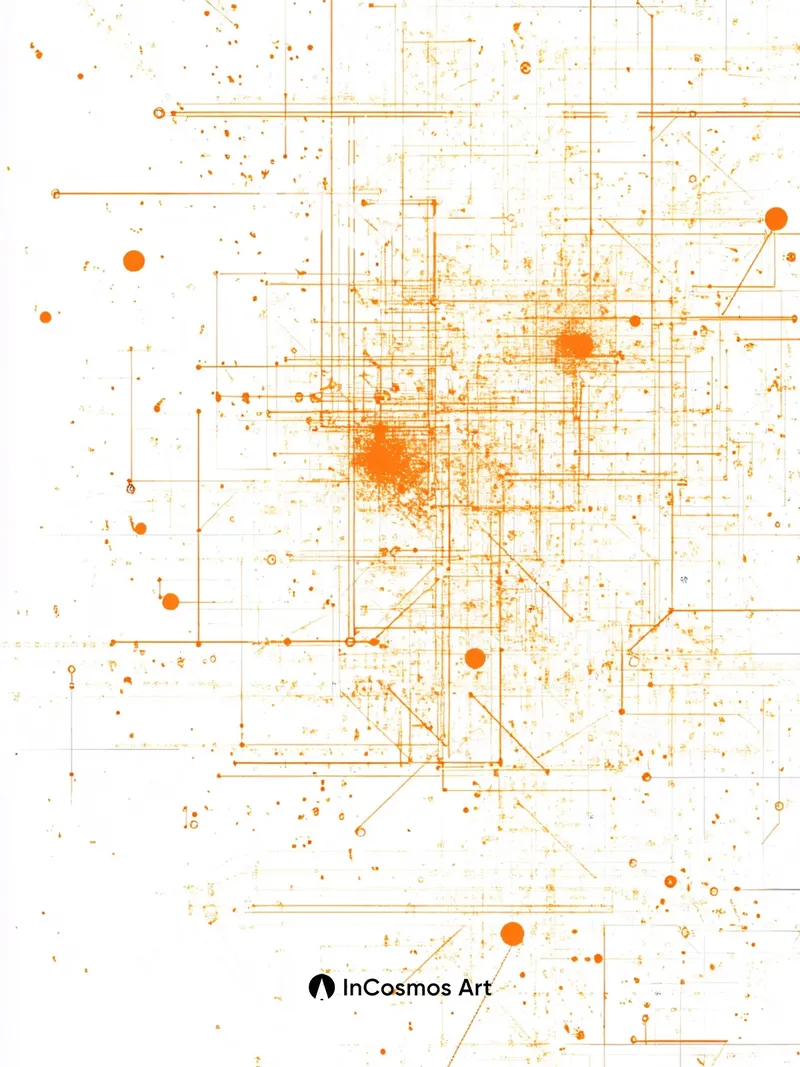
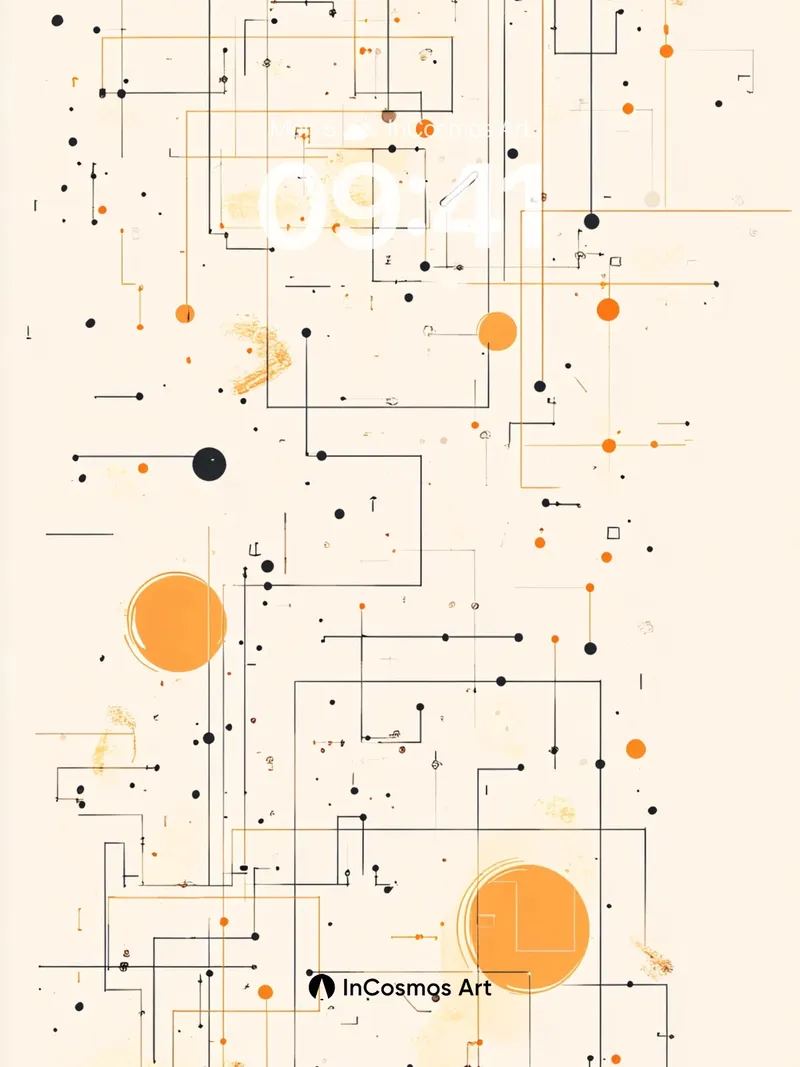
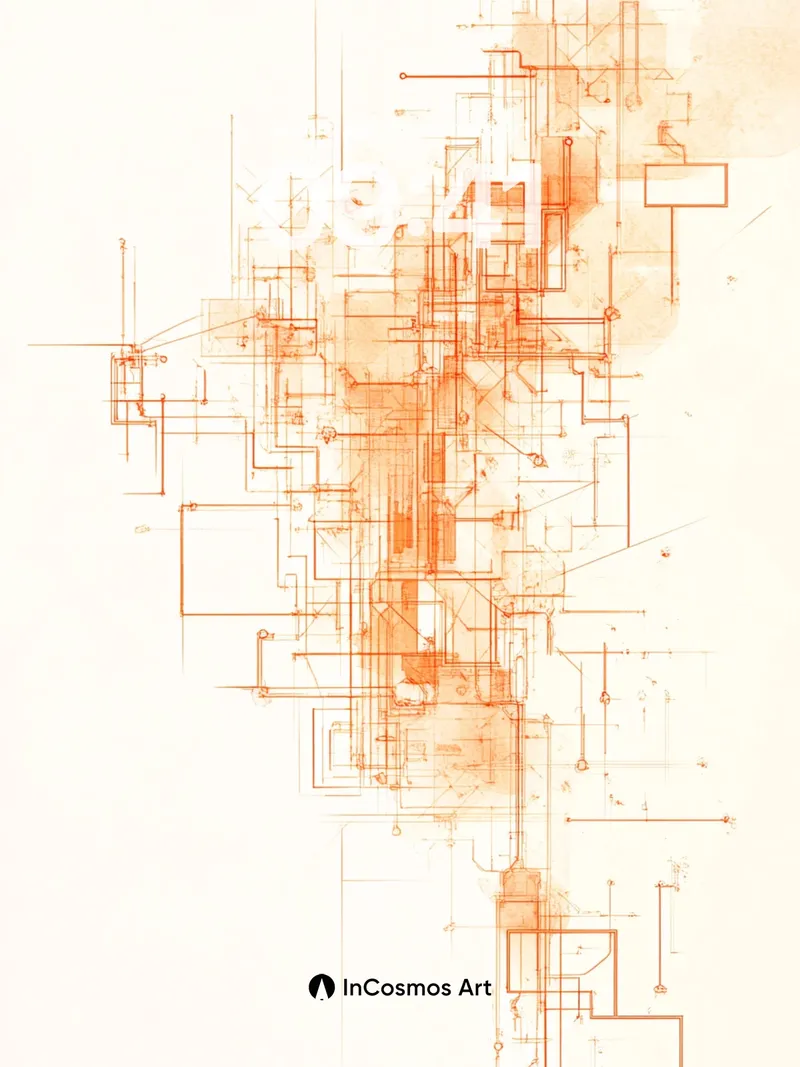
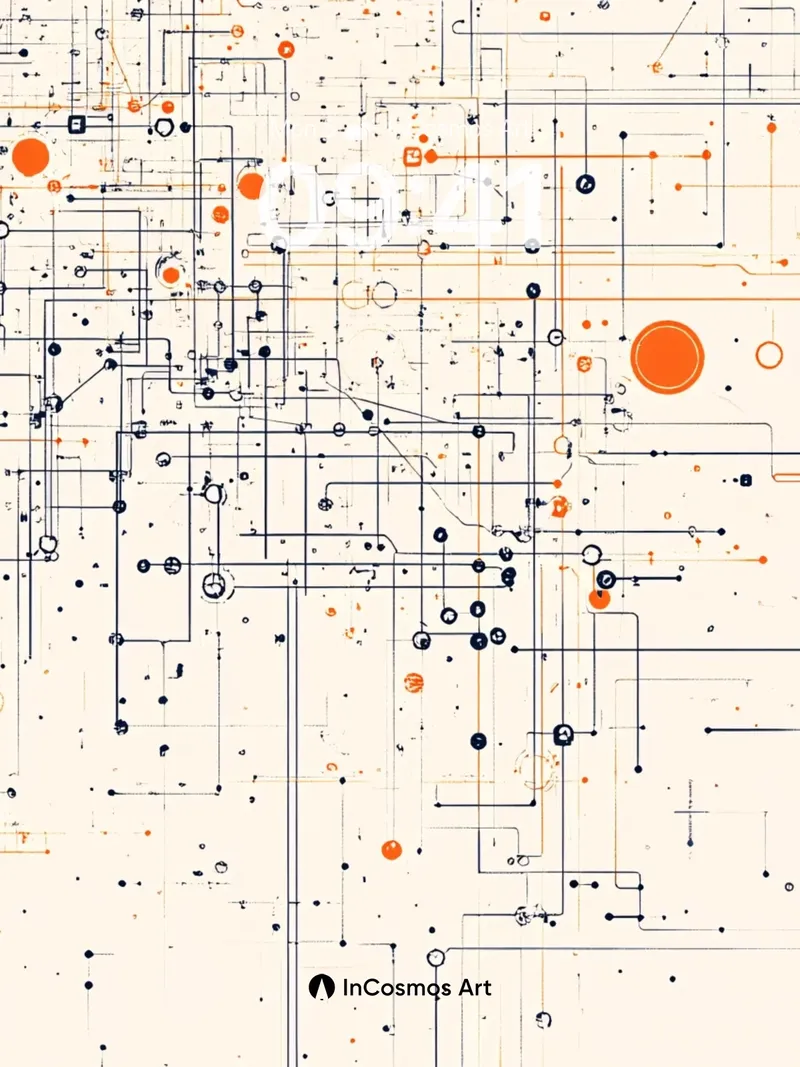
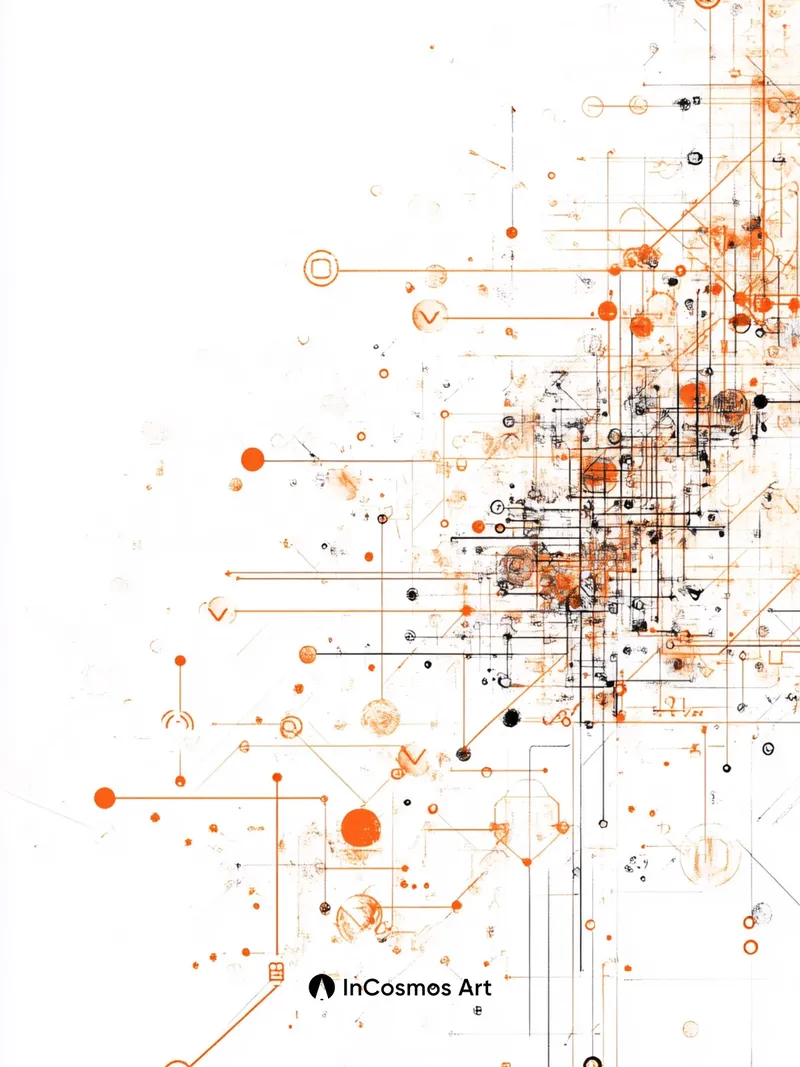
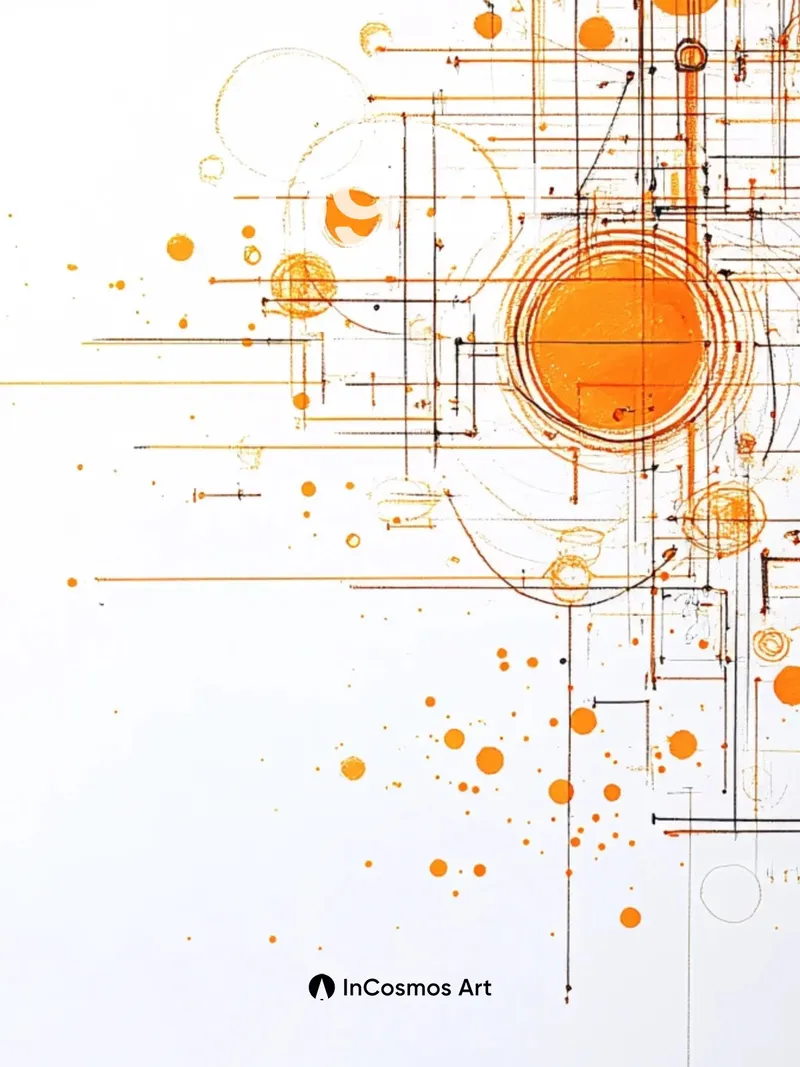
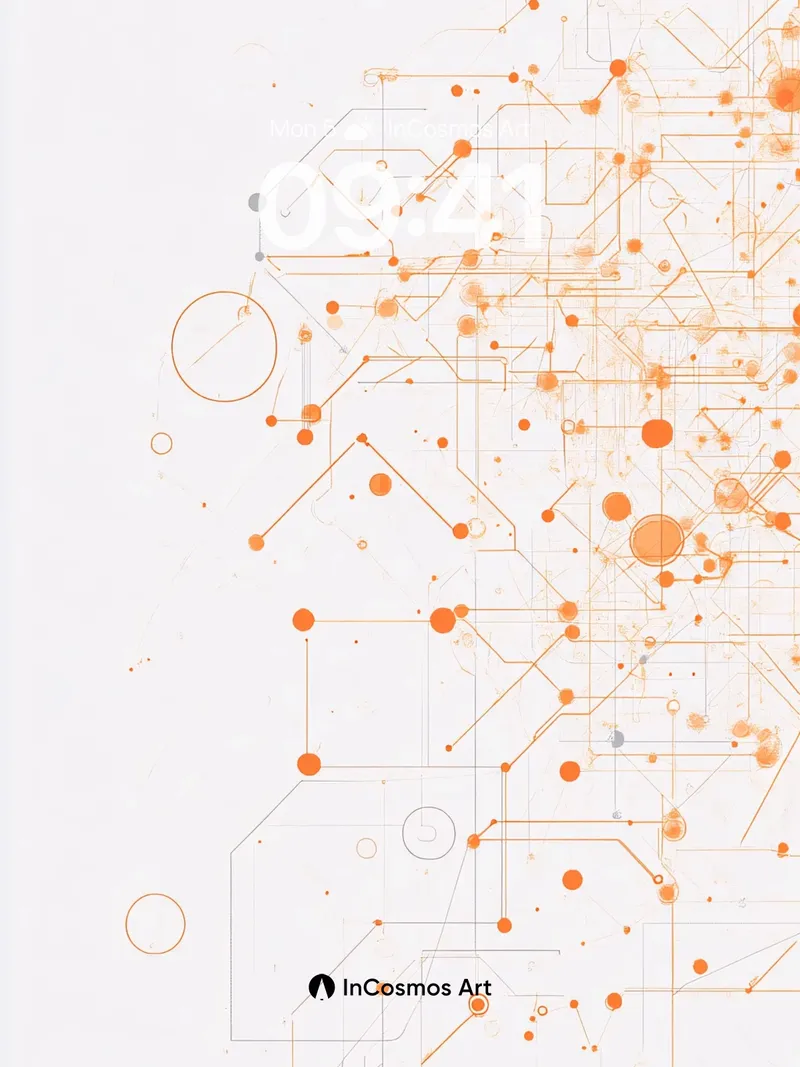
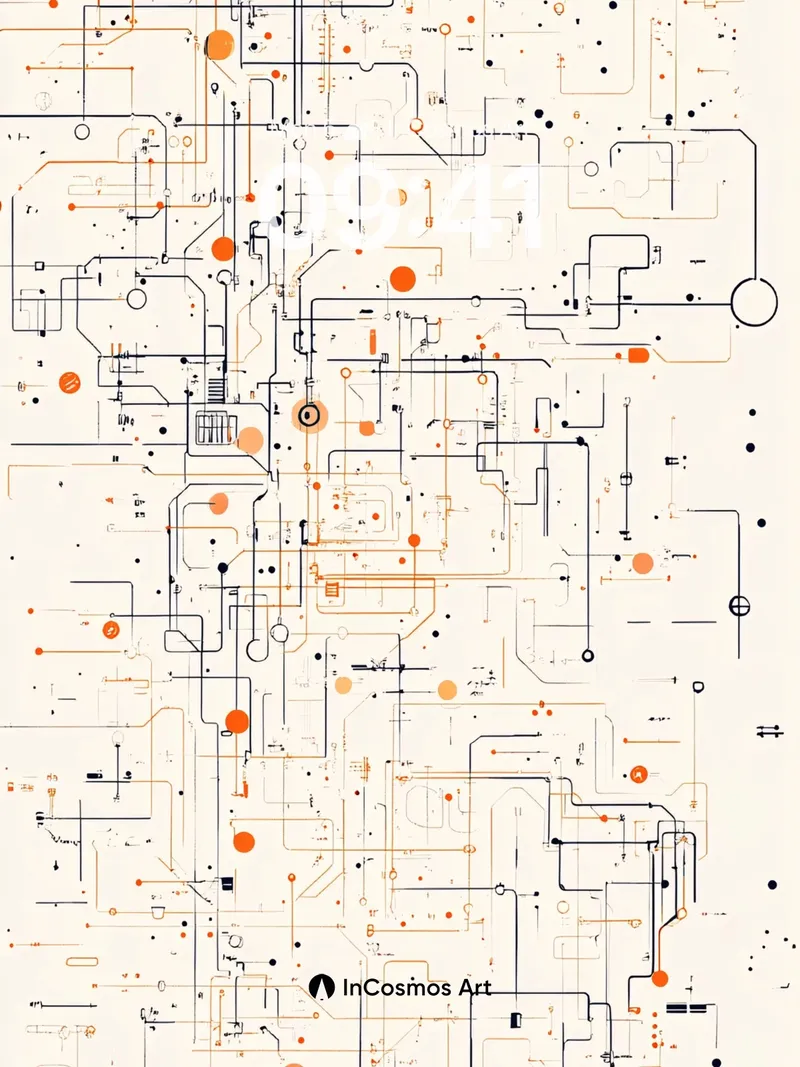
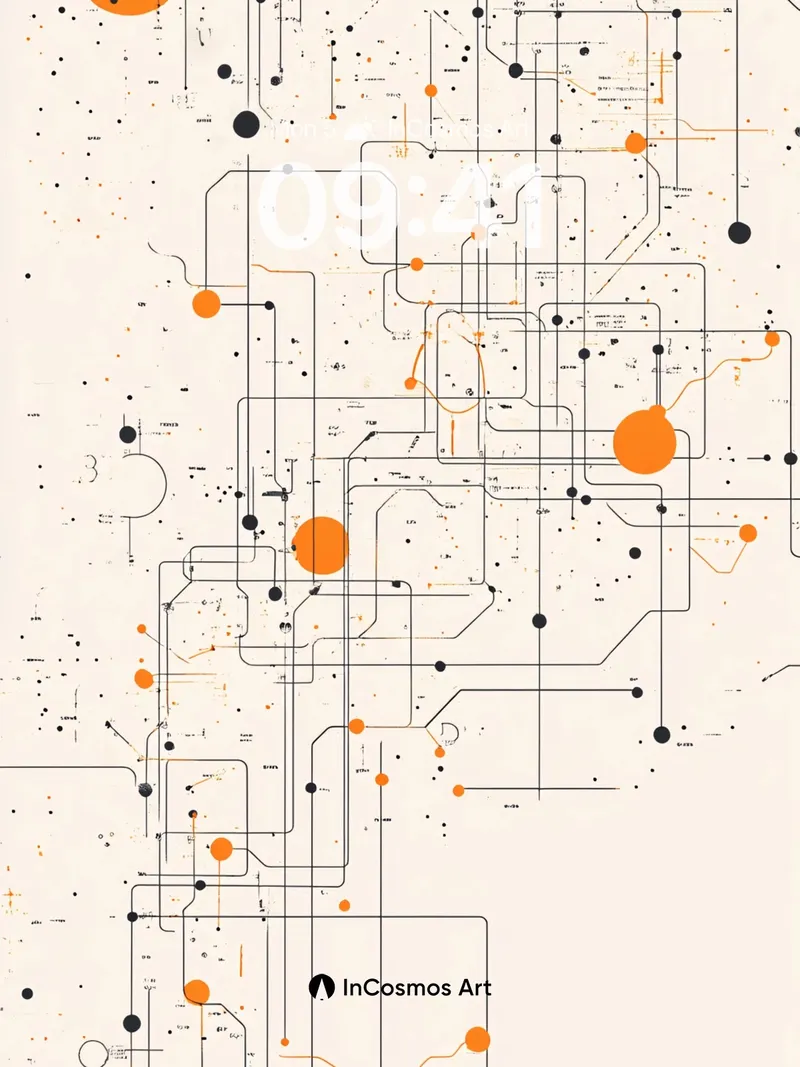
Lines extend through space, intersecting to form networks. These paths are not designed for electric current but carry an invisible rhythm. They resemble nerve endings and urban underground conduits, transmitting signals in silence. Orange dots mark nodes—points of energy concentration and memory anchors. Each break suggests an unfinished dialogue; each junction a fleeting consensus. Order and randomness coexist, forming a distinct modern aesthetic of solitude.
Ethics of Connection
The interweaving of lines is not accidental. It follows a logic mirroring social relationships. The activation of one node may trigger a system-wide response. This dependency reveals the fragile connections between contemporary individuals—dense yet easily severed. Data channels reflect the pace of human information exchange: fast and traceless, deep and silent.
Poetry of Disconnection
Not all connections endure. Some lines break, leaving voids. These gaps are not failures but pauses in existence. They allow reflection, embrace uncertainty. In a hyper-connected age, disconnection becomes a form of resistance. It reminds that systems are not eternal, nor is life continuous or whole.
Memory of Nodes
Orange circles are more than visual markers—they are temporal imprints. They indicate once-active locations, like postmarks on old letters. Repeated nodes suggest habits, obsessions, or unresolved mysteries. They function as private diaries within the system, recording unspeakable trajectories.
Weight of Topology
The overall layout exhibits asymmetric balance. No center, yet gravity exists. Variations in line density suggest functional differences across regions. High-density zones resemble urban cores; low-density areas echo peripheries. This distribution reflects an invisible mechanism of power and resource allocation beneath technological surfaces.