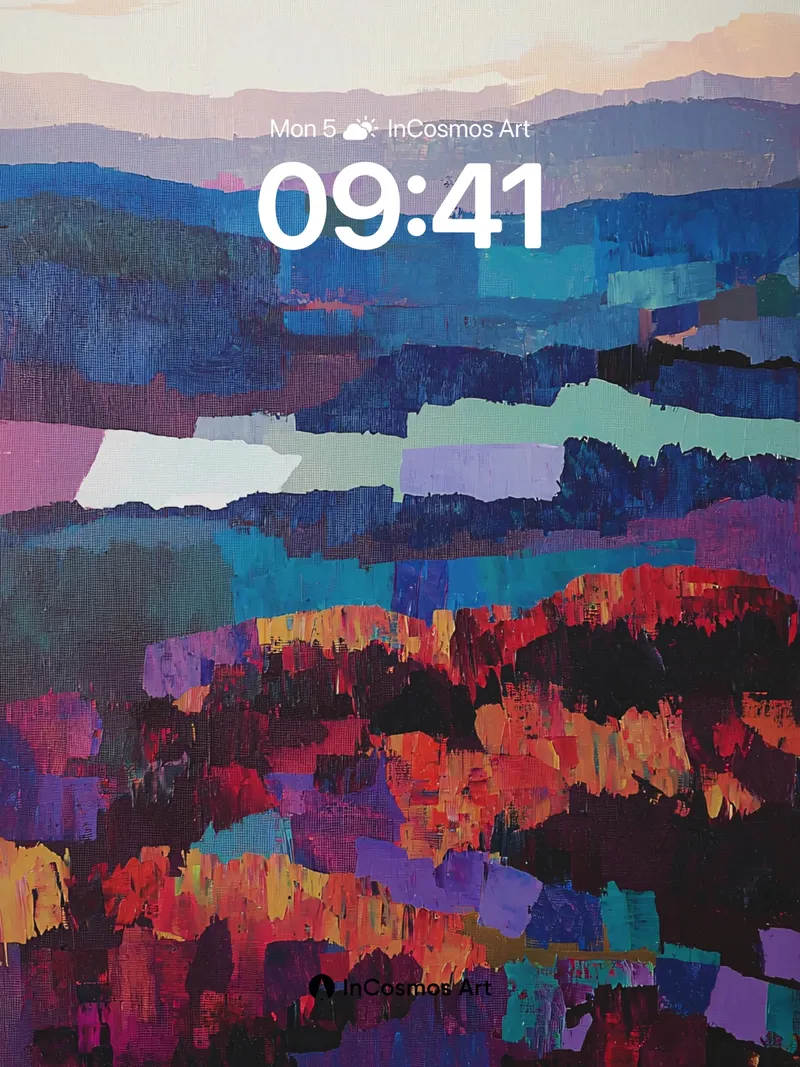
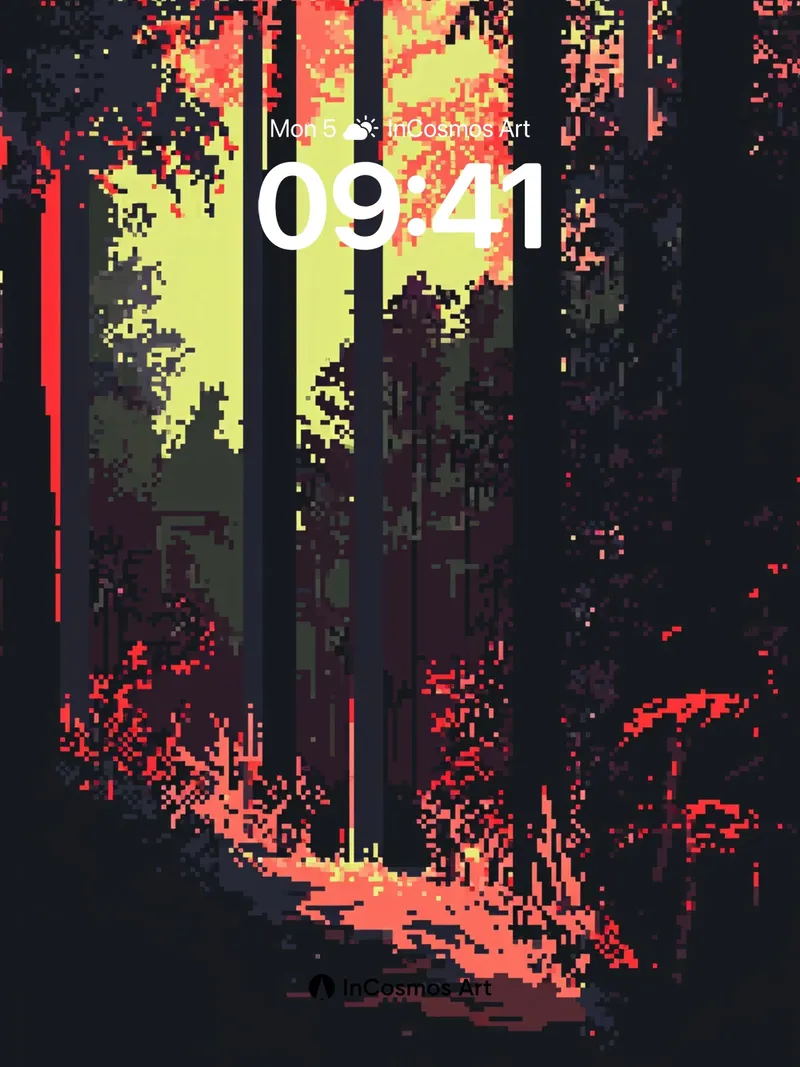
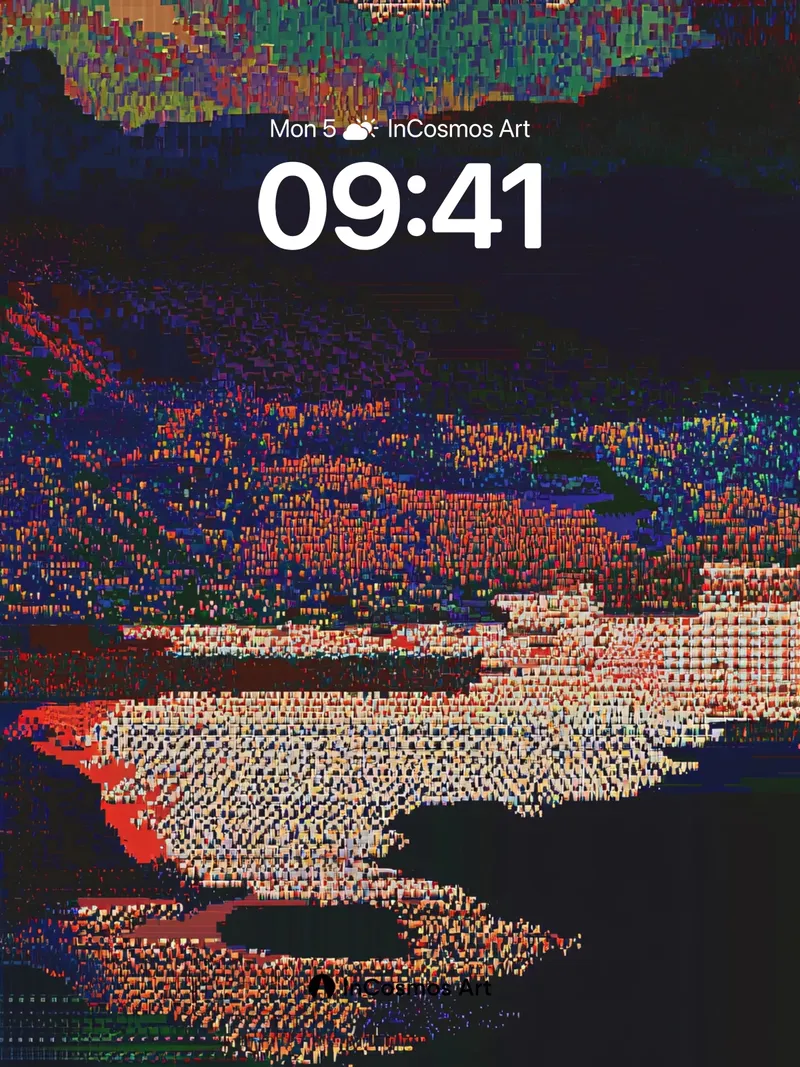
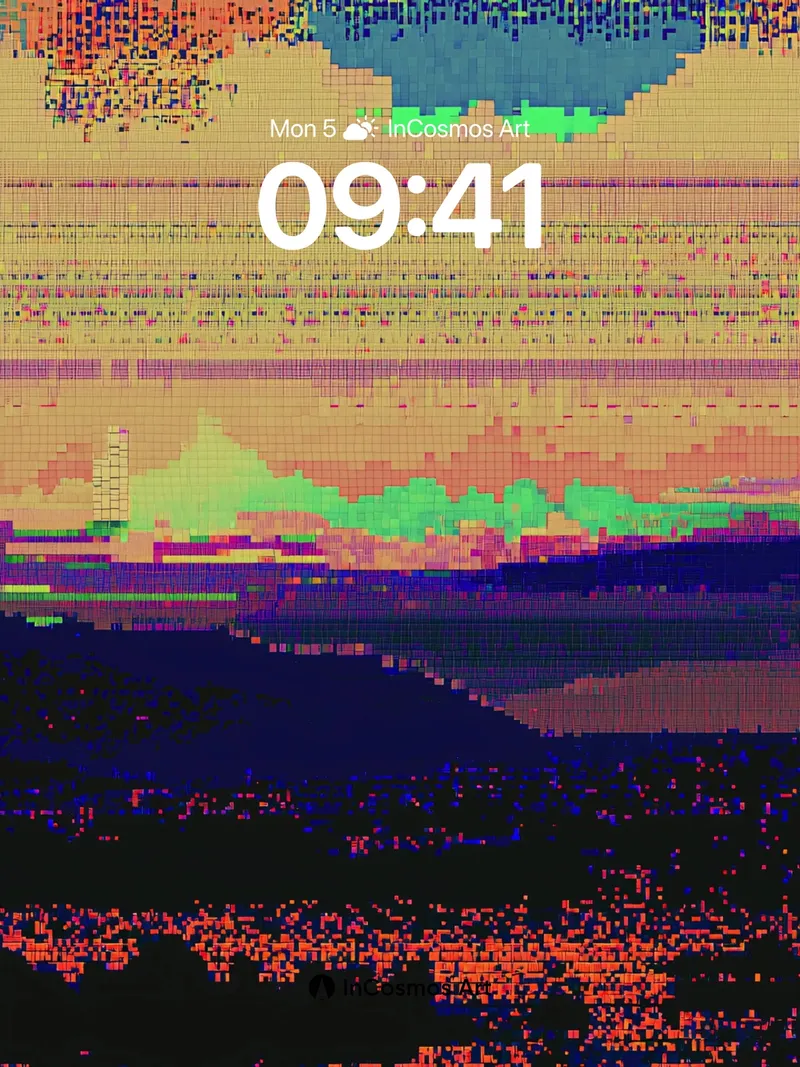
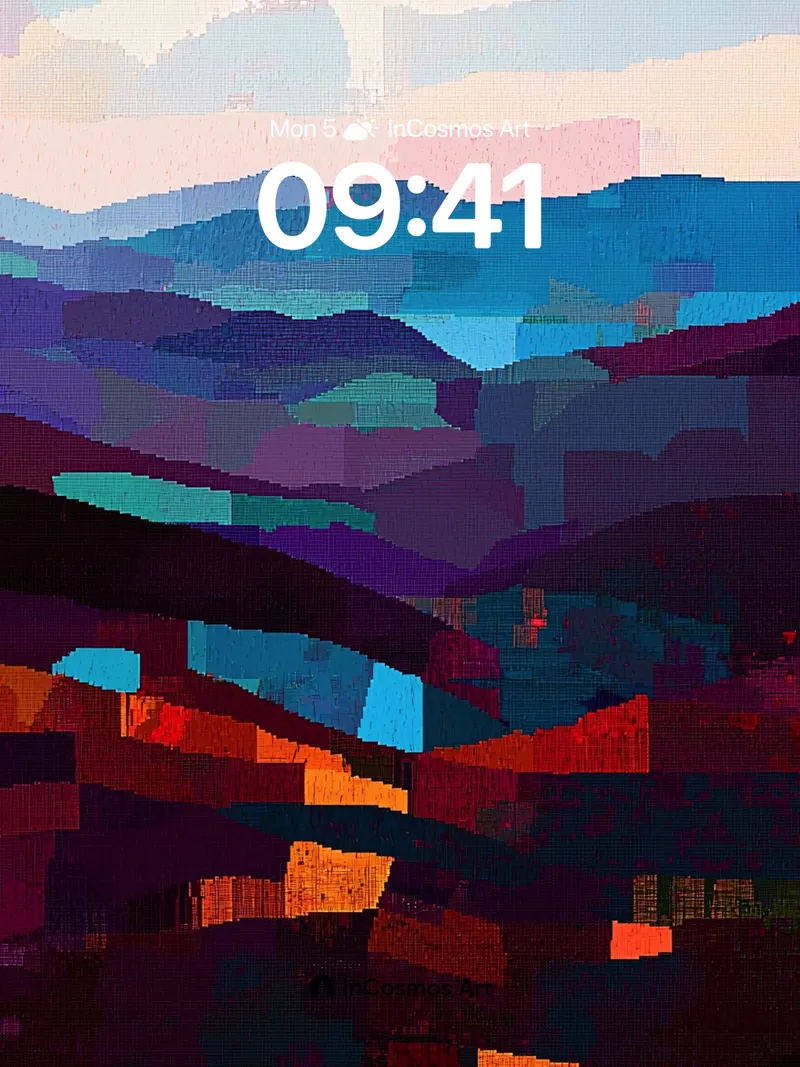
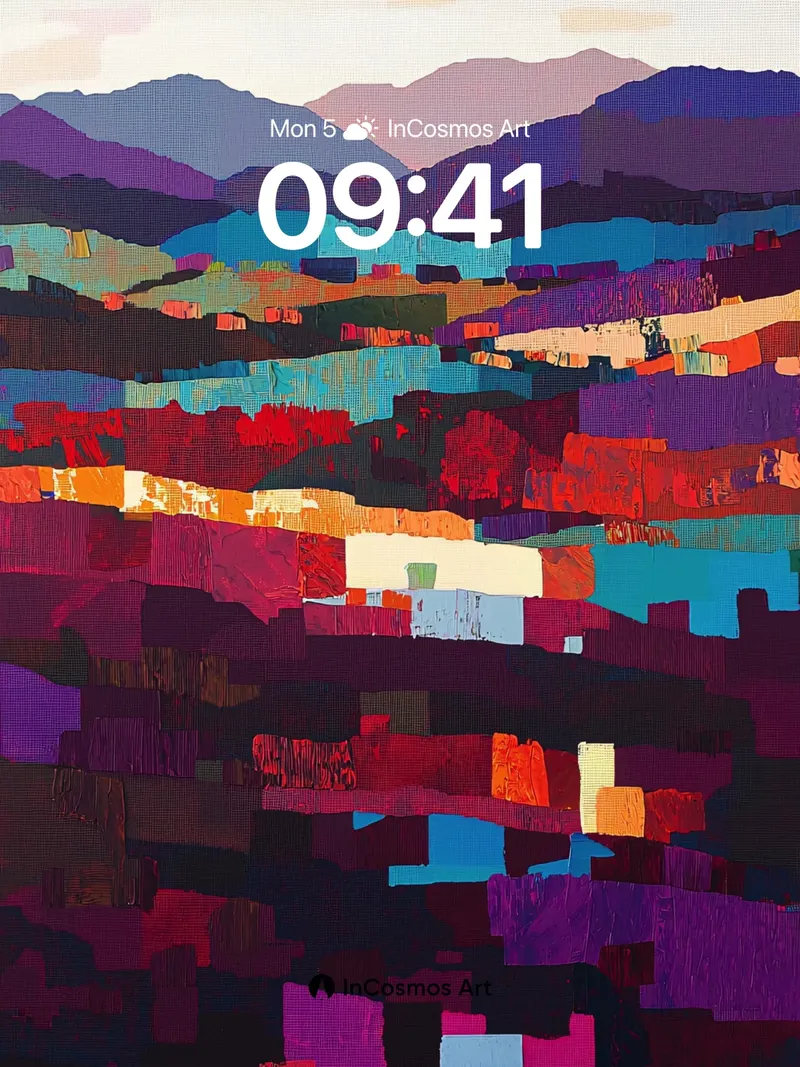
In the flood of data, landscapes cease to be mere projections of geography. They are deconstructed into blocks of color, pulses of pixels, becoming abstract entities beyond human perception. These scenes are not copies of reality but topographic maps of emotion—mountains layered in blue and purple, earth stitched with ochre and deep green, skies floating with incomplete clouds. Each piece resembles a breath, a collision between urban memory and natural order within digital space. When visual language escapes the concrete, we approach essence more closely: a silent dialogue about how time leaves traces on land and how light redefines it.
The Topography of Color
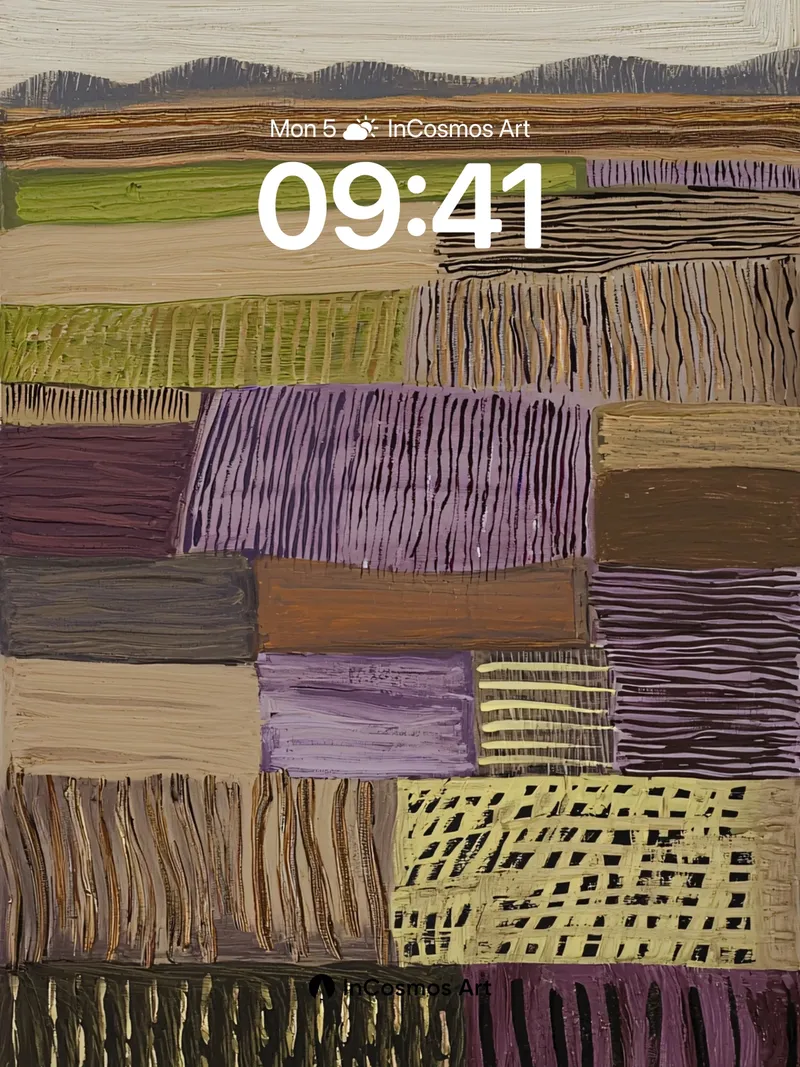
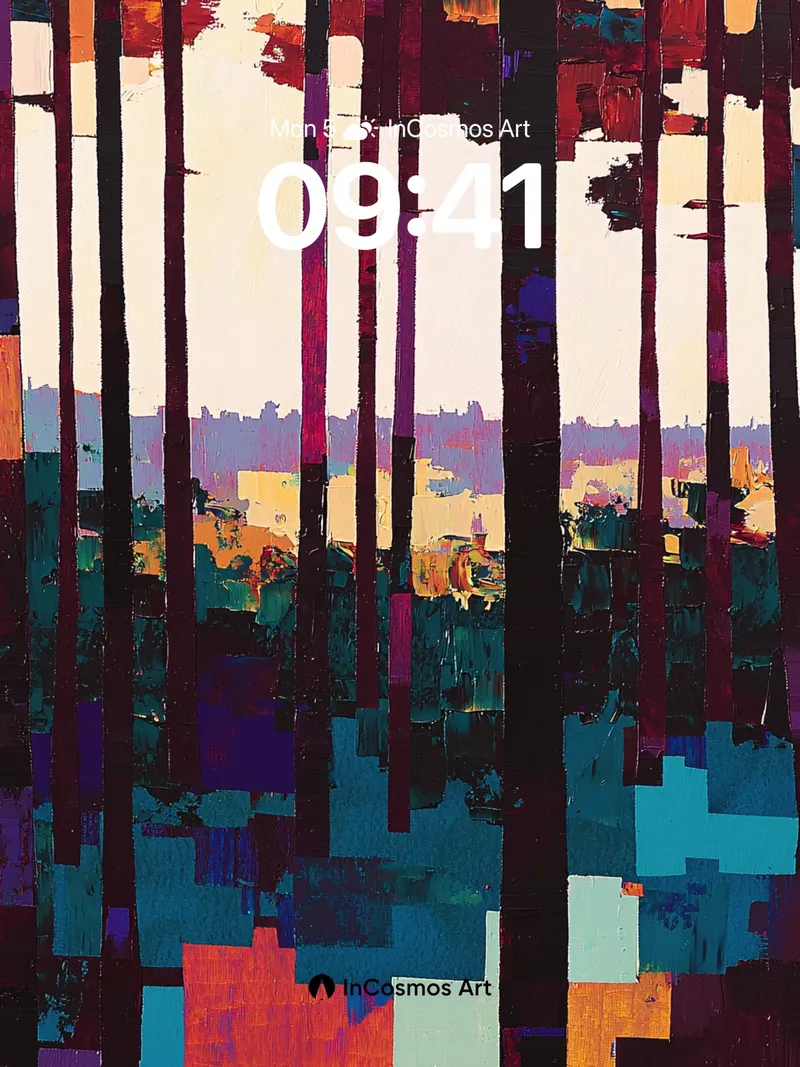
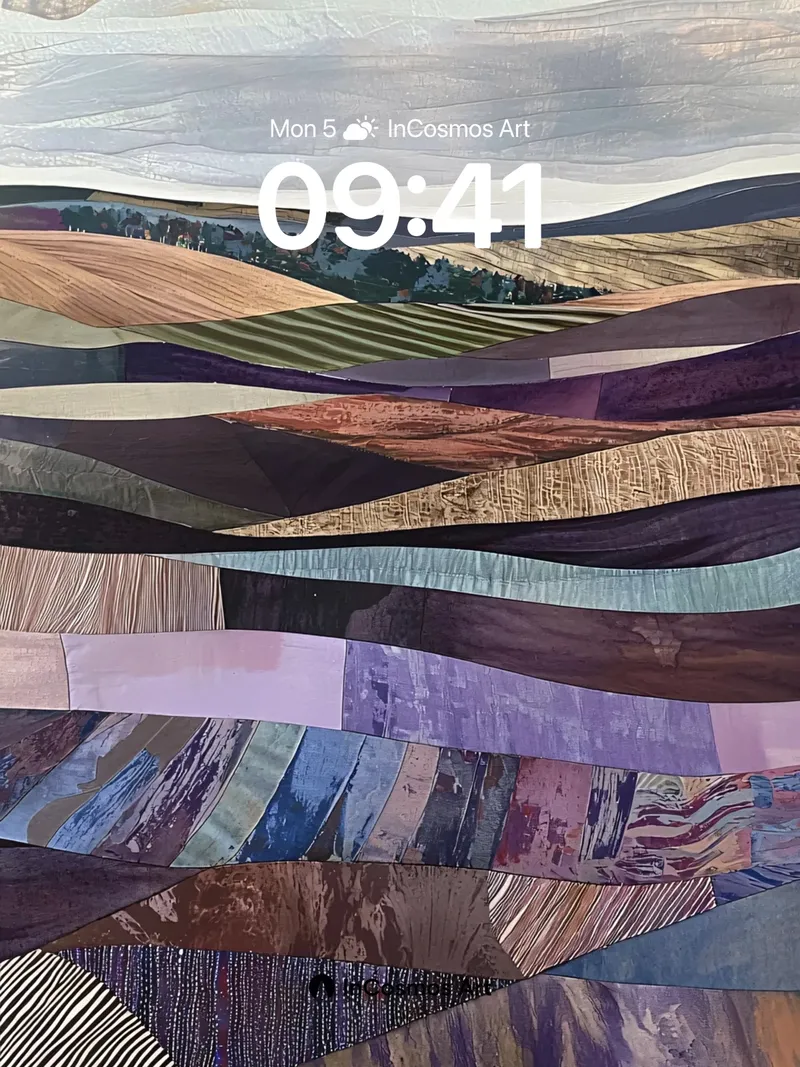
The surface is no longer a continuous curve but a geometric collage of textures and hues. Purple stripes suggest fallow fields, yellow-brown squares represent harvested ridges, while green diagonals imply irrigation patterns. This structured representation transforms agricultural rhythms into visual cadence, turning soil into readable text. Each color carries seasonal memory; each stroke narrates the cycle of farming. This is not a map but a poem of the earth.
Villages in Digital Haze
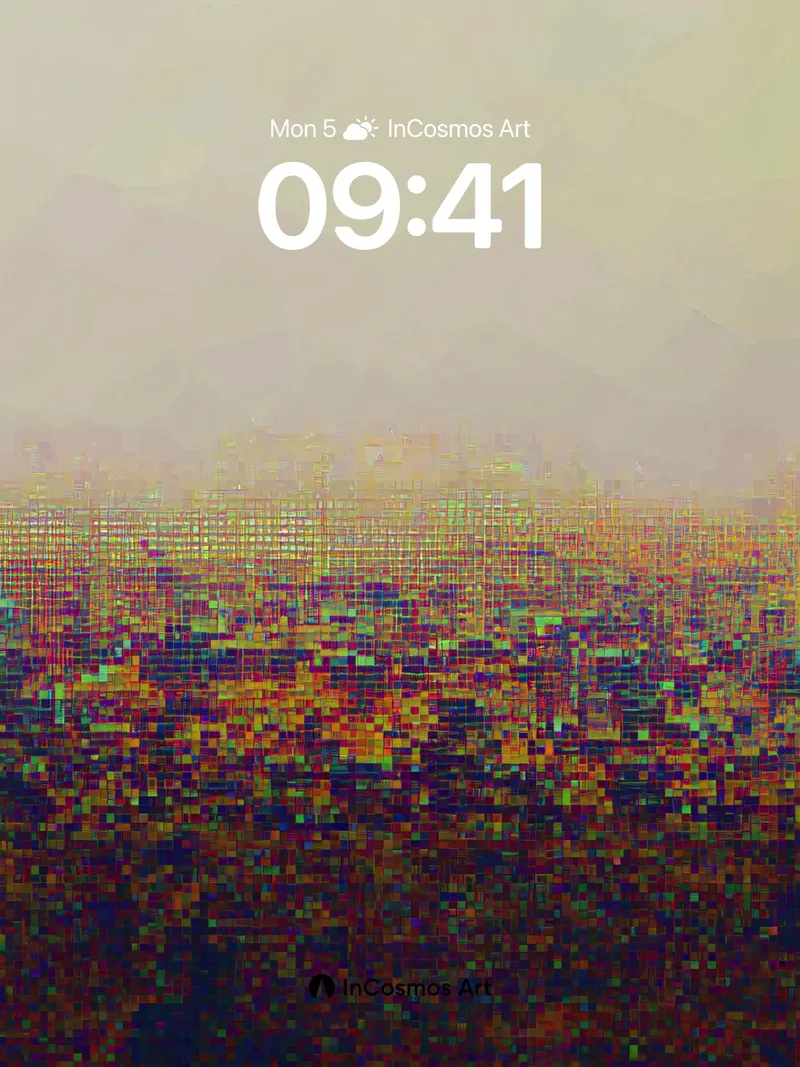
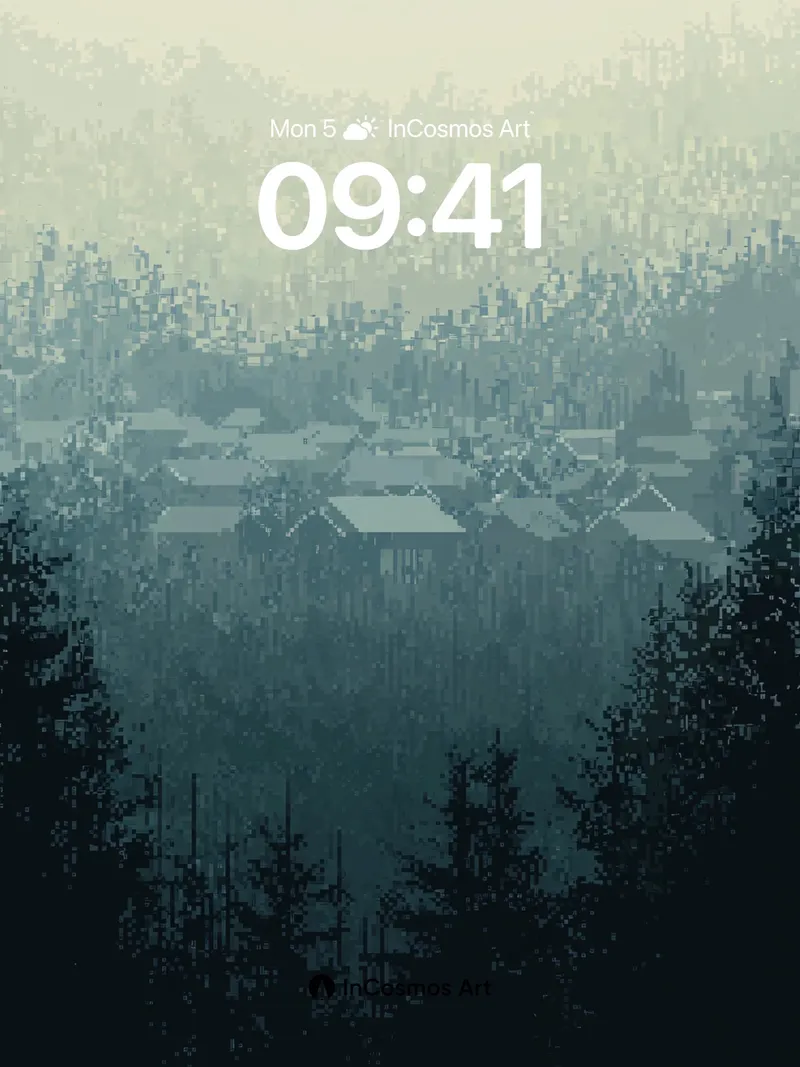
Distant houses flicker in gray-blue tones, hovering above electronic mist. Tree silhouettes are reduced to black outlines, sharply contrasting with the background. This simplification diminishes detail but deepens atmosphere. The village ceases to be a living space and becomes a state of being—solitary, quiet, coexisting with nature. Its ambiguity grants it a timeless quality, like a faded memory of childhood hometowns.
Spectrum of Emotion
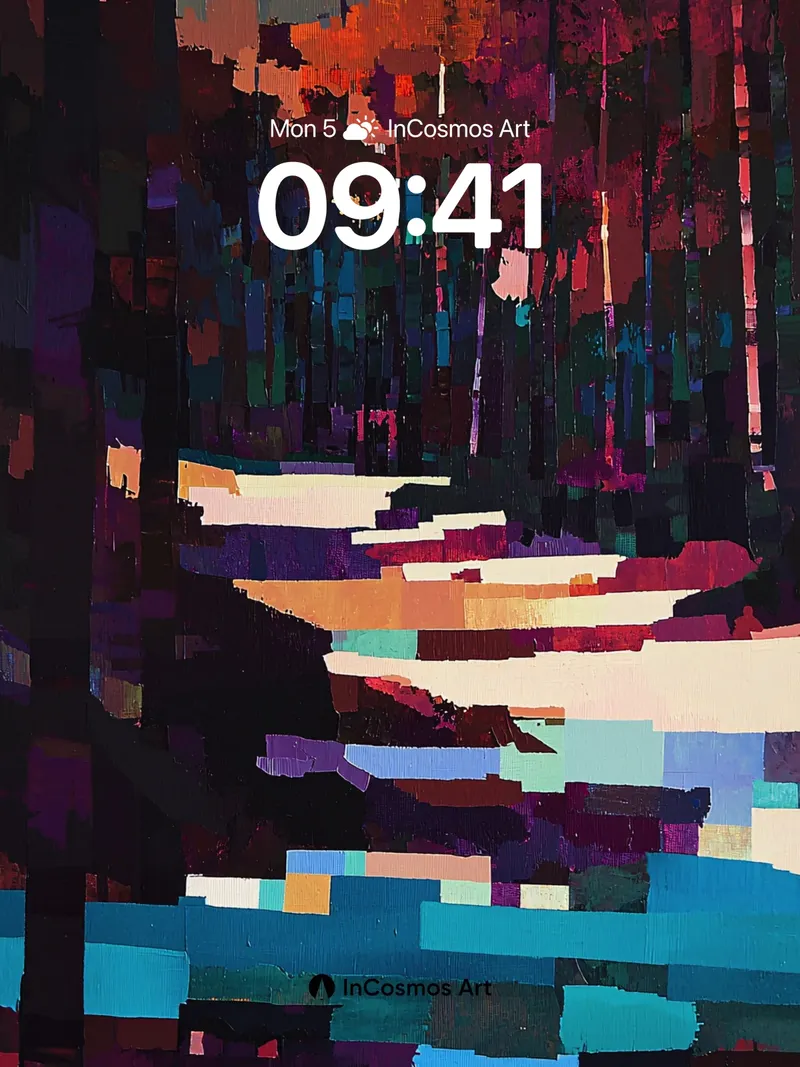
From cool blue to fiery orange, color shifts are not random but emotional currents. Warm tones at dusk evoke nostalgia; cool shades at dawn bring clarity. This gradient is not just visual—it is psychological journey. The viewer moves through it as if undergoing a silent emotional migration. Here, color becomes a bridge connecting inner self and outer world.
Abstract Ecology
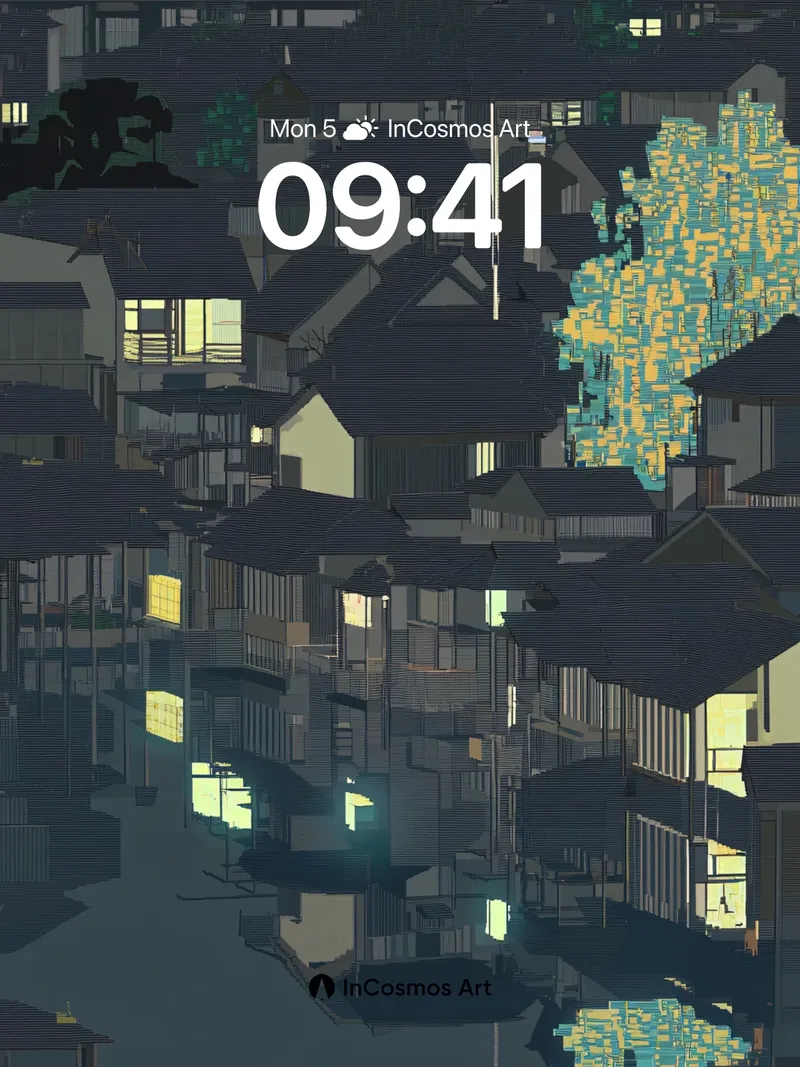
These images reject natural replication, instead constructing a new ecological system. Mountains, fields, villages are recoded as information units. No longer governed by physical laws, they follow aesthetic logic. In this realm, the boundary between real and virtual dissolves, forming a novel conception of nature—not purely material, nor entirely digital, but a poetic domain existing between both.