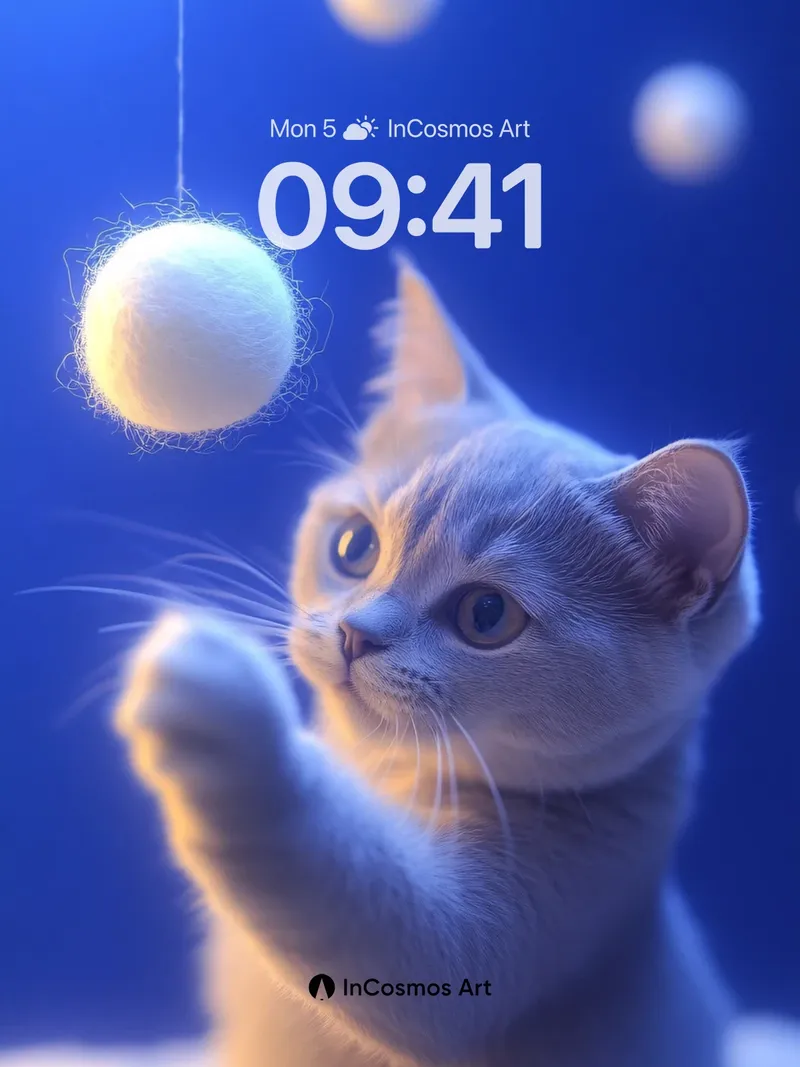
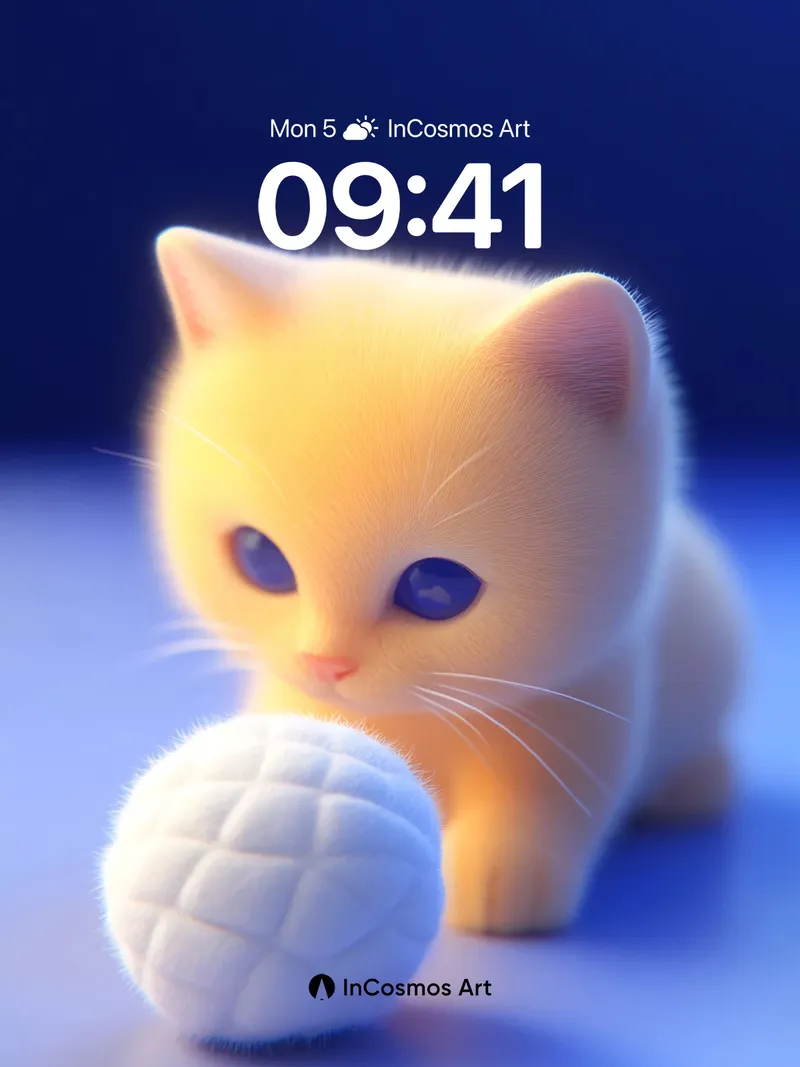
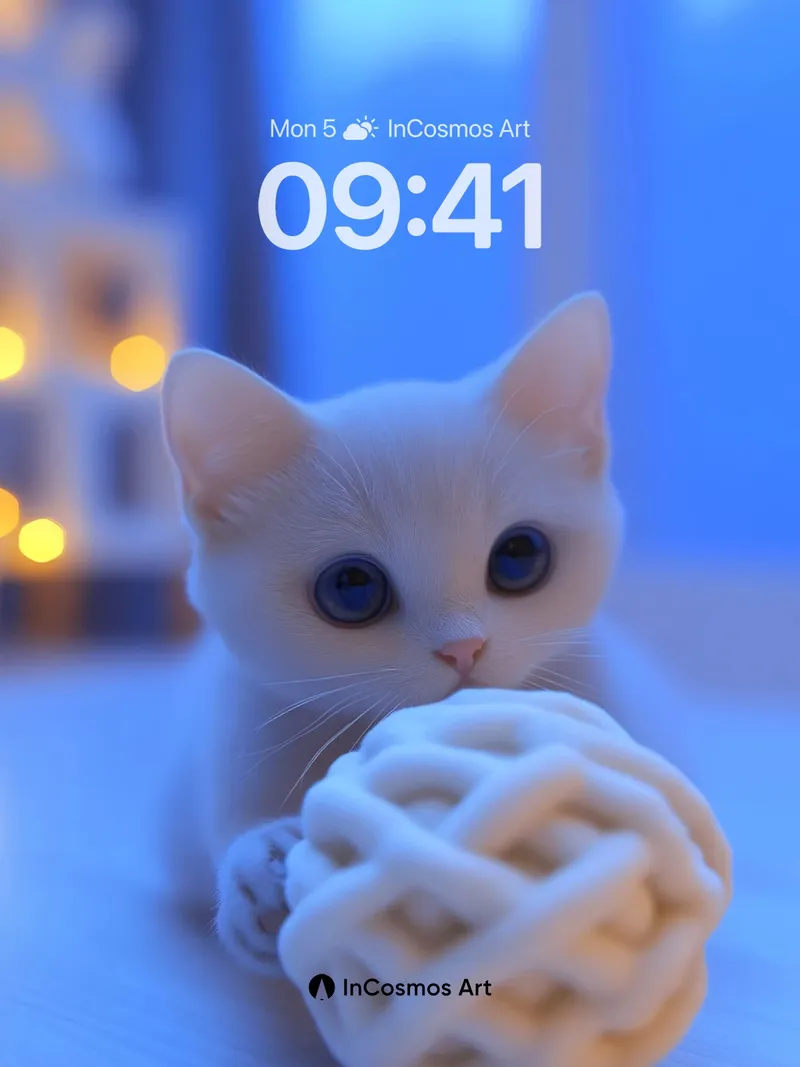
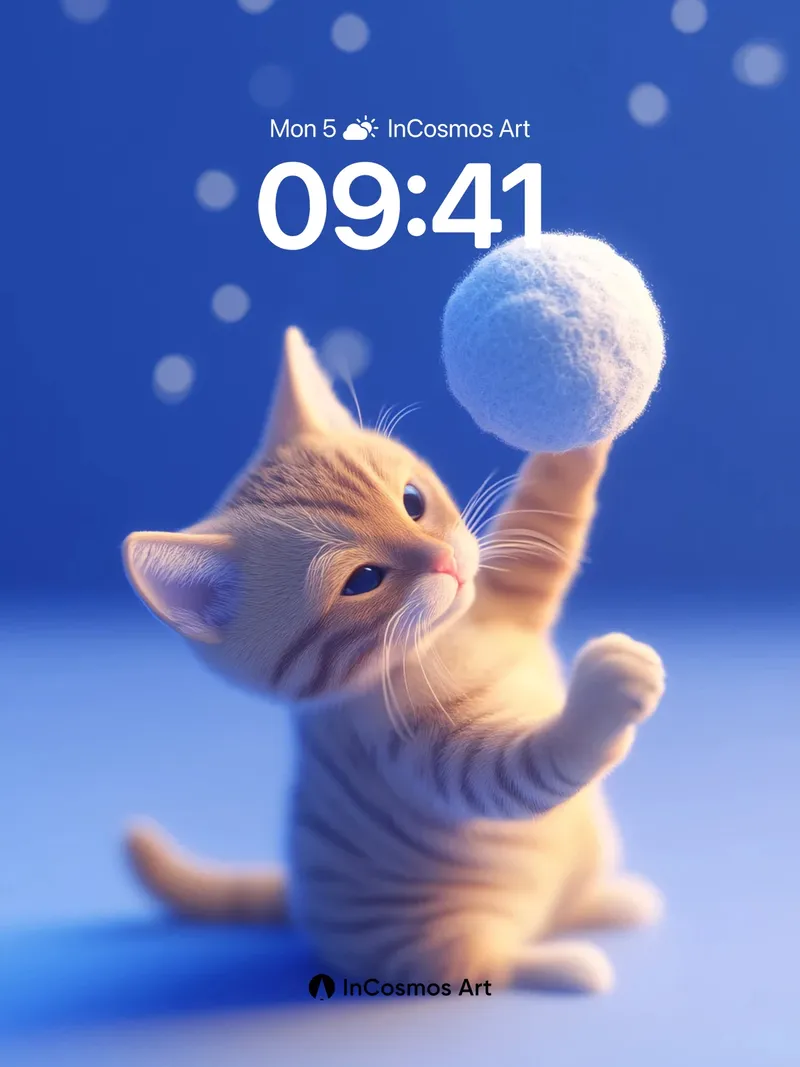
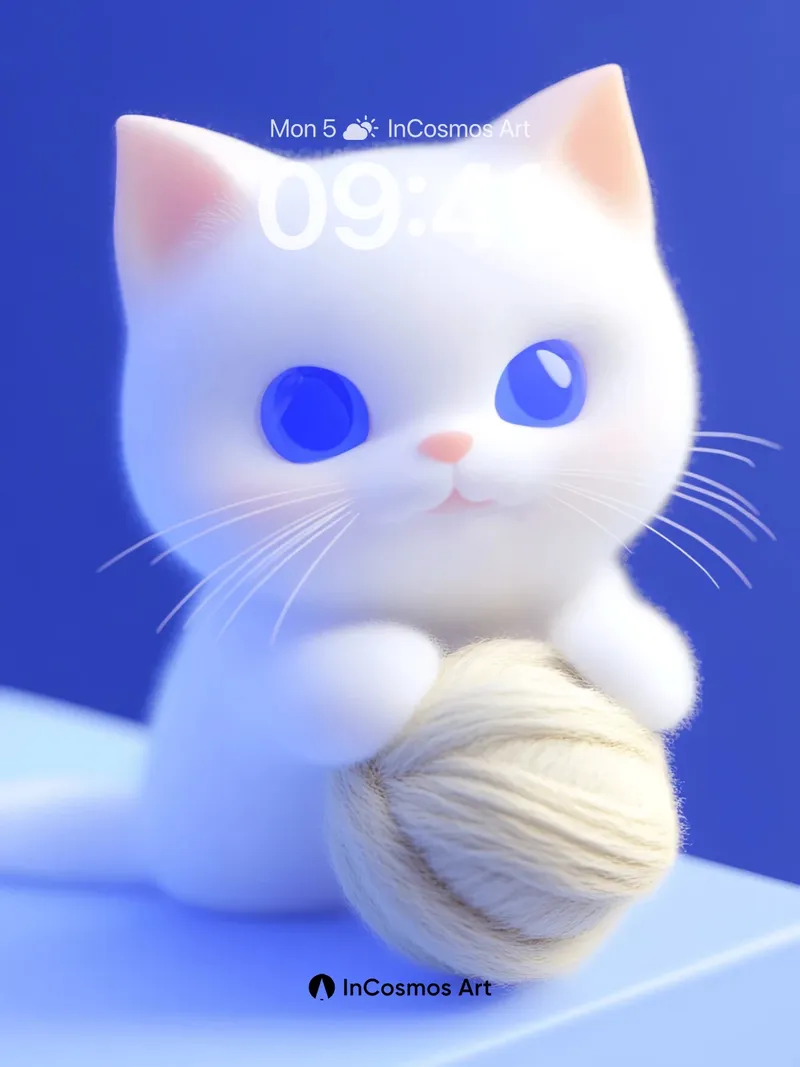
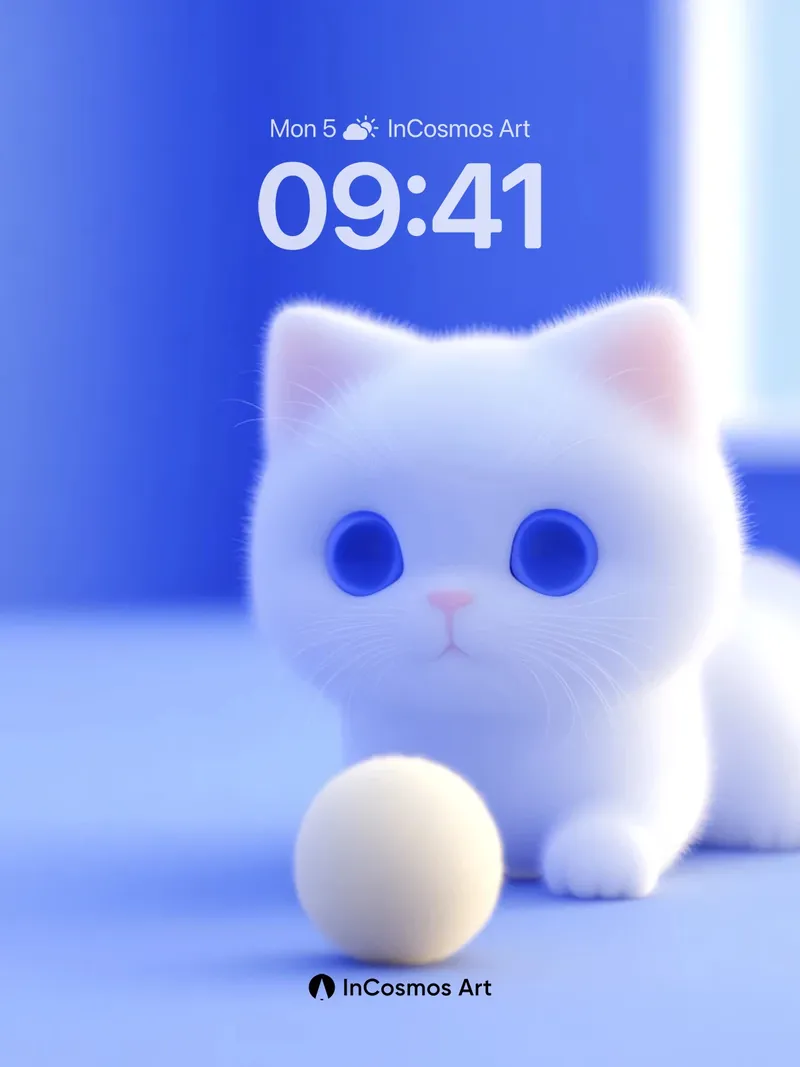
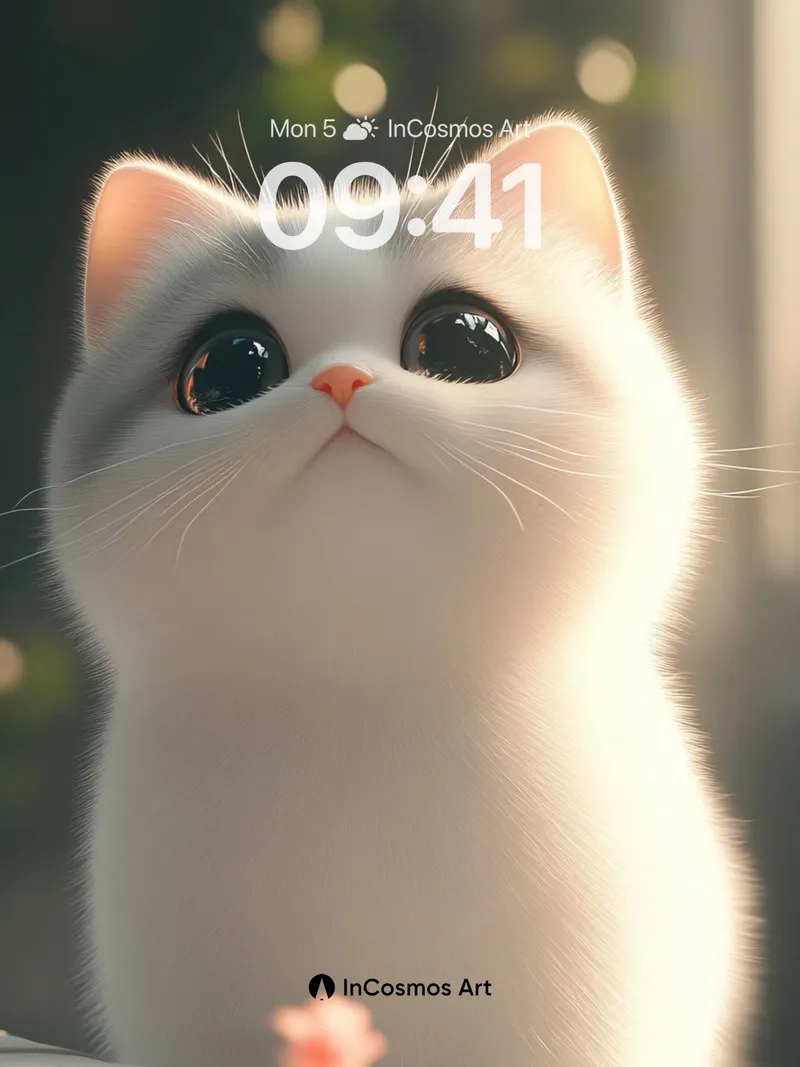
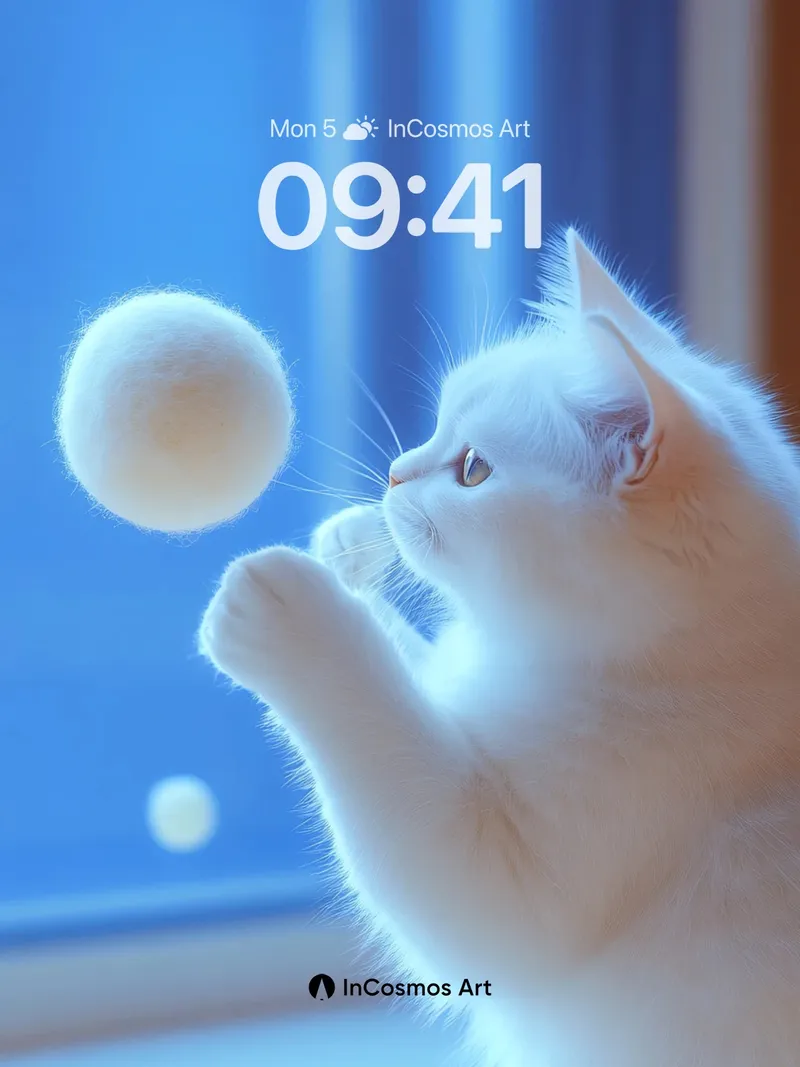
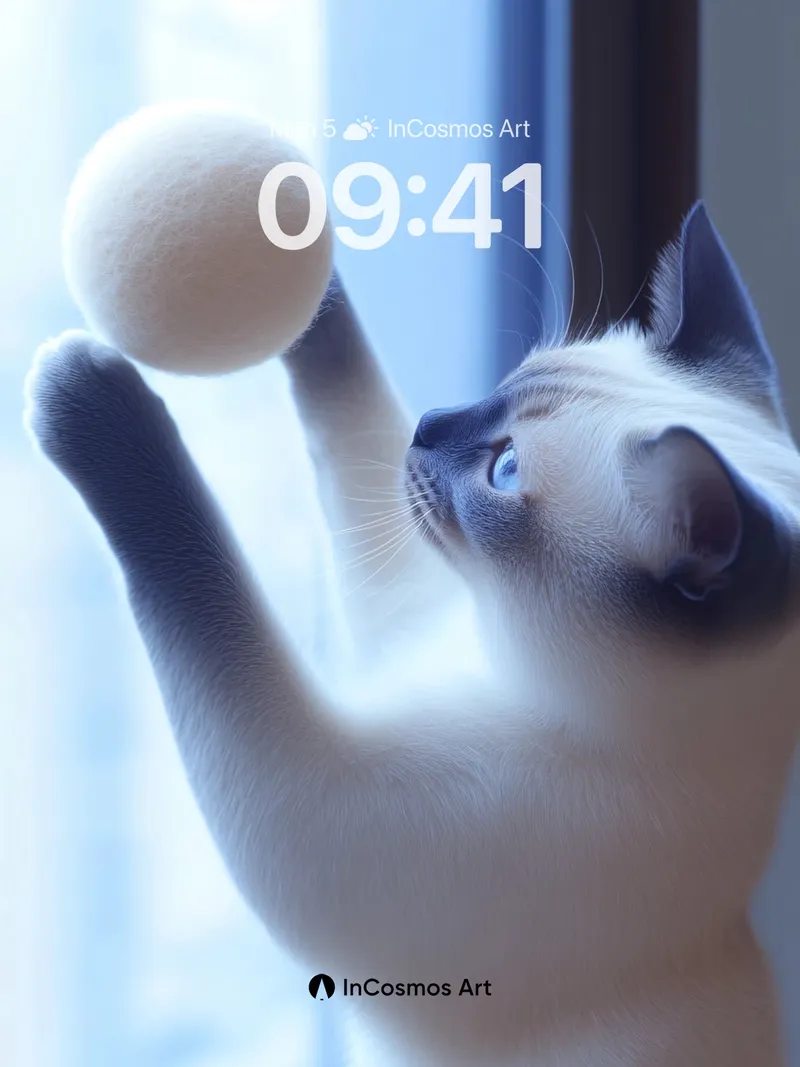
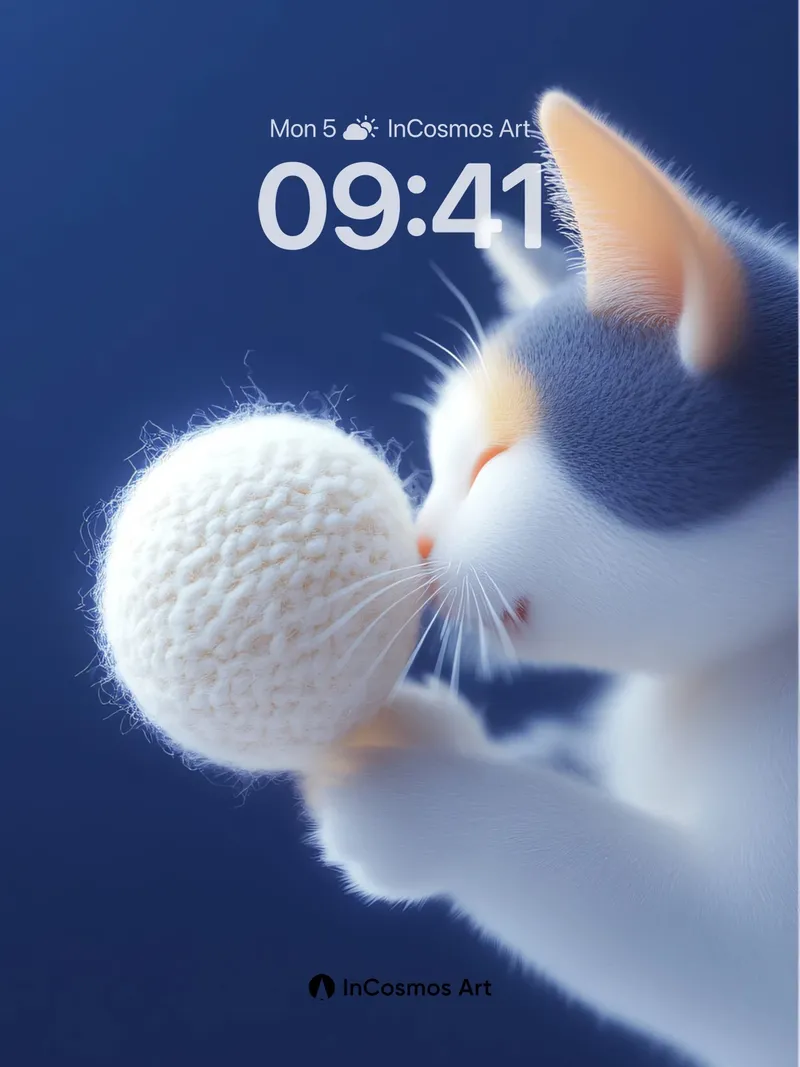
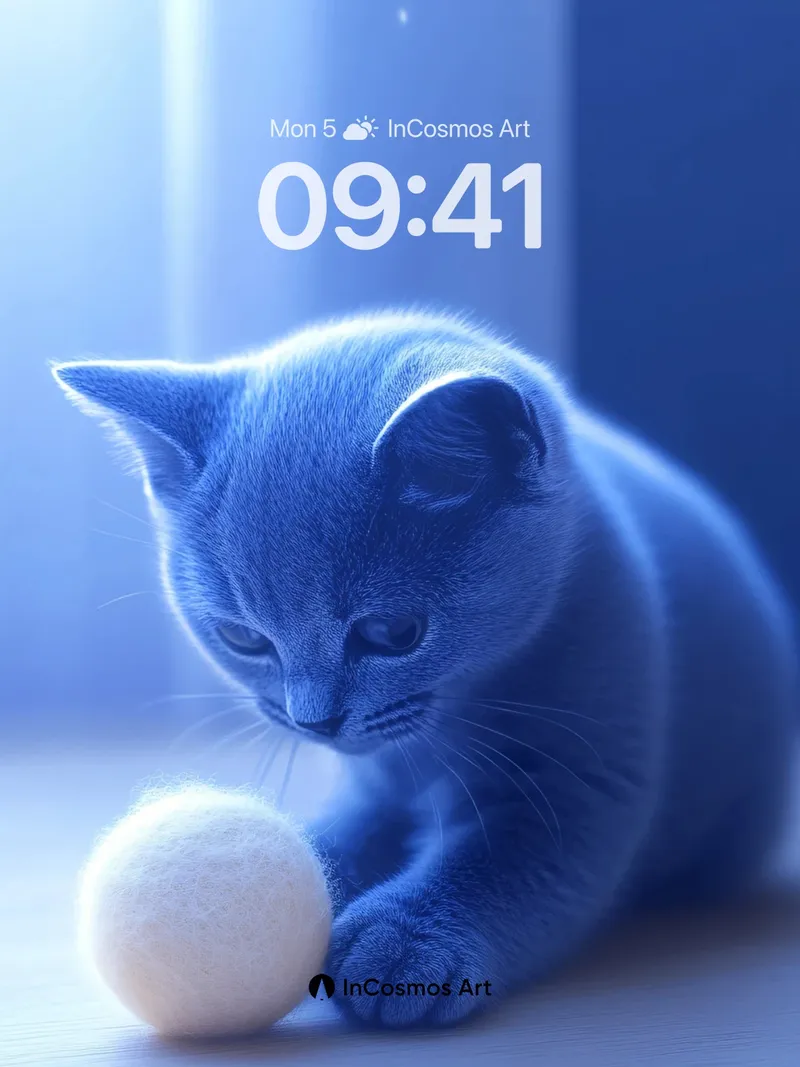
In a serene blue-toned ambiance, several kittens interact with yarn balls, weaving a narrative of innocence and companionship. Their postures are soft and focused, as if time slows down to capture the most primal expressions of emotion. The yarn ball, beyond being a toy, becomes a symbol—representing the simple joys of childhood, an intimate signal needing no words. These scenes do not depict reality fully but distill emotion, reinterpreting the cultural icon of 'cuteness' in the digital age.
The Visual Language of Cats
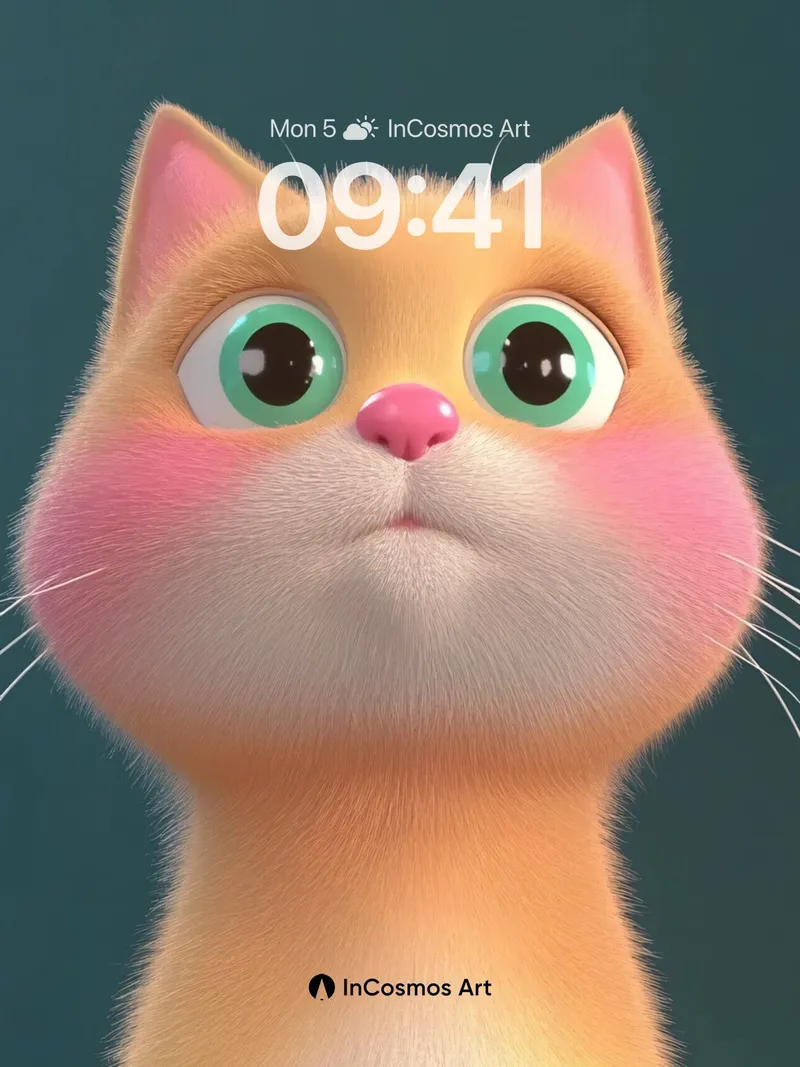
Each cat displays unique facial structure and fur patterns, yet they share deep, expressive eyes that seem to reflect the world's gentleness. The blue backdrop enhances a calm, contemplative mood while accentuating the purity of white fur. This color contrast is deliberate—a designed emotional framework where cool tones create distance, yet proximity is restored through the presence of animals. This duality mirrors modern human psychology: longing for connection while maintaining safe boundaries.
The Cultural Symbolism of Yarn Balls
Traditionally linked to craftsmanship, home, and warmth, the yarn ball here is reduced to geometric forms or fluffy spheres, stripped of utility and transformed into pure visual elements. Its existence serves no practical purpose, only to invite attention and smiles. This reflects a contemporary aesthetic trend: abstracting everyday objects to imbue them with emotional value rather than functional meaning. When a cat gently touches the yarn ball, the gesture becomes ritual—a silent exchange.
The Aesthetic of Digital Cuteness
Though not real-life photography, these scenes precisely target global cultural preferences for 'cute.' Large eyes, round faces, and soft lines form the classic kawaii traits, widely used in animation, toys, and social media. This style transcends species, anthropomorphizing animals to evoke care and empathy. In fast-paced societies, such imagery offers brief psychological comfort—a virtual embrace that soothes anxiety.
Resonance Between Light and Emotion
Light falls from the side, creating soft gradients along the cats' silhouettes, emphasizing fur texture and volume. In some frames, light particles float like stars, generating a dreamlike atmosphere. This technique, common in high-end digital art, aims to stimulate imagination. It reminds us that even in virtual realms, sensory experiences deeply affect mental states. Through controlled lighting, creators make emotions visible, turning intangible feelings into tangible sensations.