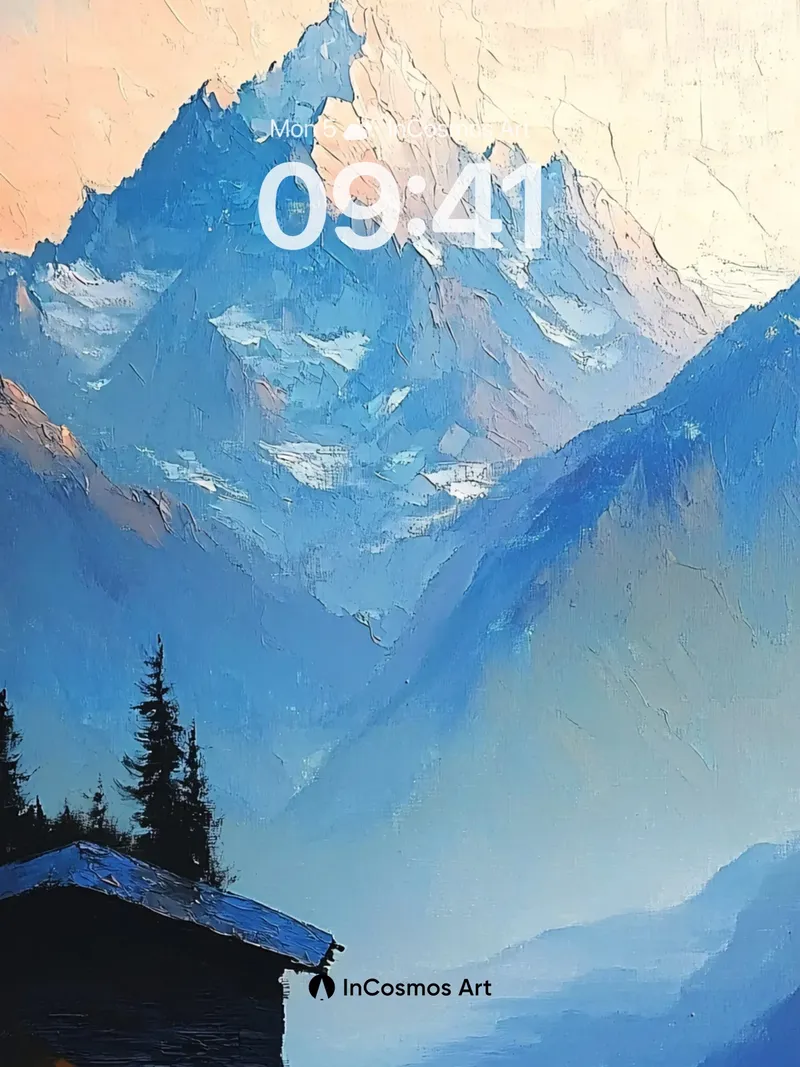
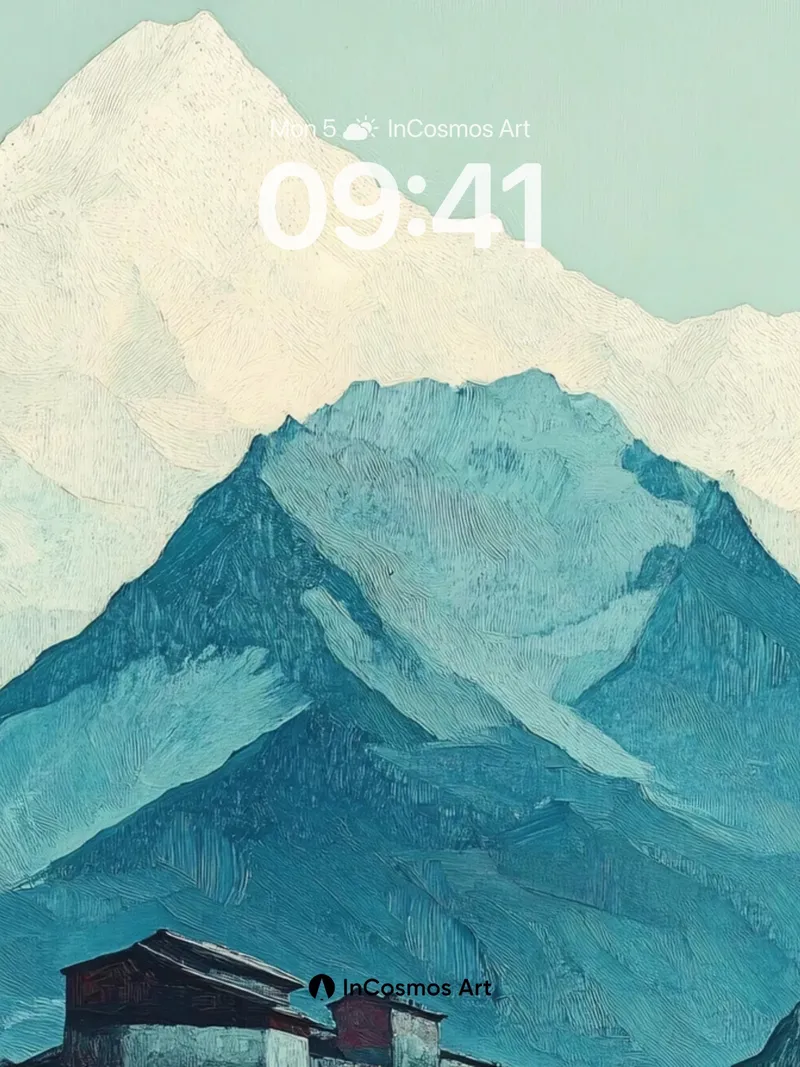
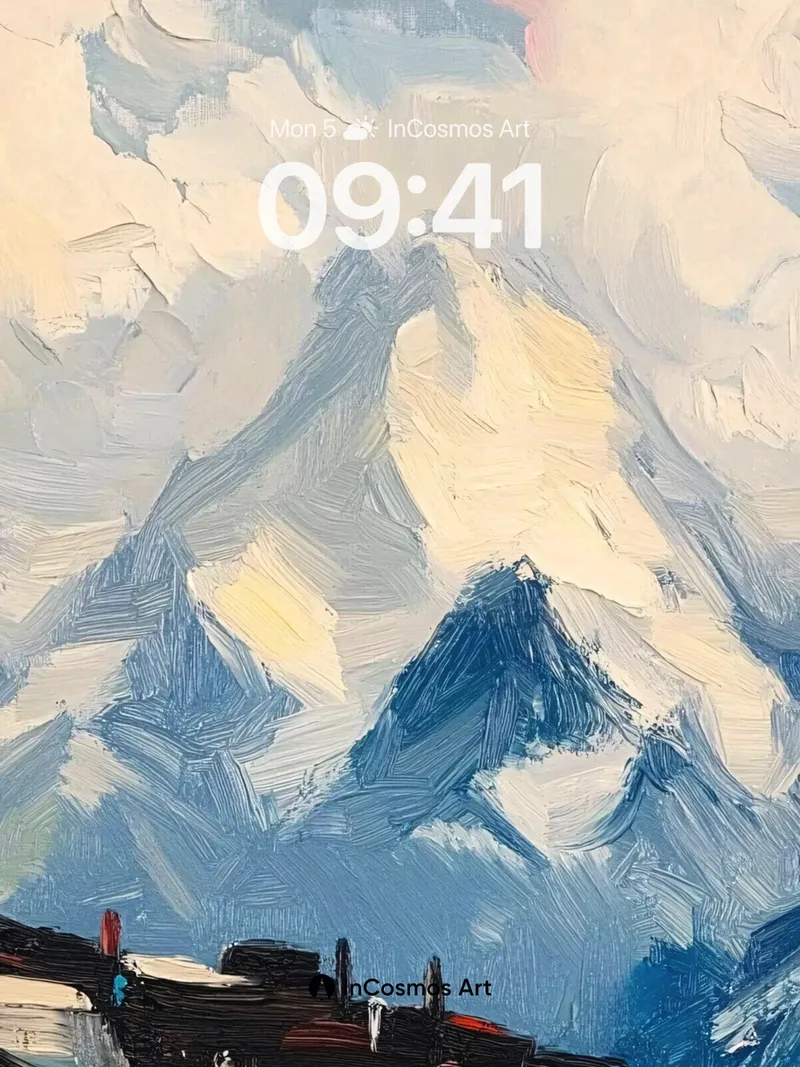
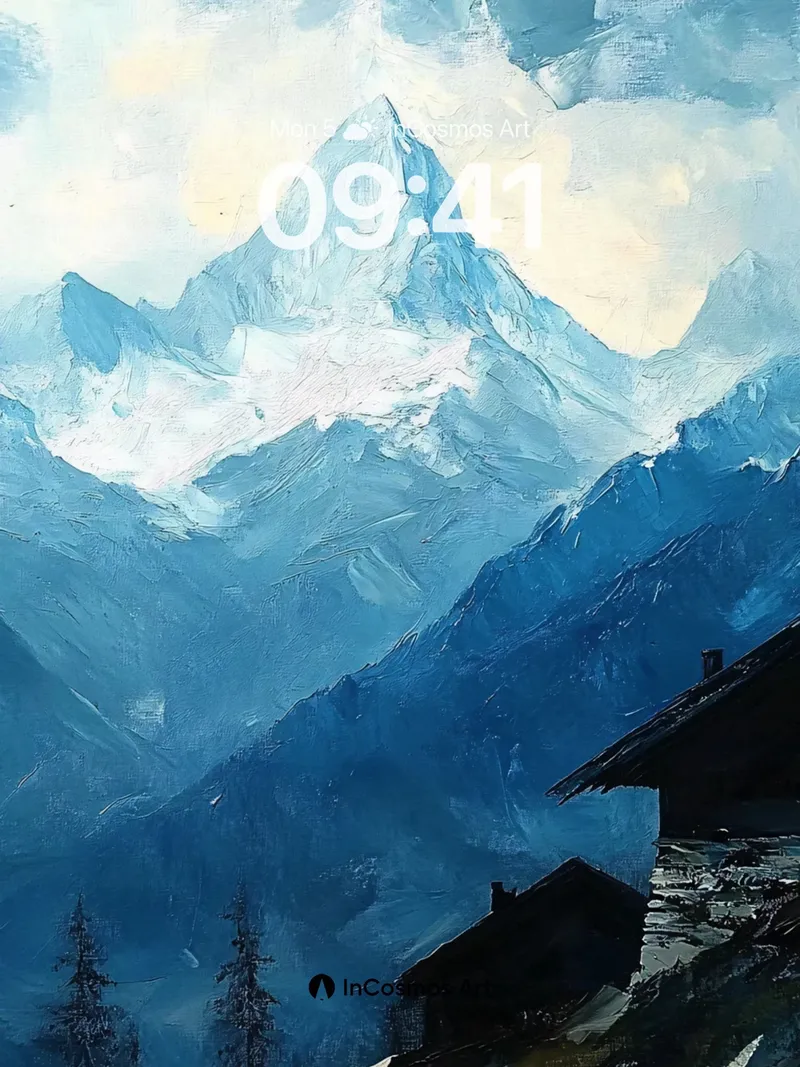
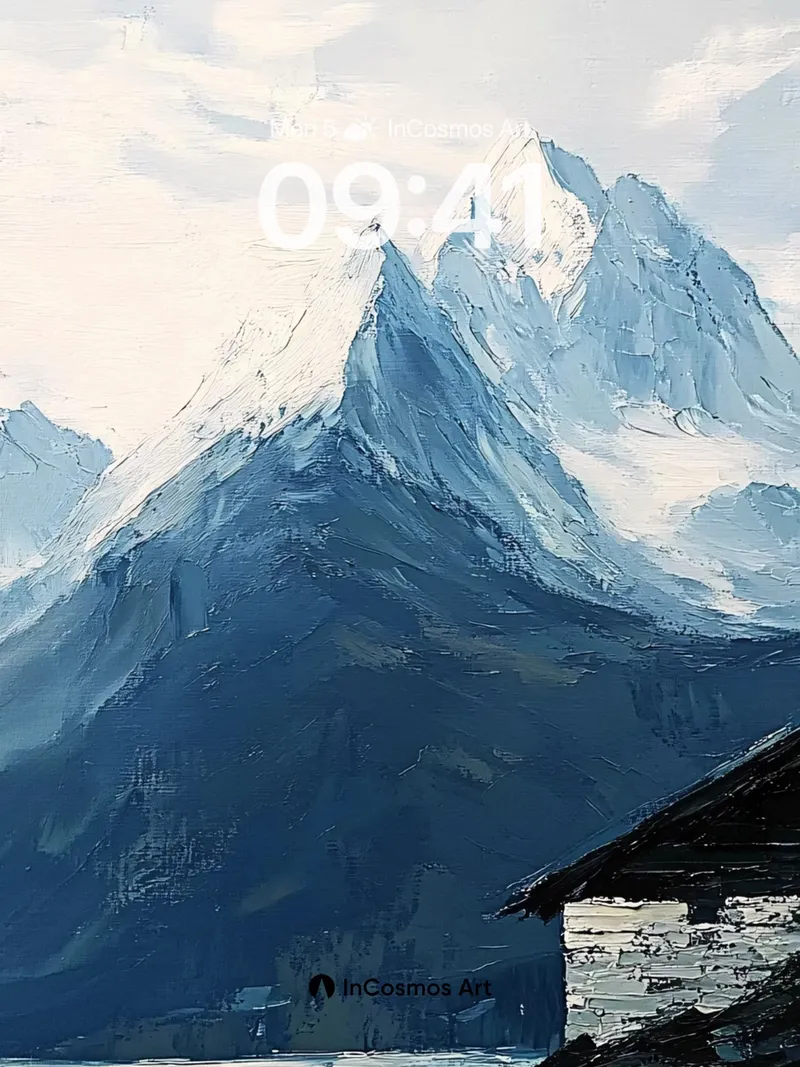
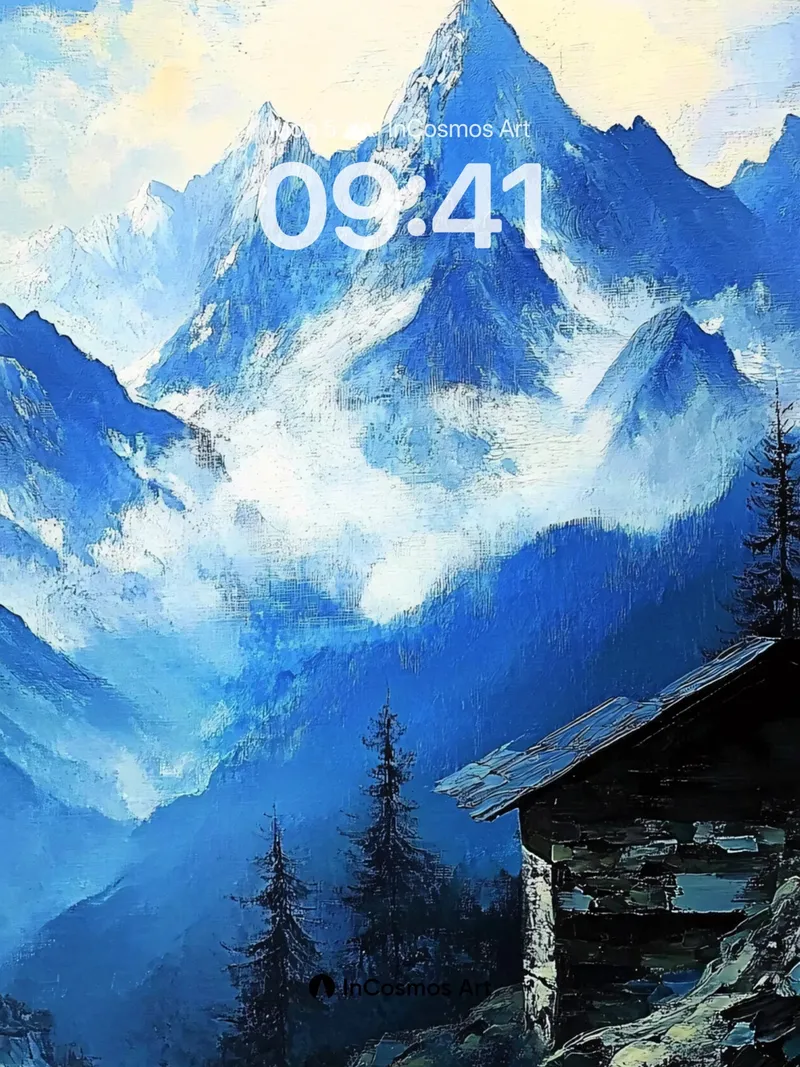
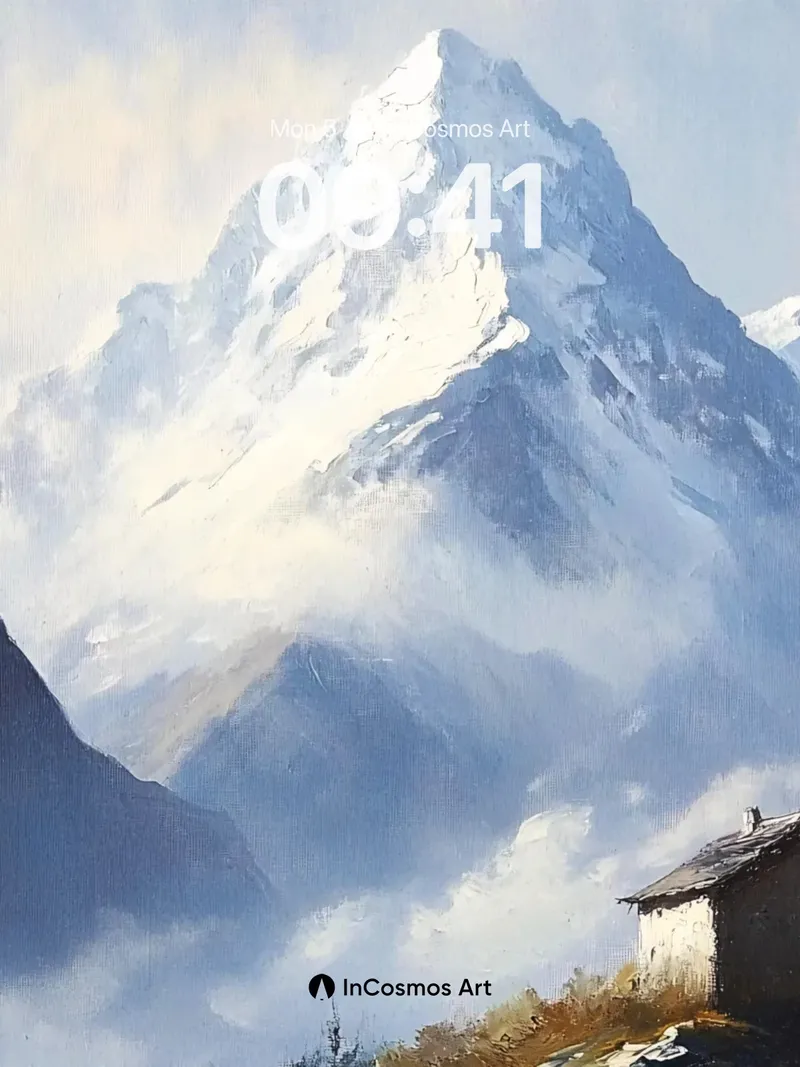
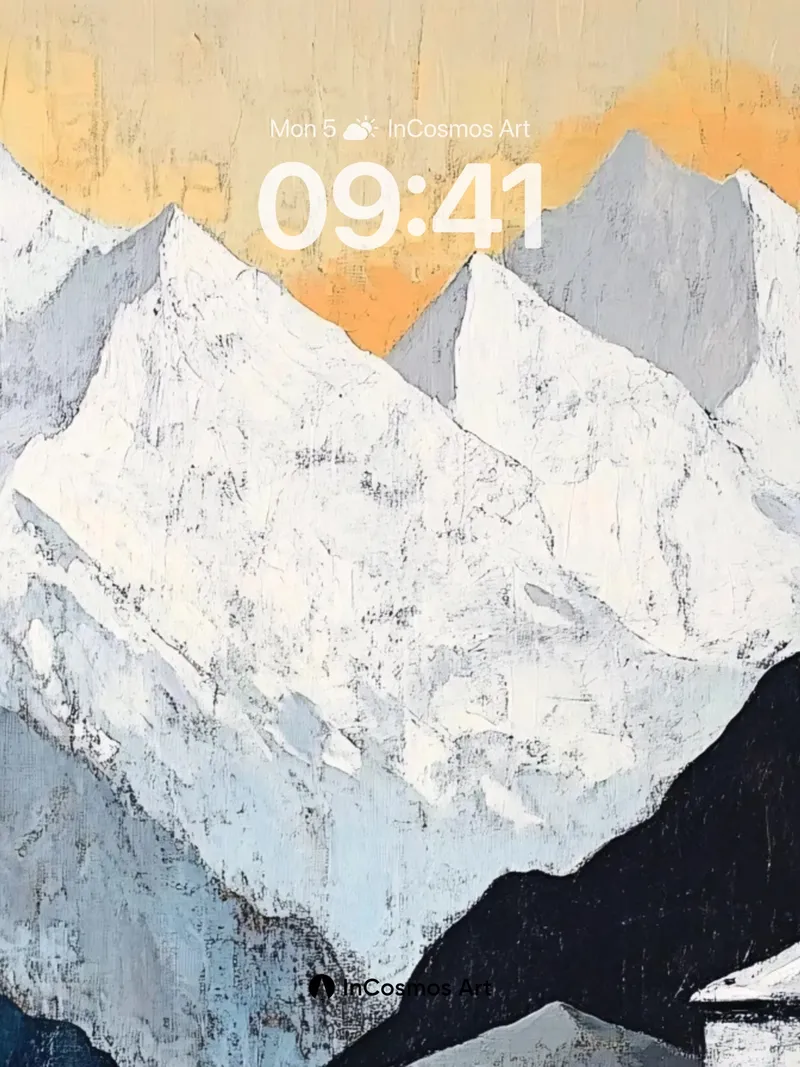
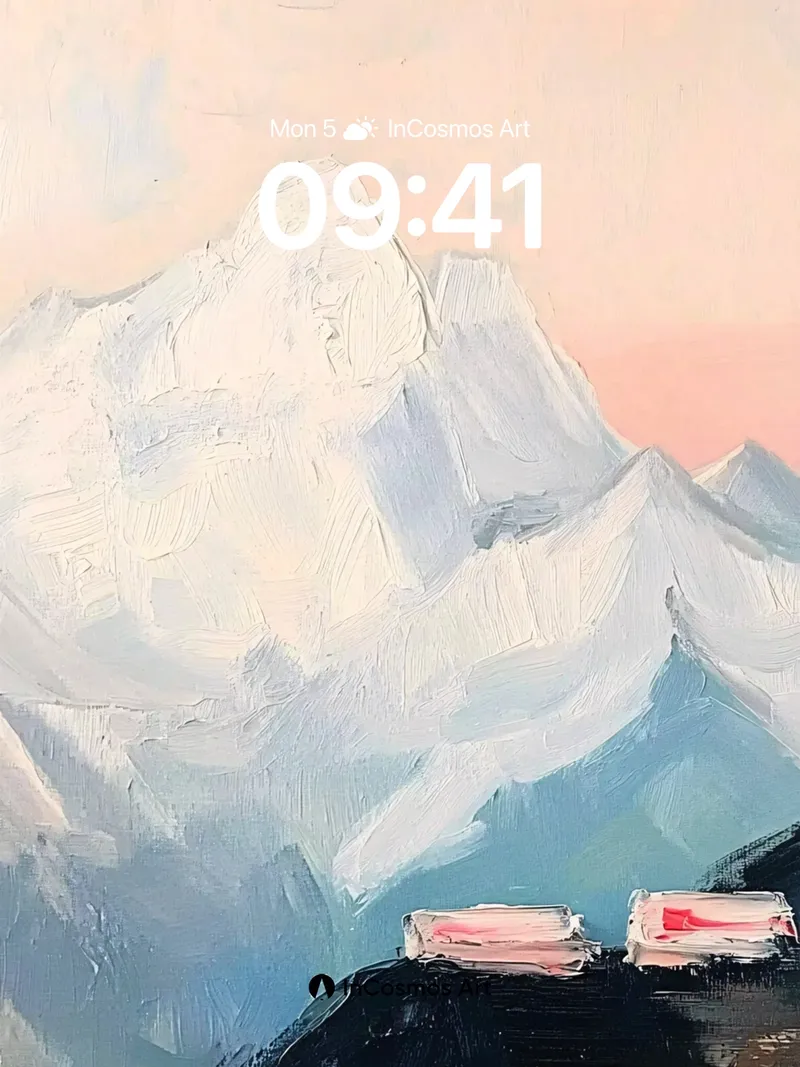
At the edge of towering peaks, above the snowline, time seems suspended. Mountain forms unfold in cool blue tones, layered cliffs resembling ancient inscriptions that speak of geological silence. Houses lie low on slopes, roofs dusted with frost, like a breath exhaled by the earth. This is not an escape from the world but a simple covenant between human presence and nature—existence need not be loud; dwelling itself is response. Architectural outlines are reduced to geometric essentials, yet gain divinity through shifting light. At dawn, lakes mirror the inverted mountains, creating symmetry that feels almost ritualistic. This balance does not rely on human order but emerges from nature’s own rhythm. When mist rises from valleys, wrapping around ridges, structures become visual anchors, guiding the viewer into deeper contemplative space. This is not landscape reproduction but emotional sedimentation. Each brushstroke carries reverence for solitude and awe for eternity. Human traces are small but real—they are not marks of conquest but testimonies of coexistence. In this context, habitation ceases to be functional need and becomes spiritual posture. It means acknowledging insignificance, embracing silence, choosing to place the soul within grandeur.
Shelter as Echo of Nature
The presence of buildings is not to oppose environment but to merge with it. Materials, form, orientation all serve this purpose. Wooden and stone construction blends with soil, colors recede into background, avoiding visual intrusion. Roof angles follow terrain, both practical and symbolically humble. Windows remain minimal, like cautious eyes peering outward. These details collectively build a modest aesthetic. Architecture does not dominate scenery but allows scenery to become part of its interior. This relationship transcends utility and reaches philosophical depth: shelter is echo of nature, not its opposite.
Narrative of Light and Time
Changes between sunrise and sunset imbue scenes with temporal dimension. Morning light tints snow-capped peaks pale gold; dusk casts orange-red afterglow. Movement of light alters not only color but spatial perception. Shadows stretch, contours blur, mountains appear to breathe. This dynamic suggests cosmic rhythm, reminding viewers they too exist within a river of time. Art captures moments to preserve essence of transience. Each scene is a slice of time, recording irreplaceable instants. Precisely this ephemerality grants works deep poetic resonance.
Communication Through Silence
No words, no motion—only being itself constitutes exchange. No dialogue exists between house and mountain, yet understanding unfolds without language. This comprehension rests on shared stillness. Wind through pines, snow falling on rooftops, water gently lapping shores—these subtle sounds are amplified into carriers of meaning. Viewer is invited into perception beyond hearing, listening with the heart. Value here lies not in representation but in sensation. Emotion is transmitted not through plot or conflict but through atmosphere and mood permeation. Such communication is more primal, profoundly resonant.